






About this worksheet
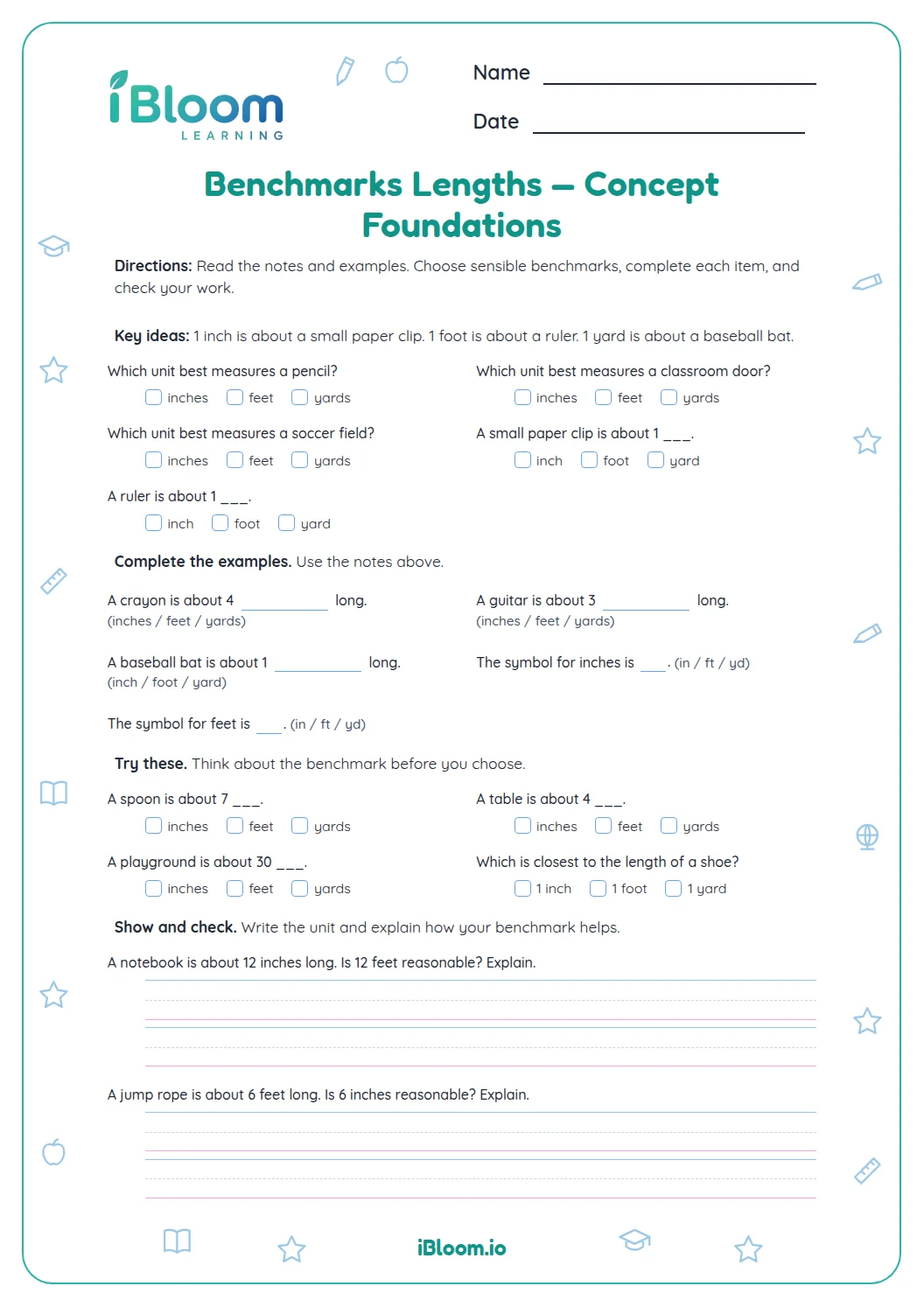
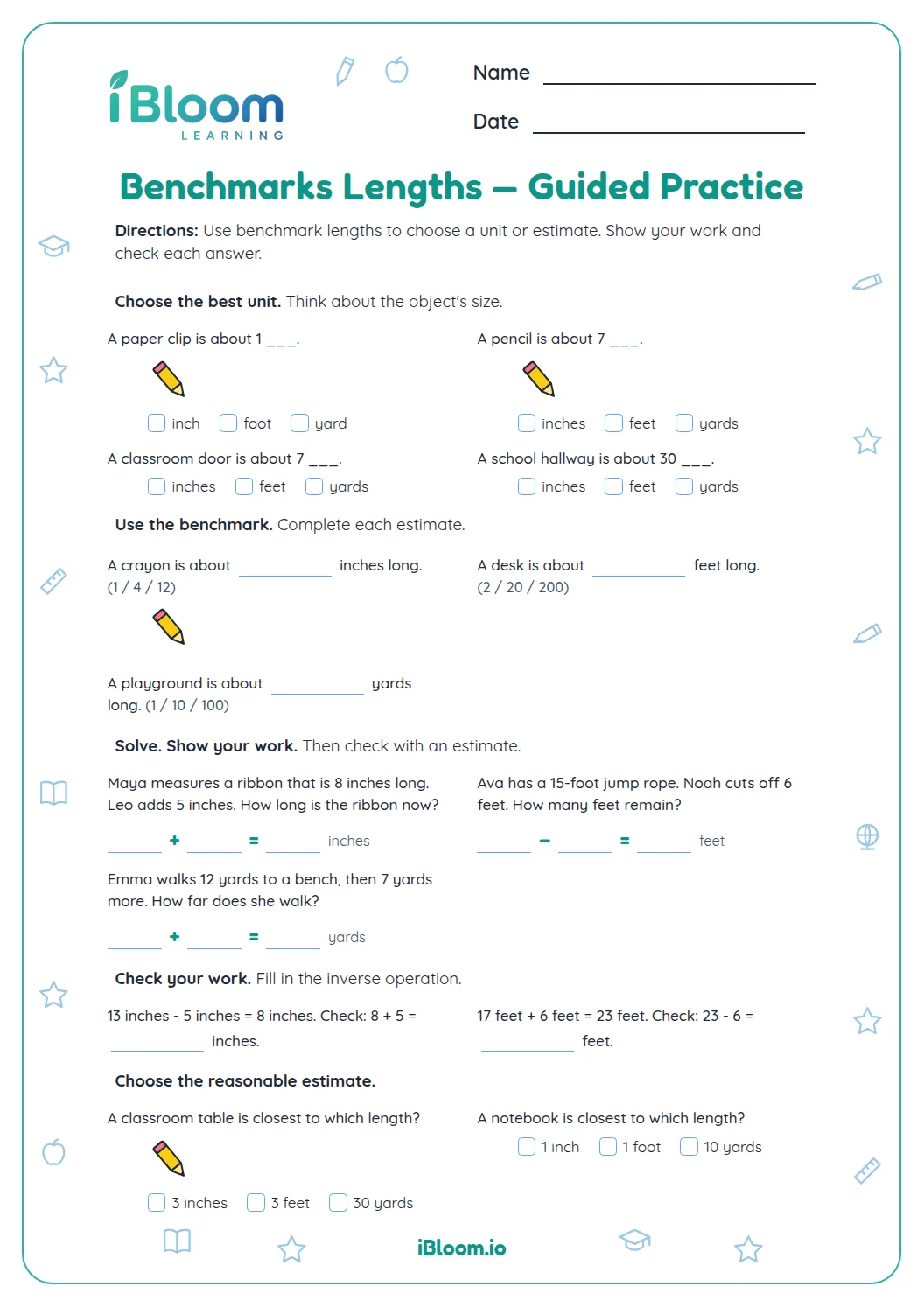
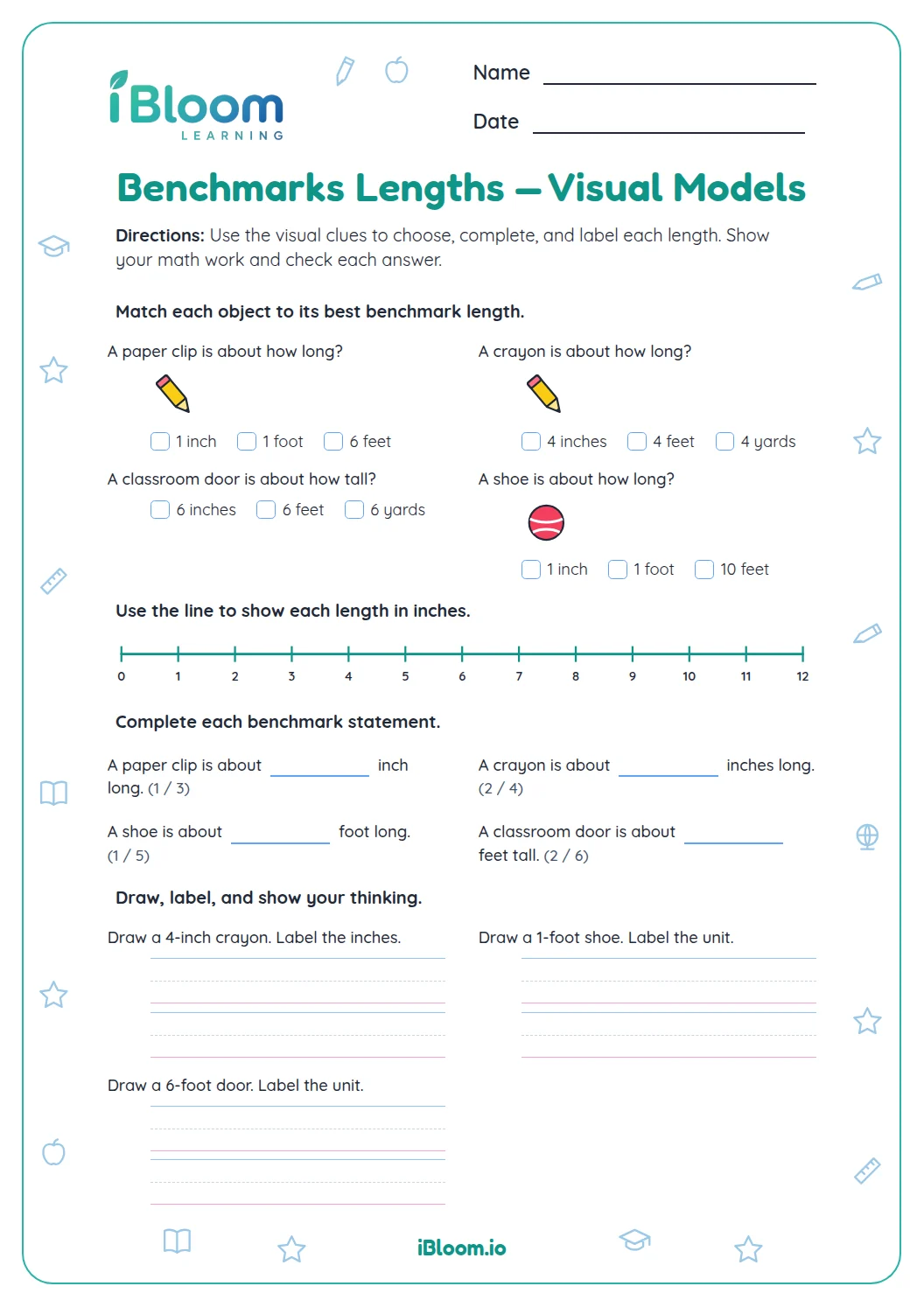
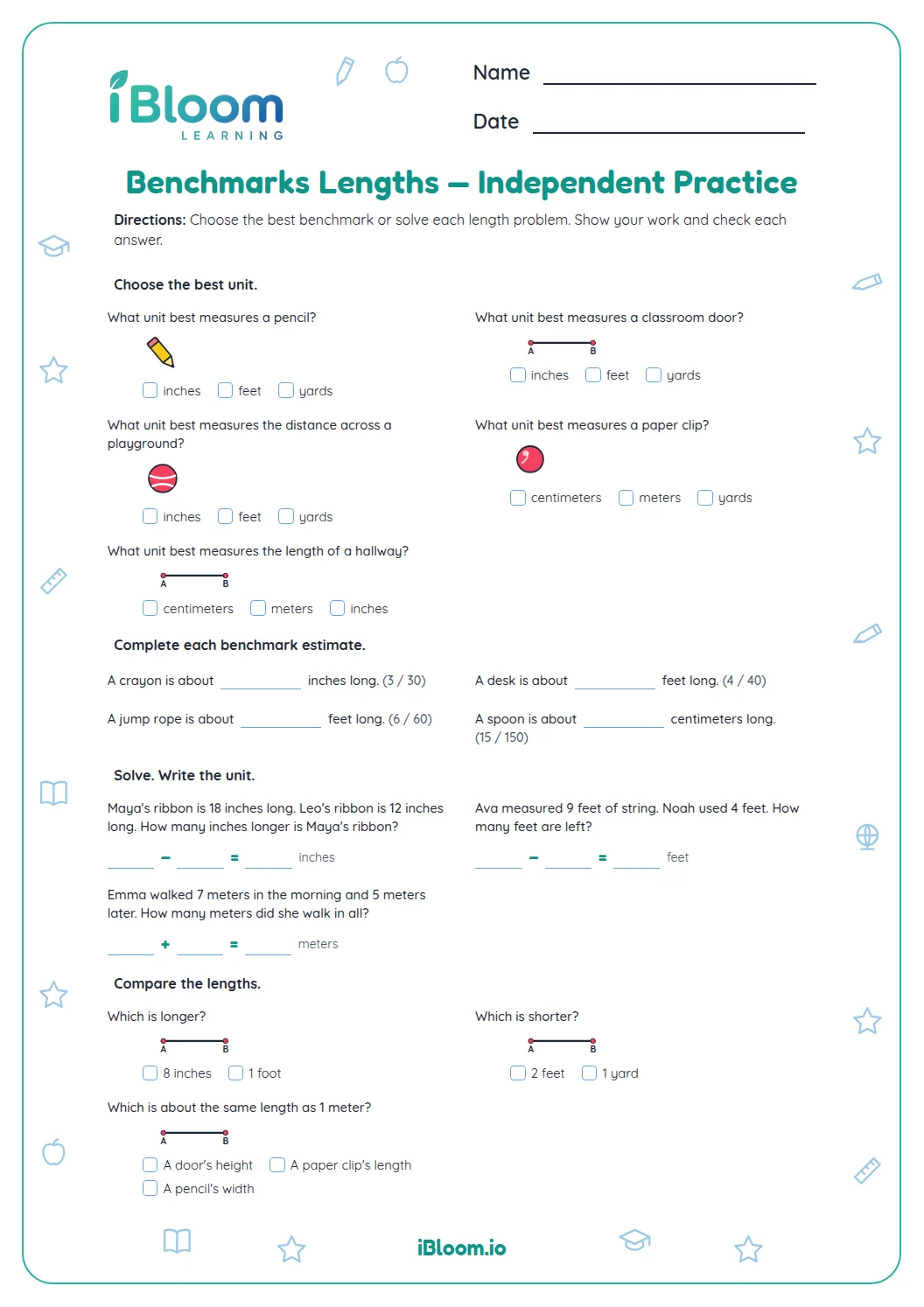
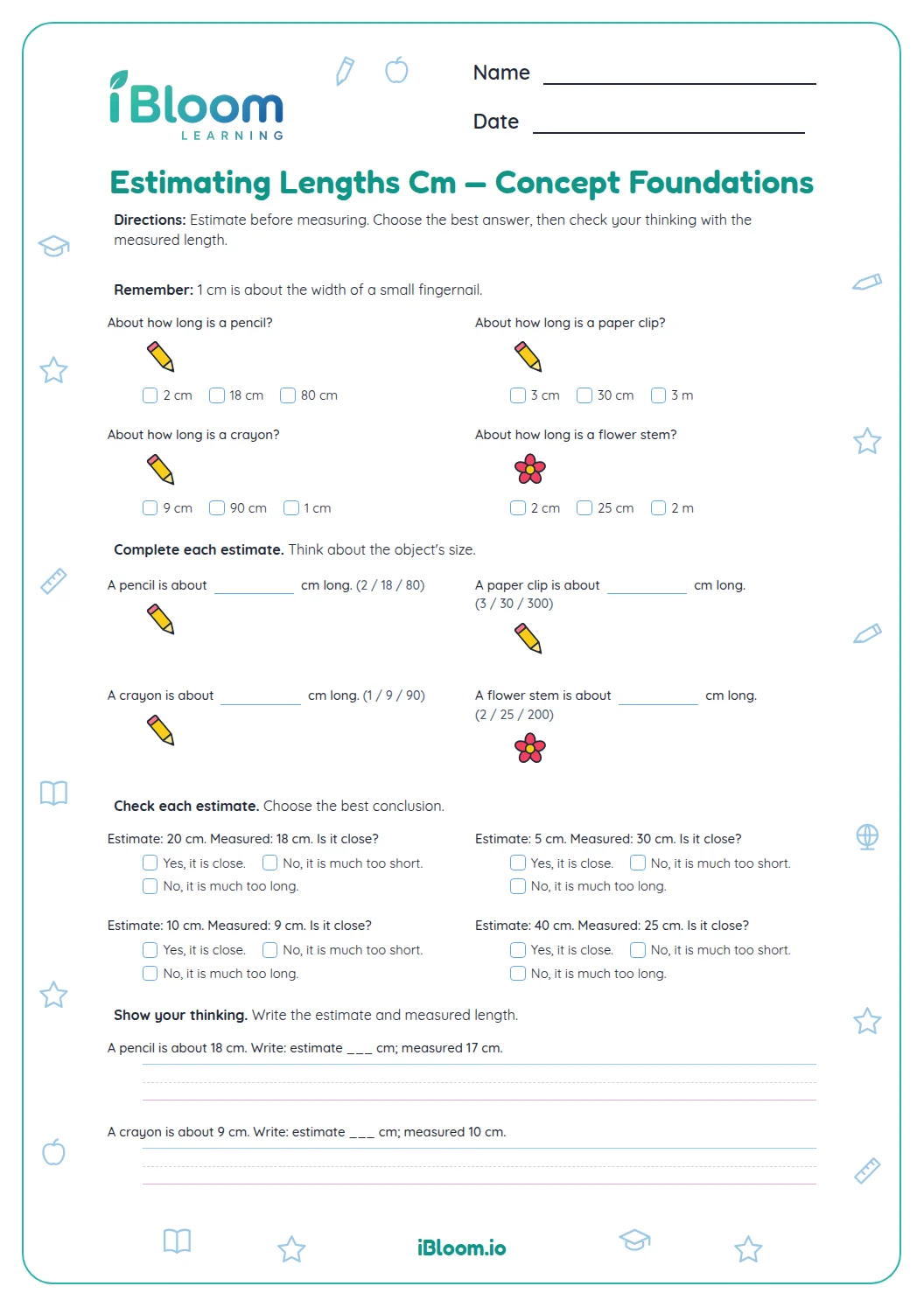
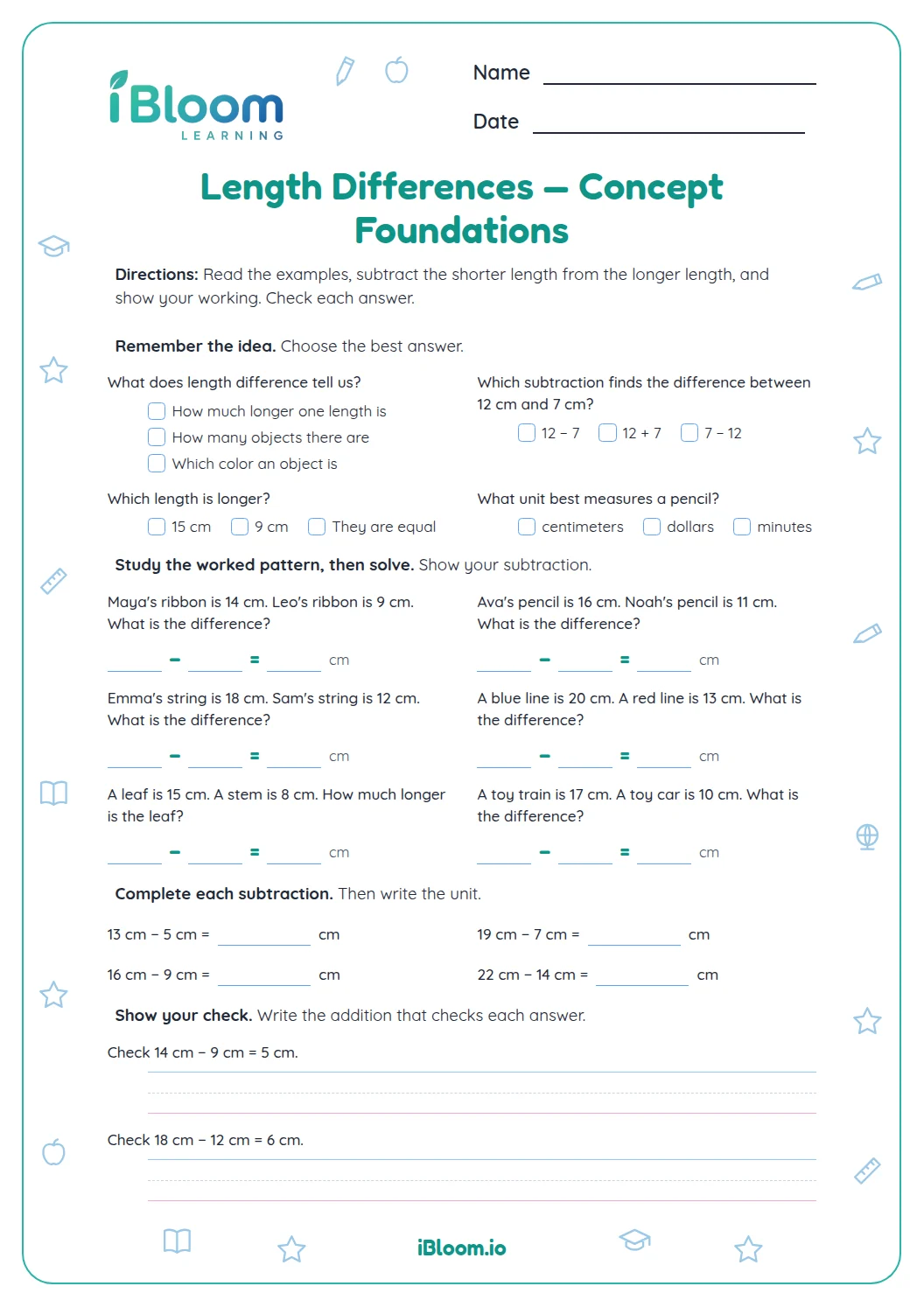
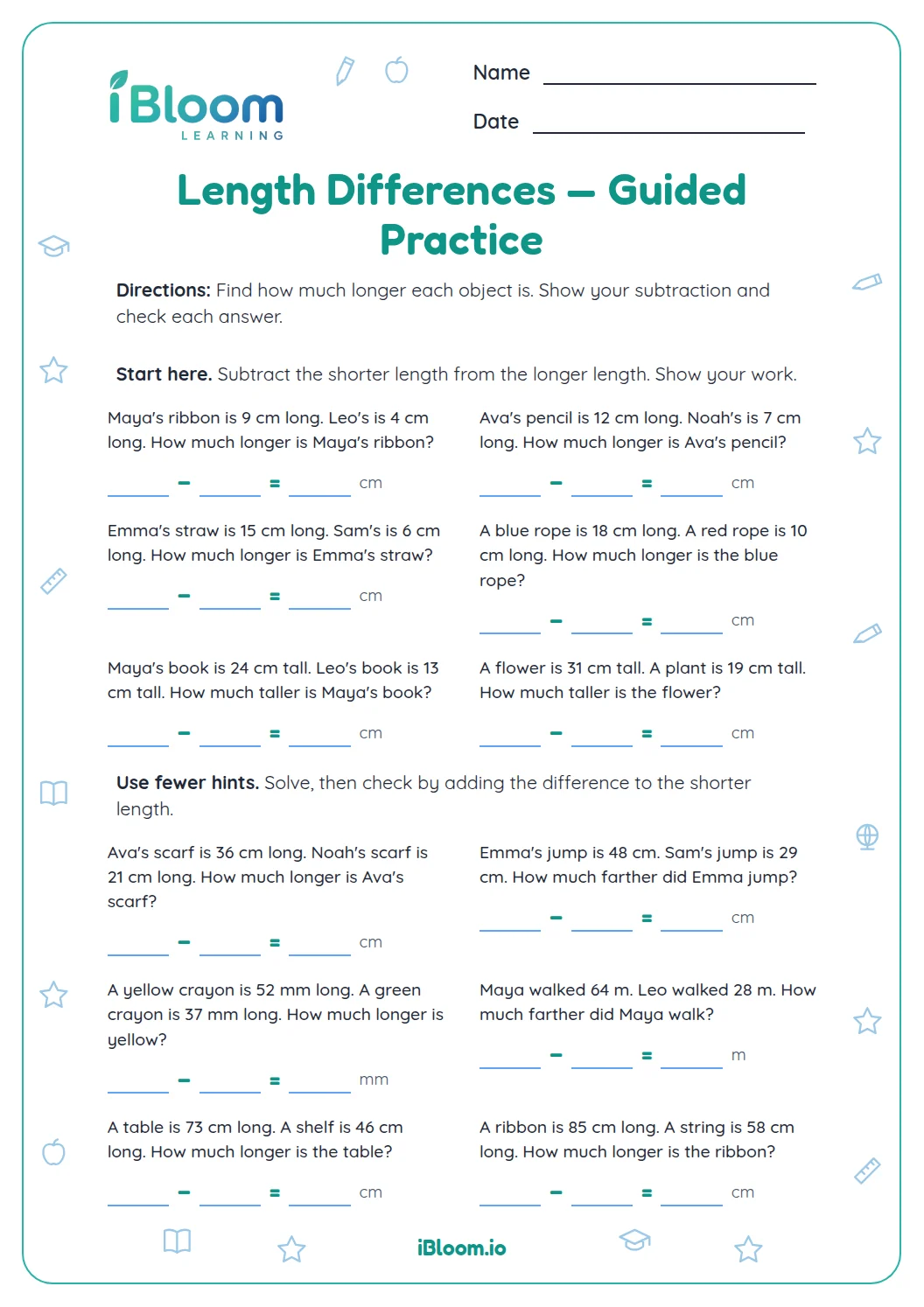
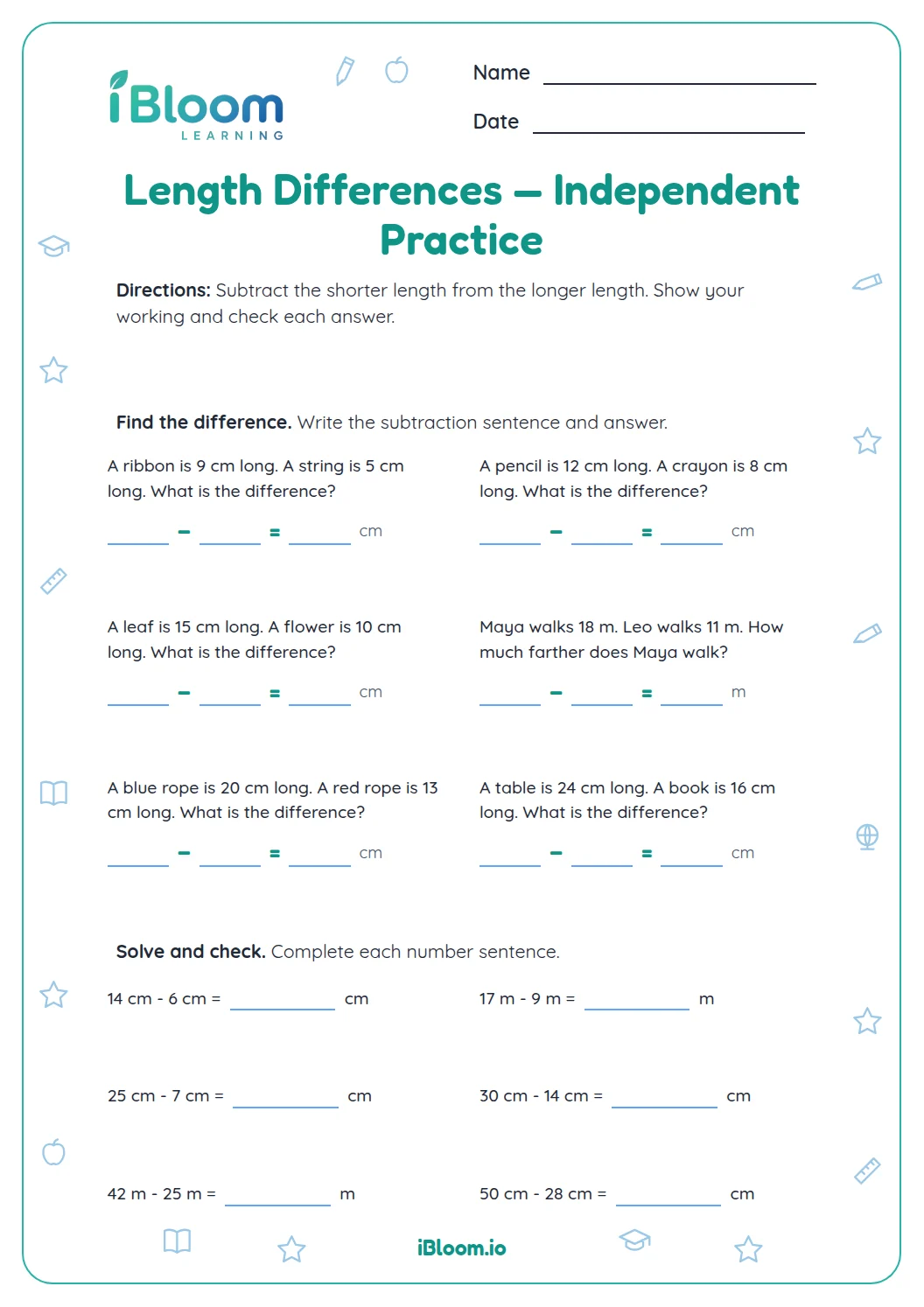
This free worksheet helps Grade 2 learners estimate lengths using inches, feet, and yards. Children select sensible units, compare familiar measures, fill in benchmark estimates, and explain two estimates using a familiar object as a benchmark. It practices CCSS 2.MD.A.3 with a separate answer key.
Aligned to 2.MD.A.3
How do you make a useful length estimate?
Choose a unit that fits the object, then picture a familiar length in that unit. A pencil is a few inches long, while a classroom door is several feet tall.
Question 6 compares 8 inches with 2 feet. Since 2 feet equals 24 inches, 2 feet is longer.
How to use this worksheet
- 1Name the object and choose inches, feet, or yards.
- 2Picture a familiar measured object beside it.
- 3Compare the two lengths before choosing a number.
- 4Check whether the estimate is sensible for the object.
- 5Explain your benchmark in the final two questions.
Common mistakes and quick fixes
The mistake
Choosing yards for a small object.
The fix
Ask whether the object fits in a hand; small objects are usually measured in inches.
The mistake
Mixing up inches and feet.
The fix
Remember 12 inches make 1 foot, so a few inches is less than a foot.
The mistake
Giving a number with no benchmark.
The fix
Name something measured or familiar that helps you picture the length.
Common Core alignment
This worksheet gives focused practice with the standard below.
Estimate lengths using inches, feet, and yards.
On this sheet: Questions choose suitable customary units and use familiar benchmarks for estimates.
Show the official wordingHide the official wording
Estimate lengths using units of inches, feet, centimeters, and meters.
What to practice next
Make more practice
Further reading
Questions parents and teachers ask
What is a good unit for a pencil?
A sensible estimate can differ from an exact measurement. Look at the object, compare it with a known length, and decide whether the number fits. For instance, an estimate of a few inches makes sense for a pencil, but not for a classroom door. Children should picture the object before settling on a number.
How can a child estimate a length?
A paper clip is close to an inch, while a table is several feet long. These benchmarks help children choose a reasonable unit and amount. Use the same unit when comparing lengths. Two feet is longer than eight inches because a foot contains twelve inches, or 24 inches total.
What is a benchmark?
A benchmark is a familiar length used for comparison, such as a foot-long ruler. Naming the benchmark helps explain how an estimate was made. A child might use the length of a ruler, a stride, or another object they know. The comparison should be clear enough to explain aloud.
Is there an answer key?
Yes. The separate key gives selected units and sample estimates. Written estimates may vary when the benchmark and reasoning are sensible. The key gives the worksheet’s intended choices, though real objects can vary in size. Accept a different estimate when the child gives a sensible benchmark.
What does the answer key accept for estimates?
The key gives sample estimates, while reasonable answers can vary with the object and benchmark a child names. For example, a desk length can be estimated in inches by comparing it with a ruler. Ask the learner to name the benchmark and explain how it supports the estimate.