





About this worksheet
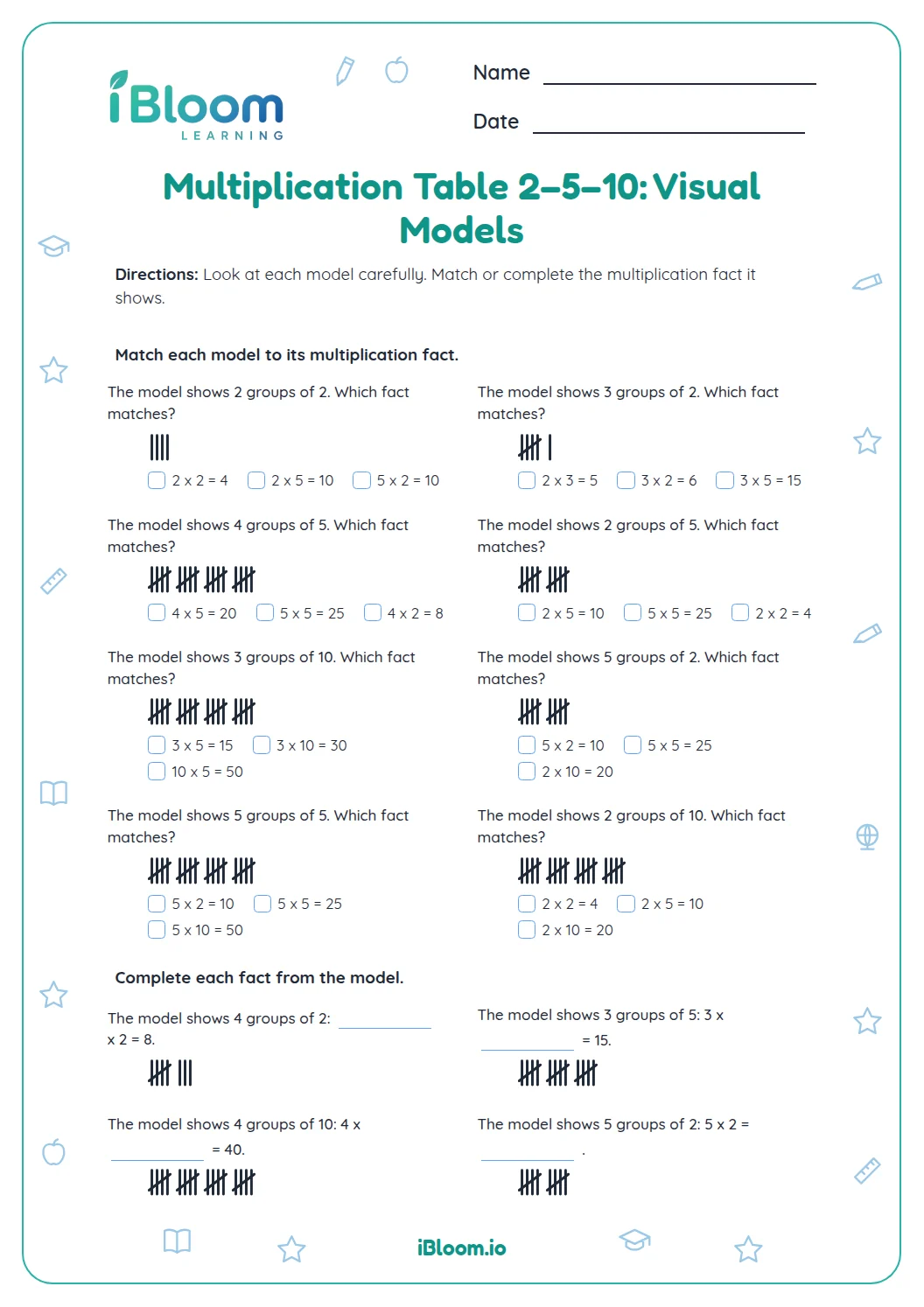
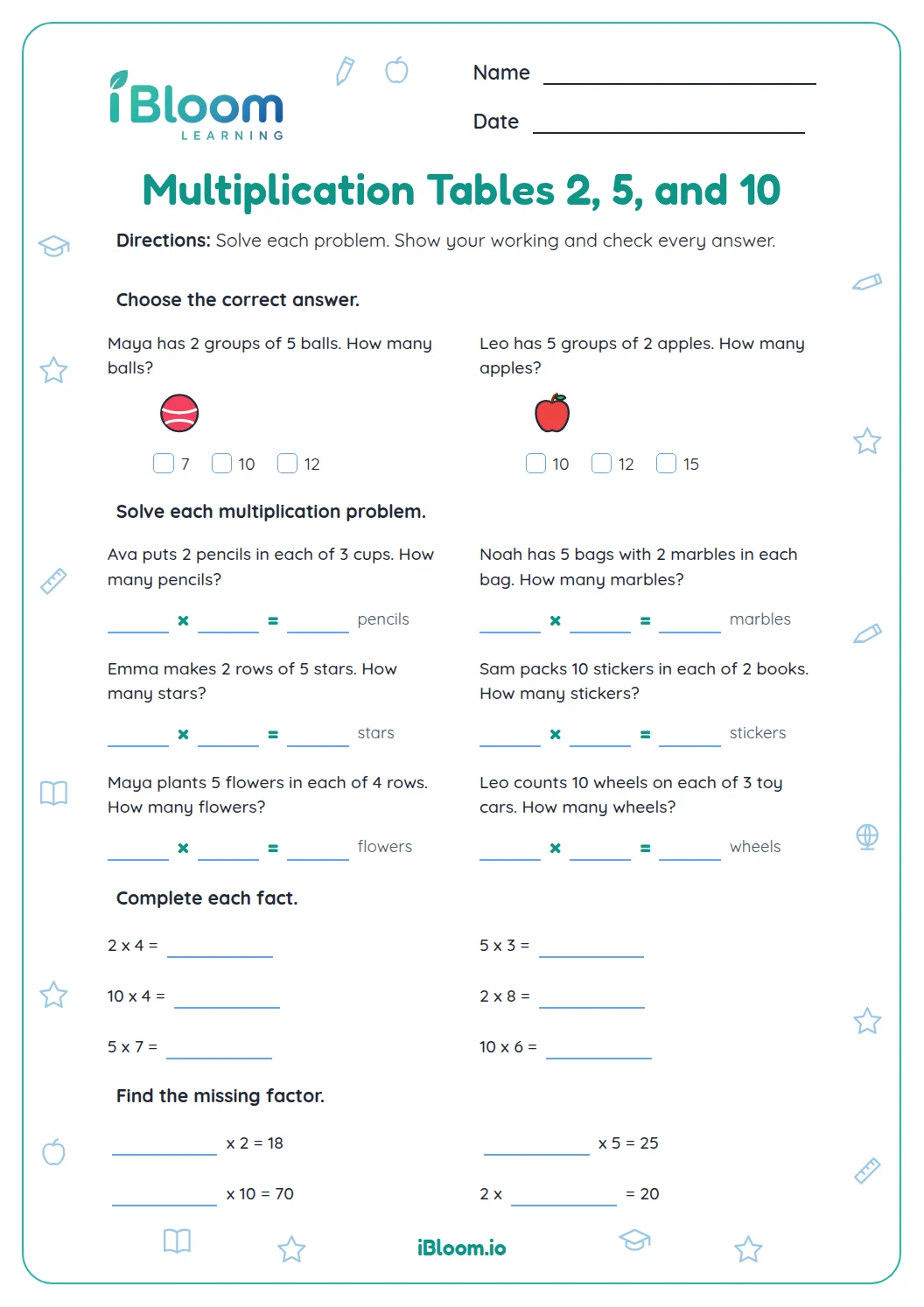
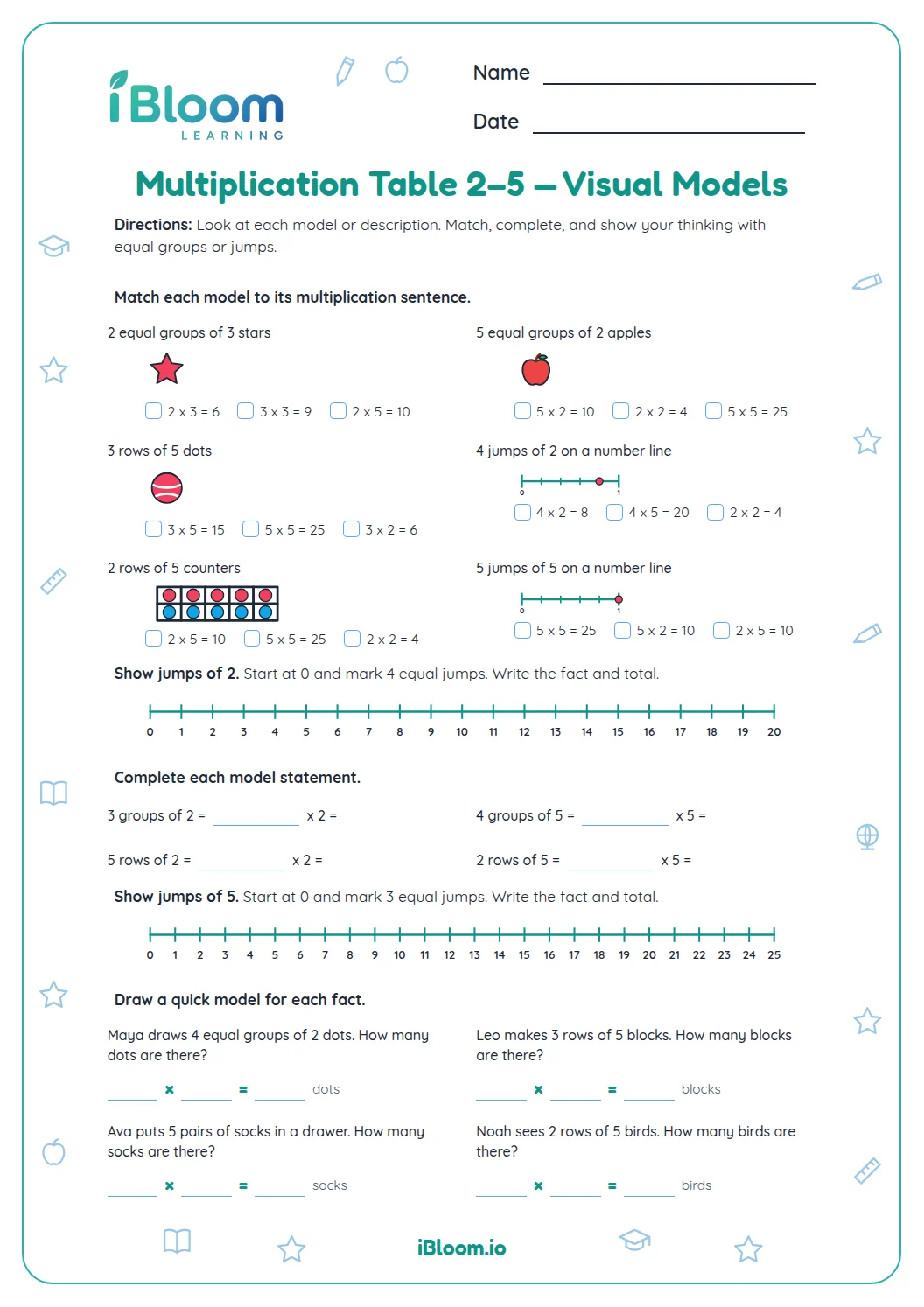
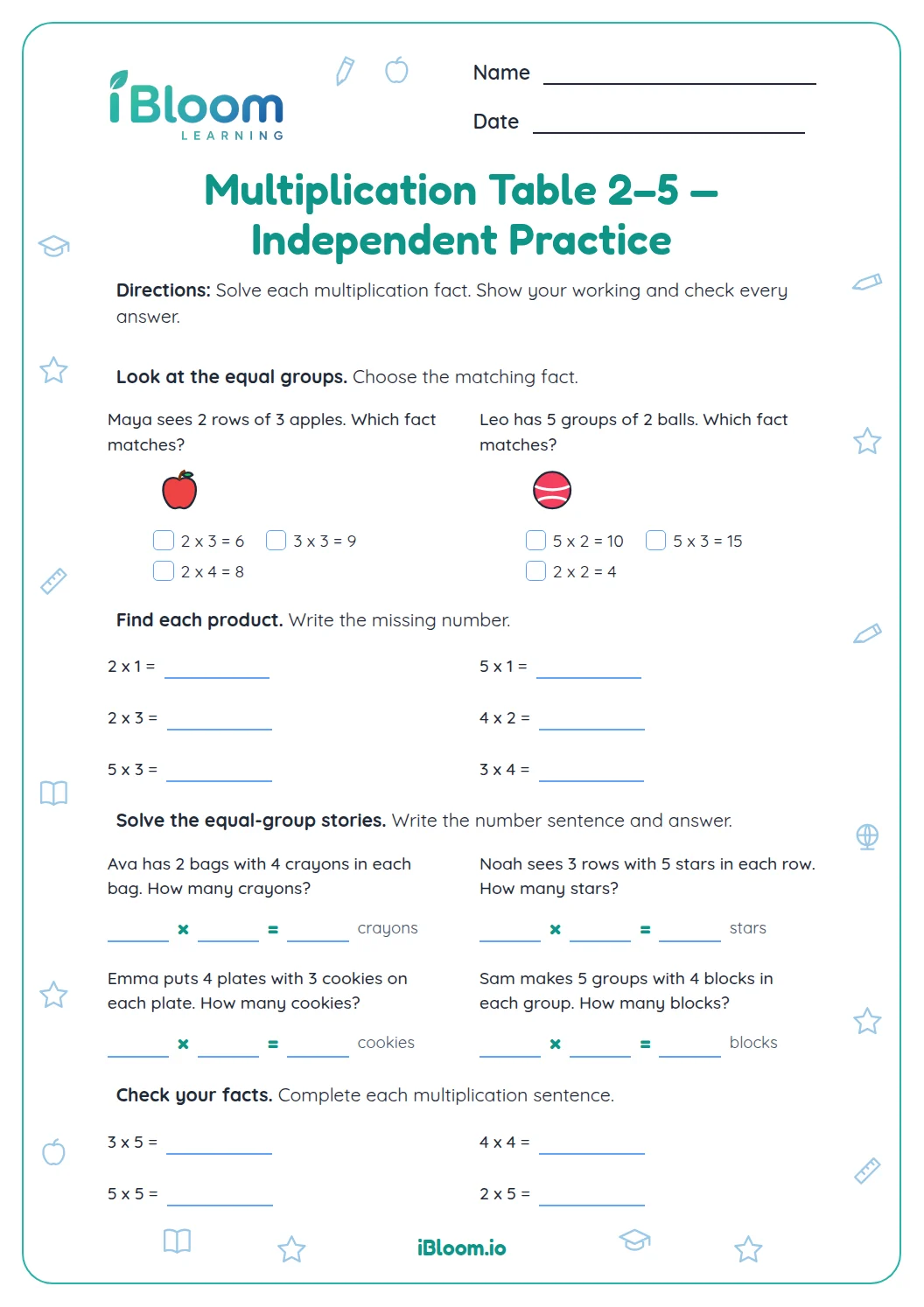
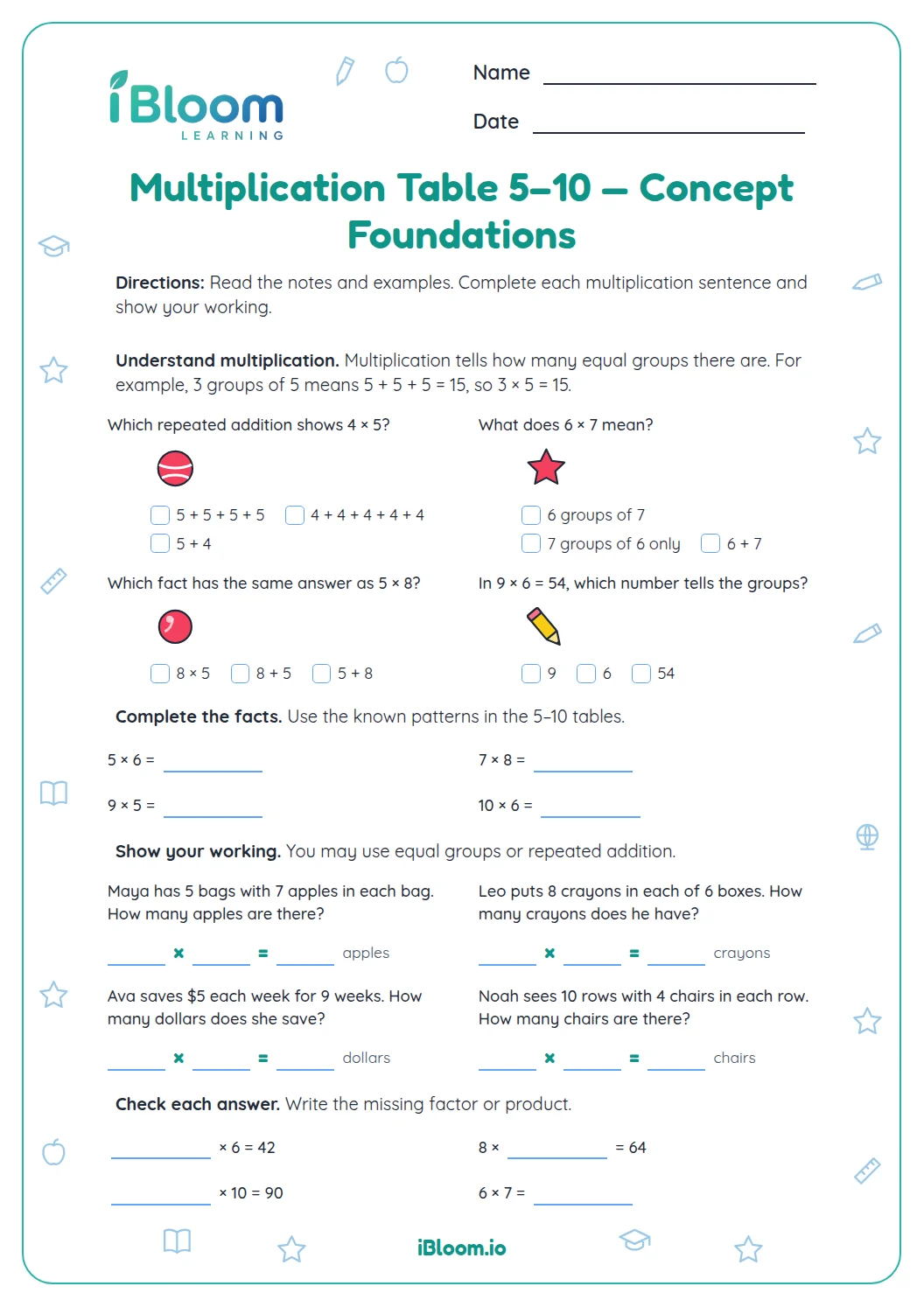
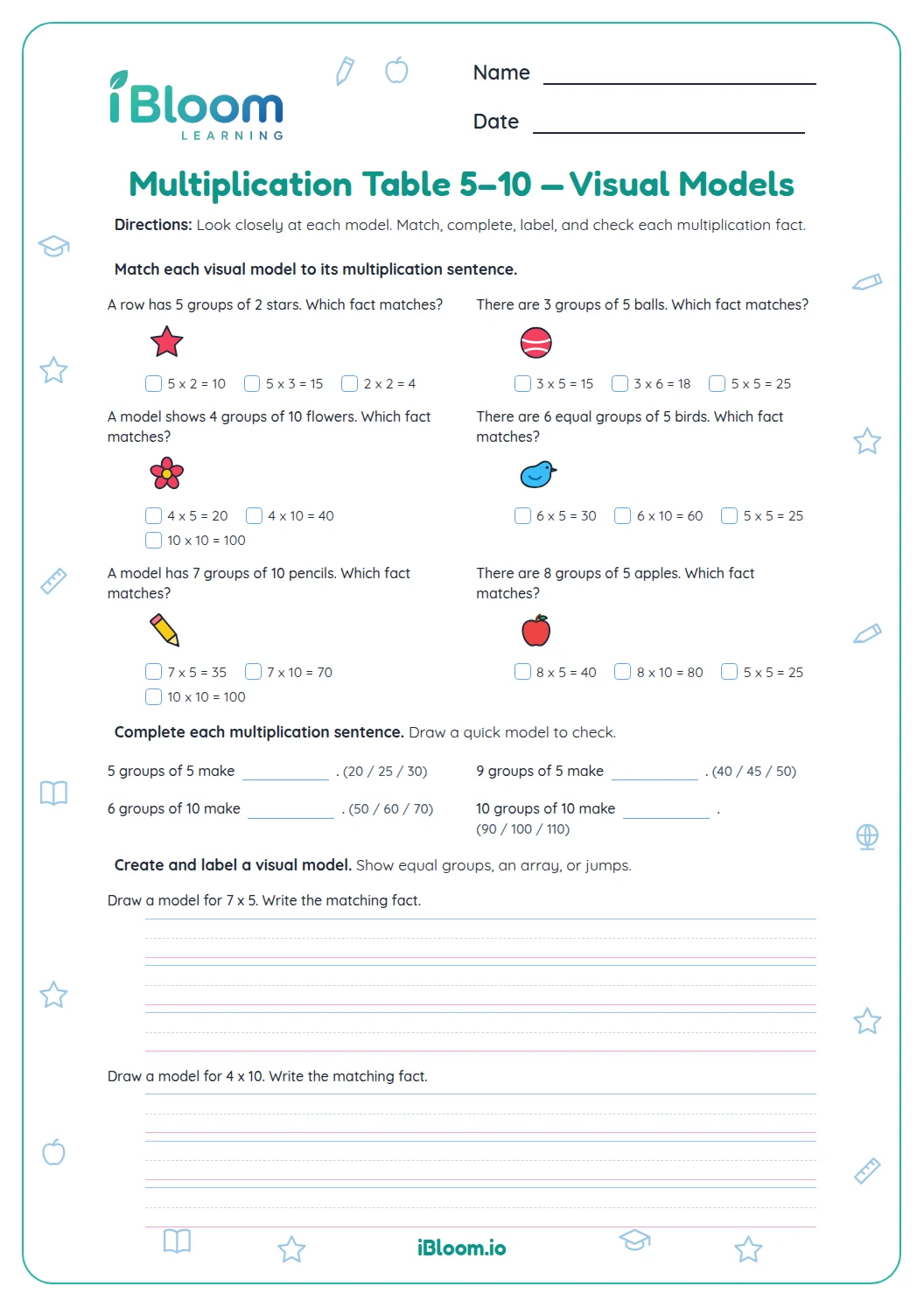
This free printable Grade 2 worksheet puts the 2s, 5s and 10s multiplication facts into everyday stories: boxes of crayons, baskets of oranges, packs of stickers, and rows of coins. Children first match a story or an array of stars to its multiplication fact, then solve three equal-group problems with working space, and finish by counting nickels and dimes in cents. It practices Common Core 3.OA.A.3, solving equal-group and array problems with multiplication, and suits children who are skip-counting by 2s, 5s and 10s. There are 8 questions on two pages, with a separate answer key.
Aligned to 3.OA.A.3
How do equal groups turn into a multiplication fact?
A multiplication story always has two pieces of information: how many groups there are, and how many are in each group. In question 5, there are 4 baskets and 5 oranges in each, so the fact is 4 × 5. Children who are not yet sure of the fact can add the same number again and again, 5 + 5 + 5 + 5, or skip-count by 5s and keep track on their fingers.
Once the fact is found, the answer needs a unit. The worksheet asks for a number and a word, such as 20 oranges, so children remember that the answer is a count of things and not just a number.
- 1A farmer packs 4 baskets with 5 oranges in each.
- 2groups: 4, in each group: 5
- 34 × 5 = 20
- 4Check: 5 + 5 + 5 + 5 = 20
- 5Answer: 20 oranges
Why count coins on a times table worksheet?
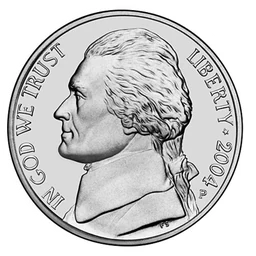
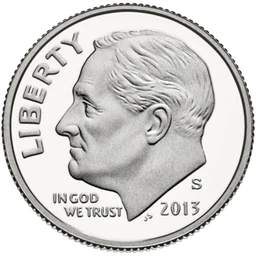
Nickels are worth 5 cents and dimes are worth 10 cents, so counting them is skip-counting by 5s and 10s in real life. Question 7 shows six nickels, and 6 × 5 = 30 cents. Question 8 shows four dimes, and 4 × 10 = 40 cents.
Coins also make a good check. Children can touch each coin as they count, 5, 10, 15, 20, 25, 30, and see that the multiplication gives the same total.
What is on this worksheet?
Eight questions on two pages, with working space for the stories.
- Part A, Which fact helps?: two stories and a 3-by-5 array of stars, each with three facts to choose from
- Part B, Solve the story: three problems about crayons, oranges and stickers, each with working space and an answer box for the unit
- Part C, Count the coins: six nickels and four dimes, with a number sentence to complete
- A 2-page answer key with the facts, answers and units
What does the array of stars show?
Question 3 draws 3 rows of 5 stars. The array is another way to see equal groups: each row is a group of 5, and there are 3 rows. Children can find the total with 3 × 5 or with 5 + 5 + 5. If a child chooses 3 + 5, ask them to count the stars to see that 8 is not enough.
How to use this worksheet at home or in class
- 1Warm up by skip-counting aloud by 2s, 5s and 10s up to 50, tapping a finger for each count.
- 2Do question 1 together. Ask: how many bags, and how many apples in each bag?
- 3Look at the stars in question 3. Count the rows, count the stars in a row, then choose the fact.
- 4Let your child solve Part B alone and write the unit on every answer. Remind them to show their working.
- 5For the coins, count by 5s for nickels and by 10s for dimes first, then write the multiplication and compare.
- 6Check with the answer key and talk through any story where the answer does not match.
Common mistakes and quick fixes
The mistake
Adding the two numbers in the story, as in 4 + 5 = 9 for 4 baskets with 5 oranges each.
The fix
Ask whether the groups are the same size. If there are 4 equal baskets, the oranges are 5 + 5 + 5 + 5, so multiply.
The mistake
Treating a nickel as 10 cents or a dime as 5 cents, so 6 nickels become 60.
The fix
A dime is smaller than a nickel but worth more. Say the values aloud before counting: nickel 5, dime 10.
The mistake
Writing only the number, like 30, with no unit.
The fix
Reread the question and finish the sentence: 30 stickers. The unit says what was counted.
Common Core alignment
Most US states use the Common Core standards or a close state version. This sheet practices the standard below.
Solve equal-group word problems with multiplication within 100.
On this sheet: Every story is equal groups of 2, 5 or 10, solved with an equation and a unit, and question 3 shows an array.
Show the official wordingHide the official wording
Use multiplication and division within 100 to solve word problems in situations involving equal groups, arrays, and measurement quantities, e.g., by using drawings and equations with a symbol for the unknown number to represent the problem.
What to practice next
Make more practice
Further reading
Questions parents and teachers ask
Does my child need to know the whole times table first?
No. The sheet uses only the 2s, 5s and 10s, which children can reach by skip-counting. If a fact is not memorized yet, they can add the groups, like 5 + 5 + 5 + 5, or count on their fingers. The goal is to see the equal groups in the story, and the facts come with practice.
What is the answer to Maya's apples in question 1?
The fact is 4 × 5, because Maya has 4 bags with 5 apples in each one. The other choices do not match: 4 + 5 adds numbers that should be multiplied, and 5 × 10 uses a 10 that is not in the story. Children can also check by counting 5, 10, 15, 20.
Why does the sheet ask for a unit with each answer?
A unit tells what was counted. Writing 10 crayons instead of 10 helps a child connect the number to the story and notice answers that do not fit. It also builds a habit that matters in later grades, when answers in grams, centimeters and dollars all need a label.
Is 3 × 5 the same as 5 × 3 for the array?
Yes, the total is the same. The array shows 3 rows of 5 stars, so 3 × 5 matches how it is drawn, and 5 + 5 + 5 is the matching sum. A child who turns the page sideways sees 5 rows of 3 and writes 5 × 3, with the same total of 15.
How many cents are six nickels worth?
Six nickels are worth 30 cents, because 6 × 5 = 30. Children can count by 5s while touching each coin: 5, 10, 15, 20, 25, 30. Question 8 does the same with four dimes, 4 × 10, which makes 40 cents. Counting by 10s is usually the easier of the two.
Is there an answer key for this worksheet?
Yes. The answer key has two pages and shows the matching fact for Part A, each Part B answer with its unit, and the cents for the nickels and dimes. Print the worksheet by itself and keep the key for checking, or download the worksheet and key together as a free PDF.