


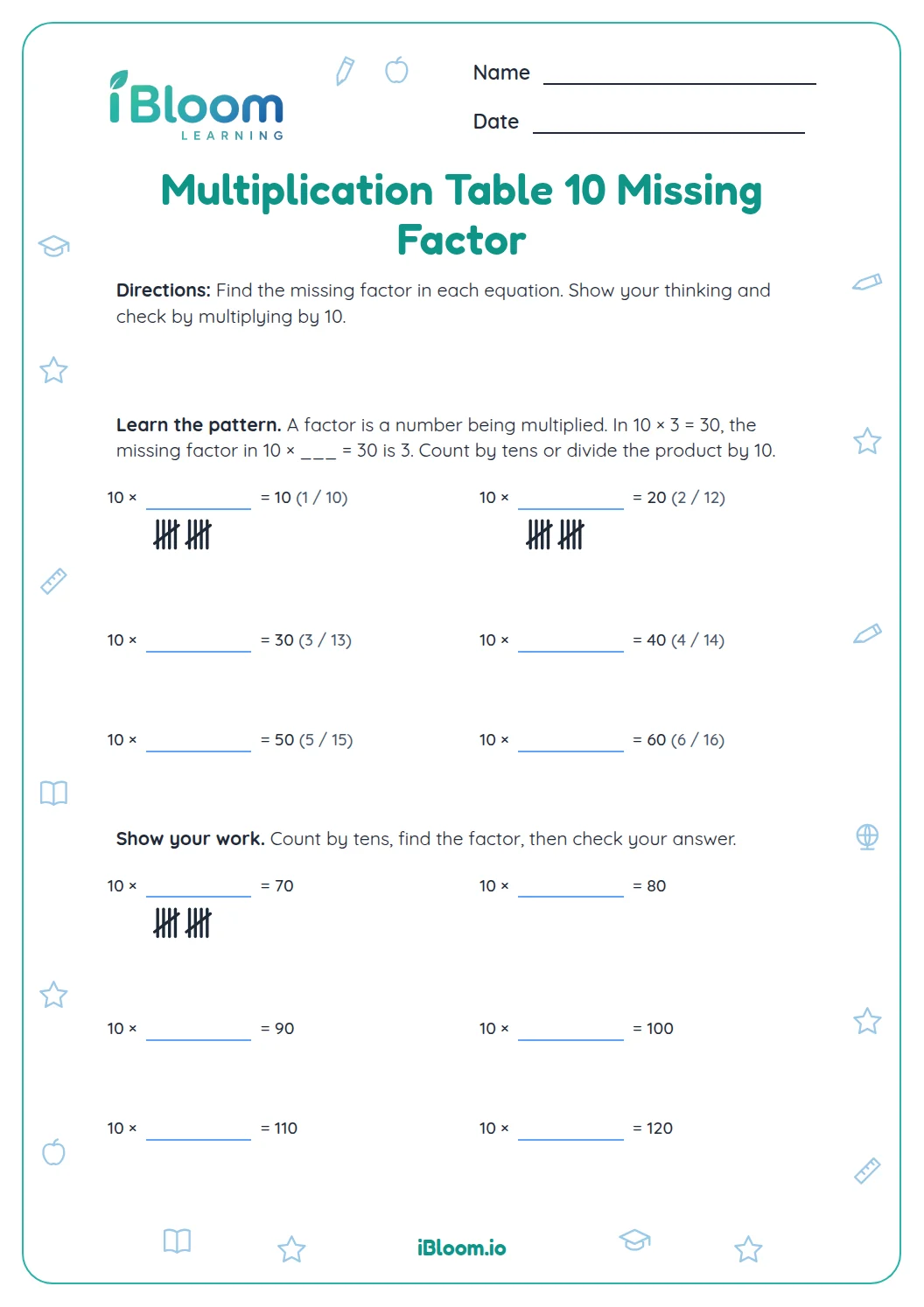
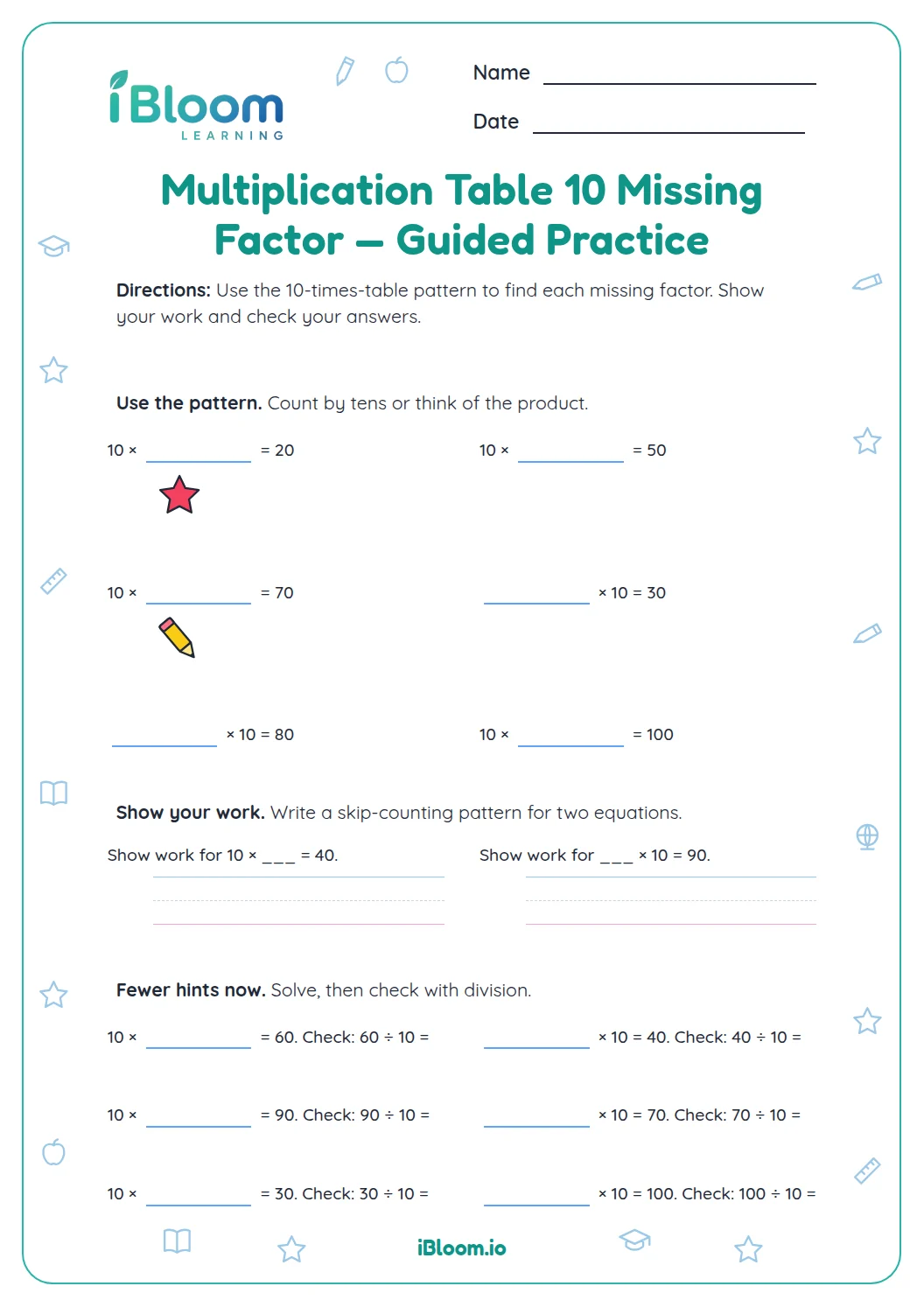
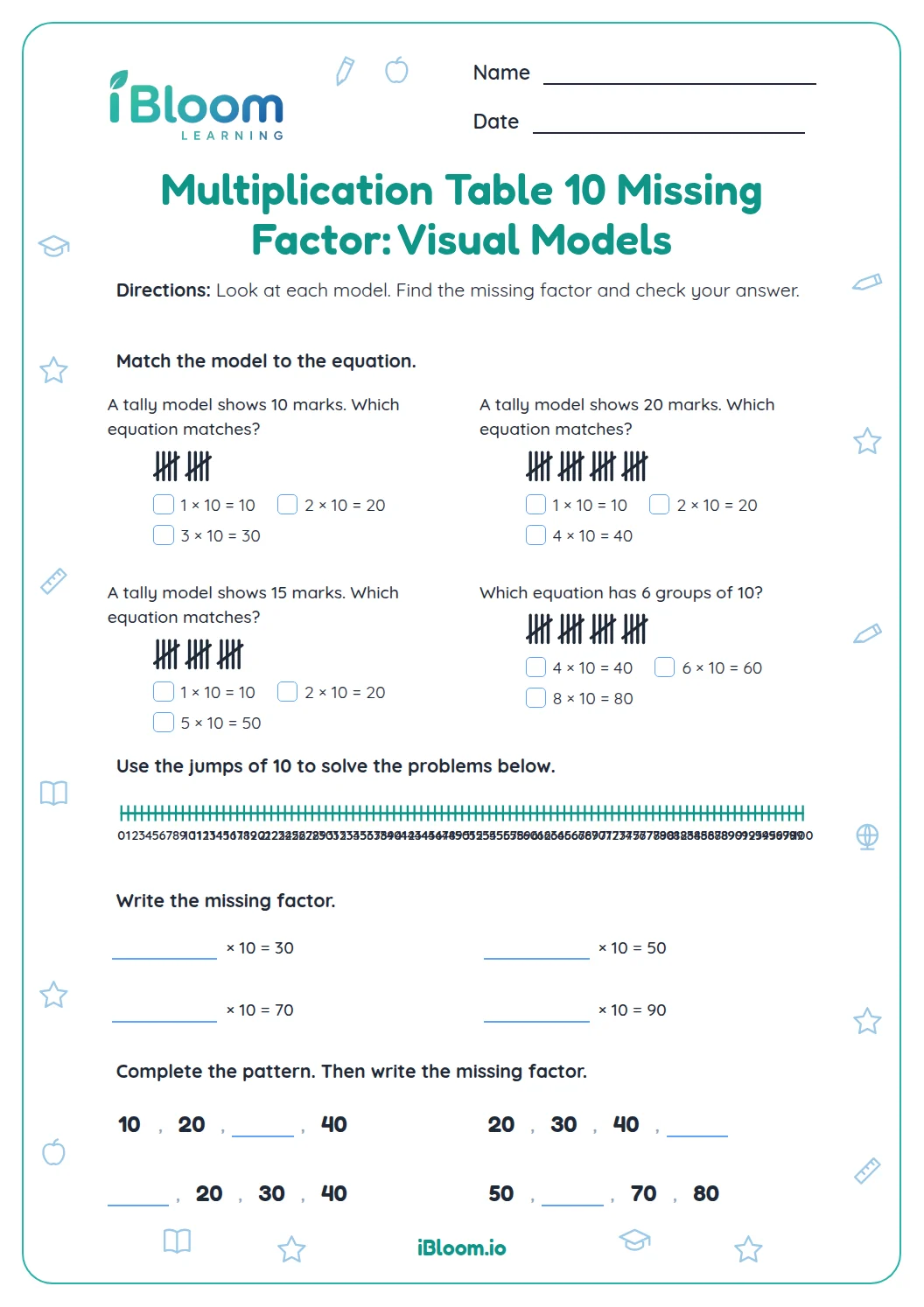
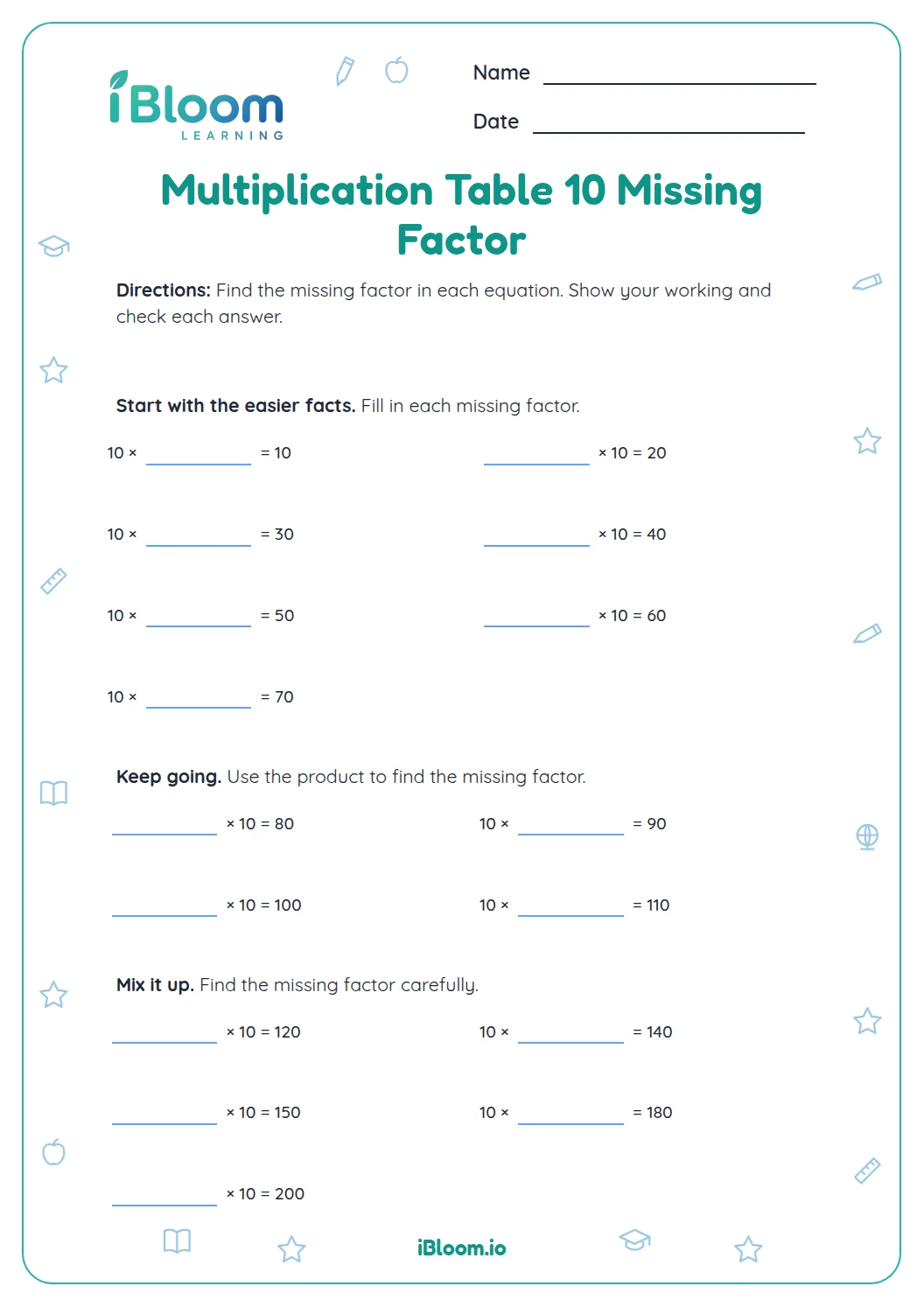
About this worksheet
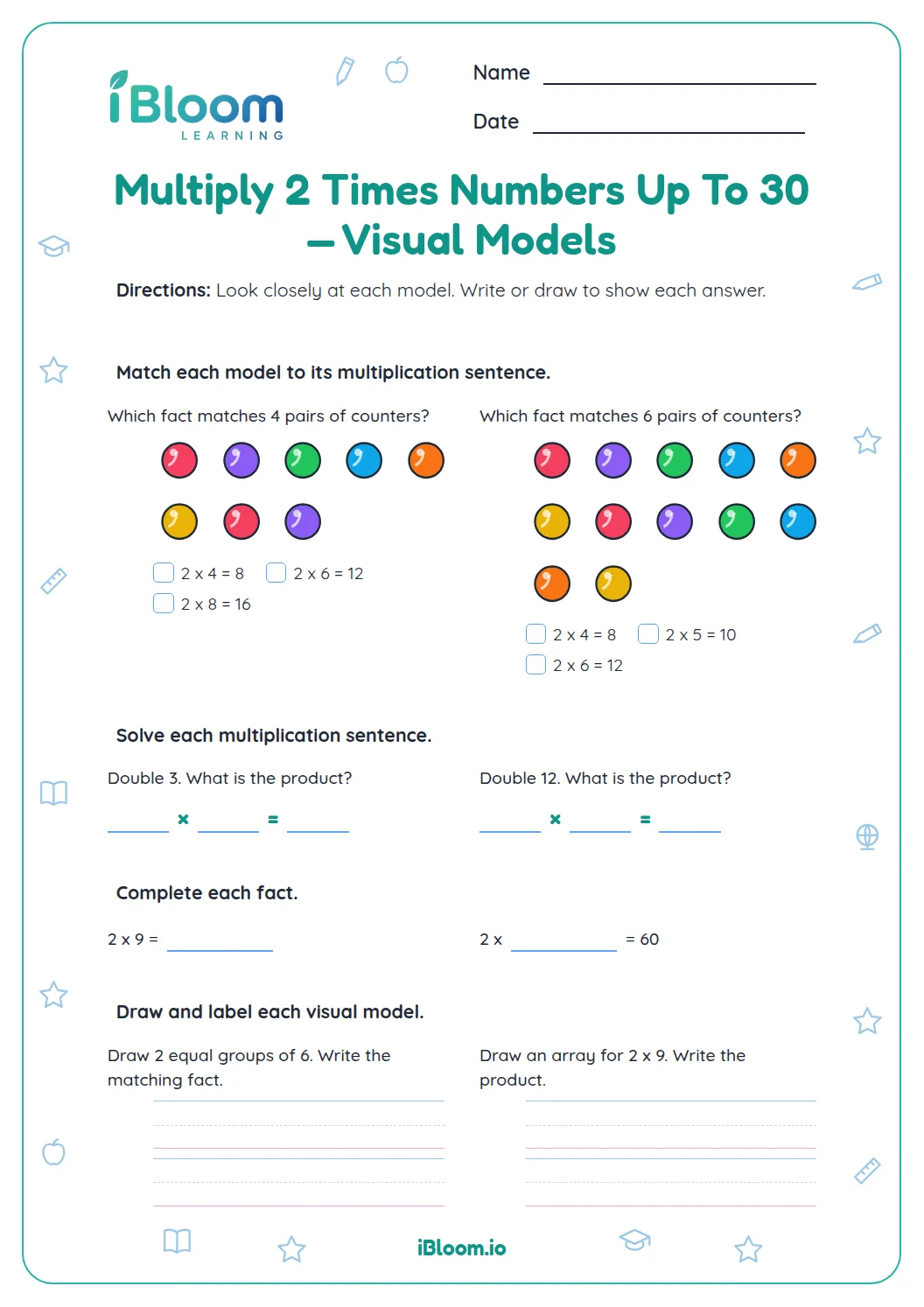
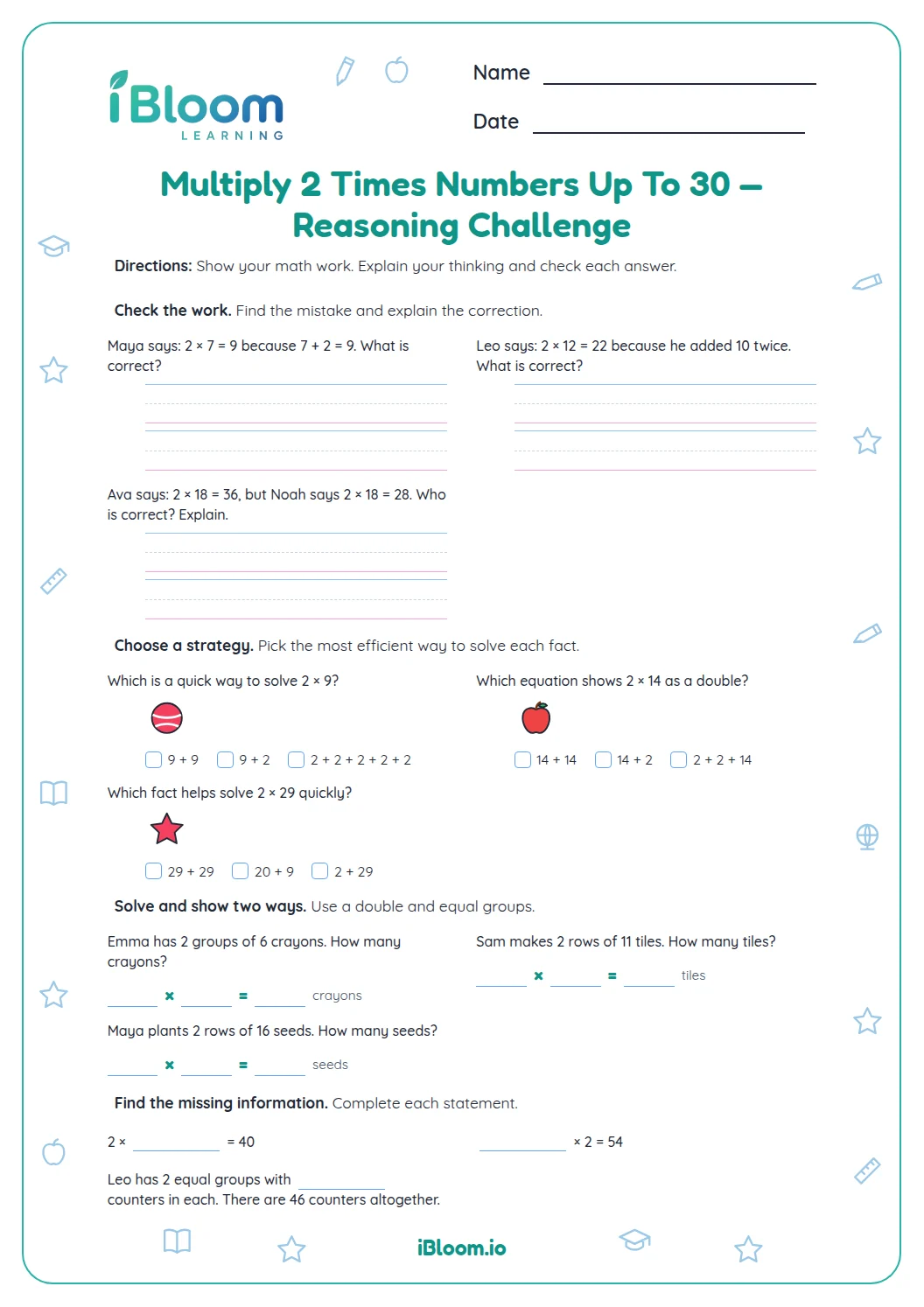
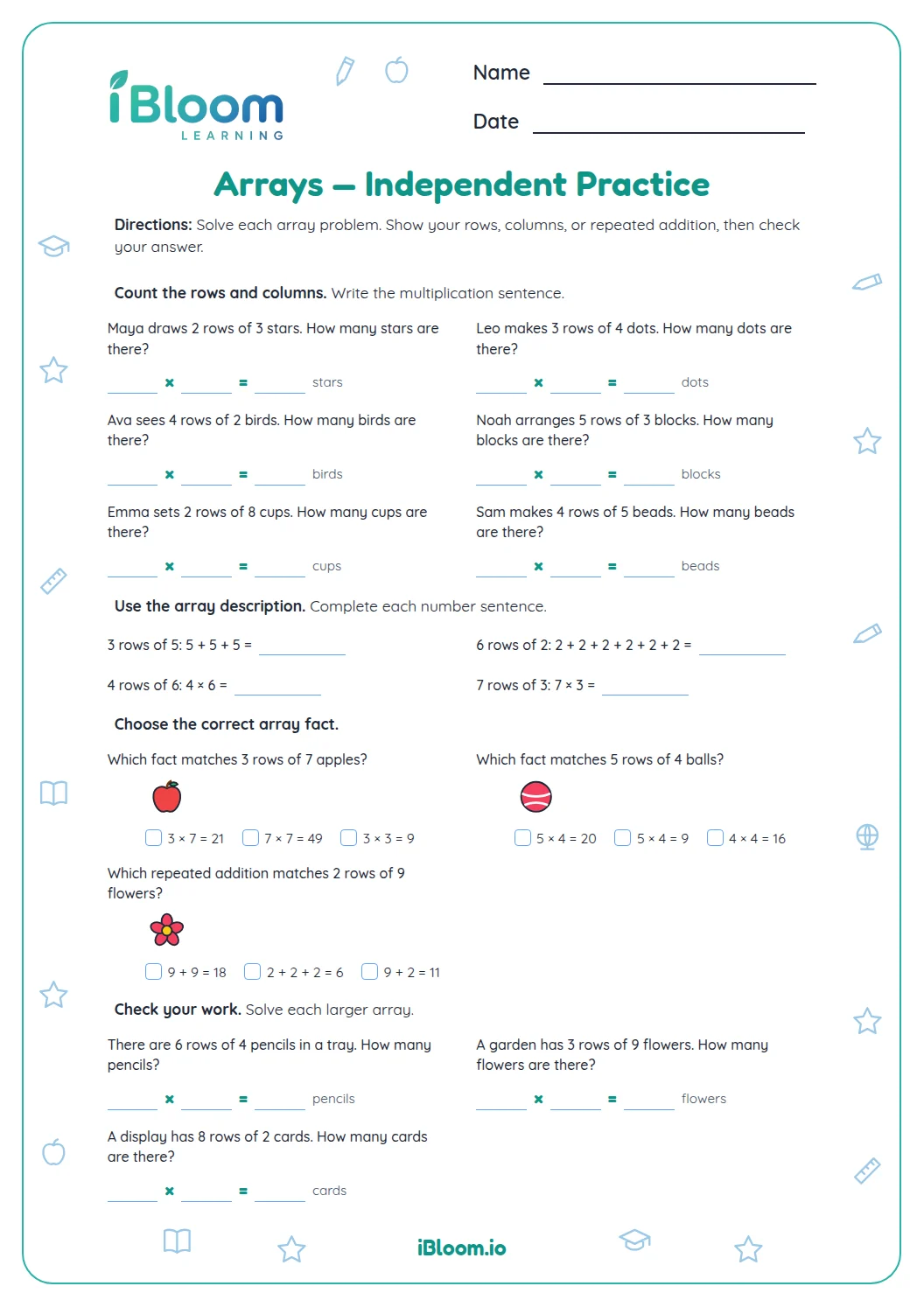
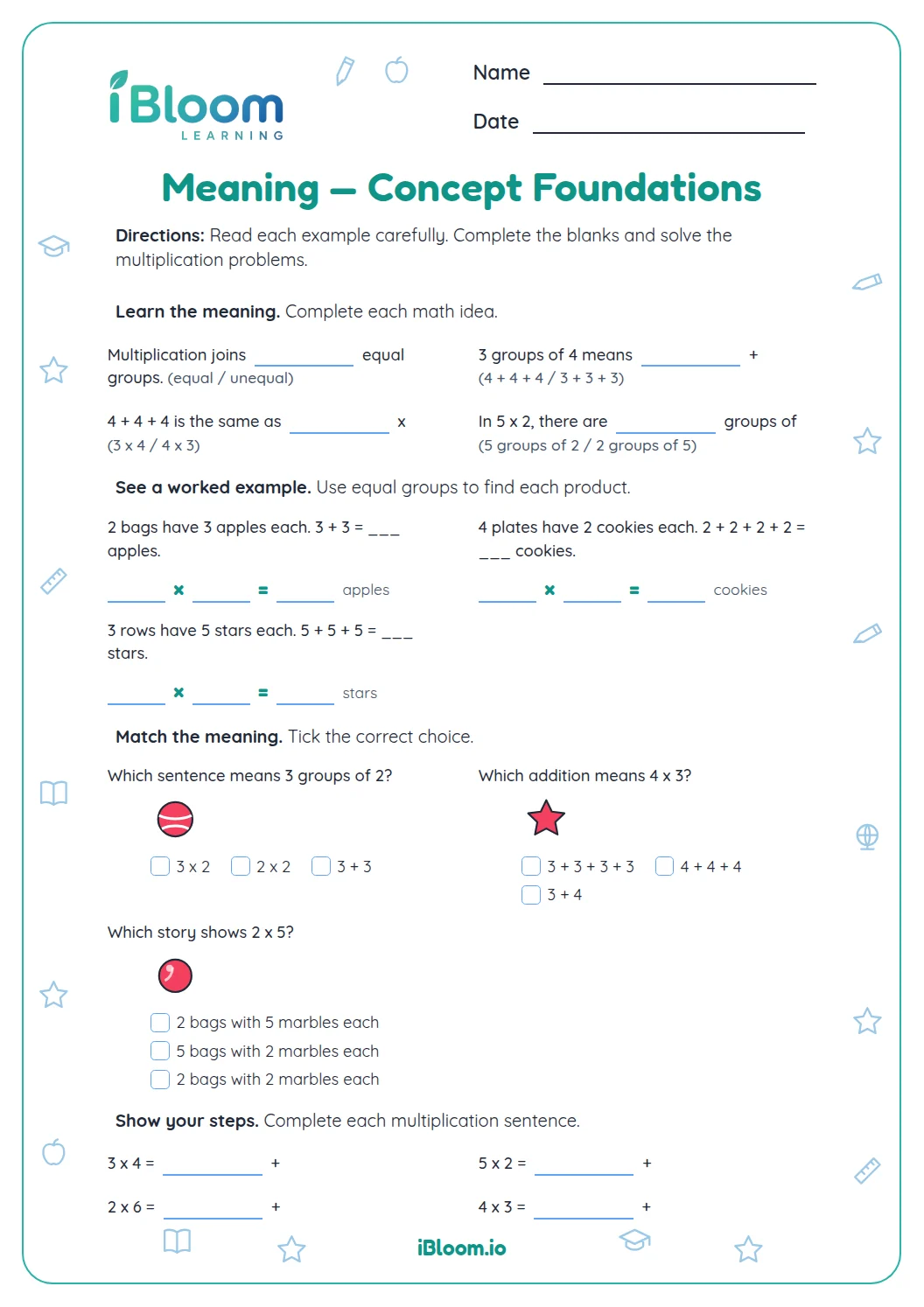
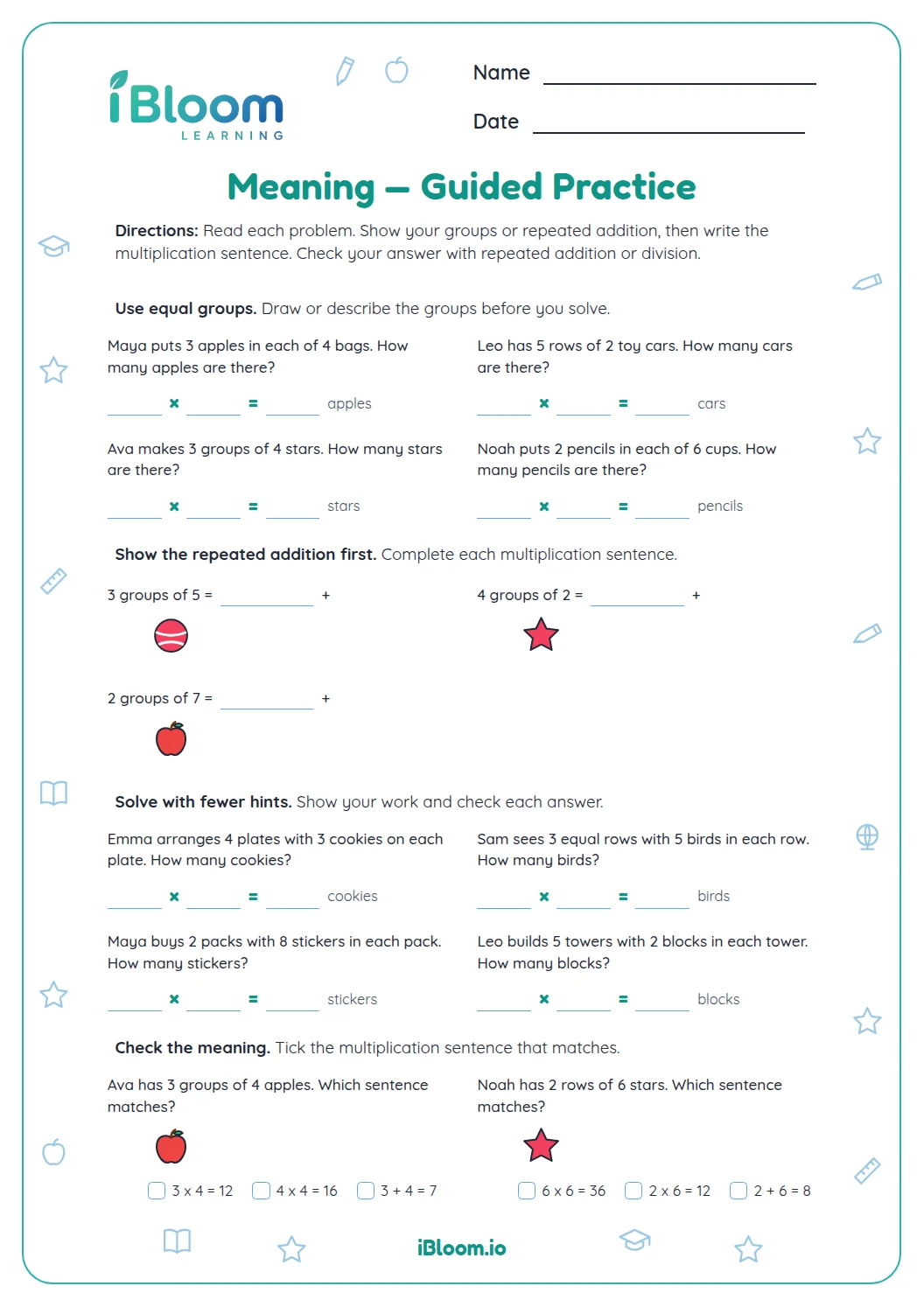
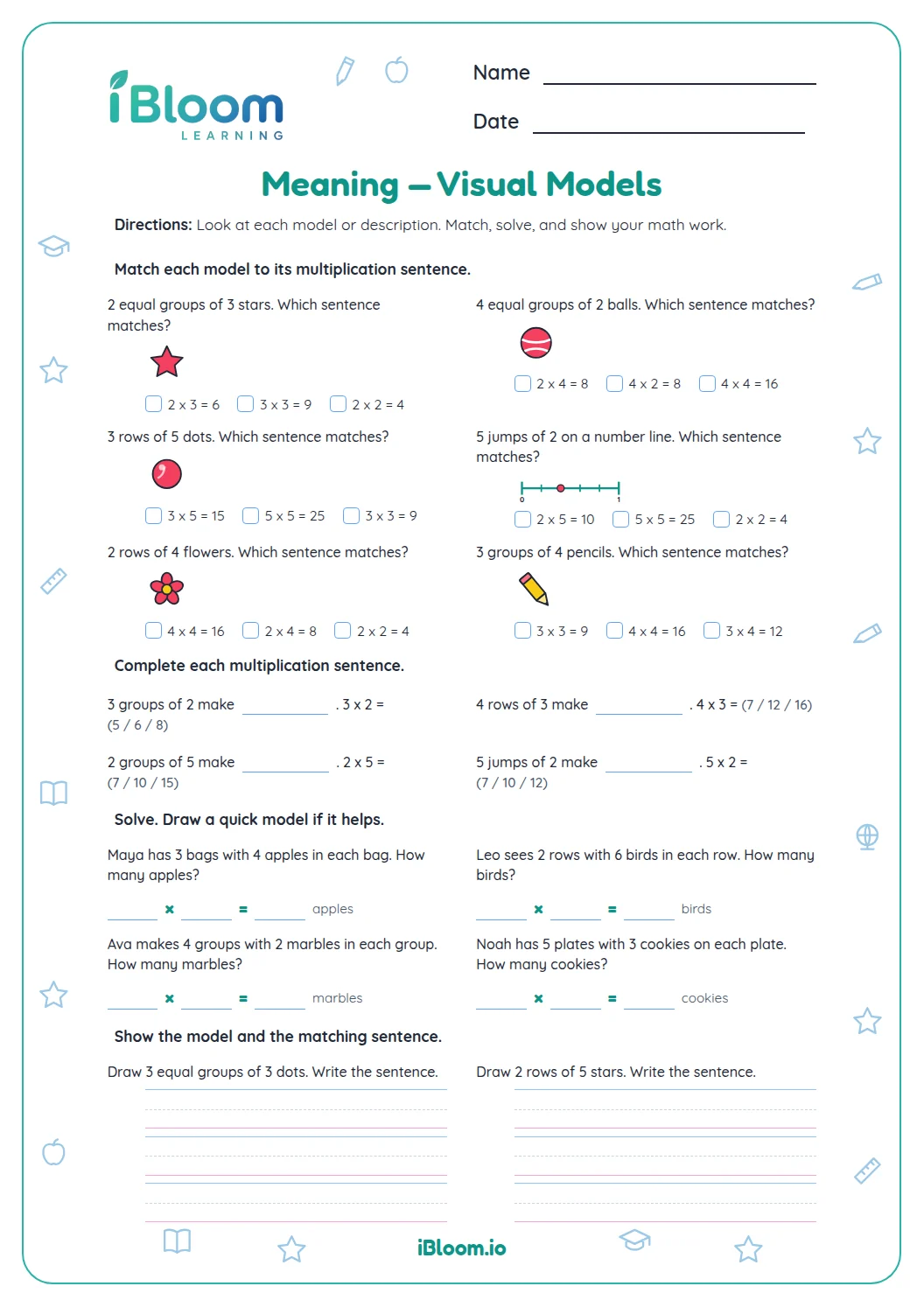
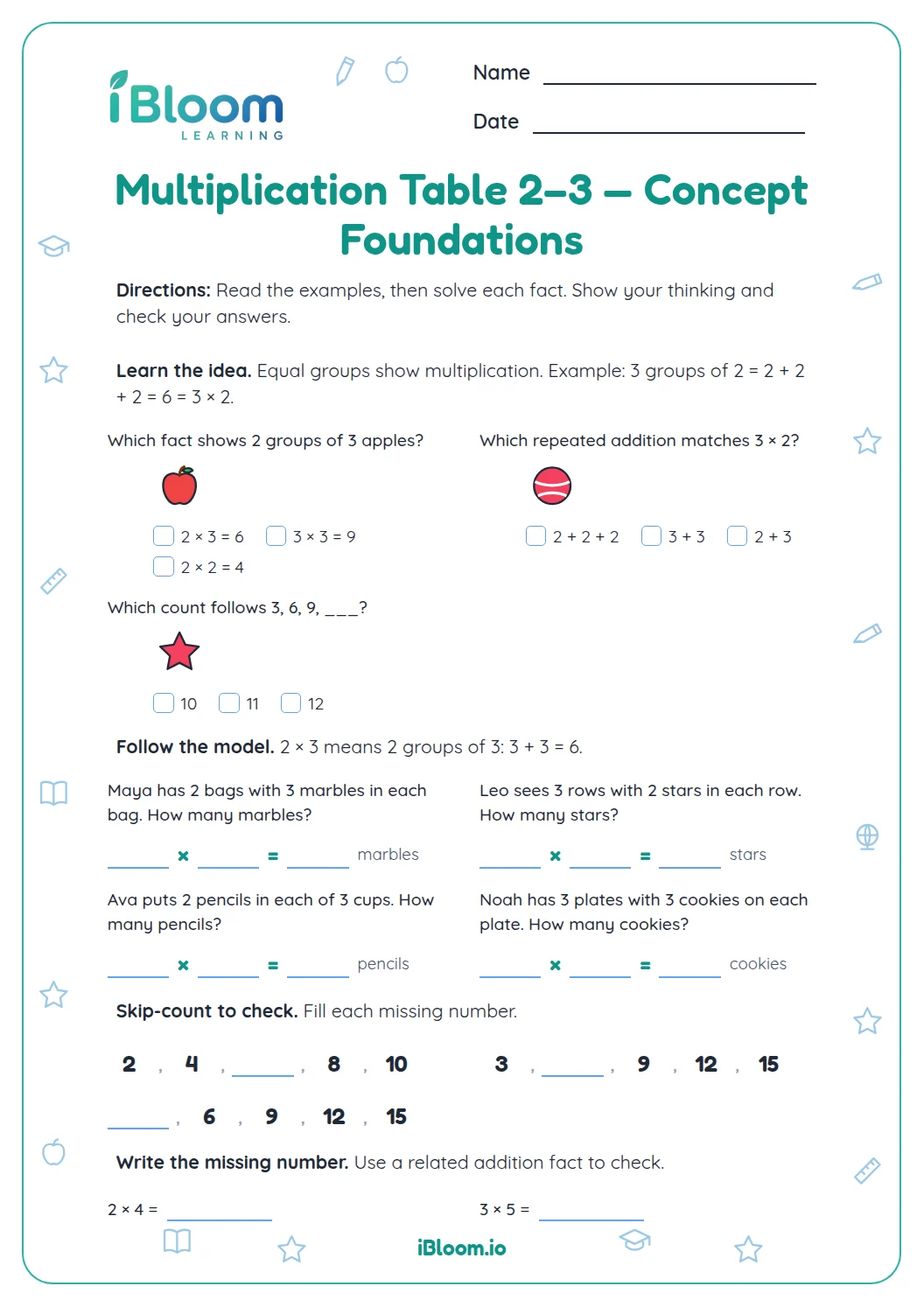
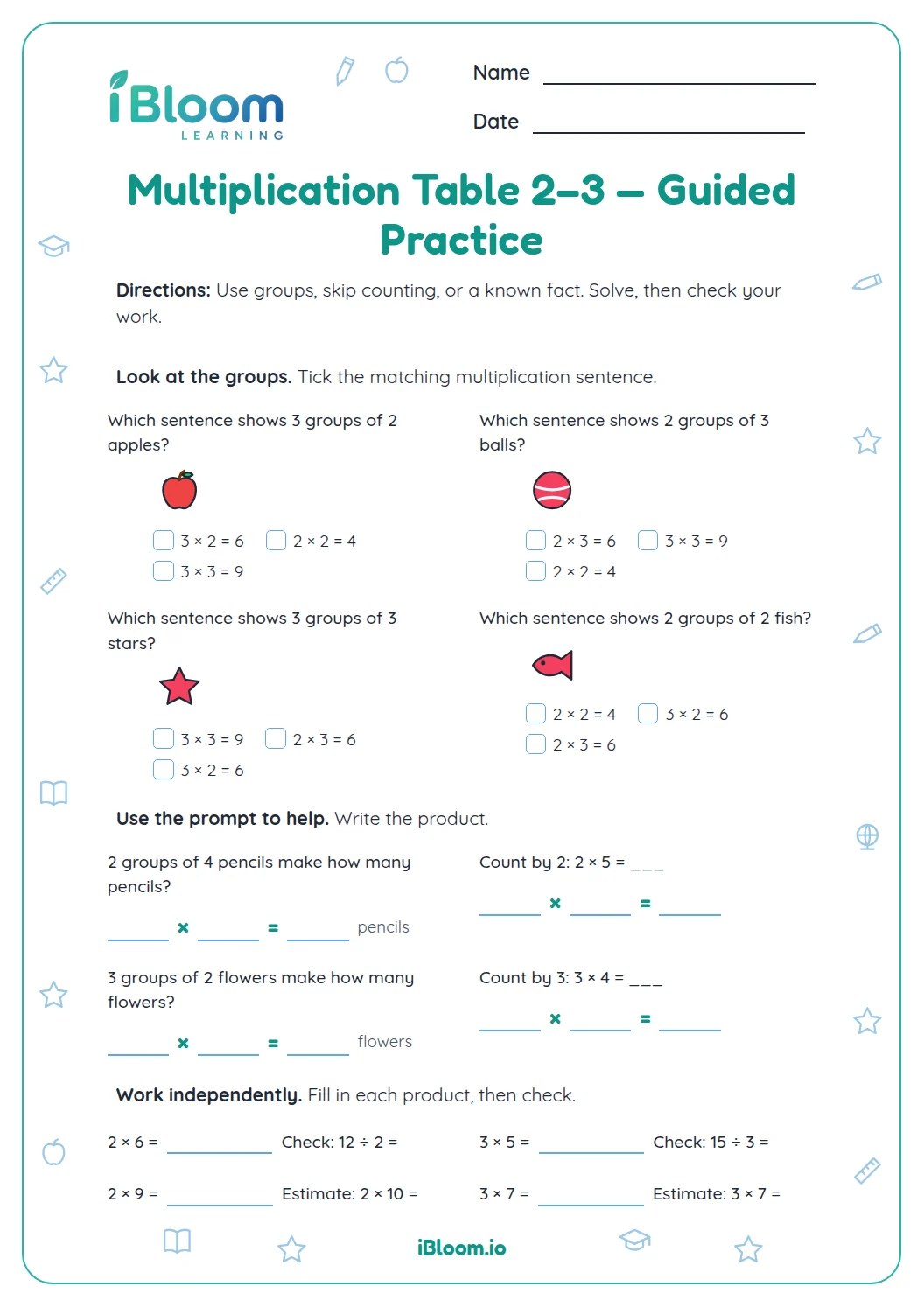
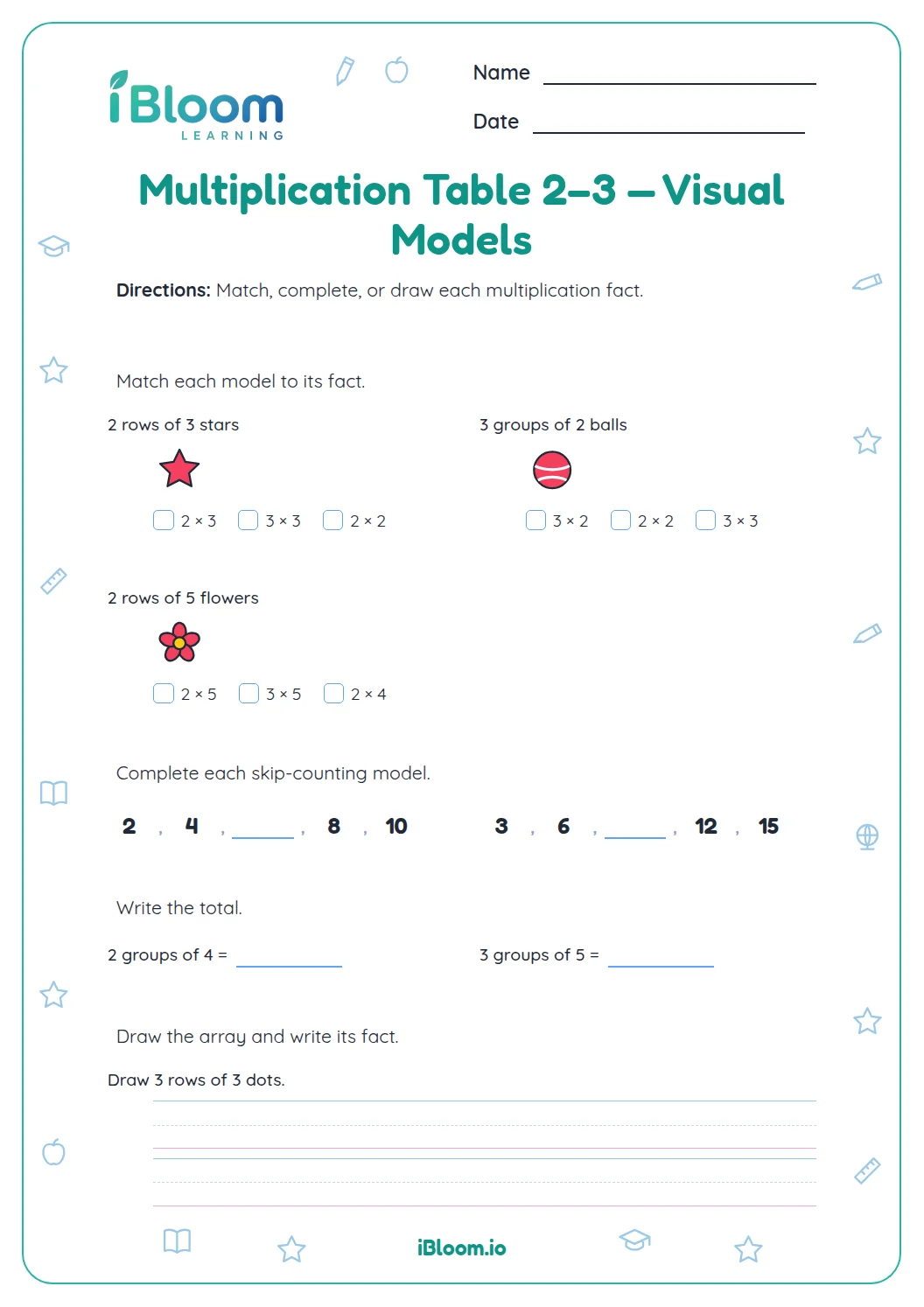
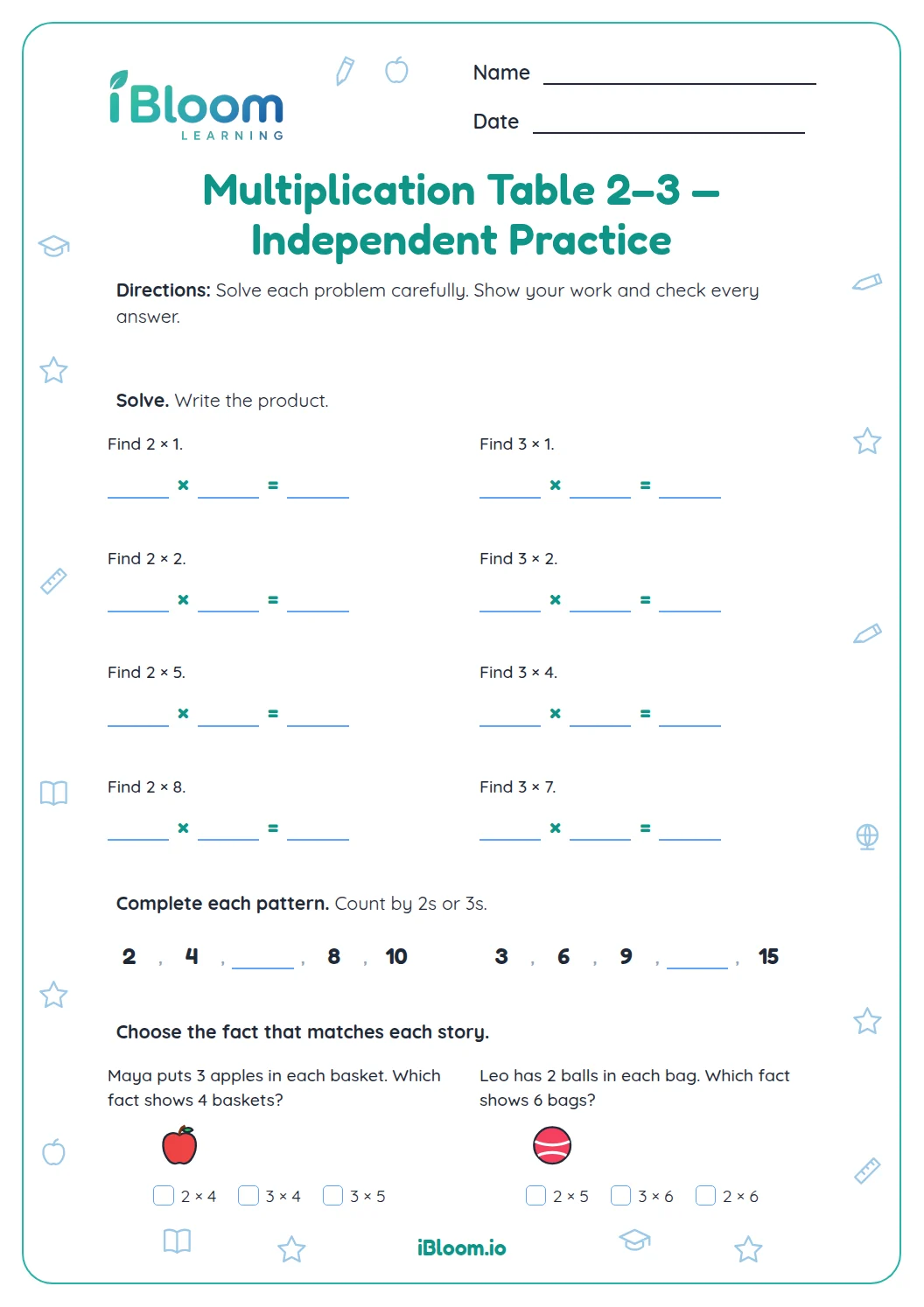
This Grade 3 math worksheet practices multiply 2 times numbers up to 30. Students work through 17 questions in three parts, moving from direct practice to short applications. The printable includes a separate answer key. It supports 3.OA.A.1: Interpret products as equal groups and find the total in each situation.
Aligned to 3.OA.A.1
What does multiplying by 2 mean?
Multiplying a number by 2 means making two equal groups of that number. For 2 × 18, count 18 in each of two groups to find 36 altogether.
- 12 × 18 means 2 groups of 18, so 18 + 18 = 36.
How does practice extend up to 30?
The worksheet has 17 questions in three parts. Students begin with direct skill practice, then work with missing values, and finish with applications.
How can an adult support the practice?
Ask the student to name the relationship or operation before calculating. Have them check one answer using the inverse relationship or a second method.
How to work through this worksheet
- 1Read the unit labels or factors first.
- 2Choose the relationship or fact that fits.
- 3Write the number and requested unit.
- 4Check the result with an inverse fact or a reasonable estimate.
Common mistakes and quick fixes
The mistake
Doubling only the ones digit.
The fix
Double the whole number: 2 × 23 is 23 + 23.
The mistake
Using the product as the missing factor.
The fix
Divide the product by 2 or halve it to find the missing number.
The mistake
Reading the group size as the number of groups.
The fix
In 2 × 25, there are 2 groups with 25 in each.
Common Core alignment
This practice connects the worksheet skill to the following standard.
Interpret products as equal groups and find the total in each situation.
On this sheet:
Show the official wordingHide the official wording
Interpret products of whole numbers, e.g., interpret 5 × 7 as the total number of objects in 5 groups of 7 objects each. For example, describe a context in which a total number of objects can be expressed as 5 × 7.
What to practice next
Make more practice
Further reading
Questions parents and teachers ask
What does this worksheet practice?
It practices multiply 2 times numbers up to 30 through 17 questions in three parts. Students start with direct examples and finish with applied problems. The separate answer key includes the expected answers so an adult can review the work with the student.
How many questions and pages are included?
There are 17 questions. The worksheet is two pages, followed by a separate two-page answer key. Questions move from short direct practice to applications, so students can build confidence before using the skill in context. An adult can review the key after the student finishes.
What should a student do when an answer seems too large?
Pause and check the relationship between the units or factors. Estimate what a reasonable answer should be, then work the calculation again and include the unit named in the question. Saying the unit relationship aloud can help the student spot whether to multiply, divide, add, or subtract.
How can an adult check the work?
Compare each response with the answer key and ask the student to explain one step. A quick inverse check or estimate can help locate a computation error while keeping attention on the worksheet skill. Encourage the student to make the correction and then check the revised answer.
Can this be used for independent practice?
Yes. The directions and three parts guide students from direct practice to applications. An adult can review the answer key afterward and ask the student to correct any missed item using the same relationship or strategy. The short prompts make it easy to work through a few questions at a time.