




About this worksheet
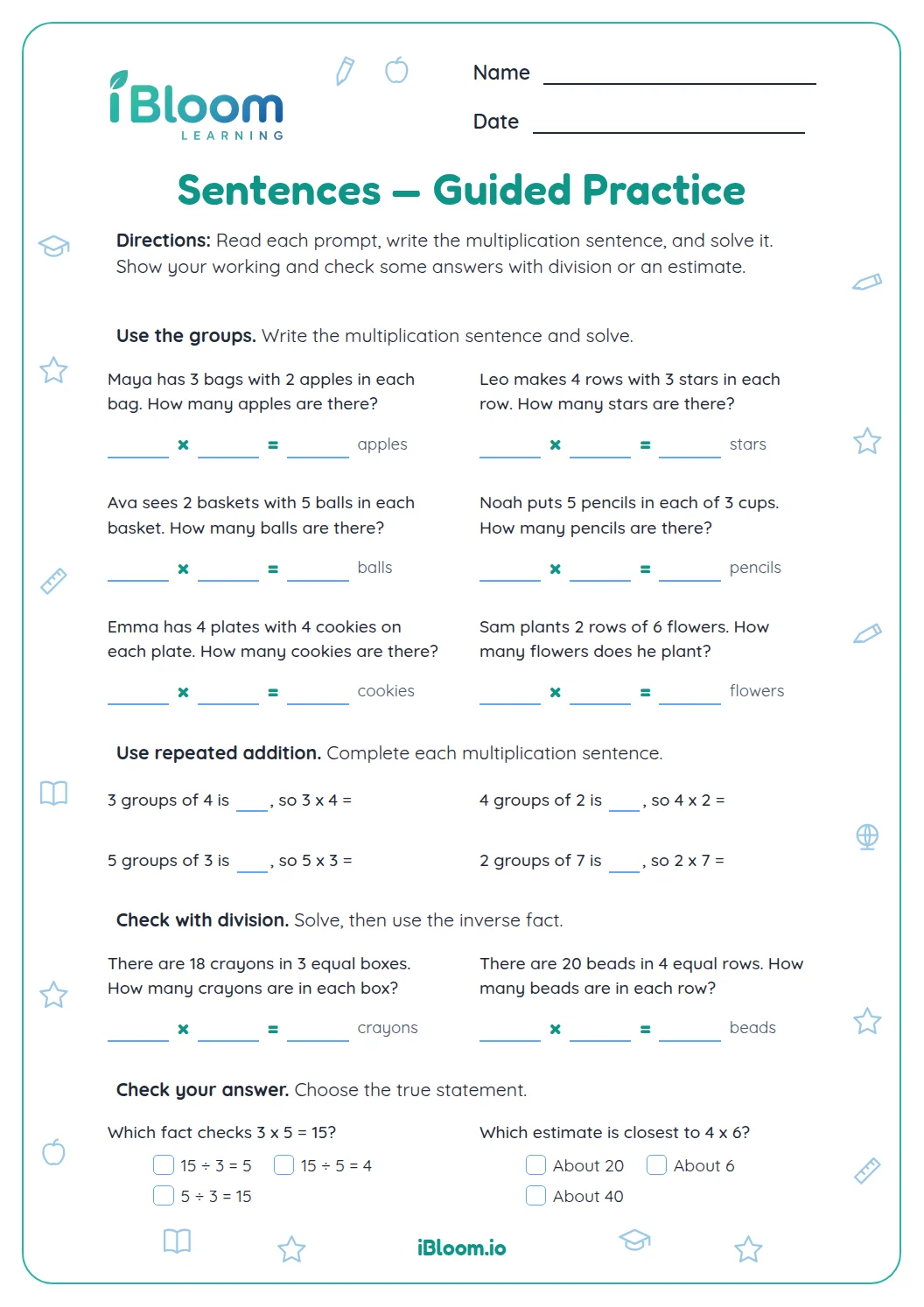
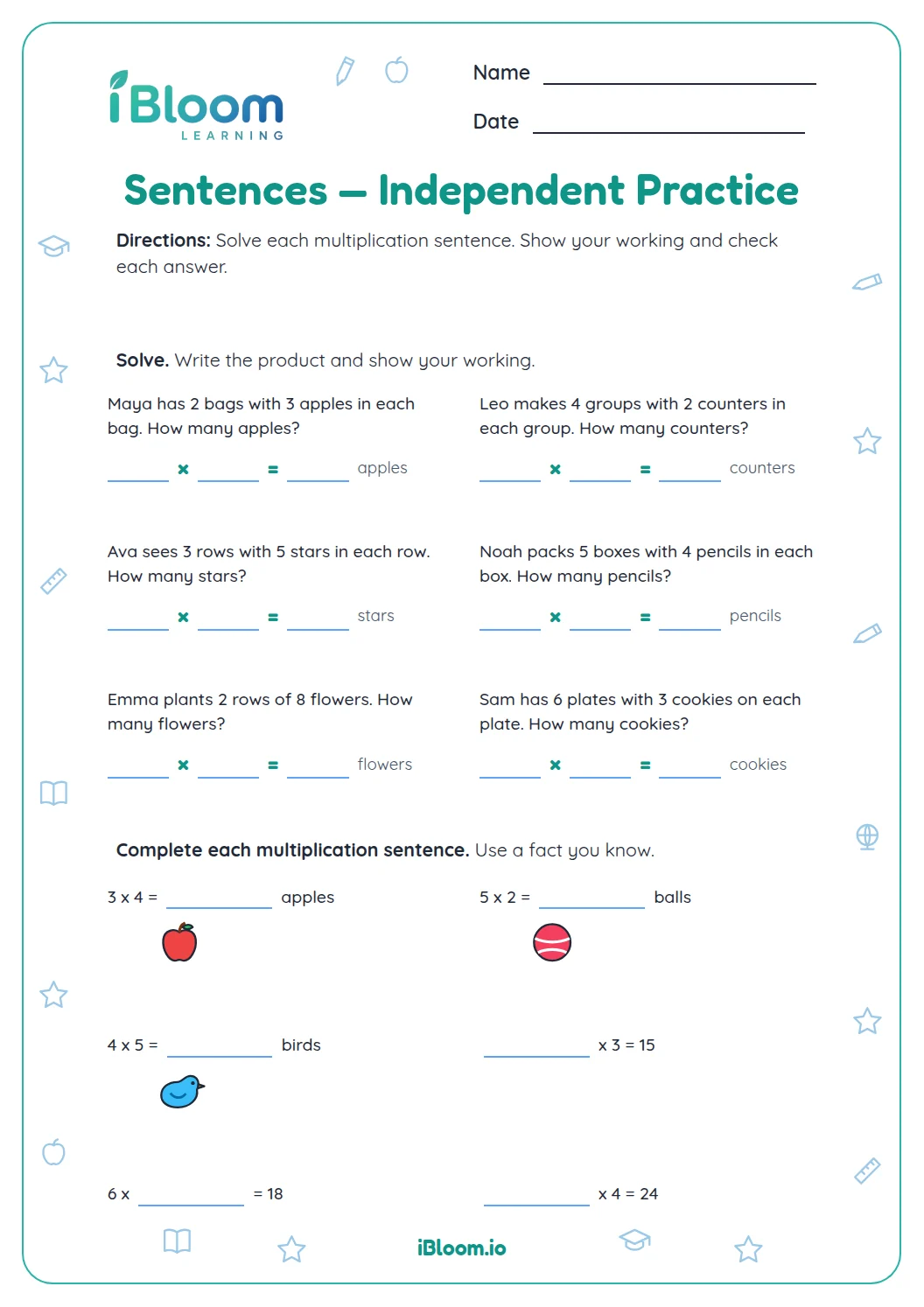
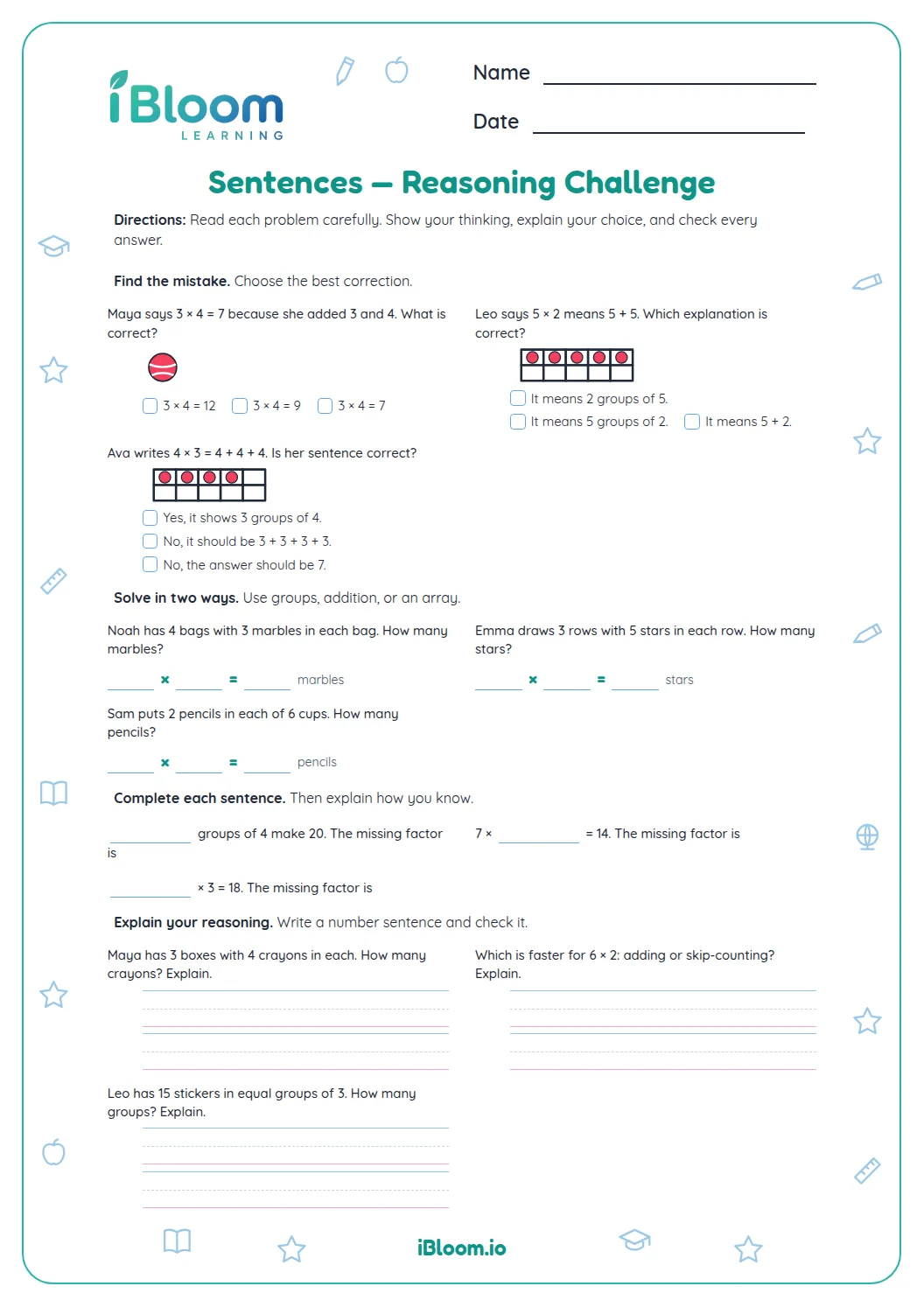
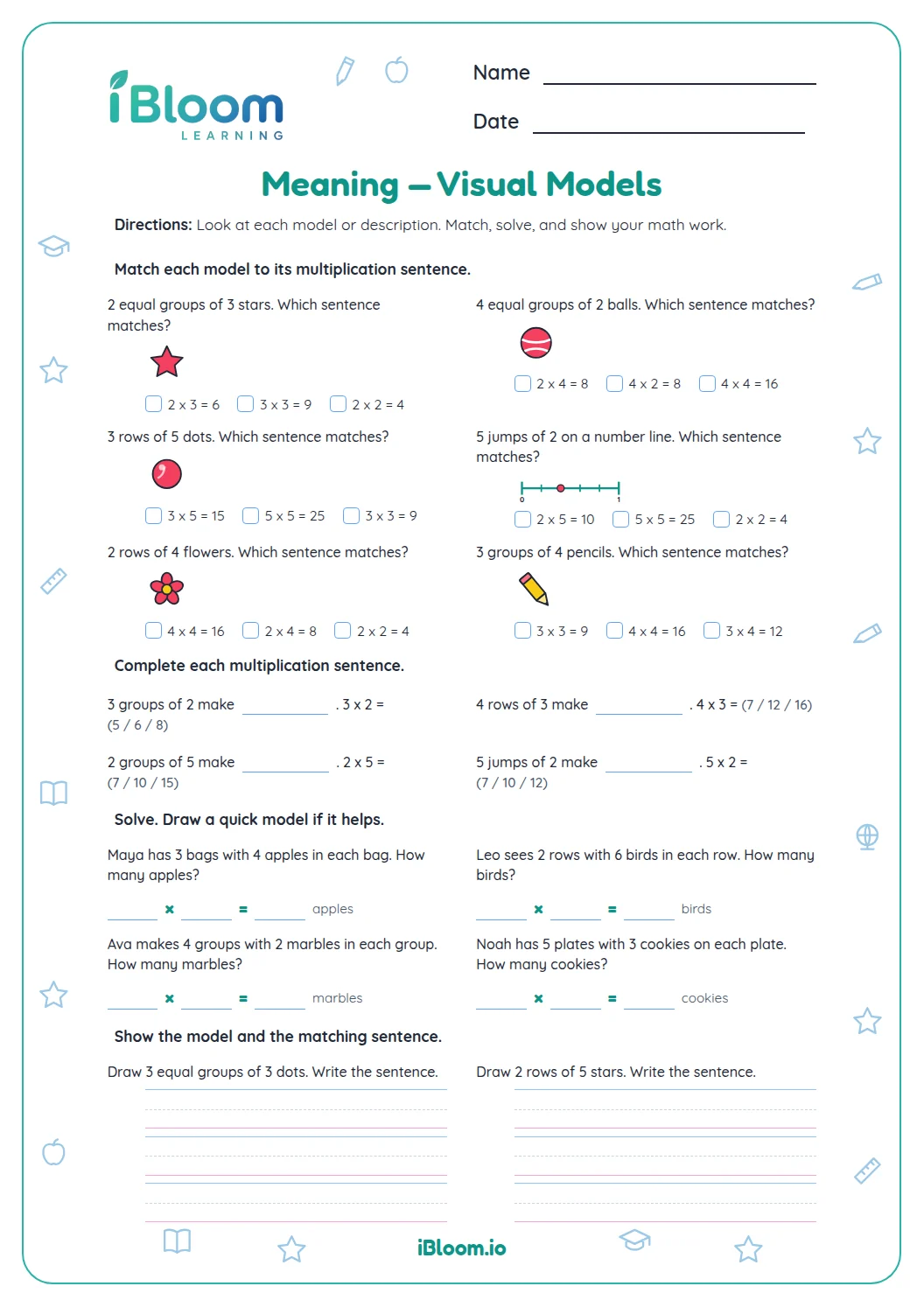
This worksheet gives Grade 2 students practice translating equal groups into multiplication sentences. Sixteen varied stories use familiar objects and small factors, from rows of cones to bags of fruit. Each problem has room for an equation and answer, and the key lists both. The page practices the equal-groups problem-solving described in 3.OA.A.3.
Aligned to 3.OA.A.3
How does a story become a multiplication sentence?
Find the number of equal groups and the number in each group. Multiply those quantities to find the total. Part A starts with familiar arrays and bags; Part B uses varied settings and less repeated wording.
What does one worked example look like?
In the story about 5 rows of 2 cones, there are 5 groups and 2 cones in each group. The equation is 5 × 2 = 10.
- 15 rows × 2 cones in each row
- 25 × 2 = 10 cones
How can students check a product?
Skip-count by the group size or draw a quick array. Five groups of two count 2, 4, 6, 8, 10, confirming the product.
How to use this worksheet
- 1Circle the number of groups.
- 2Underline how many are in each group.
- 3Write groups × each-group amount.
- 4Find the product with a known fact or skip-counting.
- 5Add the item named in the question to the answer.
Common mistakes and quick fixes
The mistake
Multiplying the group size by an unrelated number.
The fix
Match each factor to a quantity stated in the story.
The mistake
Adding the two quantities instead of finding equal groups.
The fix
Ask whether the same group repeats.
The mistake
Writing a product without its requested item.
The fix
Include words such as cones or oranges in the answer.
Common Core alignment
This worksheet practices 3.OA.A.3 through its questions and examples.
Represent equal-group stories with multiplication equations and solve them.
On this sheet: Represent equal-group stories with multiplication equations and solve them.
Show the official wordingHide the official wording
Use multiplication and division within 100 to solve word problems in situations involving equal groups, arrays, and measurement quantities, e.g., by using drawings and equations with a symbol for the unknown number to represent the problem.
What to practice next
Make more practice
Further reading
Questions parents and teachers ask
How many problems are included?
There are 16 real-world problems. Each asks for one total from equal groups and provides working space for a multiplication equation. The answer key includes the matching equation result and unit, so a student can check both the computation and what the number counts.
Are these multiplication facts suitable for Grade 2?
The stories use small group sizes and familiar objects, such as rows, bags, plates, and shelves. Students can sketch groups or skip-count to find totals. The focus is on understanding what each factor represents in the situation, so they can explain why the equation matches.
What equation should a child write?
Use one factor for the number of groups and the other for the number in each group. In 4 plates with 3 crackers each, write 4 × 3 = 12. The order of those factors may be reversed, but each must represent one of the story quantities.
Can a quick drawing help solve a problem?
Yes. The prompts give group sizes in words, and students may sketch an array or equal groups in the working area. A drawing can help them see the repeated groups, write a matching multiplication equation, and clearly check the total.
How can I help without giving the answer?
Ask the student to point out what repeats and how many are in one group. Then ask which multiplication fact matches those quantities. A quick array or skip-count can help verify the total and connect the equation to the story.
What practice can follow this page?
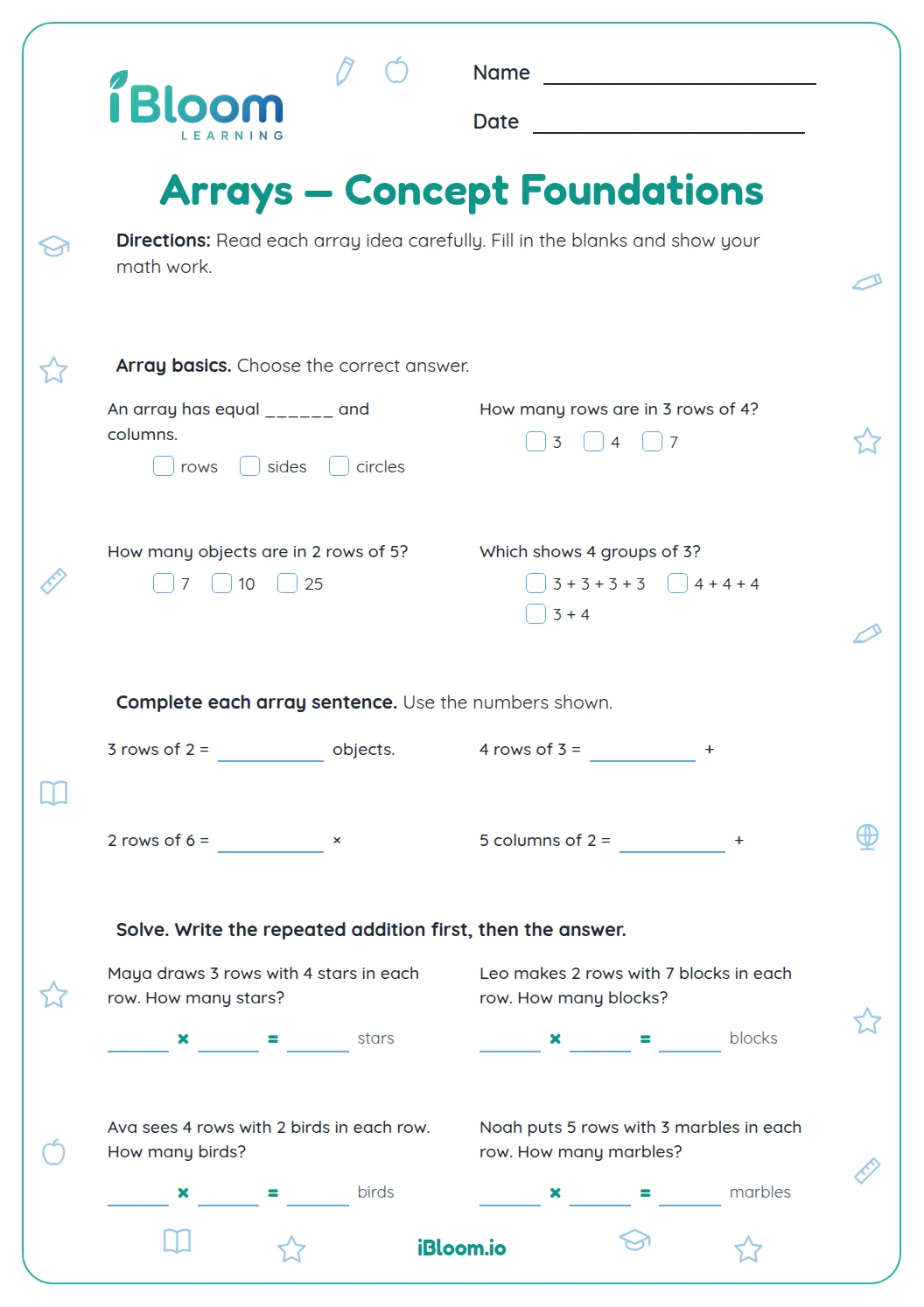
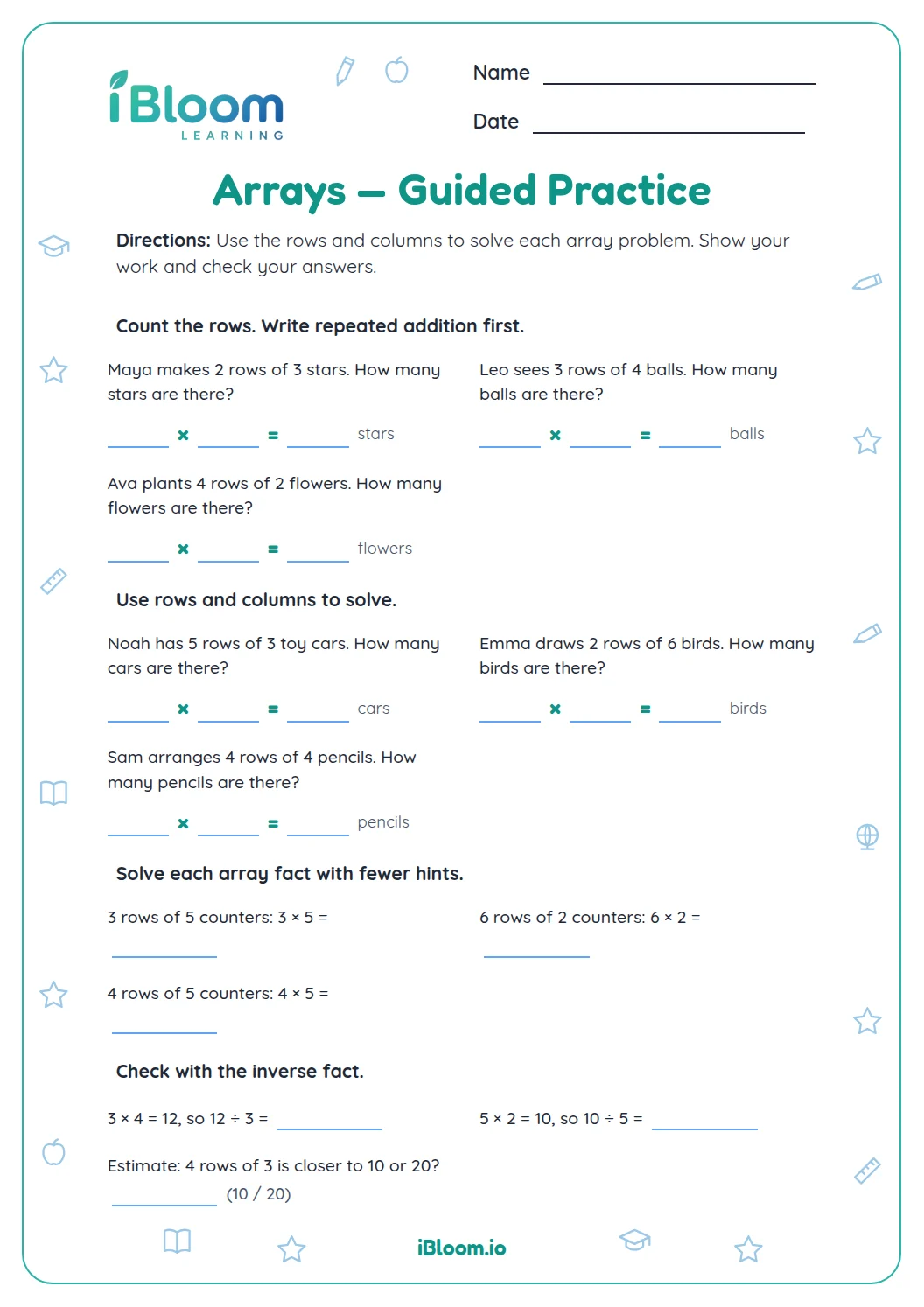
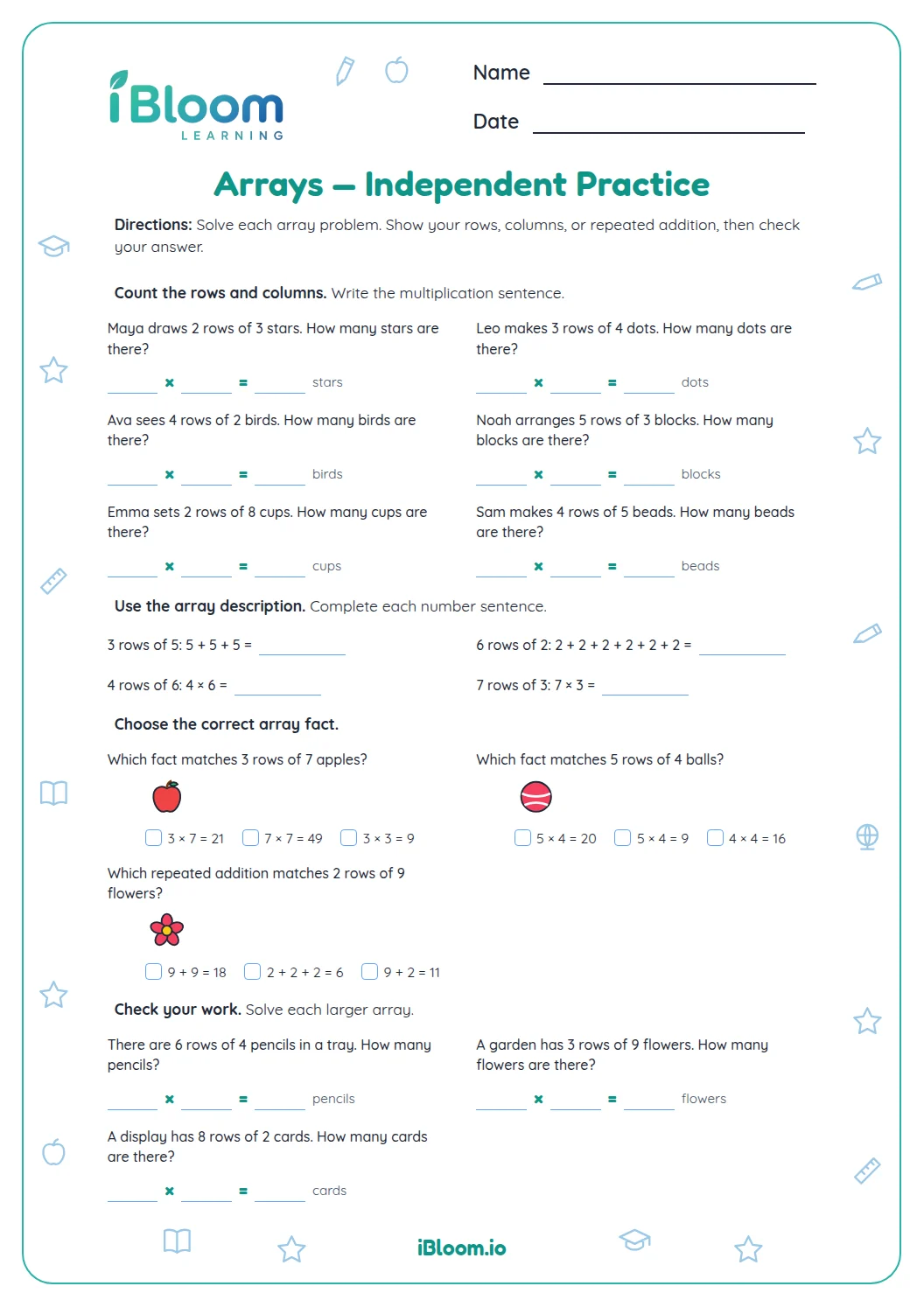
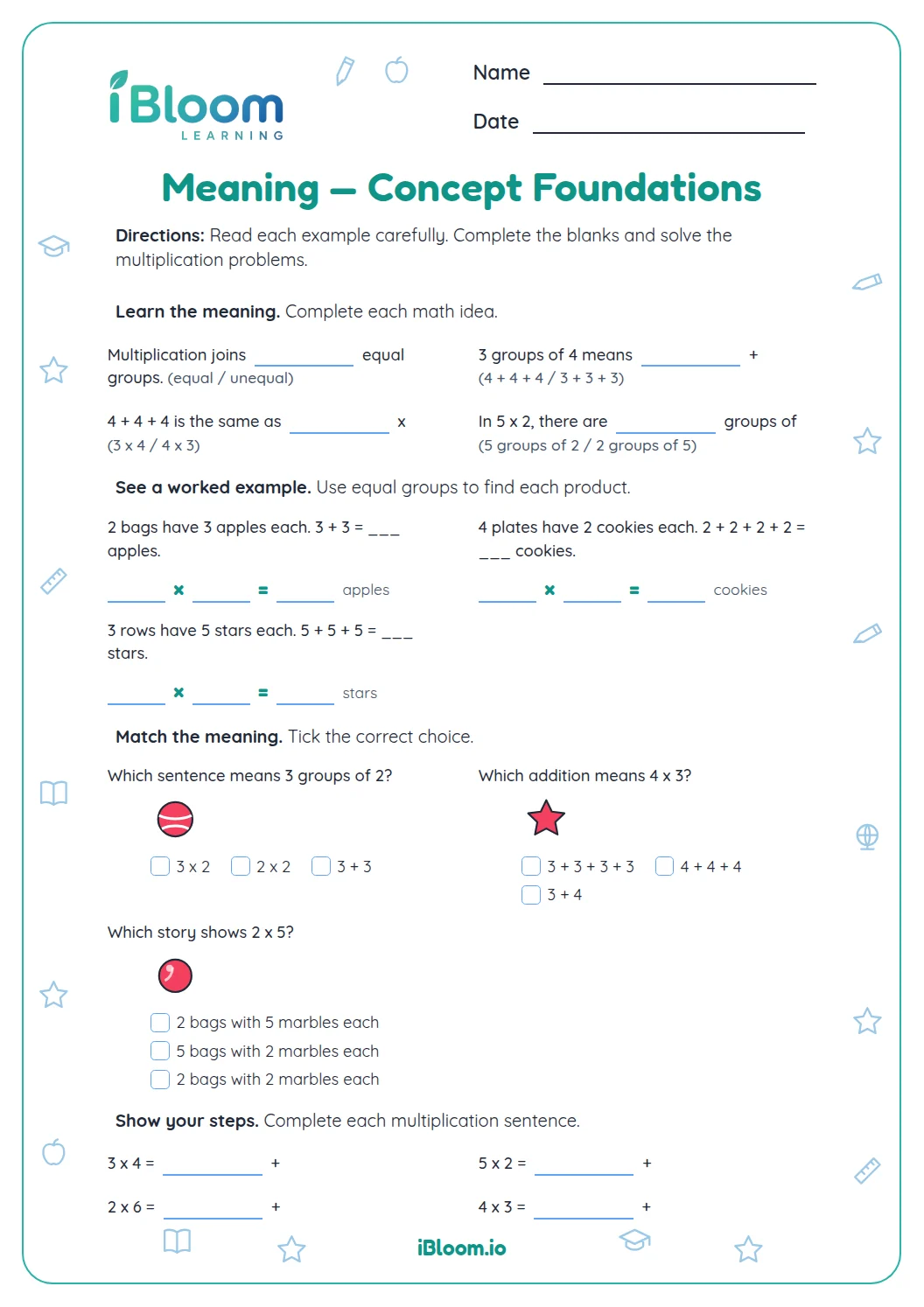
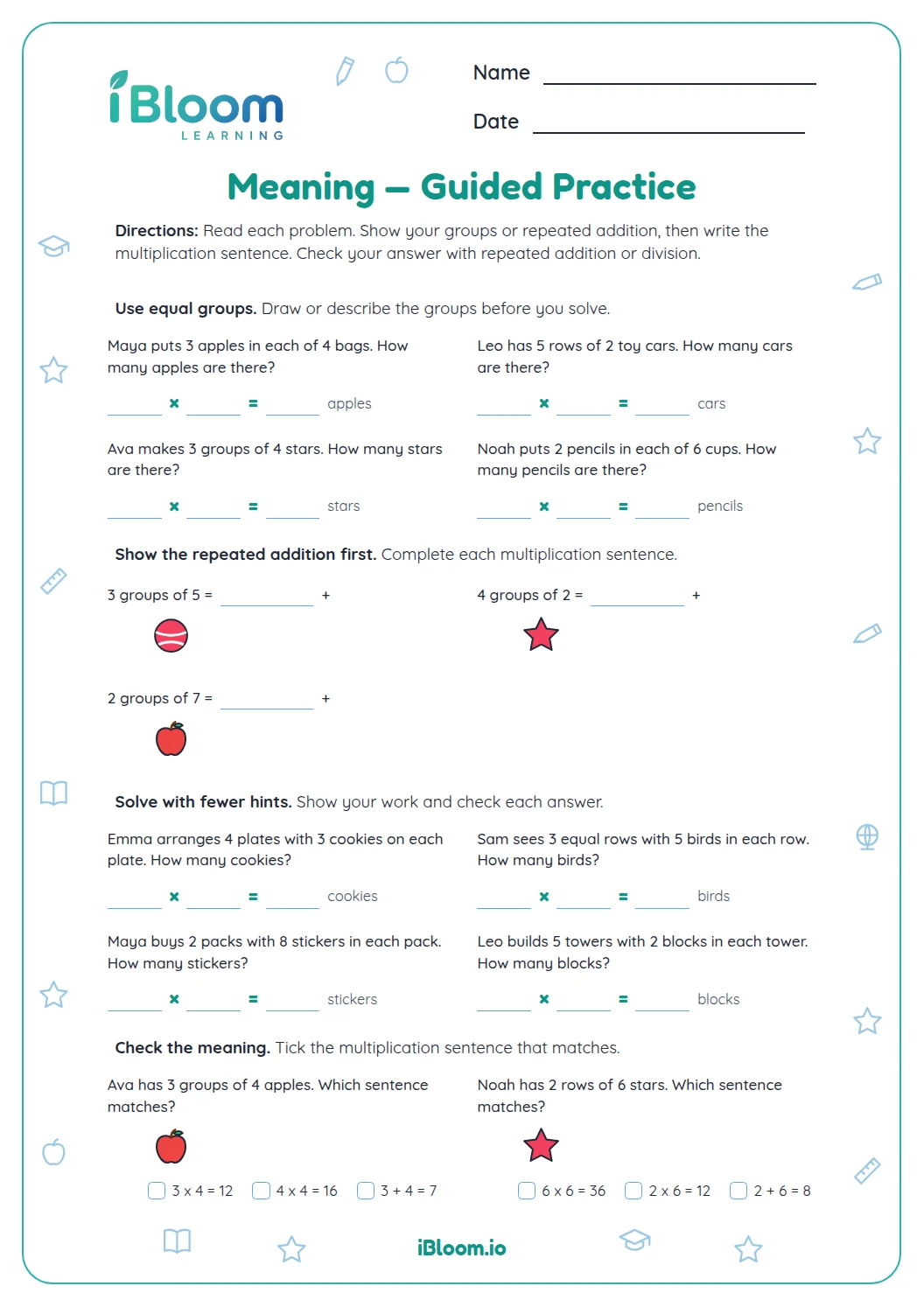
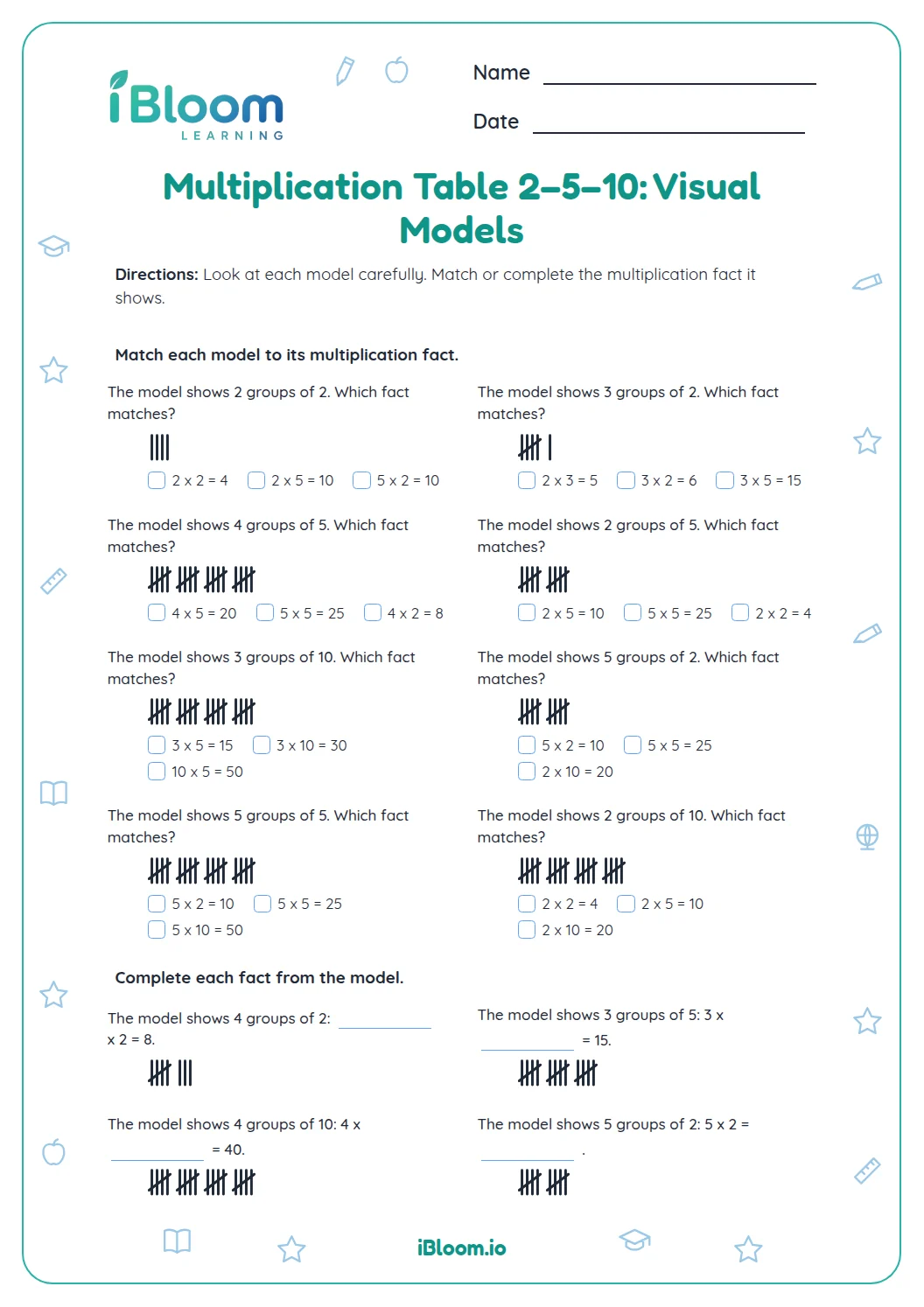
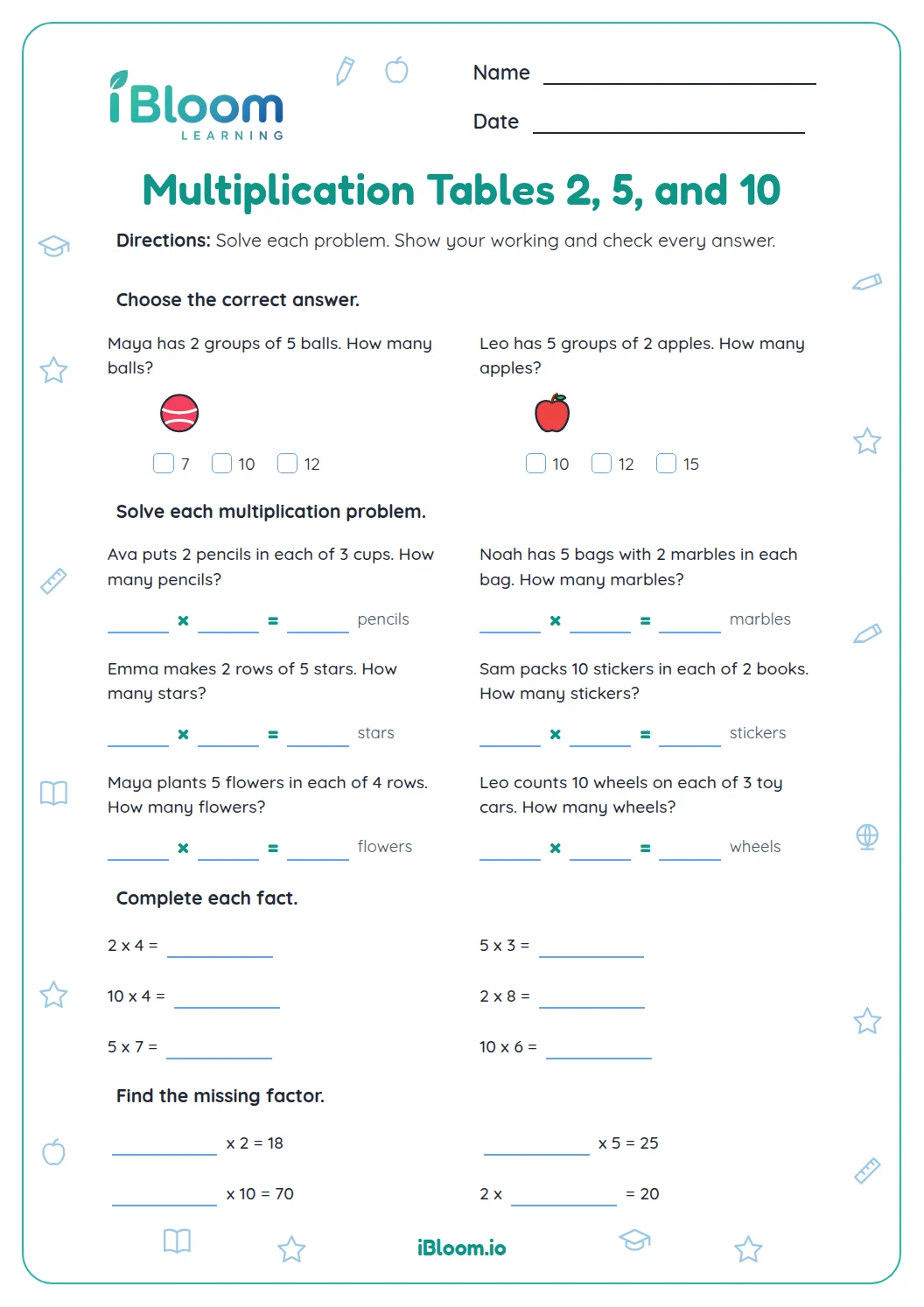
Array worksheets show equal groups as rows and columns, while multiplication meaning practice connects groups to multiplication notation. The 2, 5, and 10 fact pages then build recall for selected facts. Together, these pages offer a next step from stories to visual and fact practice.