

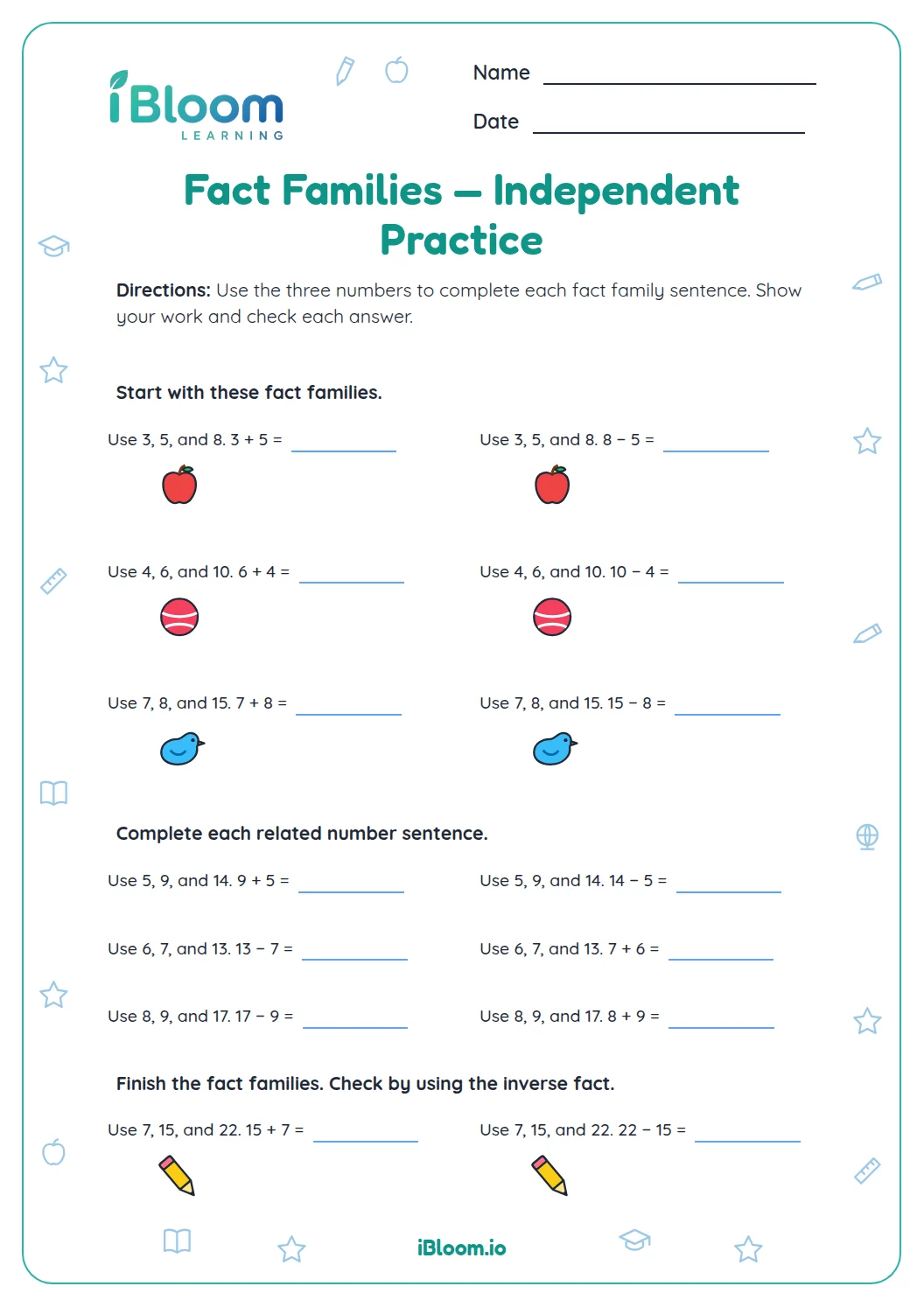
About this worksheet
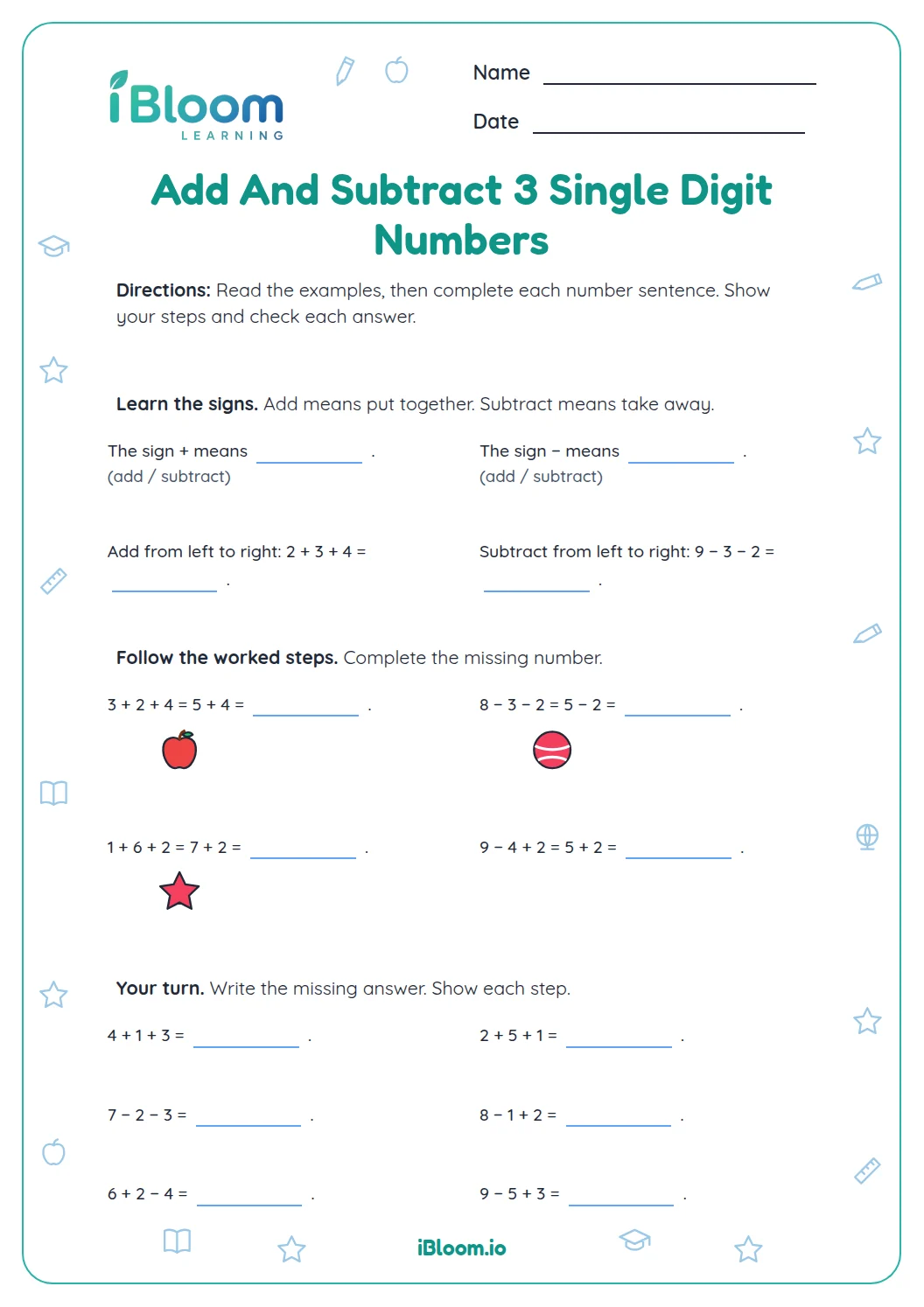
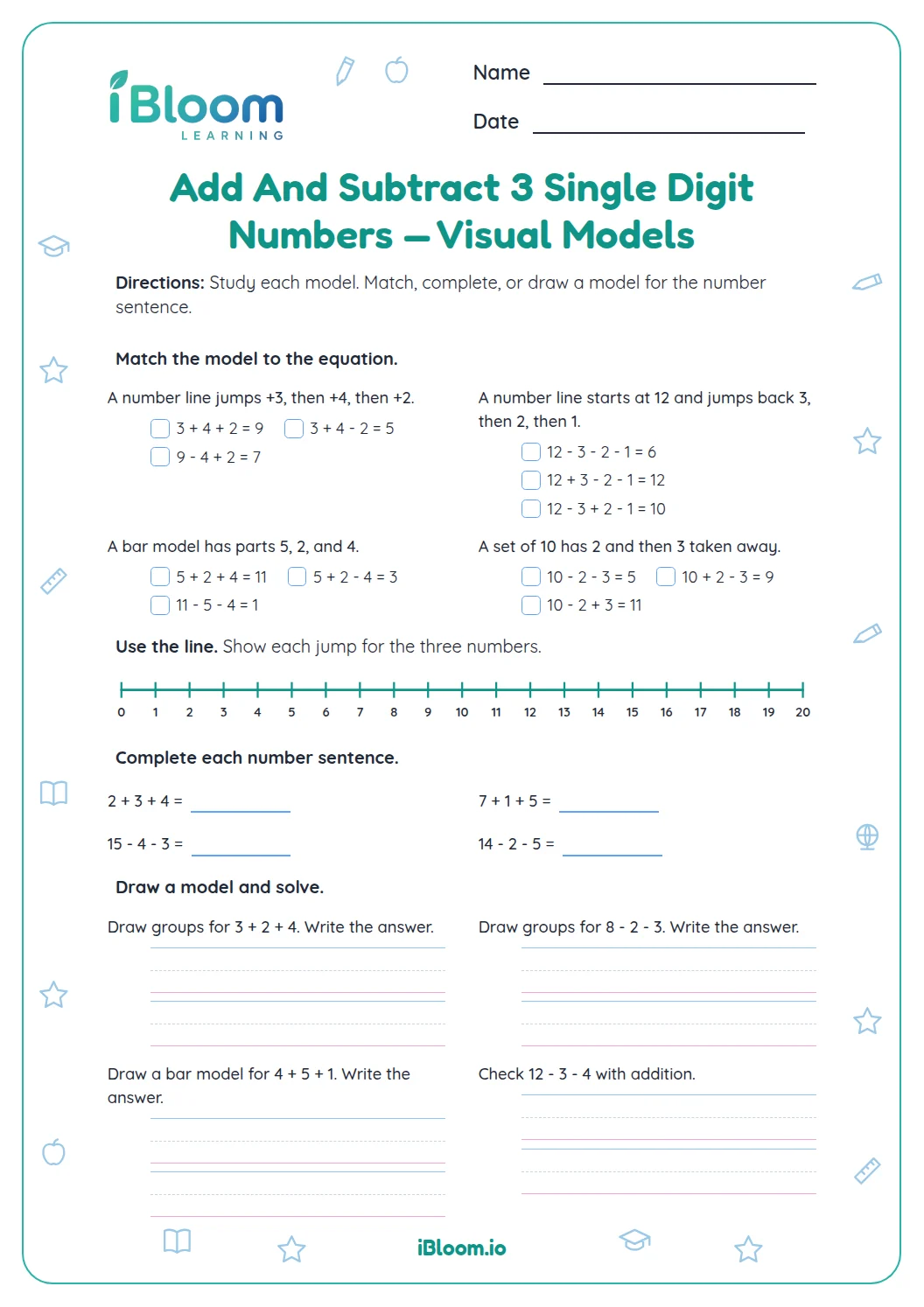
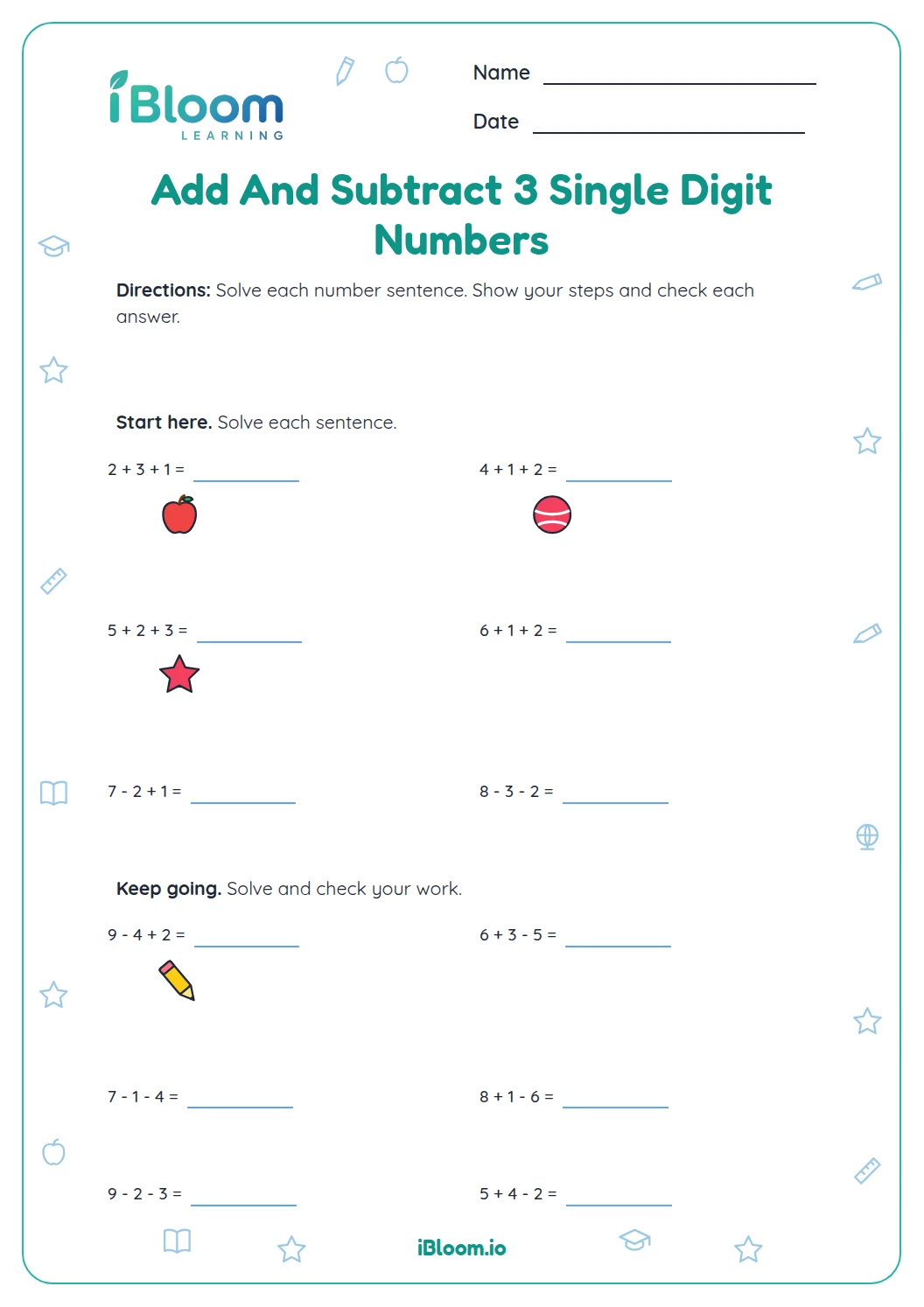
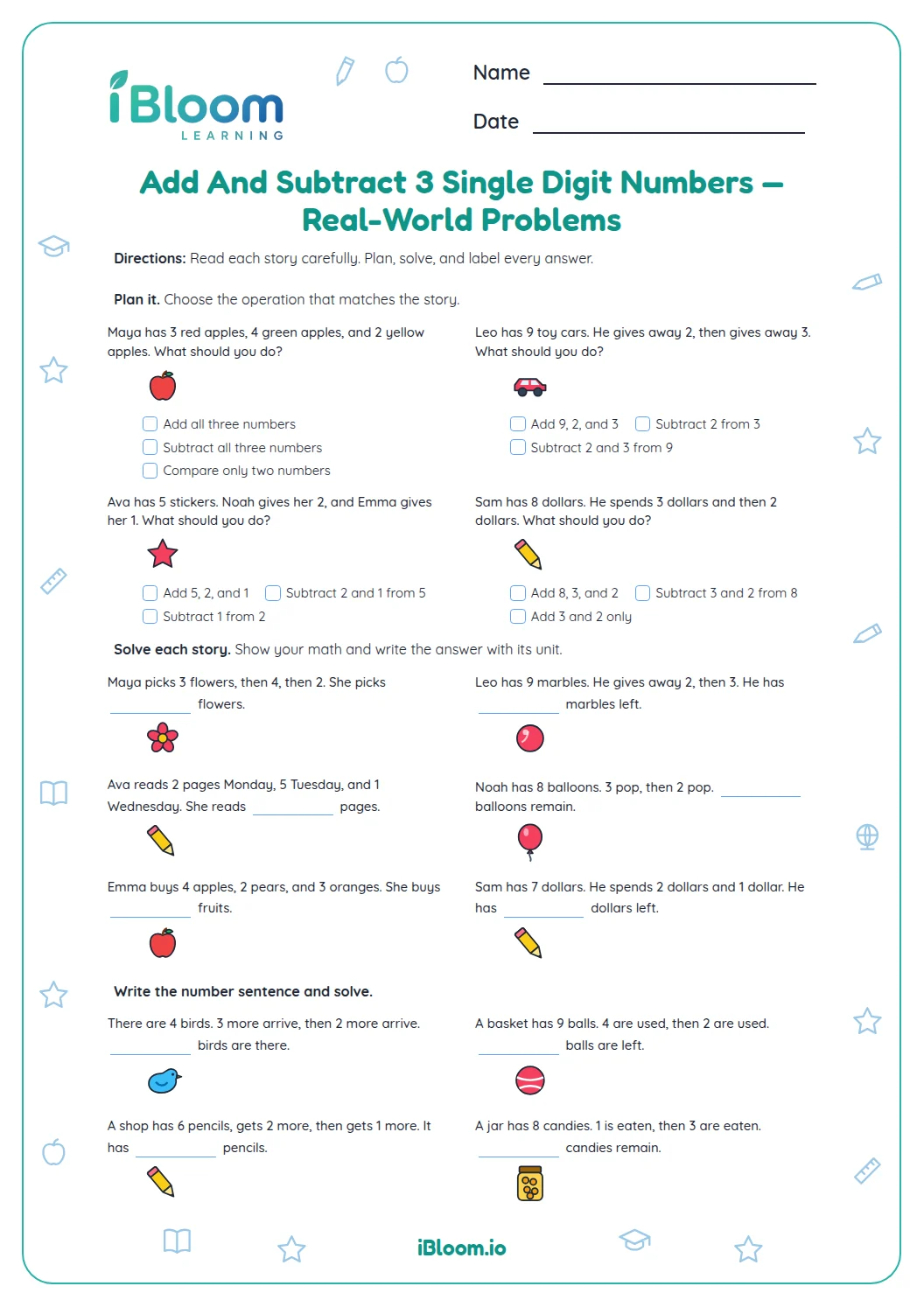
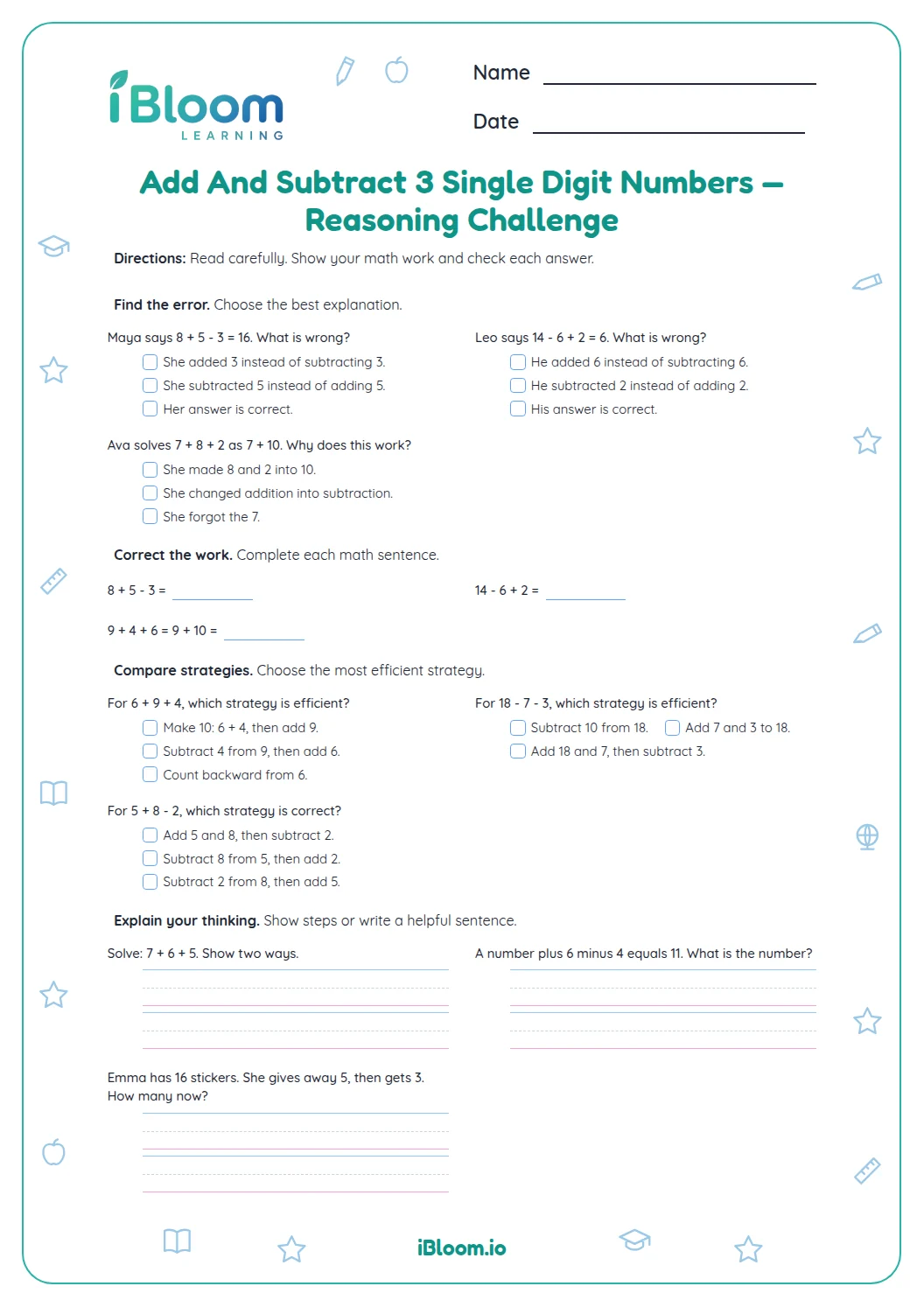
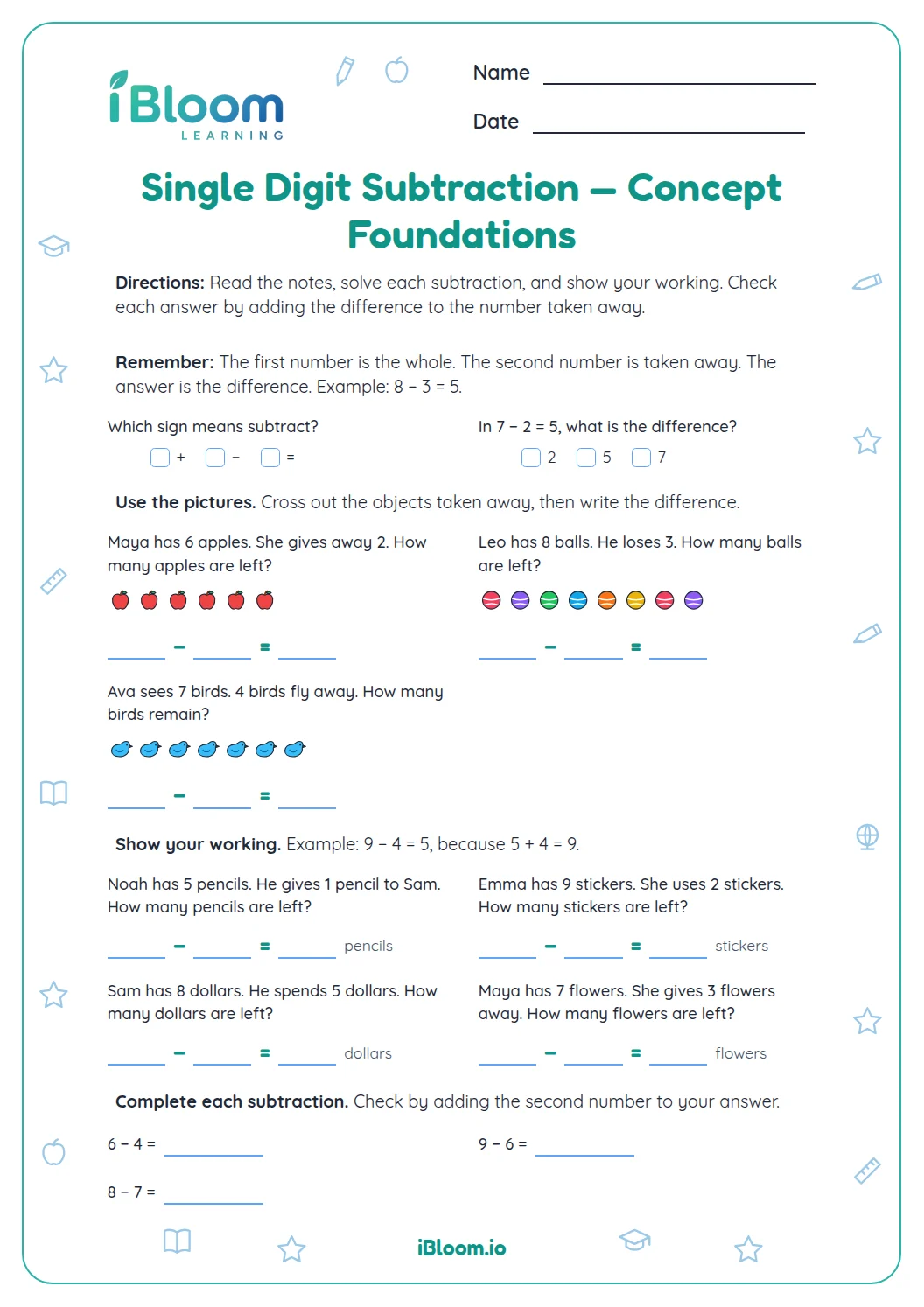
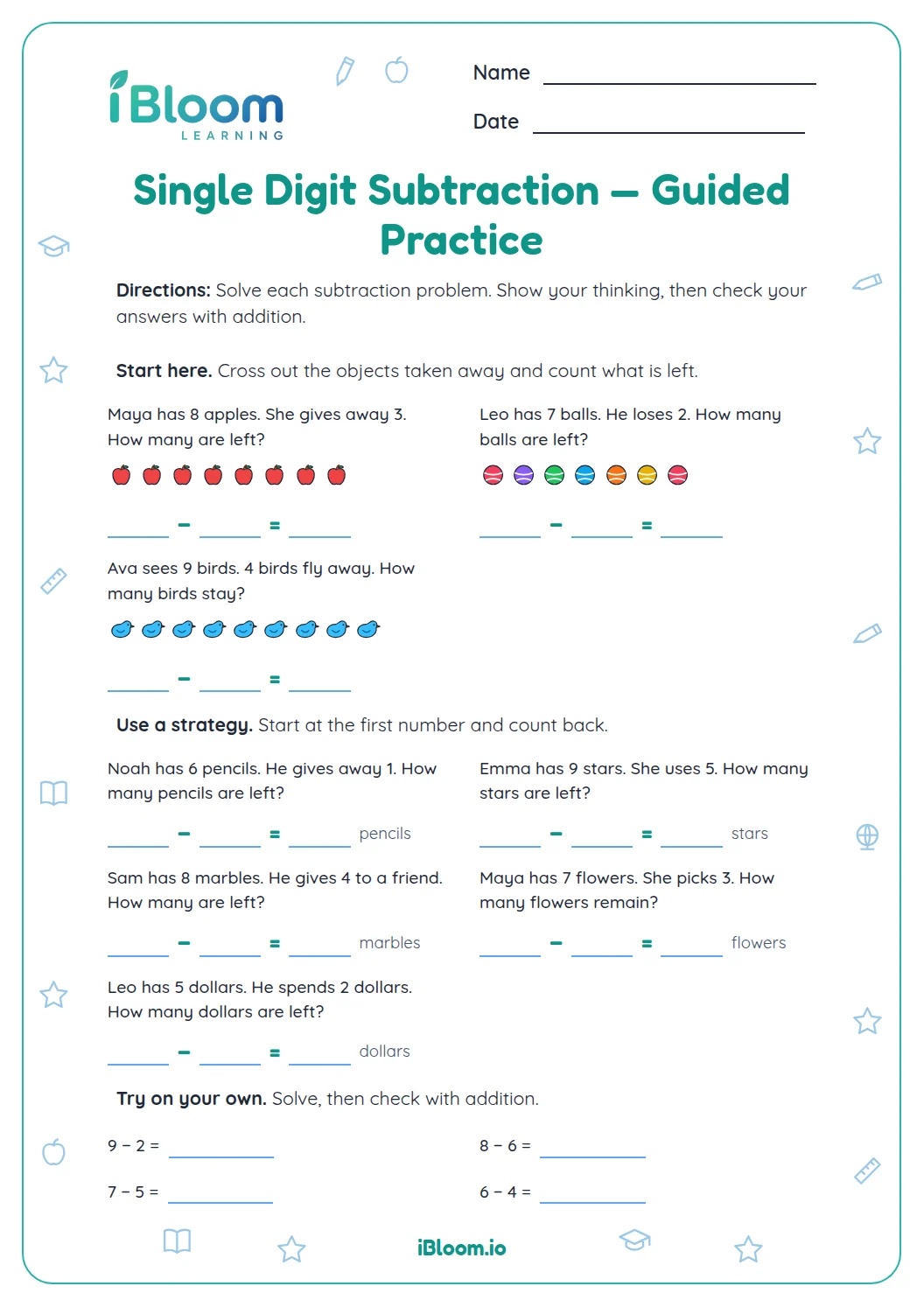
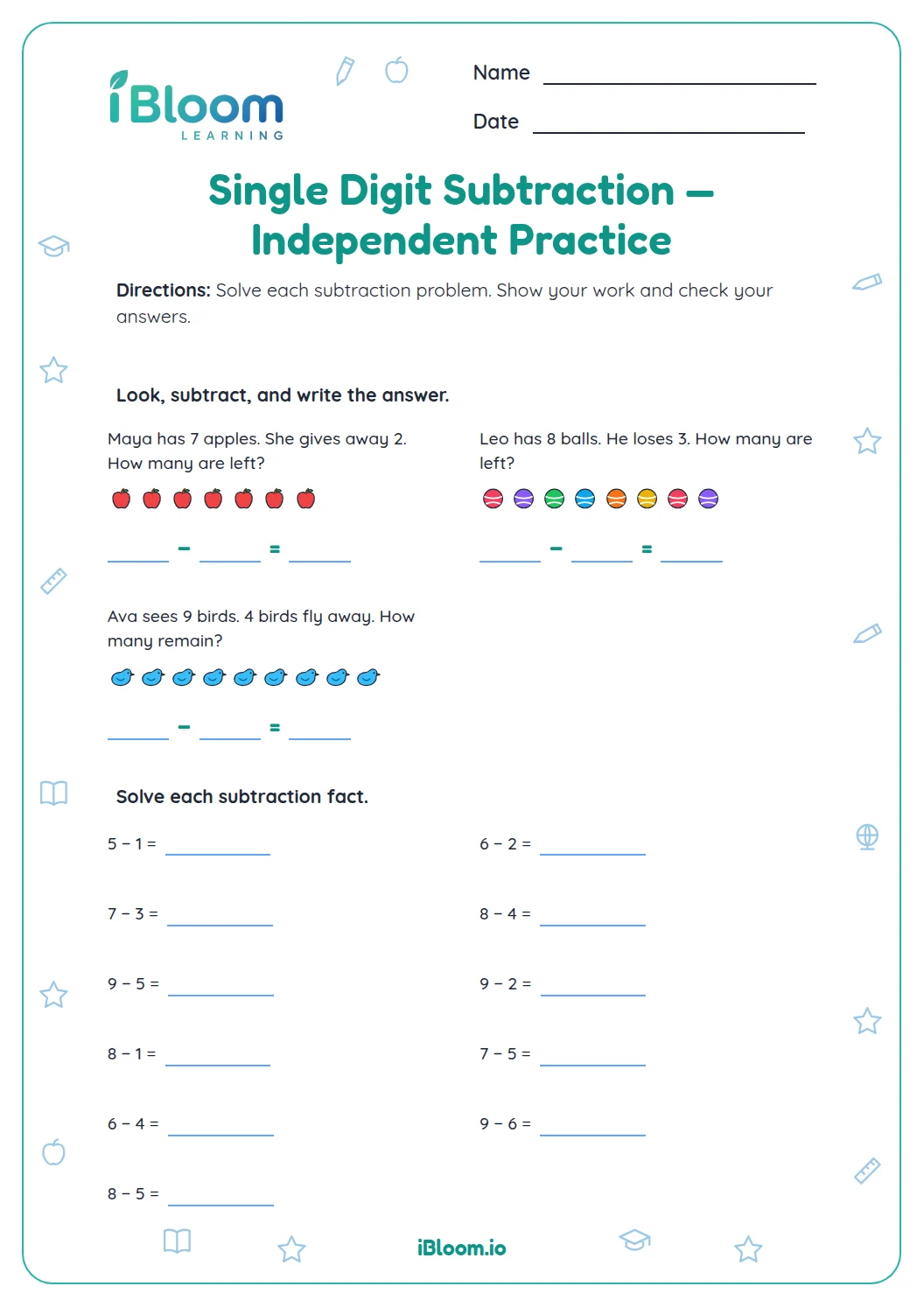
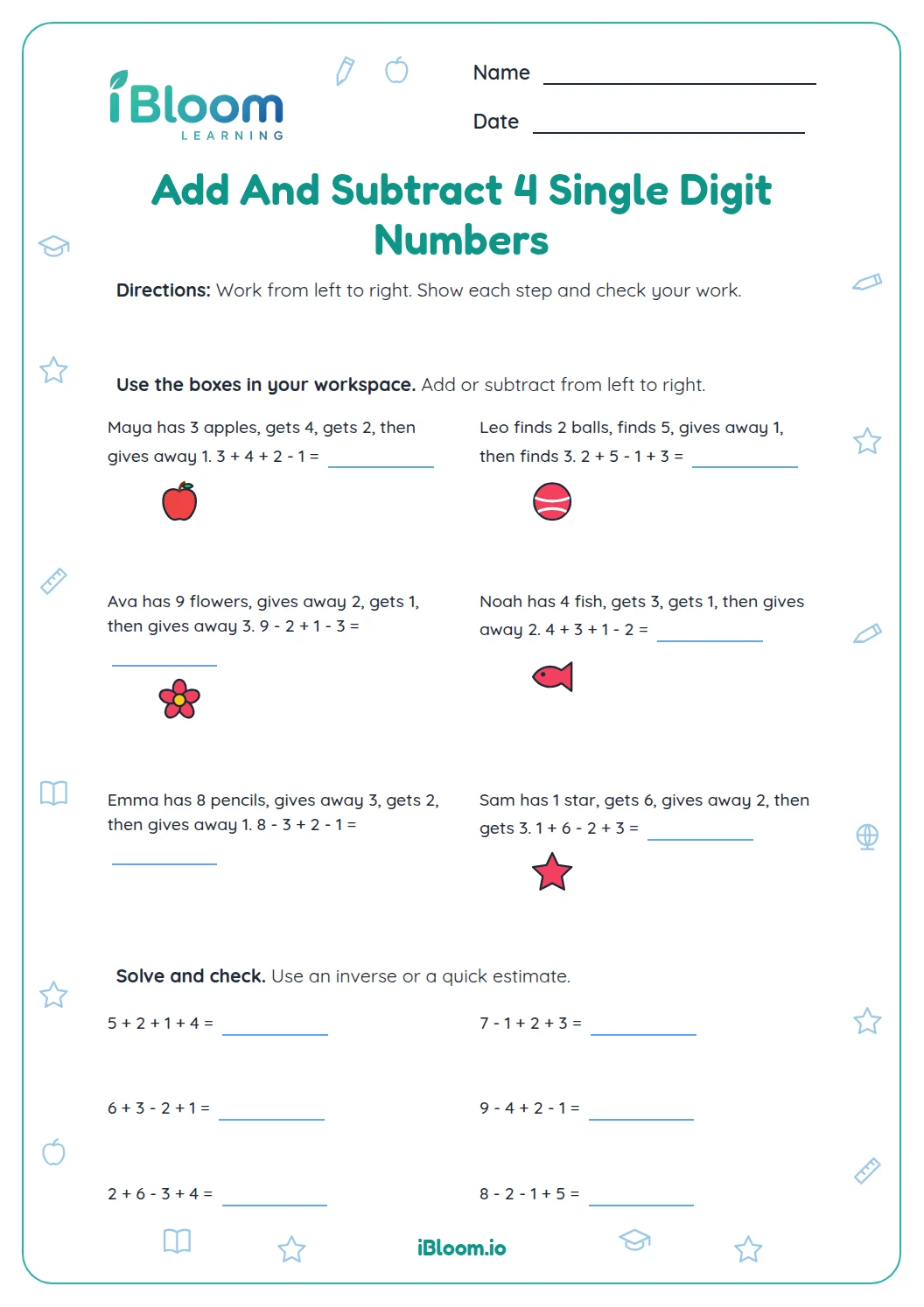
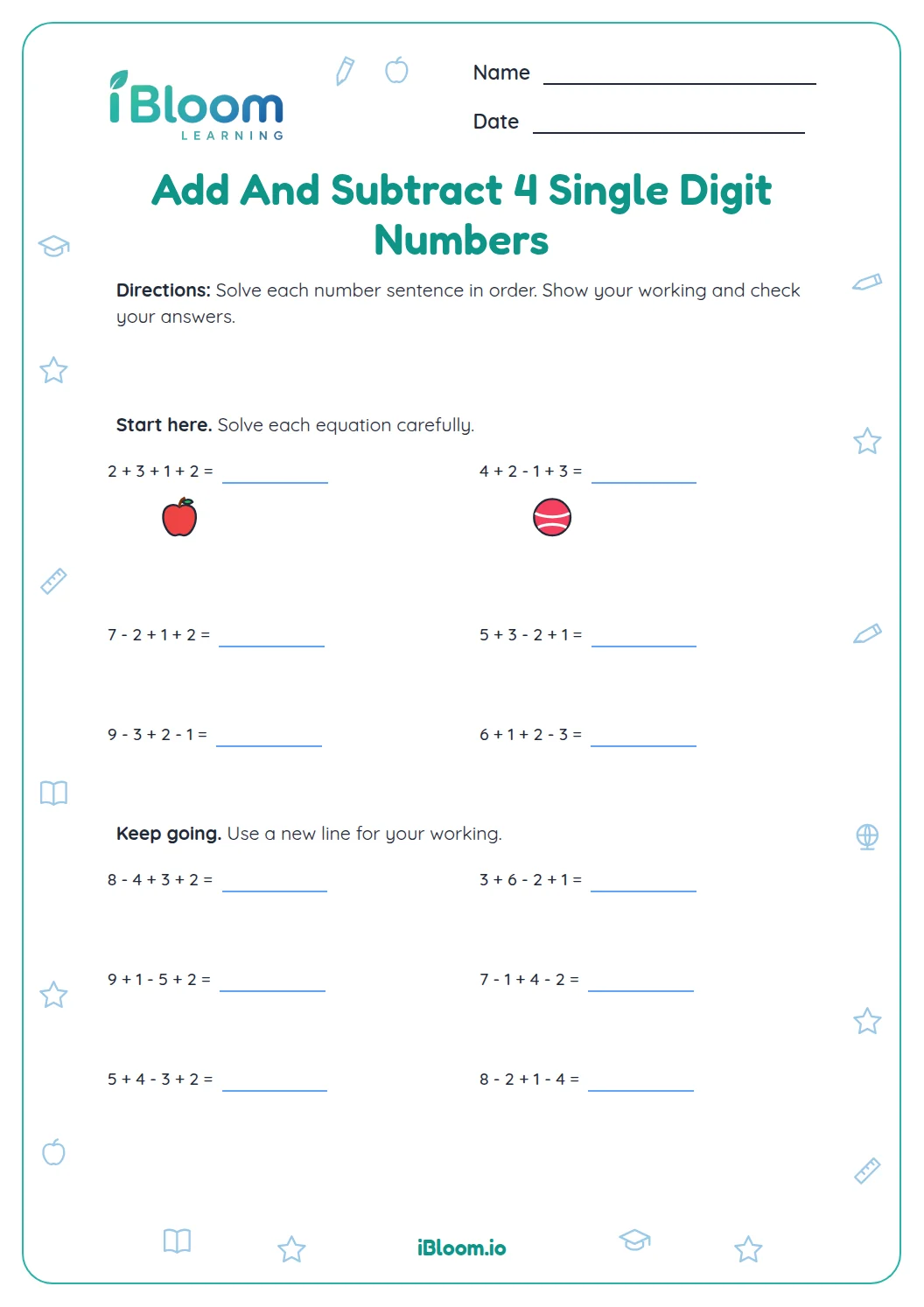
This Grade 2 printable practices expressions with three single-digit terms and short addition and subtraction stories. Learners update the total from left to right, then follow the order of events to write a number sentence for each story. The questions stay within 20 and practice Common Core standard 2.OA.B.2, fluently adding and subtracting within 20 using mental strategies.
Aligned to 2.OA.B.2
How do you evaluate a three-term expression?
For addition and subtraction only, calculate from left to right. In Question 1, 8 + 5 − 3 becomes 13 − 3, which equals 10. Keep the changing total after each operation.
How do the stories use the same steps?
The six situations describe amounts that increase or decrease. In the bead story, start with seven, add six, then subtract four: 7 + 6 − 4 = 9 beads.
How can a learner check the result?
Recalculate one operation at a time and compare the intermediate totals. In 12 − 5 + 4, subtract five to get seven, then add four to get 11; the order follows the written expression.
How to use the worksheet
- 1Read the signs before calculating.
- 2Start with the first two numbers and work left to right.
- 3Keep the new total after each operation.
- 4For a story, write the changes in the order they happen.
- 5Recalculate once and compare with the separate key.
Check for these slips
The mistake
Adding the last two numbers first because they are next to each other.
The fix
With only addition and subtraction, work from left to right.
The mistake
Ignoring whether a story amount increases or decreases.
The fix
Mark each event as “more” or “less,” then choose its sign.
The mistake
Giving only a final answer when asked to write a number sentence.
The fix
Record the starting amount and each change in order before solving.
Curriculum alignment
This worksheet practices the listed Common Core math skills.
Fluently add and subtract within 20 using mental strategies.
On this sheet: The questions give direct practice with this skill.
Show the official wordingHide the official wording
Fluently add and subtract within 20 using mental strategies. By end of Grade 2, know from memory all sums of two one-digit numbers.
What to practice next
Make more practice
Further reading
Questions parents and teachers ask
How should a learner solve each expression?
For addition and subtraction in one expression, work from left to right. In 8 + 5 − 3, first add to get 13, then subtract 3 to get 10. Keep the new total in mind after each step. The worksheet uses short expressions with familiar values.
What is on the worksheet?
It has 16 questions: ten three-term expressions followed by six short story problems. The first two parts build fluency with written expressions; the last part asks learners to write a number sentence and solve each story. The key also lists results for all 16 questions.
Do the story problems stay within 20?
Yes. The quantities and final answers stay within 20. Learners can use familiar addition and subtraction facts, counting on, or a quick sketch while following the events in each story. A learner may check a result by adding back.The key shows the check.
Why write a number sentence for a story?
A number sentence records how an amount changes. In the bead story, begin with seven, add six beads, then subtract four. The expression 7 + 6 − 4 follows the events in order and gives nine beads. This makes the calculation visible for checking.
Is there an answer key?
Yes. The separate answer key lists the value for each expression and story. For a story, check that the learner’s number sentence follows the events as well as matching the final answer; the key is printed separately from the worksheet.