


About this worksheet
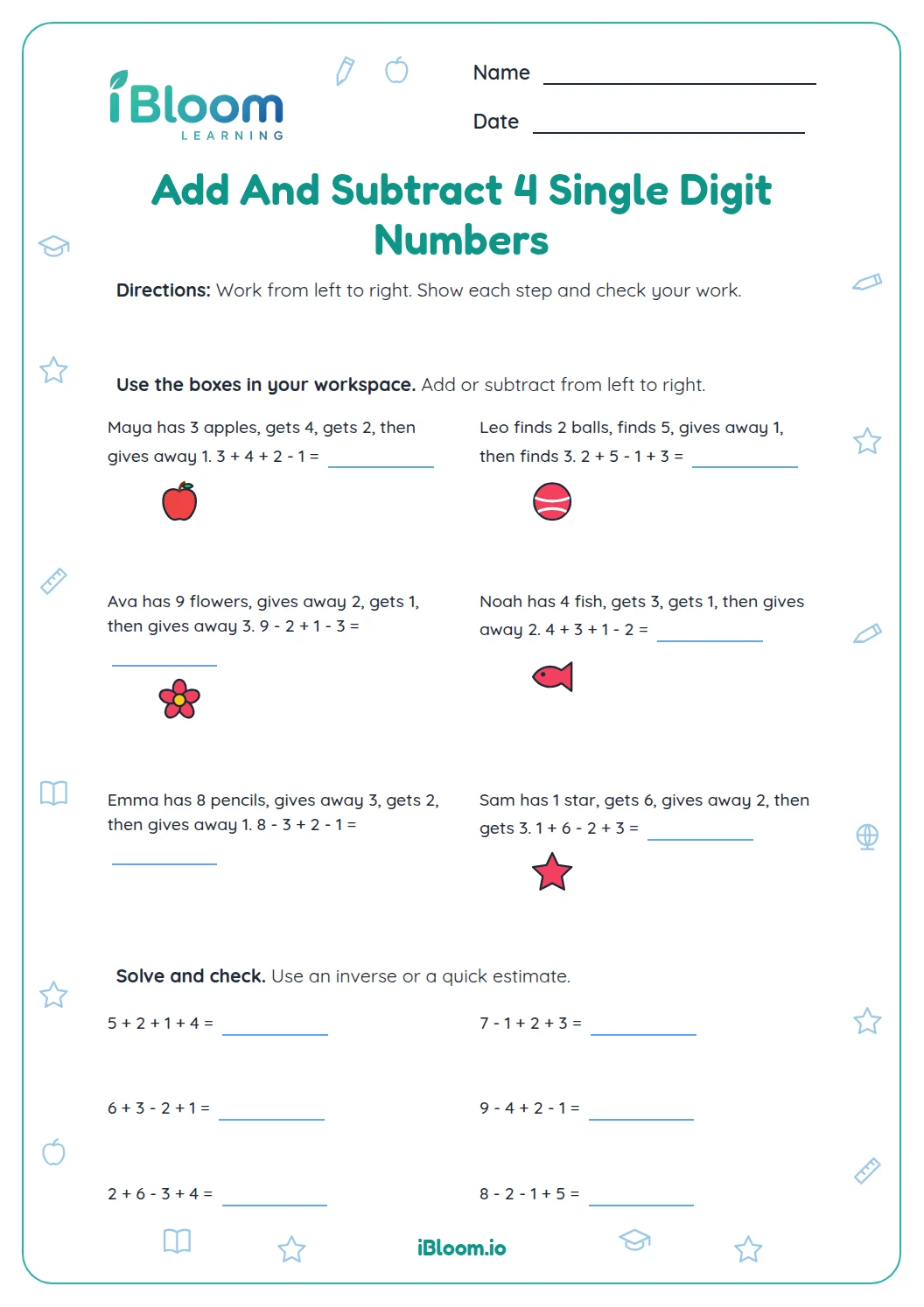
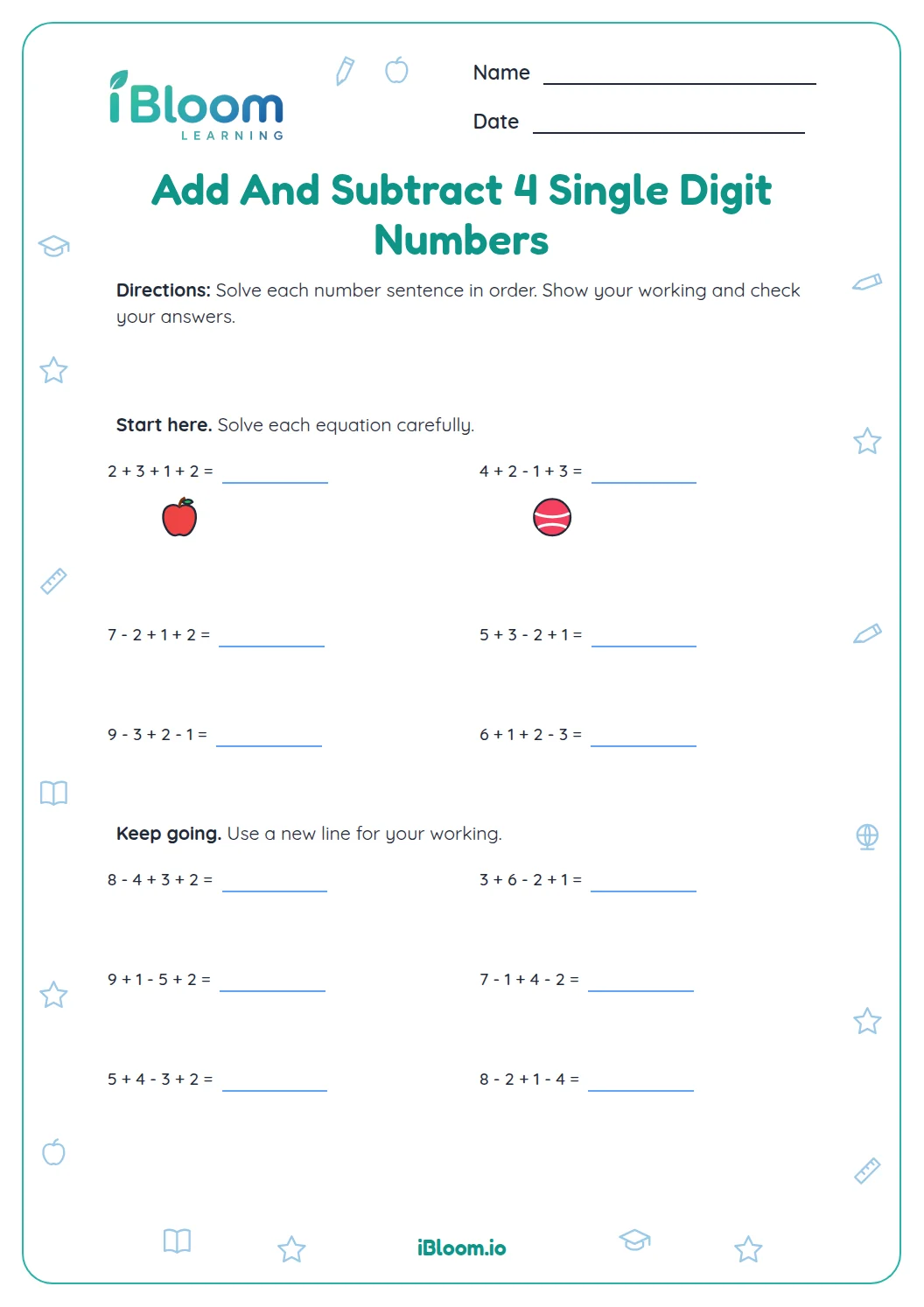
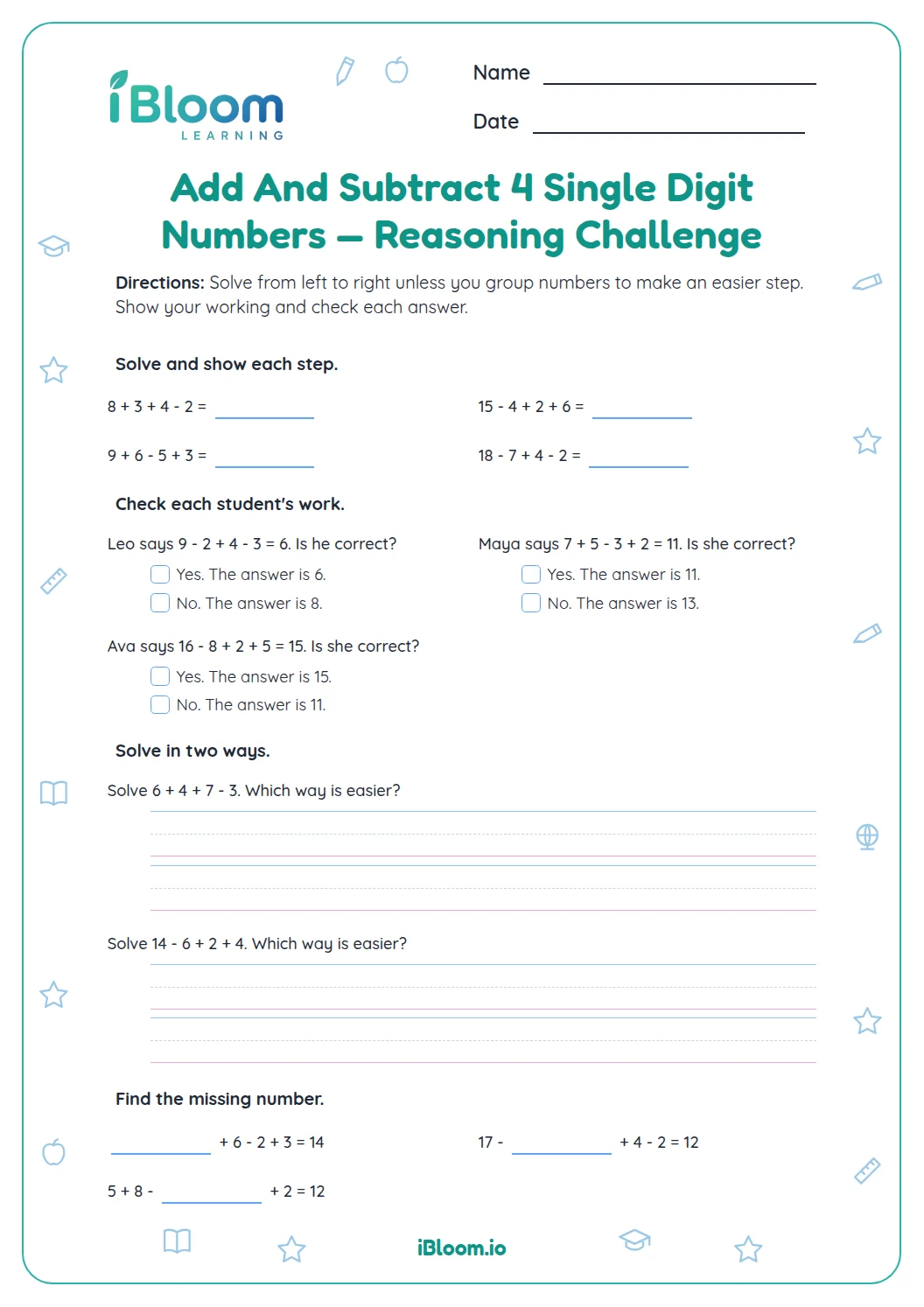
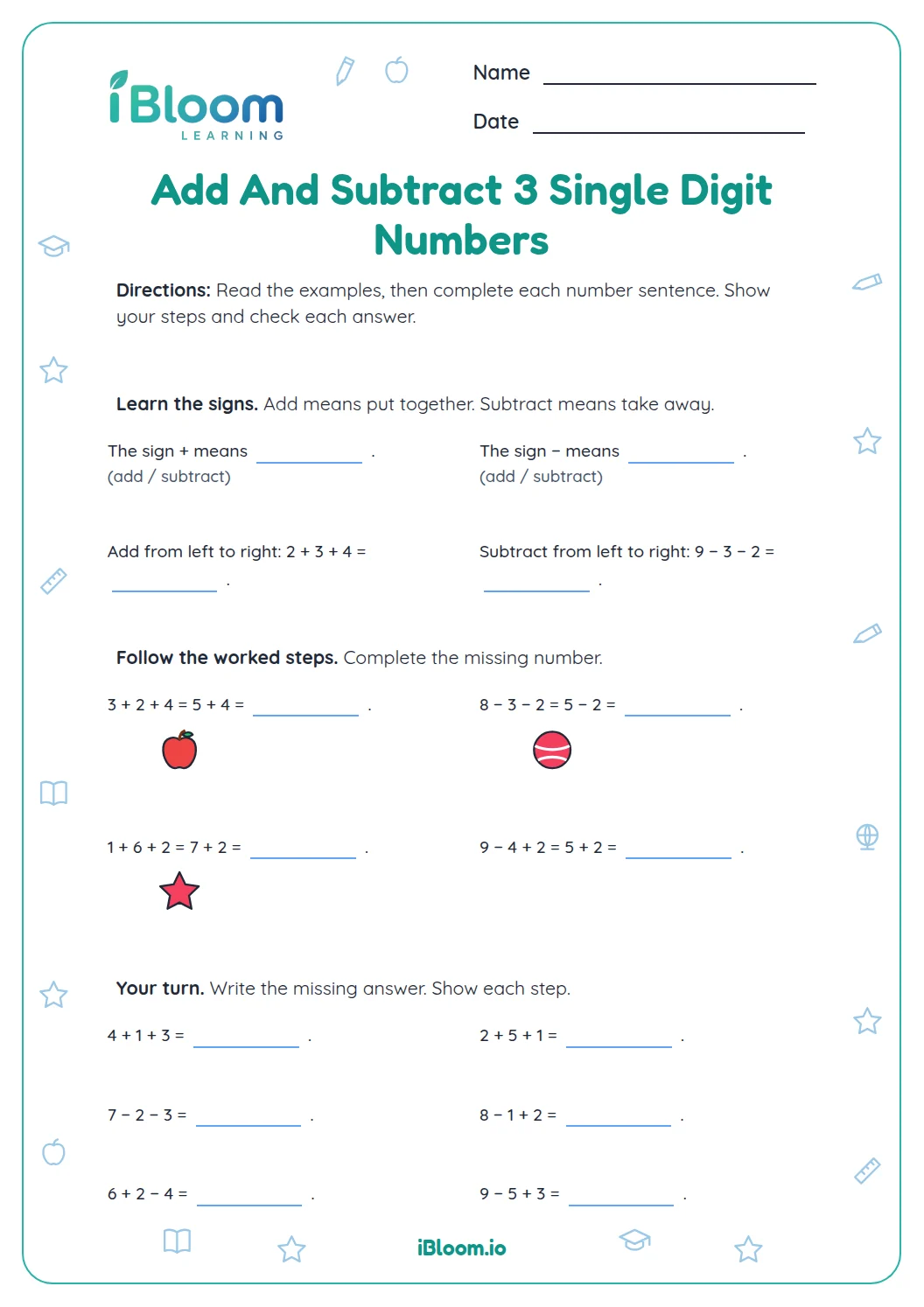
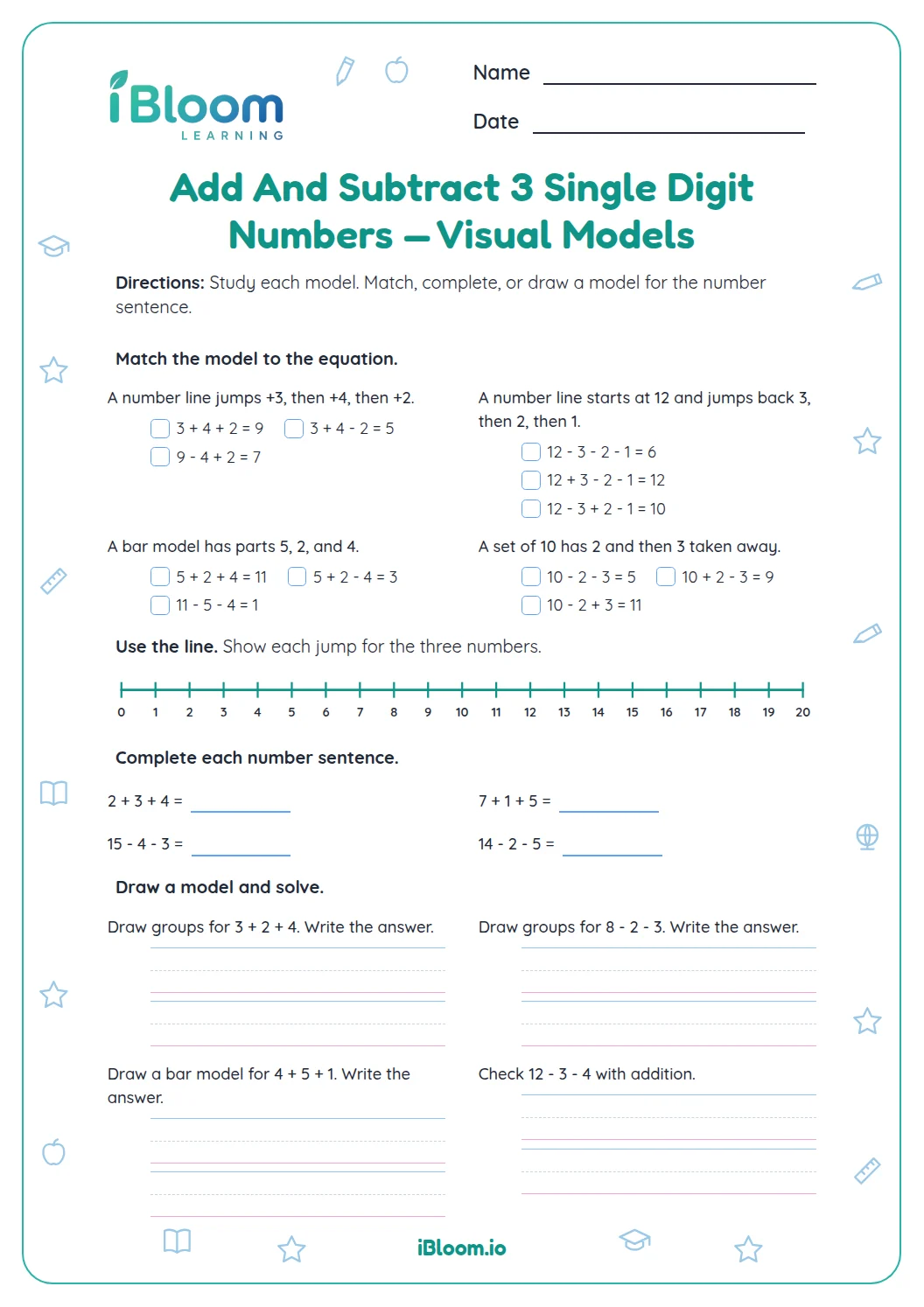
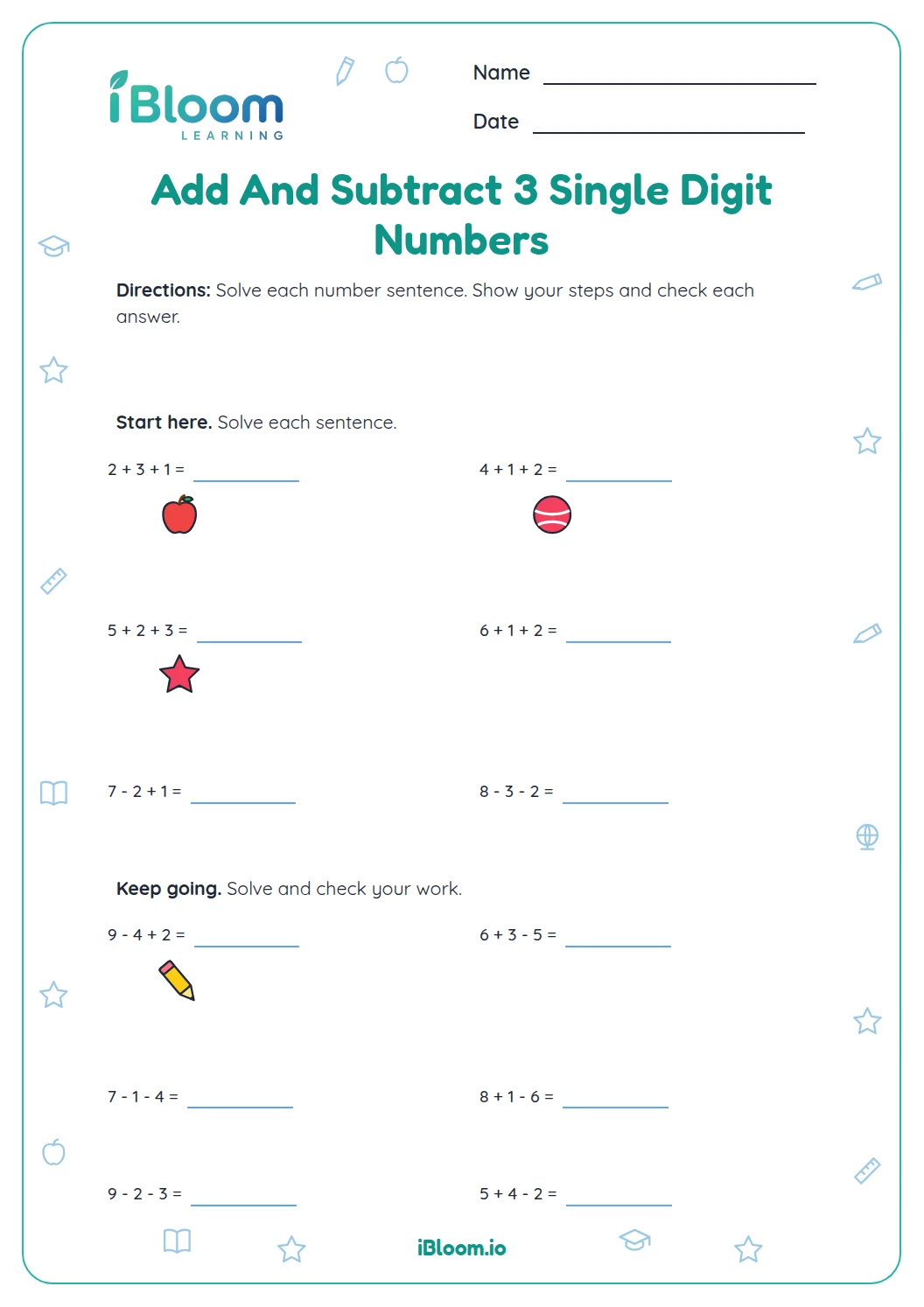
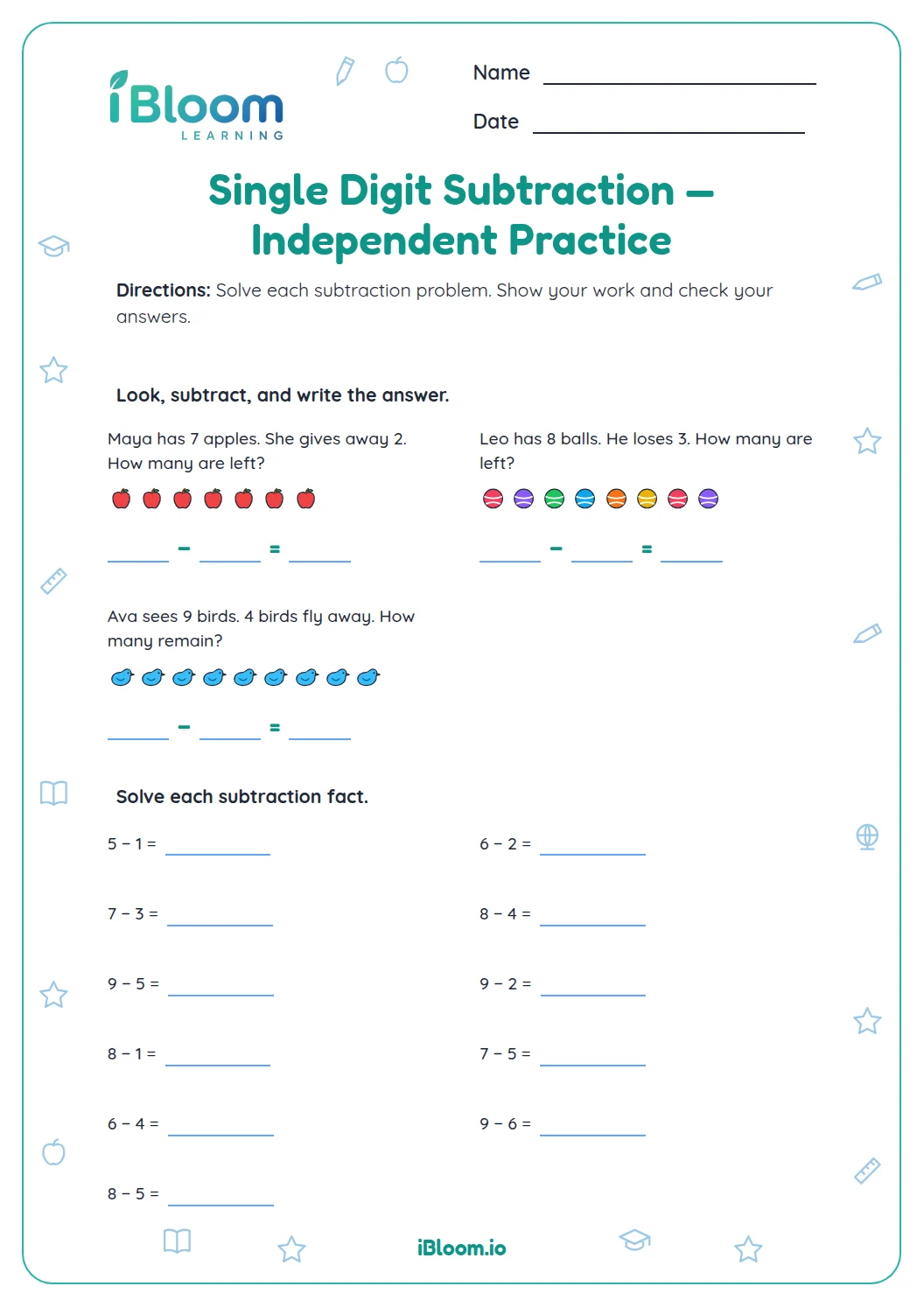
This free printable Grade 2 worksheet gives students 14 problems with four single-digit numbers: eight apple situations and six number sentences. Students follow addition and subtraction signs from left to right, using the pictured starting groups on the first eight items. The answer key lists all 14 results. The practice builds fluency with addition and subtraction within 20, as described in CCSS 2.OA.B.2.
Aligned to 2.OA.B.2
How do the counters help?
A counter set gives a concrete check for the number sentence. For addition, combine the groups and count the total. For subtraction, begin with the starting amount and take away one group at a time.
- 13 + 4 + 2 + 1 = 10
- 2Start at 3, add 4 to get 7, then add 2 and 1.
How can I keep each step straight?
Read the signs from left to right. After each operation, use the new total as the amount for the next step.
What should I check before finishing?
Check that the answer matches both the signs and the counter model. A subtraction answer should be smaller than its starting number.
How to use this worksheet
- 1Read the expression and identify each plus or minus sign.
- 2Start with the first number and work from left to right.
- 3For subtraction, take away one group at a time.
- 4Use the counter drawing to check the total or amount left.
- 5Recheck the signs before writing the answer.
Common mistakes and quick fixes
The mistake
Adding every number in a subtraction expression.
The fix
Pause at each minus sign and remove that amount from the current total.
The mistake
Subtracting each amount from the original number.
The fix
Use the result of the previous step as the new starting amount.
The mistake
Skipping a term in a four-number expression.
The fix
Point to each number as you work, then count four terms.
Common Core alignment
This page gives practice with addition and subtraction facts within 20.
Add and subtract within 20, using strategies to build fluency.
On this sheet: Every expression combines four single-digit addends or subtrahends, with totals and differences within 20.
Show the official wordingHide the official wording
Fluently add and subtract within 20 using mental strategies. By end of Grade 2, know from memory all sums of two one-digit numbers.
What to practice next
Make more practice
Further reading
Questions parents and teachers ask
What does this worksheet practice?
It has 14 problems with four single-digit numbers: eight short apple situations and six number sentences. Students follow each plus or minus sign from left to right, keeping each new total for the next step. The answer key lists the result for every problem.
How should a student start each problem?
Read the numbers and signs in order. On the first eight items, the apple pictures show the starting group; add or take away the amounts named in the prompt. For the final six, begin with the first number and apply each operation sign to the running total.
Why work from left to right?
Each operation changes the amount for the next step. In 9 − 4 − 1 − 2, first 9 − 4 = 5, then 5 − 1 = 4, and finally 4 − 2 = 2. Subtracting every number from 9 would not follow the expression.
What is in the answer key?
The separate key gives all 14 answers. For example, the pictured situation that starts with 9 apples and takes away 2, then 3, then 1 ends with 3 apples. Use the key after solving to check both the operations and the final total.
How can an adult help without giving the answer?
Ask the student to point to the first number, name the next operation, and say what the new total becomes. For pictured items, the apples help establish the starting amount. Have the student repeat the process for each remaining sign before checking the key.