





About this worksheet
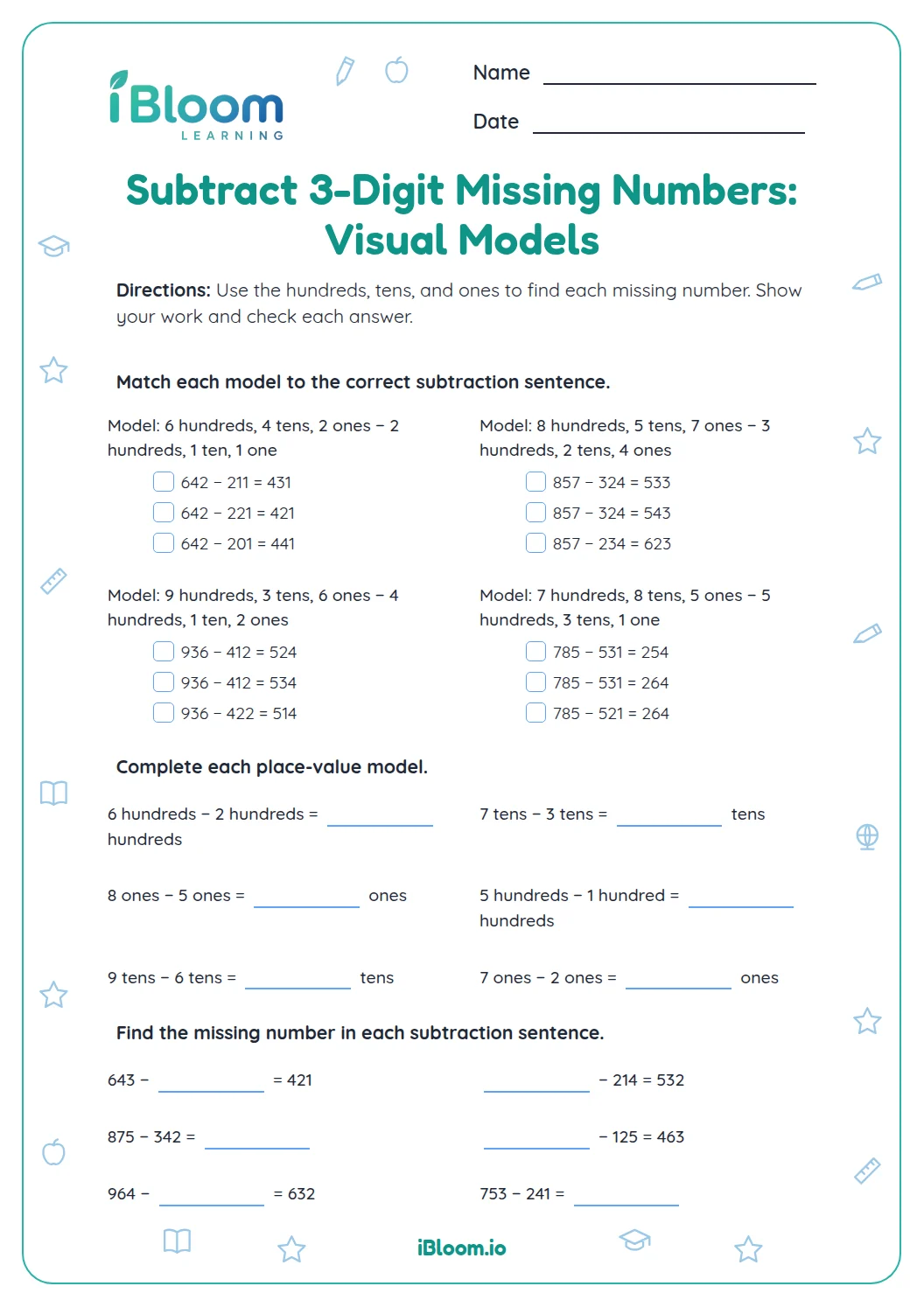
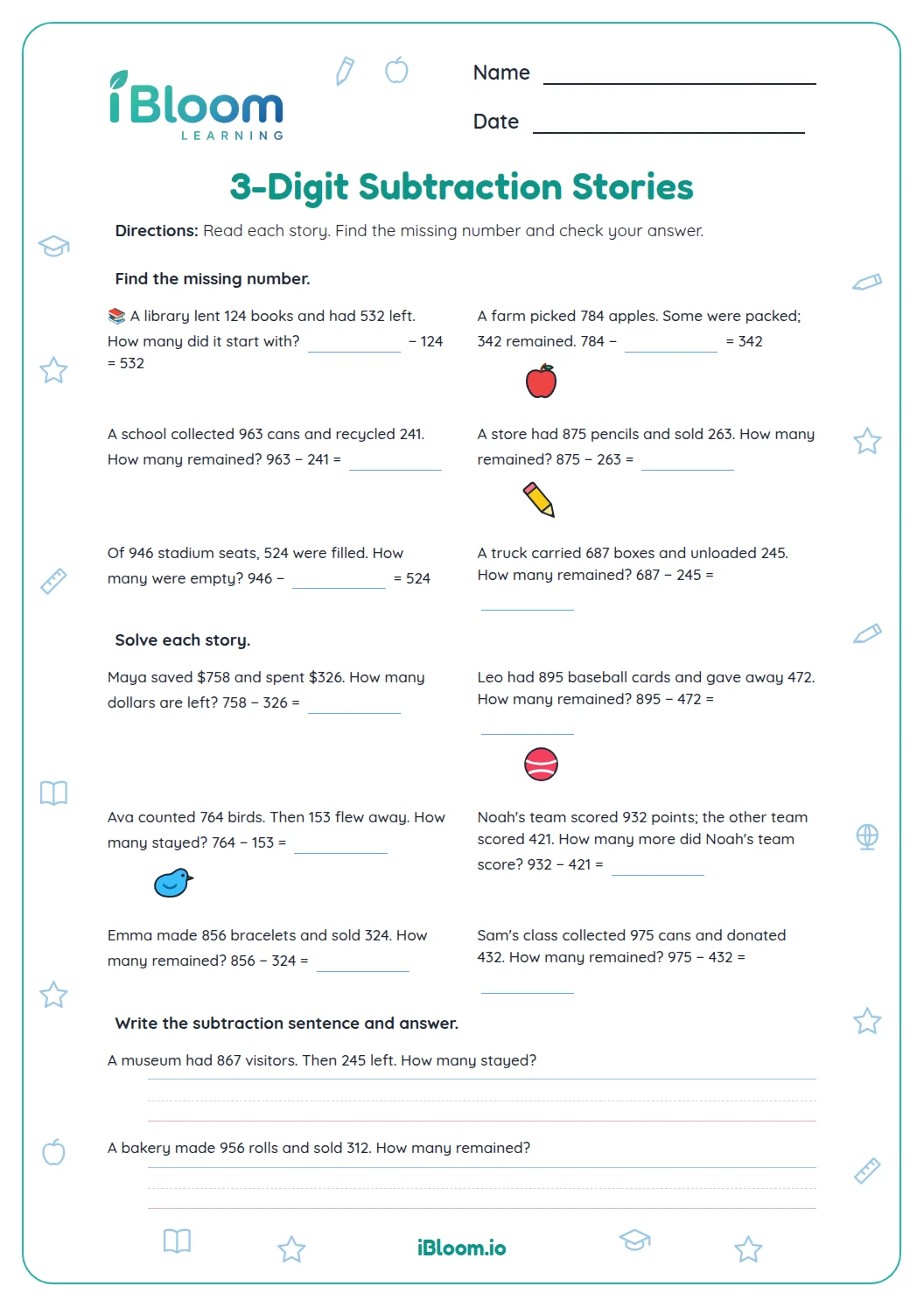
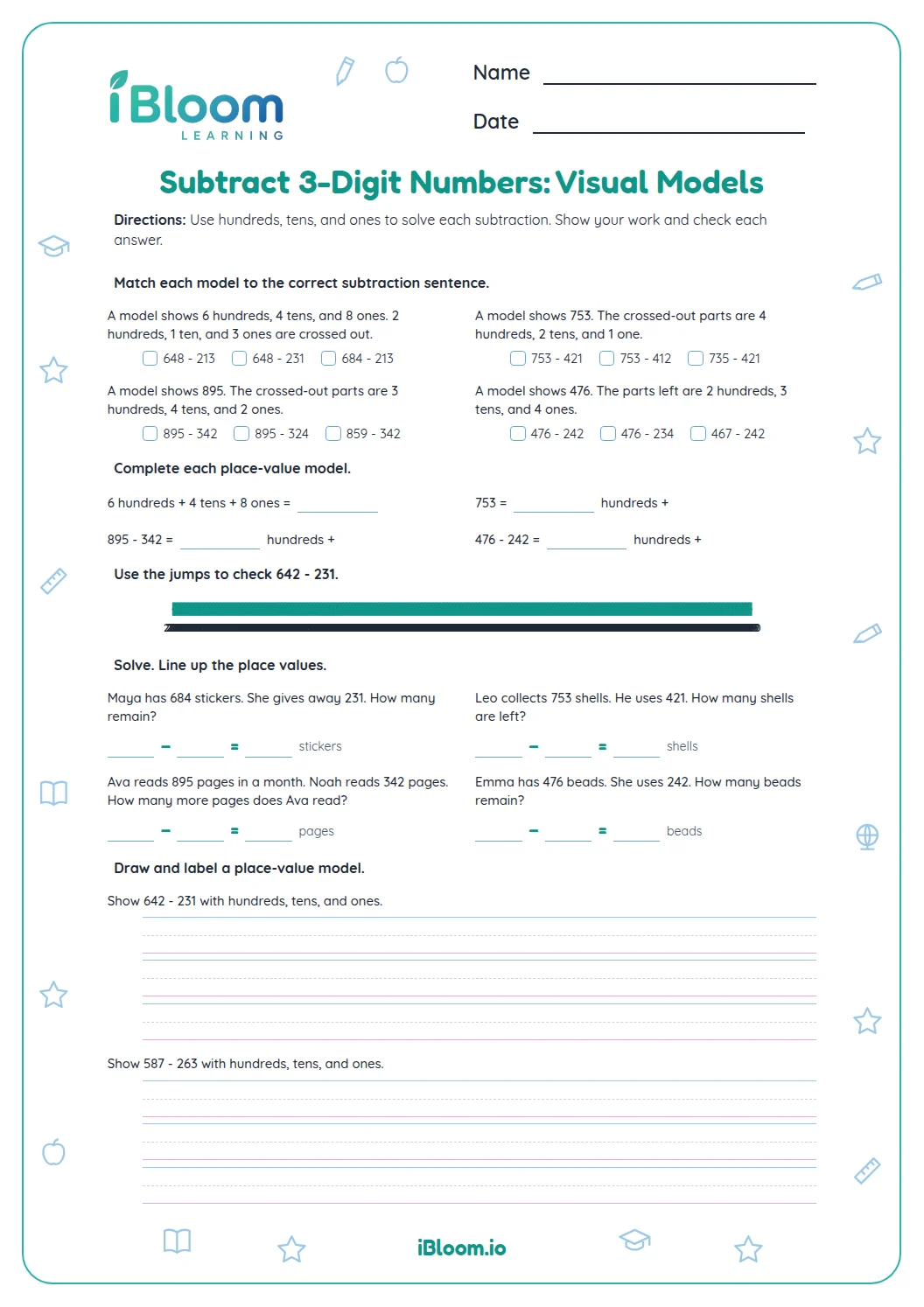
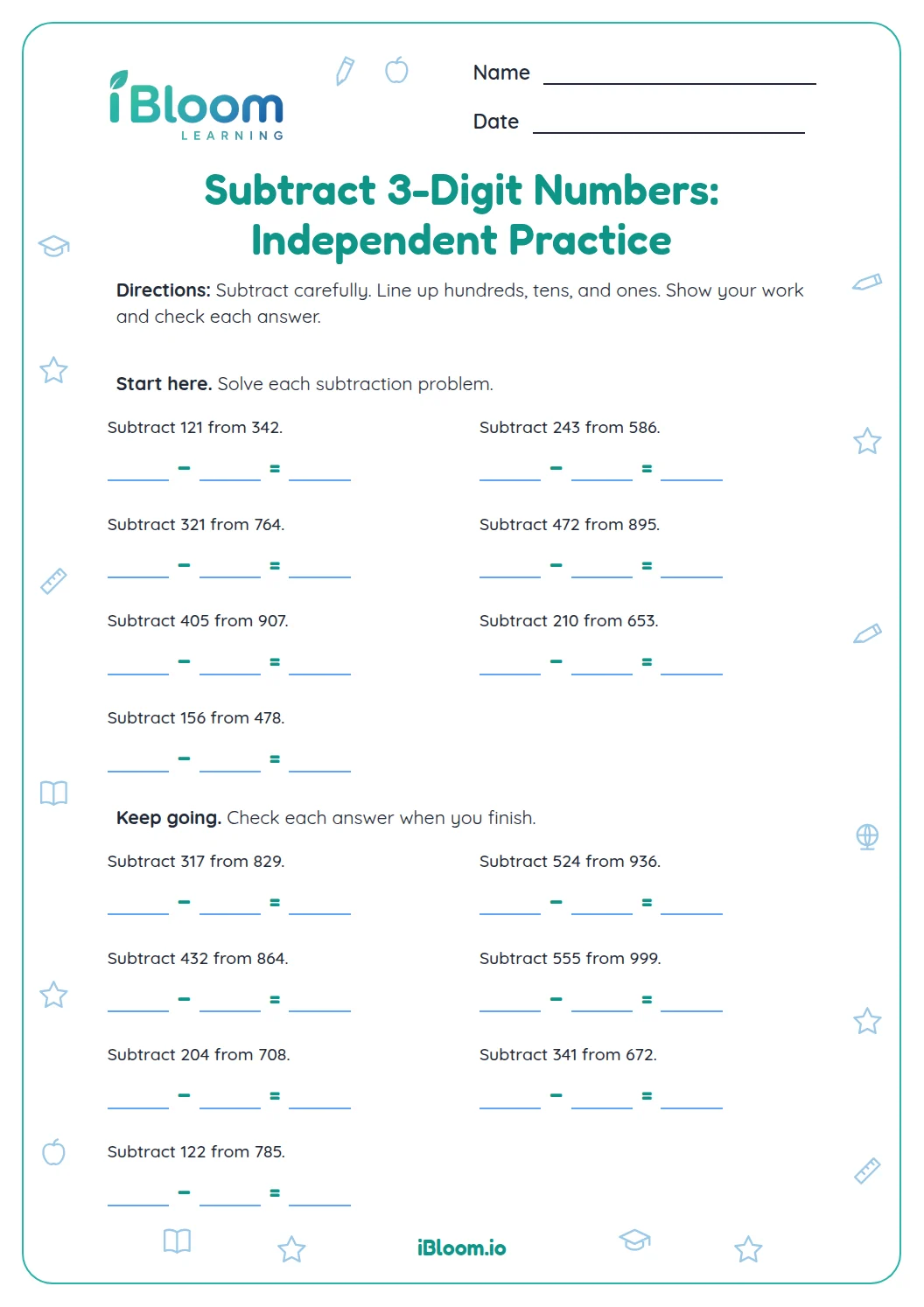
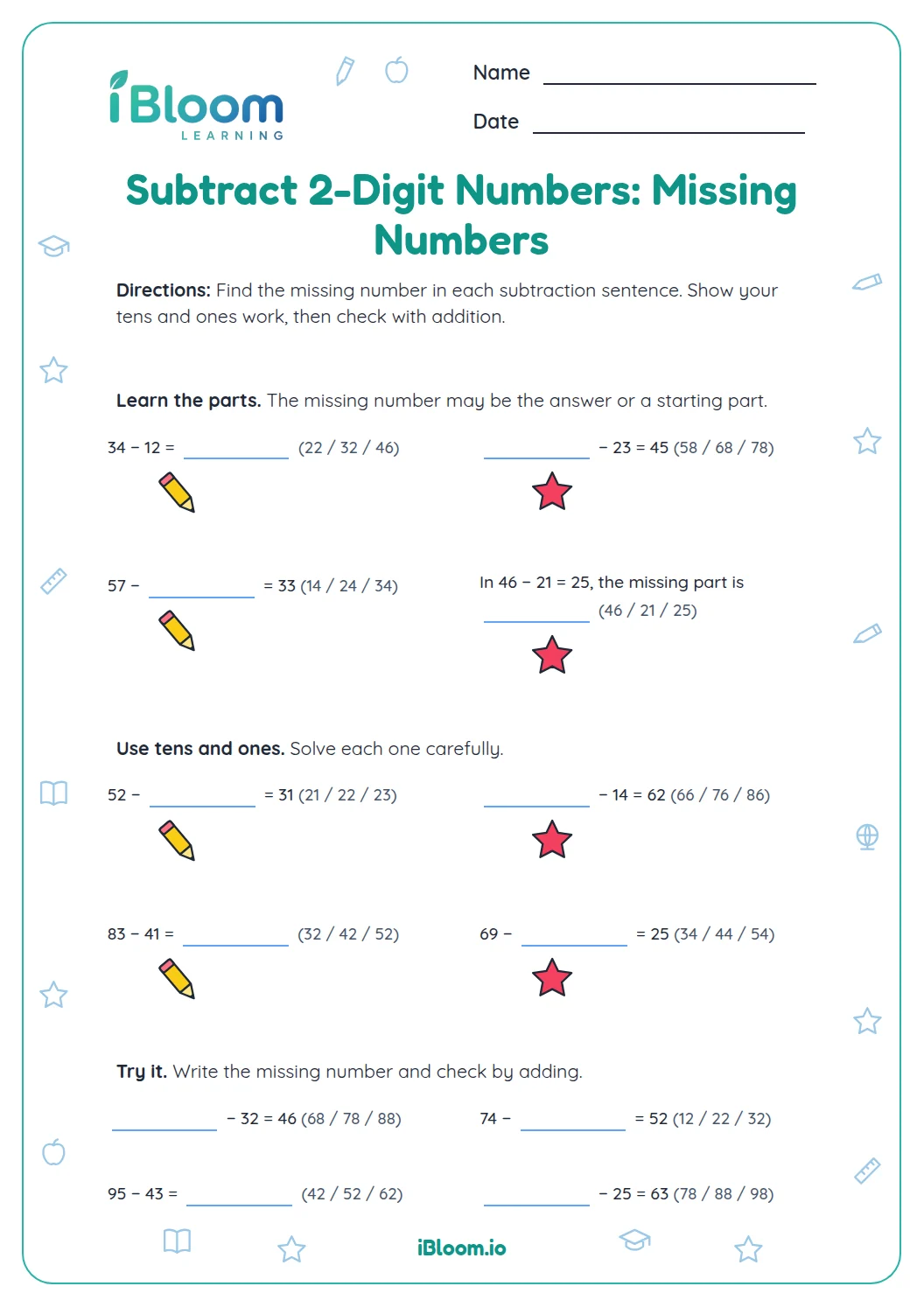
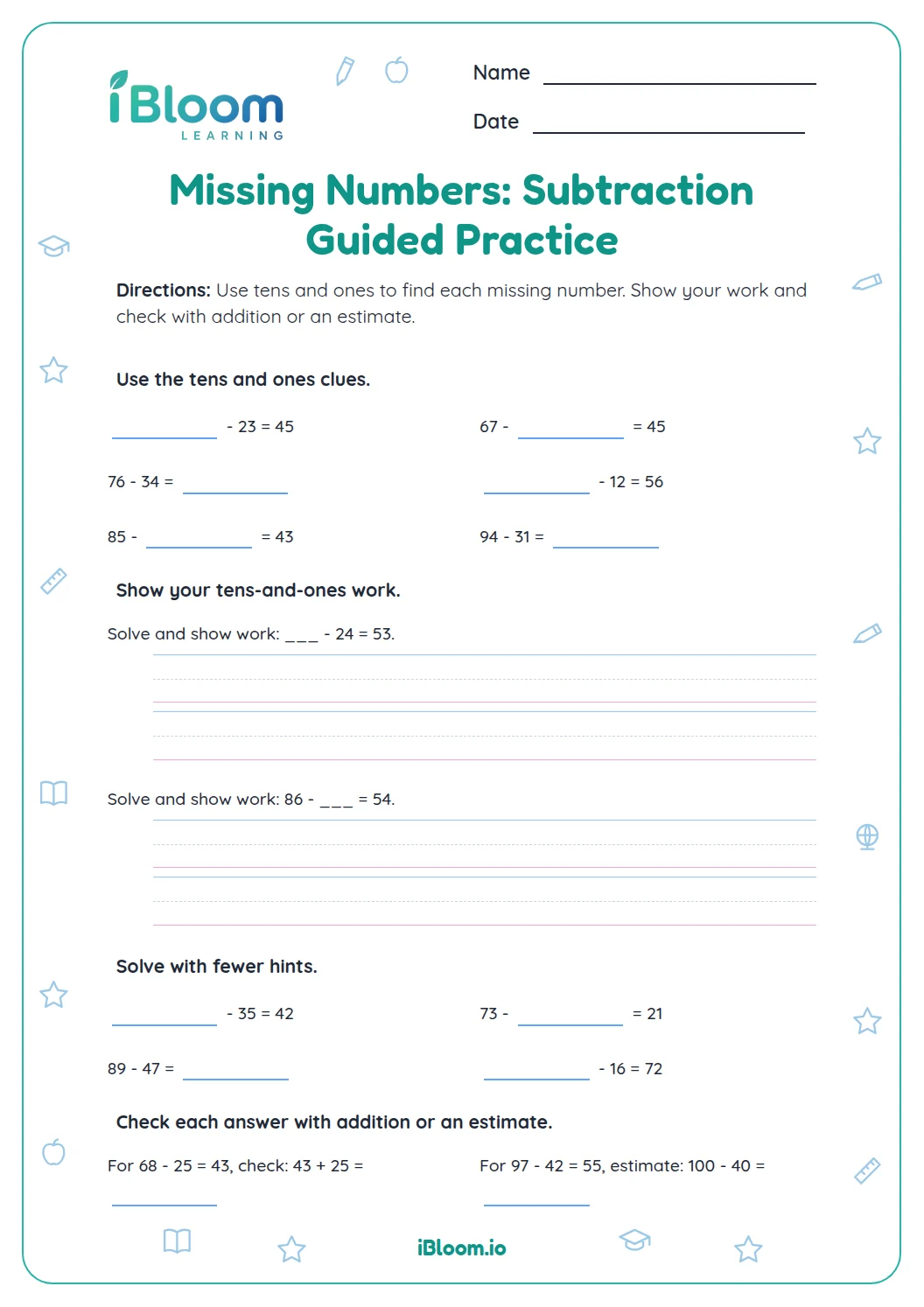
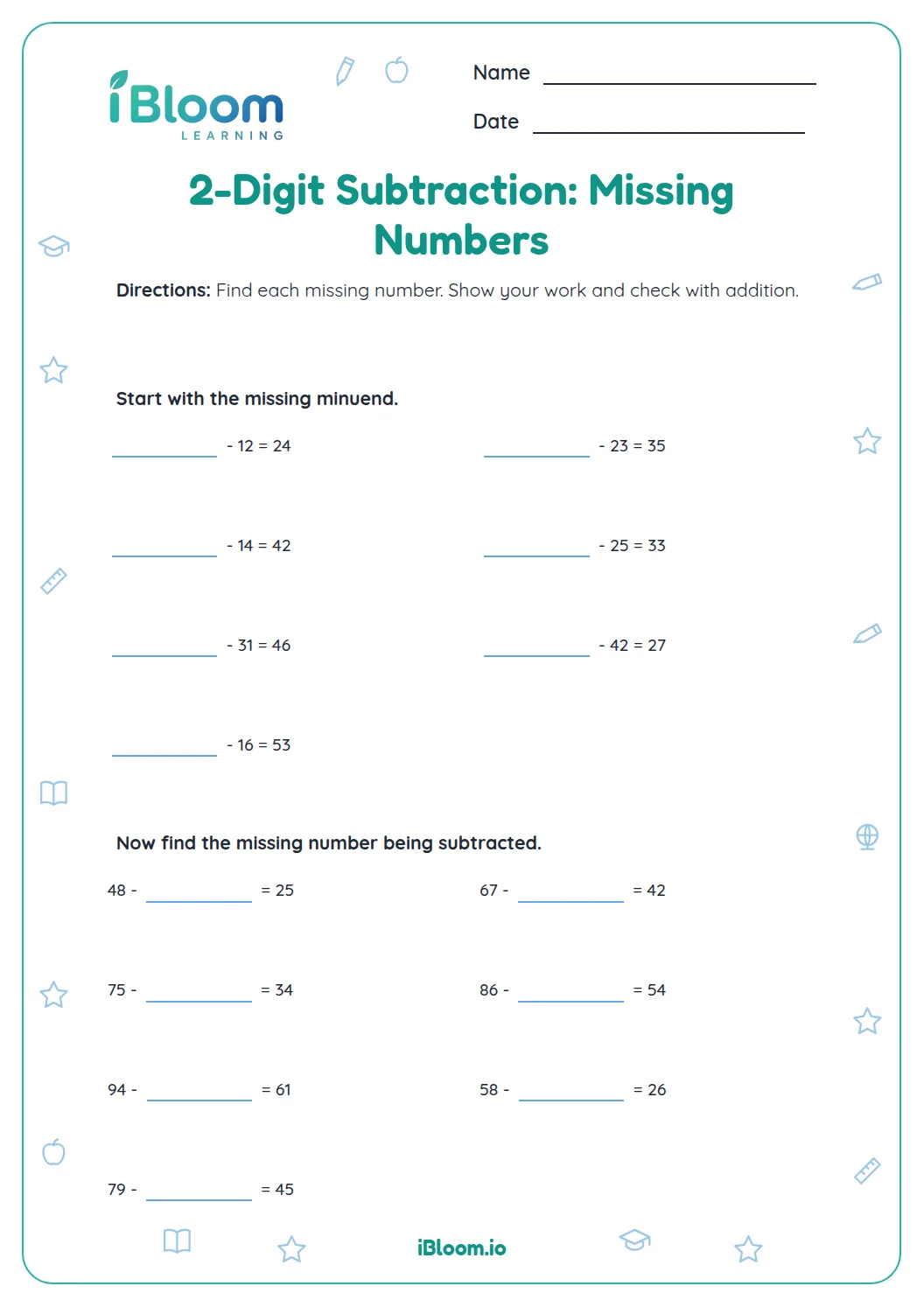
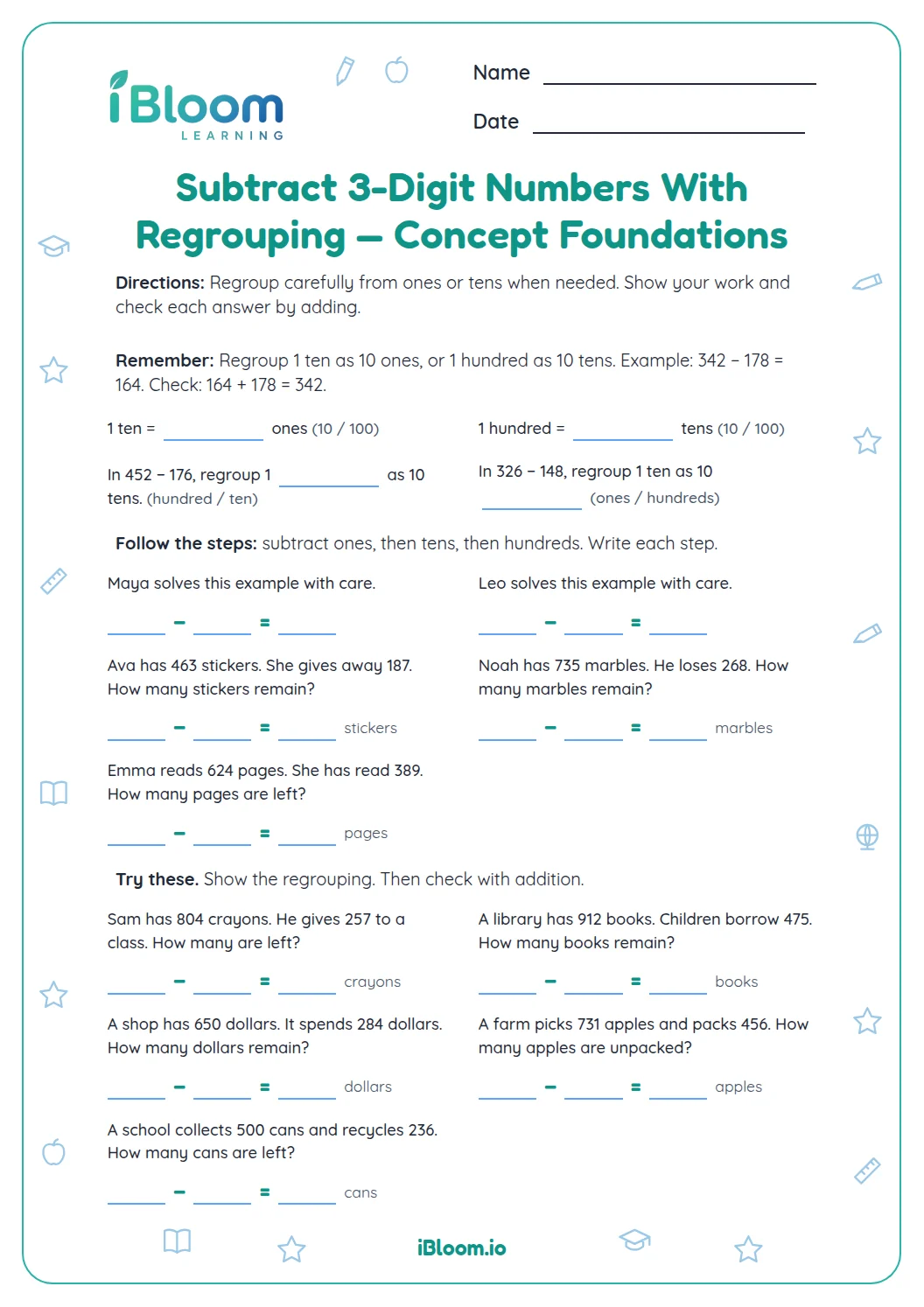
This Grade 2 reasoning challenge gives students 16 three-digit subtraction sentences with one missing number. The unknown appears as the starting number, the number taken away, or the difference. Students use place value and the inverse relationship between addition and subtraction to solve and check each equation. Every problem is designed for subtraction without regrouping. A separate answer key is included.
Aligned to 2.NBT.B.7
How do you find a missing subtrahend?
In a subtraction sentence, the subtrahend is the number being taken away. If the starting number and difference are known, subtract the difference from the starting number to find the missing subtrahend.
- 1875 − 243 = ___
- 2875 − 243 = 632
- 3Check: 632 + 243 = 875
How do you find a missing starting number?
If the starting number is missing, add the subtrahend and the difference. The starting number must be large enough to take away the subtrahend and leave the stated difference.
- 1___ − 124 = 532
- 2532 + 124 = 656
- 3Check: 656 − 124 = 532
How can addition check subtraction?
Subtraction and addition undo each other. For a sentence A − B = C, check by adding B + C. If the sum is A, the missing number and difference fit. Keep hundreds, tens, and ones in their place-value columns.
How can an adult support this practice?
- 1Read the subtraction sentence and locate the blank.
- 2Name the role of the missing number: starting number, number taken away, or difference.
- 3Choose addition or subtraction to isolate the blank.
- 4Check by substituting the answer into the original equation.
- 5Add the subtrahend and difference to confirm the starting number.
Common mistakes and quick fixes
The mistake
Subtracting the smaller visible number from the larger one without checking the blank’s role.
The fix
Name the minuend, subtrahend, and difference before choosing an operation.
The mistake
Adding when the missing subtrahend is asked for.
The fix
Subtract the known difference from the starting number.
The mistake
Finding a missing minuend but not checking it.
The fix
Add the subtrahend and difference, then substitute into the original sentence.
This page gives students focused practice with the skills named below.
Students use place value and addition or subtraction strategies within 1,000.
On this sheet:
Show the official wordingHide the official wording
Add and subtract within 1000, using concrete models or drawings and strategies based on place value, properties of operations, and/or the relationship between addition and subtraction; relate the strategy to a written method.
What to practice next
Make more practice
Further reading
Questions parents and teachers ask
How do you find a missing number in subtraction?
First identify the blank. If the subtrahend is missing, subtract the difference from the starting number: 654 − 321 = 333. If the minuend is missing, add subtrahend and difference: 124 + 532 = 656. Substitute the result to check.
How can addition check a subtraction answer?
Add the number taken away to the difference. For 875 − 243 = 632, the check is 632 + 243 = 875. The sum matches the starting number, so the subtraction equation is correct. This check uses the same three numbers in a related addition sentence.
What does no regrouping mean here?
No regrouping means each place can be subtracted without trading from another place. For example, in 875 − 243, subtract ones, tens, and hundreds in their matching places. Students can focus on identifying the blank and checking the relationship with addition.
What is a missing minuend?
The minuend is the starting number in a subtraction sentence. In ___ − 124 = 532, add 124 and 532 to find the missing minuend: 656. Check by subtracting 124 from 656 to get 532. This is the blank at the beginning.
Does the worksheet include an answer key?
Yes. A separate answer key lists the missing number for all 16 subtraction sentences. Students can put each answer back into the original equation and check by adding the subtrahend and difference. Adults can review a missed item by asking which part of the subtraction sentence was unknown.