



About this worksheet
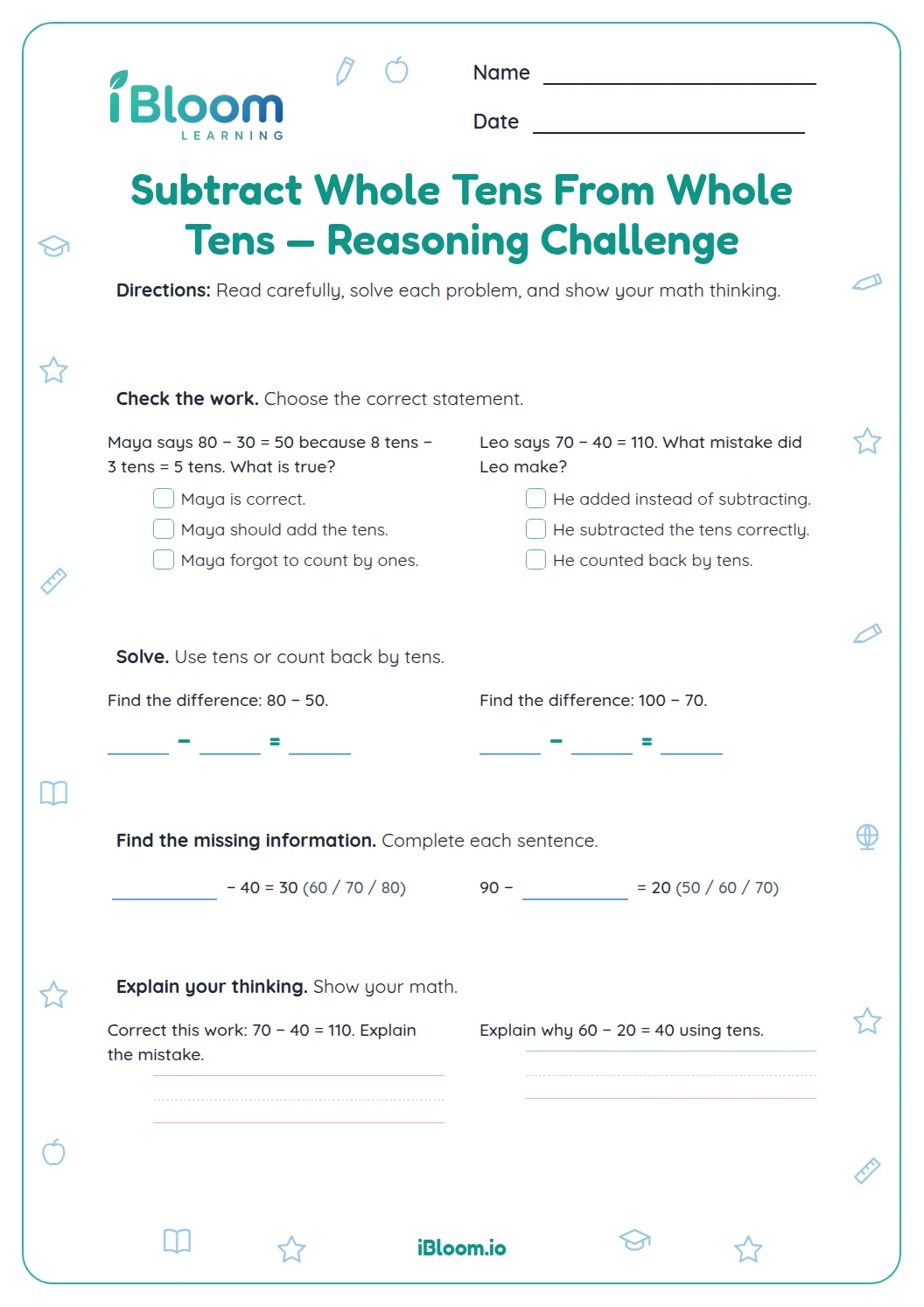
This Grade 2 worksheet focuses on subtracting one whole-ten amount from another. Part A uses tens rods to connect the model with tens units; Part B builds fluency with equations from 30 to 100; Part C applies subtraction to short situations and comparisons. The answer key gives each result and the story answers with units. The page practices place-value subtraction described in Common Core 2.NBT.B.5.
Aligned to 2.NBT.B.5 and 2.OA.A.1
How do tens rods show subtraction?
Each rod is one group of ten. In question 1, three rods minus one rod leaves two rods, or 2 tens. This model keeps the tens units visible before learners work only with numerals.
- 13 tens − 1 ten
- 23 − 1 = 2 tens
- 3The answer is 2.
What changes when the rods disappear?
In Part B, read each number as tens: 90 is 9 tens, and 30 is 3 tens. Subtract 9 − 3 = 6, then write 60. The zero stays in the ones place because there are no ones in either amount.
How do you choose subtraction in a story?
Part C describes amounts that decrease or asks for a comparison. Identify the starting amount, then subtract the tens taken away. In question 12, 90 blocks − 30 blocks = 60 blocks.
How to use this worksheet
- 1For Part A, say each model as a number of tens.
- 2For each equation, rewrite the numbers as tens before subtracting.
- 3In a story, underline the starting amount and the amount removed.
- 4Check by adding the difference to the amount taken away.
Common mistakes and quick fixes
The mistake
Writing 6 instead of 60 for 9 tens minus 3 tens.
The fix
Say “6 tens” and record the value as 60.
The mistake
Subtracting the tens but dropping the ones-place zero.
The fix
Use a place-value chart or add a zero after finding the number of tens.
The mistake
Subtracting in the wrong order in a take-away story.
The fix
Start with the amount the story says was there, then remove the amount used or lent.
Common Core alignment
These activities build the stated grade-level skill through clear models and practice.
Fluently add and subtract within 100 using place-value strategies.
On this sheet: The number sentences subtract whole tens using tens as units and place-value reasoning.
Show the official wordingHide the official wording
Fluently add and subtract within 100 using strategies based on place value, properties of operations, and/or the relationship between addition and subtraction.
Solve one-step word problems using addition or subtraction within 100.
On this sheet: The story problems model taking away whole tens and finding the remaining amount.
Show the official wordingHide the official wording
Use addition and subtraction within 100 to solve one- and two-step word problems involving situations of adding to, taking from, putting together, taking apart, and comparing, with unknowns in all positions, e.g., by using drawings and equations with a symbol for the unknown number to represent the problem.
What to practice next
Make more practice
Further reading
Questions parents and teachers ask
What does this worksheet practice?
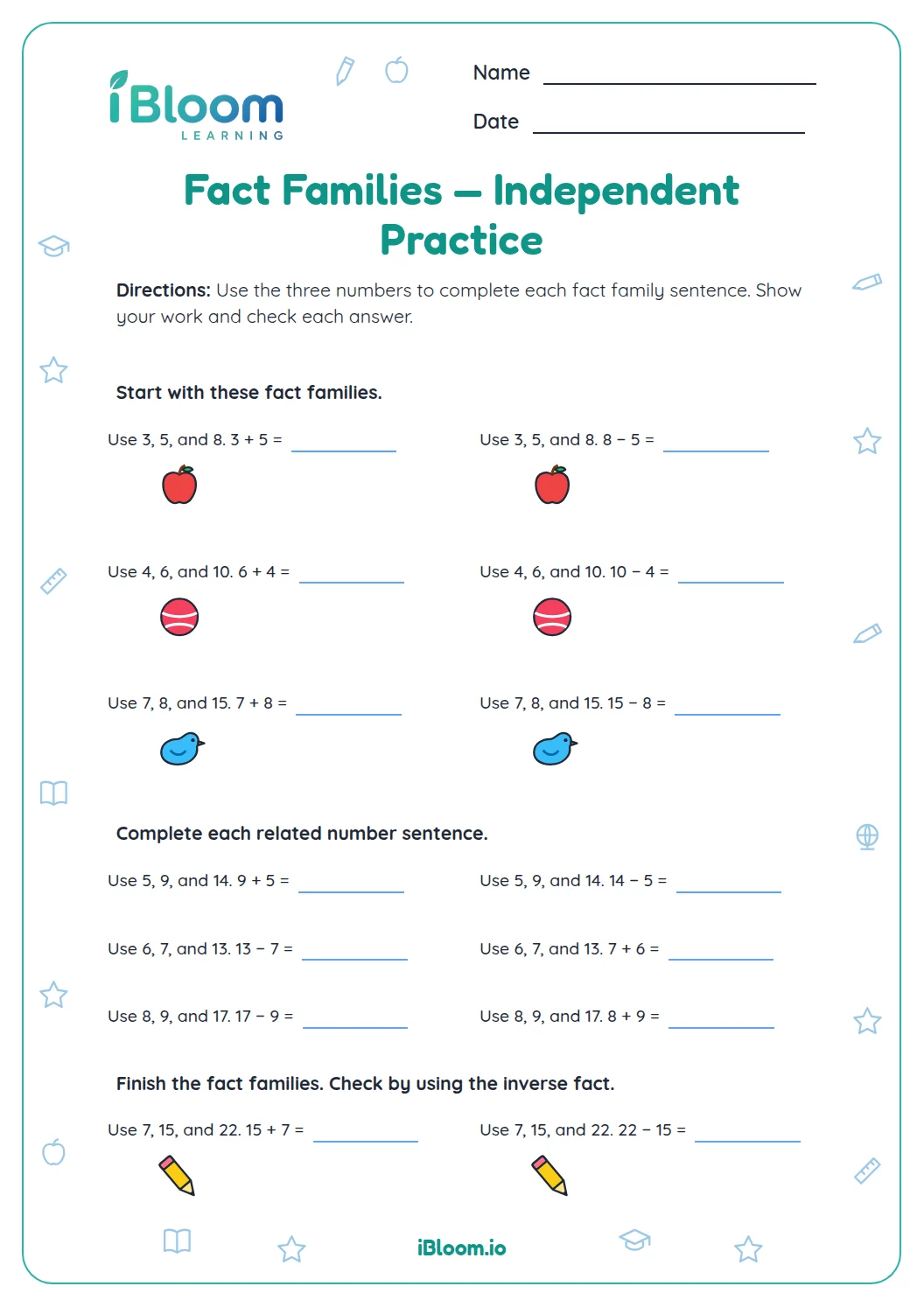
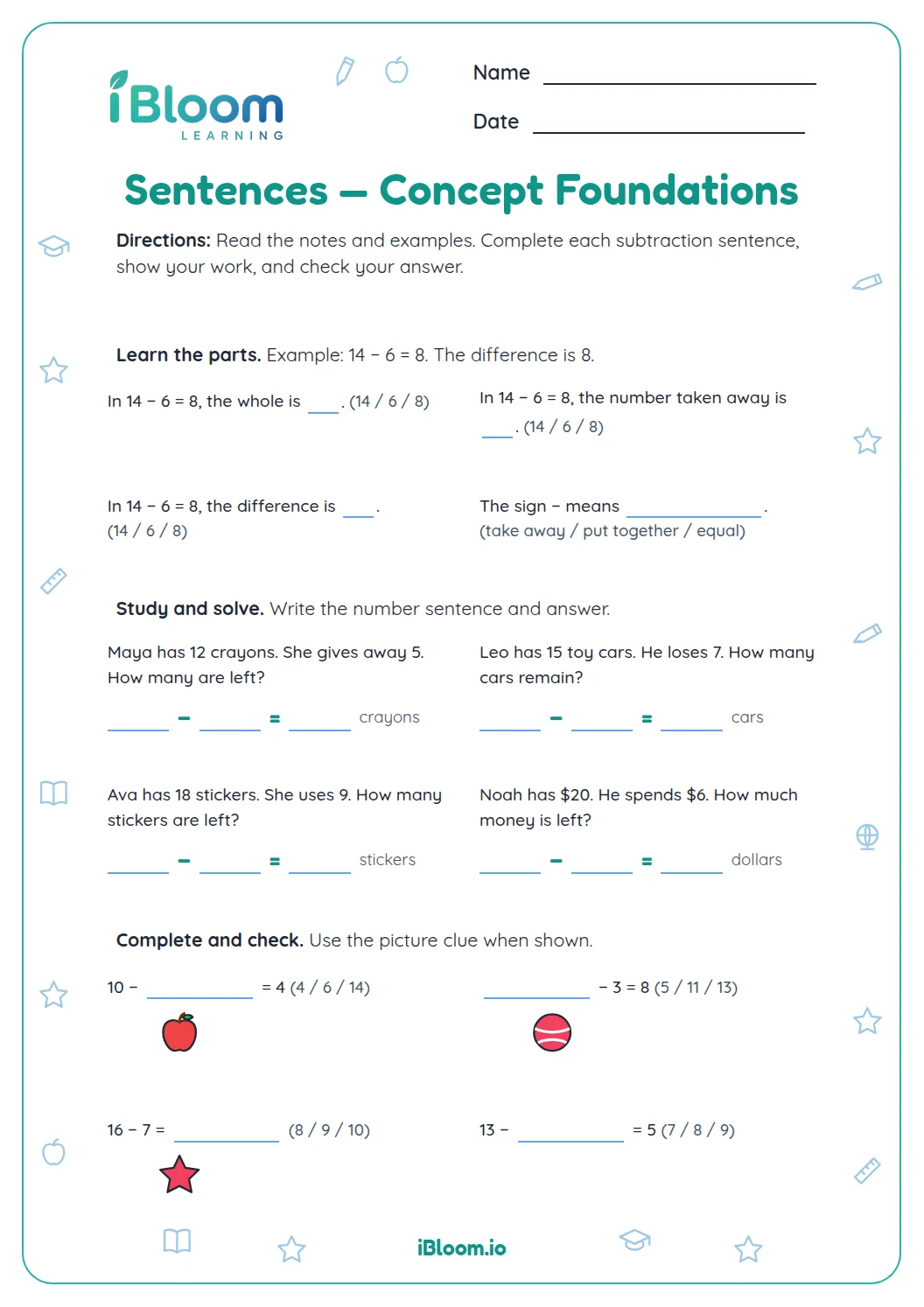
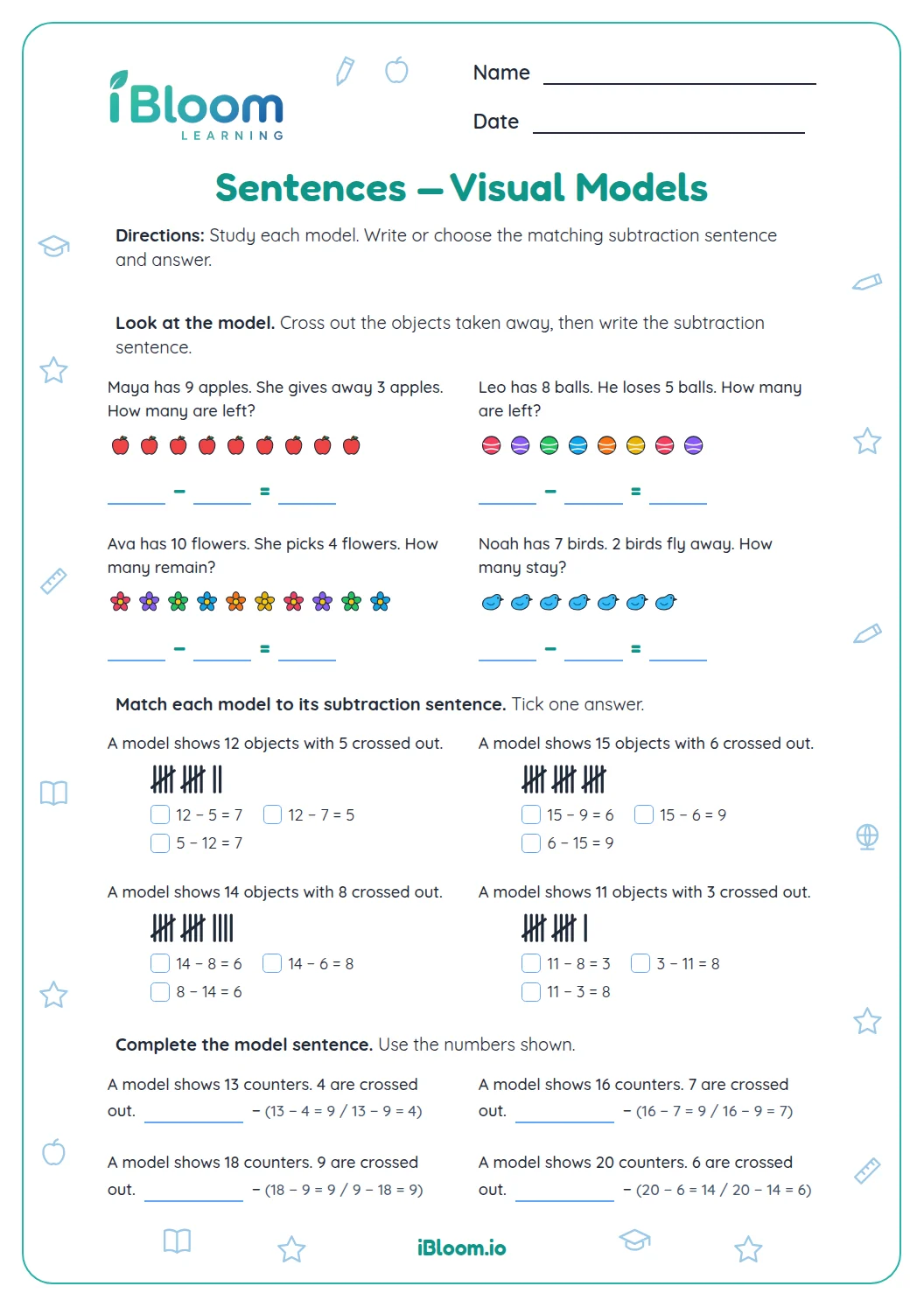
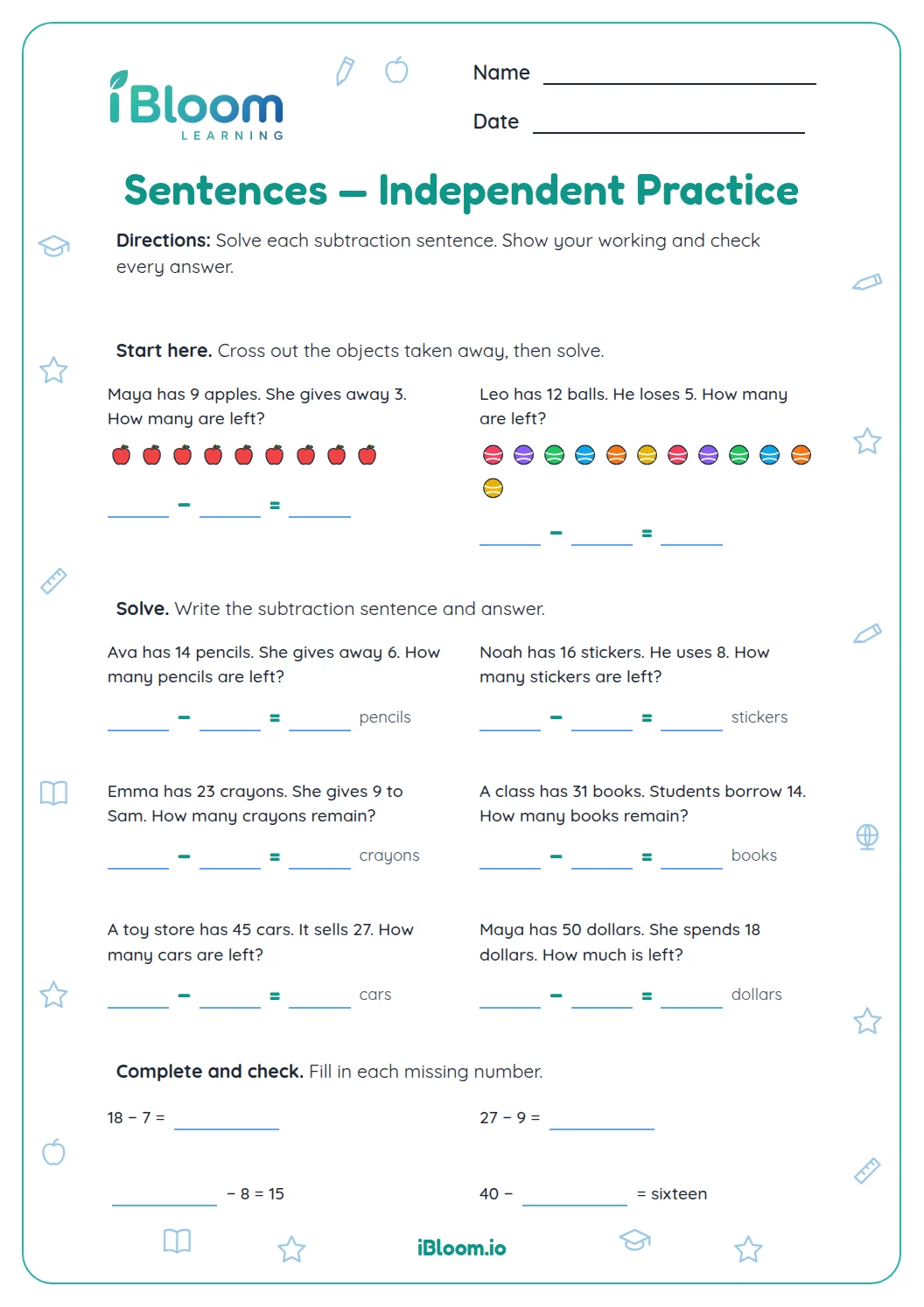
This Grade 2 printable gives learners focused practice with practice subtracting groups of tens with base-ten rods, number sentences, and short stories. The answer key is included as a separate set of pages, so an adult can check each response after the child finishes.
How should we begin?
Read the one-line direction together and model the first item aloud. Point to each object or number as you say it, then let the learner try the next one independently before checking the key. The examples use familiar school and home situations, and a grown-up can read the directions aloud before independent work begins.
How long will it take?
Plan for about 15 to 20 minutes, with time to talk through any missed items. A younger learner can complete one part at a time and return to the next part after a short break. The examples use familiar school and home situations, and a grown-up can read the directions aloud before independent work begins.
Can I print just the practice pages?
Yes. The answer key follows the worksheet pages, so you can print the practice pages for the learner and keep the key nearby for checking. The pages are designed for ordinary home or classroom printing. The examples use familiar school and home situations, and a grown-up can read the directions aloud before independent work begins.
What if an answer is incorrect?
Ask the learner to explain how they decided, then point back to the model, picture, or passage clue. Let them try again before showing the answer. Correcting the reasoning helps the skill stick better than copying a number. The examples use familiar school and home situations, and a grown-up can read the directions aloud before independent work begins.
Is an answer key included?
Yes. A separate answer key gives the response to each numbered item. For open-ended written answers, the key provides an example; accept another response when it is supported by the worksheet text. The examples use familiar school and home situations, and a grown-up can read the directions aloud before independent work begins.