



About this worksheet
See how one ten can become ten ones to make subtraction possible. This page includes 16 original questions in two parts, a printable worksheet and a separate answer key. It is written for US families and teachers practicing this skill.
Aligned to 2.NBT.B.5
How does a ten become ones?
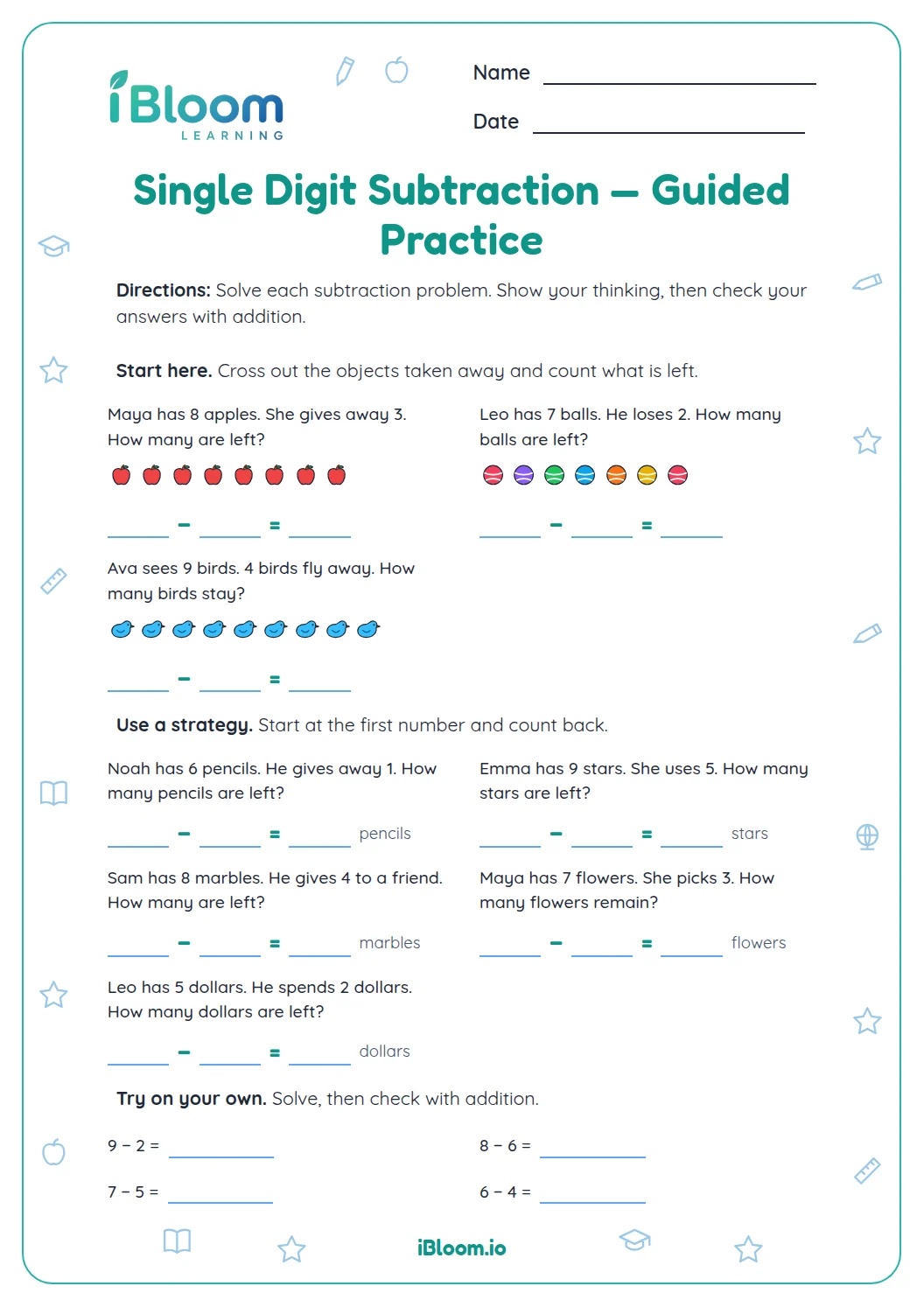
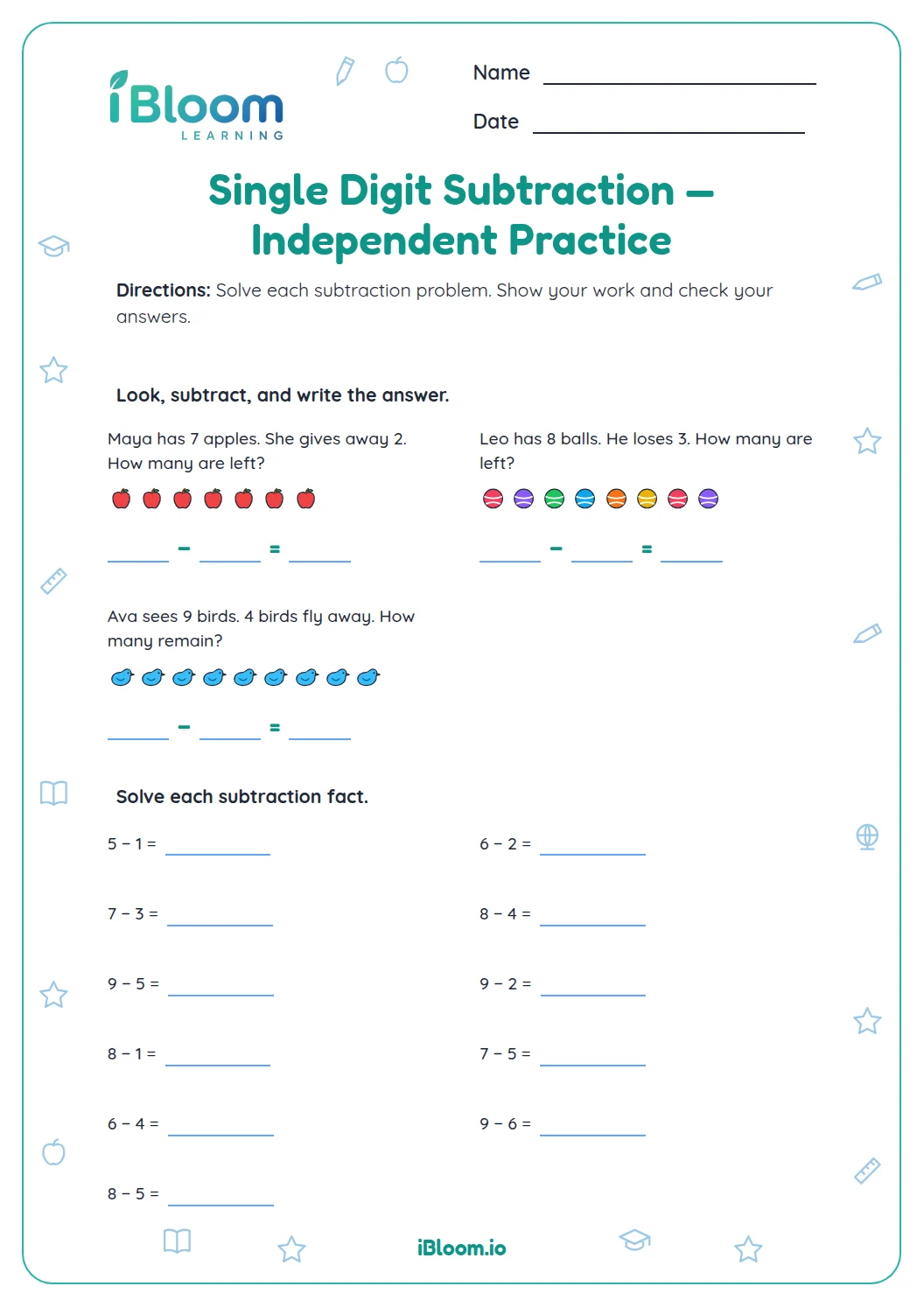
The first questions connect base-ten blocks and subtraction. Children then solve regrouping facts and short problems.
In question 1, trading one of two tens leaves one ten and makes 14 ones.
How does the skill work in a story?
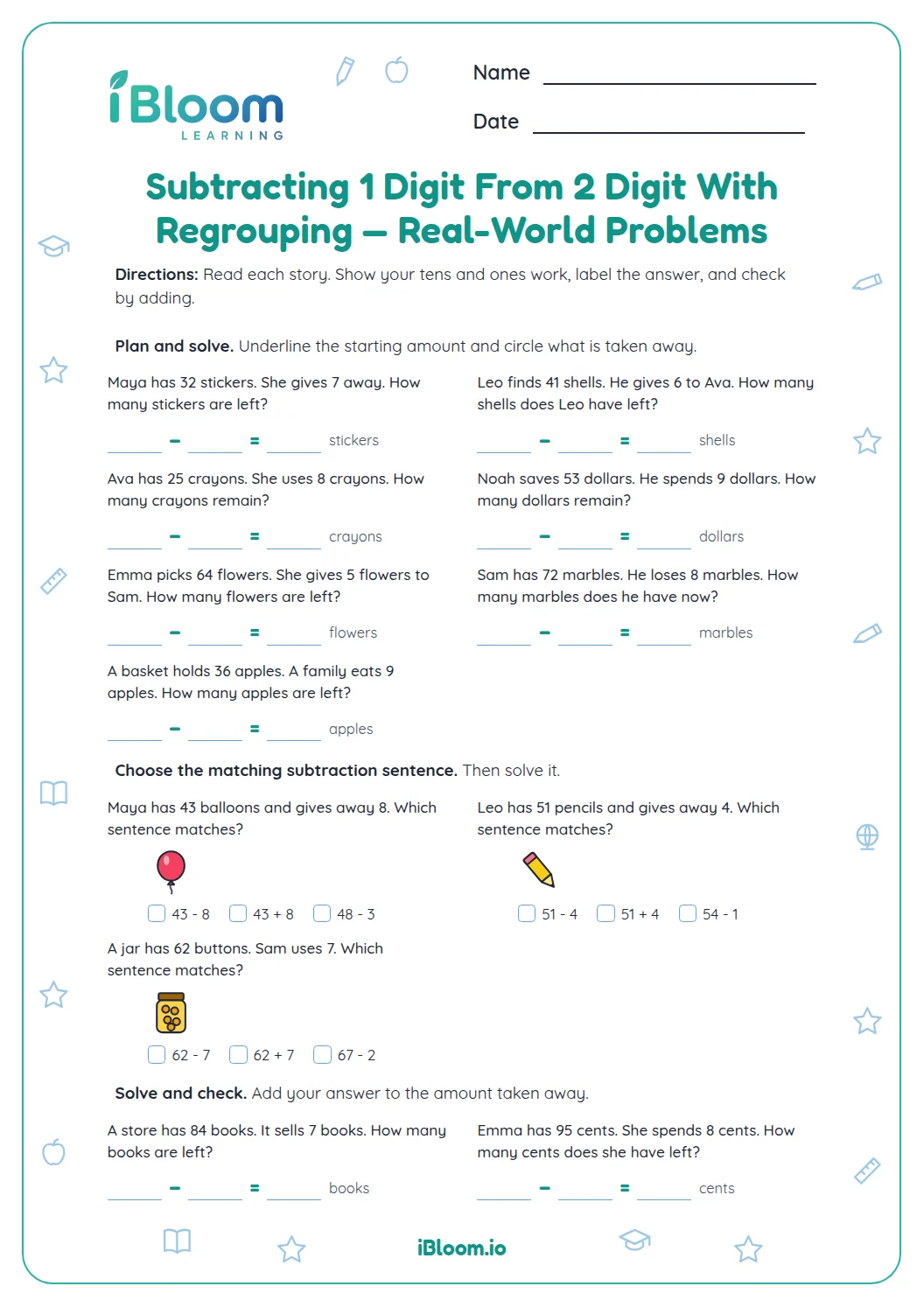
A story gives a starting amount and a smaller number to remove. For example, 25 shells minus 8 given away leaves 17 shells.
How to use this worksheet
- 1Use the block picture in question 1 to describe the ten-for-ones trade.
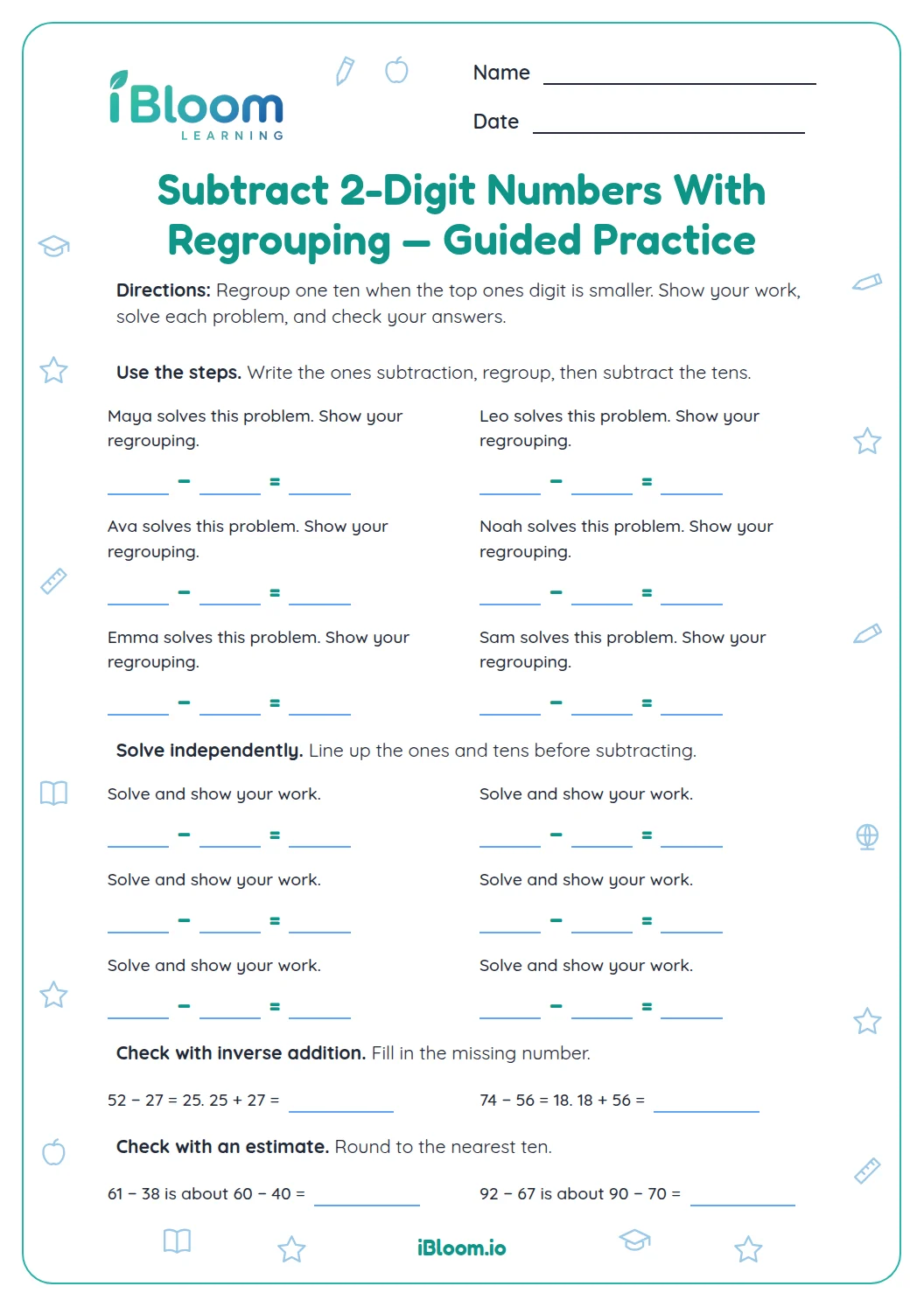
- 2Work through the subtraction facts and say what was regrouped.
- 3Read each story and identify its starting amount and amount removed.
- 4Check a result by adding the subtrahend back.
Common mistakes and quick fixes
The mistake
Taking away a ten instead of trading it
The fix
Keep the total fixed: one ten becomes ten ones.
The mistake
Forgetting to reduce the tens after trading
The fix
After trading, cross out one ten in the tens place.
The mistake
Using the story numbers in the wrong order
The fix
Start with the amount there was, then subtract what was removed.
Common Core alignment
This worksheet practices the listed Common Core skill through its printed questions.
Subtract within 100 using strategies based on place value and operation properties.
On this sheet: Every subtraction item requires subtracting a one-digit number from a two-digit number, regrouping when needed.
Show the official wordingHide the official wording
Fluently add and subtract within 100 using strategies based on place value, properties of operations, and/or the relationship between addition and subtraction.
What to practice next
Make more practice
Further reading
Questions parents and teachers ask
What does “trade a ten” mean?
It means rename one ten as ten ones. The total amount does not change, but there are now enough ones to subtract the single-digit number. Have the child point to the wording that supports the answer, explain the choice aloud, and compare it with the completed example on the key.
Why are blocks shown first?
The blocks make the place-value trade visible before children solve number sentences. The first two questions ask what changes when a ten is traded. Have the child point to the wording that supports the answer, explain the choice aloud, and compare it with the completed example on the key.
What numbers are used?
The worksheet practices two-digit numbers within 100 and subtracts one-digit numbers. Some problems use a missing starting number or short story. Have the child point to the wording that supports the answer, explain the choice aloud, and compare it with the completed example on the key.
How should a child check the answer?
Add the number taken away to the difference. For 52 − 4 = 48, adding 48 + 4 returns to 52. Have the child point to the wording that supports the answer, explain the choice aloud, and compare it with the completed example on the key.
What does the answer key include?
It lists the answer for every question and shows the addition check for the final reasoning item. Have the child point to the wording that supports the answer, explain the choice aloud, and compare it with the completed example on the key.