

About this worksheet
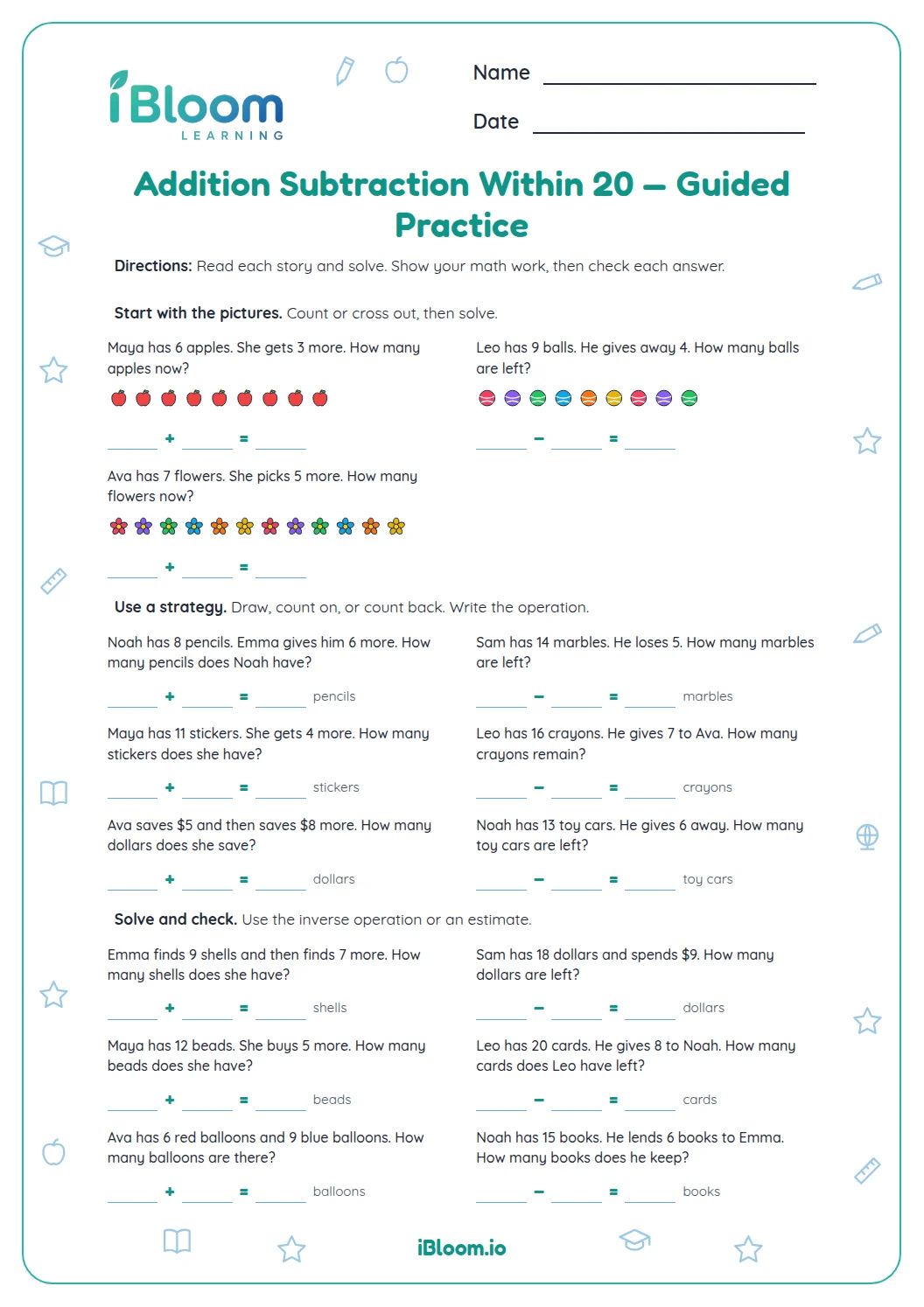
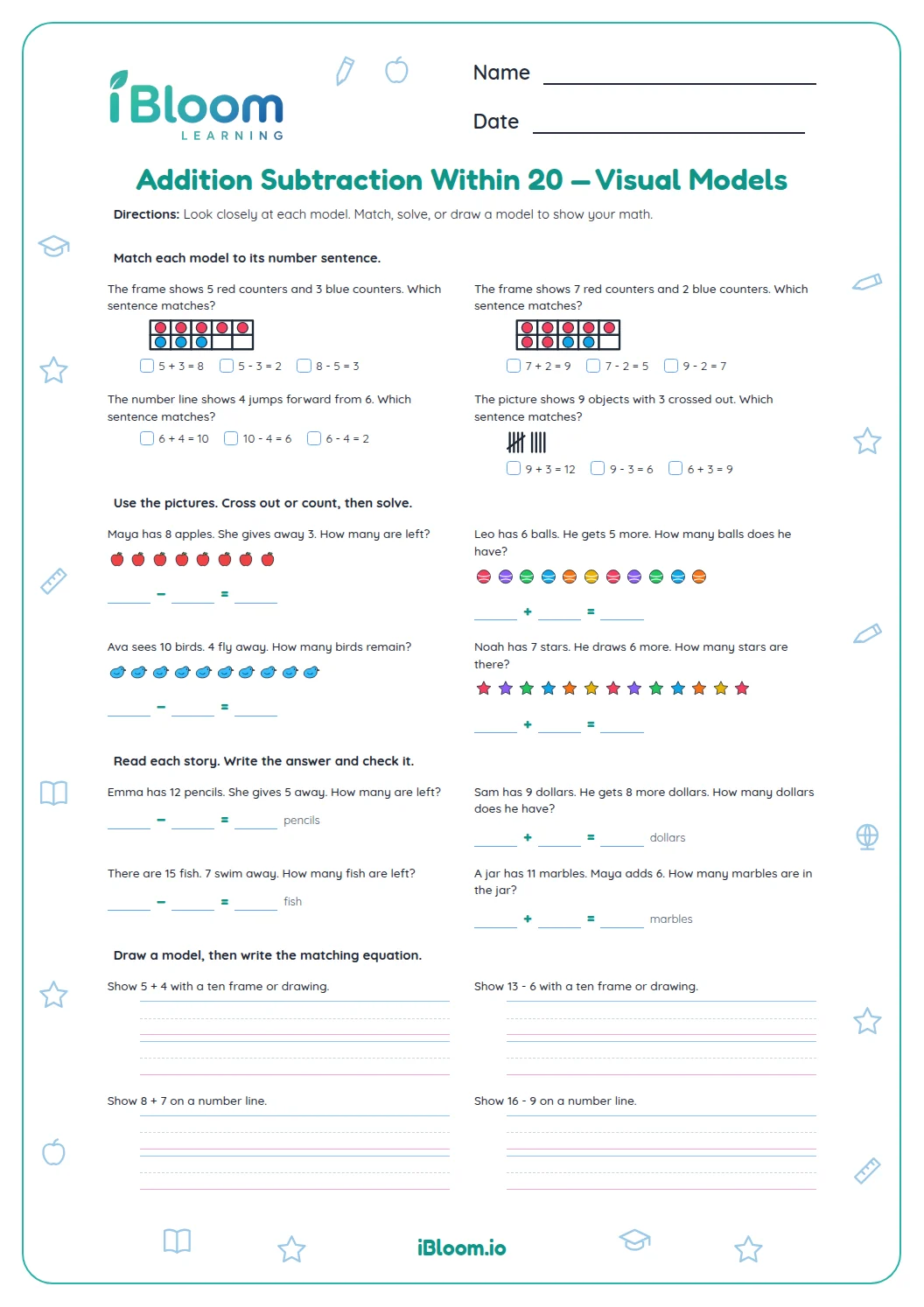
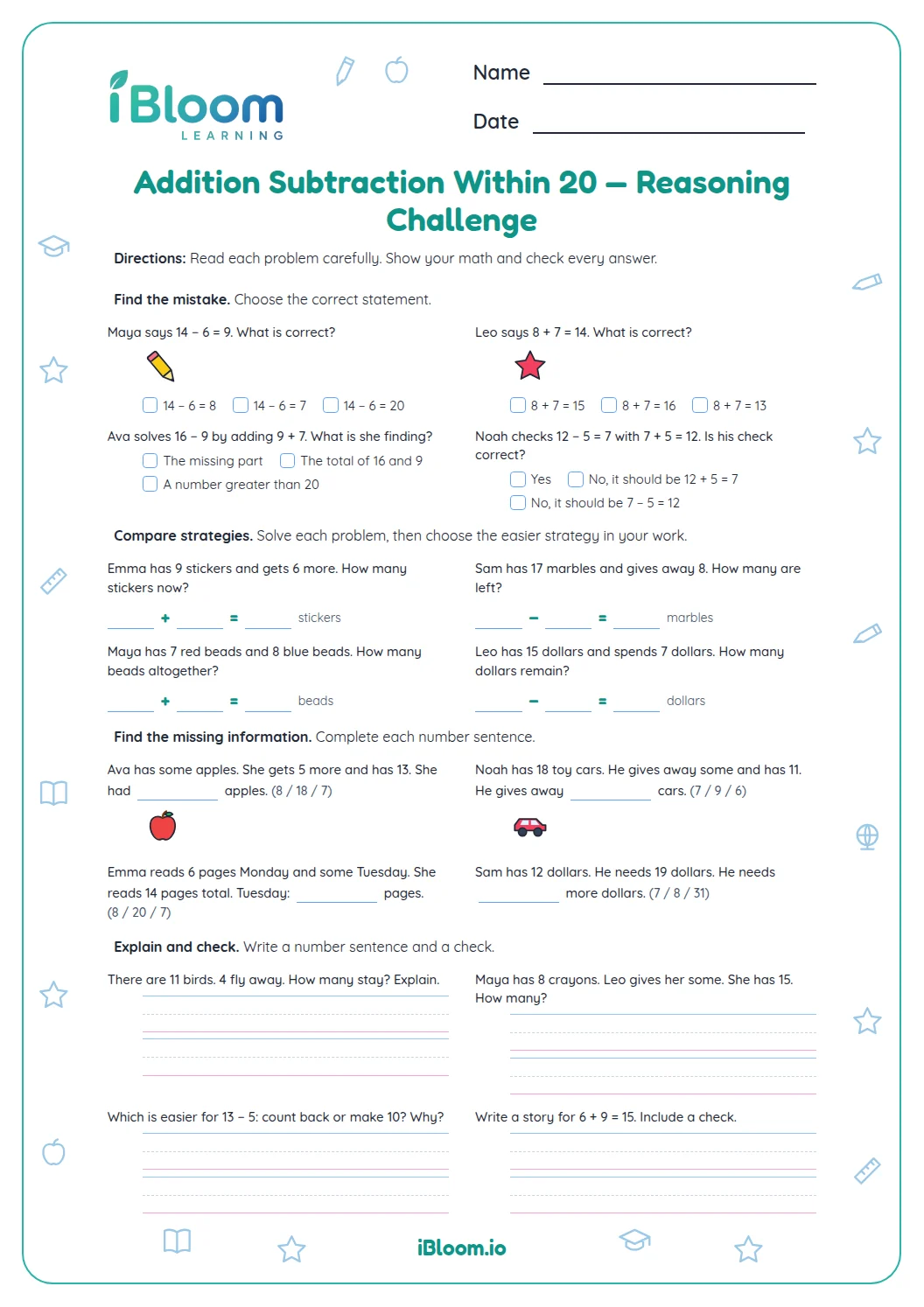
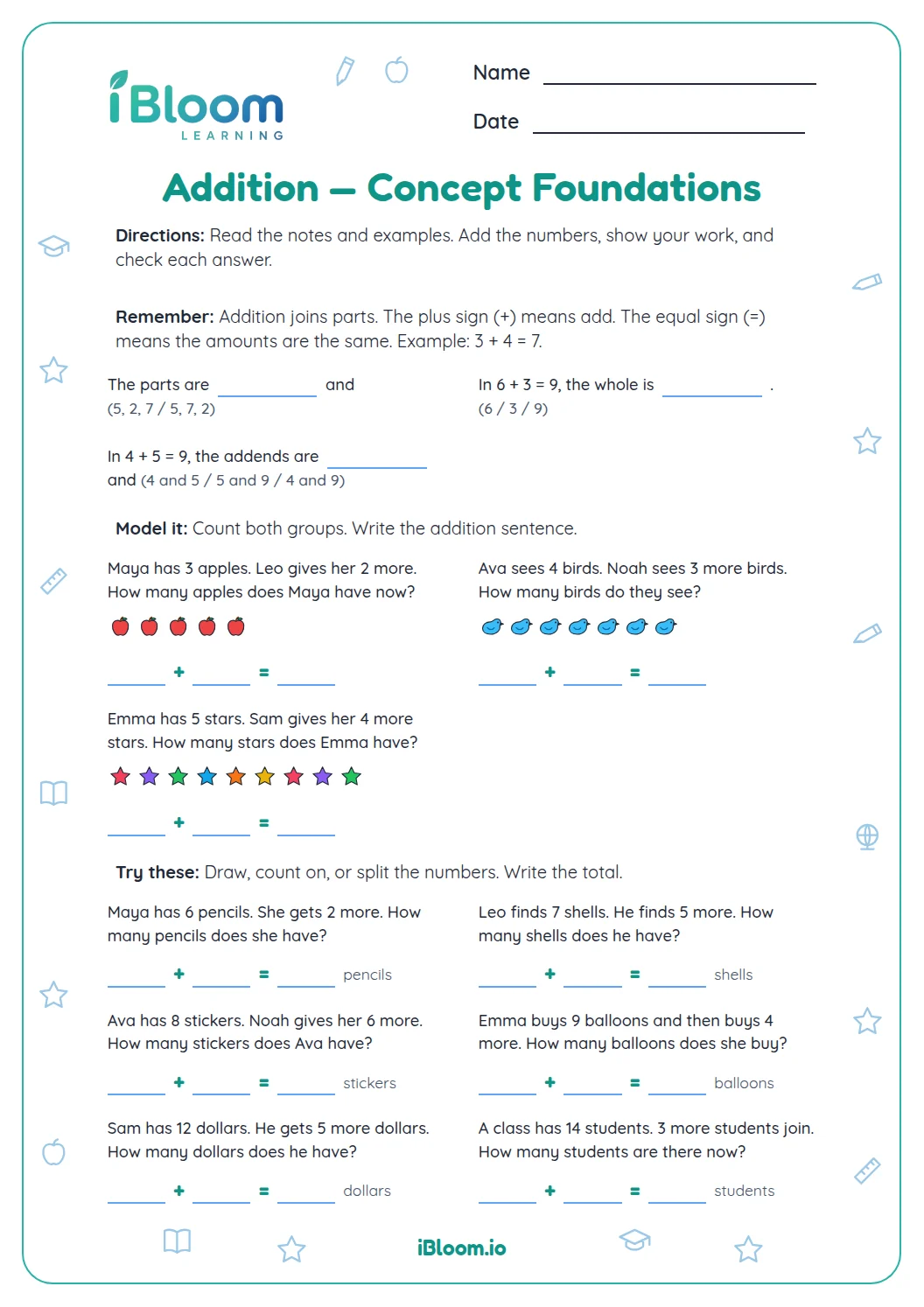
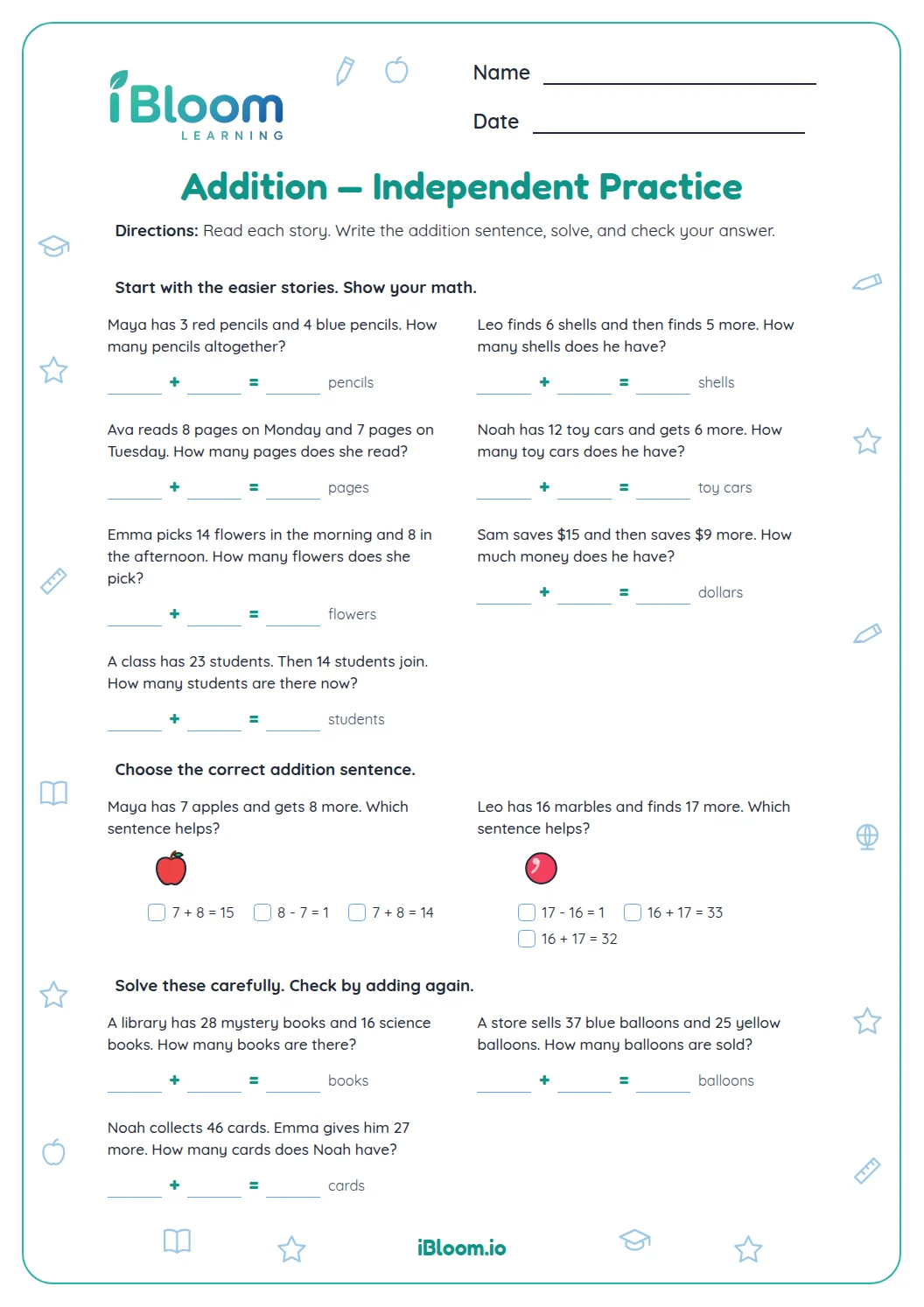
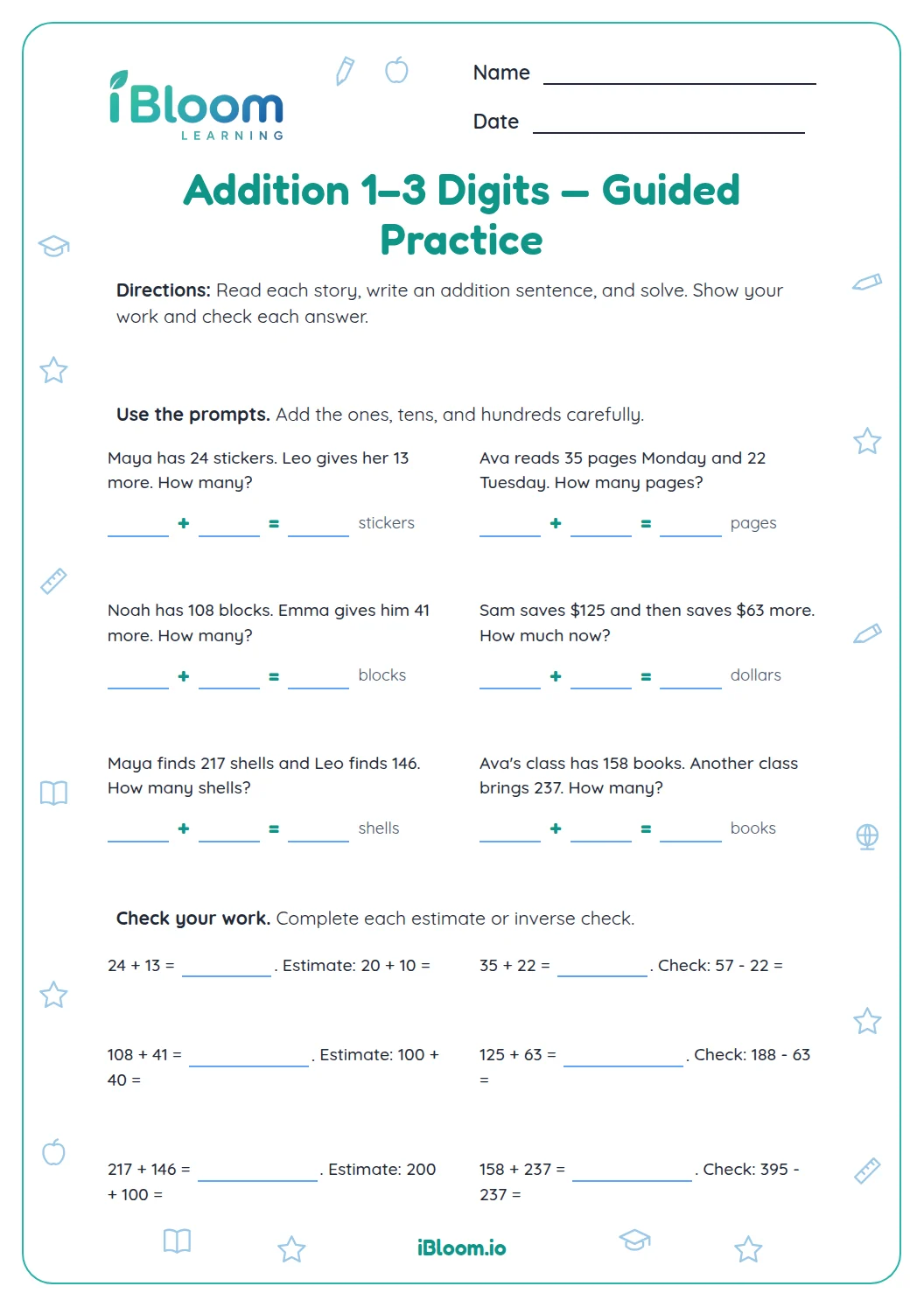
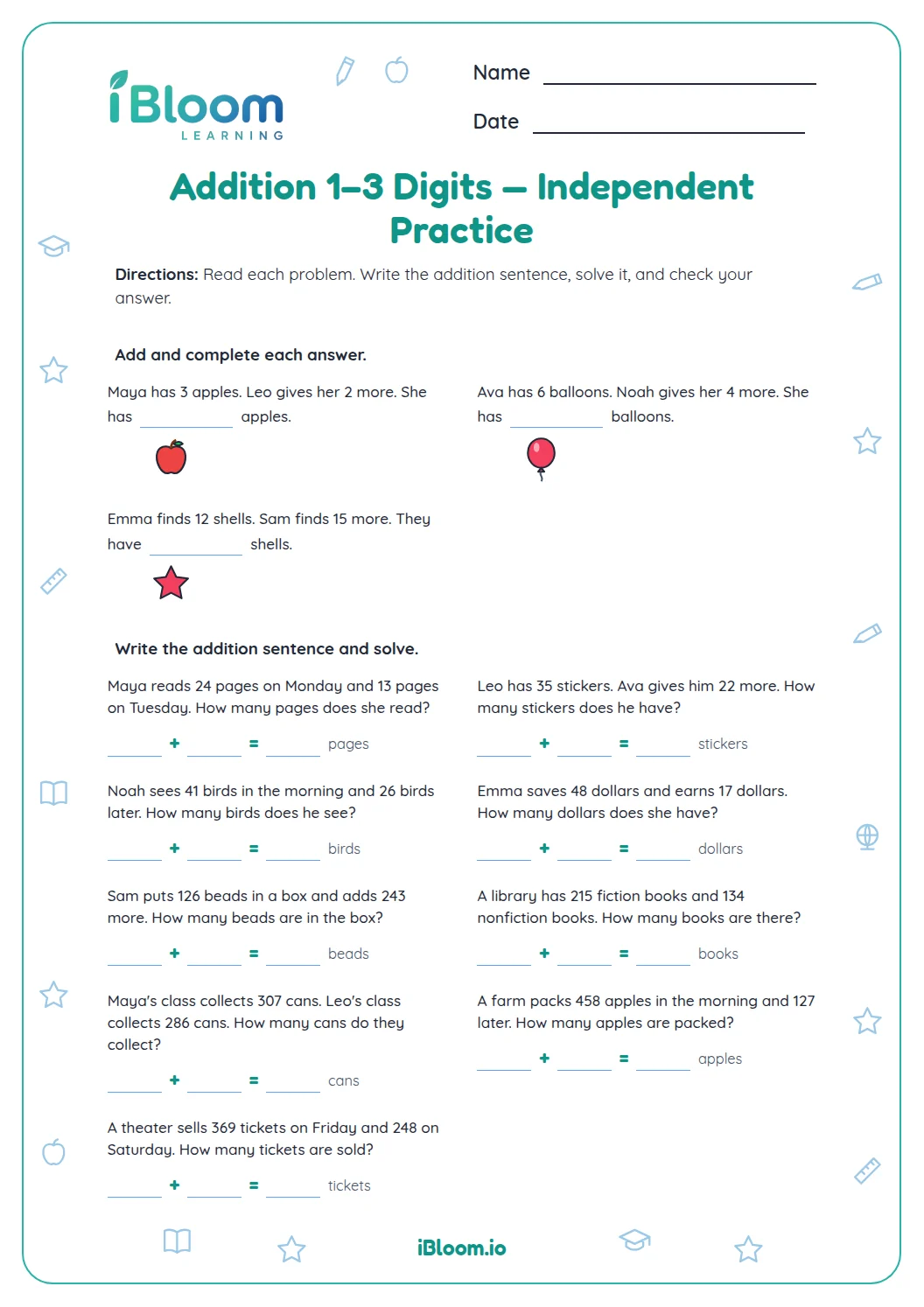
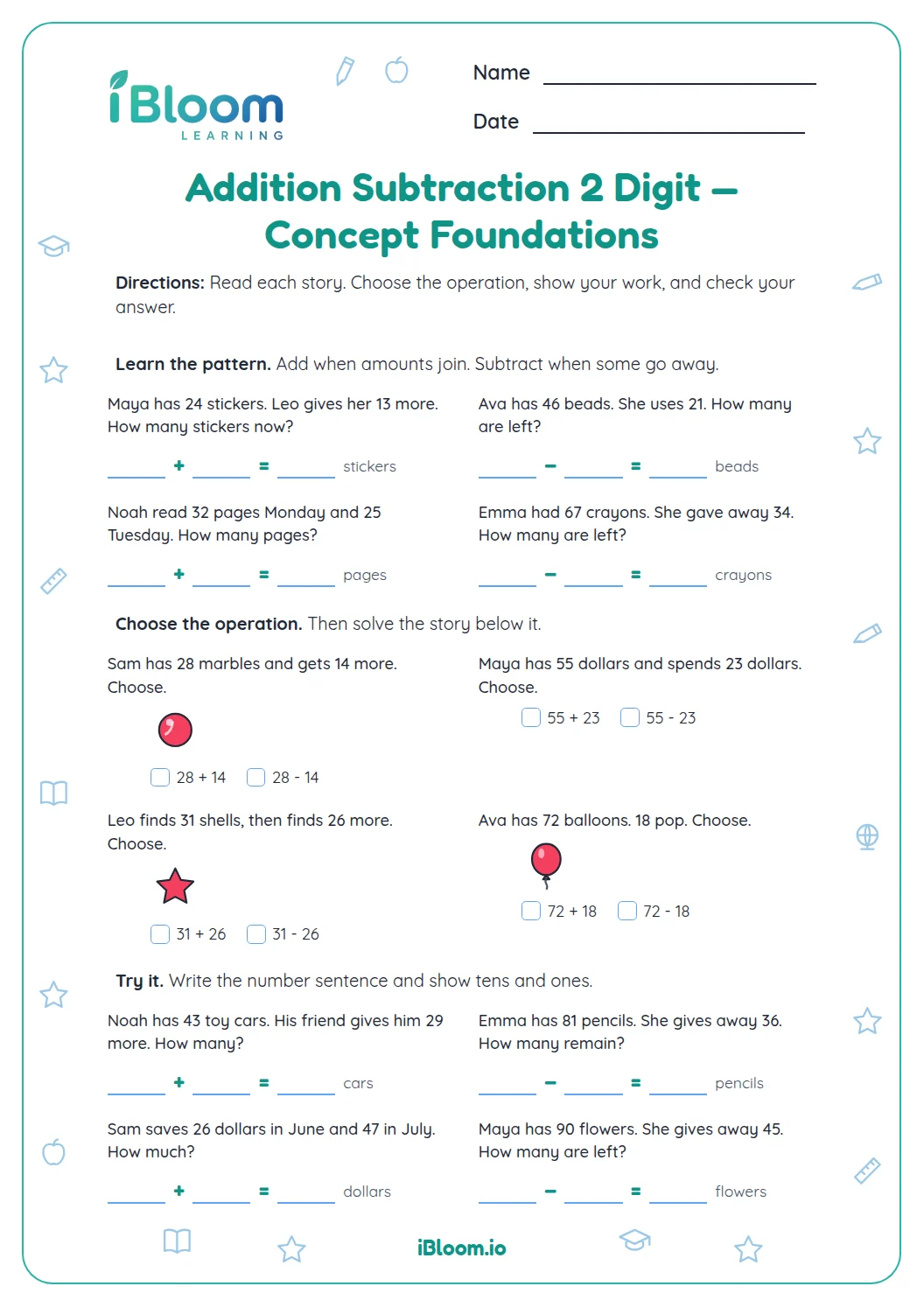
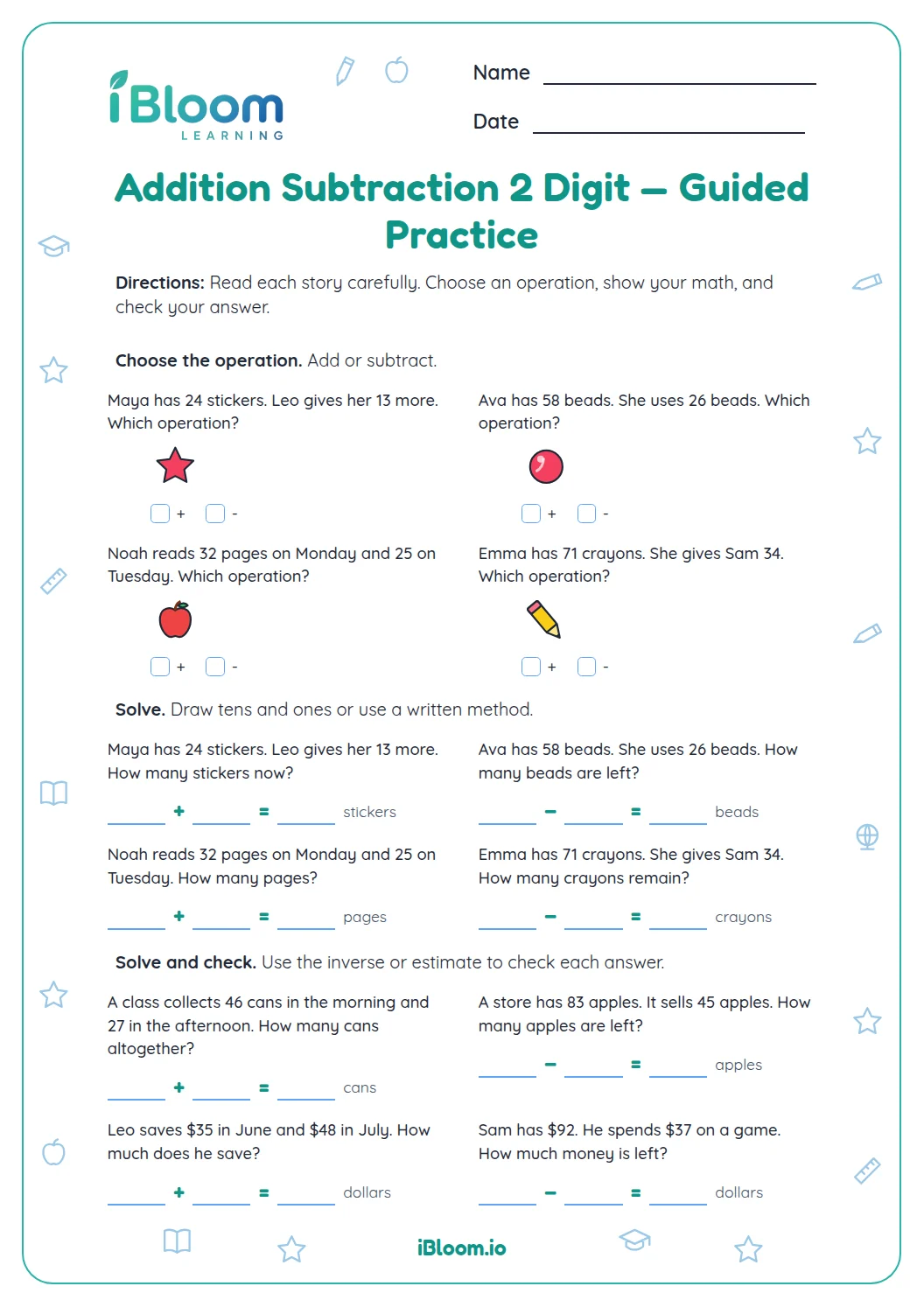
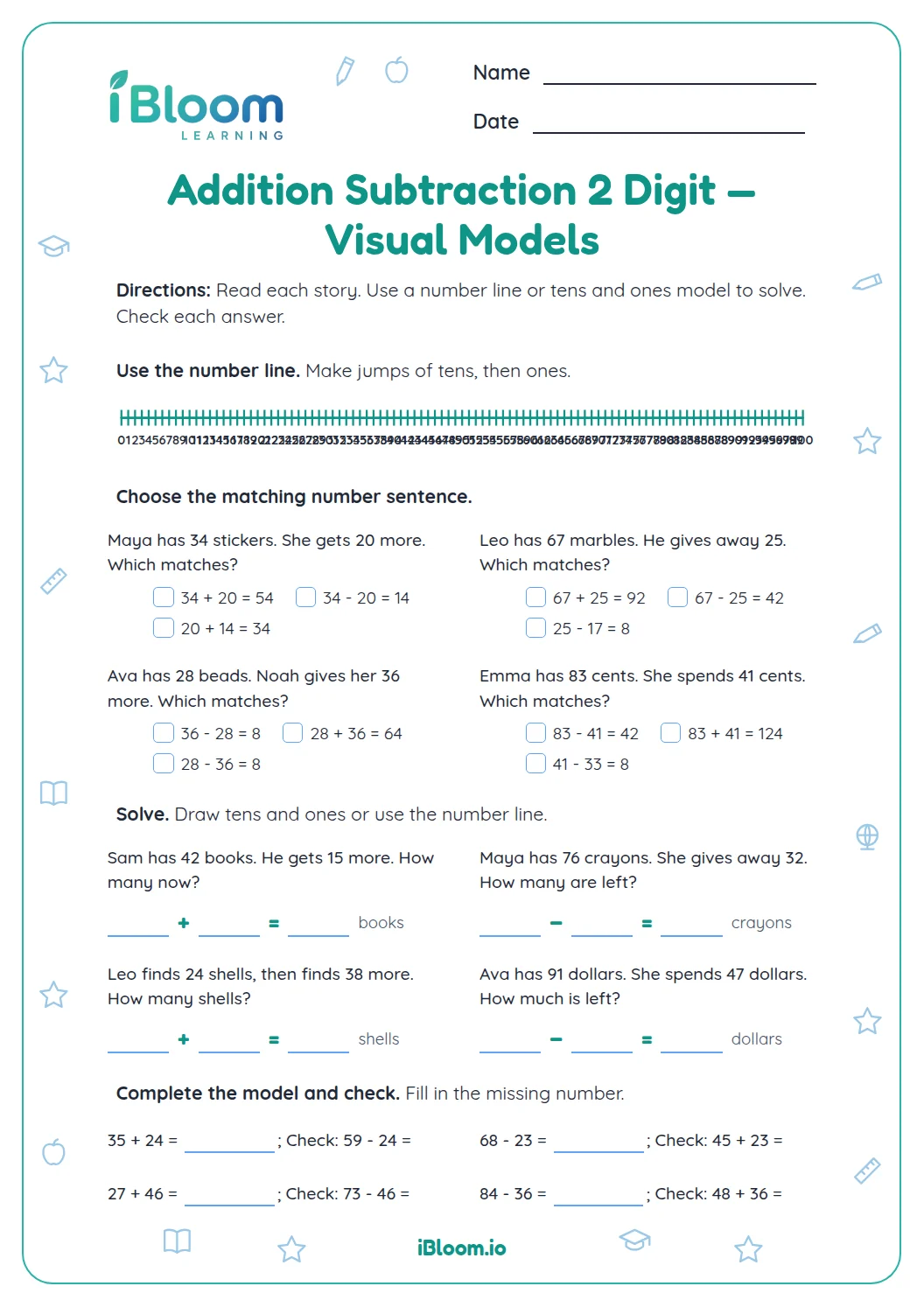
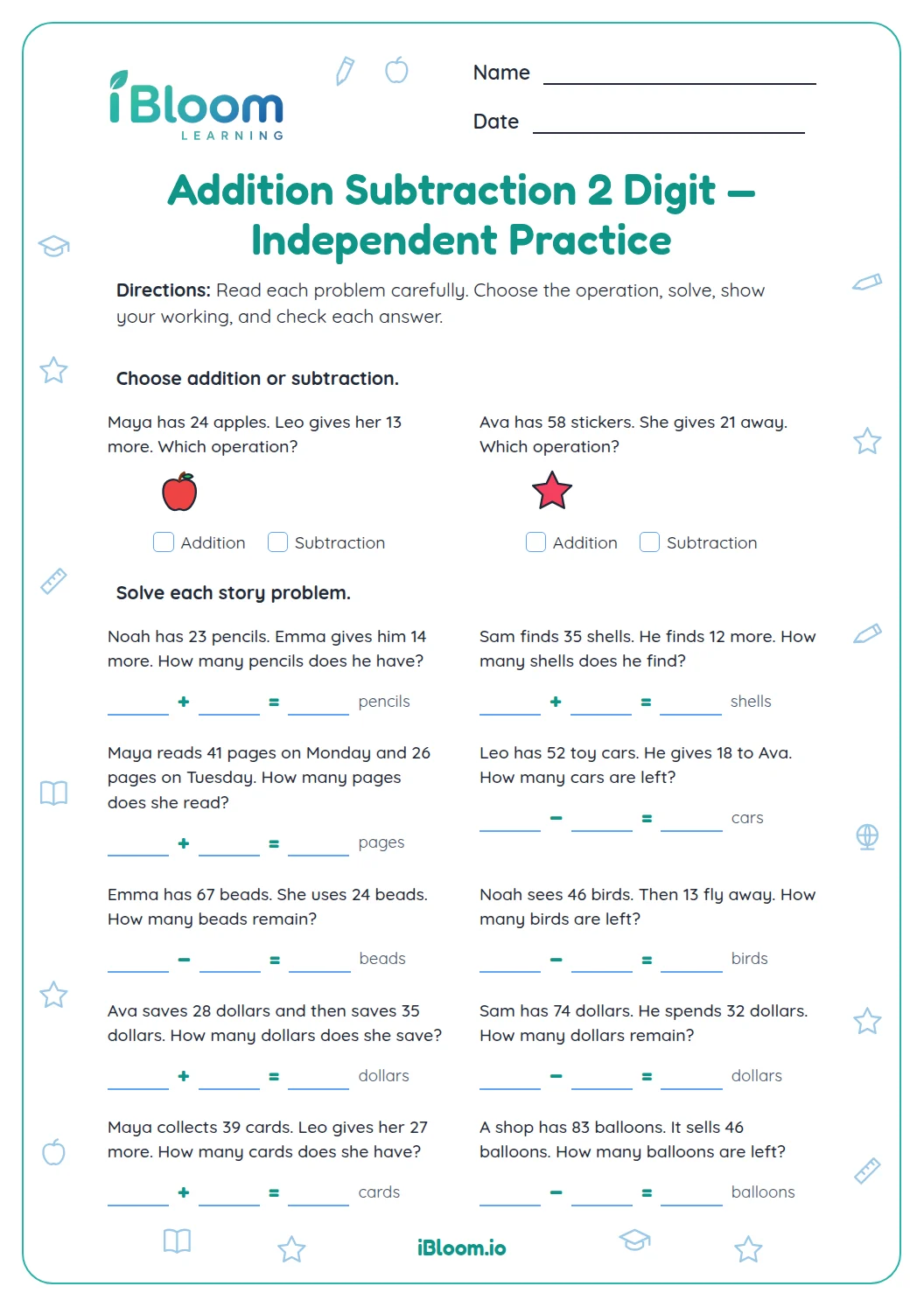
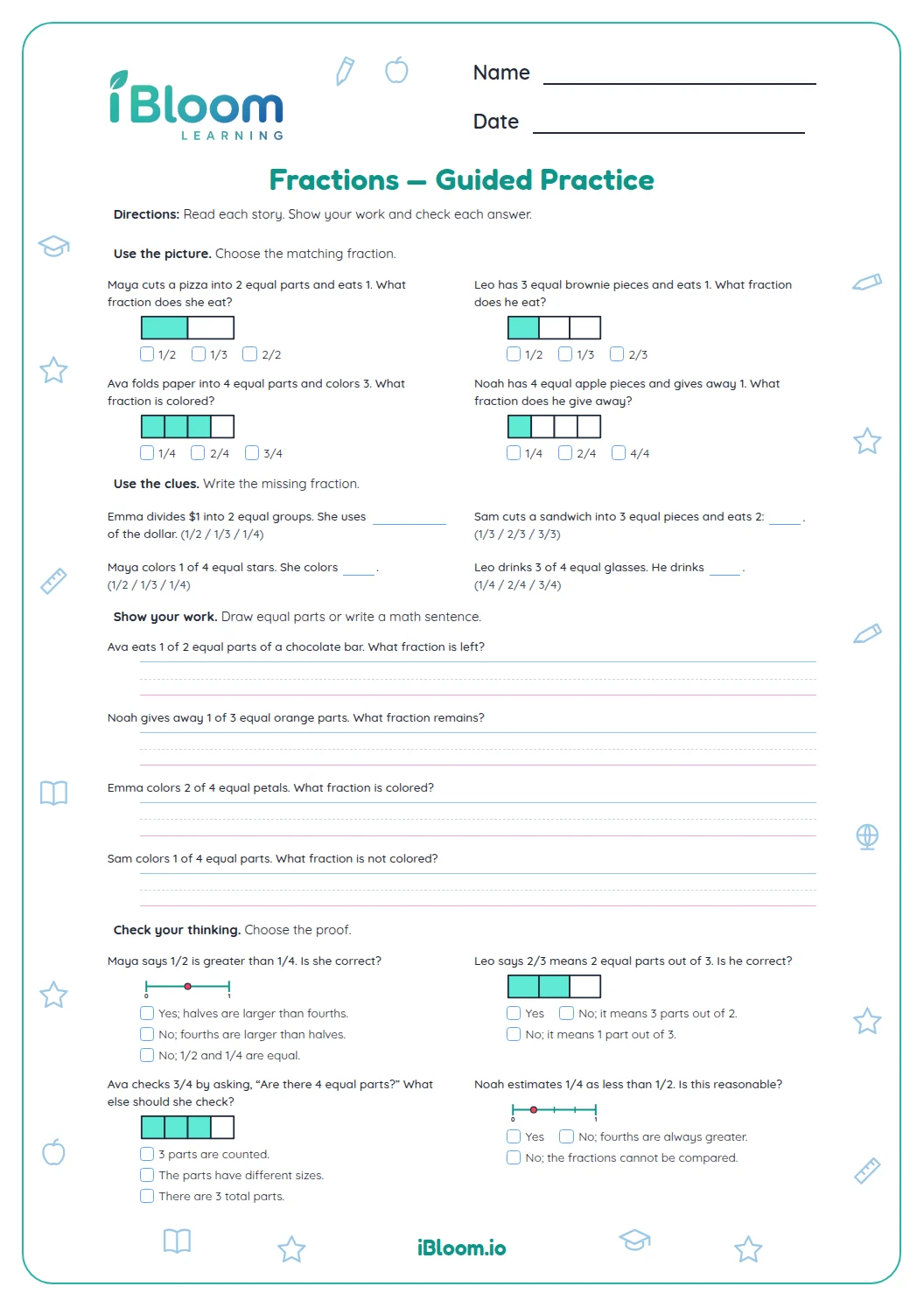
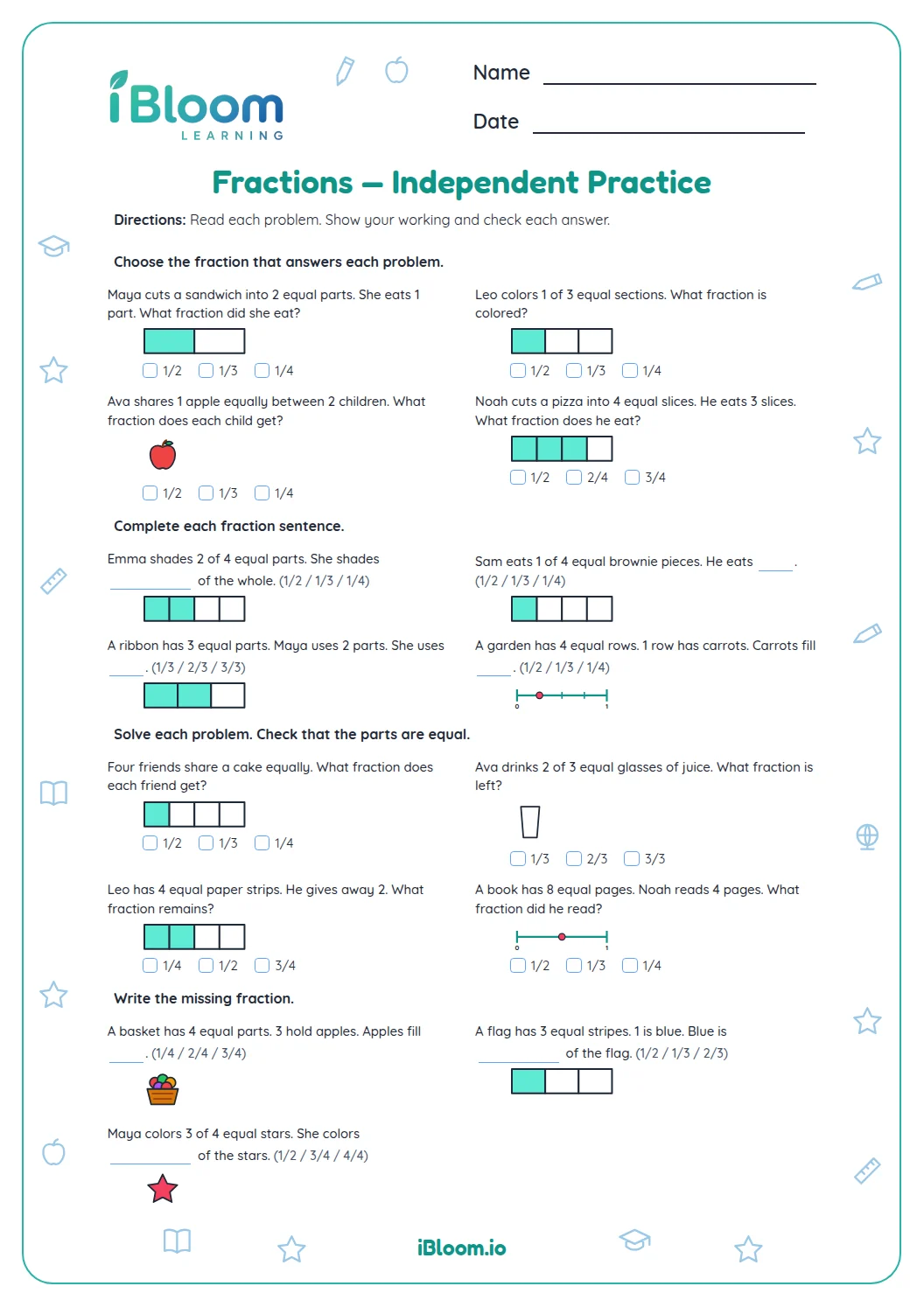
Fourteen Grade 2 stories build from adding groups to finding what remains and filling in a missing part, with every amount within 20. Students choose an answer for totals and remainders, then fill a blank when the unknown is a part of the story. CCSS 2.OA.A.1 describes these addition and subtraction situations.
Aligned to 2.OA.A.1
What will learners practice?
Students add two groups, subtract a part that leaves a remainder, and use addition or subtraction when a part is unknown. Every total and difference stays within 20.
Questions 1–6 ask for totals; questions 7–10 ask what remains; questions 11–14 place a part or starting amount in the blank.
How can a learner solve one question?
For question 1, combine 8 red beads and 5 blue beads: 8 + 5 = 13 beads. Name both groups before adding so the total answers the story.
- 18 red beads + 5 blue beads
- 28 + 5 = 13
- 3Mia has 13 beads.
How can families use the answer key?
Check what the blank represents. In question 13, 15 students are split into 8 boys and an unknown number of girls, so 15 − 8 = 7 girls.
How to solve an addition or subtraction story
- 1Read the last question to identify what is unknown.
- 2Find the starting amount and any amount that joins or leaves.
- 3Choose addition for joining groups or subtraction for finding what remains or a missing part.
- 4Solve within 20 and name the objects or people in the answer.
- 5Check that the result fits the whole story.
Common mistakes and quick fixes
The mistake
Adding when the story asks how many remain.
The fix
Look for what left or was taken away, then subtract from the starting amount.
The mistake
Subtracting the known part from the wrong total.
The fix
In a missing-part story, subtract the known group from the whole.
The mistake
Writing a number without checking the story.
The fix
Reread the question and name the answer with the item being counted.
This worksheet gives students direct practice with the listed Common Core skill.
Addition and subtraction word problems within 20.
On this sheet:
Show the official wordingHide the official wording
Use addition and subtraction within 100 to solve one- and two-step word problems involving situations of adding to, taking from, putting together, taking apart, and comparing, with unknowns in all positions.
What to practice next
Make more practice
Further reading
Questions parents and teachers ask
What kinds of stories appear on the page?
There are 14 questions on two worksheet pages: 6 addition stories, 4 subtraction stories, and 4 missing-part stories. The key lists each result. Students choose answers for the first ten questions and fill in a missing number for the final four.
How can a child decide whether to add or subtract?
Mia combines 8 red beads and 5 blue beads, so 8 + 5 = 13 beads. Question 1 is an addition story: the two groups join to make one total. The example on this page names the groups, shows the equation, and checks that the answer counts all the beads.
What is one worked example?
Yes. Each total and difference is 20 or less. Students combine groups, find what remains, or solve for a missing part. The choices help them focus on the relationship in the story, and the final four questions ask them to supply the missing amount.
How can I support a learner who is unsure?
Identify the whole and the known part, then find what is left. In question 13, 15 students include 8 boys and the remaining girls, so 15 − 8 = 7 girls. The answer key gives 7; a student can also check by adding 8 + 7 to make 15.
How should students show their thinking?
For the first ten items, choose the total or remainder that fits the story. For the last four, write the missing number in the blank. Students can say or jot an addition or subtraction equation as a check, then compare the answer with the separate key.