
About this worksheet
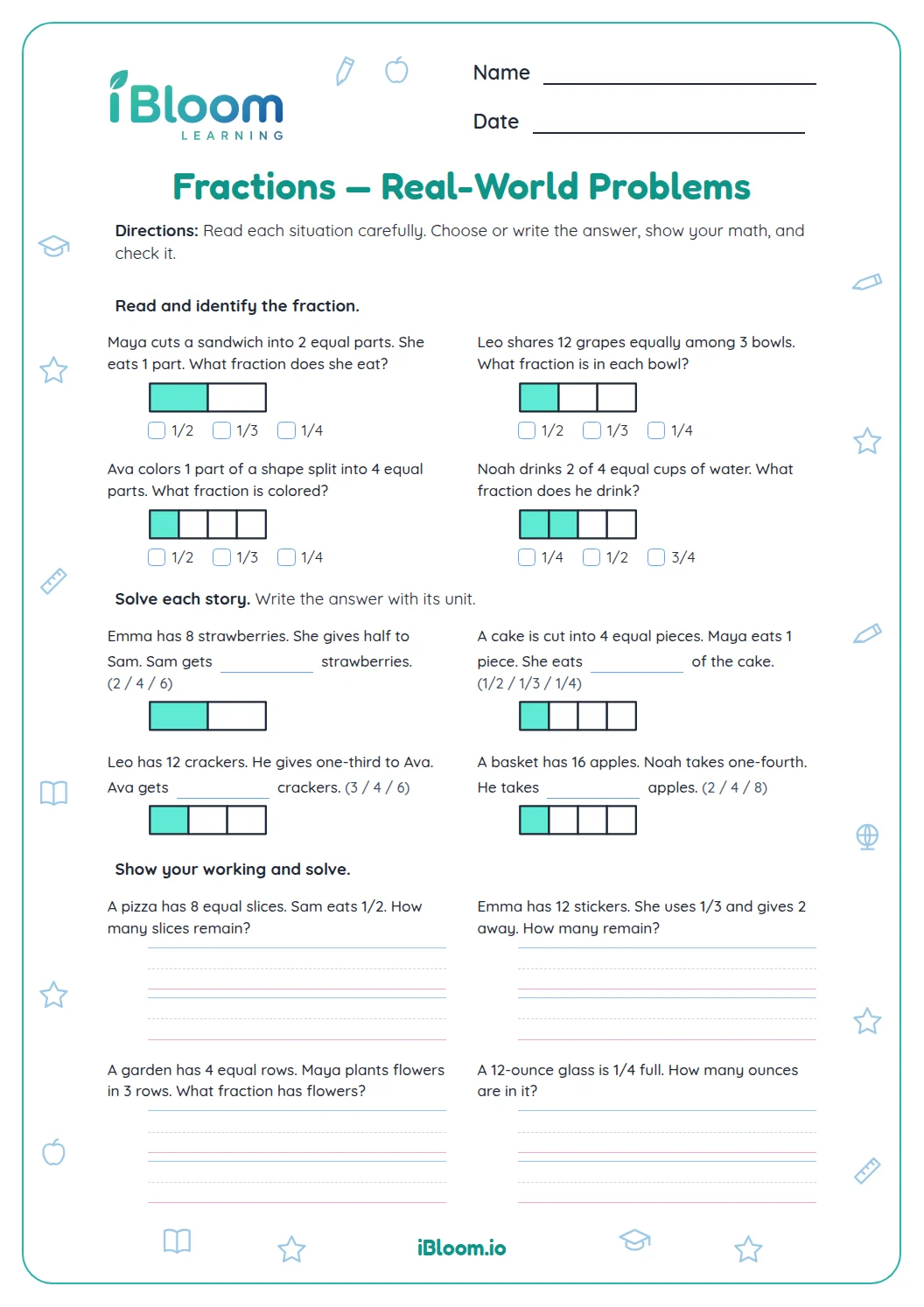
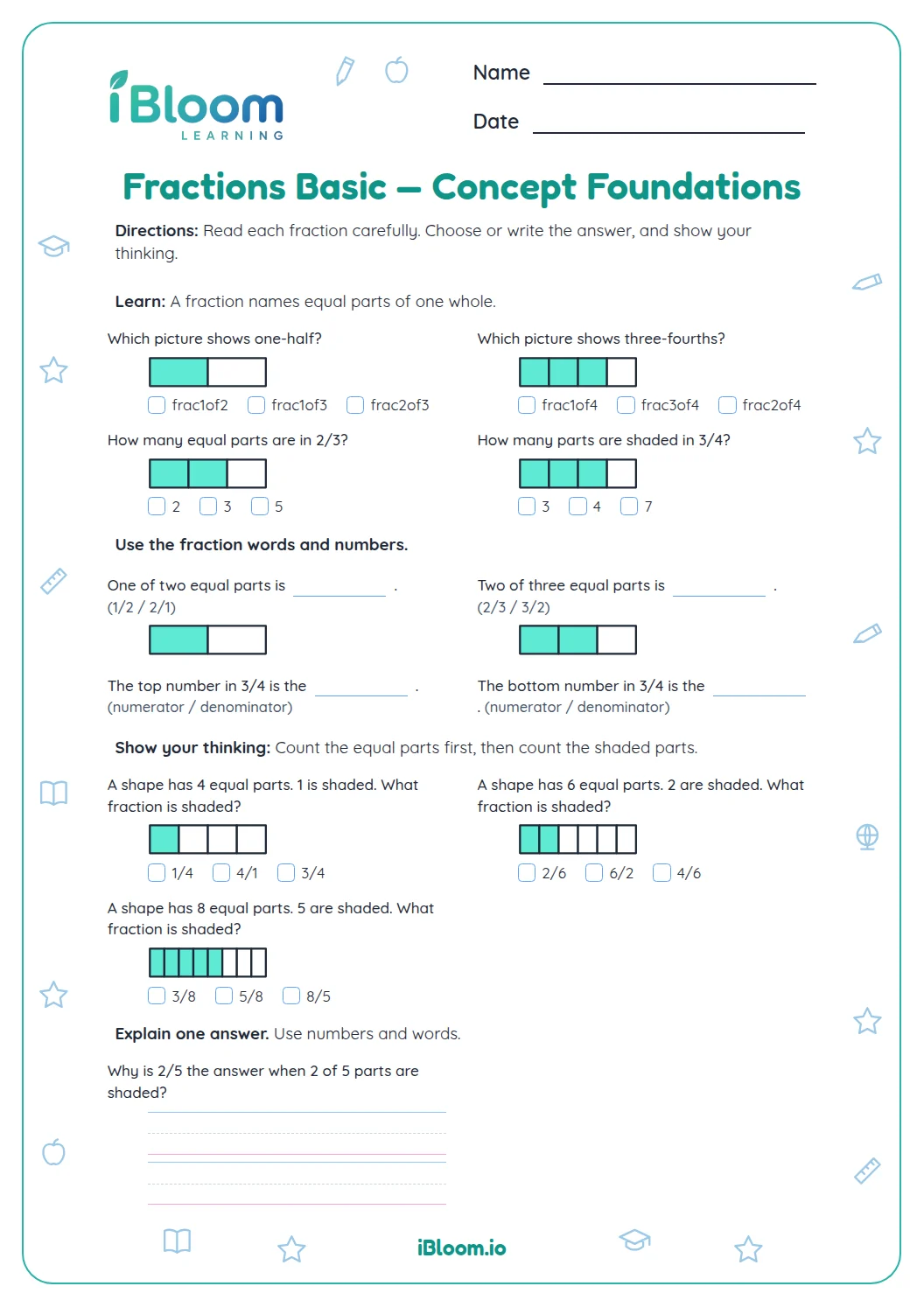
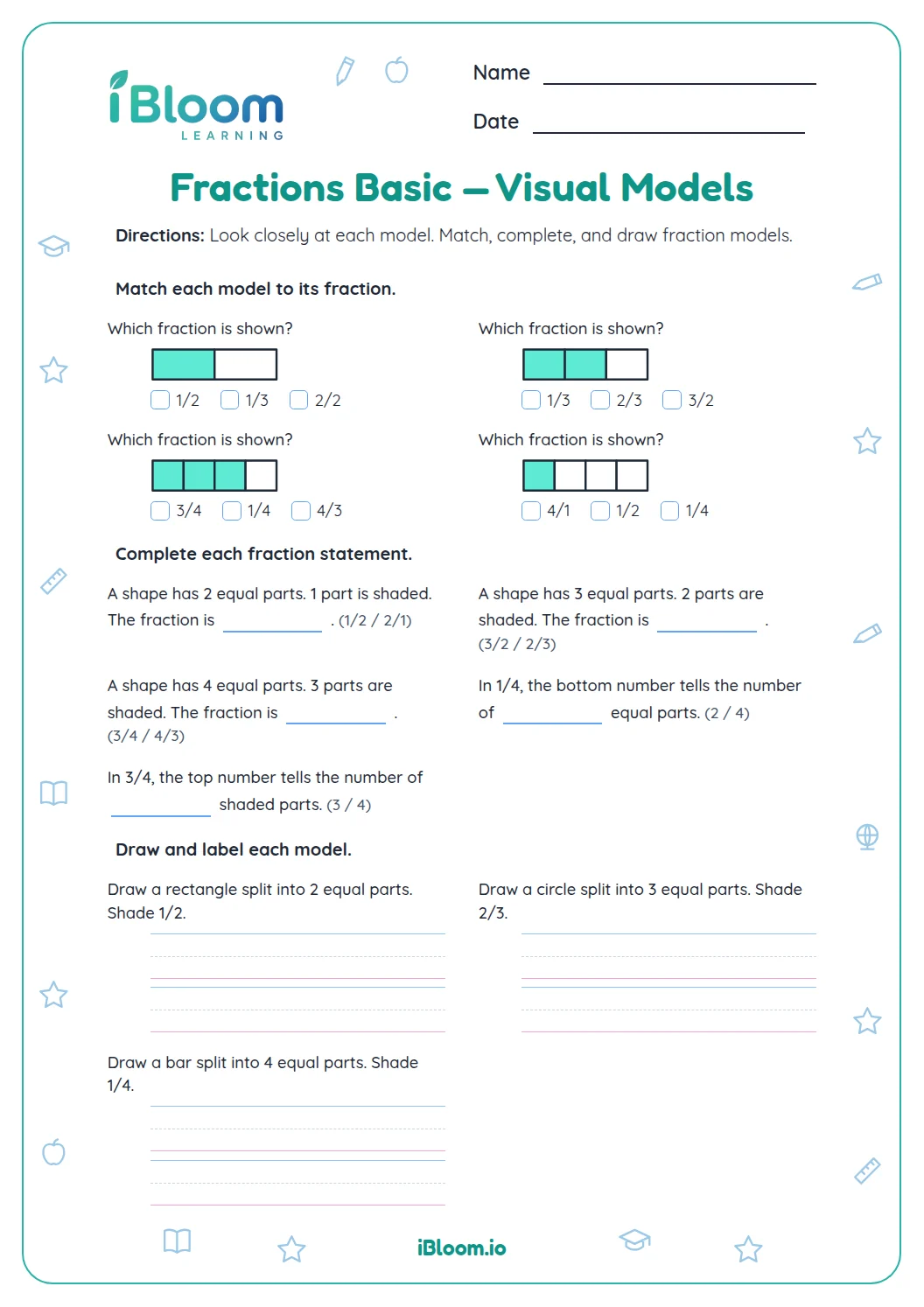
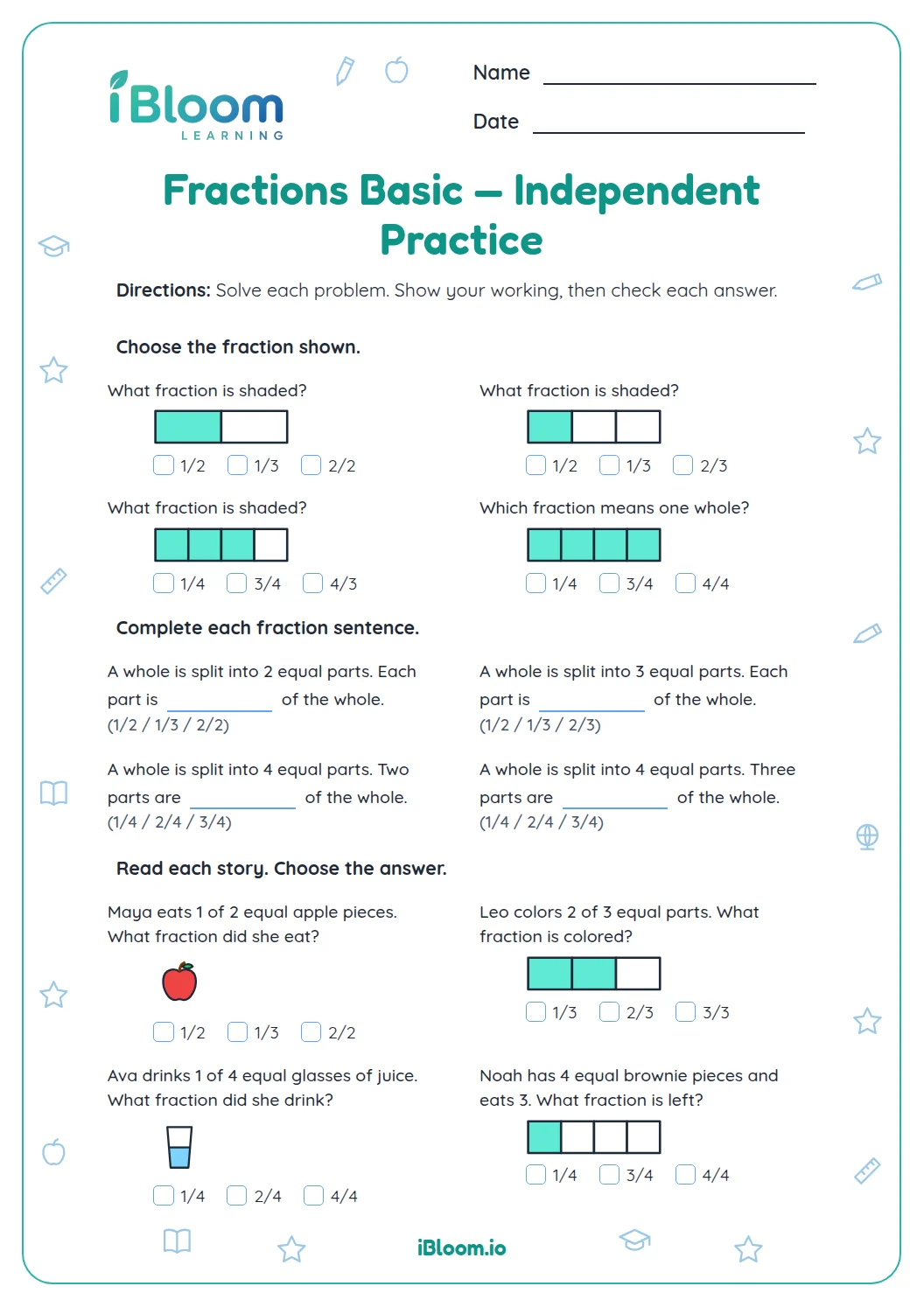
This Grade 2 worksheet puts halves and fourths into short sharing and food stories. Children read each situation, use a matching bar, circle, or square split into equal parts, then name the share or reason about what remains. All 14 questions include a visual model, and the separate key supplies fraction words and sample explanations. The practice aligns with Common Core 2.G.A.3, which asks children to partition circles and rectangles into equal shares and describe them with fraction words.
Aligned to 2.G.A.3
How do equal parts name a fraction?
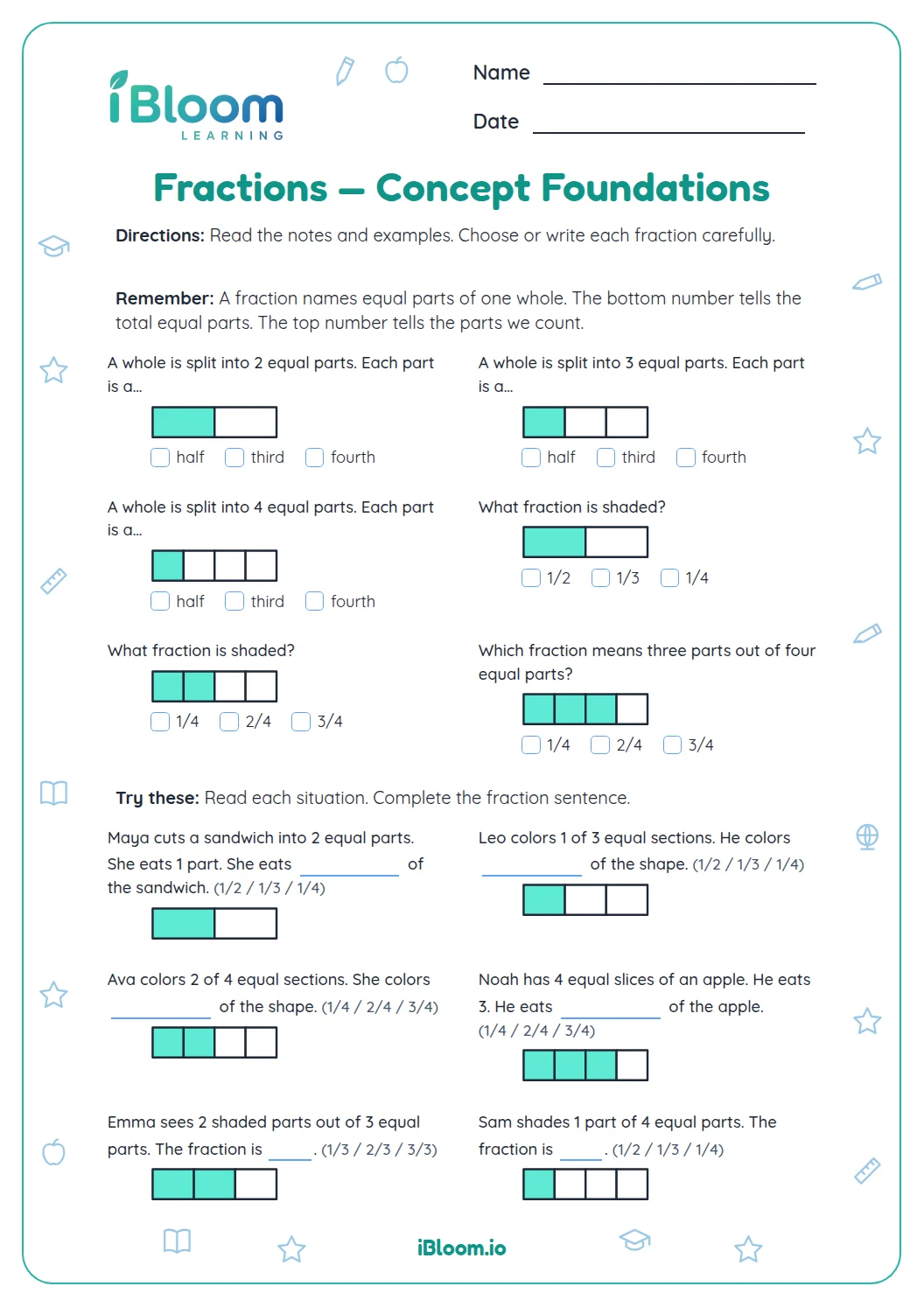
First count how many equal parts make the whole. Then count how many parts the story names. A bar, circle, or square model appears with every problem so children can compare the story with the equal shares. Part A begins with naming one part or the shaded amount.
- 1A sandwich is cut into 2 equal pieces. What fraction is one piece?
- 2One of two equal parts is one-half.
How does a model help with a story?
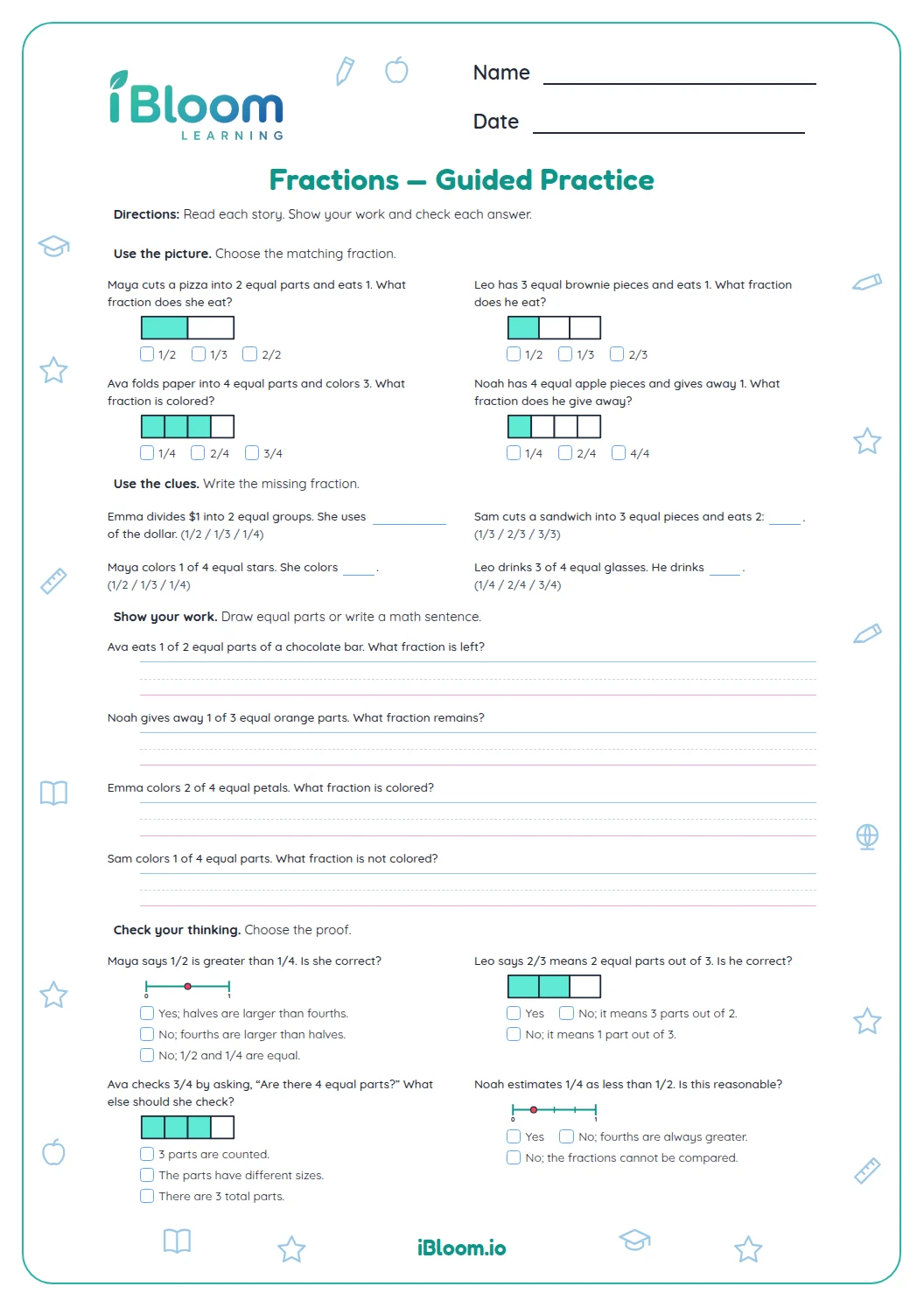
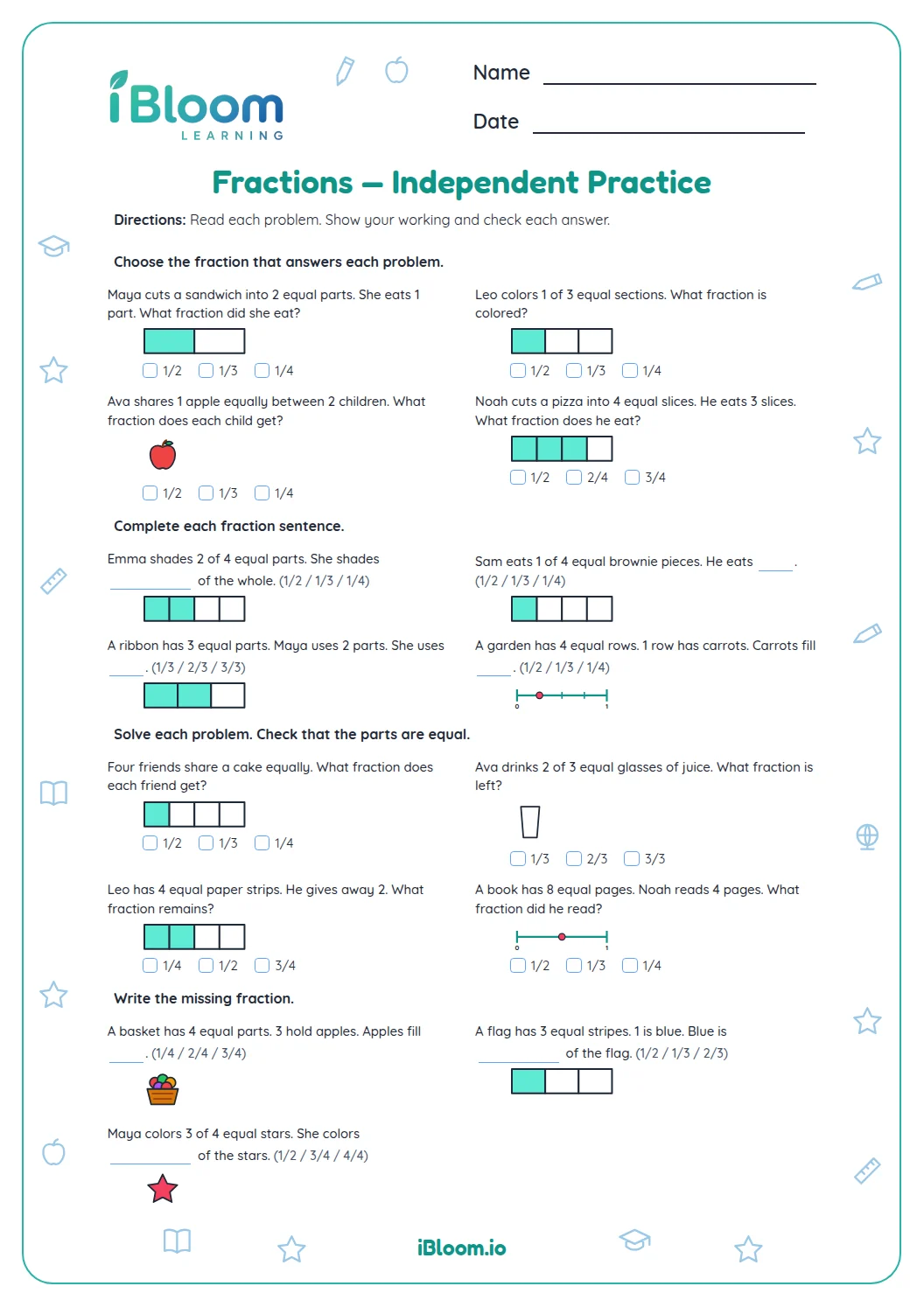
Match the total equal parts in the picture to the whole described in the story. Then count the selected parts: two of four beds with flowers are two-fourths. The model helps children see both the total and the named share without needing fraction symbols.
How can a child check a fraction claim?
Check the size and number of equal shares before agreeing with a claim. One of four equal parts is one-fourth, not one-half. If all parts of a whole are used, two halves make one whole; the wording in the story tells whether the answer is a part or the complete whole.
How to use this worksheet
- 1Read the story and identify the whole, such as one sandwich, pan, or garden.
- 2Count the equal parts in the model before naming a share.
- 3Count how many parts the story says are shaded, eaten, left, or used.
- 4For the reasoning question, compare Ben’s claim with the number of equal parts.
- 5Use the separate key to check fraction words; different complete explanations can be correct.
Common mix-ups and a quick fix
The mistake
Calling one of four equal parts one-half.
The fix
Count the four equal shares: one share is one-fourth.
The mistake
Counting pieces without checking that they are equal.
The fix
Look at the model’s equal divisions; fraction names describe equal shares.
The mistake
Forgetting whether the question asks what is used or what remains.
The fix
Reread the story’s last sentence and count the parts named there.
Common Core alignment
Children partition circle and rectangle models and describe the equal shares with fraction words.
Partition circles and rectangles into equal shares and describe the shares in words.
On this sheet: Children read and reason about halves and fourths shown in circles, bars, and squares.
Show the official wordingHide the official wording
Partition circles and rectangles into two, three, or four equal shares; describe the shares using the words halves, thirds, half of, a third of, etc.
What to practice next
Make more practice
Further reading
Questions parents and teachers ask
What does one-half mean?
One-half is one of two equal parts of a whole. The parts must be the same size; one of two unequal pieces is not one-half. On this worksheet, children see halves in a bar, circle, or square and connect the picture to a story about sharing or using part of one whole.
What does one-fourth mean?
One-fourth is one of four equal parts of one whole. If a story describes one of four equal pieces, that share is one-fourth. The matching model helps children count the total parts first, then count the one part named in the story.
What does two-fourths describe?
Two-fourths means two of four equal shares. For example, two of four garden beds with flowers represent two-fourths of the beds. Children can check the model by counting all four equal sections, then the two sections named by the story.
Why must fraction parts be equal?
Fraction words such as halves and fourths describe equal shares of one whole. If pieces are different sizes, counting pieces alone does not tell how much of the whole each piece represents. Every model on this page is split into equal parts to make the share count meaningful.
Does every question have a visual model?
Yes. Each of the 14 story questions has a bar, circle, or square divided into equal parts. Children can use the model to check the total shares and the part named in the story. The written answer key gives fraction words and a sample explanation for the reasoning item.