
About this worksheet
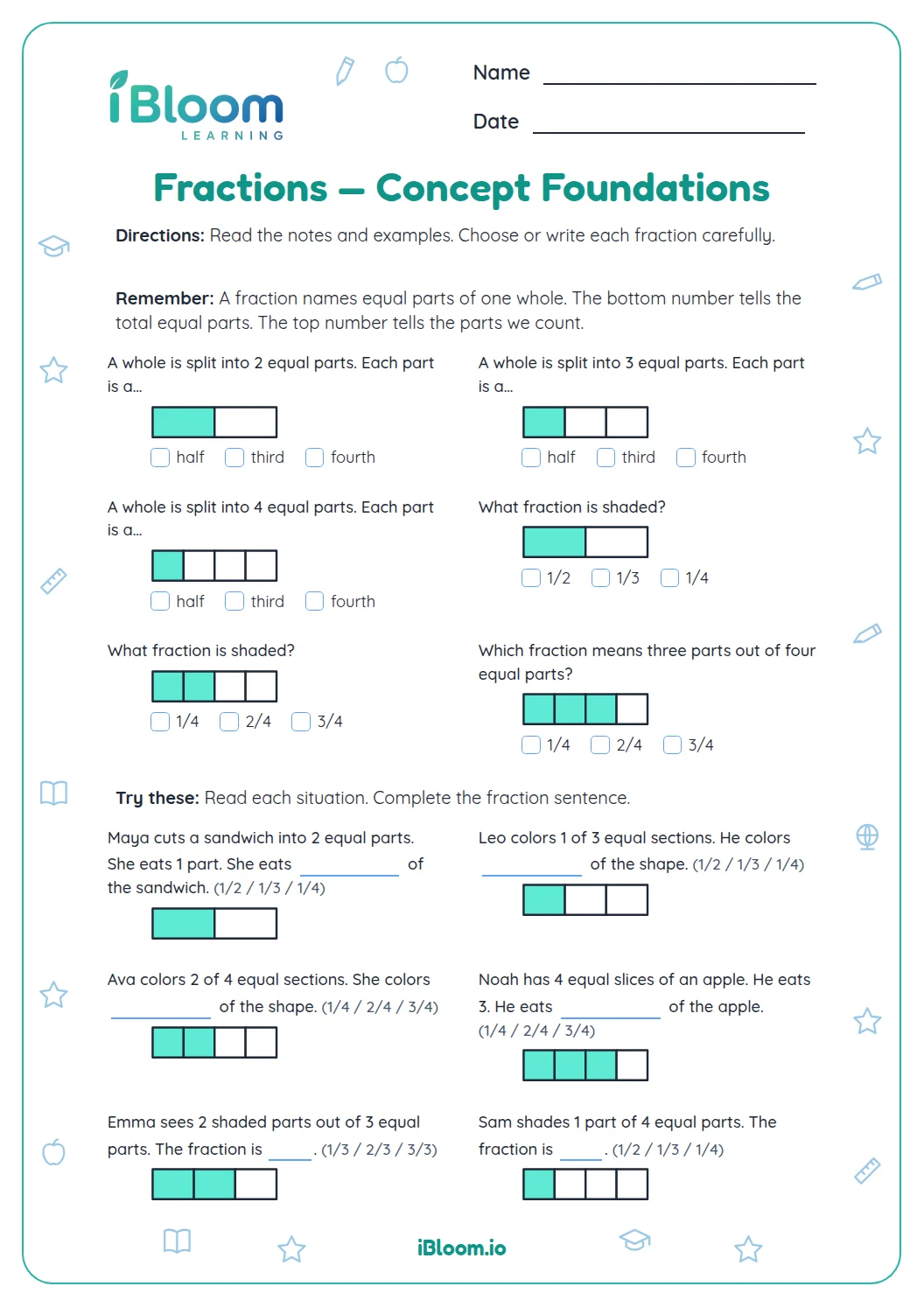
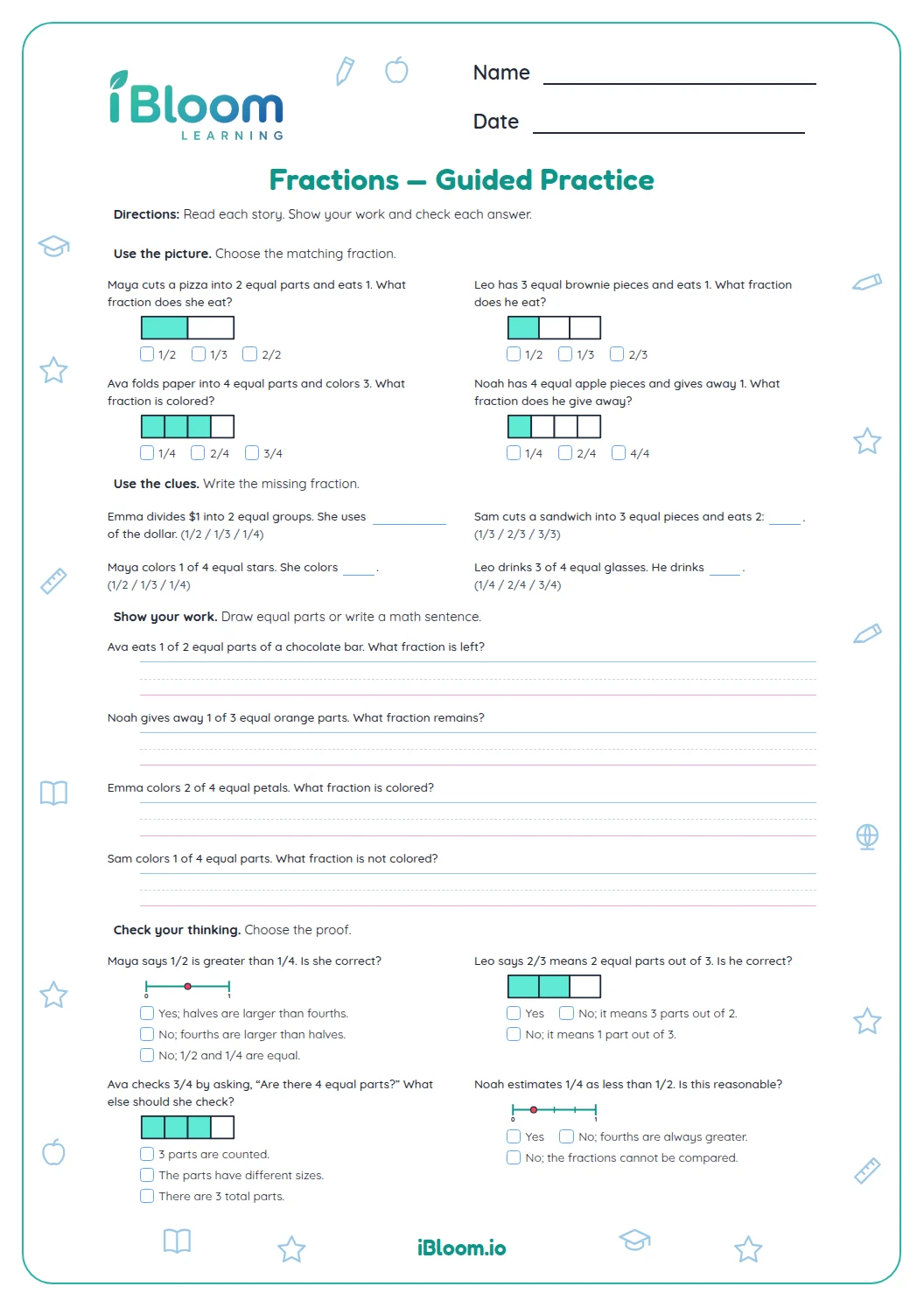
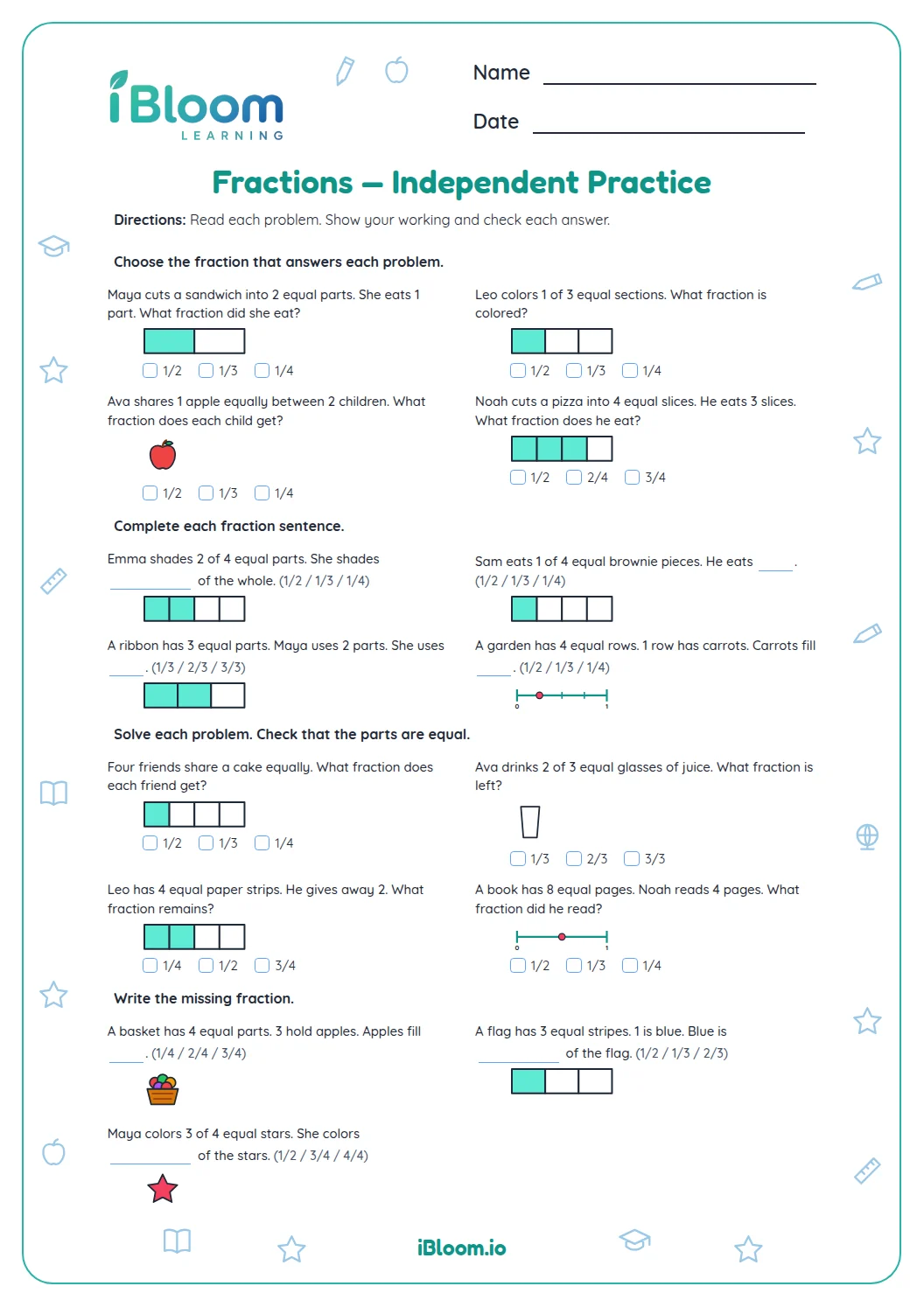
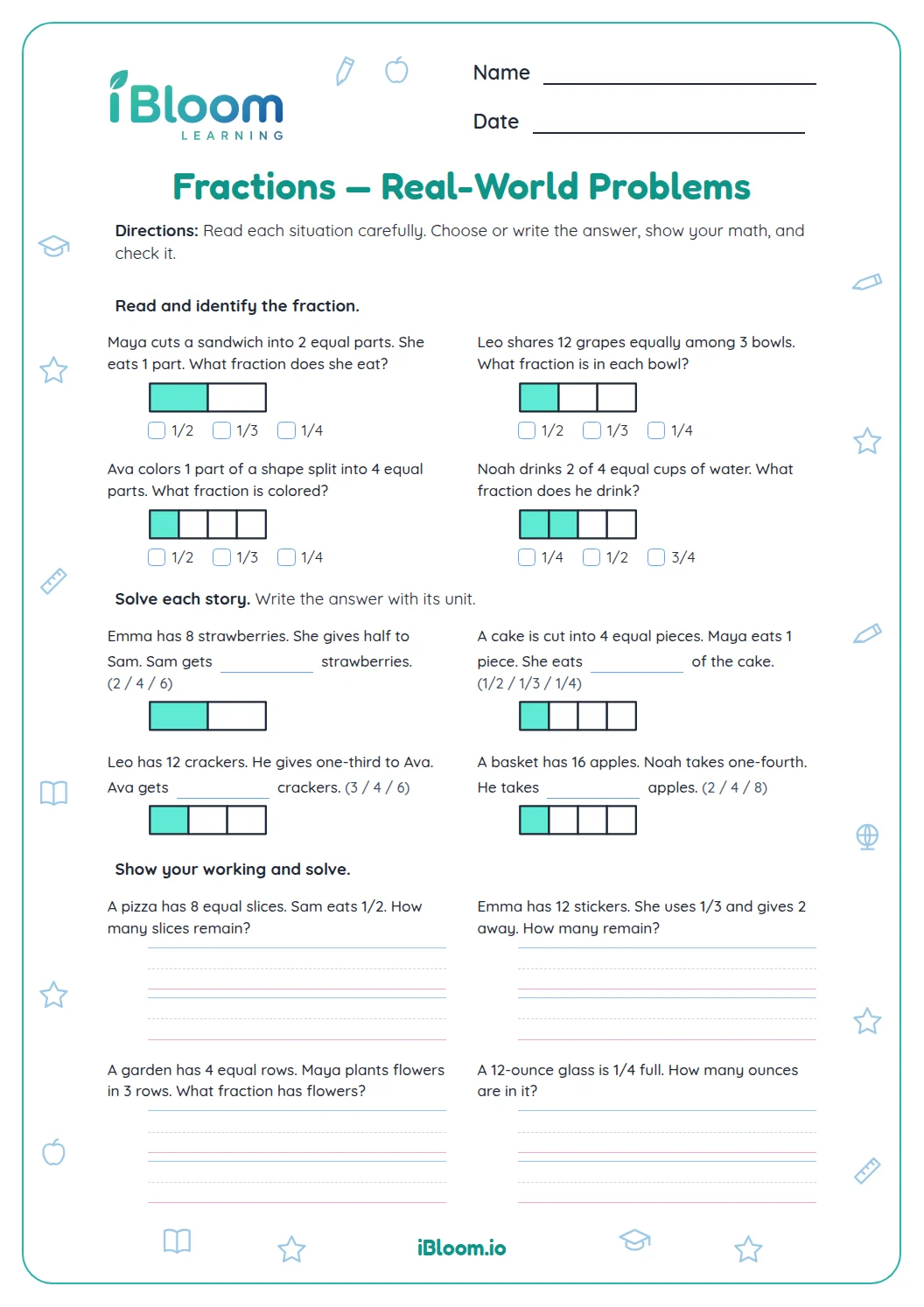
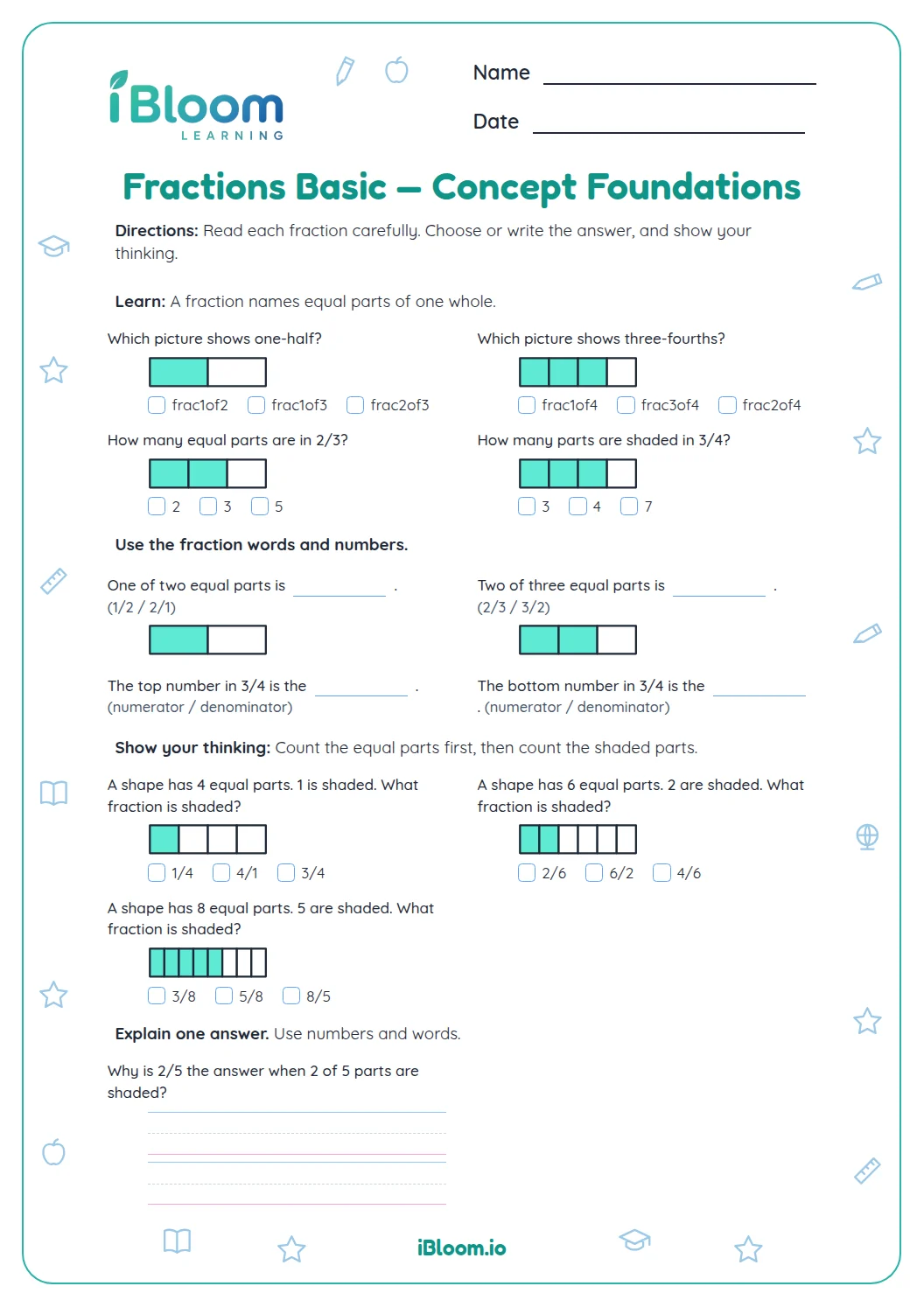
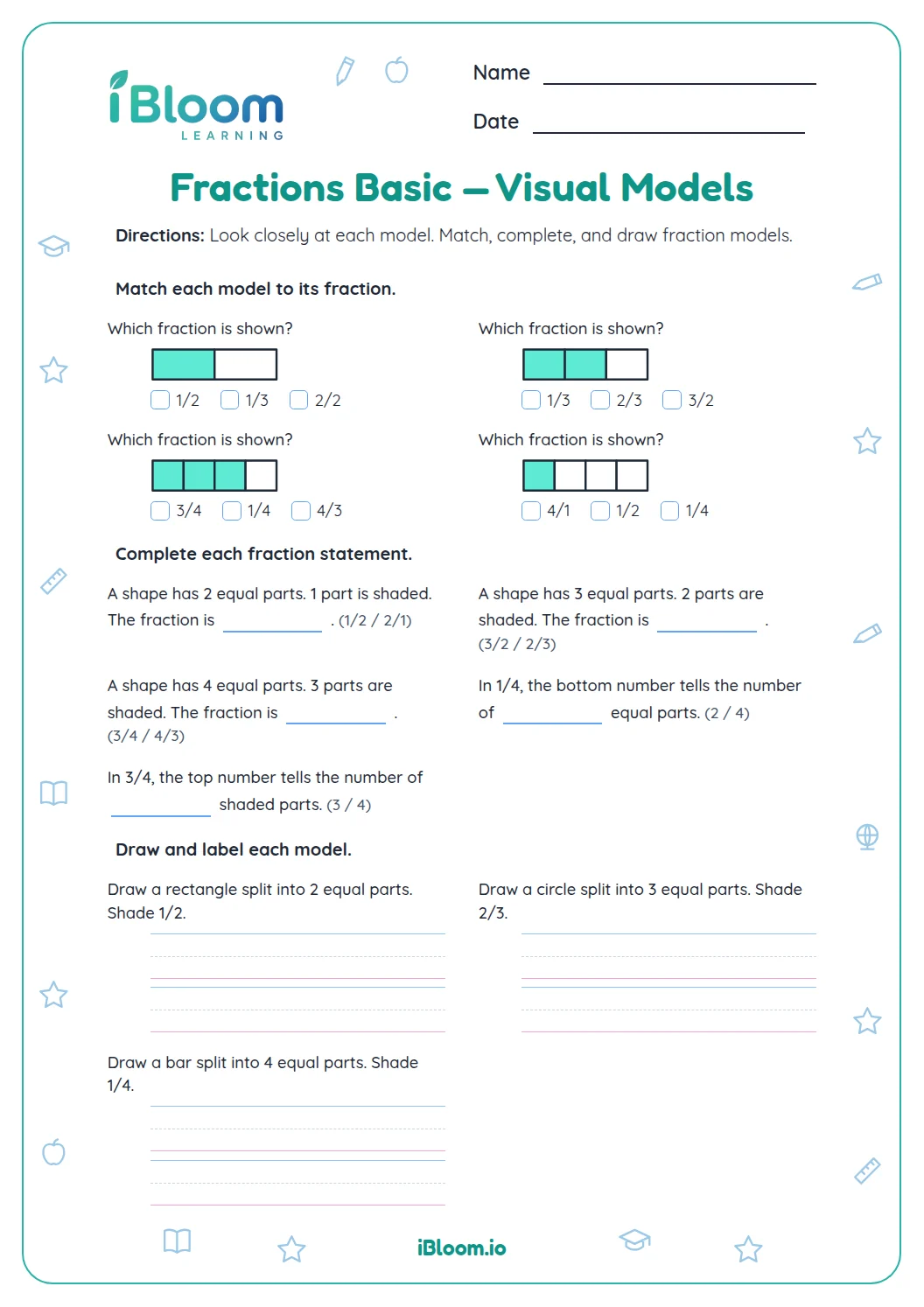
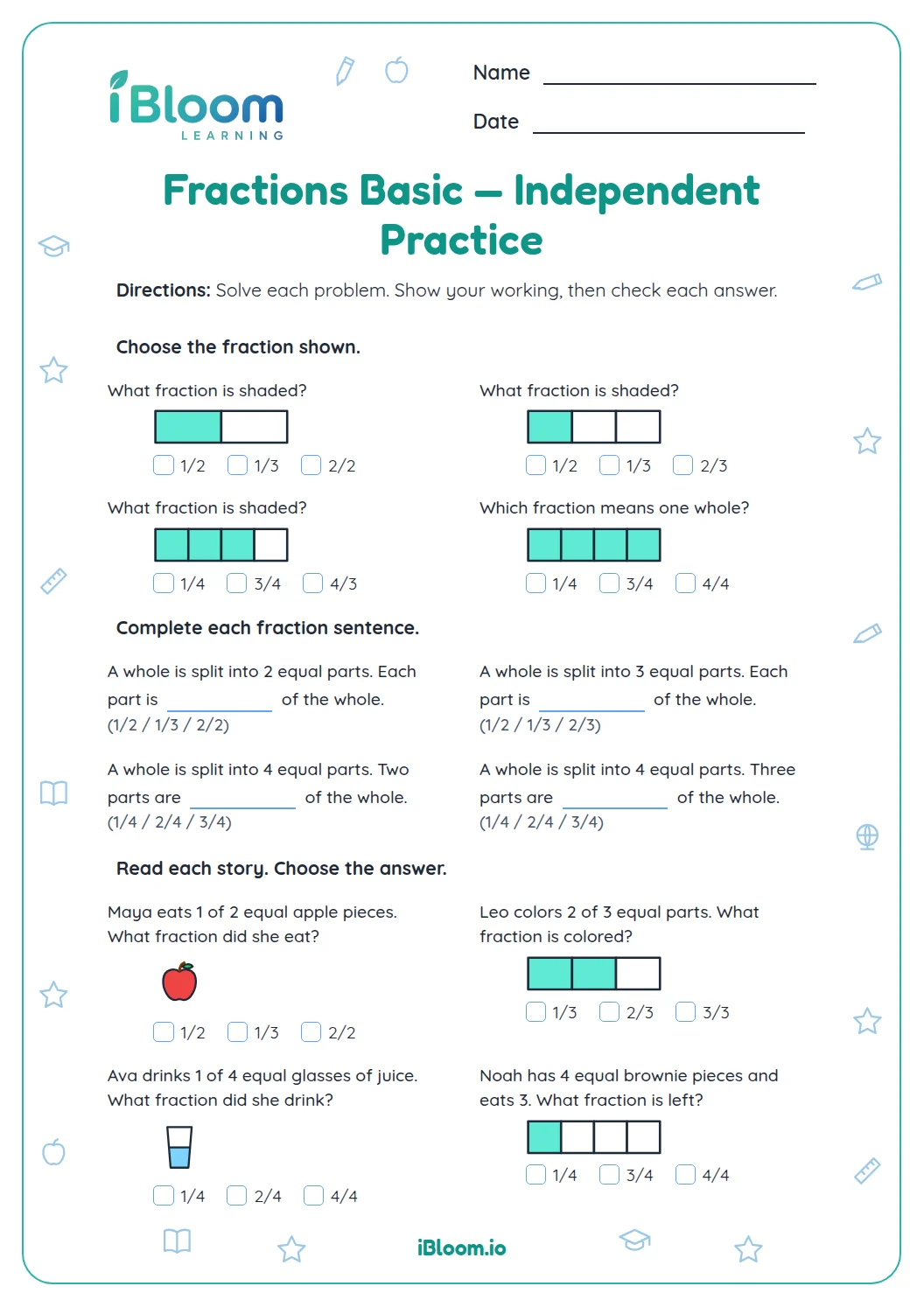
This Grade 2 printable introduces fraction reasoning through equal shares, familiar fraction names, and comparisons of same-size wholes. Fourteen questions ask children to identify fair shares, read a shaded bar, and explain how the number of equal parts affects each share. The page practices the fraction model described in CCSS 3.NF.A.1.
Aligned to 3.NF.A.1
What makes the parts equal shares?
Part A introduces halves, thirds, and fourths through sharing situations. Children identify how many equal parts make up the whole and what fraction one or more parts name.
How does a shaded bar show a fraction?
A bar divided into equal sections shows the whole and its parts. Count the shaded parts and the total equal parts to name the fraction.
- 1The bar has 3 equal parts.
- 22 parts are shaded.
- 3The shaded amount is two thirds.
Why compare shares from same-size wholes?
Part B asks children to compare parts and think about fair sharing. The whole must be the same size for a direct comparison: one half of a whole is larger than one fourth of that same whole.
How to use this worksheet
- 1Identify the whole being shared.
- 2Count how many equal parts make the whole.
- 3Name the fraction using the number of parts in the whole.
- 4For a shaded model, count shaded parts and total parts.
- 5Compare fractions only when the wholes are the same size.
Common mistakes and quick fixes
The mistake
Calling unequal pieces fair shares.
The fix
Check that every part has the same size before naming the share.
The mistake
Reversing the shaded parts and total parts.
The fix
Count shaded parts first, then count all equal parts in the whole.
The mistake
Comparing fractions from different-size wholes as if the pieces match.
The fix
Use same-size wholes for a fair comparison.
Common Core alignment
The worksheet uses equal-share situations and a shaded fraction bar to build understanding of unit fractions and parts of a whole.
Name a fraction by the equal parts in one whole and by how many of those parts are considered.
On this sheet: The worksheet questions practice this skill directly.
Show the official wordingHide the official wording
Understand a fraction 1/b as the quantity formed by 1 part when a whole is partitioned into b equal parts; understand a fraction a/b as the quantity formed by a parts of size 1/b.
What to practice next
Make more practice
Further reading
Questions parents and teachers ask
What fraction ideas do the problems practice?
The 14 questions cover equal shares, halves, thirds, fourths, and comparisons when the wholes are the same size. One question asks children to name the shaded amount in a bar divided into three equal parts. The bar model and sharing examples help children connect each fraction name to one whole.
Why do the questions use equal parts?
A fraction describes equal parts of one whole. If the pieces are different sizes, they do not represent equal shares, even if there are the right number of pieces. The bar model and sharing examples help children connect each fraction name to one whole.
How can a child read the shaded bar?
Count the equal parts that are shaded, then count all equal parts in the bar. The first count names how many parts are considered; the second tells how many equal parts make the whole. The bar model and sharing examples help children connect each fraction name to one whole.
Can one half be compared with one fourth?
Yes, when both fractions refer to wholes of the same size. The whole split into two equal parts gives larger pieces than the same-size whole split into four equal parts. The bar model and sharing examples help children connect each fraction name to one whole.
What is in the answer key?
The key lists the correct choice for all 14 questions, including the shaded bar and fair-share situations. Use it after students have tried the problems so they can check how each answer relates to the whole. The bar model and sharing examples help children connect each fraction name to one whole.