

About this worksheet
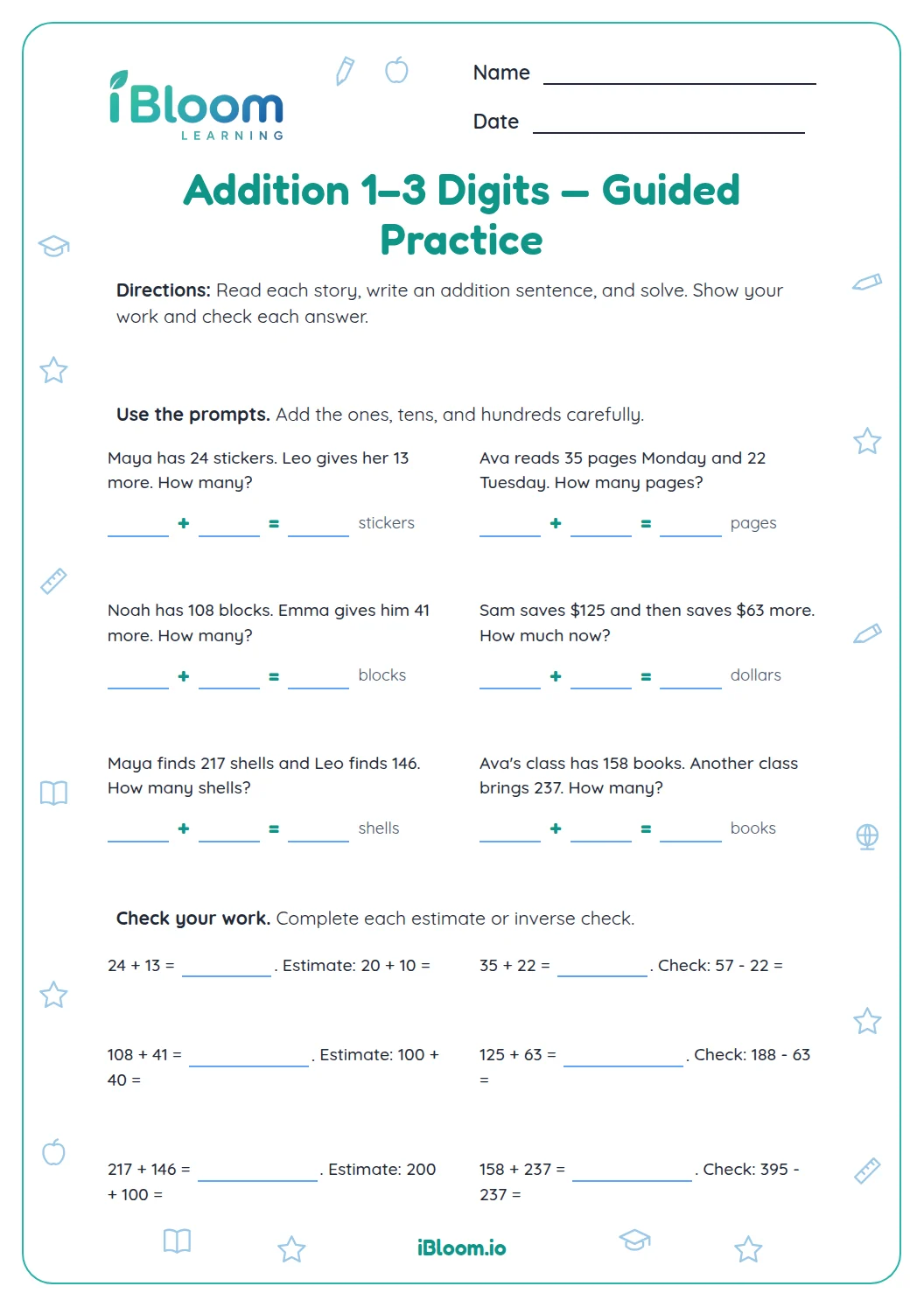
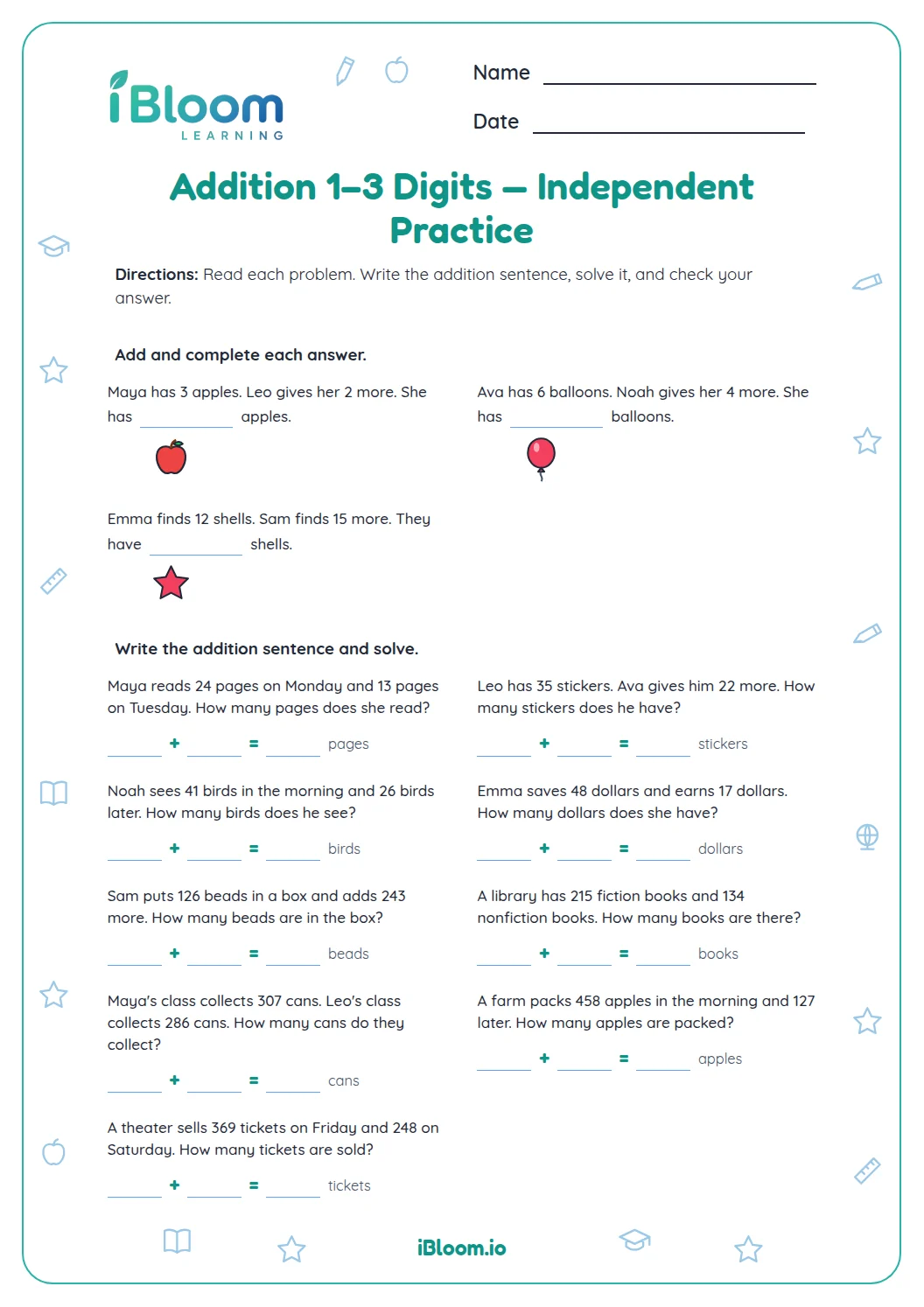
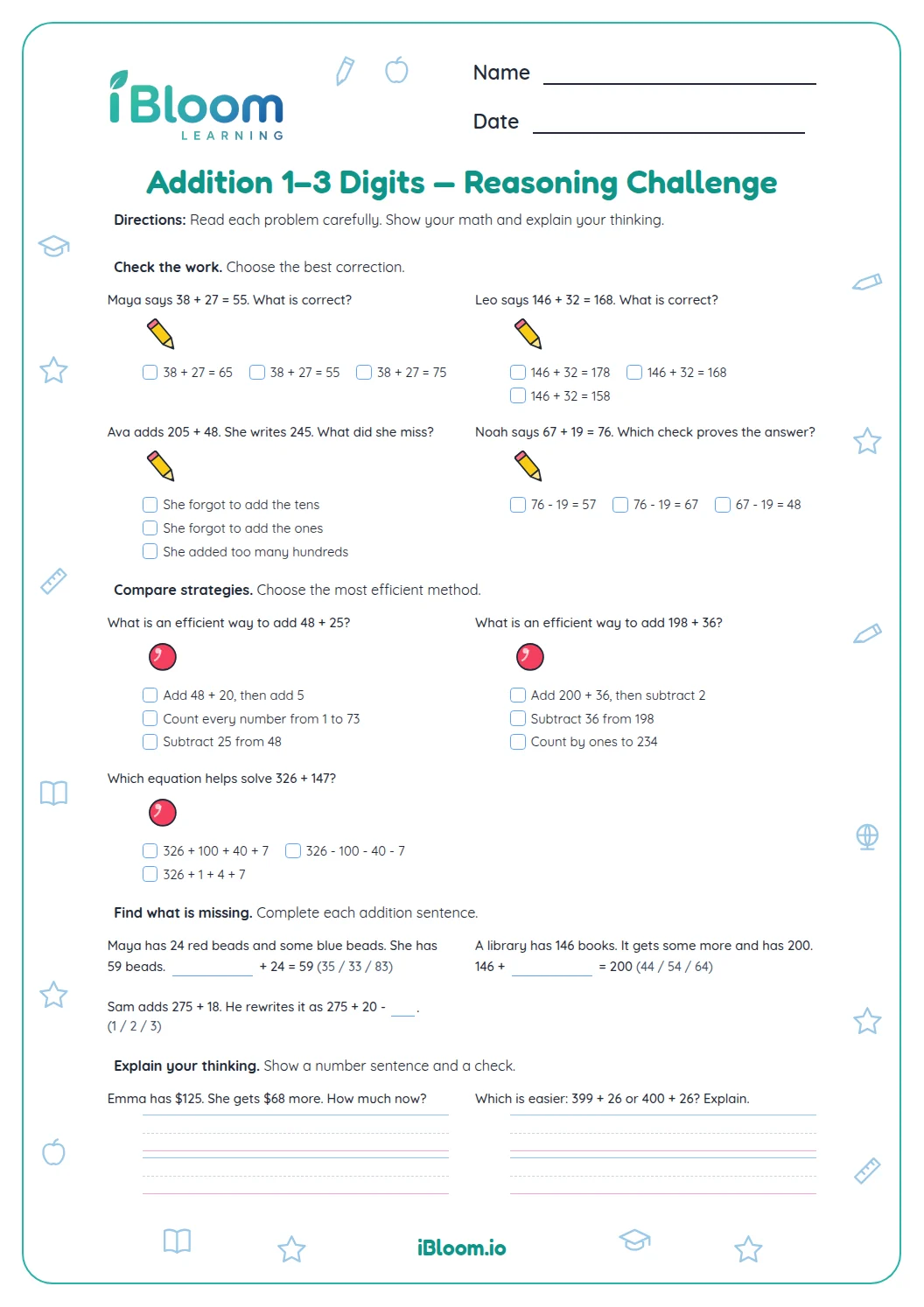
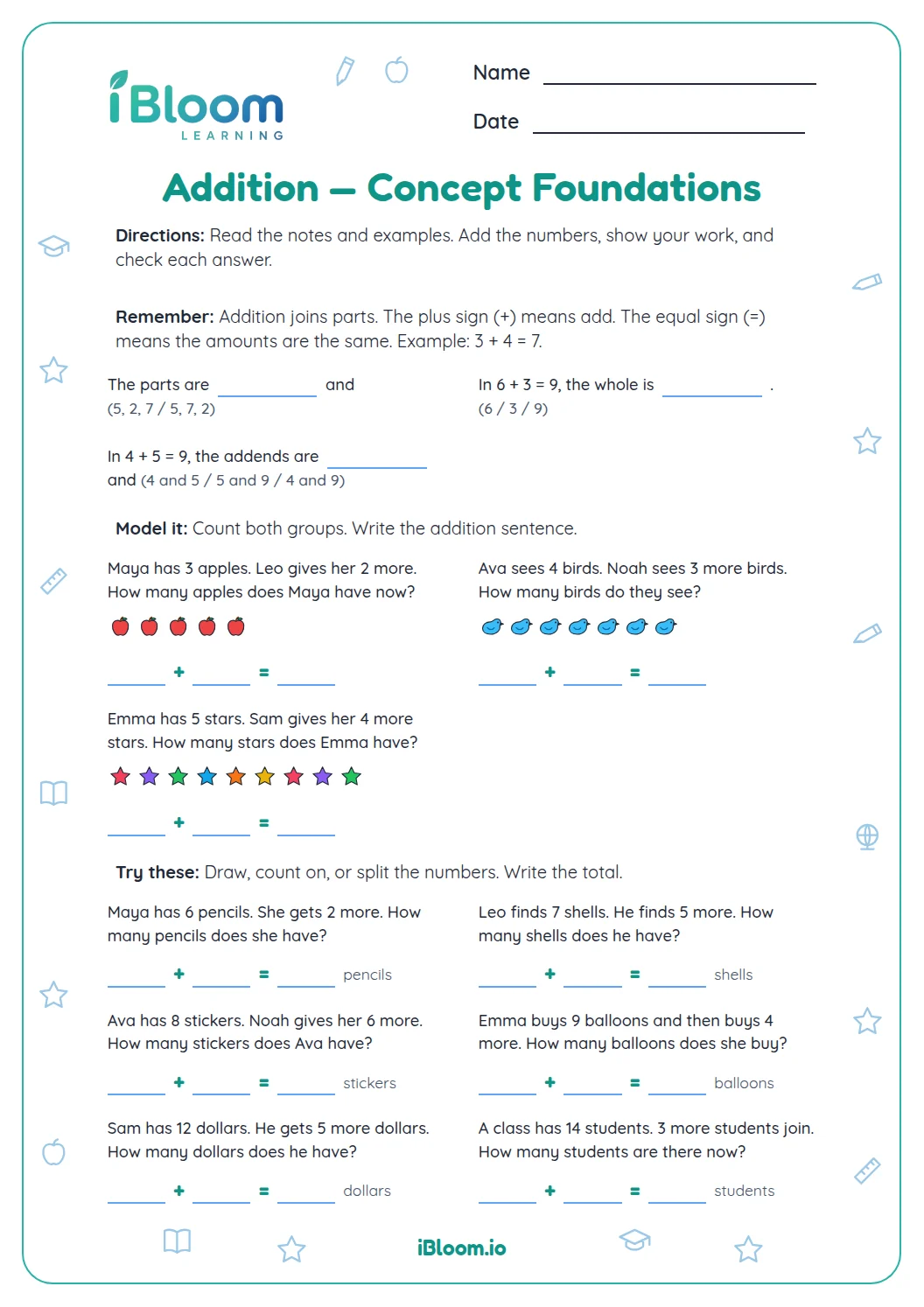
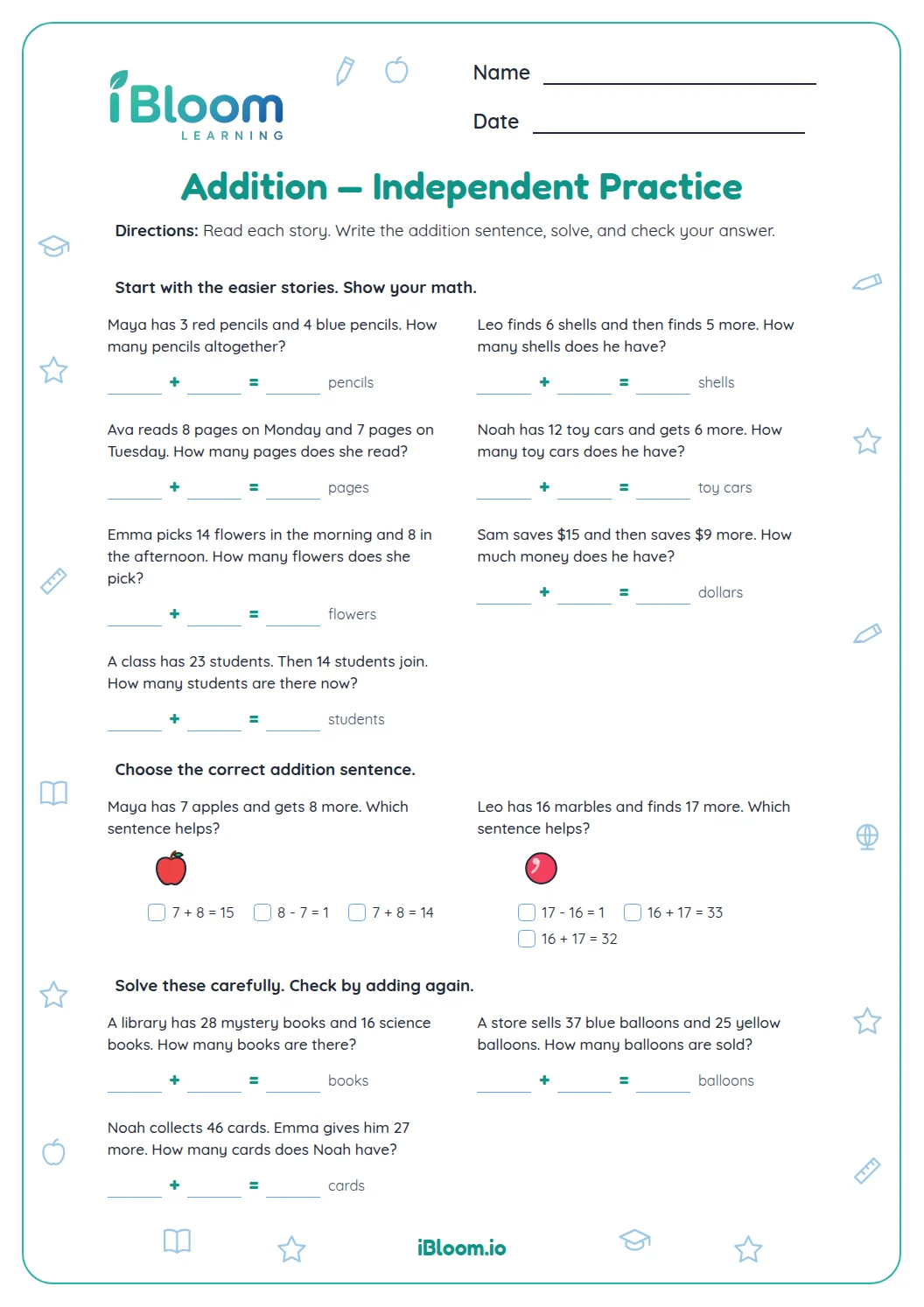
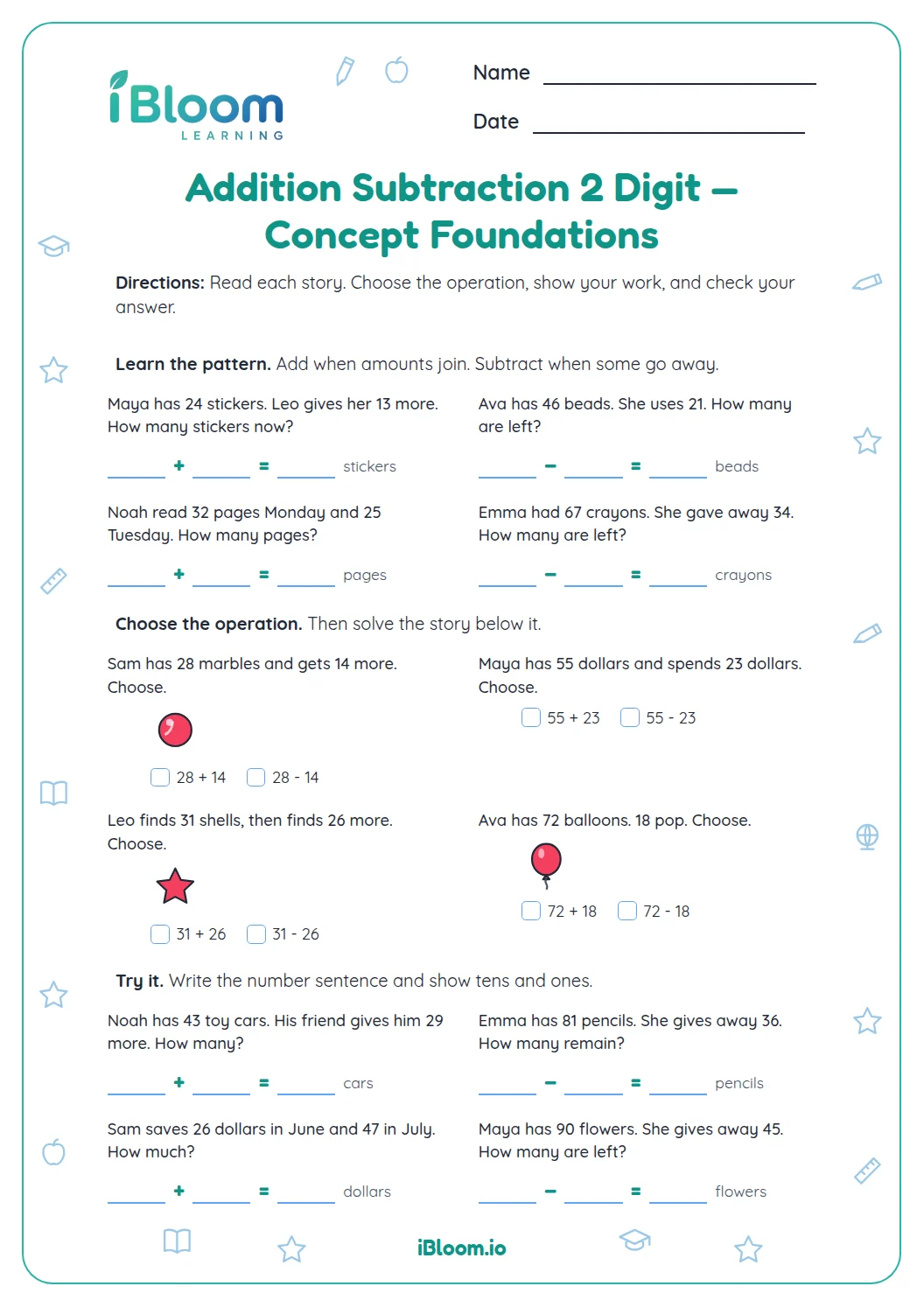
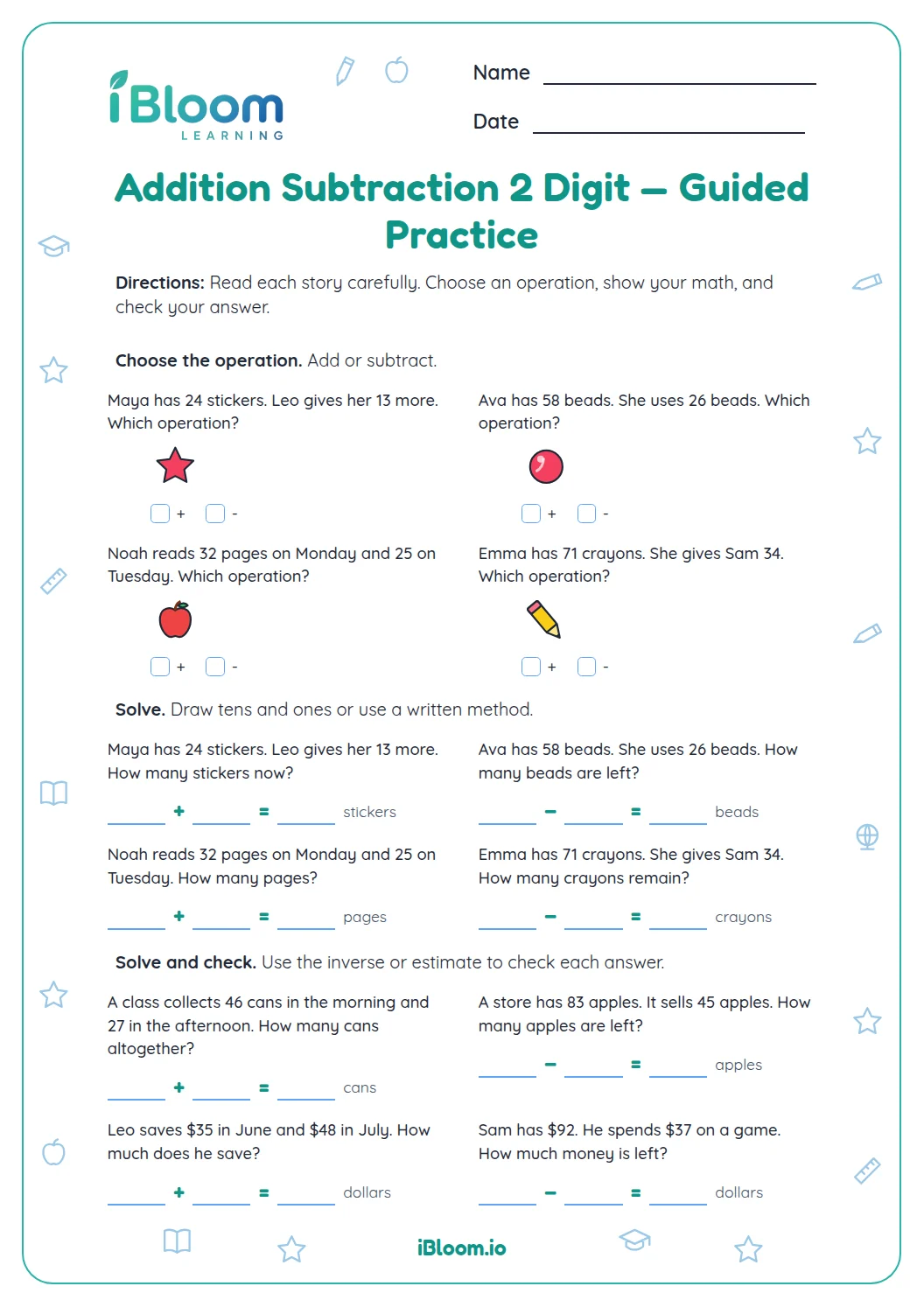
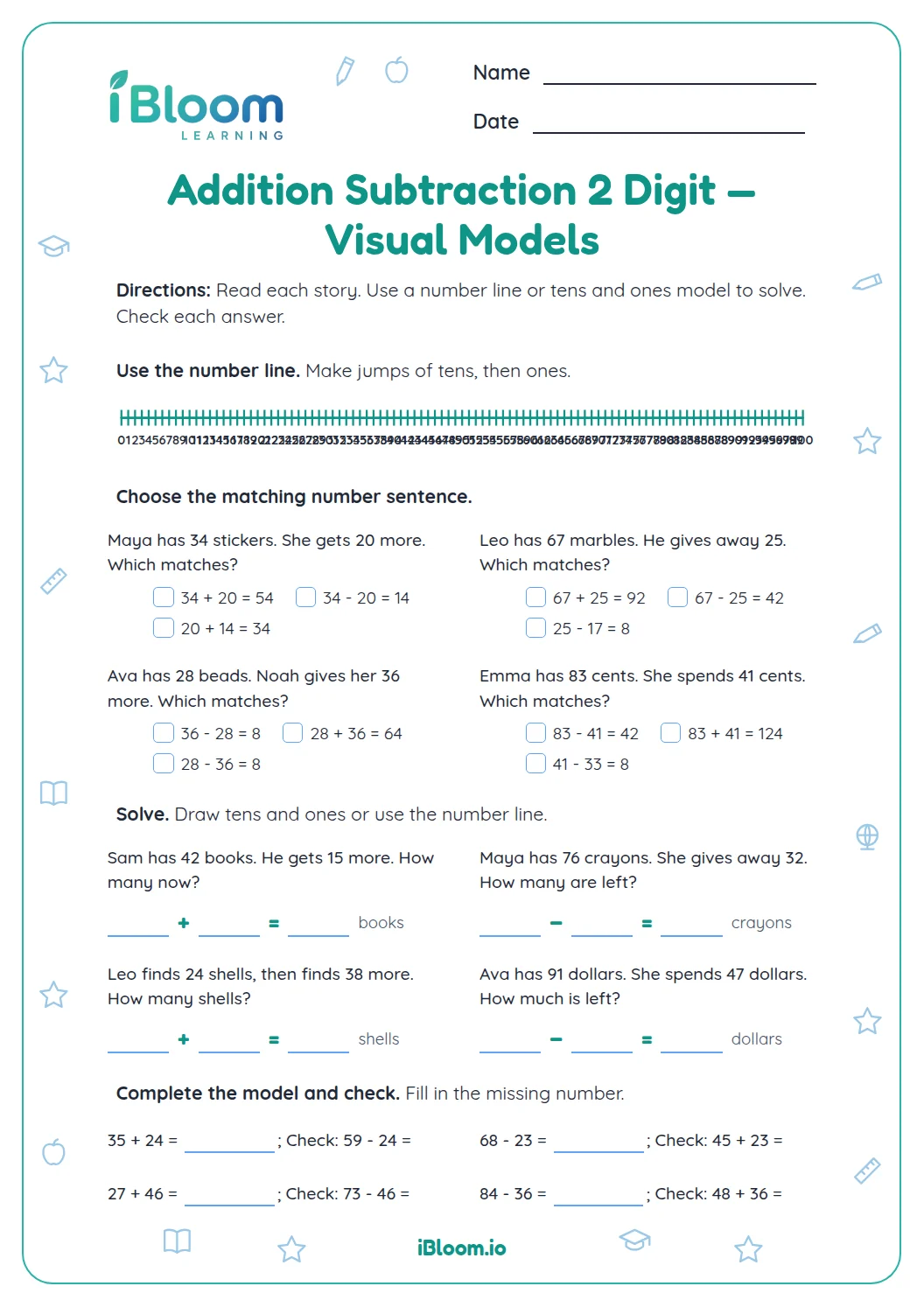
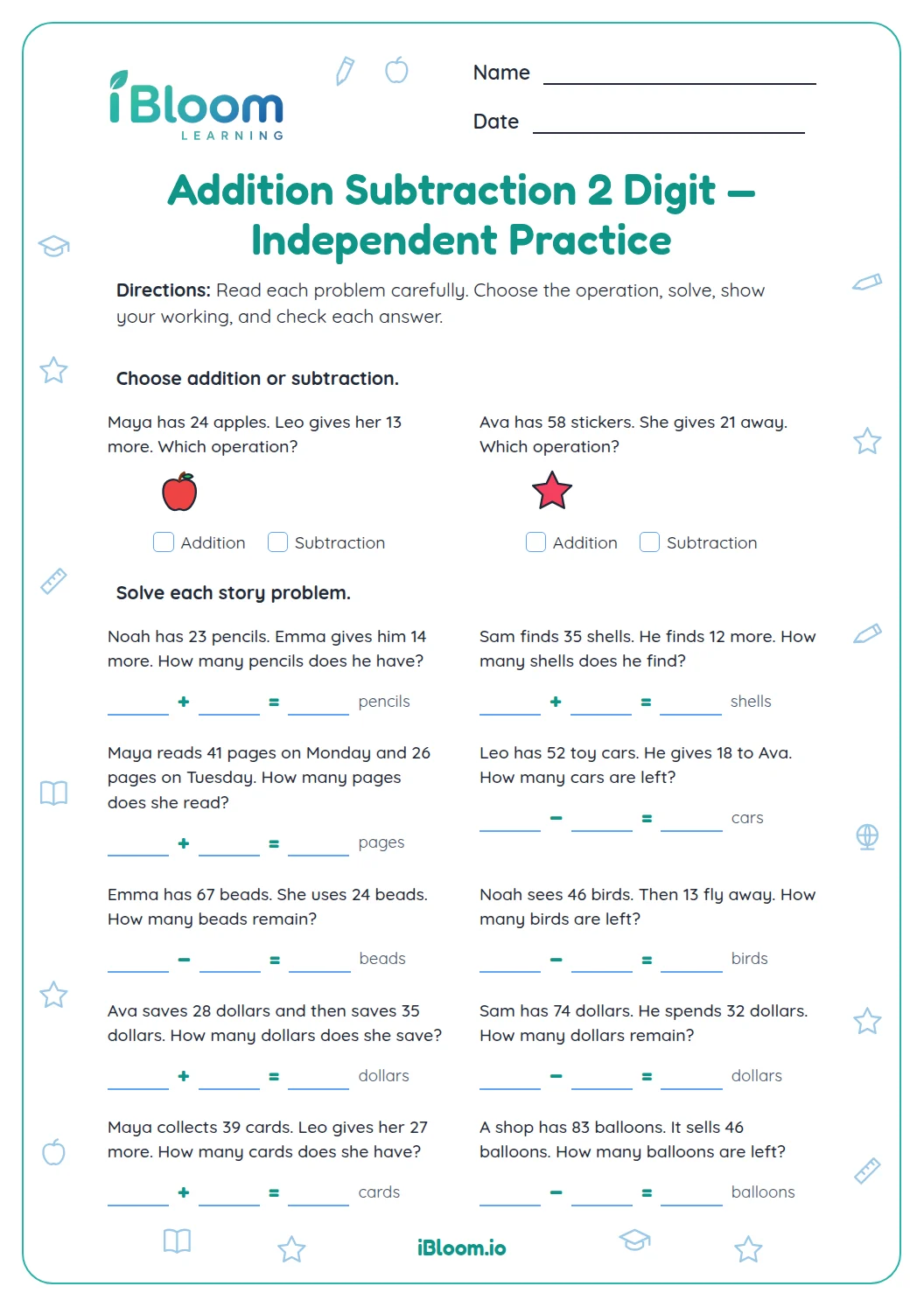
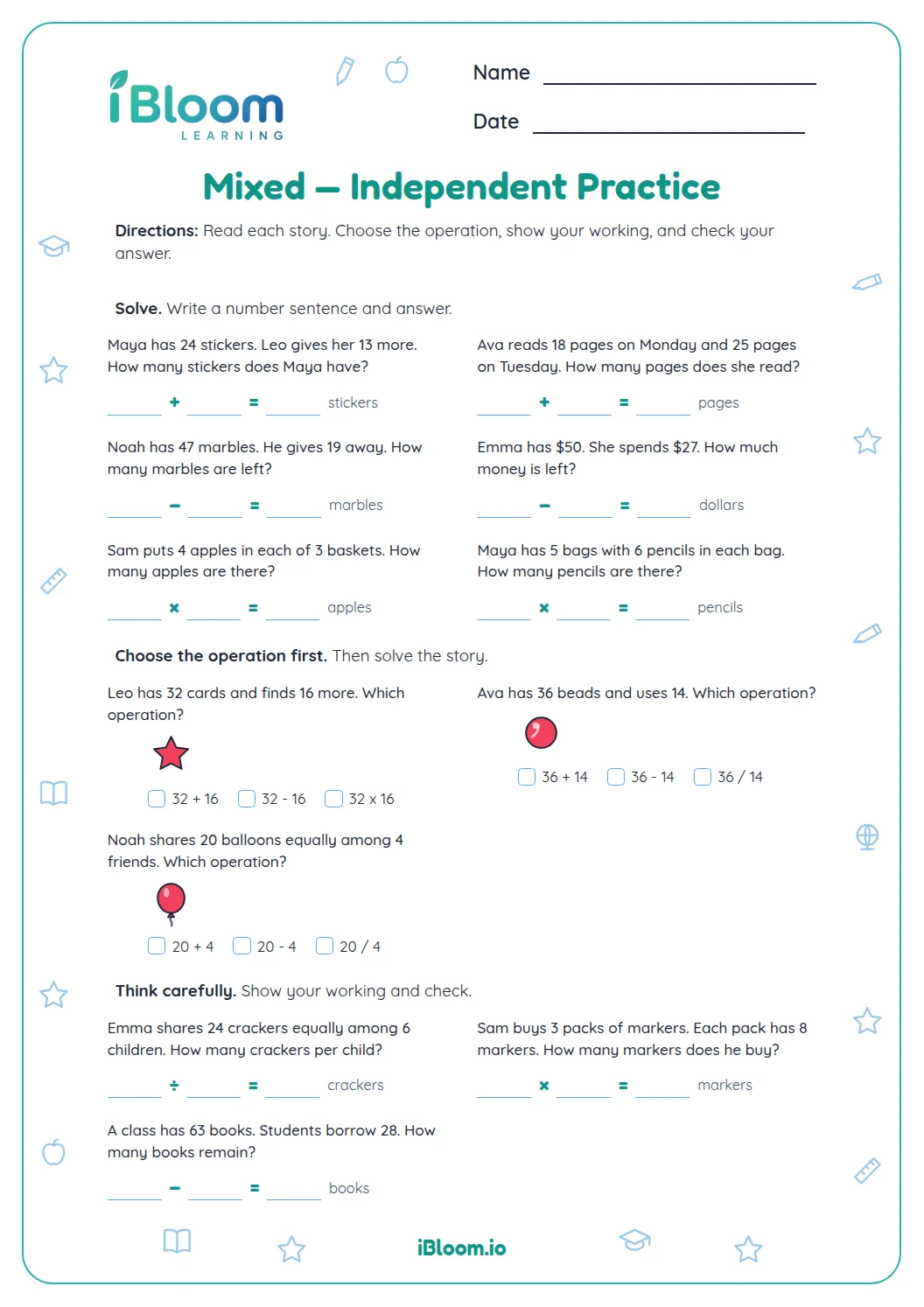
This free printable worksheet gives Grade 2 learners 14 visual-model and addition story questions with two- and three-digit numbers. Each prompt describes two amounts being joined or an amount increasing, so children can sketch place-value blocks, split numbers into hundreds, tens and ones, and write an equation. The skill connects to CCSS 2.NBT.B.7, which includes models and place-value strategies for addition within 1,000. A separate answer key is included.
Aligned to 2.NBT.B.7
How can a story become an addition equation?
Base-ten blocks show hundreds, tens, and ones. Read each model as a number, then combine it with the amount named in the question. For example, 125 + 200 adds two hundreds while keeping the tens and ones.
- 1The blocks show 125.
- 2Add 200: 125 + 200
- 3Two more hundreds make 325.
How do place-value parts help with three-digit totals?
The story problems use addition to join amounts. Write an equation, solve by place value, and include the unit or object in the answer.
What kinds of addition stories are included?
Two model questions practice reading hundreds, tens, and ones; eight stories apply addition to familiar totals, followed by four three-digit addition equations.
How to use this worksheet at home or in class
- 1Read the whole story once.
- 2Underline the two amounts being joined.
- 3Decide what the question asks you to find.
- 4Write the amounts in an addition equation.
- 5Sketch hundreds, tens and ones if helpful; regroup when a place totals ten.
- 6Check that the answer includes the story’s unit.
Common mistakes and quick fixes
The mistake
Subtracting because the story includes the word “more.”
The fix
Ask whether the total grows from the first amount; if so, add.
The mistake
Combining unlike places, such as tens and ones.
The fix
Separate hundreds, tens and ones before combining.
The mistake
Giving only a number with no context.
The fix
Add the unit named in the story, such as books or miles.
Common Core alignment
This worksheet practices the Common Core skill named below.
Use models and place value strategies to add within 1,000.
On this sheet: Each story uses addition within 1,000 and can be represented by place-value parts and an equation.
Show the official wordingHide the official wording
Add and subtract within 1000, using concrete models or drawings and strategies based on place value, properties of operations, and/or the relationship between addition and subtraction; relate the strategy to a written method. Understand that in adding or subtracting three-digit numbers, one adds or subtracts hundreds and hundreds, tens and tens, ones and ones; and sometimes it is necessary to compose or decompose tens or hundreds.
What to practice next
Make more practice
Questions parents and teachers ask
What visual models appear in this worksheet?
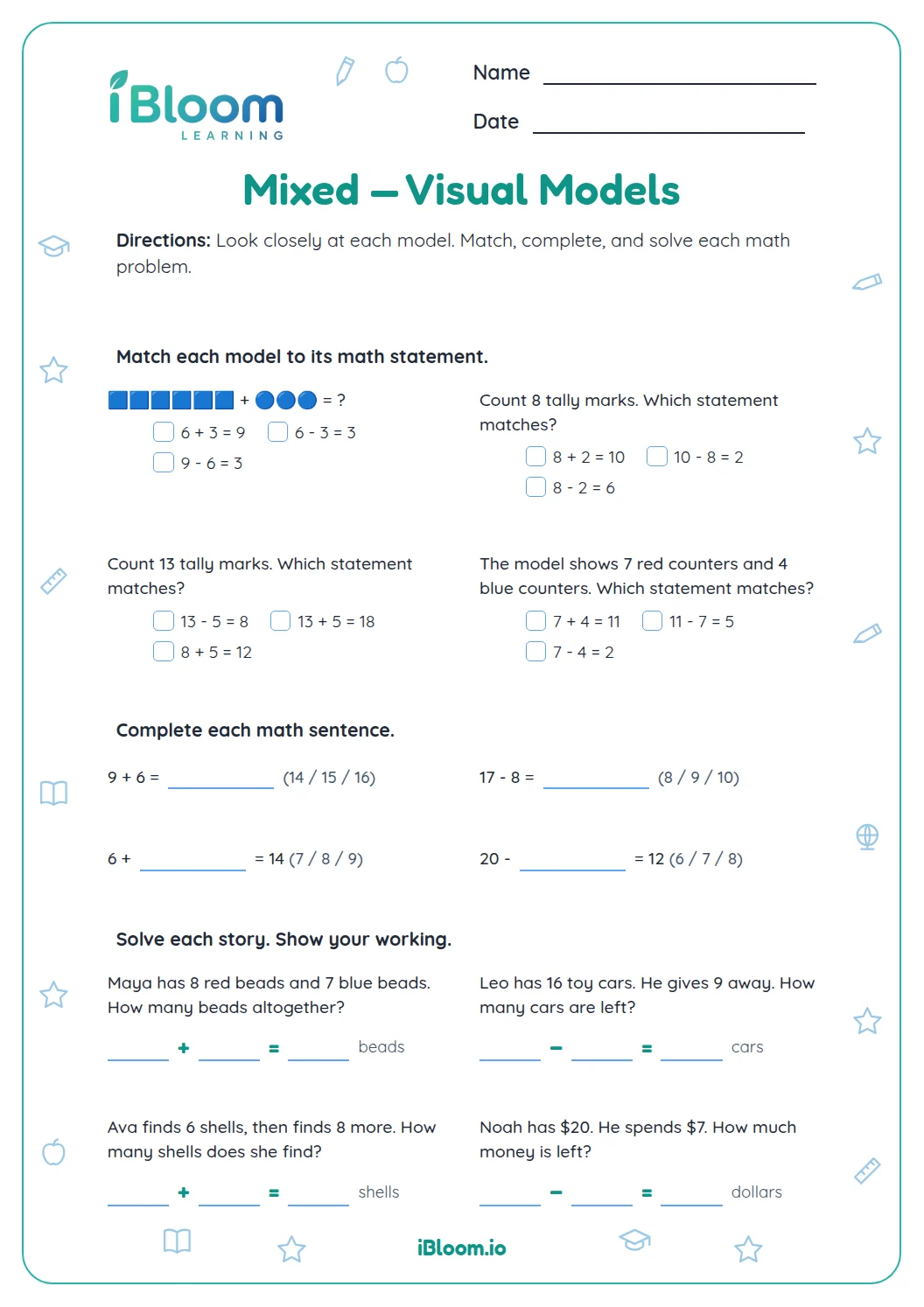
Children read ten-frame counters, tally marks, base-ten blocks, and a number bond, then choose the addition equation that matches each model. The second part uses short word problems so learners can connect a visual representation to a real situation.
How can my child solve a three-digit addition story?
First identify the two amounts in the story and write an addition equation. Then add hundreds, tens, and ones, composing a ten or hundred when needed. A place-value sketch can help show why the written sum works. The answer key lets you check the total and the unit.
Are the word problems within 1,000?
Yes. The story questions use two- and three-digit amounts with totals at or below 1,000. They describe amounts being joined or increased, so children can focus on modeling addition and interpreting the total. They can use blocks, a quick sketch, or an equation as their strategy.
Is an answer key included?
Yes. The separate key shows the equations that match the models and the totals for the story problems. For a model question, compare the amounts and equation; for a story, check that the answer also includes the correct unit.
How does the worksheet use base-ten blocks?
Two questions show hundreds, tens, and ones. Children read the number represented by the blocks, combine it with a stated amount, and select the matching equation and total. The other questions apply addition in stories or number sentences.
Do the story problems include room for working?
The story questions ask for an addition total. Children can write an equation on the answer line, then name the total with its unit, such as books, cents, or miles. The answer key gives the expected sum for each situation.