

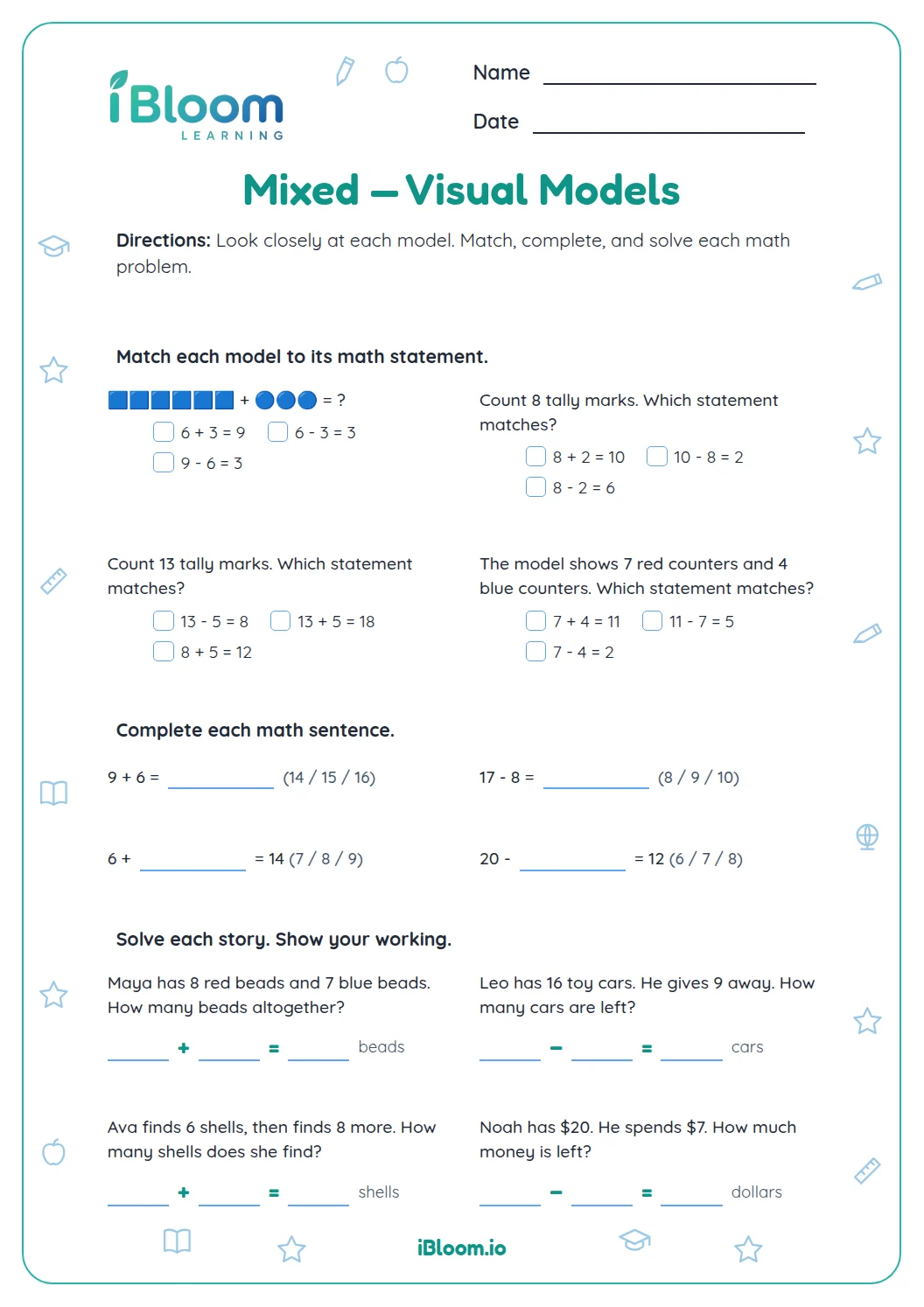
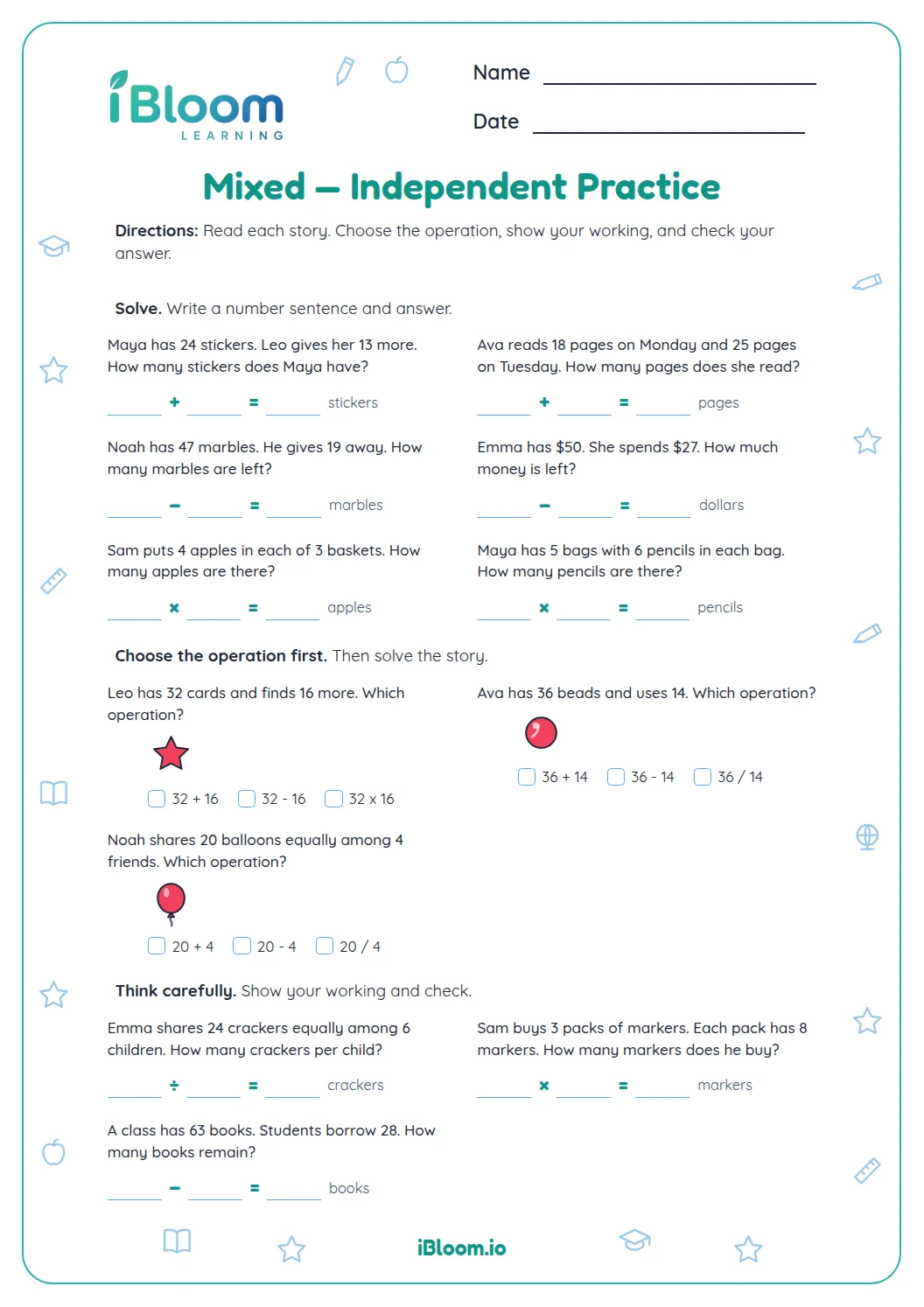
About this worksheet
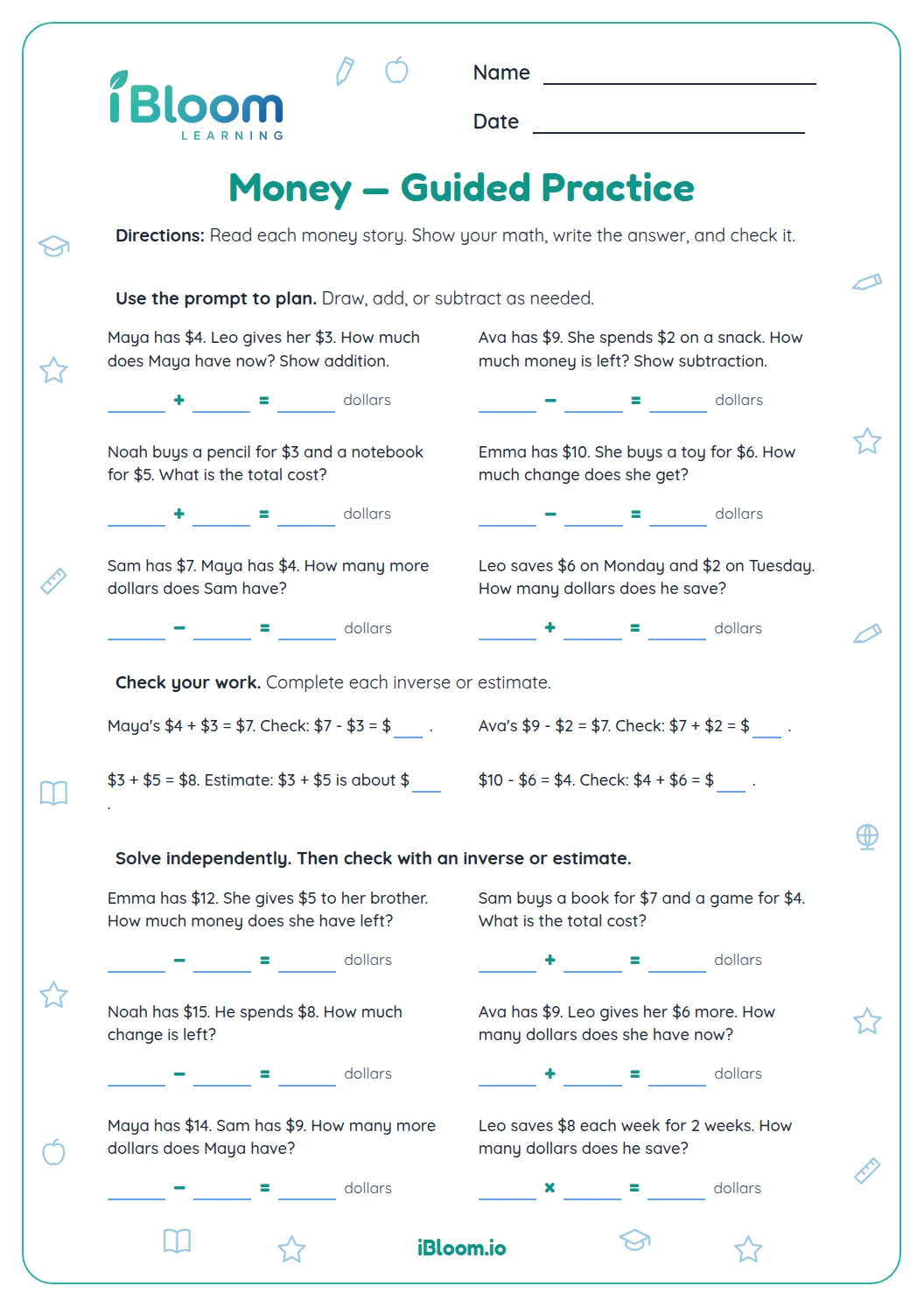
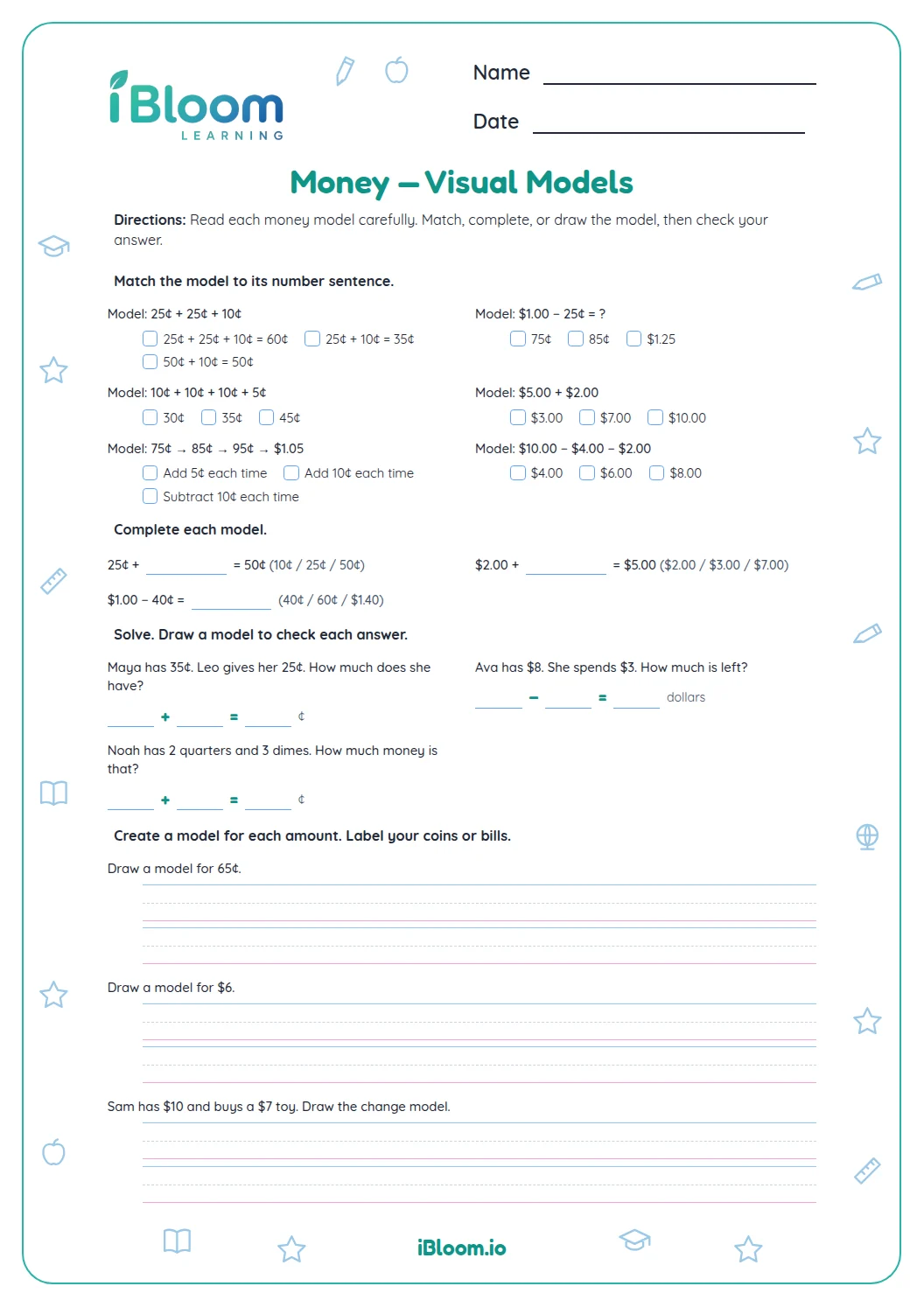
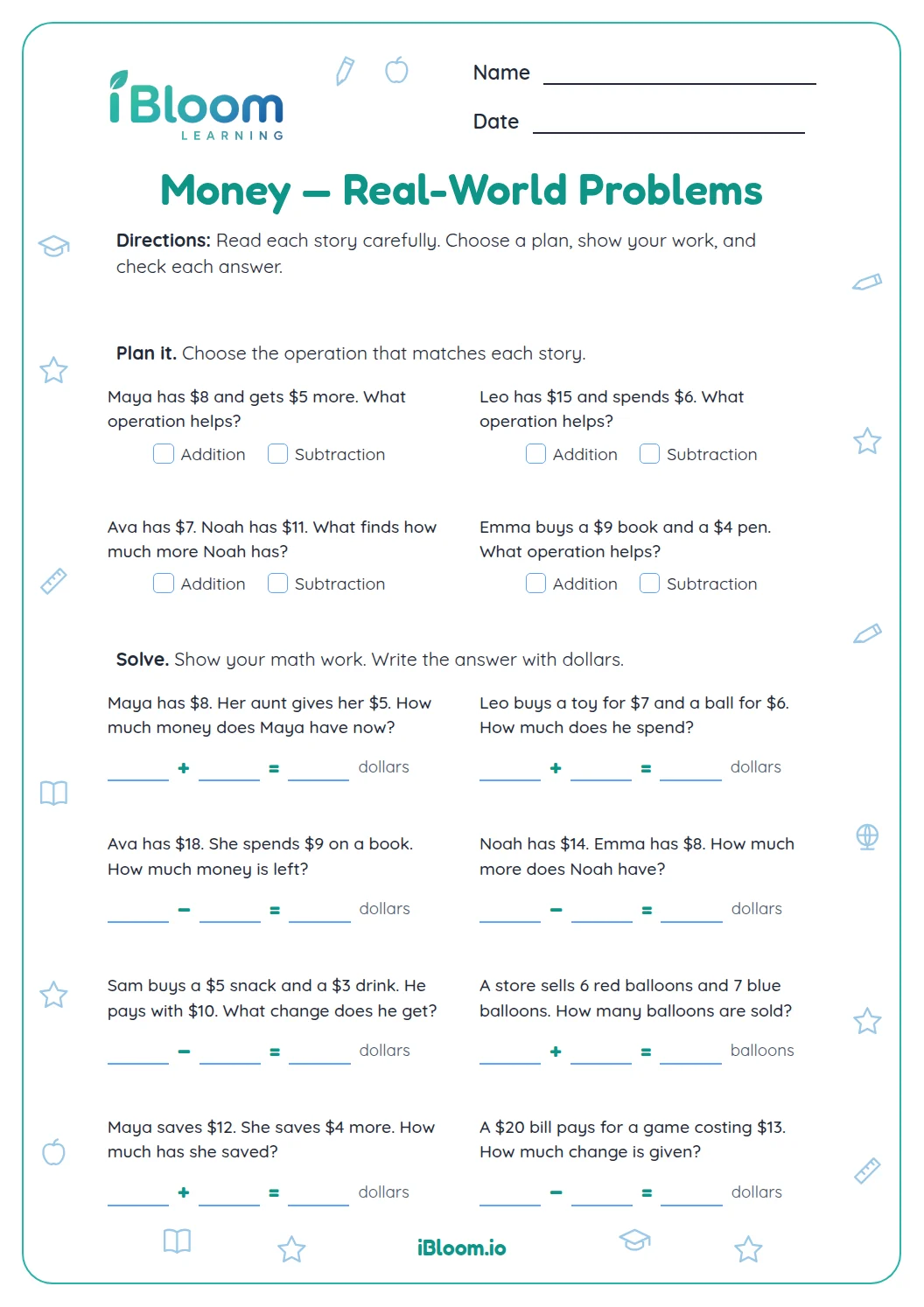
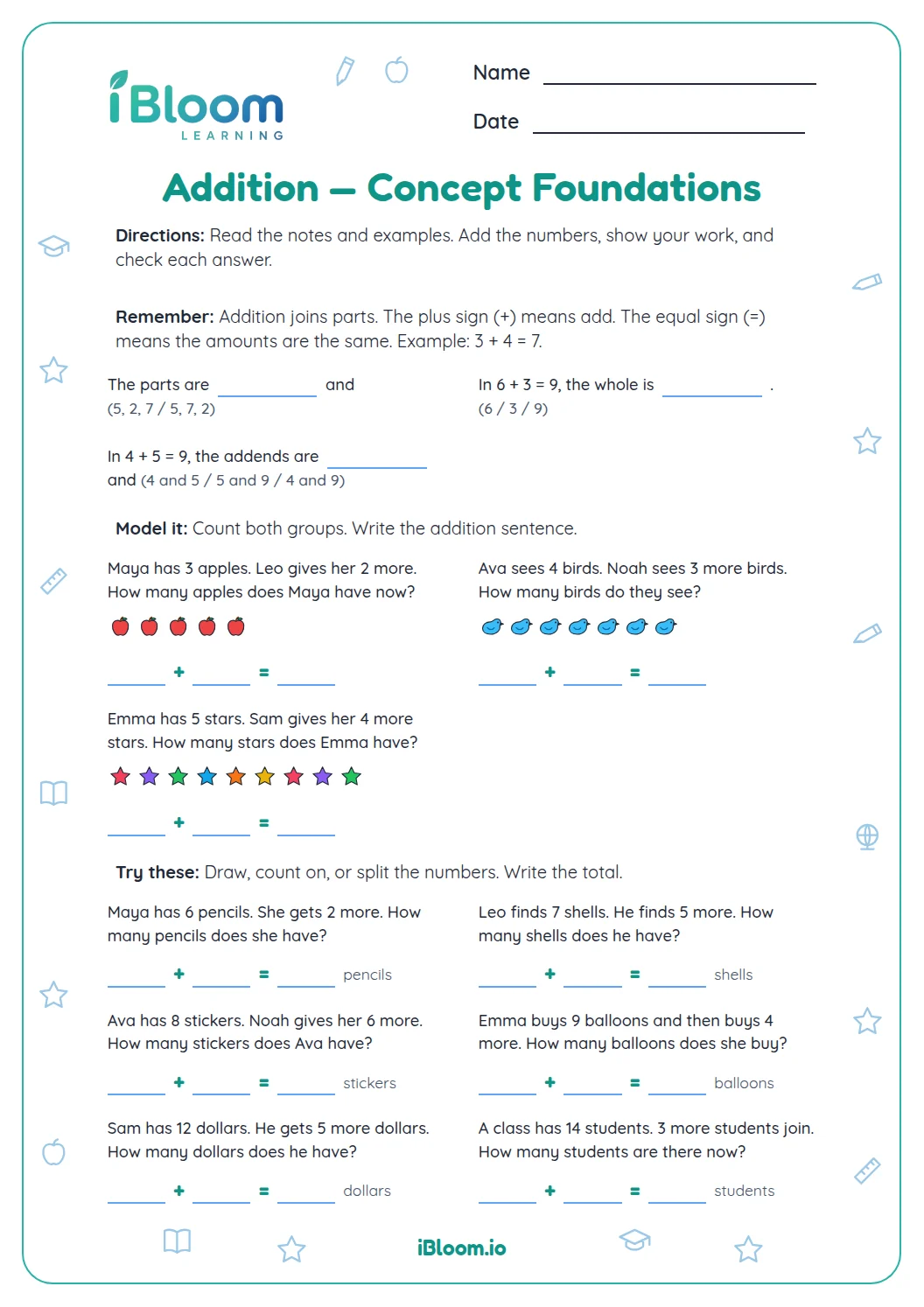
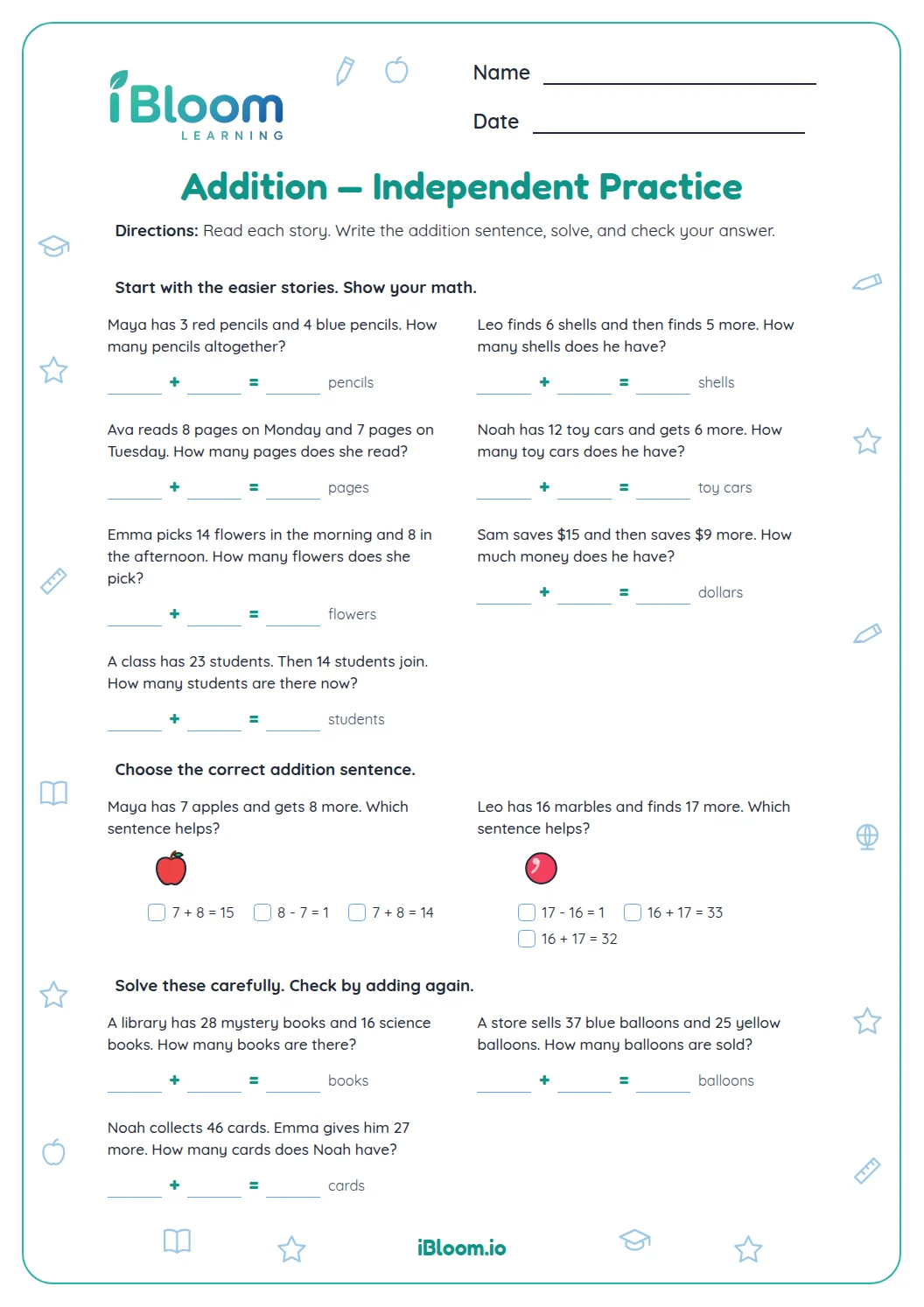
This Grade 2 printable gives students 16 independent money word problems using prices and coin amounts under one dollar. Students add costs, find money left or change, compare prices, and reason about coin values. Each item provides space for an equation and answer. The work aligns with CCSS 2.MD.C.8, which covers money problems with bills and coins using dollar and cent notation. The answer key is included.
Aligned to 2.MD.C.8
How can students find the value of coins?
Students use familiar coin values to answer problems, such as finding the value of three dimes and two pennies. Other items connect coin values to prices under one dollar.
How should students show their thinking?
Write an addition equation for combined costs or a subtraction equation for change and remaining money. For a 23¢ pencil and 15¢ eraser, 23¢ + 15¢ = 38¢.
How do comparison questions work?
Compare the two amounts, then state the difference and its unit. When a question asks which coin group is enough, check whether the total reaches the price.
How to use this worksheet
- 1Read the part heading and its one-line direction.
- 2Work through the items in order and keep each answer tied to the prompt.
- 3Reread any item where two choices seem possible.
- 4Use the key after completing the page to correct specific answers.
Common slips and helpful fixes
The mistake
Choosing a word by topic alone.
The fix
Read the whole sentence and check how the word is used.
The mistake
Rushing past a key clue.
The fix
Underline or notice the phrase that determines the answer.
The mistake
Copying an answer without checking it.
The fix
Compare each response with the exact question.
Common Core alignment
This worksheet practices the listed Common Core skill through its questions.
Solve price and coin word problems with cents and dollar notation.
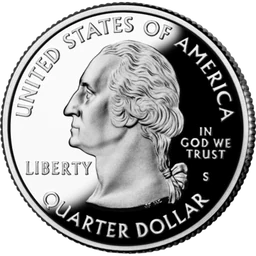
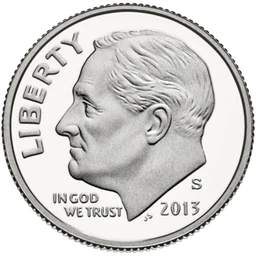
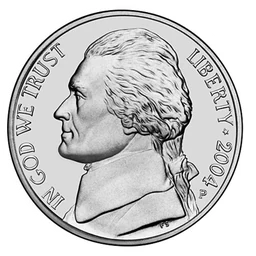
On this sheet: Solve word problems involving dollar bills, quarters, dimes, nickels, and pennies, using $ and ¢ symbols appropriately.
Show the official wordingHide the official wording
Solve word problems involving dollar bills, quarters, dimes, nickels, and pennies, using $ and ¢ symbols appropriately.
What to practice next
Make more practice
Further reading
Questions parents and teachers ask
Are these problems about dollars or cents?
All listed prices and coin collections are under one dollar and answers are written in cents. Students practice coin values and use the cent symbol. The problems keep the arithmetic within a familiar Grade 2 range. The contexts include buying items, combining costs, checking coin totals, and finding change.
Should students write equations?
Yes. Each question includes workspace for an equation and an answer. Addition is useful for combining costs and coin values; subtraction helps find how much remains, change, or the difference between two prices. Write the amount with a cent sign so it is clear that the answer is money.
Which coins appear in the problems?
The situations use pennies, nickels, dimes and quarters. Students may combine coin values mentally or show an addition equation. A few problems state the coin group directly so the focus stays on calculating its total. Addition combines prices; subtraction finds a difference or the amount that remains.
How do I help with a change problem?
Have the child identify the amount paid and the price, then subtract the price from the amount paid. For example, paying 75¢ for a 57¢ bag leaves 18¢. Check by adding the change back to the price. Children can check a subtraction result by adding the answer back to the price.
Does the answer key accept different coin combinations?
Yes. Question 7 asks for one combination totaling 48¢; more than one combination works. The key gives 25¢, 10¢, 10¢ and 3¢ as one example. Another combination is correct if its coin values add to exactly 48¢, such as two dimes, a nickel, a penny and two pennies.