

About this worksheet
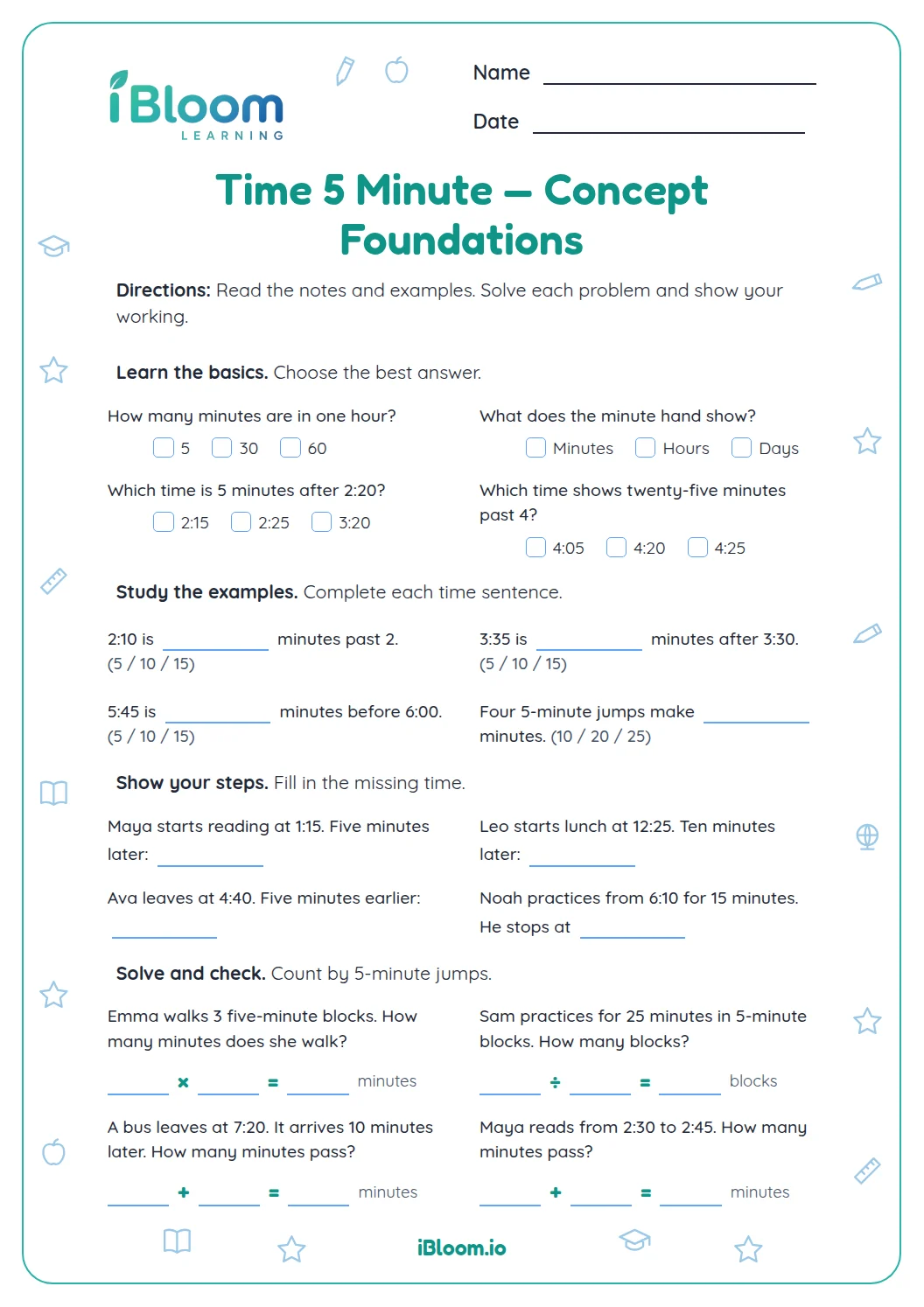
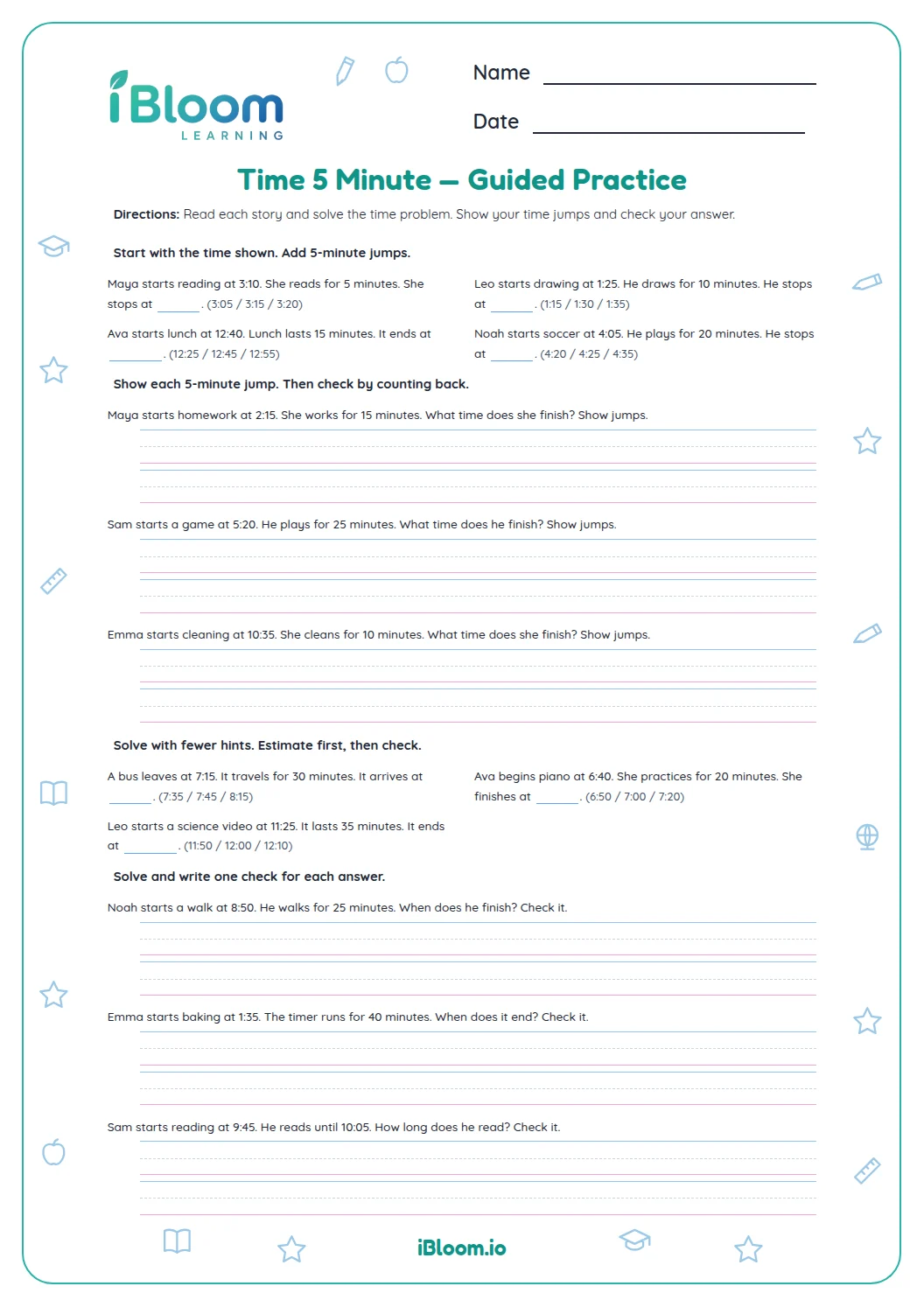
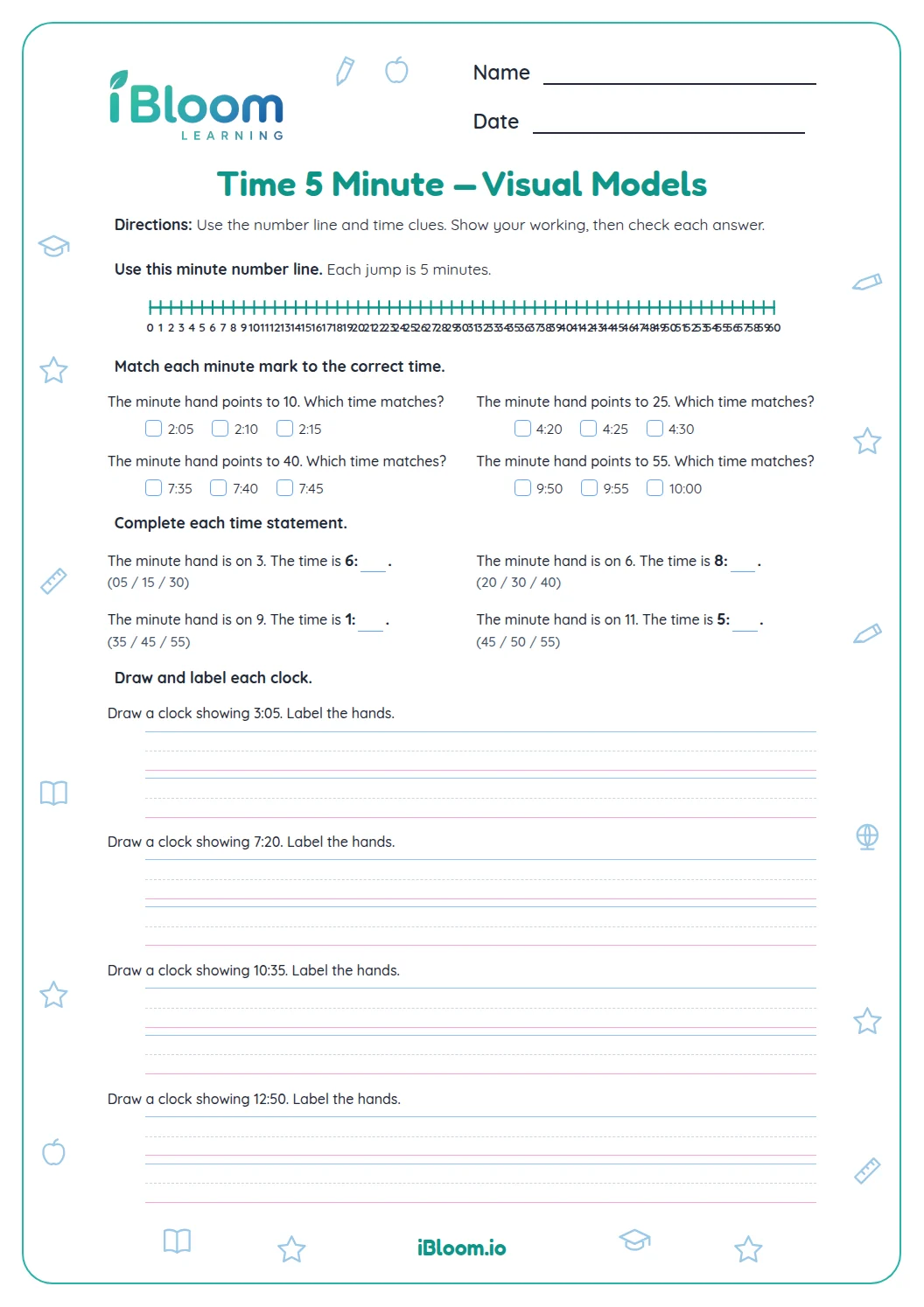
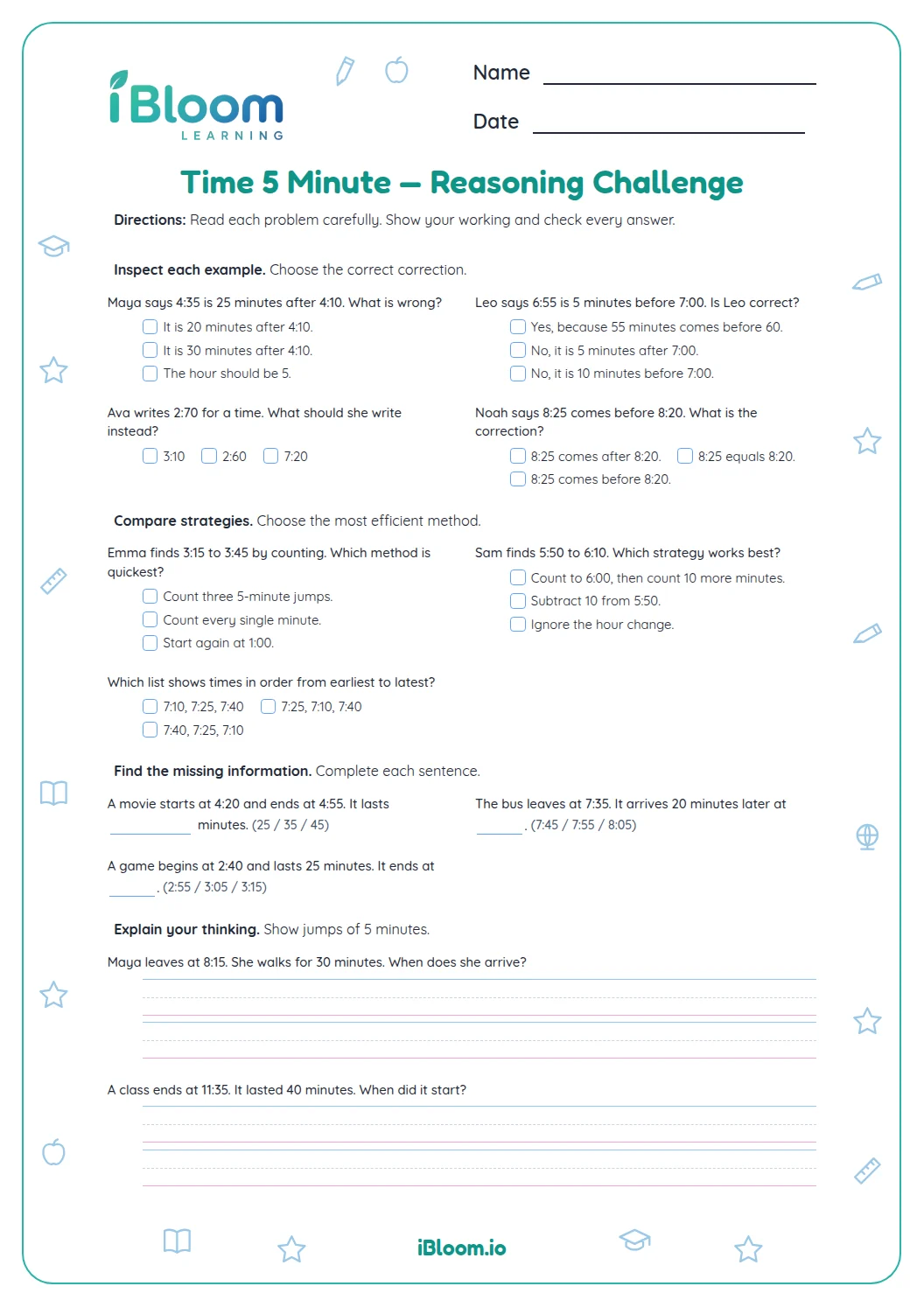
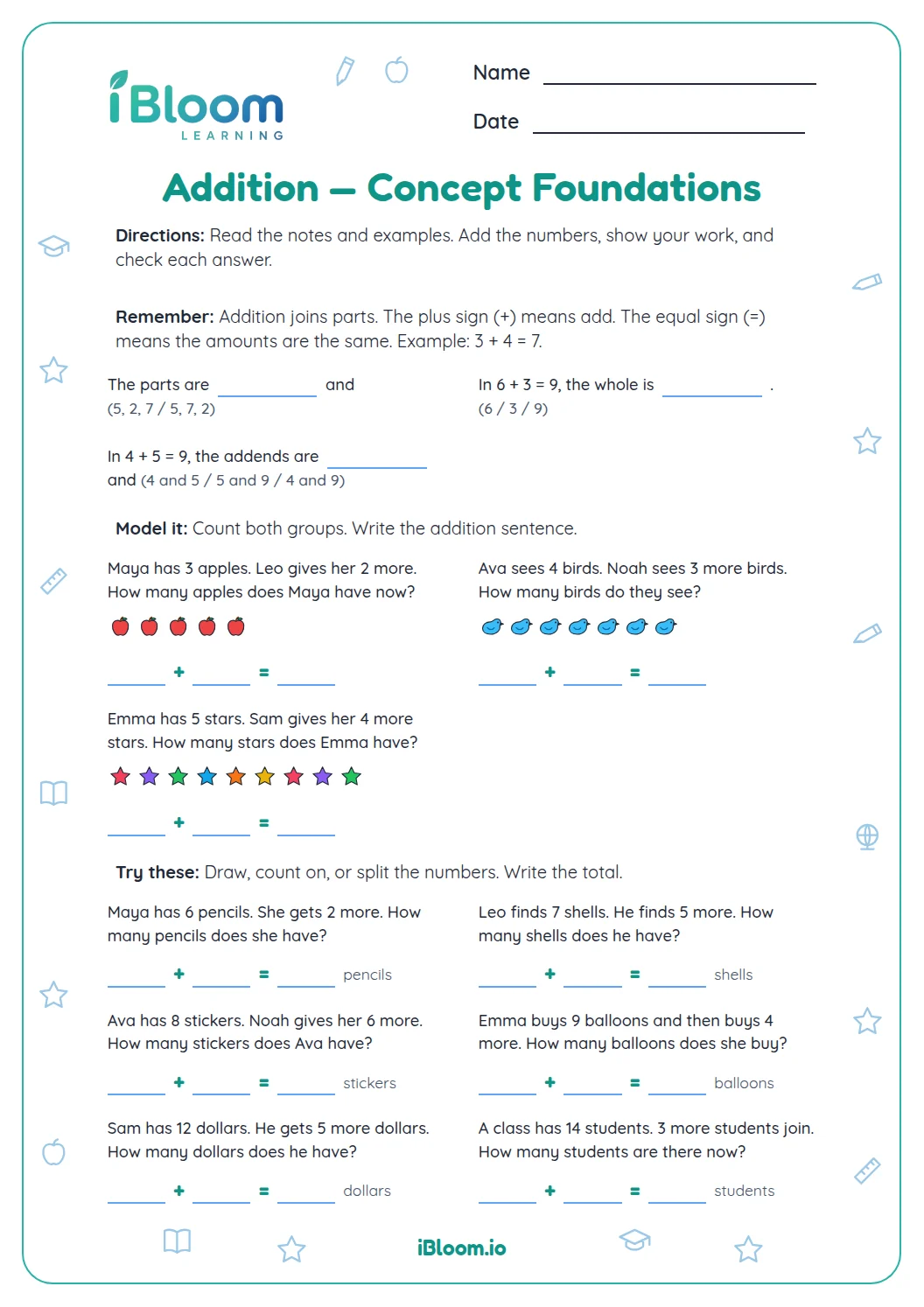
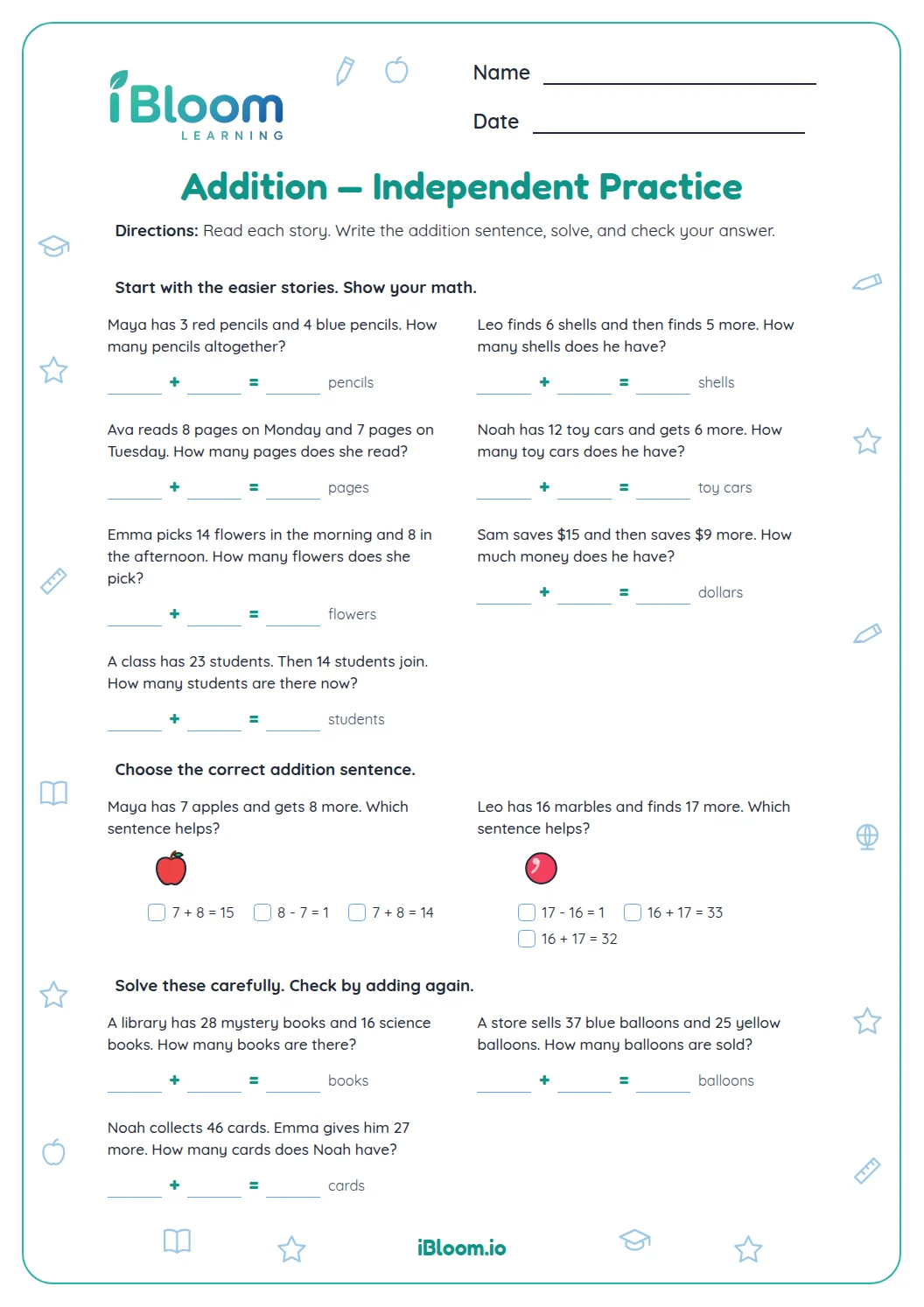
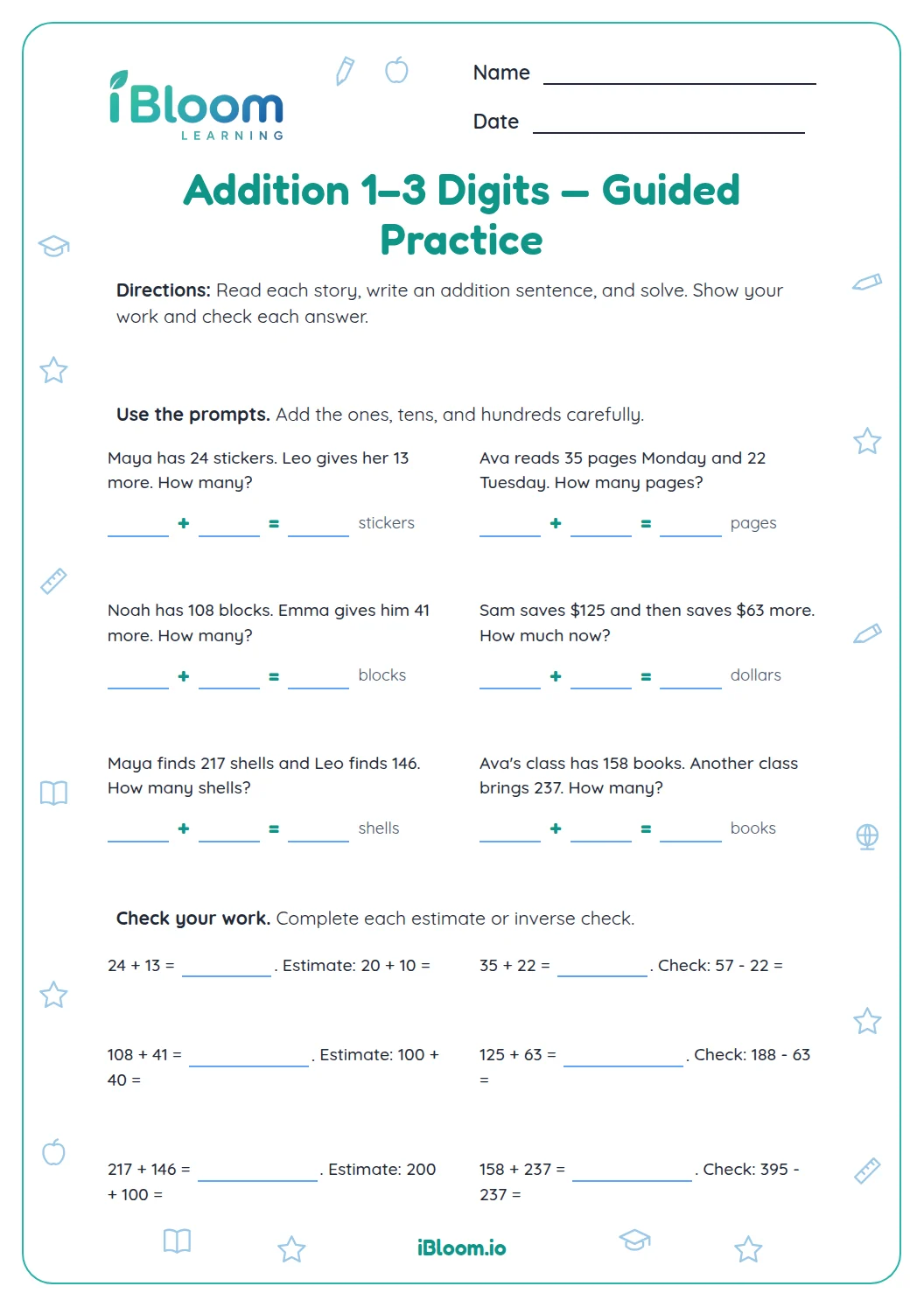
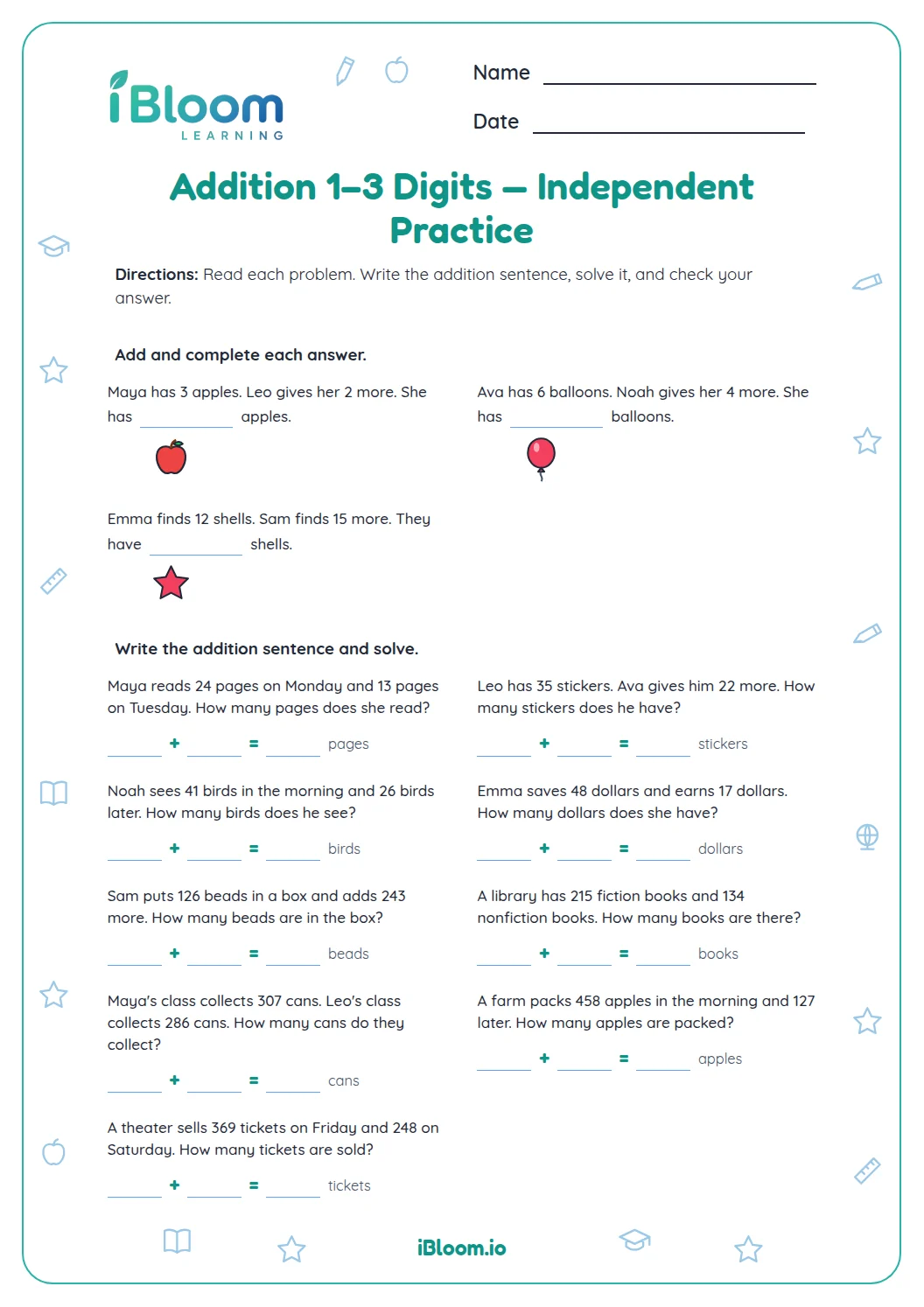
This printable is for Grade 2 learners practicing clock time. It includes 16 questions in 2 parts, with concise items to leave room for a two-page worksheet and separate two-page answer key. Learners can use the models, time clues, or graph data shown on the sheet and check their work with the key.
Aligned to 2.MD.C.7
How do children read each clock?
Start with the short hour hand. Read the long minute hand by counting around the clock in fives, then check which hour is underway. In Part B, match a written time phrase to its digital form.
For example, on the art-club item, read the hour hand and count the minute hand in fives. Write the time the clock shows for the club.
What is a helpful routine?
Part A includes six clock drawings. Part B gives ten event times in words and asks learners to choose the matching digital time.
How can families review?
Use the answer key after finishing. Recount the minutes or reread the time phrase together when an answer needs another look.
How to use this worksheet
- 1Read the short hour hand first.
- 2Count by fives around the clock for the minutes.
- 3Write the displayed time for the event.
- 4Check the hour and minute hands before moving on.
- 5Use the separate key to review any missed time.
Common mistakes and quick fixes
The mistake
Reading the long hand as the hour hand.
The fix
Find the shorter hand first; it points to the hour underway.
The mistake
Counting the minute marks one by one.
The fix
Count by fives from 12 to the number under the long hand.
The mistake
Writing the number under the minute hand as the minutes.
The fix
Multiply that number by five to name the minutes.
Curriculum alignment
This worksheet gives learners focused practice with the skill shown on the sheet.
Tell and write time to the nearest five minutes.
On this sheet: Learners read analog clocks and match written time phrases to digital times in five-minute increments.
Show the official wordingHide the official wording
Tell and write time from analog and digital clocks to the nearest five minutes, using a.m. and p.m.
What to practice next
Make more practice
Further reading
Questions parents and teachers ask
How do children read the clocks?
Start with the shorter hour hand, then read the longer minute hand by counting five minutes for each number it points to. Check which hour is underway. The first part has six analog clocks for this practice. The learner can reread the item and check the separate answer key after finishing.
What does each word problem ask?
Part A asks learners to read six analog clocks. Part B gives ten times in words, such as quarter after ten, and asks learners to choose the matching digital time. Together, the two parts give 16 questions. The learner can reread the item and check the separate answer key after finishing.
How can an adult help with the minute hand?
Point to 12 and count aloud by fives as you move clockwise: 5, 10, 15, and so on. Ask the learner to match the spoken count to the number the long hand reaches. Then check the short hand to confirm the hour.
How should answers be checked?
Use the separate answer key after the learner finishes. For a time that is five minutes off, revisit the long hand and count by fives together. Then check the shorter hand to make sure the hour is the one currently underway.
What is one example from the page?
The art-club item shows an analog clock. Read its hour hand and count the minute hand in fives, then write the time. In Part B, a phrase such as quarter after ten is matched with its digital form. The learner can reread the item and check the separate answer key after finishing.