
About this worksheet
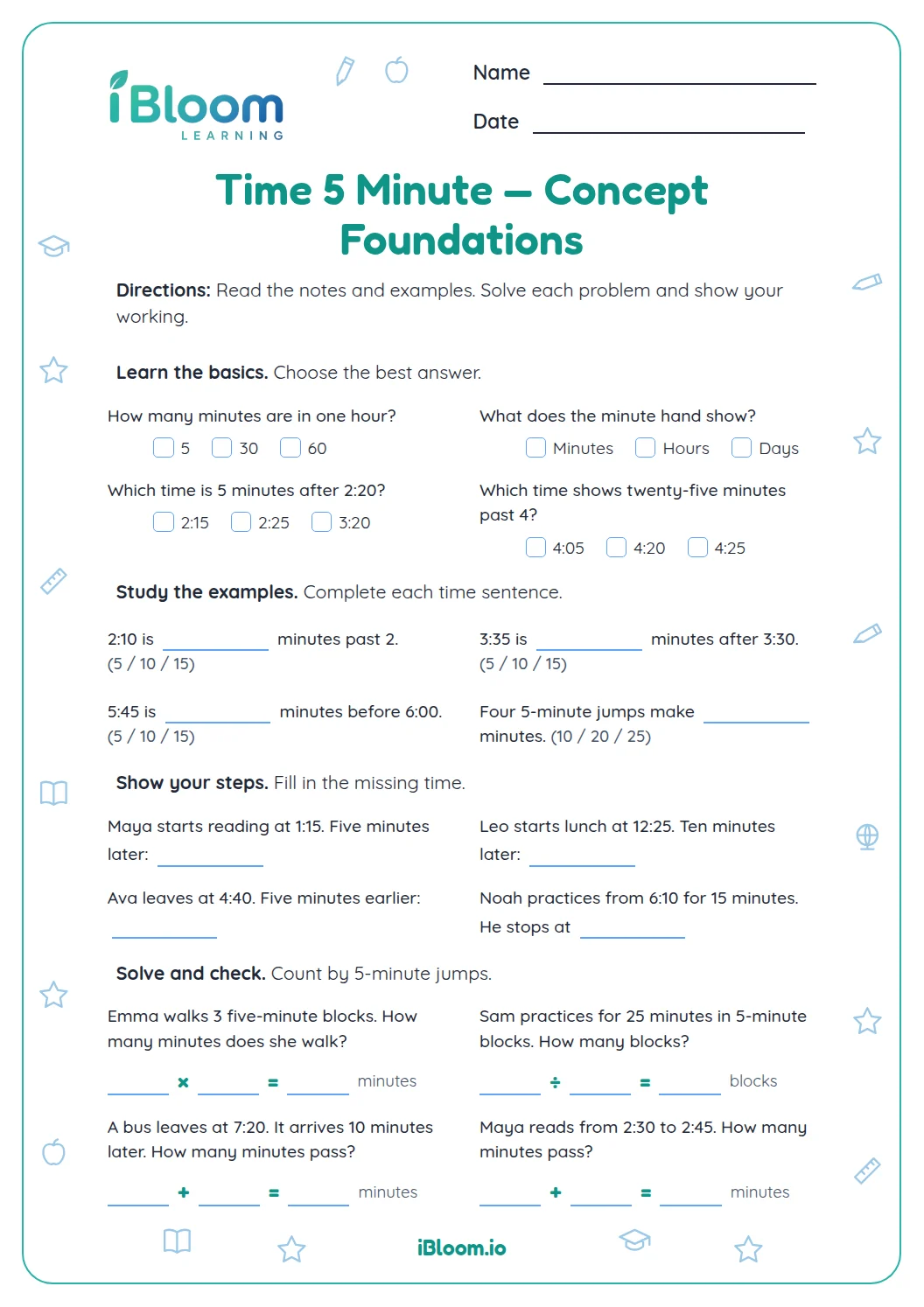
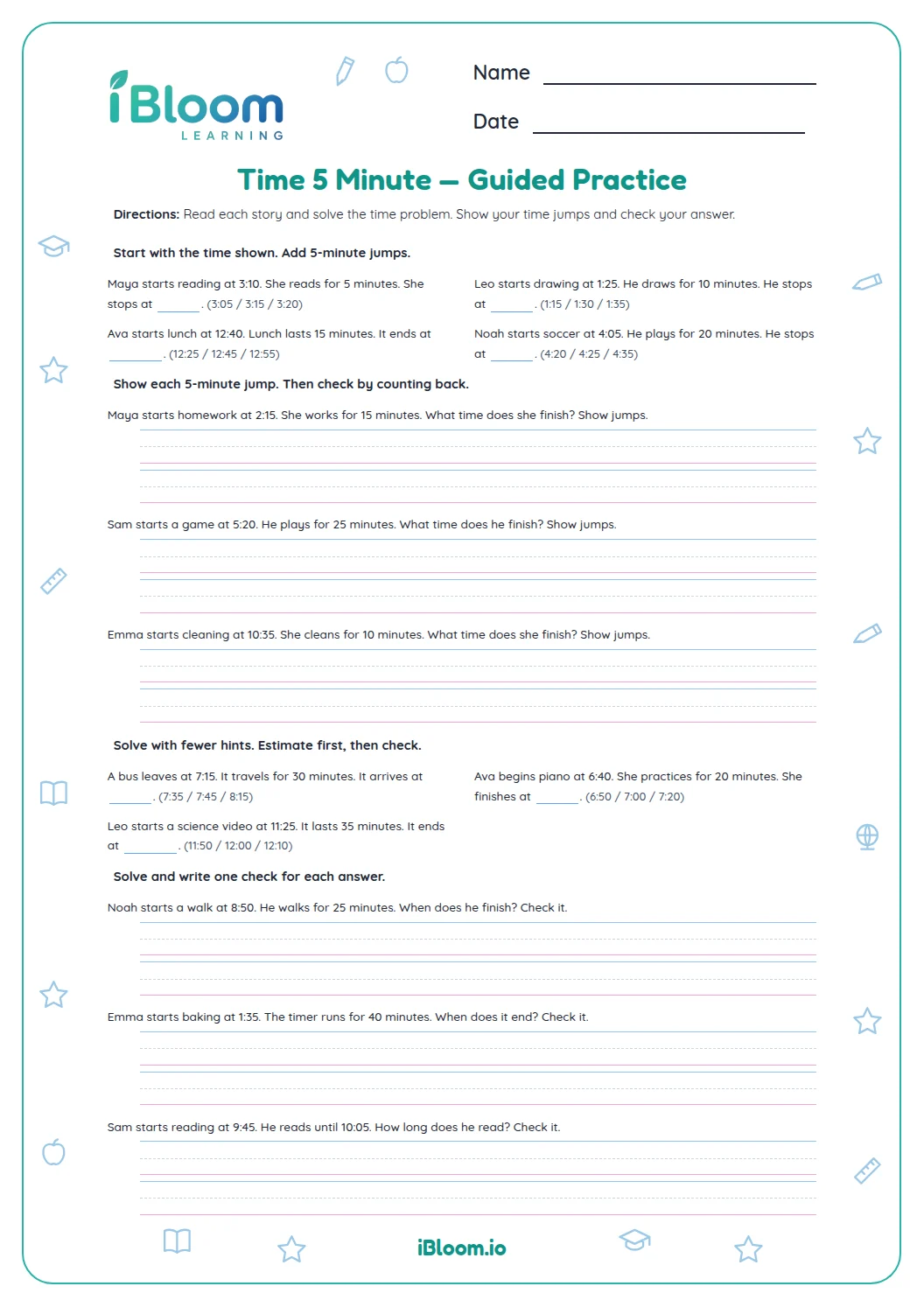
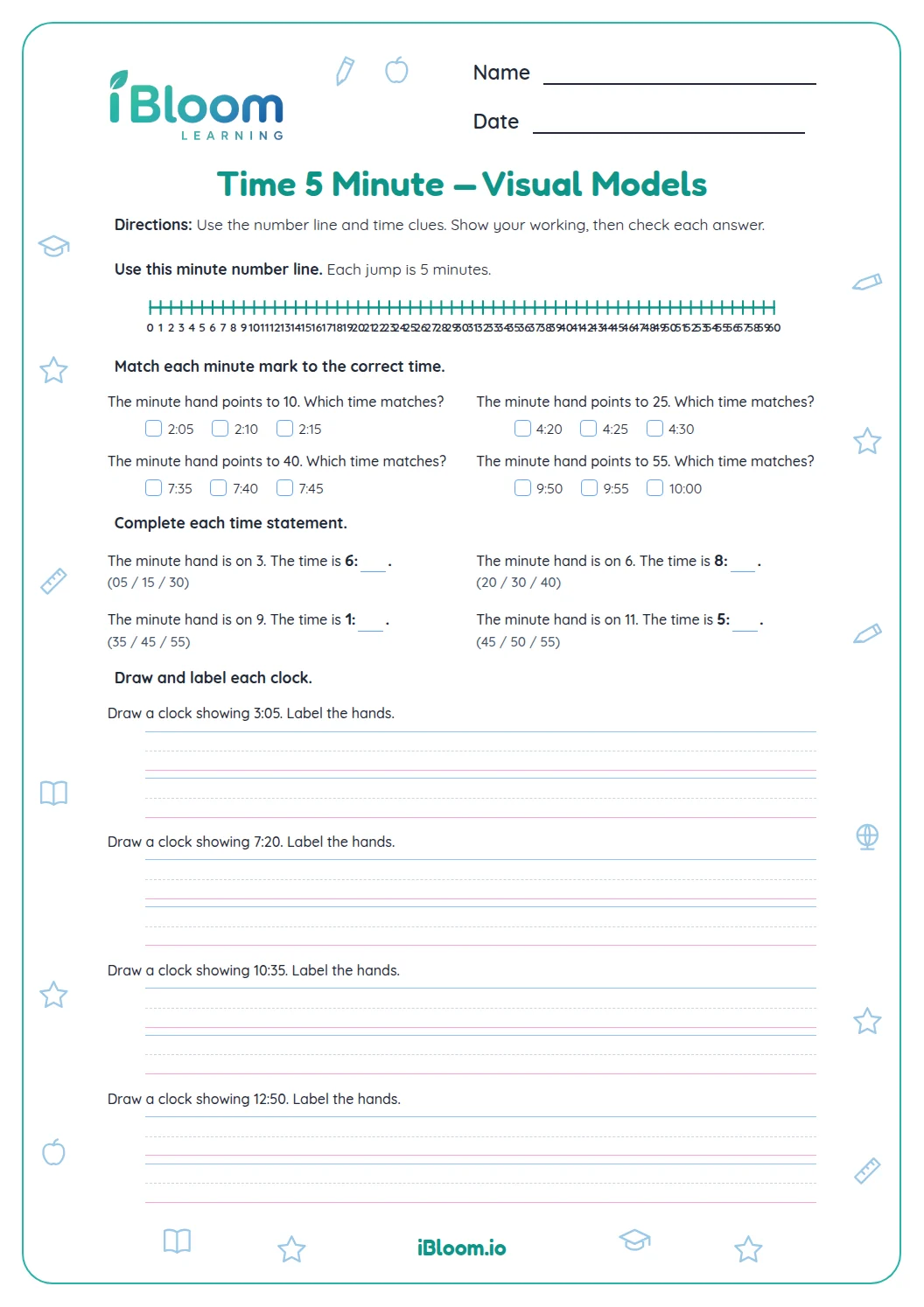
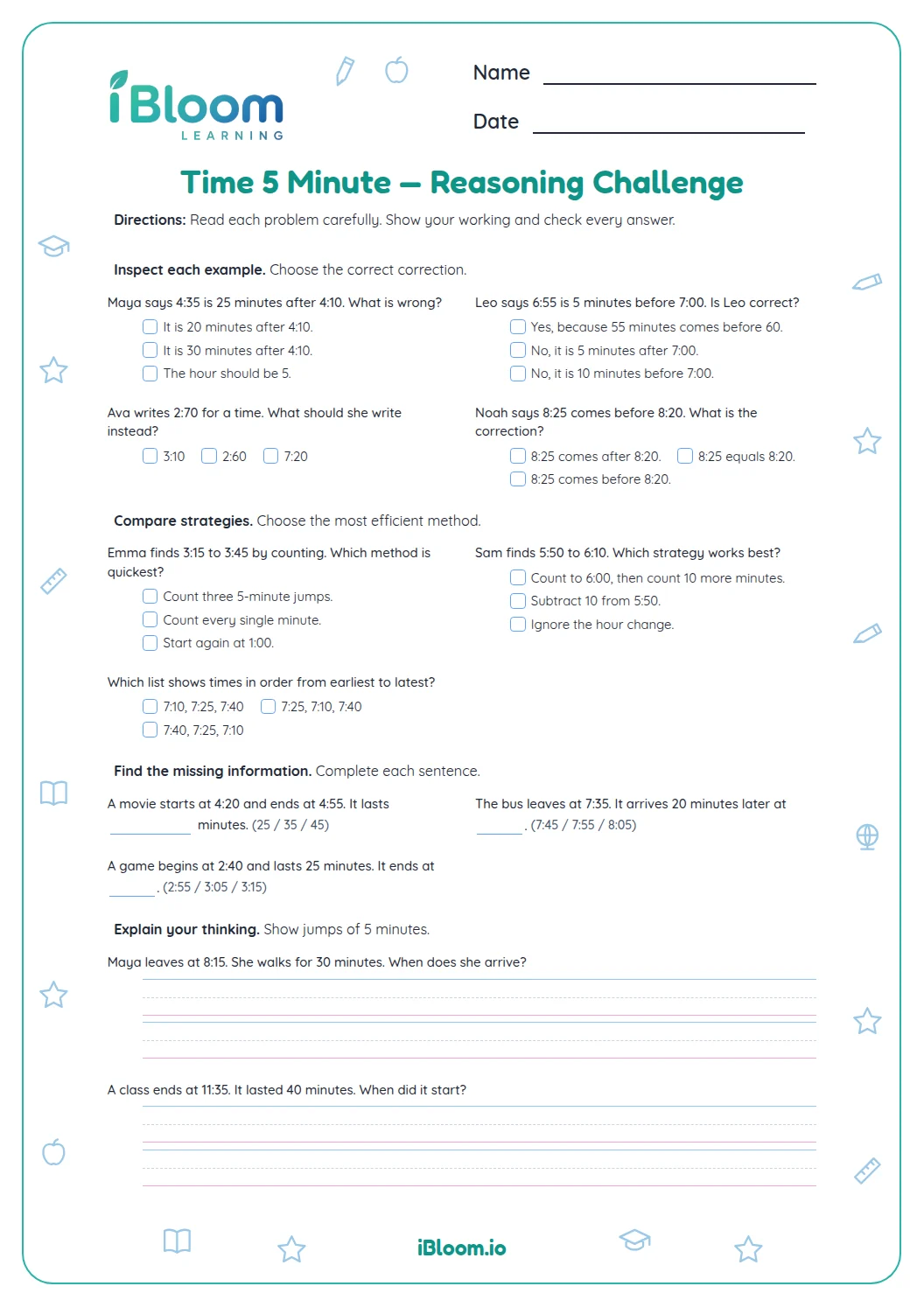
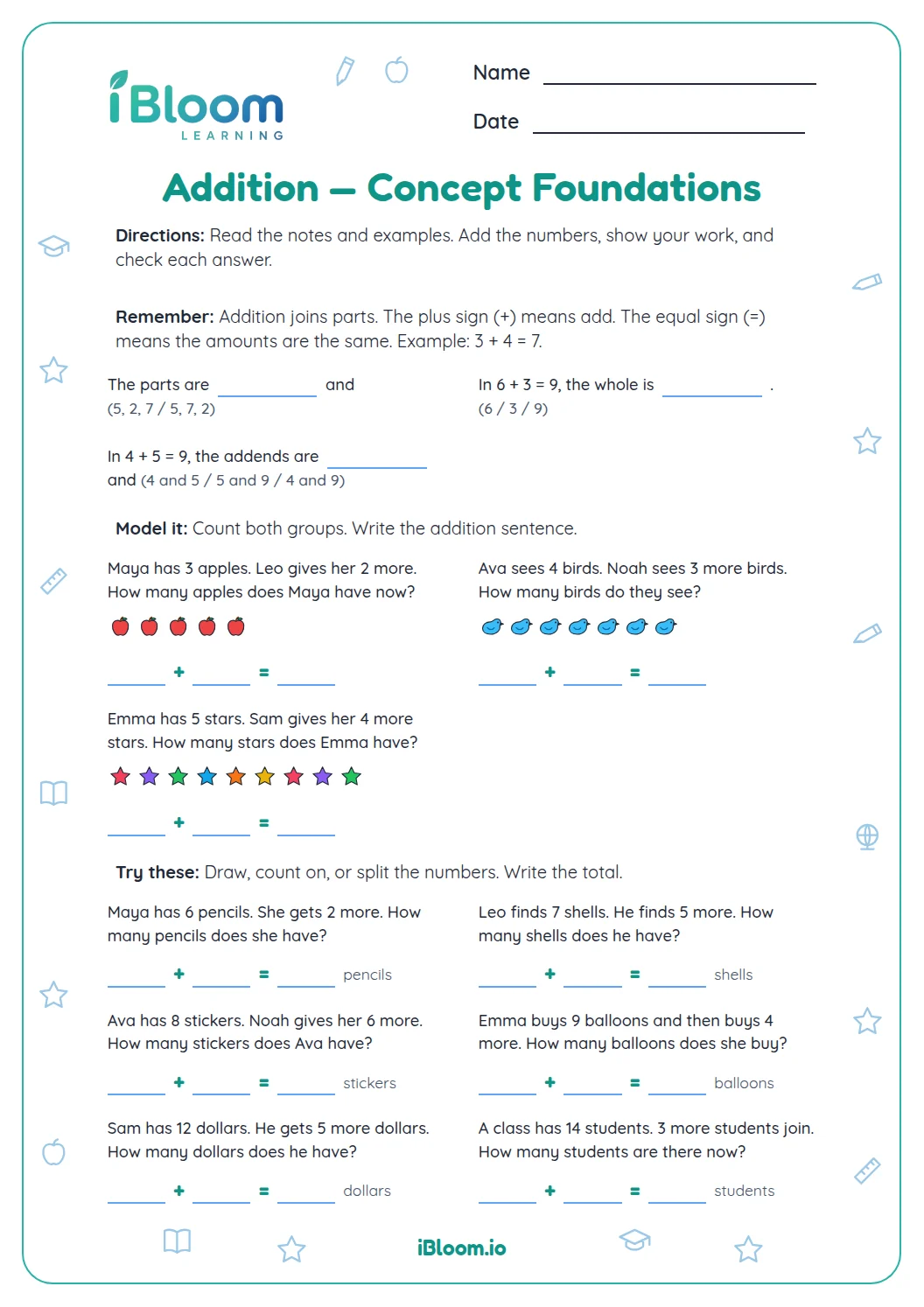
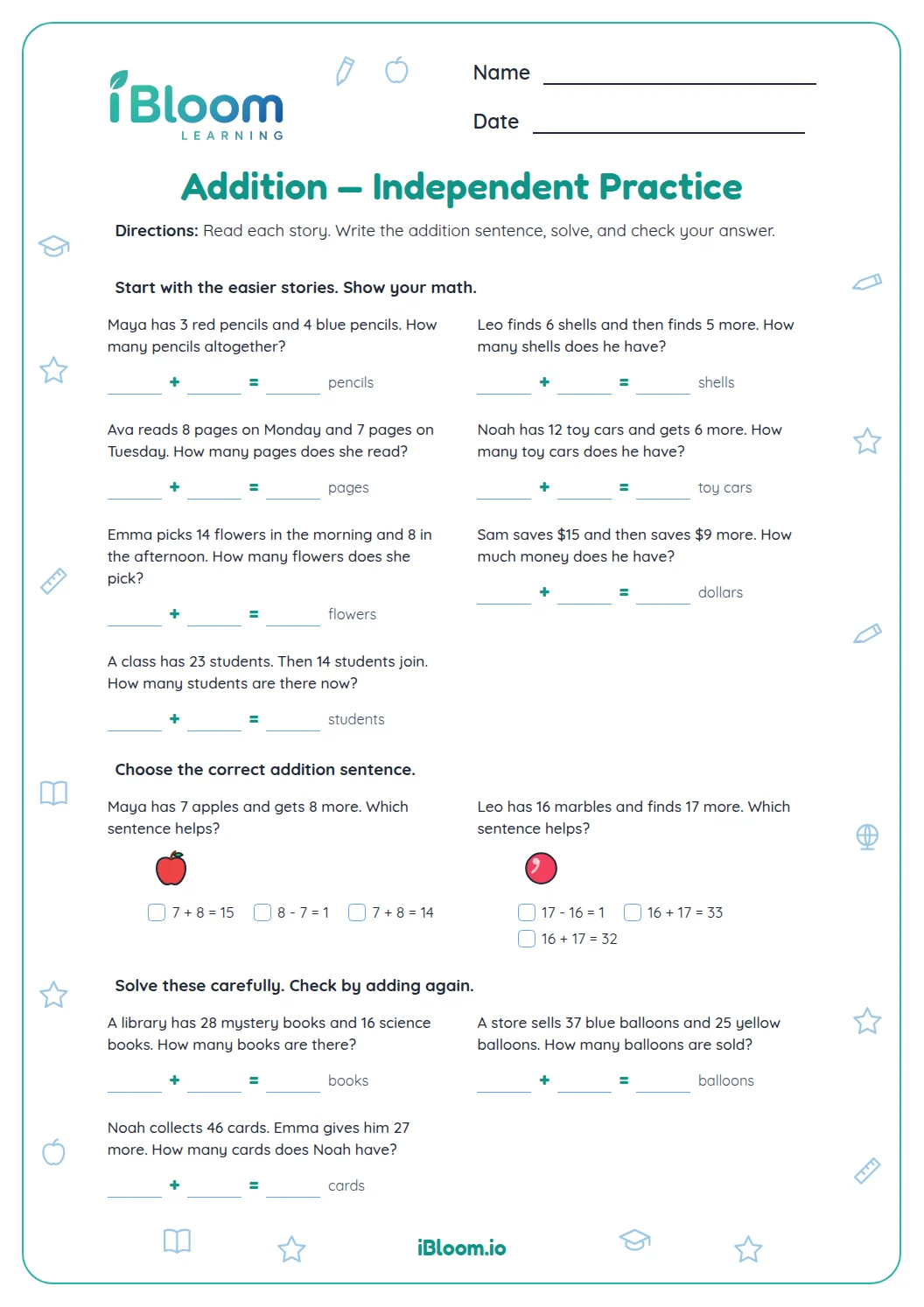
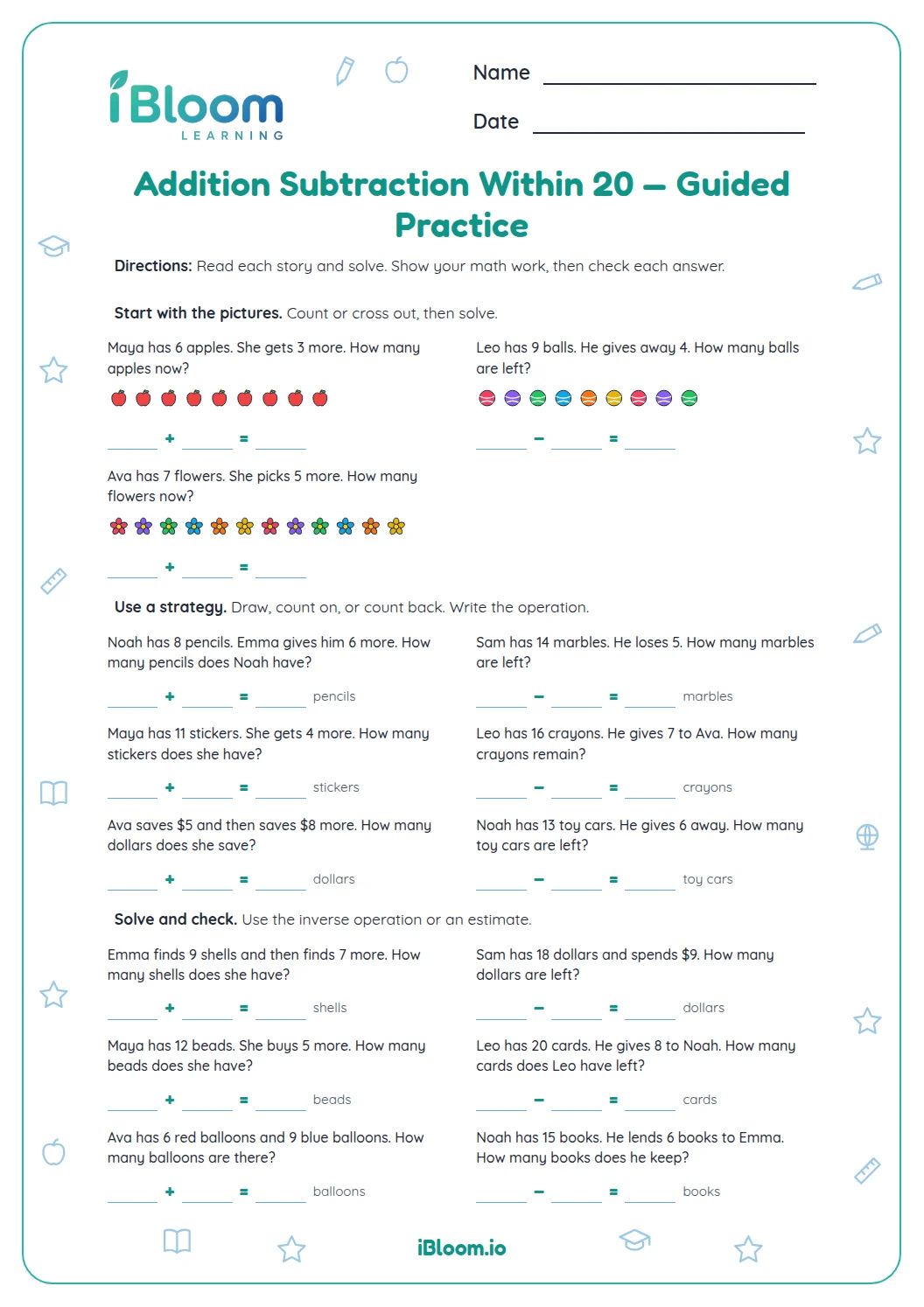
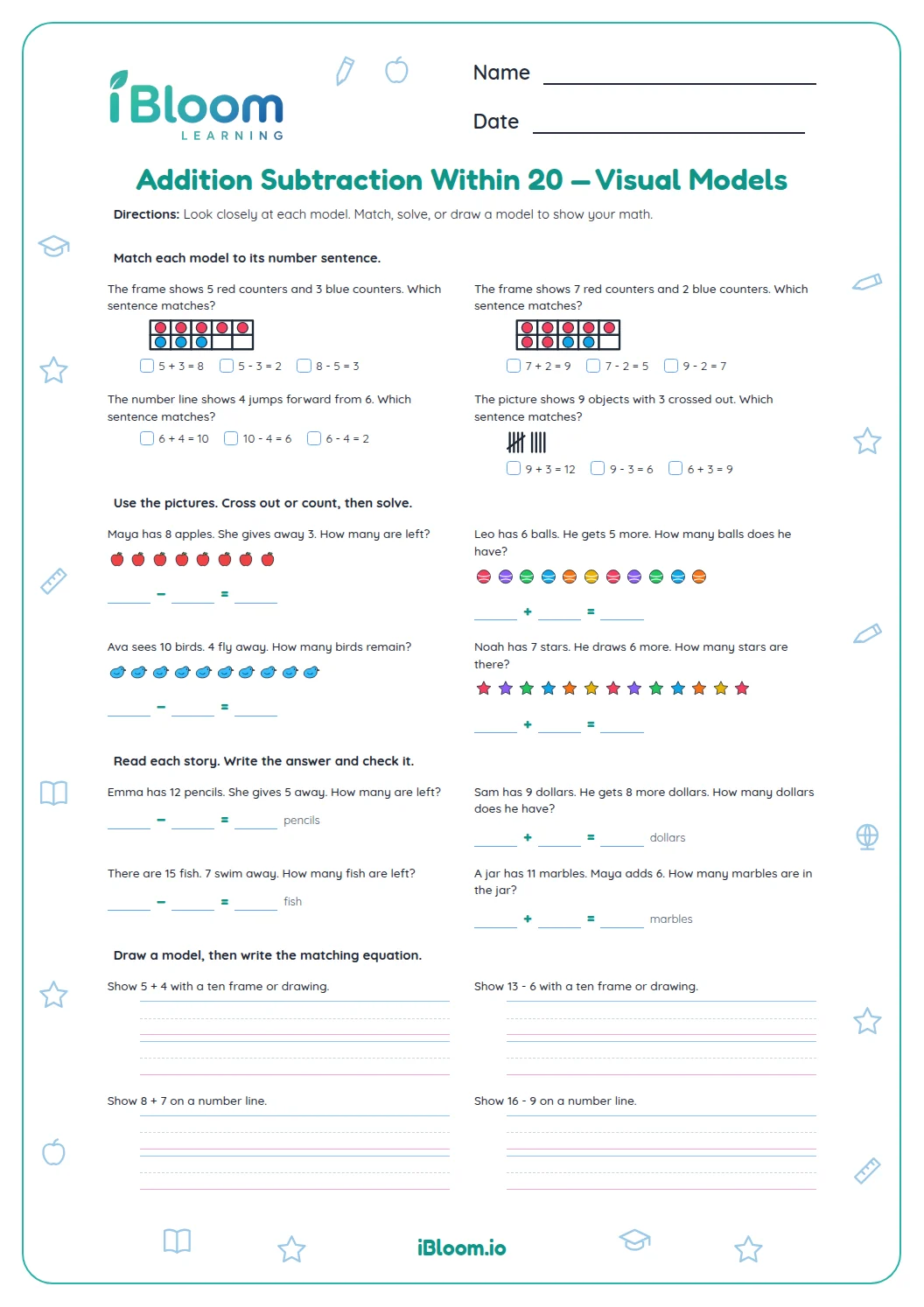
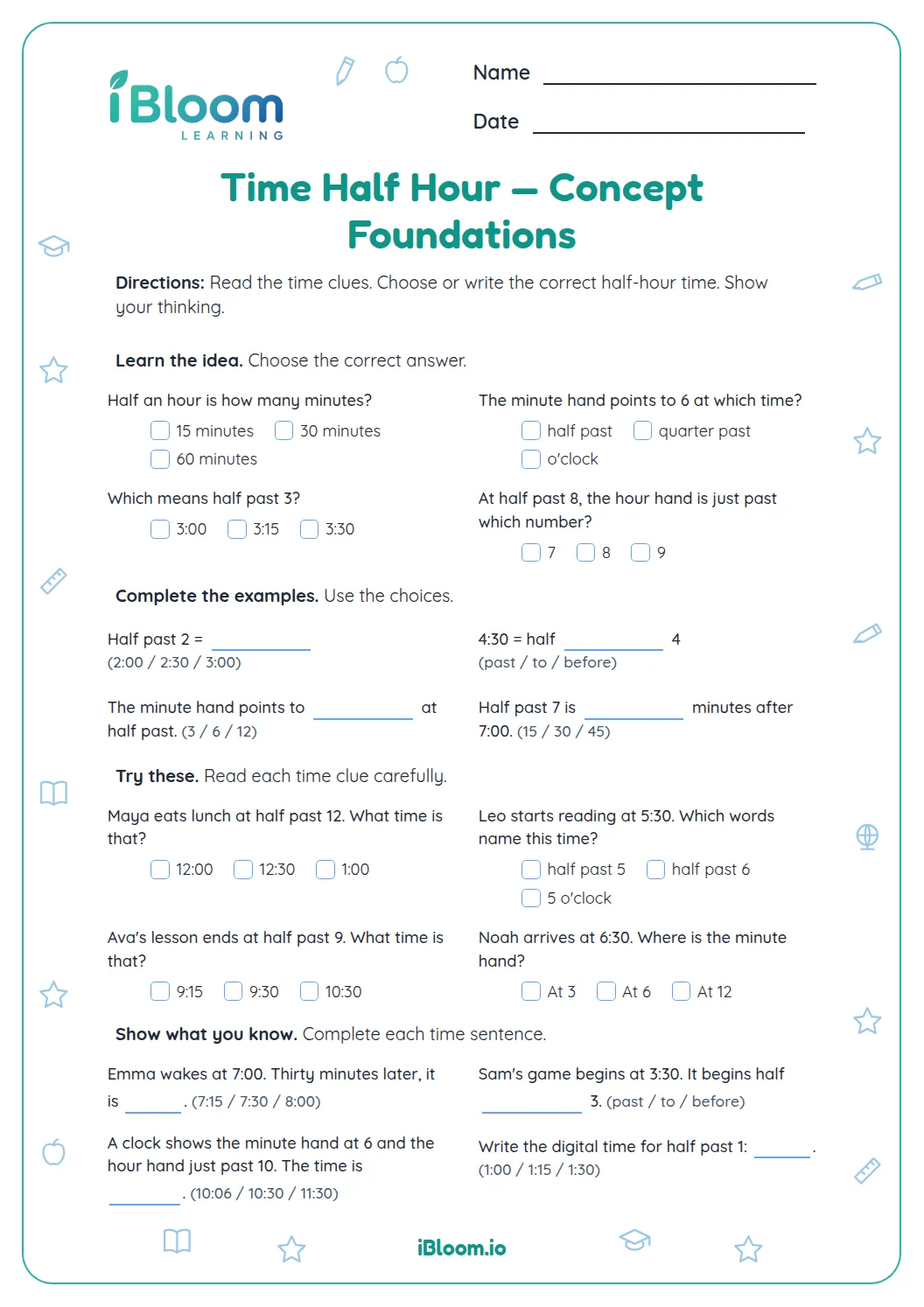
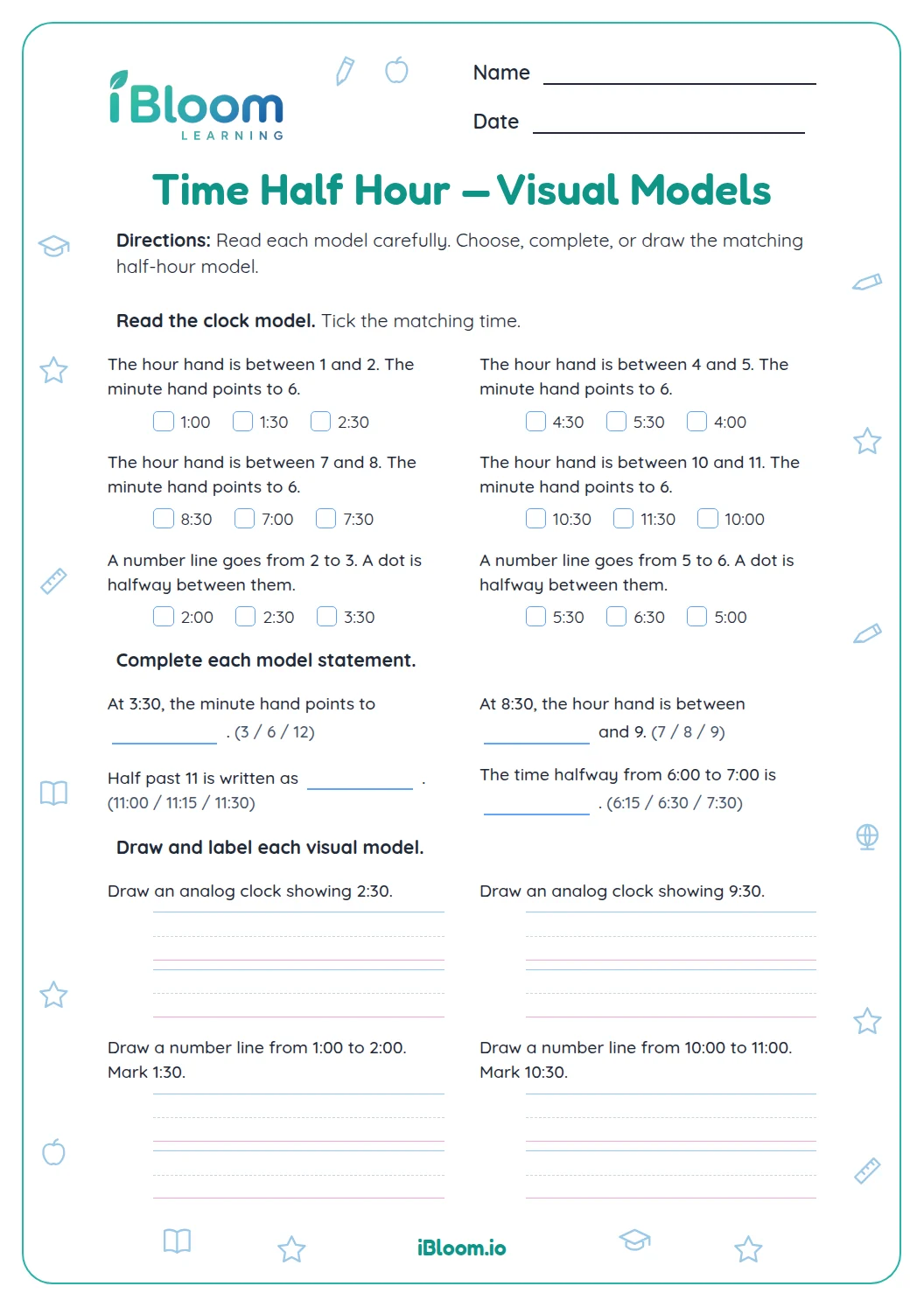
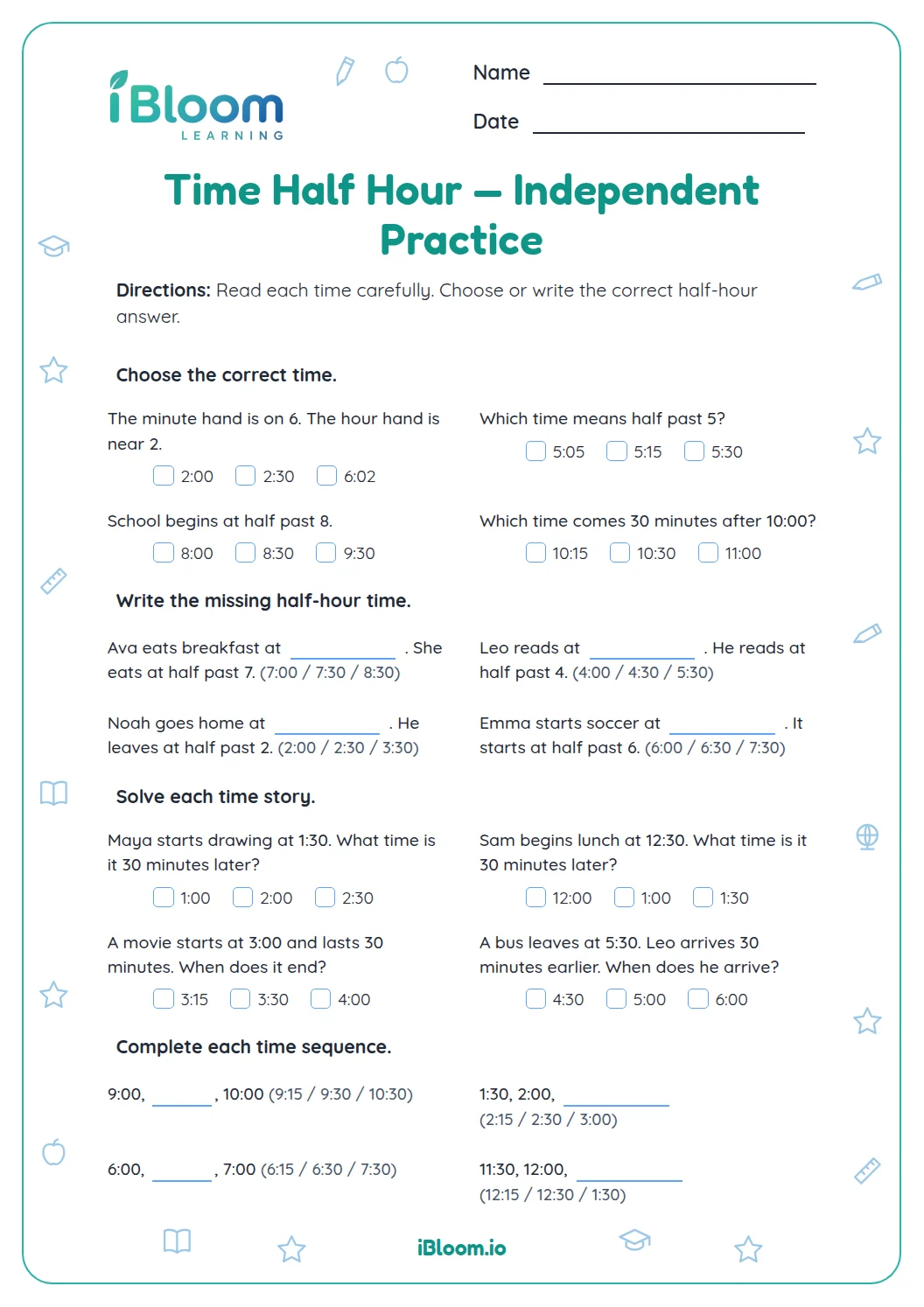
This printable is for Grade 2 learners practicing time to five minutes. It has 18 concise questions: read daily time clues and compare two times. Learners can use the answer key to review their work.
Aligned to 2.MD.C.7
How does the worksheet practice reading and comparing time to the nearest five minutes?
Part A connects spoken time phrases with digital times. Part B asks learners to compare two times, and Part C returns to everyday event clues.
- 1The bus arrives at quarter past 8. Choose the matching digital time.
- 2Answer: 8:15
How can a learner check an answer?
Read the direction for each part and identify the detail the question asks for. Solve it, then use the answer key to check the result and revisit any step that needs attention.
What is on the printable?
The worksheet has 18 questions across three parts, followed by a separate answer key.
How to use this worksheet
- 1Read the hour in the clue before thinking about the minutes.
- 2Translate “past” by counting forward from the hour.
- 3Translate “to” by finding how many minutes remain before the next hour.
- 4For comparisons, check the hour first and then the minutes.
- 5Use the key to confirm each time after finishing.
Time-reading checks
The mistake
Reading the minute hand as the hour hand.
The fix
Find the short hour hand first, then count the long minute hand by fives.
The mistake
Treating “twenty to 4” as 4:20.
The fix
“To” means count back from 4:00, so the time is 3:40.
The mistake
Comparing only the minute numbers.
The fix
Compare the hour first, then compare the minutes if the hours match.
Common Core alignment
Read and write times to the nearest five minutes on analog and digital clocks.
On this sheet:
Show the official wordingHide the official wording
Tell and write time from analog and digital clocks to the nearest five minutes, using a.m. and p.m.
What to practice next
Make more practice
Further reading
Questions parents and teachers ask
What does this Grade 2 time worksheet cover?
It gives learners 18 school and home time clues to read to the nearest five minutes. The questions connect phrases such as “quarter past” and “twenty to” with digital times, then ask learners to compare two times. A separate key lists the answer for every item.
How many questions are on the sheet?
There are 18 questions in three parts. Most give a daily event and a time clue; the middle part asks learners to compare two times. Every item focuses on reading or comparing a time to the nearest five minutes, with familiar school routines as context.
Does the worksheet include an answer key?
Yes. A separate answer key lists the matching time for every question. Have the learner read the clue and name the hour first, then count the minutes by fives to check the digital time. For example, “twenty to 4” means 3:40.
How do you read “twenty to 4”?
“Twenty to 4” means twenty minutes before 4:00, or 3:40. On an analog clock, the minute hand points to the 8, and the hour hand is between 3 and 4. Counting by fives from 12 helps confirm the minute value.
How long will this time practice take?
Plan for about 20 minutes. Read unfamiliar time phrases aloud, and give the learner a moment to connect each phrase to the minute hand before choosing or writing a time. A quick review of the answer key can help catch a misread hour or minute.