

About this worksheet
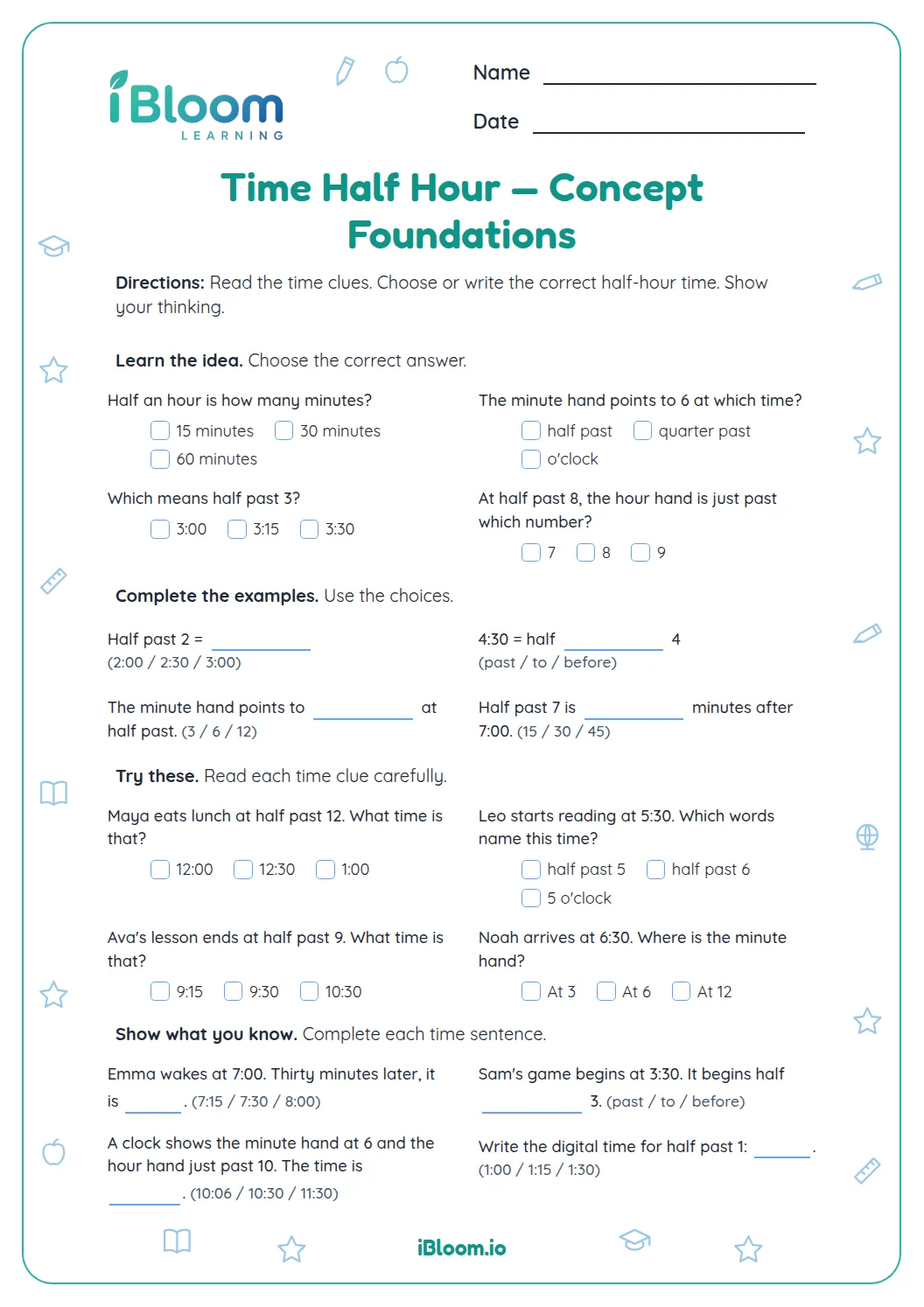
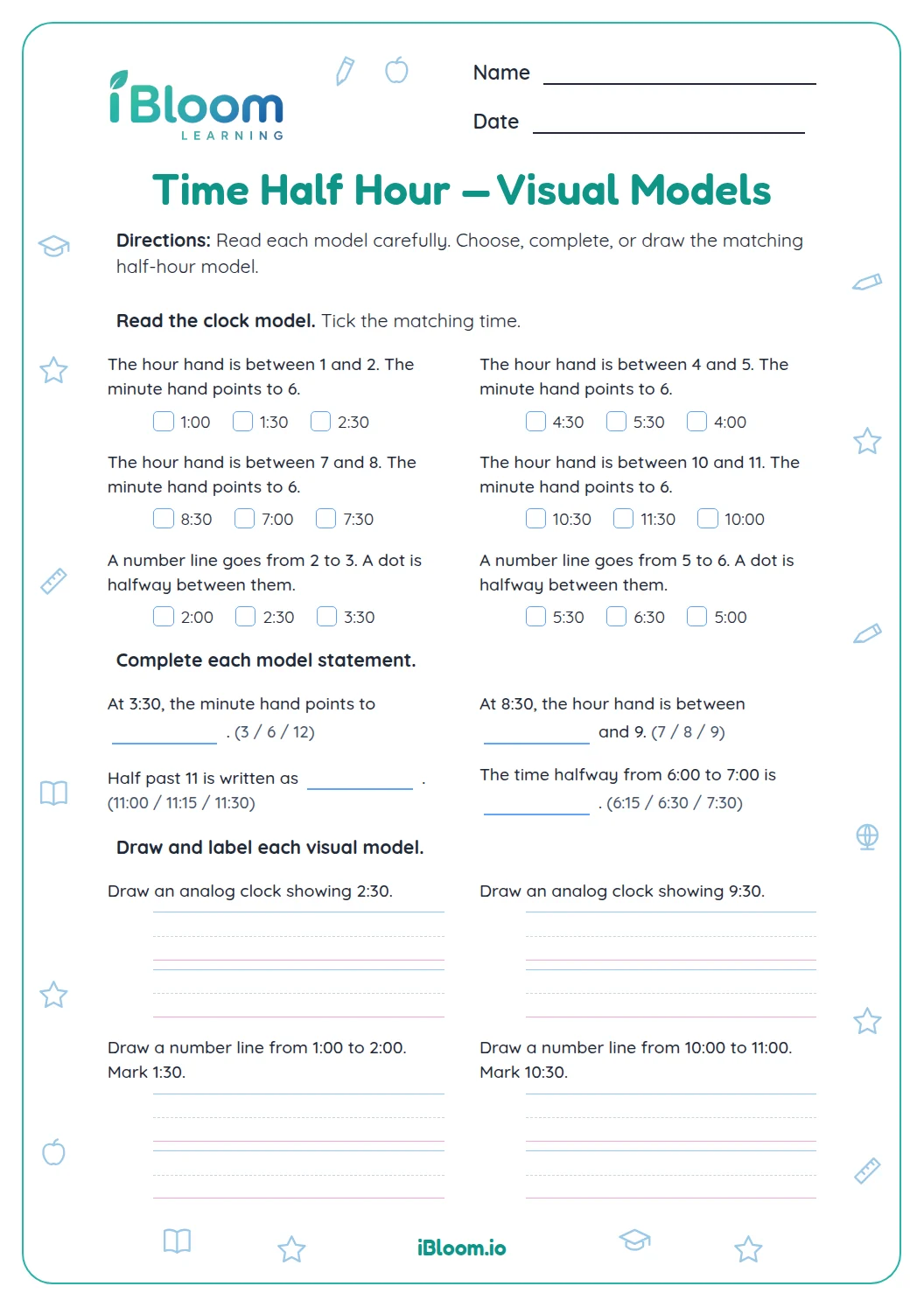
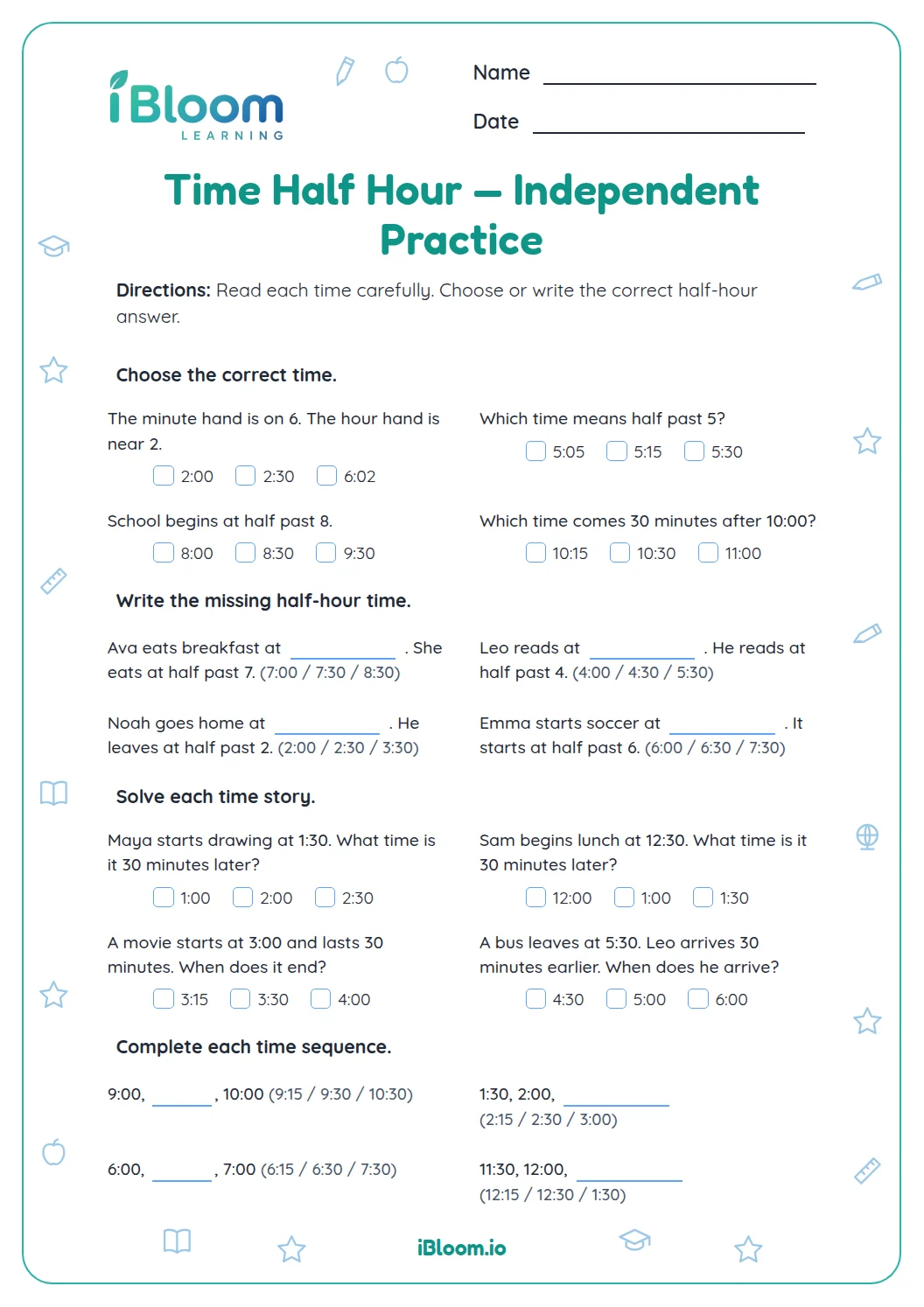
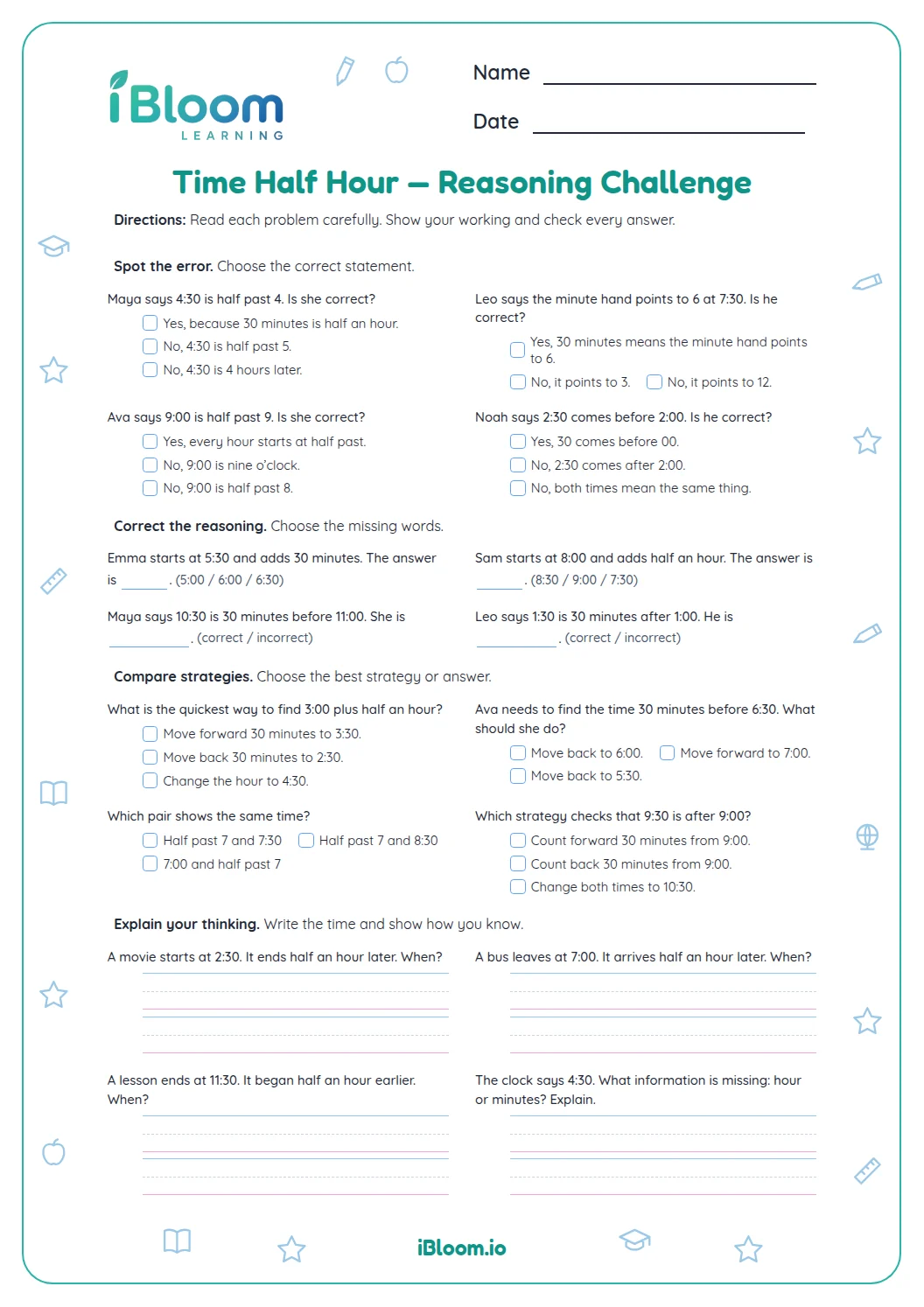
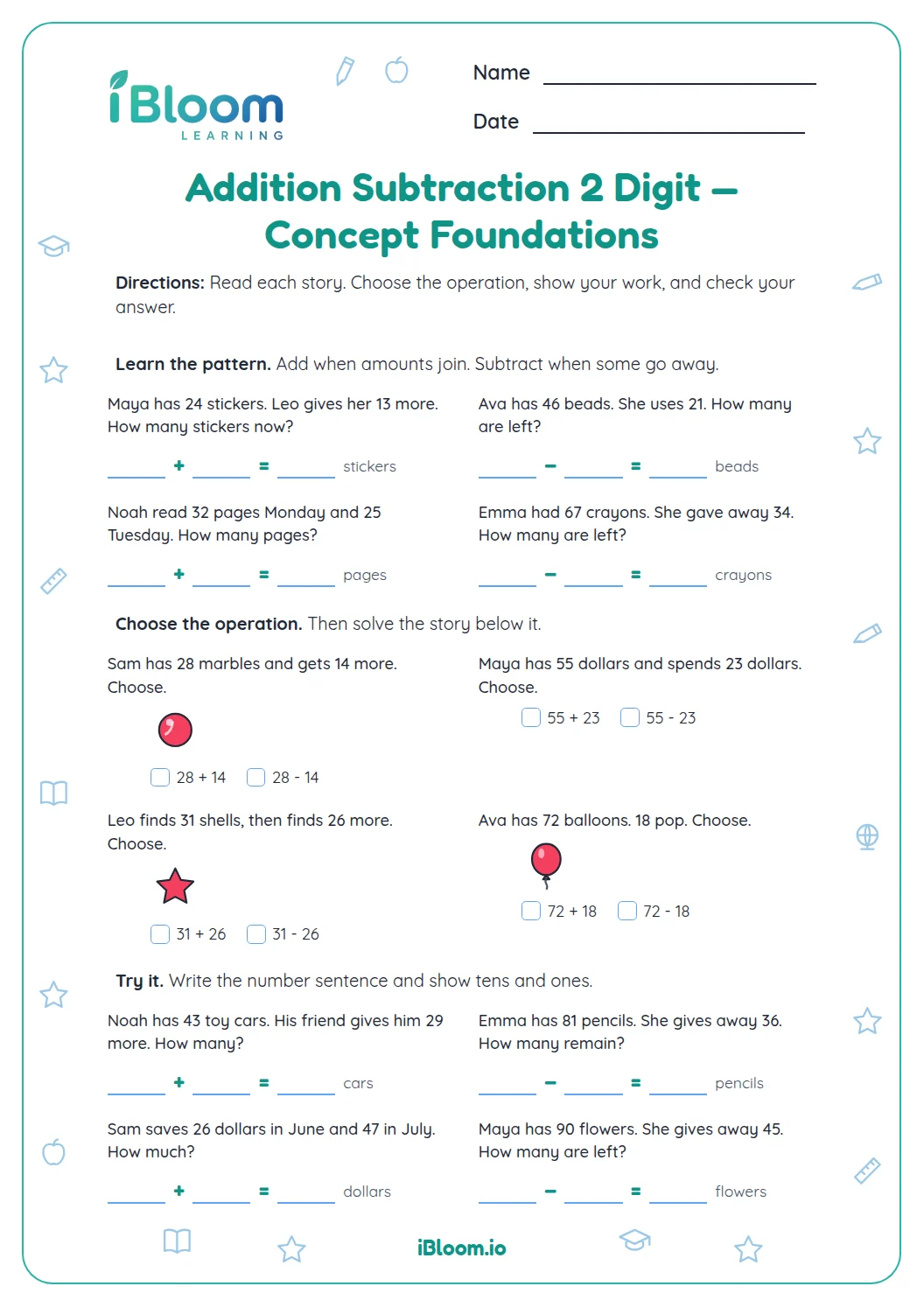
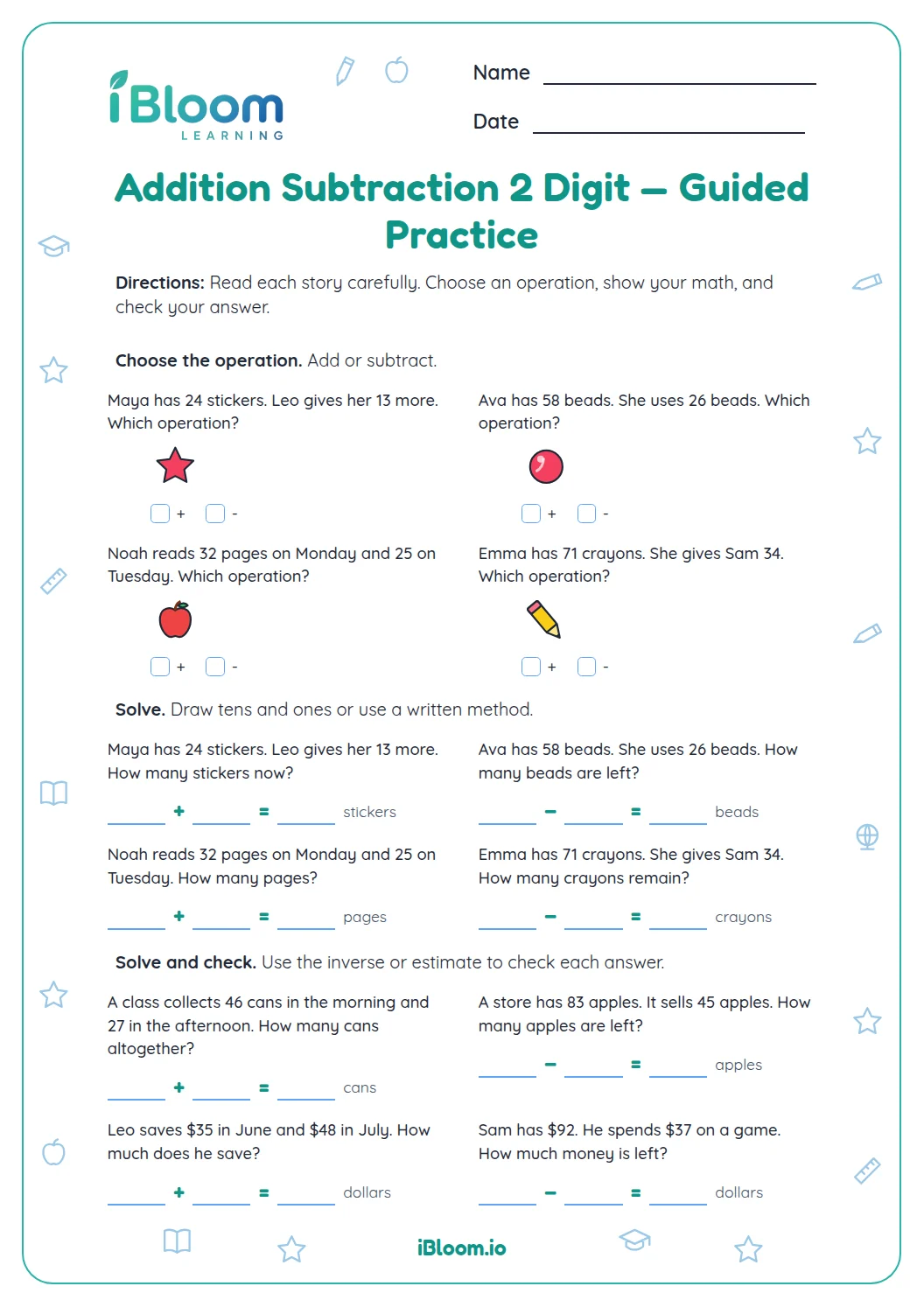
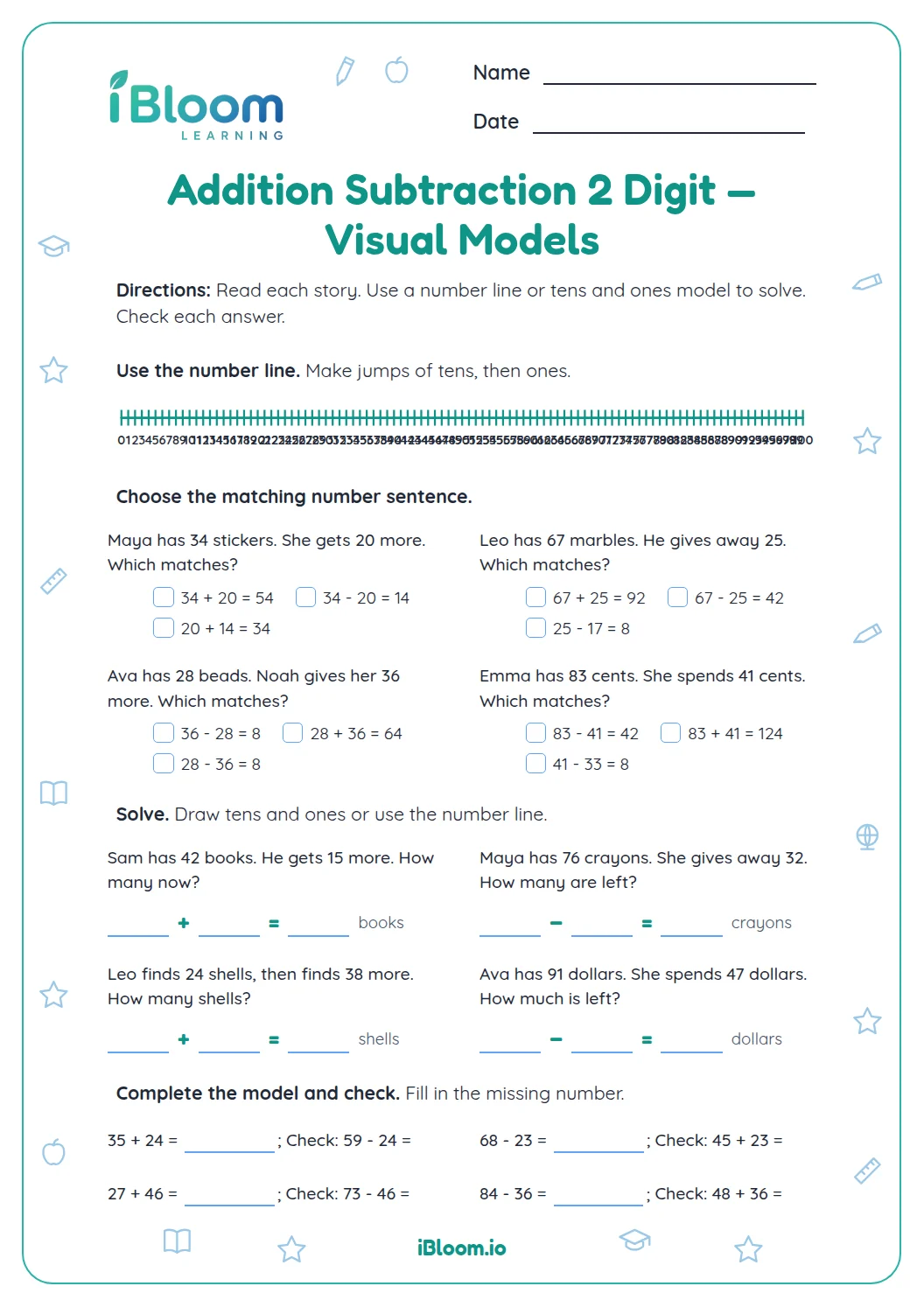
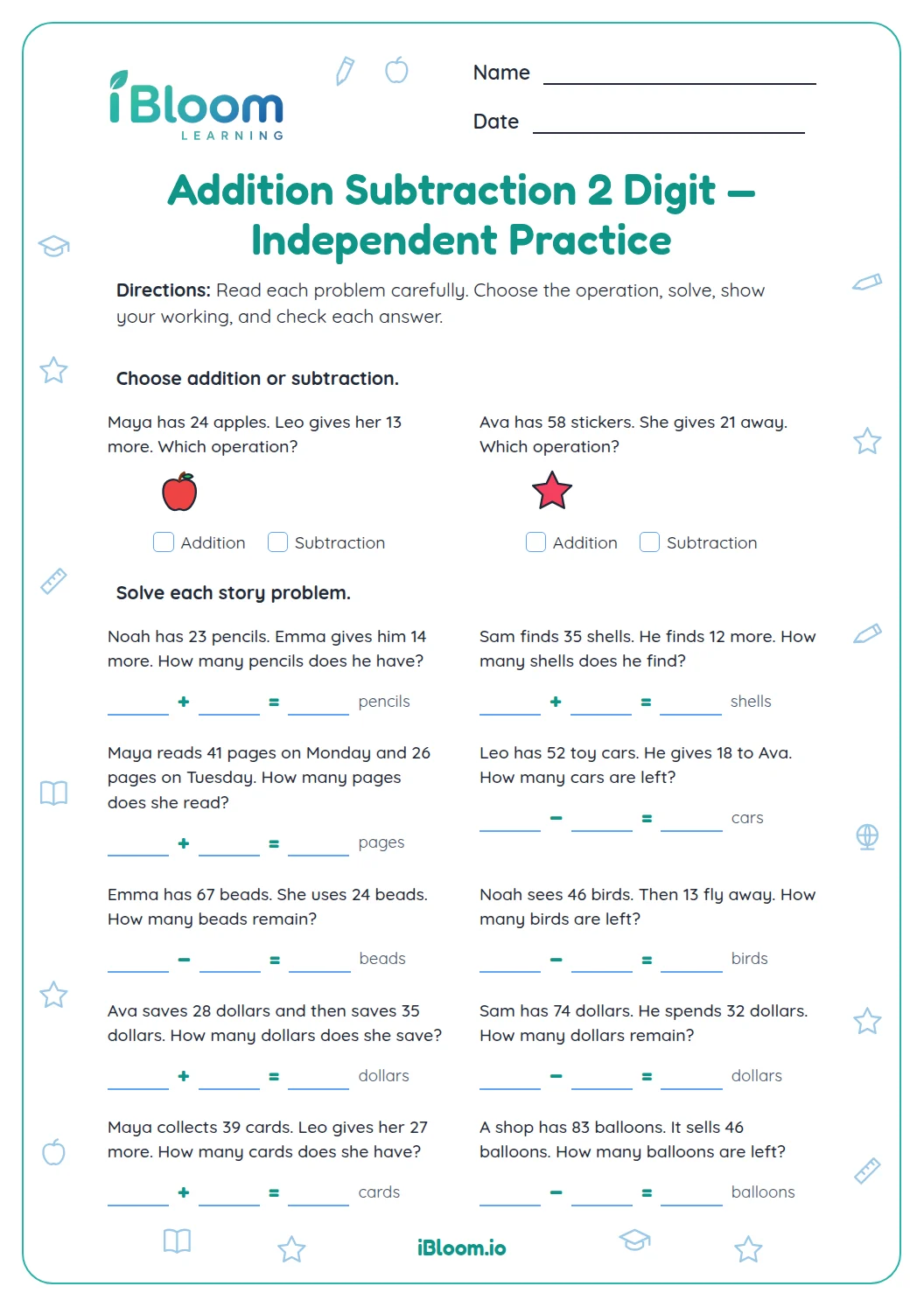
This Grade 2 printable practices reading analog clocks at half-hour times in familiar routines. Children read clock drawings, connect an event to the time shown, and review what the hands tell them. The separate answer key makes it easy to check the written times.
Aligned to 2.MD.C.7
What does half past mean?
Part A asks children to read five analog clocks. In Part B, each routine gives a half-hour time to identify. Part C checks what the hands show at half past.
How do you read a half-hour clock?
Look first at the long minute hand. When it points to 6, say thirty minutes past the hour. Then read the short hand to find the hour. Check whether it is just before or just after that number.
How can a clock help with a daily event?
In Part B, Kai starts soccer at 3:30. The time is stated in the routine, so write 3:30.
- 1Kai starts soccer at 3:30.
- 2The event time is stated directly.
- 3Answer: 3:30
How to use this worksheet
- 1Point to the long hand and notice whether it reaches 6.
- 2Read the short hand to name the hour.
- 3Write the time with :30 after the hour.
- 4In story questions, find the event time before answering.
- 5Use the final choices to review what each clock hand tells.
Common mistakes and quick fixes
The mistake
Reading the minute hand as 6 minutes
The fix
When it points to 6, count by fives: 30 minutes.
The mistake
Naming the next hour too soon
The fix
At 8:30, the short hand is between 8 and 9, so the hour is still 8.
The mistake
Writing :00 for half past
The fix
Check the minute hand; a hand on 6 means :30.
Common Core alignment
This practice connects the worksheet skill to classroom learning goals.
Read and write half-hour times from analog clocks.
On this sheet: The clock questions read analog half-hour times in real-life routines.
Show the official wordingHide the official wording
Tell and write time from analog and digital clocks to the nearest five minutes, using a.m. and p.m.
What to practice next
Make more practice
Further reading
Questions parents and teachers ask
How can my child practice half-hour times?
Use the clock drawings first, then read each event clue carefully. This printable includes five clocks in Part A and five routine questions in Part B. Invite your child to name the hour first, then check where the long hand points. The final part reviews what each hand tells.
Does the printable include an answer key?
Yes. A separate answer key gives the expected answers for checking completed work. For an open-ended response, it offers a sample so an adult can compare the child’s idea without expecting identical wording. Review it after the learner finishes, then discuss any answer that needs another look.
How should I introduce the activity?
Read the short directions together and model one item from the first part. Then let the learner work through the remaining questions at a comfortable pace. Check the key after finishing and talk through one item that felt tricky.
Can a child complete this independently?
A child who knows how to read half-hour clocks can try most items independently. An adult can read directions aloud or talk through one example first, then invite the learner to name the time on each clock. Use the answer key after the child finishes to review any times that need another look.
How long does this worksheet take?
About 15 minutes. The printable has 15 questions across three parts, including 10 clock readings and five questions about half past. Let the learner pause between parts if needed; careful practice matters more than finishing quickly. A separate key gives the expected answers.