

About this worksheet
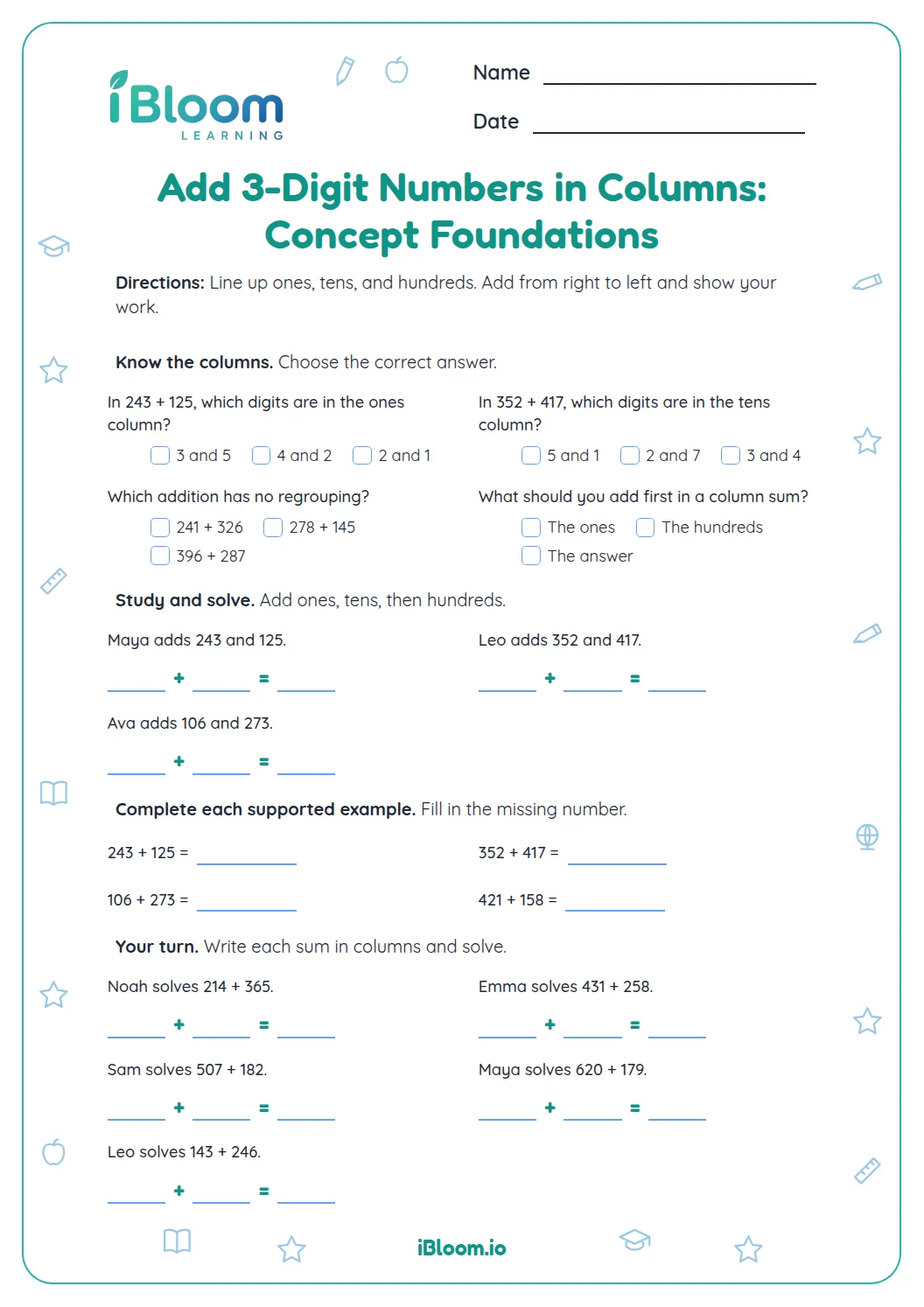
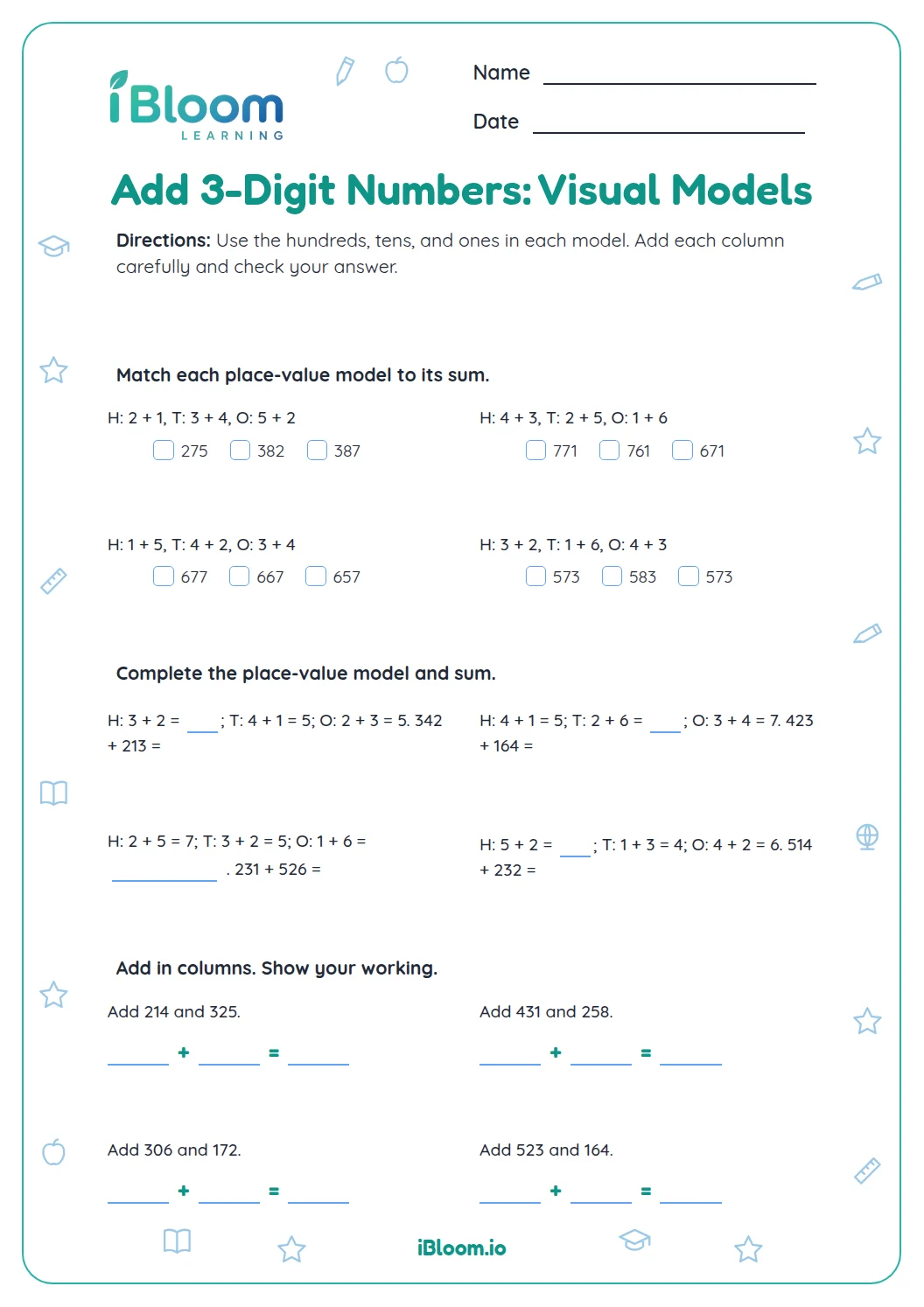
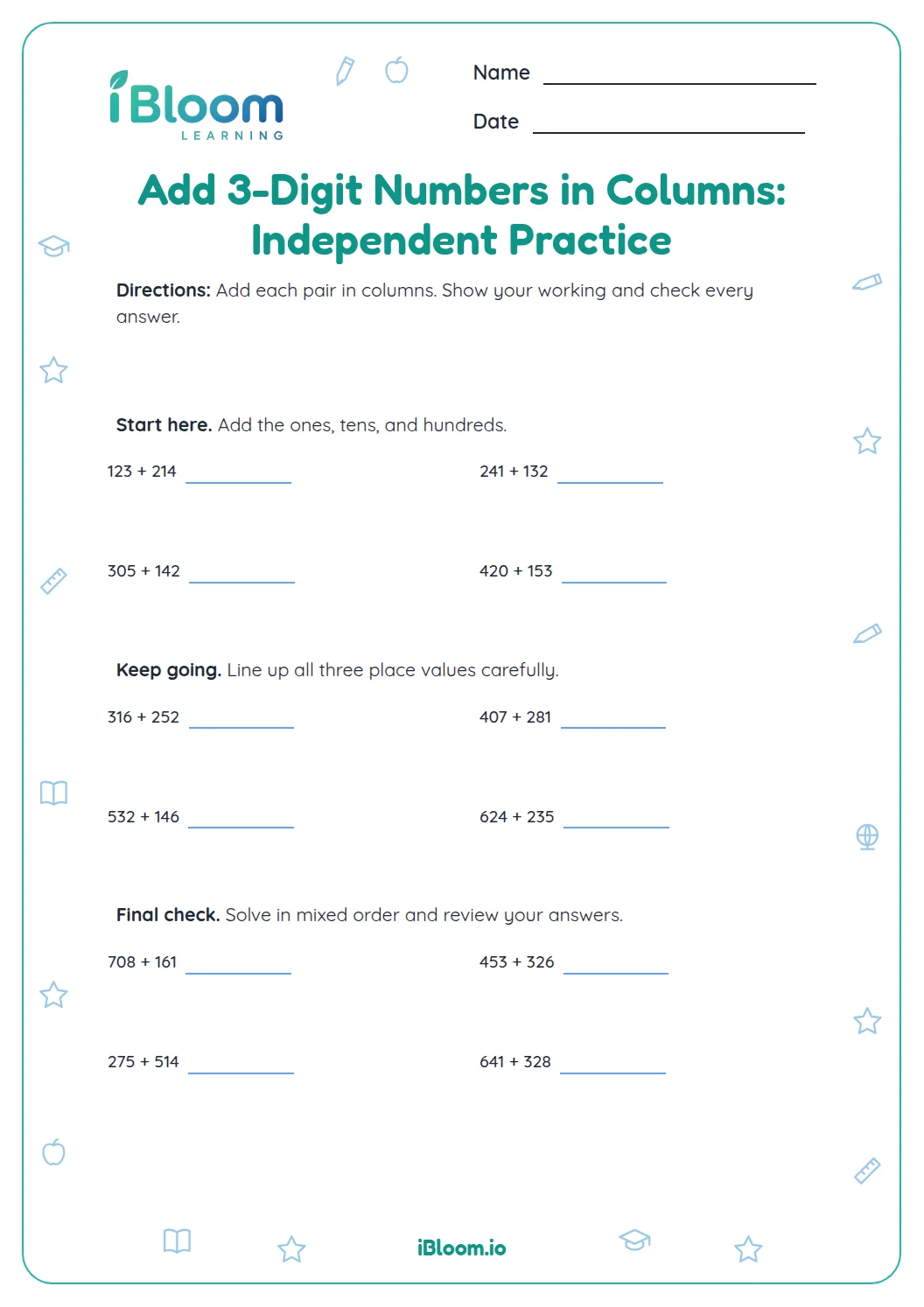
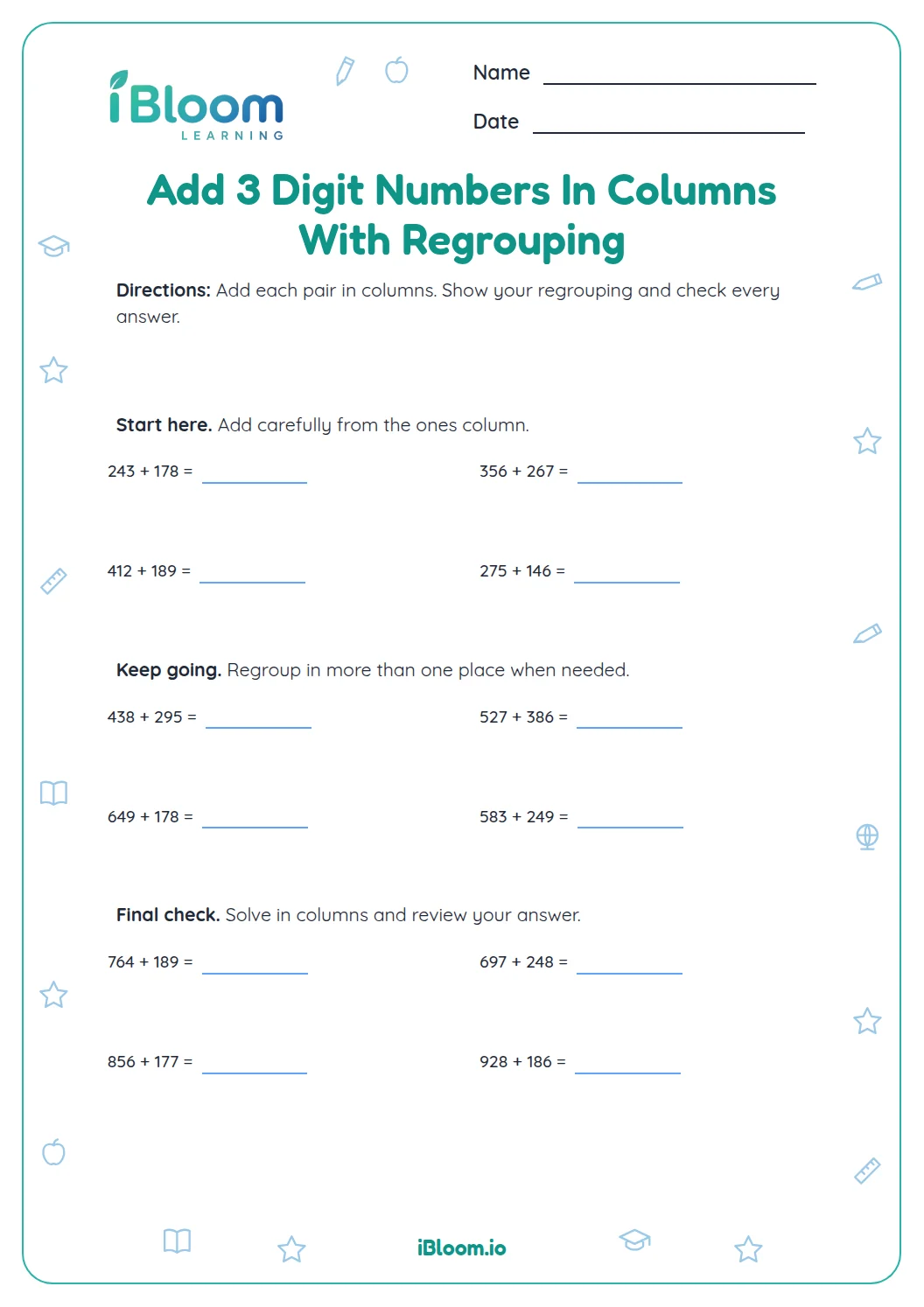
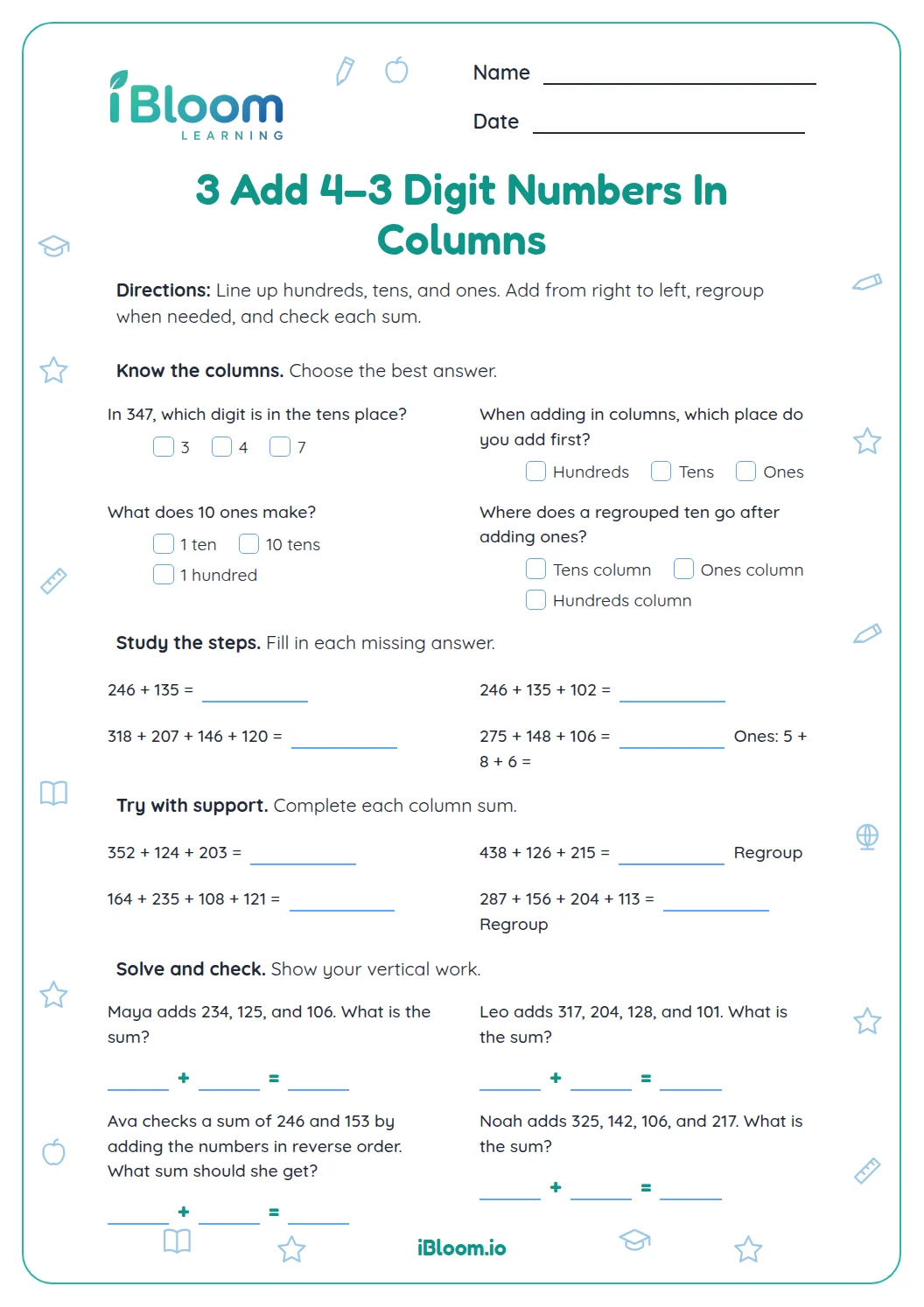
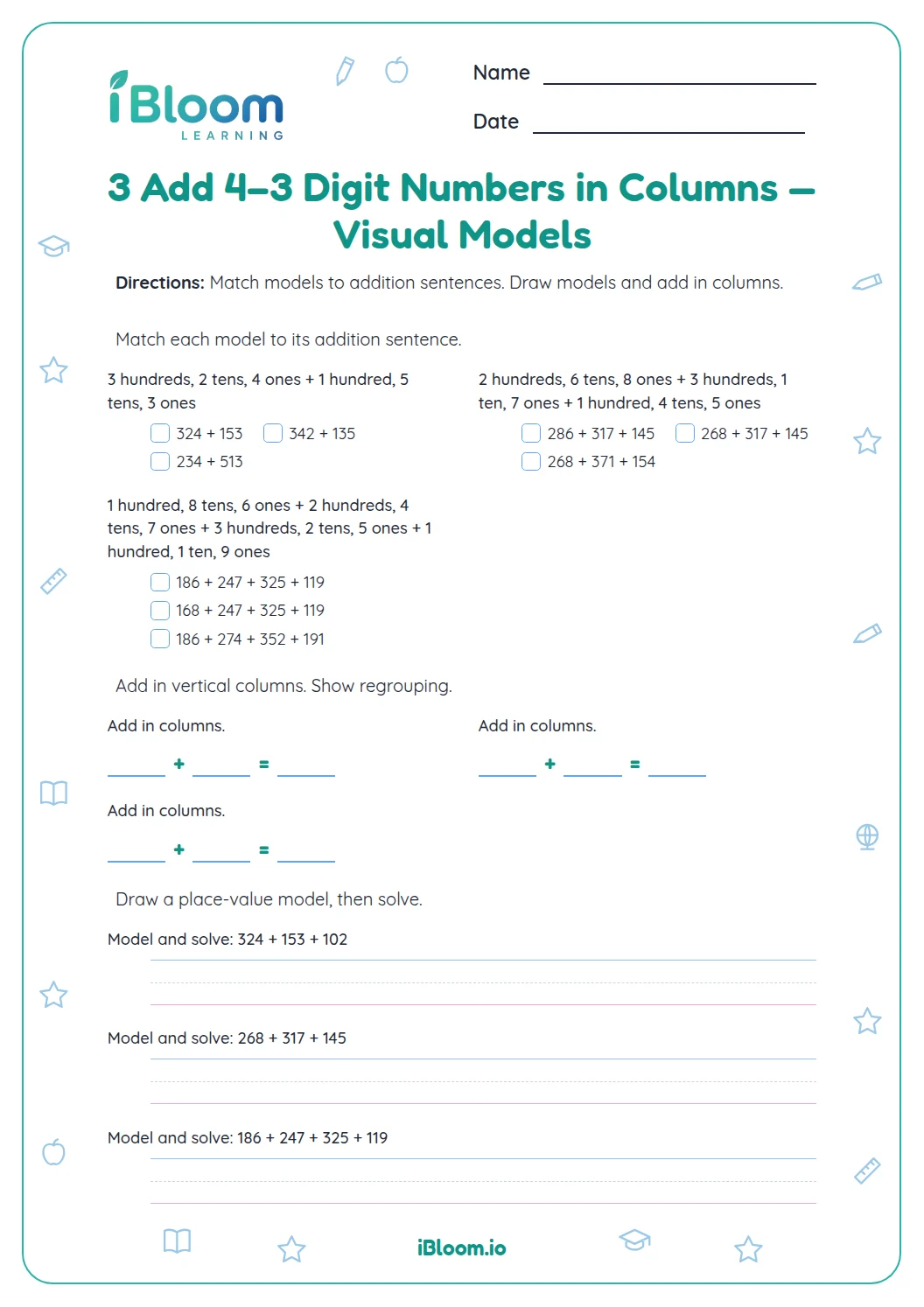
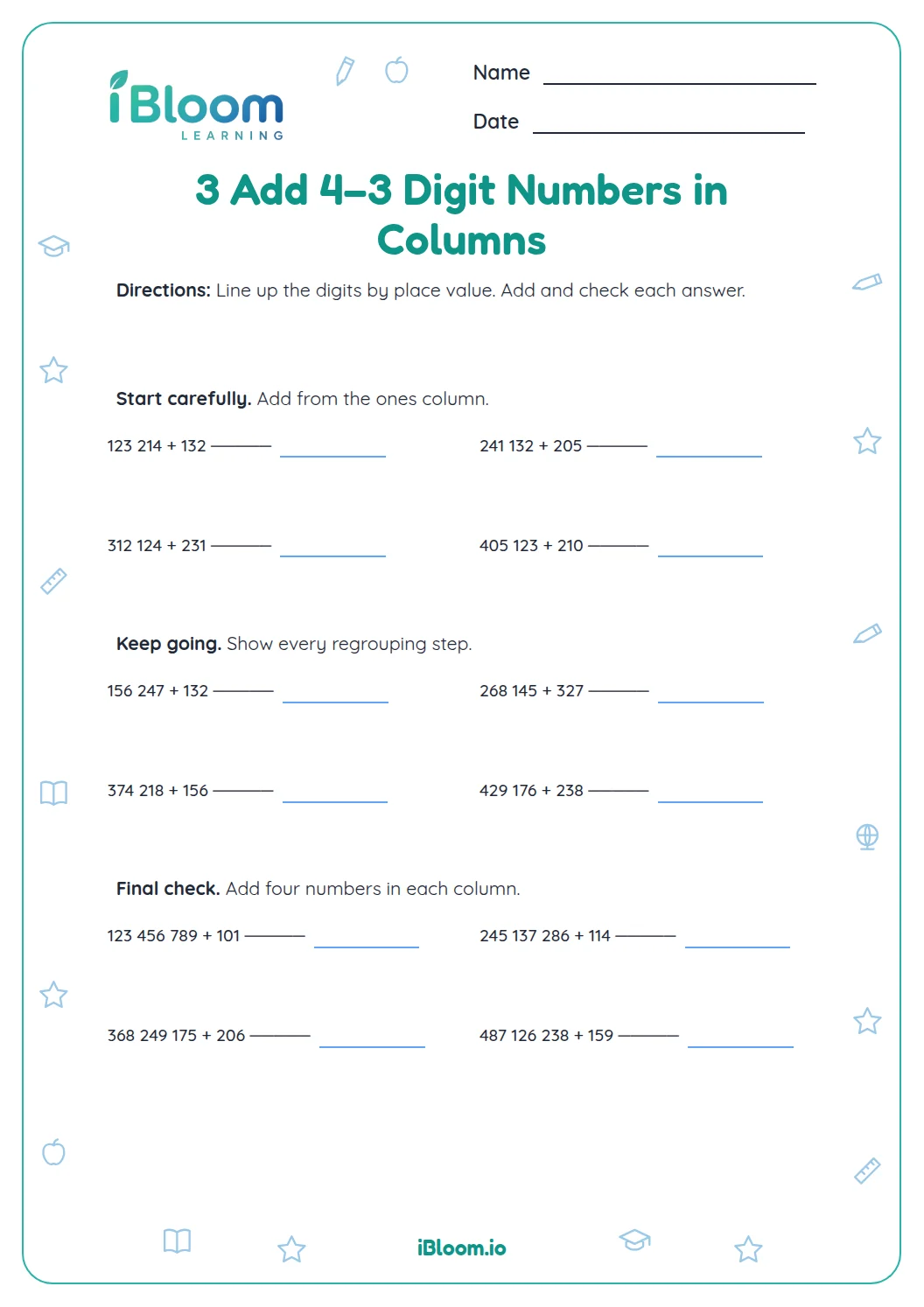
This Grade 3 printable gives students 16 chances to add three-digit numbers without regrouping. The first set leaves room to work in place-value columns; later questions ask students to select a sum, explain why regrouping is unnecessary, and solve short addition stories. It aligns with CCSS 3.NBT.A.2 and includes a separate answer key.
Aligned to 3.NBT.A.2
How do the columns keep each place value clear?
Write ones under ones, tens under tens, and hundreds under hundreds. Add down each column. For 243 + 516, the ones make 9, the tens make 5 tens, and the hundreds make 7 hundreds.
- 1243 + 516
- 23 + 6 = 9 ones
- 34 tens + 1 ten = 5 tens
- 42 hundreds + 5 hundreds = 7 hundreds
- 5Total: 759
How can you check that regrouping is not needed?
Check the ones, tens, and hundreds separately. Each column total must be 0 through 9. If a column reaches 10, the numbers do not fit this no-regrouping practice.
How does place value help in a story problem?
Circle the two amounts, write an addition sentence, then add by place. The story changes the setting, but the column check stays the same.
A simple routine for each sum
- 1Line up digits by place value.
- 2Add the ones and record the ones digit.
- 3Add the tens, then the hundreds.
- 4Check that no column total reached 10.
- 5Estimate the total to see if it is reasonable.
Common addition slips
The mistake
Adding digits that are not in the same place.
The fix
Line up the ones, tens, and hundreds before starting.
The mistake
Reading 5 tens as 5 ones.
The fix
Say the place name as you add each column.
The mistake
Writing a total without checking each column.
The fix
Re-add the ones, tens, and hundreds separately.
Curriculum alignment
This worksheet practices the stated Common Core skill.
Use place value to add three-digit numbers without composing a new ten or hundred.
On this sheet: The questions add three-digit numbers without regrouping.
Show the official wordingHide the official wording
Fluently add and subtract within 1000 using strategies and algorithms based on place value, properties of operations, and/or the relationship between addition and subtraction.
What to practice next
Make more practice
Further reading
Questions parents and teachers ask
How many questions are included?
The worksheet has 16 questions across three pages, followed by a three-page key. Students solve eight column sums, choose two totals, explain two place-value ideas, and answer four addition stories. The key includes the numerical sums and sample reasoning so an adult can review both answers and methods.
What does no regrouping mean?
No regrouping means the digits in each column add to fewer than 10. For example, if the ones total 9 and the tens total 5 tens, each partial sum stays in its place. A column total of 10 or more would require trading into the next place.
Should students line up the numbers?
Yes. Line up ones under ones, tens under tens, and hundreds under hundreds before adding. The first eight questions give working space for column sums. Keeping each place aligned makes it easier to see that no column creates a new ten or hundred.
What if a column adds to 10 or more?
Recheck the digits and the addition. Every problem on this sheet is designed so each place-value column totals less than 10. If your work produces 10 or more in one column, check whether a digit was misread or placed in the wrong column.
Can students use mental math?
Students can use mental math to check a result, but the worksheet asks for column work on its first set. Writing partial sums makes the hundreds, tens, and ones visible, which supports the later questions about why the addition does not require regrouping.