





About this worksheet
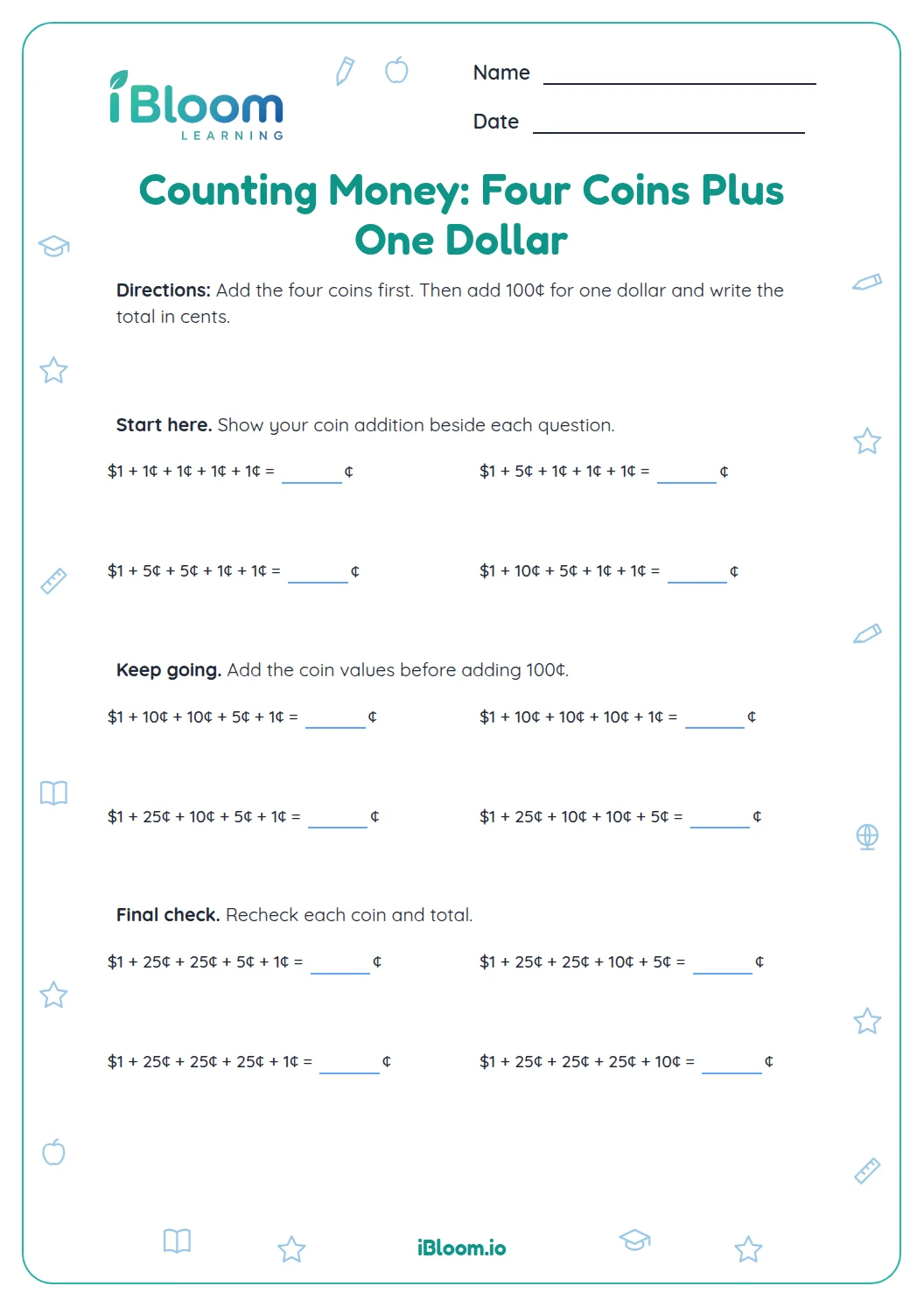
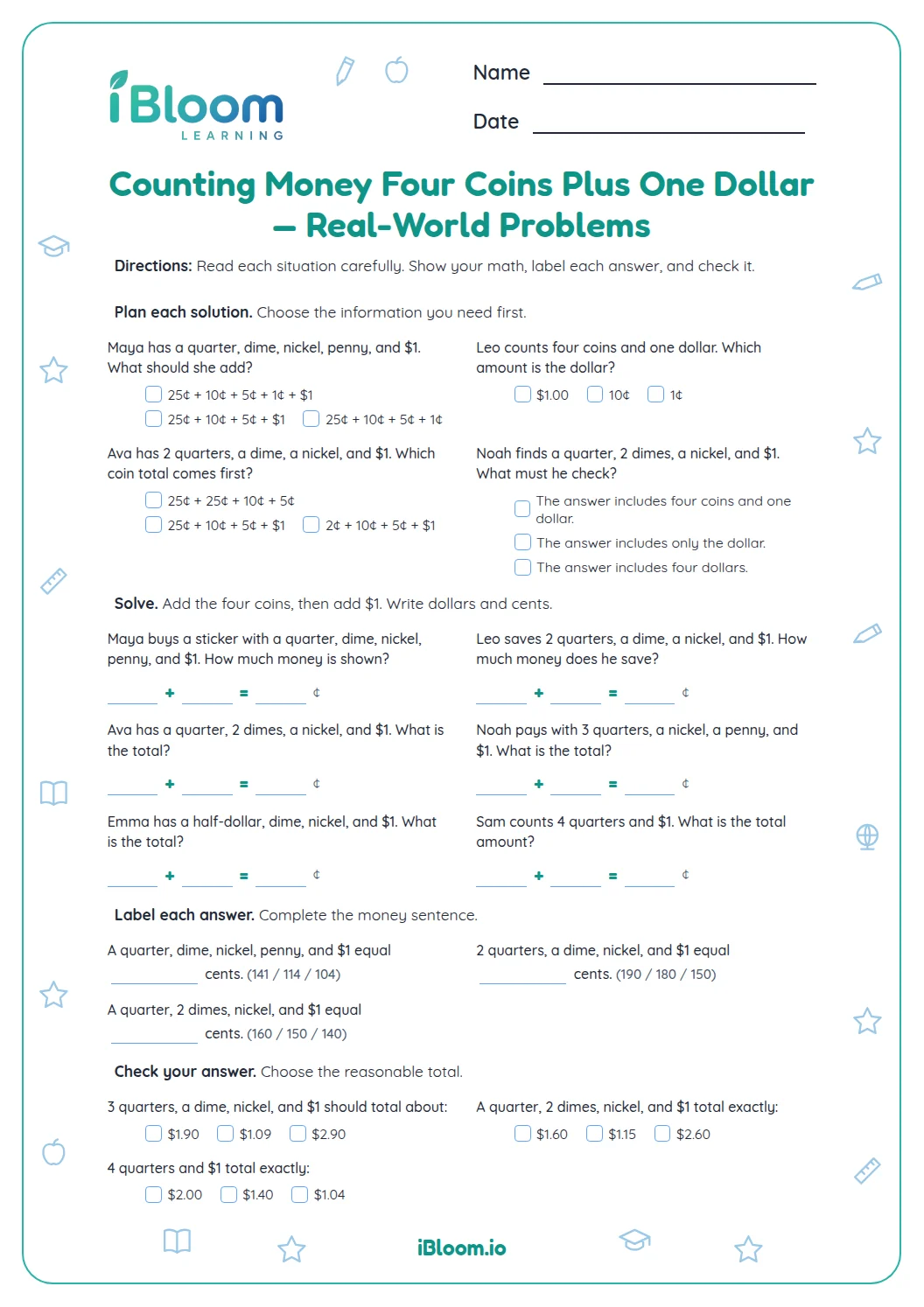
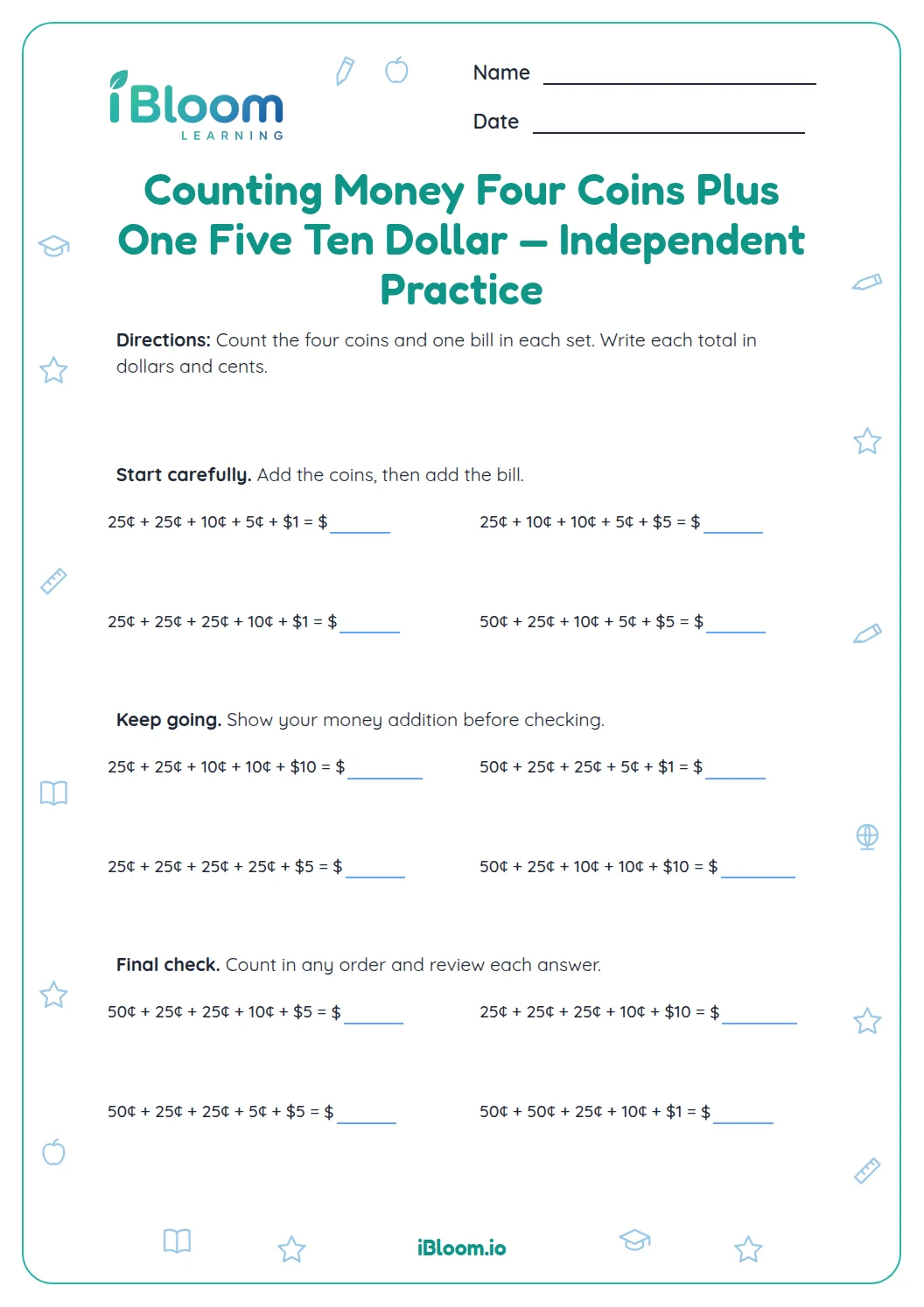
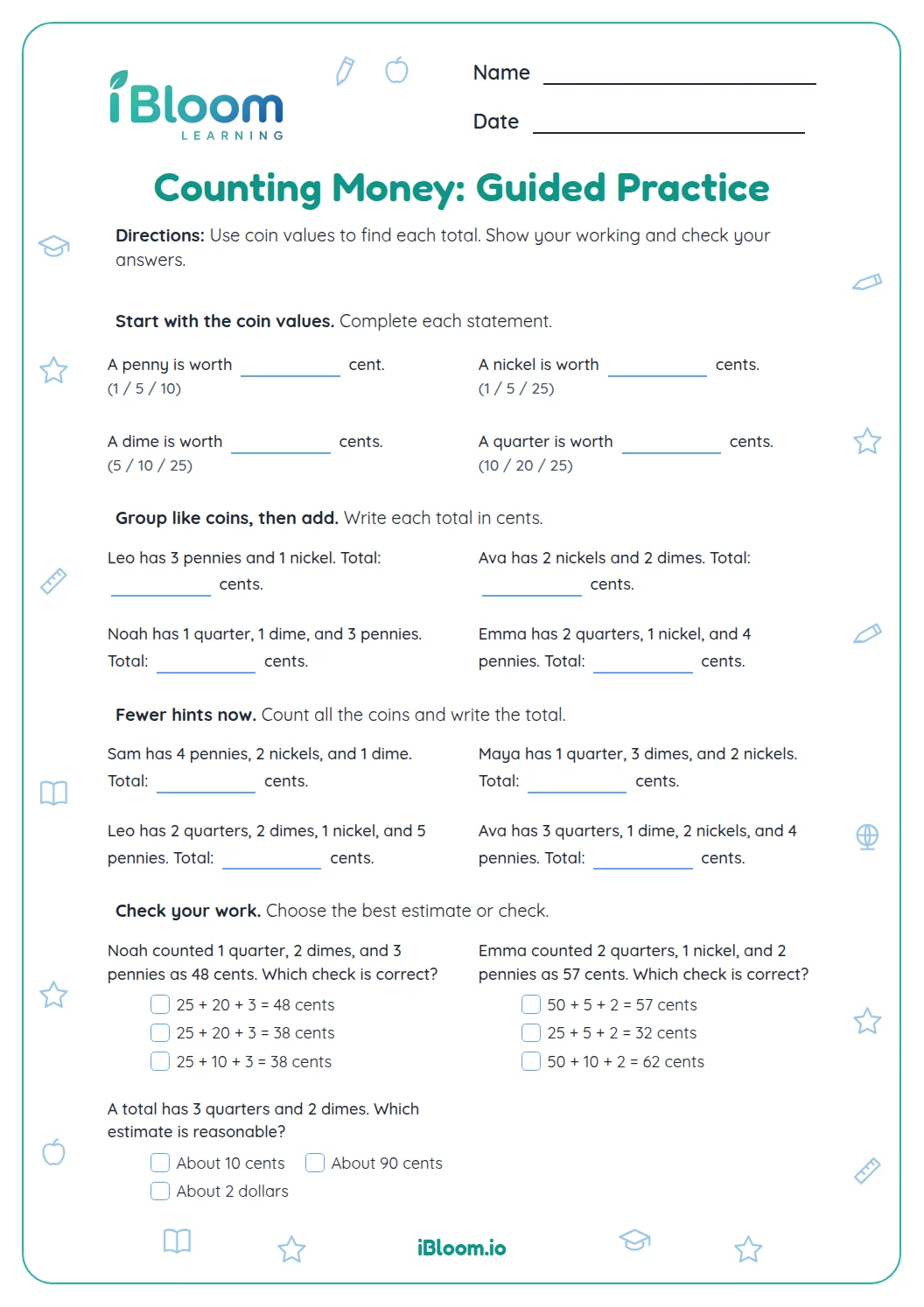
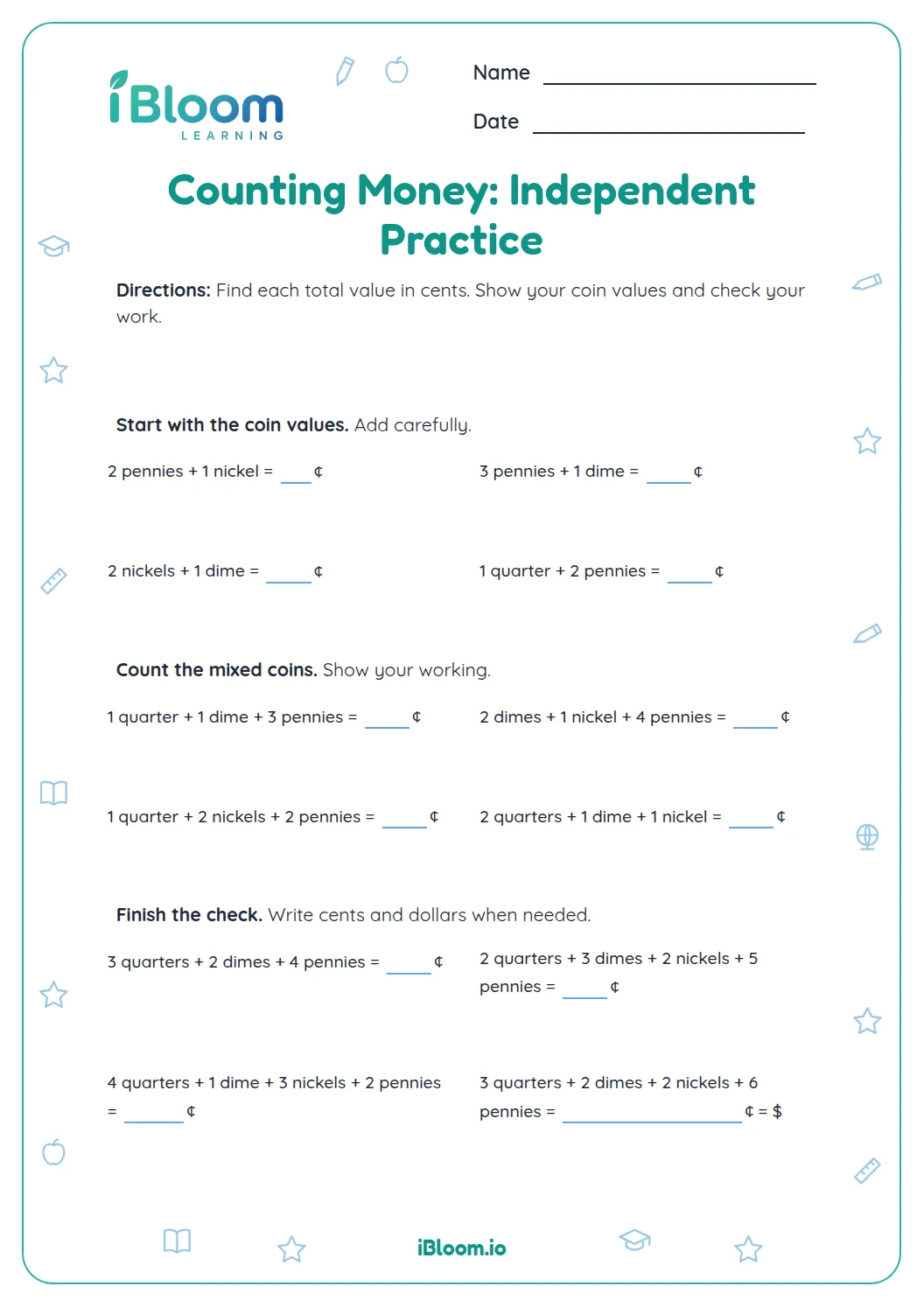
This Grade 3 worksheet practices adding four US coins and one dollar. Each of the 14 questions gives a different combination of quarters, dimes, nickels, and pennies; four combinations also show the coins. Students total the coins, add 100 cents, and record the amount in cents. A separate answer key lists each result. The money problem type aligns with CCSS 2.MD.C.8.
Aligned to 2.MD.C.8
How do you add the coin values?
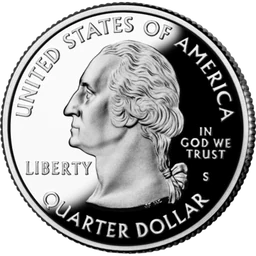
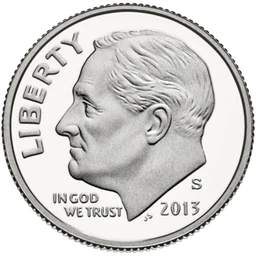
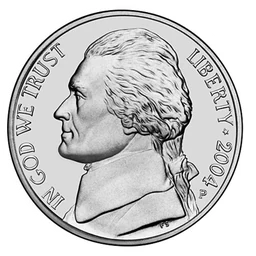
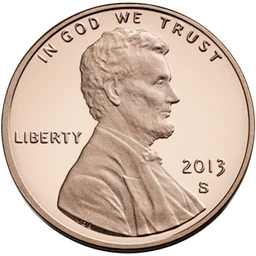
Read each coin picture and add its value: quarter 25¢, dime 10¢, nickel 5¢, penny 1¢. Question 1 shows one of each, for 41¢ in coins.
- 125¢ + 10¢ + 5¢ + 1¢ = 41¢
- 2Add 100¢ for the dollar.
- 3The total is 141¢.
Why add 100 cents?
The dollar is a fifth amount to include after totaling the four coins. Keep the answer in cents as the question requests. The second part presents the same calculation in short situations with different coin combinations.
- Part A: add pictured combinations of four coins and $1
- Part B: solve seven money situations with new combinations
How can you check the total?
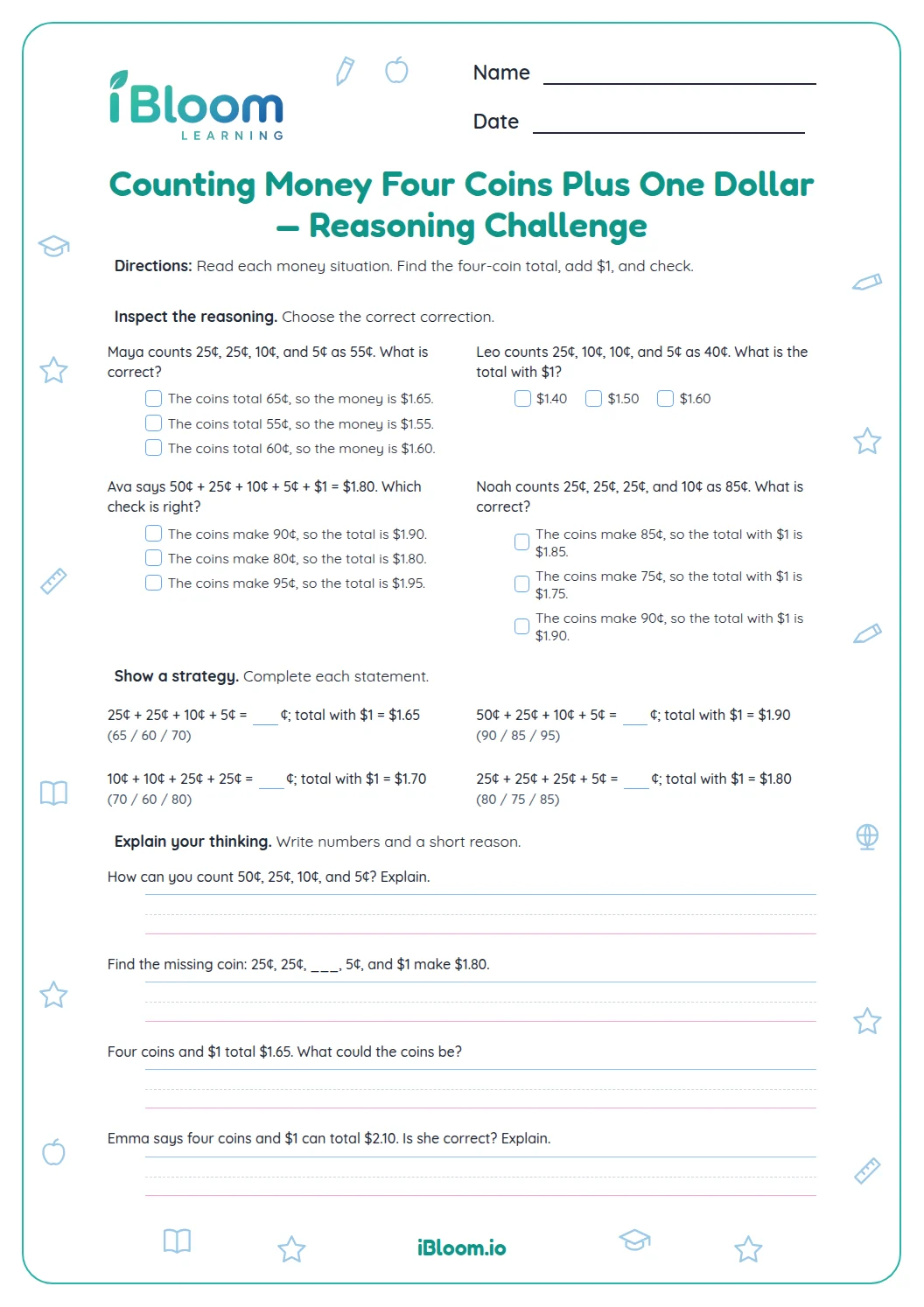
First add the four coins again, then see whether the final total is 100 cents more than that coin sum. For question 1, 141¢ − 100¢ = 41¢, which matches the pictured coins.
How to use this worksheet
- 1Name each pictured coin.
- 2Write its value in cents.
- 3Add the four coin values.
- 4Add 100 cents for the dollar.
- 5Record the total with the requested cents unit.
Common mistakes and quick fixes
The mistake
Forgetting that a dollar adds 100 cents.
The fix
Write 100¢ as a separate addend after totaling the coins.
The mistake
Mixing up a nickel and a dime.
The fix
Recall the values: nickel 5¢ and dime 10¢.
The mistake
Recording only the coin total.
The fix
Add the dollar too; the answer is 100 cents more than the four-coin sum.
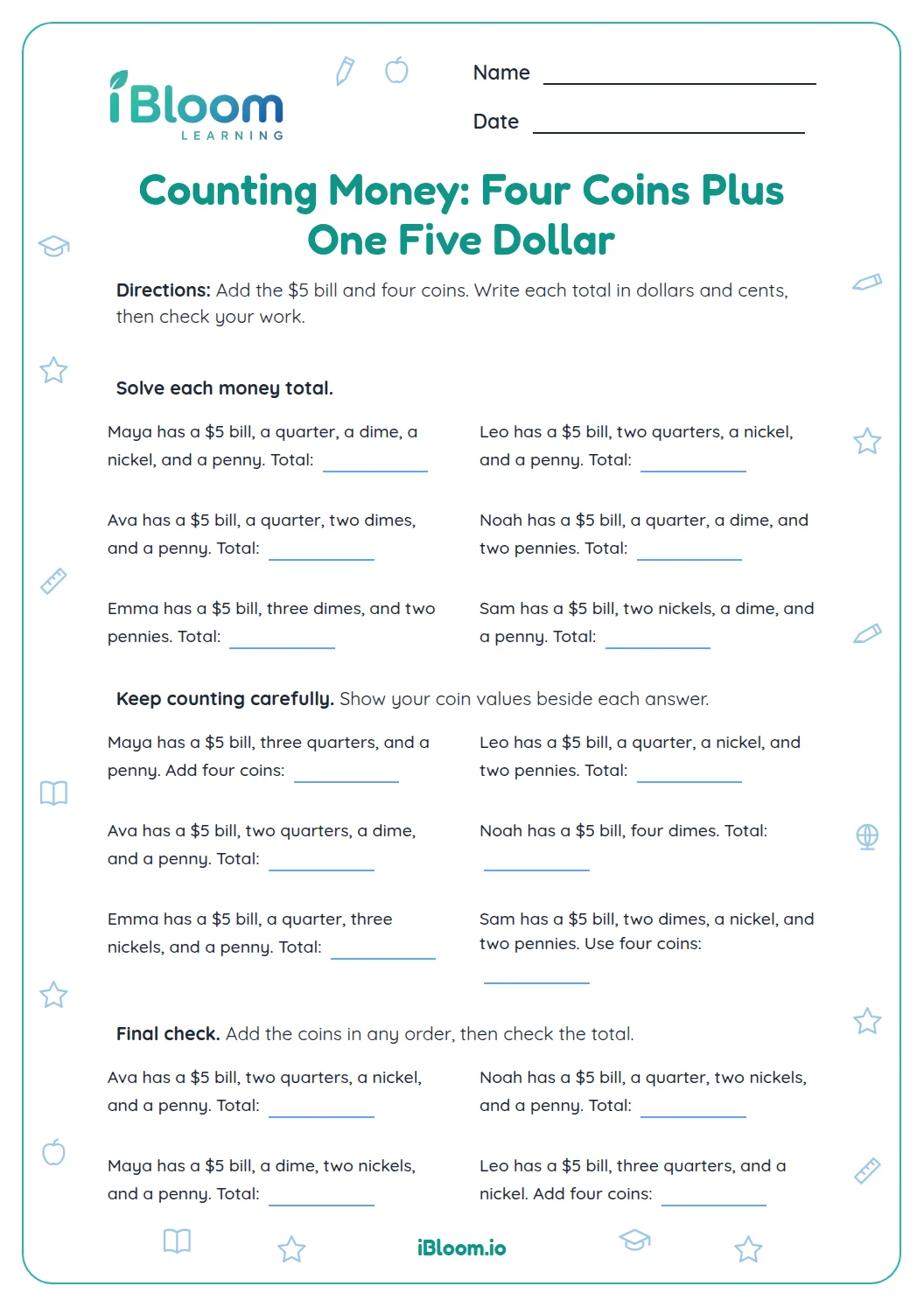
This worksheet practices solving money problems with US coins and a dollar bill.
Solve money problems with dollar bills and US coins.
On this sheet: Students total a dollar bill and four coins and record each amount in cents.
Show the official wordingHide the official wording
Solve word problems involving dollar bills, quarters, dimes, nickels, and pennies, using $ and ¢ symbols appropriately. Example: If you have 2 dimes and 3 pennies, how many cents do you have?
What to practice next
Make more practice
Further reading
Questions parents and teachers ask
What is the four-coins-plus-one-dollar method?
First add the four coin values, then add 100 cents for the dollar. Question 1 shows a quarter, dime, nickel, and penny: 25 + 10 + 5 + 1 = 41 cents. Adding 100 gives a total of 141 cents, which the answer key confirms.
Which coin values appear on the worksheet?
The pictures show US quarters worth 25 cents, dimes worth 10 cents, nickels worth 5 cents, and pennies worth 1 cent. Each item uses exactly four coins and one dollar. Children can name each coin, total the group, and then add the dollar.
Why are the answers written in cents?
The worksheet asks for the complete amount as cents. Since a dollar equals 100 cents, add 100 to the value of the four coins. For example, 41 cents in coins plus 100 cents makes 141 cents. The key lists the total for every combination.
How many different coin groups are shown?
There are 14 questions, each with a different four-coin combination and one dollar. Four questions also show the coins as pictures. The groups include quarters, dimes, nickels, and pennies. Students total the coins and add 100 cents; the answer key lists every amount.
How can I check a total with my child?
Ask the child to name and add the four coins before including the dollar. Then add 100 cents and compare the result with the key. If the total is off, look at the coin values first, then check whether the dollar was included.