







About this worksheet
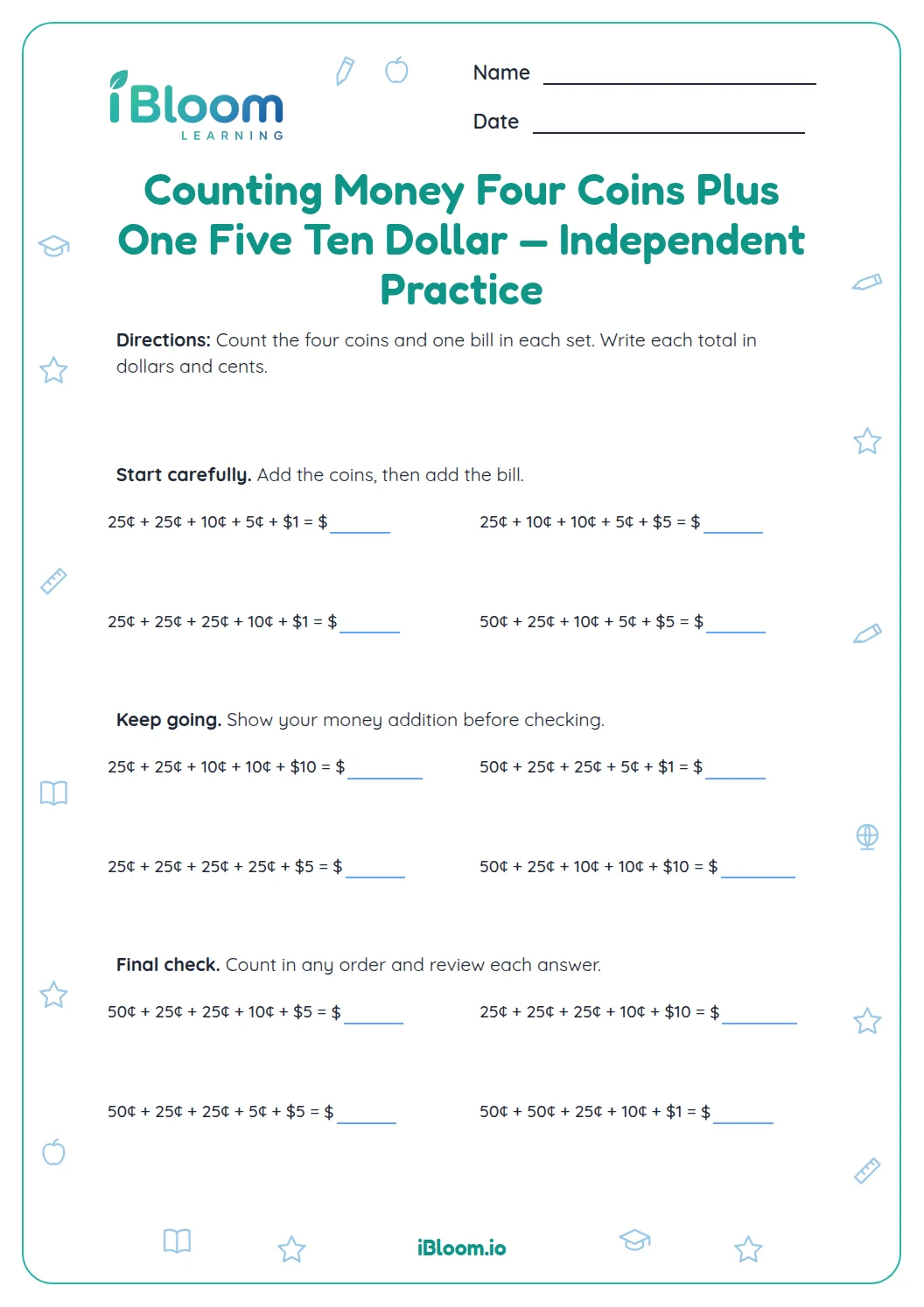
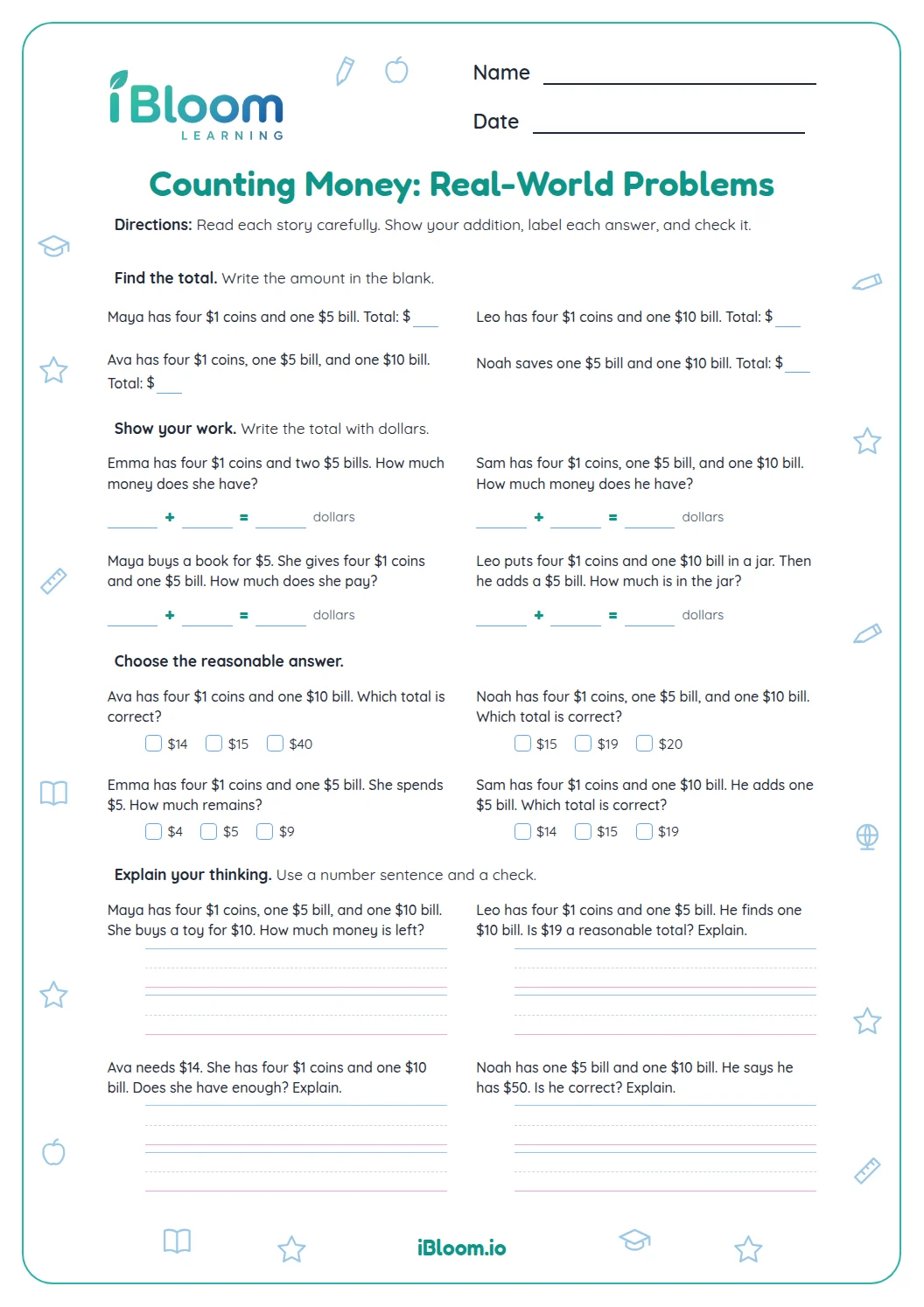
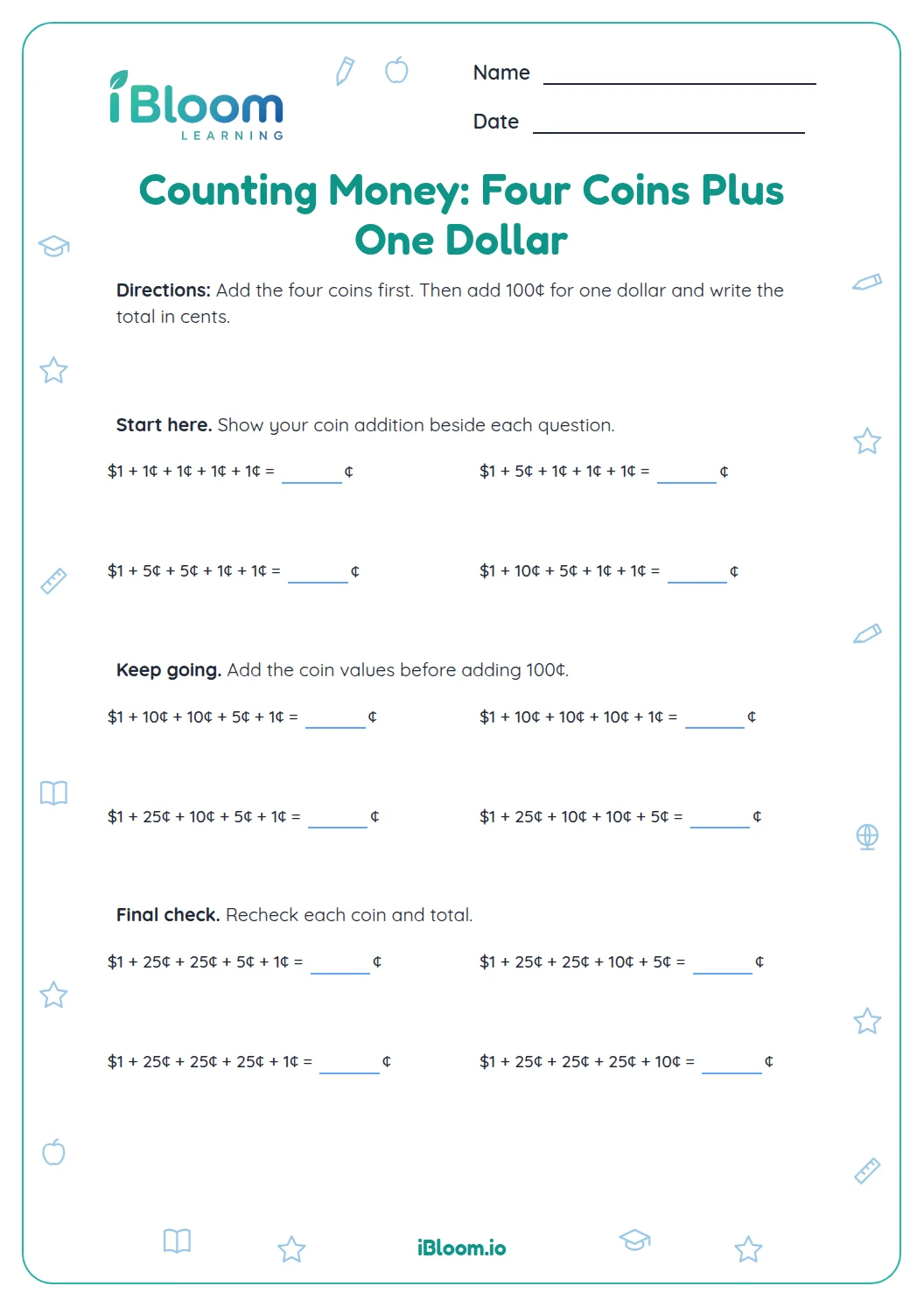
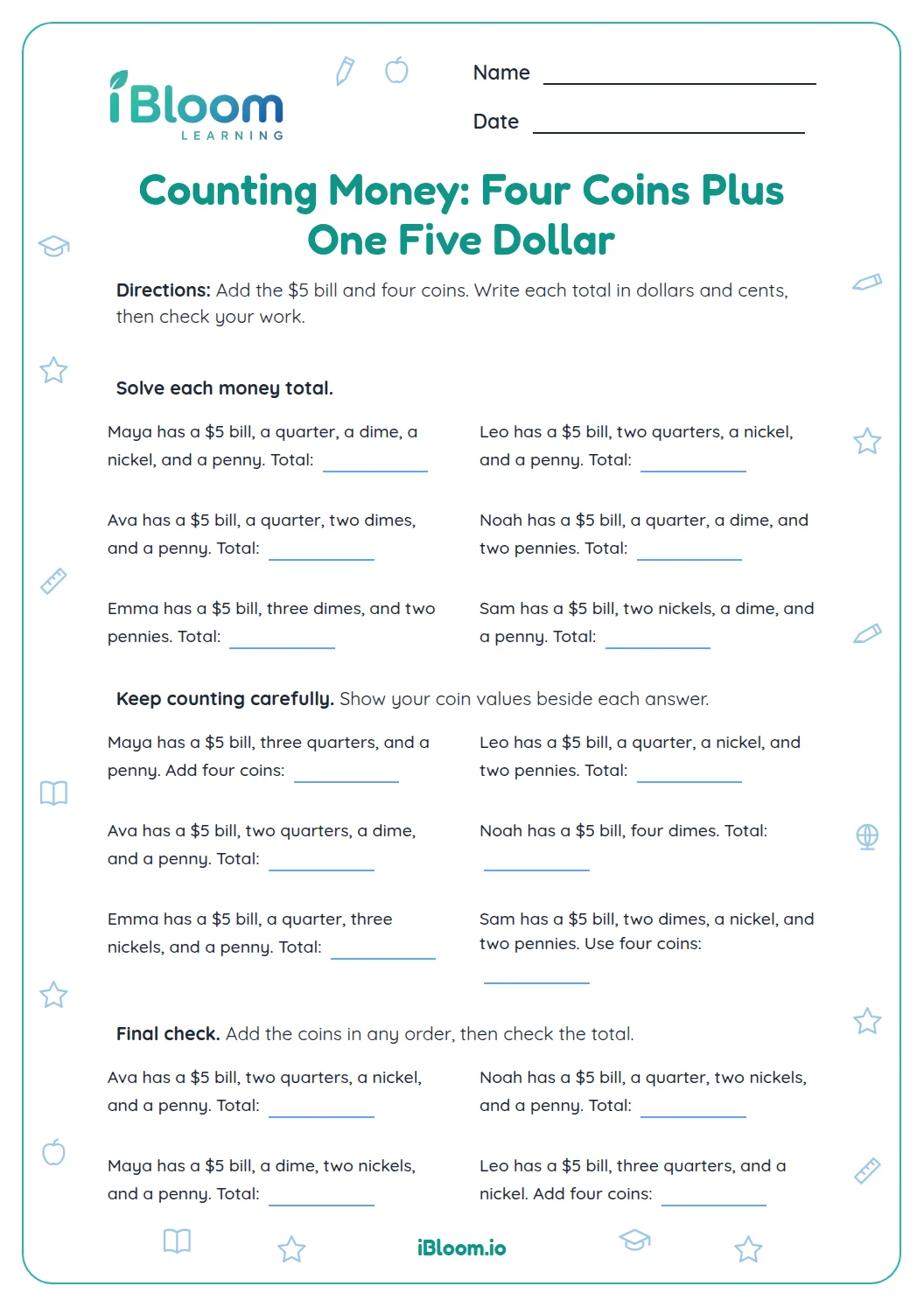
This Grade 3 counting-money worksheet gives students practice adding four US coin values to a stated $1, $5, or $10 bill. Two questions include coin drawings; the remaining questions name each coin so students can focus on the total. The answer key lists all 14 amounts.
Aligned to 2.MD.C.8
How do I find the value of four coins?
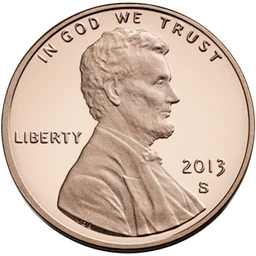
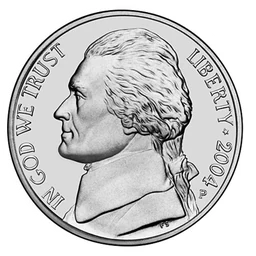
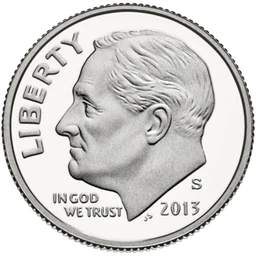
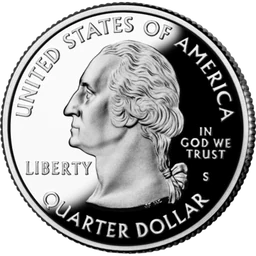
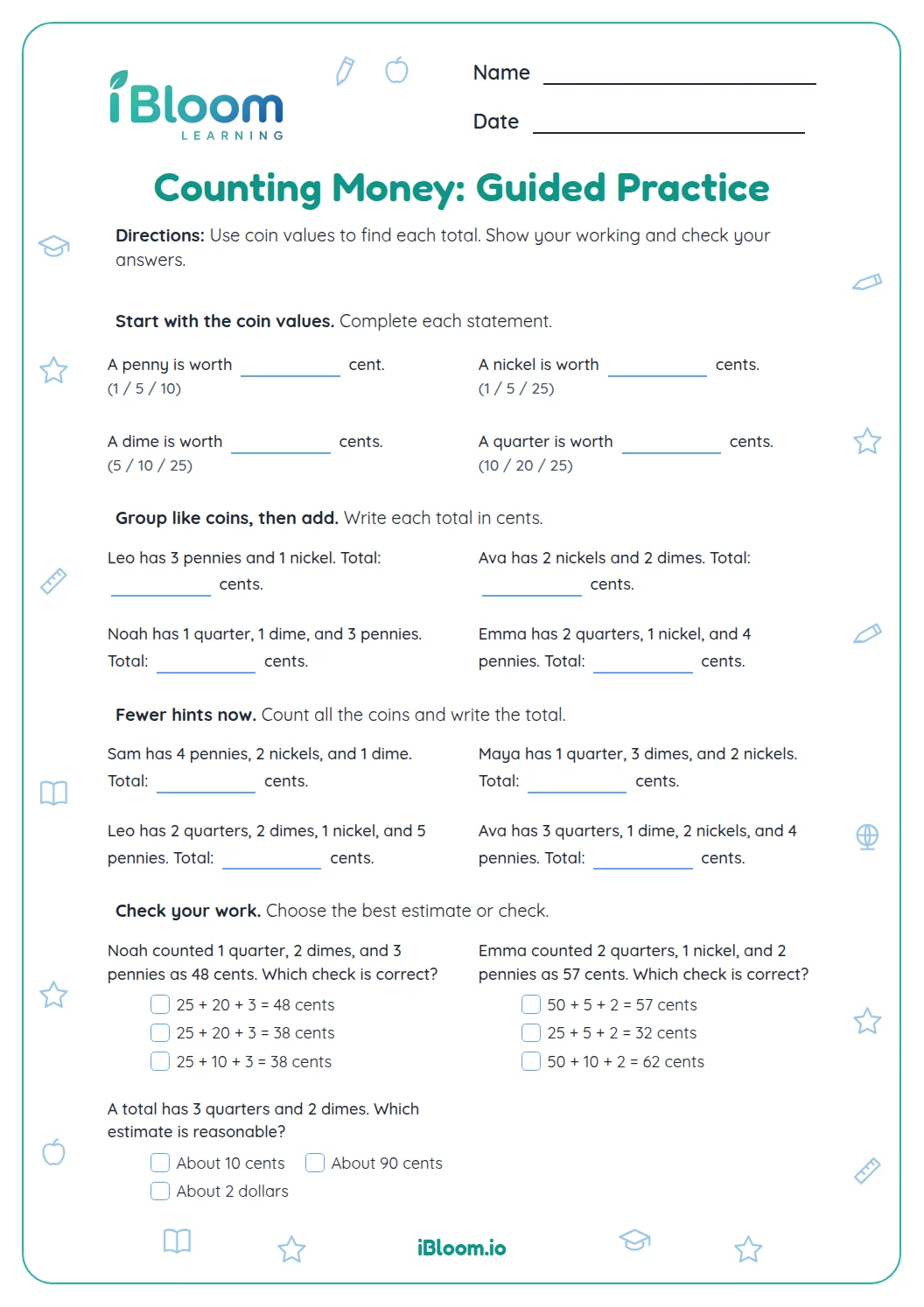
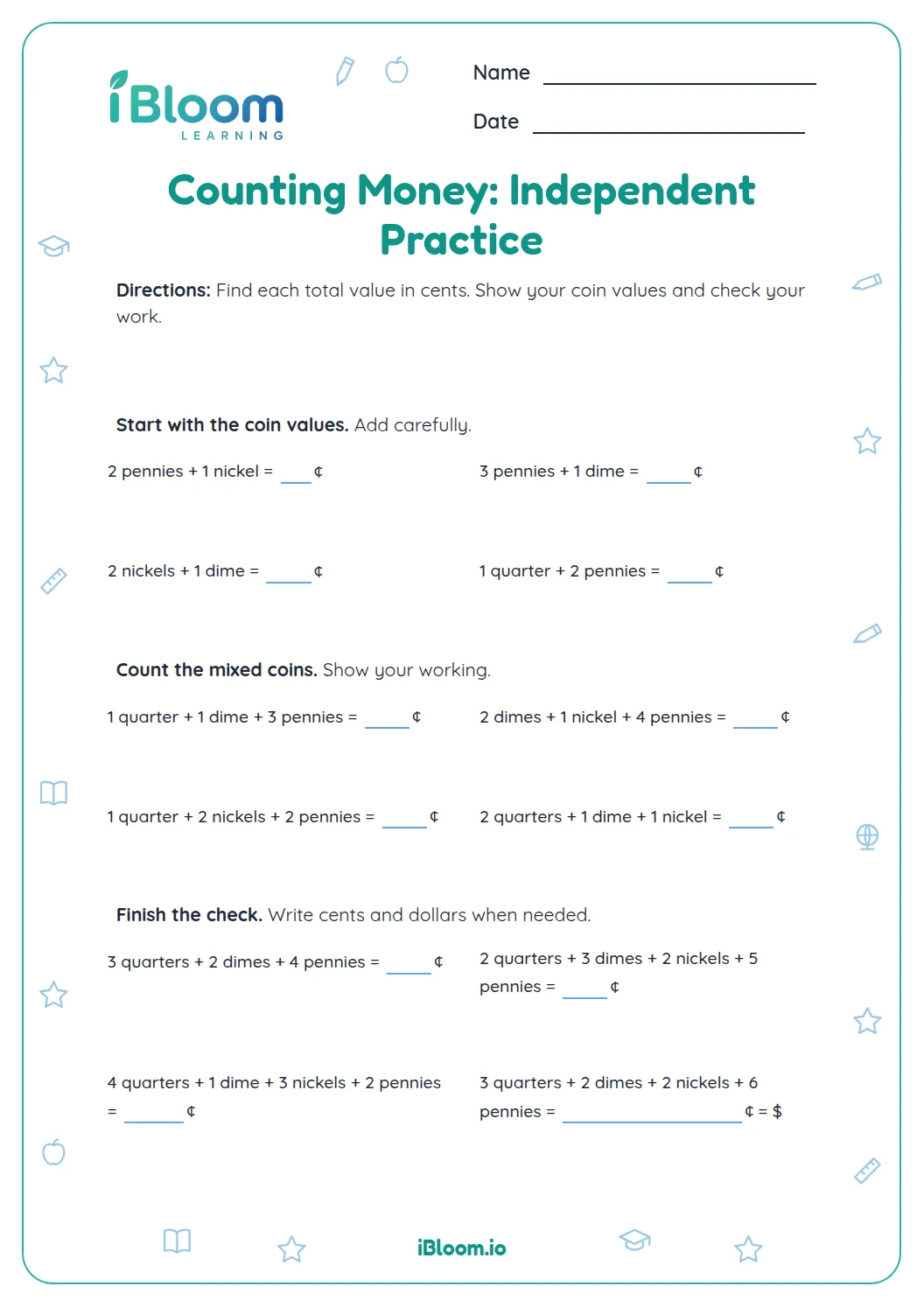
Read each coin and add its value: penny 1¢, nickel 5¢, dime 10¢, and quarter 25¢. Questions 1 and 2 show the coins; the rest name each coin.
- 1Question 1: 1¢ + 5¢ + 10¢ + 25¢ = 41¢.
How do I add the dollar bill?
Keep the bill dollars and coin cents together. Four coins worth 41¢ with $1 total $1.41.
- 1$1.00 + $0.41 = $1.41.
How can I check my total?
Check each coin value, regroup cents only if they reach 100, and write two digits after the decimal point.
- 1Four quarters are 100¢, or $1. Add that dollar to the $10 bill for $11.00.
How to use this worksheet
- 1Start with the coins in the drawing.
- 2Write or say the value of each coin.
- 3Add the four values in cents.
- 4Add the dollar bill named in the prompt.
- 5Write the total with a dollar sign and two decimal places.
Common mistakes and quick fixes
The mistake
Calling a dime a nickel because both are silver colored.
The fix
Use the coin size and edge: a dime is smaller than a nickel and is worth 10¢.
The mistake
Writing 41¢ plus $1 as $1.41 without adding all coins.
The fix
Check the coin sum first; the four coins in question 1 total 41¢.
The mistake
Writing $1.4 for $1.40.
The fix
Use two digits for cents so the decimal amount is easy to read.
Curriculum alignment
Solve money problems by adding coin values and dollar bills.
On this sheet: Each question combines four US coins with one dollar bill and asks for the total.
Show the official wordingHide the official wording
Solve word problems involving dollar bills, quarters, dimes, nickels, and pennies, using $ and ¢ symbols appropriately. Example: If you have 2 dimes and 3 pennies, how many cents do you have?
What to practice next
Make more practice
Further reading
Questions parents and teachers ask
How many money problems are on the sheet?
There are 14 questions. Questions 1 and 2 show four US coins, and the remaining items name four coins and a $1, $5, or $10 bill. Students write the total in dollars and cents. The separate key provides the exact amount for every question.
Which coins appear?
The two coin drawings use pennies, nickels, dimes, and quarters. Their values are 1¢, 5¢, 10¢, and 25¢. In the remaining questions, students read the coin names, add their cents, and combine that amount with the bill named in the prompt.
Why are both the coins and bill included?
The questions practice combining coin values with a dollar amount, which asks students to move between cents and dollars. Adding the coins first keeps the work organized: find the cents total, then add that amount to the stated $1, $5, or $10 bill.
How should a student write the answer?
Use a dollar sign and two digits after the decimal point. For example, one dollar and forty cents is written $1.40. That format makes the dollars and cents clear and helps distinguish forty cents from four cents. The answer key follows the same format for every total, so students can compare their work consistently.
What is a good way to help before independent work?
Review the four coin values together, then solve question 1 aloud. Have the student name each coin, add the cents, and add the bill. Once the process is clear, the remaining questions provide practice with different coin groups and bill amounts.