




About this worksheet
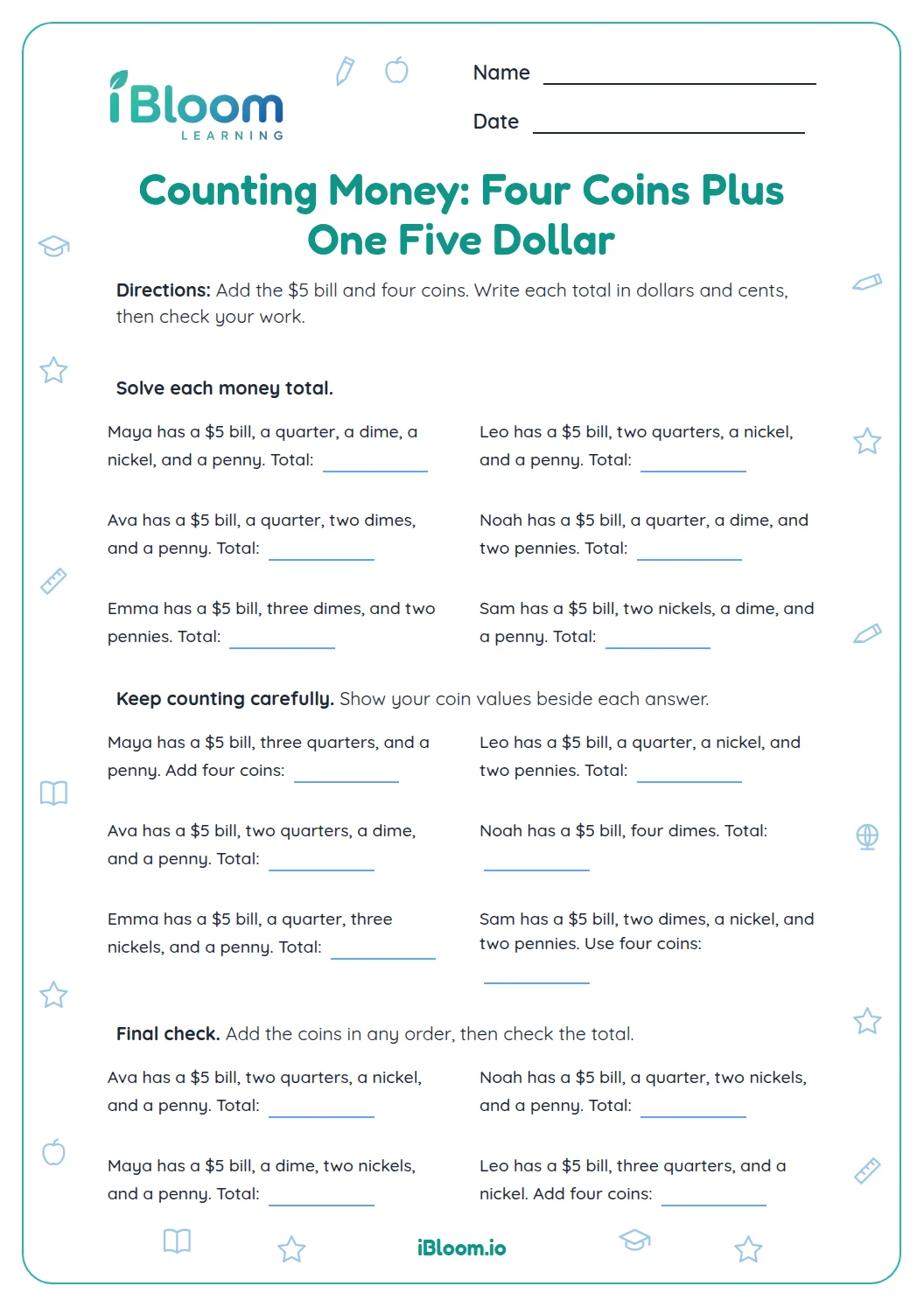
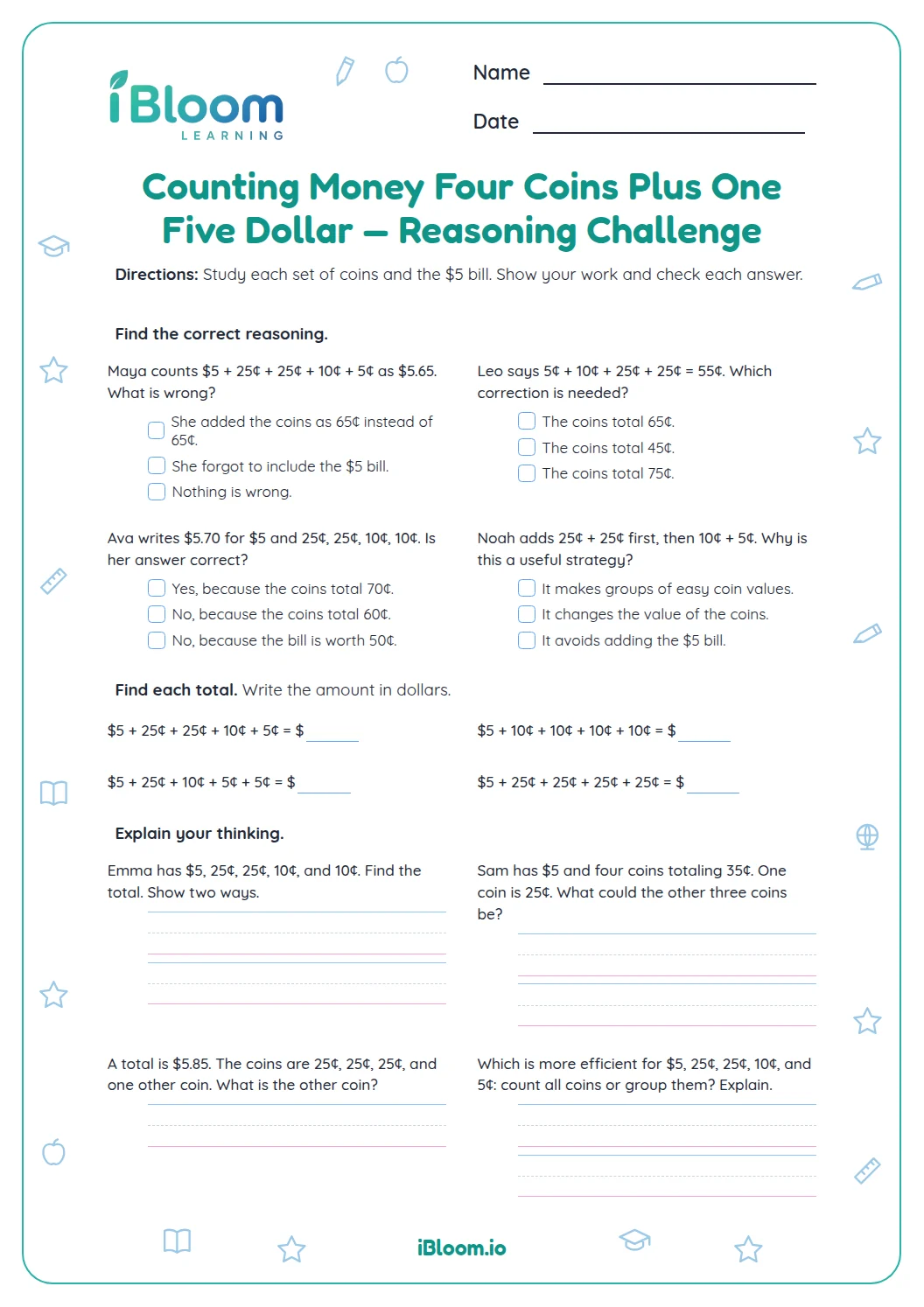
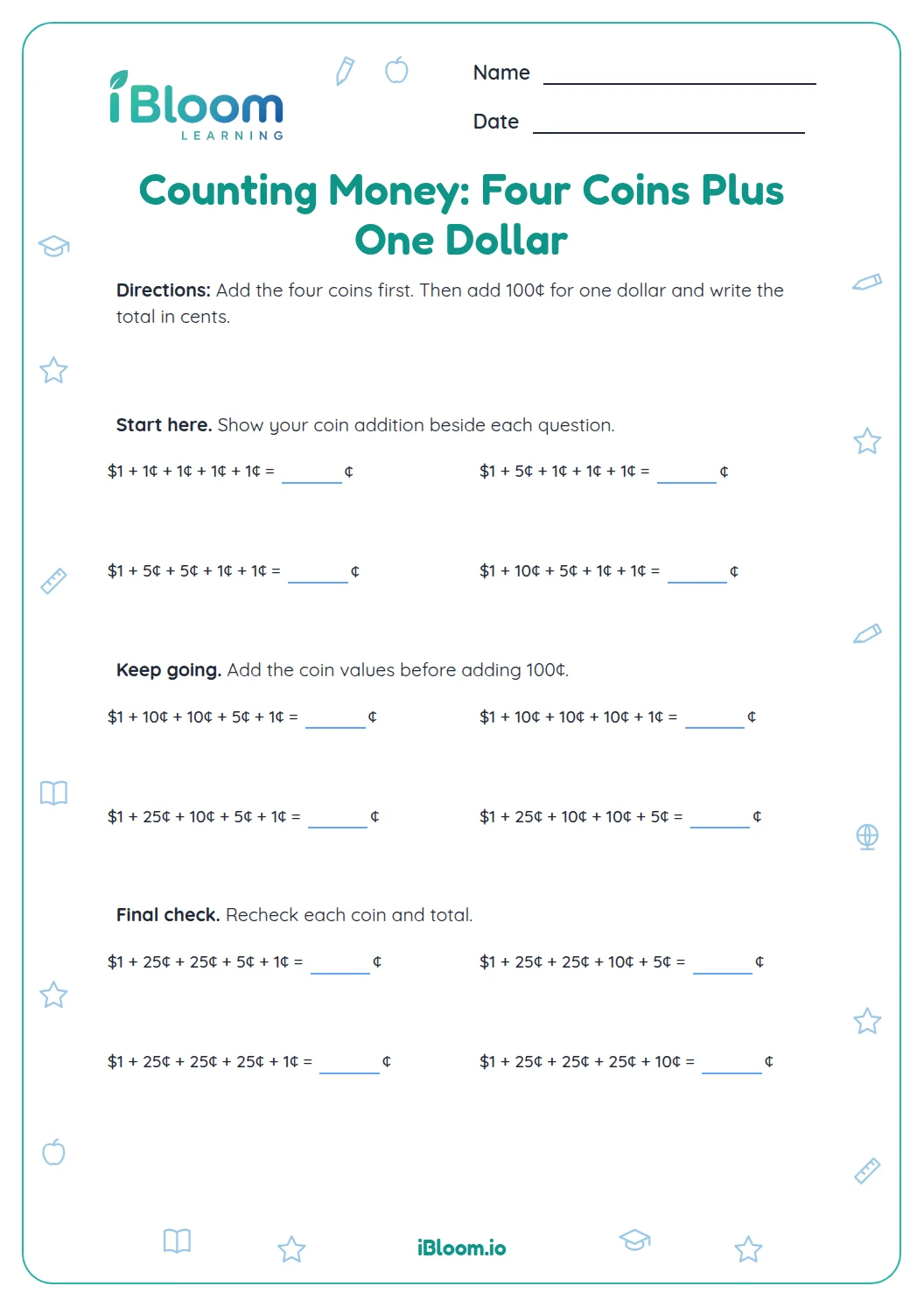
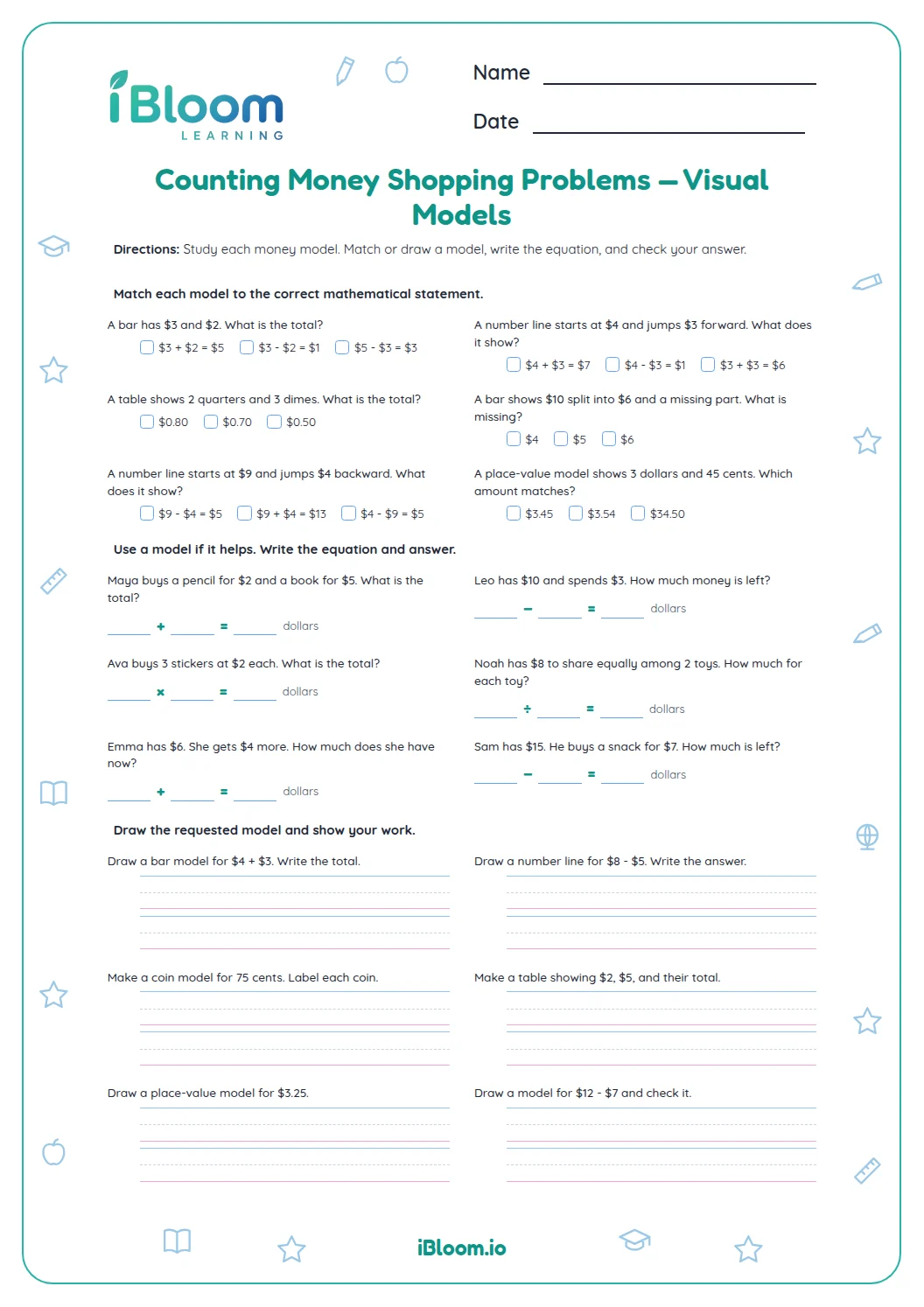
This Grade 3 printable presents 15 money stories built around four U.S. coins and a $5 bill. Learners count coin values, find totals, and solve purchase and change questions. A separate answer key is included.
Aligned to 2.MD.C.8
How do the coins add up to a total?
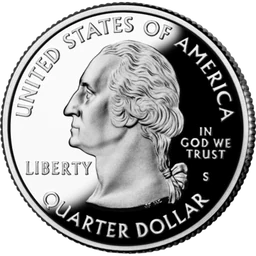
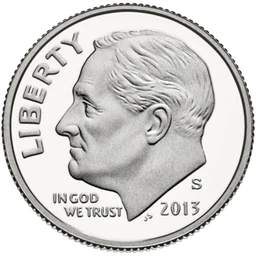
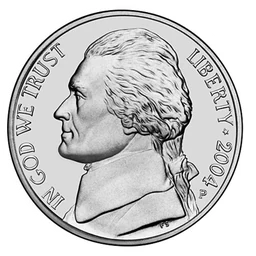
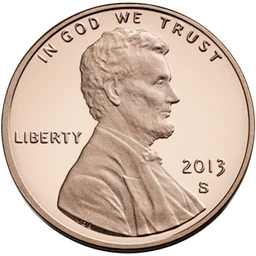
Count the four pictured coins by value, then add the $5 bill. In q1, a quarter, a dime, a nickel, and a penny are 25¢ + 10¢ + 5¢ + 1¢, or 41¢; together with $5, the total is $5.41.
The answer key shows each total in dollars and cents.
How can a shopper find the change?
For q9–q15, find the full amount first, including the bill and all four coins. Then subtract the toy price. For q9, the coins total 76¢, so $5.76 − $5.45 = $0.31.
How can the amount be checked?
For q9, first add the bill and four coins to get $5.80. Subtract the $5.45 toy price to find $0.35 in change. A sensible change amount is less than the amount paid.
How can a learner work through the page?
- 1Name each coin and write its value in cents.
- 2Add the four coin values.
- 3Add $5 to find the full amount.
- 4For a purchase, subtract the price from the full amount.
- 5Check that the change is less than the amount paid.
What should a learner double-check?
The mistake
Forgetting one coin in the group.
The fix
Point to each of the four coins once as you add its value.
The mistake
Writing 41 cents as $0.41 when adding to $5.
The fix
Keep dollars and cents aligned: $5.00 + $0.41 = $5.41.
The mistake
Subtracting the price before finding the full amount.
The fix
First add the $5 bill and all four coin values, then subtract the cost.
Curriculum alignment
The questions below give learners practice with these skills.
Add coin values to a five-dollar bill and solve money stories.
On this sheet: Learners practice this standard by completing the worksheet questions.
Show the official wordingHide the official wording
Solve word problems involving dollar bills, quarters, dimes, nickels, and pennies, using $ and ¢ symbols appropriately. Example: If you have 2 dimes and 3 pennies, how many cents do you have?
What to practice next
Make more practice
Further reading
Questions parents and teachers ask
Which coins are used in these money stories?
The drawings use pennies, nickels, dimes, and quarters. Each question shows four coins and names a $5 bill in the story. Learners count the coin values, add them to five dollars, and use that amount to answer a shopping question.
How does a learner find the total amount?
Add the four coin values in cents, then add that amount to $5.00. For example, a quarter, dime, nickel, and penny are 41 cents, so the full amount is $5.41. Keep dollars and cents lined up when writing the sum.
How can a learner find the change?
First add the $5 bill and all four coins to find the amount paid. Then subtract the toy price from that total. The change should be less than the amount paid, and it should match the difference shown in the answer key.
What is included on the answer key?
The separate answer key lists the full total for the first eight questions and the change for the shopping stories. Learners can compare each amount, revisit a missed coin value, and redo the subtraction if the change does not match.
What materials are needed?
A pencil and the printed pages are enough. The coin names are written into every story, with coin values to add or subtract. A learner can also use scratch paper to add cents before combining them with the $5 bill.