Free printable practice
Parallelograms Practice Activities
Grade 3 geometry worksheets for recognizing, describing, drawing, and sorting parallelograms by their sides, angles, and opposite-side relationships.
Free printable worksheet PDFs
Preview every available page, then download the free worksheet PDF for home, homeschool, tutoring, or classroom practice.
Preview the exact activity before downloading it.
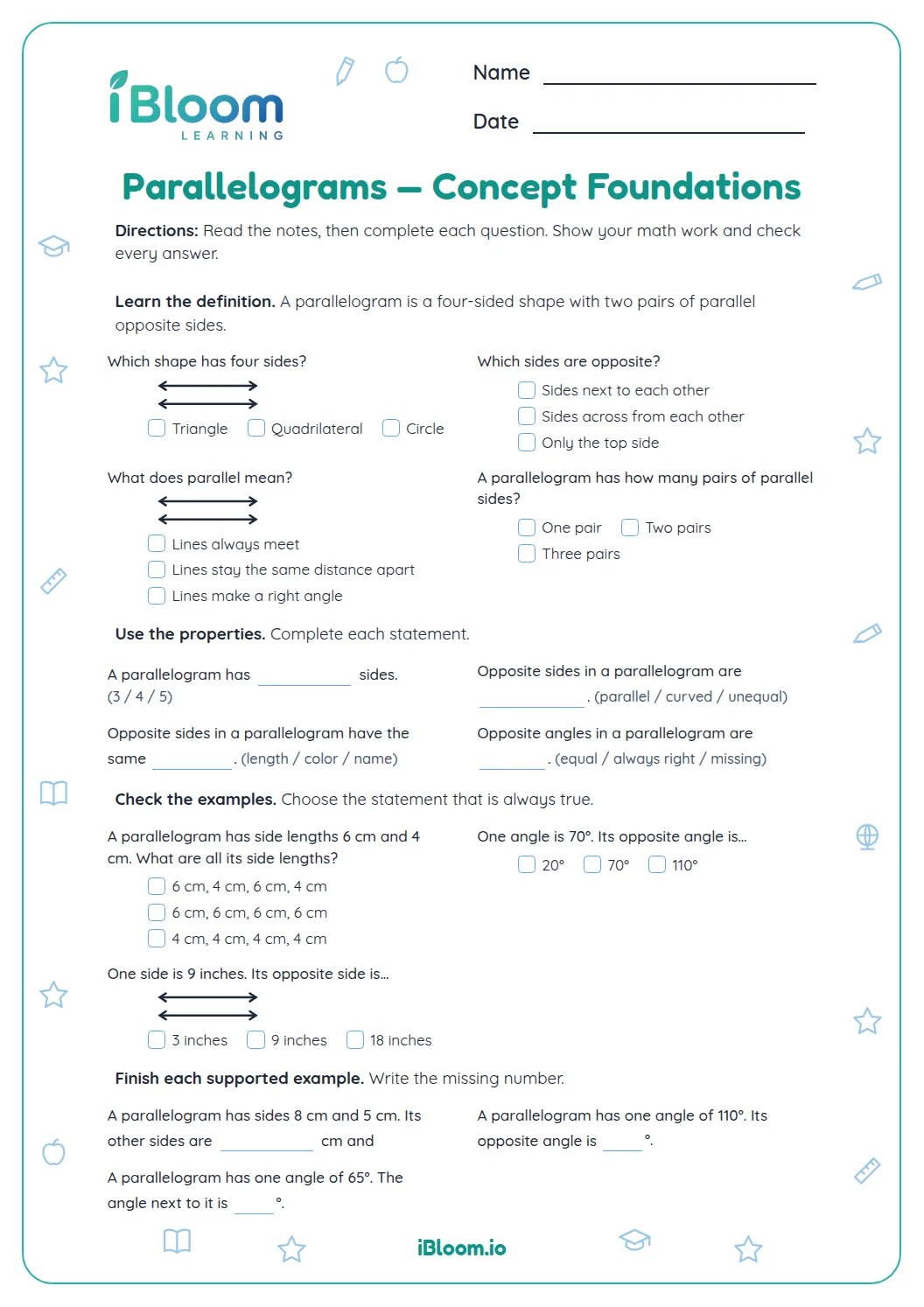 Parallelograms — Concept FoundationsGrade 3 geometry worksheets for recognizing, describing, drawing, and sorting parallelograms by their sides, angles, and opposite-side relationships. This Grade 3 foundations worksheet adds concise teaching notes, worked examples, and supported first attempts.Grade 3Free PDF preview
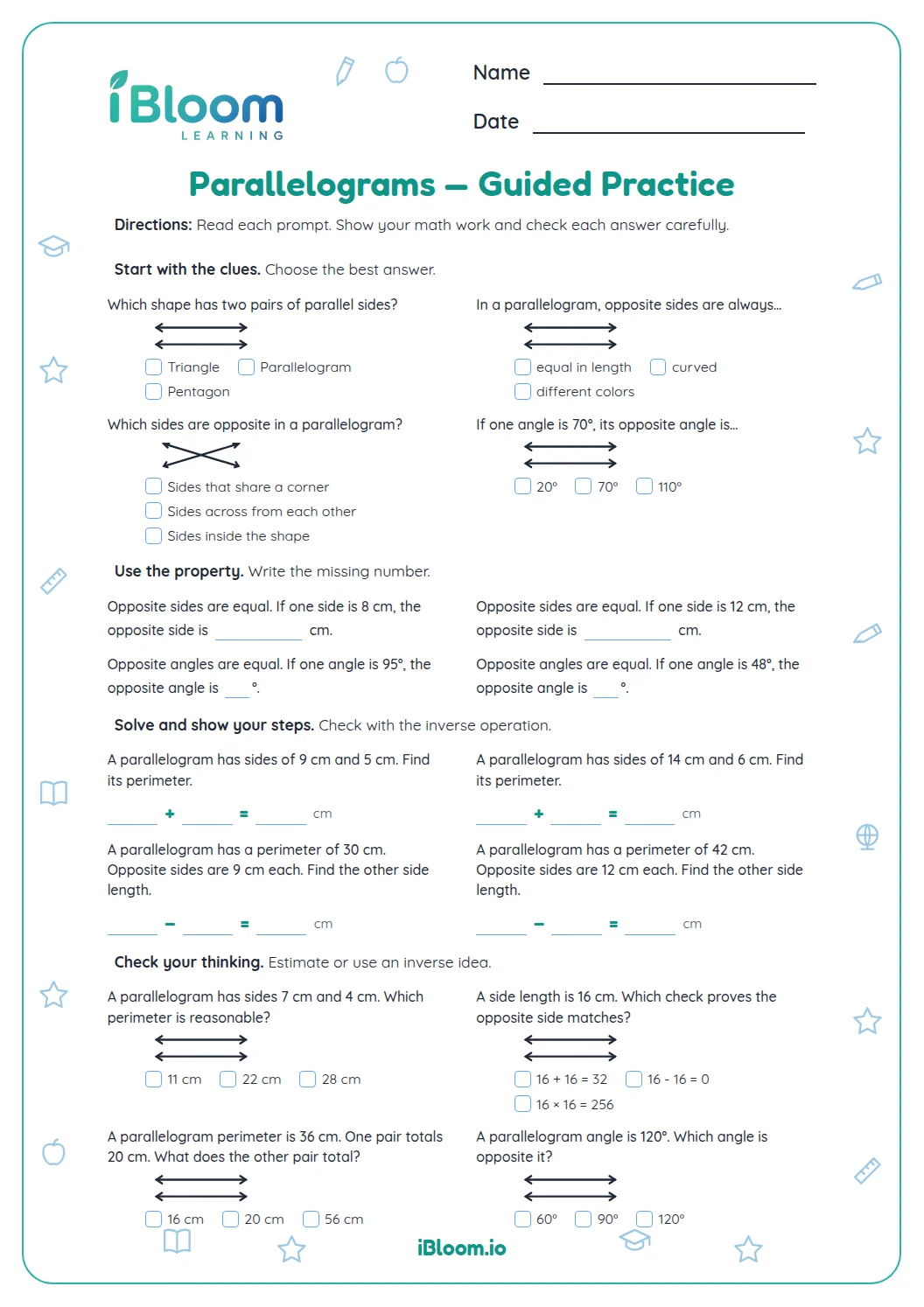 Parallelograms — Guided PracticeGrade 3 geometry worksheets for recognizing, describing, drawing, and sorting parallelograms by their sides, angles, and opposite-side relationships. This Grade 3 guided-practice worksheet progresses from prompts and checkpoints to independent questions.Grade 3Free PDF preview4 pages
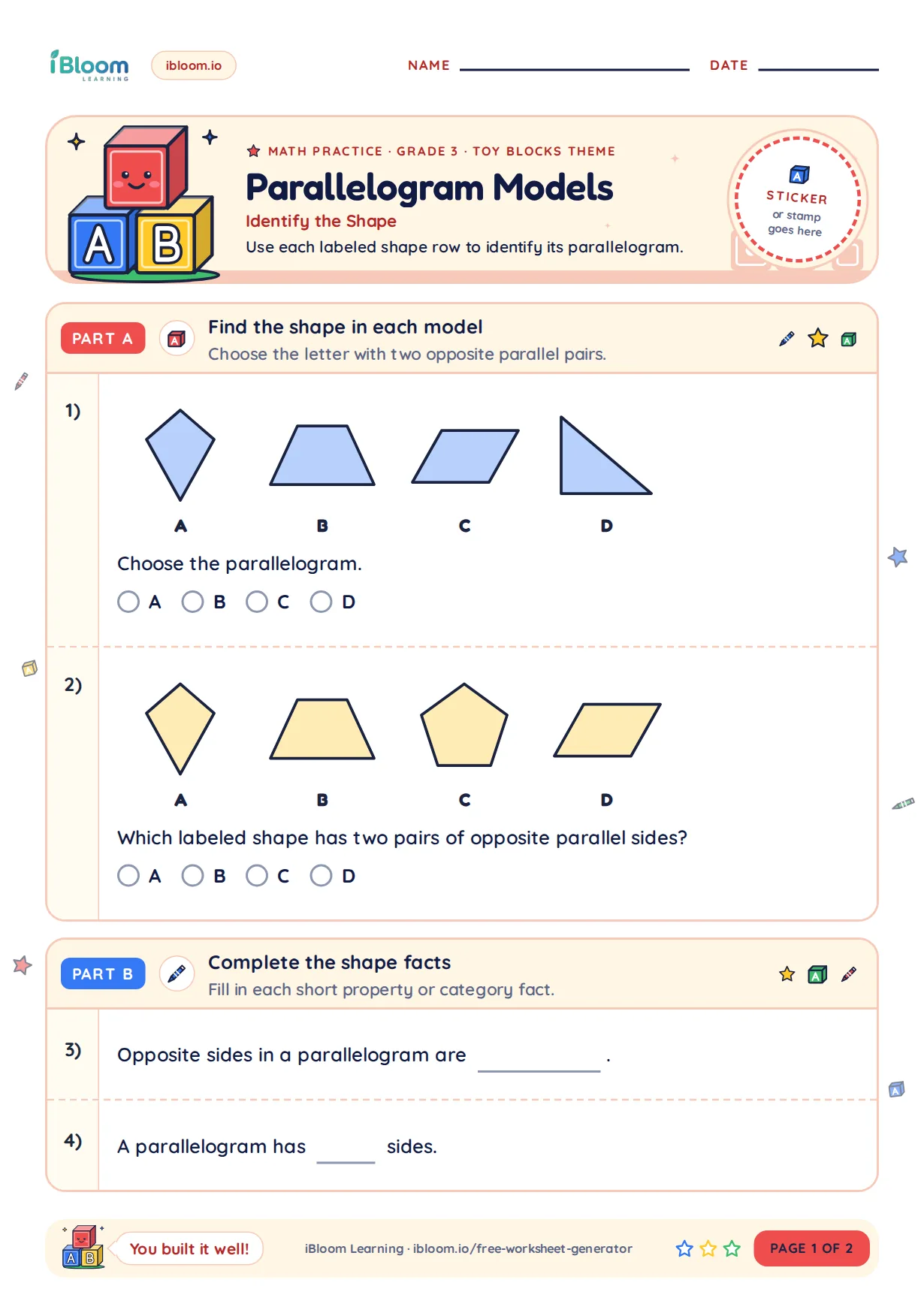 Parallelograms — Visual ModelsGrade 3 geometry worksheets for recognizing, describing, drawing, and sorting parallelograms by their sides, angles, and opposite-side relationships. This Grade 3 visual-model worksheet connects suitable diagrams, tables, number lines, or place-value models to mathematical notation.Grade 3Free PDF preview
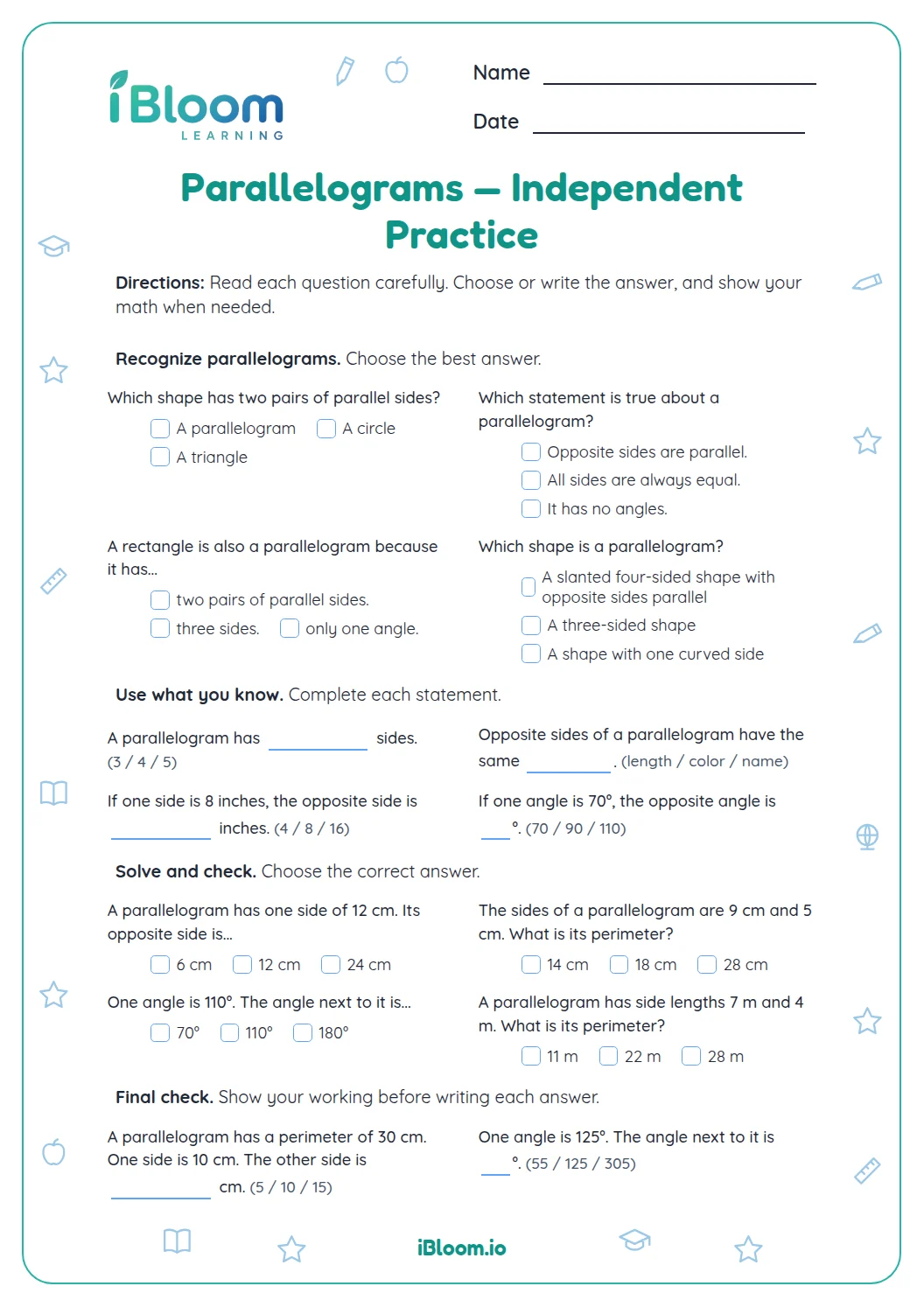 Parallelograms — Independent PracticeGrade 3 geometry worksheets for recognizing, describing, drawing, and sorting parallelograms by their sides, angles, and opposite-side relationships. This Grade 3 independent-practice worksheet provides a balanced sequence of accurate, grade-level exercises.Grade 3Free PDF preview4 pages
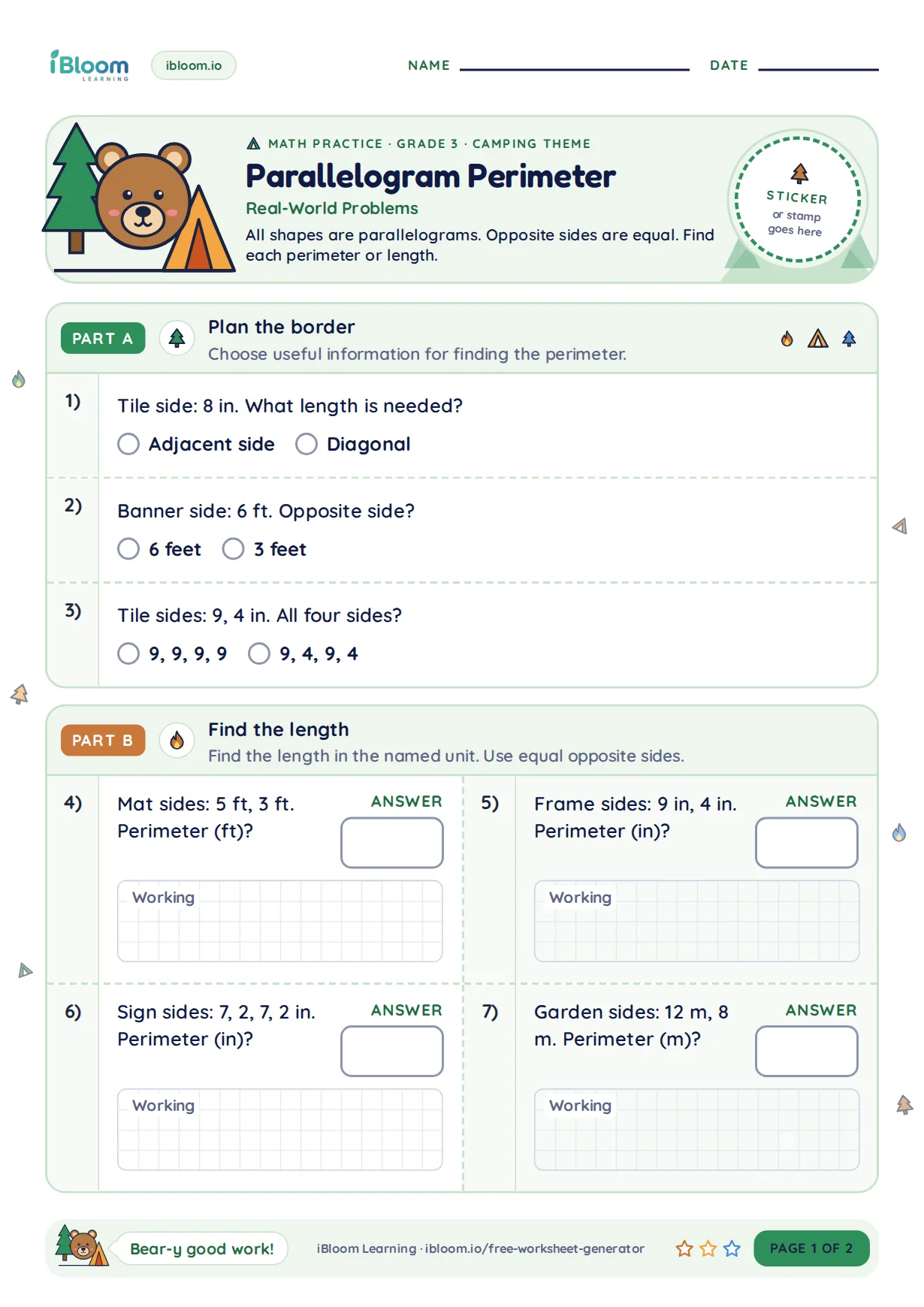 Parallelograms — Real-World ProblemsGrade 3 geometry worksheets for recognizing, describing, drawing, and sorting parallelograms by their sides, angles, and opposite-side relationships. This Grade 3 application worksheet uses realistic one-step and multi-step situations with room to model and solve.Grade 3Free PDF preview
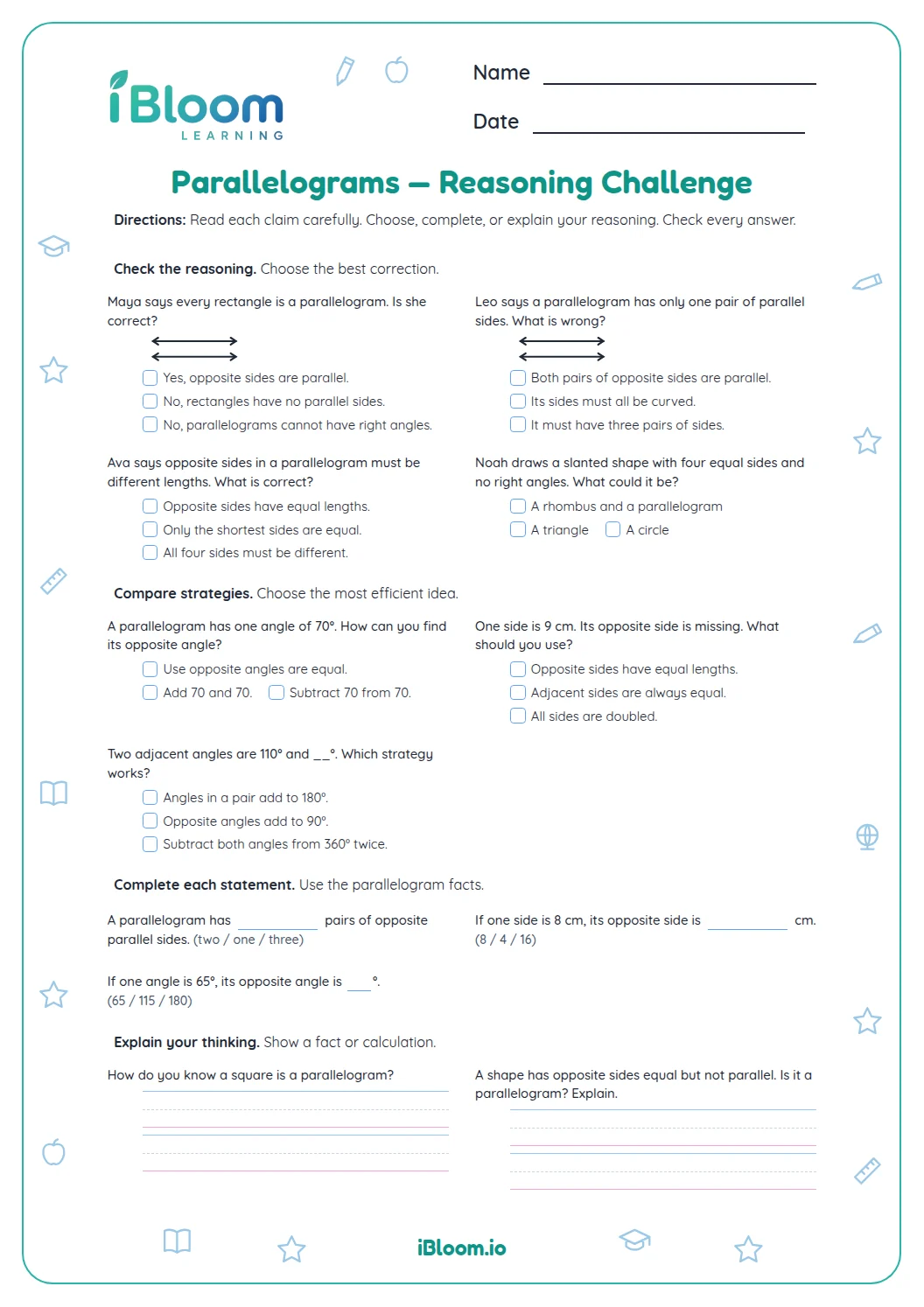 Parallelograms — Reasoning ChallengeGrade 3 geometry worksheets for recognizing, describing, drawing, and sorting parallelograms by their sides, angles, and opposite-side relationships. This Grade 3 reasoning worksheet combines error analysis, strategy comparison, missing information, and a gentle extension.Grade 3Free PDF preview
Practice that builds confidence
What students learn
These Grade 3 parallelogram worksheets help children move beyond naming a shape by sight. Students practise identifying parallelograms, noticing opposite sides, comparing them with rectangles and other quadrilaterals, and explaining why a shape does or does not fit the category.
The printable activities include shape sorting, visual classification, drawing tasks, and short geometry prompts. Children work with tilted and non-tilted figures so they learn that orientation, size, and color do not change a parallelogram’s properties.
A parallelogram is a quadrilateral with two pairs of opposite sides that are parallel. In Grade 3, students do not need formal proofs, but they should learn to look for properties: four sides, opposite sides facing the same direction, and shapes that can be slanted without changing their name. These worksheets build that habit through clear examples and non-examples.

Building shape recognition
The activities progress from choosing parallelograms among mixed shapes to describing why a figure qualifies. Students may see rectangles, squares, rhombuses, trapezoids, and irregular four-sided figures nearby, which helps them compare attributes instead of guessing from appearance. Tilted parallelograms are included so children do not think a shape must sit flat on the page.
A simple parent routine
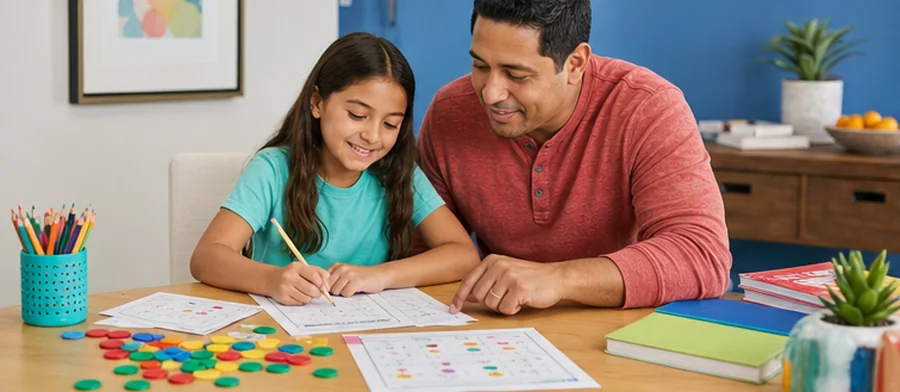
At home, start by asking your child to trace the two pairs of opposite sides with different colored pencils. Then say, “Which sides would never meet if they kept going?” After one worksheet section, invite your child to find parallelogram-like shapes around the room, such as patterns on a bag, floor design, or folded paper. End with one sentence: “This is a parallelogram because...”
Classroom uses
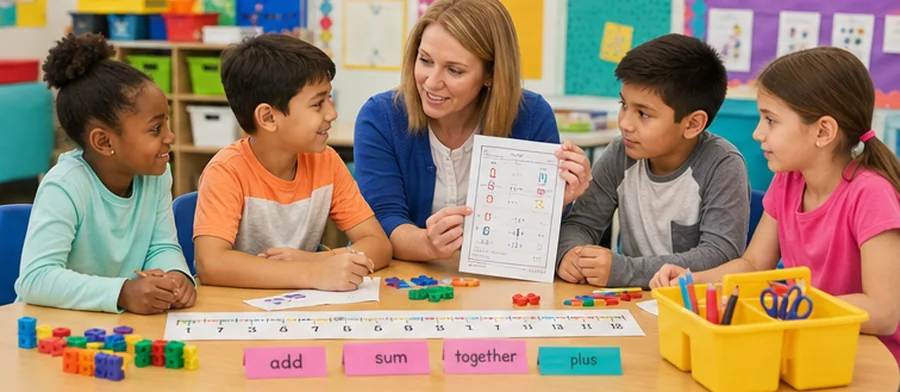
Teachers can use these pages for geometry centers, small-group reteaching, morning review, or quick checks after introducing quadrilaterals. They also work well as a partner activity: one student sorts shapes, and the other must justify each choice using vocabulary such as side, angle, opposite, parallel, quadrilateral, and pair.
Common errors to watch for
Many children reject a parallelogram when it is slanted or stretched. Others call every four-sided shape a parallelogram, even when only one pair of sides is parallel or no opposite sides match direction. Some students confuse rectangles and parallelograms as completely separate groups; these worksheets encourage careful property-based thinking while keeping the language age-appropriate.
Free printable PDF download
Use this grade 3 parallelogram worksheet page to preview the activity, print it, or download it as a PDF for quick practice. It works well for homework, homeschool lessons, tutoring, morning work, revision, and classroom centers.
Answers and answer key support
After the child completes the worksheet independently, parents and teachers can use the answer support or answer key information to check the work, review mistakes, and choose the next practice step.
Why iBloom worksheets help
The pages are designed to make students slow down and inspect the shape, not just name it from memory. A helpful child-friendly strategy is: “Count four sides, check opposite sides, then decide.” With repeated sorting, drawing, and explaining, children gain confidence using geometry words and recognizing parallelograms in different sizes and positions.
Helpful answers
Frequently asked questions
What should a Grade 3 student know about parallelograms?
A Grade 3 student should know that a parallelogram is a four-sided shape with two pairs of opposite sides that are parallel. They should also recognize that the shape can be tilted, wide, narrow, or different sizes.
Do these worksheets include rectangles and squares?
Yes. Rectangles and squares may appear as comparison shapes because they help children think about side relationships and quadrilateral properties instead of relying only on how a shape looks.
How can I help my child identify a parallelogram?
Ask your child to first count the sides, then look at the two pairs of opposite sides. If both opposite side pairs go in the same direction and would not meet if extended, the shape is a parallelogram.
Why does my child miss slanted parallelograms?
Many children expect familiar shapes to sit straight on the page. Practising with rotated and slanted examples helps them understand that orientation does not change the shape’s properties.
Are these activities only for independent practice?
No. They can be used independently, but they are also useful for teacher-led review, geometry centers, partner sorting tasks, homework, or a quick check after a lesson on quadrilaterals.
Is this grade 3 parallelogram worksheet free?
Yes. You can preview it for free and use the printable worksheet for home or classroom practice.
Can I download this grade 3 parallelogram worksheet as a PDF?
Yes. Use the worksheet download option to save a printable PDF, or print the worksheet directly from the page.
Does this grade 3 parallelogram worksheet include answers or an answer key?
When the activity has fixed answers, iBloom includes answer support so parents and teachers can check the completed worksheet.