
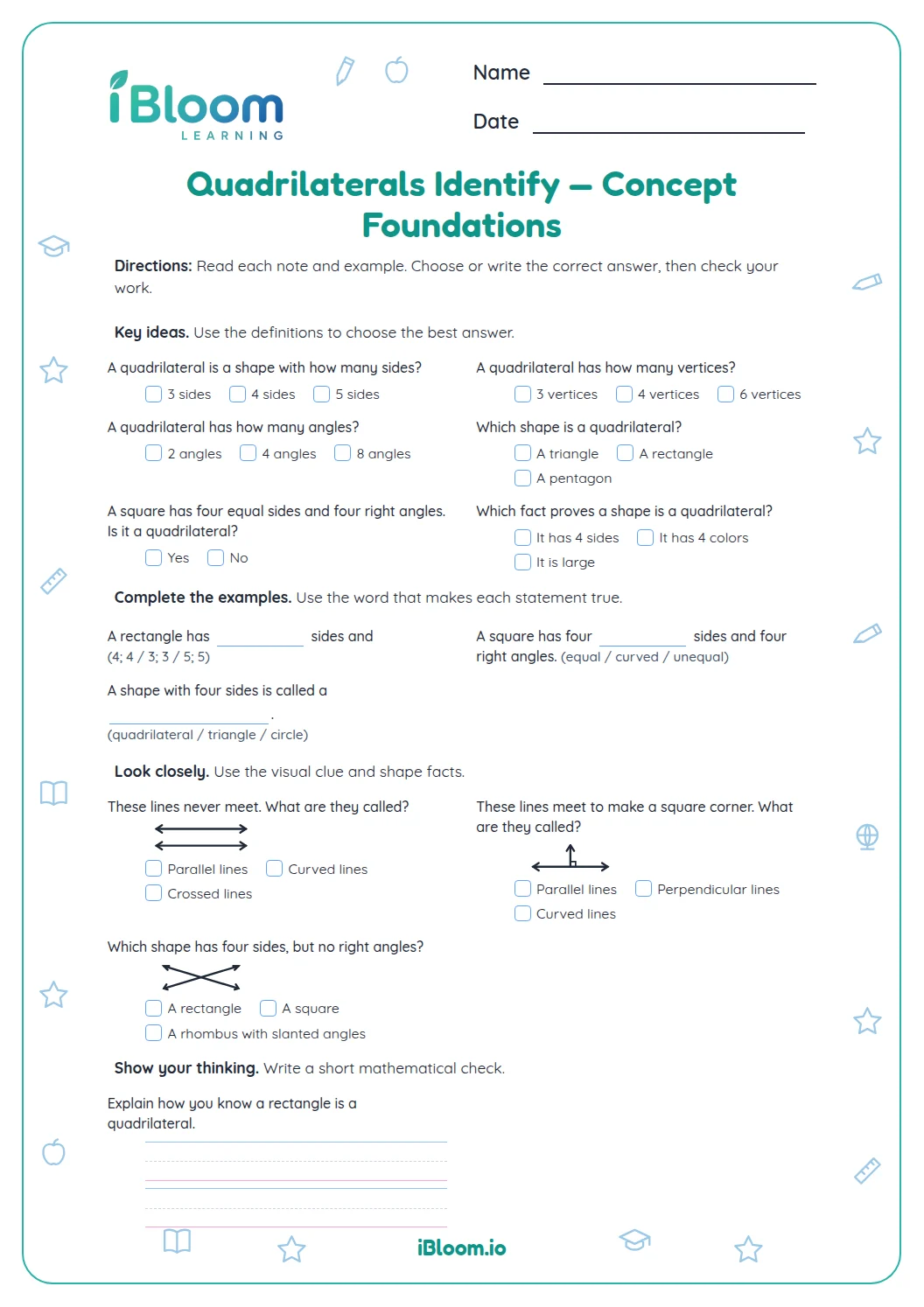
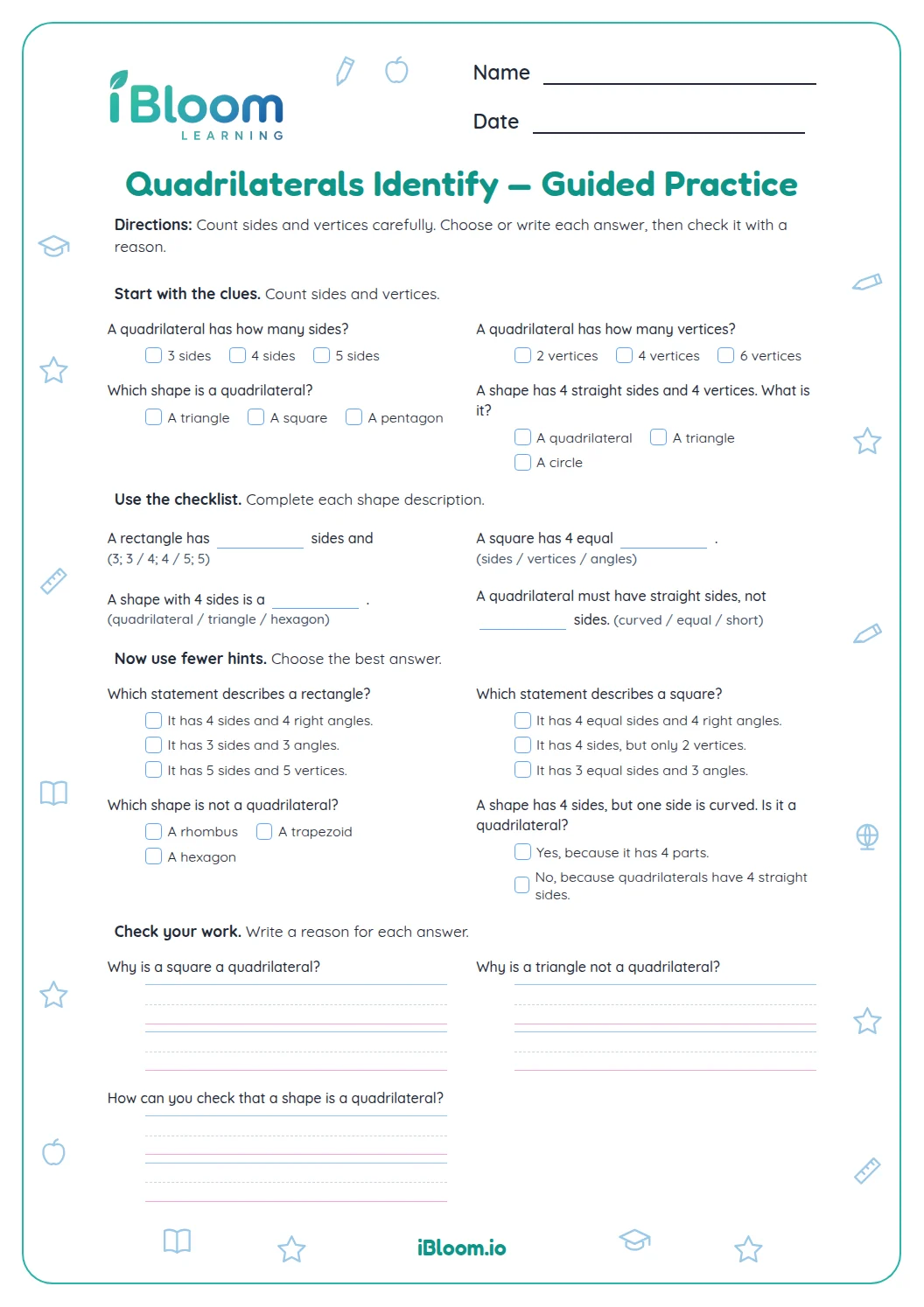
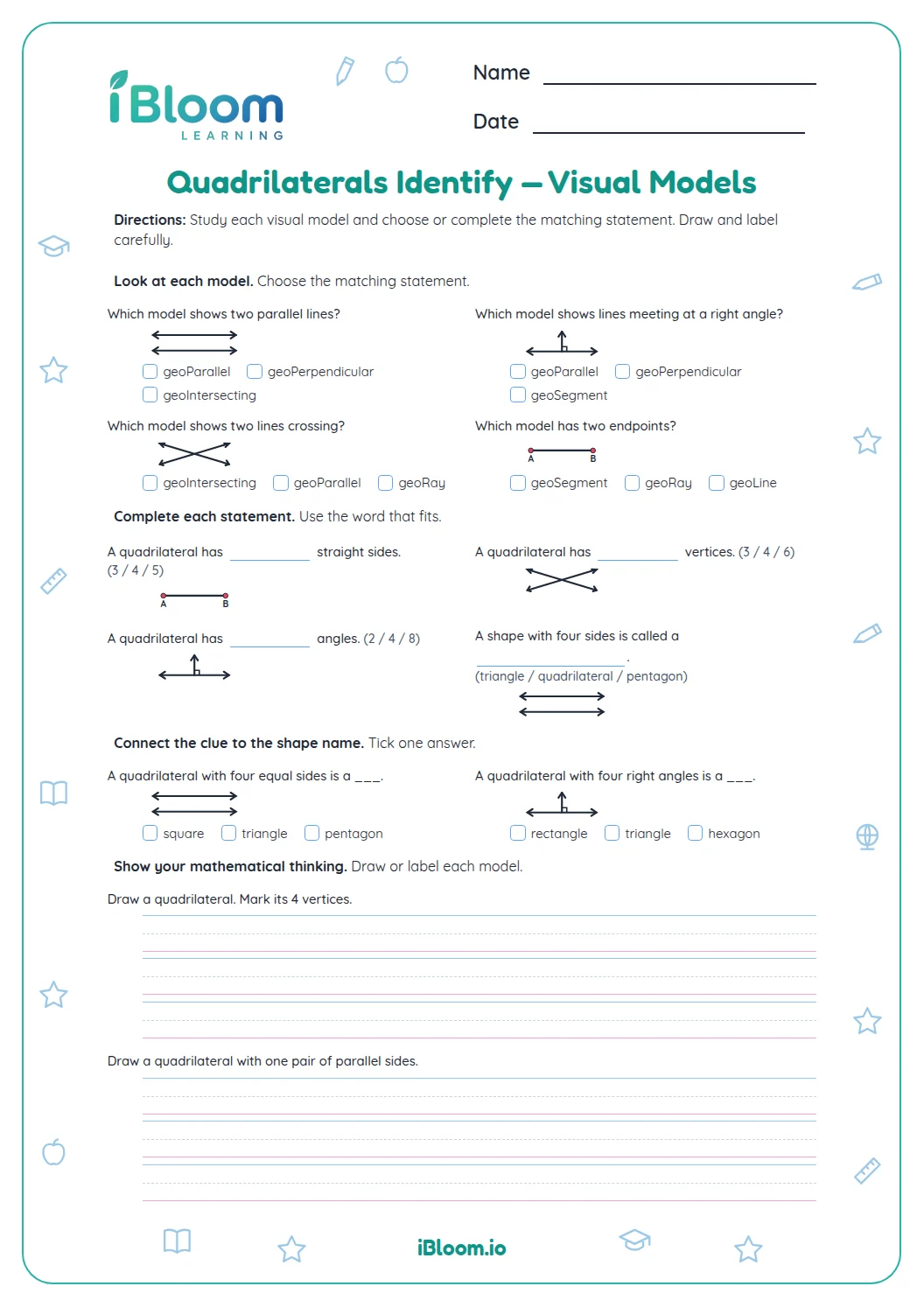
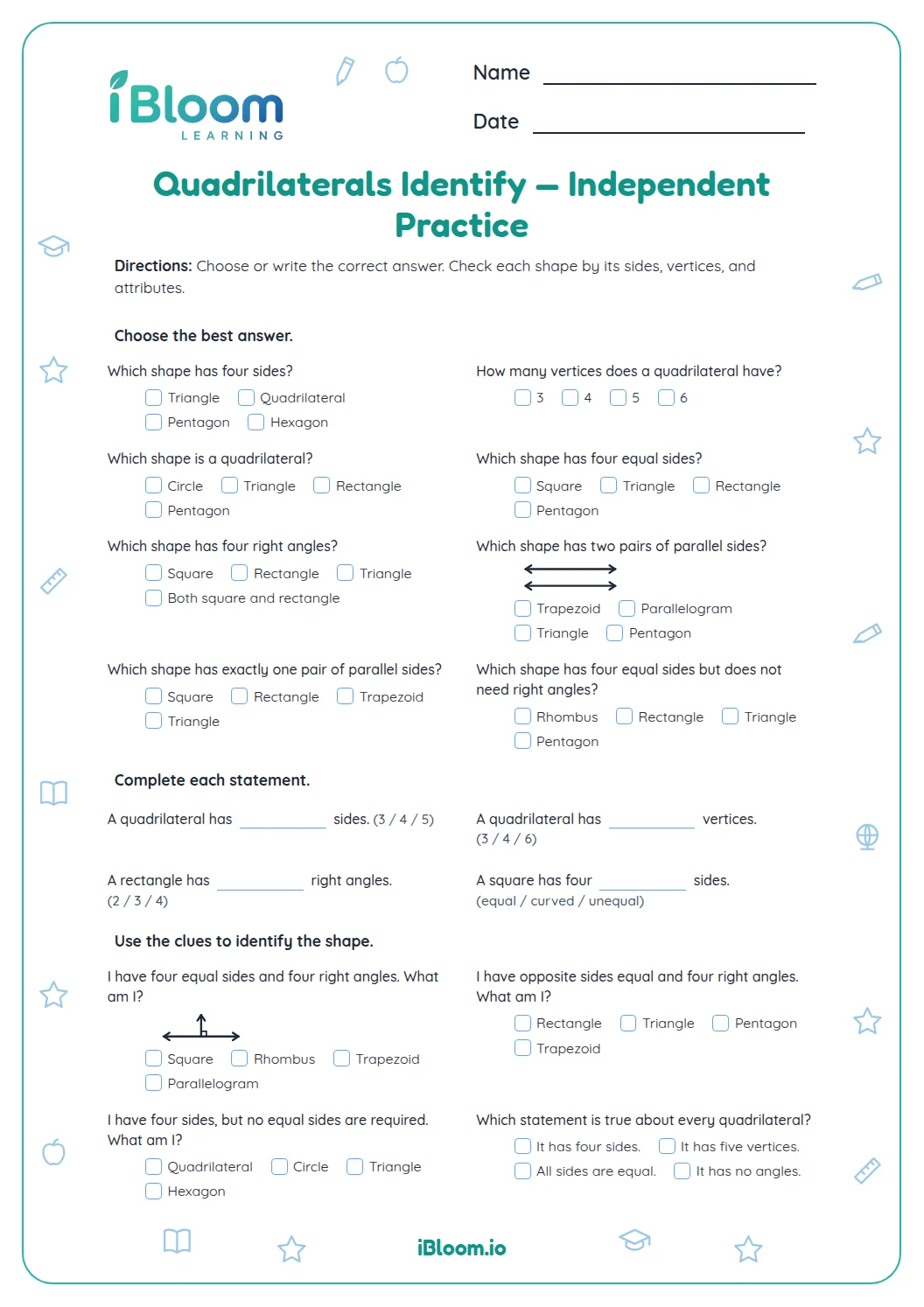
About this worksheet
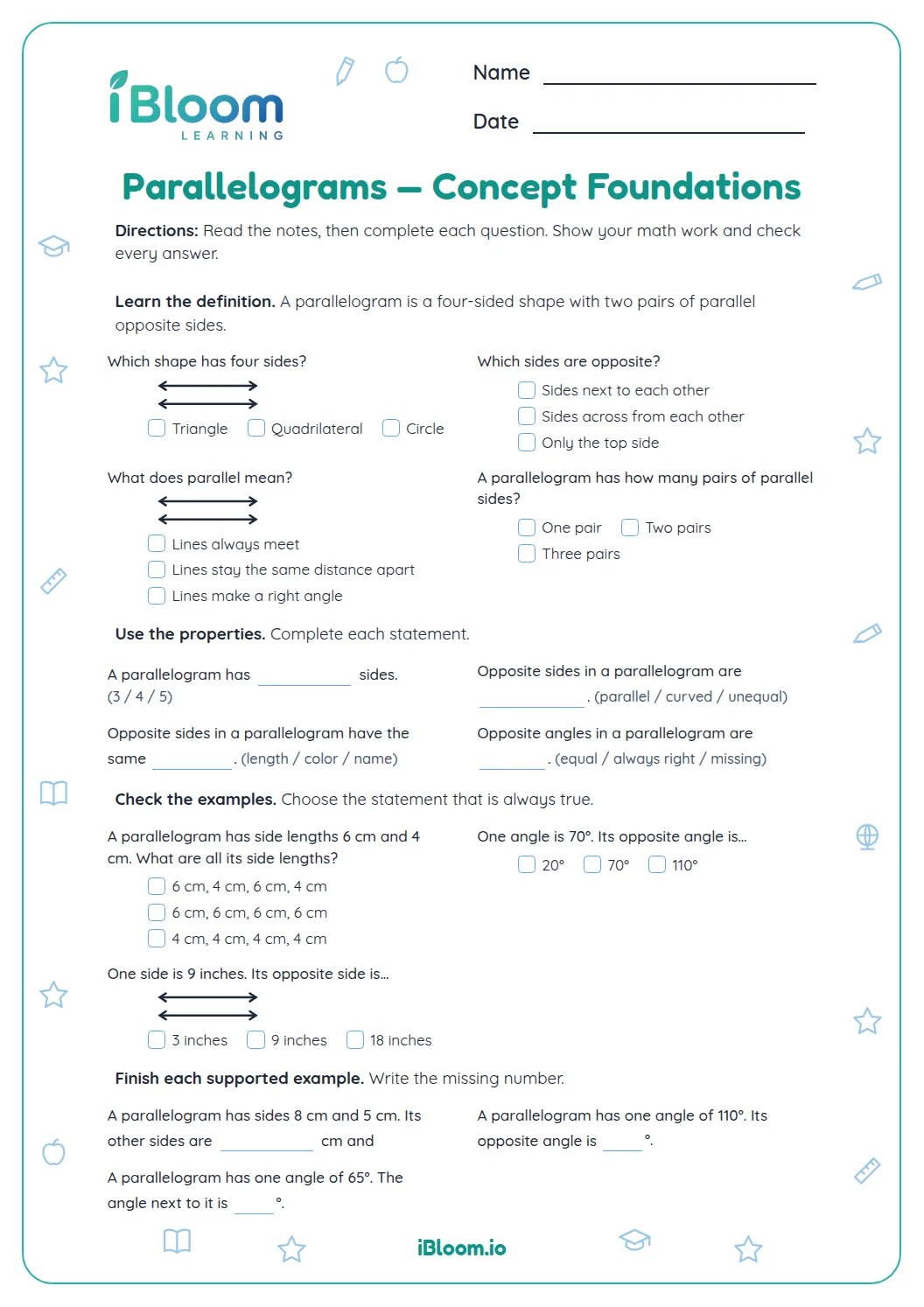
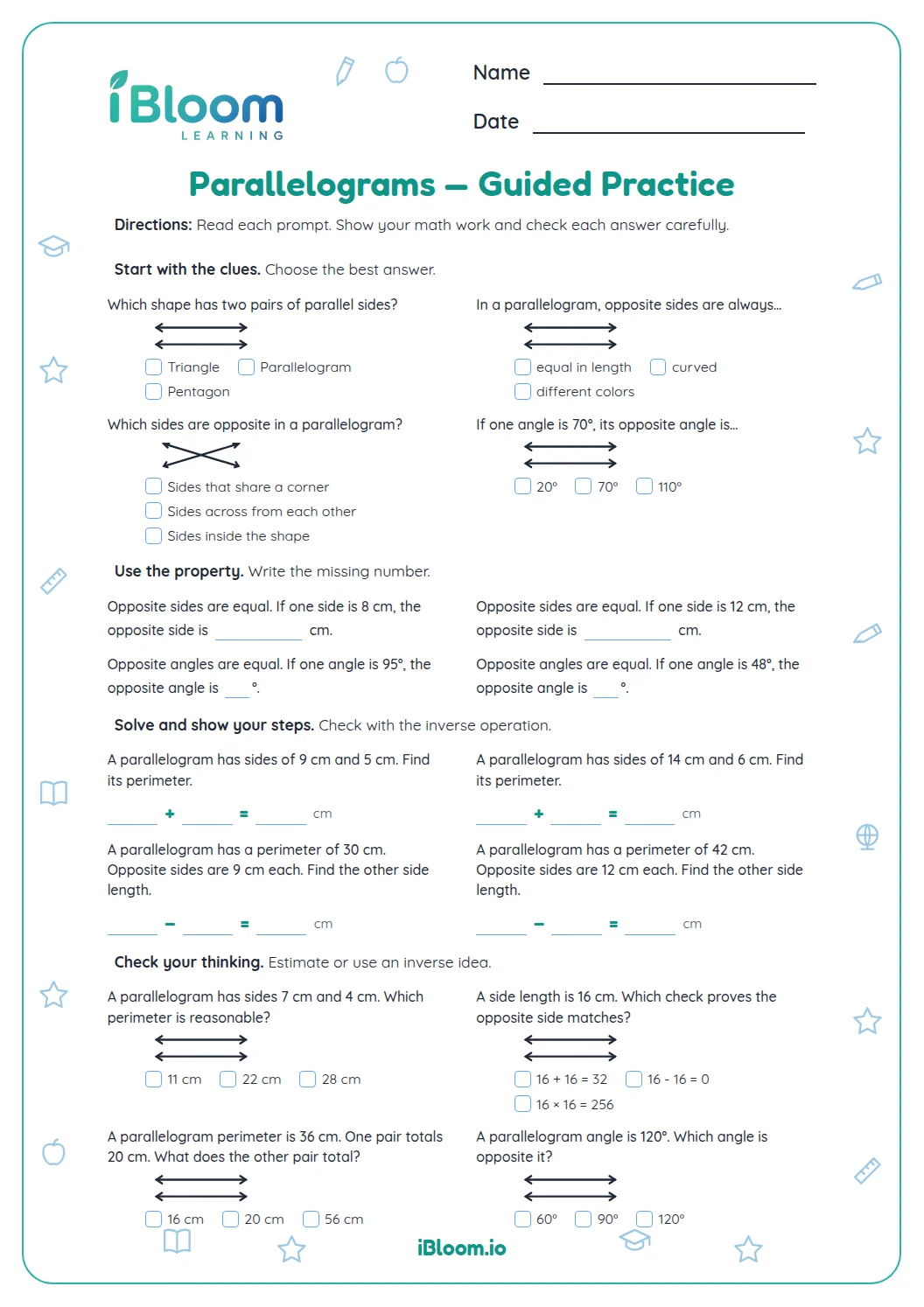
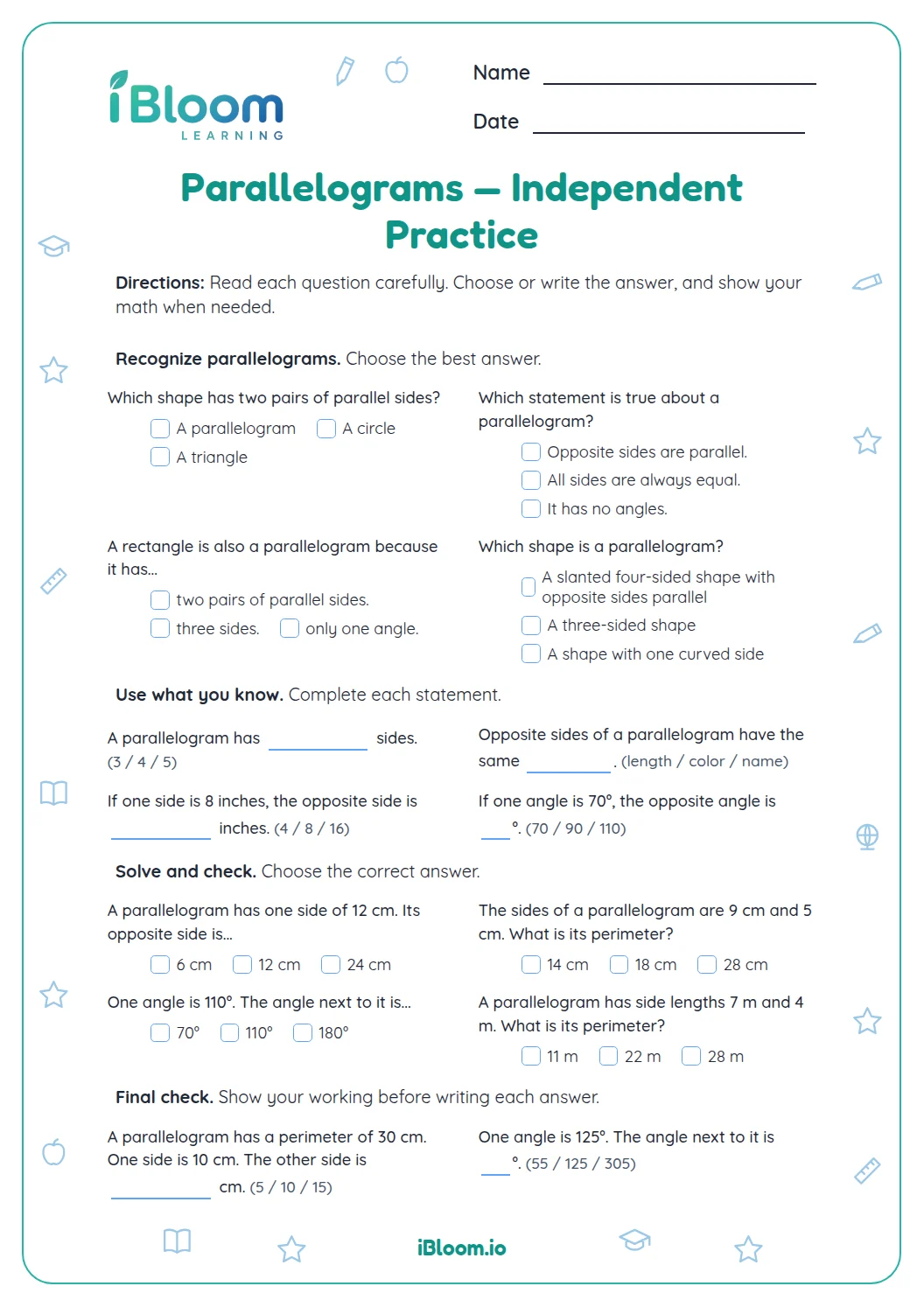
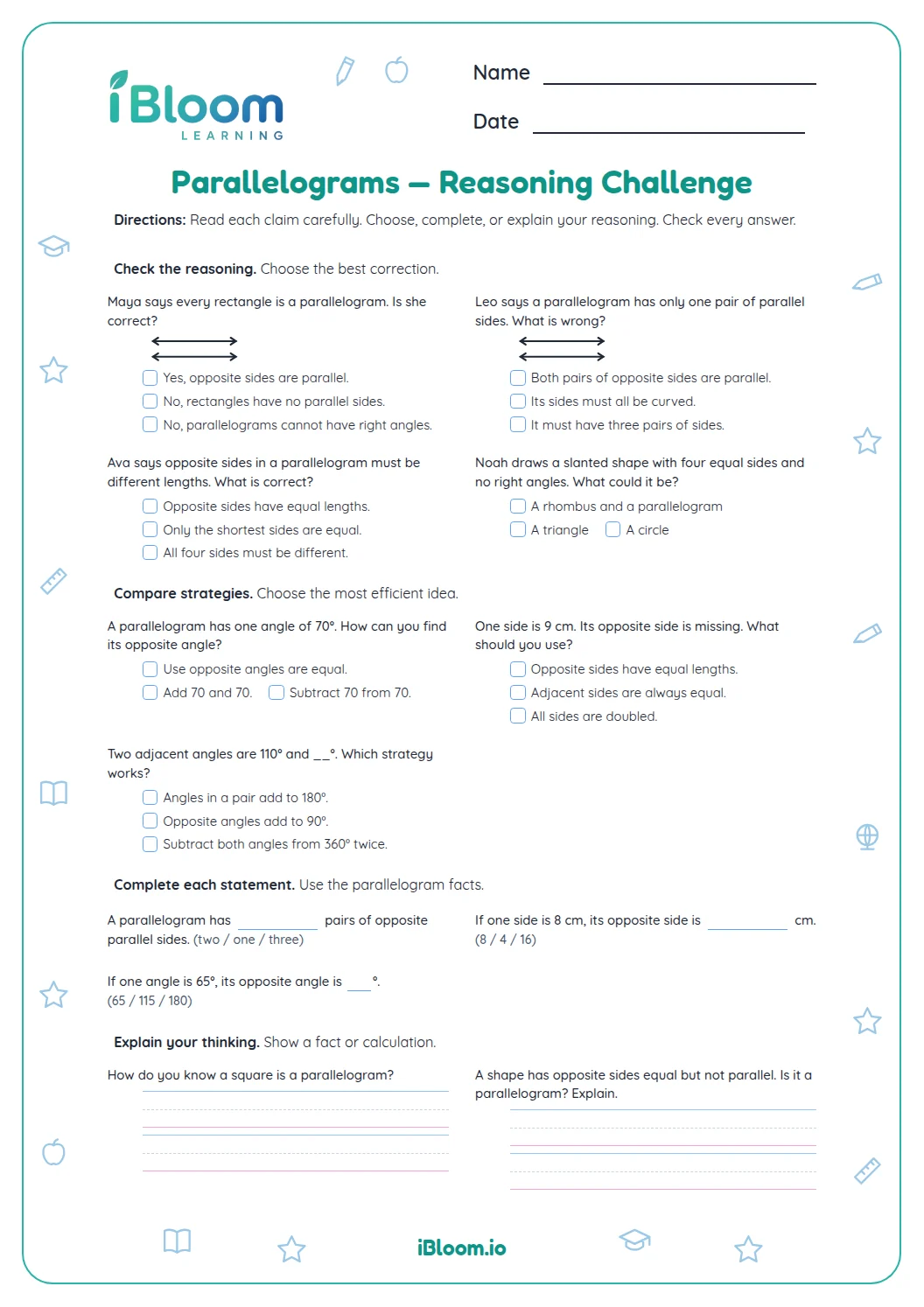
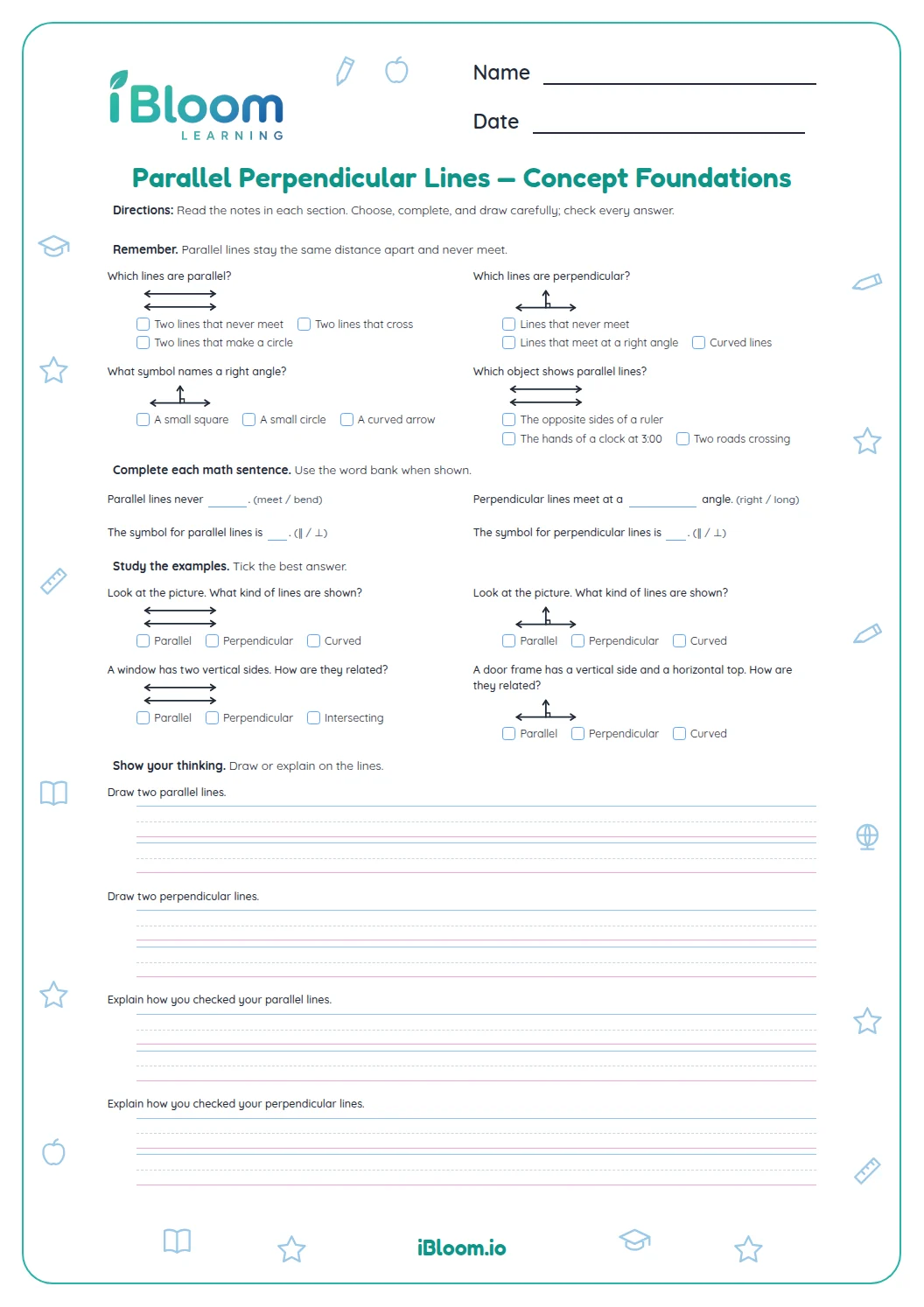
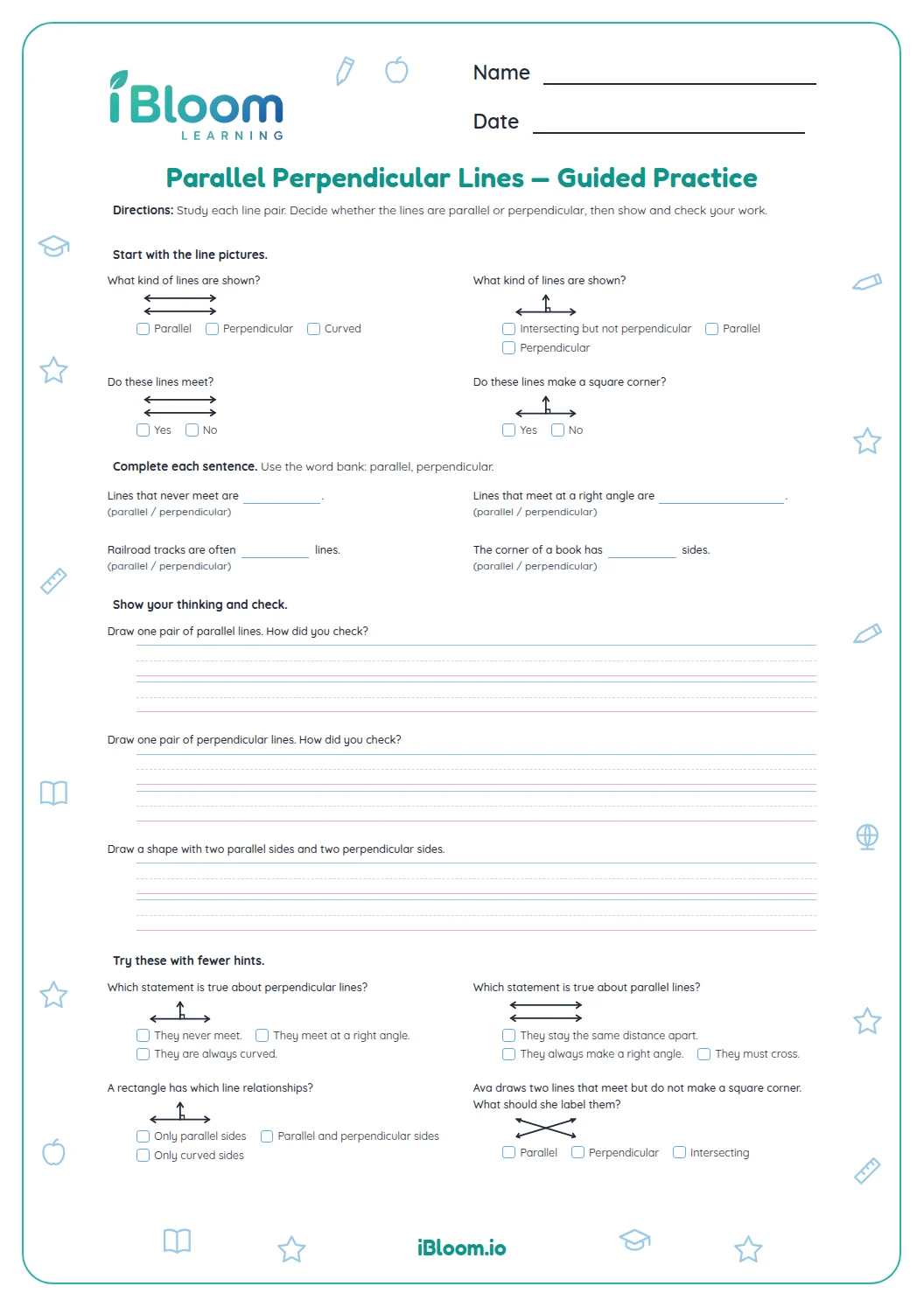
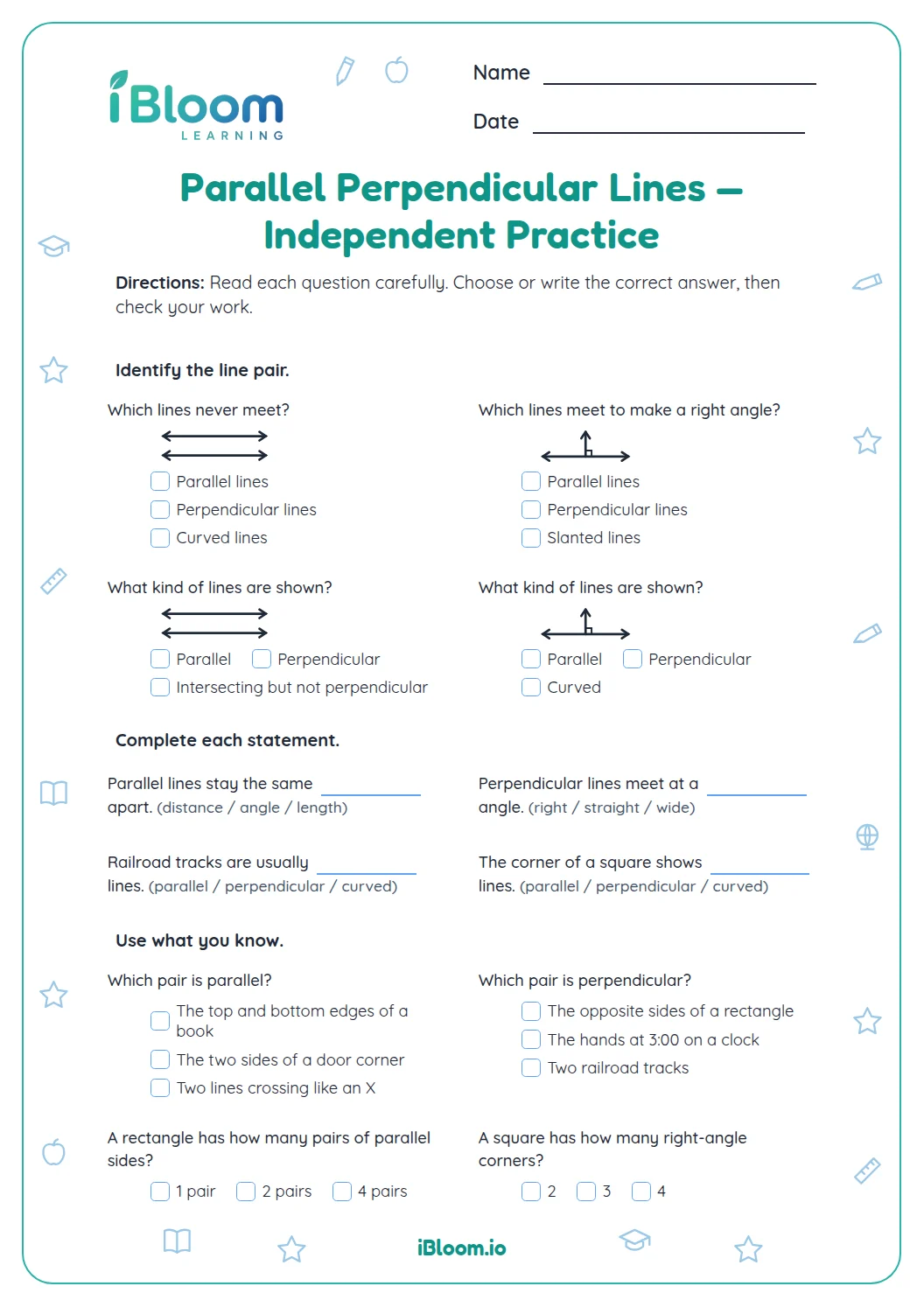
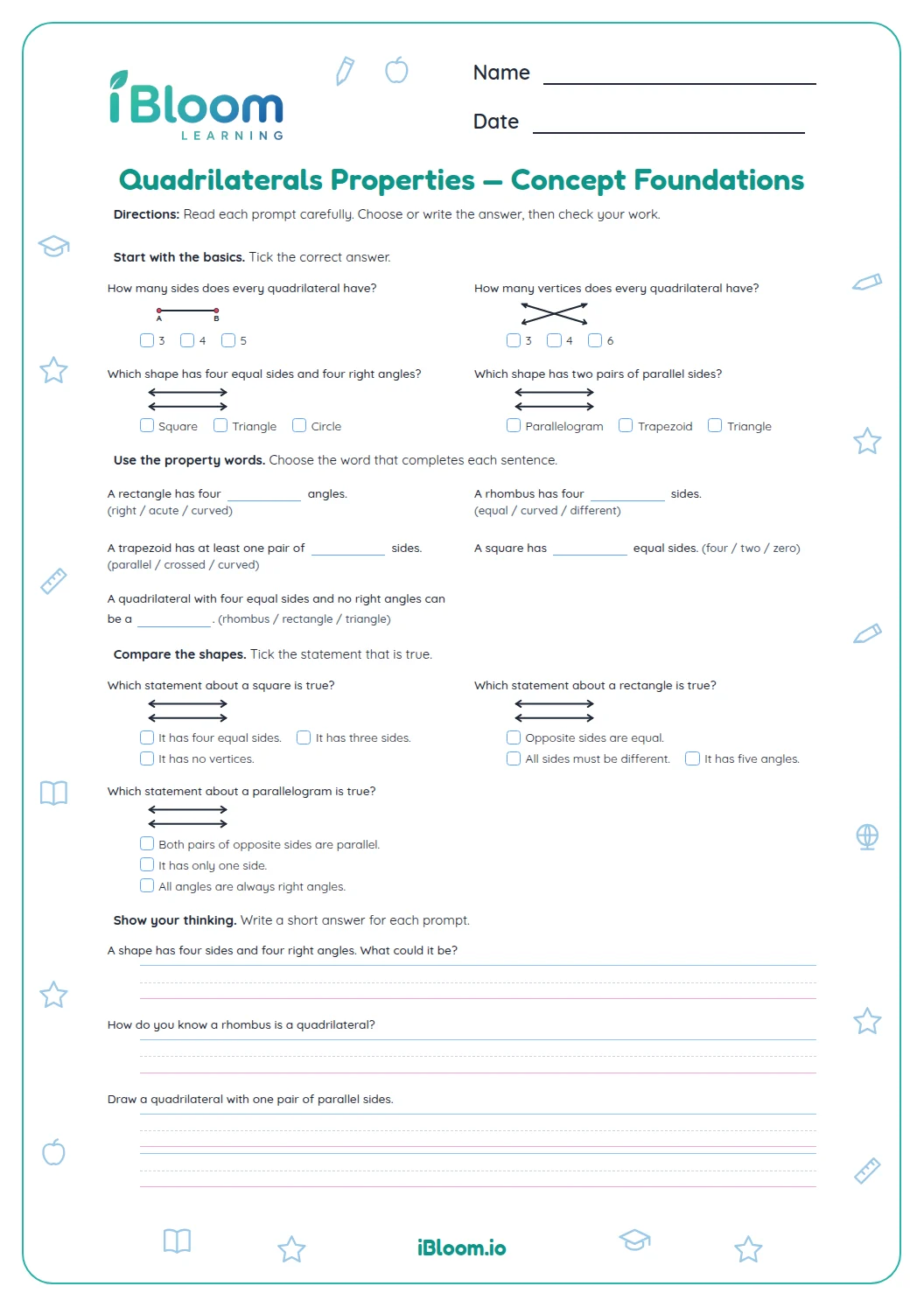
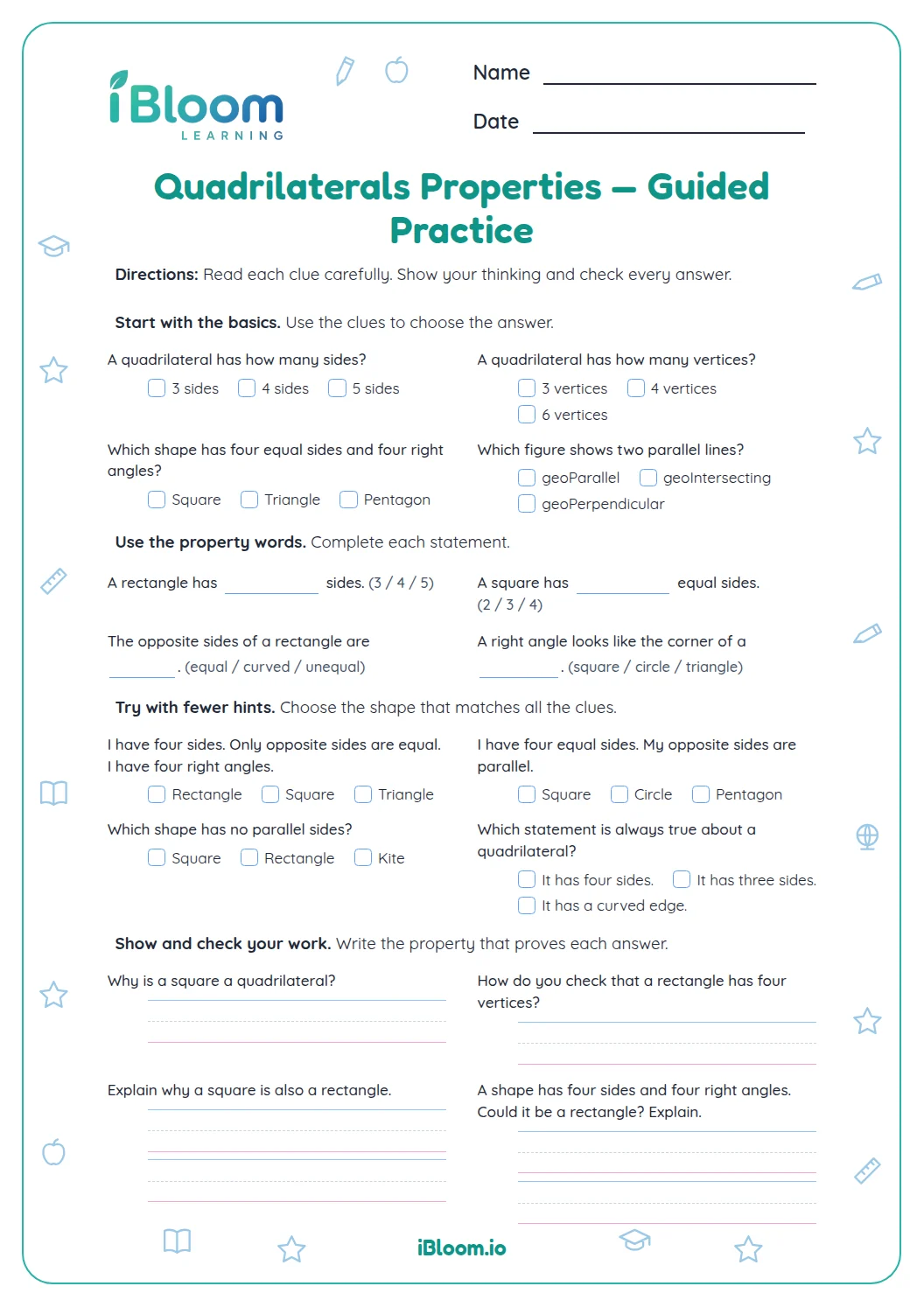
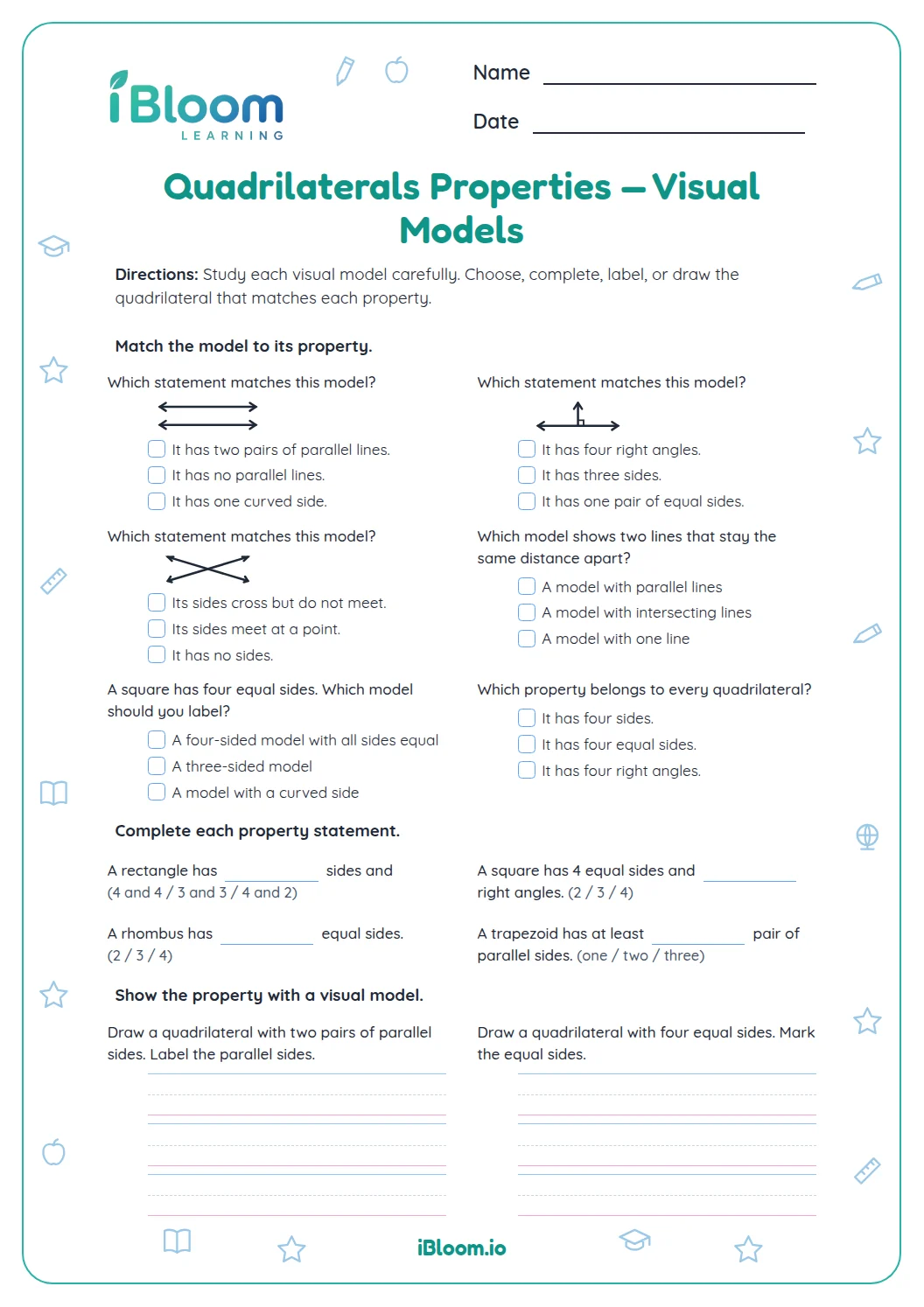
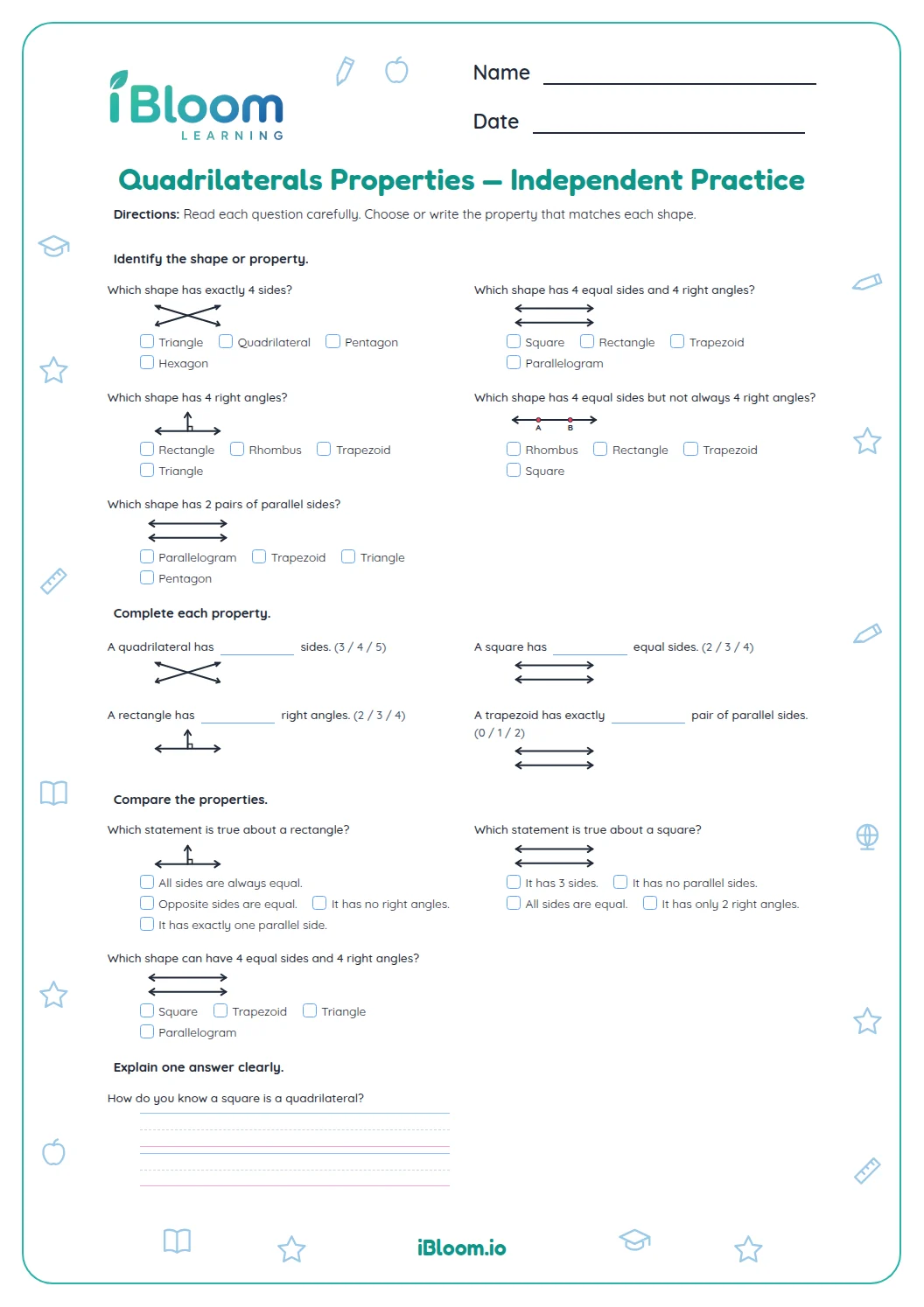
This Grade 3 printable includes two labeled shape rows and short questions about parallelogram attributes. Students identify a model by its opposite parallel sides, then complete related shape facts. A separate answer key is included.
Aligned to 3.G.A.1
What makes a shape a parallelogram?
A parallelogram is a quadrilateral with two pairs of opposite sides parallel. Check both pairs in each of the two labeled models.
- 1Read the labeled shape row.
- 2C is the parallelogram because both opposite side pairs are parallel.
How can you read the shape rows?
The first two questions show labeled shape rows. Later items use short facts and blanks to practice the same side and category attributes.
How do shape categories share attributes?
Rectangles and squares also have two pairs of opposite sides parallel, so they fit the parallelogram category. The rows ask students to recognize the shape visually.
Study the shape models and facts
- 1Study each of the two labeled shape rows.
- 2Check for two pairs of opposite parallel sides.
- 3Complete the short facts about sides and categories.
- 4Remember that rectangles and squares also have opposite parallel sides.
- 5Check choices and facts with the answer key.
Shape classification checks
The mistake
Choosing a trapezoid with one pair of parallel sides.
The fix
A parallelogram has two pairs of opposite parallel sides.
The mistake
Thinking only slanted shapes can be parallelograms.
The fix
Rectangles and squares also have two pairs of parallel opposite sides.
The mistake
Comparing neighboring sides only.
The fix
Check each pair of opposite sides.
Common Core alignment
This page practices shape categories through labeled visual models.
Use shared attributes to recognize a shape category.
On this sheet: Identify parallelograms from labeled shape models using their shared side attribute.
Show the official wordingHide the official wording
Understand that shapes in different categories (e.g., rhombuses, rectangles, and others) may share attributes (e.g., having four sides), and that the shared attributes can define a larger category (e.g., quadrilaterals).
What to practice next
Make more practice
Further reading
Questions parents and teachers ask
What is a parallelogram?
A parallelogram is a four-sided shape with two pairs of opposite sides parallel. The first two questions show labeled shape rows, followed by short attribute questions about the category. The separate answer key provides the correct letter or word for each of the 14 items.
Are rectangles parallelograms?
The sheet shows a parallelogram among other labeled shapes. Separate facts also refer to rectangles and squares, which share two pairs of opposite parallel sides. Students use these attributes to recognize the larger shape category and check their responses with the answer key.
How many models are on the worksheet?
The worksheet has 14 questions. The first two show a row of four labeled shapes, and the remaining items use concise fill-in facts or a choice about parallelogram attributes. The separate answer key provides the correct letter or word for each item.
Do students need to find angle measures?
The sheet does not ask students to find angle measures. Instead, each item shows a labeled shape row, and students identify the parallelogram by its opposite parallel sides. The answer key lists the correct letter for each of the 14 visual questions.
How can a student check the answer?
Check both pairs of opposite sides in one of the two labeled models. Each pair should be parallel. Then compare the chosen letter with the key, or check the short fact answers for the remaining questions. The key includes all 14 responses.