
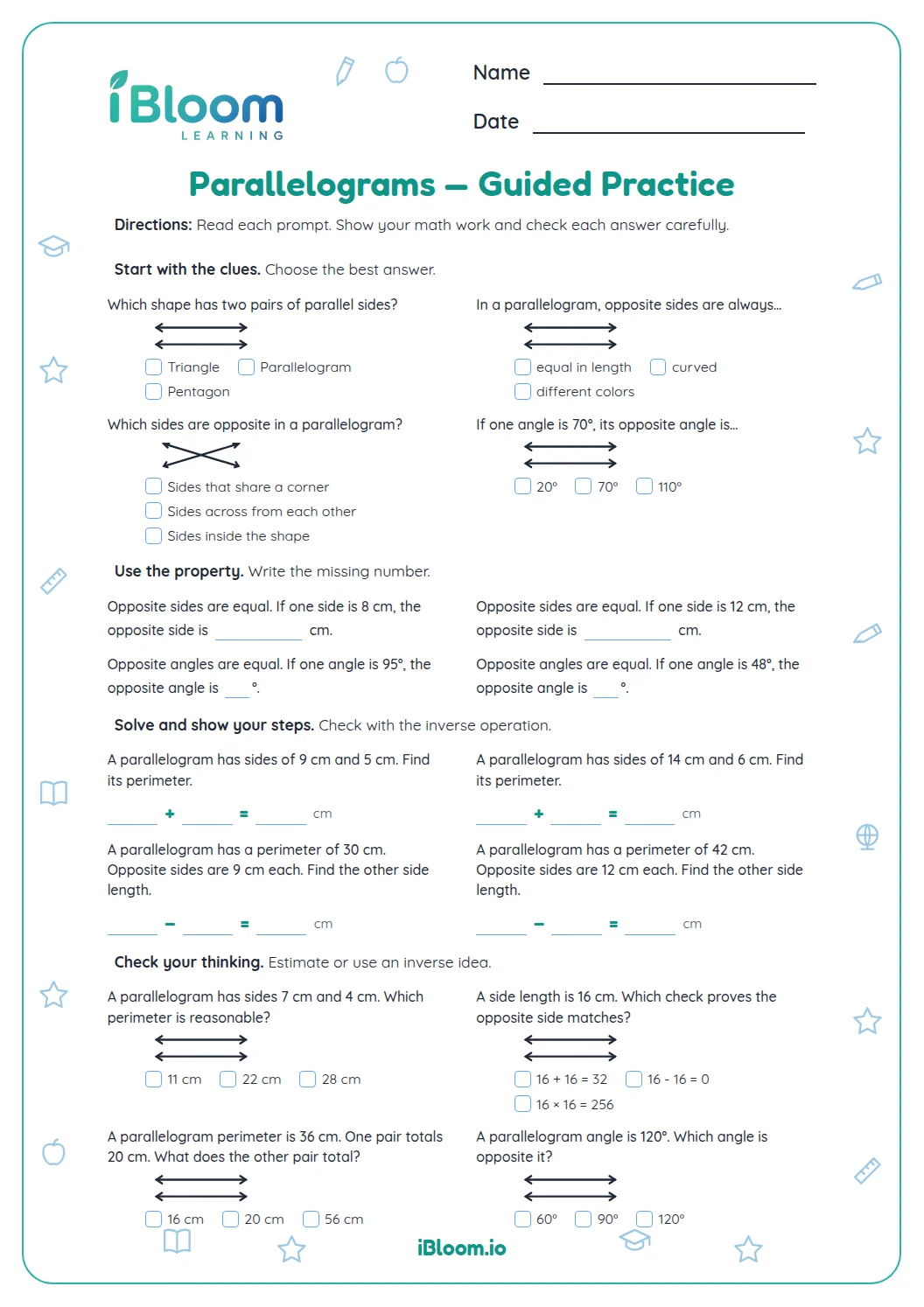
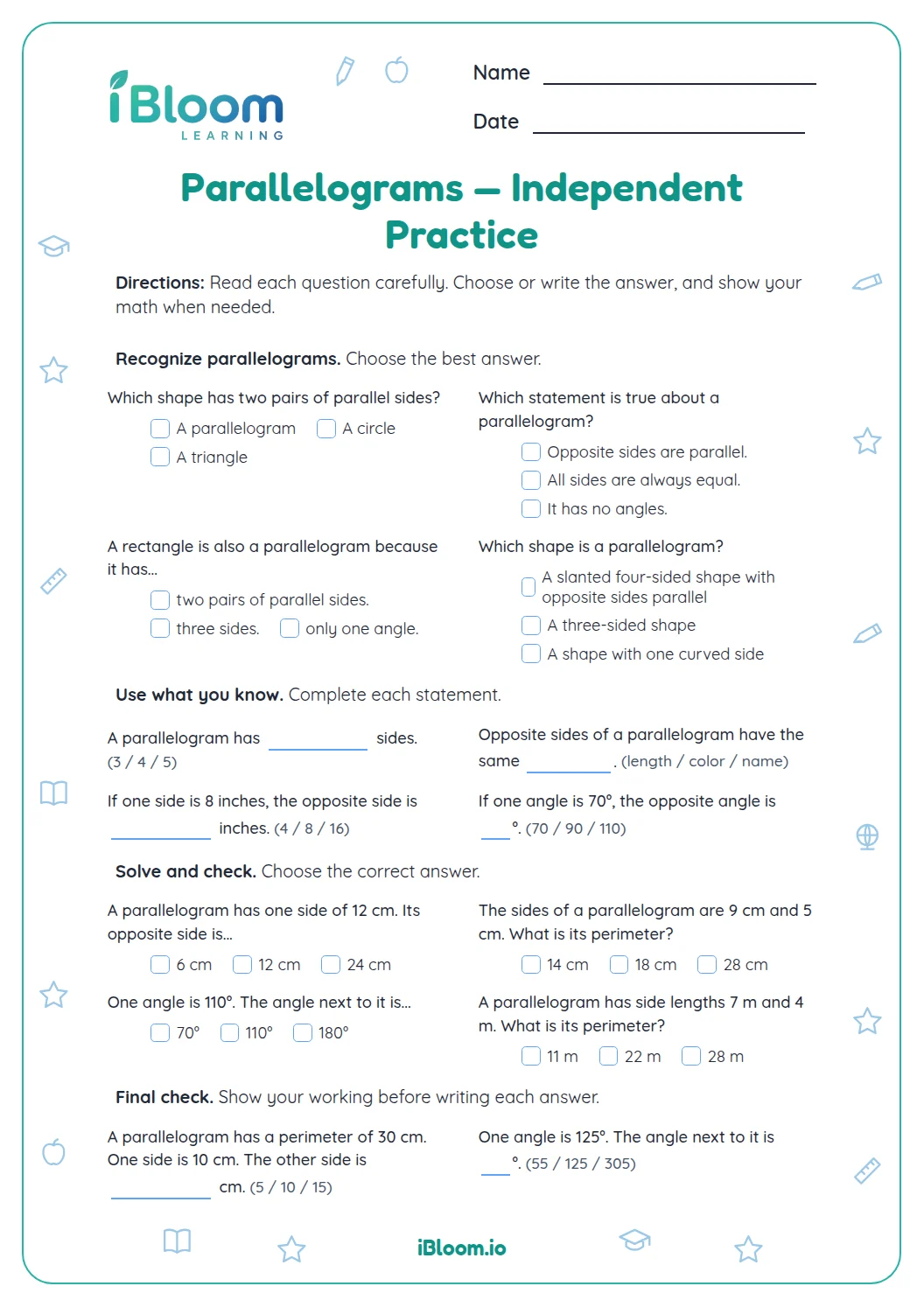
About this worksheet
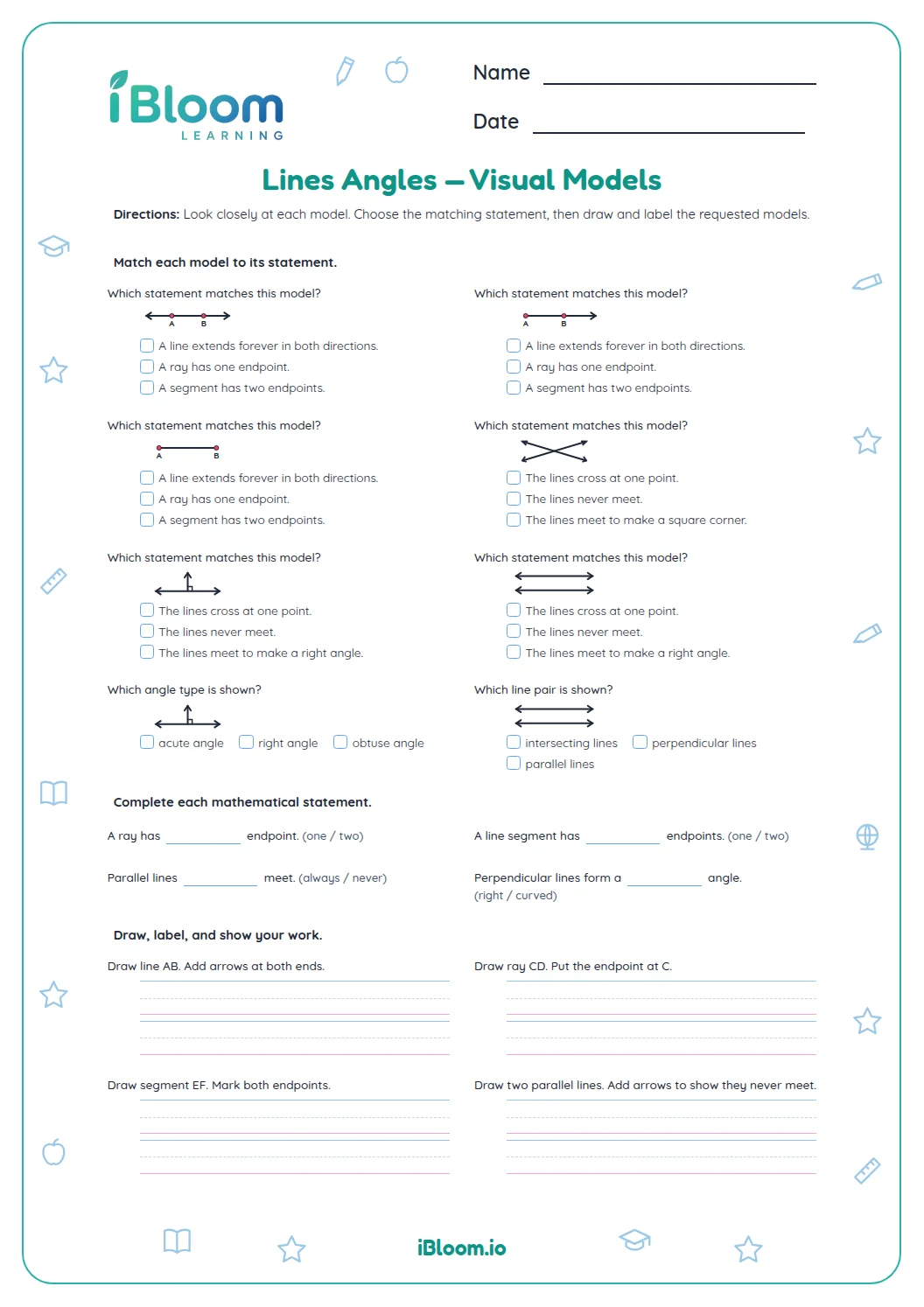
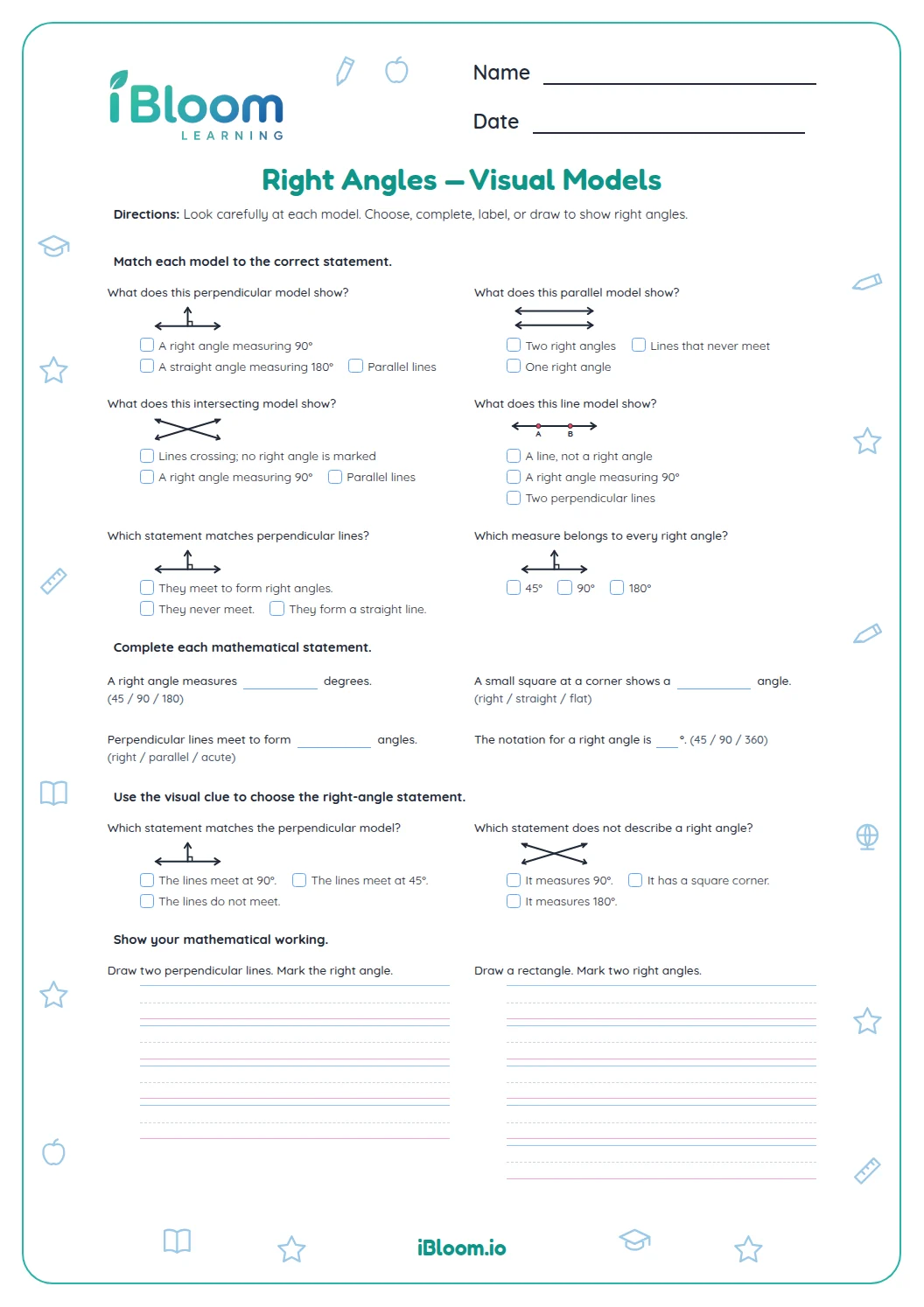
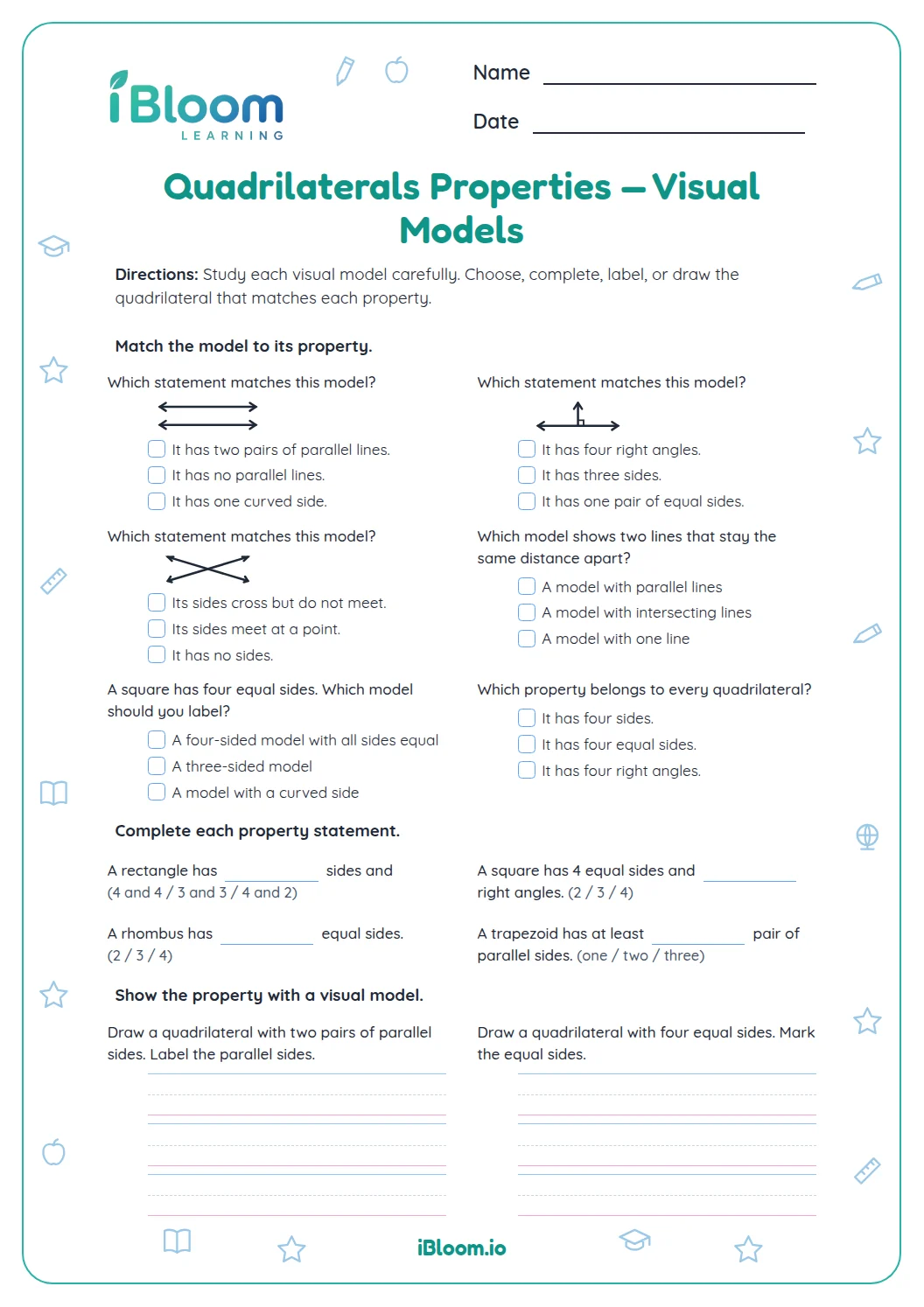
This printable visual-model worksheet gives students repeated practice reading parallel and perpendicular relationships in figures. Children compare marked models, identify how sides meet, and use property clues to select a matching figure. The answer key explains each choice. The skill connects to identifying parallel and perpendicular lines in two-dimensional figures.
Aligned to 4.G.A.1
How do the models show line relationships?
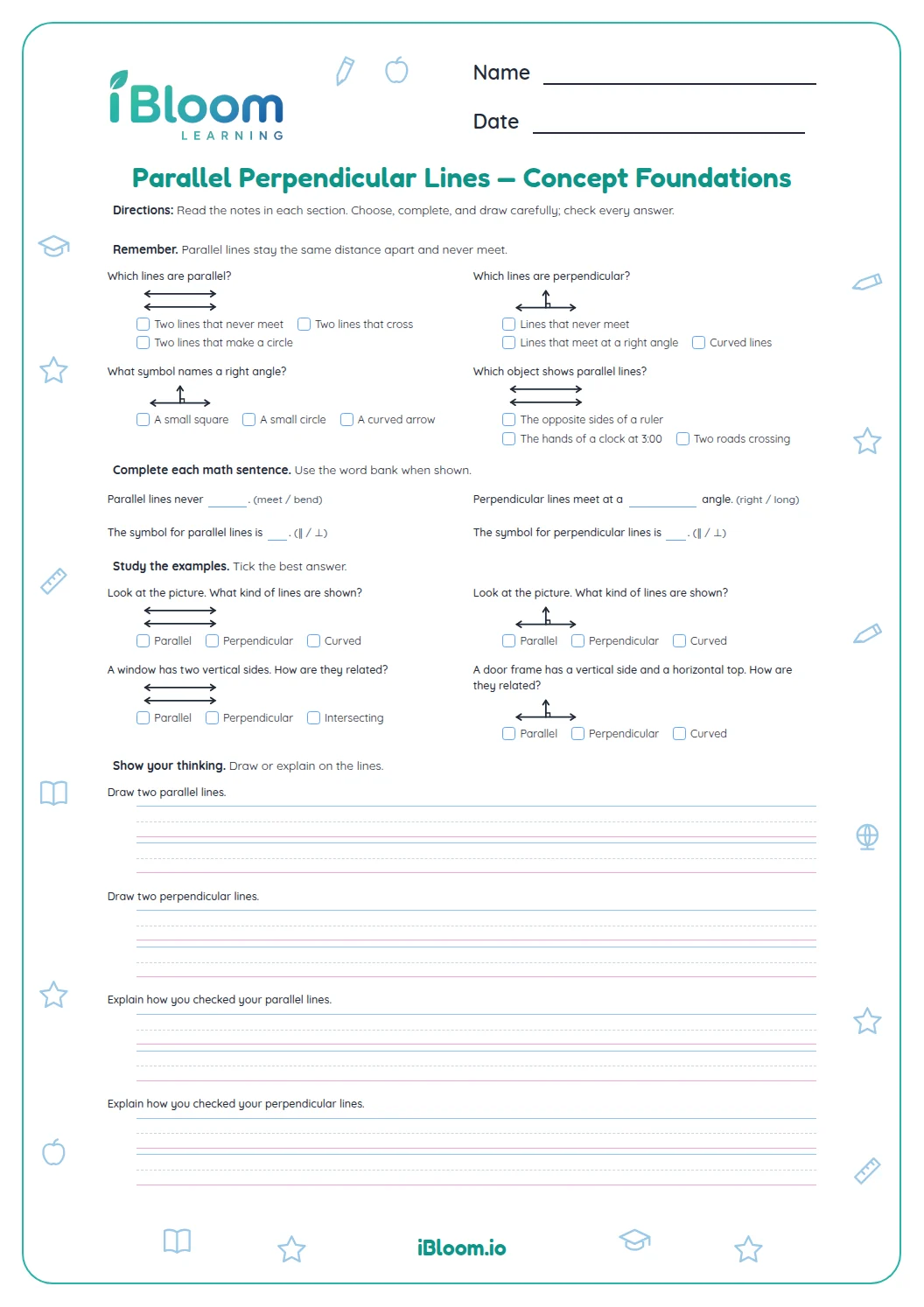
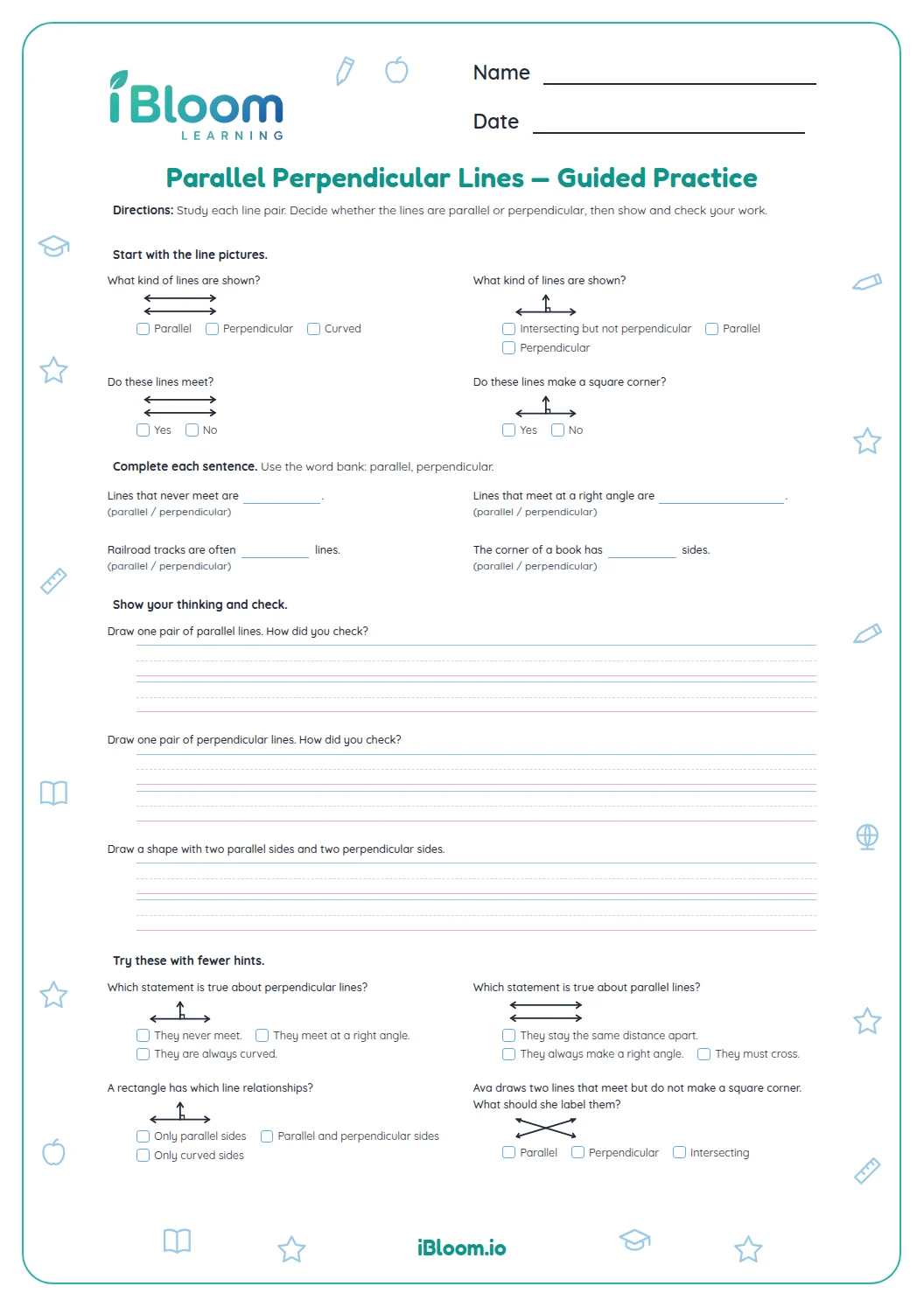
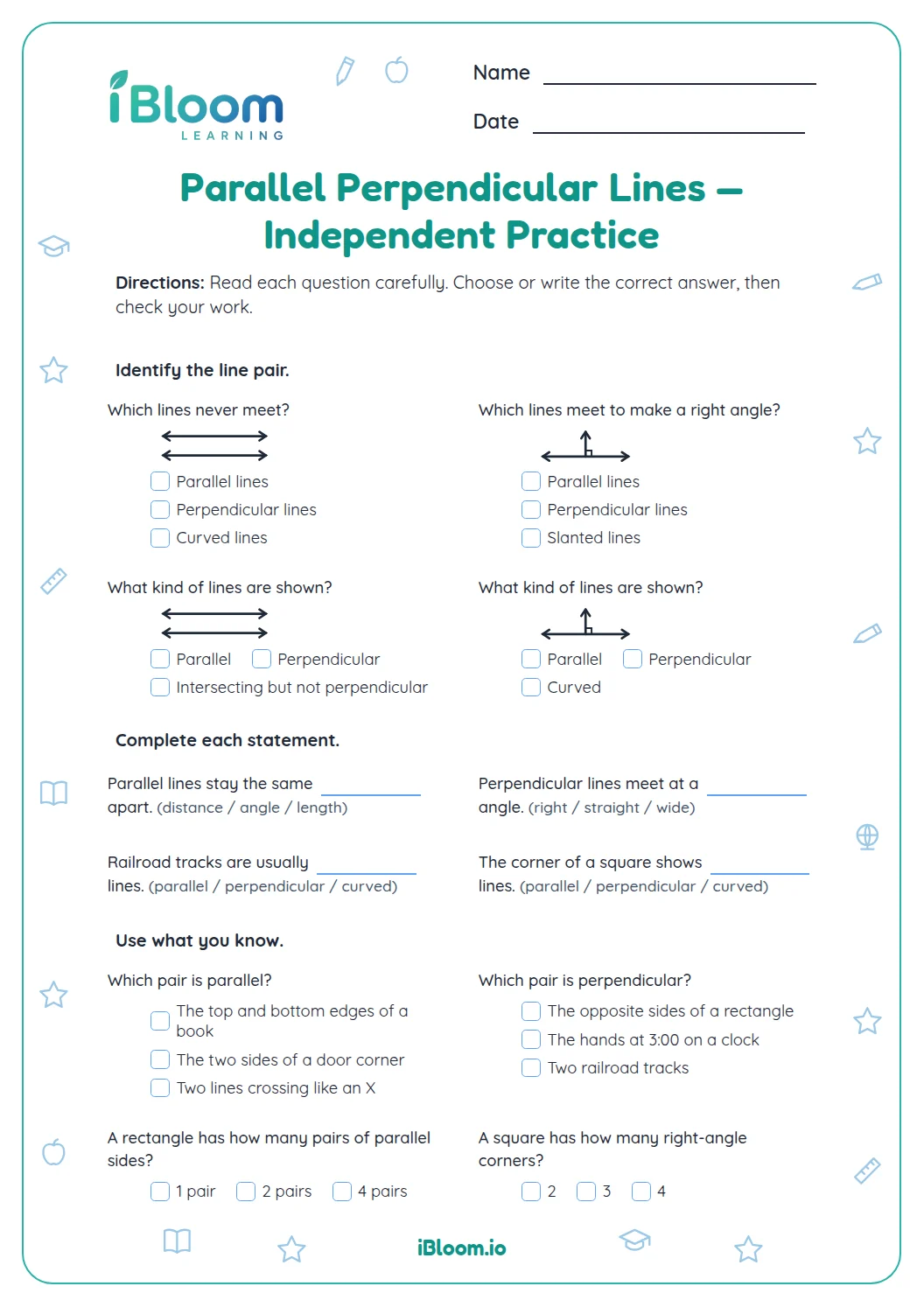
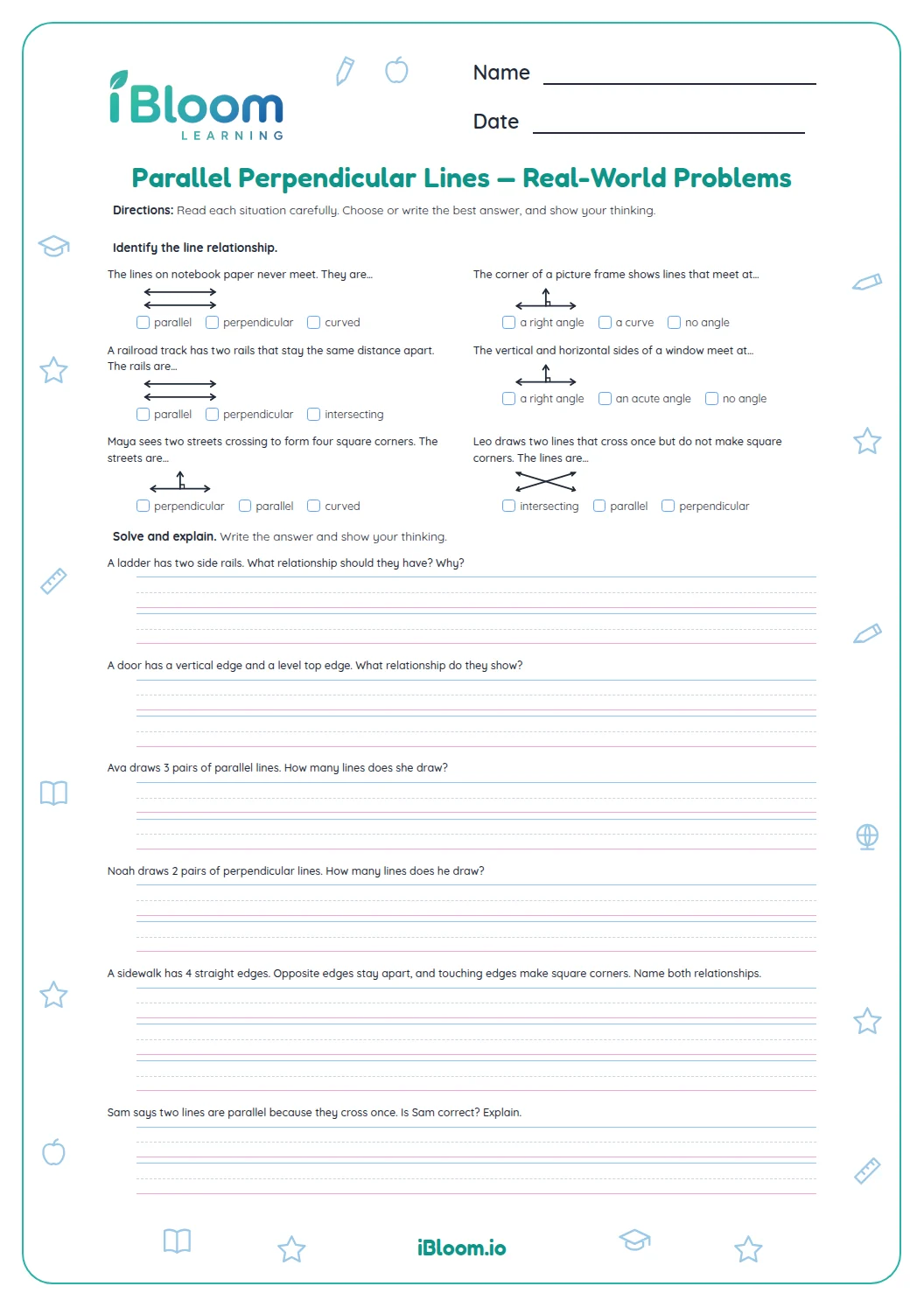
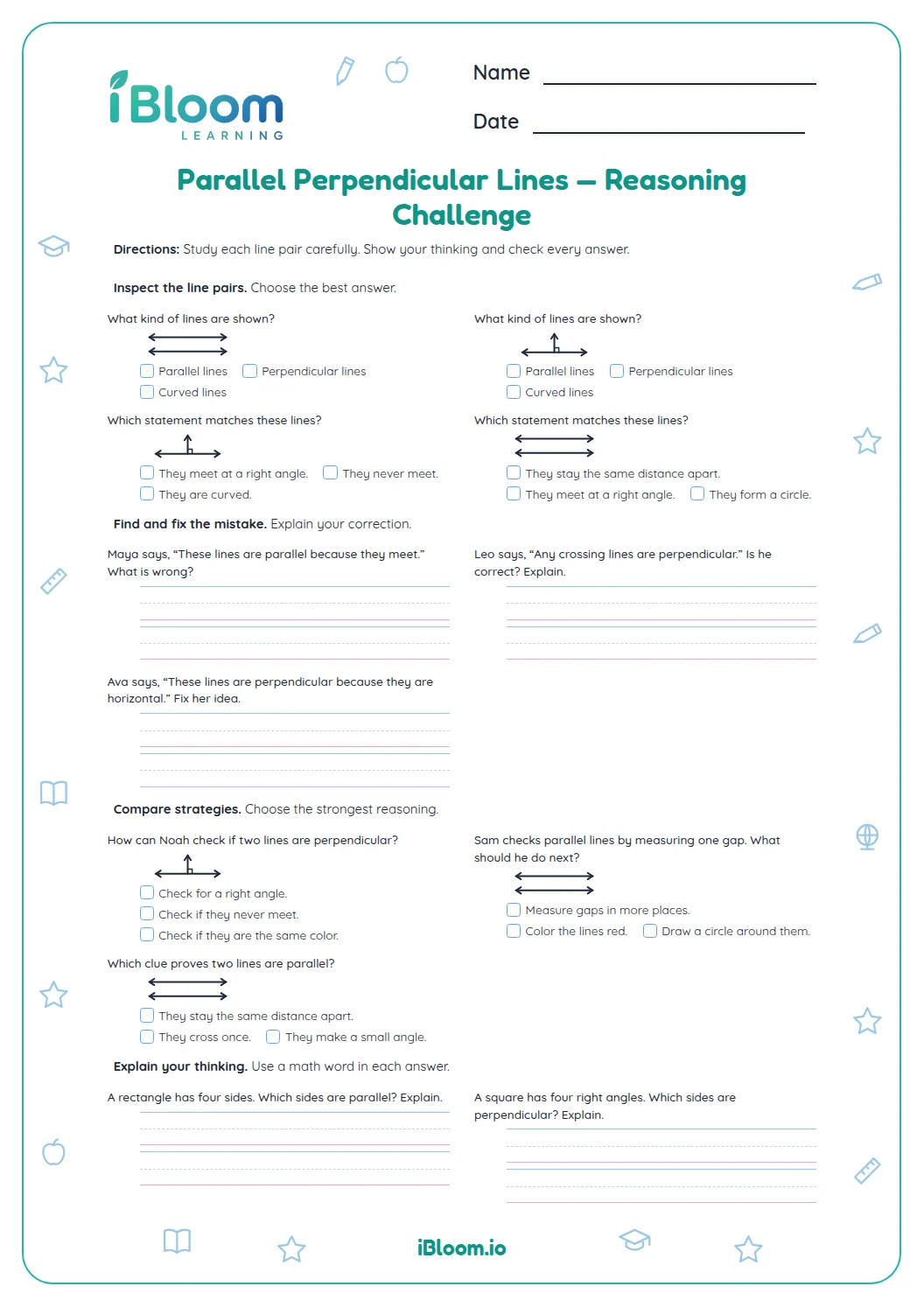
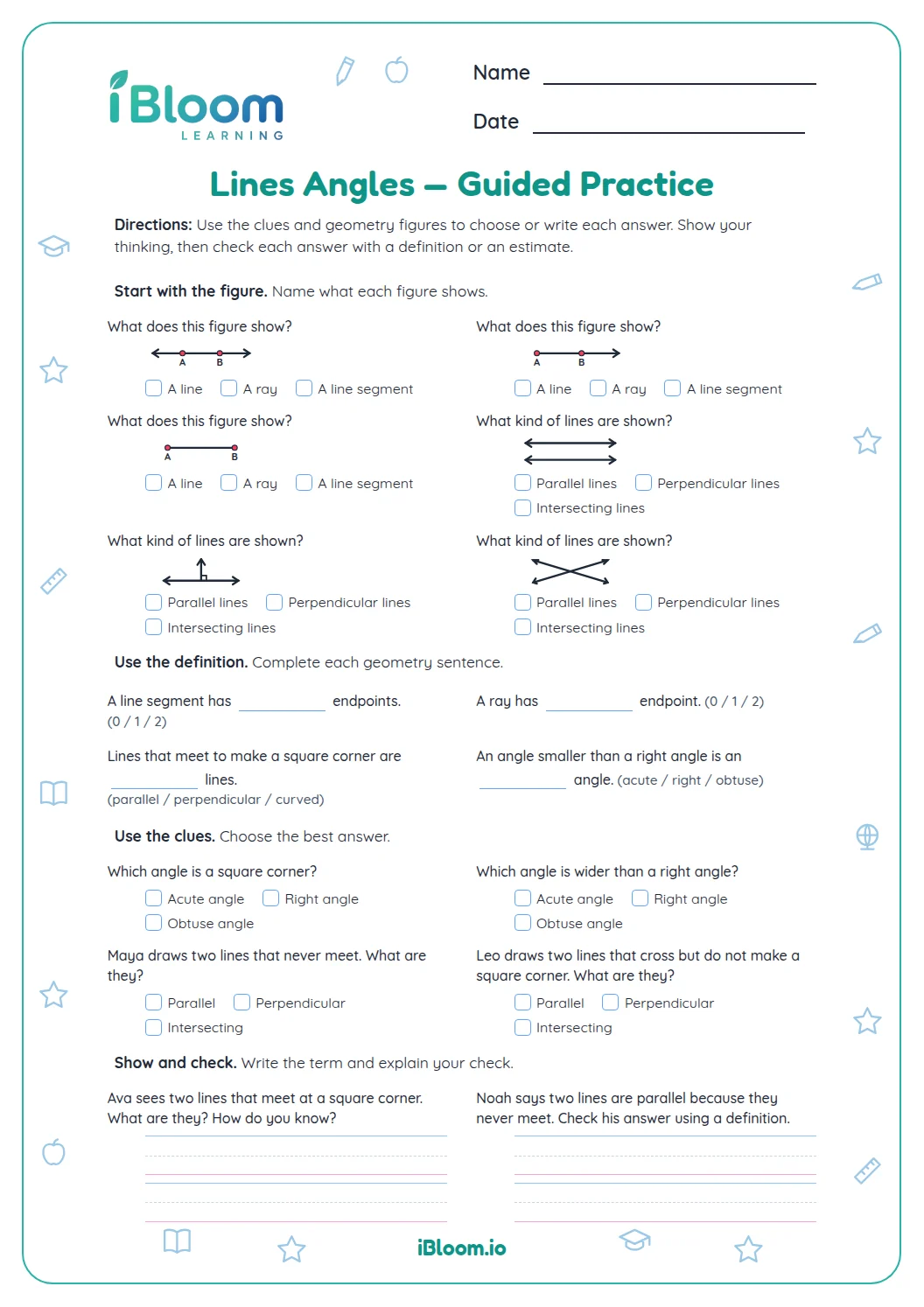
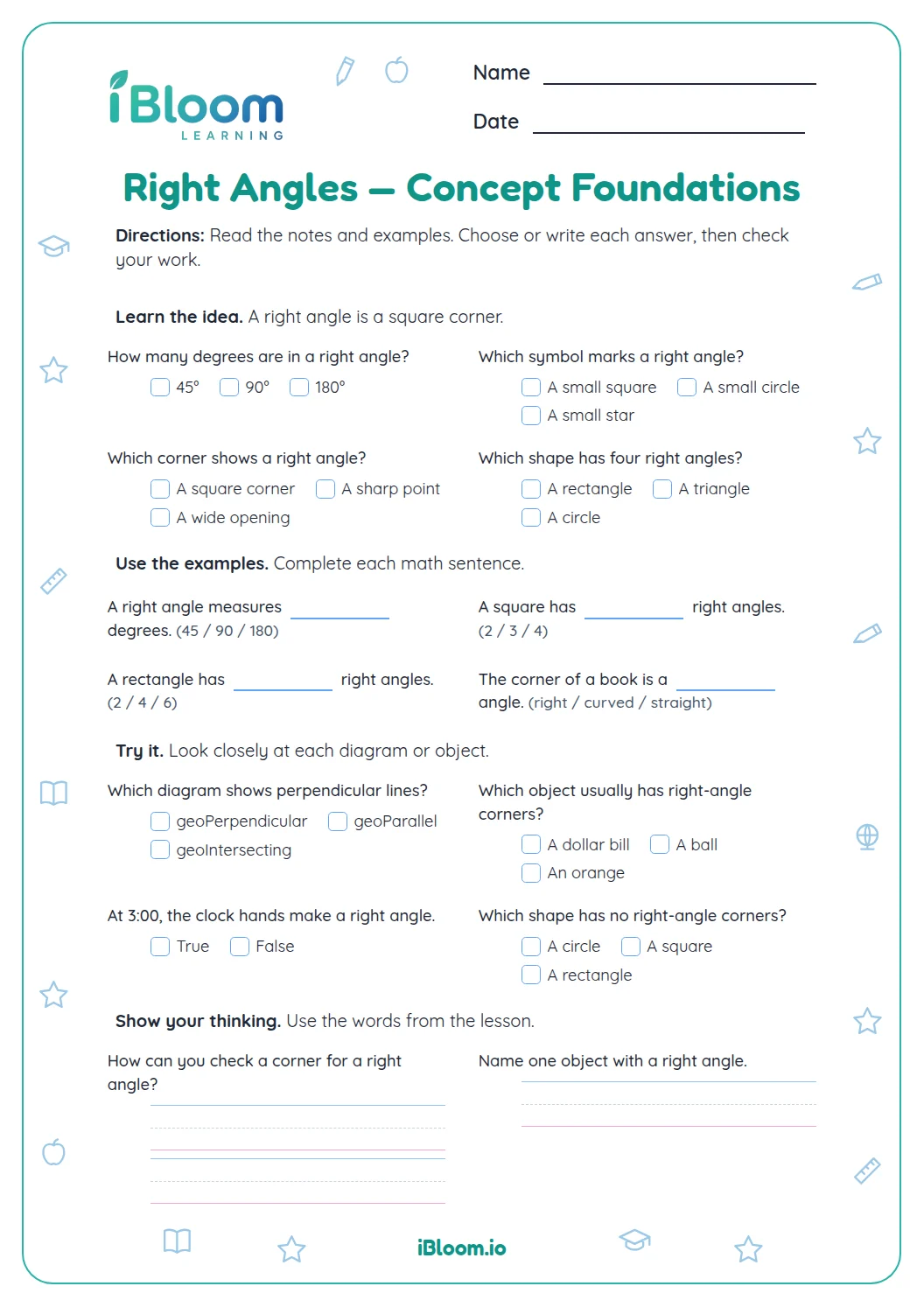
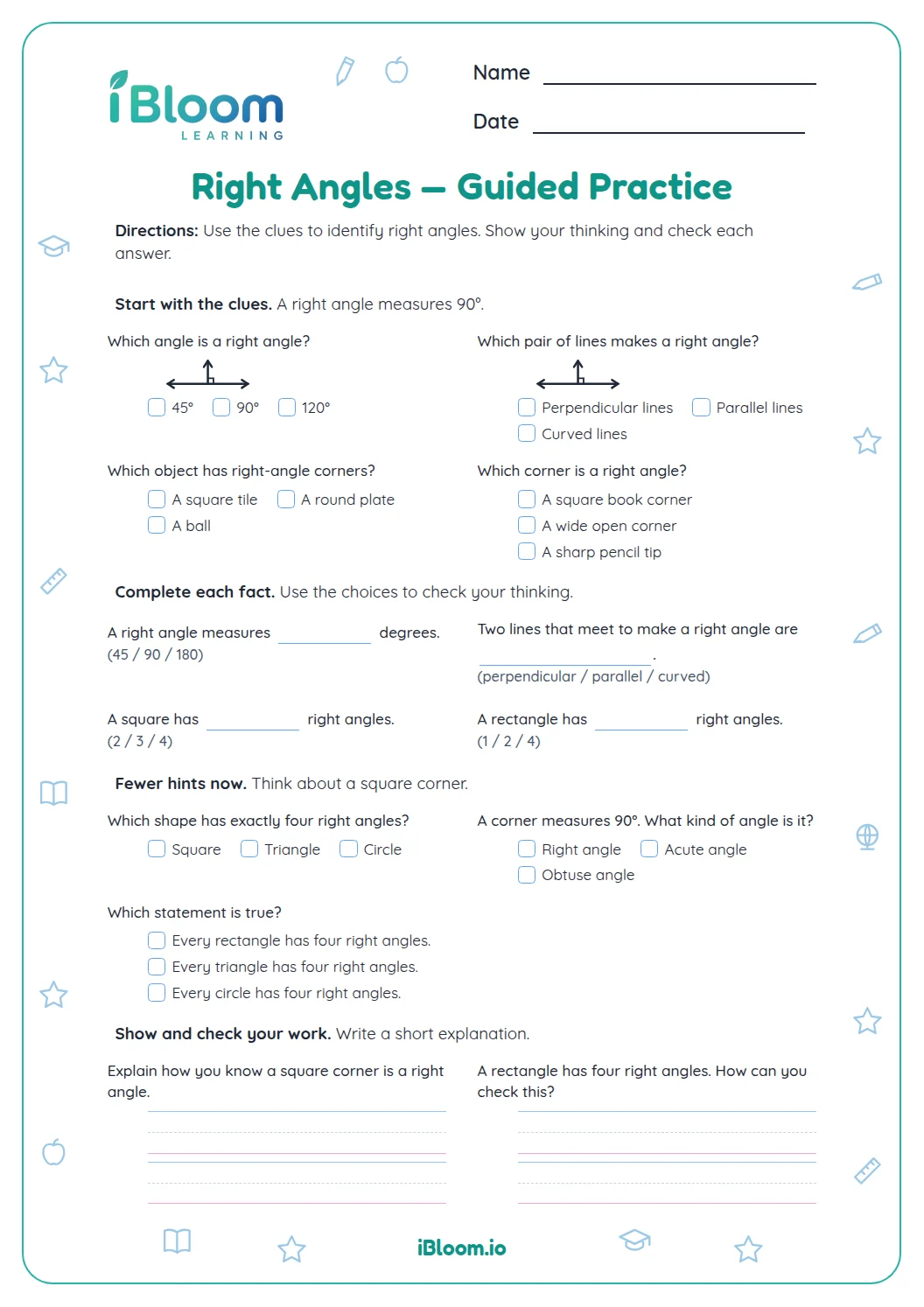
Parallel arrows mark sides that stay the same distance apart. A small square marks a right angle, where sides meet perpendicularly.
- 1Question 1 asks for two pairs of parallel sides; the rectangle has arrows on both opposite-side pairs.
- 2Question 2 checks corners: the square has right-angle marks.
How can a figure have both relationships?
A rectangle has two pairs of parallel opposite sides and four perpendicular corners. Check each pair separately.
What should students do when clues are combined?
Read every property in the clue, then eliminate figures that miss one. A single feature is not enough when the prompt gives two.
How to work through this page
- 1Name what each arrow or corner mark means.
- 2Check the complete clue before selecting a figure.
- 3Compare every model, not only the first one.
- 4Use the answer key to name the property that supports the choice.
Common mistakes and quick fixes
The mistake
Calling any slanted sides parallel
The fix
Check that the sides stay the same distance apart and never meet.
The mistake
Assuming every quadrilateral has right angles
The fix
Look for a right-angle square at the corner.
The mistake
Checking only one property in a two-part clue
The fix
Match every line and corner property before choosing.
Common Core alignment
This worksheet gives students focused practice with the named skill.
Identify and draw lines, line segments, rays, angles, and perpendicular and parallel lines.
On this sheet: The models ask students to identify parallel and perpendicular relationships in two-dimensional figures.
Show the official wordingHide the official wording
Draw points, lines, line segments, rays, angles (right, acute, obtuse), and perpendicular and parallel lines. Identify these in two-dimensional figures.
What to practice next
Make more practice
Further reading
Questions parents and teachers ask
What do the arrows mean?
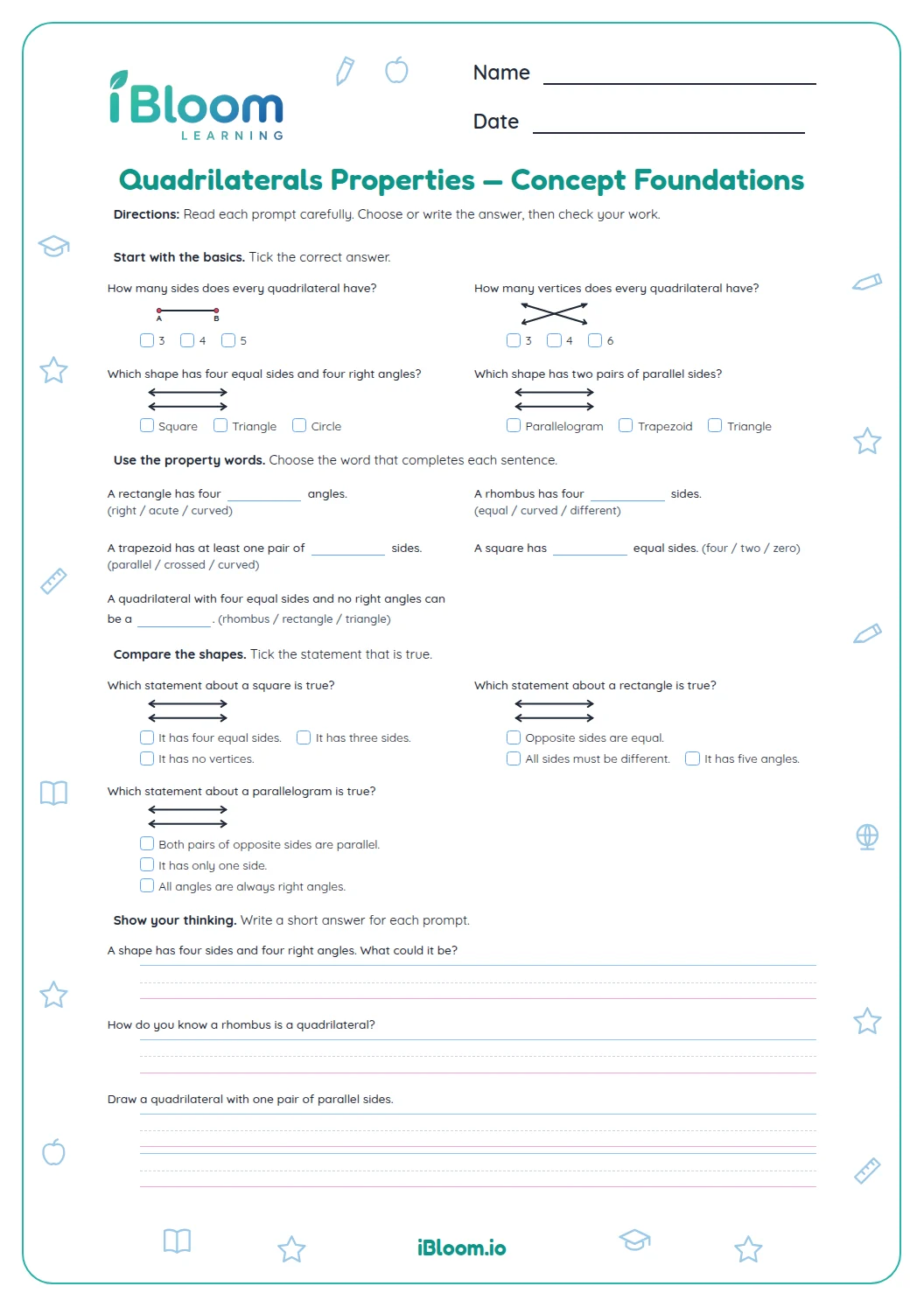
Parallel arrows identify sides that stay the same distance apart. A quadrilateral may have one pair or two pairs of parallel sides, so check each marked pair. For example, opposite sides of a rectangle make two parallel pairs, while a trapezoid model marks one pair. Read the matching arrows as a group.
What does a small square mark?
A small square marks a right angle. The two sides meeting at that corner are perpendicular; use the mark instead of estimating the drawing. On these figures, the square corner symbol is the signal for a right angle. Sides that meet to form that corner are perpendicular.
Can one figure have both parallel and perpendicular sides?
Yes. In a rectangle, opposite sides are parallel and adjacent sides meet at right angles. Check each relationship on its own. For example, the long sides of a rectangle are parallel, while a long side and a short side are perpendicular. Both properties can describe one figure.
Why are the drawings marked?
The arrows and corner squares state which line relationships the model represents. This lets students focus on identifying properties rather than measuring a sketch. The marks let students compare models consistently. When the question asks for more than one feature, check for each required kind of mark before selecting a letter.
What should a student do if two figures look similar?
Check each property in the clue. A rectangle and a slanted parallelogram both have two pairs of parallel sides, but only the rectangle has right-angle marks. For example, a slanted parallelogram has two parallel pairs but lacks right-angle marks. A rectangle has the same parallel property plus four right angles.