
About this worksheet
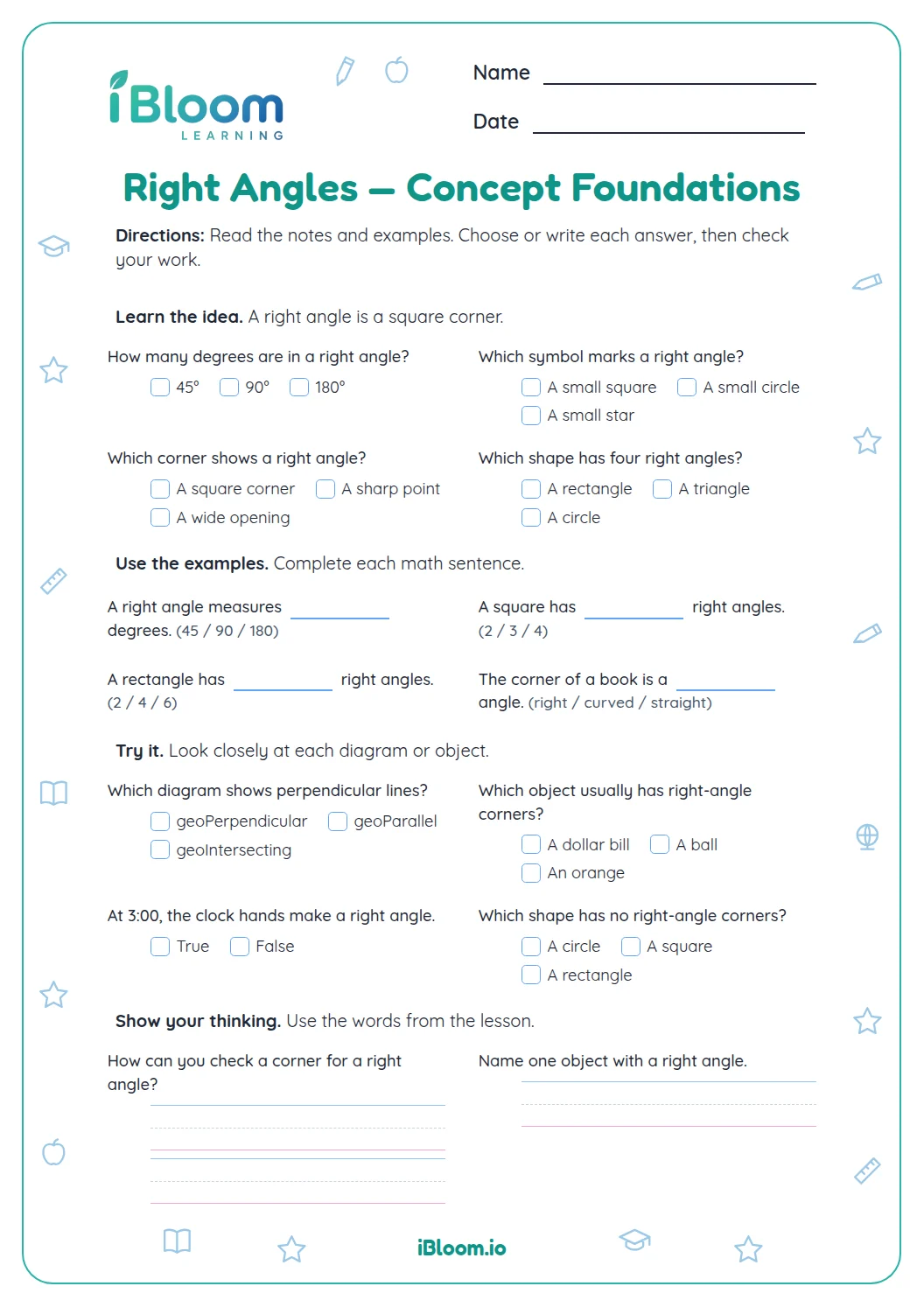
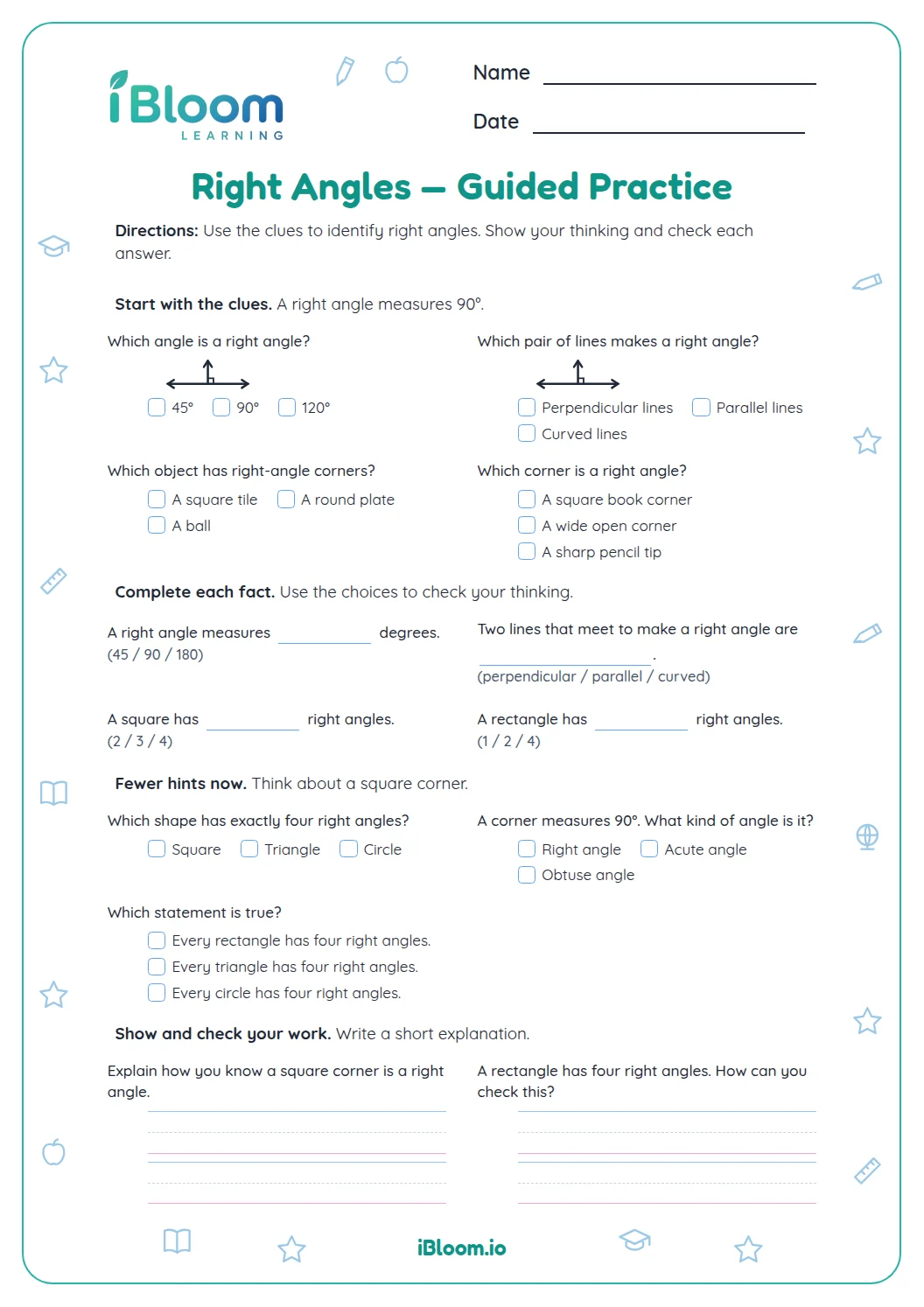
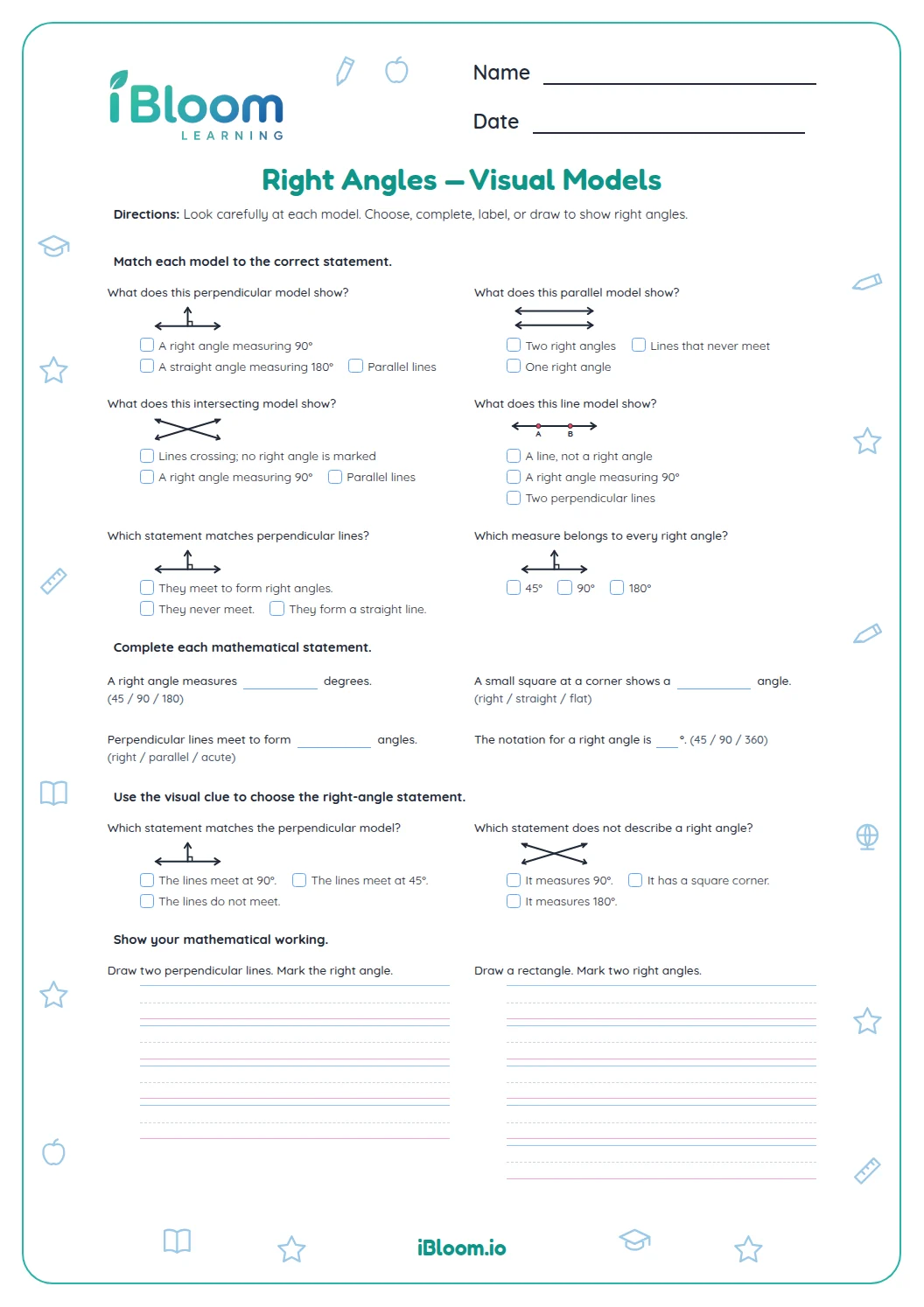
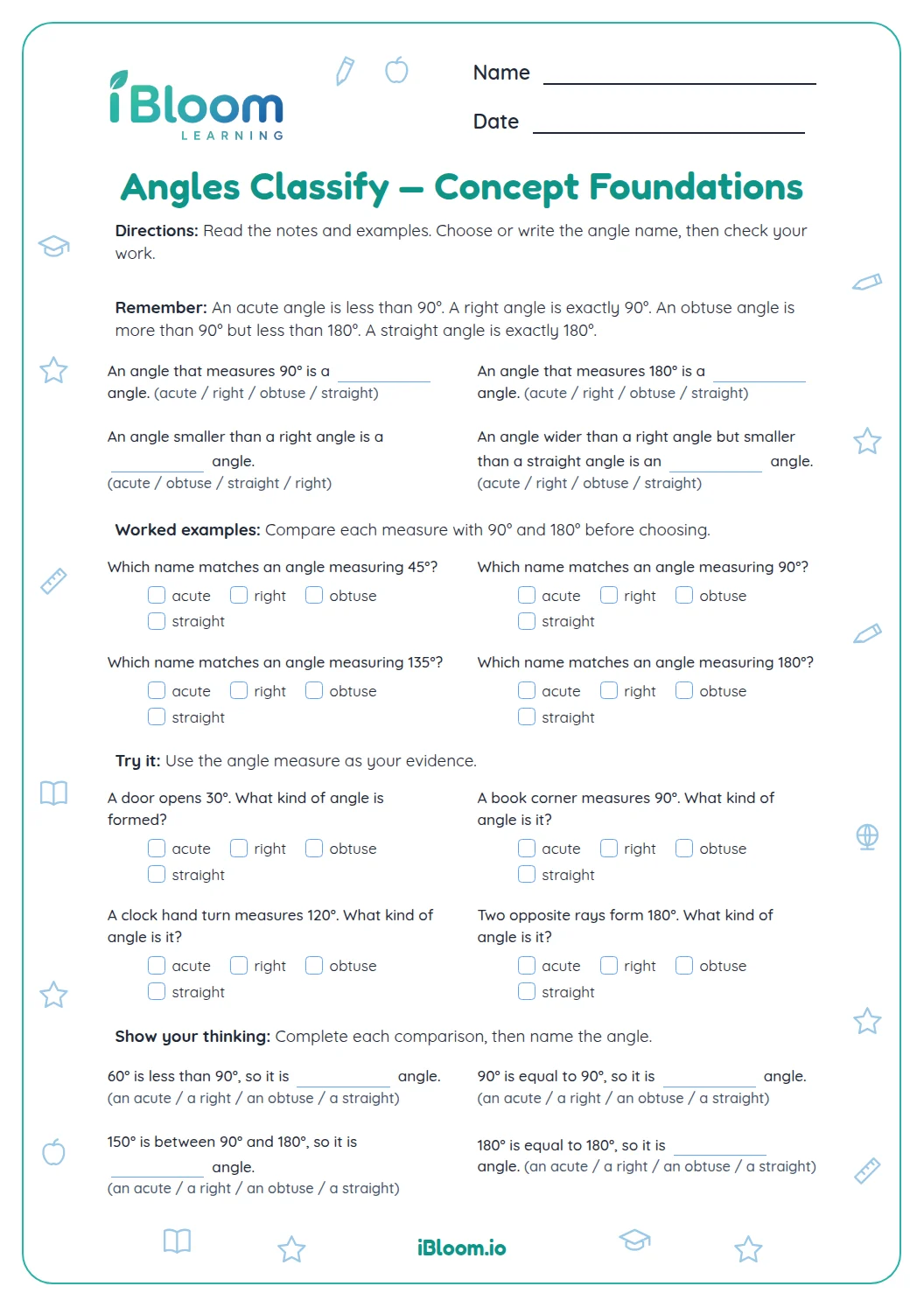
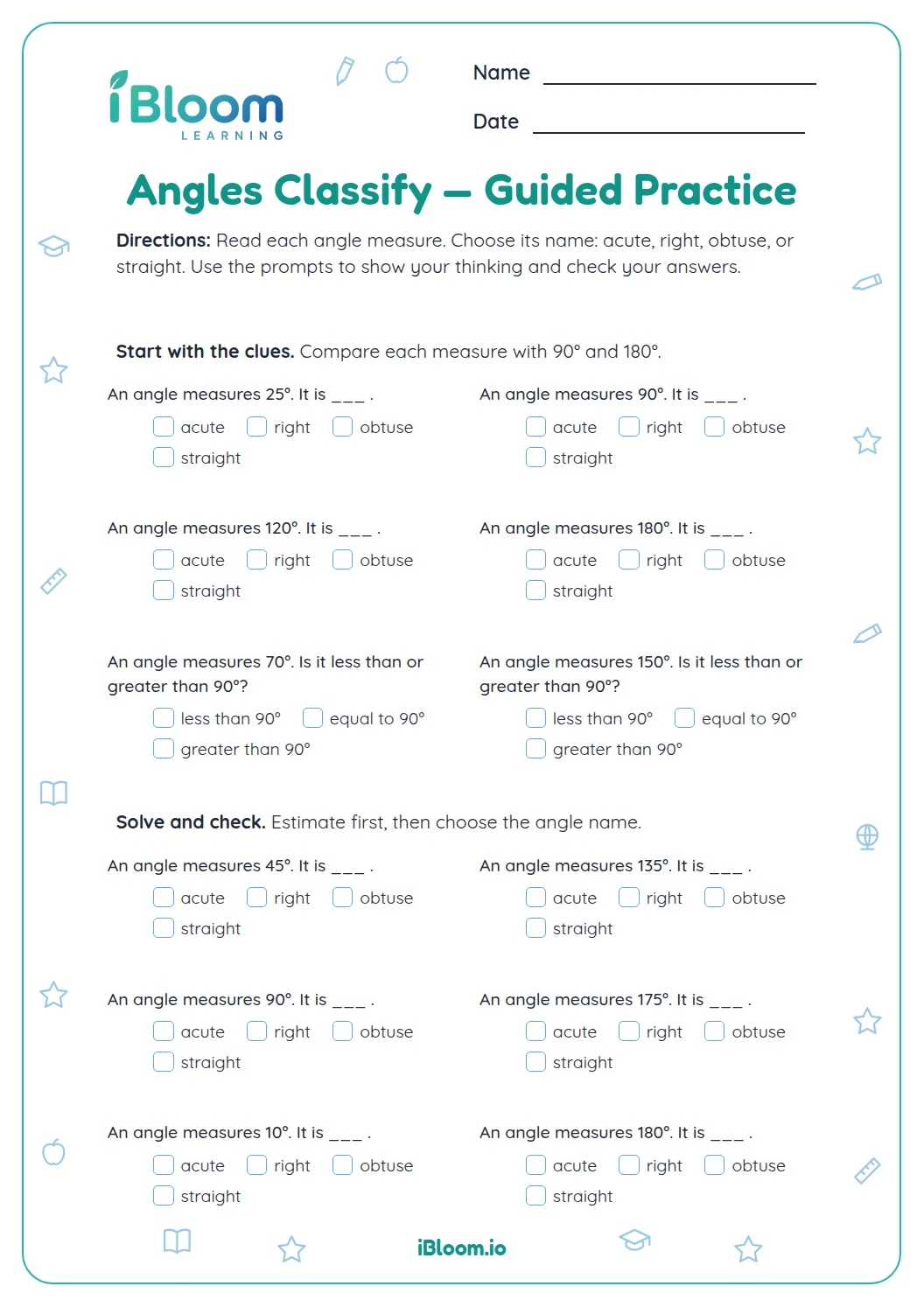
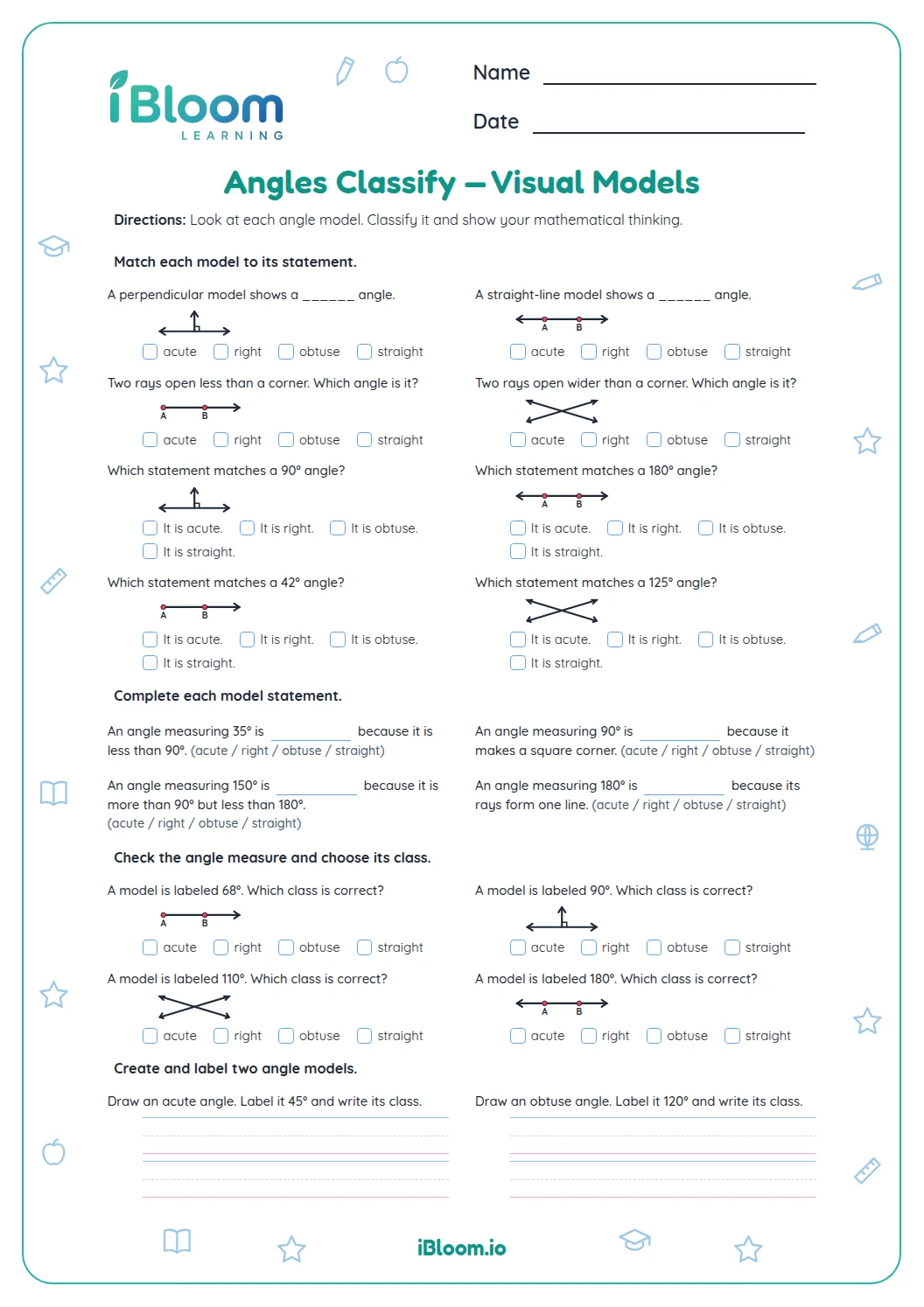
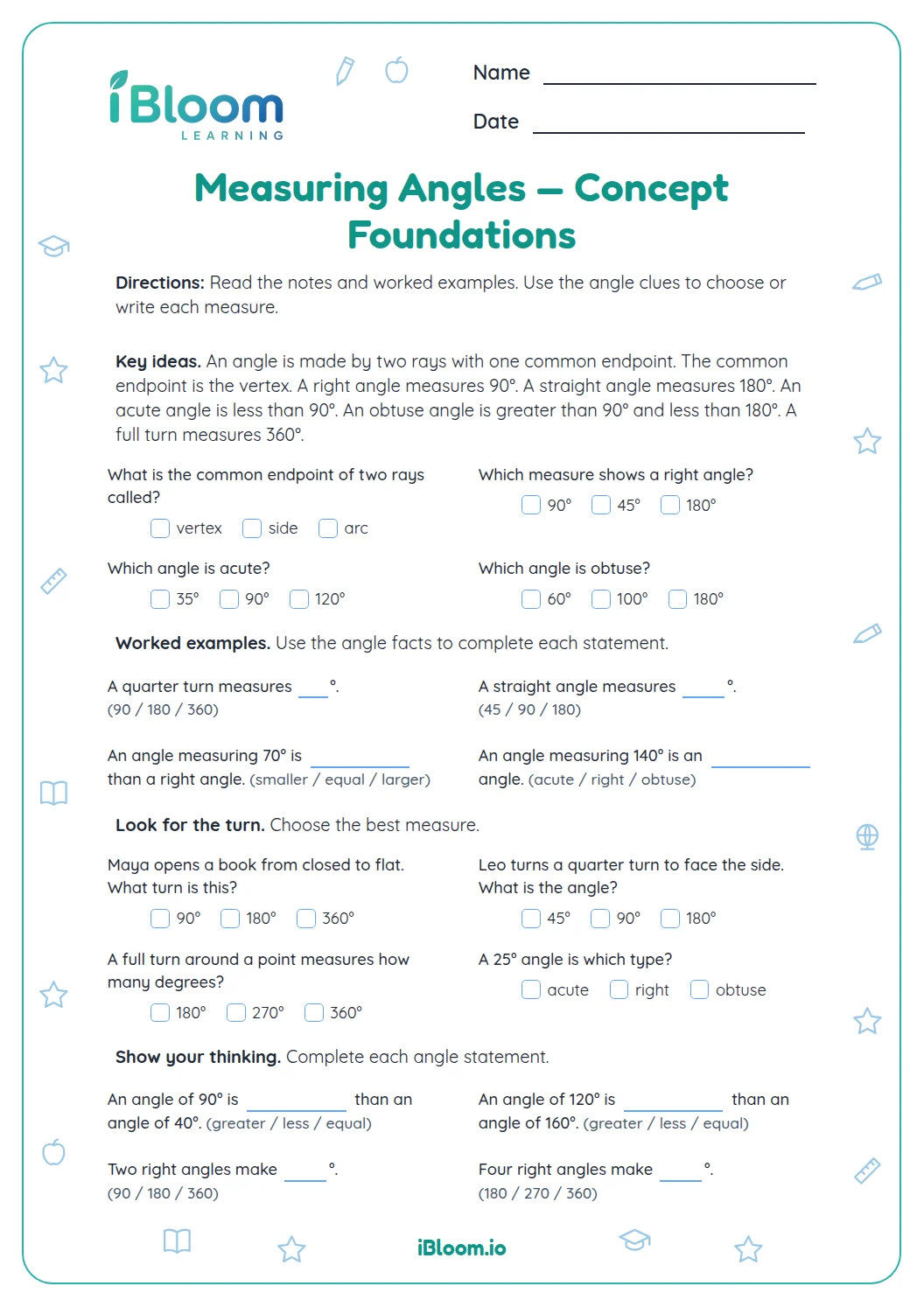
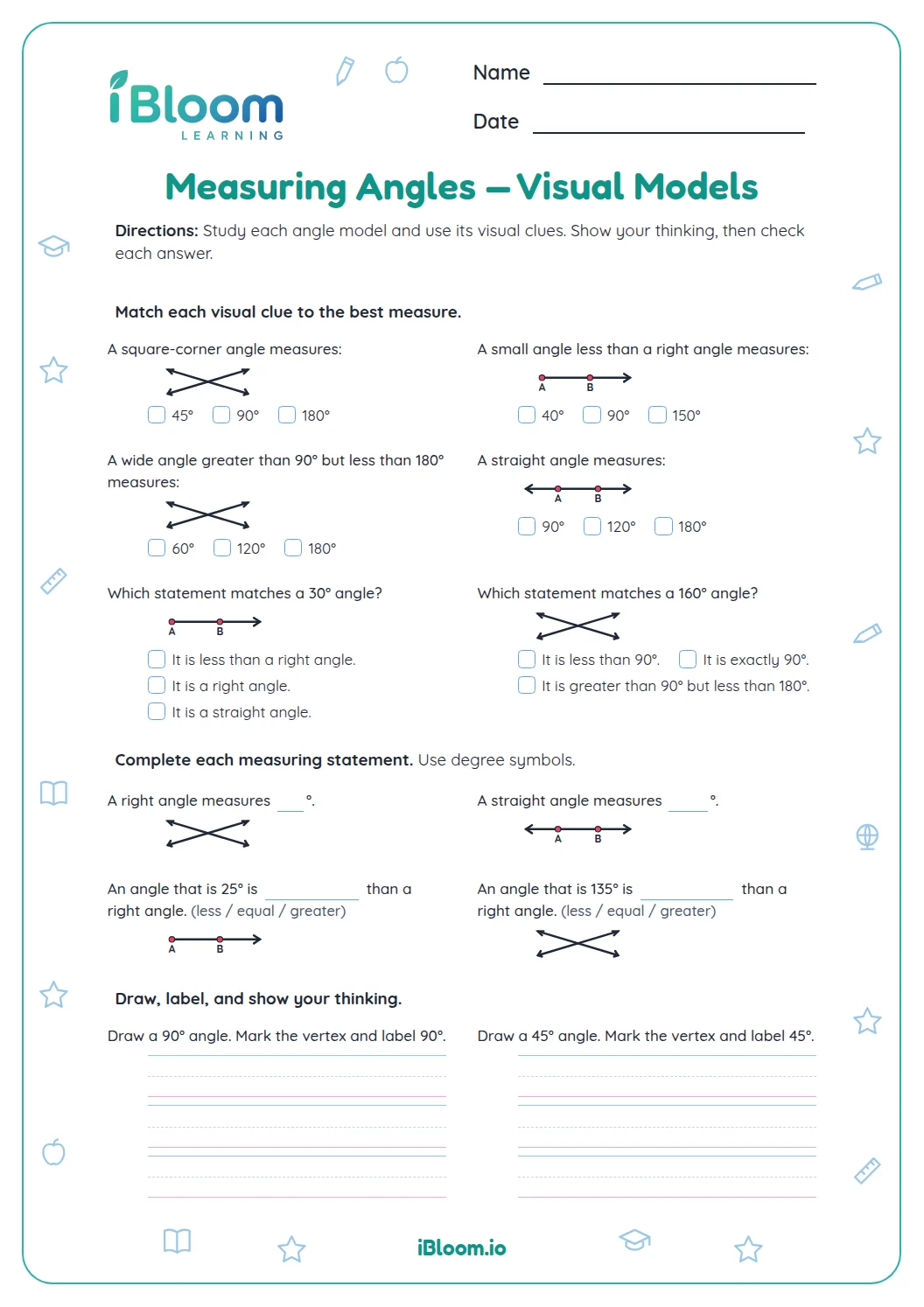
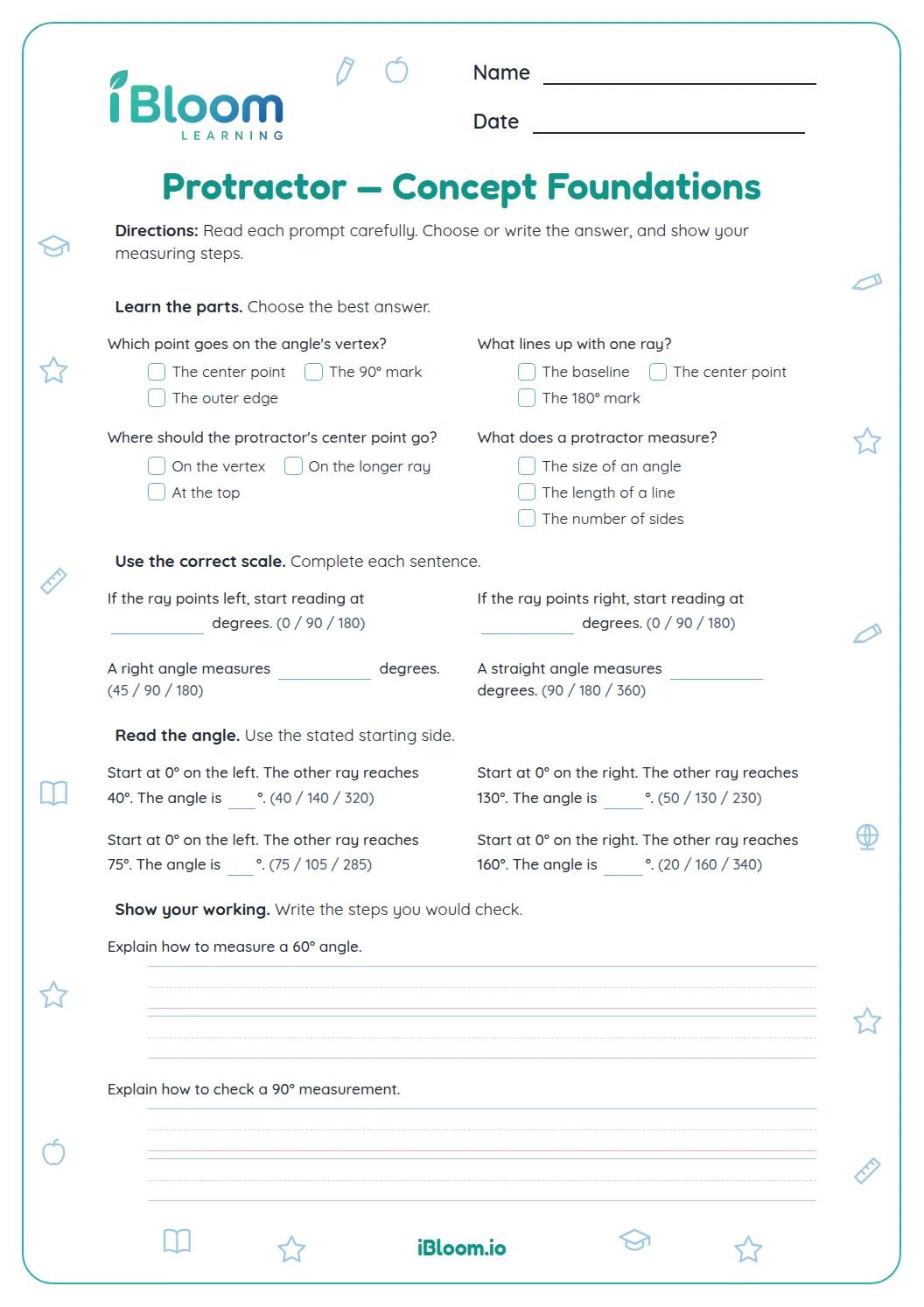
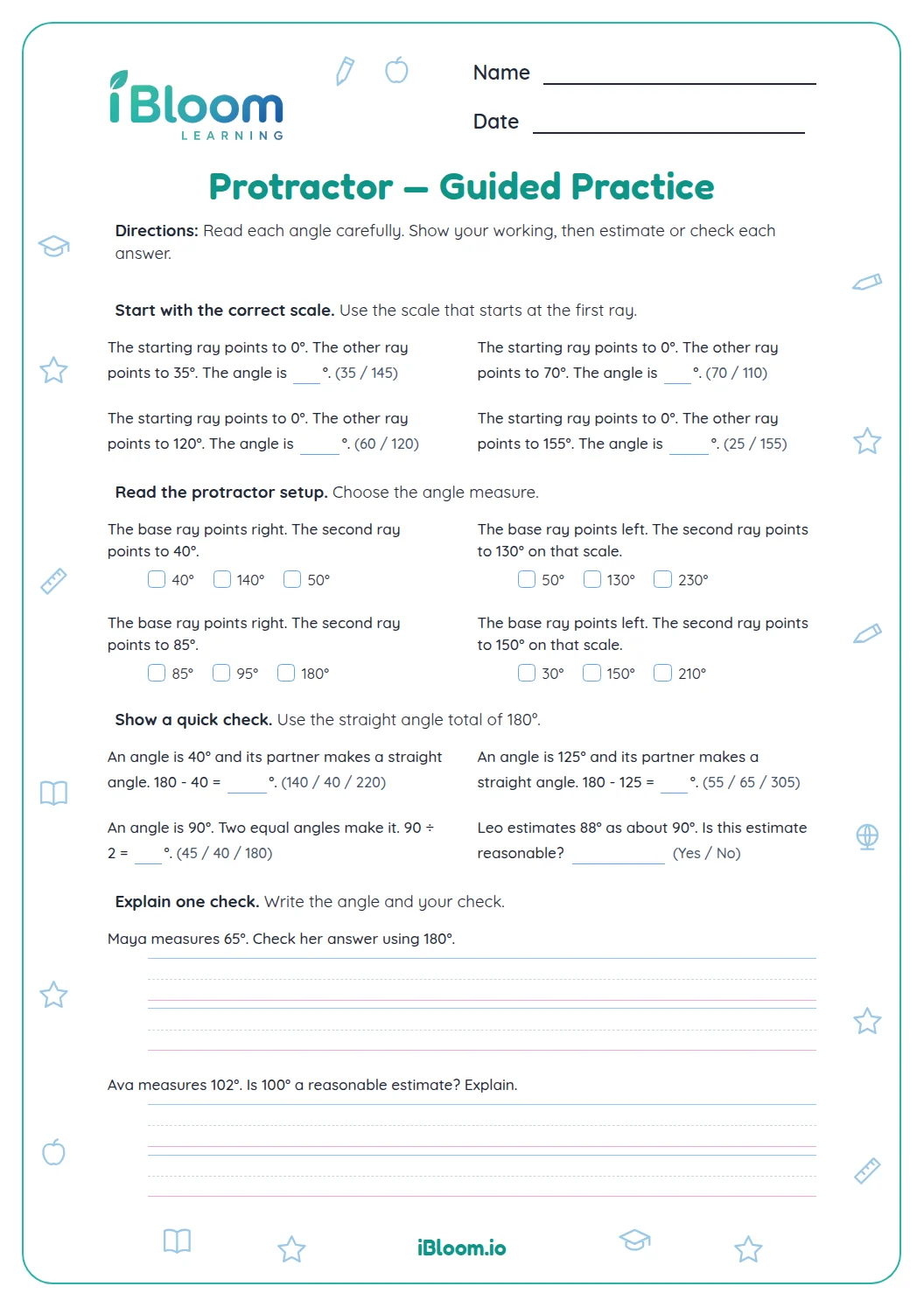
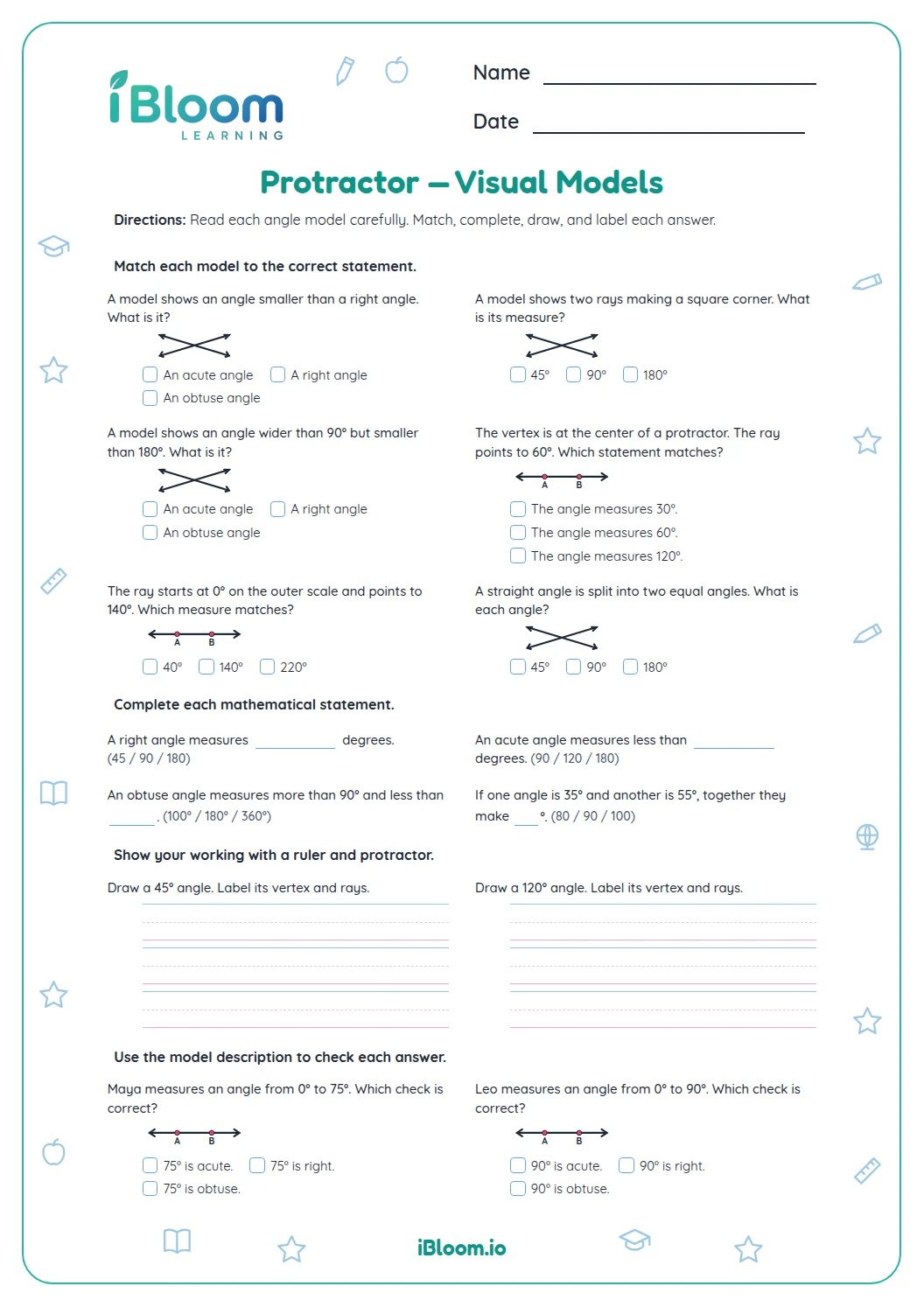
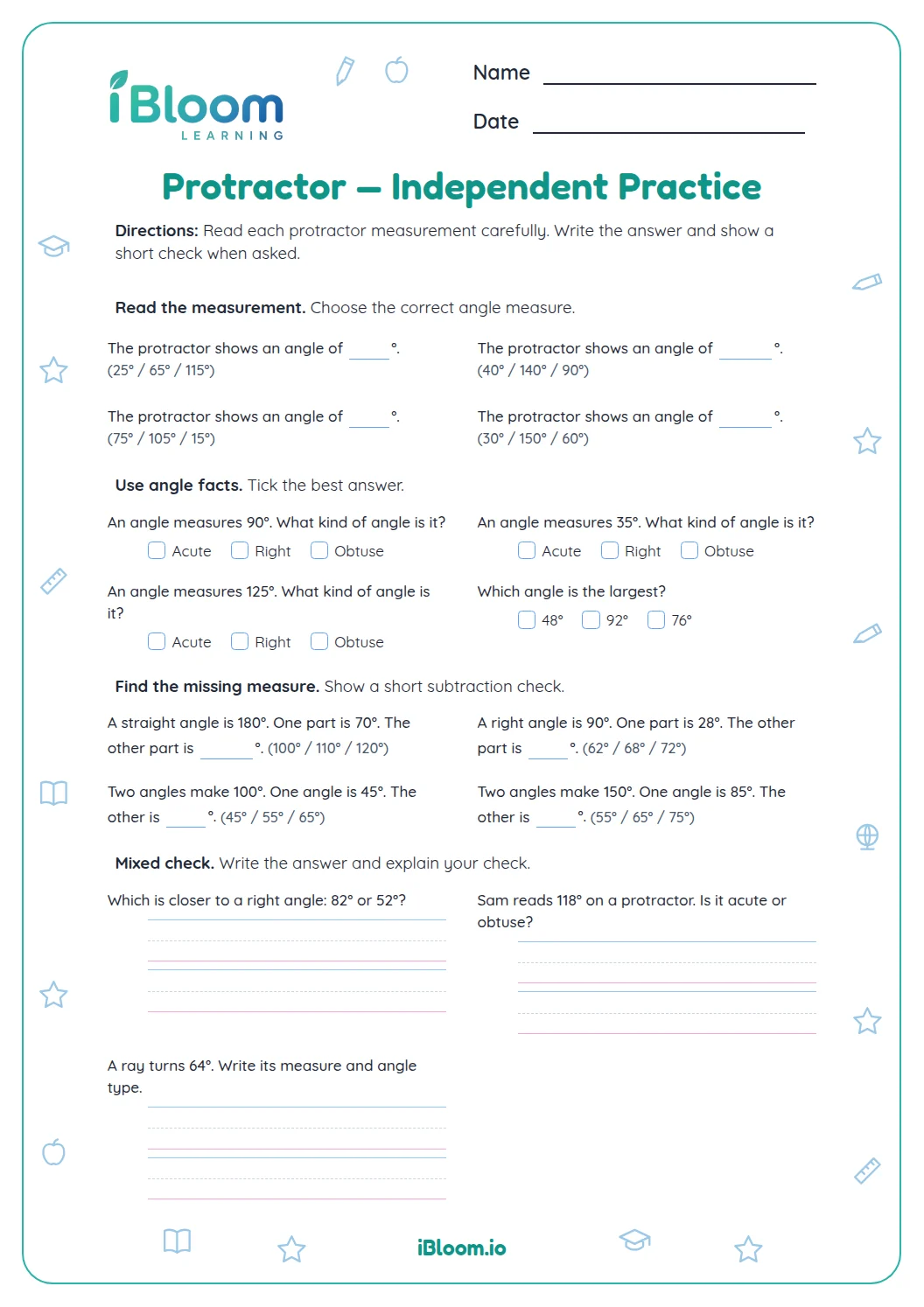
This free Grade 3 printable gives students 14 practice questions about right angles, using a 90° benchmark, a shape diagram, and familiar corners. Students recognize a right angle, compare acute and obtuse angles with that benchmark, find right angles in shapes, and choose a way to check a corner. A separate answer key is included.
Aligned to 4.MD.C.5
How can I recognize a right angle?
A right angle is a square-corner turn. Compare an angle with the corner of a sheet of paper: if its sides match the paper corner, it is right. A smaller opening is acute; a wider opening is obtuse.
Question 1 asks students to classify a 90° angle as right. Use that benchmark to classify the other angles.
- 1Question 1 asks about a 90° angle
- 2A right angle measures 90°
- 3So the angle is right
Where can I find right angles in shapes?
Check each vertex, or corner, separately. A rectangle has four right angles; a right triangle has one. The shape scan asks students to inspect each corner instead of guessing from the shape name.
How can I use a right angle as a benchmark?
A right angle measures 90 degrees. An angle less than 90 degrees is acute, and an angle greater than 90 but less than a straight angle is obtuse. The drawings and everyday corner situations let you apply those comparisons.
How can I use this worksheet?
- 1Look for the vertex where the two sides meet.
- 2Compare the opening with a square paper corner.
- 3Name a smaller opening acute and a wider one obtuse.
- 4For shape questions, check each corner individually.
- 5Use the 90-degree benchmark in the final questions.
Common mistakes and quick fixes
The mistake
Calling every corner in a slanted shape a right angle.
The fix
Compare the actual opening with a square corner.
The mistake
Mixing up acute and obtuse.
The fix
Acute is smaller than 90 degrees; obtuse is greater than 90.
The mistake
Naming a whole shape instead of one corner.
The fix
Point to and classify the angle at the vertex.
Curriculum alignment
This worksheet practices the skills described in these Common Core standards.
Recognize angles as geometric shapes formed by two rays with a common endpoint.
On this sheet: The angle diagrams let students inspect the size of angles and use a right angle as a benchmark.
Show the official wordingHide the official wording
Recognize angles as geometric shapes that are formed wherever two rays share a common endpoint, and understand concepts of angle measurement:
What to practice next
Make more practice
Questions parents and teachers ask
What is the measure of a right angle?
A right angle measures 90 degrees. Students can compare an angle with the square corner of a sheet of paper to check whether the two sides match. The worksheet uses this familiar benchmark in drawn angles and shape corners.
How do I tell acute and obtuse angles apart?
An acute angle is smaller than a right angle, so it measures less than 90 degrees. An obtuse angle is wider than a right angle but smaller than a straight angle. Compare the opening, rather than the length or direction of its sides.
Does the sheet show angles and shapes?
Yes. It includes a labeled shape diagram for a corner scan. Students also answer short questions about right angles in rectangles, squares, triangles, and familiar objects, then choose a way to check a corner. Ask the learner to point to the vertex before comparing its opening with a square paper corner.
How can a child check a corner without a protractor?
Place the square corner of a paper or index card against the corner being checked. If both edges line up, it is a right angle. If the opening is narrower or wider, it is acute or obtuse, respectively.
How many questions are on this practice page?
There are 14 questions in four parts: classify angles by their measures, find right angles in shapes, answer short questions about angle size and corners, and choose a checking method. The separate key lists each answer. Students can check each corner against a paper corner as they review.