
About this worksheet
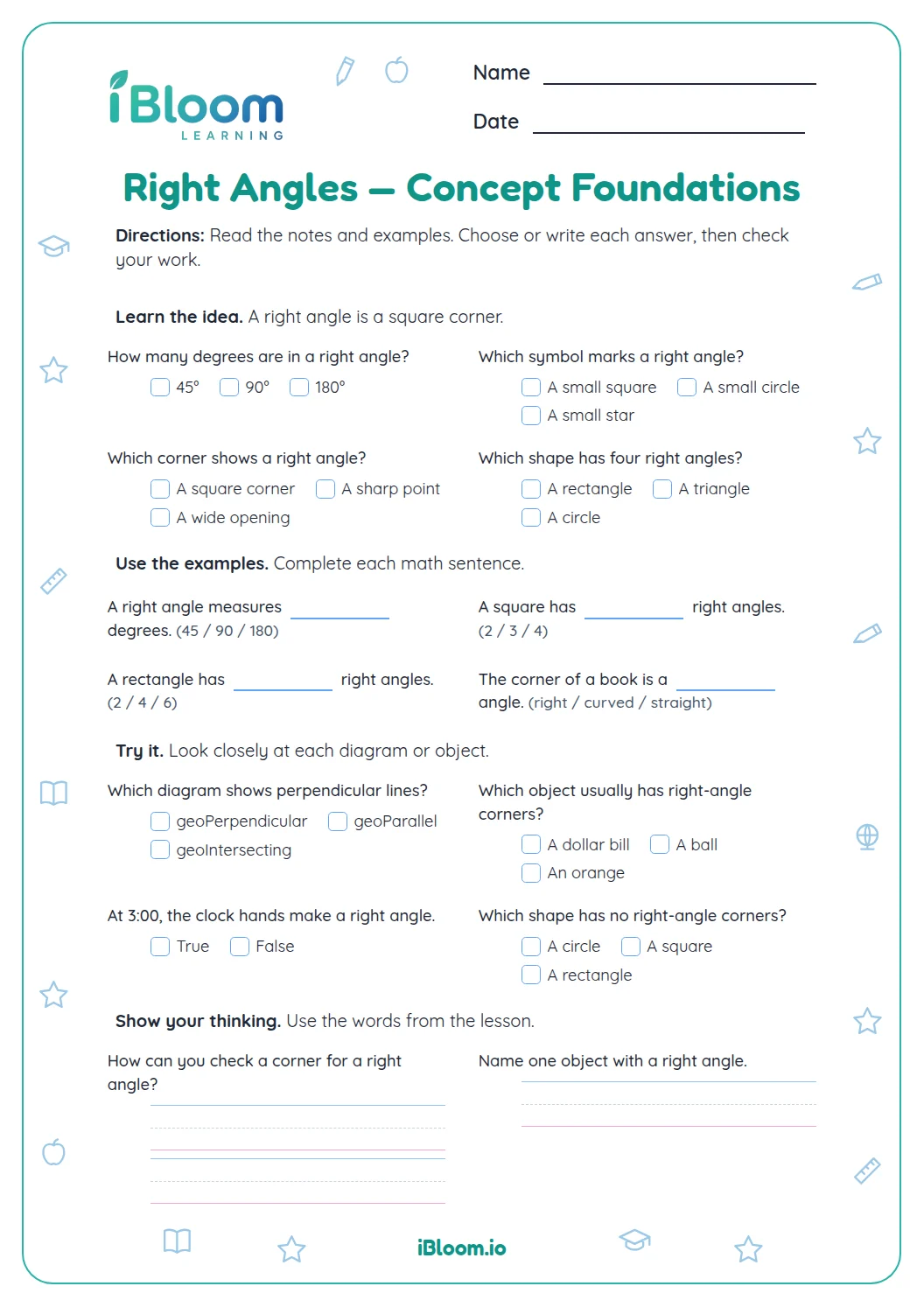
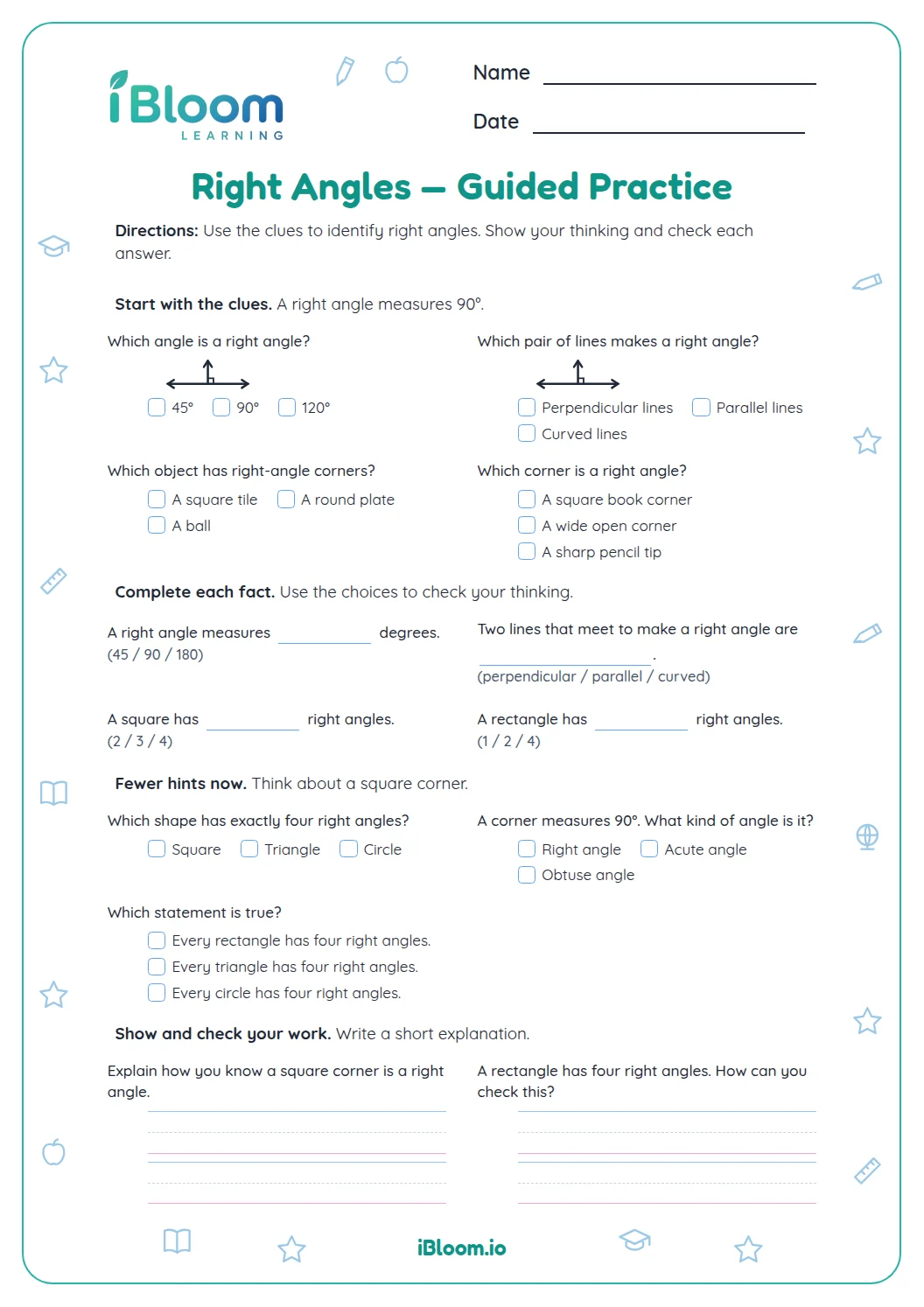
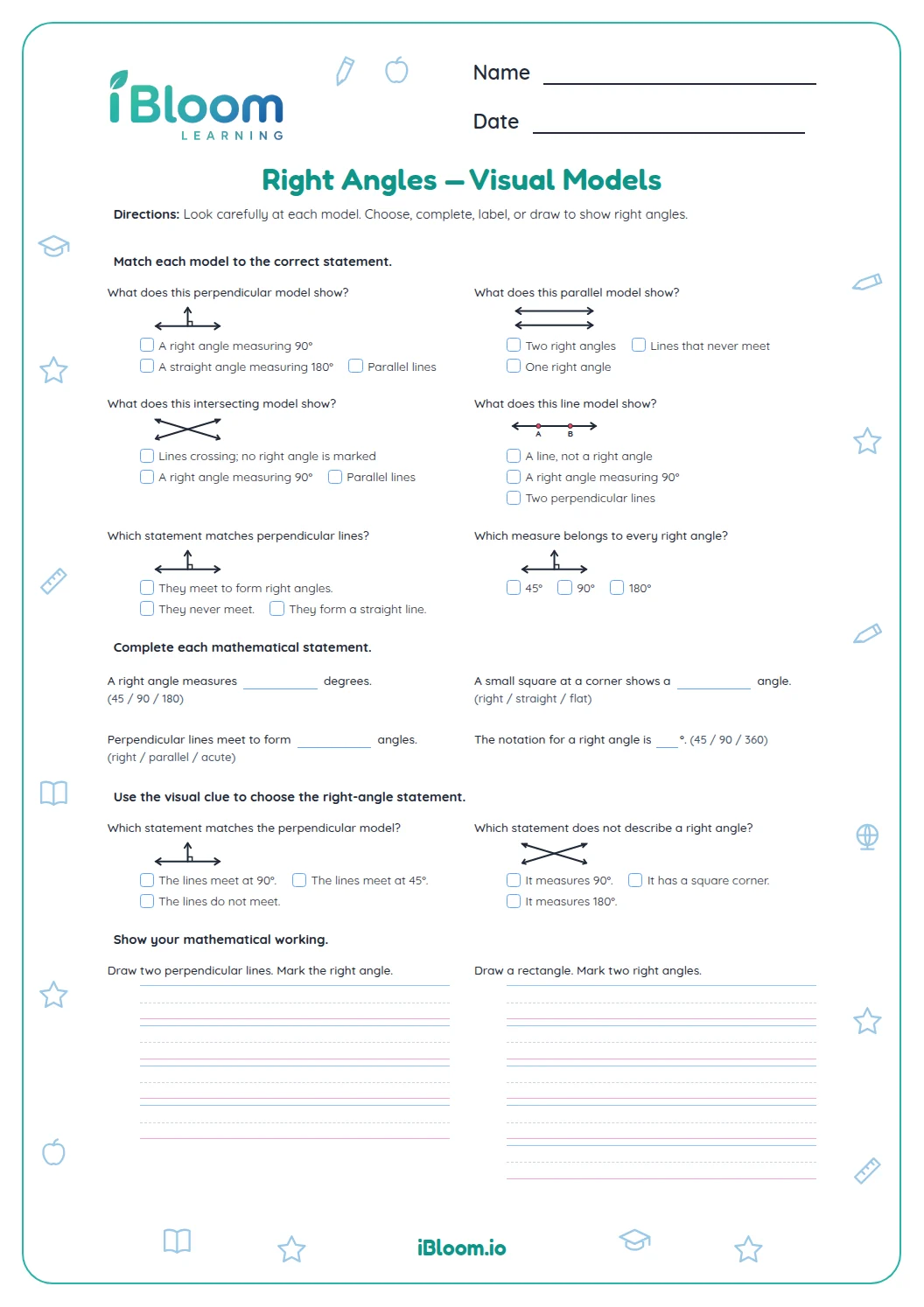
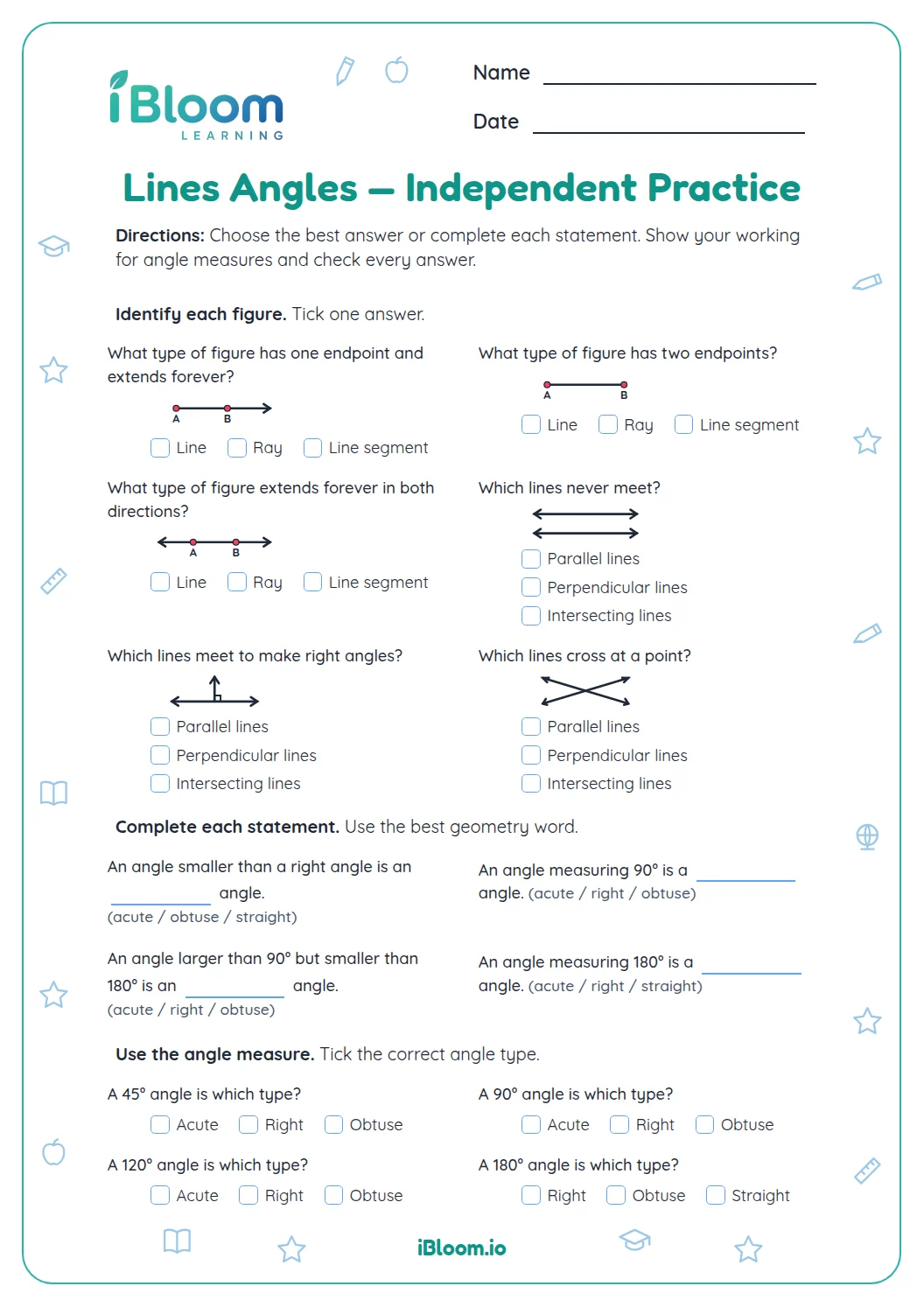
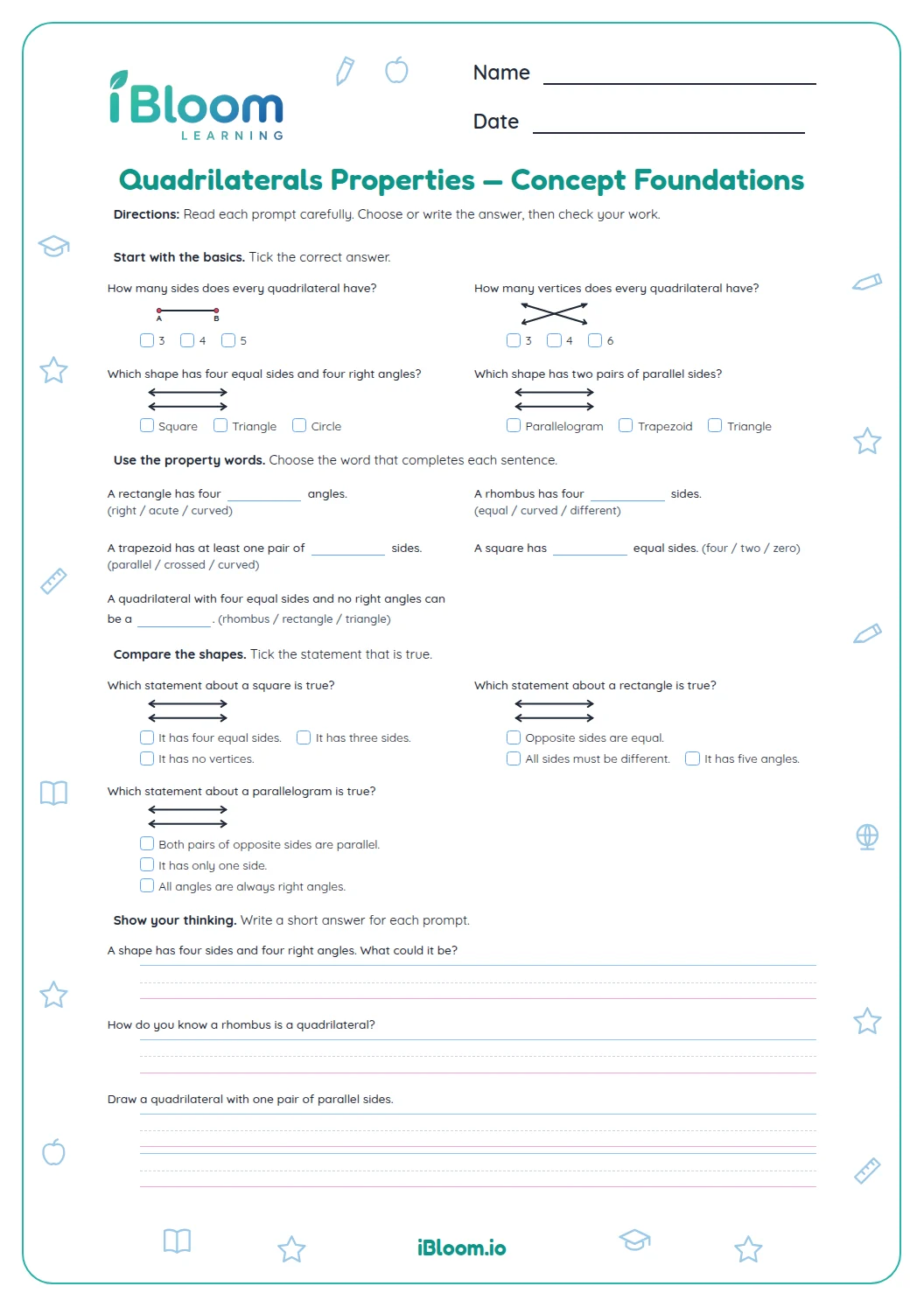
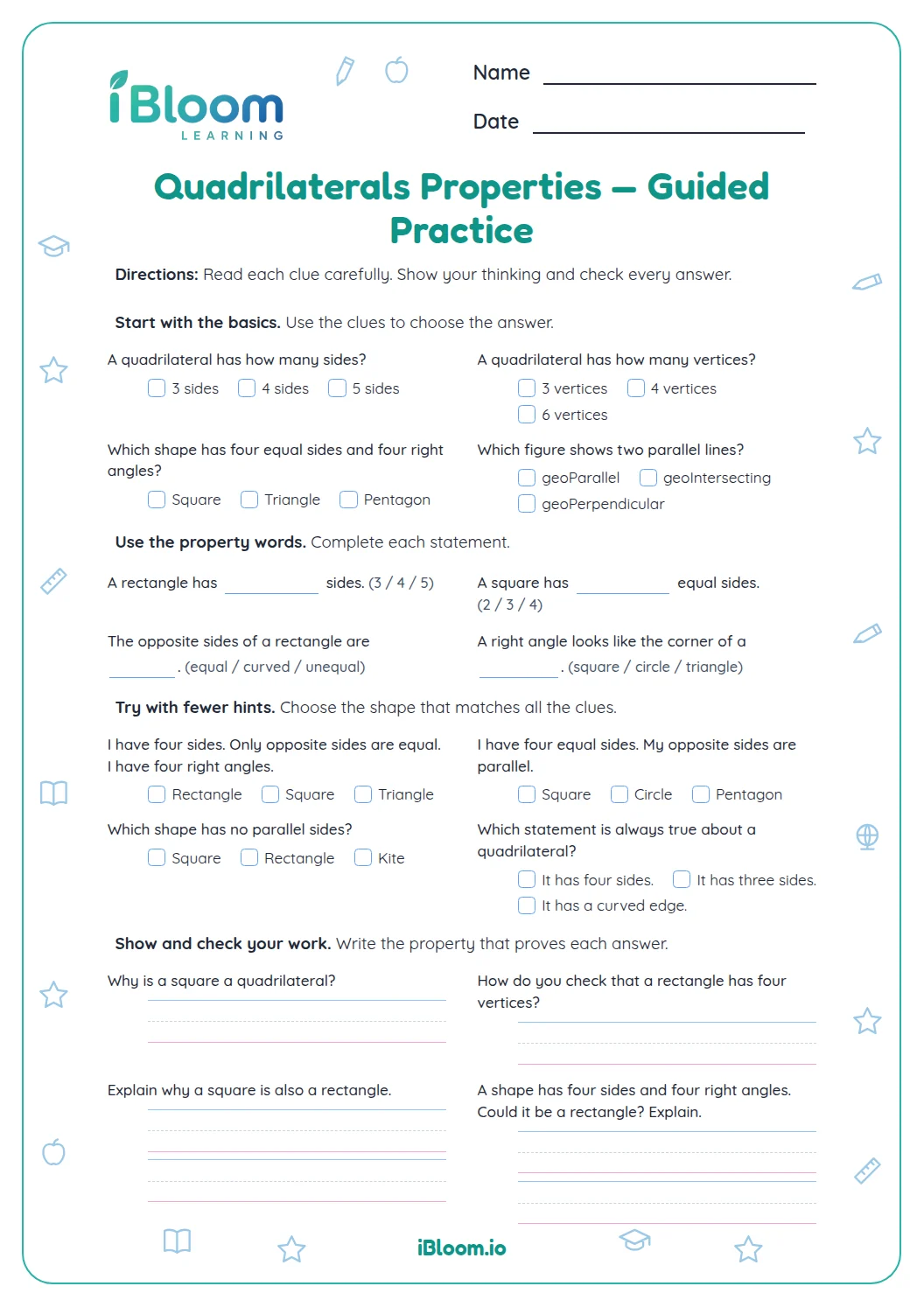
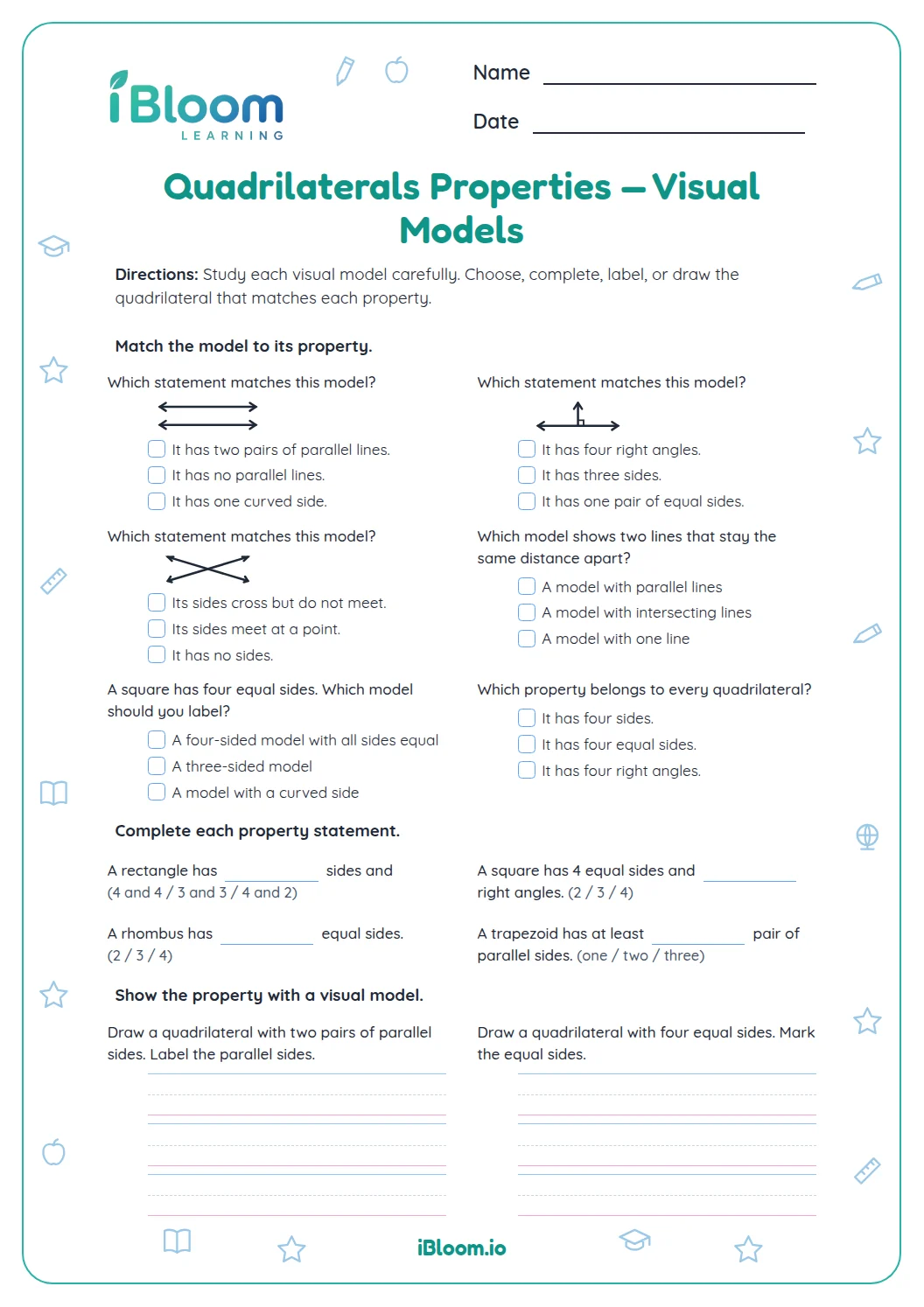
This printable geometry page gives Grade 3 students 14 questions about right angles. Three drawn angles ask students to identify square corners, and 11 fill-in questions apply the idea to familiar shapes and angle properties. The practice aligns with CCSS 4.G.A.1, which names identifying angles in two-dimensional figures. The key lists each correct response.
Aligned to 4.G.A.1
How can you spot a right angle in a shape?
Compare the drawn corner with the square corner of a page or book. A right angle matches that square turn; a sharper or wider opening does not.
In question 1, angle A makes a square corner, so the correct choice is Yes.
- 1Question 1: Angle A makes a square corner, so choose Yes.
How do square corners help describe familiar shapes?
A square has four right angles, and a right triangle has one. Side lengths and orientation can change while an angle stays right.
Compare corners directly rather than deciding from the way a shape is turned on the page.
How can students explain their angle choices?
Name the feature used to decide: the corner matches a square corner. For the final questions, apply that comparison to familiar shapes and angle properties.
How to use this worksheet
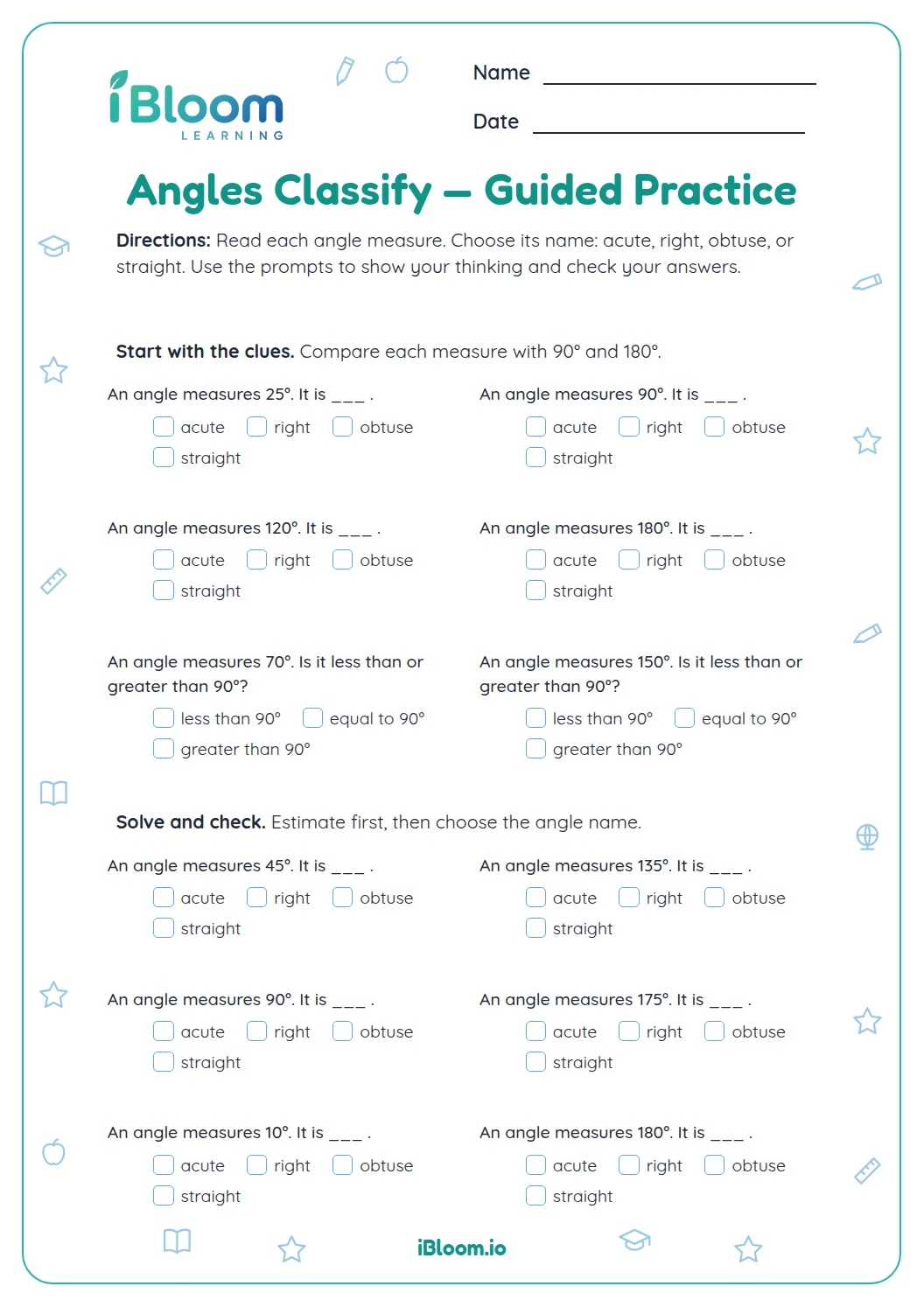
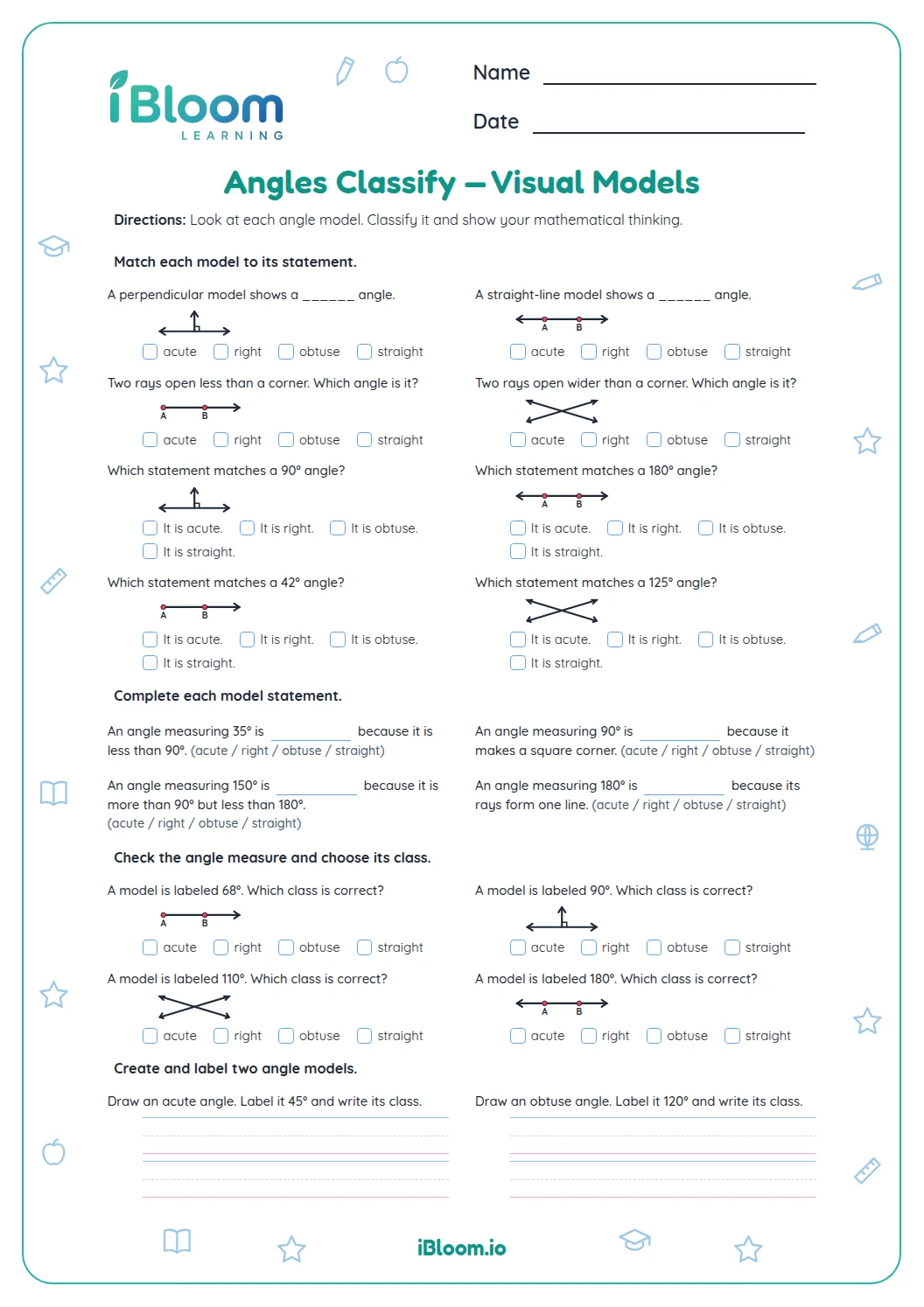
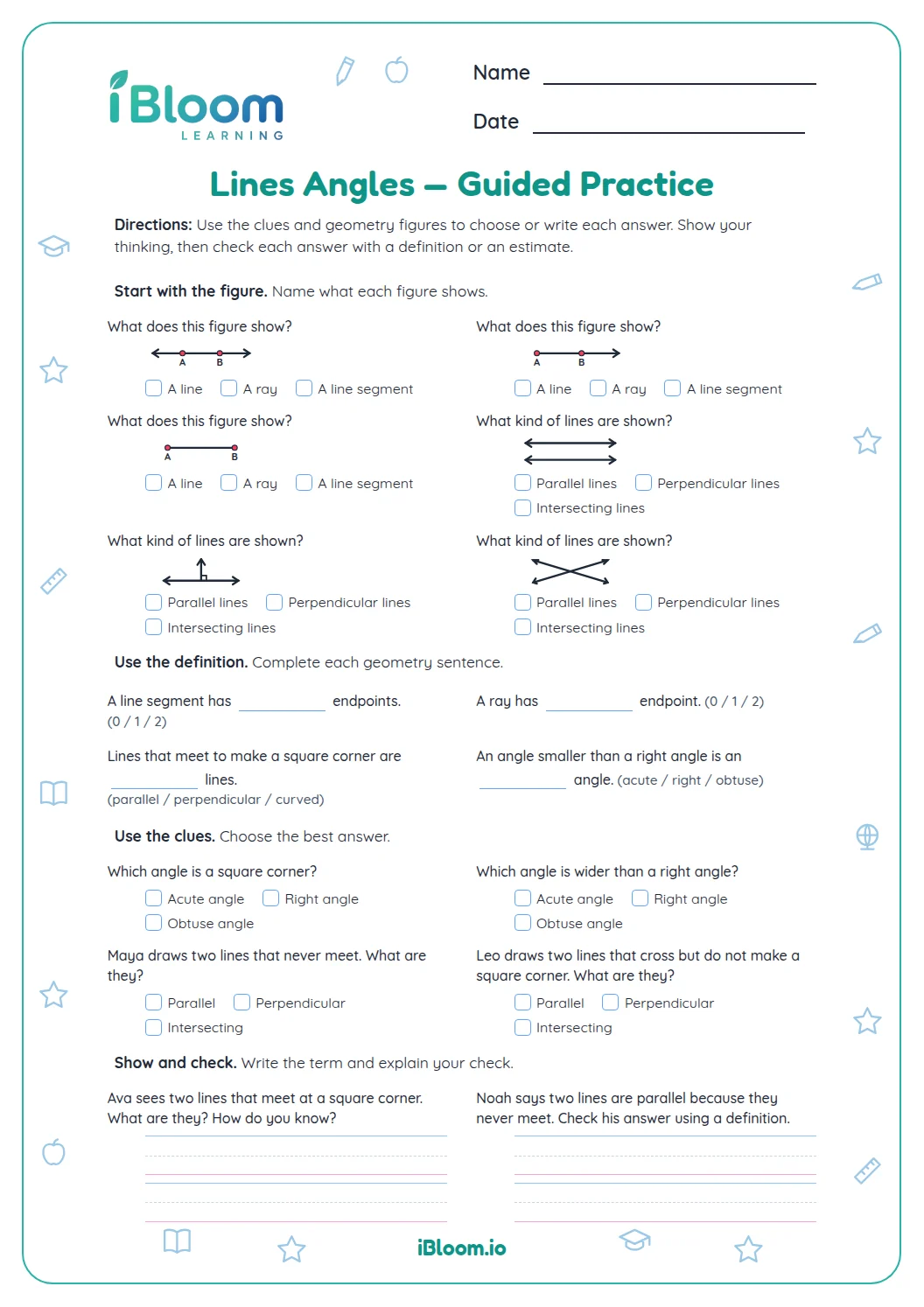
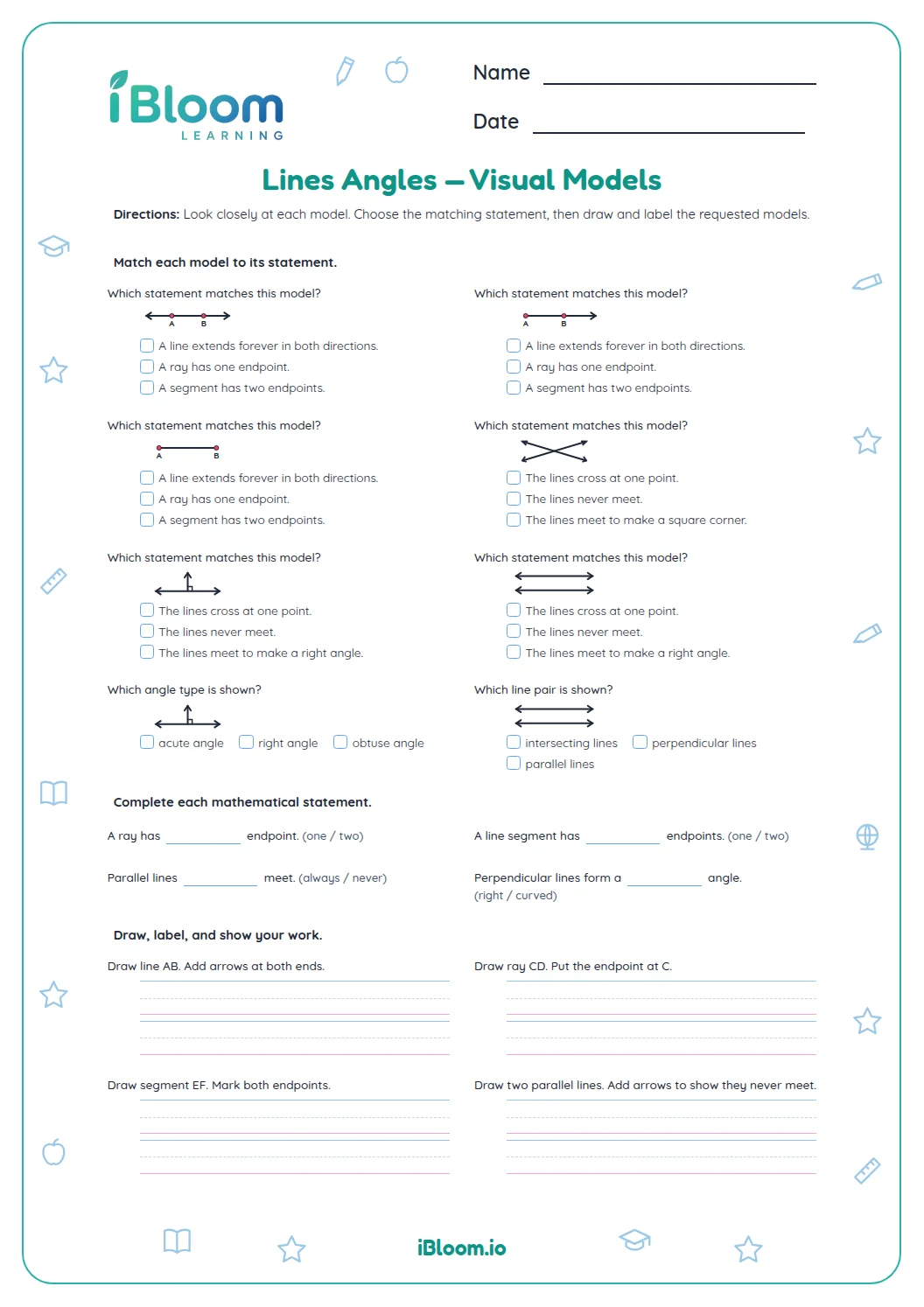
- 1Look at the opening between the two rays.
- 2Compare it with a square corner.
- 3Choose Yes for a matching square corner and No for other openings.
- 4Use the same comparison when thinking about shapes.
- 5Check that your short answer explains the angle feature.
Right-angle mix-ups and fixes
The mistake
Calling every sharp-looking corner a right angle.
The fix
Compare the opening with a square corner; sharpness alone does not make an angle right.
The mistake
Thinking a turned angle changes its size.
The fix
Turn the page if helpful; orientation changes, but the corner opening stays the same.
The mistake
Assuming side lengths determine whether a corner is right.
The fix
Check how the sides meet. A rectangle can be wide or tall and still have square corners.
Common Core alignment
The shape reasoning on this page practices identifying right angles in two-dimensional figures.
Identify right angles in two-dimensional figures and compare their corner properties.
On this sheet: The named right-angle skill is practiced by identifying and counting square corners in figures.
Show the official wordingHide the official wording
Draw points, lines, line segments, rays, angles (right, acute, obtuse), and perpendicular and parallel lines. Identify these in two-dimensional figures.
What to practice next
Make more practice
Further reading
Questions parents and teachers ask
What is a right angle?
A right angle is a square corner, like the corner of a sheet of paper. The first three items ask students to compare drawn angles with that familiar shape. The remaining questions use the same idea to reason about triangles, rectangles, and turning.
Can a shape have more than one right angle?
Yes. A square and a rectangle each have four right angles, while a right triangle has one. The reasoning items apply the square-corner idea to familiar shapes. Side lengths do not determine the corner opening. A simple corner comparison helps keep that idea clear.
Why are the shapes shown without corner marks?
The drawings show angles without adding marks that label the answer. Students compare each opening with a square corner and decide whether it is a right angle. This keeps the decision with the learner. Each picture has its own letter.
What is a common mistake when counting right angles?
A common mistake is calling any sharp-looking corner a right angle. Compare the opening with the corner of a page or book. That square-corner check is more reliable than judging by sharpness alone. Both rays form the opening.
How should a student explain the last questions?
For the final items, think about the corner opening separately from side length or page orientation. A rectangle can be wide and still have right angles, and turning an angle does not change its size. Use the square-corner check.
What can students practice next?
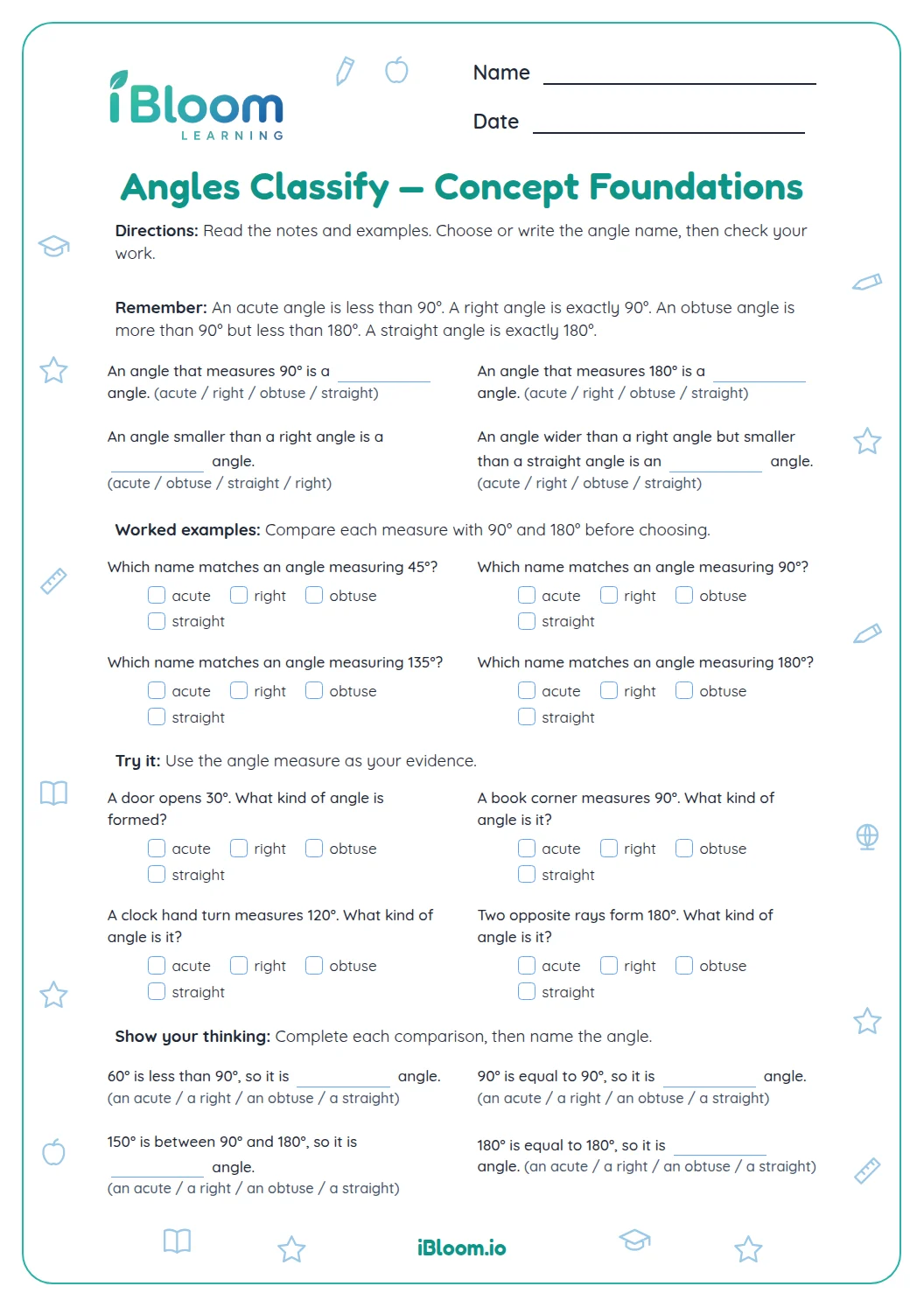
Angle classification gives more practice comparing angles with a right angle. Quadrilateral properties extends attention to the corners and sides of four-sided shapes, building on the comparisons in this worksheet. The answer key makes it easy to review.