





About this worksheet
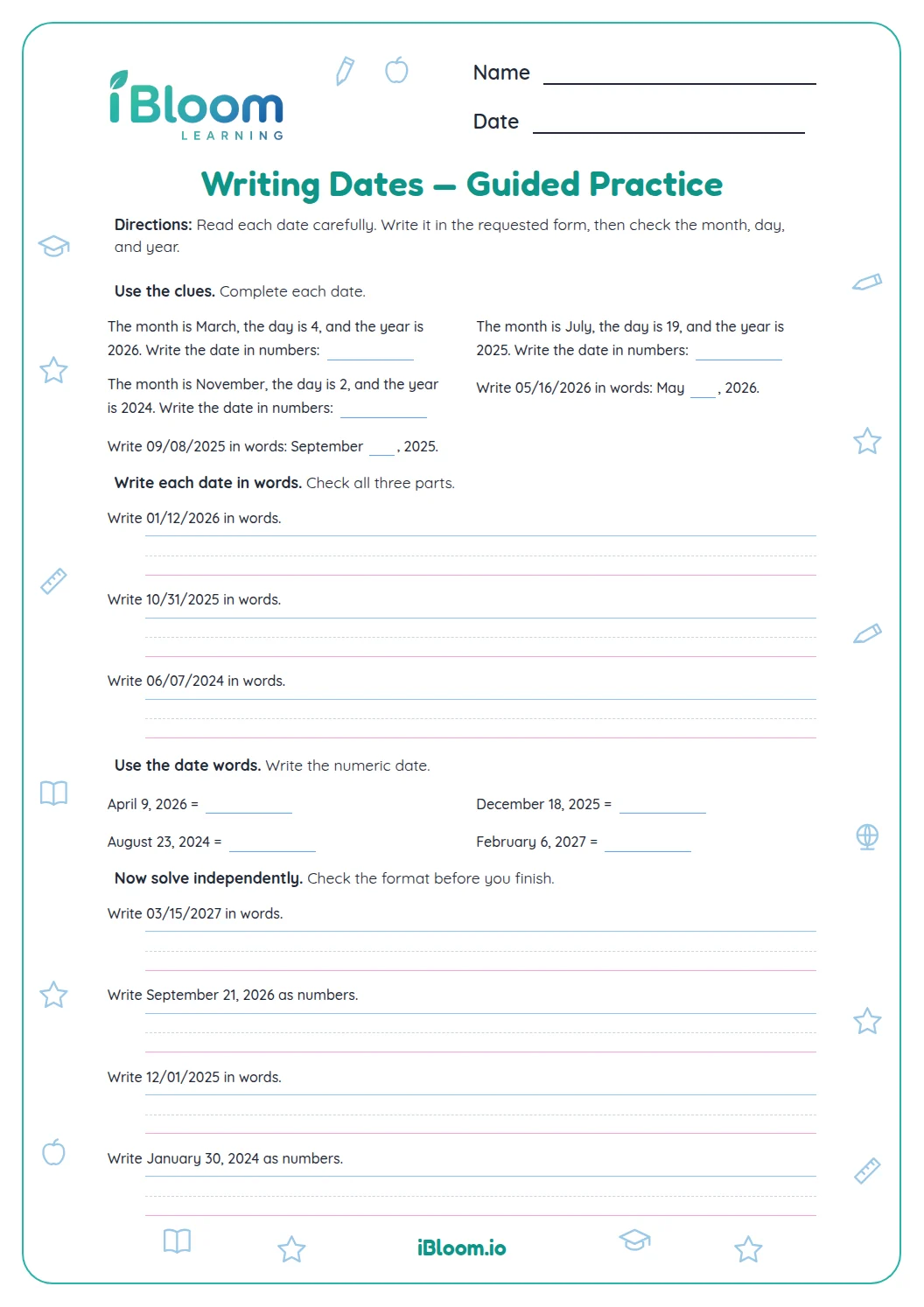
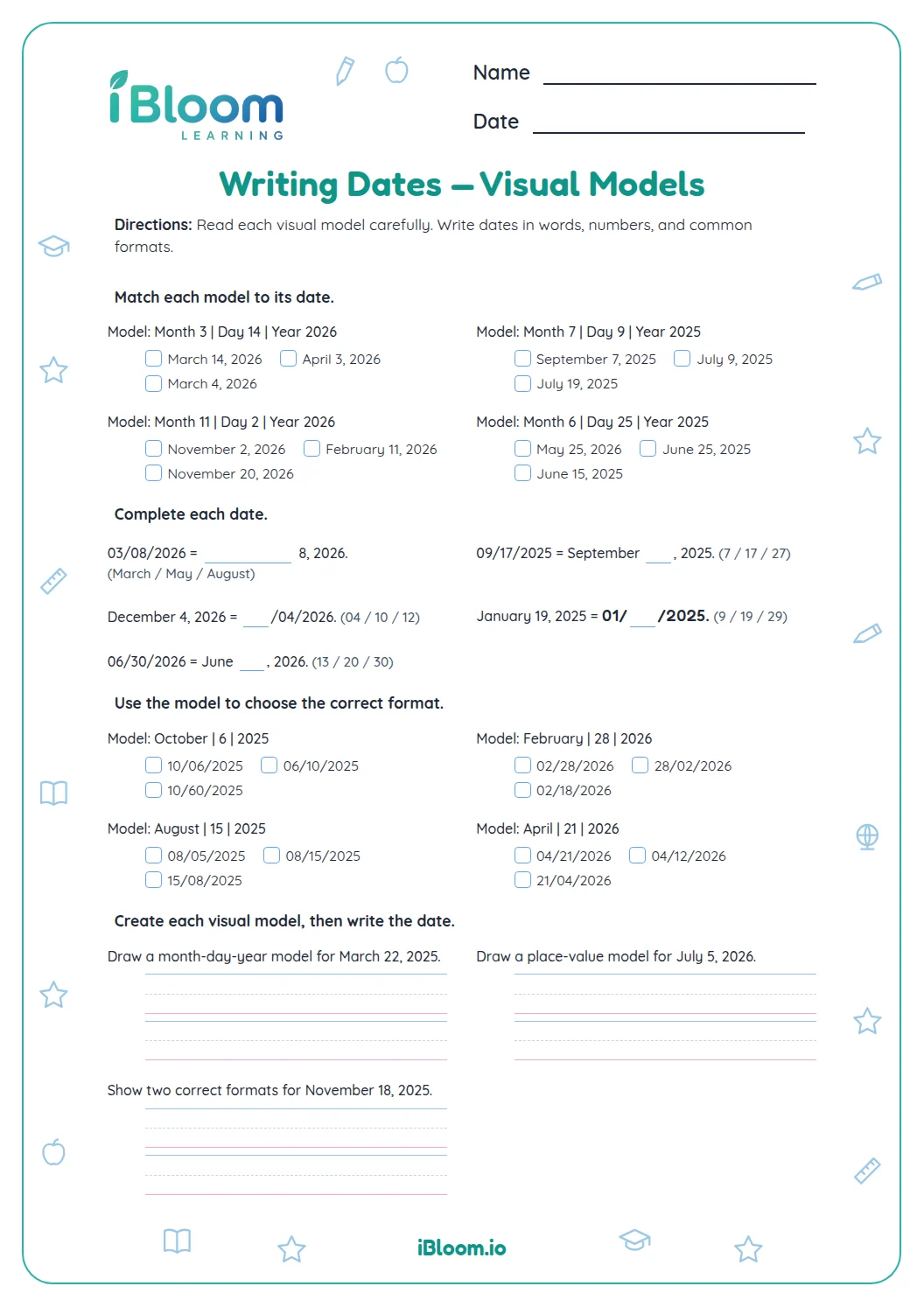
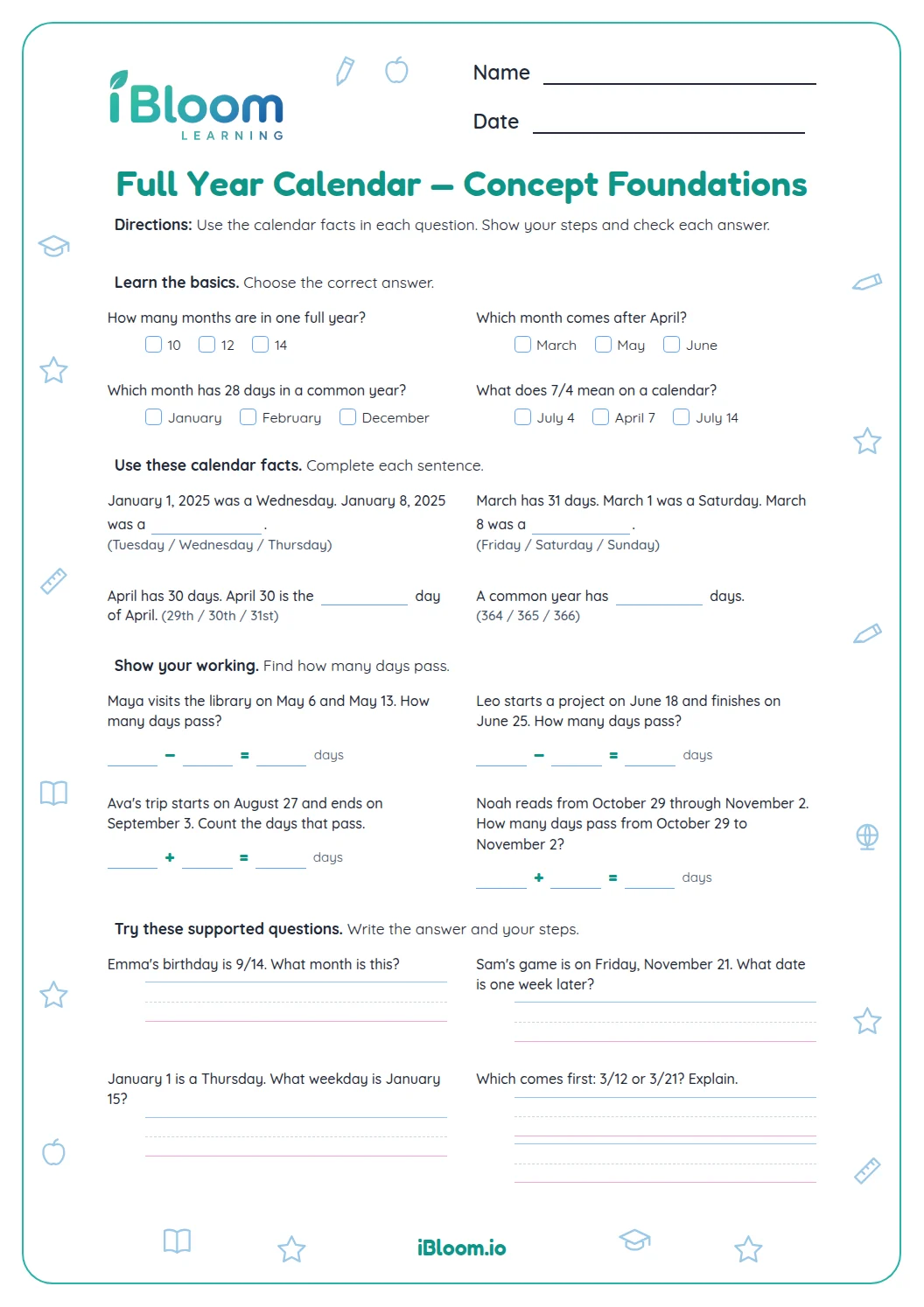
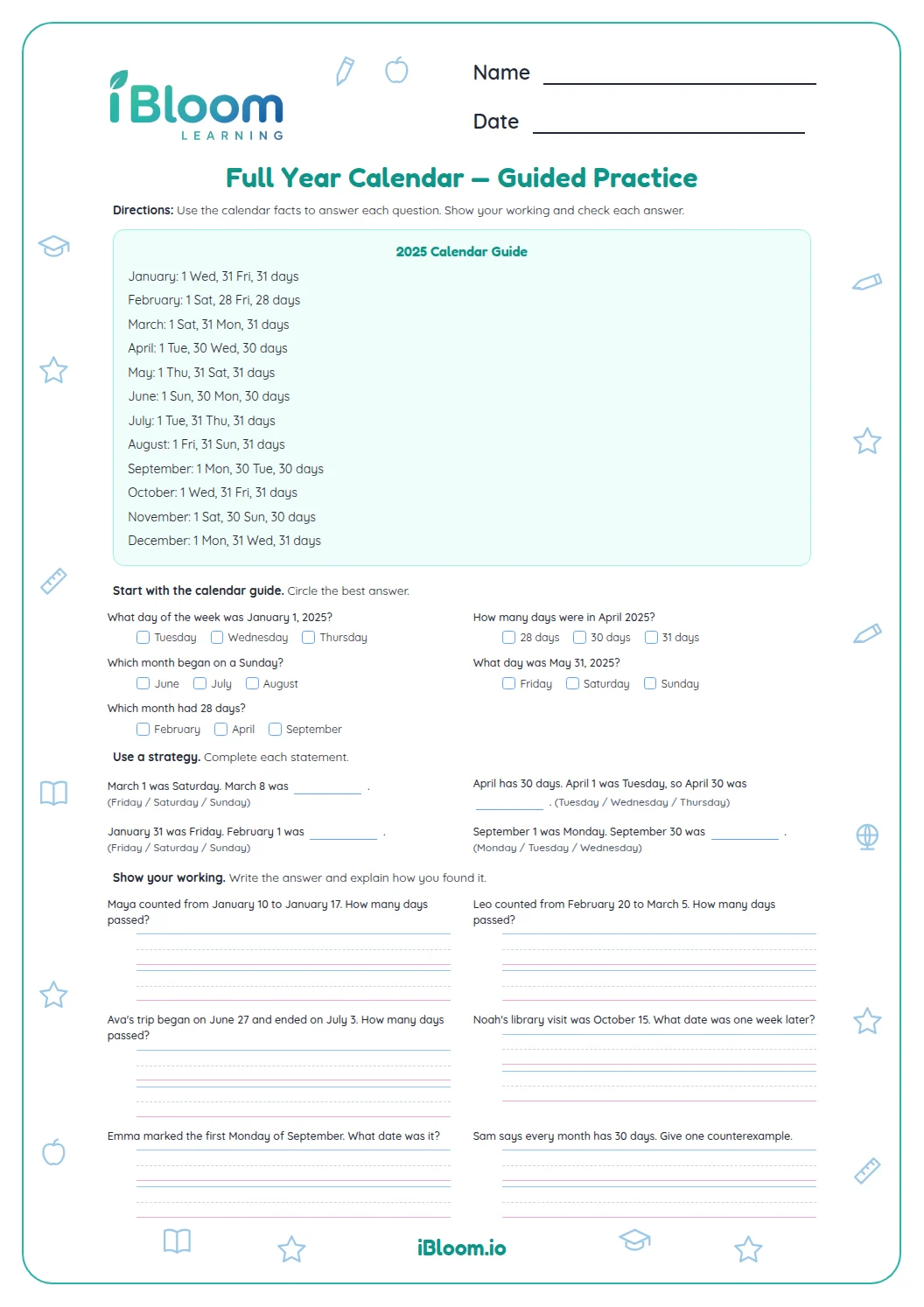
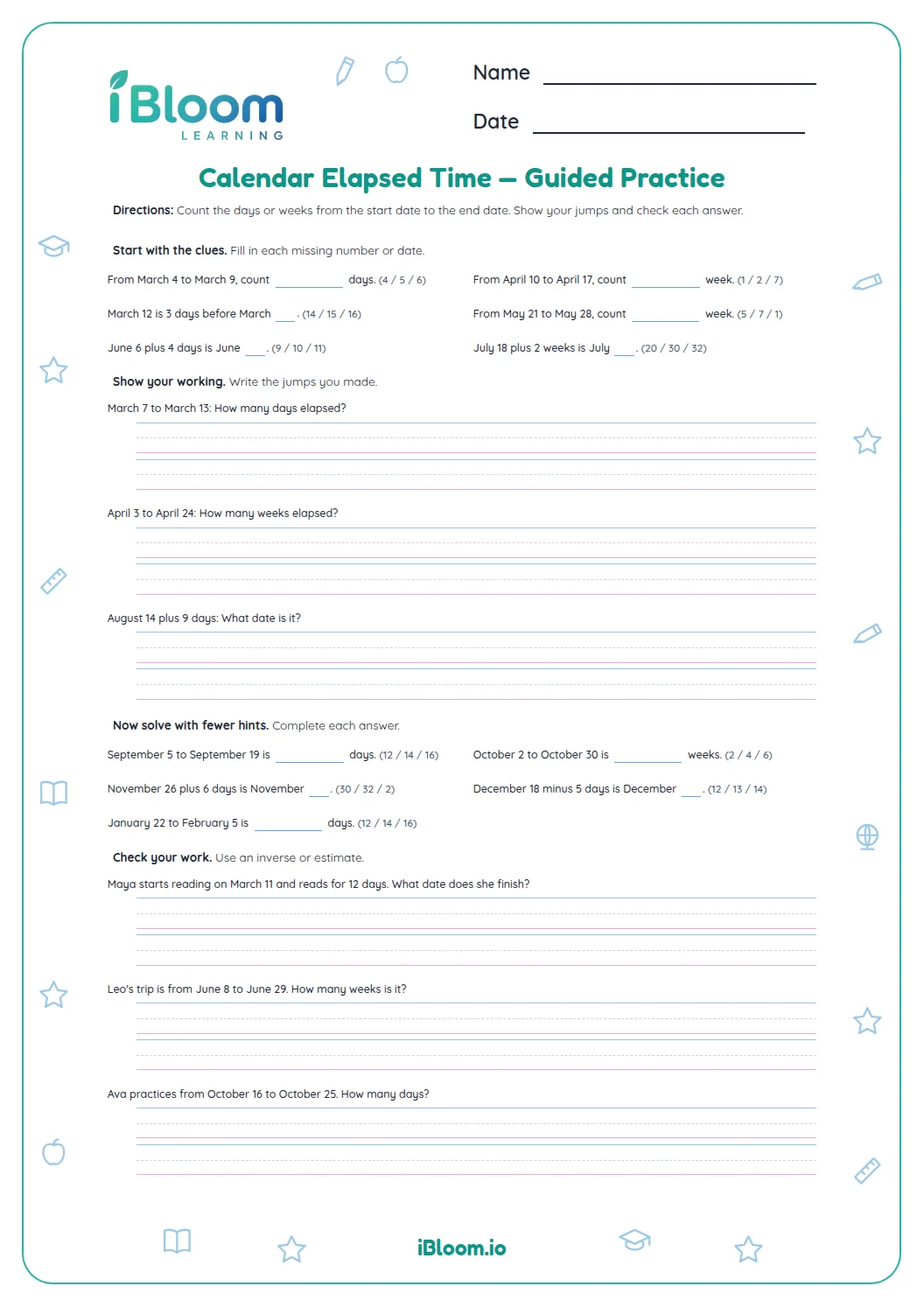
This free printable Grade 3 worksheet gives students 14 focused questions on writing dates. Students practice in two parts, moving from identifying or setting up the skill to applying it in short problems. The answer key supports checking each response and correcting mistakes.
How does this sheet practice writing dates?
Part A gives focused practice with short questions. Part B applies the same skill in new situations.
- 1May is month 5.
- 2Keep the day 12 and year 2026.
- 3The numeric form is 5-12-2026.
How can students check their answers?
Use the answer key after attempting each item. Check number order, operation, and units before correcting a response.
How to use this worksheet
- 1Read the part directions before starting.
- 2Work through one item at a time.
- 3Write units when a story names a unit.
- 4Check each response with the answer key.
What should students double-check?
The mistake
Choosing an operation before understanding the story.
The fix
Identify what is known and what the question asks.
The mistake
Changing the order of numbers while rewriting.
The fix
Keep the values tied to their labels.
The mistake
Skipping a final check.
The fix
Use the key to find and correct any mismatch.
What to practice next
Make more practice
Questions parents and teachers ask
What skill does this worksheet practice?
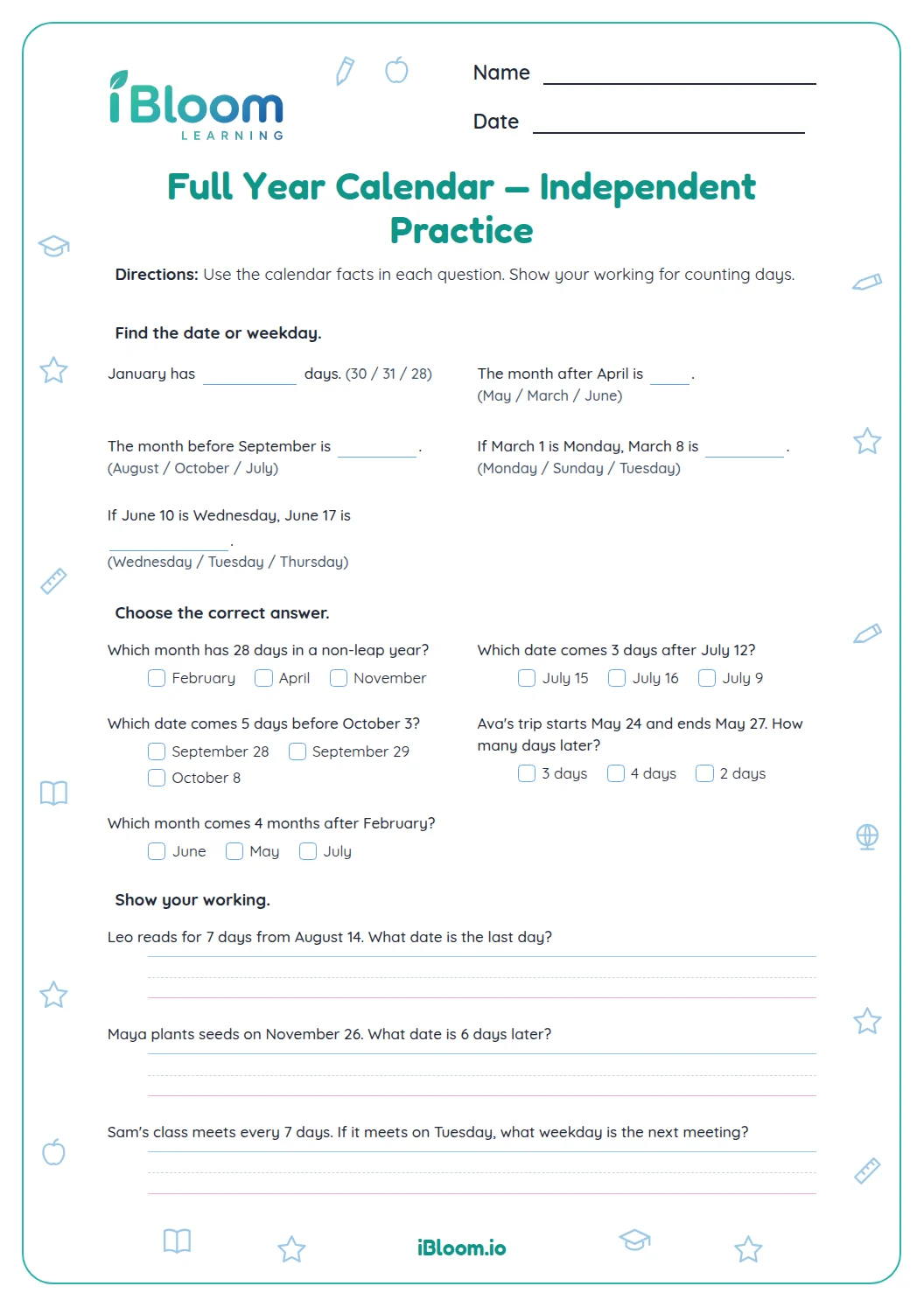
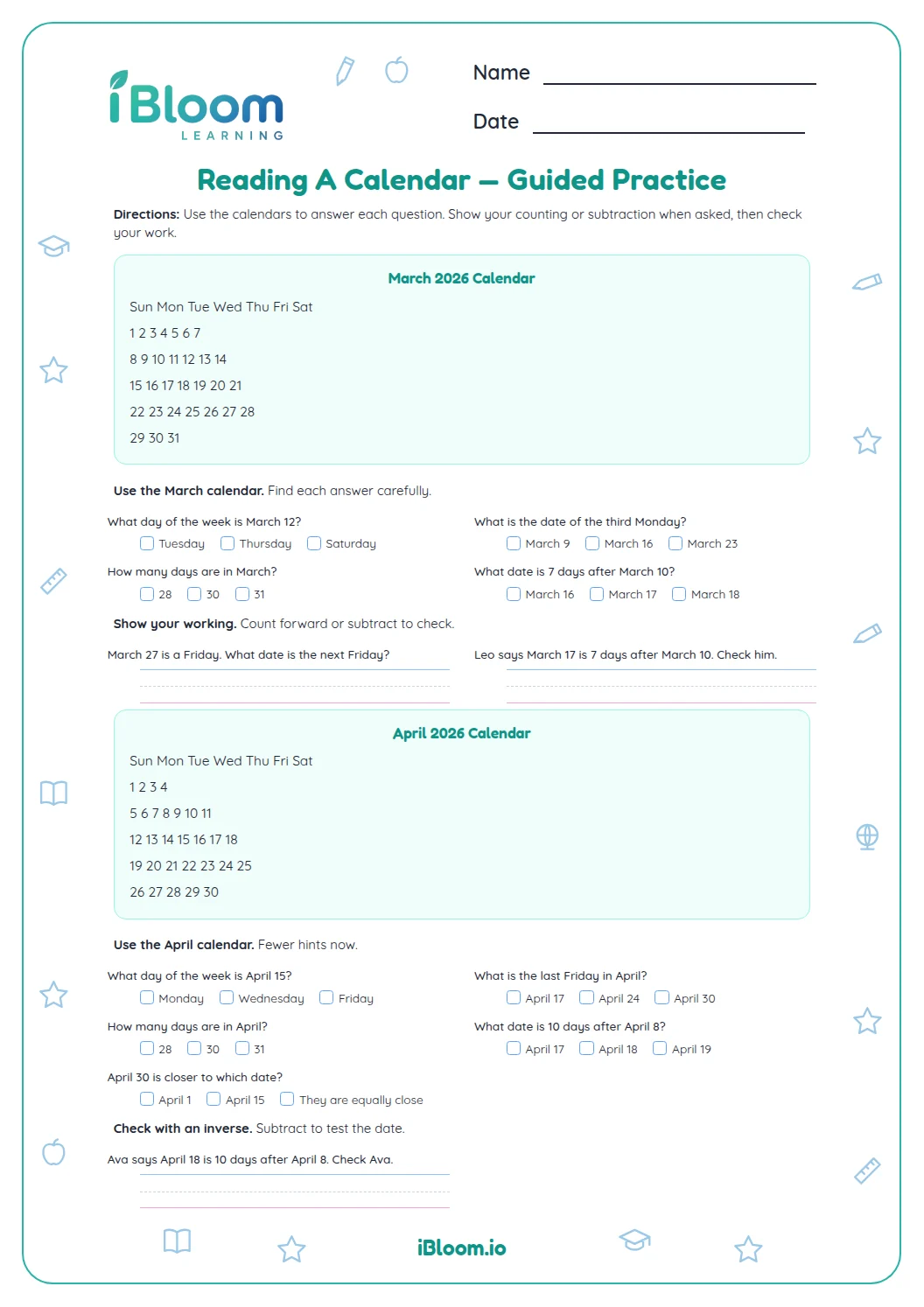
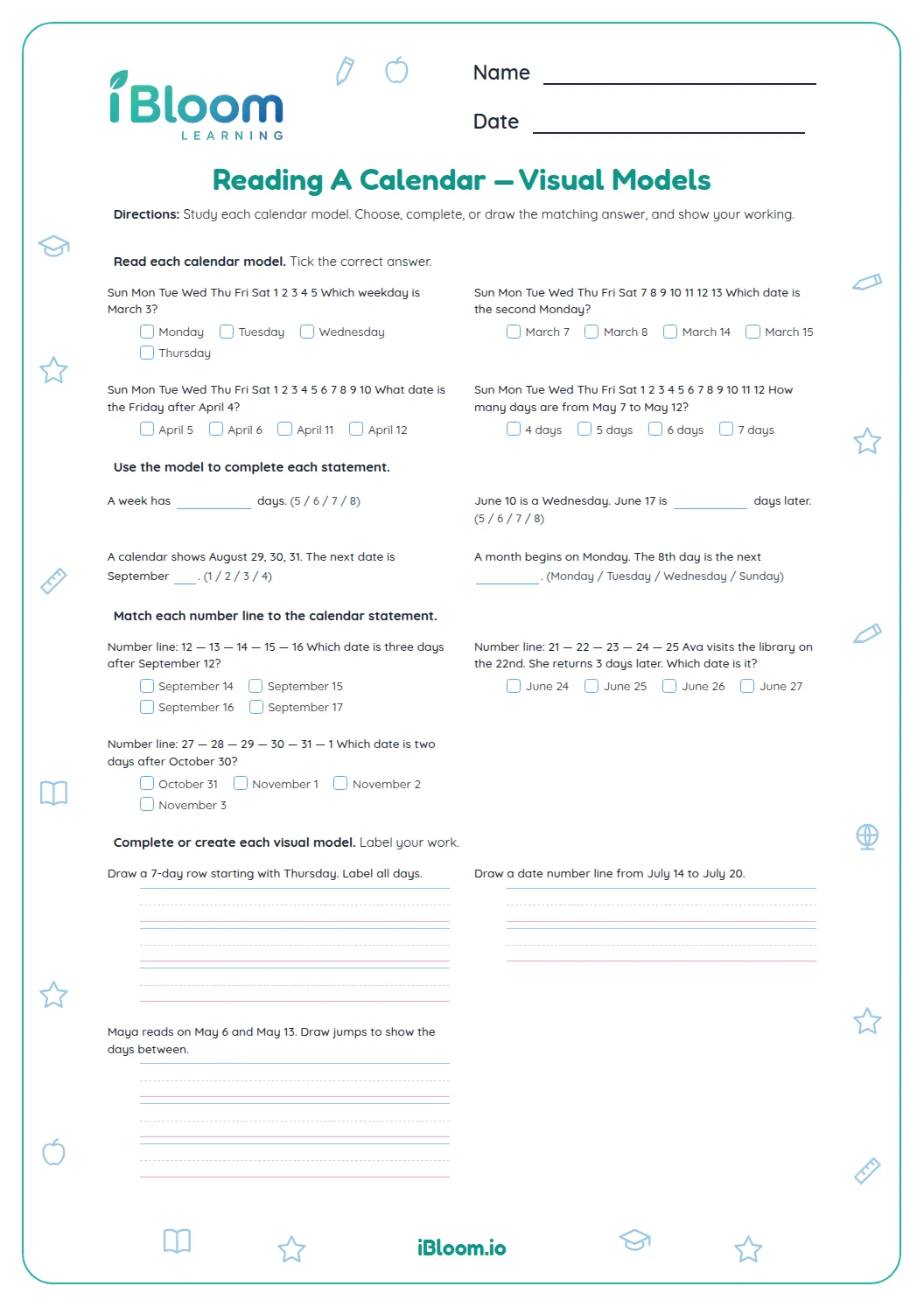
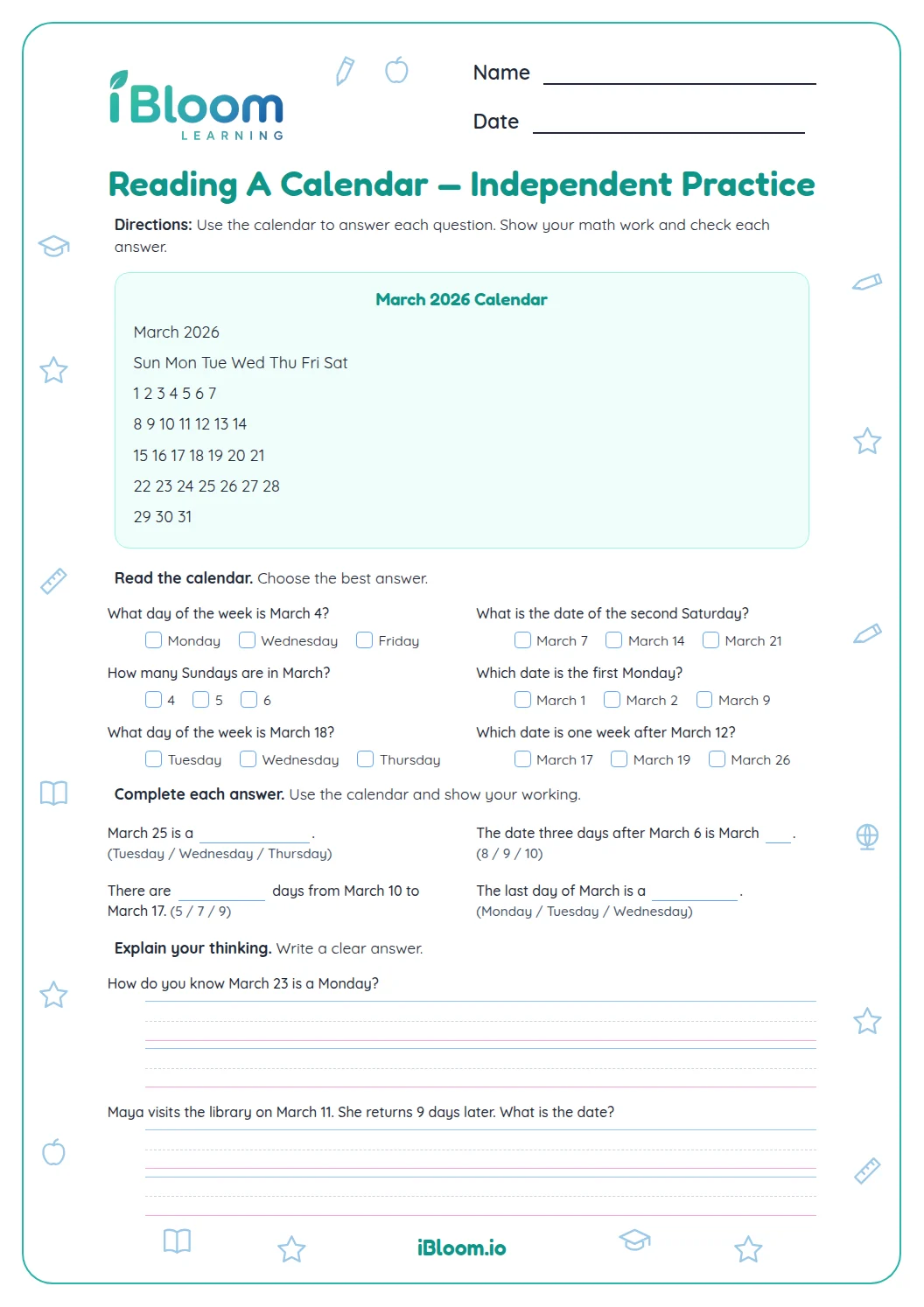
This printable practices writing dates. Students work through short questions that use the same central skill in varied ways, then check their responses with the separate key. Read the directions together first so the student knows what each part asks.
How many questions are included?
There are 14 questions arranged in two parts. Part A builds focused practice, and Part B asks students to apply the same idea in another way. The question count refers to individual numbered items, not the examples or answer key.
Does the printable include an answer key?
Yes. A separate answer key is included after the worksheet pages. Students can complete the questions before checking, then compare each response and make corrections. The key gives the intended answer for every numbered item so families can review the work together.
How can an adult help with this practice?
Ask the student to explain what each question asks before choosing a method. Encourage them to label units or keep place values aligned when appropriate. After using the key, have them revisit missed items and describe how they corrected the response.
How long should students plan to work?
Plan for about 20 minutes, including time to read the directions and check answers. The exact time depends on how familiar the student is with the skill and whether they pause to explain their thinking. The sheet can also be completed in two short sittings.