
About this worksheet
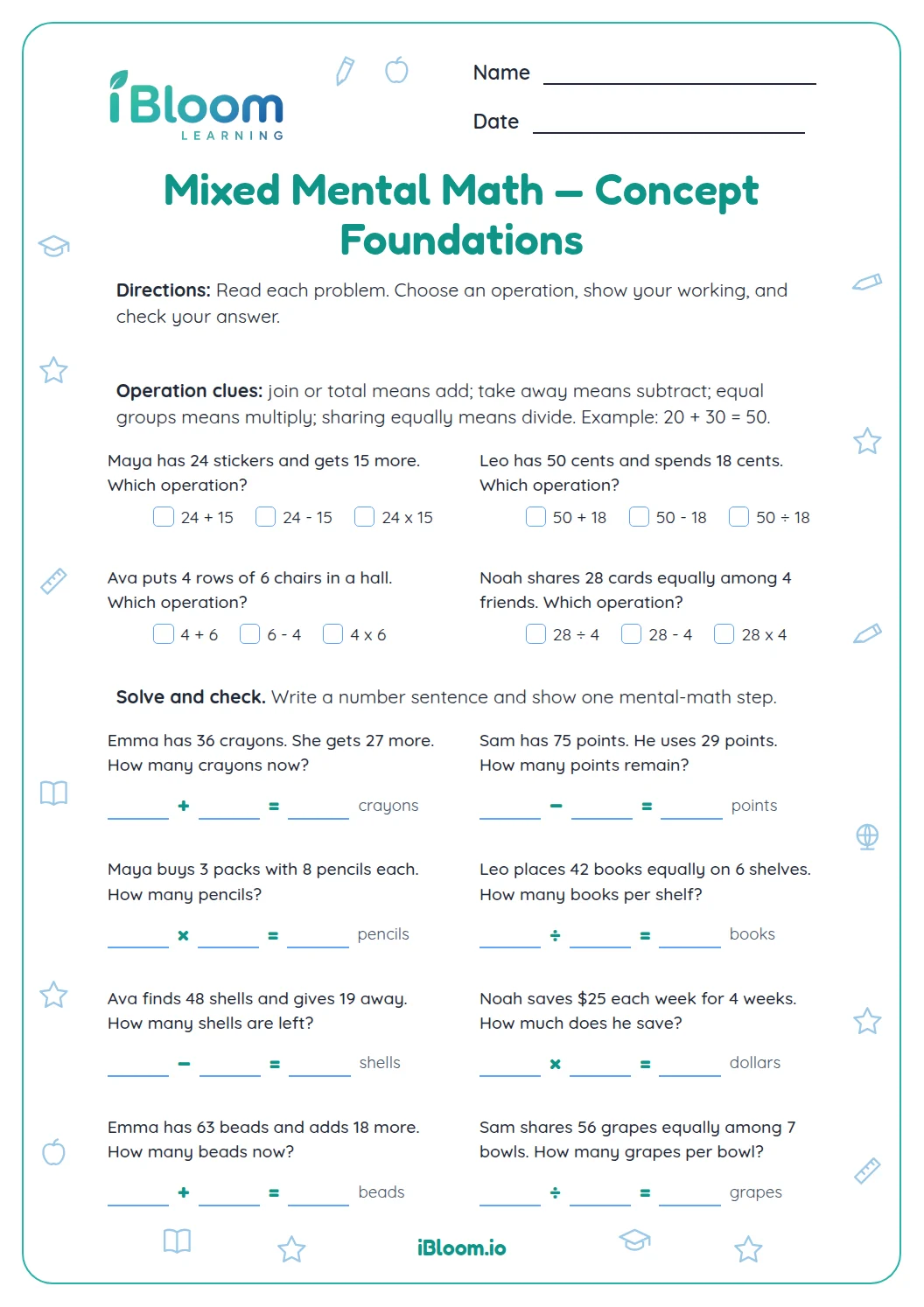
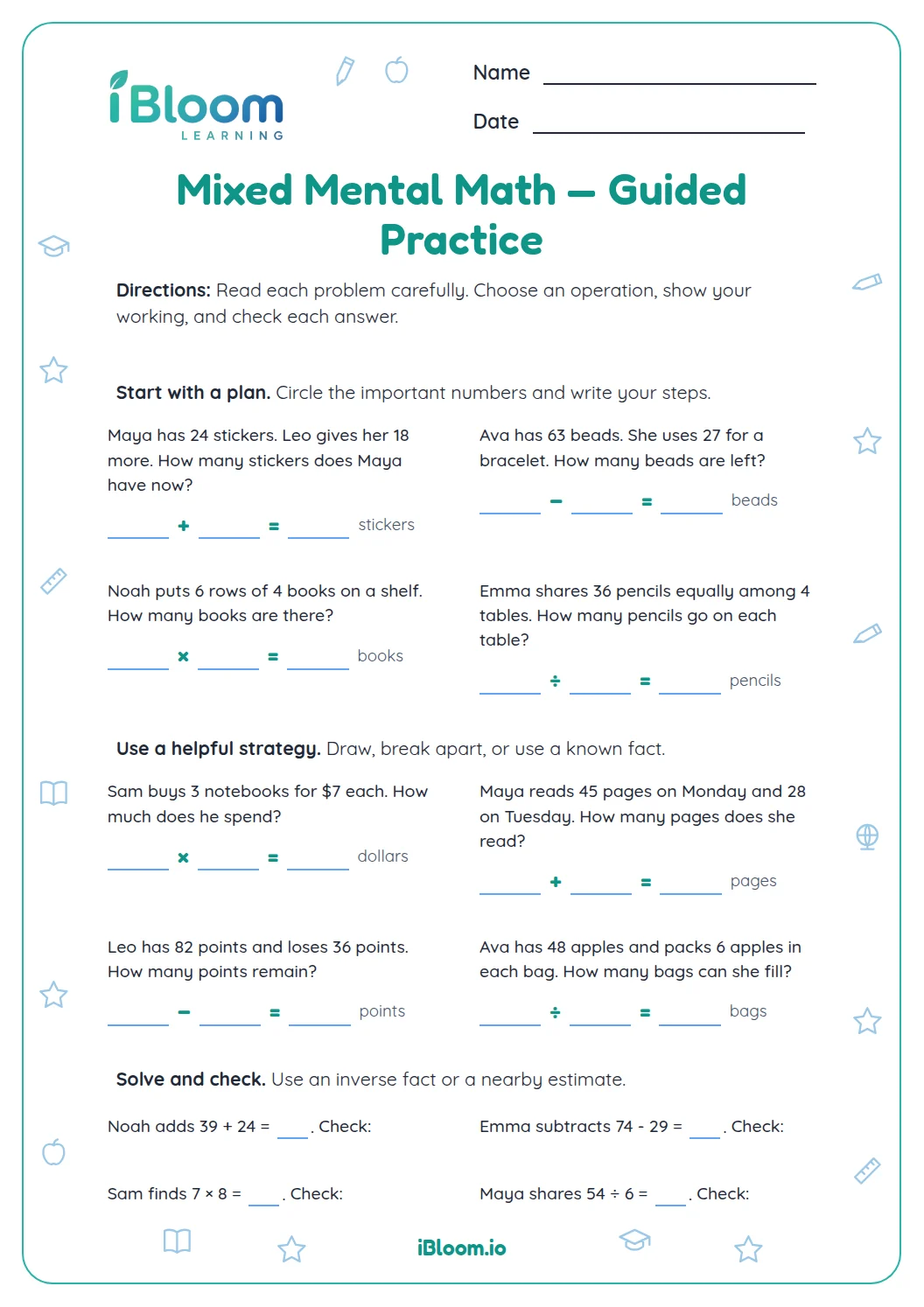
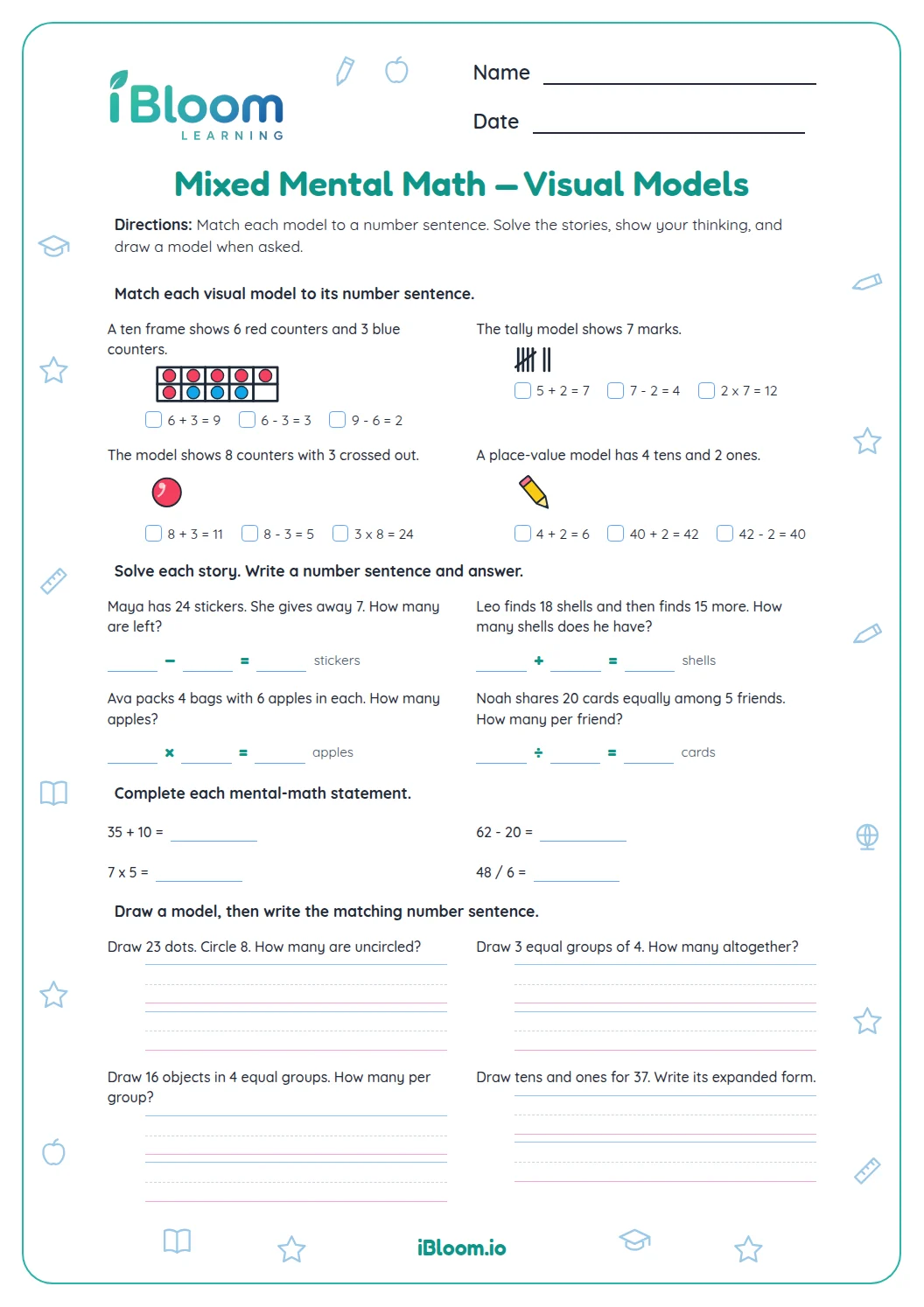
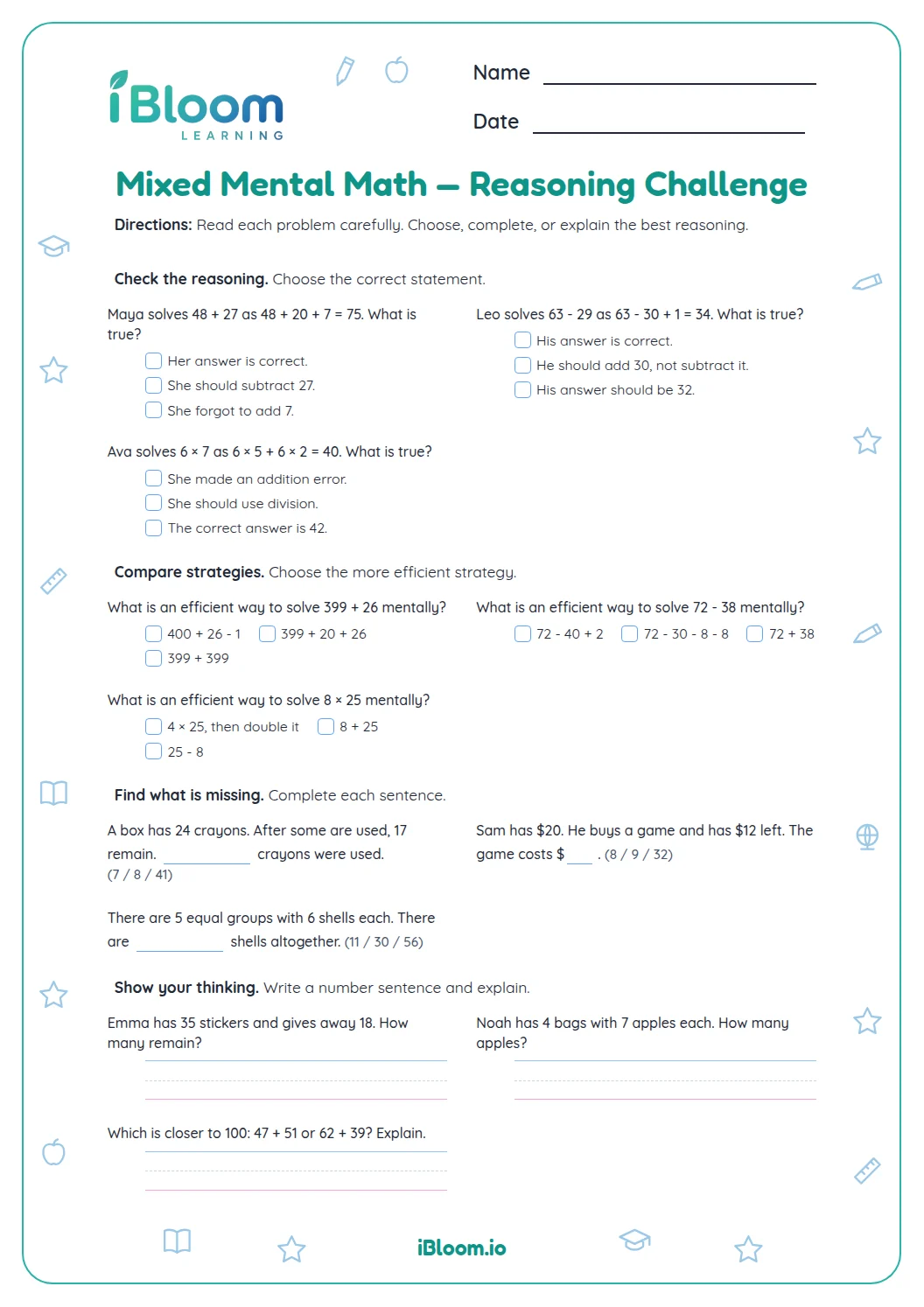
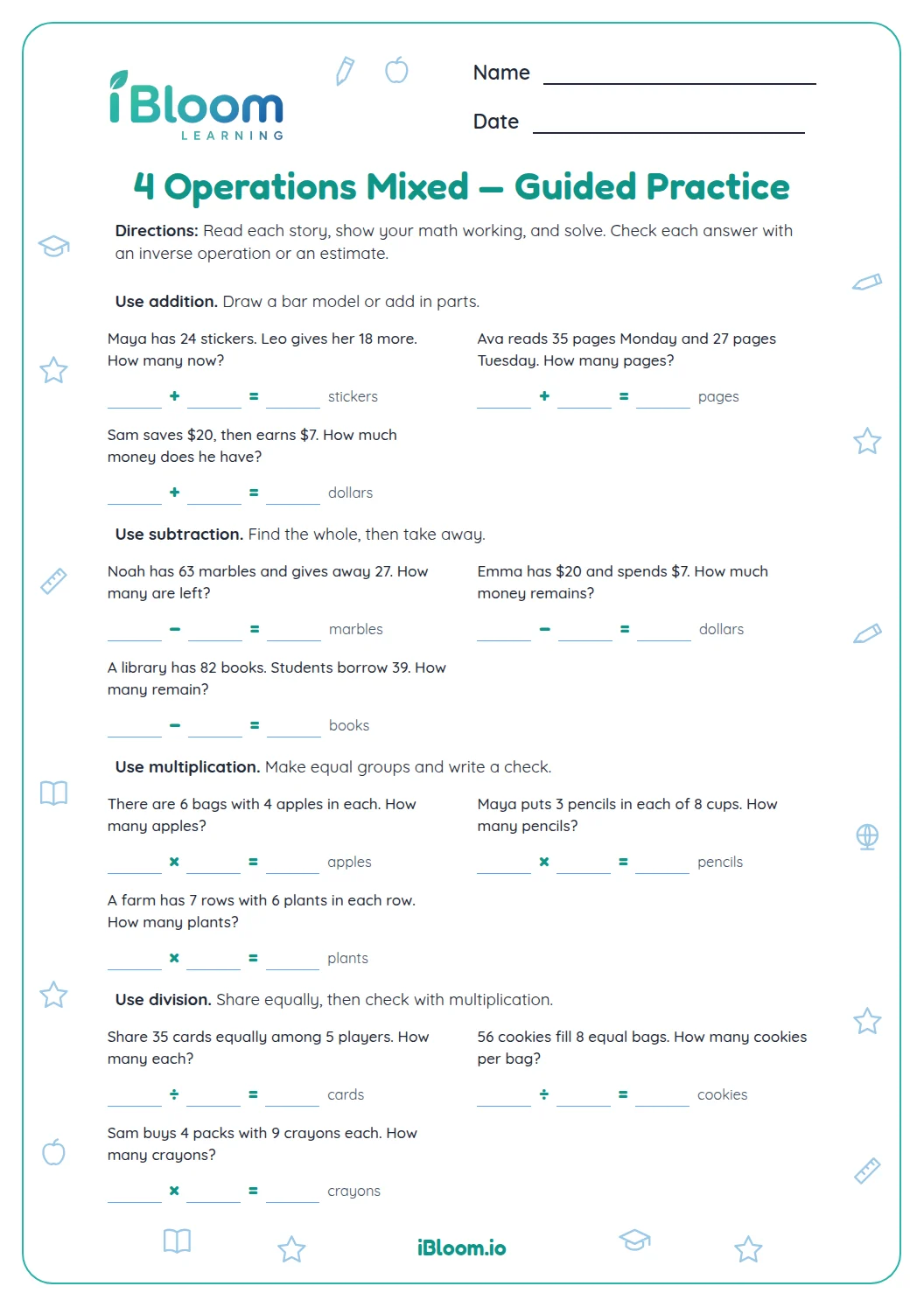
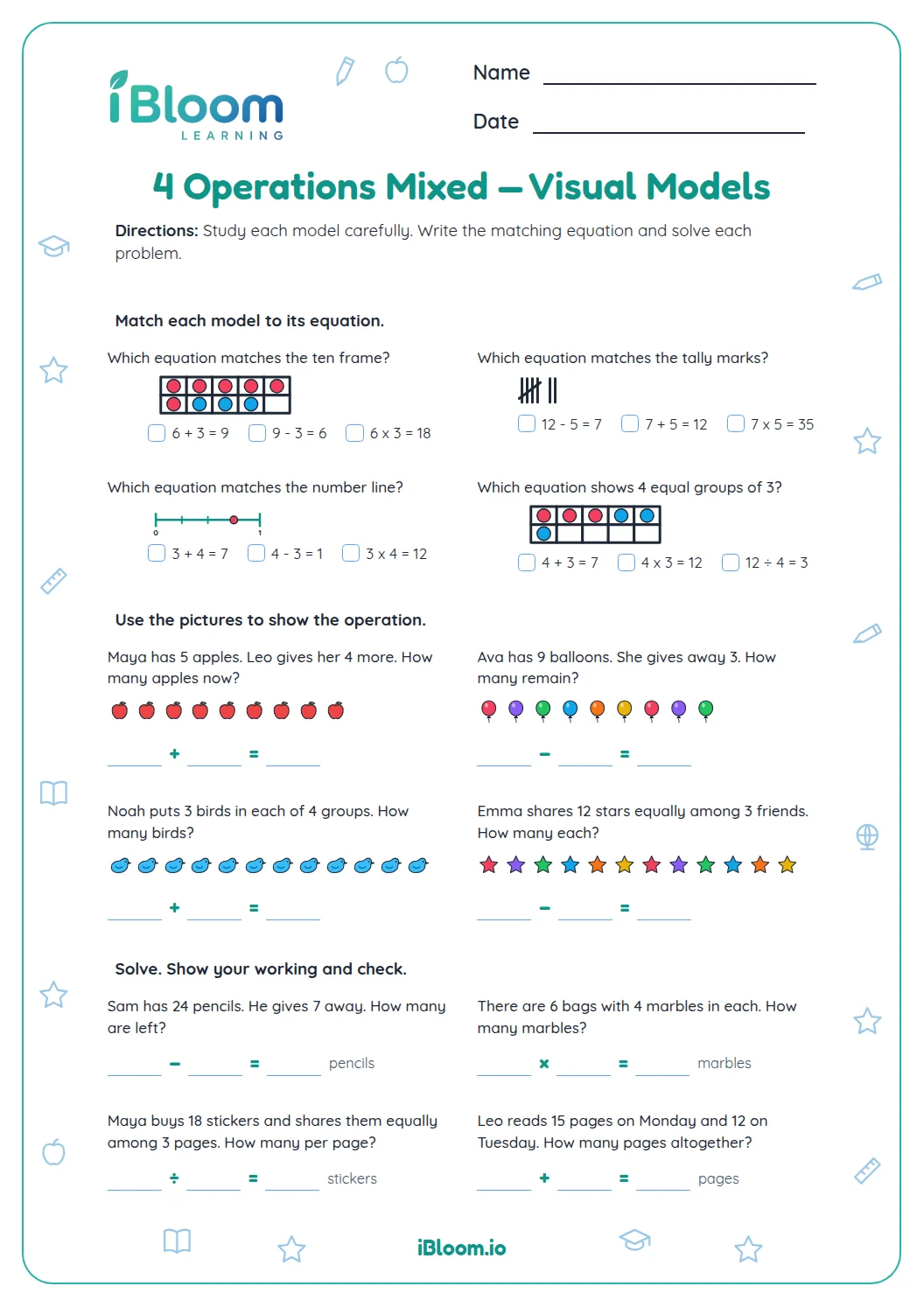
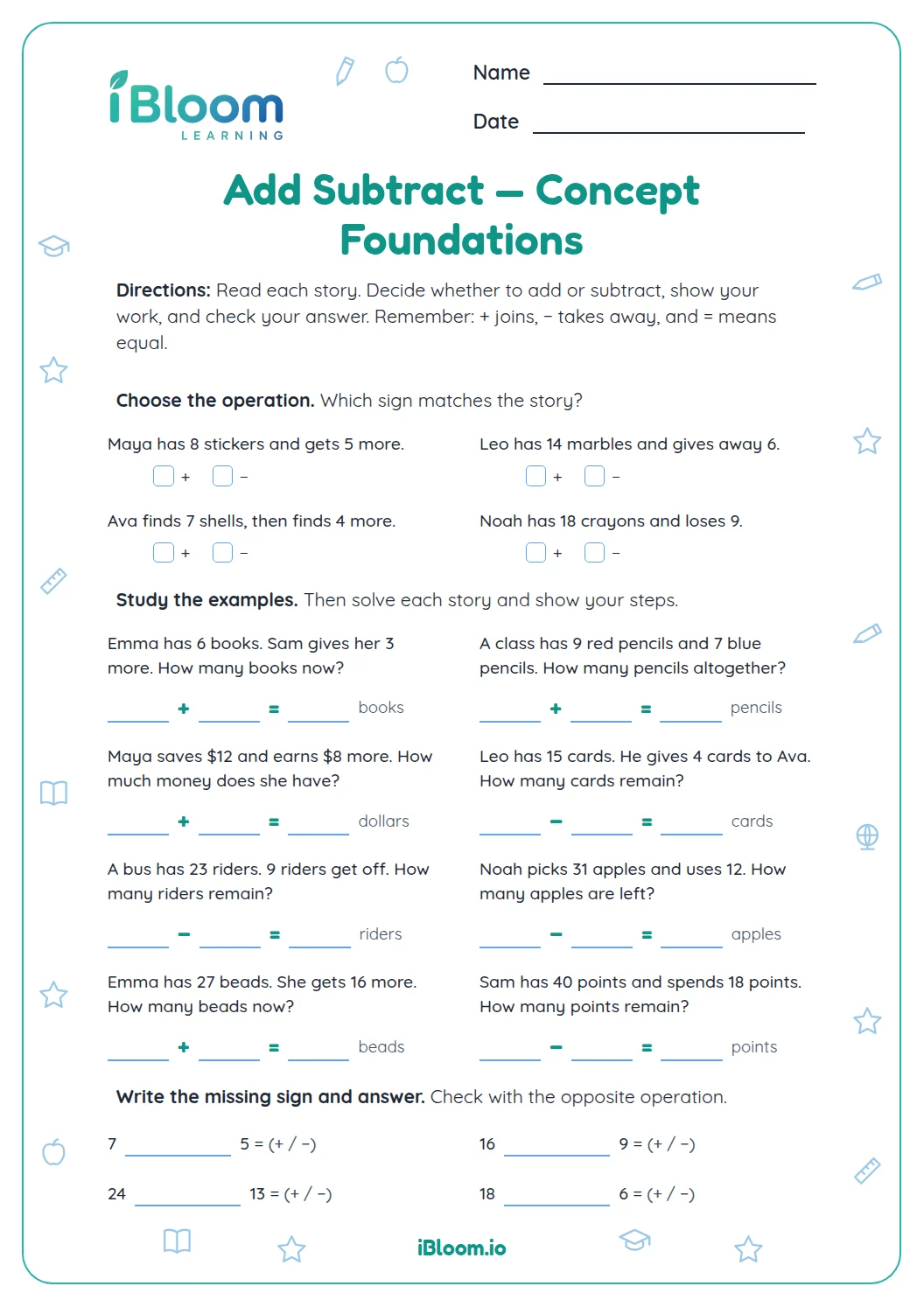
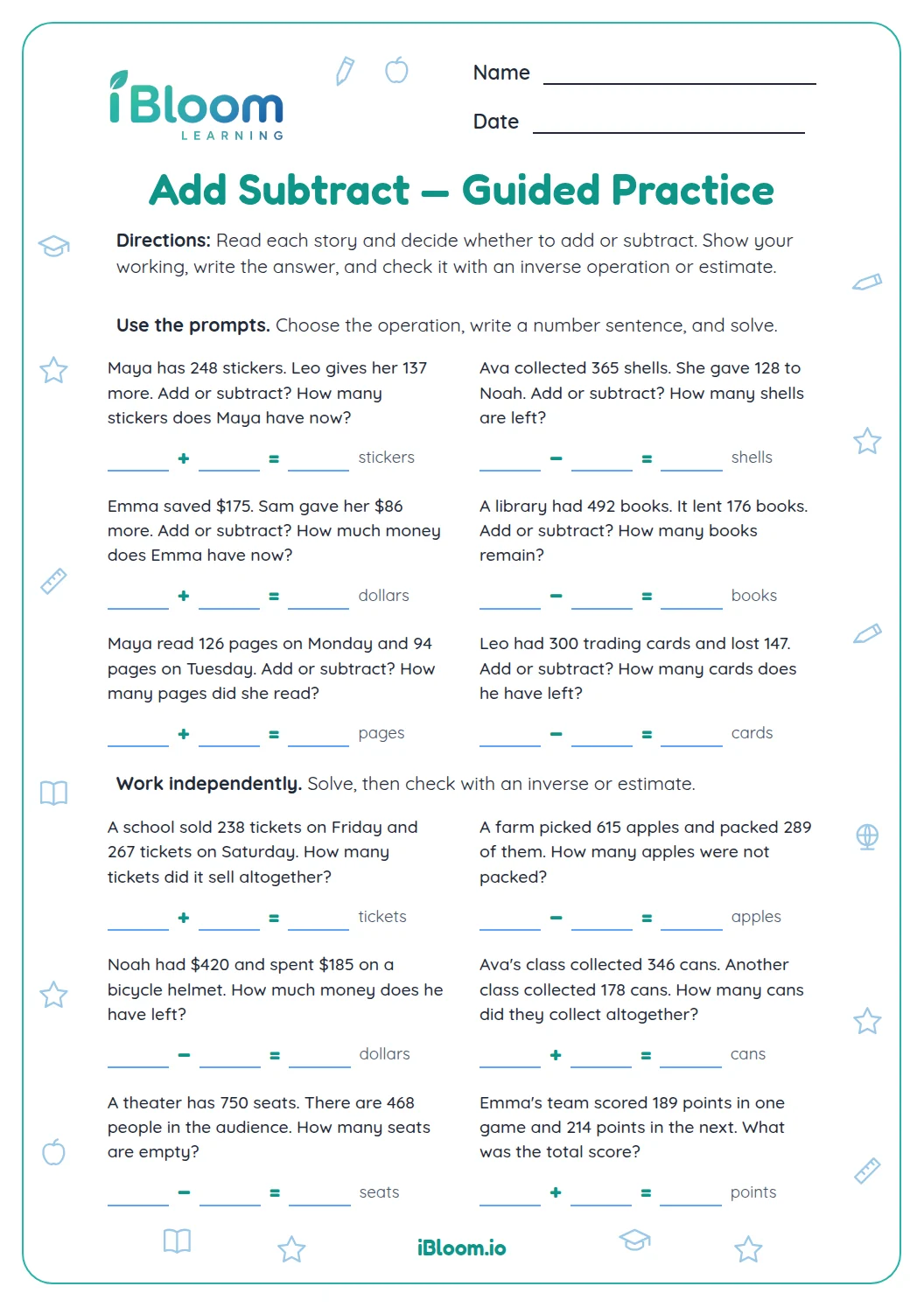
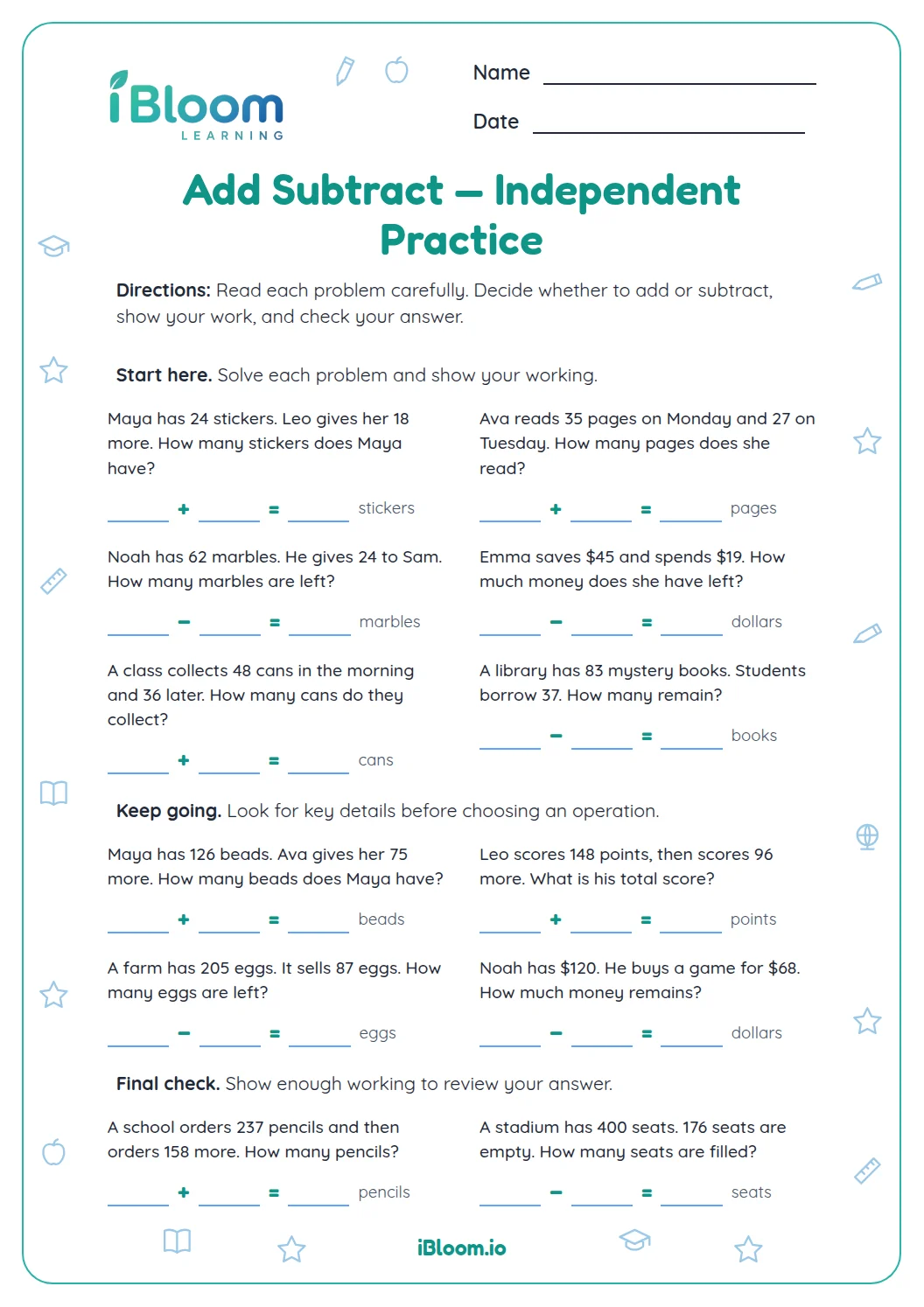
This Grade 3 worksheet offers 16 short word problems for choosing an operation and solving with mental math or a quick equation. Students practice addition and subtraction within 1,000 alongside multiplication and division situations with equal groups and sharing. A separate answer key gives the answers with units. The equal-groups and sharing items practice CCSS 3.OA.A.3.
Aligned to 3.OA.A.3
How do you choose an operation?
Read what is known and what the question asks. For example, six teams have eight players each, so 6 × 8 finds the total of 48 players.
Which stories use equal groups or sharing?
Rows, teams, and bags can describe equal groups. Splitting crayons or markers among tables or groups describes sharing. Multiplication and division facts help solve these situations.
How can mental math help?
Break addition and subtraction into friendly parts, or use a known multiplication fact. The numbers stay manageable, and a quick equation can record the strategy.
Common mistakes and quick fixes
The mistake
Choosing an operation from one keyword.
The fix
Think about the relationship in the whole story, not a single word.
The mistake
Forgetting what the question asks for.
The fix
Check whether it asks for a total, what remains, a group size, or a number of groups.
The mistake
Leaving off the unit.
The fix
Name the kind of item in the final answer.
This page practices a Common Core skill.
Multiplication and division stories use equal groups and equal sharing within 100.
On this sheet:
Show the official wordingHide the official wording
Use multiplication and division within 100 to solve word problems in situations involving equal groups, arrays, and measurement quantities, e.g., by using drawings and equations with a symbol for the unknown number to represent the problem.
What to practice next
Make more practice
Further reading
Questions parents and teachers ask
What operations appear in this practice?
Identify what is happening and what the question asks for. Equal groups suggest multiplication, fair sharing suggests division, and combining or finding what remains points to addition or subtraction. Then check that the answer includes the right unit.
How many questions are included?
There are 16 one-step story problems. The contexts include books, stickers, teams, bags, chairs, seeds, and other familiar quantities, with a separate key for checking answers and reviewing the operation used after students finish each problem in the worksheet.
What does mental math mean here?
Students can solve by using a quick strategy in their heads or by writing a short equation. For example, 28 + 35 can be found by making 30 + 35 and adjusting, or by adding tens and ones. A quick written equation can show the thinking.
How can students recognize multiplication stories?
Look for equal groups or rows with the same number in each. In the team problem, six teams have eight players each, so multiplication finds the total number of players. The equation 6 × 8 = 48 records the relationship.
How can students check a division story?
Multiply the number in each group by the number of groups. If the product equals the starting amount, the sharing answer is reasonable. Keep the unit in the final response, such as rolls per bag or crayons per table.