

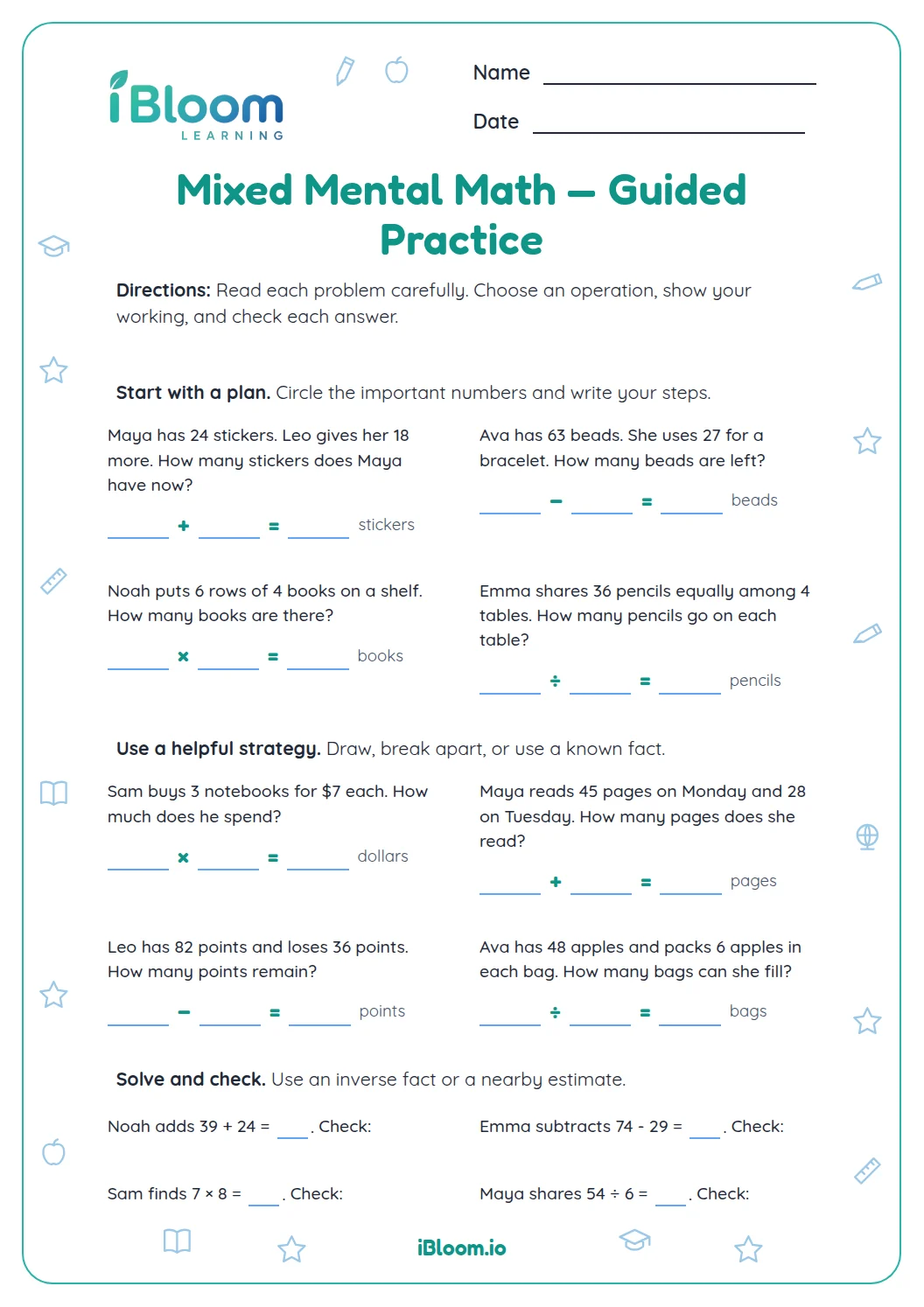
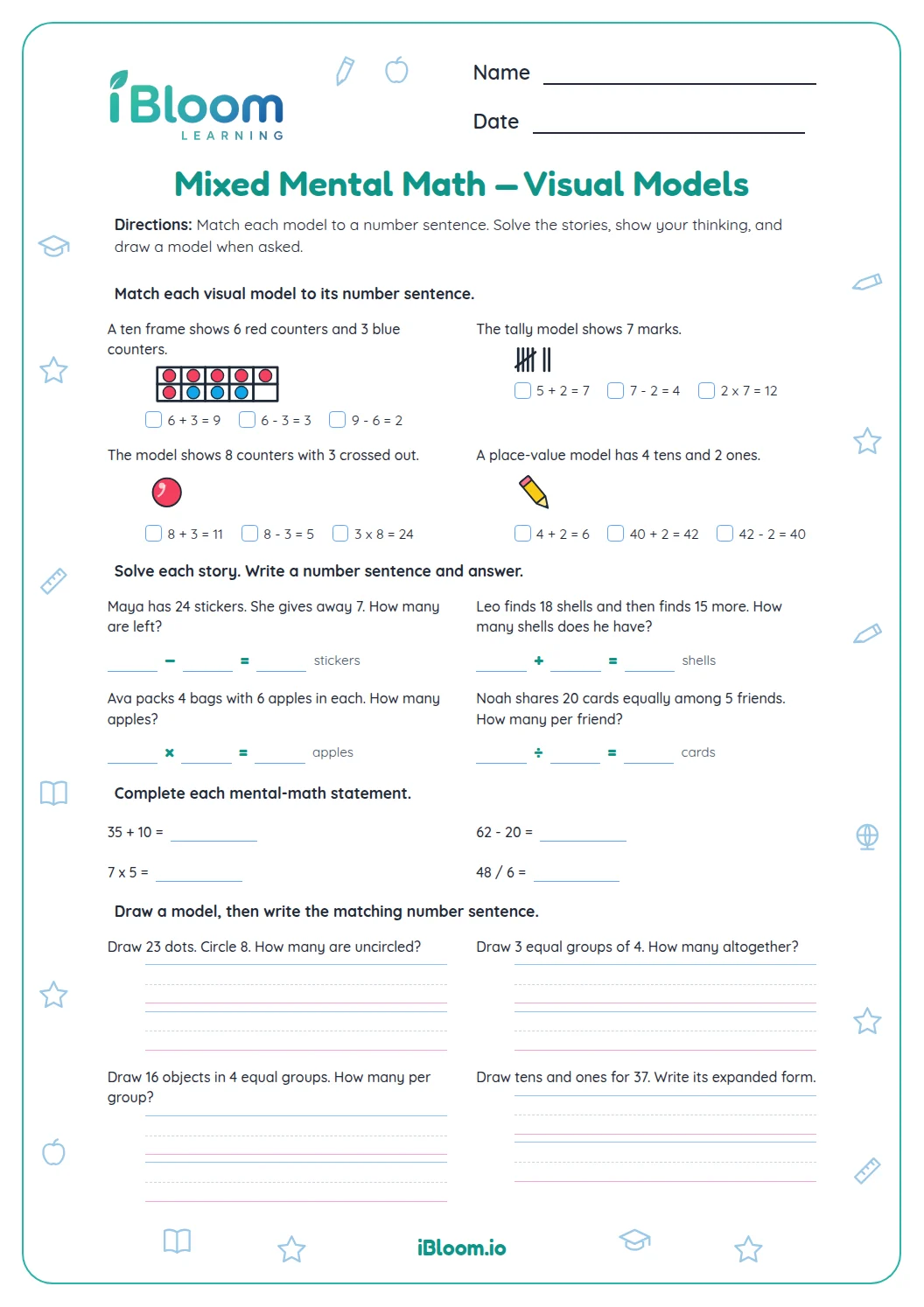
About this worksheet
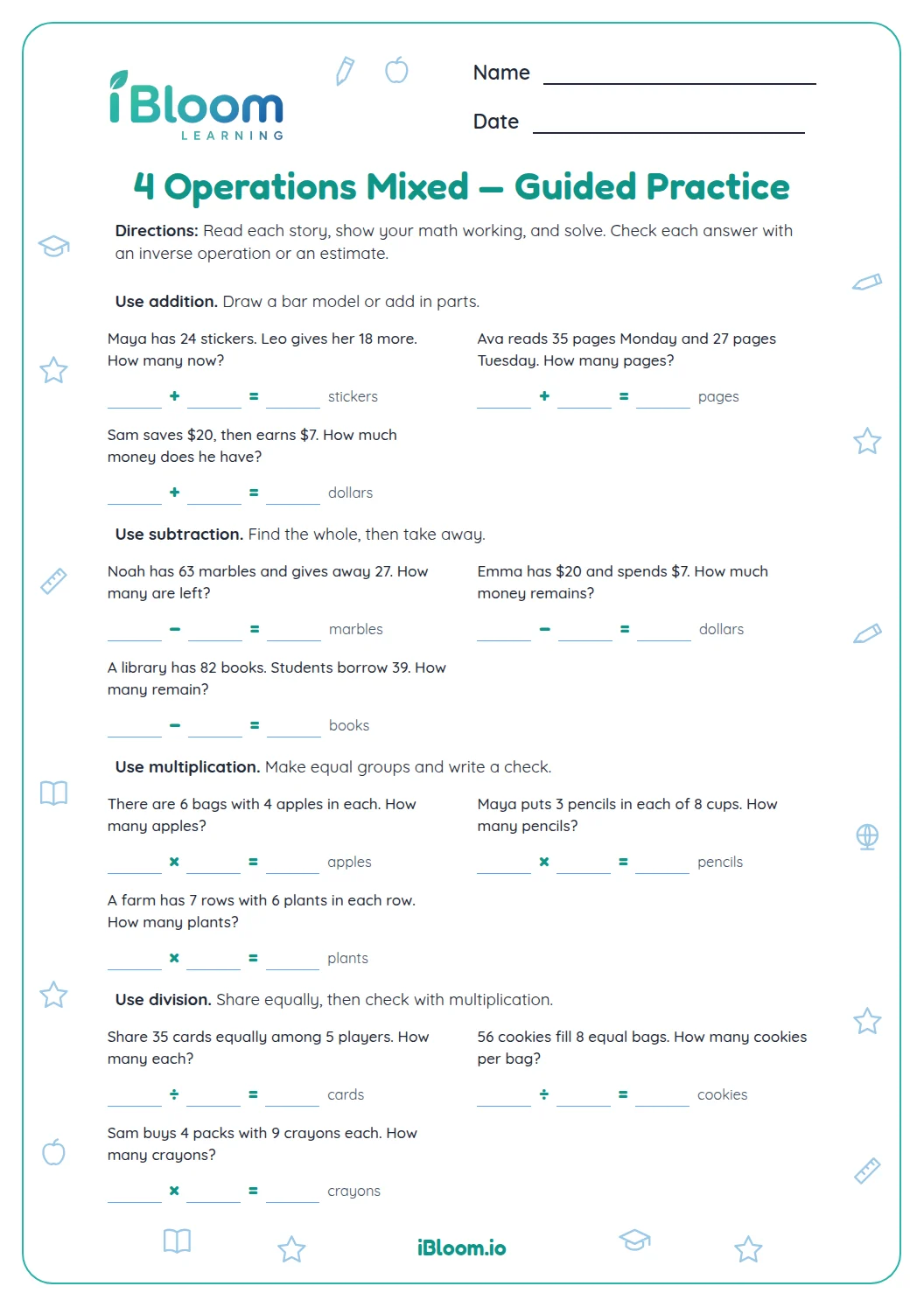
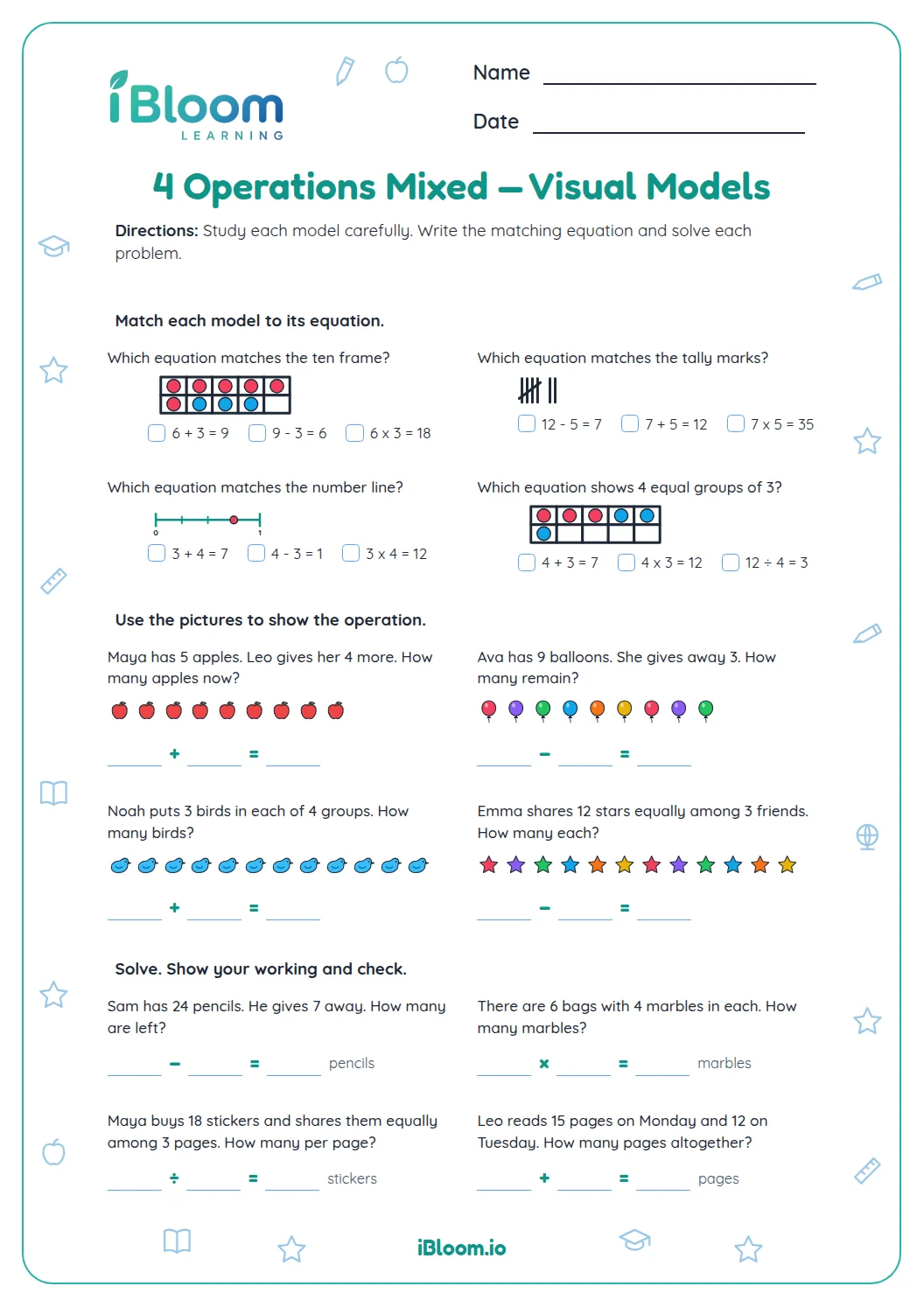
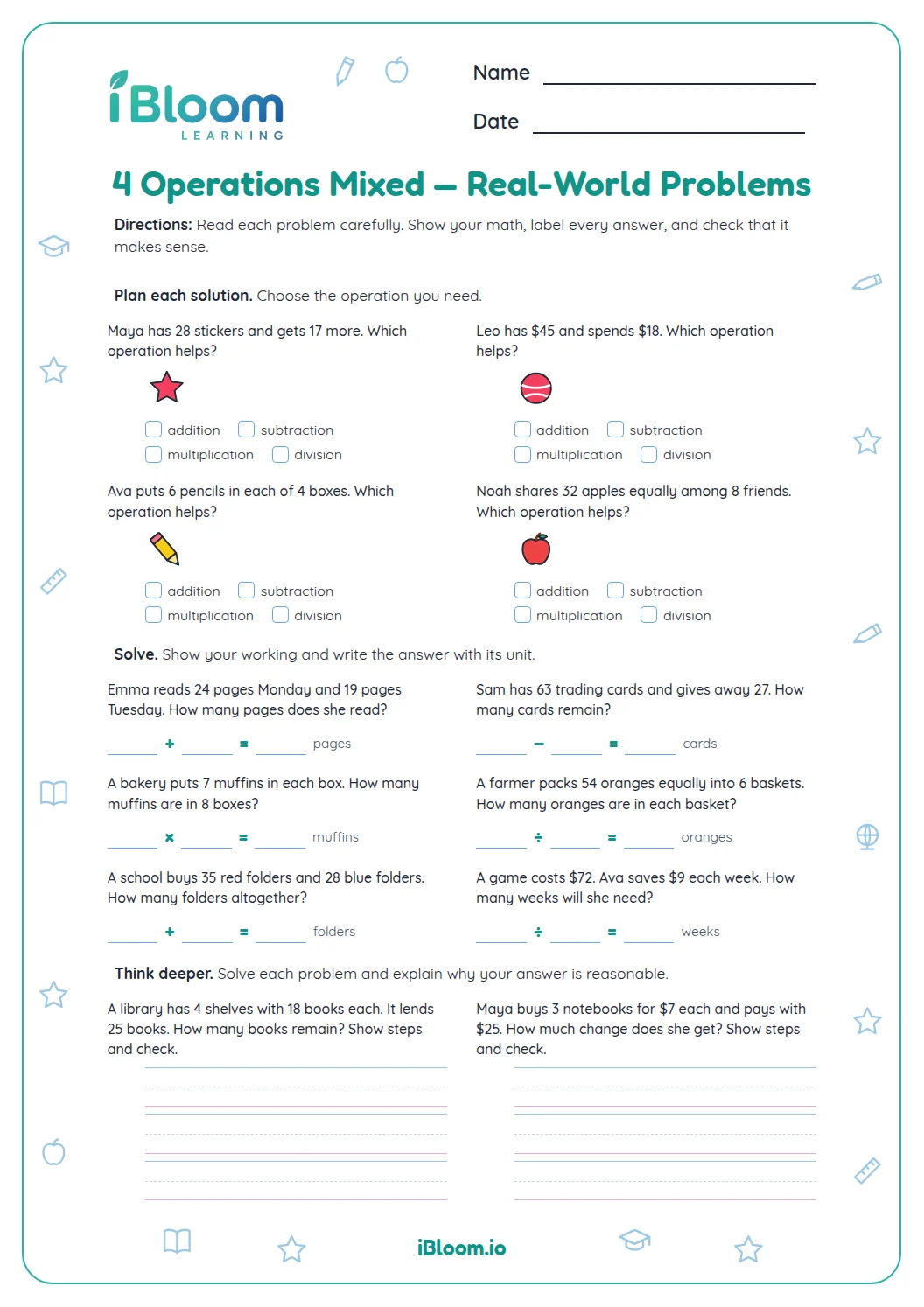
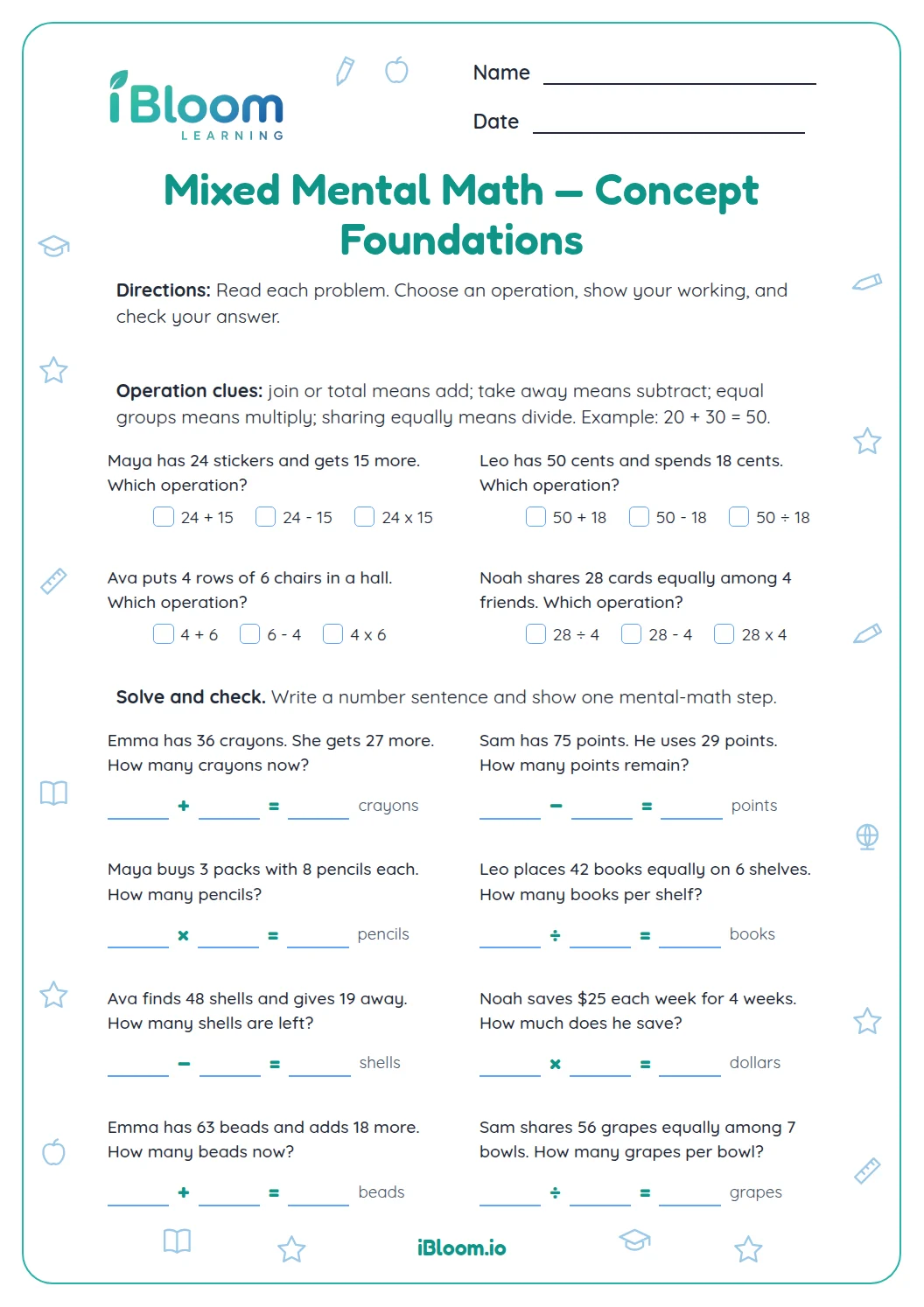
This Grade 3 worksheet gives students 16 mixed word problems with all four operations. The contexts include groups, equal sharing, combining amounts, and finding what remains. Students write an equation, solve, and label each answer with its unit. The answer key shows each result.
How do addition and subtraction stories differ?
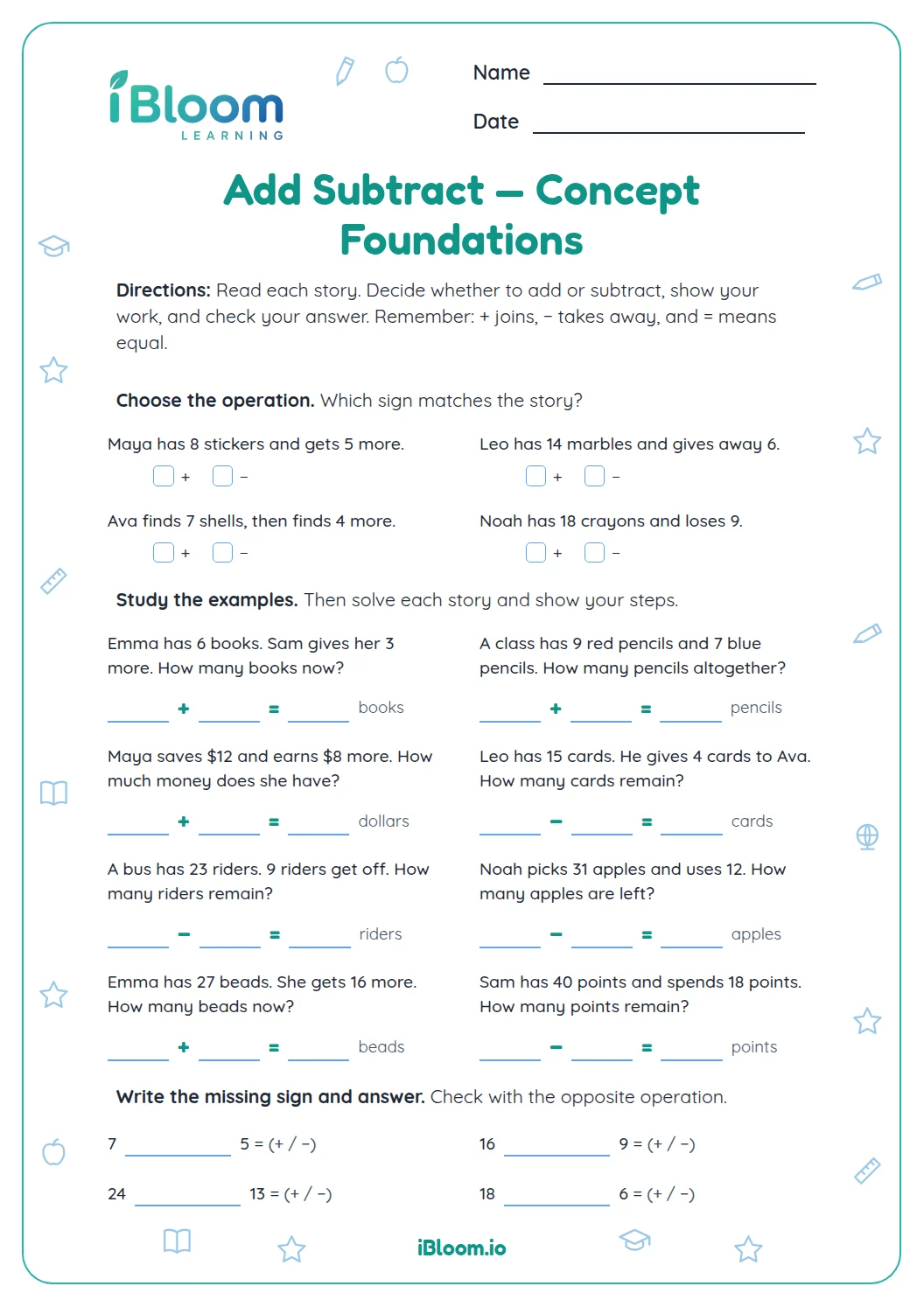
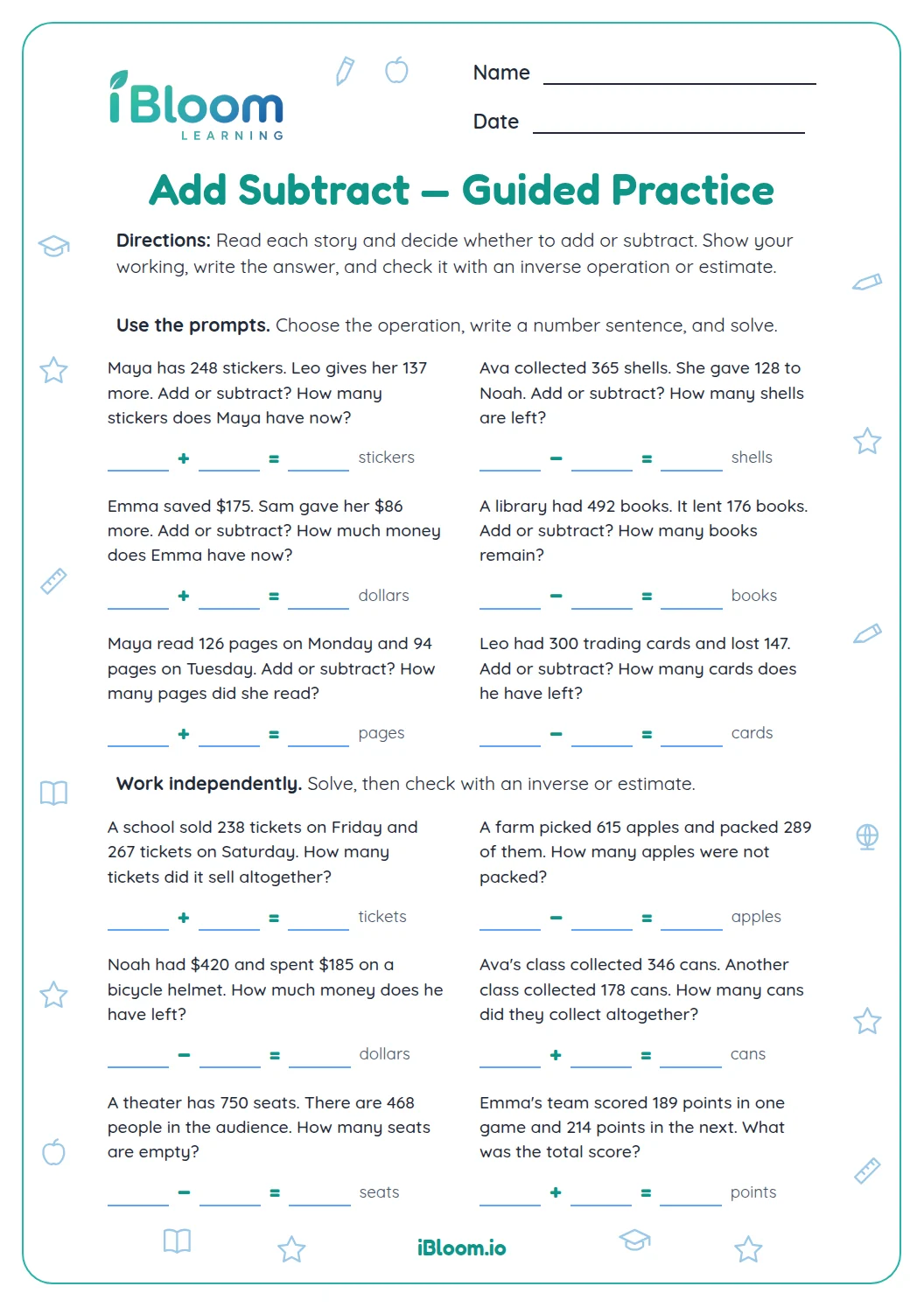
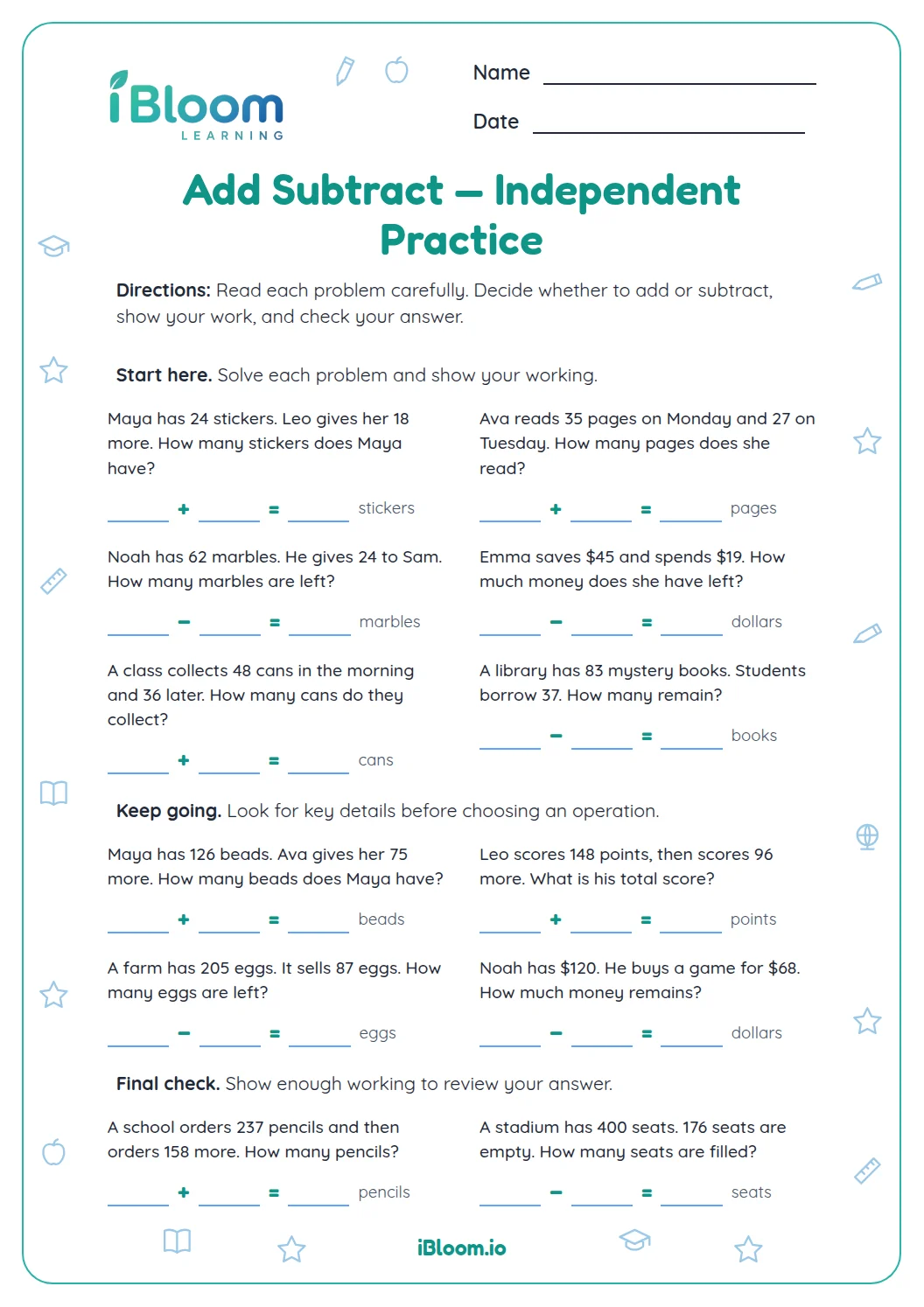
Addition joins amounts; subtraction finds a difference or what remains. Part A has four addition stories, followed by four subtraction stories in Part B. Identify what the question asks before choosing the operation.
- 1125 storybooks + 87 science books = 212 books
- 2Both groups are combined, so addition fits.
When should a student multiply or divide?
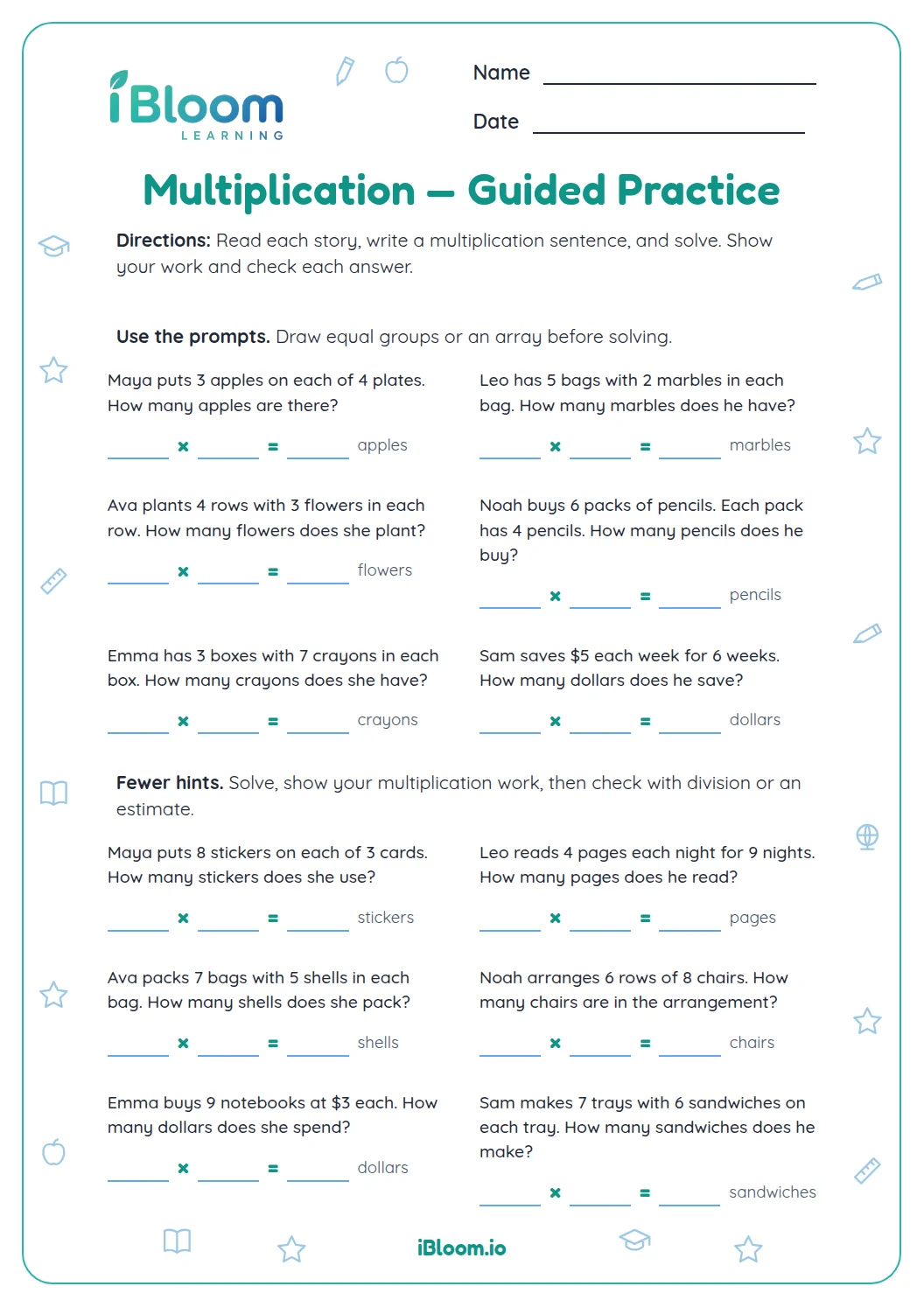
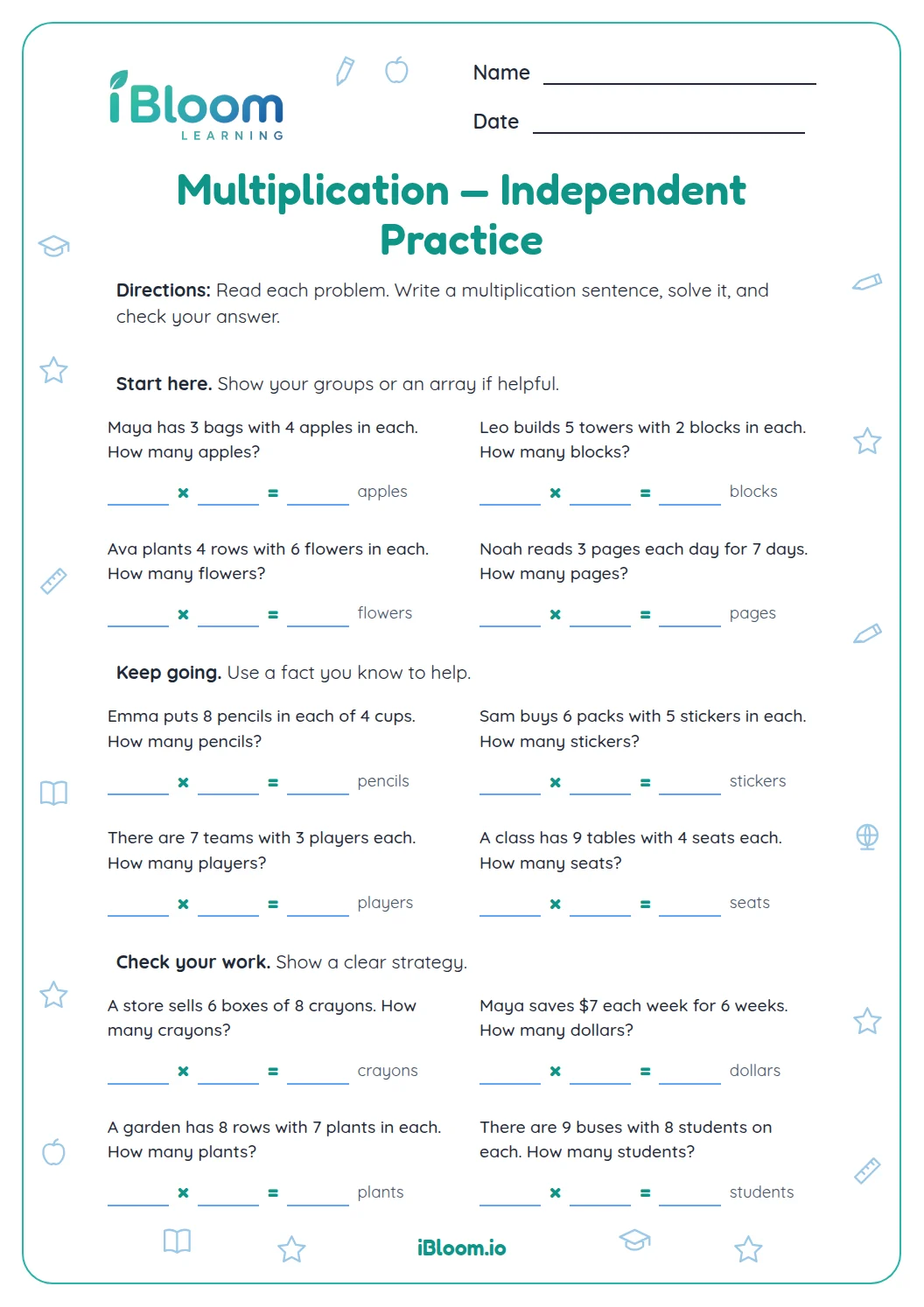
Multiplication finds the total in equal groups. Division splits a total into equal groups or asks how many are in each group. Parts C and D give four problems for each relationship.
- 14 boxes × 6 markers in each box = 24 markers
- 2Four equal groups of six make 24.
How can a student check a word-problem answer?
Write an equation, solve it, and name the unit the question asks for. Then reread the story: does the answer fit the amount, groups, or sharing situation? For division, multiply the quotient by the number of groups to check the total.
How to use this worksheet
- 1Read the story and identify what quantity the question asks for.
- 2Underline the numbers and note what each one represents.
- 3Choose an operation that matches the relationship in the story.
- 4Write an equation and solve it.
- 5Add a unit to the answer and check it against the story.
Common mistakes and quick fixes
The mistake
Multiplying because a problem has two numbers
The fix
Explain the relationship first: equal groups, joining, or a difference.
The mistake
Dividing without checking whether groups are equal
The fix
Use division when an amount is shared equally or grouped evenly.
The mistake
Writing a number without a label
The fix
Name what the result counts, such as markers, pages, or tickets.
What to practice next
Make more practice
Questions parents and teachers ask
How many problems are included?
There are 16 word problems: four each for addition, subtraction, multiplication, and division. Every item has space for an equation and working. The answer key gives a labeled result, such as 24 markers, to check both the calculation and its unit.
What does “label your answer” mean?
Write the unit from the story after the number. For example, question 1 asks about markers, so the answer is 24 markers rather than just 24. The answer label comes from the question itself: a question about seats gets an answer in seats. A correct number with the wrong unit does not fully answer the story.
Should students show an equation?
Yes. Writing an equation makes the operation choice visible and gives a clear path to the answer. Students can then use the story to decide whether the result is reasonable. If a result seems too large or too small, reread the story and estimate. Four groups of six should be more than six but much less than four hundred.
What is a good next step after this page?
Try problems focused on addition and subtraction first, then practice multiplication and division contexts. The related worksheets below build each relationship before returning to mixed practice. Students can compare the story with a related equation and substitute the answer into it. If it matches the situation and the arithmetic, the solution is reasonable.