

About this worksheet
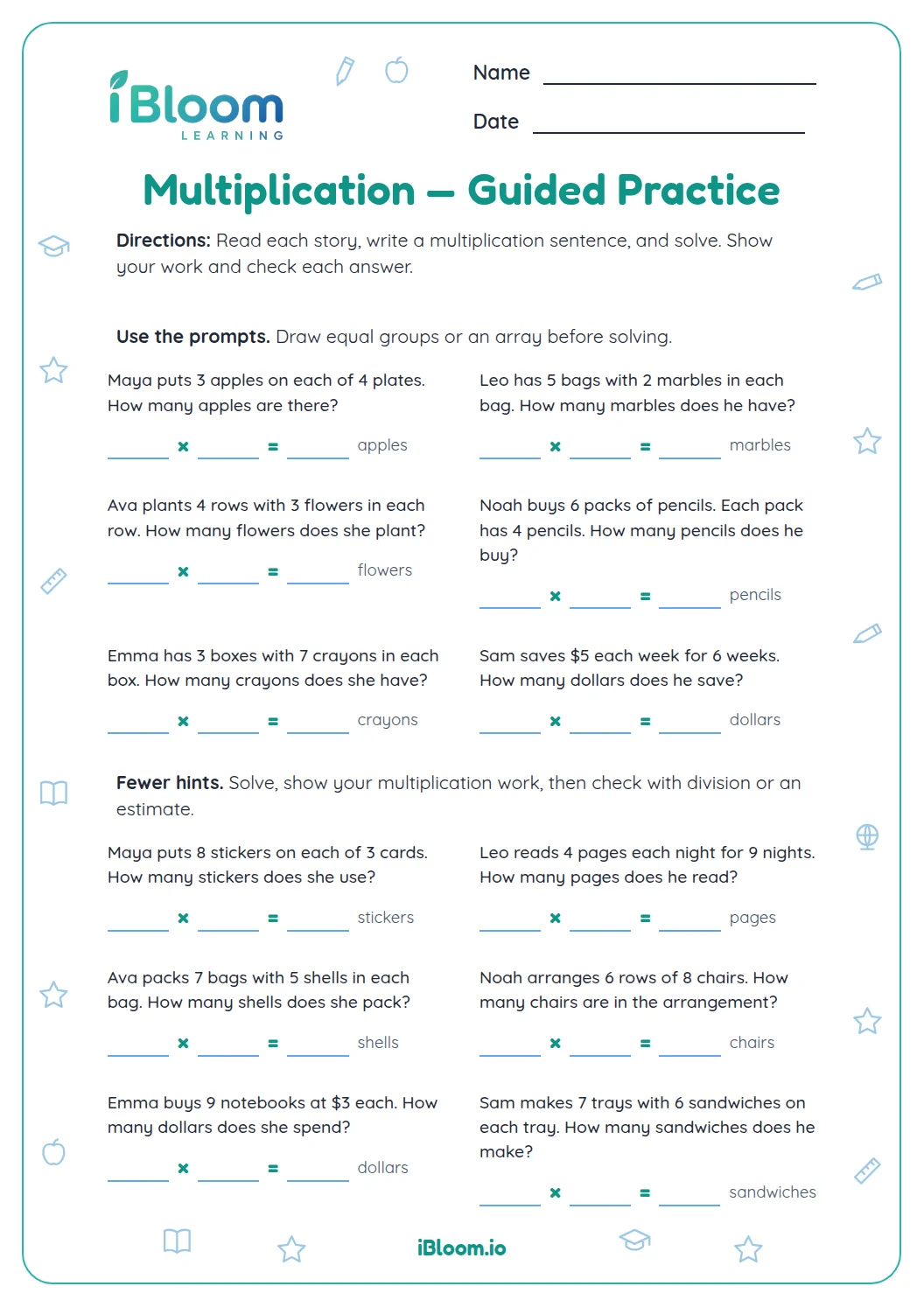
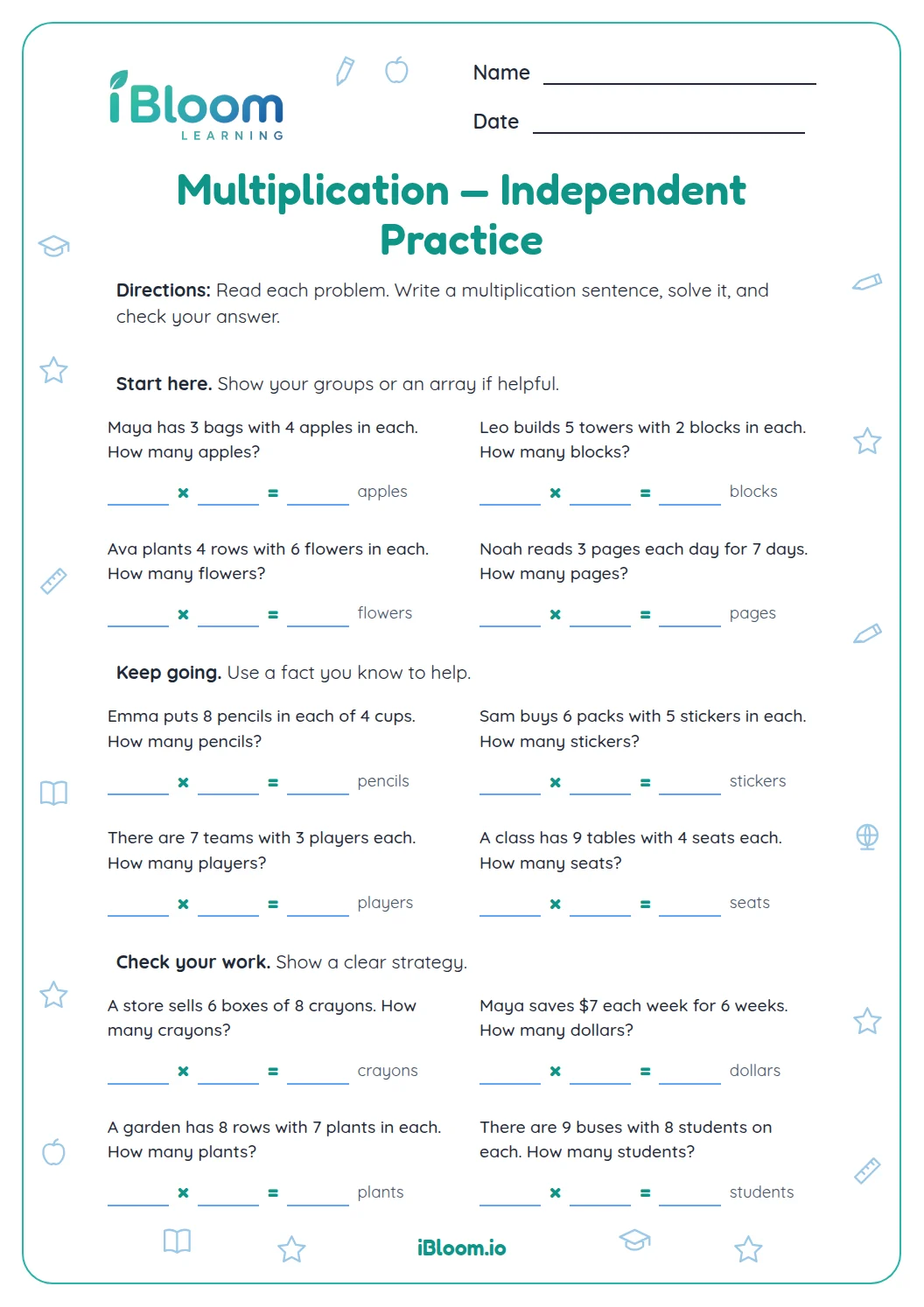
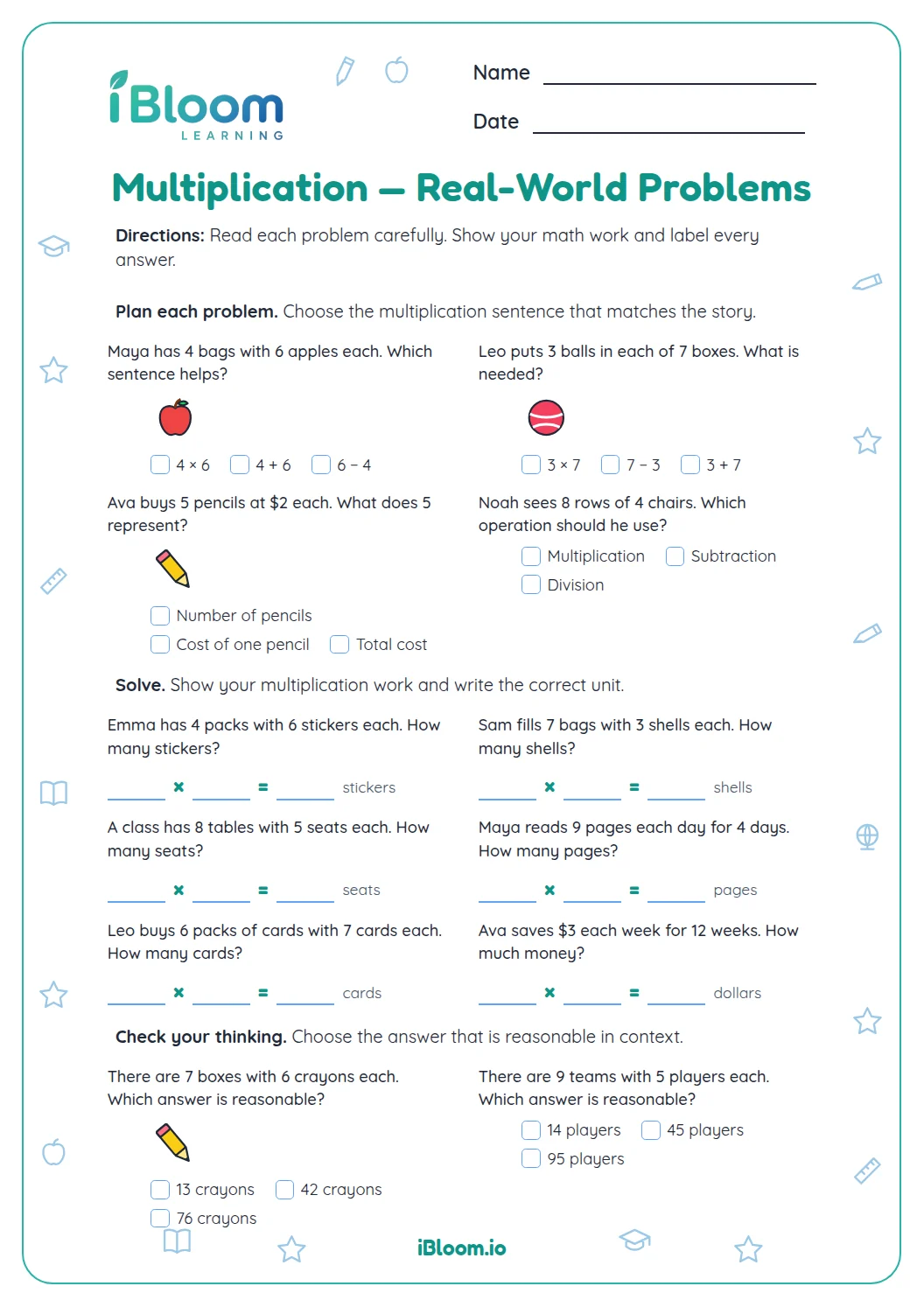
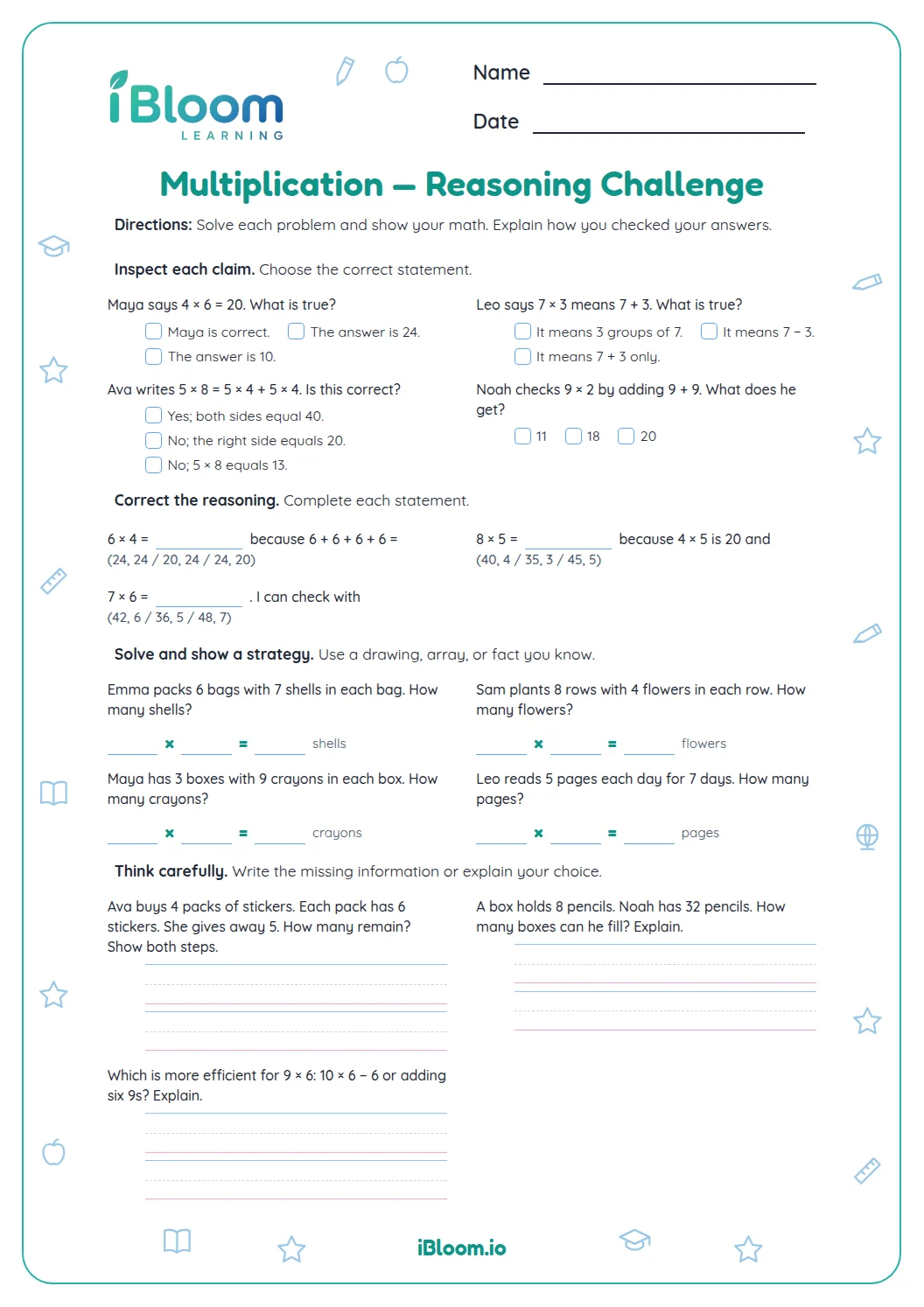
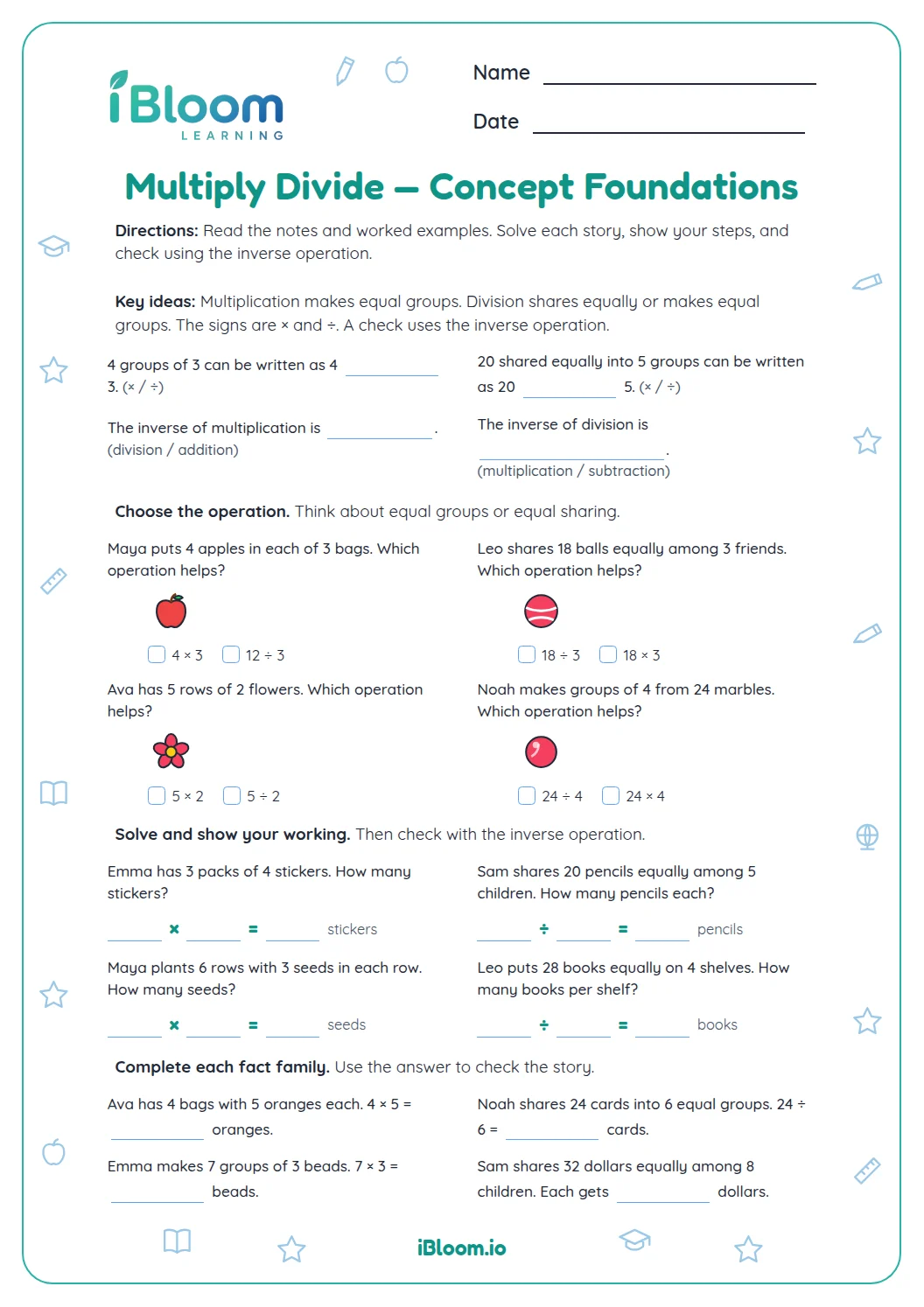
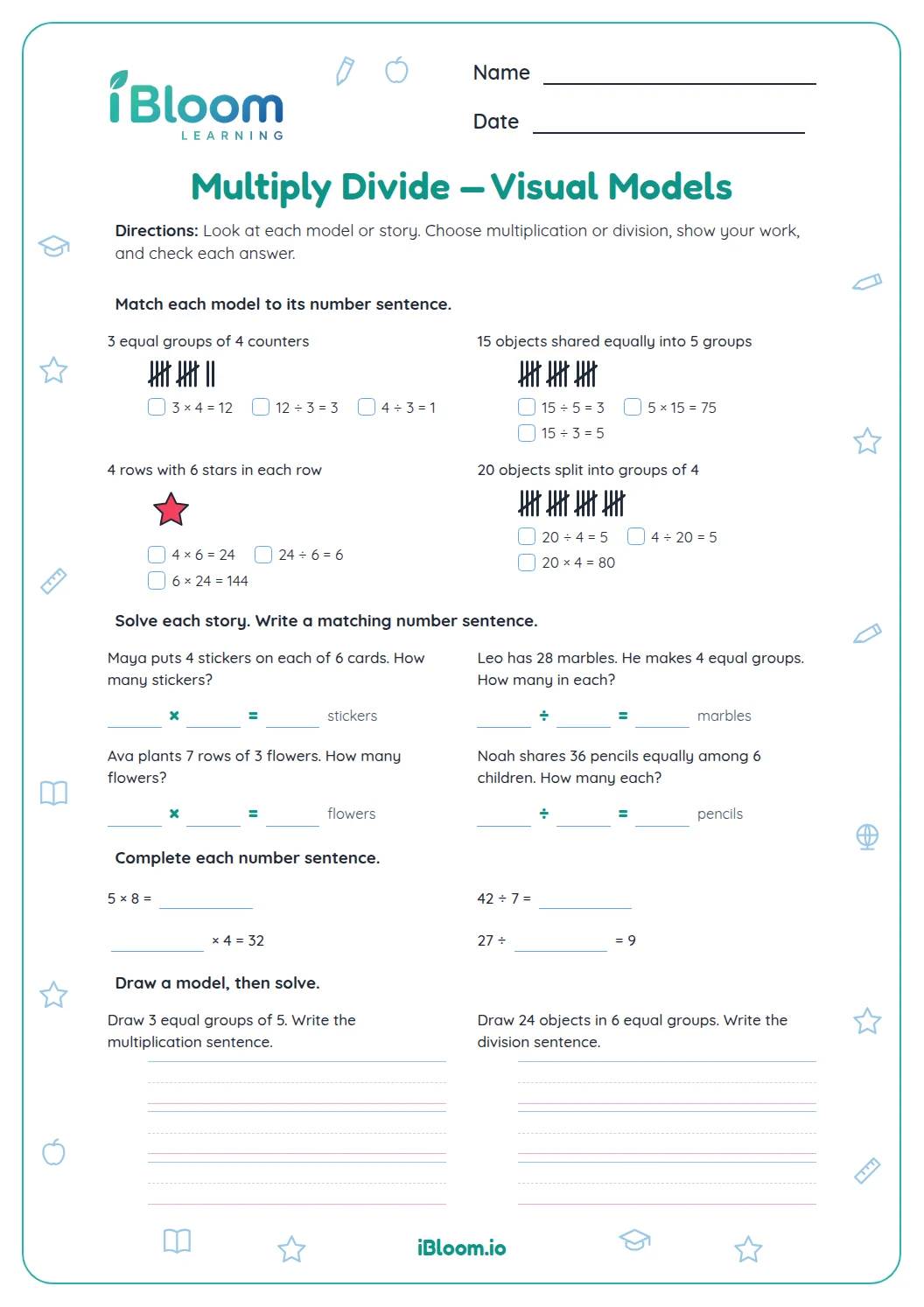
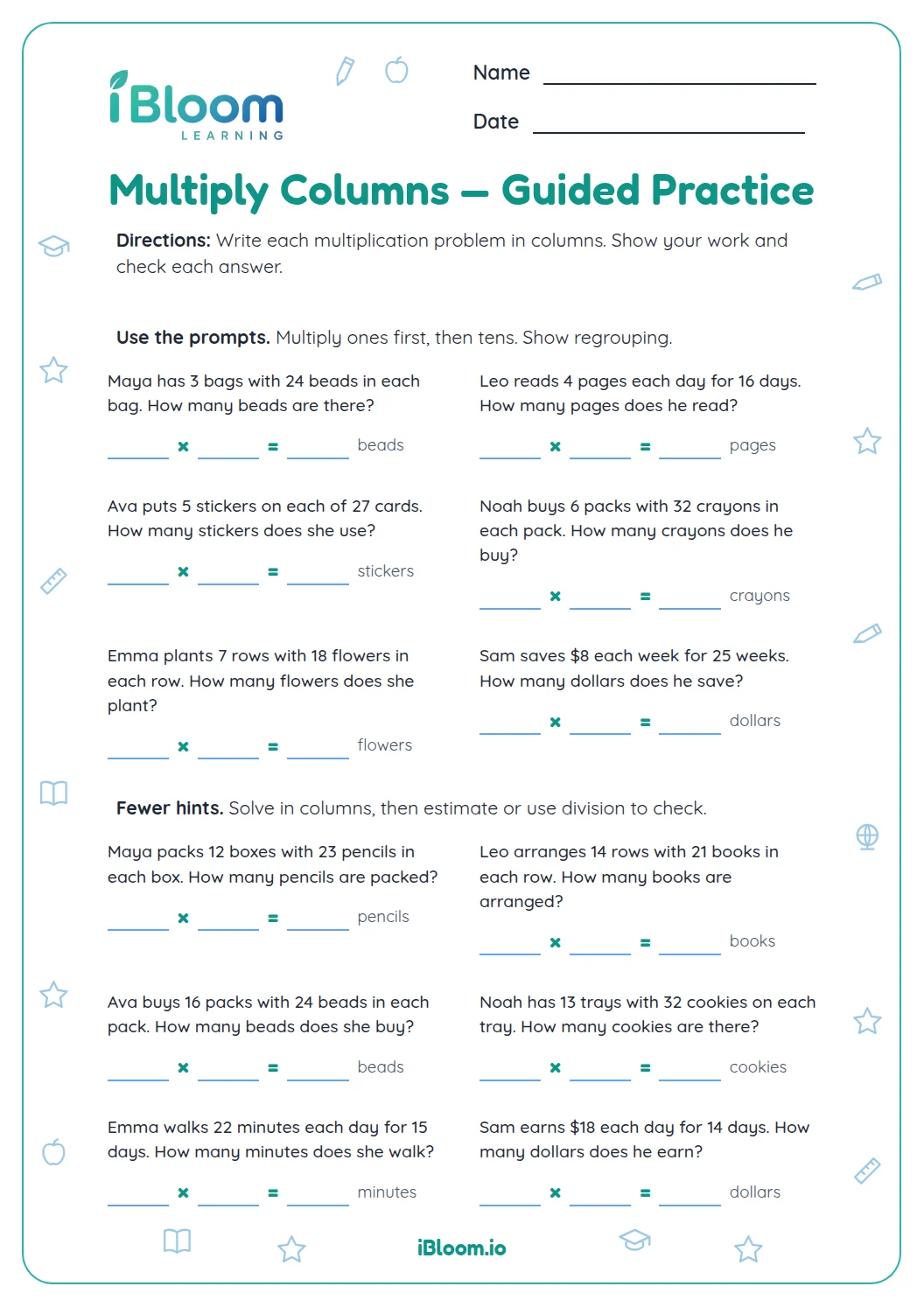
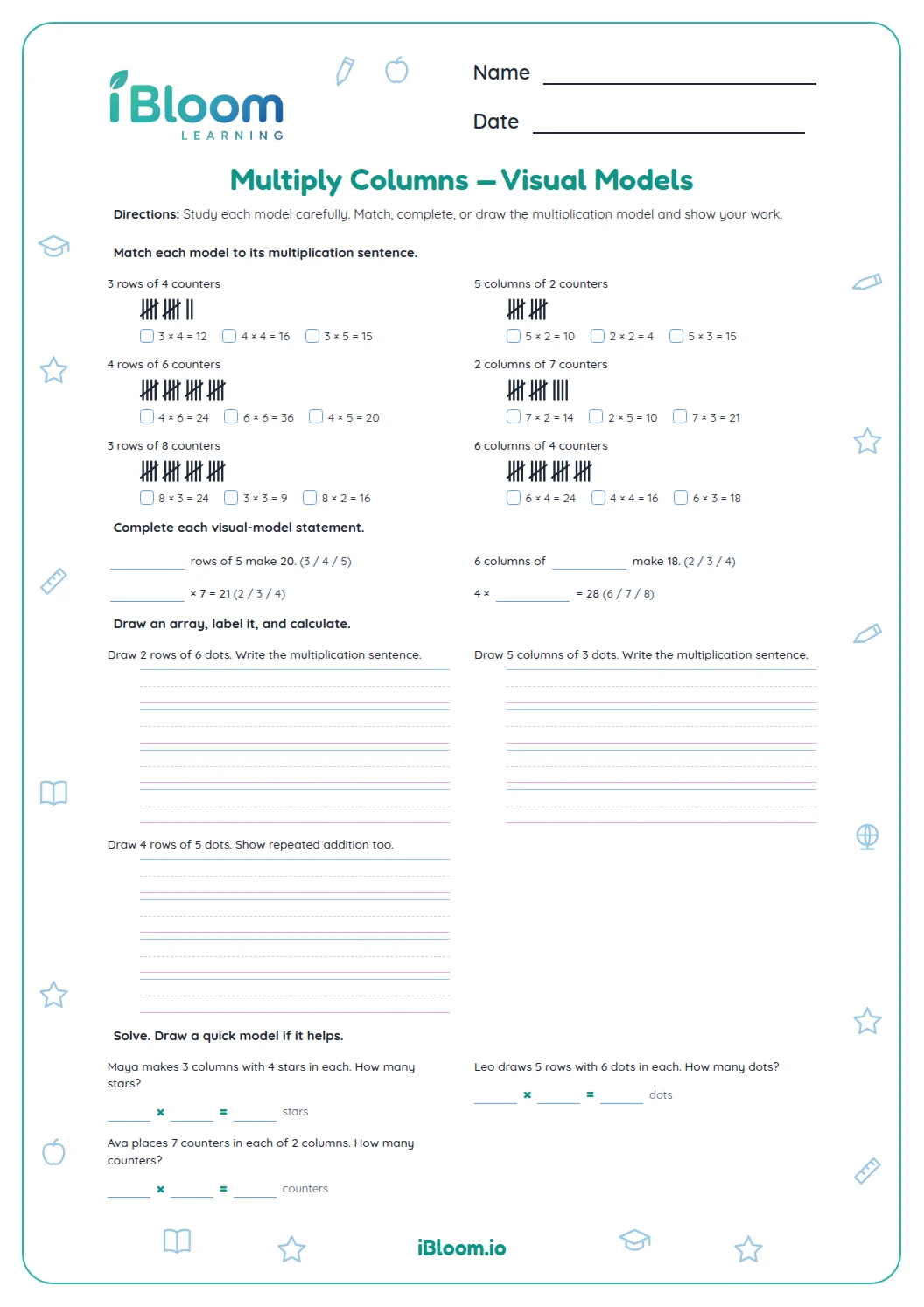
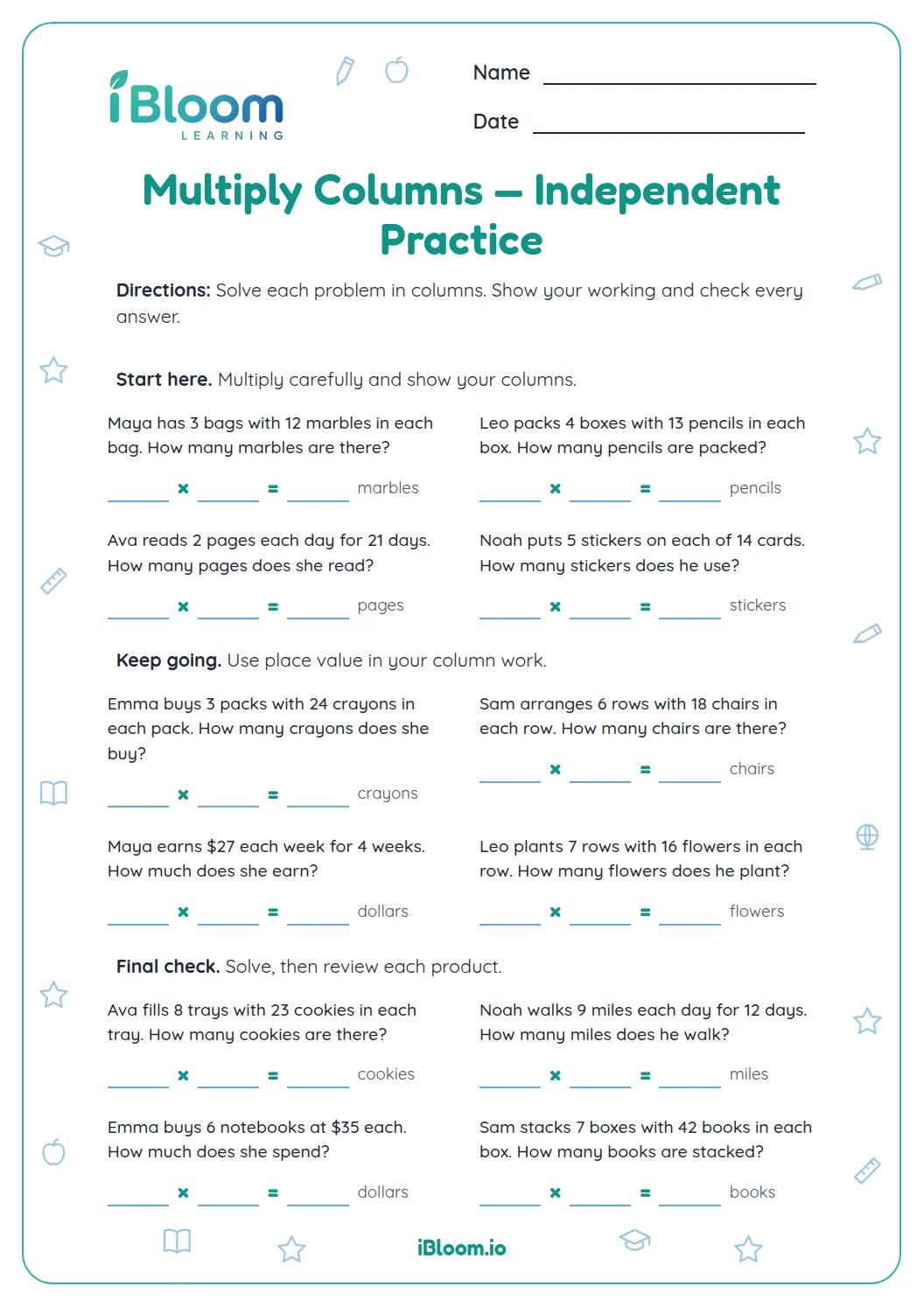
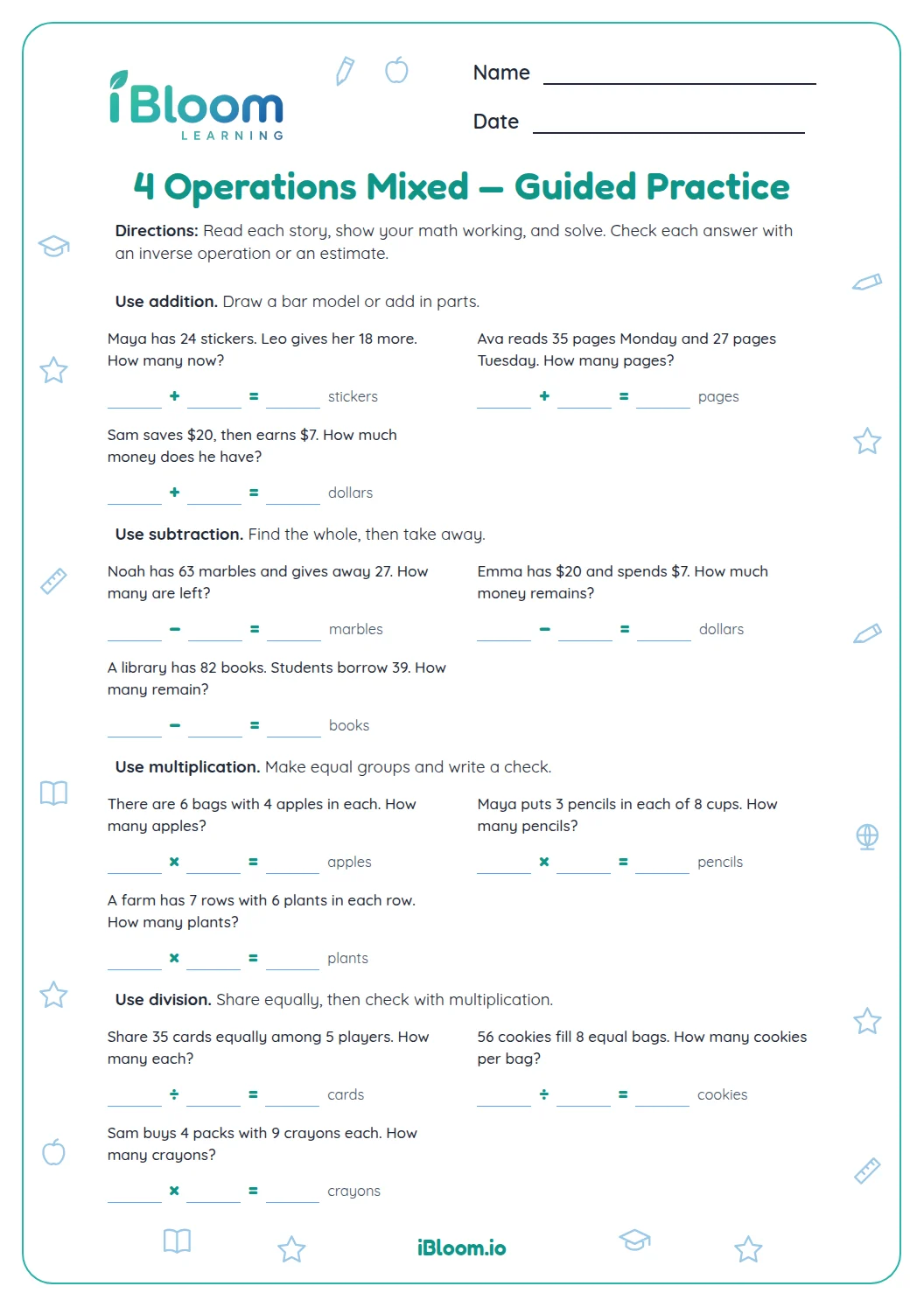
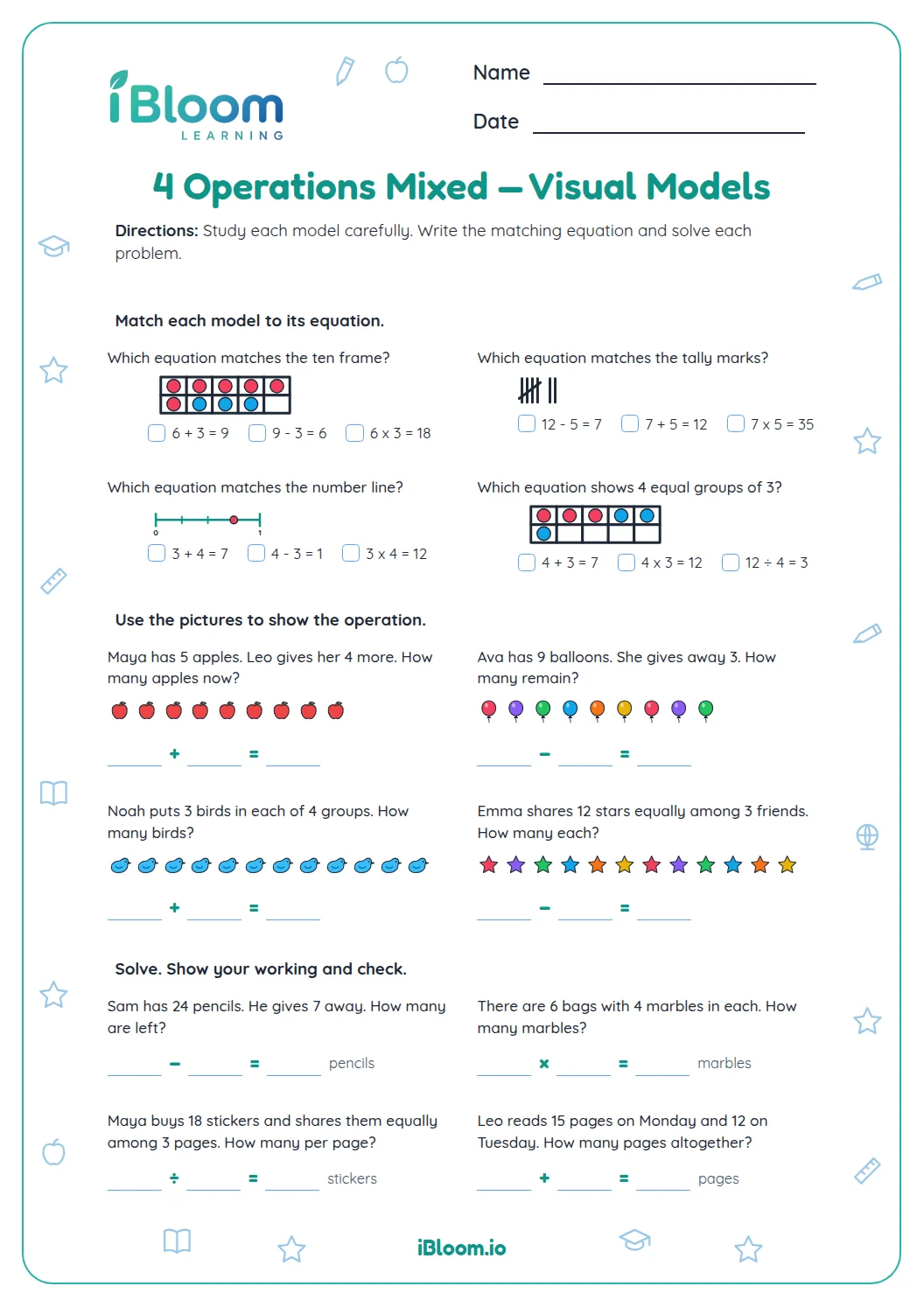
This Grade 3 worksheet introduces multiplication through equal-group stories about food, books, games and classroom objects. Learners can connect a three-by-four array to a story, write a multiplication equation, and solve 16 problems. A separate answer key is included. The equal-groups idea aligns with CCSS 3.OA.A.1.
Aligned to 3.OA.A.1
How do equal groups become a multiplication equation?
A multiplication story has a number of groups and the same amount in each group. The product is the total. Rows and columns in an array make those equal groups visible; repeated addition gives another way to check.
- 13 rows of 4 muffins
- 23 groups, with 4 in each group
- 33 × 4 = 4 + 4 + 4
- 4There are 12 muffins.
What will children practice?
The 16 questions use equal groups in stories about apples, marbles, books, cookies, classroom objects, and more. Learners find totals, connect one array to its story, and finish by explaining how a multiplication fact names equal groups. The answer key includes a sample explanation.
How can an adult support the practice?
Ask the learner to explain the place or operation that matters before calculating. Use the answer key to check the result and the reasoning.
How to use this worksheet
- 1Find how many equal groups the story describes.
- 2Find how many objects are in each group.
- 3Write groups × objects per group.
- 4Use an array or repeated addition to check.
- 5Answer with the unit from the story.
Mistakes to watch for
The mistake
Adding the group count and size, such as 3 + 4.
The fix
Make 3 groups of 4, then count all 12 objects.
The mistake
Reversing what a factor means in the story.
The fix
Say “3 groups of 4” aloud before writing 3 × 4.
The mistake
Giving only a number without context.
The fix
Include the story unit, such as 12 muffins or 24 chairs.
Common Core alignment
This worksheet practices the place-value and operations ideas described below.
Interpret a product as a number of equal groups.
On this sheet: Every story describes equal groups and asks for their total.
Show the official wordingHide the official wording
Interpret products of whole numbers, e.g., interpret 5 × 7 as the total number of objects in 5 groups of 7 objects each. For example, describe a context in which a total number of objects can be expressed as 5 × 7.
What to practice next
Make more practice
Further reading
Questions parents and teachers ask
What are equal groups?
Equal groups have the same number of objects in every group. Five bags with three marbles each are five equal groups of three. Multiplication finds the total without counting one object at a time. The first problem also pairs an apple array with three groups of four.
What multiplication equation matches 3 rows of 4?
The equation is 3 × 4 = 12. It represents three groups with four in each group. The apple array in question 1 shows the same three-by-four arrangement, and the answer key lists 12 apples. Learners can count each row to check the product.
Should children multiply the group count by the amount in each group?
Yes. For four boxes with seven cookies in each, use 4 × 7 = 28. Naming the factors in story order connects each number to its role. The answer key gives the total for every equal-group story, so children can check both the equation and its context.
How can repeated addition check a product?
Add the same group size once for every group. For three groups of four, compute 4 + 4 + 4 = 12, so 3 × 4 also equals 12. This is a way to check a product. The last question asks learners to explain this connection for 4 × 6.
How many questions are on the worksheet?
There are 16 questions in four parts across three worksheet pages. They begin with equal-group examples, move through more story contexts, and finish with a written explanation connecting a product to groups. A separate three-page key gives the totals and a sample explanation.