


About this worksheet
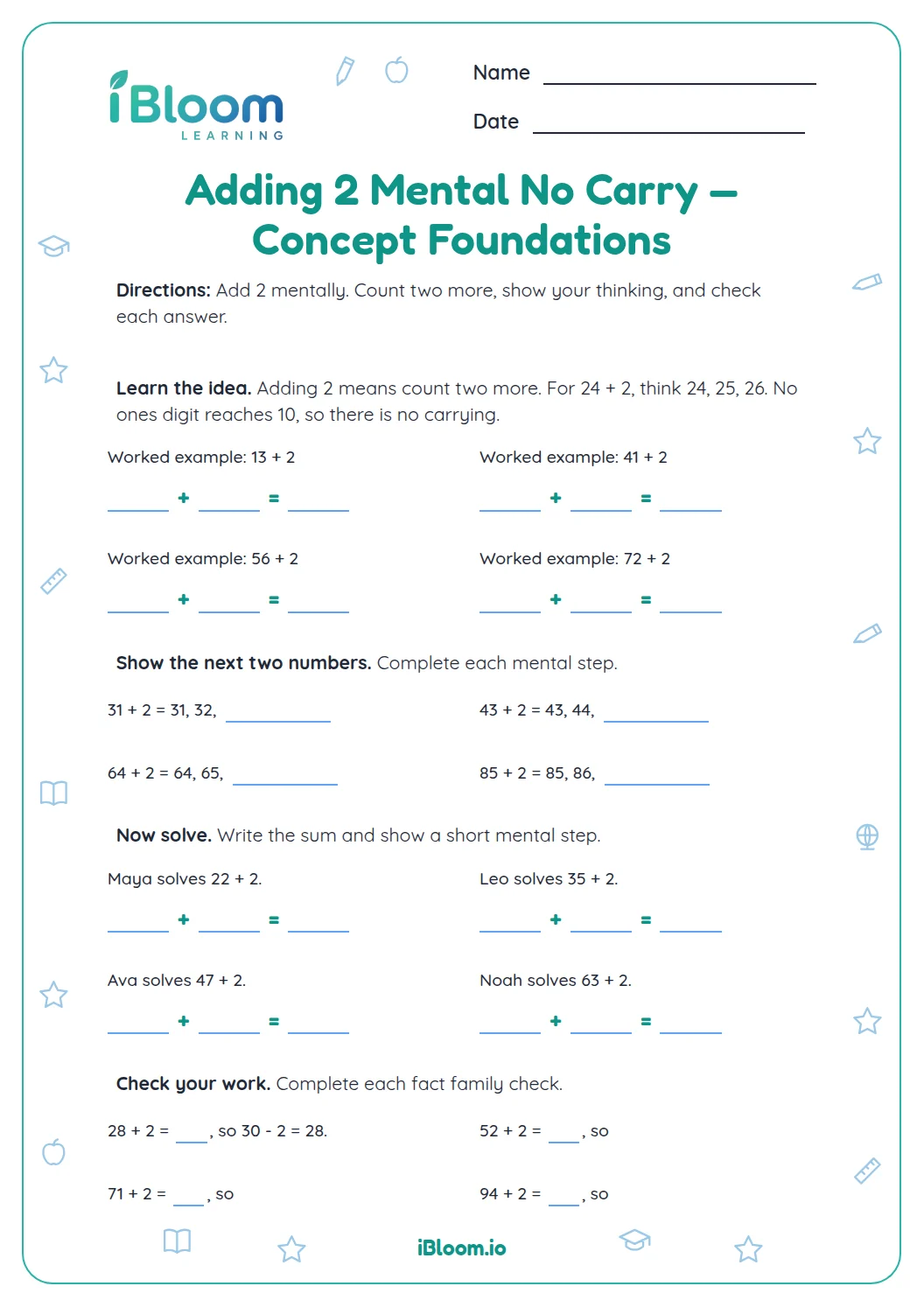
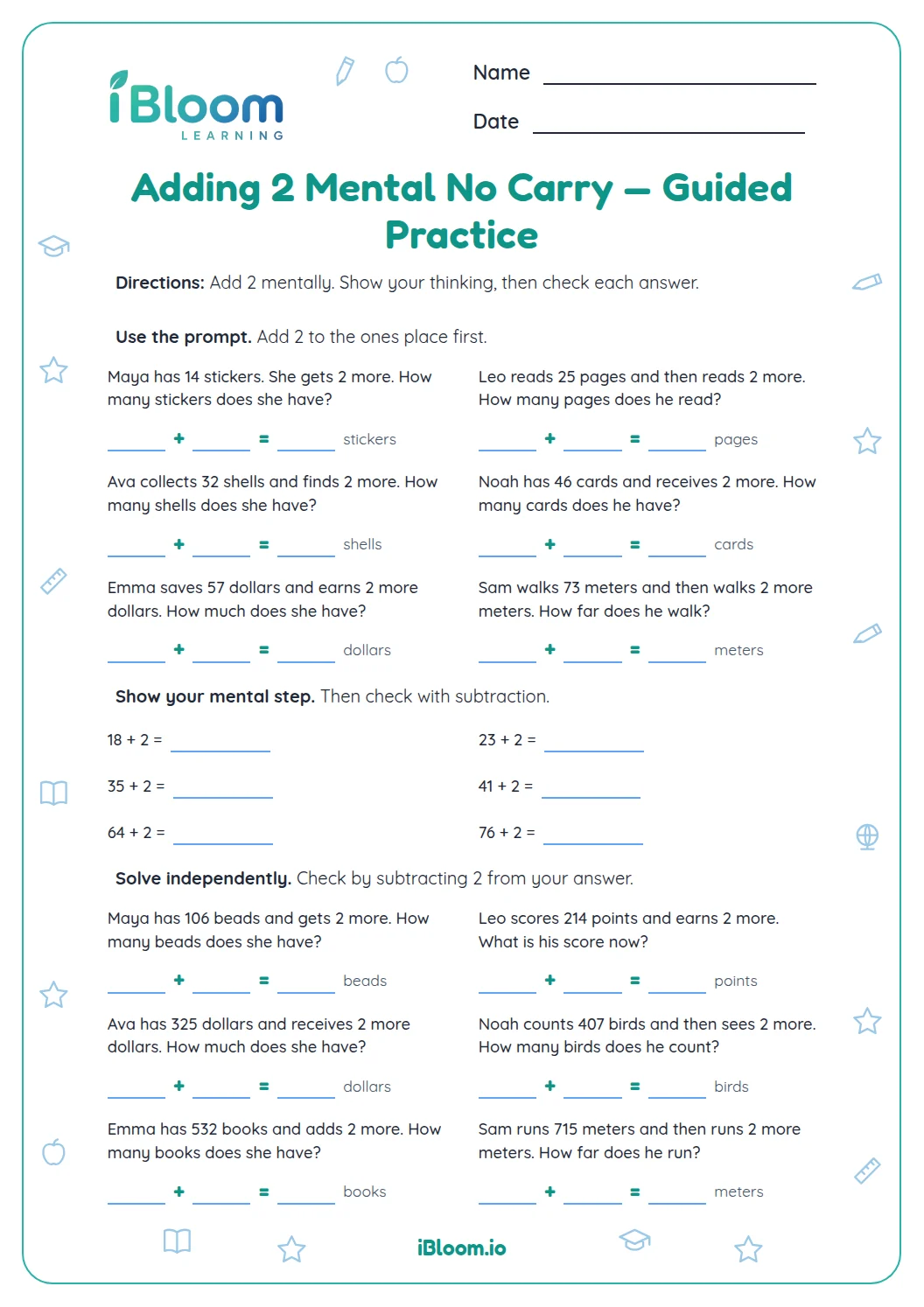
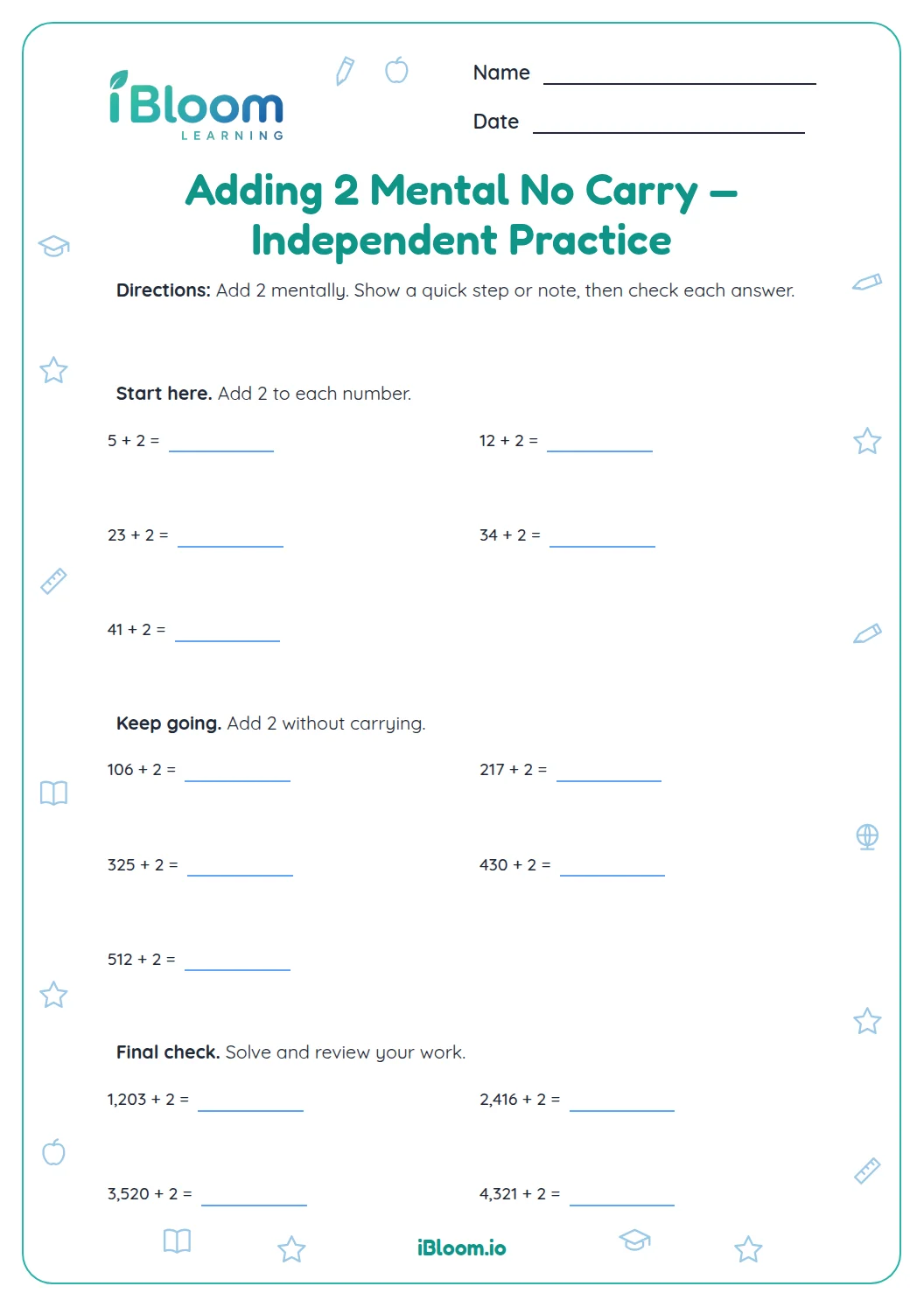
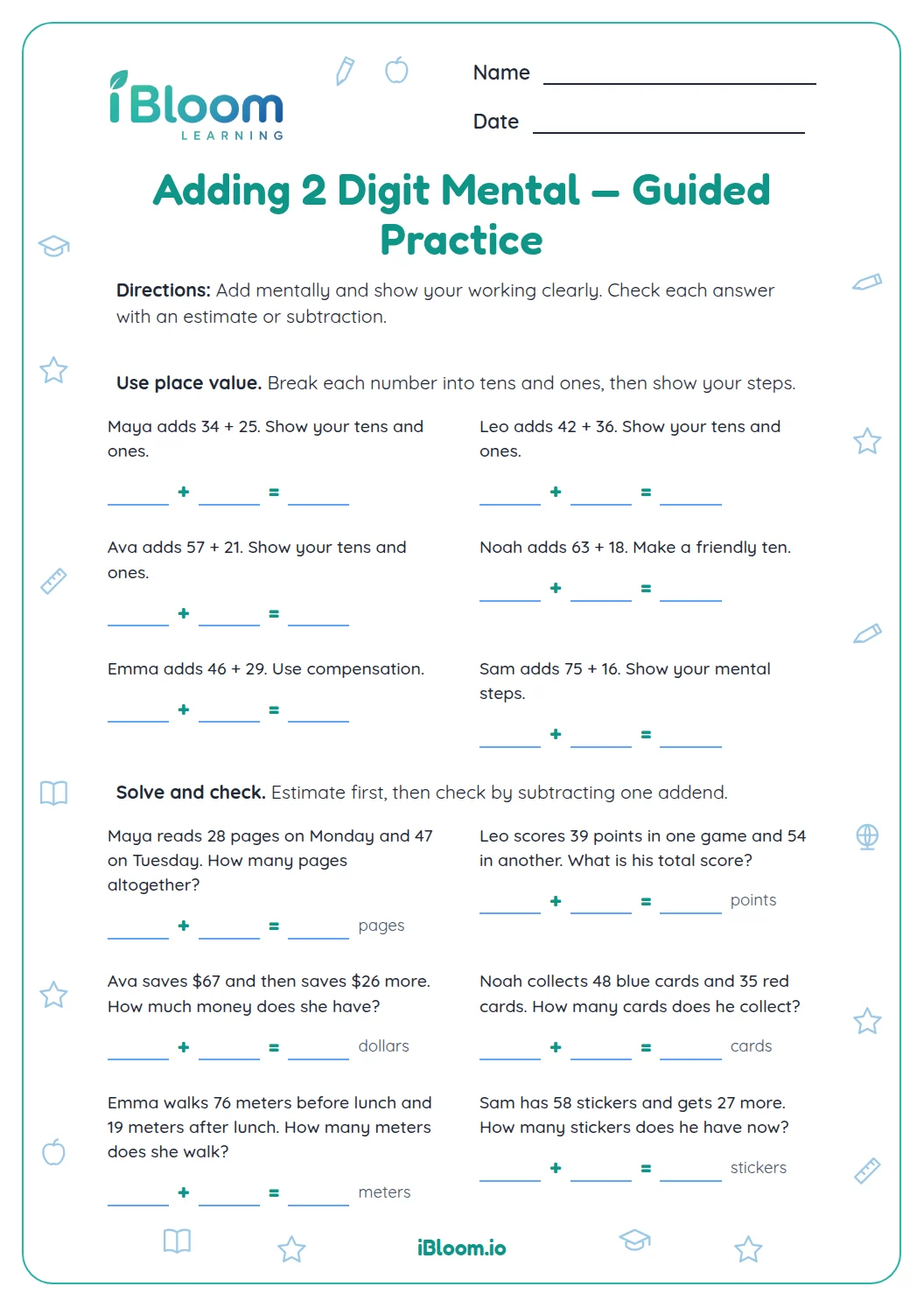
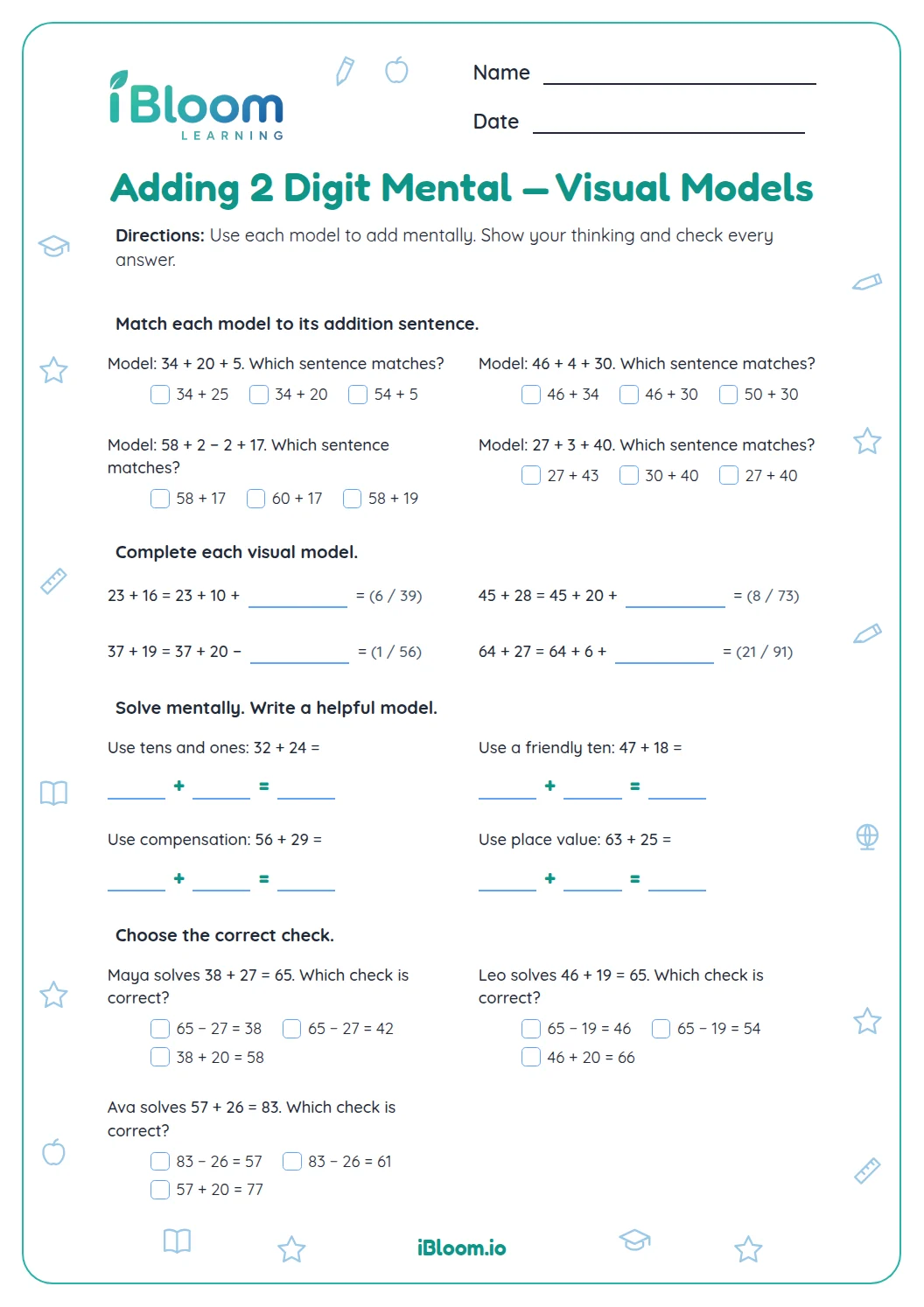
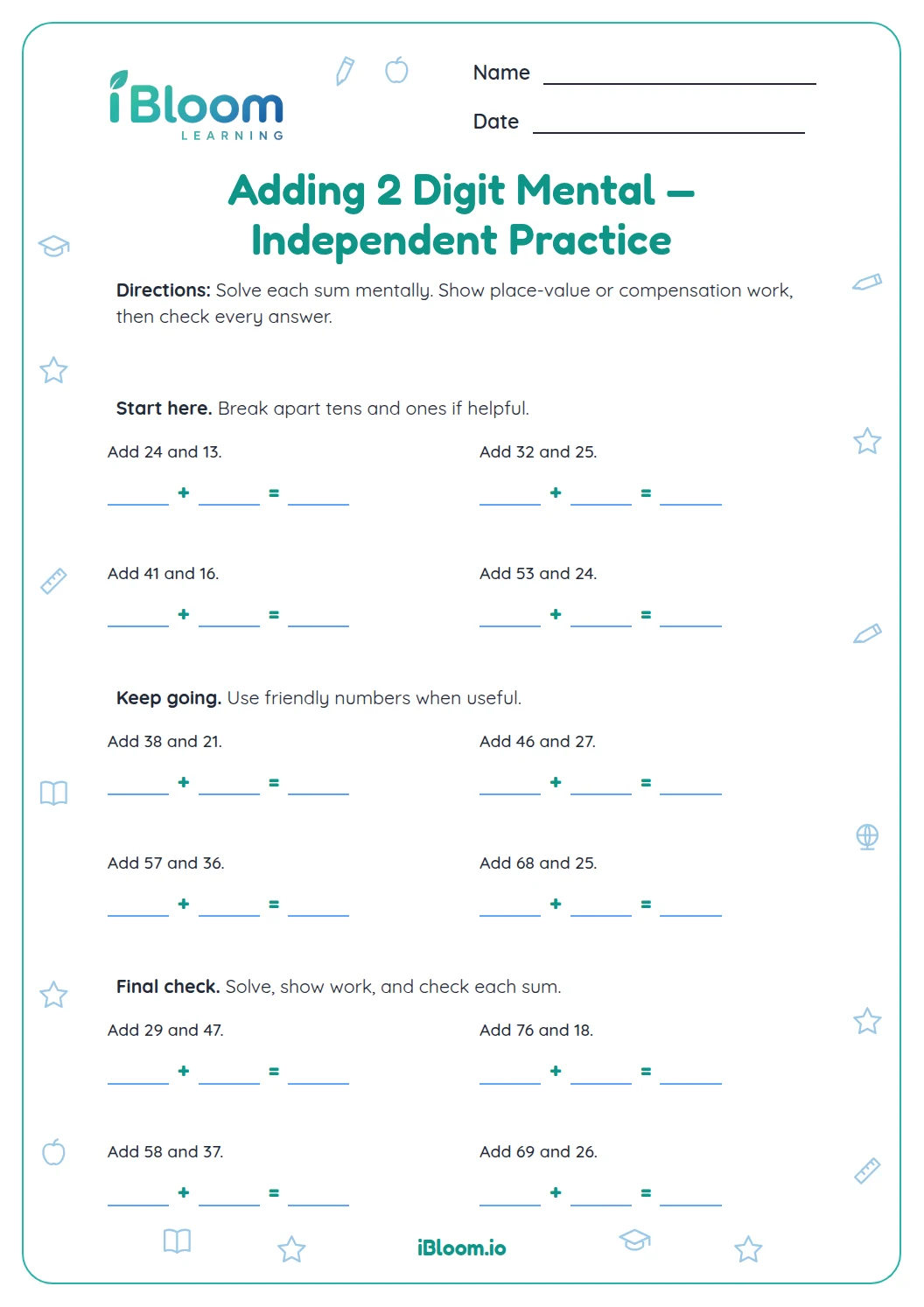
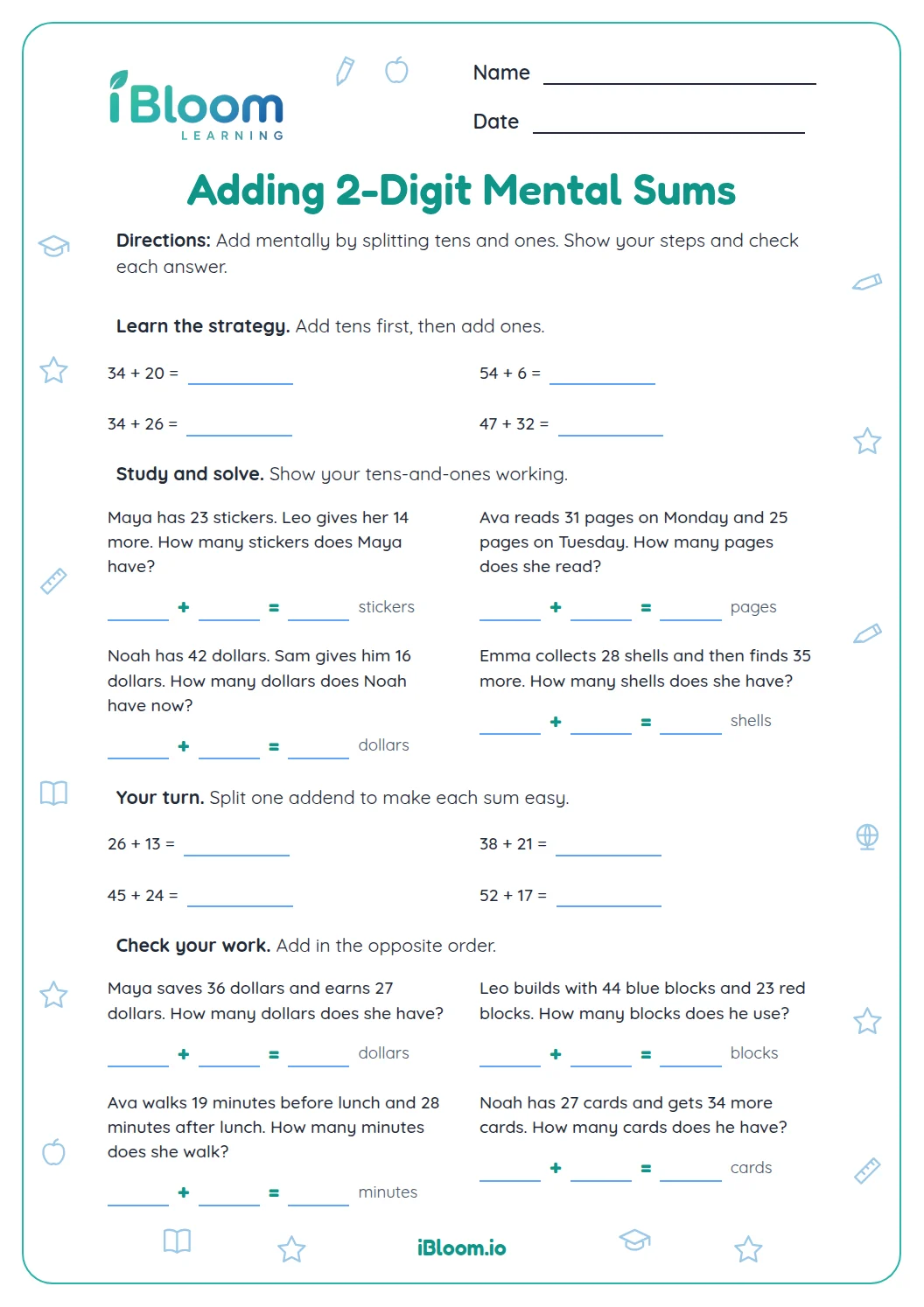
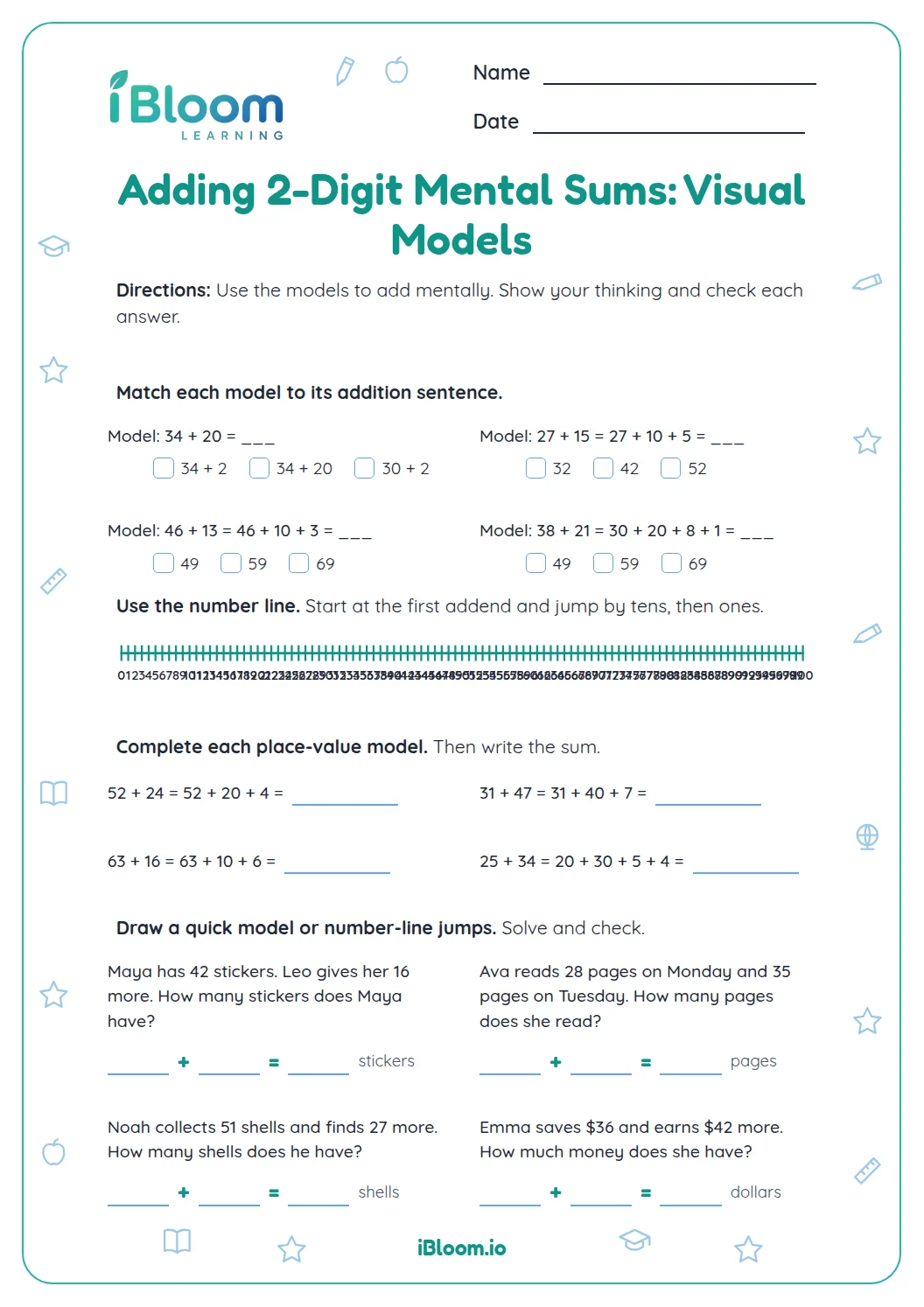
This visual worksheet practices adding 2 without regrouping. Students read six base-ten models that show the starting number, then choose the result after adding two; eight more problems use three-digit number sentences. The sums avoid making a new ten, keeping the focus on the named mental strategy. The answer key lists each result. This place-value addition practice aligns with CCSS 3.NBT.A.2.
Aligned to 3.NBT.A.2
How do base-ten blocks help add two?
Six base-ten models and eight independent problems practice finding two more than a three-digit number. The worked example and questions use the same skill throughout.
- 1Start at 124
- 2Add two ones: 124 + 2
- 3The sum is 126.
How does adding two change the number?
When the ones digit is 7 or less, adding two does not make a new ten. The ones increase by two while the hundreds and tens stay the same.
How can you check the independent sums?
Compare the ones digit before and after adding two, then check the full sum. The final eight questions use number sentences without a model.
How to use this worksheet
- 1Read the starting number on the line.
- 2Count one step forward, then count a second step.
- 3Name the endpoint and match it to the addition sentence.
- 4In the final part, count on mentally without the line.
- 5Check that the ones digit changes by two and the tens stay the same.
Common mistakes and quick fixes
The mistake
Counting the starting number as the first jump.
The fix
Begin with the next number, then say one more.
The mistake
Changing the tens digit when no new ten is made.
The fix
Look at the ones digit; it increases by two.
The mistake
Moving backward instead of forward.
The fix
Addition moves to greater numbers on the line.
Common Core alignment
The problems build mental addition within 100 using a count-on strategy.
Use place-value strategies to add multi-digit whole numbers within 1,000.
On this sheet: The questions add two-digit quantities or add 2 to three-digit numbers using mental place-value strategies.
Show the official wordingHide the official wording
Fluently add and subtract within 1000 using strategies and algorithms based on place value, properties of operations, and/or the relationship between addition and subtraction.
What to practice next
Make more practice
Further reading
Questions parents and teachers ask
What does “add two” mean here?
Each question starts with a number and asks for two more. The first six show the starting value with base-ten blocks; students read it, then choose the sum. The final eight use number sentences for independent practice. Use its question number to find the matching entry in the separate answer key.
How do the blocks help with the first questions?
The hundreds, tens, and ones blocks show the starting number. Students then add two ones without making a new ten. For question 1, the model makes 124, so two more is 126. Use its question number to find the matching entry in the separate answer key.
How can a student check the mental sums?
Look at the ones digit before and after adding two, then verify the whole number. The starting values avoid regrouping, so the ones digit increases by two while the tens and hundreds digits stay unchanged. Use its question number to find the matching entry in the separate answer key.
How many problems are included?
The page has 14 questions: six base-ten model items and eight independent number sentences. Each model shows the starting number without labeling the answer. The separate key lists the sum for every item. Use its question number to find the matching entry in the separate answer key.
Which standard does the addition practice align with?
The three-digit sums practice addition within 1,000 using place-value strategies, including adding two ones without composing a new ten. The page cites CCSS 3.NBT.A.2 and includes its official standard wording below the worksheet details. Use its question number to find the matching entry in the separate answer key.