
About this worksheet
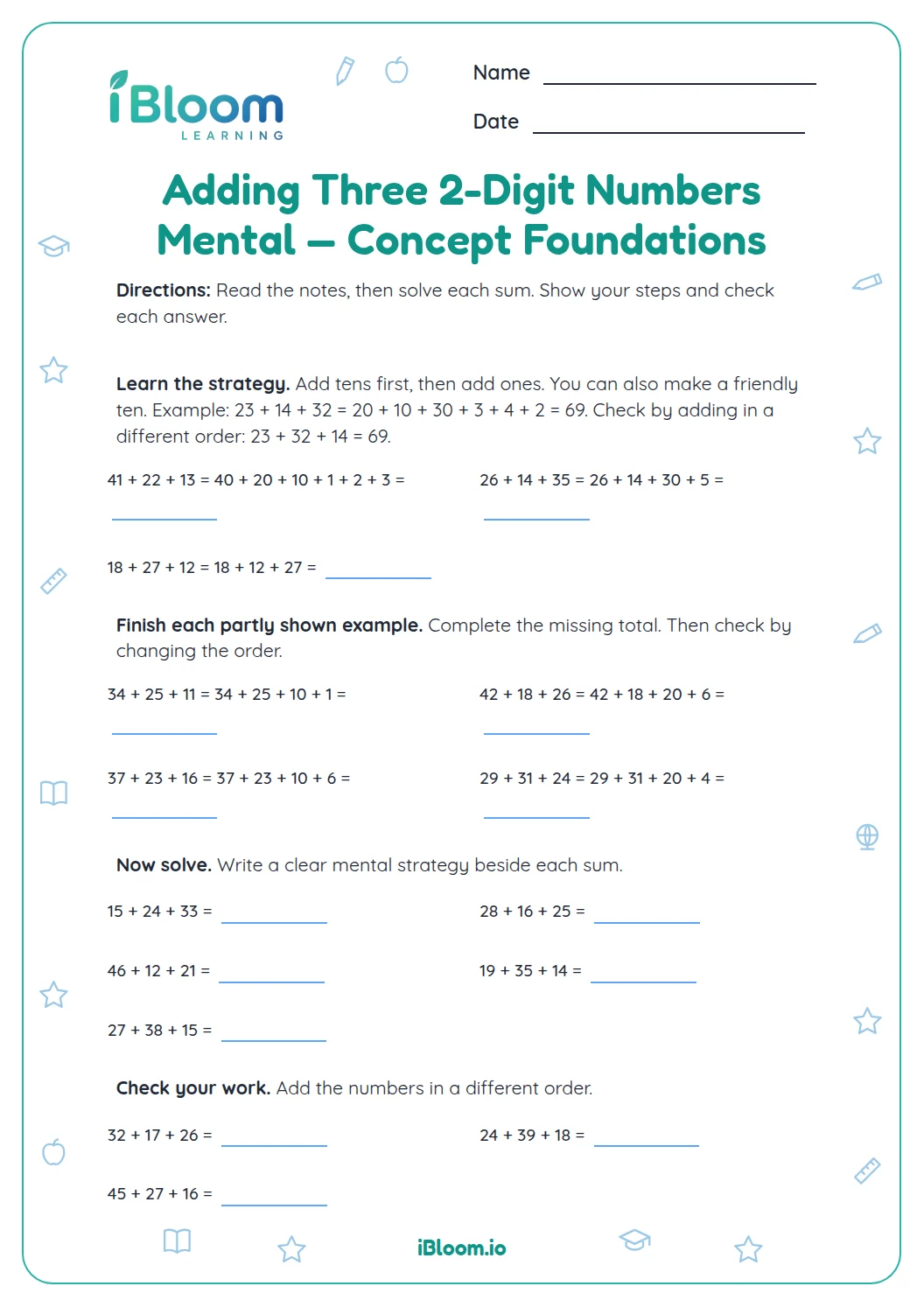
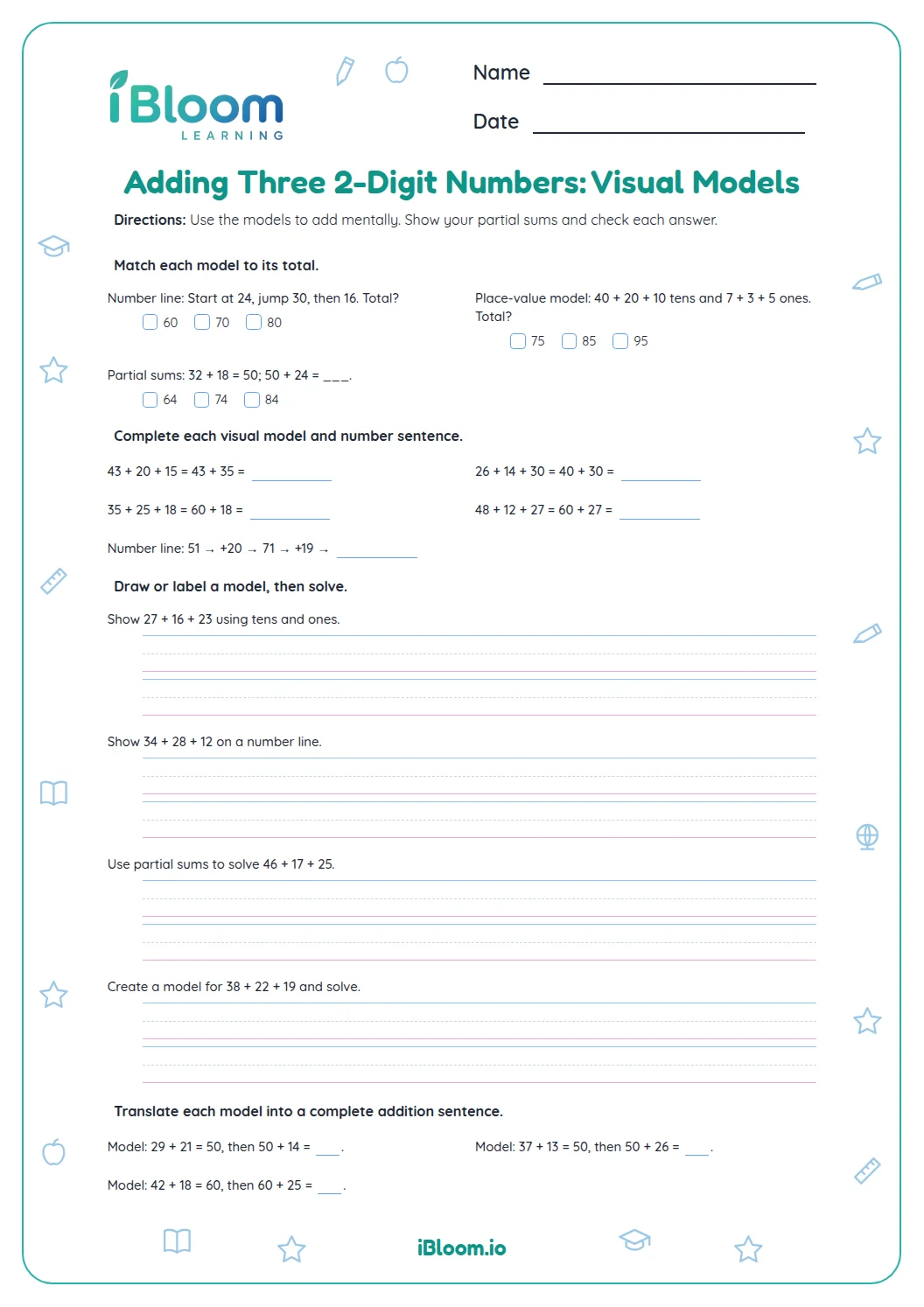
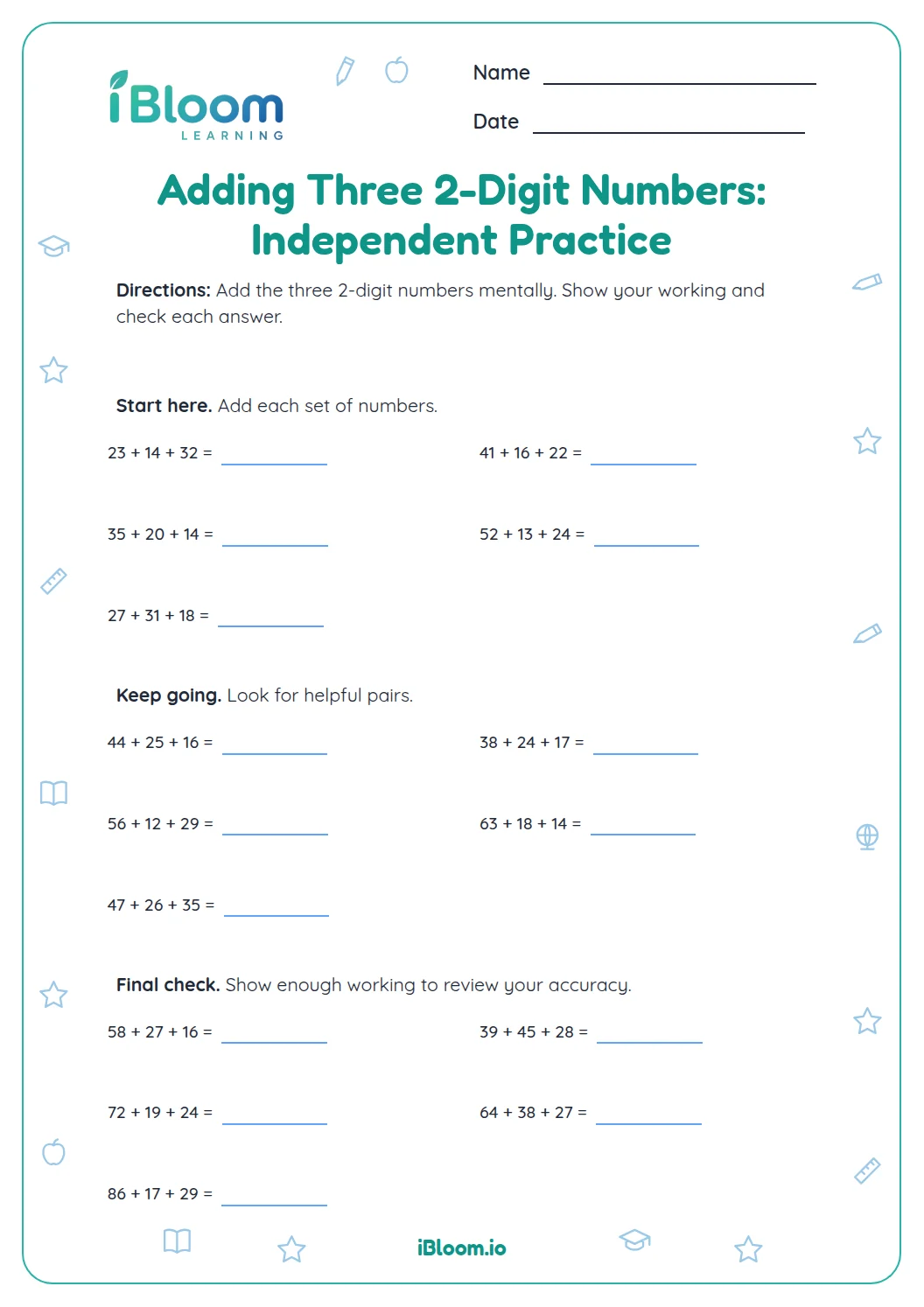
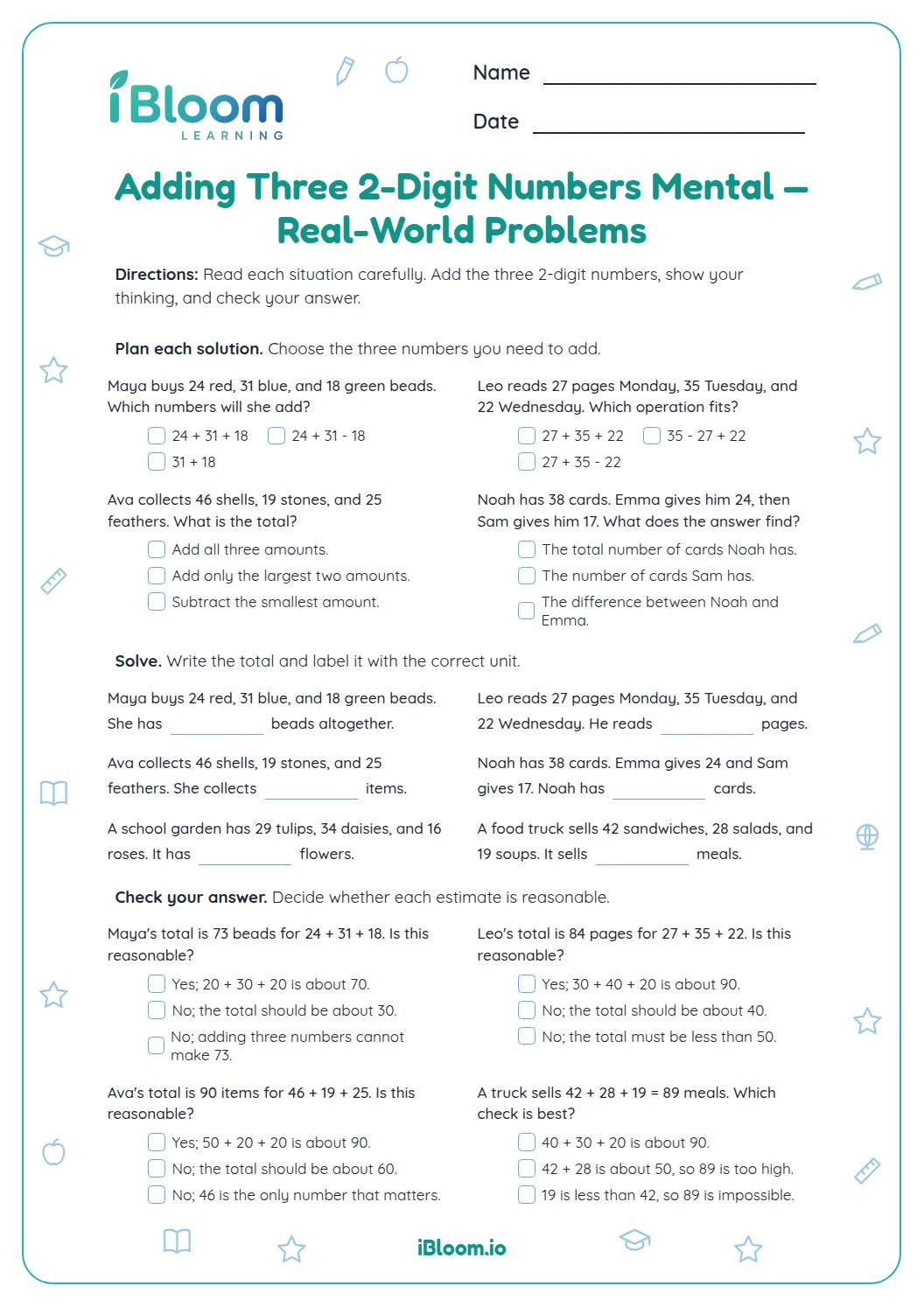
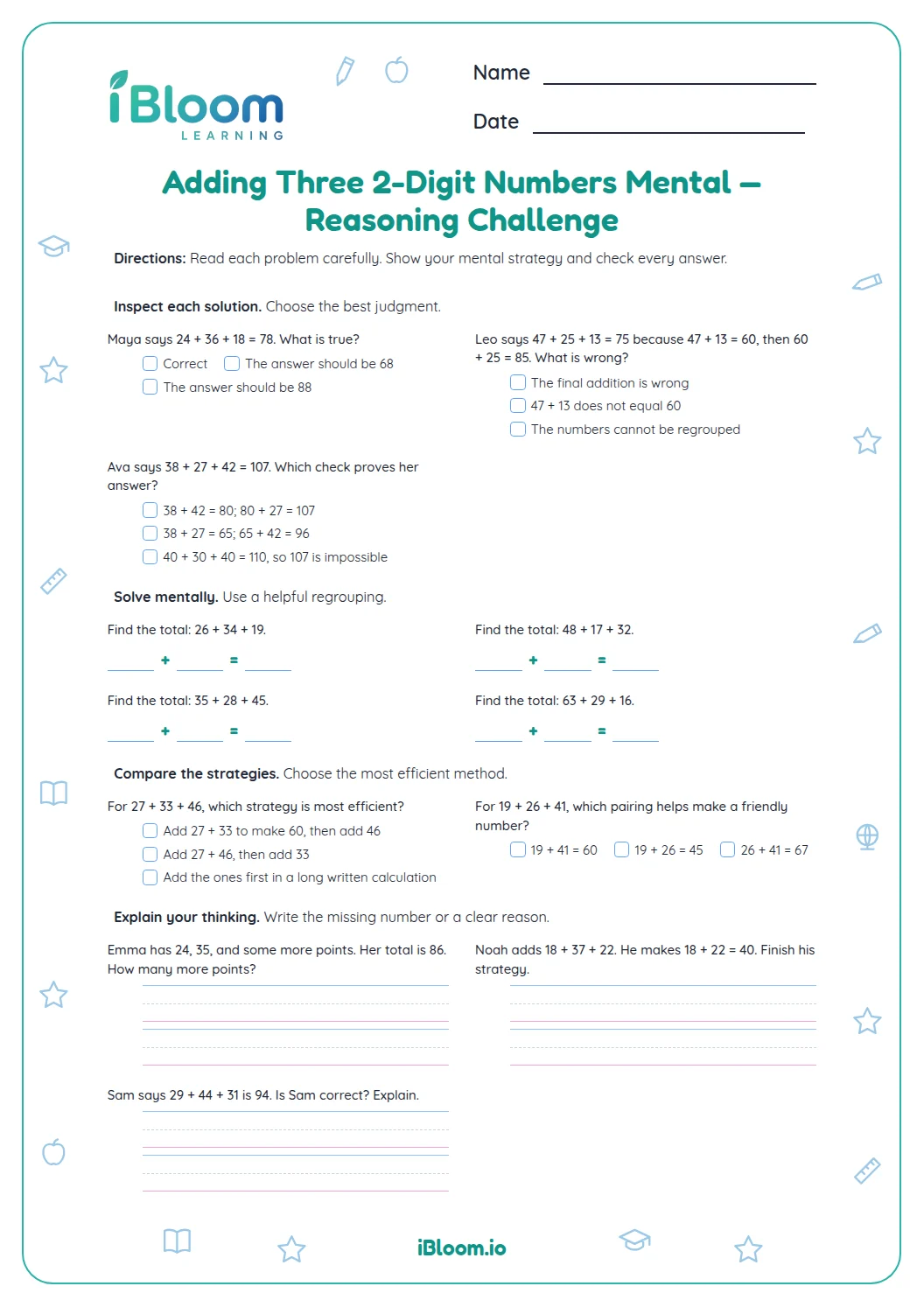
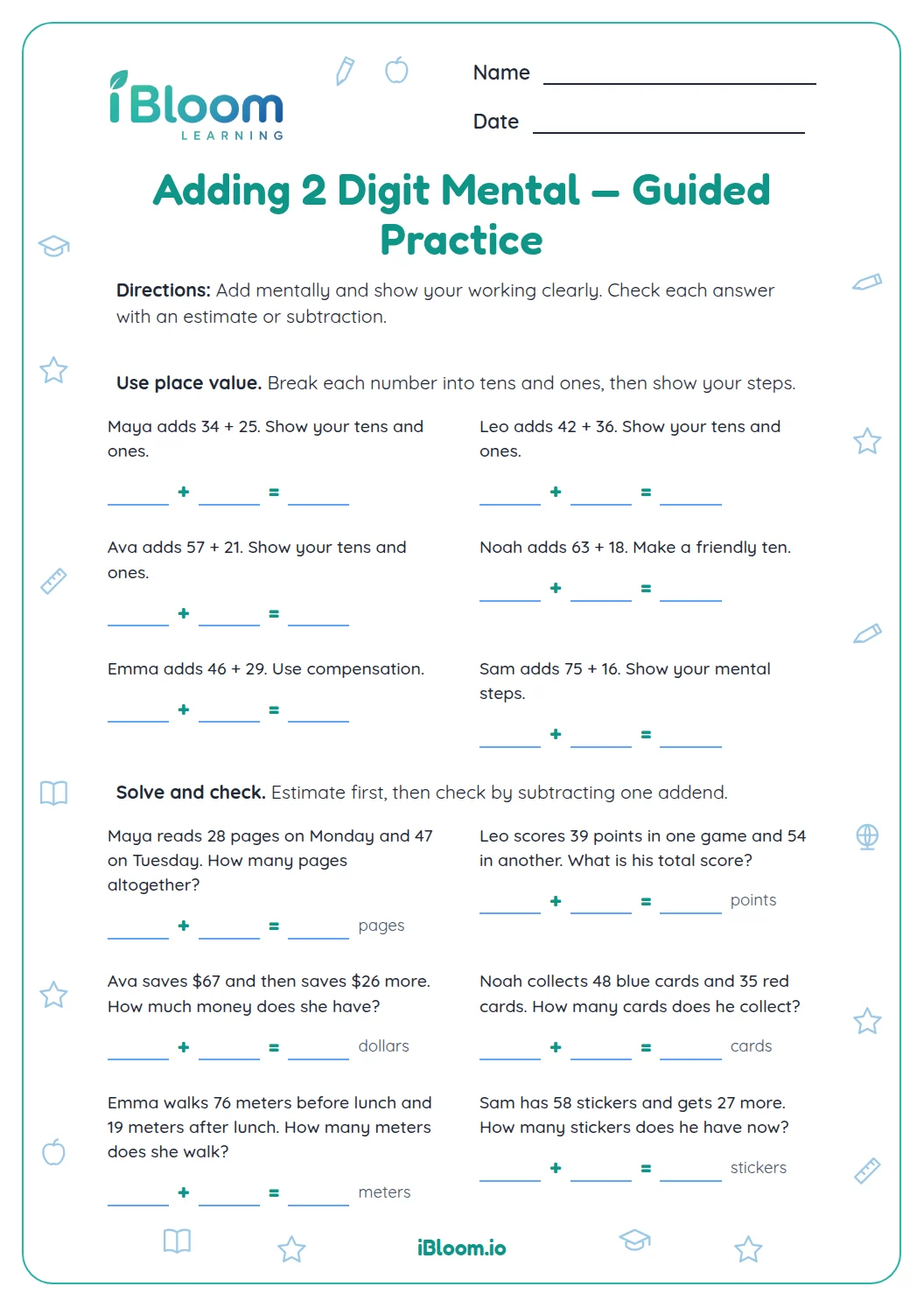
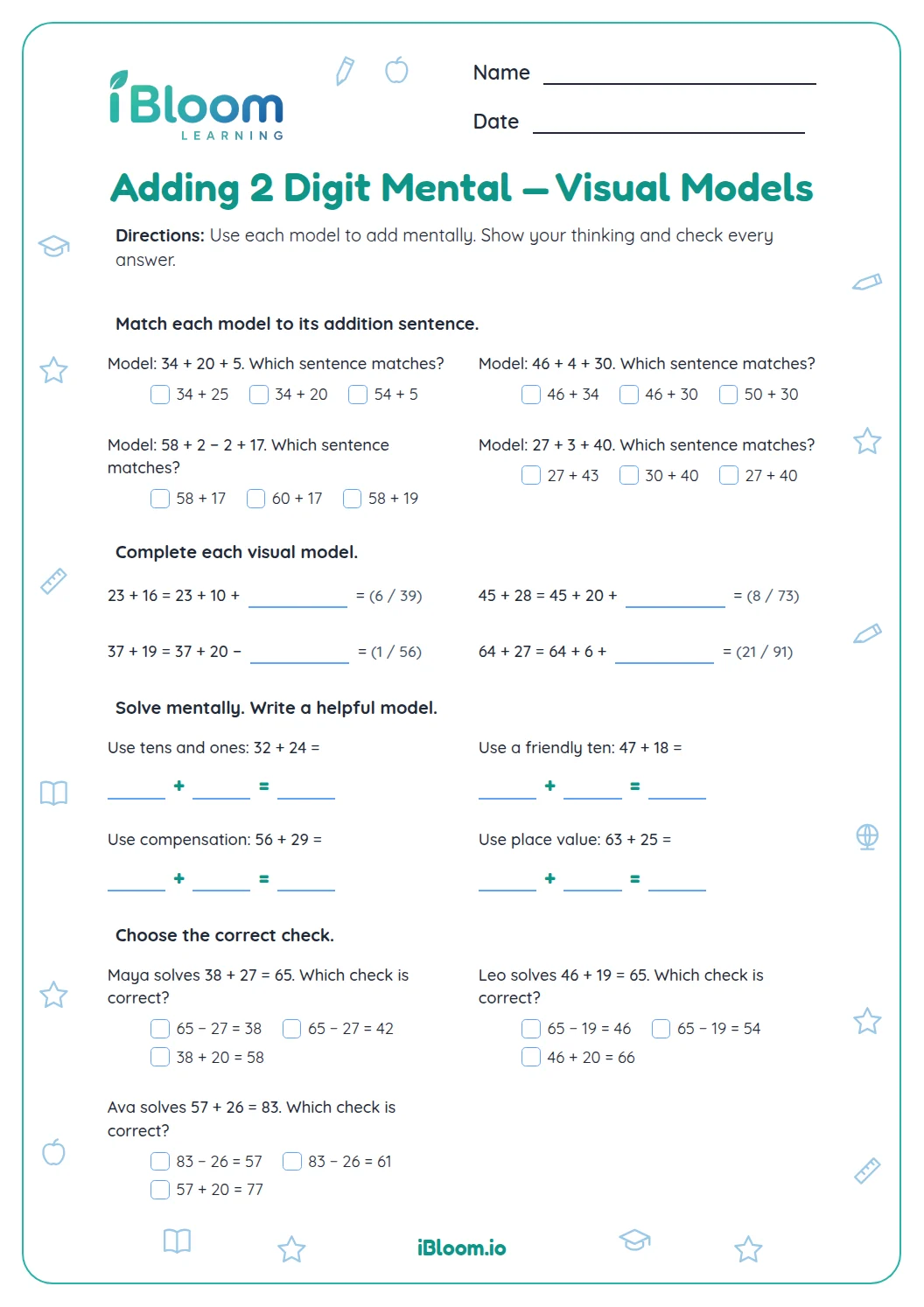
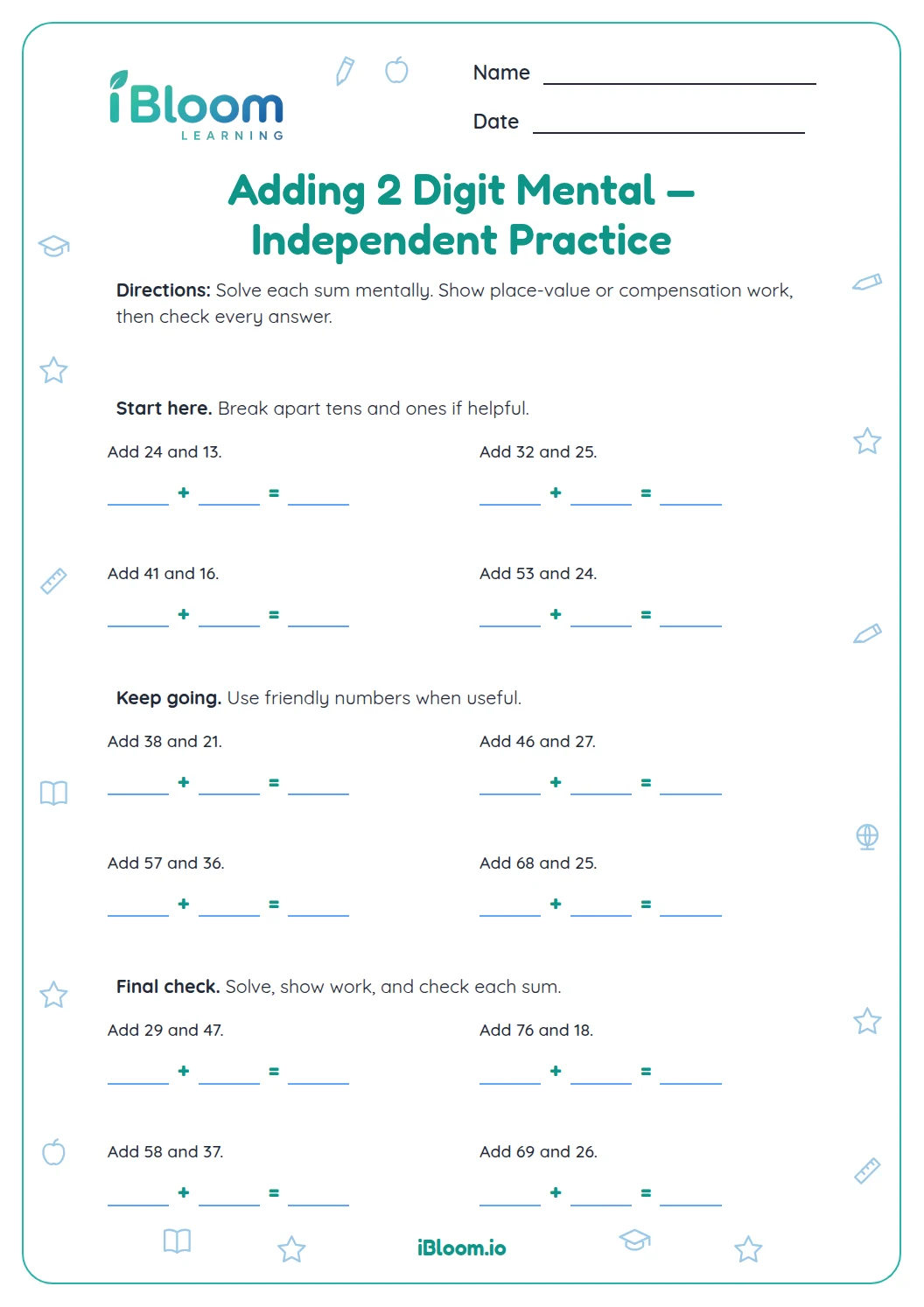
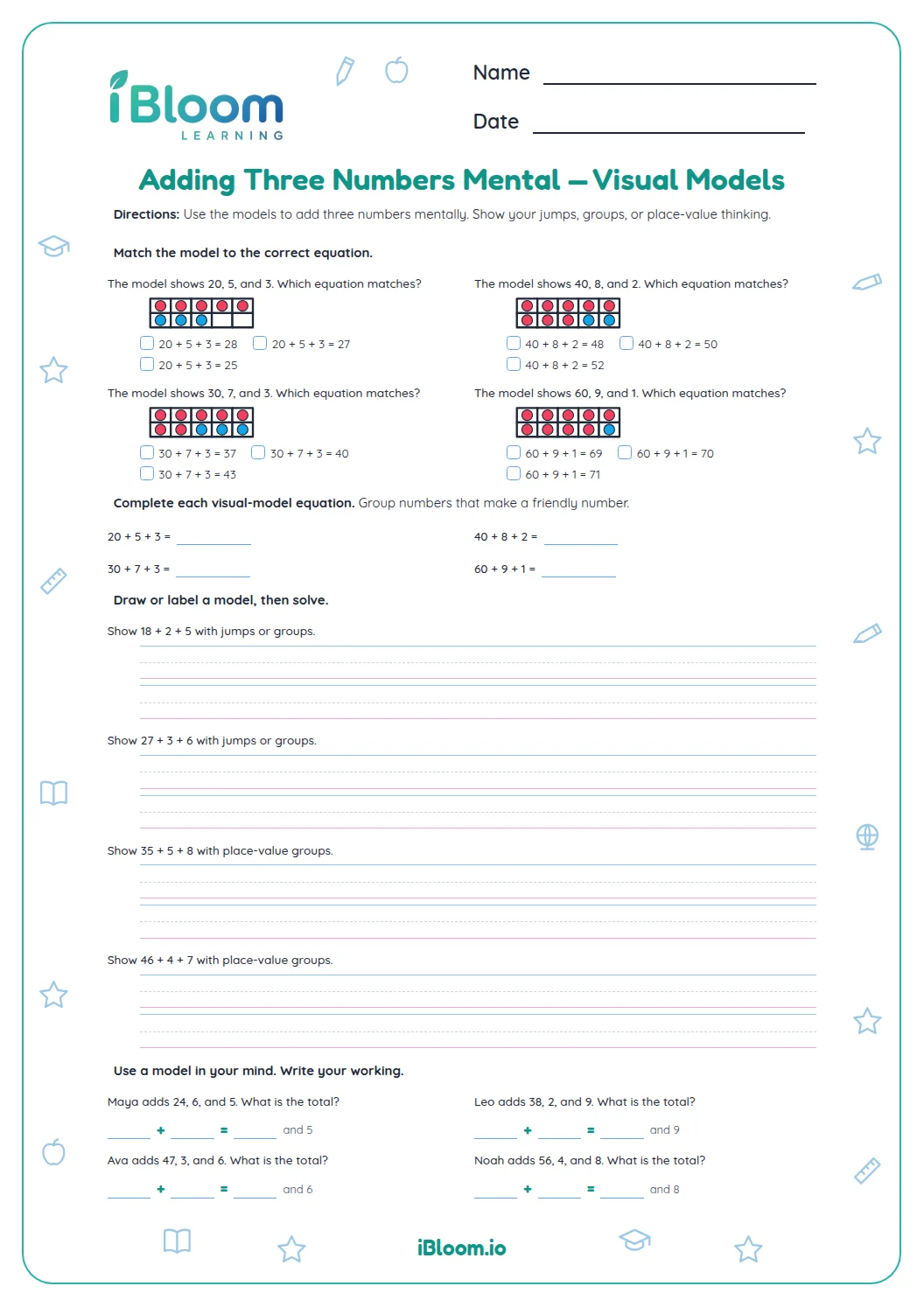
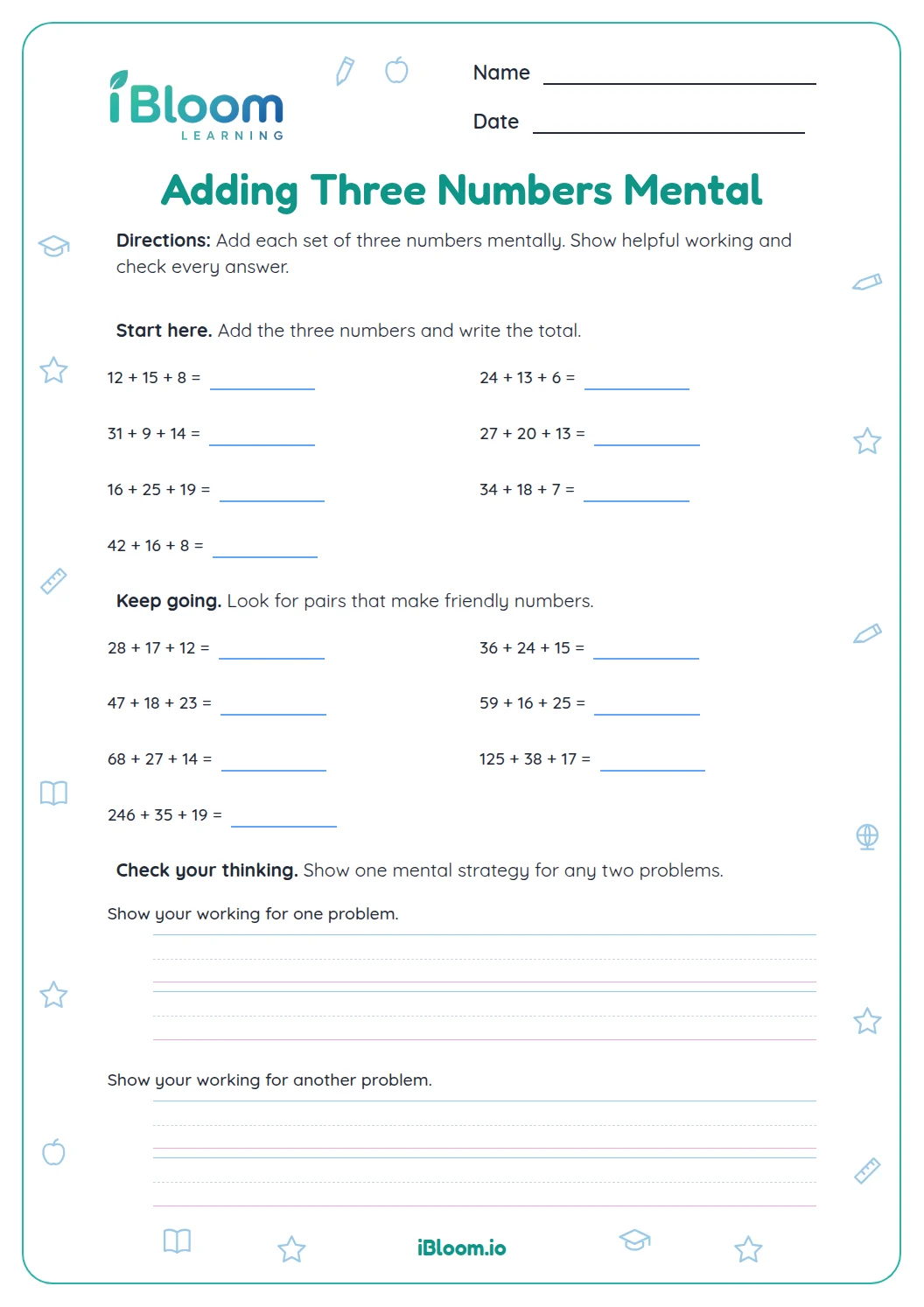
This Grade 4 printable gives children guided practice adding three two-digit numbers mentally. The first 12 number sentences move from useful pairs toward less obvious groupings; four short situations then ask for totals. Children can combine a pair that makes a friendly ten, add tens and ones, and check each result with the separate answer key. The sheet practices fluent multi-digit addition in CCSS 4.NBT.B.4.
Aligned to 4.NBT.B.4
How can you make three addends easier to add?
Start by finding two addends that are easy to combine. For 24 + 35 + 16, pair 24 and 16 to make 40, then add 35: 40 + 35 = 75.
Regrouping the addends changes their order, not their total. Children may also split a number into tens and ones if that feels easier.
- 124 + 35 + 16
- 224 + 16 = 40
- 340 + 35 = 75
What does each part practice?
The first 12 sums give direct practice with two-digit addends. The final four put those same strategies into short situations, so children translate three amounts into an addition equation.
How can a child check a mental sum?
The last four questions give a setting for each set of three addends. Children can note a friendly pair, add it first, and then combine the final amount.
How to use this worksheet
- 1Read all three addends before calculating.
- 2Circle or name a pair that makes a multiple of ten.
- 3Add that pair, then combine the remaining addend.
- 4For a story problem, write the three amounts as an addition equation.
- 5Check by changing the order or splitting tens and ones.
Common mistakes and quick fixes
The mistake
Adding only two addends and forgetting the third.
The fix
Point to each of the three numbers as it is included in the sum.
The mistake
Adding ones without regrouping, such as 8 + 7 = 15 but keeping only 5.
The fix
Make a ten first and remember the extra ten in the total.
The mistake
Changing a number while rearranging addends.
The fix
Rewrite the same three addends in a new order before adding.
Common Core alignment
This worksheet practices the letter and number skills named in the standard below.
Use place value and properties to add multi-digit whole numbers mentally.
On this sheet: The three addends are two-digit whole numbers, and children use place-value strategies.
Show the official wordingHide the official wording
Fluently add and subtract multi-digit whole numbers using the standard algorithm.
What to practice next
Make more practice
Further reading
Questions parents and teachers ask
What is a friendly pair?
A friendly pair is two addends that make a number that is easy to work with, often a multiple of ten. In question 1, 24 and 16 make 40. Then 40 + 35 is simple to finish mentally. Children may choose a different pair when it is more convenient.
Does changing the order change the sum?
No. Addition gives the same total when the addends are rearranged. For 24 + 35 + 16, adding 24 + 16 first makes 40, and then adding 35 gives 75. Keeping every original addend is what matters. Reading the full prompt once more is a useful way to check the answer before moving on.
Should children write their mental steps?
A short note can help children remember how they grouped the numbers. For example, they can write 24 + 16 = 40, then 40 + 35 = 75. The worksheet leaves room to work through the final story questions. Reading the full prompt once more is a useful way to check the answer before moving on.
What should a child do when no pair makes a ten?
Split one or more addends into tens and ones, or add two numbers first and then the third. For 46 + 19 + 25, 19 + 25 = 44, then 46 + 44 = 90. More than one clear mental route can lead to the same total.
Is an answer key included?
Yes. The answer key is a separate page with the total for each of the 16 problems. Children can use it after finishing a section, or an adult can check the page when the practice is complete. Reading the full prompt once more is a useful way to check the answer before moving on.