

About this worksheet
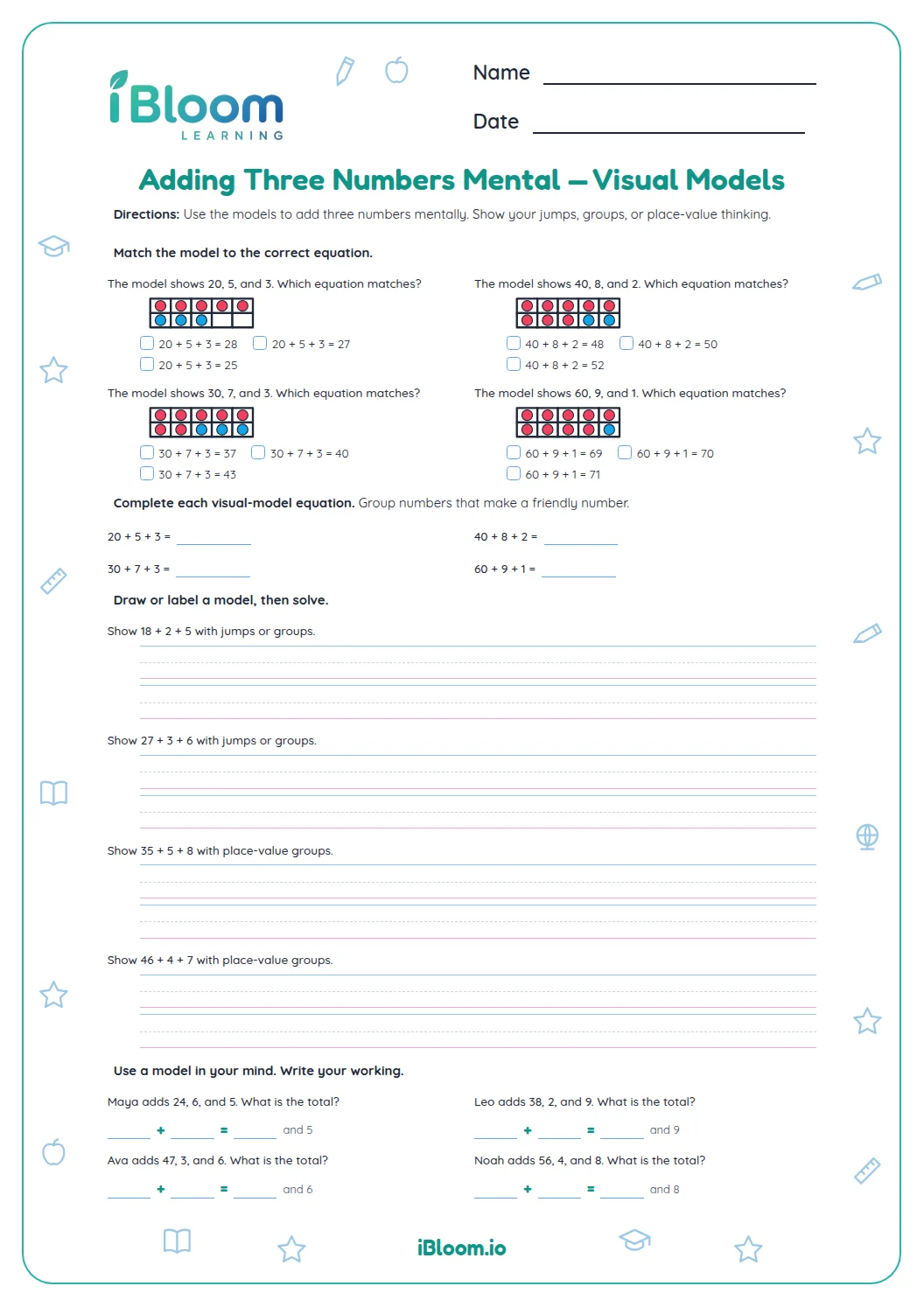
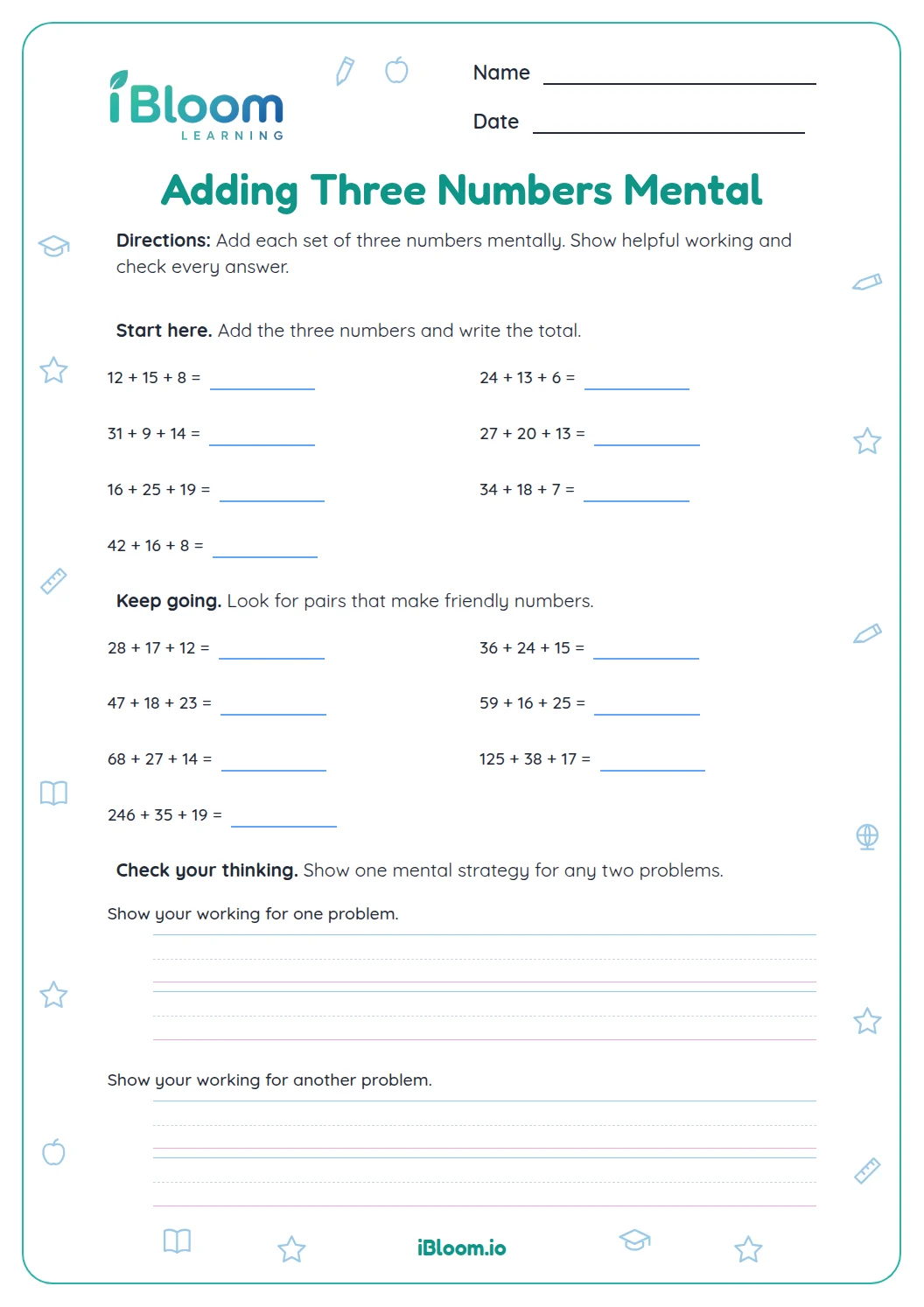
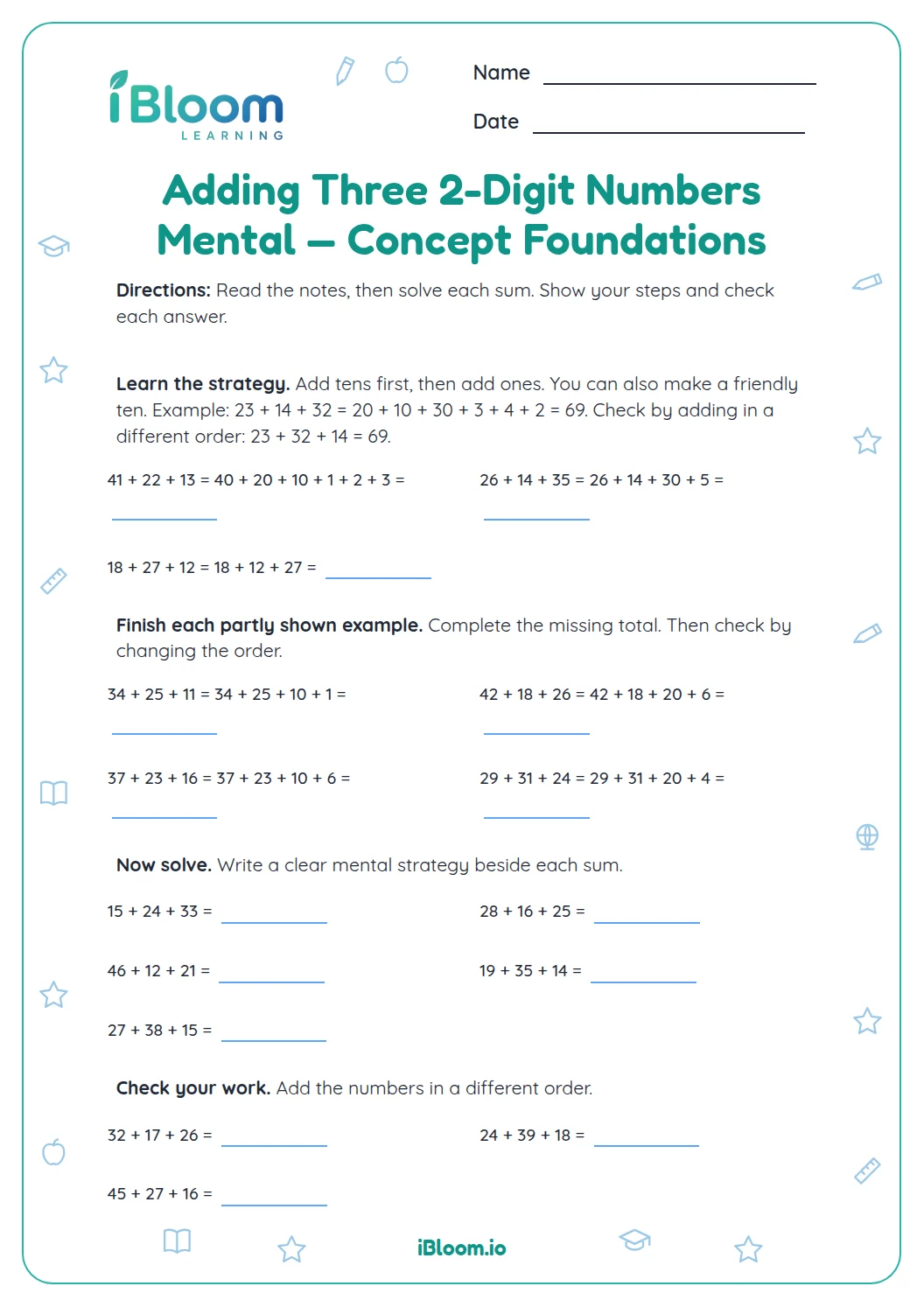
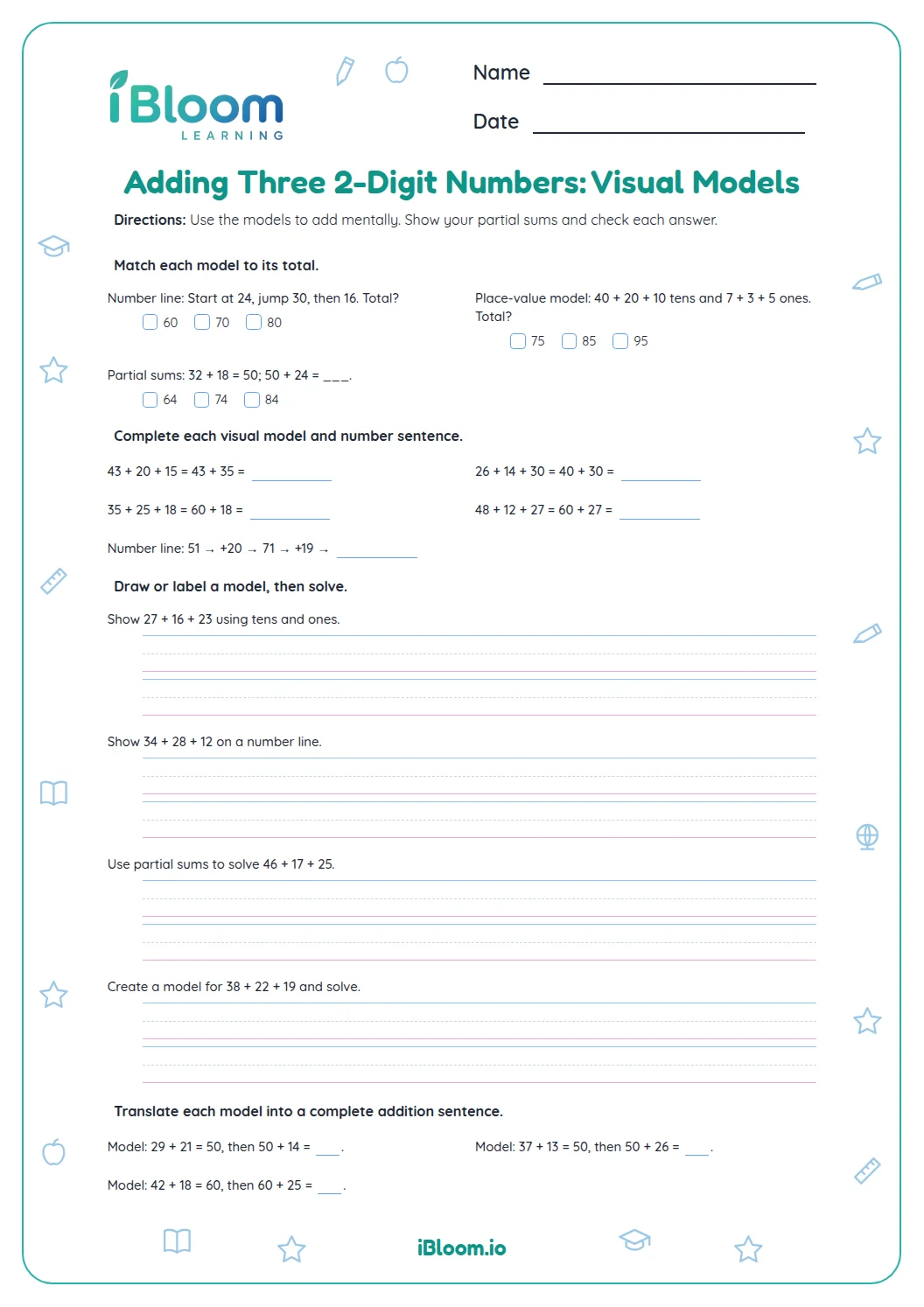
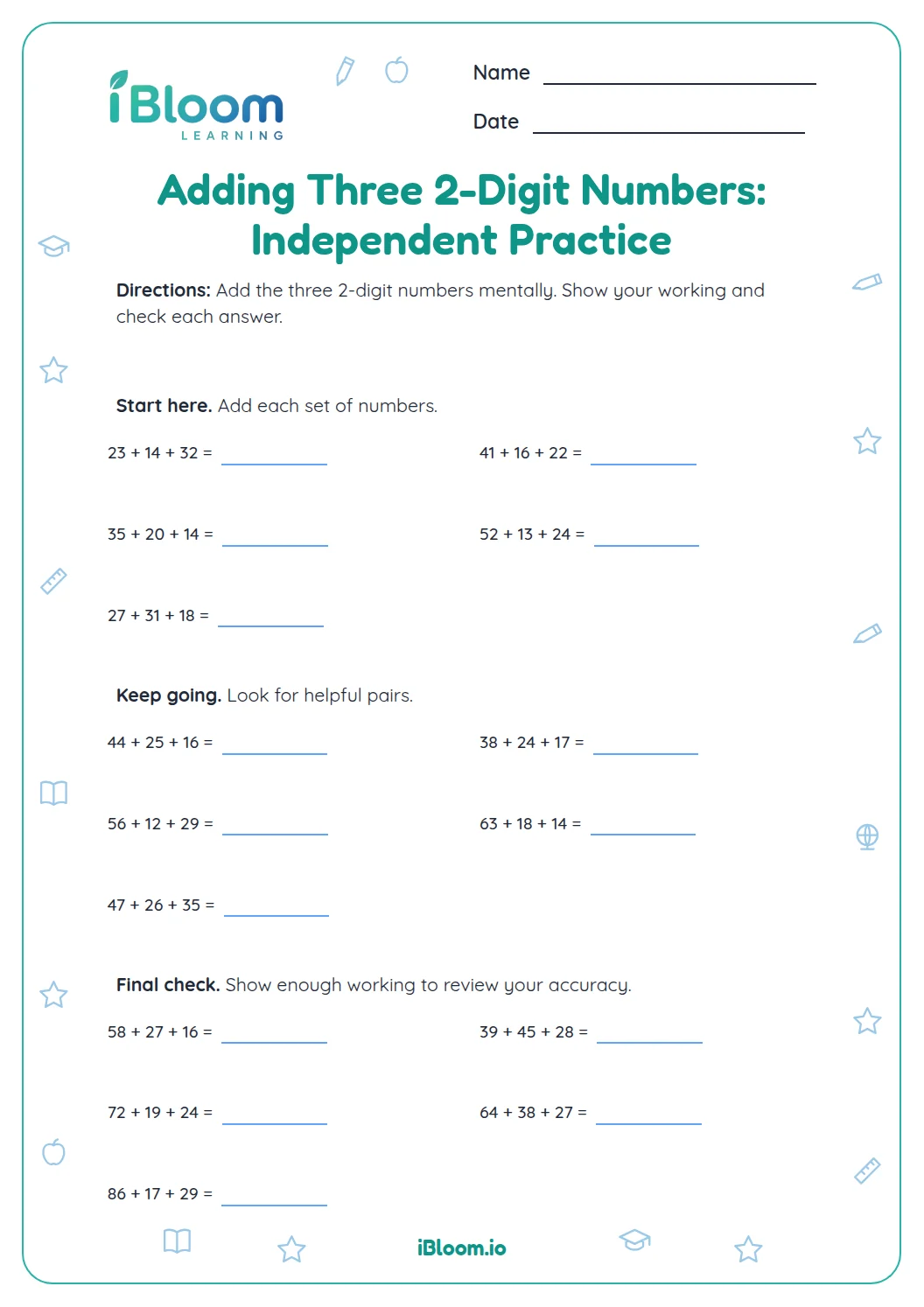
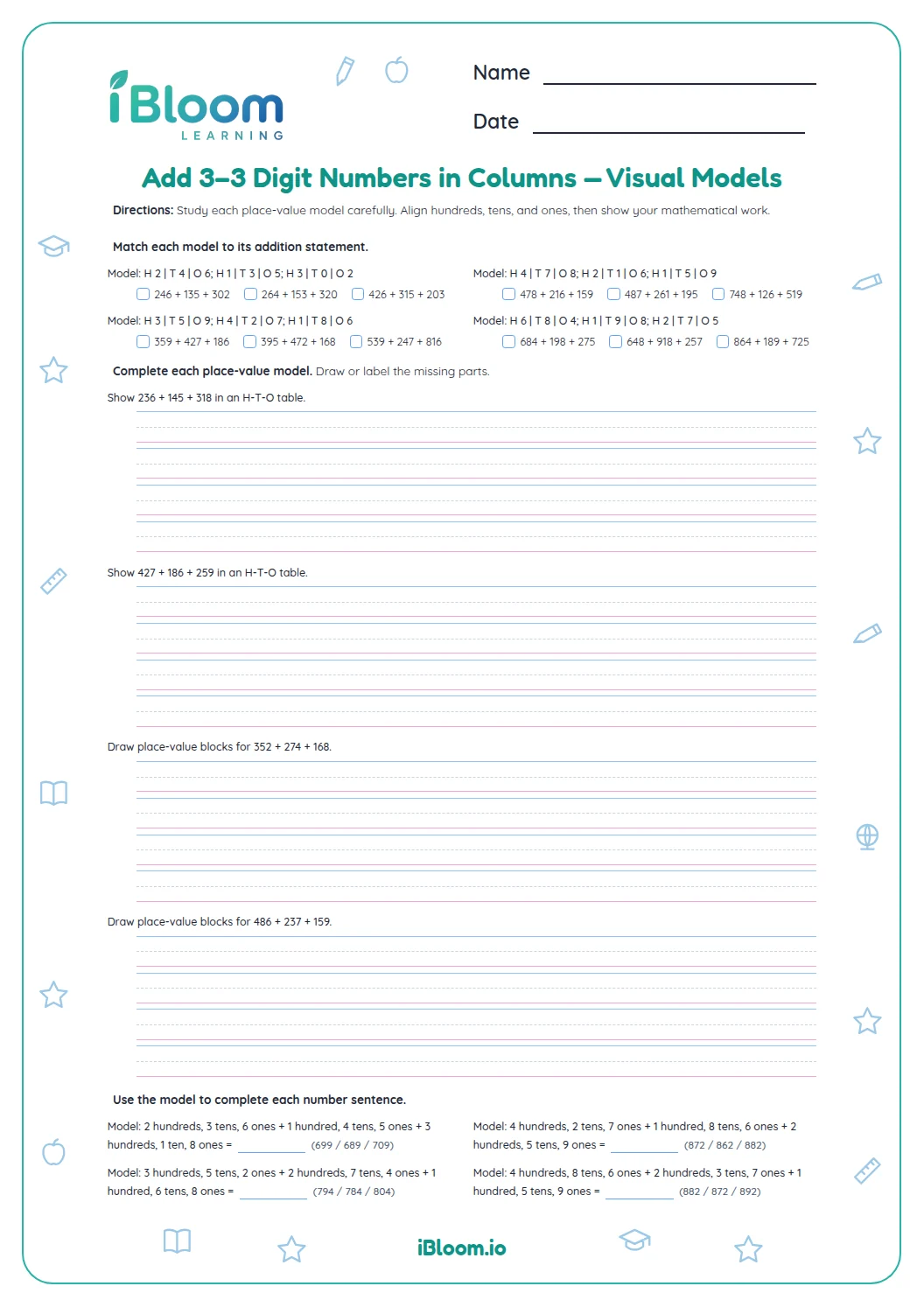
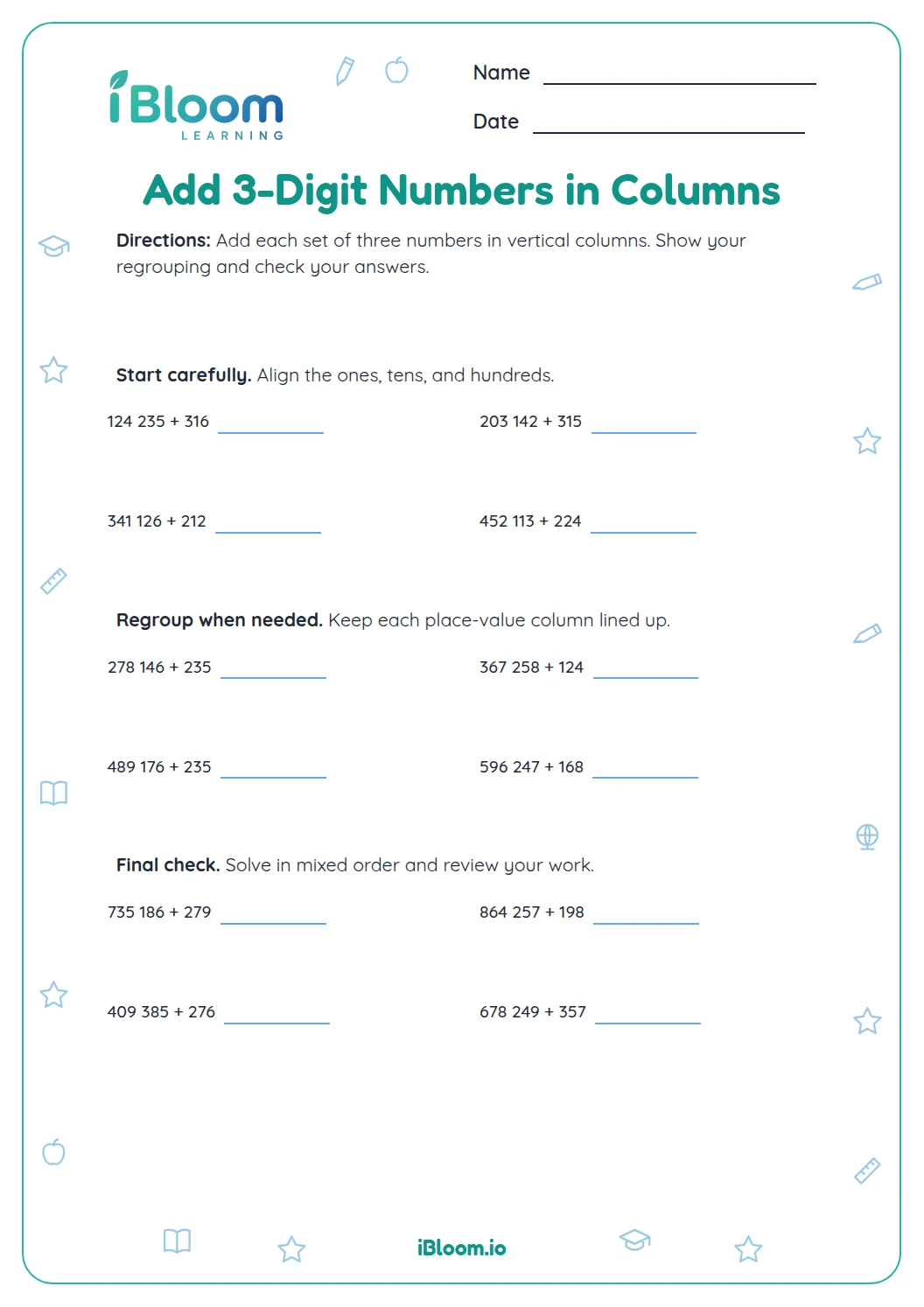
This Grade 4 printable worksheet helps students add three multi-digit numbers by choosing a useful pair first. Problems include pairs that make 100 or 1,000, along with addends that need place-value grouping. The second set increases the sums and regrouping choices. A separate answer key lists all 16 totals. The activity connects to Common Core 4.NBT.B.4, fluent addition of multi-digit whole numbers.
Aligned to 4.NBT.B.4
Why pair friendly numbers first?
In 25 + 39 + 75, 25 and 75 combine to make 100. Then 100 + 39 = 139. This keeps the first step simple.
The order of addends can change without changing the total, so scan all three numbers before choosing what to add first.
- 125 + 39 + 75
- 225 + 75 = 100
- 3100 + 39 = 139
What if no pair makes a round hundred?
Break numbers into hundreds, tens, and ones. For 48 + 52 + 17, make 100 with 48 + 52, then add 17 to get 117.
Other sums combine hundreds first, then add the remaining tens and ones. Keep each partial sum visible in your head or jot it on scratch paper.
How can you check a mental sum?
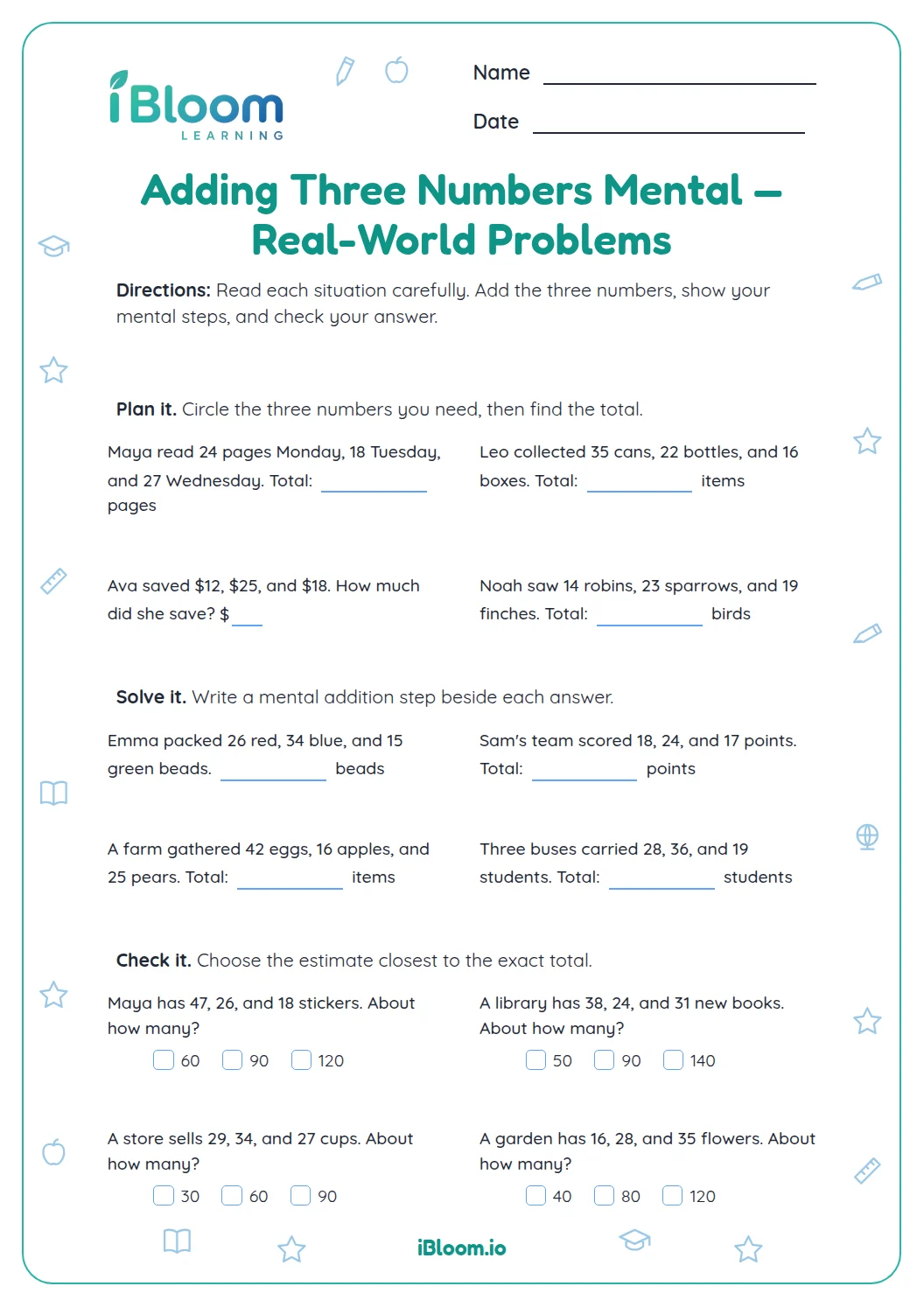
Estimate the total by rounding, then compare your exact sum with the estimate. You can also change the grouping and add the three numbers a second way.
How to use this worksheet
- 1Read all three addends before calculating.
- 2Look for a pair that makes 10, 100, or 1,000.
- 3Add that pair first.
- 4Bring in the remaining number, keeping place values aligned in your thinking.
- 5Estimate to check whether the total is reasonable.
Mistakes to watch for
The mistake
Adding only two of the three addends.
The fix
Point to each of the three numbers as it is included.
The mistake
Losing a ten while regrouping.
The fix
Say the partial sum aloud and track hundreds, tens, and ones.
The mistake
Choosing a long route when a friendly pair is available.
The fix
Scan the full set before starting and look for pairs like 48 + 52.
Common Core alignment
This worksheet connects the skill to the following Common Core standard.
Add multi-digit whole numbers, regrouping place-value parts when needed.
On this sheet: Each item asks students to add three multi-digit whole numbers; friendly pairs support mental regrouping.
Show the official wordingHide the official wording
Fluently add and subtract multi-digit whole numbers using the standard algorithm.
What to practice next
Make more practice
Further reading
Questions parents and teachers ask
What is mental addition?
Mental addition means finding sums by using strategies such as making a hundred, grouping tens, or breaking numbers apart by place value. This sheet gives practice with three addends in each sum. Students may jot down a helpful partial sum as they work.
Can the numbers be added in a different order?
Yes. You can group the addends in a helpful order because changing their order does not change the sum. Look for pairs such as 48 and 52 that make a friendly hundred. Add that pair first, then combine the remaining number.
Is there an answer key?
Yes. The key gives the total for each three-addend problem. After checking a sum, try saying which pair you combined first and why that grouping made the addition easier. If the total seems off, estimate and calculate again.
How long will this take?
Plan for about 15 minutes, with a little extra time to explain or check a chosen mental strategy. Students may use scratch paper to record partial sums while keeping the addition mental. Pause to compare two different useful groupings.