


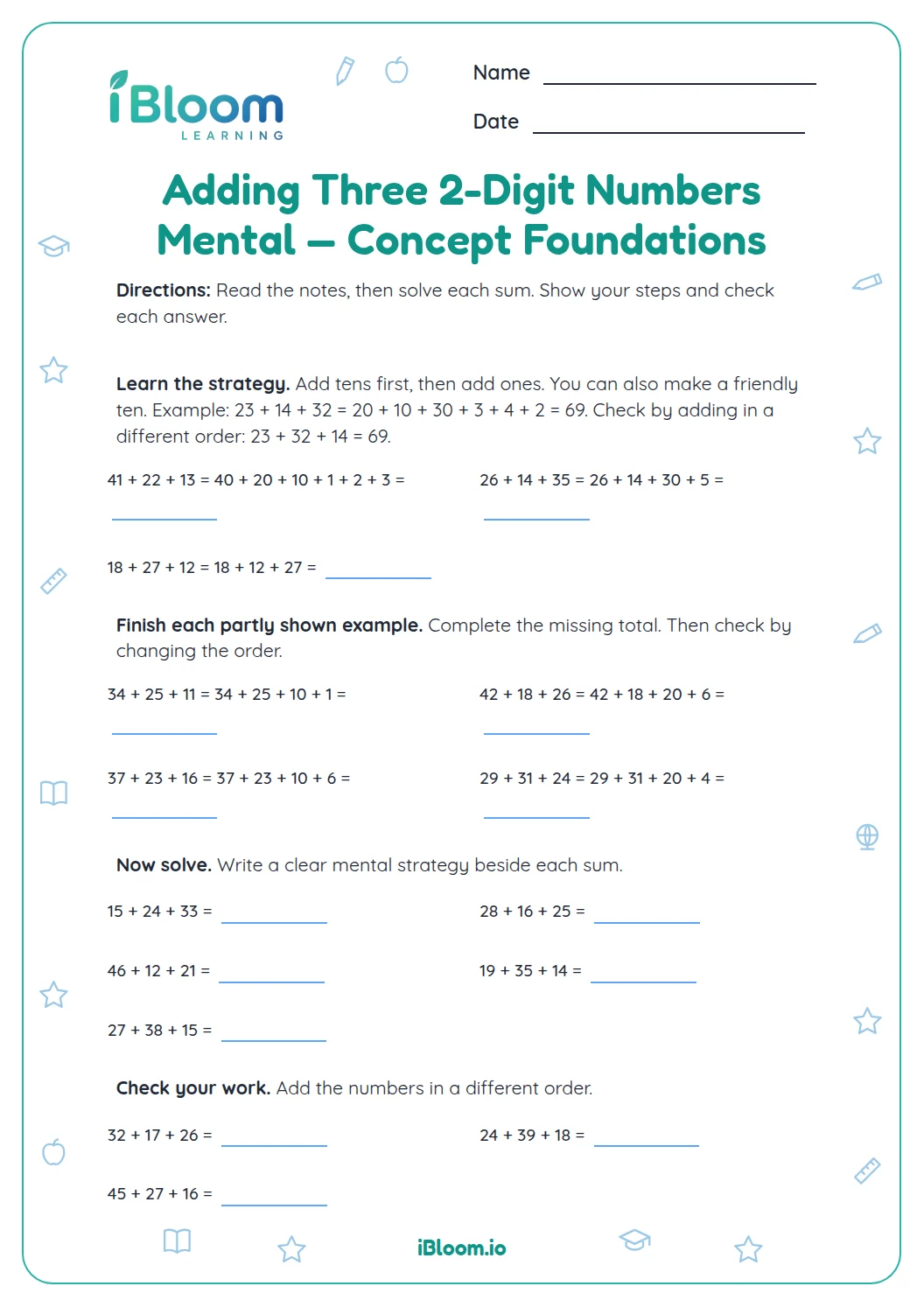
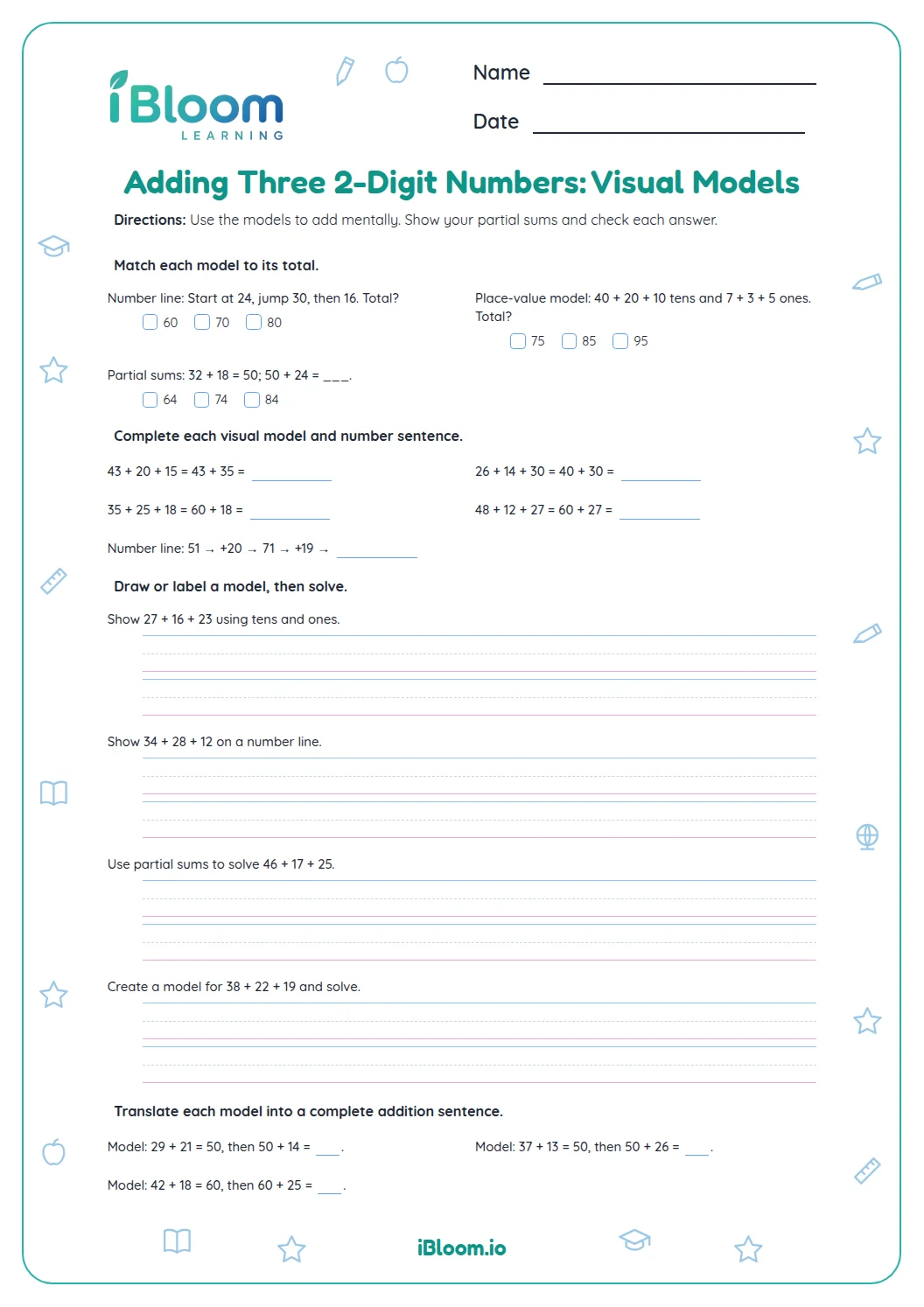
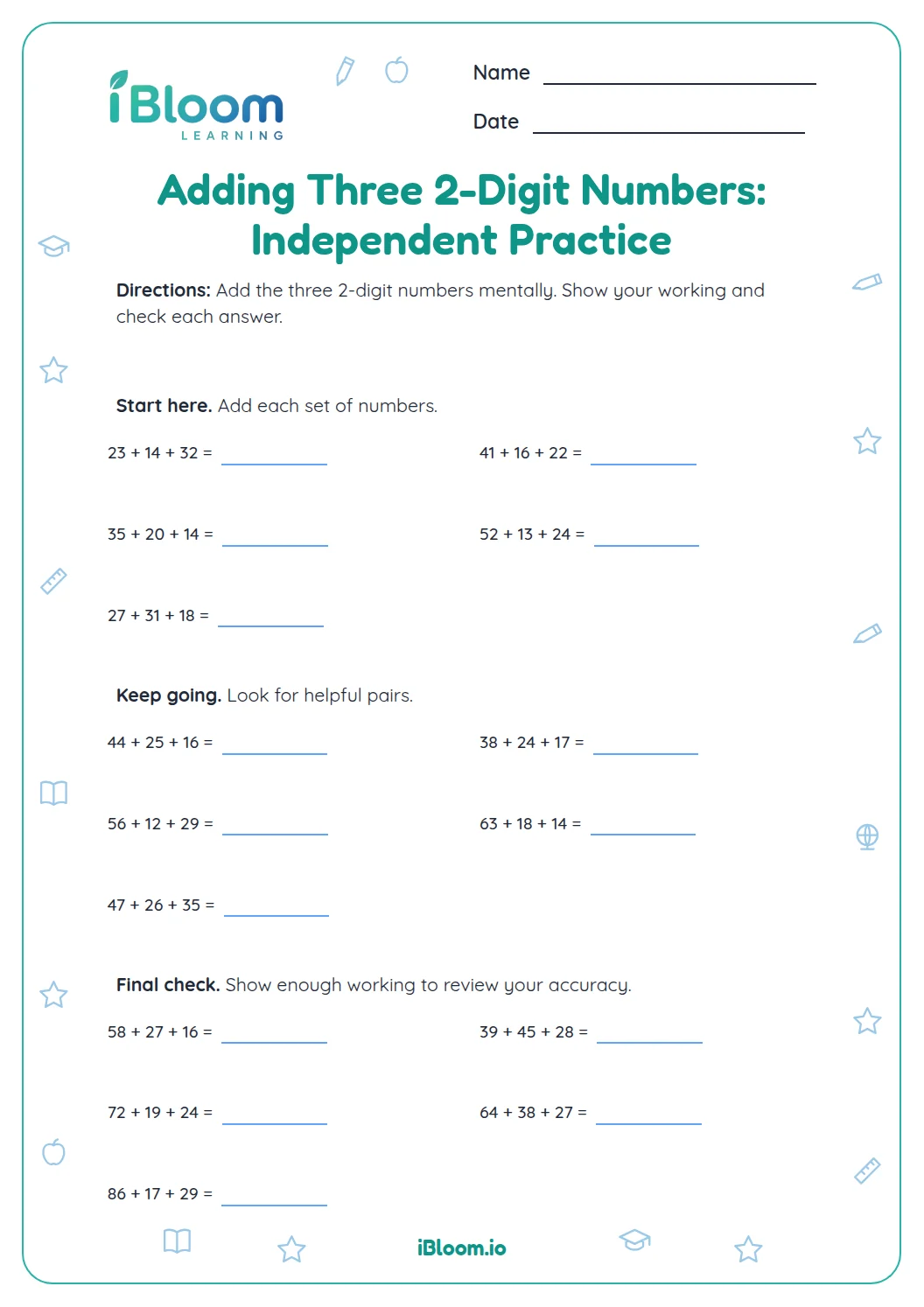
About this worksheet
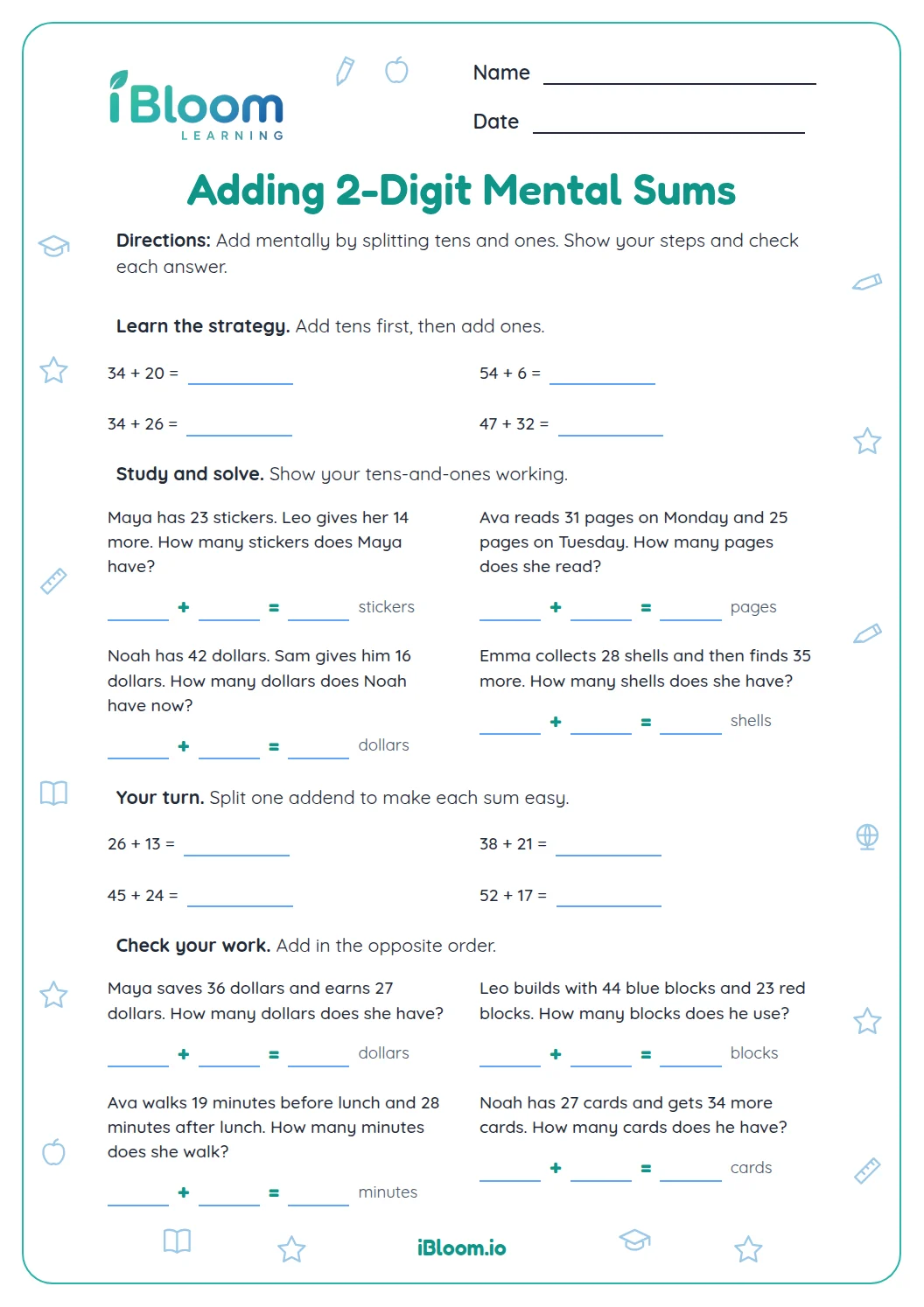
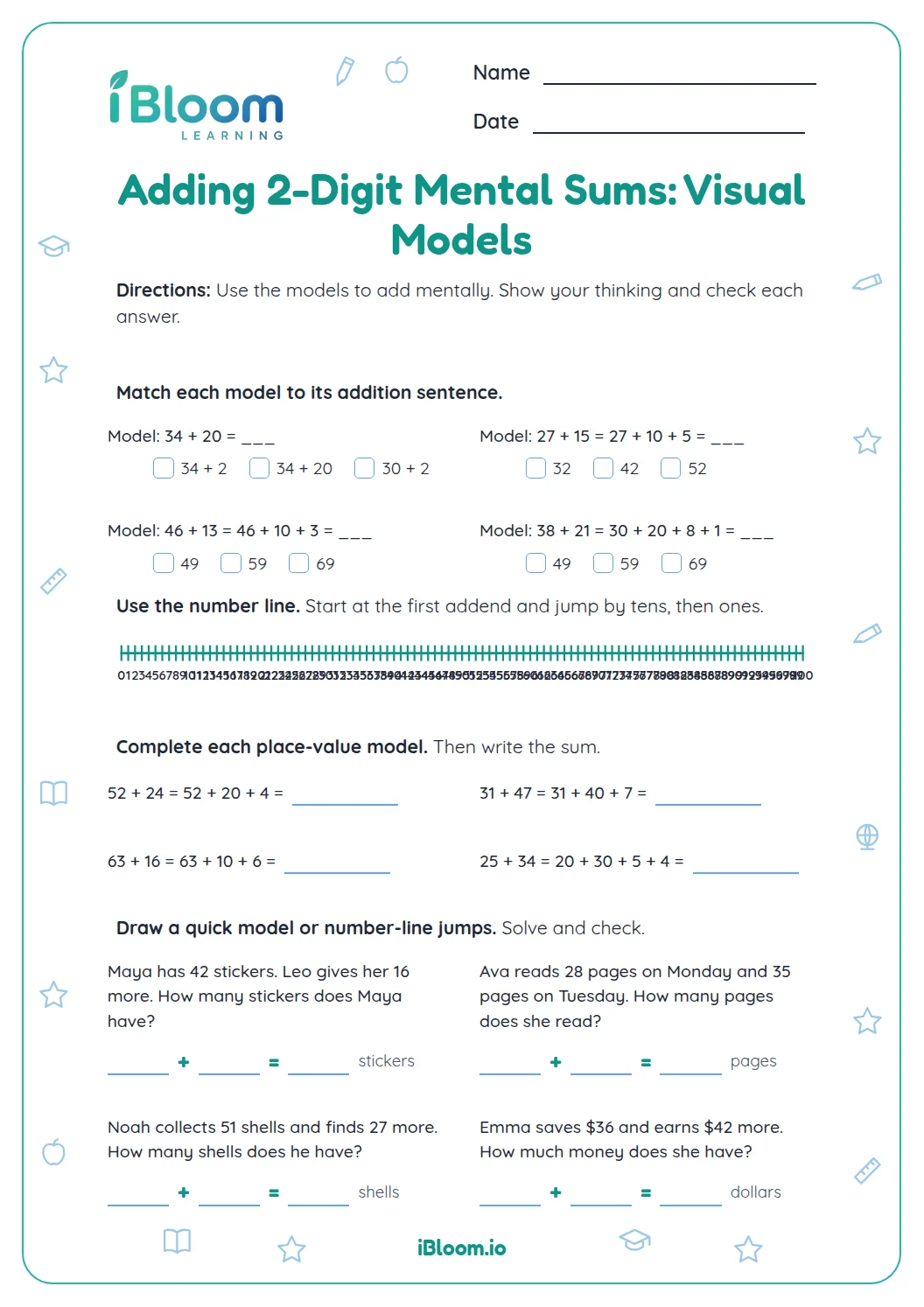
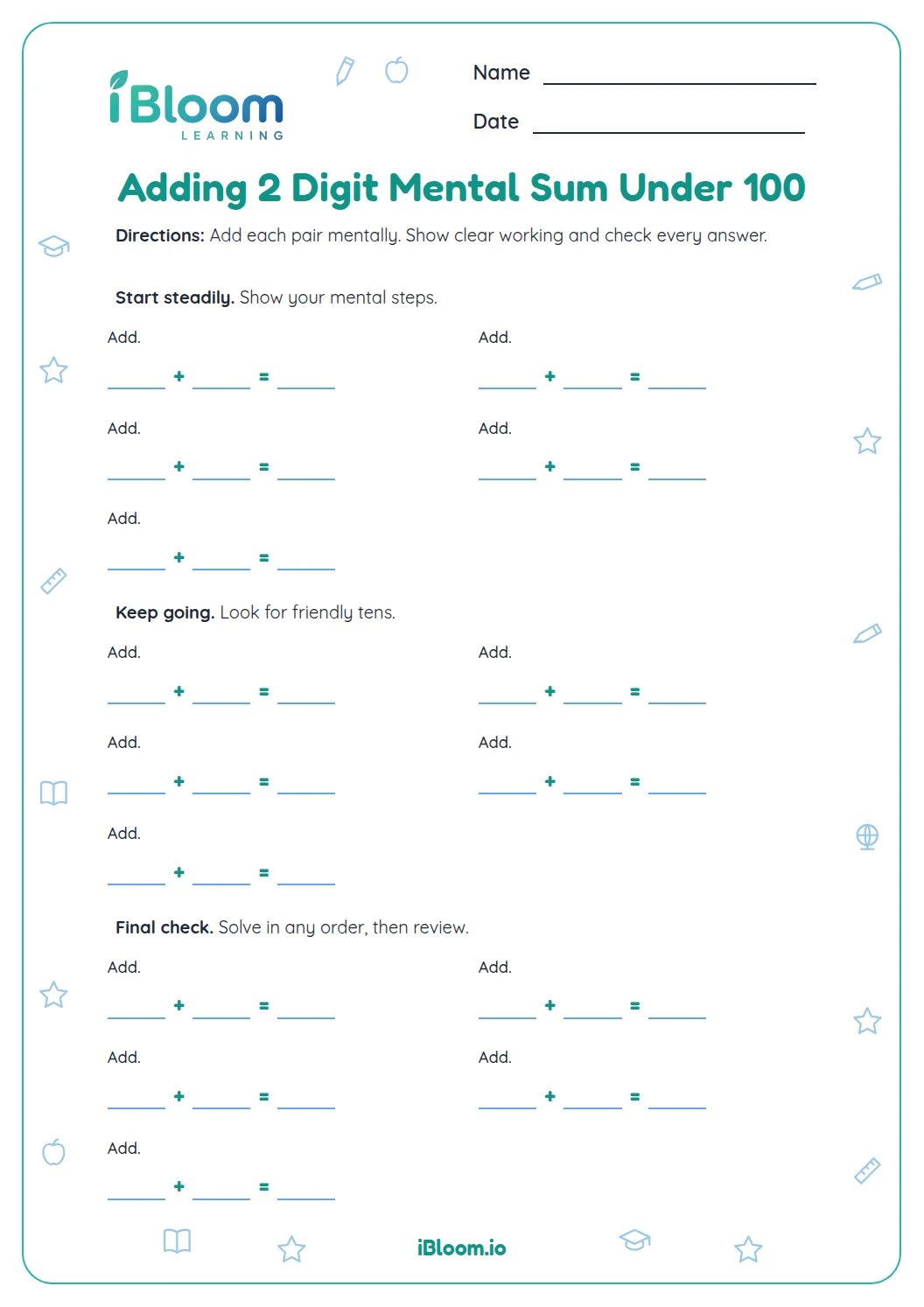
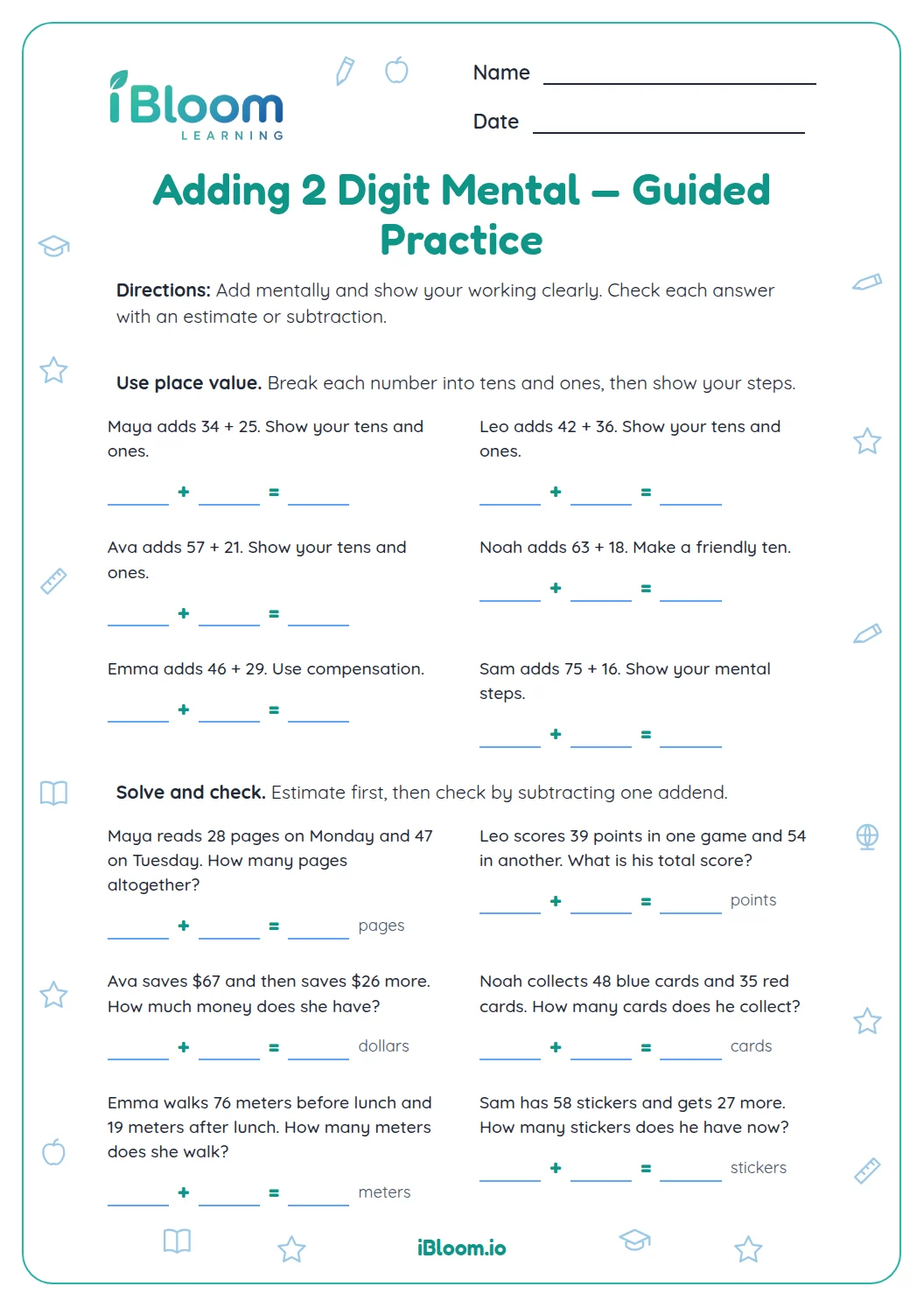
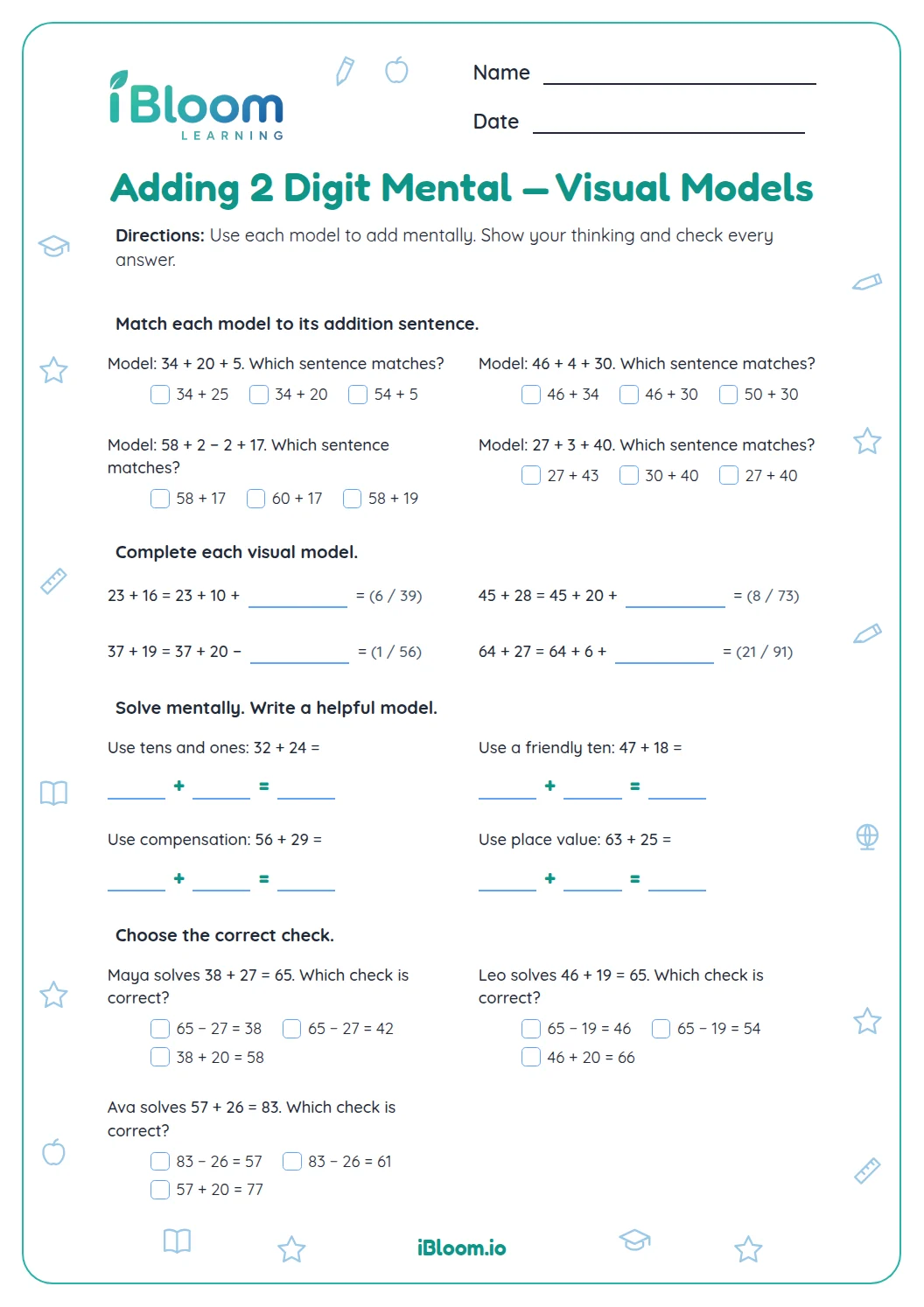
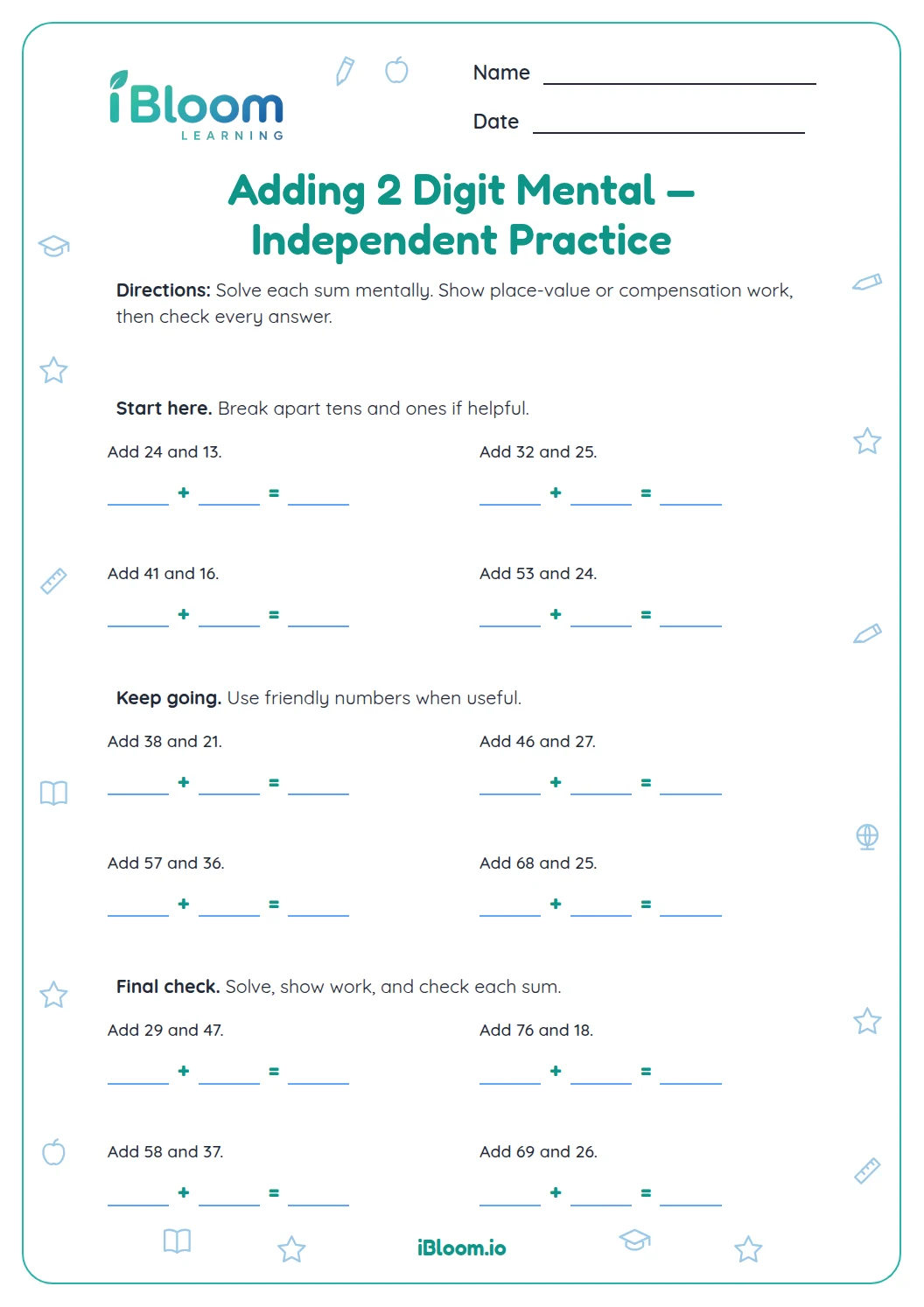
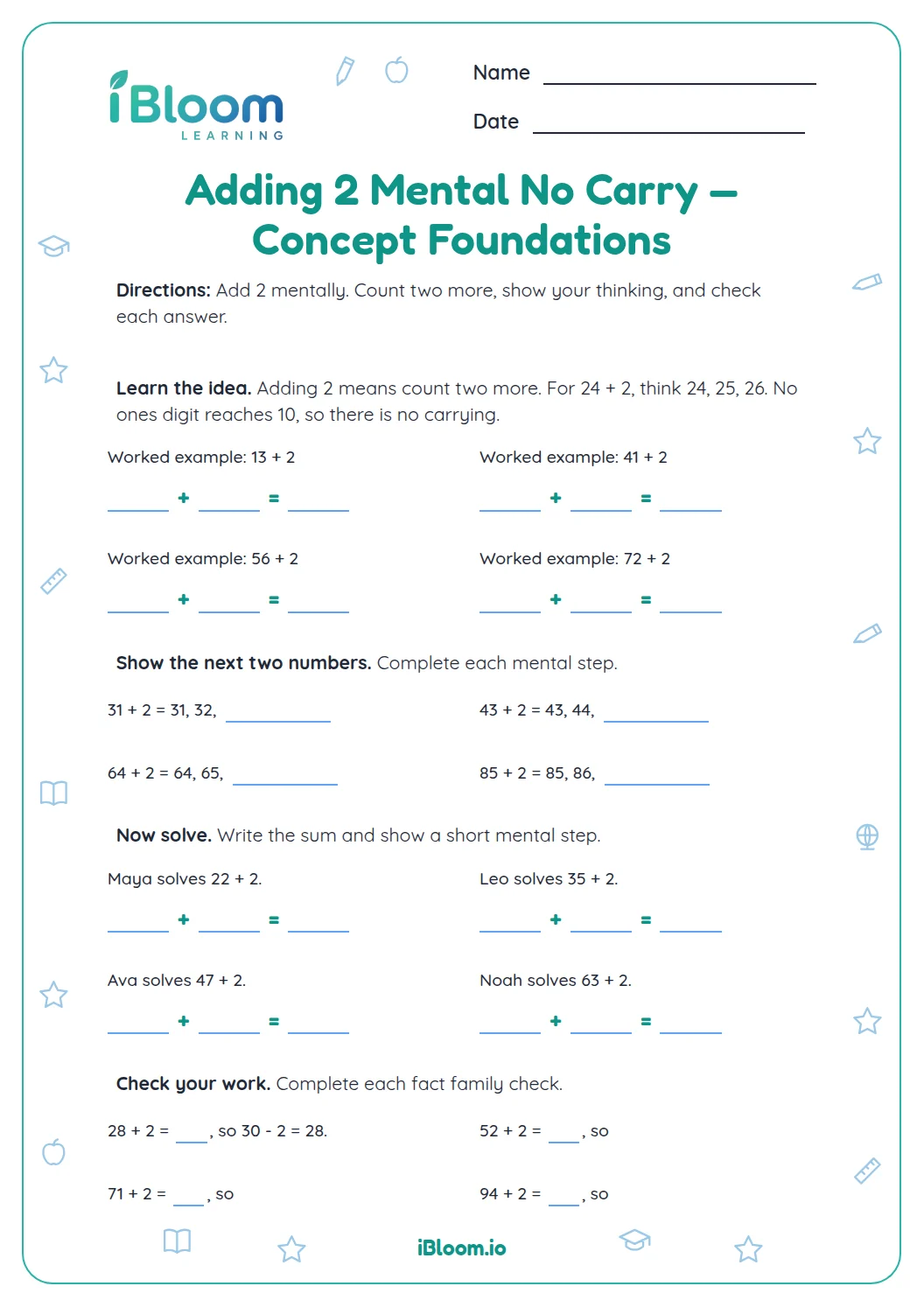
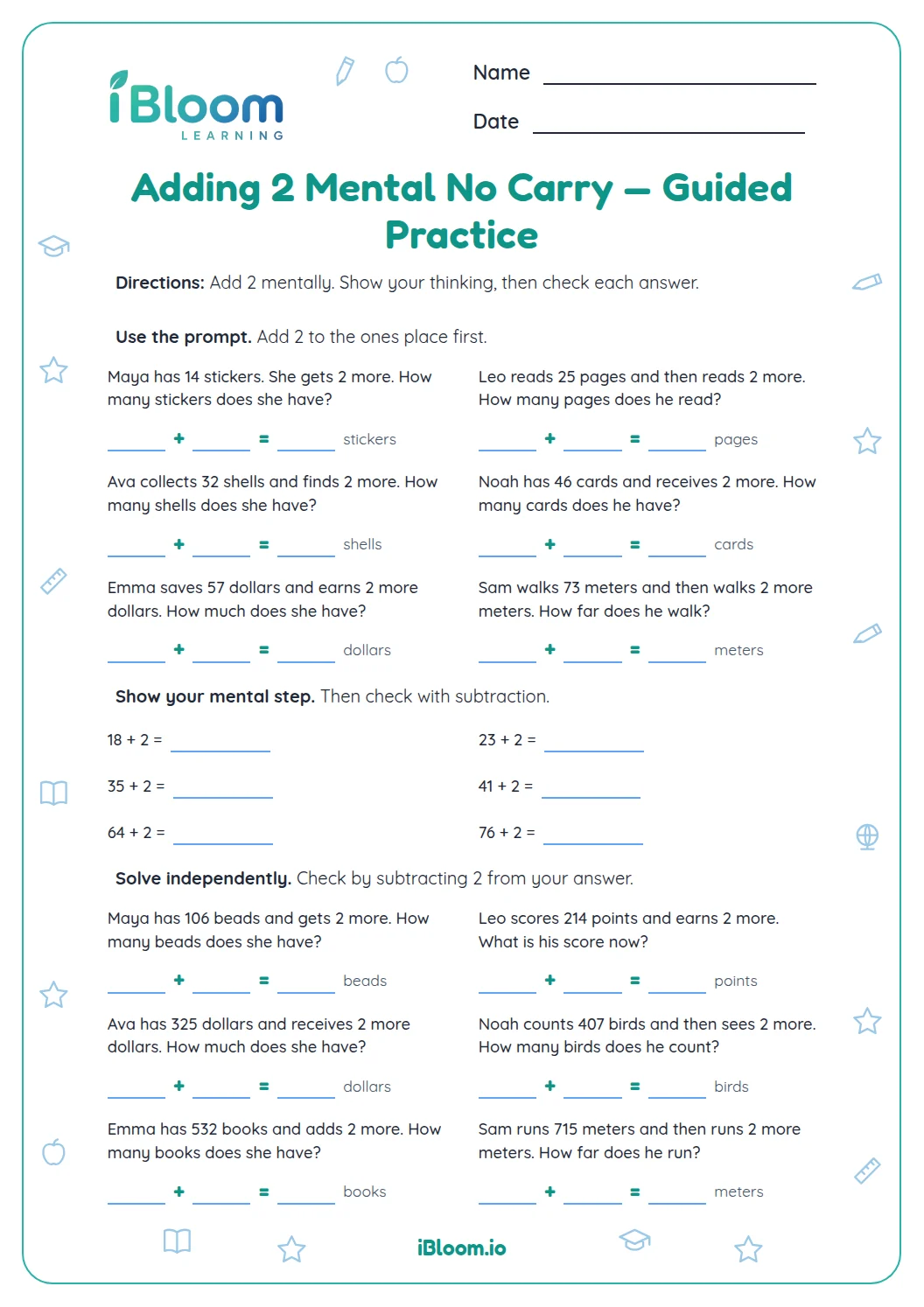
This guided practice sheet focuses on two-digit addition with totals under 100. Students solve eight sums, find four missing addends, and apply the same skill in four short stories. The questions move from direct calculations to unknown parts and contexts; all are compact so students can use mental strategies without oversized working grids. A separate answer key is included. The addition practice aligns with CCSS 2.NBT.B.5.
Aligned to 2.NBT.B.5
How can splitting tens help?
Eight sums, four missing addends, and four short stories practice mental addition with totals below 100.
- 138 + 47
- 238 + 40 = 78
- 378 + 7 = 85
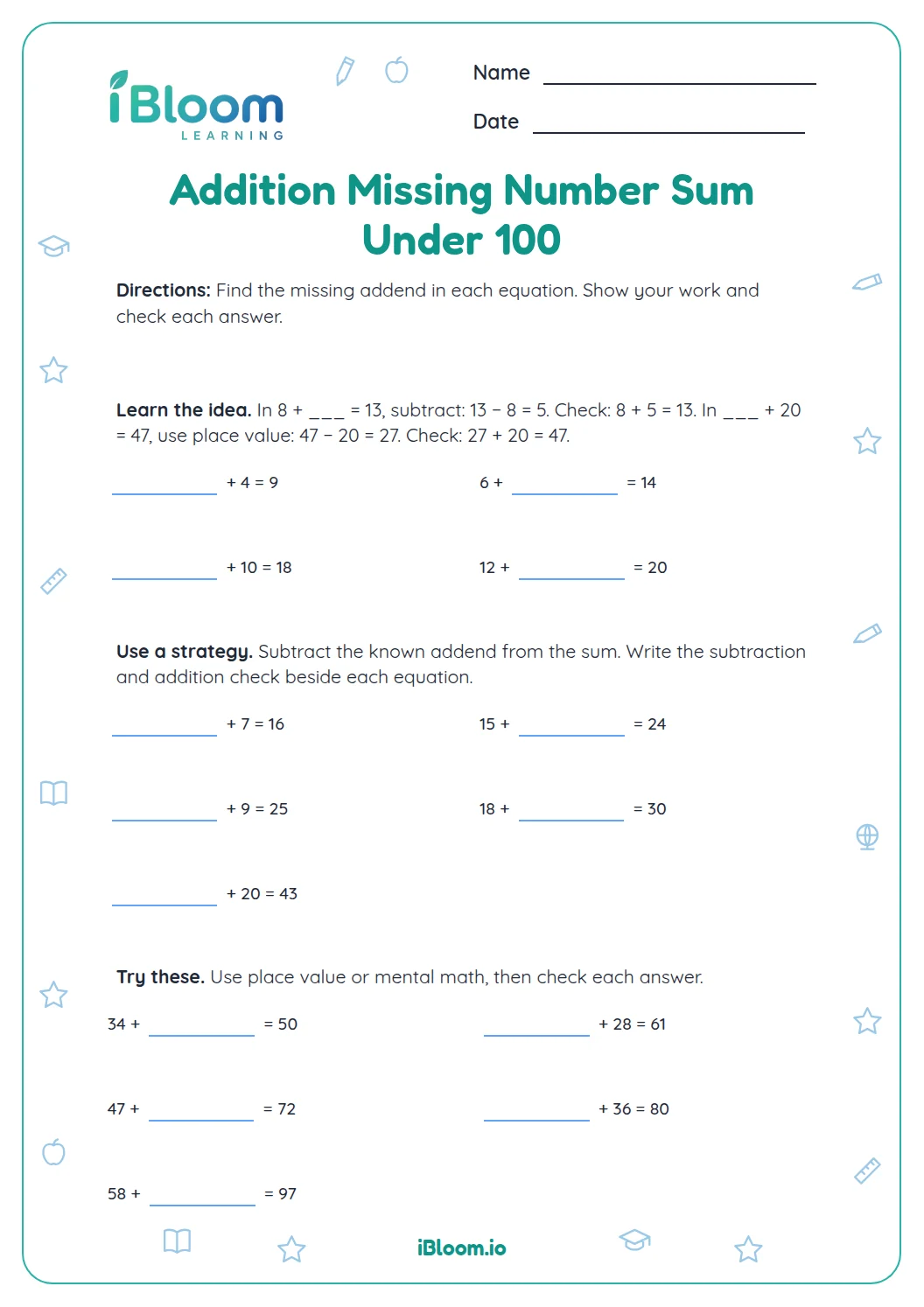
How do you find a missing addend?
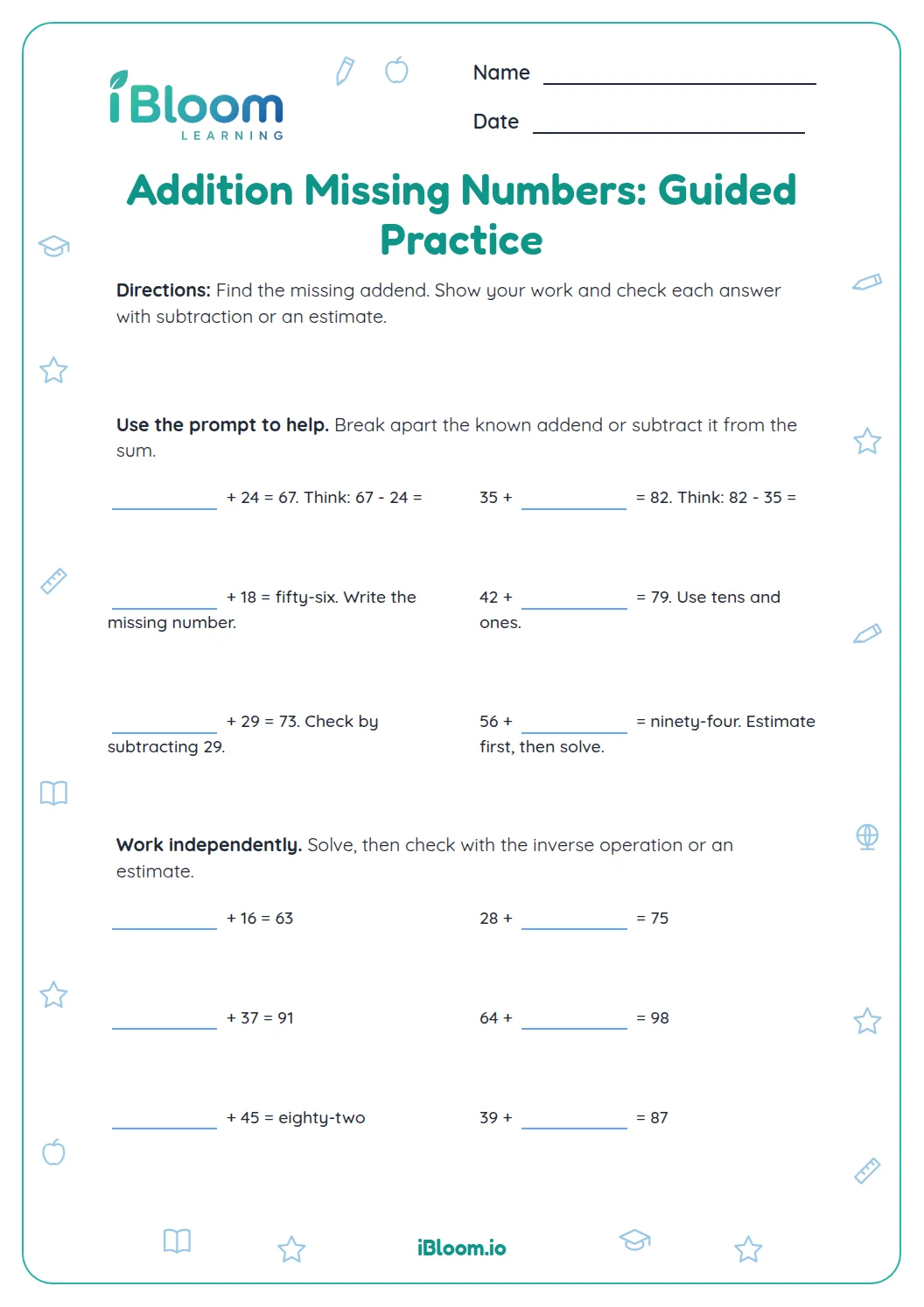
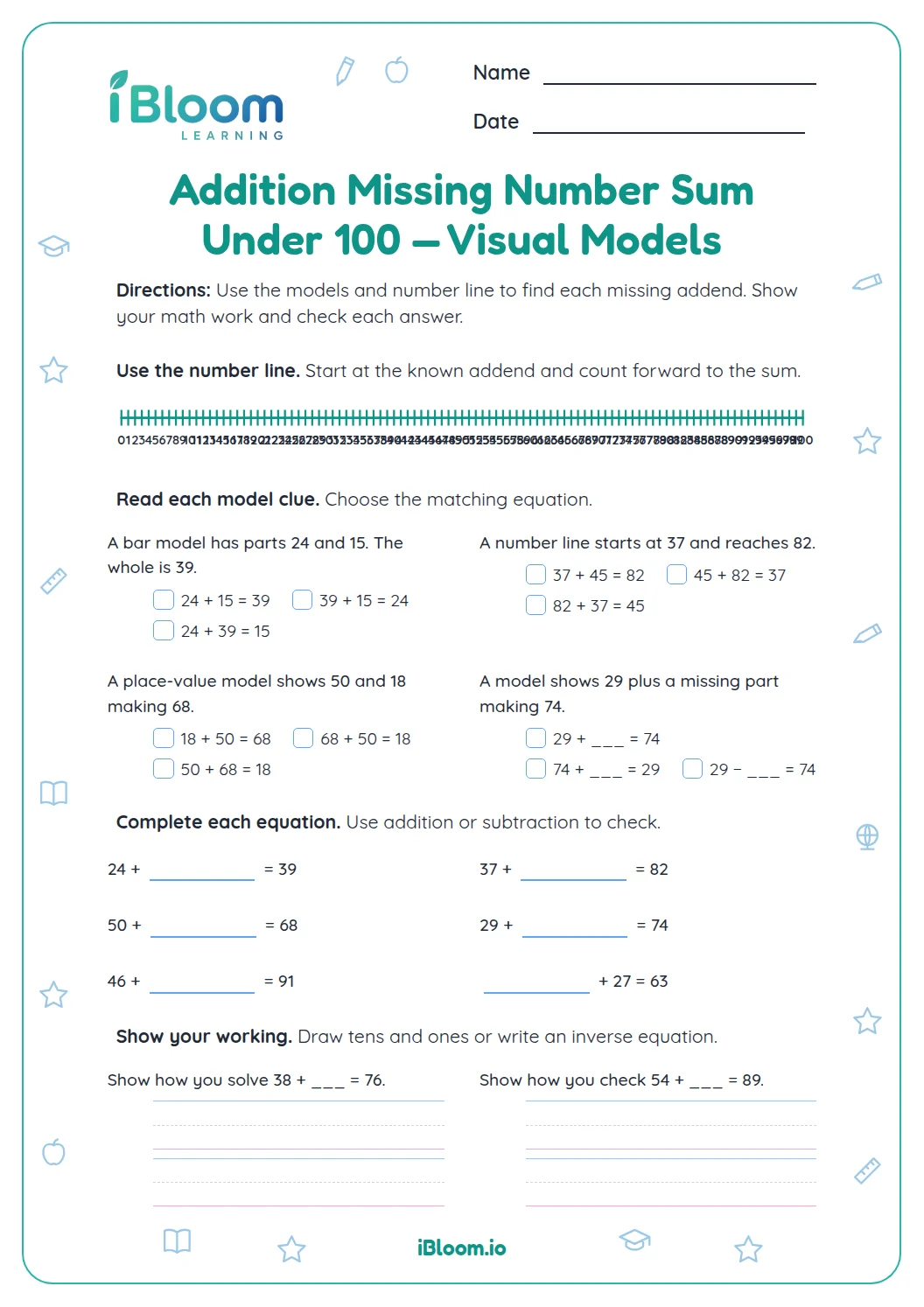
For a missing addend, subtract the known addend from the total. The stories use the same addition strategy in context.
How do the stories use addition?
Combine quantities with the same unit, then label the total. Question 13 combines 28 cans and 37 cans for 65 cans.
How to use this worksheet
- 1Look for a tens addend or a pair that can make a ten.
- 2Break an addend into smaller parts when useful.
- 3For a missing addend, find the distance from the known addend to the total.
- 4In word problems, underline the amounts being combined.
- 5Estimate whether the answer should be greater than either addend, then check the sum.
Common mistakes and quick fixes
The mistake
Adding tens but changing the ones digit.
The fix
When adding 20 to 34, only the tens change; the 4 ones stay.
The mistake
Taking only enough to make a ten and forgetting the leftover.
The fix
For 27 + 8, split 8 into 3 and 5: reach 30, then add the remaining 5.
The mistake
Subtracting the total from the wrong number for a missing addend.
The fix
Use total minus known addend, or count up from the known addend to the total.
Common Core alignment
Students use place-value understanding and mental strategies to add whole numbers.
Use place-value strategies and properties of operations to add within 100.
On this sheet: The problems ask students to add two-digit numbers within 100 using mental strategies, place value, and properties of addition.
Show the official wordingHide the official wording
Fluently add and subtract within 100 using strategies based on place value, properties of operations, and/or the relationship between addition and subtraction.
What to practice next
Make more practice
Further reading
Questions parents and teachers ask
What does mental addition mean?
Mental addition uses number relationships to find a sum without setting up a full written algorithm. Students can split numbers into tens and ones, make a friendly ten, or count on. The worksheet moves from sums to missing addends and short stories.
How do I help with 38 + 47?
Split 47 into 40 and 7. Add 40 to 38 to get 78, then add 7 to reach 85. The same answer can be checked by adding 30 and 40, then combining the remaining 8 and 7. Use its question number to find the matching entry in the separate answer key.
How can a student check a missing addend?
Subtract the known addend from the total, then put the result back into the original equation. For 42 + ___ = 91, calculate 91 − 42 = 49 and check that 42 + 49 equals 91. Use its question number to find the matching entry in the separate answer key.
How many questions are included?
There are 16 questions: eight sums, four missing addends, and four short stories. The compact format leaves the focus on mental strategies, and the separate answer key uses matching question numbers for checking. Use its question number to find the matching entry in the separate answer key.
What does “under 100” mean here?
Each addition total is less than 100, including the story totals. Students can use place-value strategies or make a friendly ten, then check that the result is below 100 and matches the answer key. Use its question number to find the matching entry in the separate answer key.