


About this worksheet
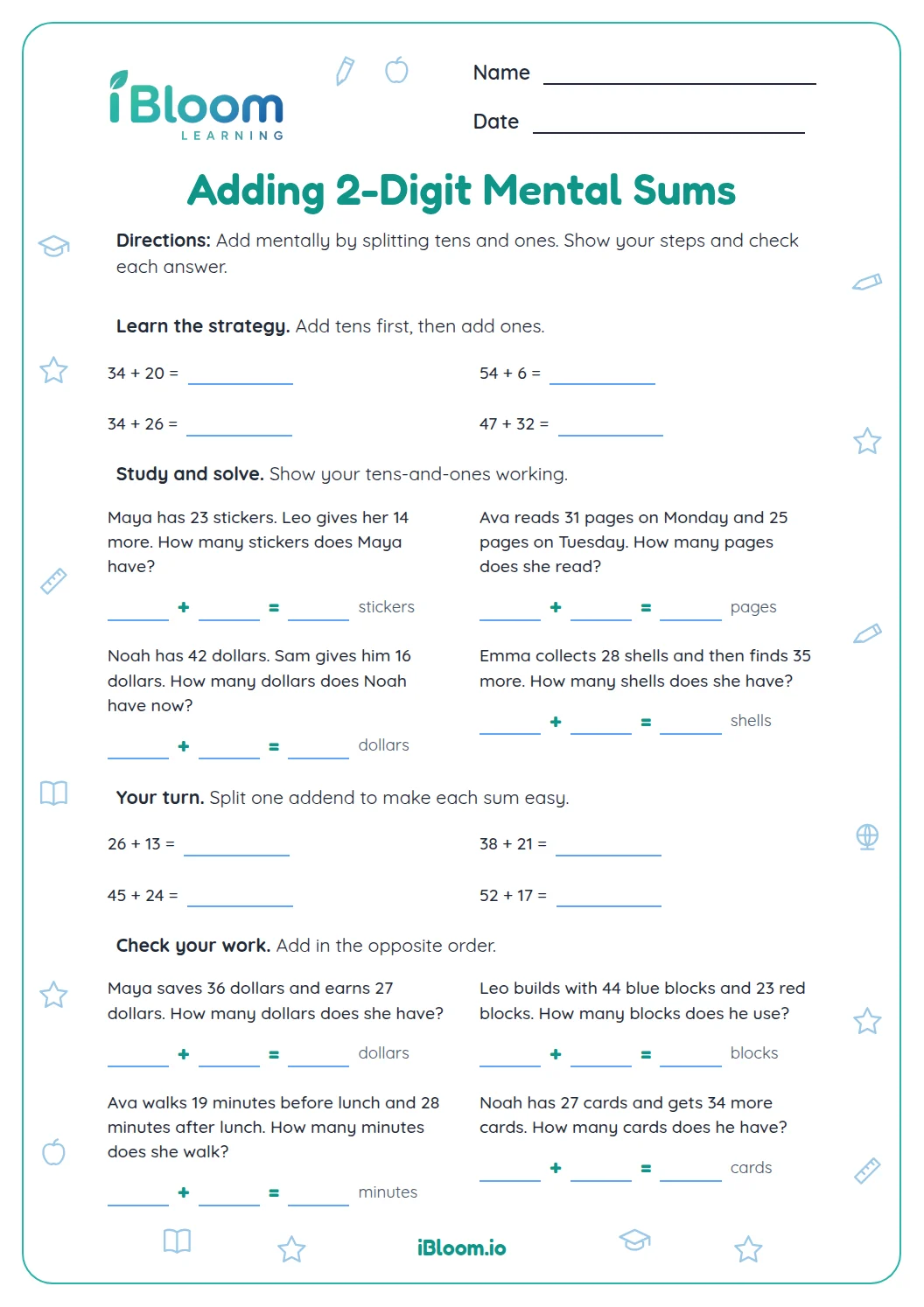
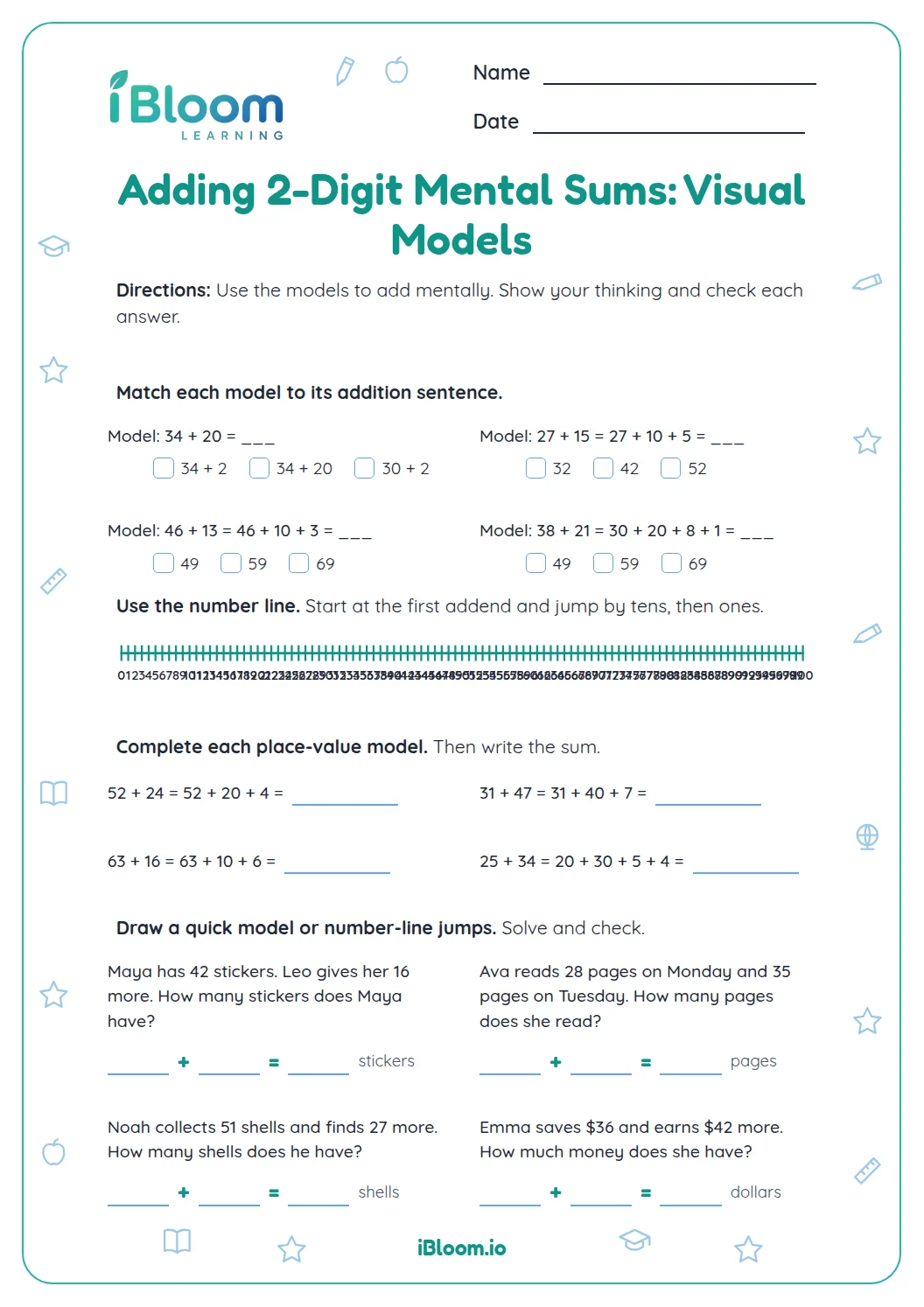
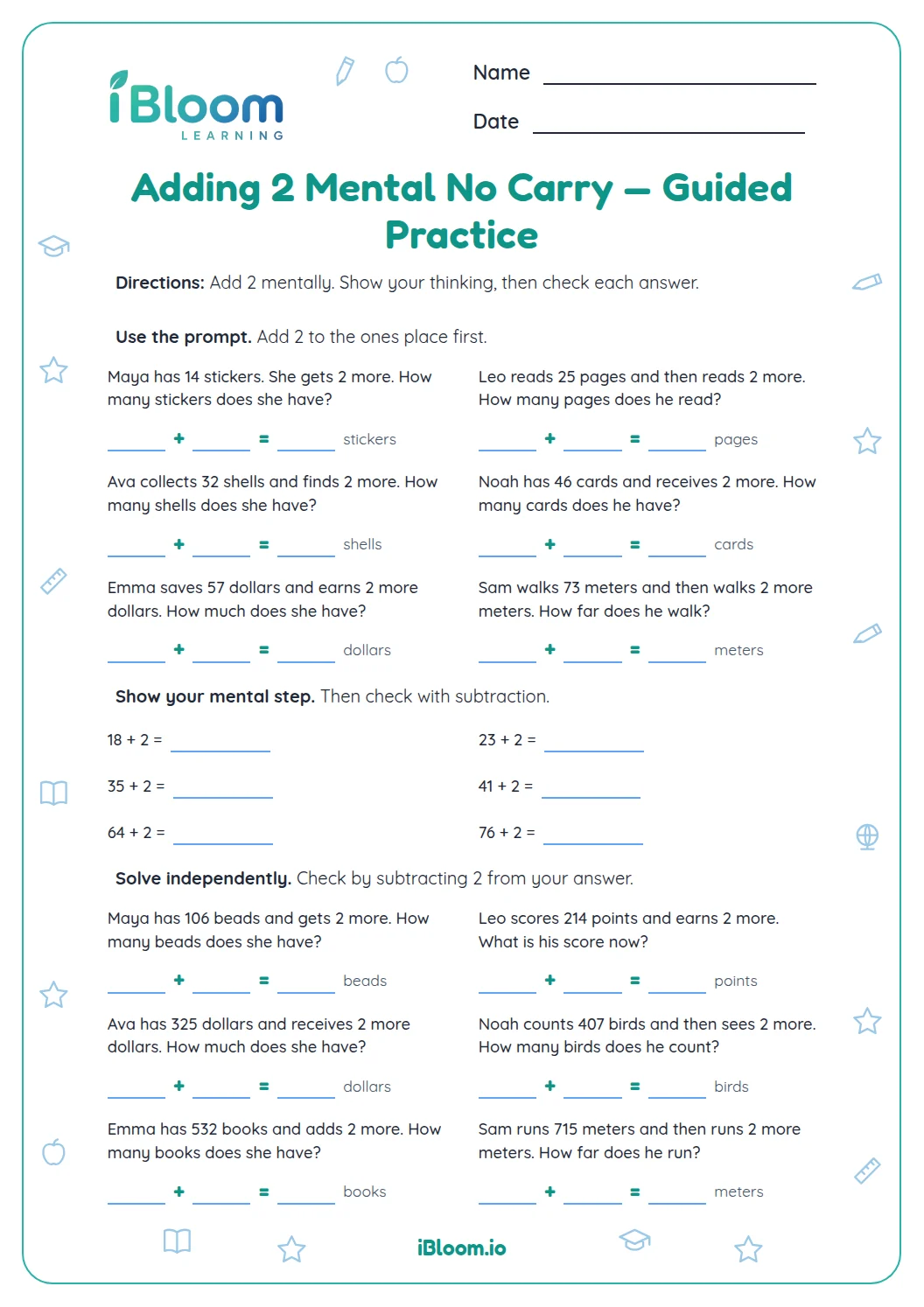
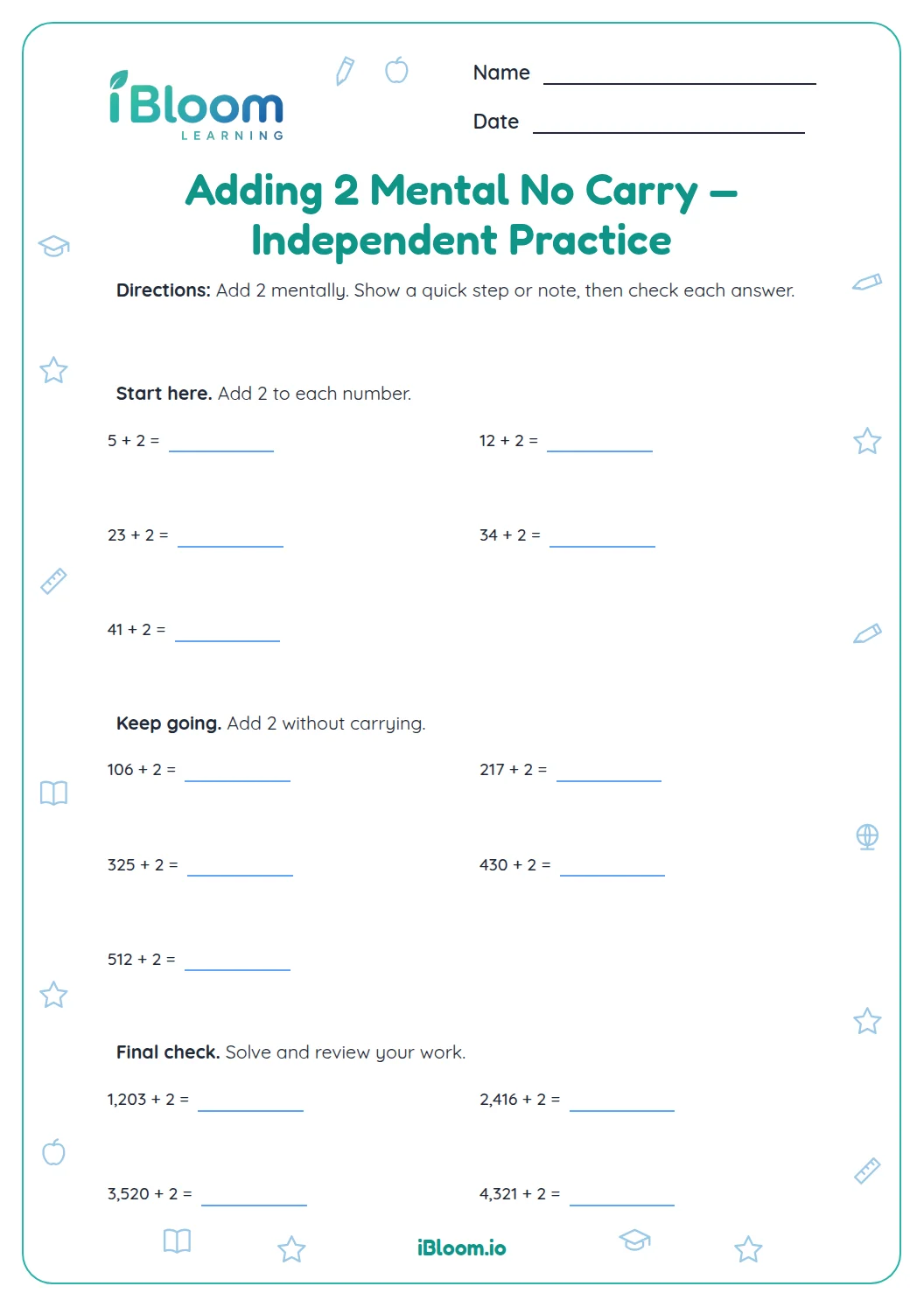
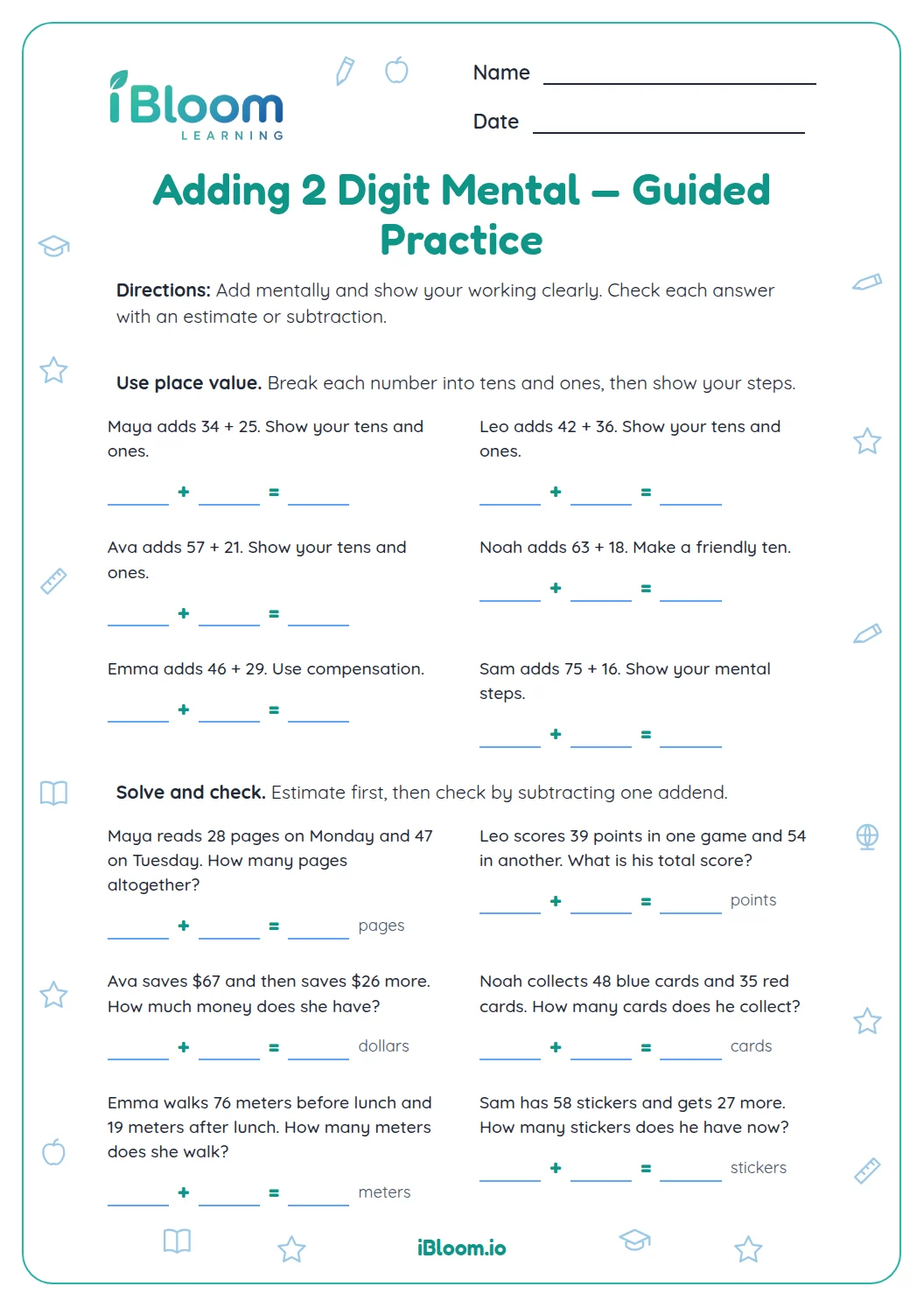
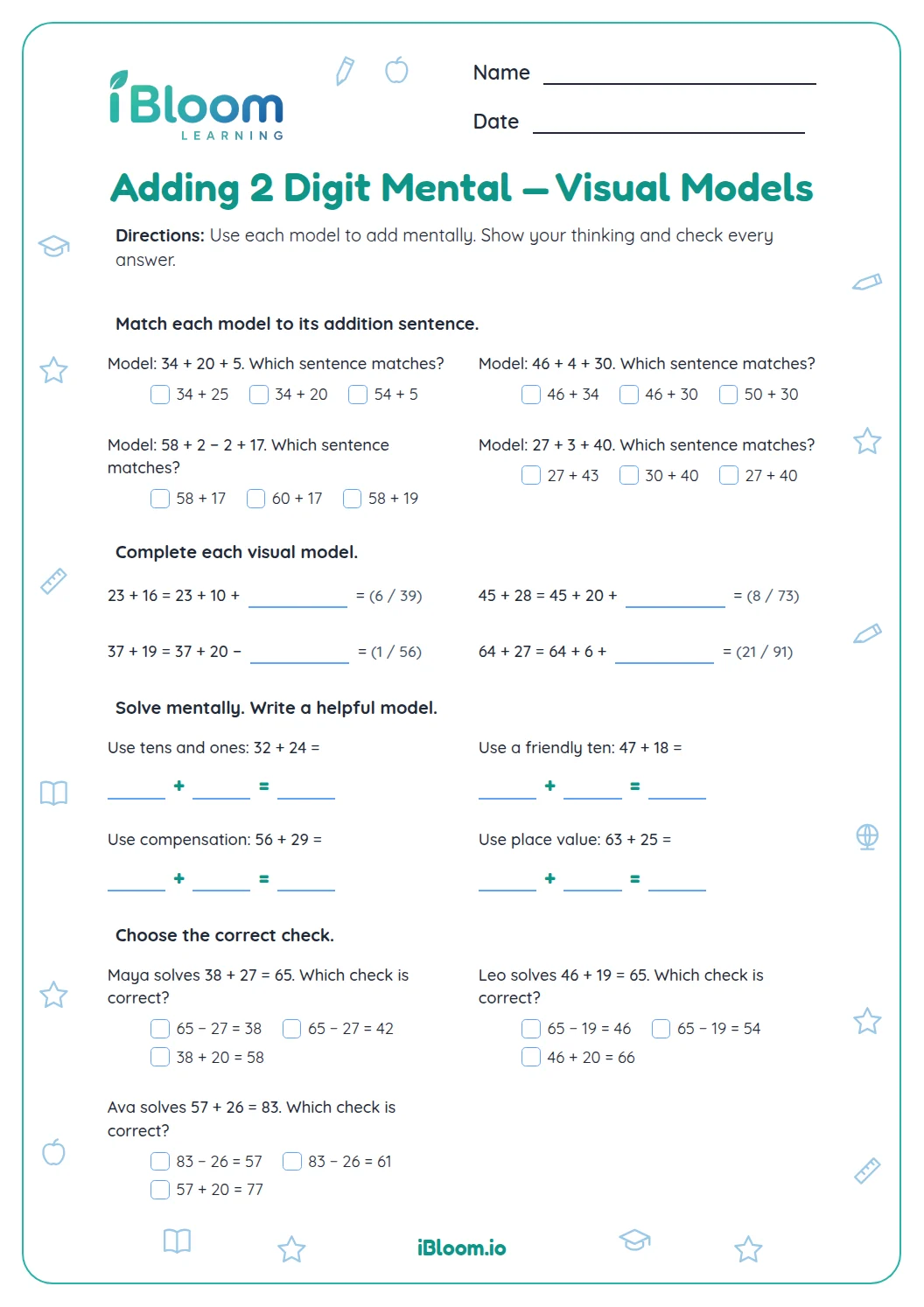
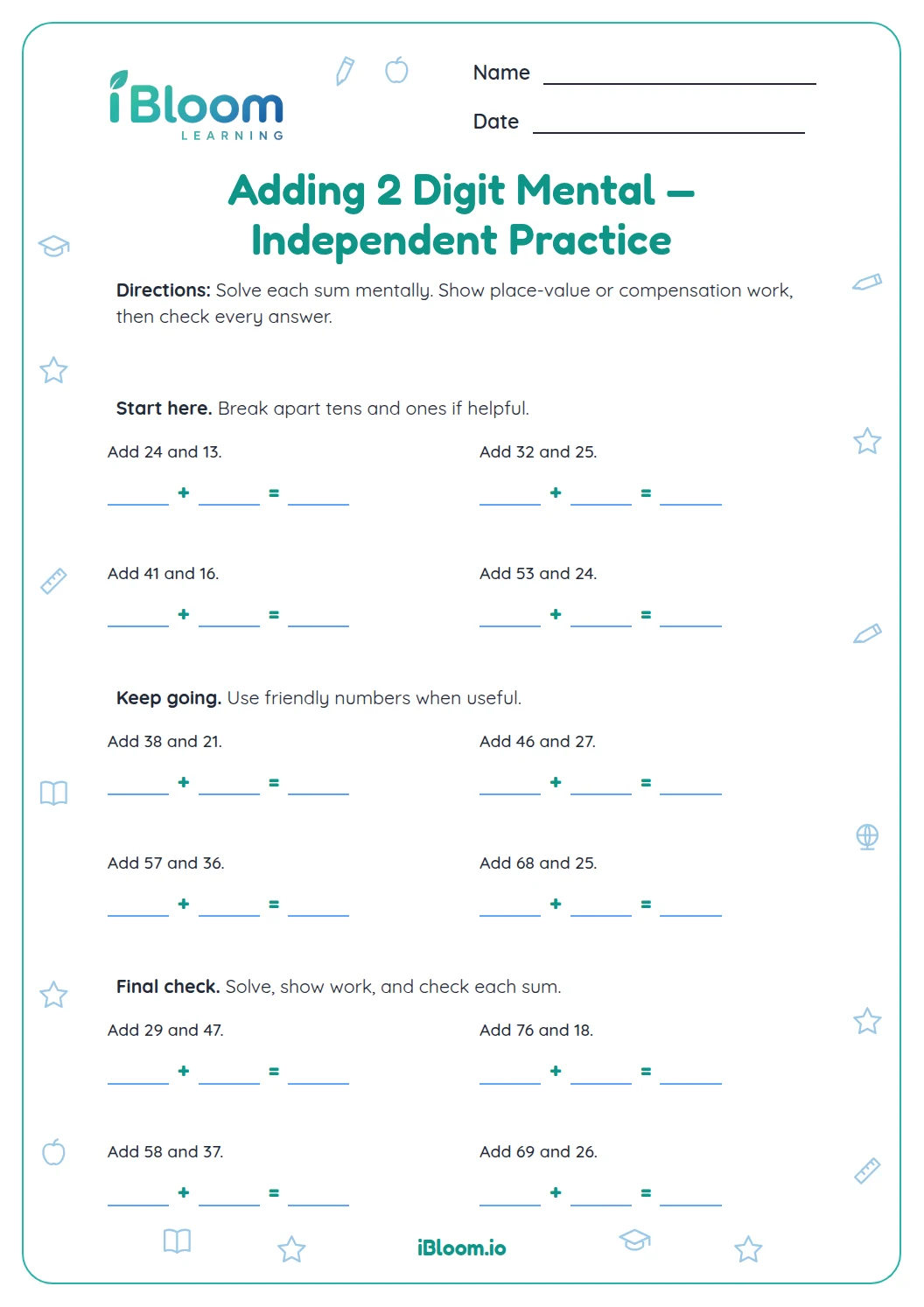
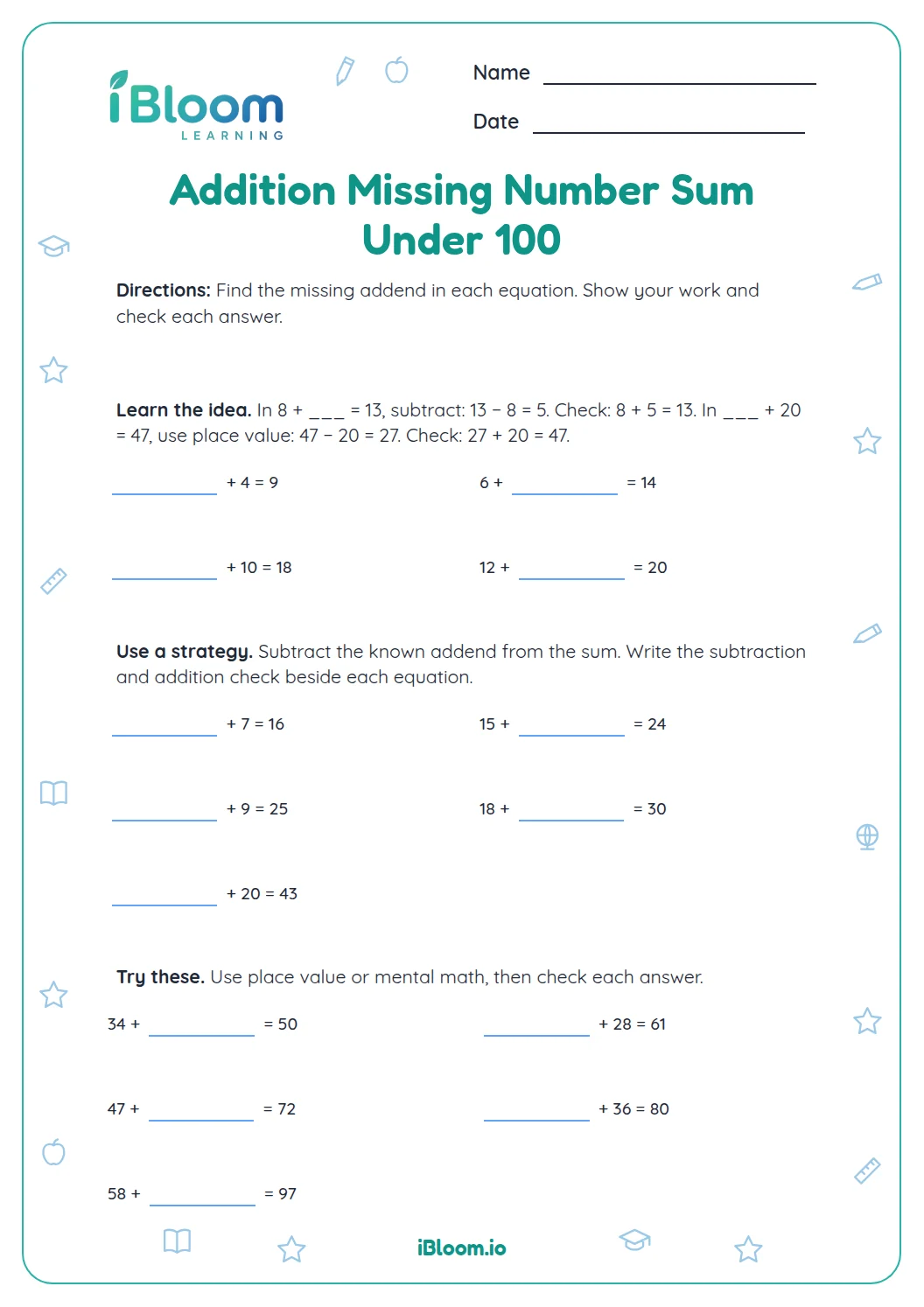
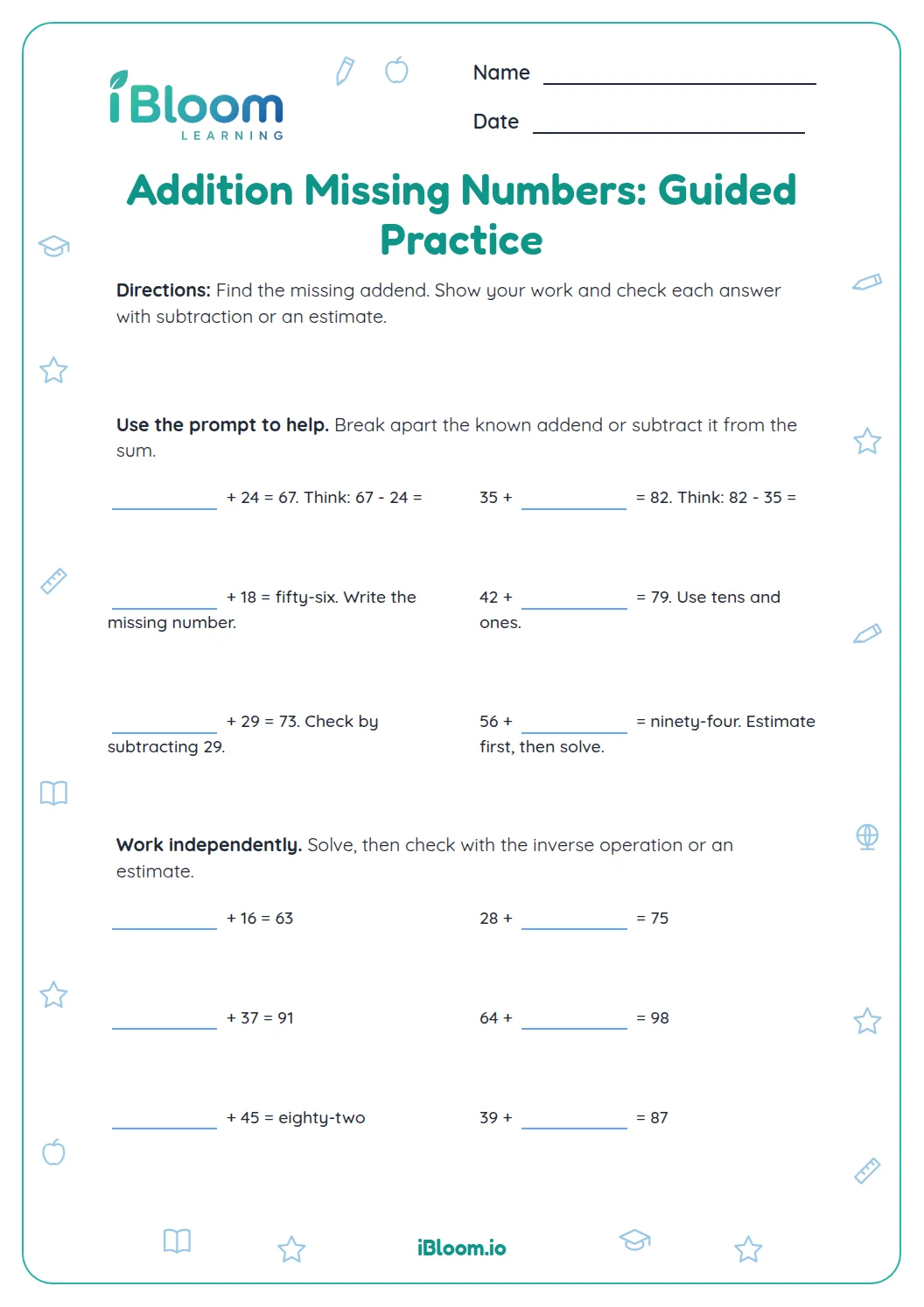
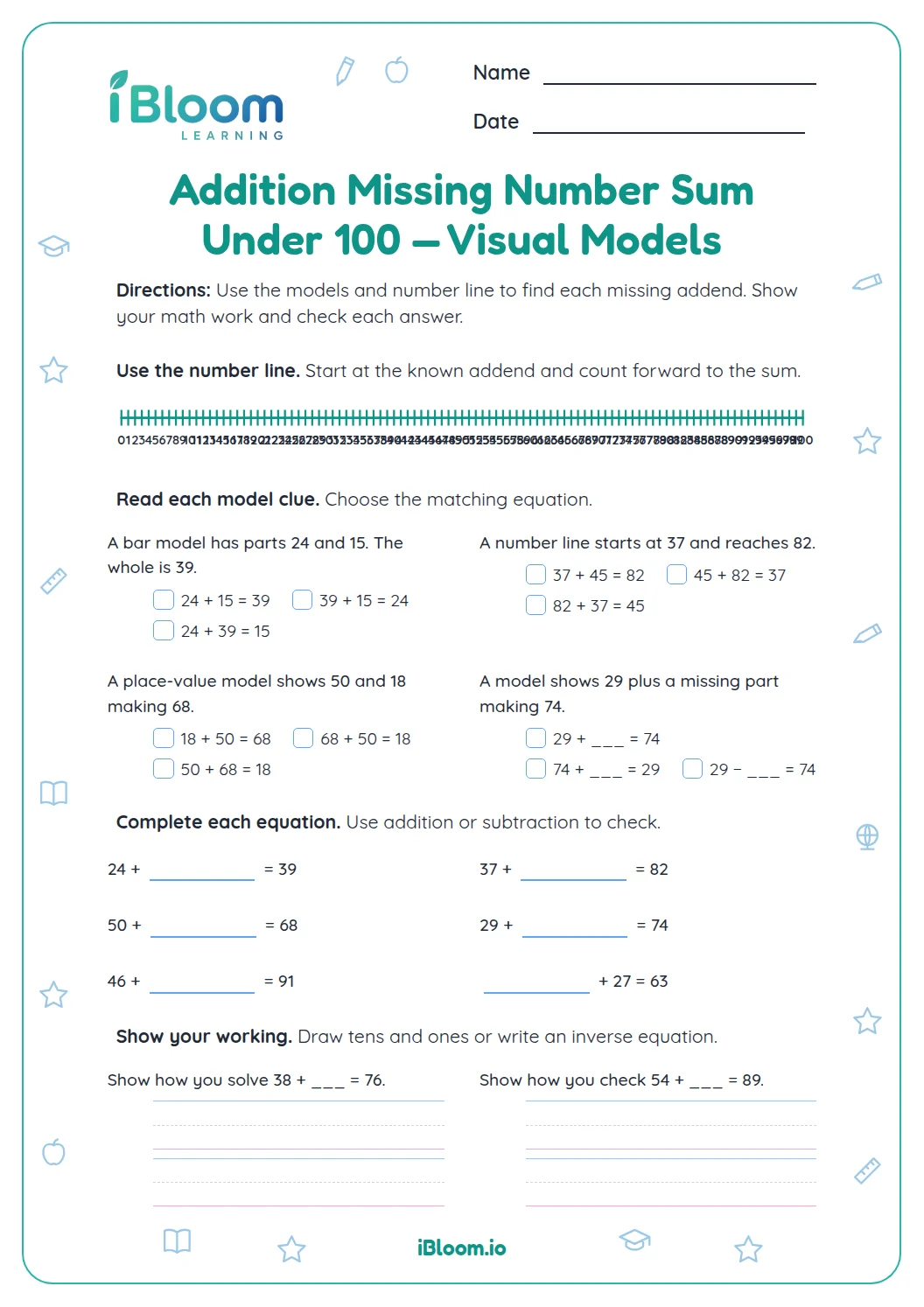
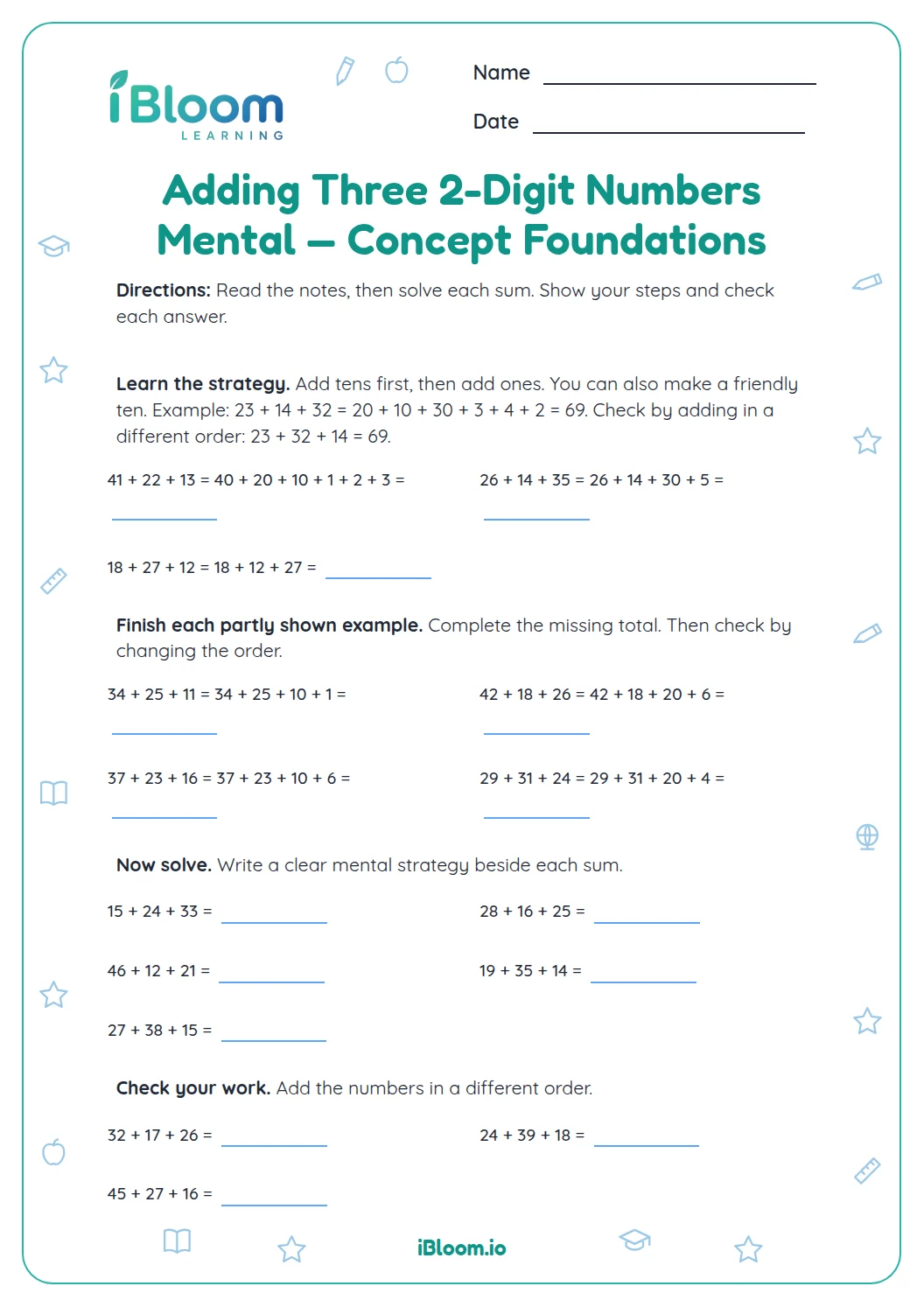
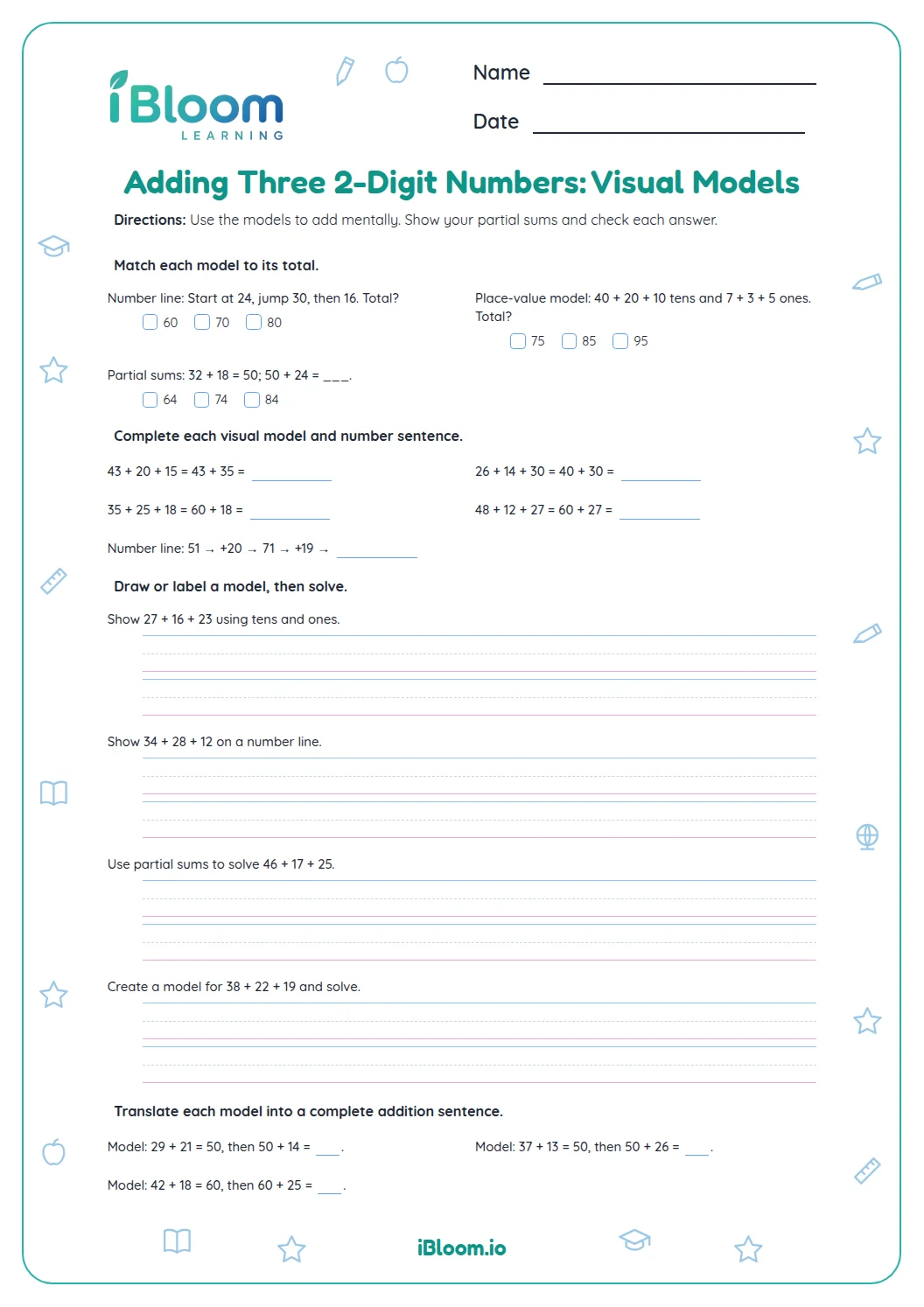
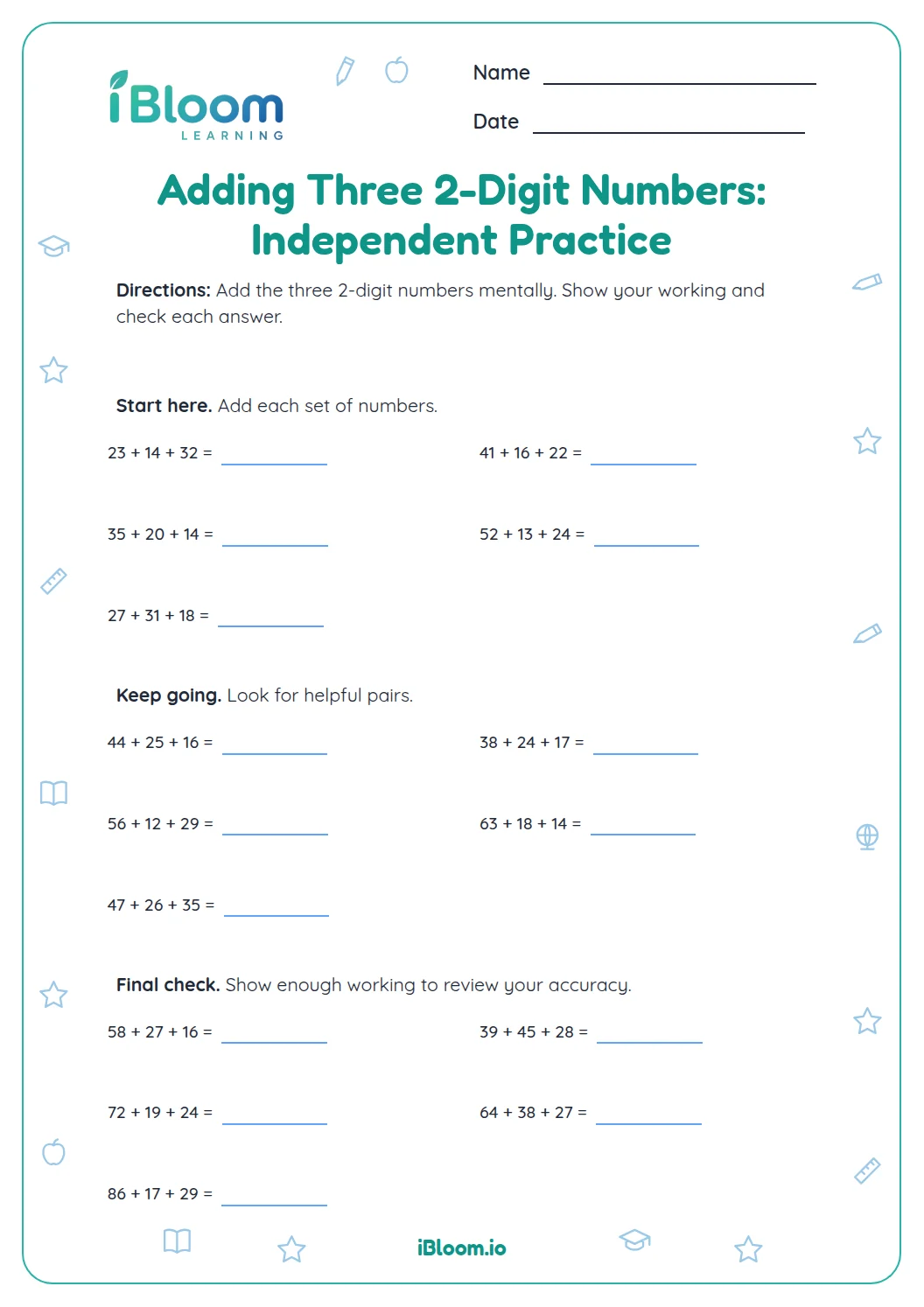
This free printable Grade 4 worksheet asks students to solve 14 everyday addition stories mentally. Every problem joins two two-digit amounts, and every sum is less than 100. Part A encourages adding tens and ones, Part B uses sums that cross a ten, and Part C offers numbers close to a multiple of ten. Students complete ten total blanks, then write four short answers with labeled units. The practice supports CCSS 2.NBT.B.5 through place-value and operation strategies. A separate answer key gives the totals and units.
Aligned to 2.NBT.B.5
Which mental strategy fits each part?
Part A uses additions such as 31 + 24, where adding tens and then ones is direct. Part B includes 28 + 17, where moving 2 from 17 to 28 makes 30 + 15. Part C includes 39 + 24, where adding 40 then adjusting by 1 is convenient.
The section directions suggest a strategy, but students can use any correct mental method. For the first eight stories, write the total in the blank. In Part C, a short equation makes the mental calculation visible.
How does compensation work in the ticket story?
Question 9 joins 39 adult tickets and 24 child tickets. Replacing 39 with 40 makes the calculation easier, but it adds one ticket that was never sold. Subtract that extra ticket from the result.
- 139 + 24
- 2Think 40 + 24 = 64.
- 3Subtract the extra 1: 64 − 1 = 63.
- 4Answer: 63 tickets.
How can students check a mental sum?
First compare the total with each addend. A sum of two positive amounts must be greater than either amount alone. Then check the exact result with a second strategy, such as adding tens and ones after using compensation.
Every story asks for a combined amount, and every answer is under 100. A result of 100 or more is a useful signal to recheck the arithmetic. Include the unit from the question, such as seats, books, inches or dollars.
How to use this worksheet
- 1Read question 1 and name the two groups of books being joined.
- 2Model 31 + 20 + 4, then let students finish Part A mentally.
- 3For question 5, split 17 into 2 and 15 to make 30 + 15.
- 4In Part C, record any extra amount added when using a nearby ten.
- 5Check each answer using a different mental strategy and include its unit.
Mistakes to discuss
The mistake
Adding only the tens in 31 + 24 and answering 50.
The fix
Keep the ones too: 30 + 20 = 50 and 1 + 4 = 5, giving 55.
The mistake
Turning 28 + 17 into 30 + 17.
The fix
The 2 used to reach 30 comes from 17, leaving 15. Add 30 + 15.
The mistake
Answering 39 + 24 with 64 after rounding 39 to 40.
The fix
Subtract the extra 1 from 64 to recover the exact sum, 63.
Common Core alignment
Add within 100 using place value, making tens and compensation.
On this sheet: The 12 stories invite mental strategies for two two-digit addends.
Show the official wordingHide the official wording
Fluently add and subtract within 100 using strategies based on place value, properties of operations, and/or the relationship between addition and subtraction.
What to practice next
Make more practice
Further reading
Questions parents and teachers ask
Are all the sums below 100?
Yes. All 14 answers are less than 100, and both addends in every problem are two-digit numbers. The largest total is 95 visitors in question 12. This range lets students concentrate on mental strategies and checking the story.
Must students use the strategy named in each part?
No, the part headings suggest useful strategies, but any correct mental method is welcome. For 28 + 17, a student might make 30 + 15 or add 28 + 10 + 7. Ask for a short equation that records the chosen method clearly enough to check.
How do you explain making a ten in question 5?
Move 2 from the 17 lunches to the 28 lunches in your mental calculation. That gives 30 and 15, which total 45. The two groups change size, but their combined amount stays the same. Writing 28 + 17 = 30 + 15 makes that trade visible.
How can students record a mental addition strategy?
Students may write a short equation or mental step beside a story to show how they found the total. For 39 + 24 in question 9, one route is 40 + 24 = 64, then 64 − 1 = 63. The key accepts equivalent correct strategies.
How should the money and length answers be labeled?
Use dollars for the fundraising story and the stated length unit for each measurement story. Question 10 totals $85, question 8 totals 74 yards, and question 11 totals 75 inches. Keeping the unit with the answer connects the mental sum to what the story actually measures.