


About this worksheet
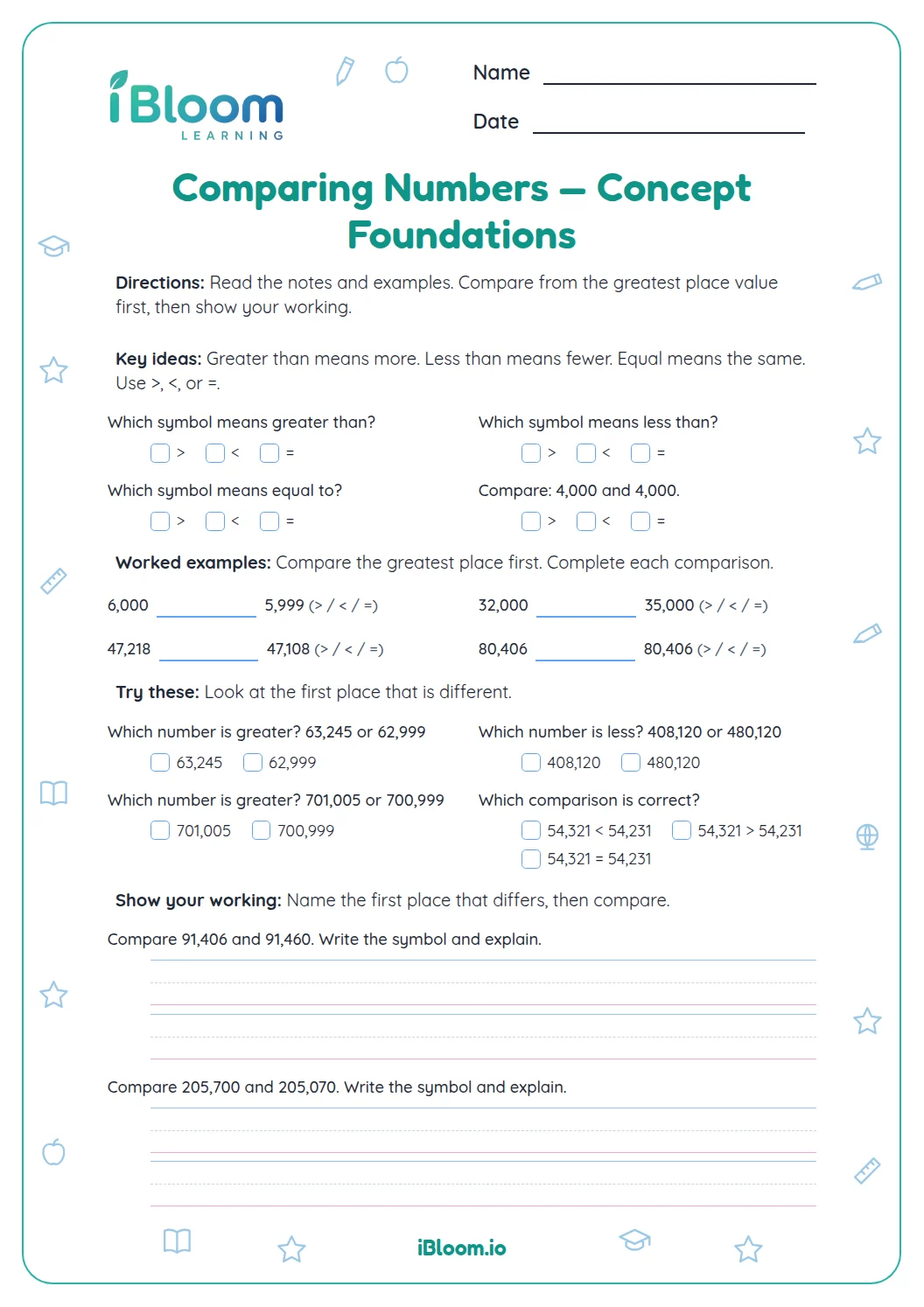
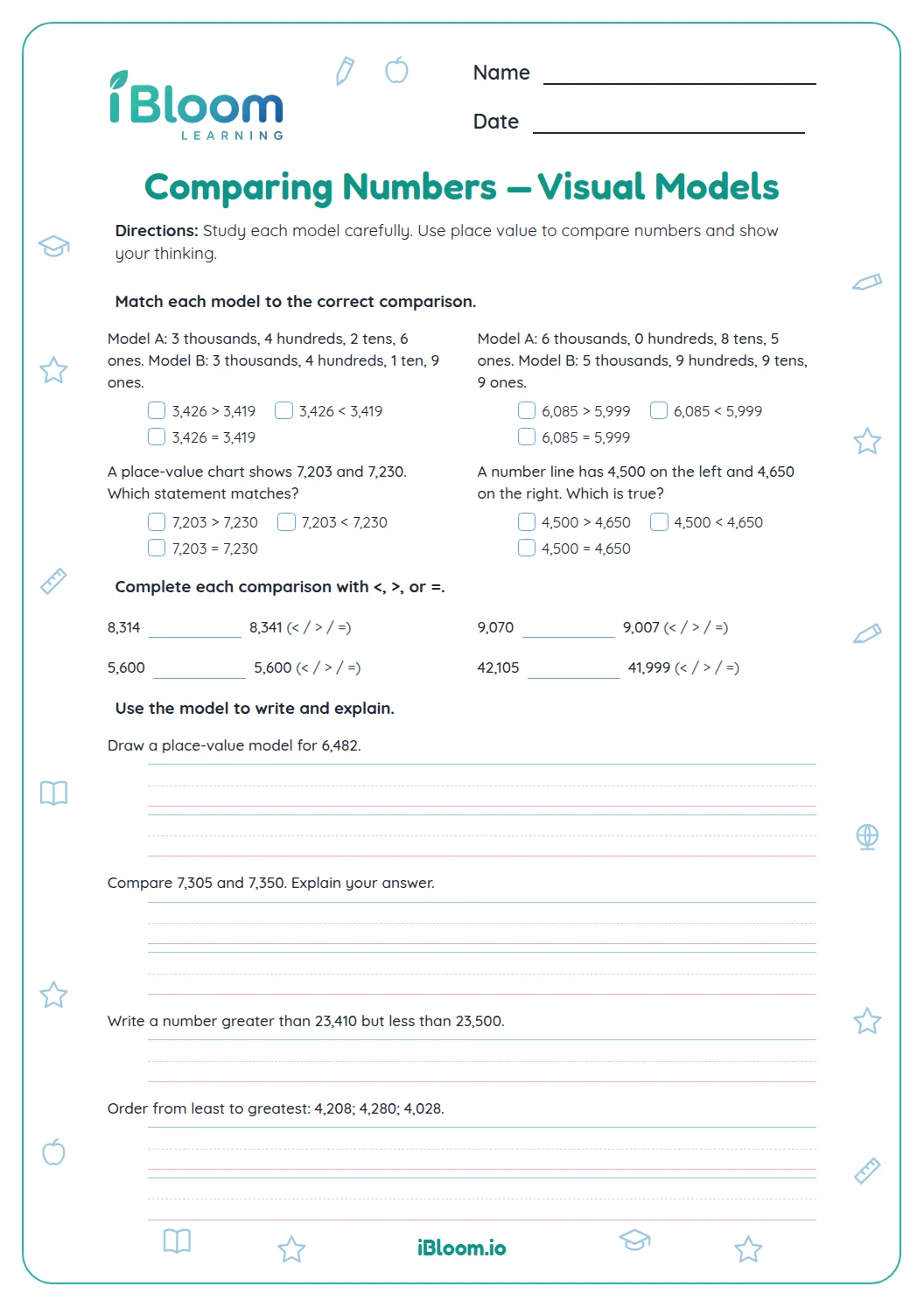
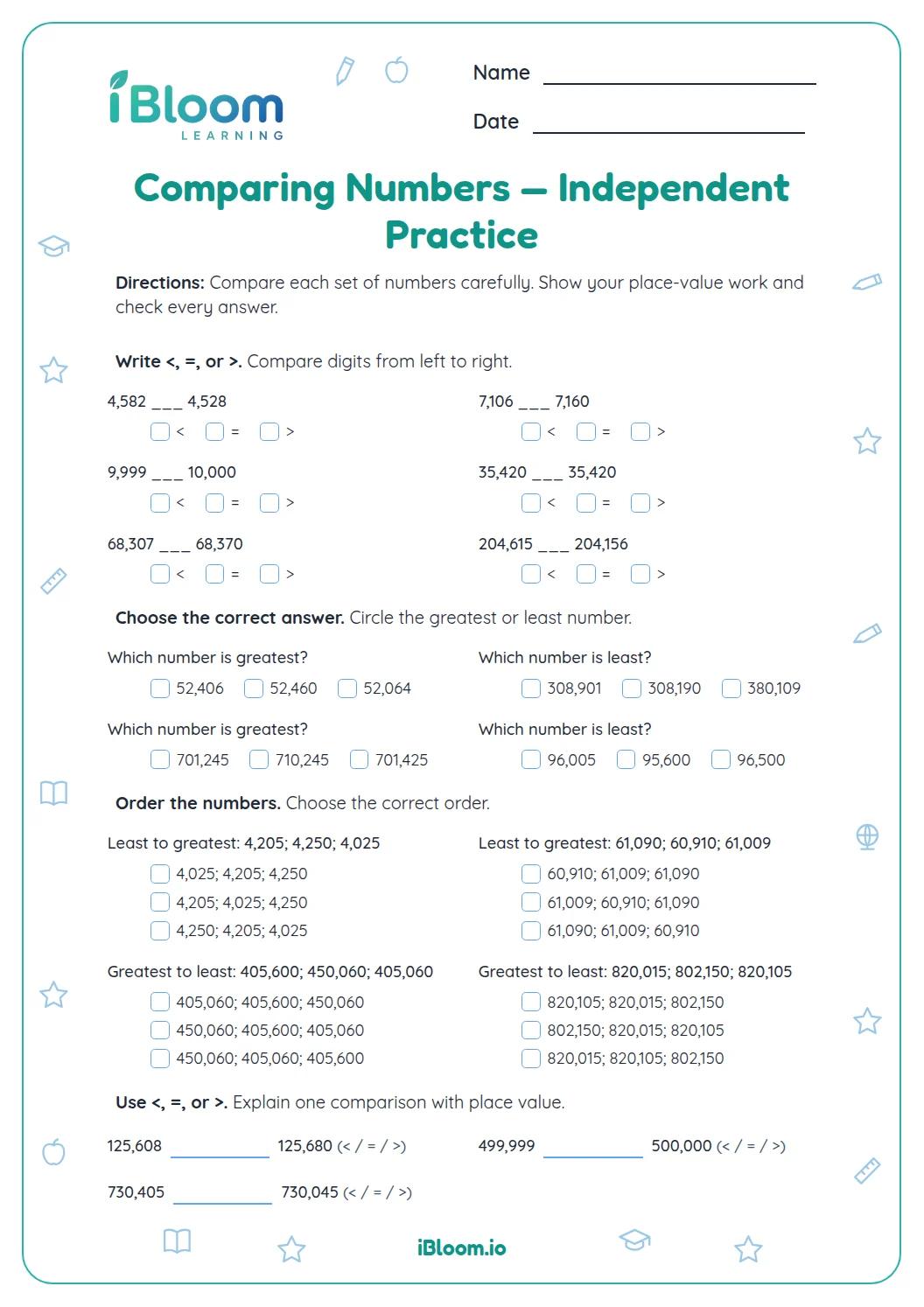
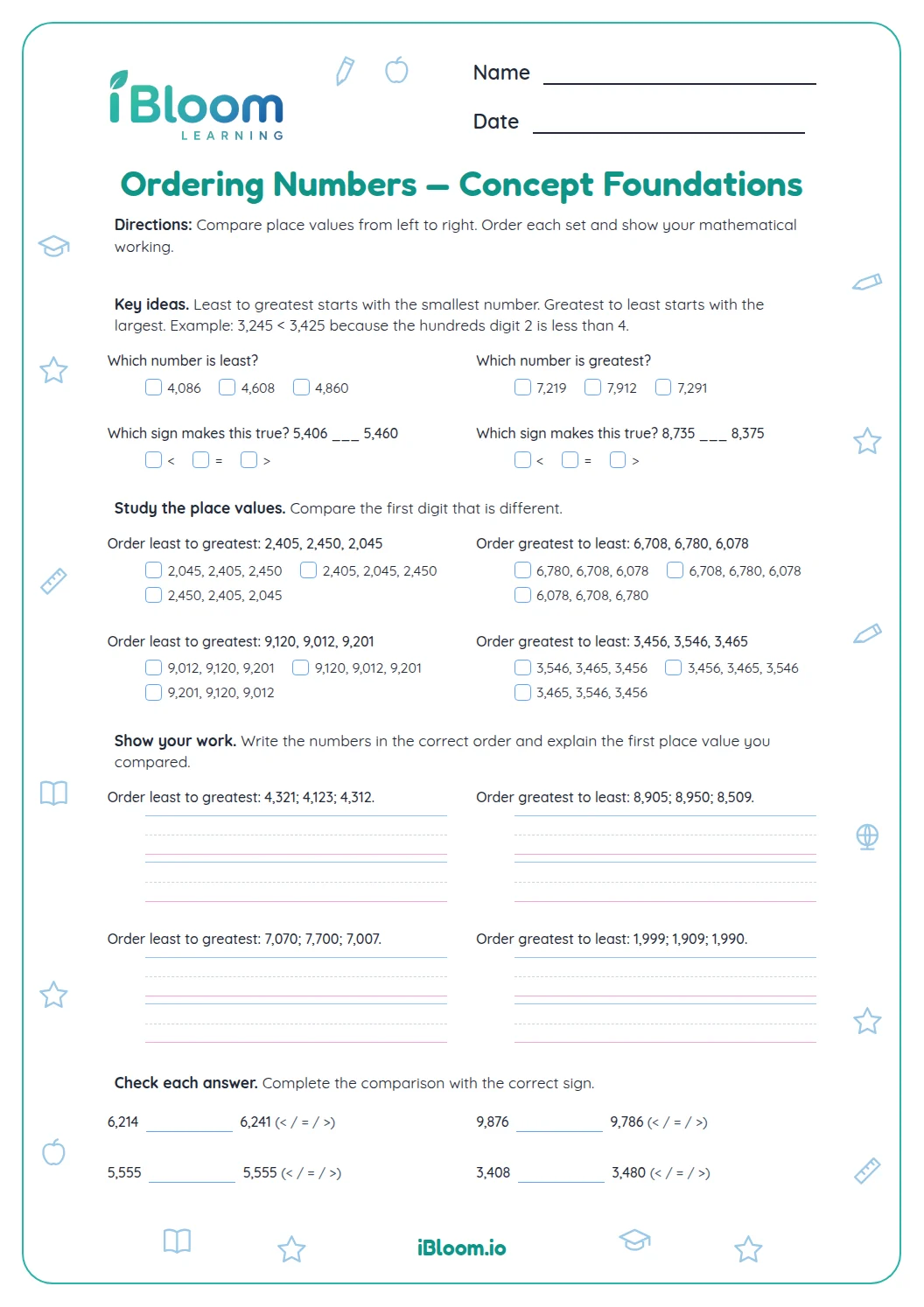
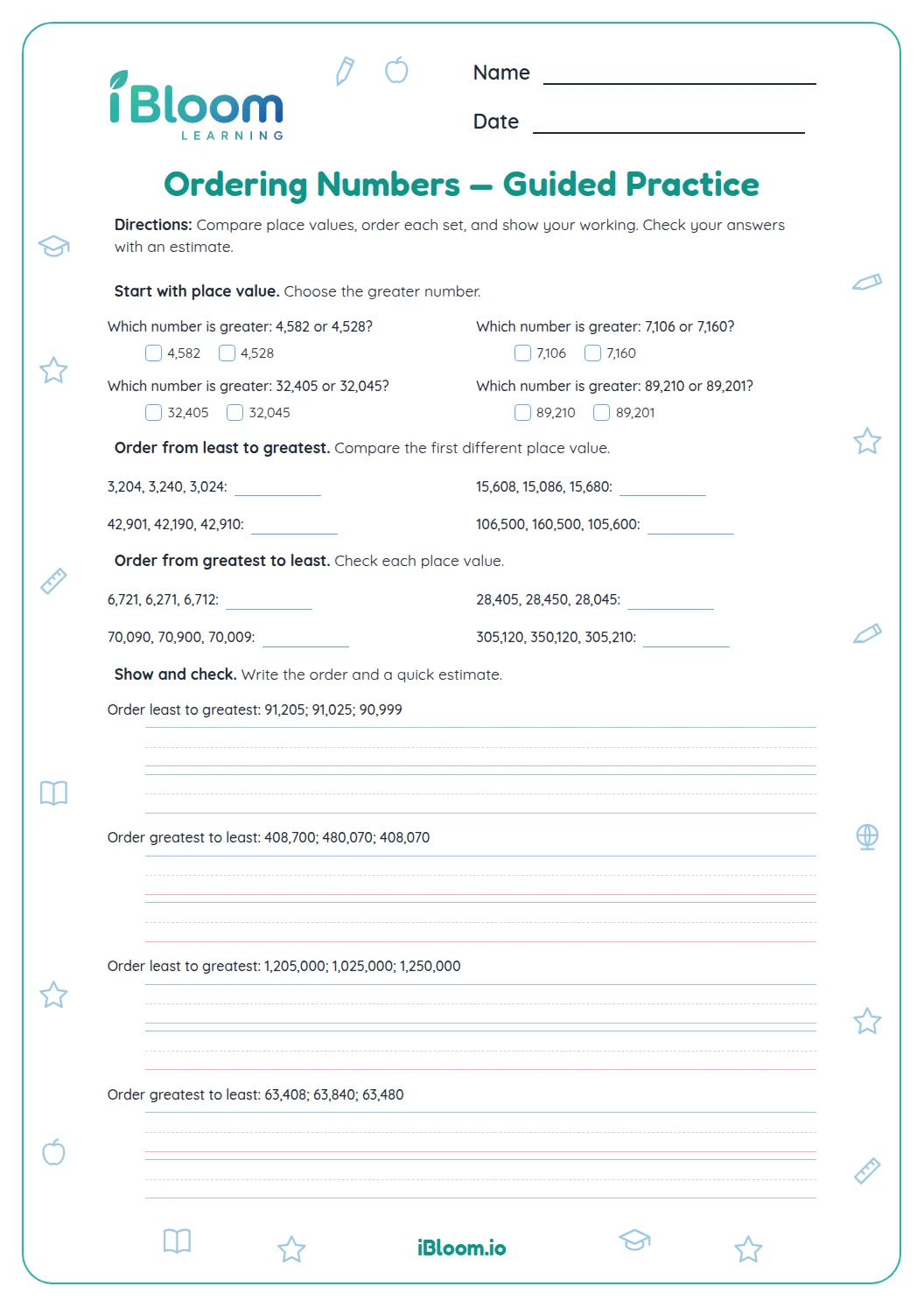
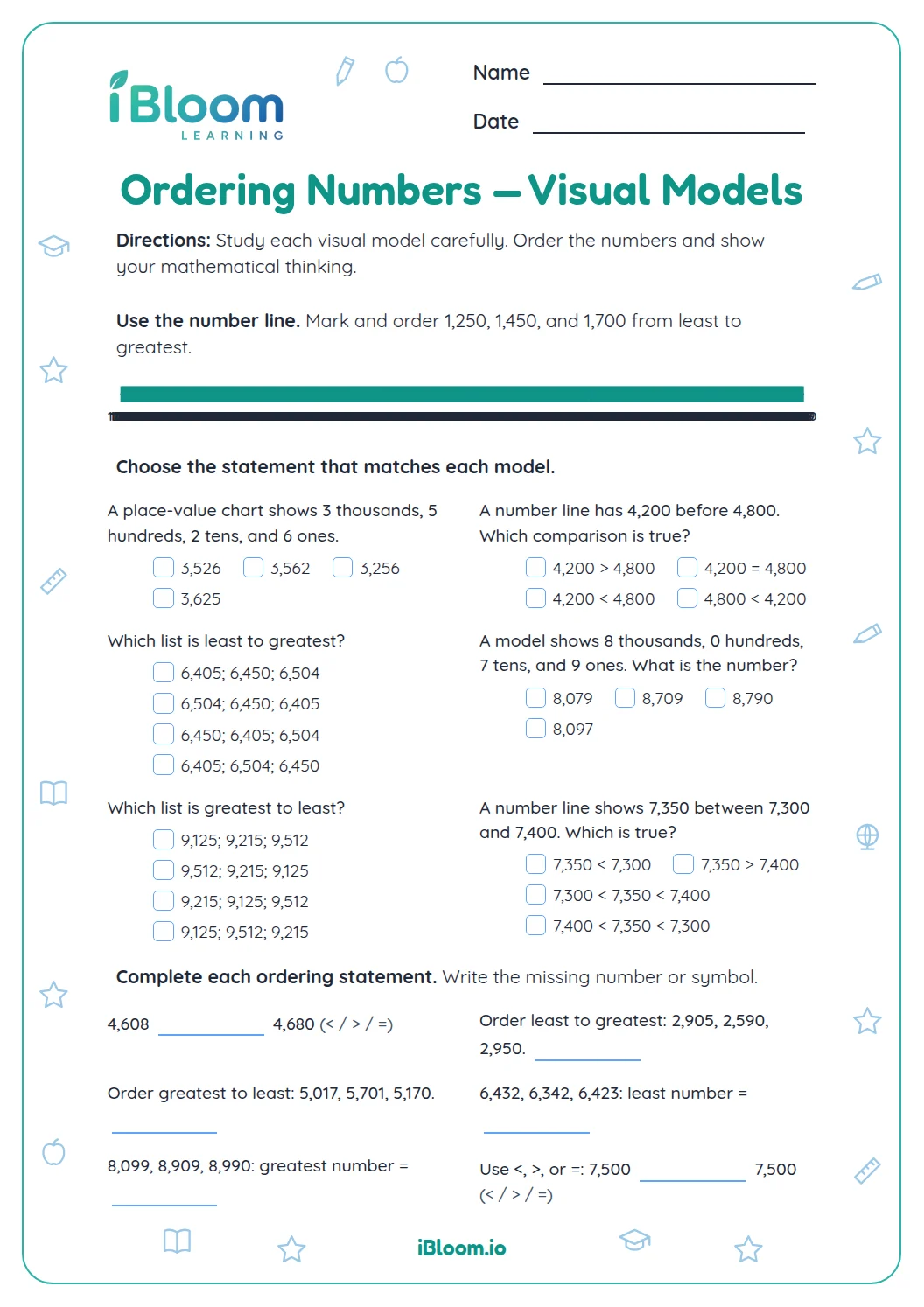
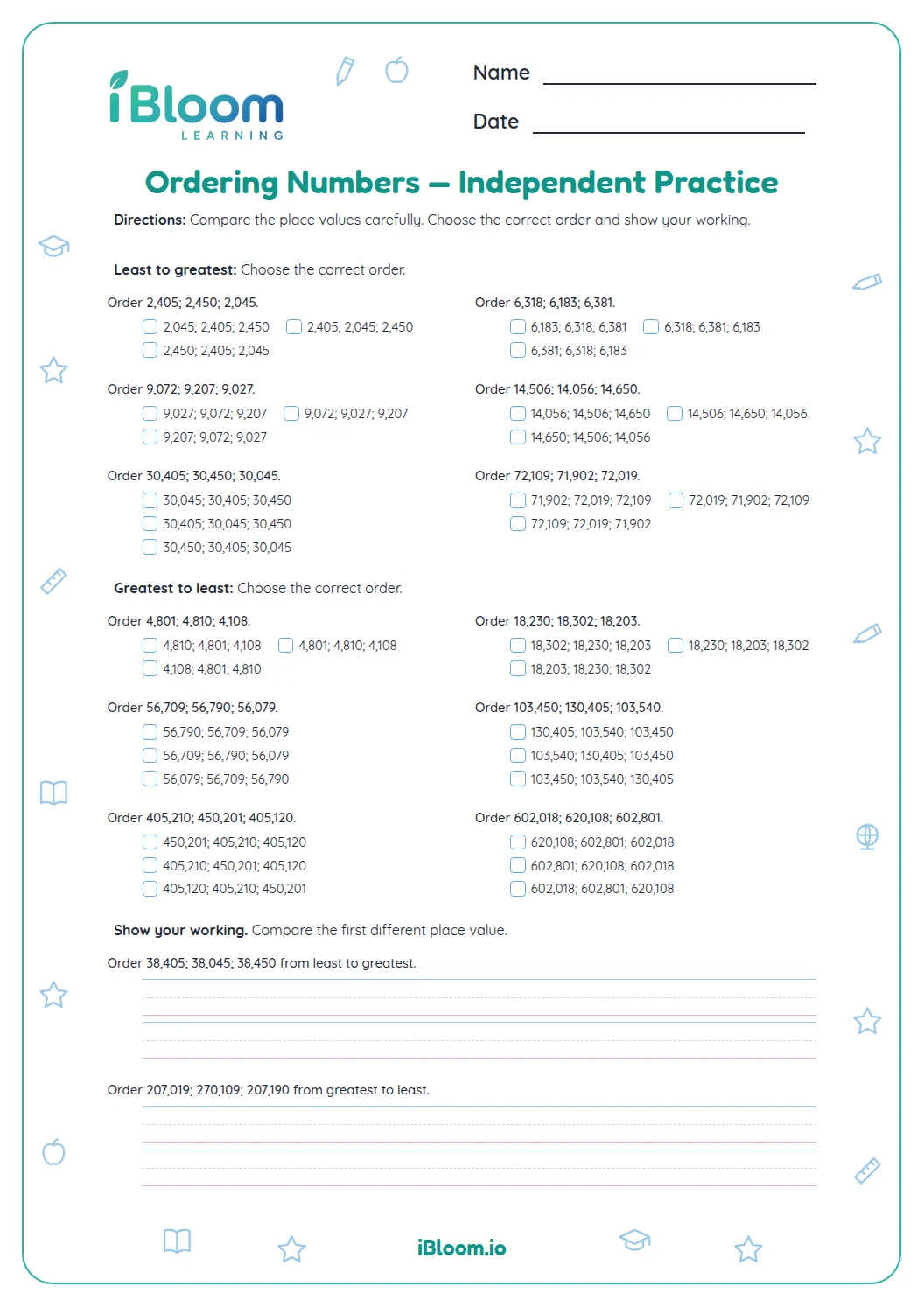
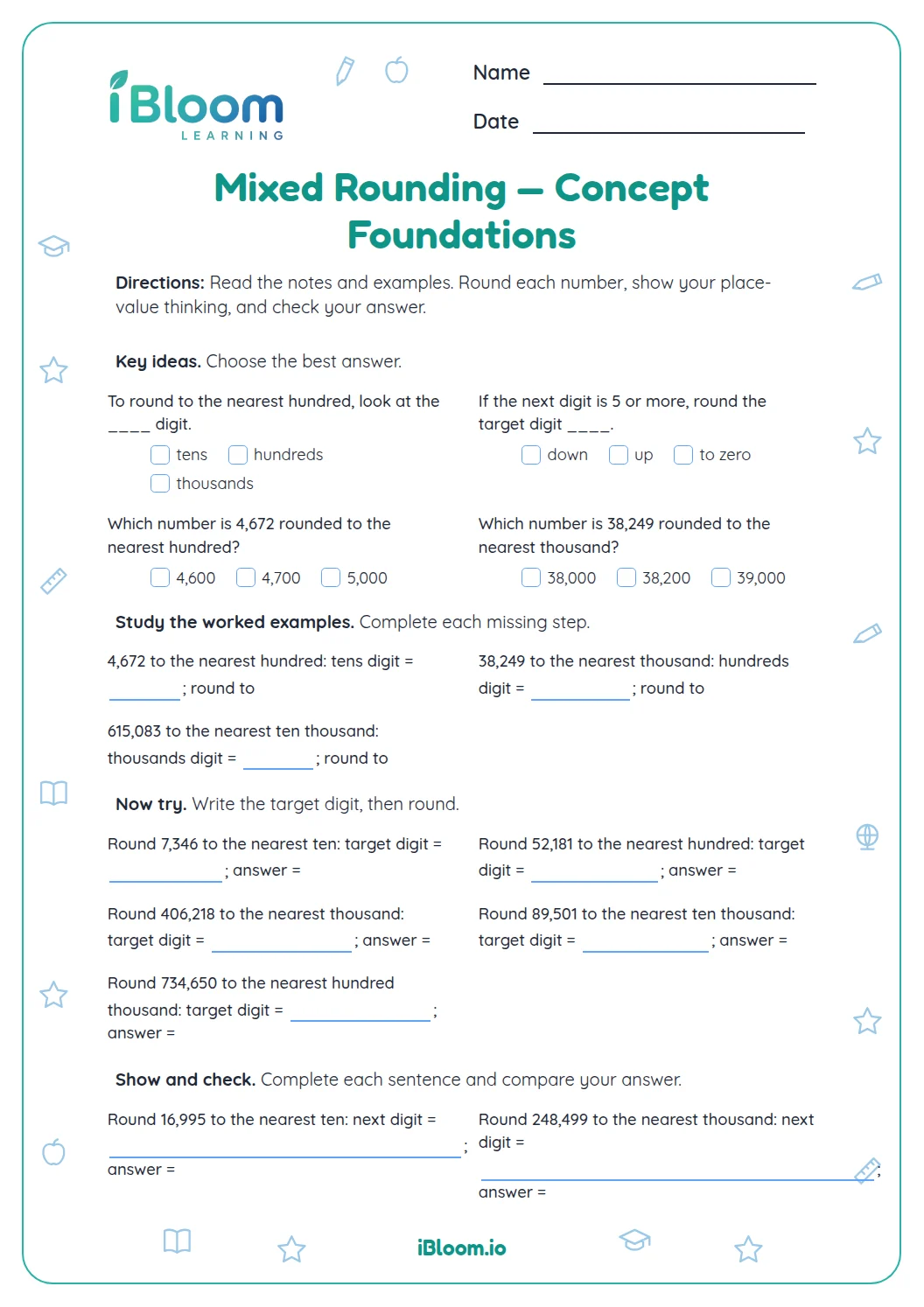
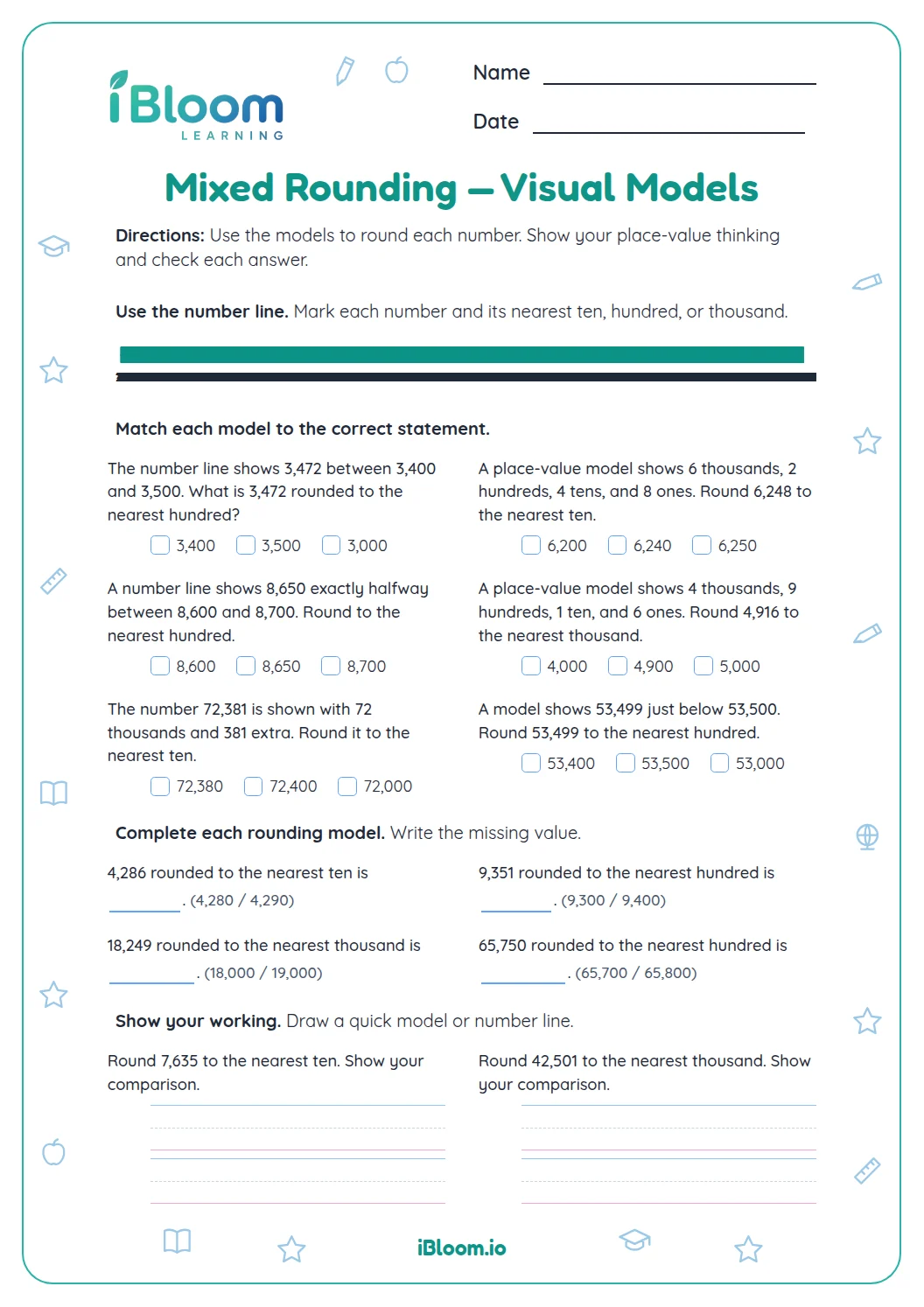
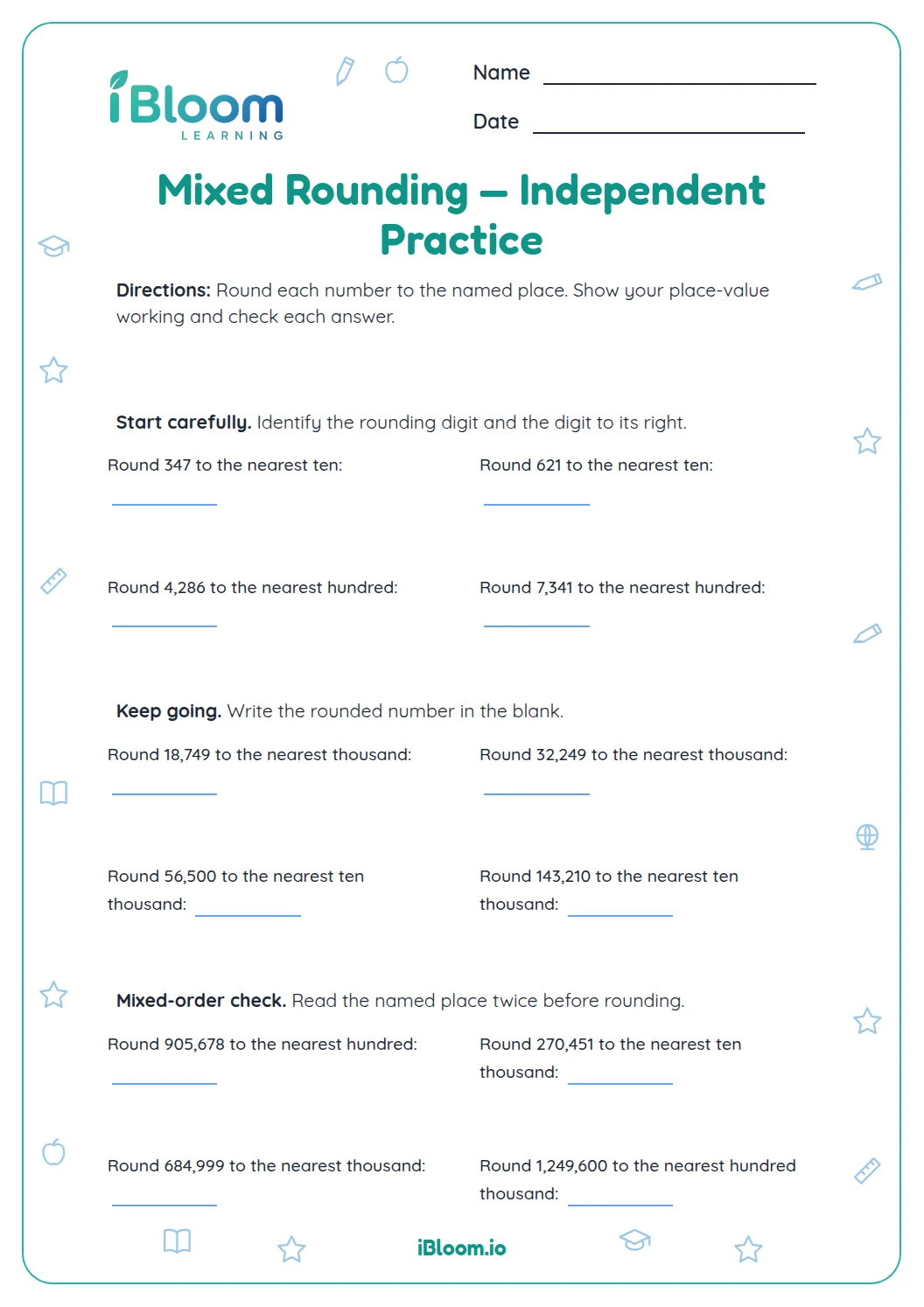
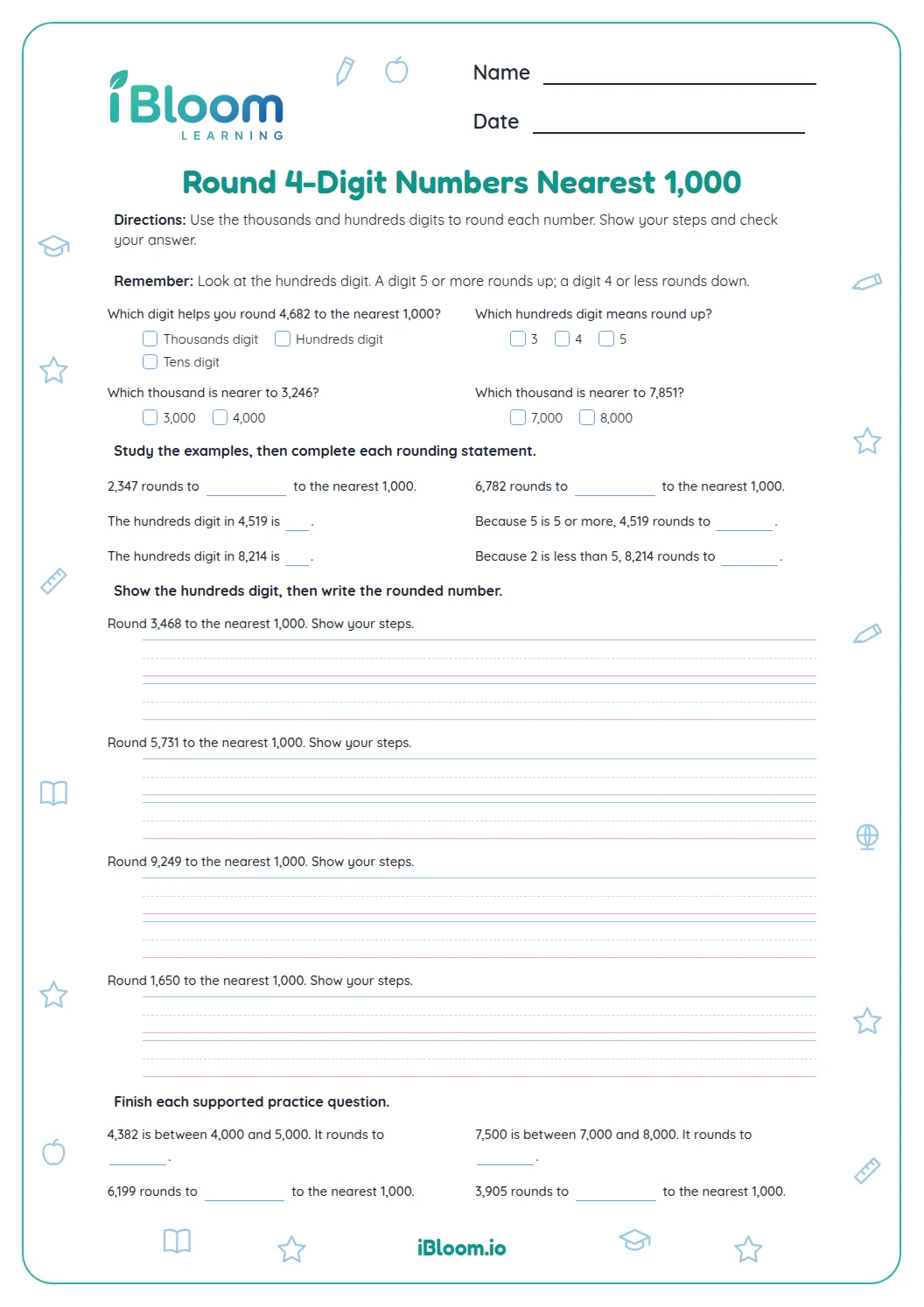
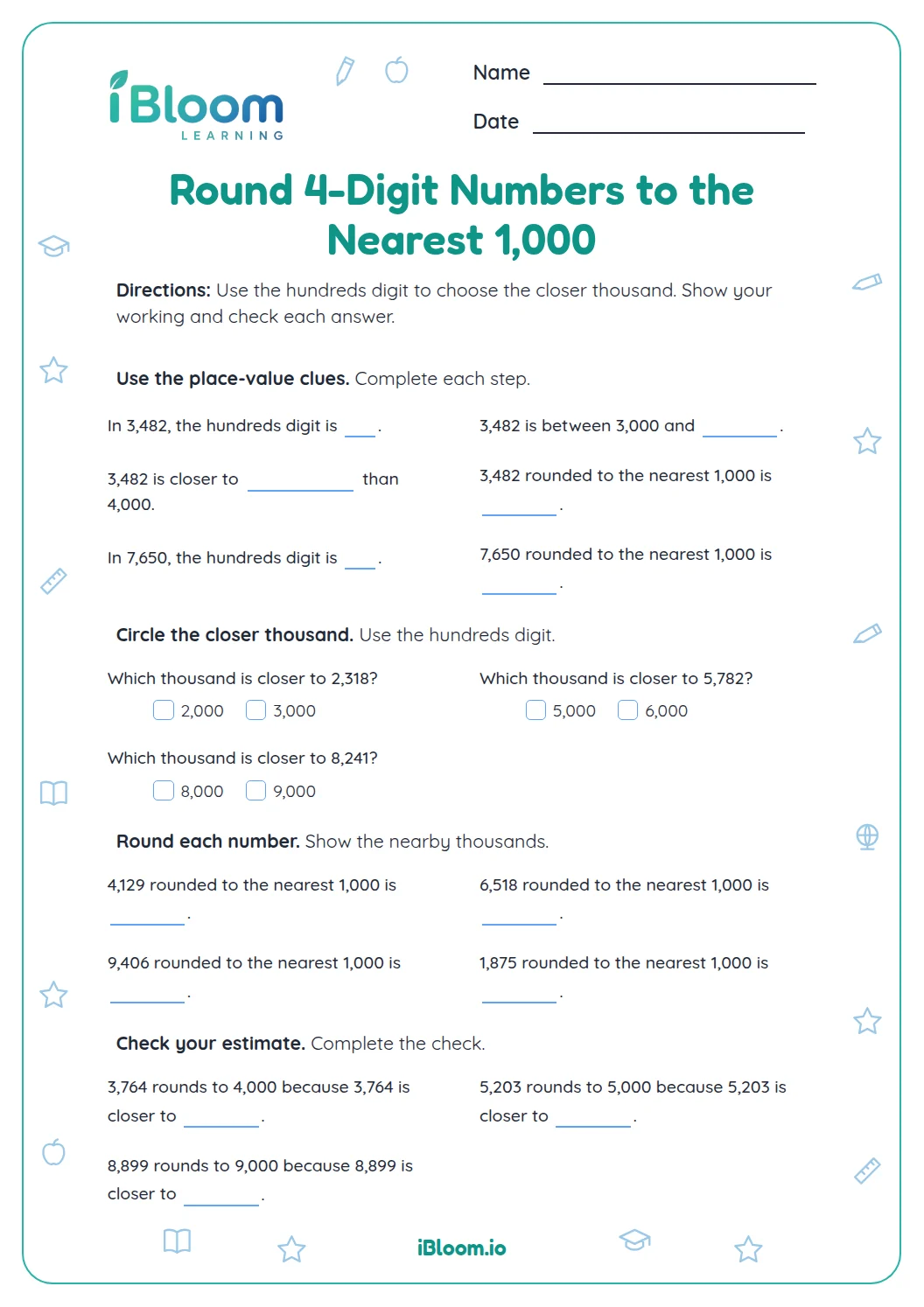
This Grade 4 worksheet offers 15 questions on comparing and ordering numbers through six digits, rounding to hundreds, thousands, and ten thousands, and reasoning about place value. Children move from direct comparisons to ordering and then explain why a digit changes a decision. The new set replaces the old page with a fuller practice sequence and a separate answer key. It aligns to CCSS 4.NBT.A.2 for comparing multi-digit numbers by the meanings of their digits.
Aligned to 4.NBT.A.2 and 4.NBT.A.3
How do you compare multi-digit numbers?
Line up the digits by place and compare from the left. The first place where the digits differ decides which number is greater. If all digits match, the numbers are equal.
Question 1 compares 408,219 and 480,219. Both have 4 in the hundred-thousands place, but the ten-thousands digits are 0 and 8, so 408,219 is less.
- 1408,219 and 480,219
- 2Compare ten-thousands: 0 < 8
- 3408,219 < 480,219
Which digit tells you how to round?
Find the place named in the prompt, then look one place to its right. A digit from 0 through 4 keeps the rounding digit the same; 5 through 9 increases it by one. Replace the digits to its right with zeros.
How can an explanation show place-value thinking?
Name the place you compared and explain what the digit means there. For rounding, say which neighboring place you checked. This is more useful than saying only “I rounded up” because it shows why the decision fits.
How to use this worksheet
- 1Read which place the question names.
- 2For comparisons, start at the leftmost digit and stop at the first difference.
- 3For ordering, compare each pair before arranging the full list.
- 4For rounding, underline the target place and circle the digit just right of it.
- 5Replace every digit to the right with zero.
- 6Check that the rounded number is close to the original.
Mistakes to watch for
The mistake
Comparing from the ones place first
The fix
Start with the greatest place; the first difference decides.
The mistake
Looking at the target digit instead of the digit after it
The fix
Use the digit immediately to the right to decide whether to round up.
The mistake
Forgetting to change following digits to zero
The fix
After rounding, write zeros in all places to the right.
Common Core alignment
This page gives children focused practice with the skills named in these standards.
Compare multi-digit numbers by the value of their digits.
On this sheet: Compare multi-digit numbers by the value of their digits.
Show the official wordingHide the official wording
Read and write multi-digit whole numbers using base-ten numerals, number names, and expanded form. Compare two multi-digit numbers based on meanings of the digits in each place, using >, =, and < symbols to record the results of comparisons.
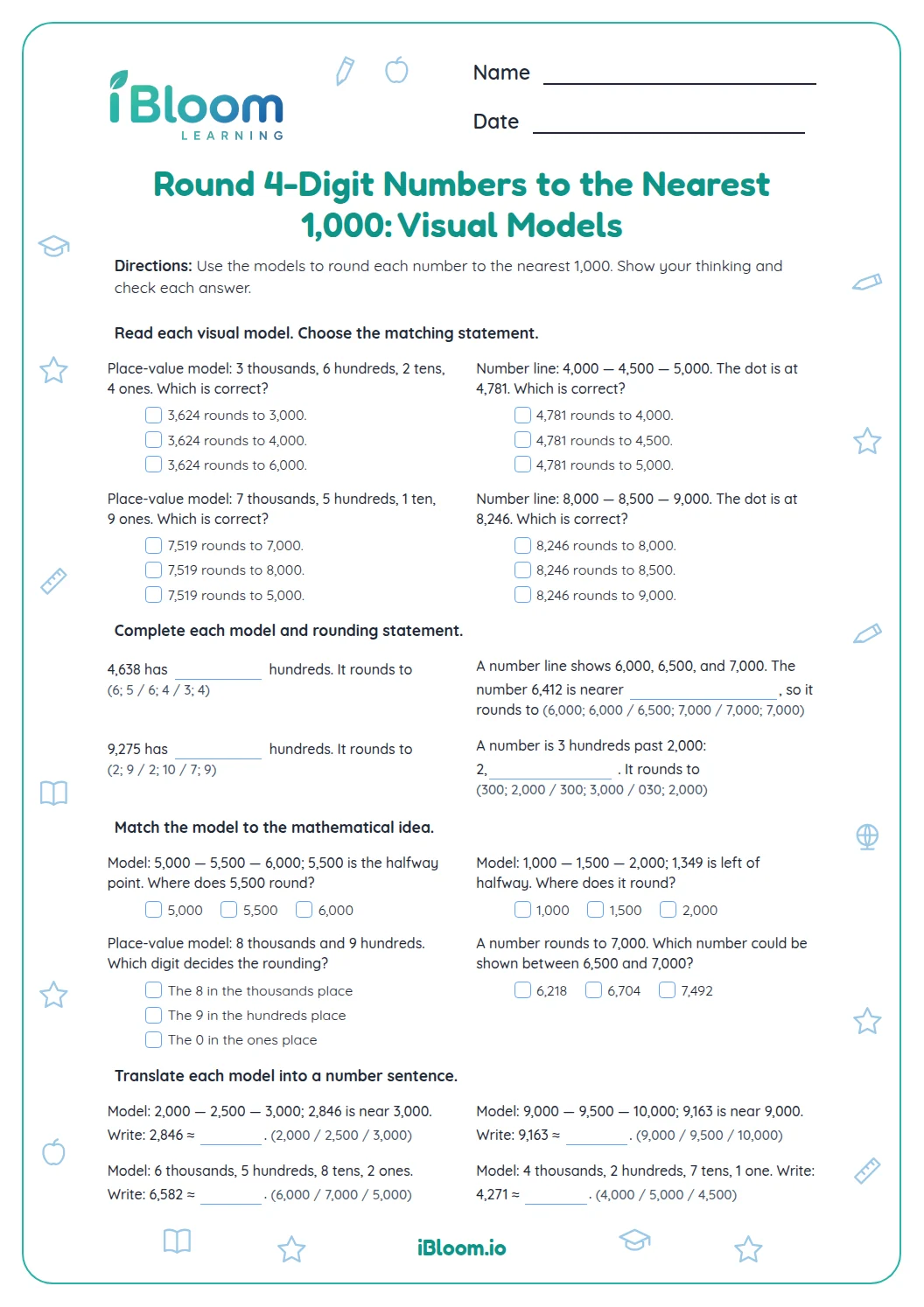
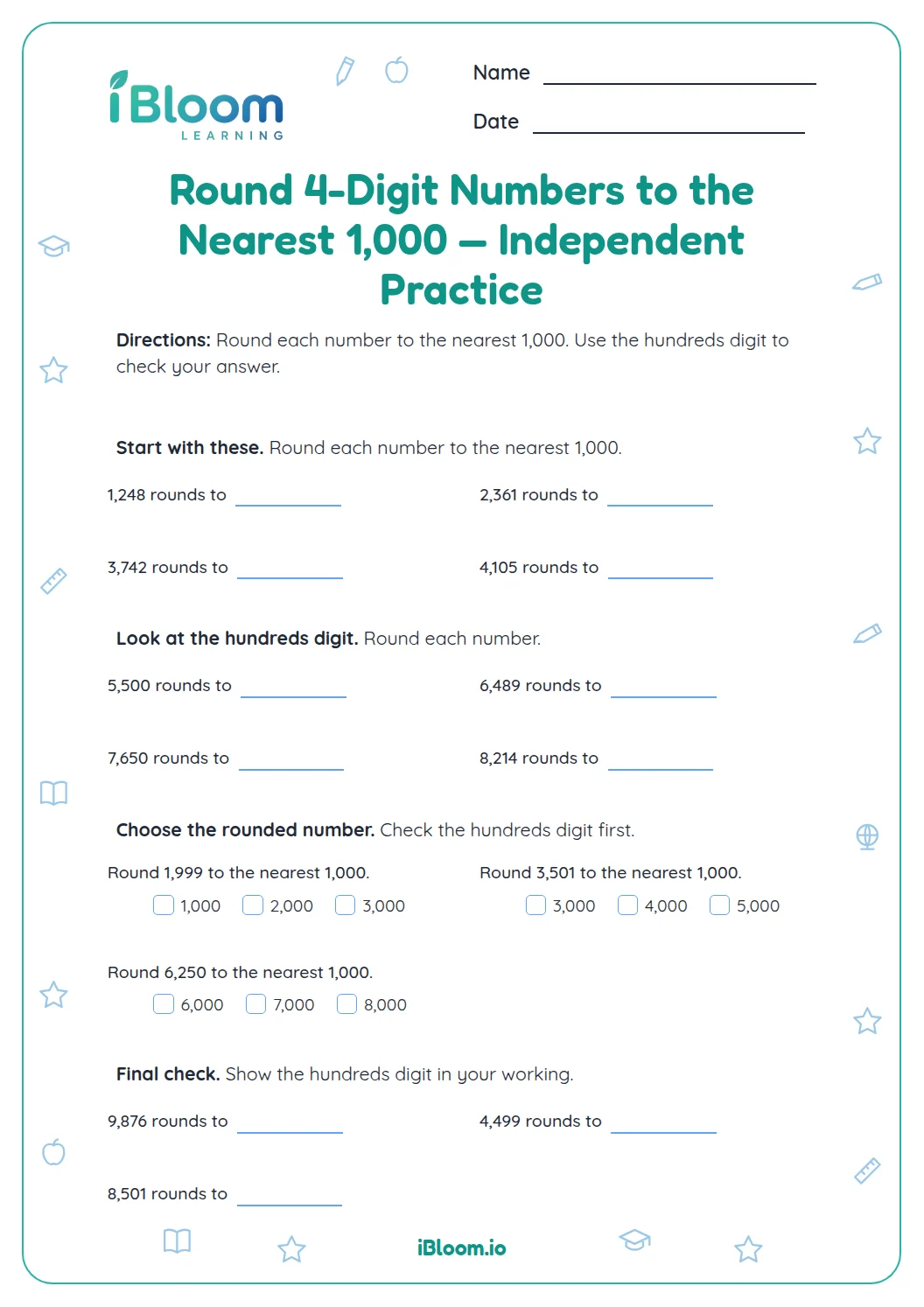
Round multi-digit whole numbers to a named place using place value.
On this sheet: Round multi-digit whole numbers to a named place using place value.
Show the official wordingHide the official wording
Use place value understanding to round multi-digit whole numbers to any place.
What to practice next
Make more practice
Further reading
Questions parents and teachers ask
How do you compare numbers with many digits?
Compare the digits from left to right, beginning with the greatest place. At the first place where the digits differ, the number with the larger digit is greater. If every digit matches, the numbers are equal. Name the place aloud so the comparison or rounding choice is easy to check.
Which place should I look at when rounding?
Look one place to the right of the place named in the question. A 0, 1, 2, 3, or 4 keeps the target digit; a 5, 6, 7, 8, or 9 increases it by one. A place-value chart can help keep each digit in its correct column.
Why does 48,671 round to 49,000?
To round to the nearest thousand, check the hundreds digit, which is 6. Since it is 5 or more, increase the thousands digit from 8 to 9 and change the remaining digits to zero. After rounding, check that the result is a nearby multiple of the named place.
What does the worksheet mean by reasoning challenge?
Some items ask children to justify which place decides a comparison or why a number rounds a certain way. The explanation prompts encourage them to name the relevant digit and place value. The answer key includes example reasoning for the open responses.
Does this practice include both comparison and rounding?
Yes. The 15 items include comparison symbols, ordering lists, rounding to hundreds, thousands, or ten thousands, and questions about place-value reasoning. The separate answer key lists values and reasoning choices. Read the answer back with place names to catch a misplaced digit.
Is an answer key included?
Yes. A separate answer key provides comparison symbols, ordered lists, rounded values, and examples for the open explanations. For the created-number choice, 126,000 is within the range and rounds to 130,000; the other options do not meet both conditions. Point to the digit that decides the comparison or rounding rule.