

About this worksheet
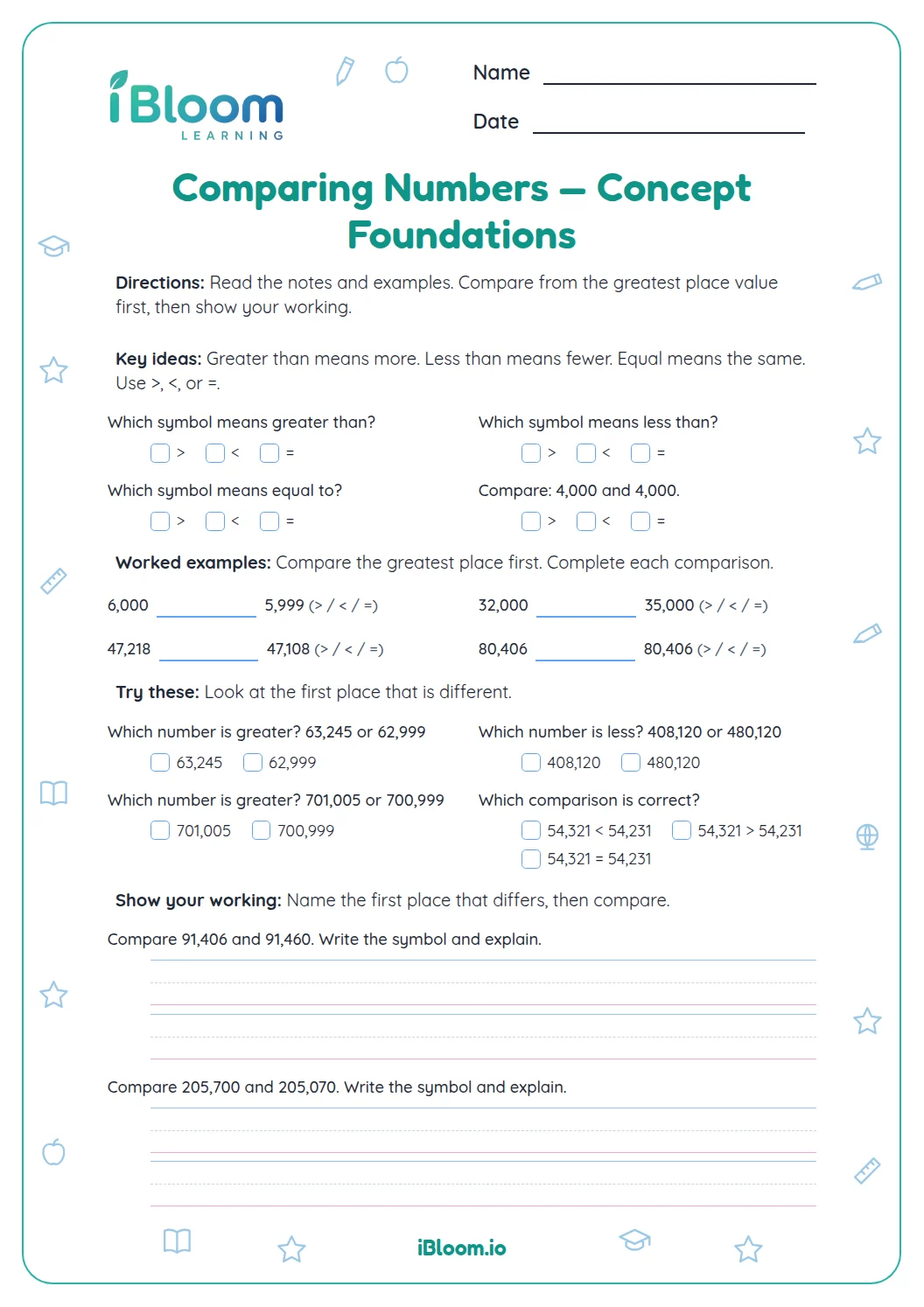
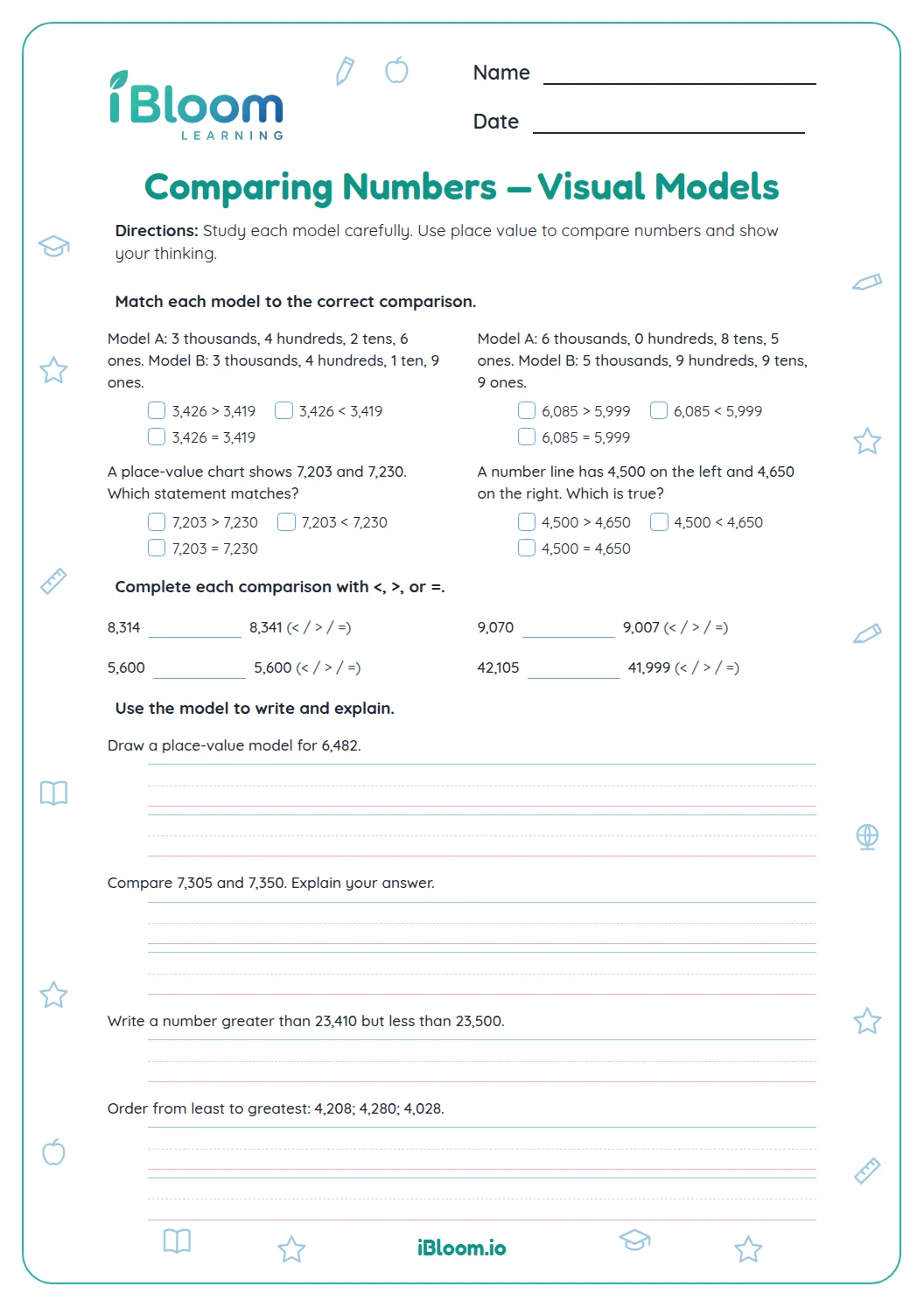
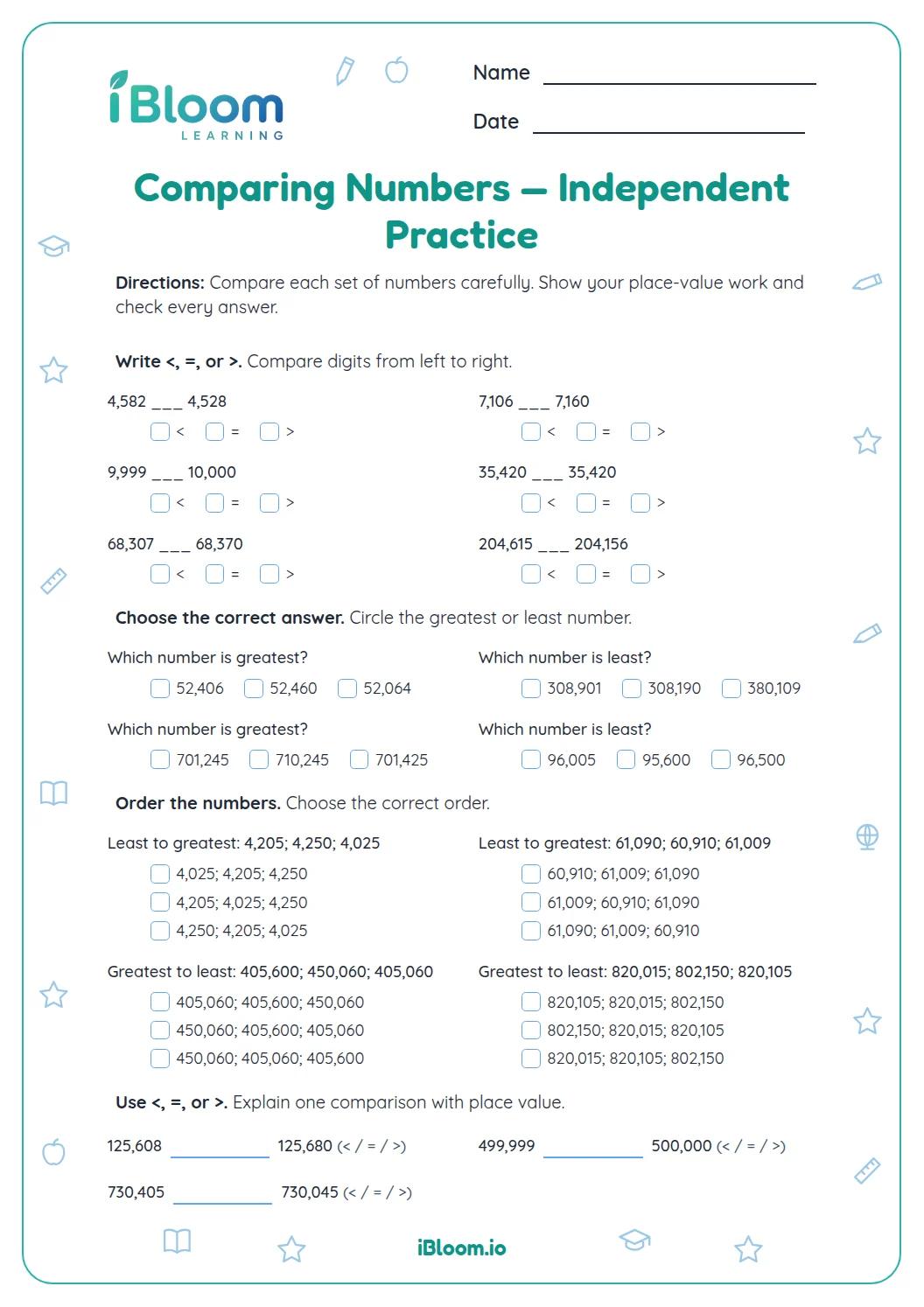
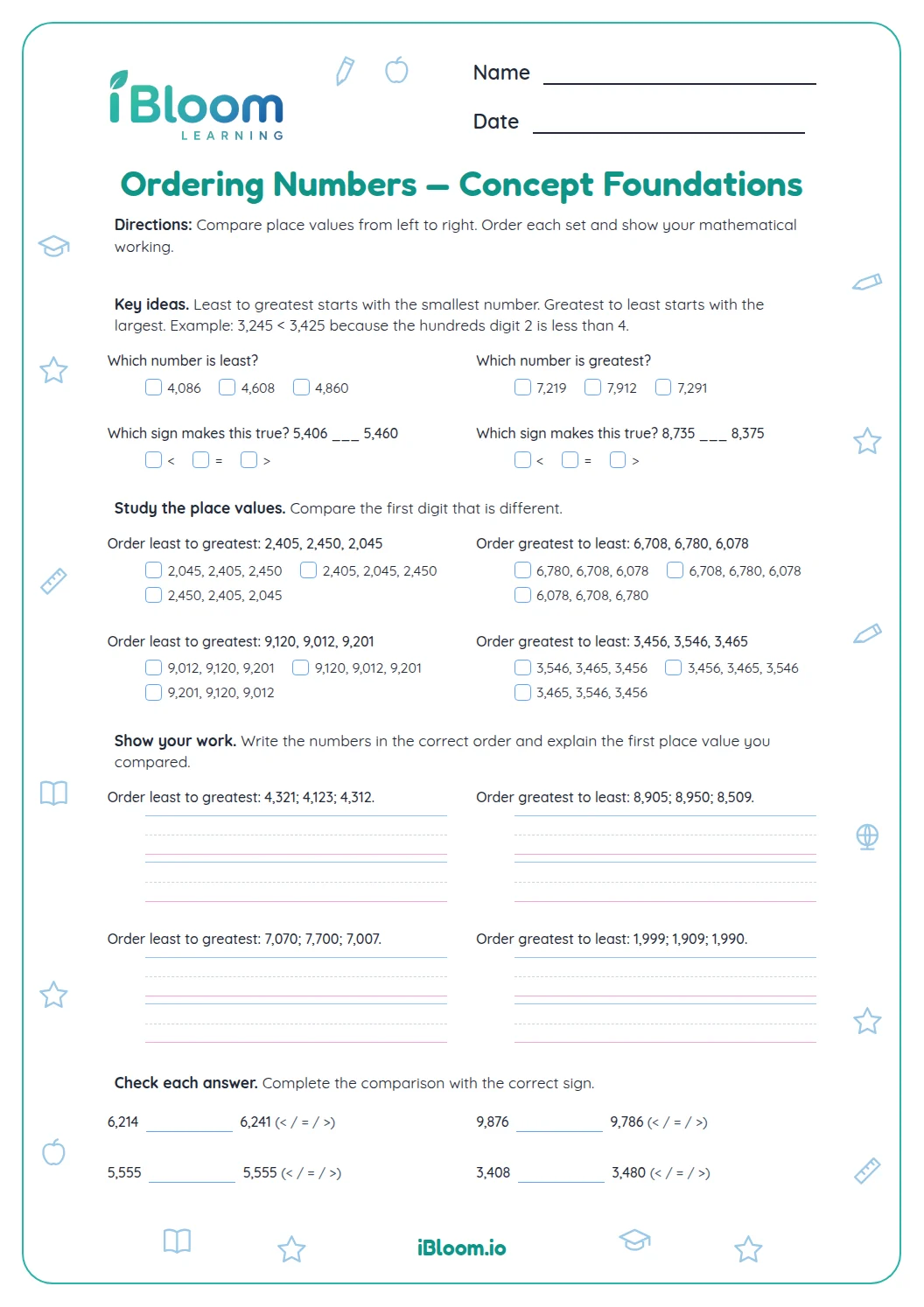
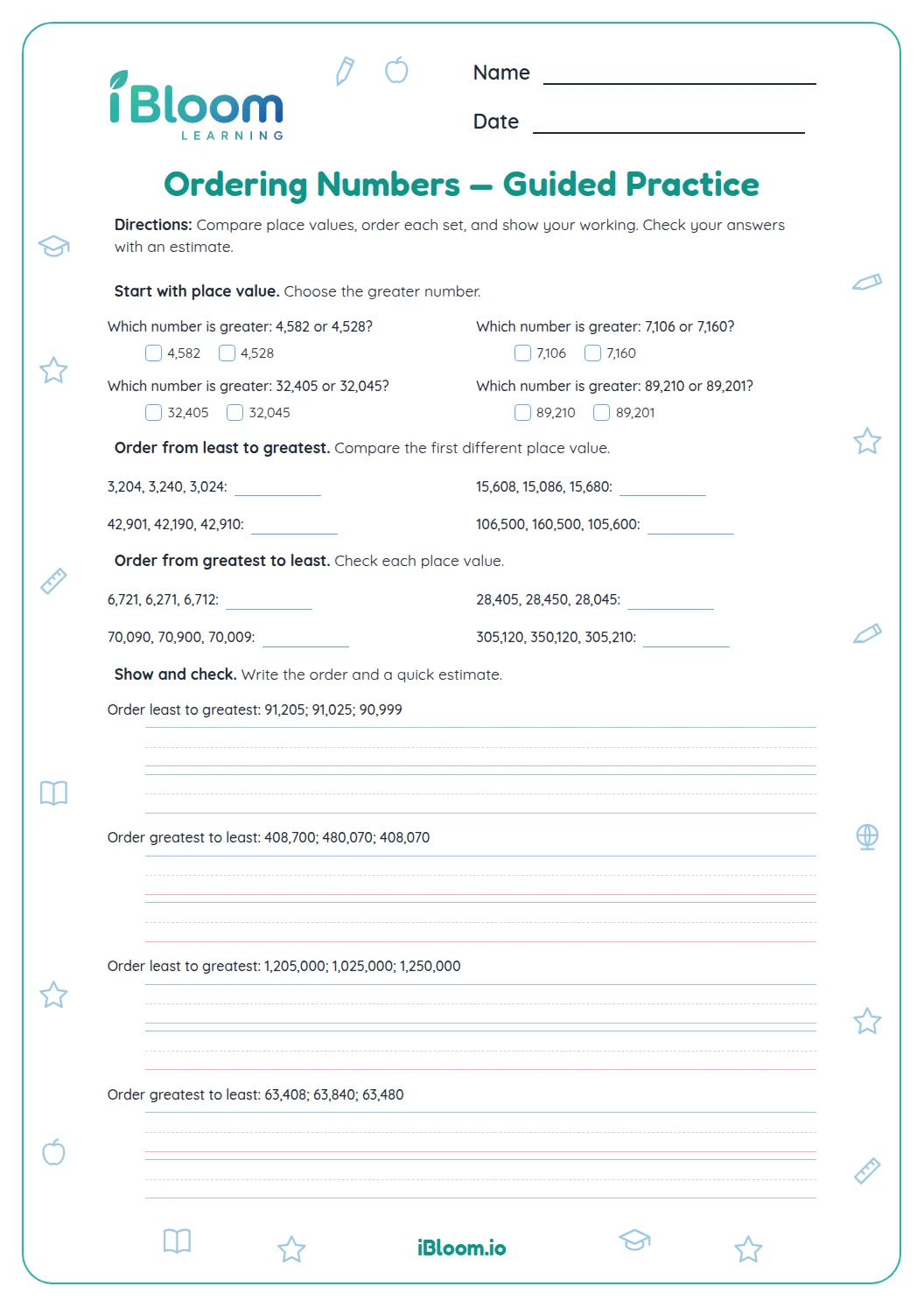
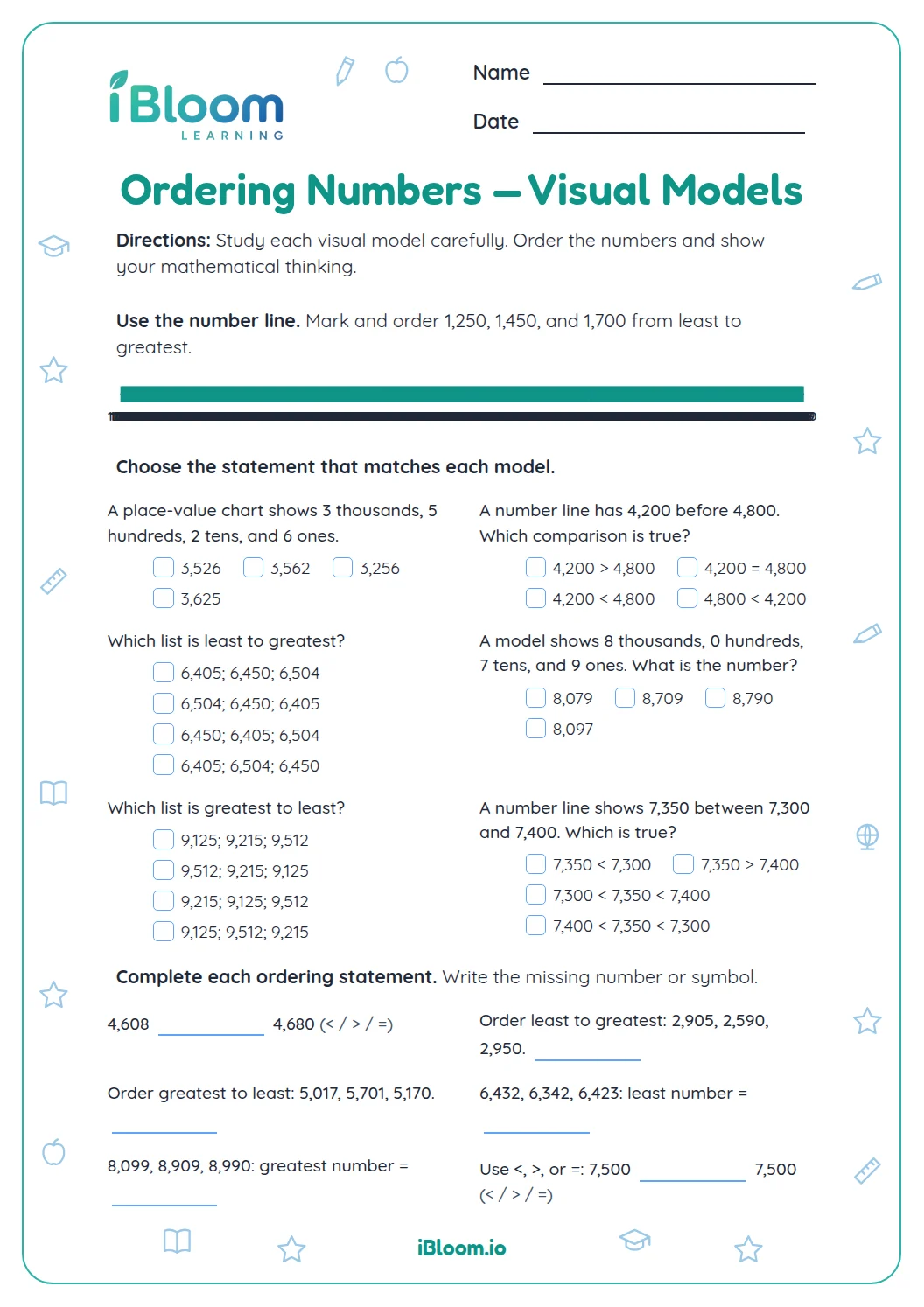
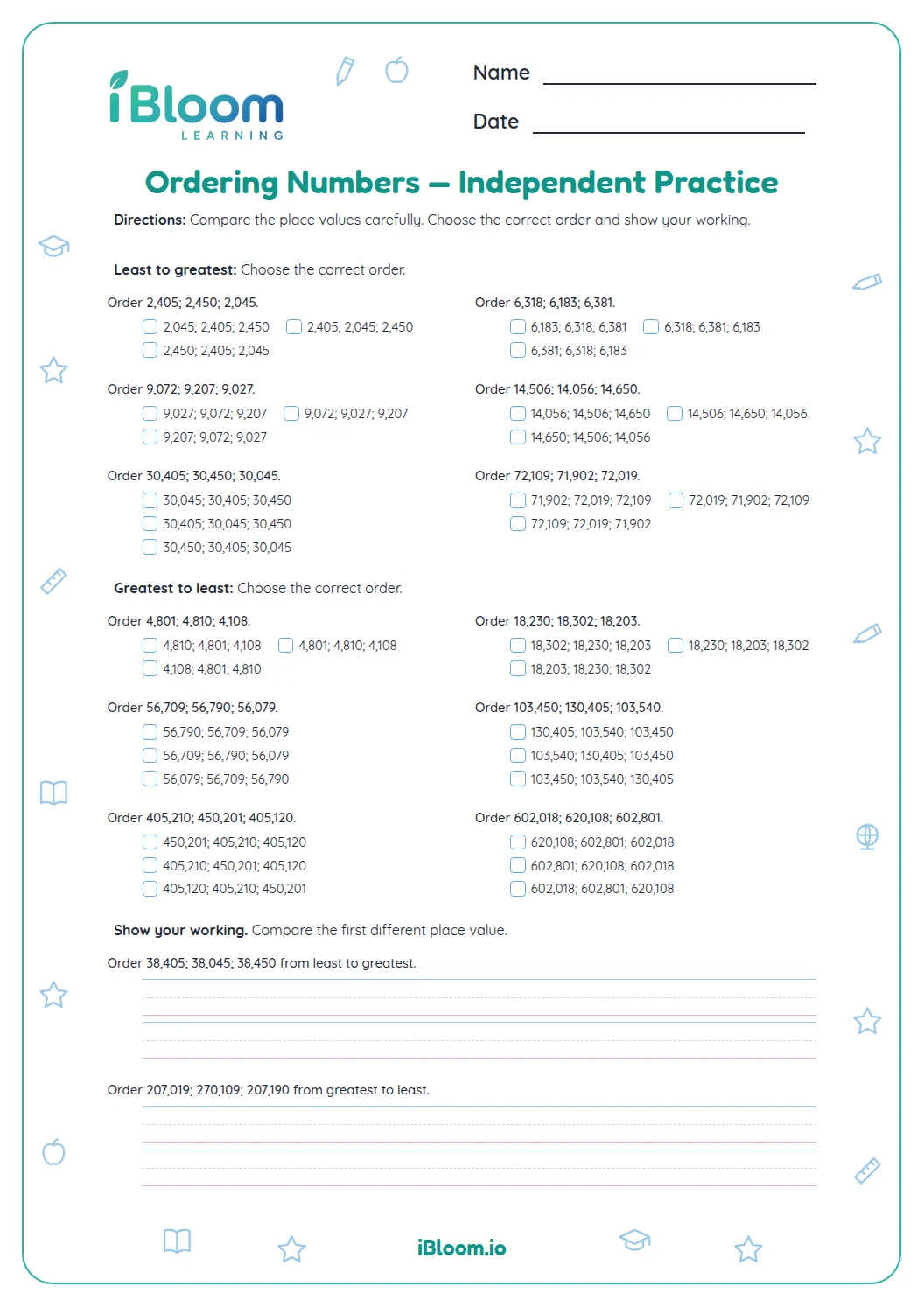
This Grade 4 printable gives students 14 questions comparing and ordering multi-digit whole numbers through the hundred-thousands place. It practices CCSS 4.NBT.A.2 by using the meaning of each digit to compare numbers. Students choose comparison symbols, order sets, apply comparisons to short contexts, and use nearest-thousand estimates as a check before comparing exact values. The answer key includes each choice and result.
Aligned to 4.NBT.A.2
How do you compare multi-digit numbers?
Begin at the greatest place. If those digits match, move one place right until the first difference; the number with the larger digit there is greater. In question 1, the digits match through the hundreds place, then 1 ten is less than 5 tens, so 482,915 < 482,951.
The equal sign belongs when every digit matches. Commas group places, but the digit values decide the comparison.
- 1482,915 ___ 482,951
- 2The digits match through the hundreds place.
- 3At the tens place, 1 < 5.
- 4So 482,915 < 482,951.
How does the worksheet build comparison practice?
Part A compares pairs and identifies greatest or least values. Part B orders numbers and applies comparisons to short contexts. Part C rounds two numbers to the nearest thousand, then uses exact place values when the estimates tie.
- Questions 1–7: compare pairs and identify greatest or least
- Questions 8–12: order numbers and apply comparisons
- Questions 13–14: round to the nearest thousand and compare exactly
When does rounding help you compare?
Rounding can give a quick estimate, but equal estimates may not settle an exact comparison. In questions 13–14, both numbers round to 459,000; compare the tens digits next to see that 458,721 is greater than 458,712.
How to use this worksheet
- 1Read both numbers in groups from left to right.
- 2Compare the greatest place first; skip places that match.
- 3Choose > when the left number is greater, < when it is smaller, and = when all digits match.
- 4For ordering, compare adjacent numbers before writing the full sequence.
- 5Use the answer key to find any place where your comparison changed.
Common mistakes and quick fixes
The mistake
Comparing only the last digits
The fix
Start at the leftmost place because it has the greatest value.
The mistake
Treating a longer written number as greater without reading its digits
The fix
Compare place values even when both numbers have the same number of digits.
The mistake
Reversing > and <
The fix
Read the open side as pointing toward the greater number.
Common Core alignment
This practice connects the named skill to a grade-level Common Core expectation.
Compare multi-digit numbers by the value of each digit.
On this sheet: Students compare whole numbers through the hundred-thousands place using place value.
Show the official wordingHide the official wording
Read and write multi-digit whole numbers using base-ten numerals, number names, and expanded form. Compare two multi-digit numbers based on meanings of the digits in each place, using >, =, and < symbols to record the results of comparisons.
What to practice next
Make more practice
Further reading
Questions parents and teachers ask
How do I compare numbers that contain zeros?
Keep each zero in its place as you read from left to right. A zero means there are no units of that place, but later digits still matter if every place to the left matches. Compare the first different place, as in 900,010 and 900,001, where the tens place decides.
Can rounding prove which number is greater?
Rounding gives an estimate, and sometimes both numbers round to the same value. In questions 15–16, each number rounds to 459,000, so students return to the exact numbers and compare their tens digits. The worksheet practices both the estimate and the exact comparison.
What does Part A ask students to do?
Part A has seven multiple-choice questions. Students choose comparison statements and identify the greatest or least number by checking place values from left to right. Question 1 compares 482,915 with 482,951, where the tens digits settle the result. The key marks the less-than symbol and provides every answer.
How should my child order three numbers?
Part A has seven multiple-choice questions. Students choose comparison statements and identify the greatest or least number by checking place values from left to right. Question 1 compares 482,915 with 482,951, where the tens digits settle the result. The key marks the less-than symbol.
What is the answer to question 1?
Compare the numbers from their greatest place, then check the first place where each pair differs. For question 8, 78,054 comes first because it has fewer ten-thousands; 78,405 comes before 78,450 because 0 hundreds is less than 4 hundreds. The answer key gives the full order.