

About this worksheet
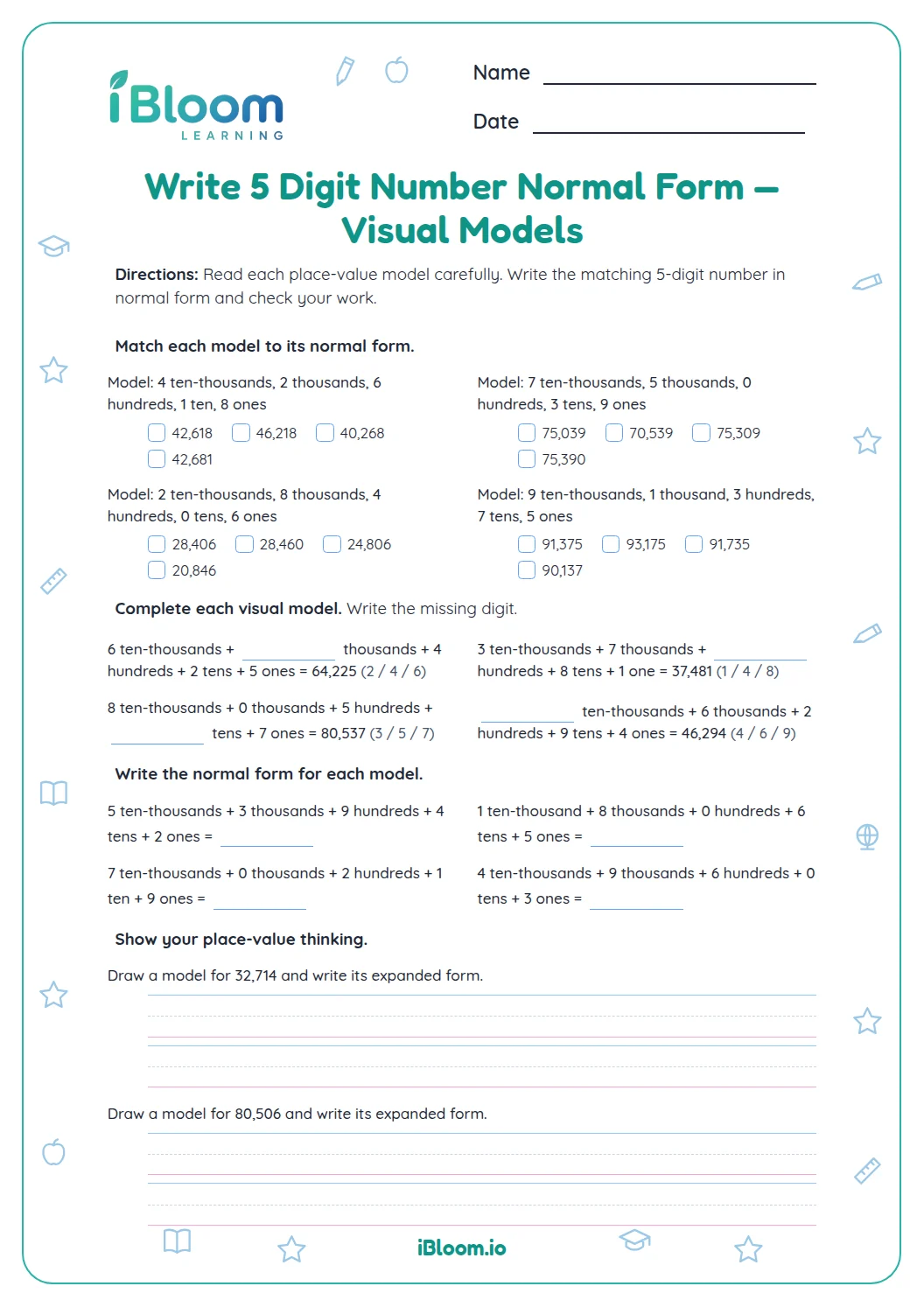
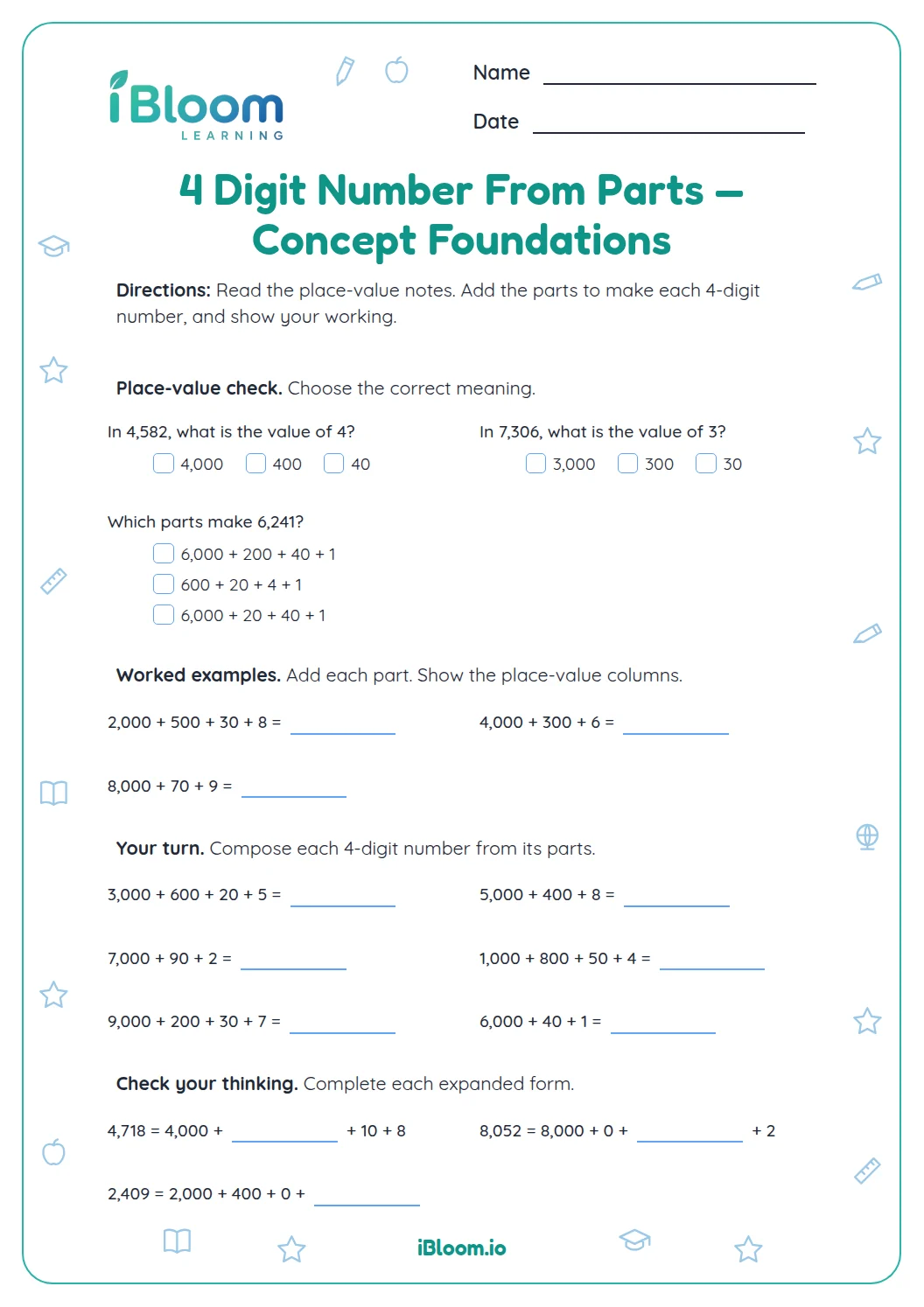
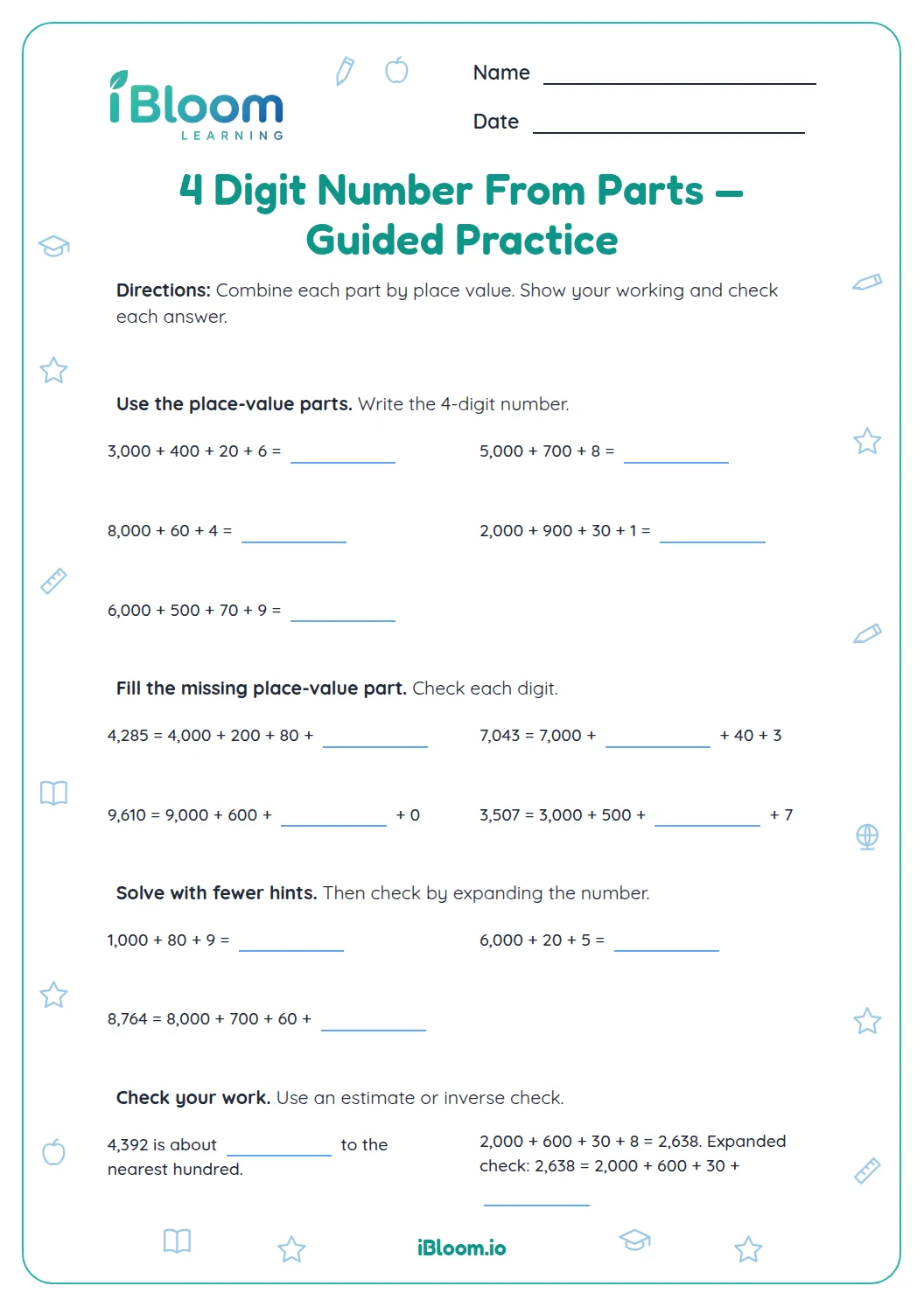
This guided practice moves from expanded form to place-value descriptions, word form, and regrouped units. Learners pay attention to zero places and name the value of a digit, then move back from standard form to expanded form.
Aligned to 4.NBT.A.2
Each digit has a place and a value.
In a five-digit number, the places are ten-thousands, thousands, hundreds, tens, and ones.
A zero keeps later digits in their correct places.
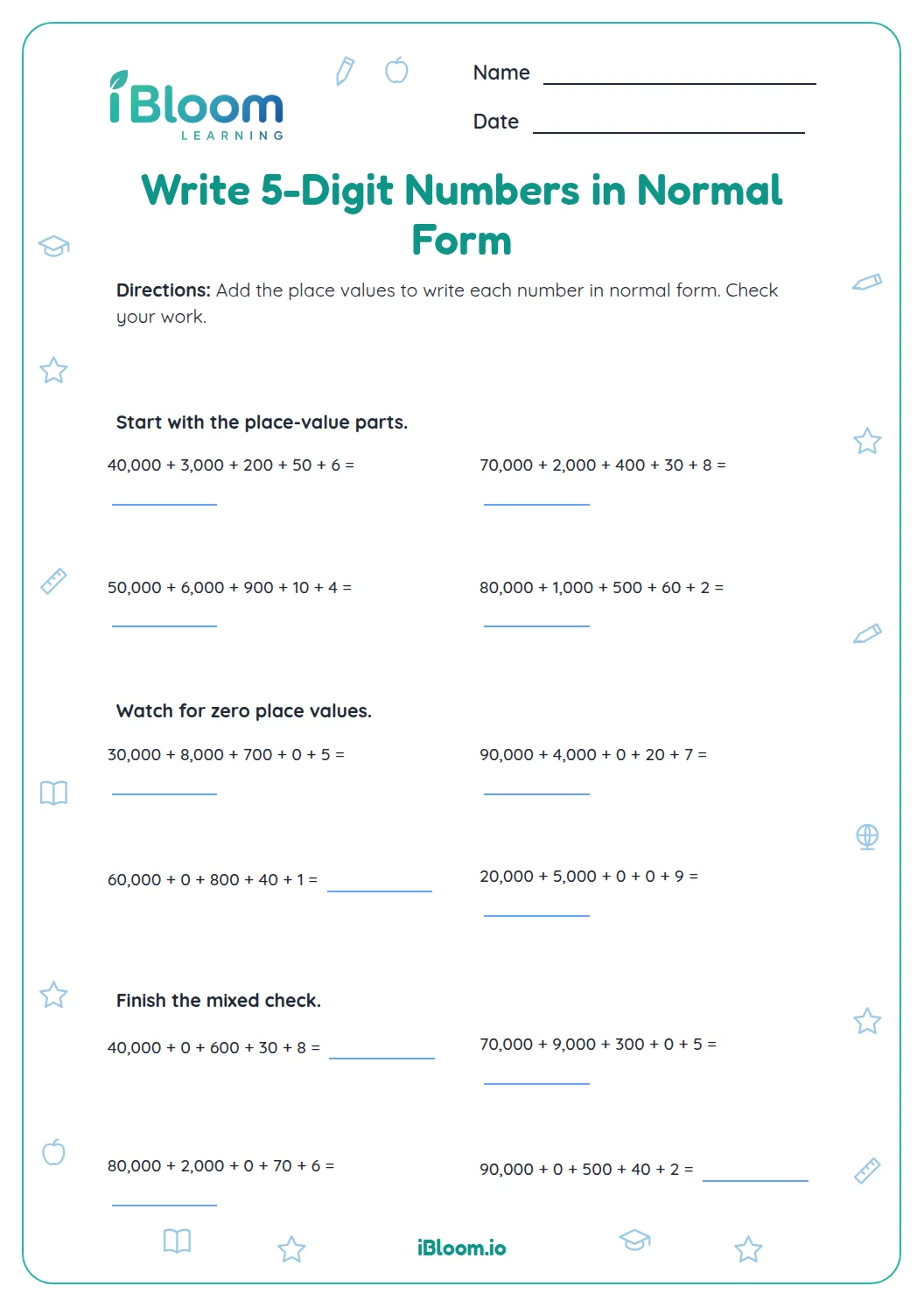
- 130,000 + 4,000 + 600 + 20 + 5 = ___
- 2Use the place clues or model to find the answer.
- 3Check the answer with the related fact or representation.
What will learners practice?
This guided practice moves from expanded form to place-value descriptions, word form, and regrouped units. Learners pay attention to zero places and name the value of a digit, then move back from standard form to expanded form.
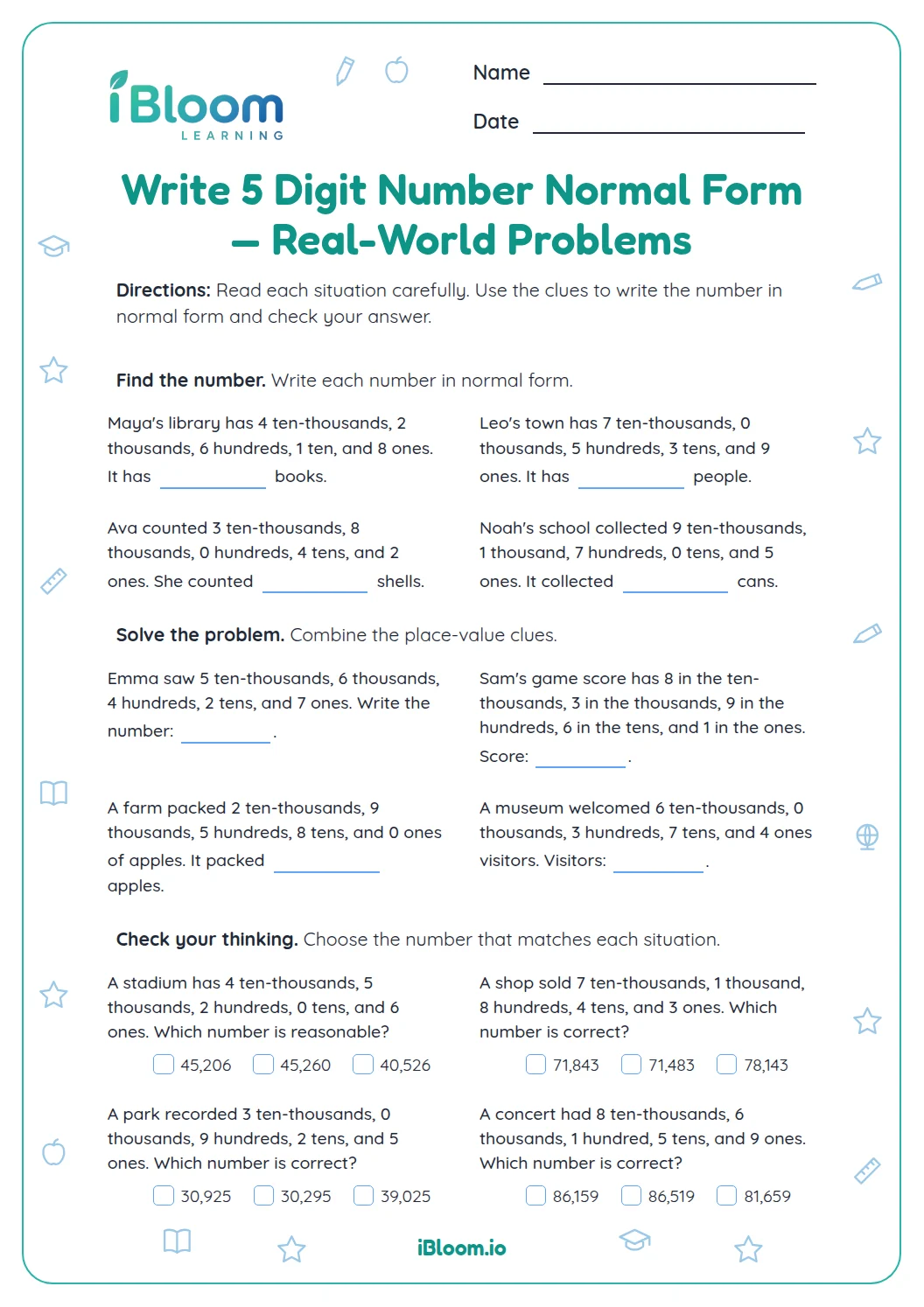
- Read the place values: Write each five-digit number in normal form.
- Use the digit clues: Use every place, including empty places.
- Check values and zero places: Complete the value or missing number.
- Compose and write: Combine the place values.
How can families review the answers?
Have the learner finish a part before checking its answers. For an error, return to the item and explain the clue or calculation that supports the corrected answer.
How to use this worksheet
- 1Read the direction for the current part before beginning.
- 2Complete each item in order and write units or explanations when requested.
- 3Check calculations with the matching fact, place value, or model.
- 4Use the answer key after finishing a part; correct missed work in a different color.
Common mistakes and quick fixes
The mistake
Skipping a place, factor, or unit while solving.
The fix
Reread the prompt and check each part of the number sentence.
The mistake
Writing an answer without checking whether it fits the question.
The fix
Substitute the answer or recount the model to verify it.
The mistake
Changing the order of groups or dimensions and changing the total.
The fix
Name both factors clearly; turning an array changes their order, not their product.
Common Core alignment
This worksheet practices the following Common Core skill.
Generalize place value understanding for multi-digit whole numbers.
On this sheet: The questions require reading and writing five-digit whole numbers in standard, word, and expanded forms.
Show the official wordingHide the official wording
Read and write multi-digit whole numbers using base-ten numerals, number names, and expanded form. Compare two multi-digit numbers based on meanings of the digits in each place, using >, =, and < symbols to record the results.
What to practice next
Make more practice
Further reading
Questions parents and teachers ask
What does this worksheet help a learner practice?
This guided practice moves from expanded form to place-value descriptions, word form, and regrouped units. Learners pay attention to zero places and name the value of a digit, then move back from standard form to expanded form. The questions move from direct practice to applying the same skill in a new form.
How many questions are included?
It includes sixteen questions in 4 parts, moving from products to missing factors, related division facts, and equal-group applications. Learners keep the same three numbers connected as they switch between multiplication and division. The answer key also shows the correct result for every item, so a learner can compare each step with a reliable check.
How should a learner use the answer key?
Complete the questions before opening the key. For each missed item, name the factors and product, then check the result with the inverse operation or by rebuilding the fact family from its three numbers. Use the place names aloud when checking a five-digit number, especially where a zero holds an empty place.
Can this sheet be used for independent practice?
The worksheet has four parts that move from direct fact practice to related facts and short applications. An adult can model one item, then let the learner complete the remaining questions and check them afterward. The model responses offer a starting point; a different answer can work when it stays focused and includes the requested details.
What is a useful way to check an answer?
For a multiplication or division fact, use the other operation to check the result. For an equal-groups story, make sure the equation matches the number of groups and the amount in each group before recording the total. For a rectangle, rows and columns describe the same set of unit squares from different directions. The total area stays constant.