

About this worksheet
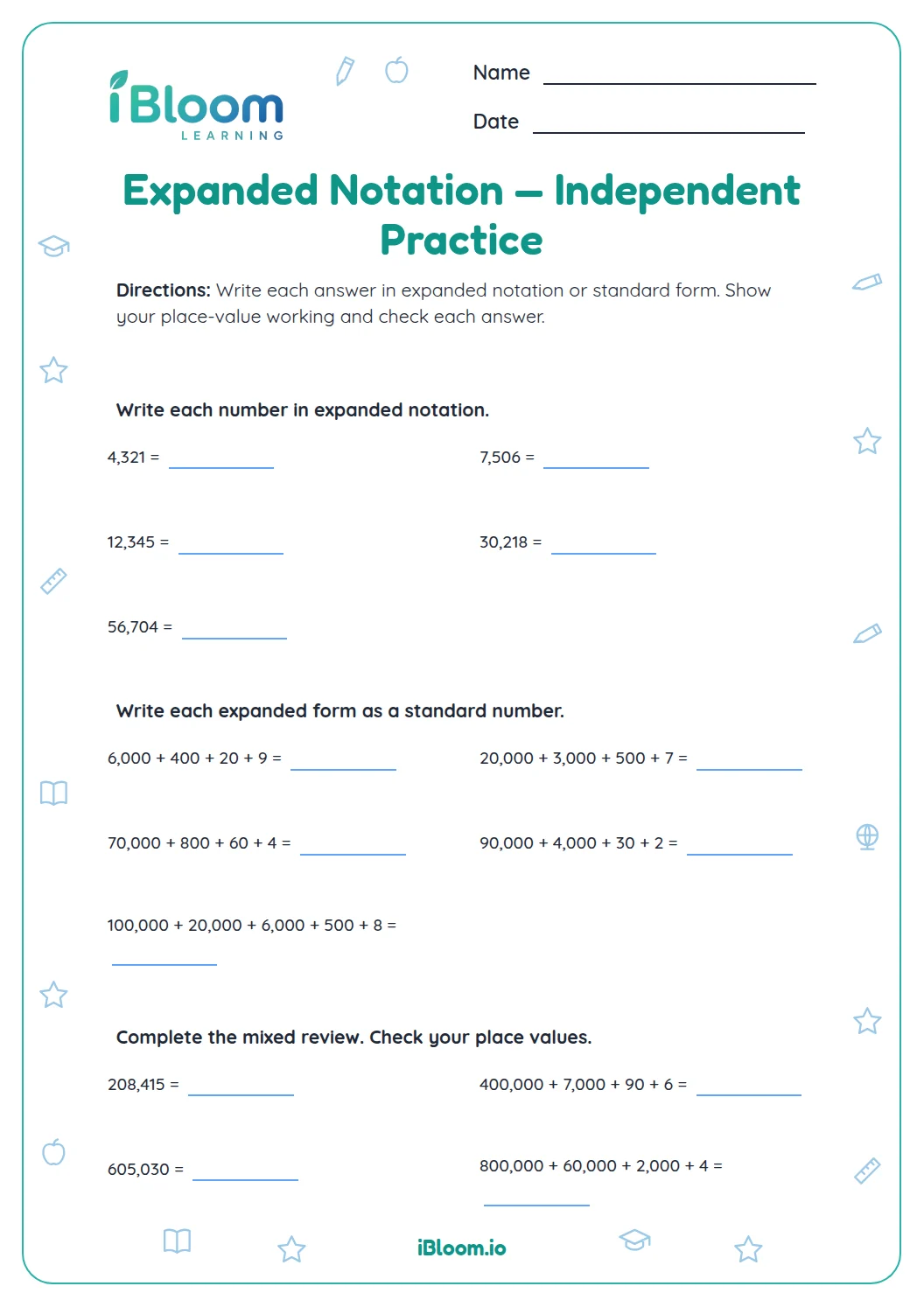
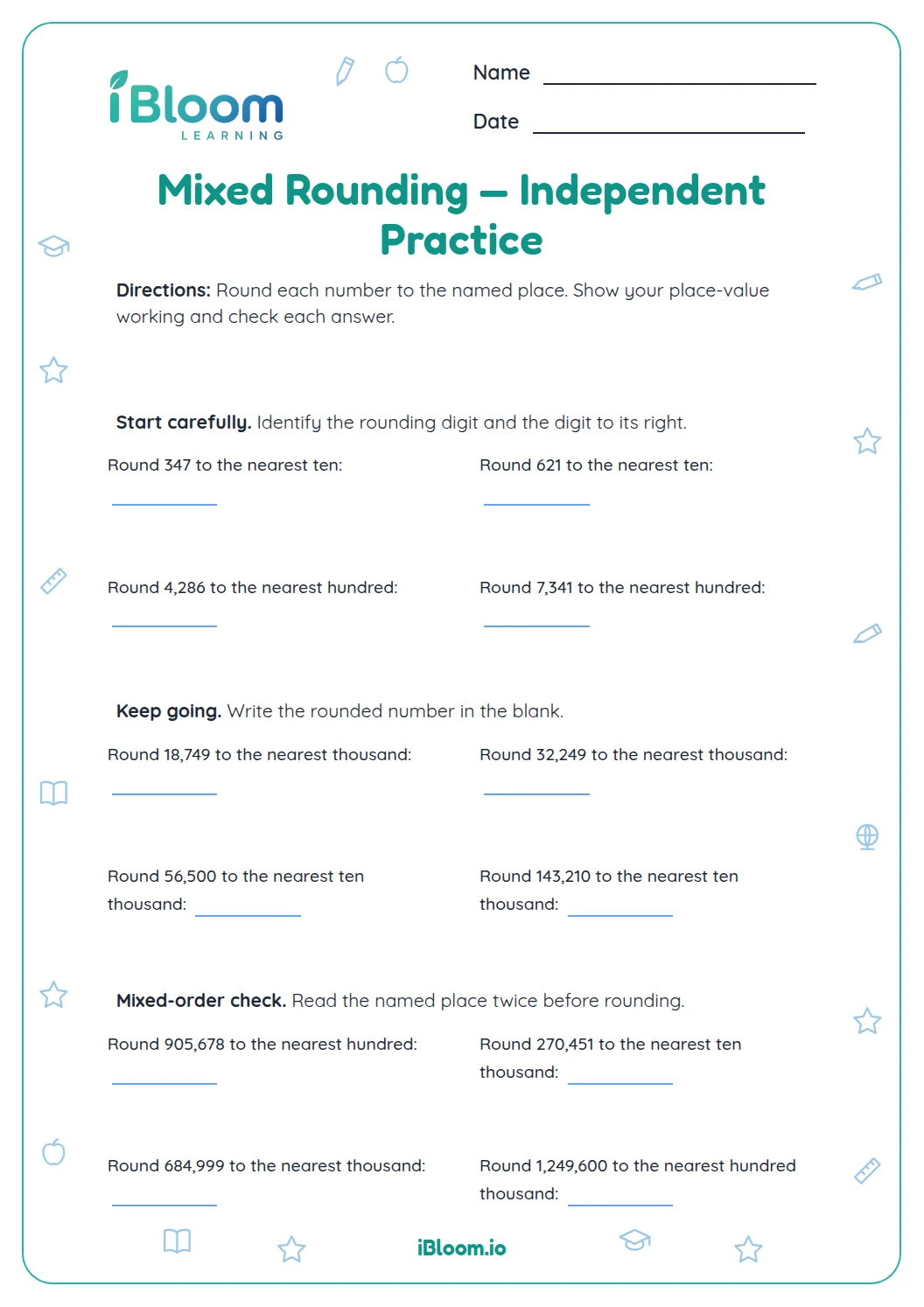
This Grade 4 independent-practice sheet asks learners to build eight four-digit numbers from thousands, hundreds, tens, and ones, then round seven four-digit numbers to the nearest hundred or thousand. Every item has one blank, so children can focus on place value and the named rounding place. It includes 15 questions and an answer key.
Aligned to 4.NBT.A.3
How do parts make a four-digit number?
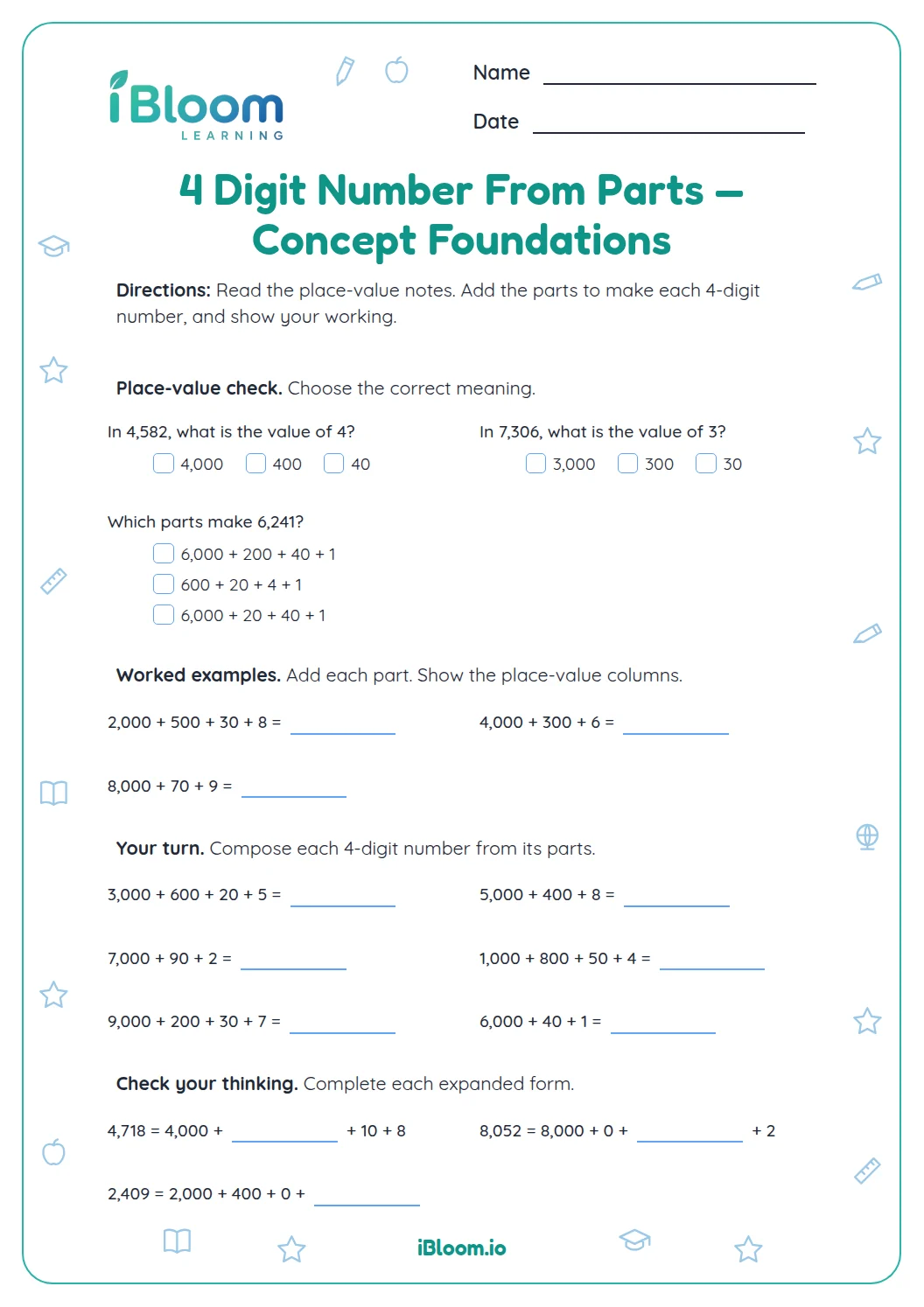
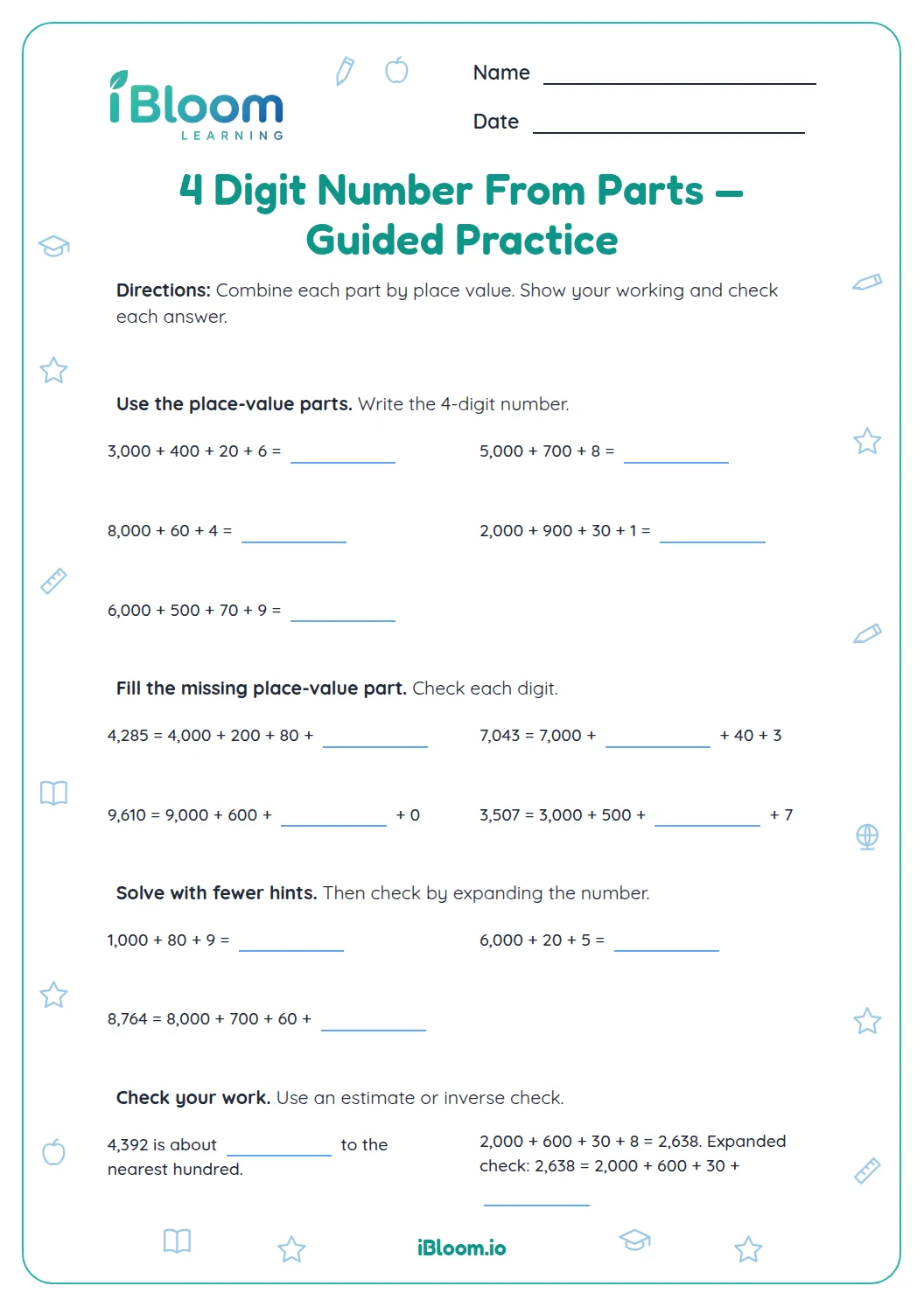
Thousands, hundreds, tens, and ones each tell the value of one digit. Add those values to write the number. In question 1, 3,000 + 600 + 20 + 8 makes 3,628.
- 13,000 + 600 + 20 + 8 = ___
- 23,628
How do learners connect building and rounding?
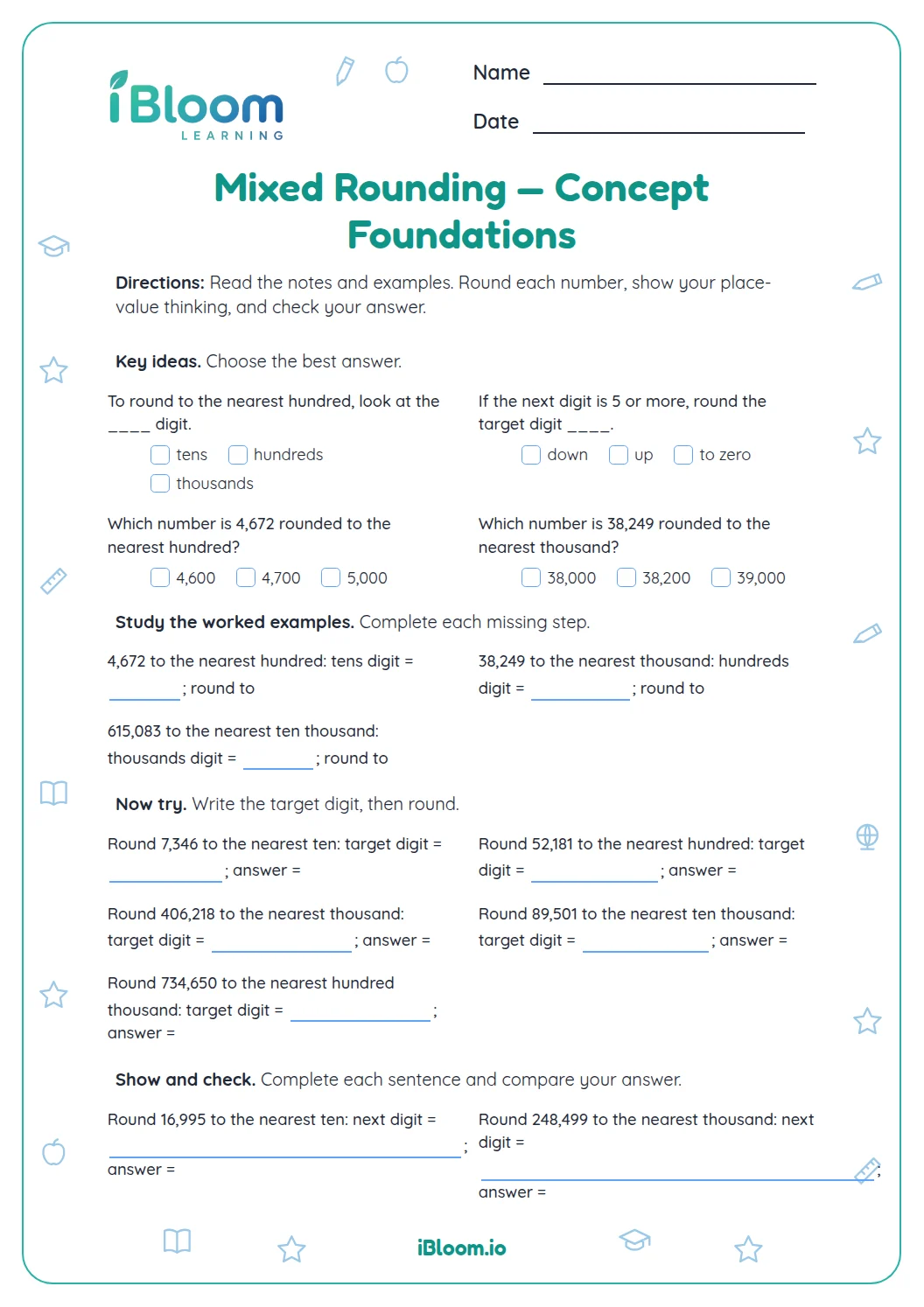
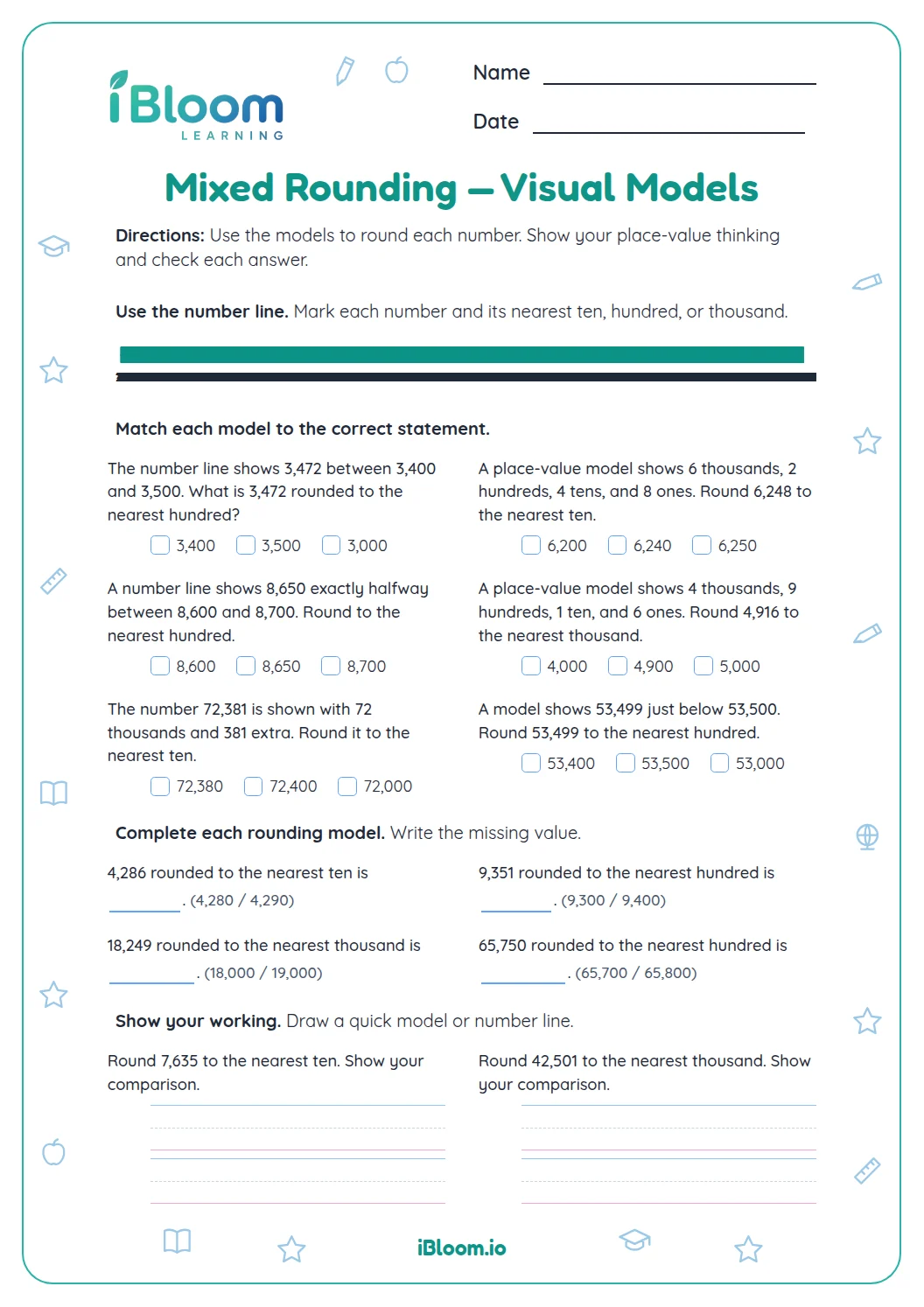
After writing a number, children round it to the nearest hundred or thousand. The place-value parts help them read the whole number before deciding which digit controls the rounding.
What does this practice include?
Fifteen one-blank questions cover eight number-building items and seven rounding items. Each numeral is four digits, and rounding is to a named hundred or thousand.
How can I use this worksheet?
- 1Read each place-value part before writing a number.
- 2Keep zero placeholders in the standard form.
- 3For rounding, check the digit immediately to the right of the named place.
- 4Use the answer key to check both the number and its rounded value.
What can children check as they work?
The mistake
Leaving out a place value when a digit is zero.
The fix
Keep the zero in the standard-form number even though its expanded term is omitted.
The mistake
Writing a digit instead of its place value.
The fix
Name the place first, then multiply the digit by that place value.
The mistake
Combining terms from different places incorrectly.
The fix
Check that each expanded term matches the digit directly above it.
Common Core alignment
This worksheet practices reading and writing multi-digit numbers through place value.
Use place value understanding to round multi-digit whole numbers to a named place.
On this sheet: Questions round four-digit whole numbers to the nearest hundred or thousand.
Show the official wordingHide the official wording
Use place value understanding to round multi-digit whole numbers to any place.
What to practice next
Make more practice
Further reading
Questions parents and teachers ask
What does “number from parts” mean?
Each part names the value of a place, such as 3,000 or 20. Add the thousands, hundreds, tens, and ones to make one four-digit number. For example, 3,000 + 600 + 20 + 8 makes 3,628. The first eight items practice this construction.
How do I round to the nearest hundred?
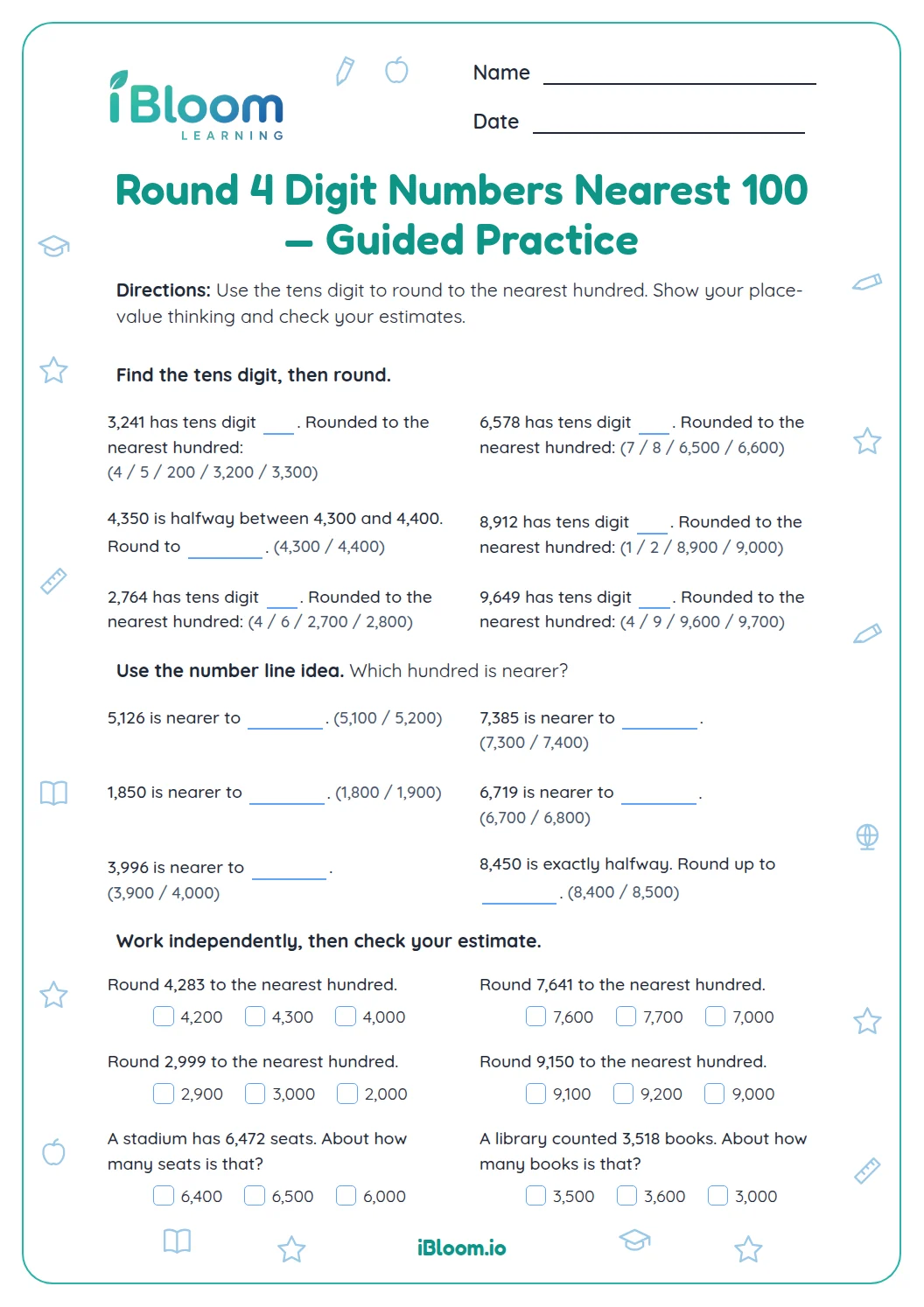
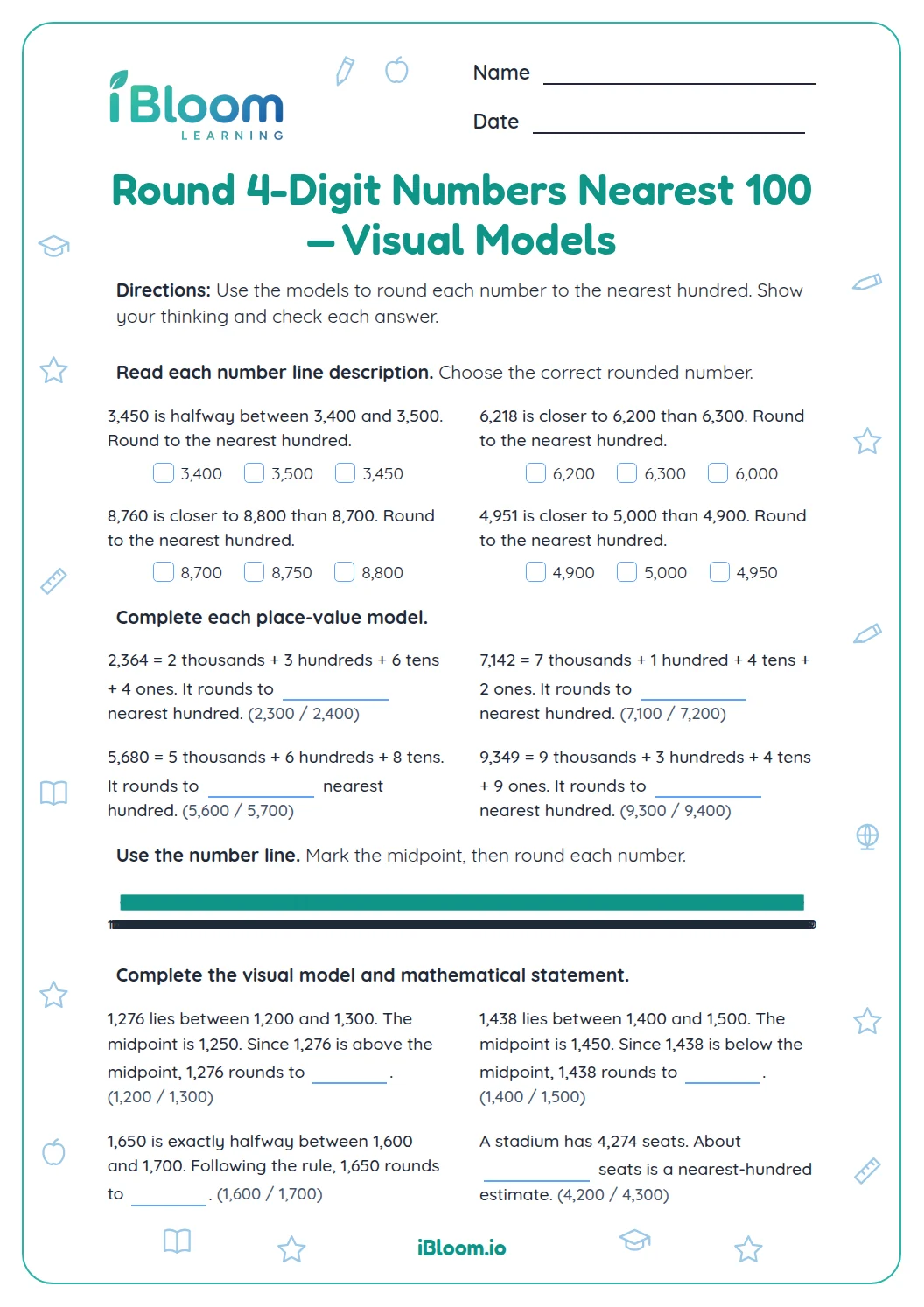
Find the hundreds digit and look at the tens digit. If the tens digit is 5 or more, increase the hundreds digit by one; otherwise, keep it. Replace tens and ones with zeros. Items 9, 11, 14, and 15 round four-digit numbers to the nearest hundred.
Why does a zero matter in 4,206?
The zero marks the tens place, showing there are no tens. It keeps the other digits in their correct places, so 4,206 is different from 426. Several number-building items include a zero part to practice keeping each digit in its intended place.
What does this worksheet practice?
There are 15 questions: eight ask children to build a four-digit number from its place-value parts, and seven ask them to round a four-digit number to a named hundred or thousand. Each item has one blank. The answer key lists the resulting number for checking.
How can learners check a rounded answer?
Check the place named in the prompt, then look at the digit immediately to its right. That digit determines whether to round up or keep the named-place digit. Finally, check that all smaller places become zeros. The answer key gives a rounded value for every item.