
About this worksheet
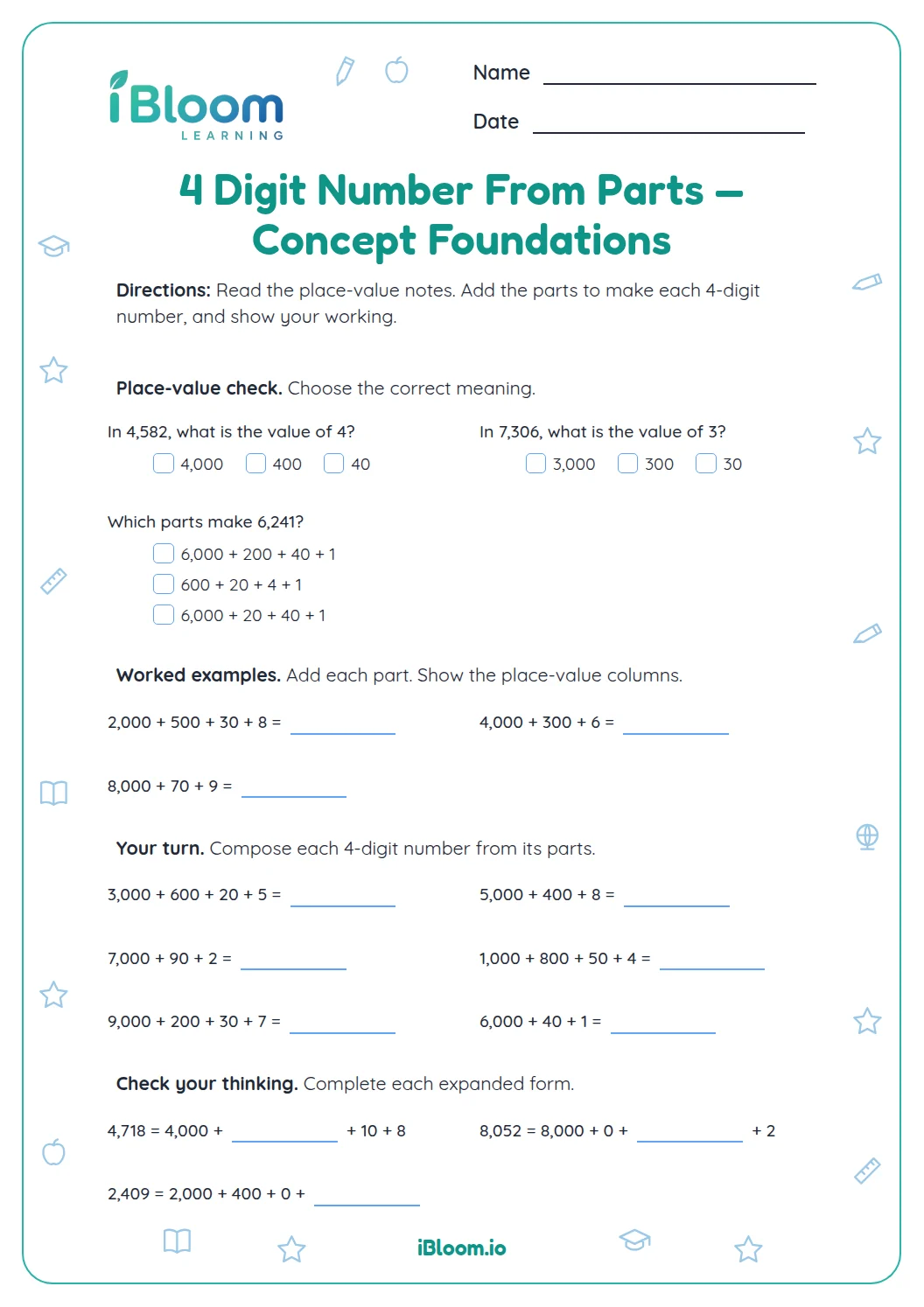
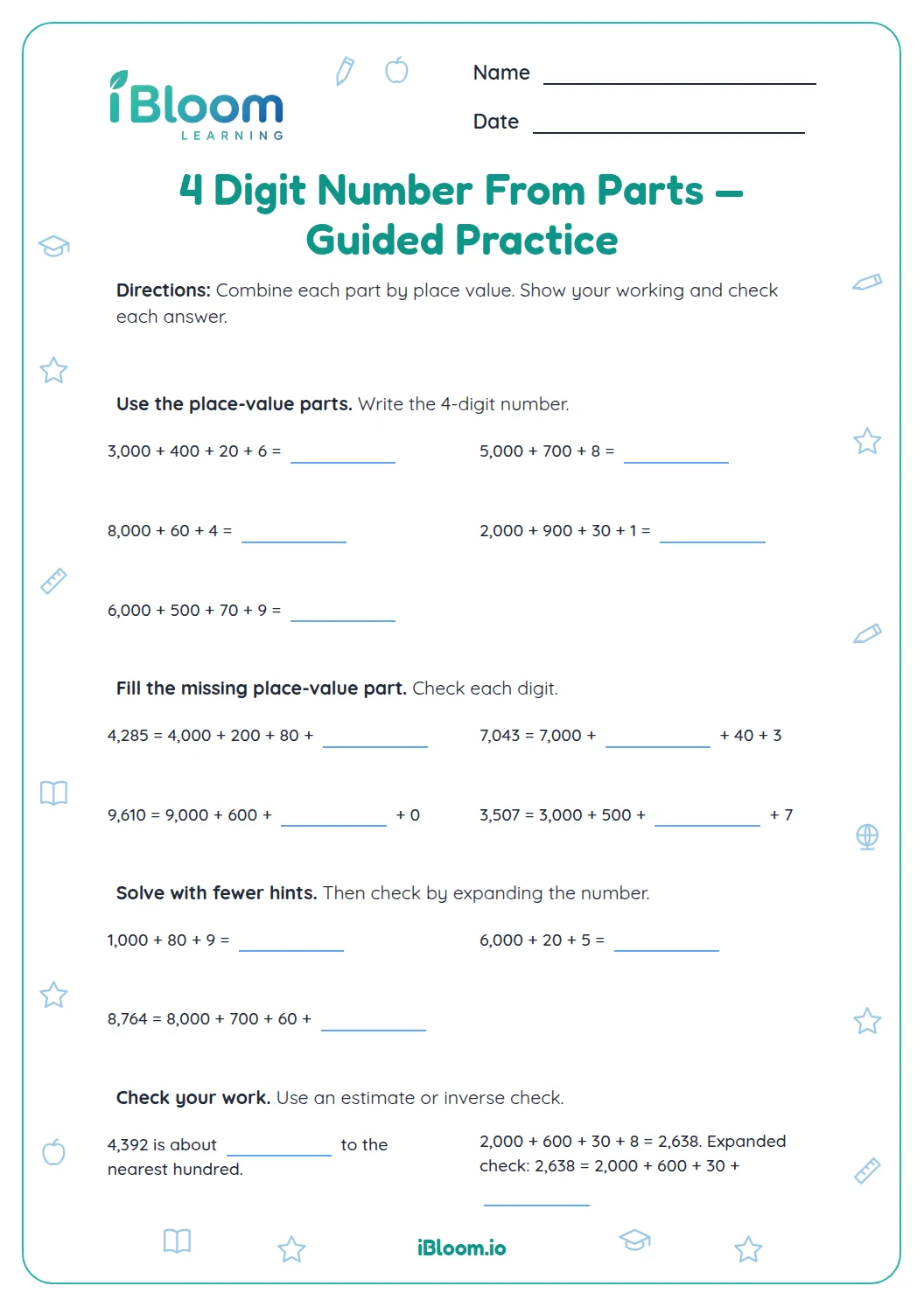
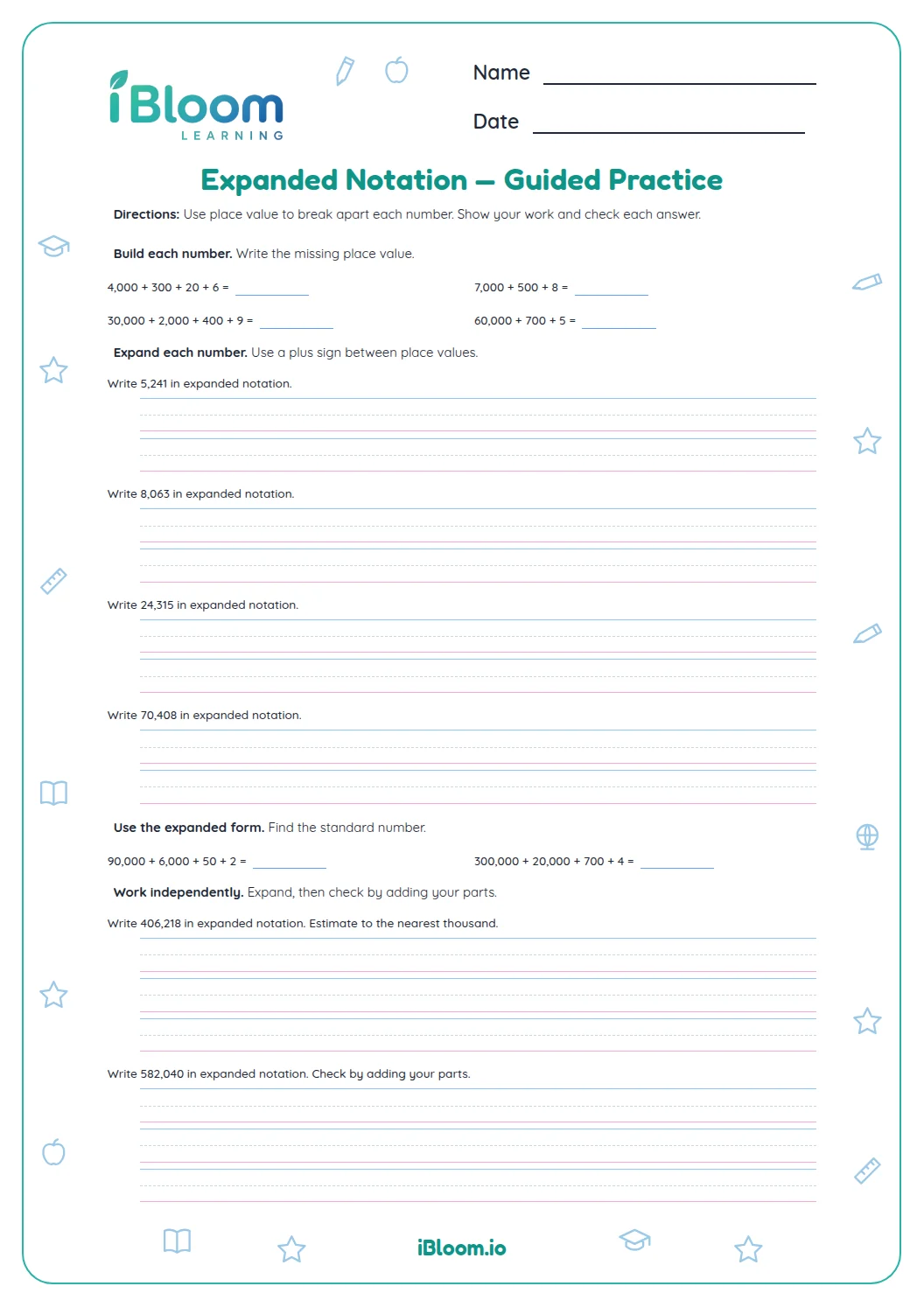
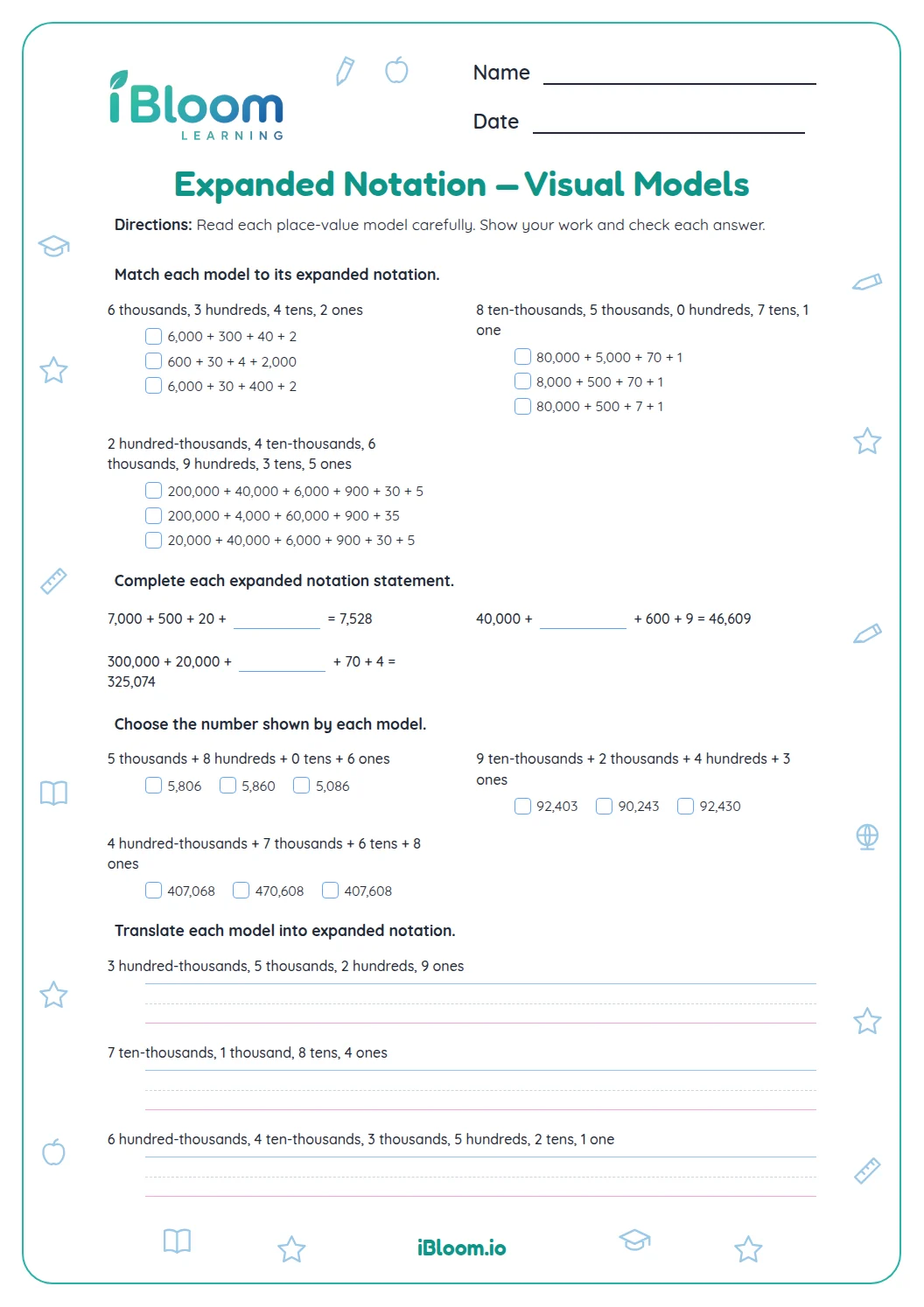
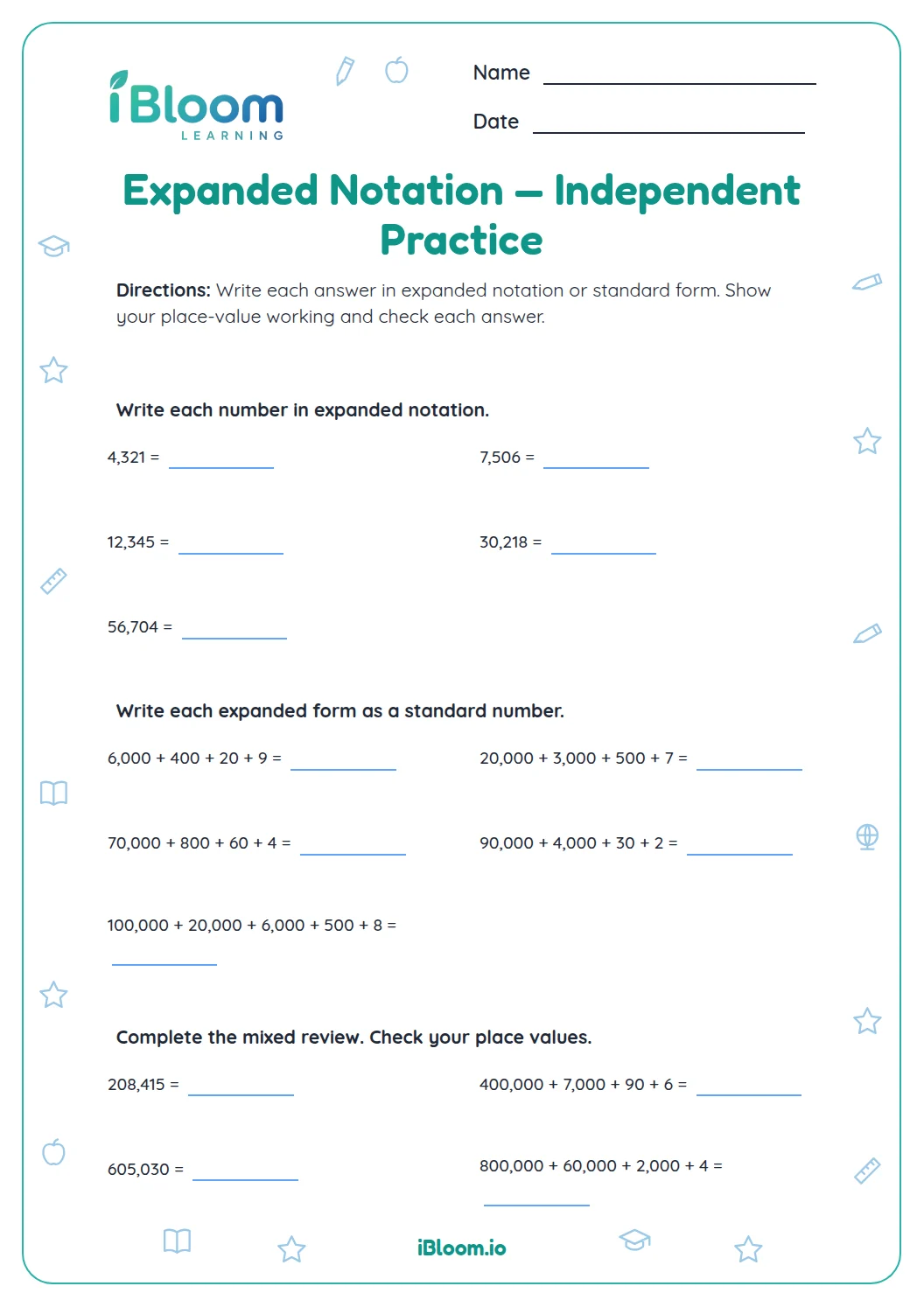
This Grade 4 worksheet practices reading and writing four-digit numbers from place-value parts. Students read a place-value table, combine expanded notation, and identify a digit’s value. The table models thousands, hundreds, tens and ones, including zero placeholders. The practice aligns with 4.NBT.A.2.
Aligned to 4.NBT.A.2
How do place-value parts combine?
Add the value of each place. A zero means there are no units in that place, but it still holds the position of the other digits.
- 15 thousands, 0 hundreds, 2 tens, 9 ones = 5,029
- 24 thousands, 70, 6 = 4,076
What does a digit’s value mean?
A digit’s value depends on its position. In 3,684, the 6 is in the hundreds place, so its value is 600. The digit itself is 6; its value is 600.
How do I read the place-value table?
Each column holds one digit. Read across from thousands to ones, then write the digits in that same order. A zero keeps an empty place in position.
- 1The columns 3 thousands, 4 hundreds, 2 tens and 6 ones make 3,426.
How to use this worksheet
- 1Read each column from thousands through ones.
- 2Write one digit in each place, including a zero when a place has no value.
- 3Add the expanded-form parts to check the standard form.
- 4Use the answer key to check the number and the value of each named digit.
Common mistakes and quick fixes
The mistake
Writing 3,426 as 3,246 after hearing the digits in order.
The fix
Name each place from left to right: thousands, hundreds, tens, ones. Keep every digit in its assigned place.
The mistake
Leaving out a zero placeholder, such as writing 8,057 as 857.
The fix
Keep a zero in the hundreds place so the 8 stays in the thousands place.
The mistake
Reading 3,426 as 3,246 by swapping the hundreds and tens.
The fix
Say the place names in order as you read each digit: thousands, hundreds, tens, ones.
Common Core alignment
This Grade 4 worksheet practices the grade-level skill described by the Common Core standards below.
Read and write multi-digit whole numbers using base-ten numerals and expanded form.
On this sheet: Students express four-digit numbers in standard and expanded forms and interpret digit values.
Show the official wordingHide the official wording
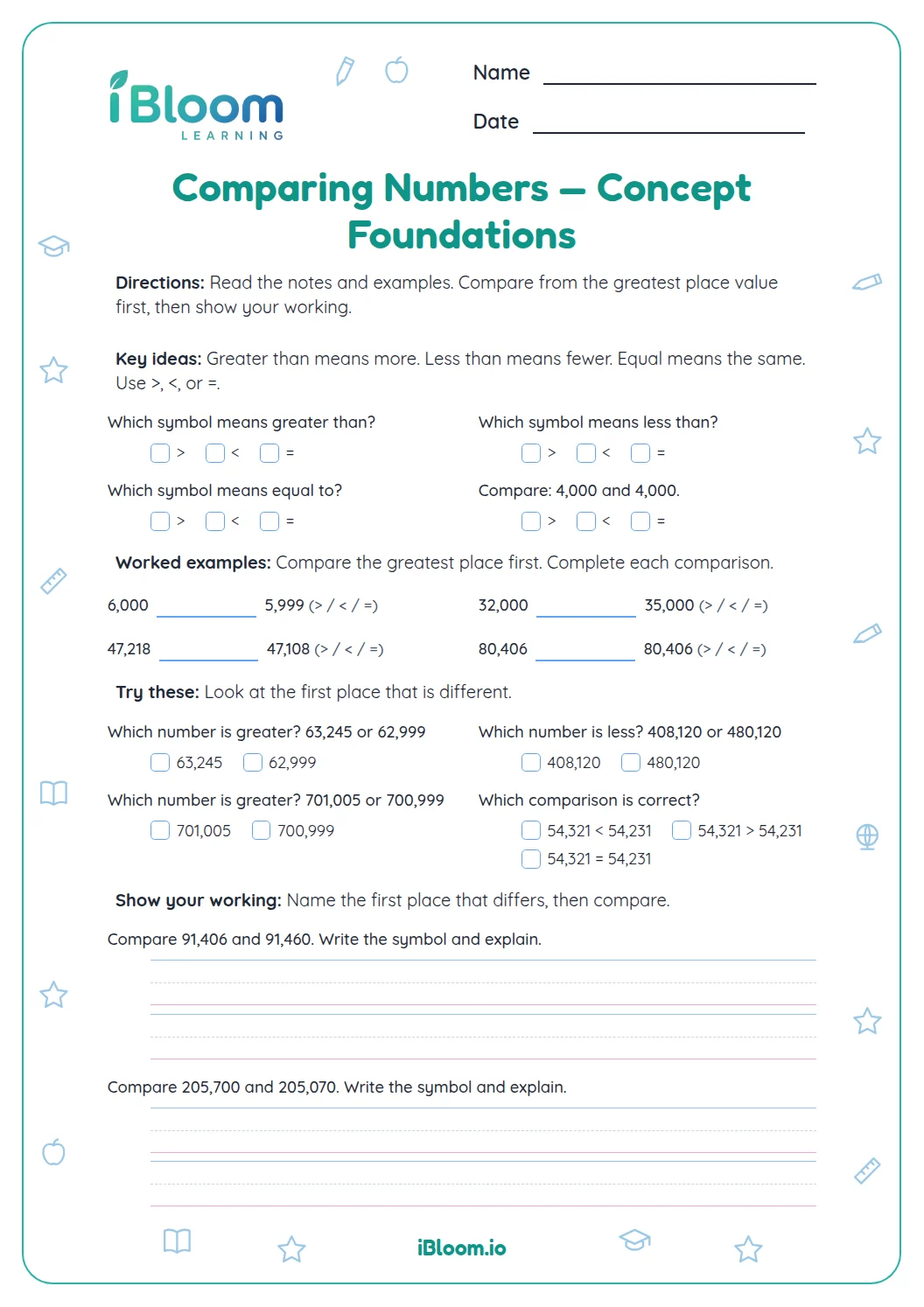
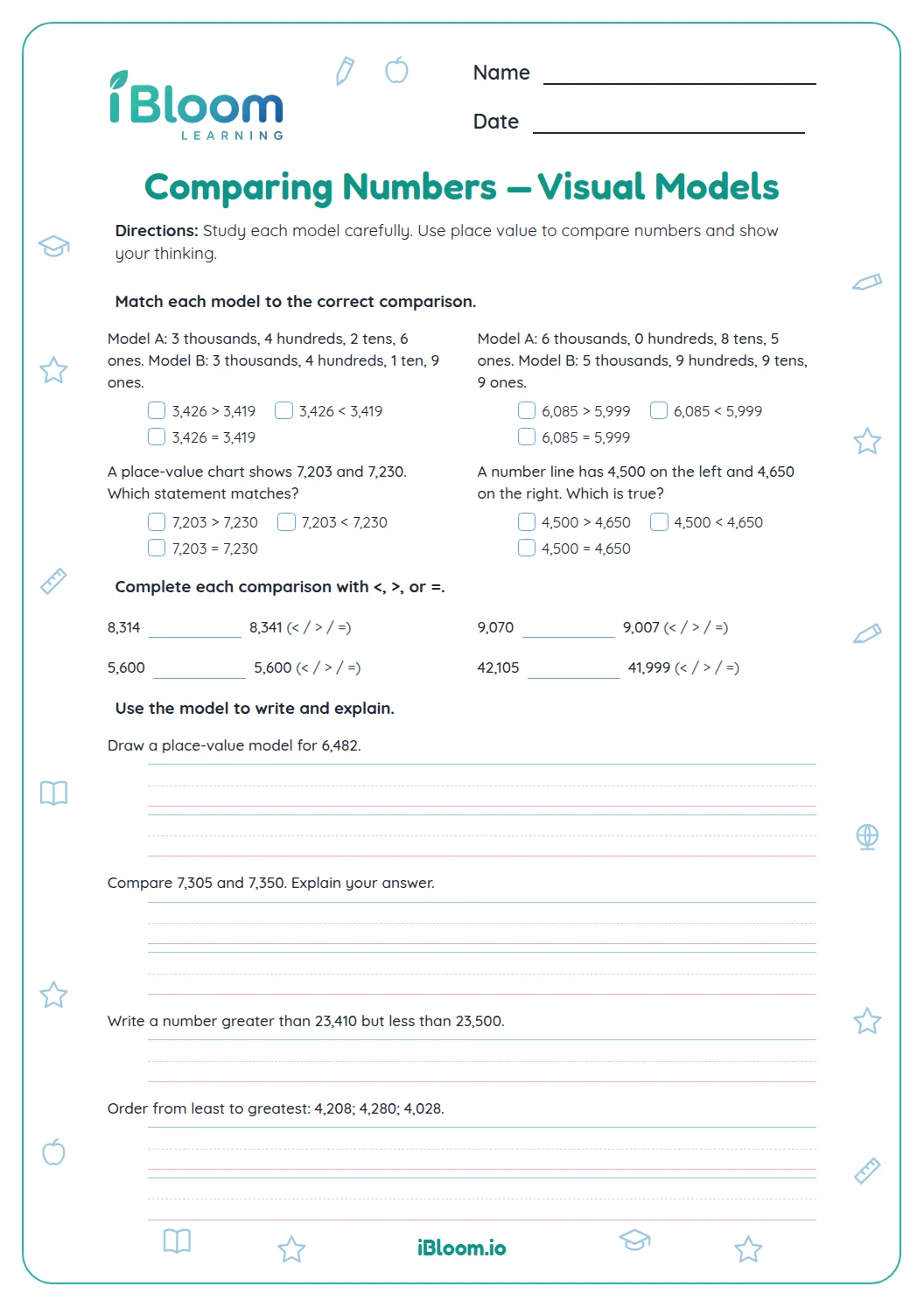
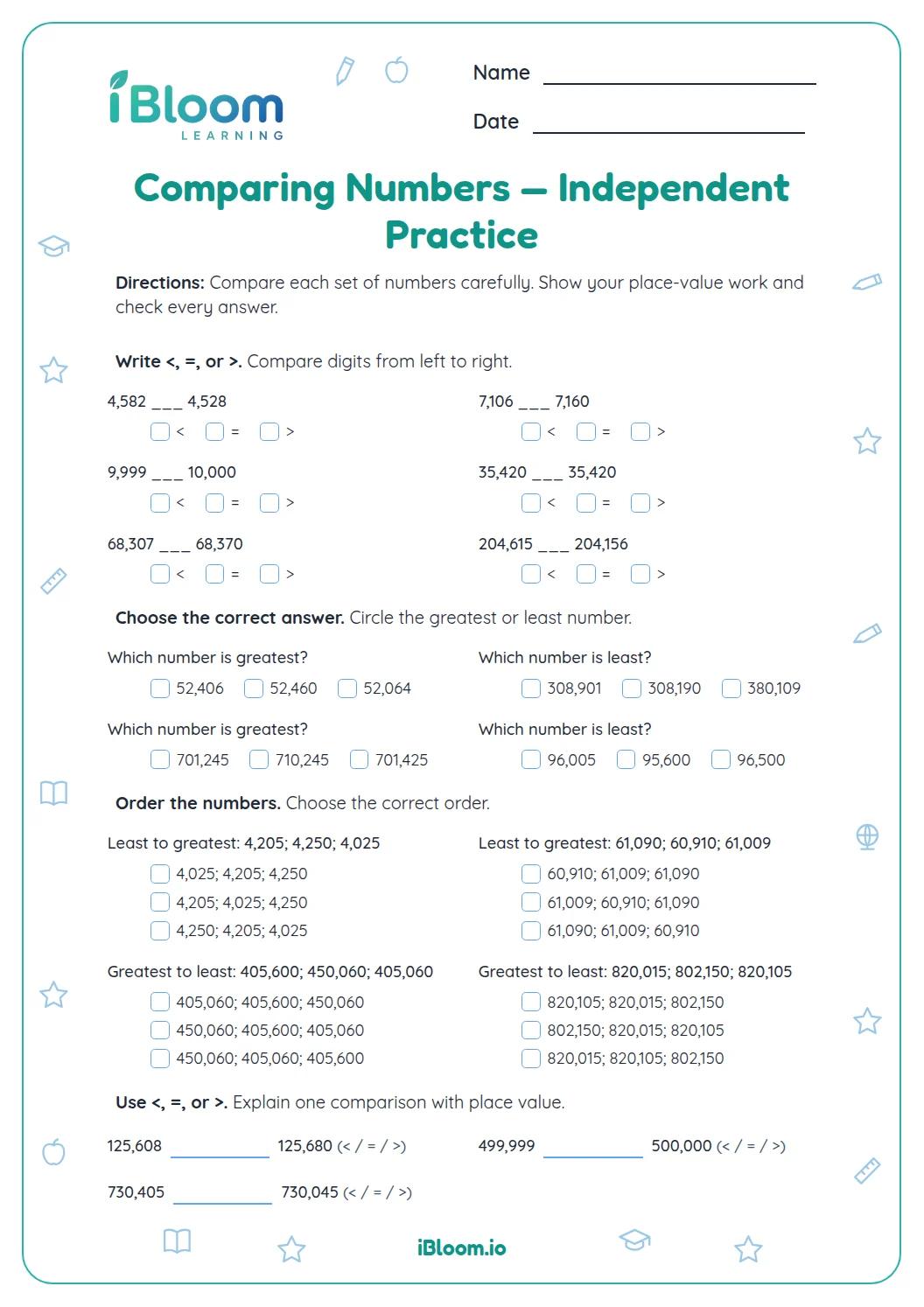
Read and write multi-digit whole numbers using base-ten numerals, number names, and expanded form. Compare two multi-digit numbers based on meanings of the digits in each place, using >, =, and < symbols to record the results of comparisons.
What to practice next
Make more practice
Further reading
Questions parents and teachers ask
What does “number from parts” mean?
It means a number is described by the value of each place. For example, 4,000 + 300 + 20 + 6 combines to make 4,326. Each addend tells the contribution of one place, so the digits can be read in the correct thousands-to-ones order.
Why does a number sometimes need a zero?
A zero holds the place where there are no units. In 8,057, it keeps 5 in the tens place and 7 in the ones place. Without the zero, the digits would shift and describe a different number. Keep each place in its position.
What is the value of a digit?
A digit’s value depends on its position. In 3,684, the 6 is in the hundreds place, so its value is 600. The digit is still called six, but it represents six hundreds. Compare the same digit in another place to see its value change.
How can students check a number from expanded form?
Add each place value and compare the result with the digits. Keep zero placeholders so the remaining digits stay in their correct places. For instance, 8,000 + 50 + 7 is 8,057, not 857, because the hundreds place is empty.
How does a place-value table help?
A place-value table keeps each digit in its own column: thousands, hundreds, tens or ones. Read the digits across in that order to make the number. A zero belongs in an empty place so the other digits do not shift into different values.