

About this worksheet
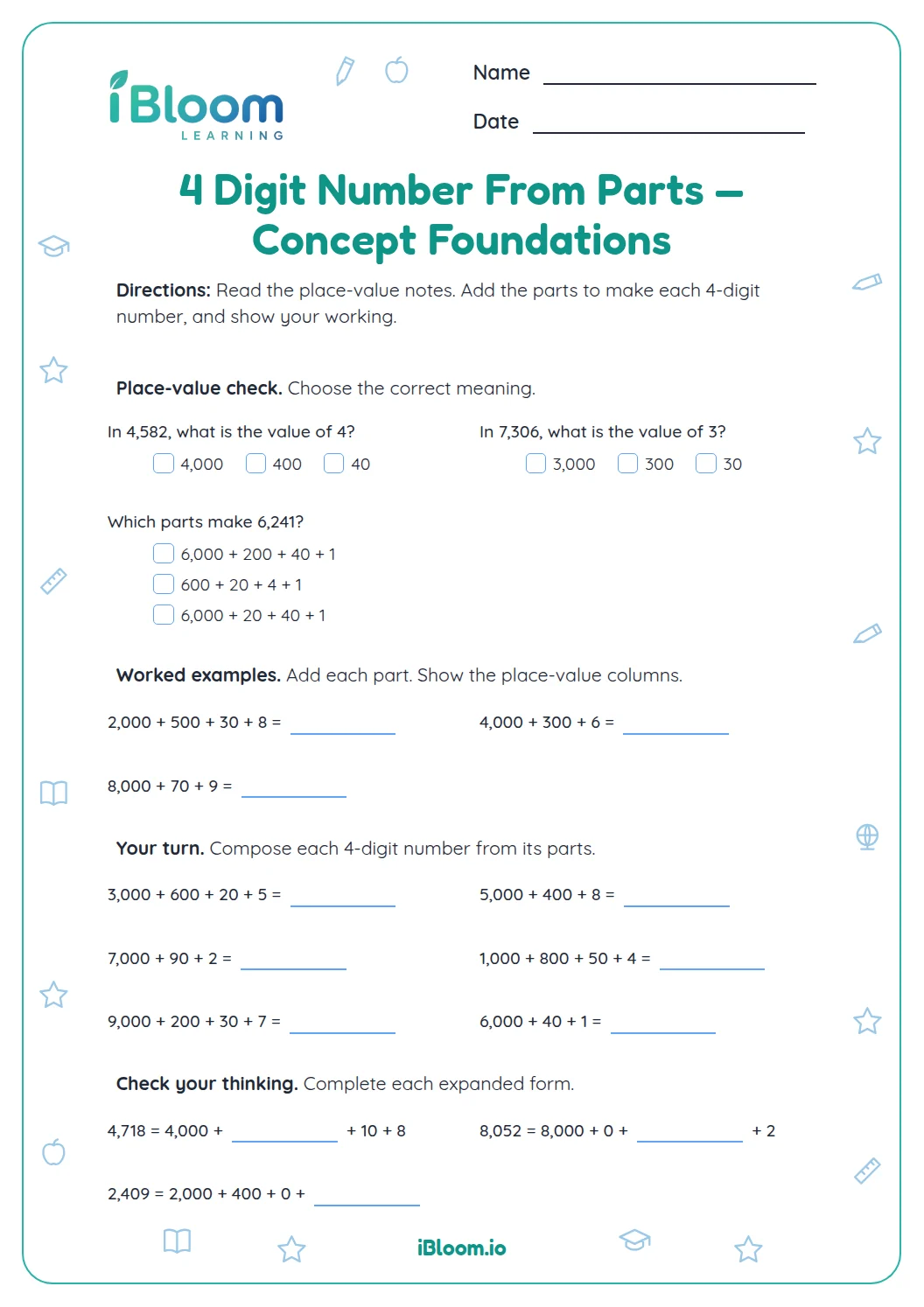
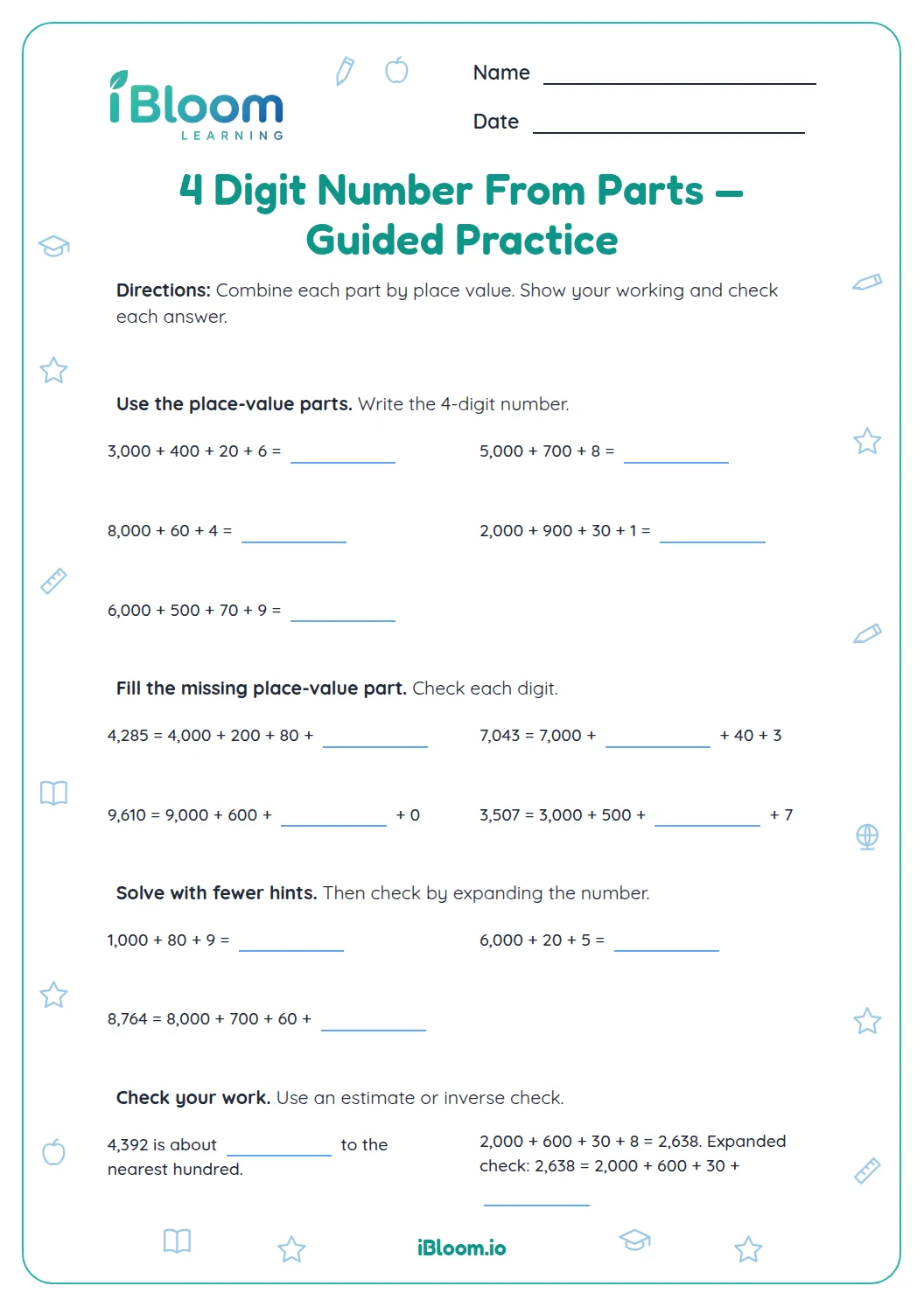
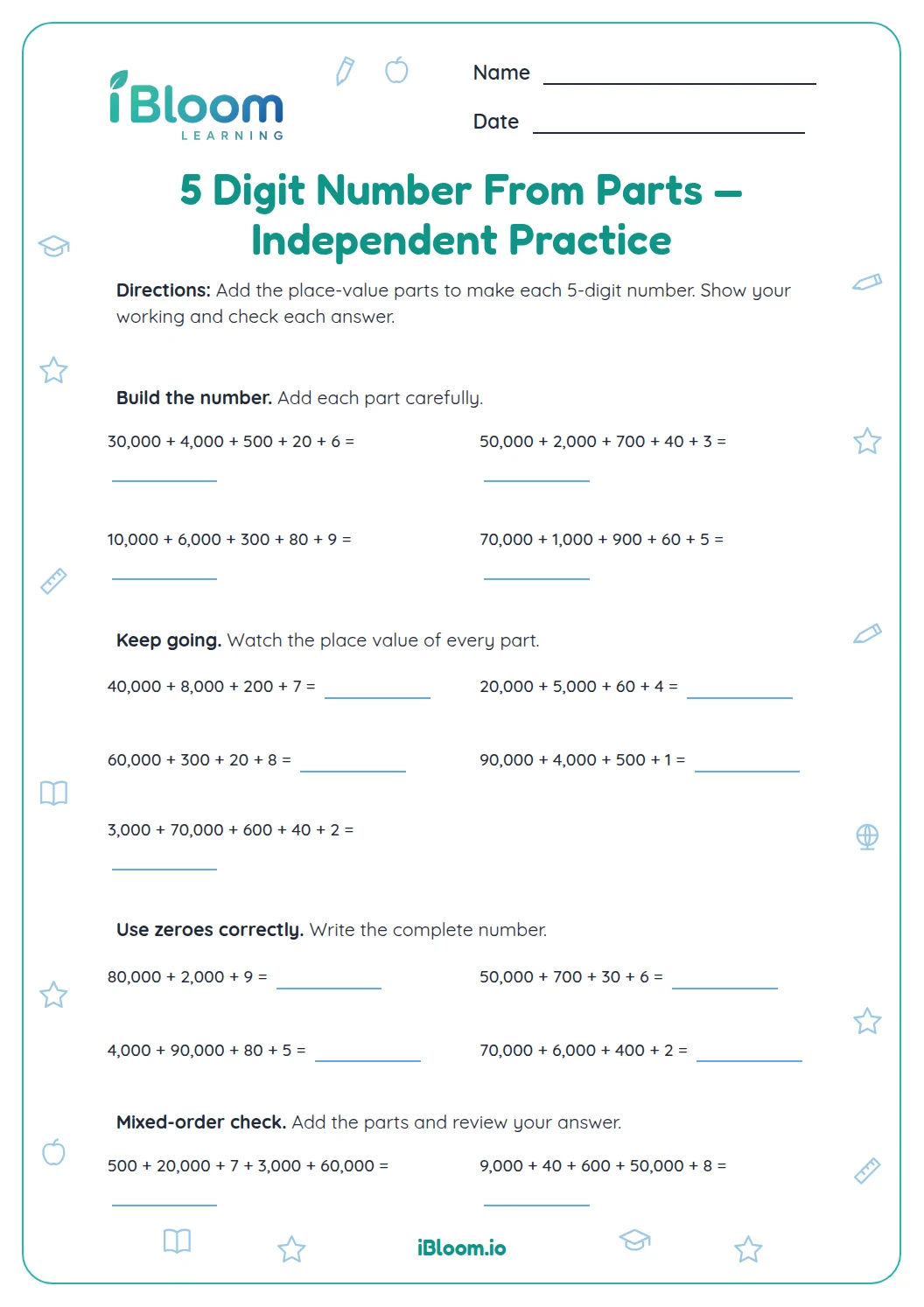
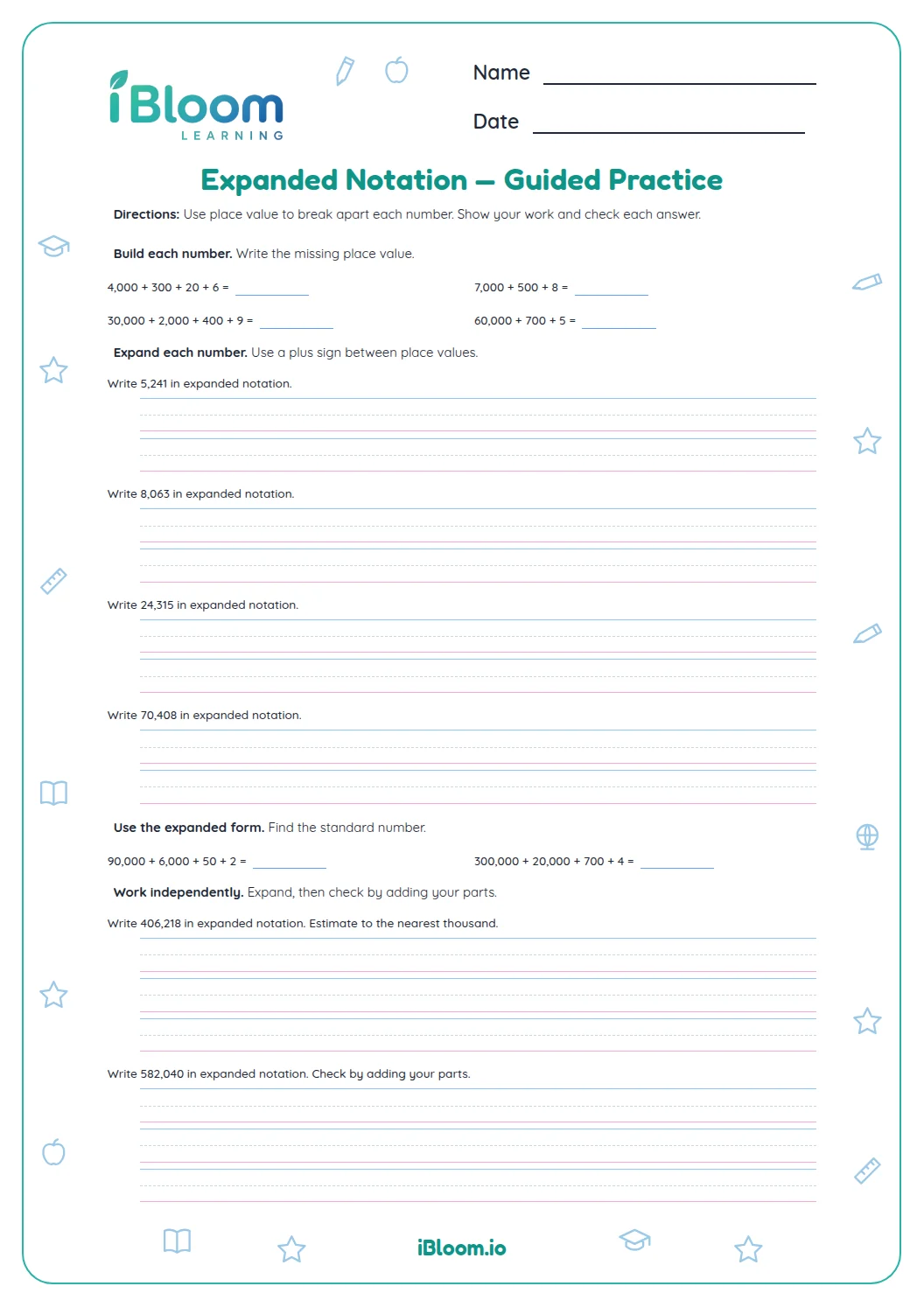
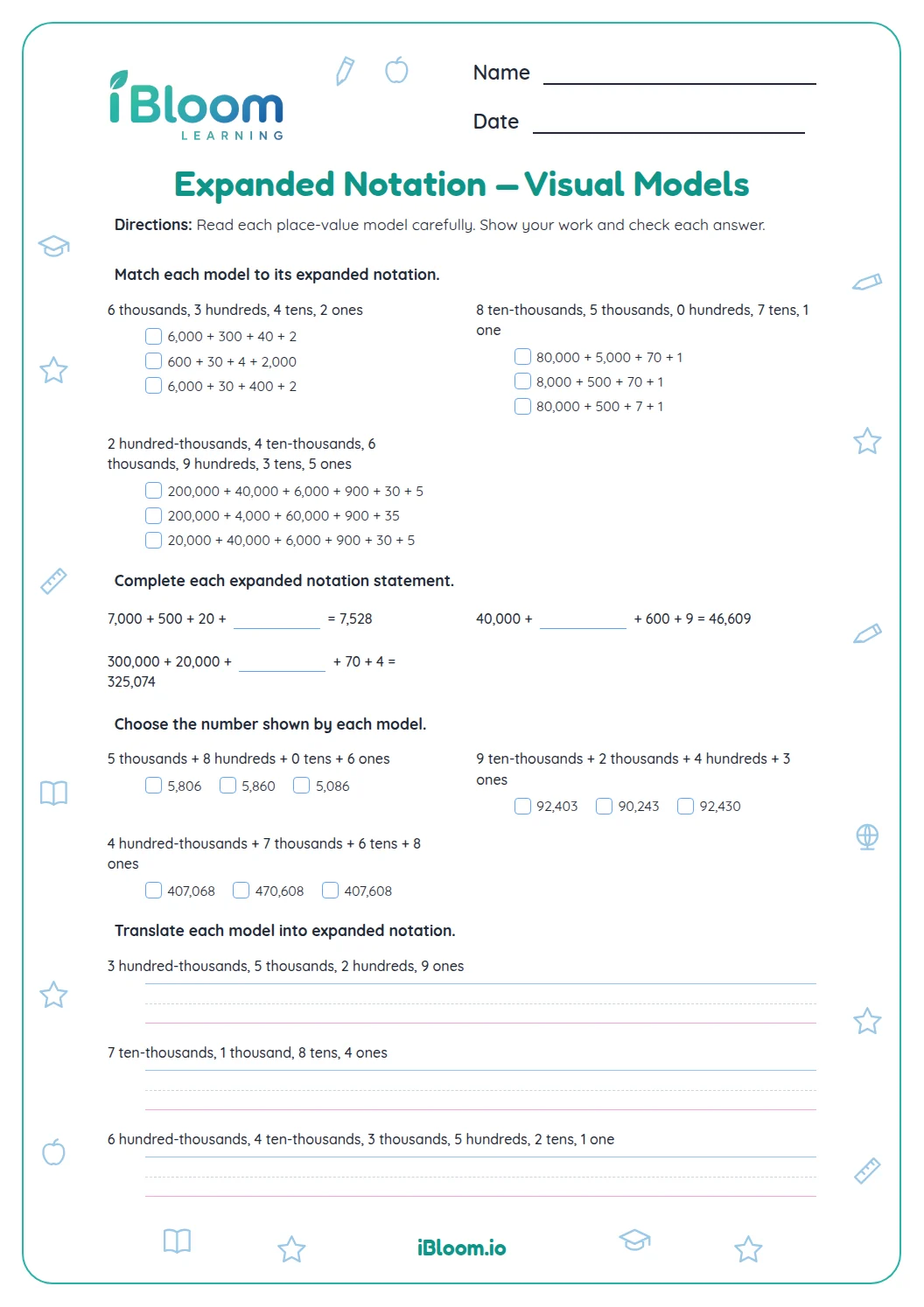
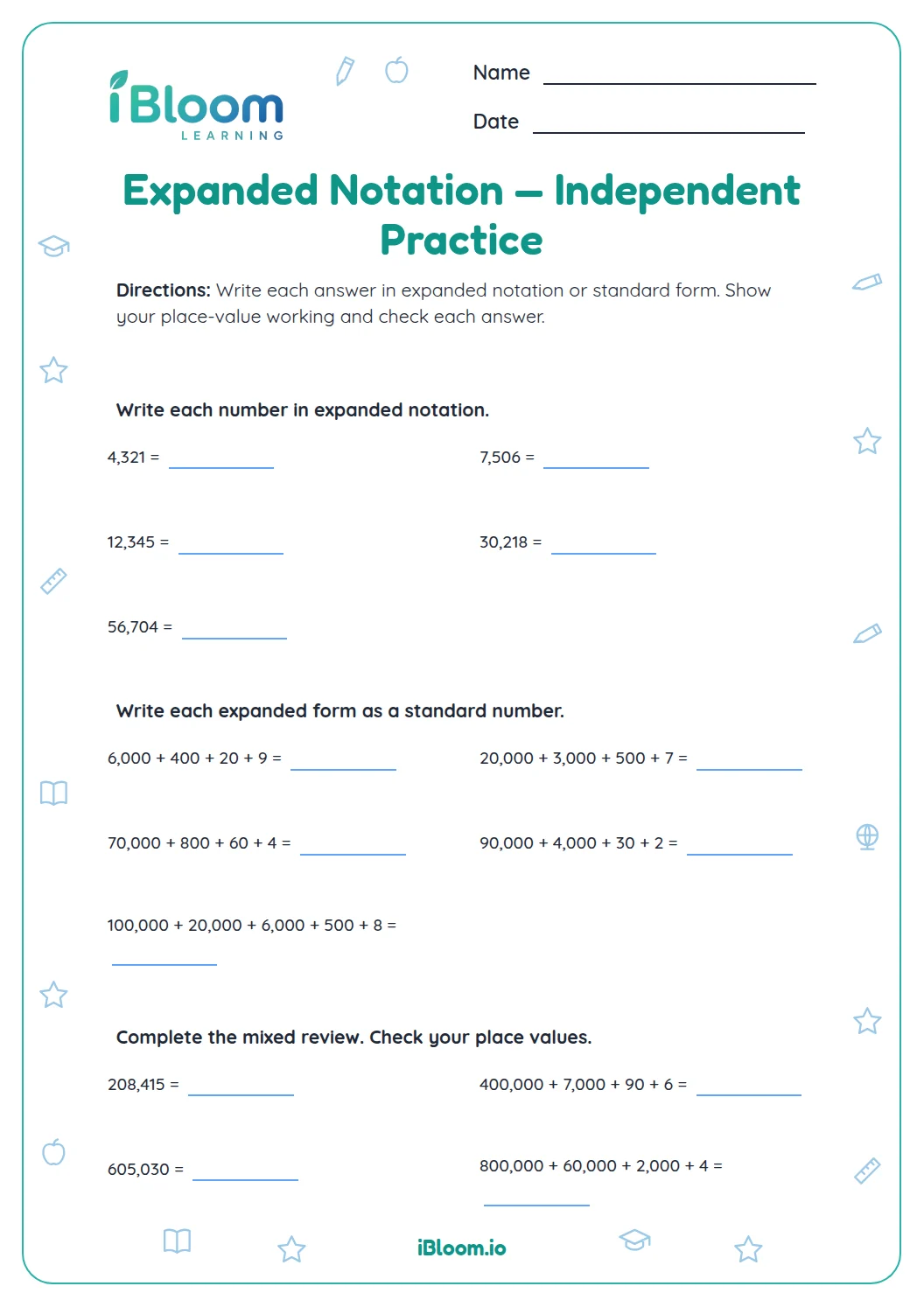
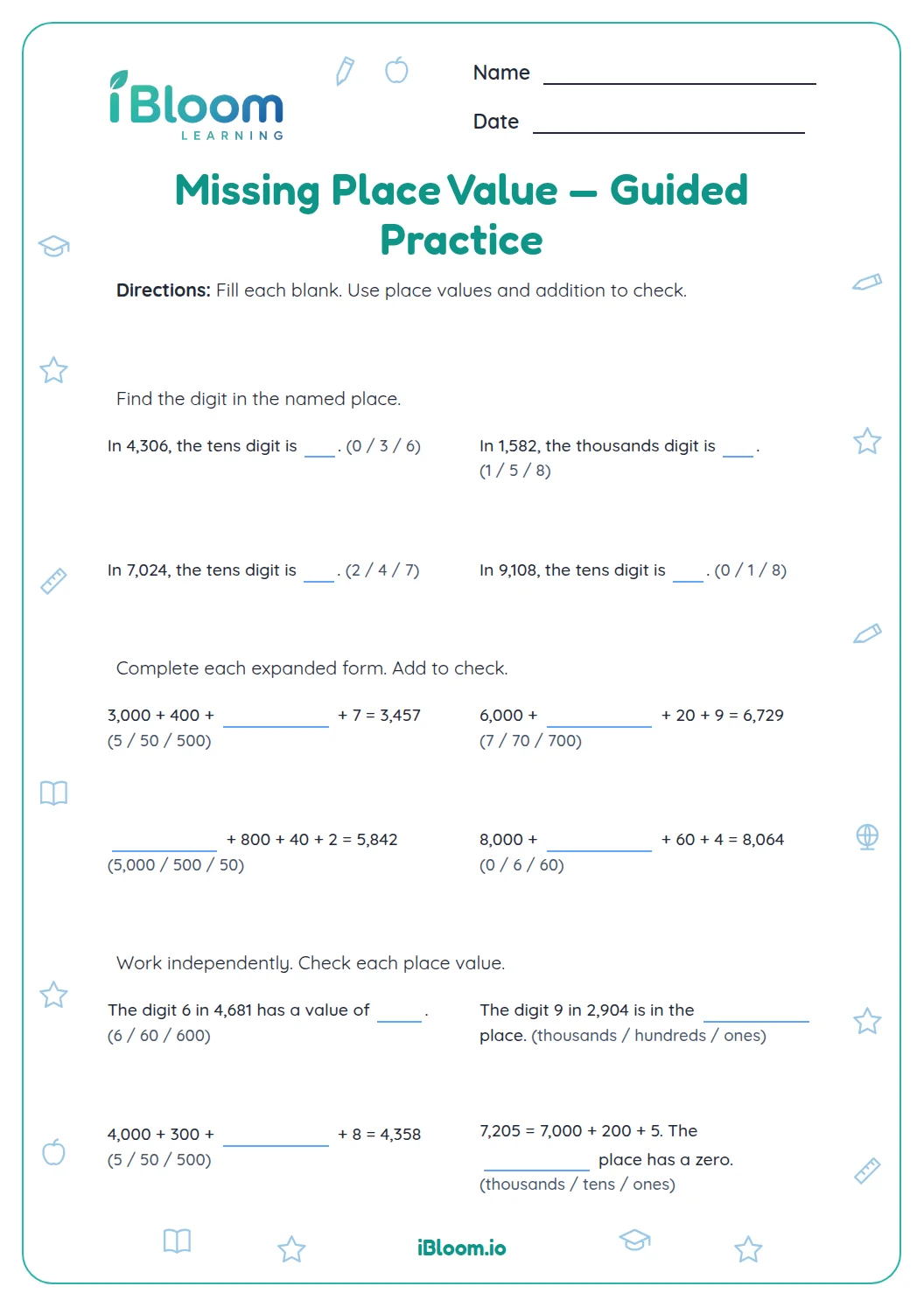
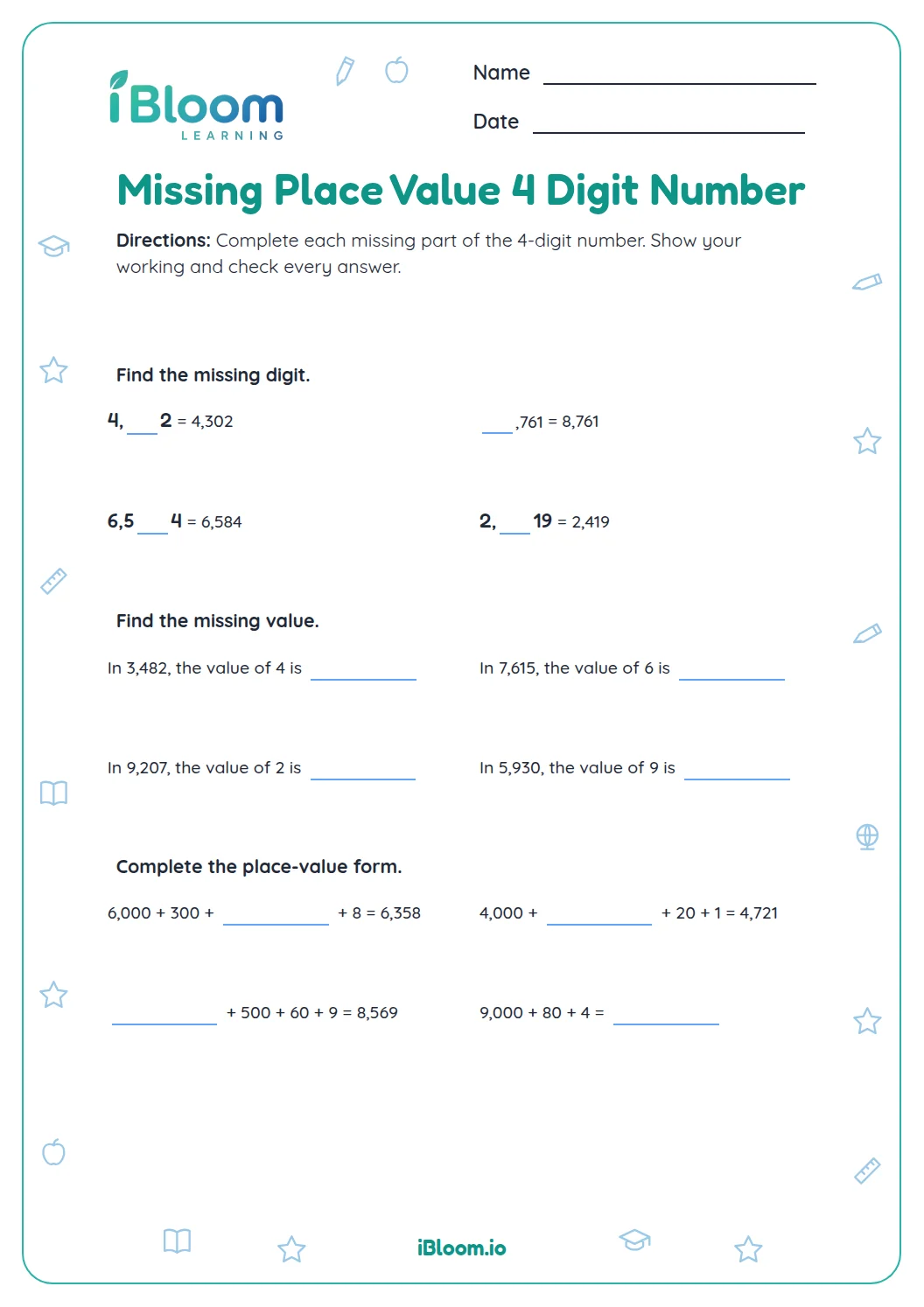
This Grade 4 printable helps students compose four-digit numbers from thousands, hundreds, tens, and ones. It begins with expanded sums, moves to short real-world totals, and ends with place-value clues that include zero in a place. The 14 questions practice reading and writing whole numbers in expanded and standard form, aligned to CCSS 4.NBT.A.2. The answer key is included on its own page.
Aligned to 4.NBT.A.2
How do place-value parts make a number?
Each part names the value contributed by one place. For 3,000 + 400 + 20 + 6, the digits are 3 thousands, 4 hundreds, 2 tens, and 6 ones.
- 13,000 + 400 + 20 + 6
- 23 thousands, 4 hundreds, 2 tens, 6 ones
- 3The number is 3,426.
What does a zero do in a four-digit number?
A zero holds a place with no groups. In 5,208, there are no tens, but the 2 still means 2 hundreds and the 8 means 8 ones.
What will students practice?
The three parts move from reading place-value sums to interpreting real quantities and composing numerals from verbal clues.
How can you use this worksheet?
- 1Name the thousands, hundreds, tens, and ones before combining them.
- 2In a story, add all four quantities; check that none was skipped.
- 3For a zero place, leave a zero in the matching digit position.
- 4Use the key to check both the numeral and its place values.
Mistakes to watch for
The mistake
Leaving out a zero place and writing 528 for 5,208.
The fix
Say the place names aloud and keep a zero digit for the empty tens place.
The mistake
Adding 300 as 3 instead of 300.
The fix
Match each amount to its place: 3 hundreds is 300.
The mistake
Stopping before adding the ones.
The fix
Check that the expanded sum has a part for each nonzero place.
Common Core alignment
This page practices the standard listed below.
Read and write whole numbers in standard and expanded form.
On this sheet: Students compose four-digit numerals from place-value parts and real-world quantities.
Show the official wordingHide the official wording
Read and write multi-digit whole numbers using base-ten numerals, number names, and expanded form. Compare two multi-digit numbers based on meanings of the digits in each place, using >, =, and < symbols to record the results.
What to practice next
Make more practice
Further reading
Questions parents and teachers ask
How do place-value parts make a numeral?
Each part names the value contributed by one place. For example, 3,000 + 400 + 20 + 6 combines three thousands, four hundreds, two tens, and six ones to make 3,426. The worksheet repeats this idea with story totals and place-value clues. Students can say each place value aloud as an added check before recording the numeral.
What does zero mean in a four-digit number?
Zero holds a place that has no groups. In 5,208, the tens digit is zero, while the 2 still means two hundreds and the 8 means eight ones. Several clues on the page help students keep empty places in the correct position. The number remains four digits, even when one of its places has no groups.
How many questions are included?
There are 14 questions in three parts: four expanded sums, five real-world totals, and five place-value clues. Students begin by combining written parts, then interpret quantities and compose numerals from digit clues. The answer key lists a numeral for every item.
How many pages should I print?
Print the two worksheet pages for practice and the two answer-key pages for checking. The key lists the expected numeral for each question, so families can review the work after the student finishes. Keeping the key separate makes it easy to check after the page is complete.
What comes after four-digit numbers?
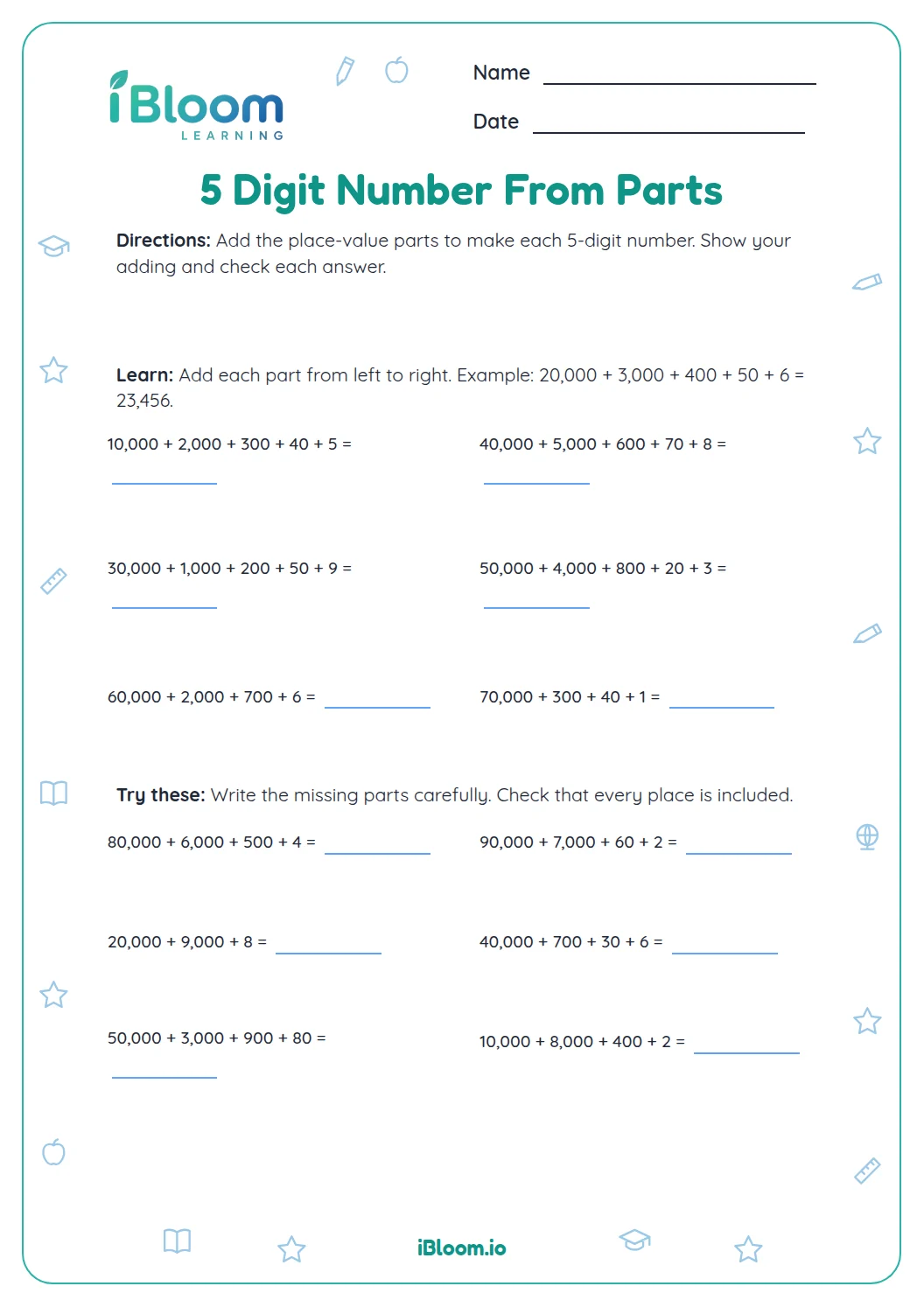
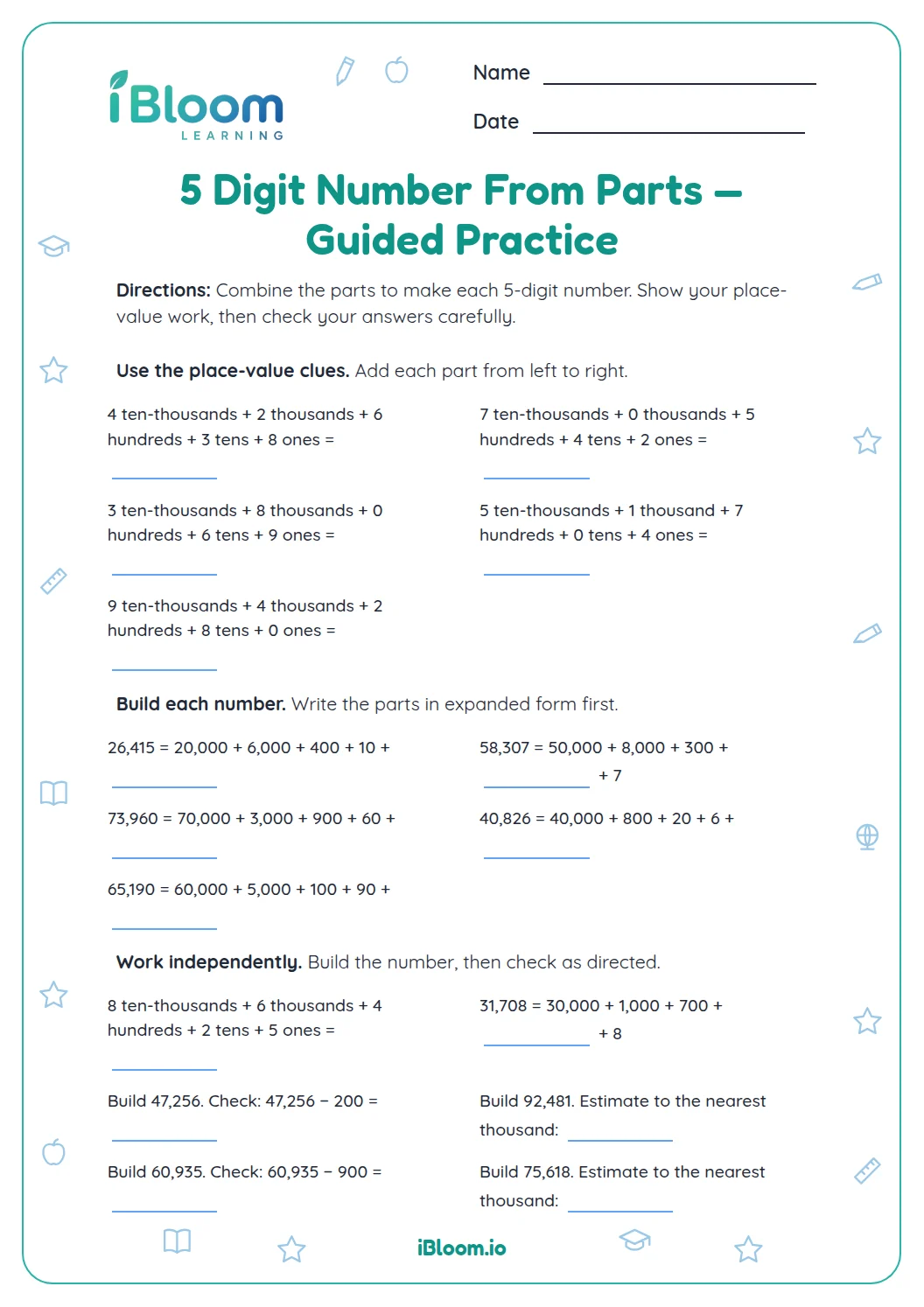
Students ready to extend the same skill can try the linked five-digit numbers from parts worksheet. Other related pages practice expanded notation and finding a missing place value in a four-digit number. This next step keeps the focus on composing numerals from place values.