




About this worksheet
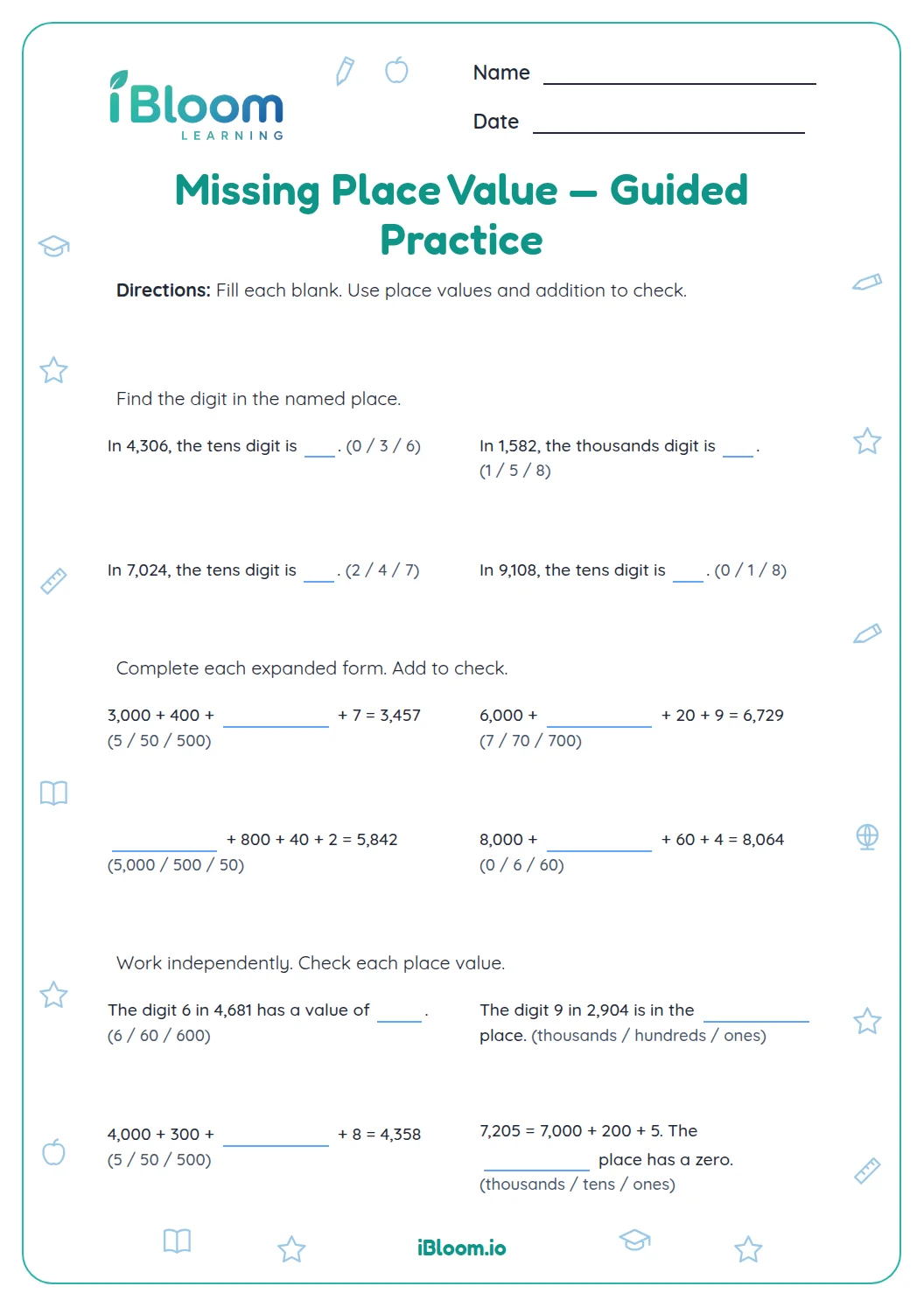
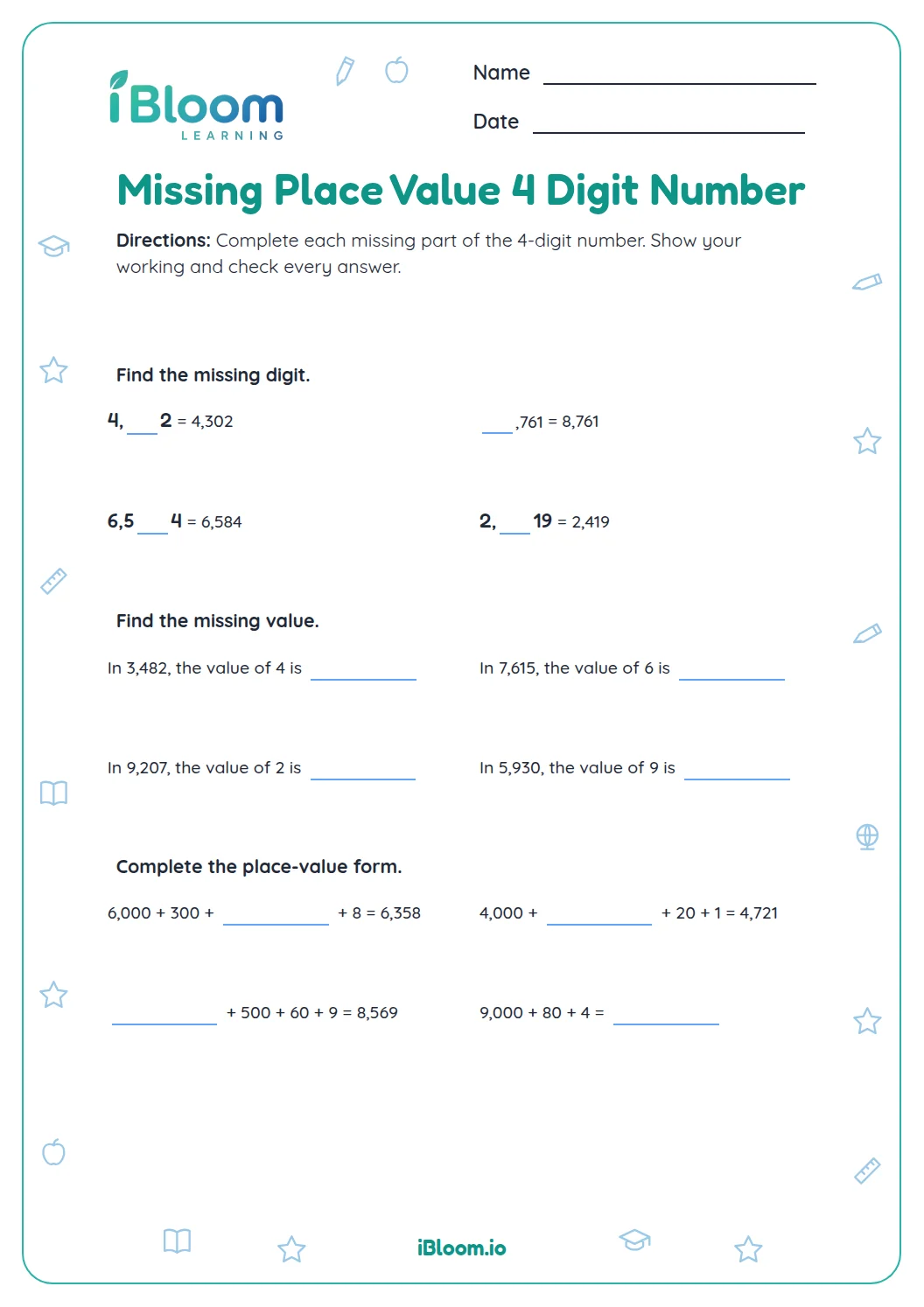
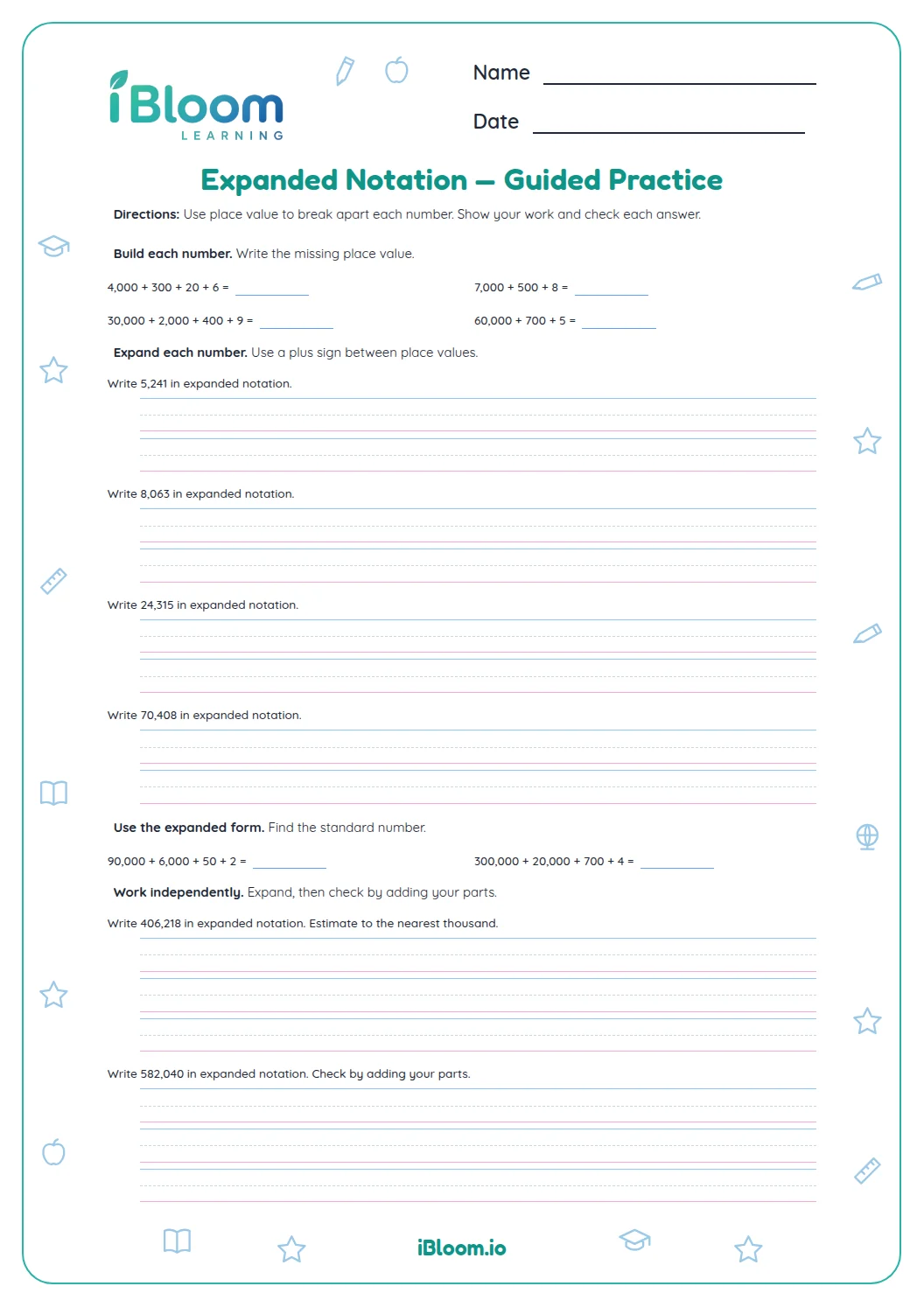
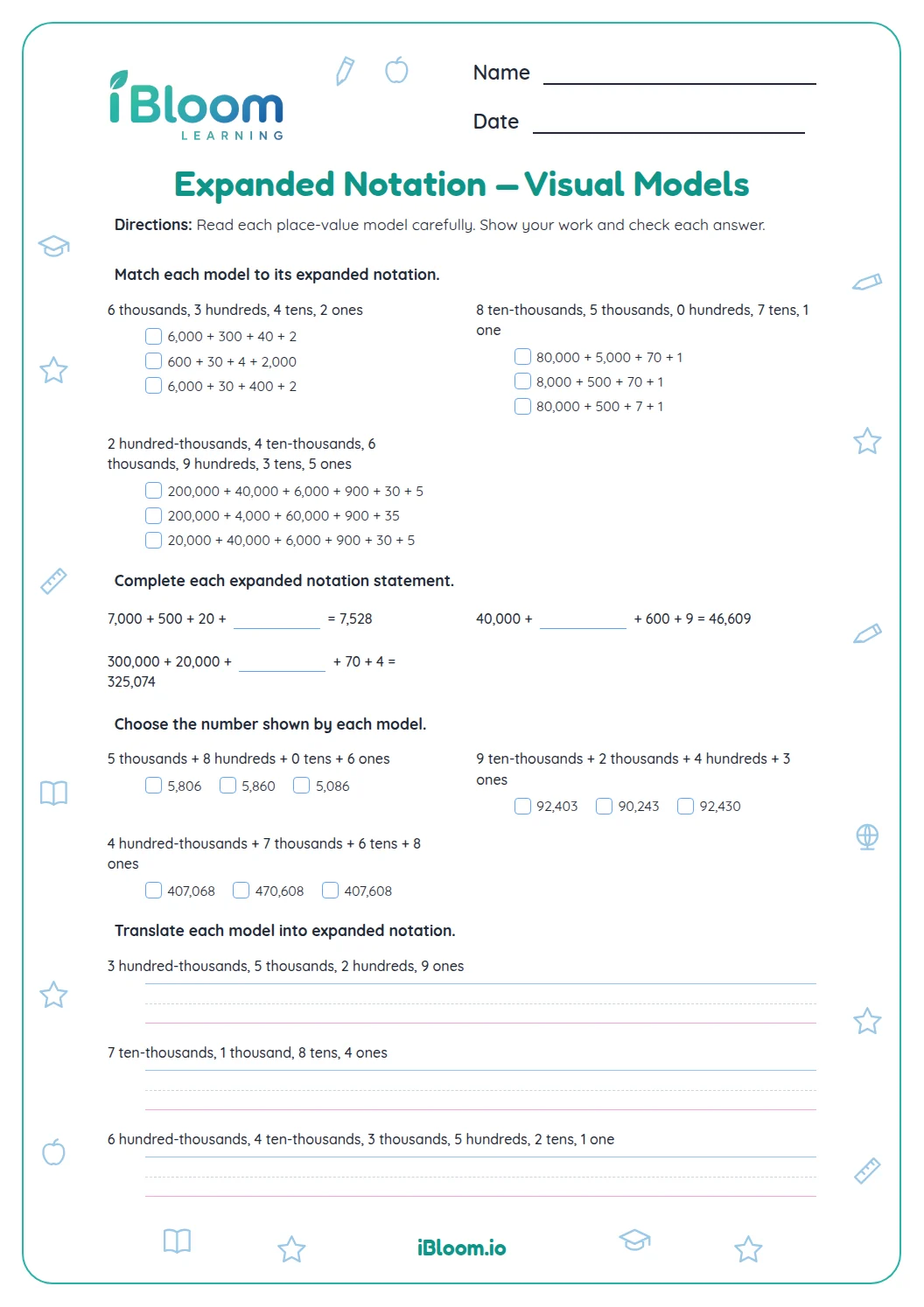
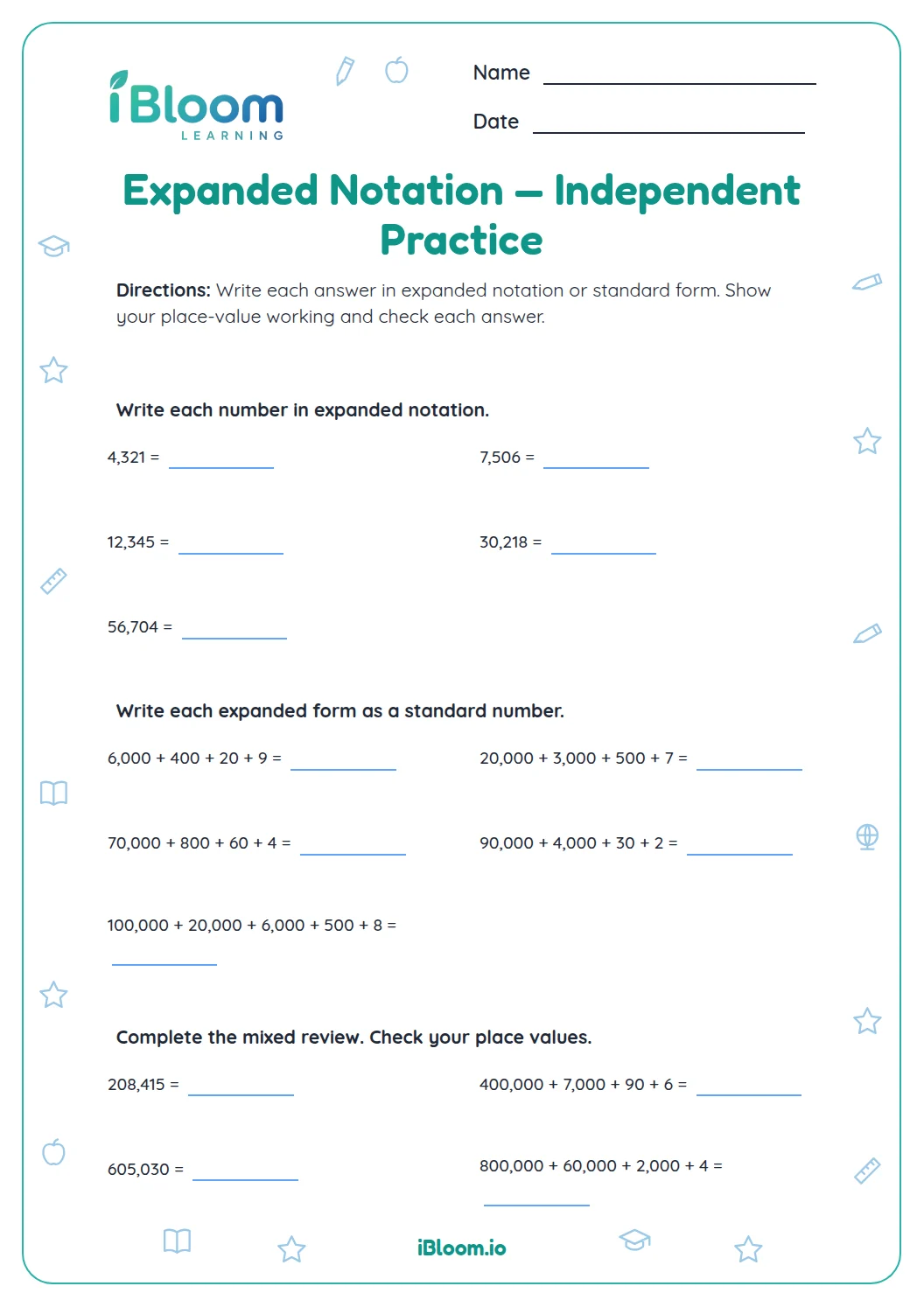
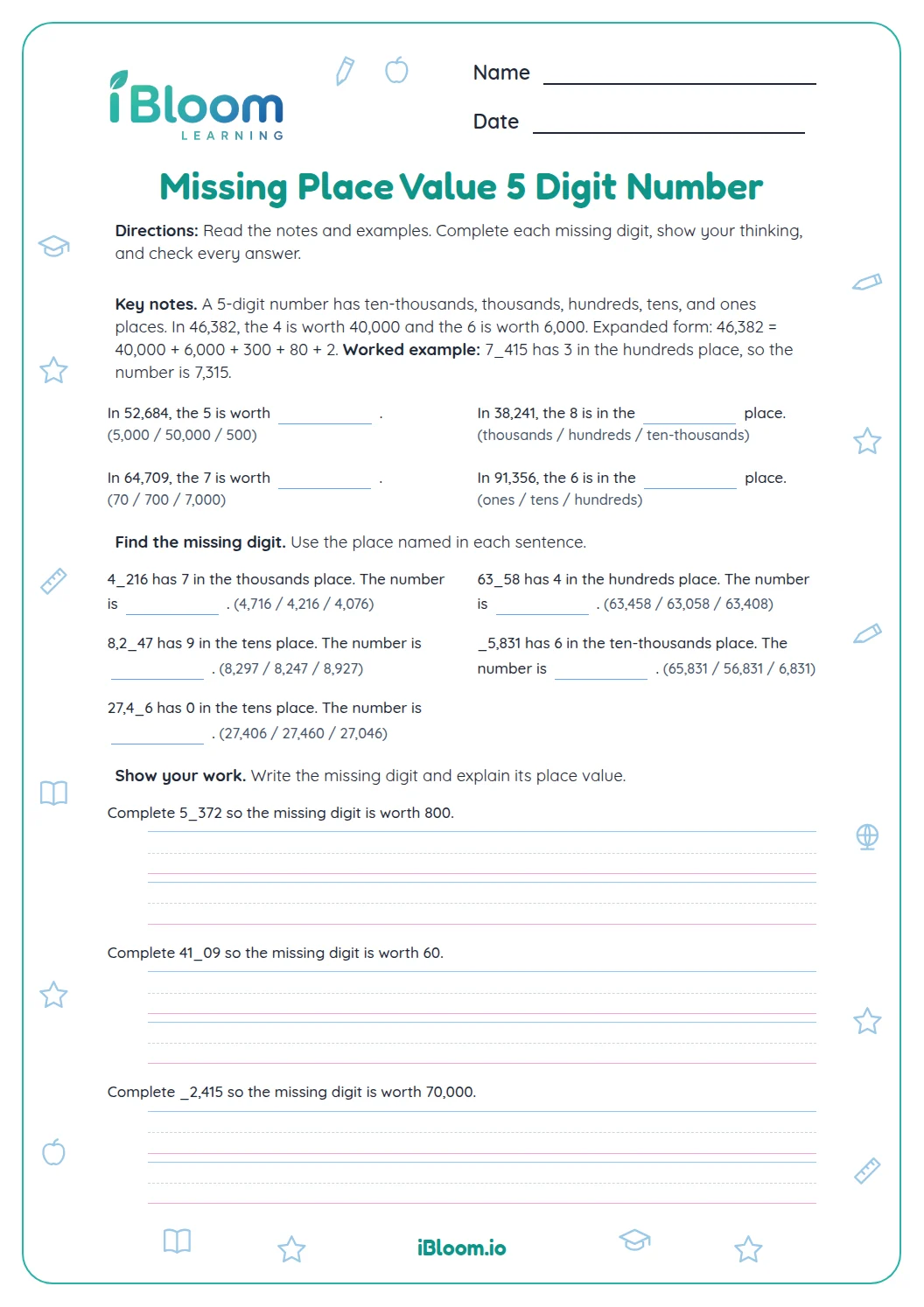
This free printable Grade 4 worksheet connects each digit in a four-digit number to its value. Sixteen questions begin with choosing a digit’s value, continue with missing addends in expanded form, and finish with missing digits in place-value descriptions. Students encounter zeros in different positions so they must keep thousands, hundreds, tens and ones distinct. The practice supports Common Core 4.NBT.A.2 through base-ten numerals and expanded form. Three parts move from recognition to independent completion, with a separate answer key for checking every value and digit.
Aligned to 4.NBT.A.2
How is a digit different from its value?
A digit is a symbol from 0 through 9. Its place tells how much it contributes to a number. In 6,342, the digit 6 contributes 6,000; in 2,386, the digit 8 contributes 80.
Part A asks for values. Encourage children to say the place name first, then the amount: “8 tens, so 80.” That spoken step connects the position to the number chosen.
How does expanded form reveal a missing value?
Expanded form writes a number as a sum of its place values. Read each addend as a place: thousands, hundreds, tens or ones. Compare those parts with the digits in the original number.
- 14,582 = 4,000 + ___ + 80 + 2
- 2The 5 is in the hundreds place.
- 35 hundreds = 500.
- 44,000 + 500 + 80 + 2 = 4,582.
What happens when a place contains zero?
A zero contributes no units of its place while keeping the other digits in position. In 7,306 there are no tens, so question 6 needs 0. In 3,075 there are no hundreds, so the hundreds digit is 0.
Some expanded sums omit zero addends. Question 8 writes 9,017 as 9,000 + 10 + 7, keeping the tens even though there are no hundreds. Part C then asks for single digits, so students must notice that “___ hundreds” needs a digit rather than a whole value.
How to use this worksheet
- 1Say the four place names from left to right: thousands, hundreds, tens and ones.
- 2For Part A, name the target digit’s place before choosing its value.
- 3In Part B, match the known addends to digits and identify the missing amount.
- 4Add the completed parts to check that they rebuild the given number.
- 5In Part C, read the unit after each blank and write a single digit.
Mistakes to discuss
The mistake
Writing 5 in the blank in 4,582 = 4,000 + ___ + 80 + 2.
The fix
The blank is an amount in a sum. Five hundreds contribute 500.
The mistake
Removing the zero and treating 3,075 as 375.
The fix
Keep four positions: 3 thousands, 0 hundreds, 7 tens and 5 ones.
The mistake
Writing 400 in “6,481 has ___ hundreds.”
The fix
The word hundreds already names the unit. Four hundreds means the blank needs 4.
Common Core alignment
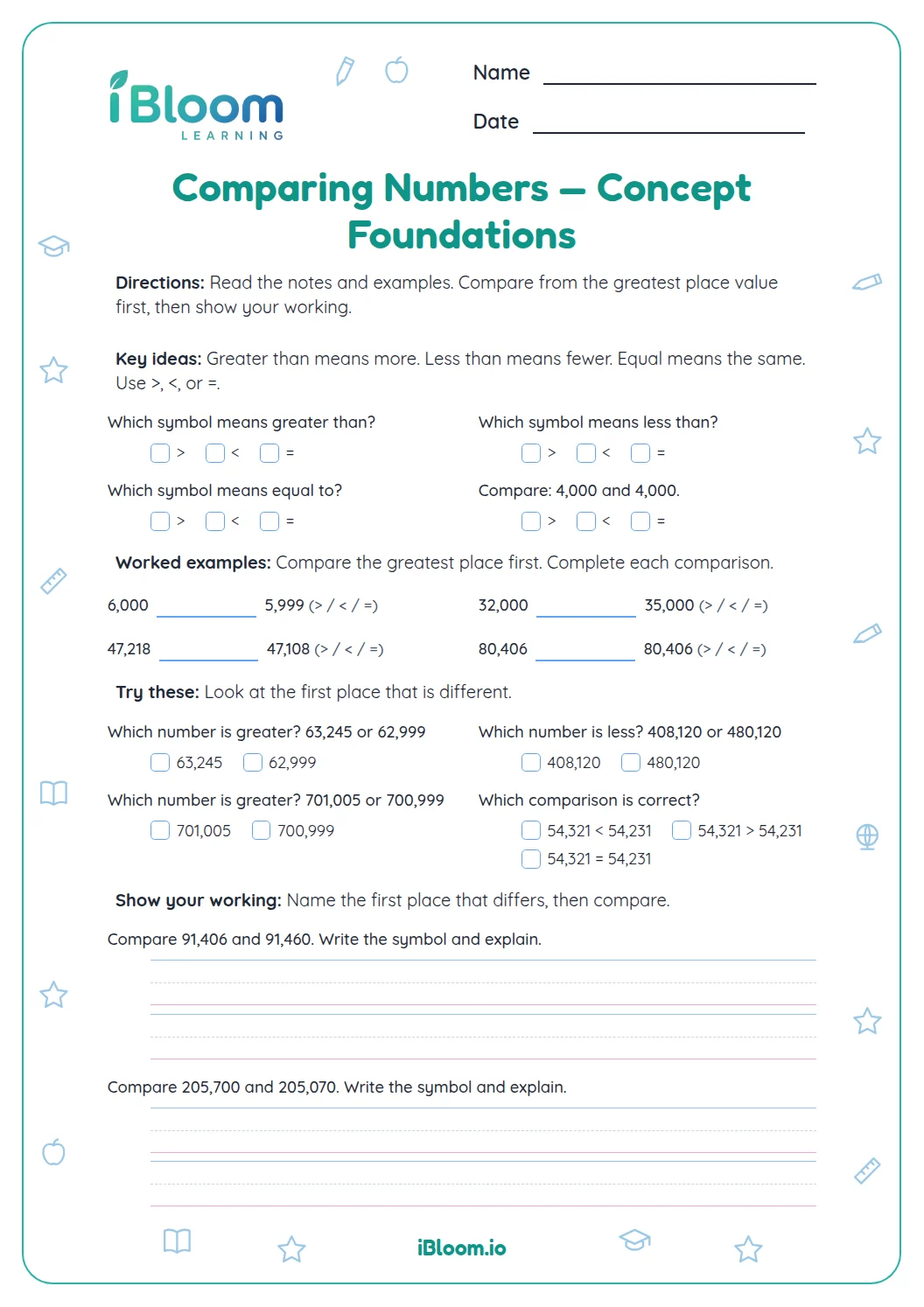
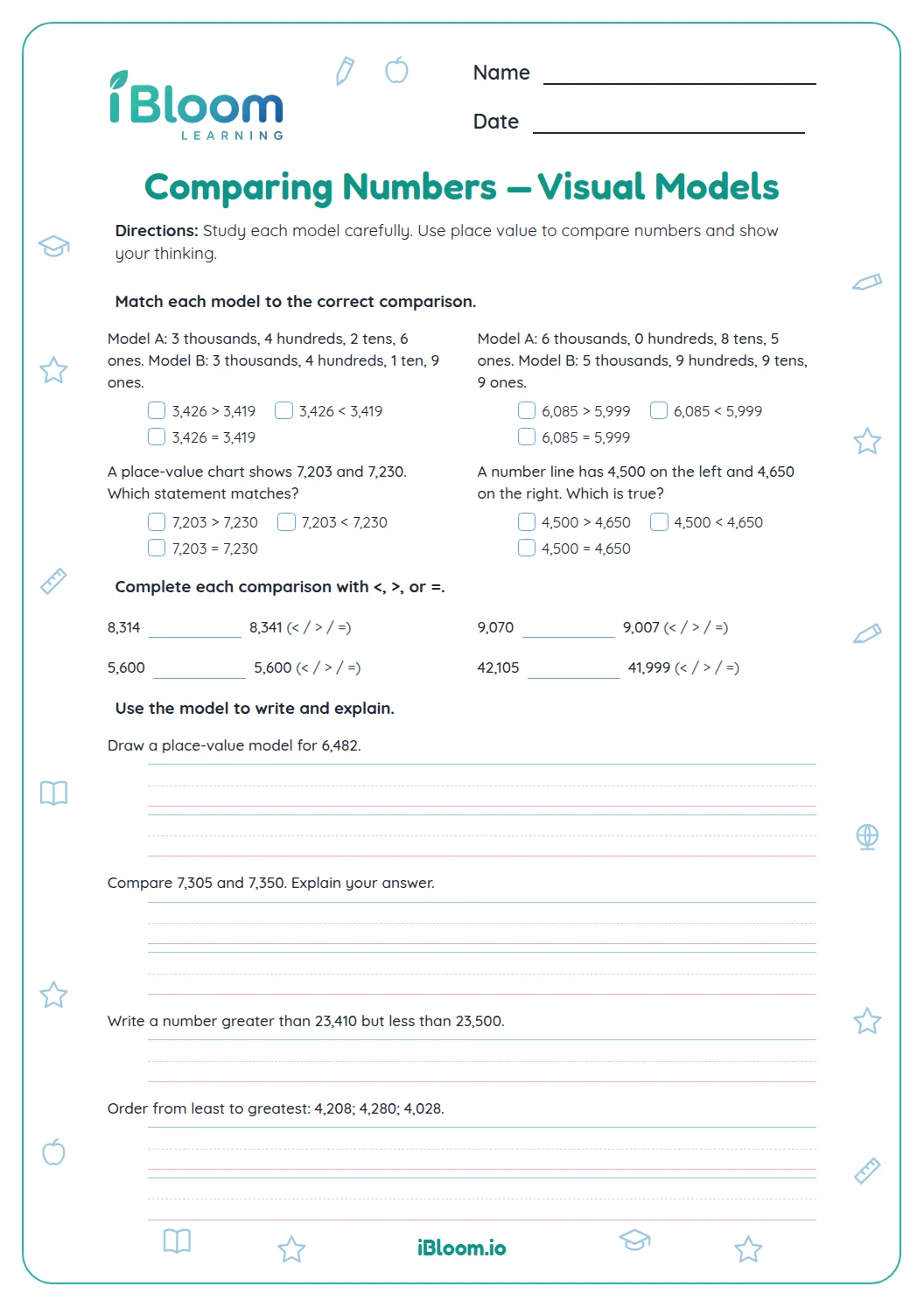
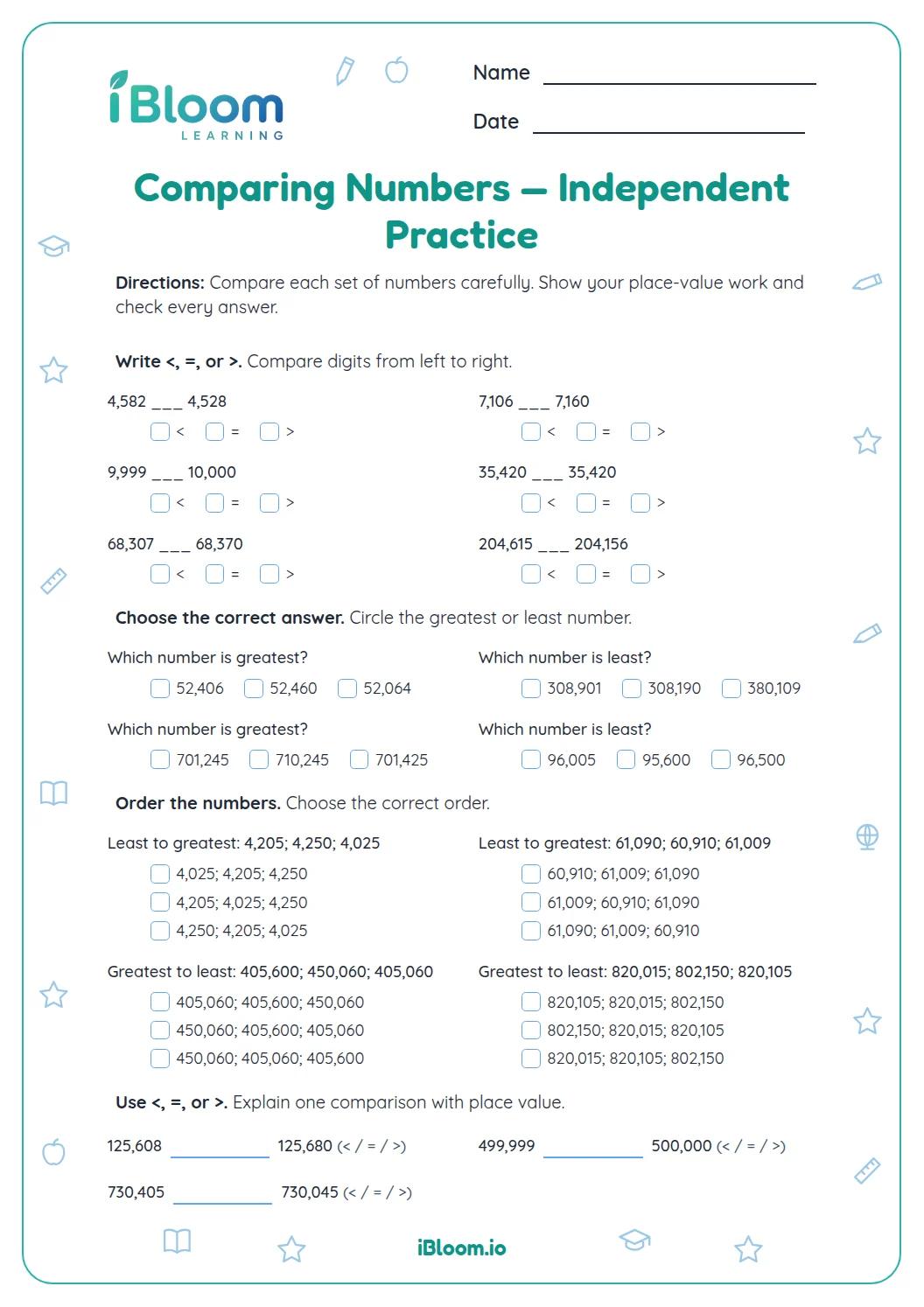
Use place value and expanded form to find missing parts of four-digit numbers.
On this sheet: Students identify digit values, complete expanded sums, and reconstruct four-digit numbers.
Show the official wordingHide the official wording
Read and write multi-digit whole numbers using base-ten numerals, number names, and expanded form. Compare two multi-digit numbers based on meanings of the digits in each place, using >, =, and < symbols to record the results of comparisons.
What to practice next
Make more practice
Further reading
Questions parents and teachers ask
Does each blank need a digit or a whole value?
Part B needs a whole value, such as 500 or 5,000, because its blanks complete sums. Part C needs a single digit because each blank is followed by a place name. Read the direction for each part and say the completed statement aloud to check the unit.
Why is the missing value in question 6 zero?
The number 7,306 has zero tens. Its thousands, hundreds and ones are already written as 7,000, 300 and 6, so the missing tens value is 0. Add those four parts to confirm the total, and point to the zero between the 3 and the 6.
Can expanded form leave out a zero place?
Yes, a sum can omit a zero addend without changing its value. For example, 9,017 can be written as 9,000 + 10 + 7. Its base-ten numeral still needs the zero in the hundreds position so that the 1 stays in the tens position and represents ten.
How can I help a child who keeps guessing?
Have the child say all four places in order and match each digit to its place. For 4,582, say four thousands, five hundreds, eight tens and two ones. Then compare those amounts with the printed addends. This gives a concrete way to identify the missing contribution before calculating.
What practice should follow this sheet?
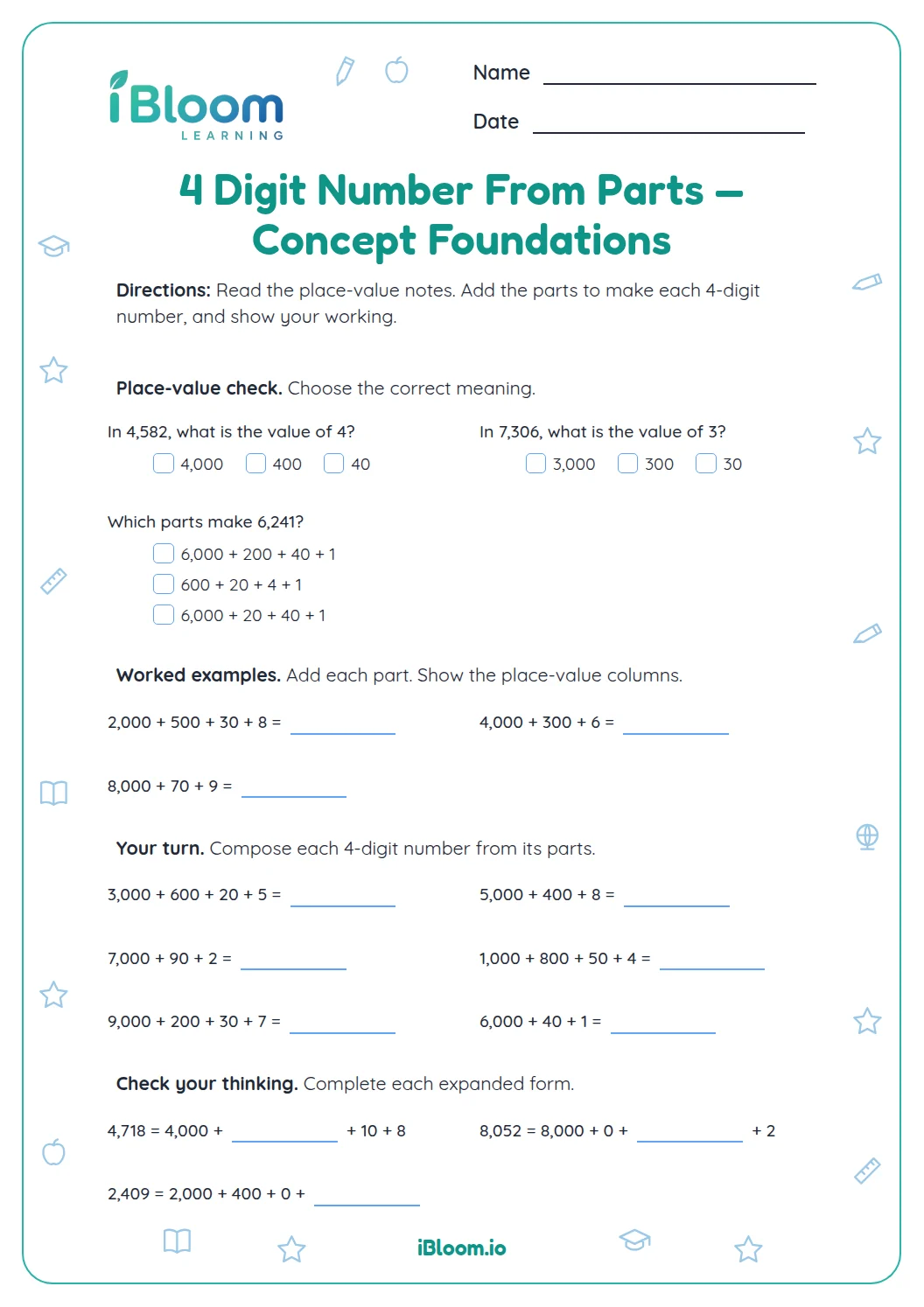
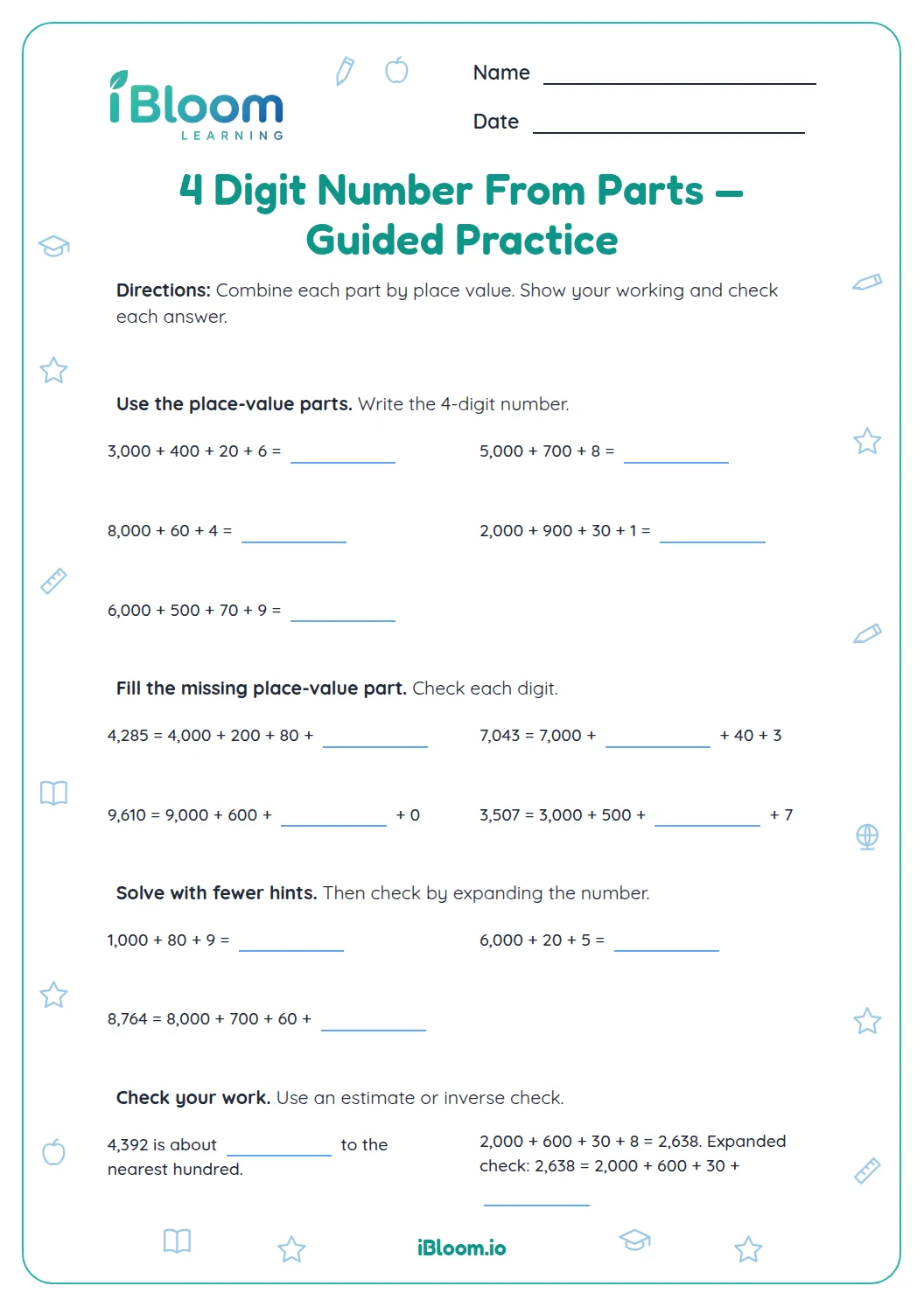
Try building four-digit numbers from their parts, then move to missing values in five-digit numbers. Keep the same habit of naming each place before writing its value. The related worksheets linked here also include expanded notation and comparisons, so children can use place value in several different tasks.