
About this worksheet
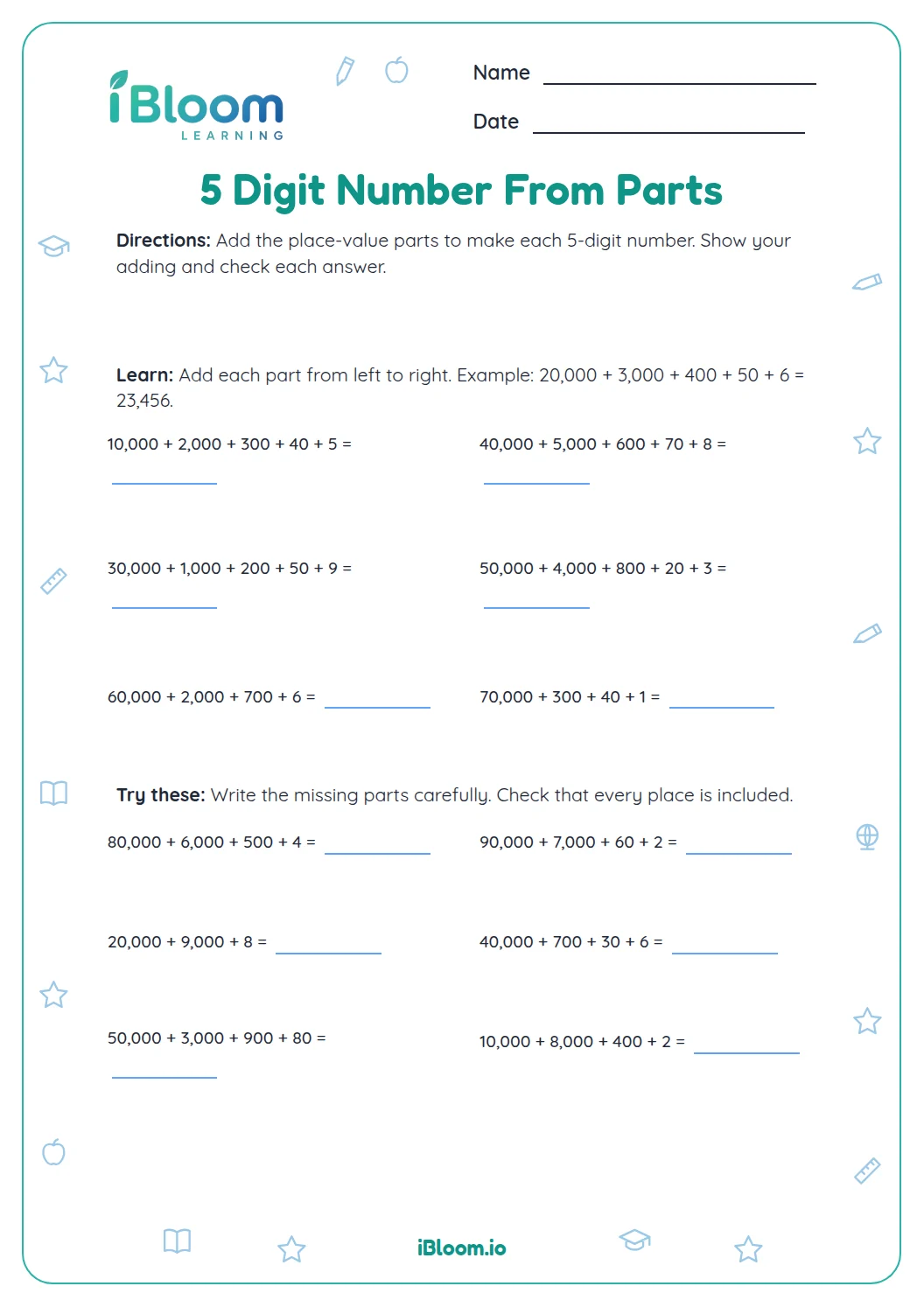
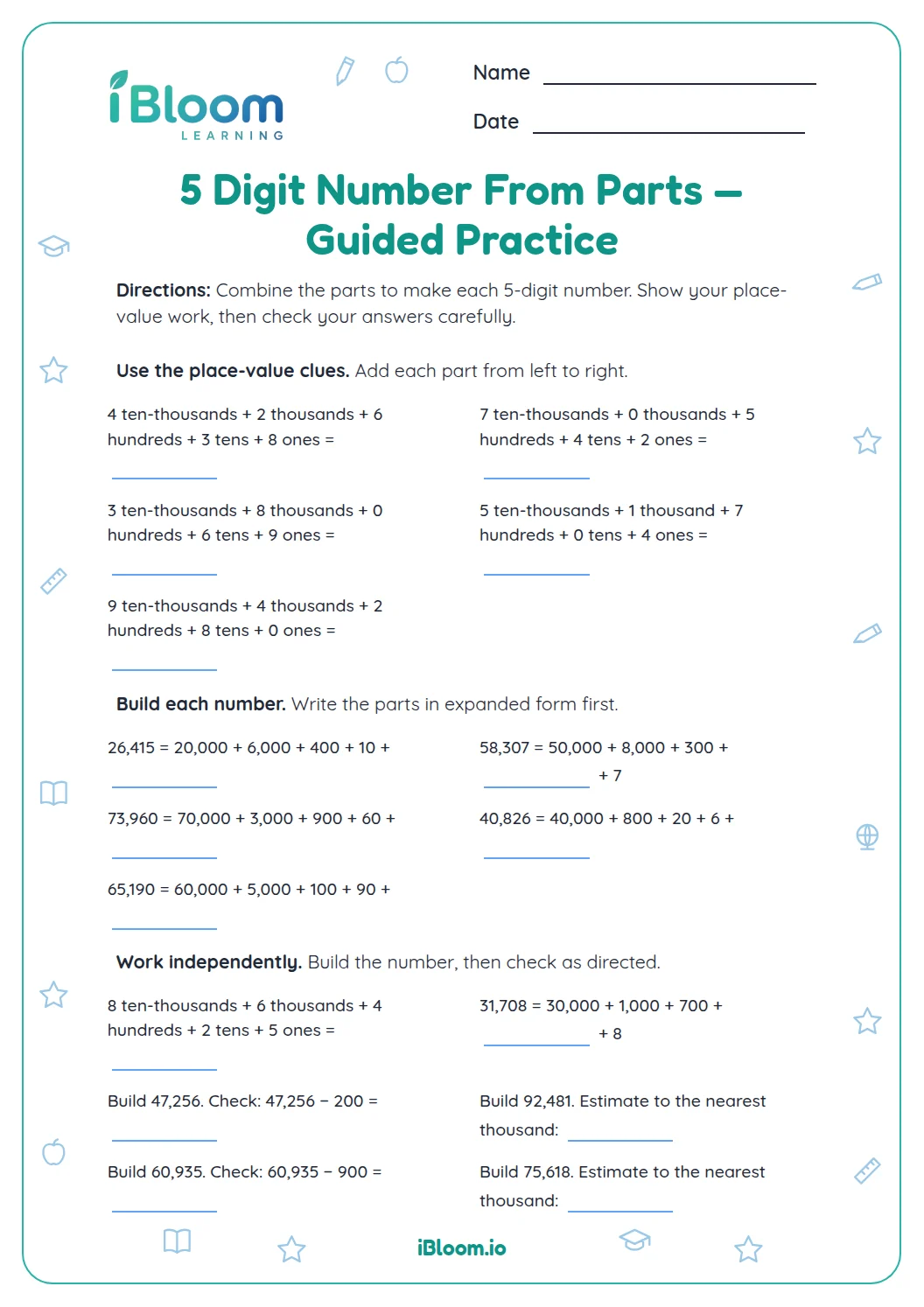
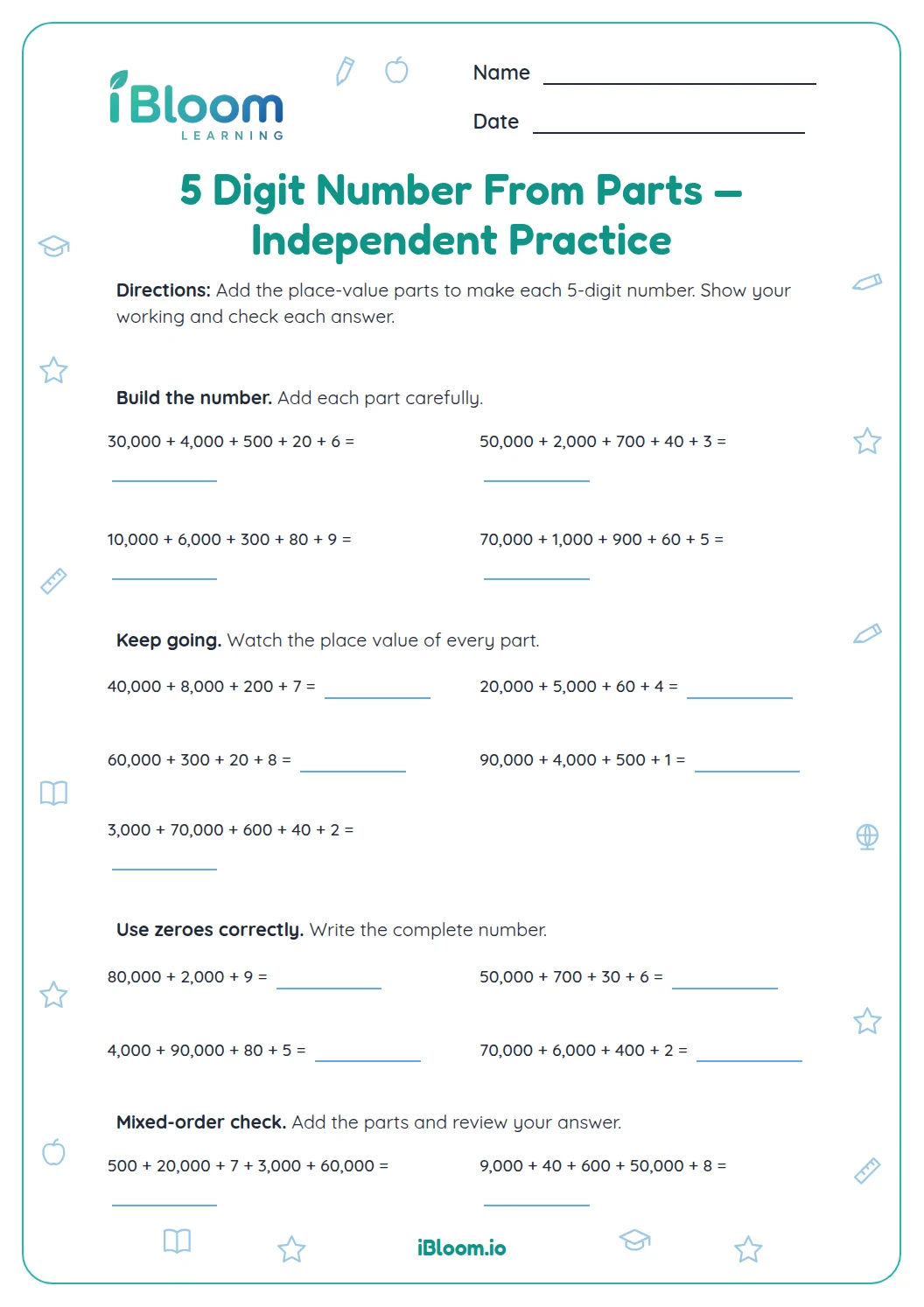
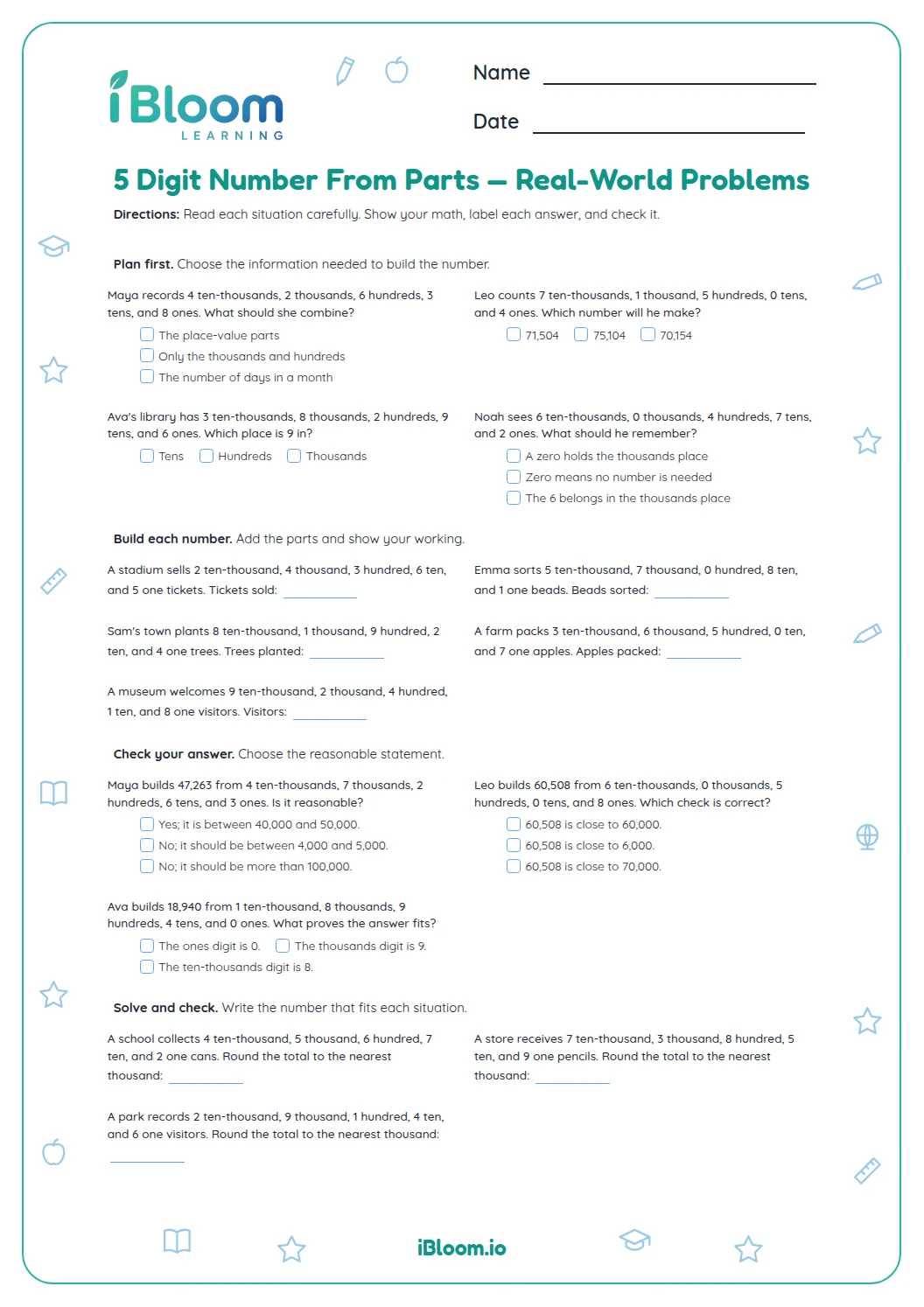
This Grade 4 printable gives students 14 five-digit place-value charts to read. Each model shows one digit in the ten-thousands, thousands, hundreds, tens, and ones columns; students write the number in standard form. The answer key lists the number for each chart. The work practices CCSS 4.NBT.A.2 by reading multi-digit whole numbers using base-ten place-value meanings.
Aligned to 4.NBT.A.2
How does each chart represent a number?
The columns run from ten-thousands to ones. A zero holds an empty place, so students should keep it when writing the standard-form number. Each chart now shows all five digits used by its answer.
The answer key accompanies the worksheet; written responses are checked against the requested detail or word.
- 1Chart digits: 2 | 3 | 4 | 5 | 6
- 2Read left to right: 23,456
How can a student work through the page?
Start in the ten-thousands column. Read one digit from each column from left to right. Then complete each remaining part in order.
How can families check the answers?
Check the response against the key and the passage, word meaning, or place-value chart that supports it.
How to use this worksheet
- 1Start in the ten-thousands column.
- 2Read one digit from each column from left to right.
- 3Keep zeroes as placeholders in the written number.
- 4Place a comma between the thousands and hundreds digits.
- 5Check that the written number has five digits and matches all five columns.
Common mistakes and quick fixes
The mistake
Dropping a zero in the middle
The fix
Keep the zero in its named place, as in 50,718.
The mistake
Reading the columns from right to left
The fix
Begin with ten-thousands and move toward ones.
The mistake
Writing the chart digits without a comma
The fix
Separate the thousands group, as in 23,456.
Common Core alignment
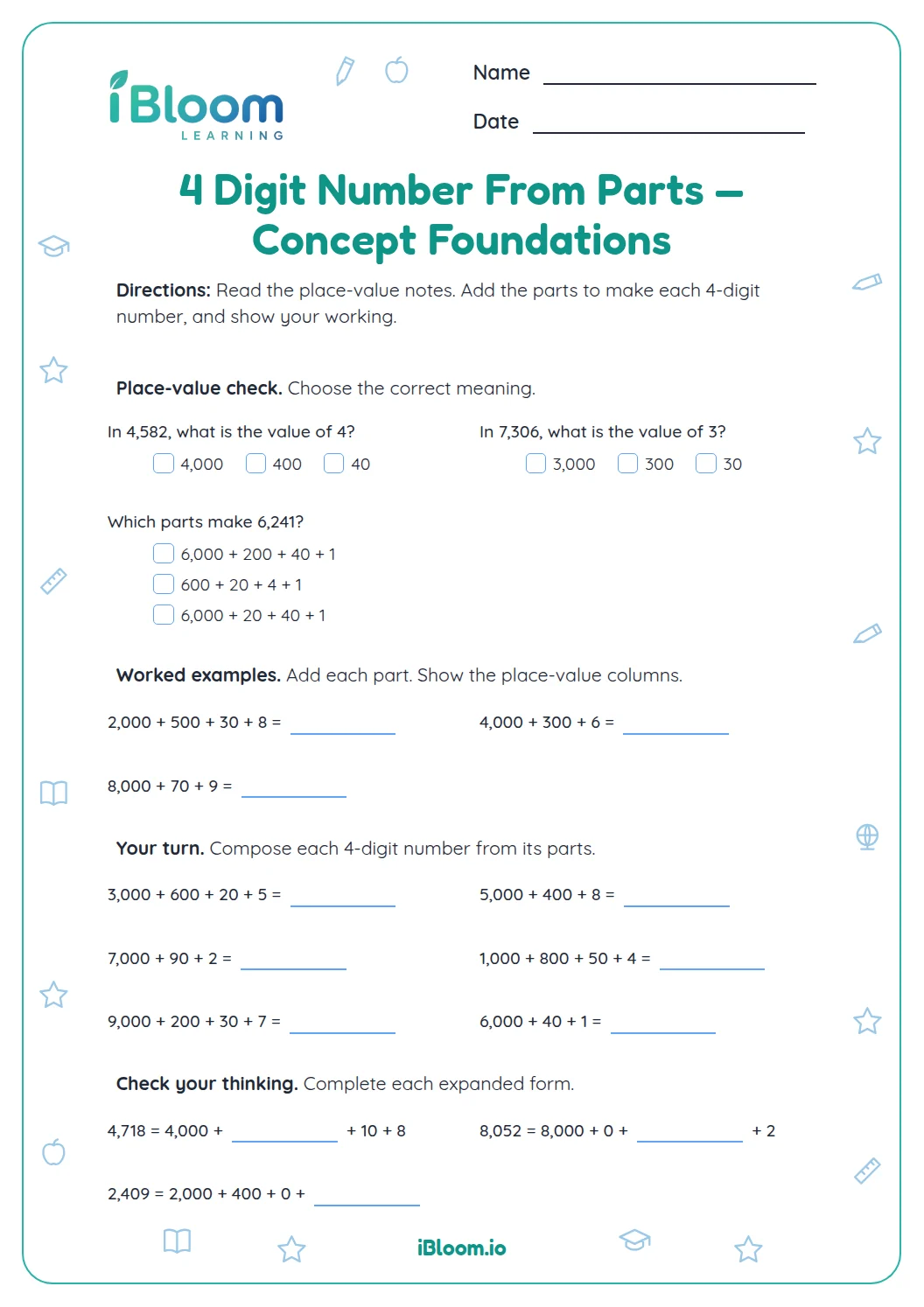
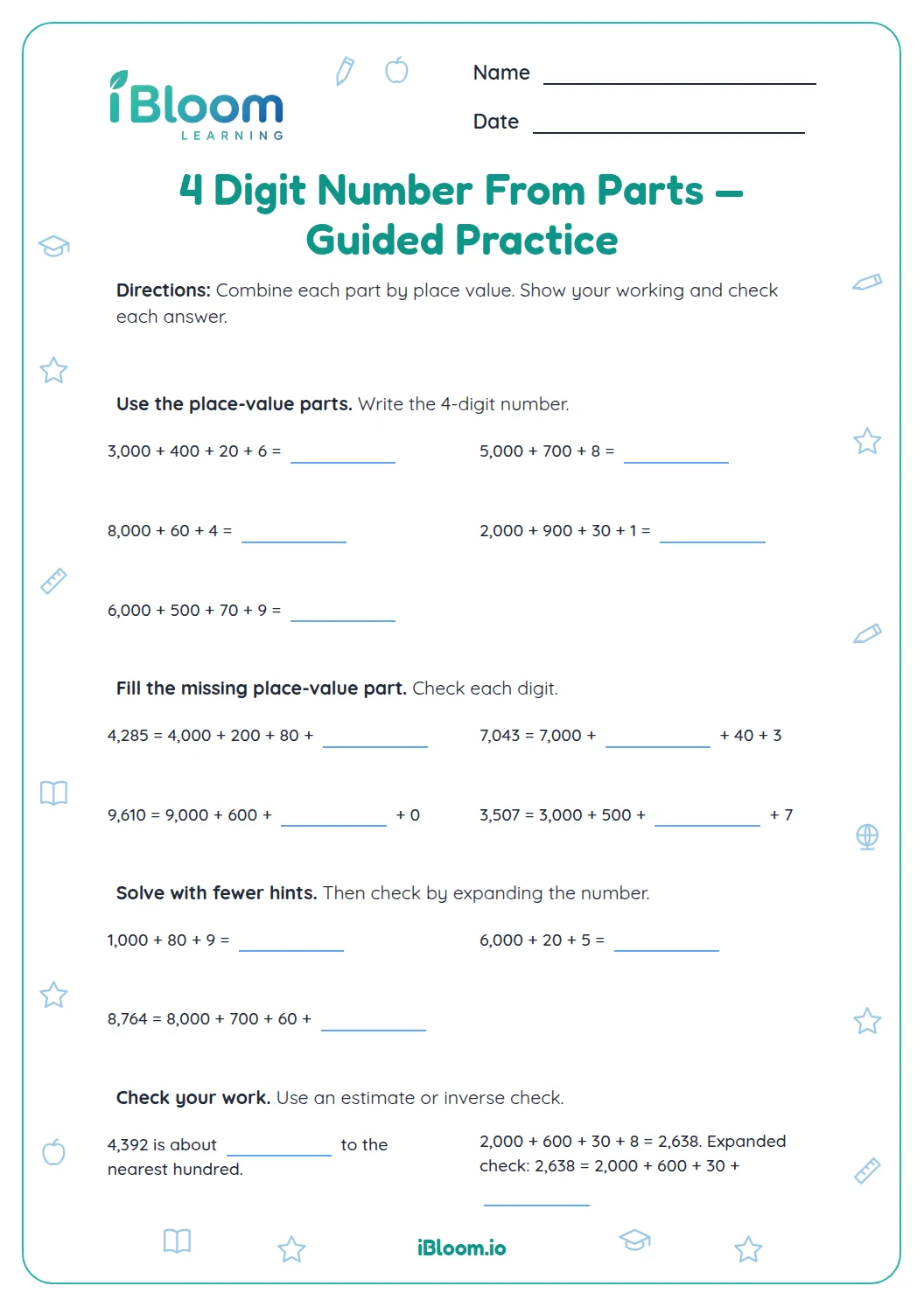
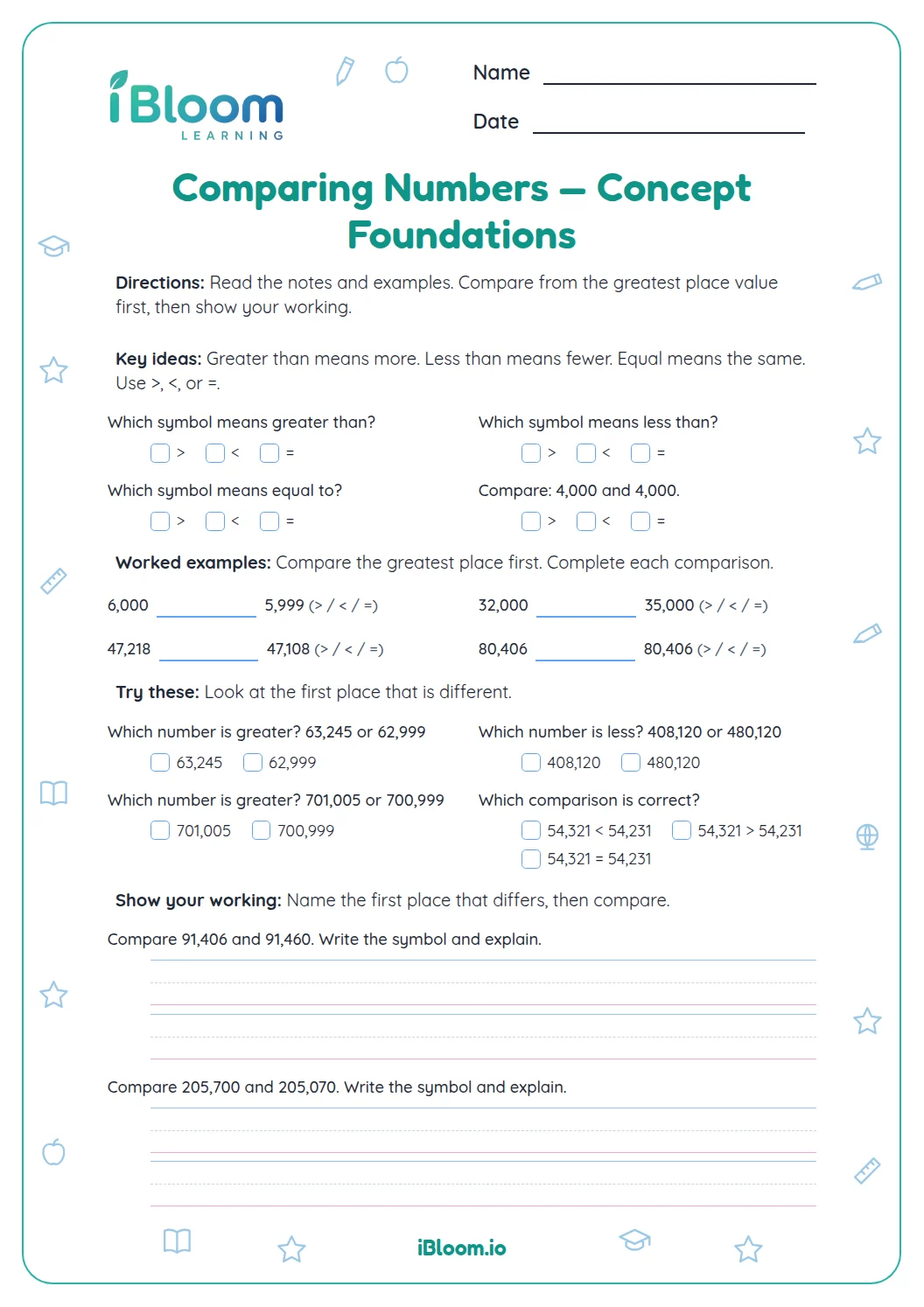
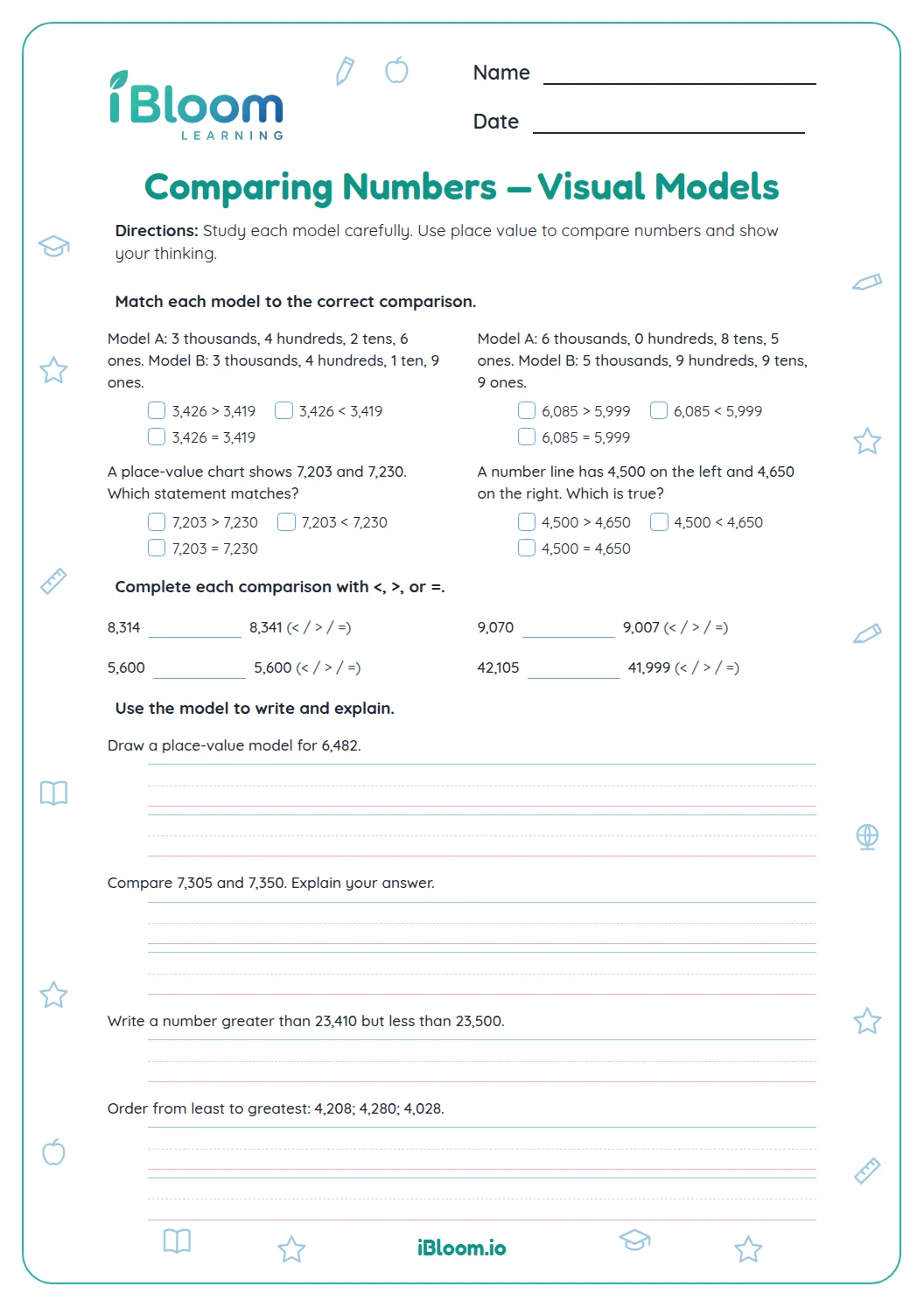
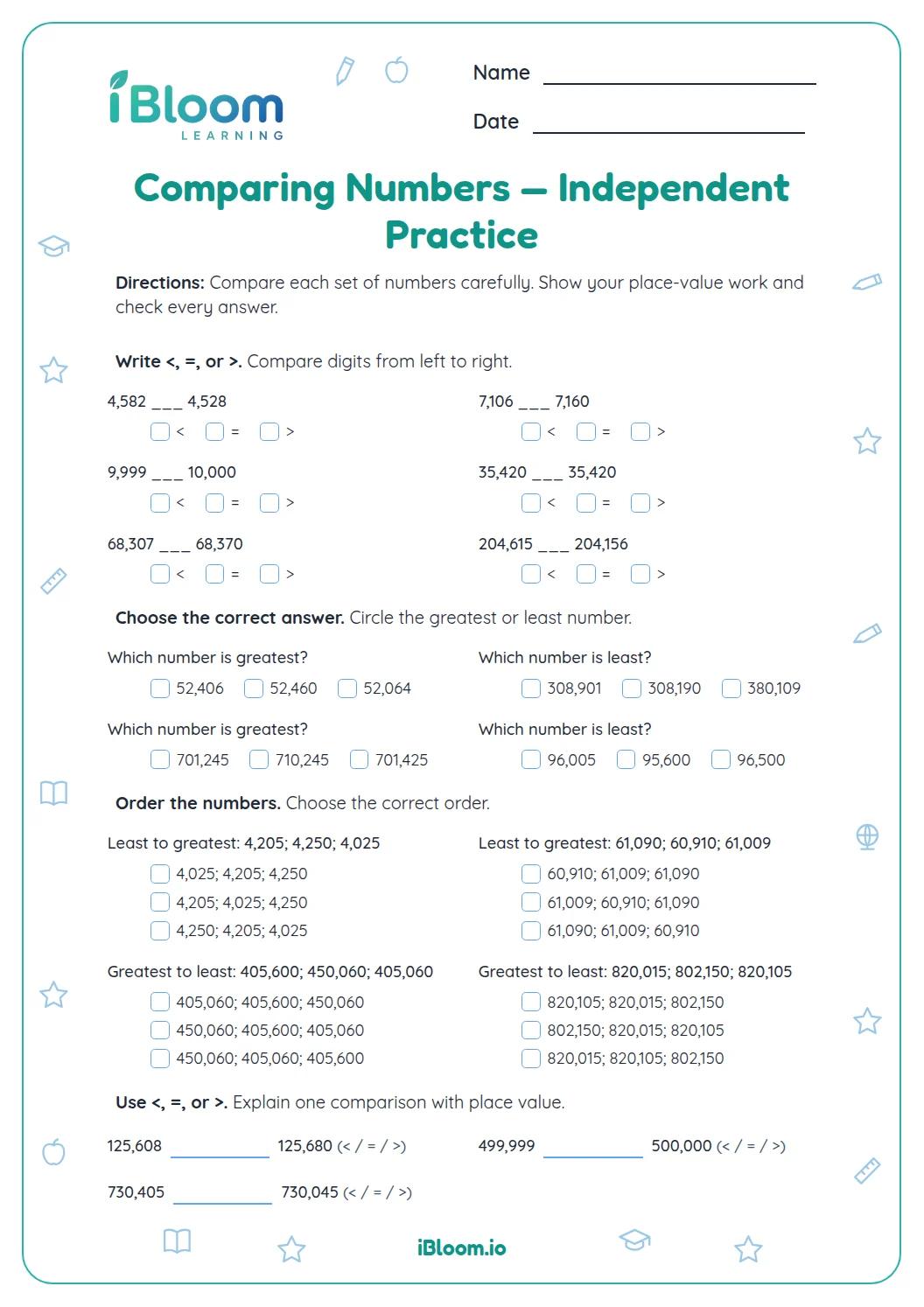
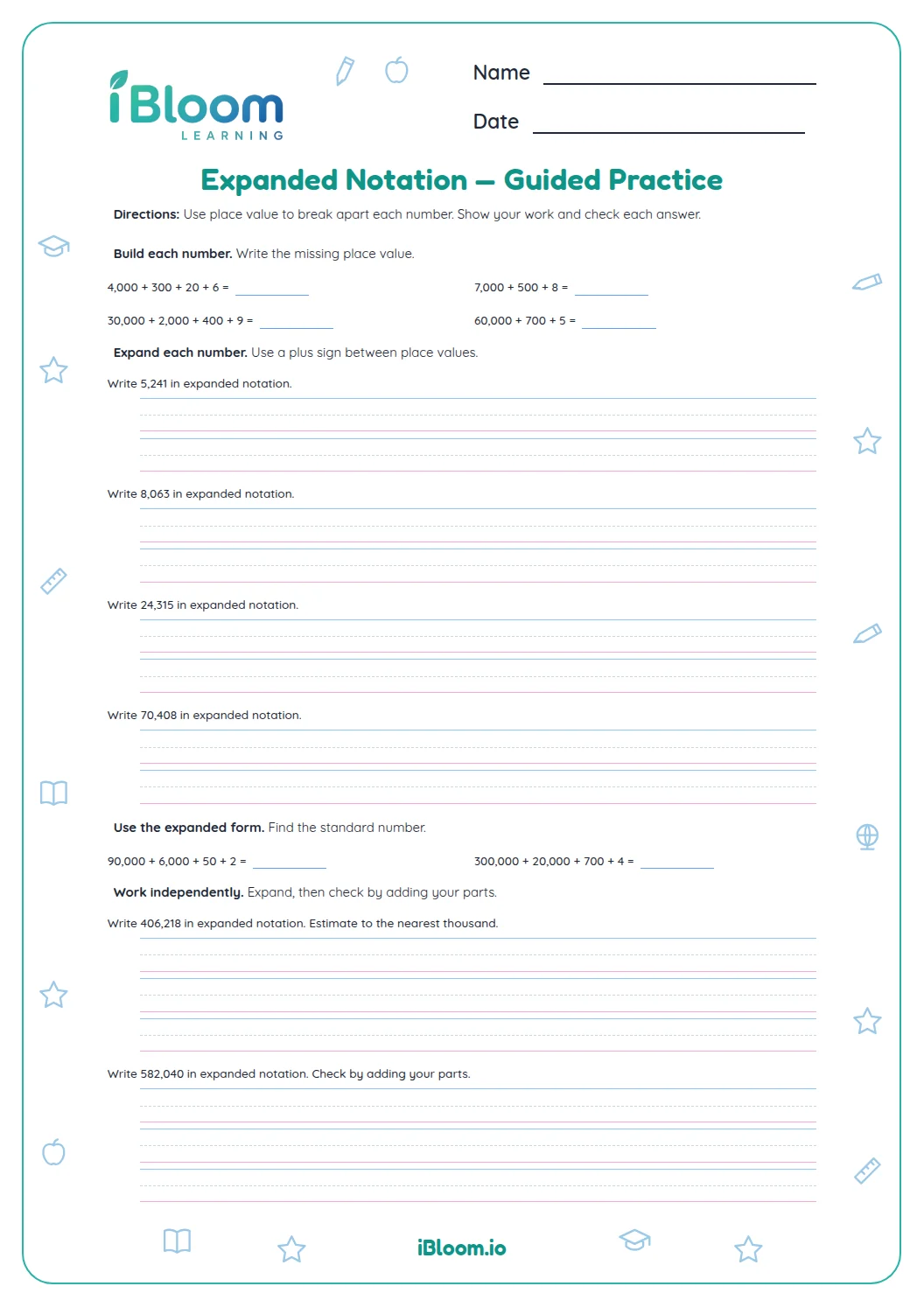
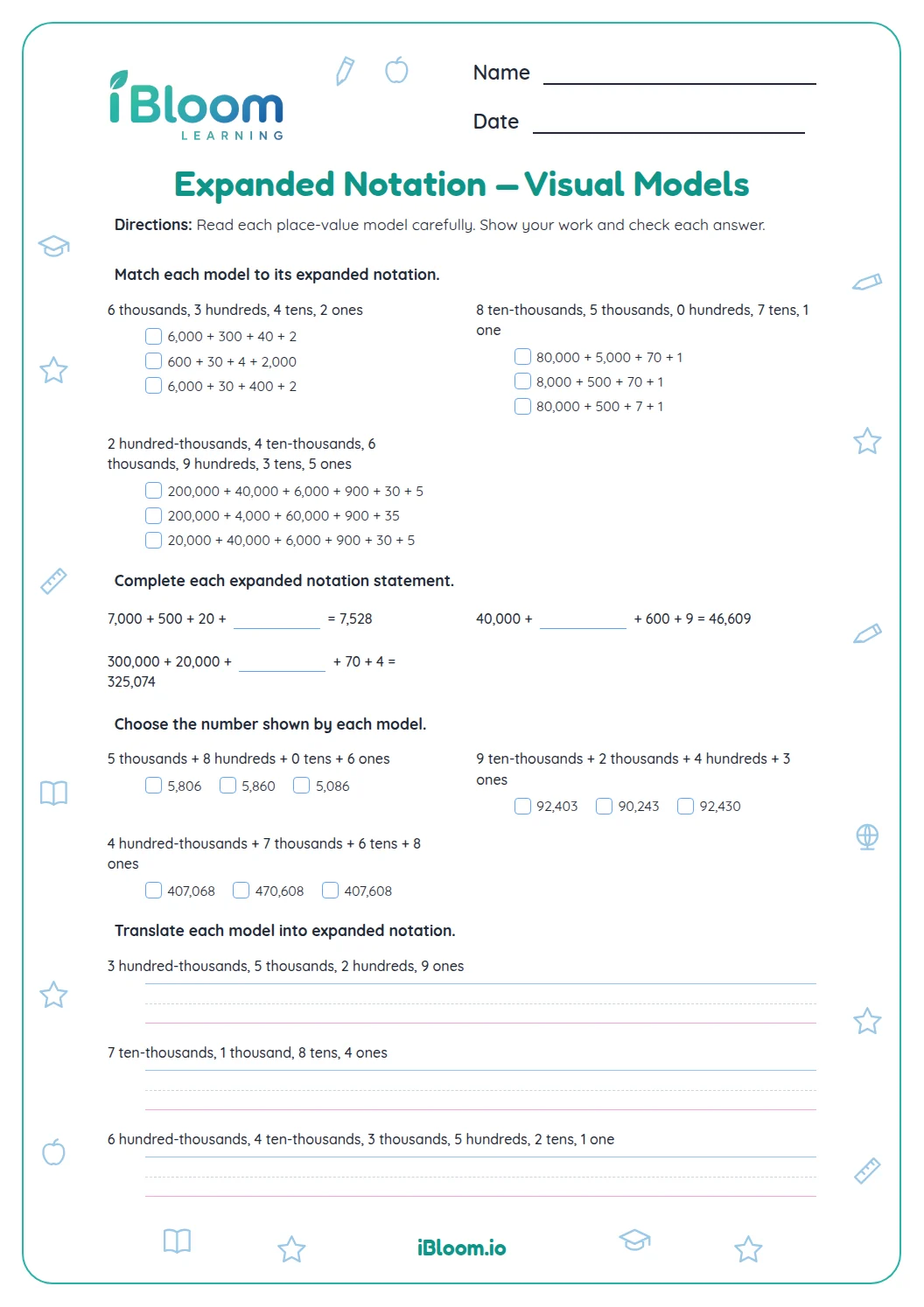
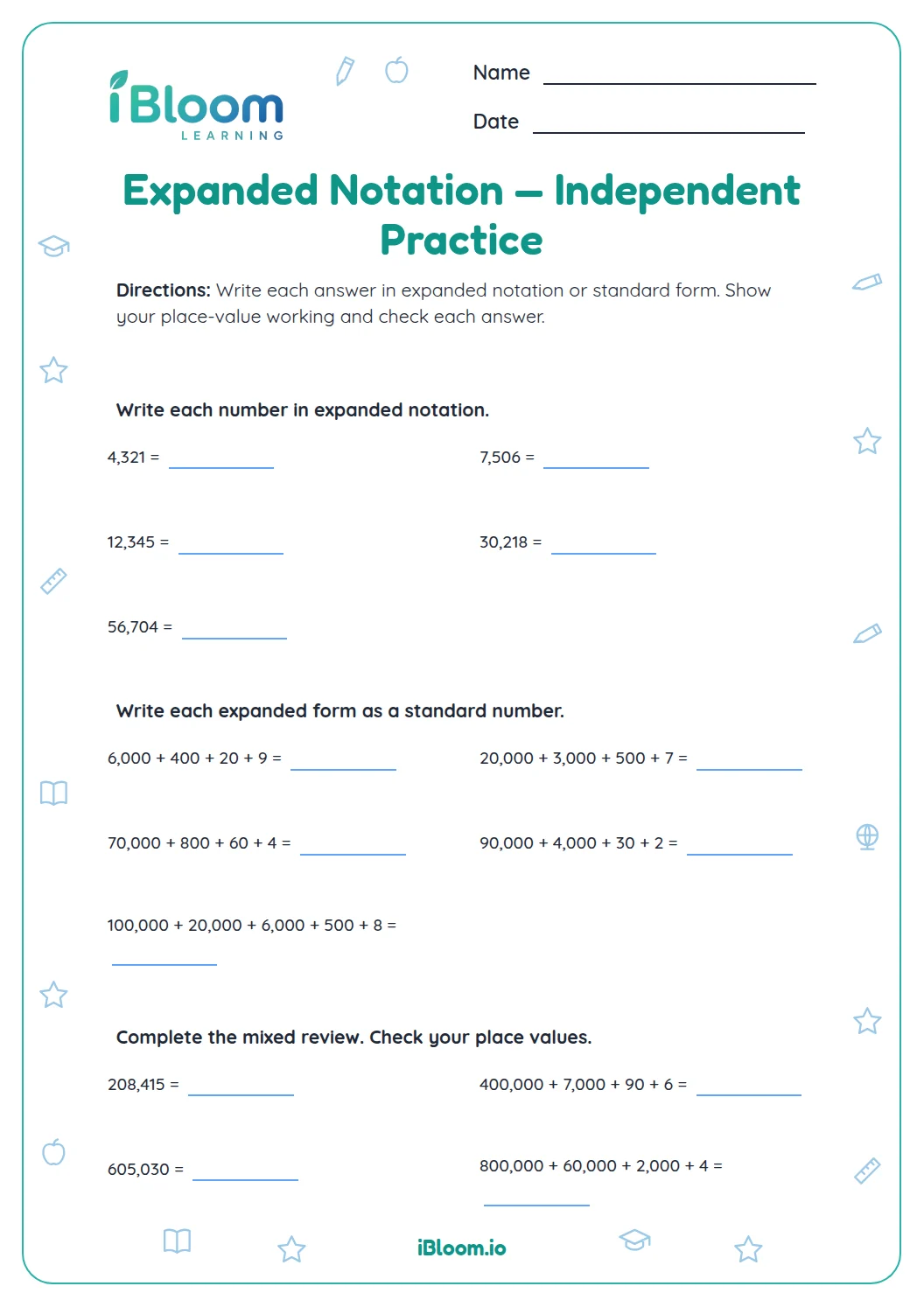
This worksheet practices the listed Common Core skill through its questions.
Each chart column names one place, from ten-thousands through ones.
On this sheet: The columns run from ten-thousands to ones. A zero holds an empty place, so students should keep it when writing the standard-form number. Each chart now shows all five digits used by its answer.
Show the official wordingHide the official wording
Read and write multi-digit whole numbers using base-ten numerals, number names, and expanded form. Compare two multi-digit numbers based on meanings of the digits in each place, using >, =, and < symbols to record the results.
What to practice next
Make more practice
Further reading
Questions parents and teachers ask
How many place-value models are included?
There are 14 five-column charts across five worksheet pages, followed by five answer-key pages. Each chart shows ten-thousands, thousands, hundreds, tens, and ones. This printable gives families a focused way to review the skill together. The answer key supports a quick review afterward.
How do you read a five-digit place-value chart?
Read one digit from each column, beginning with ten-thousands and moving right to ones. Keep any zero in its place, then write a comma between the thousands and hundreds digits. This printable gives families a focused way to review the skill together.
Why must a zero stay in the number?
A zero marks an empty place and keeps the other digits in their correct values. In 50,718, for example, the zero shows there are no thousands beyond the five ten-thousands. This printable gives families a focused way to review the skill together.
What grade is this worksheet for?
It is written for Grade 4 students practicing multi-digit numbers and place-value meanings. Each answer is a five-digit number read directly from the visual chart. This printable gives families a focused way to review the skill together. The answer key supports a quick review afterward.
Does the answer key show the chart values?
The key lists the number represented by each model. Students can compare their answer with the five chart columns to find a digit they may have skipped or placed incorrectly. This printable gives families a focused way to review the skill together.