



About this worksheet
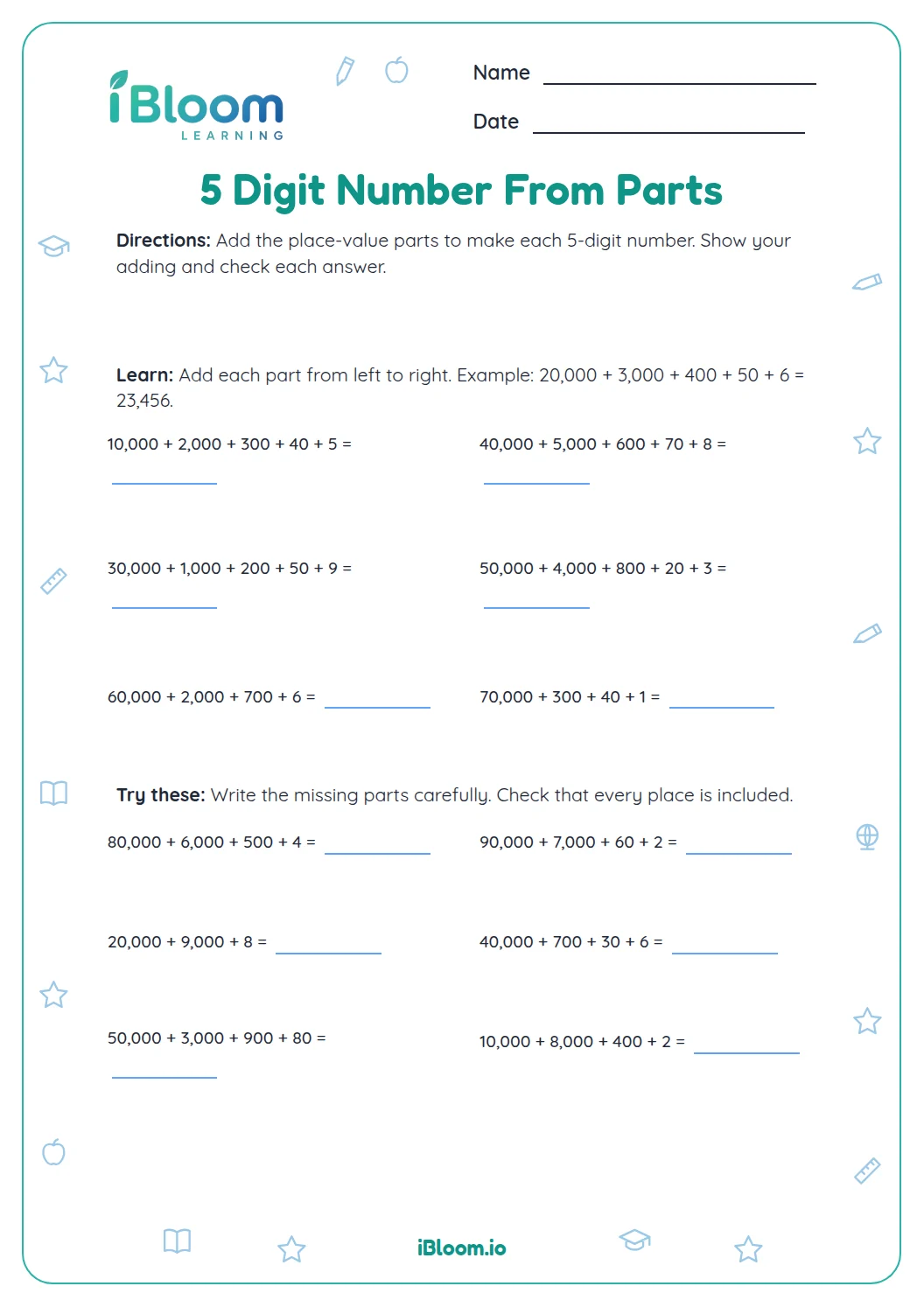
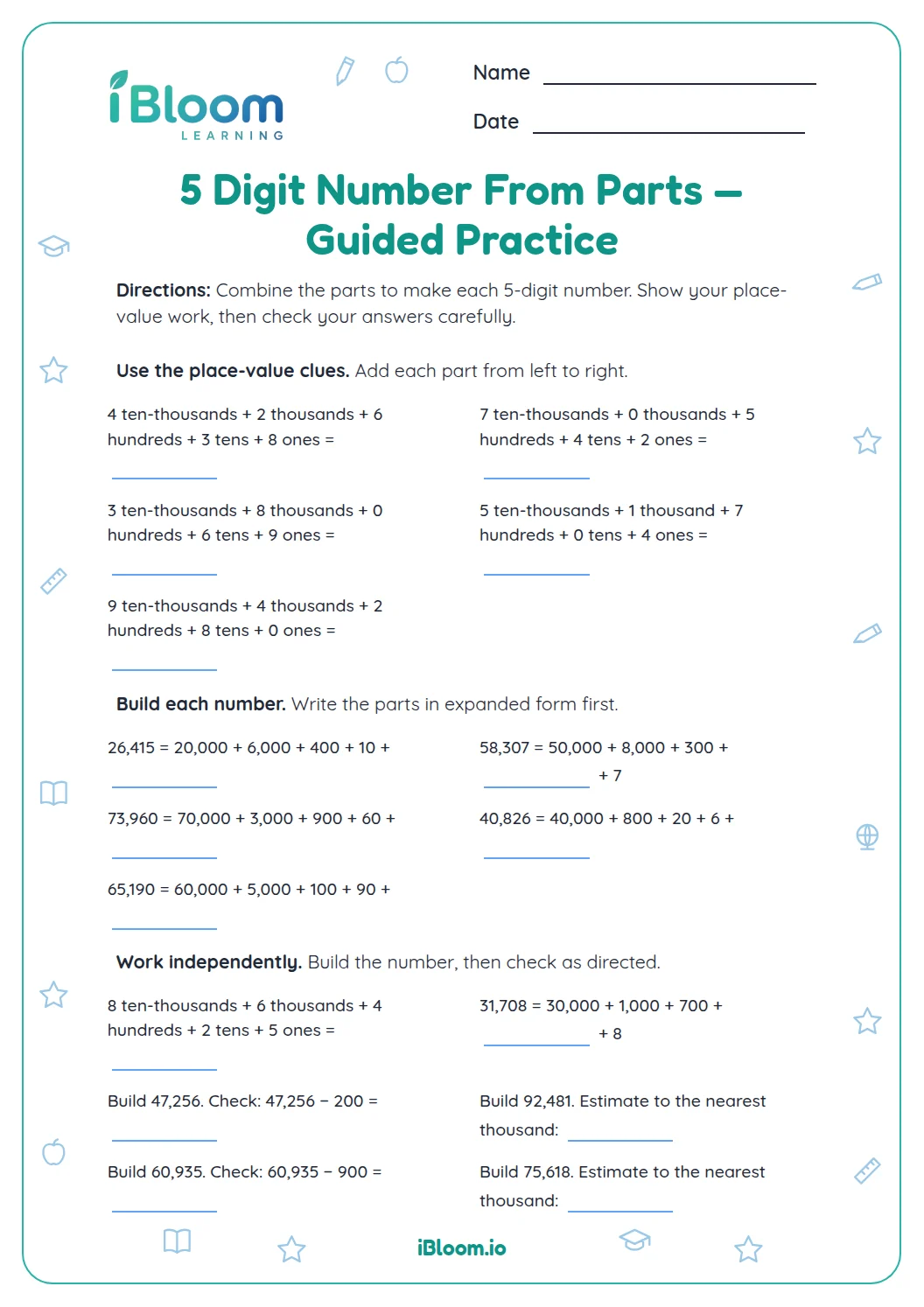
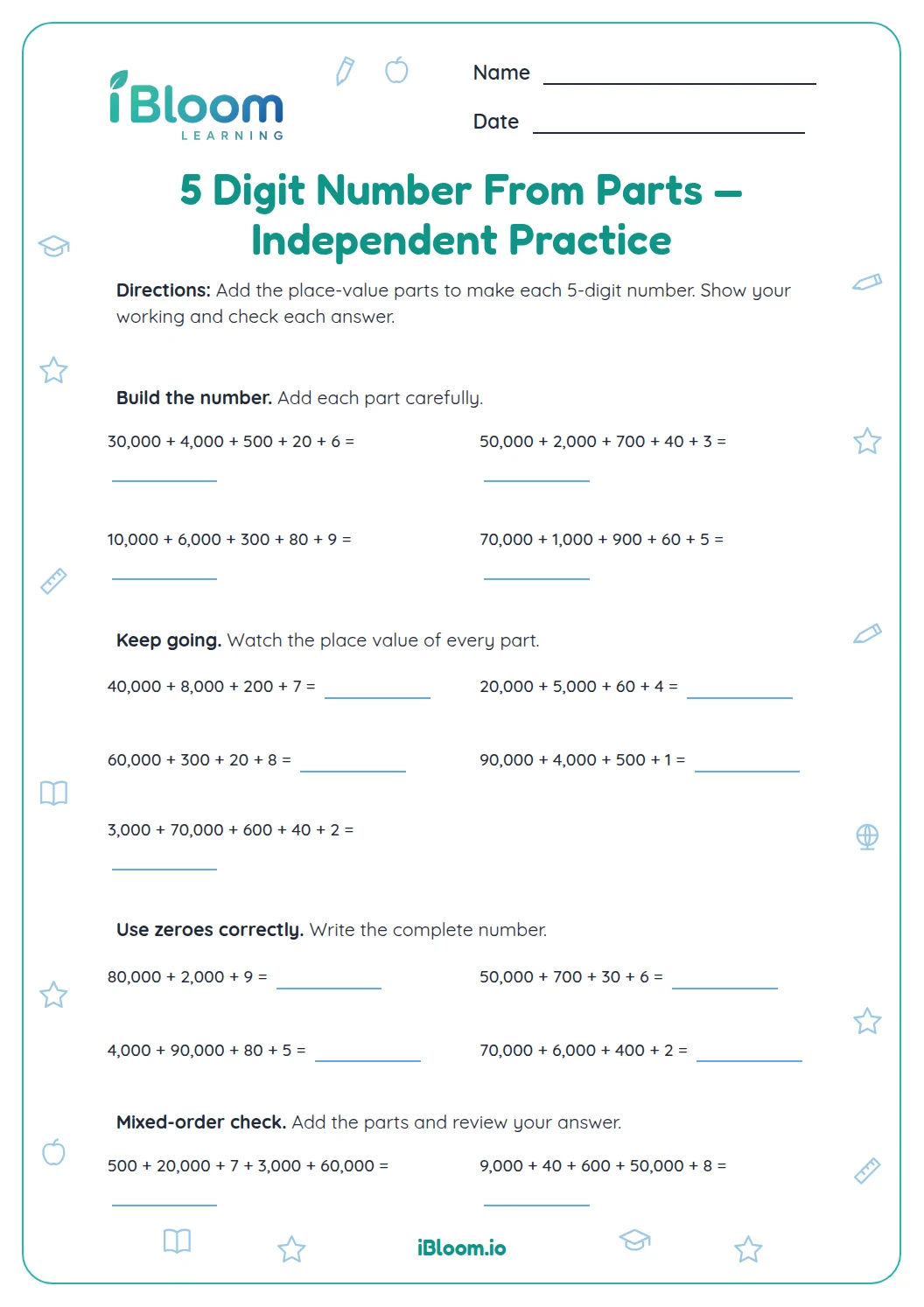
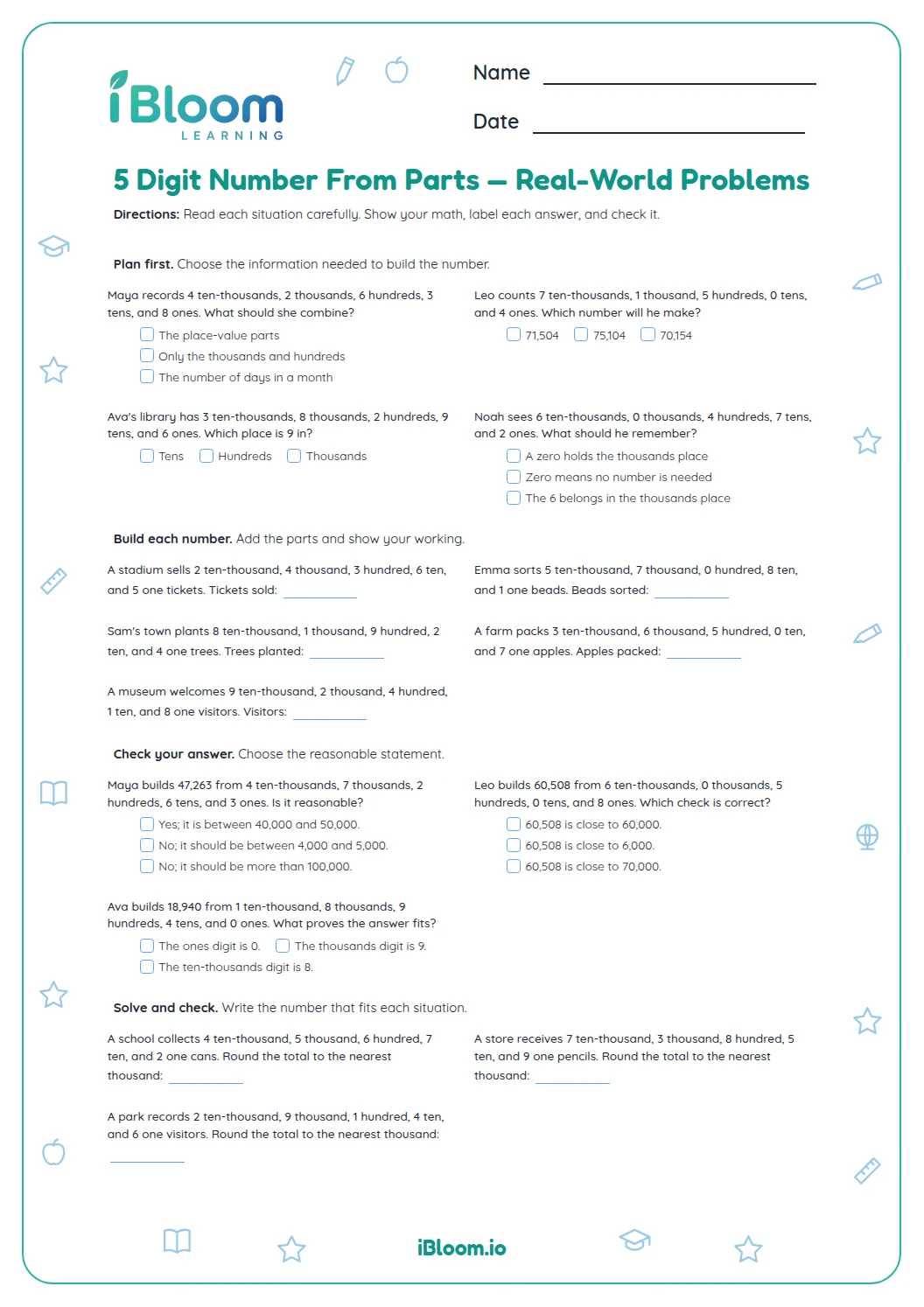
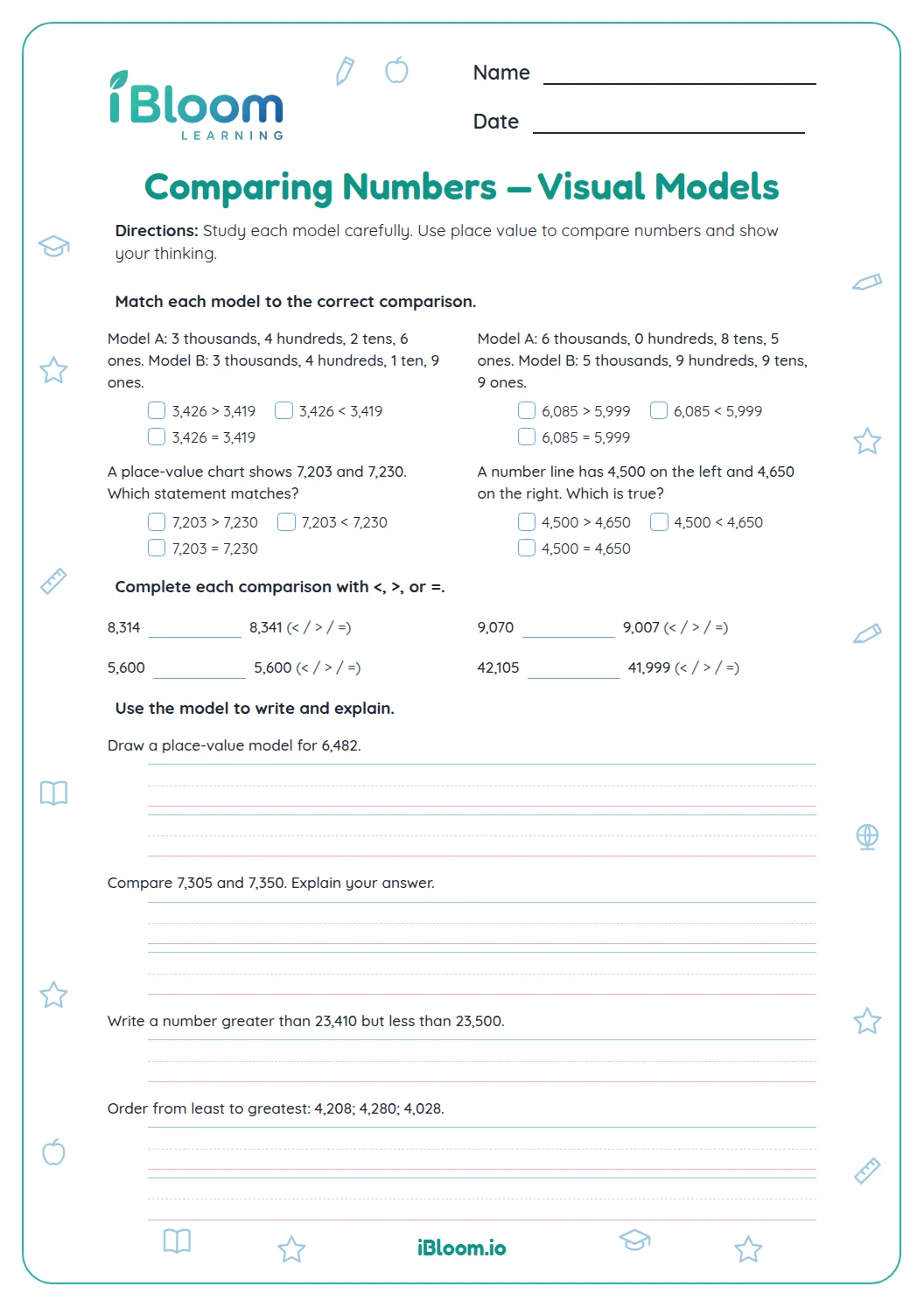
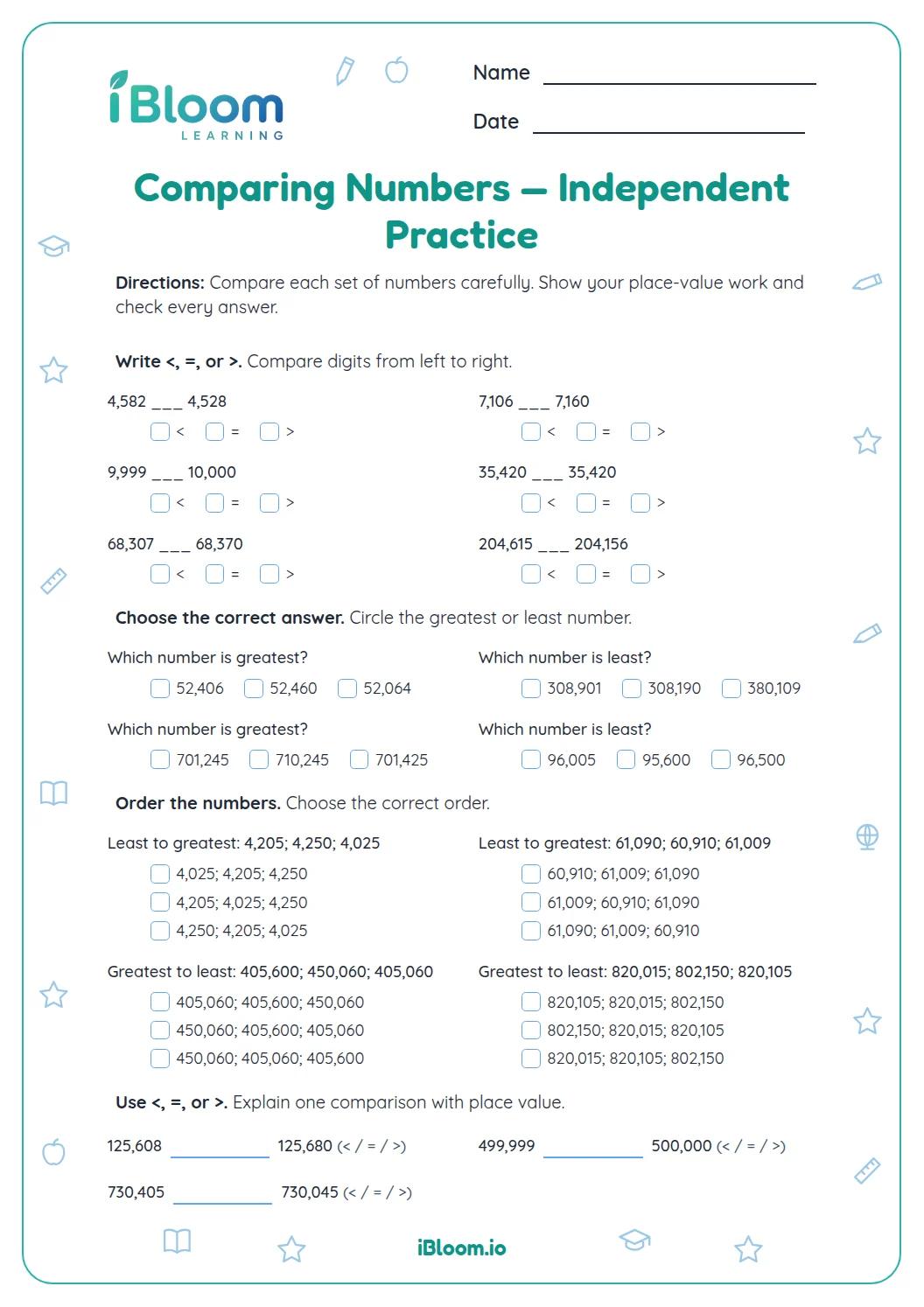
This Grade 4 worksheet focuses on building and interpreting five-digit numbers from place-value parts. Children write numbers from named places, move between standard and expanded form, compare numbers, and reason about what a digit is worth. The 14 multiple-choice questions keep every number five digits long. It practices Common Core 4.NBT.A.2, which asks students to read, write, compare, and expand multi-digit whole numbers.
Aligned to 4.NBT.A.2
How do place-value parts make a number?
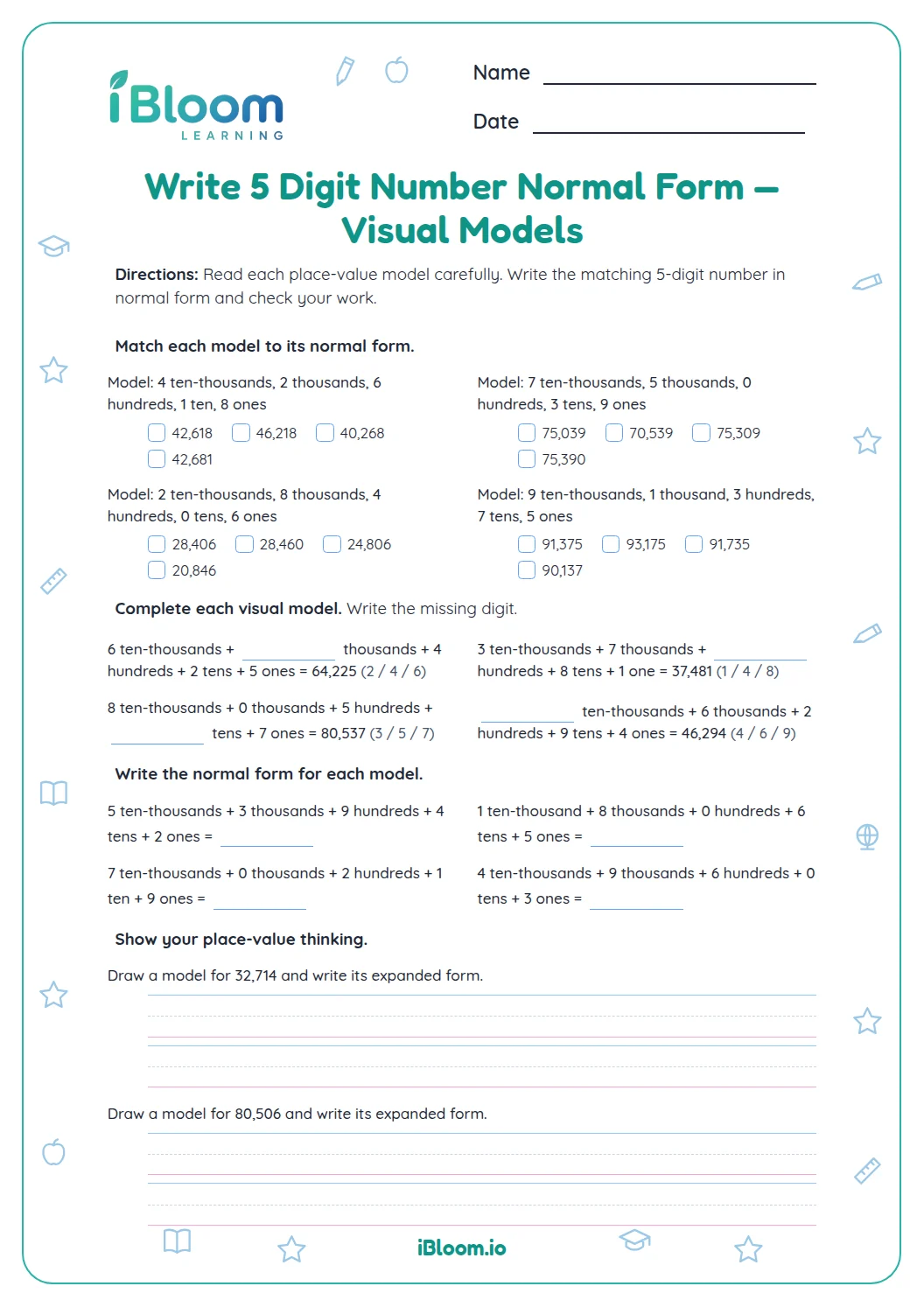
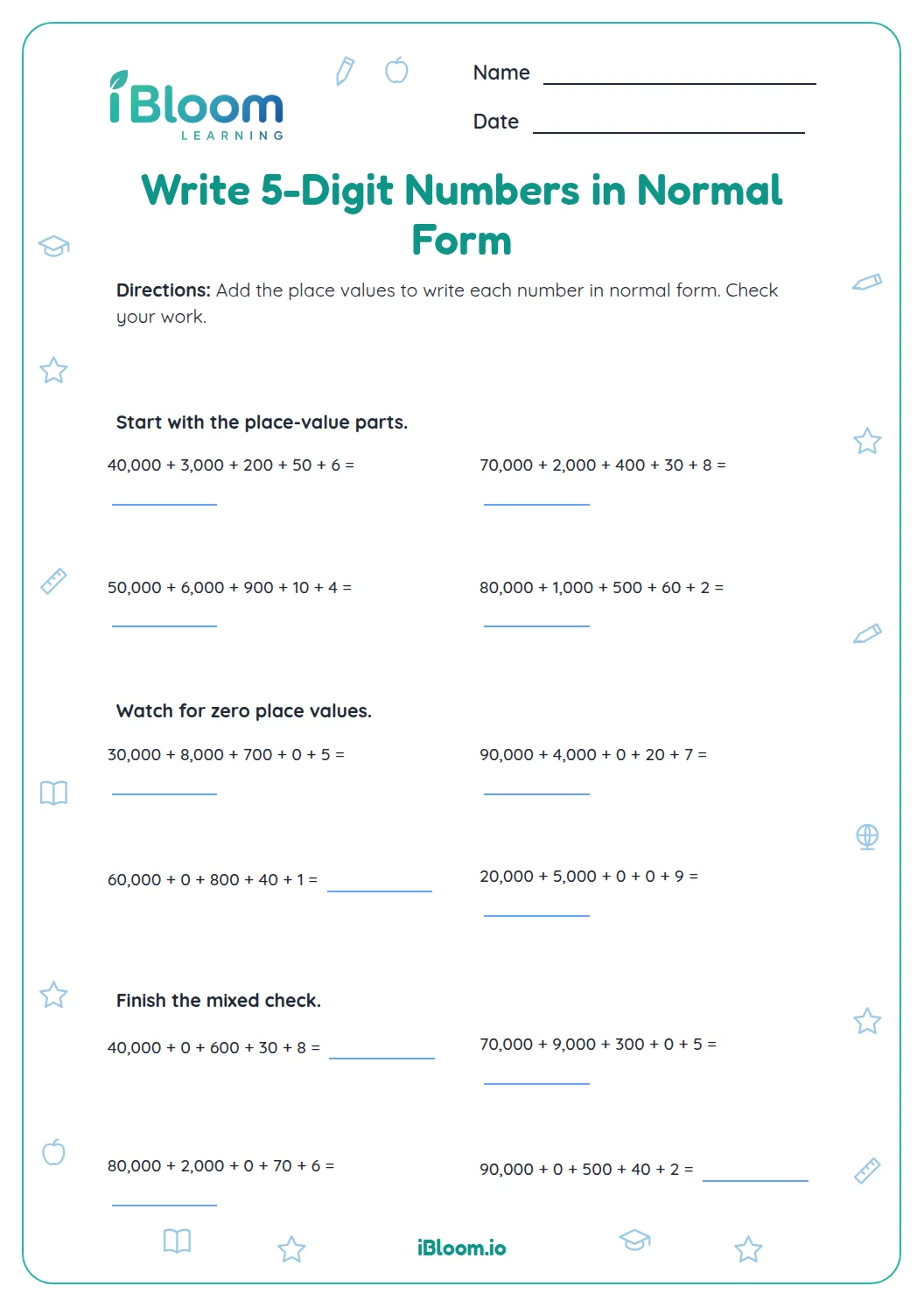
Each place contributes a different amount: 4 ten-thousands means 40,000, while 3 tens means 30. Keep zero places in their positions even when they add no value. Part A asks children to combine named places or expanded-form parts into a standard numeral.
- 1Write the number made by 4 ten-thousands, 2 thousands, 6 hundreds, 3 tens, and 8 ones.
- 2Put each digit in its named place: 42,638.
How does expanded form show a number?
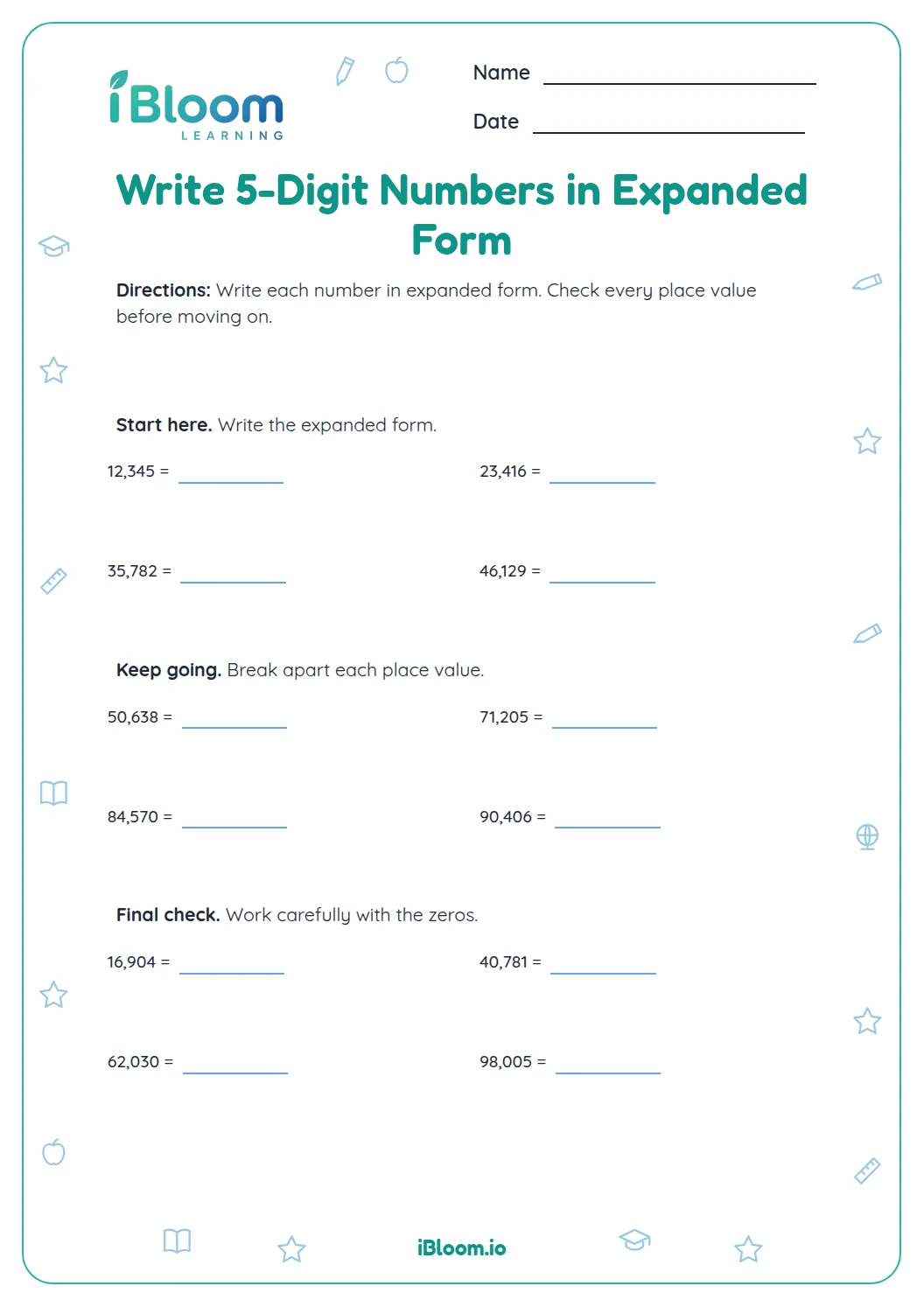
Expanded form writes the value of each nonzero digit as a sum. For 29,584, that is 20,000 + 9,000 + 500 + 80 + 4. Match each addend to one place, then check that the places combine to the original number.
How can a digit change a number’s value?
Compare the place names before comparing the digits. Changing the 4 in 54,372 to 7 changes the thousands digit, making 57,372. In Part C, use place value to reason about digit changes, order, and the difference between two digit values.
How to use this worksheet
- 1Read the place names in each clue before writing or selecting a number.
- 2Write a zero in any place with no value so the other digits stay in the correct positions.
- 3For expanded form, write each nonzero digit’s value and check the sum.
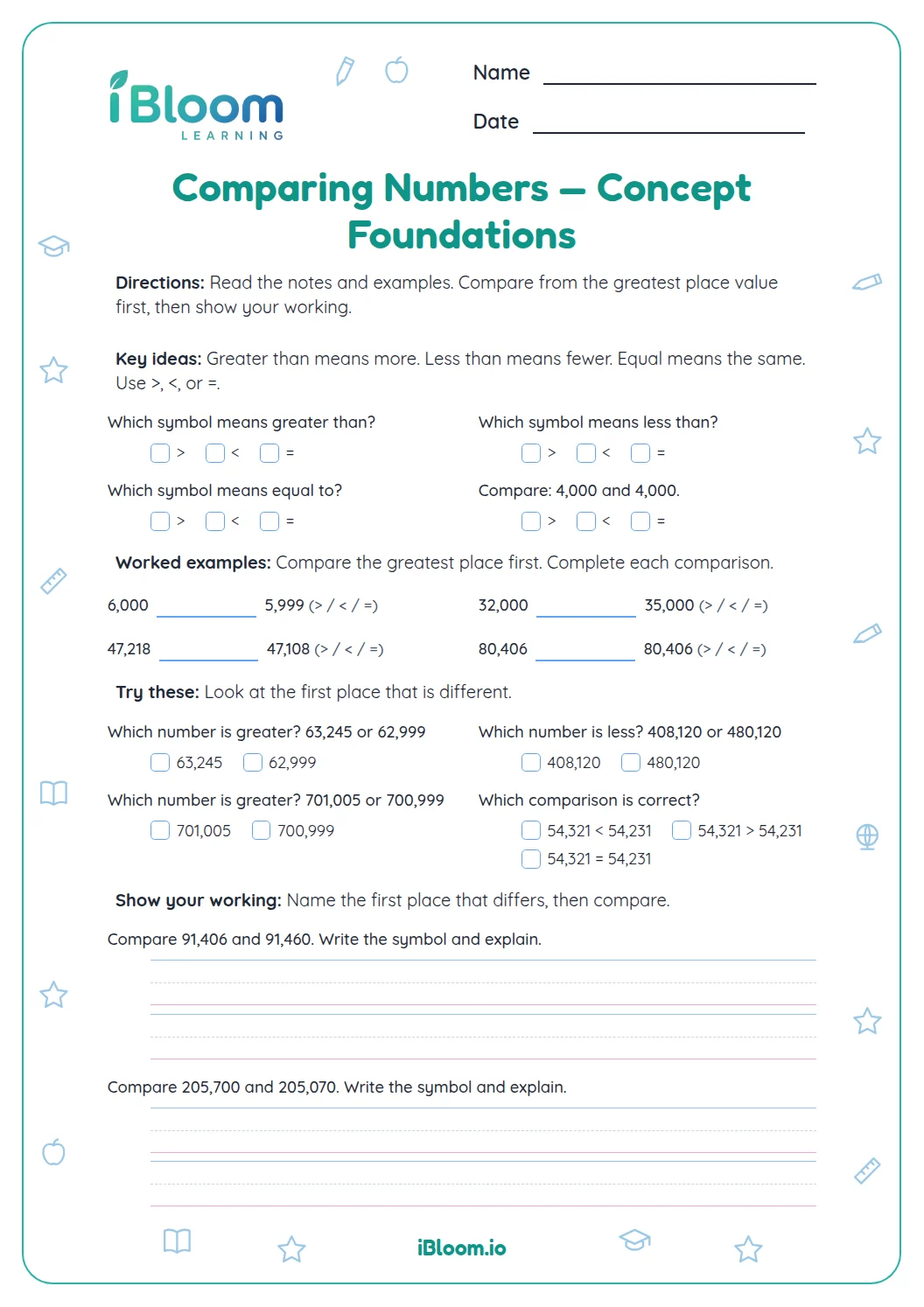
- 4For comparison questions, compare from the greatest place toward the ones.
- 5Use the key to check both the numeral and the place-value reasoning.
Common mix-ups and a quick fix
The mistake
Dropping a zero place and shifting later digits.
The fix
Name all five places first, then put a zero in each empty place.
The mistake
Calling the digit itself its value, such as saying 9 instead of 9,000.
The fix
Read the digit together with its place name.
The mistake
Comparing only the final digits of two numbers.
The fix
Compare from the ten-thousands place and move right only when places tie.
Common Core alignment
The practice connects number names, expanded form, and digit value.
Read, write, compare, and expand multi-digit whole numbers.
On this sheet: Children construct five-digit numerals, write expanded form, compare values, and interpret digit changes.
Show the official wordingHide the official wording
Read and write multi-digit whole numbers using base-ten numerals, number names, and expanded form. Compare two multi-digit numbers based on meanings of the digits in each place.
What to practice next
Make more practice
Further reading
Questions parents and teachers ask
What does “number from parts” mean?
It means combining the values named for each place to make one standard numeral. For example, 4 ten-thousands, 2 thousands, 6 hundreds, 3 tens, and 8 ones make 42,638. This worksheet uses place names and expanded-form addends to practice that translation.
Why does a number need zeroes?
A zero holds the place when a number has no units in that position. In 70,541, the thousands place is zero; leaving it out would change which places the other digits occupy. The questions ask children to keep zero places so the five-digit number stays accurate.
How can expanded form help?
Expanded form shows the value contributed by each nonzero digit. For 29,584, it is 20,000 + 9,000 + 500 + 80 + 4. Children can compare each addend with its place name and then check that the values combine back to the original number.
How do you compare two five-digit numbers?
Start with the ten-thousands place. If those digits match, compare the thousands, then hundreds, tens, and ones until one place differs. For 63,407 and 63,470, the first different place is the tens: 7 tens is greater than 0 tens, so 63,470 is larger.
What happens when a digit changes places?
A digit’s value depends on its place. In 54,372, the 4 represents 4,000; changing it to 7 gives 7,000 and makes 57,372. The worksheet asks children to track that change and to compare digit values rather than looking only at the digit names.