



About this worksheet
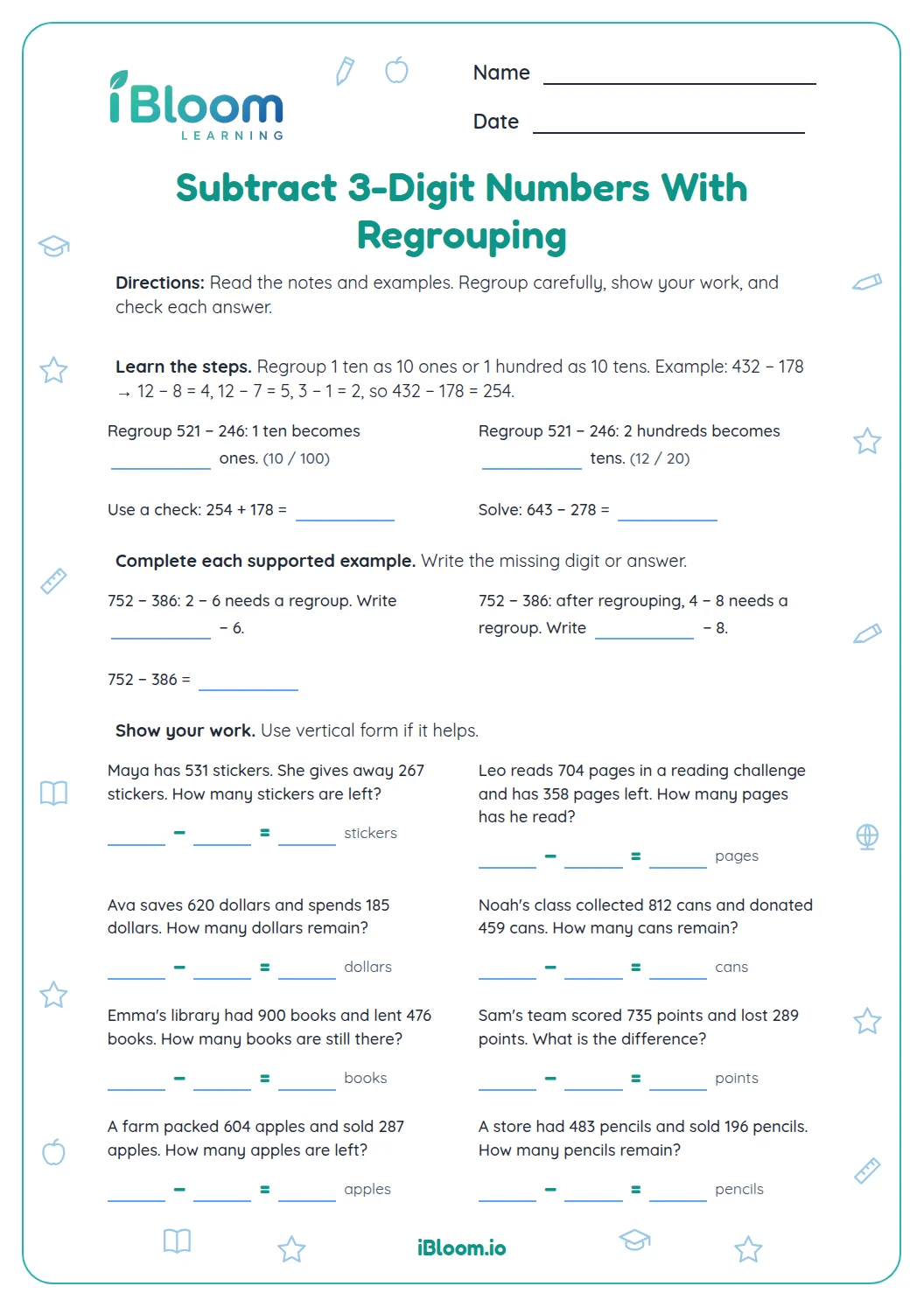
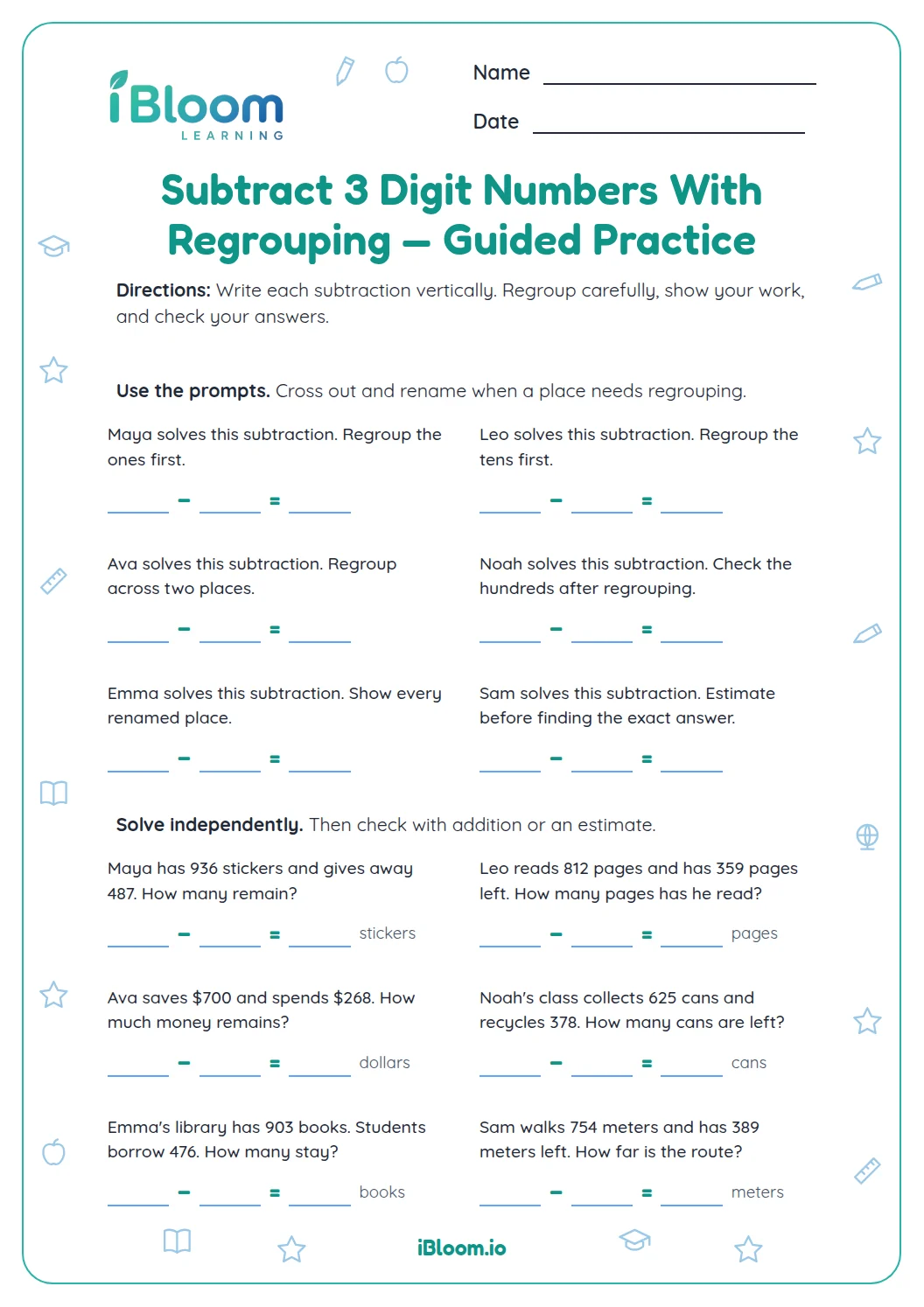
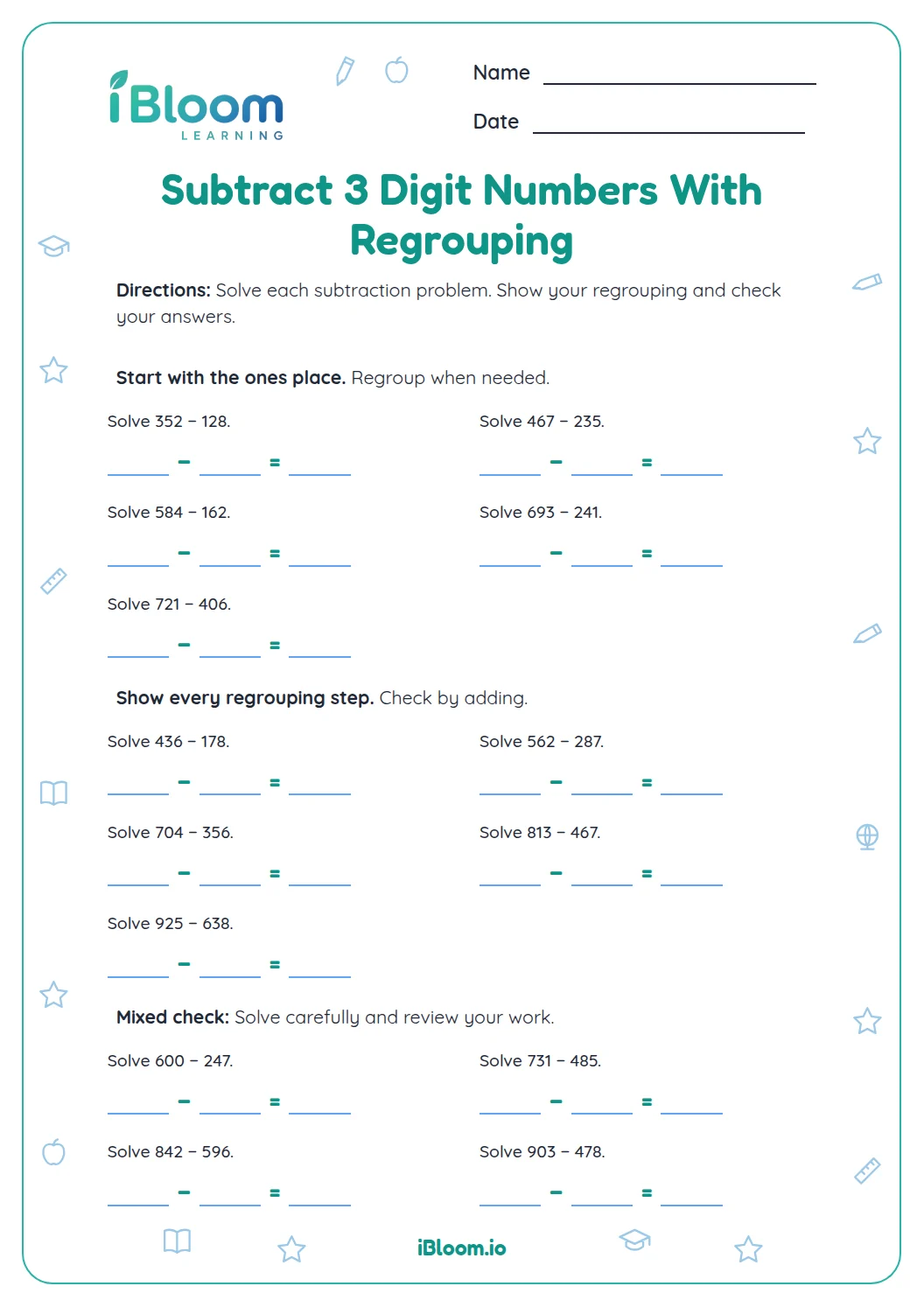
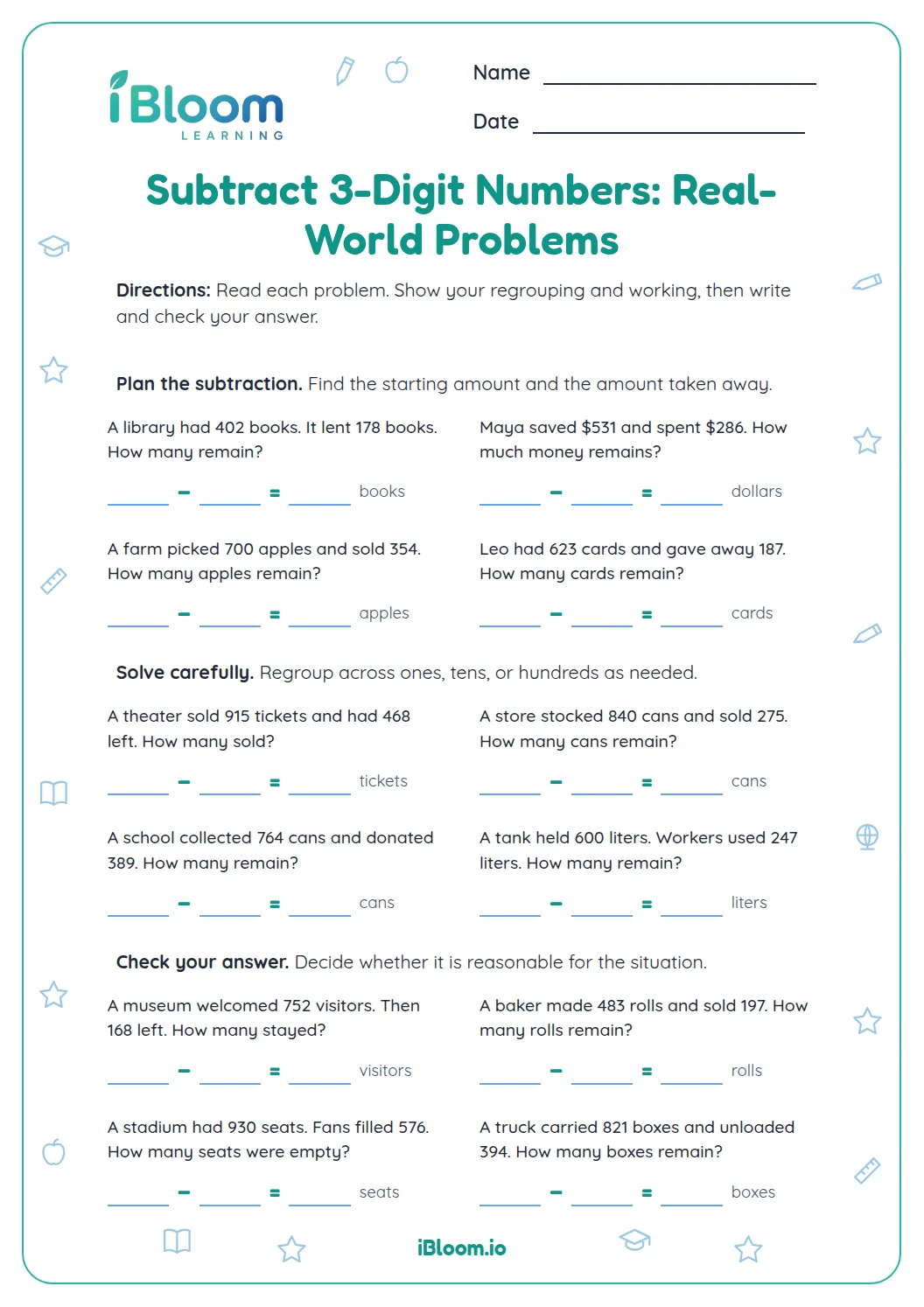
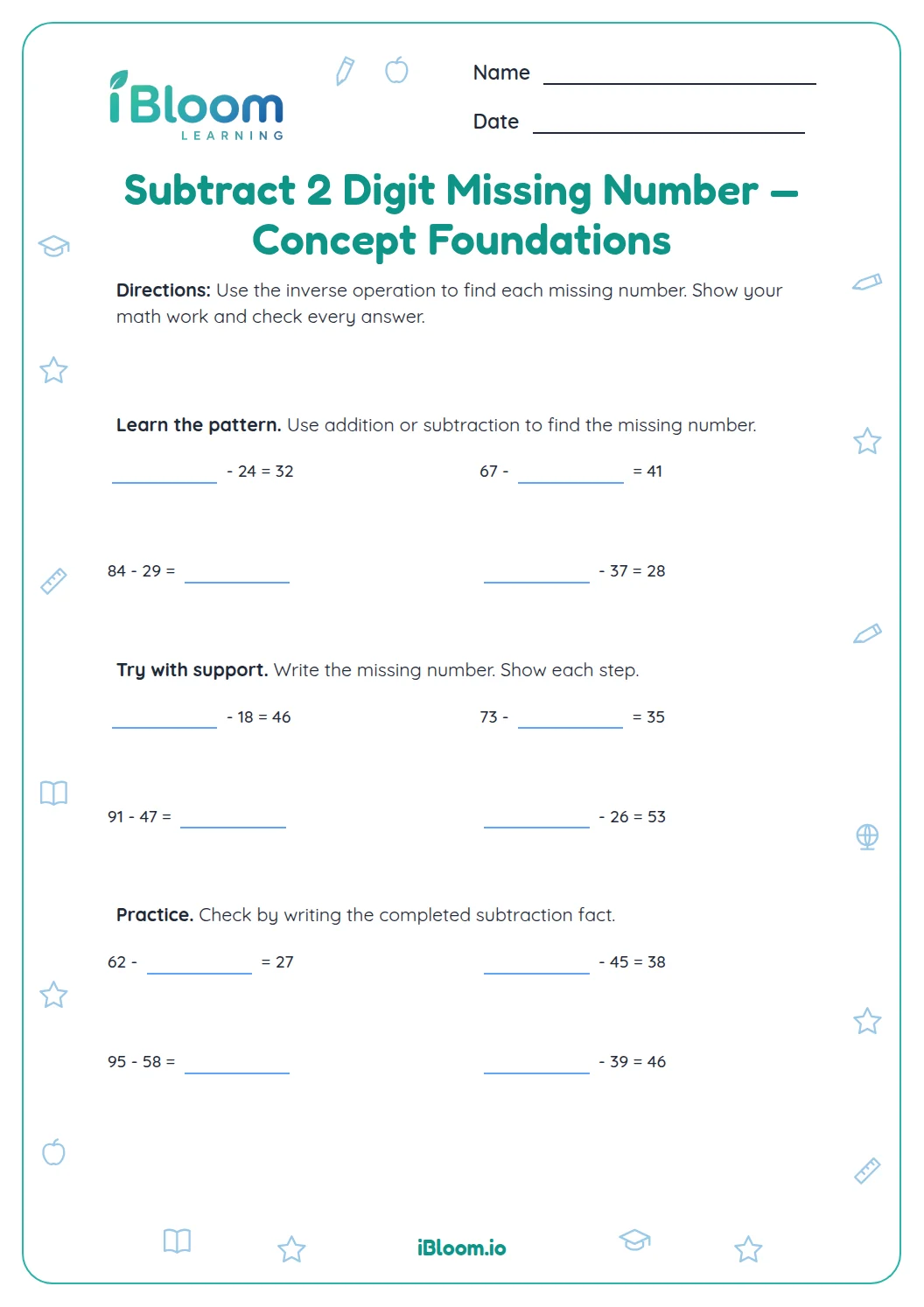
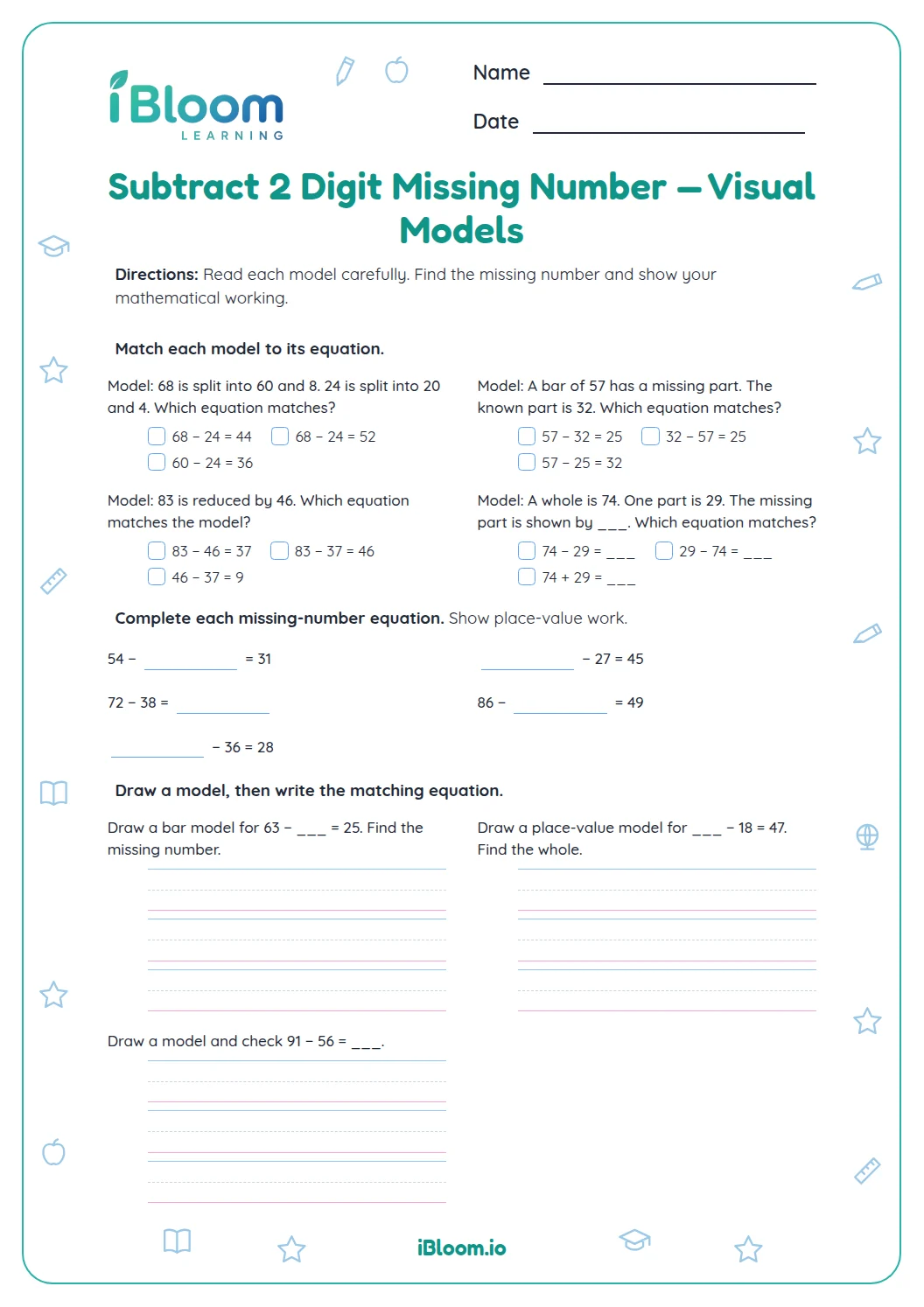
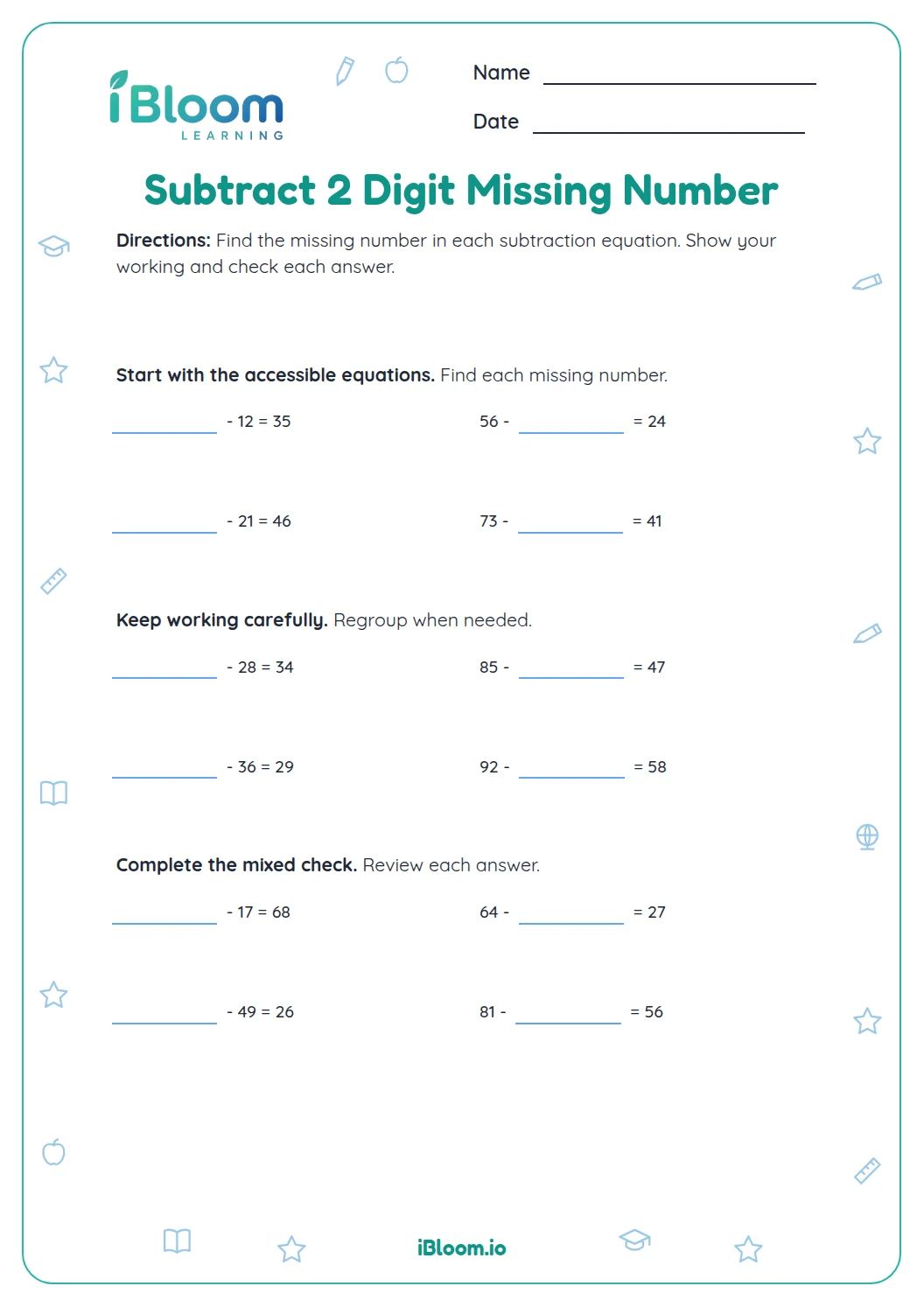
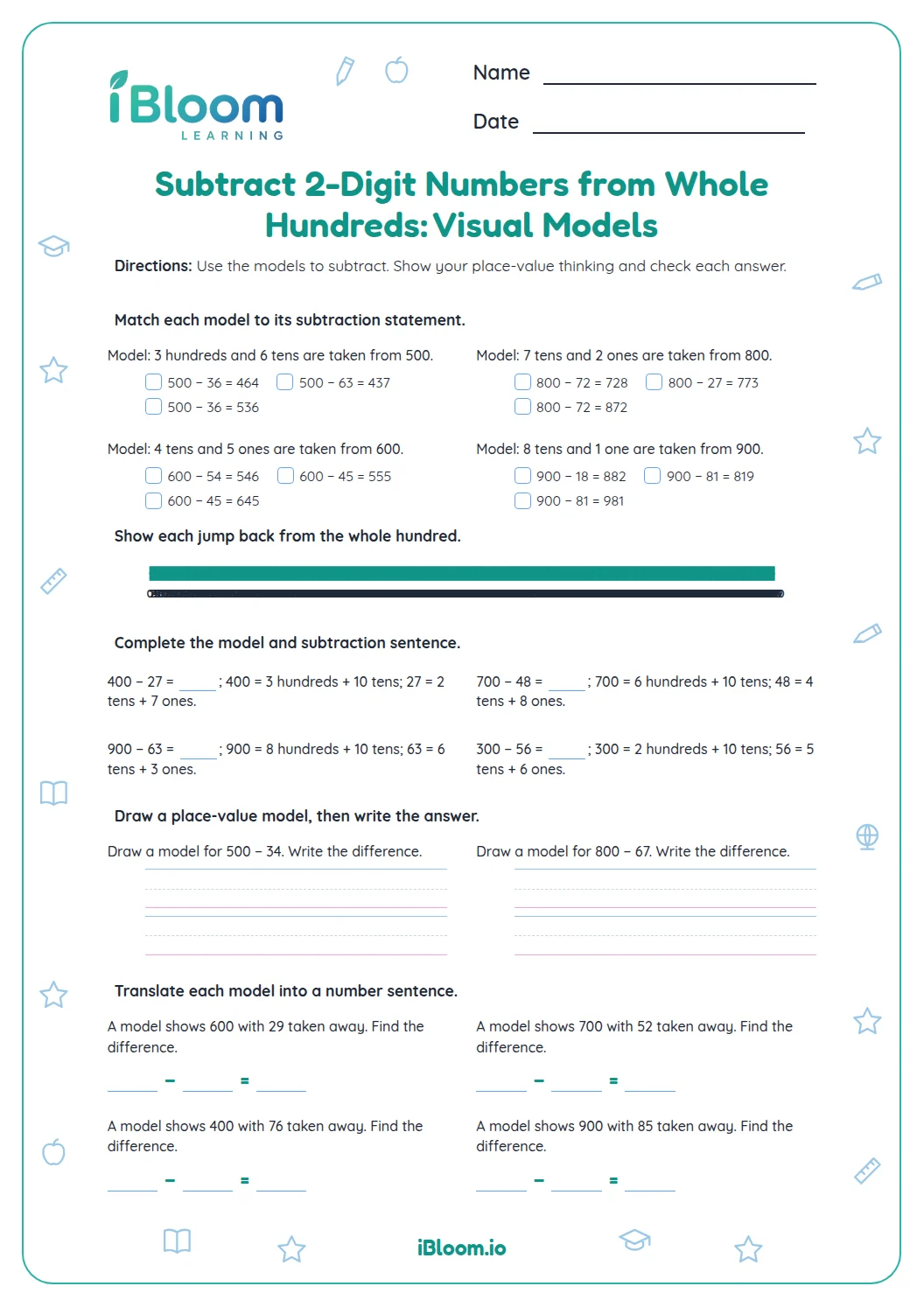
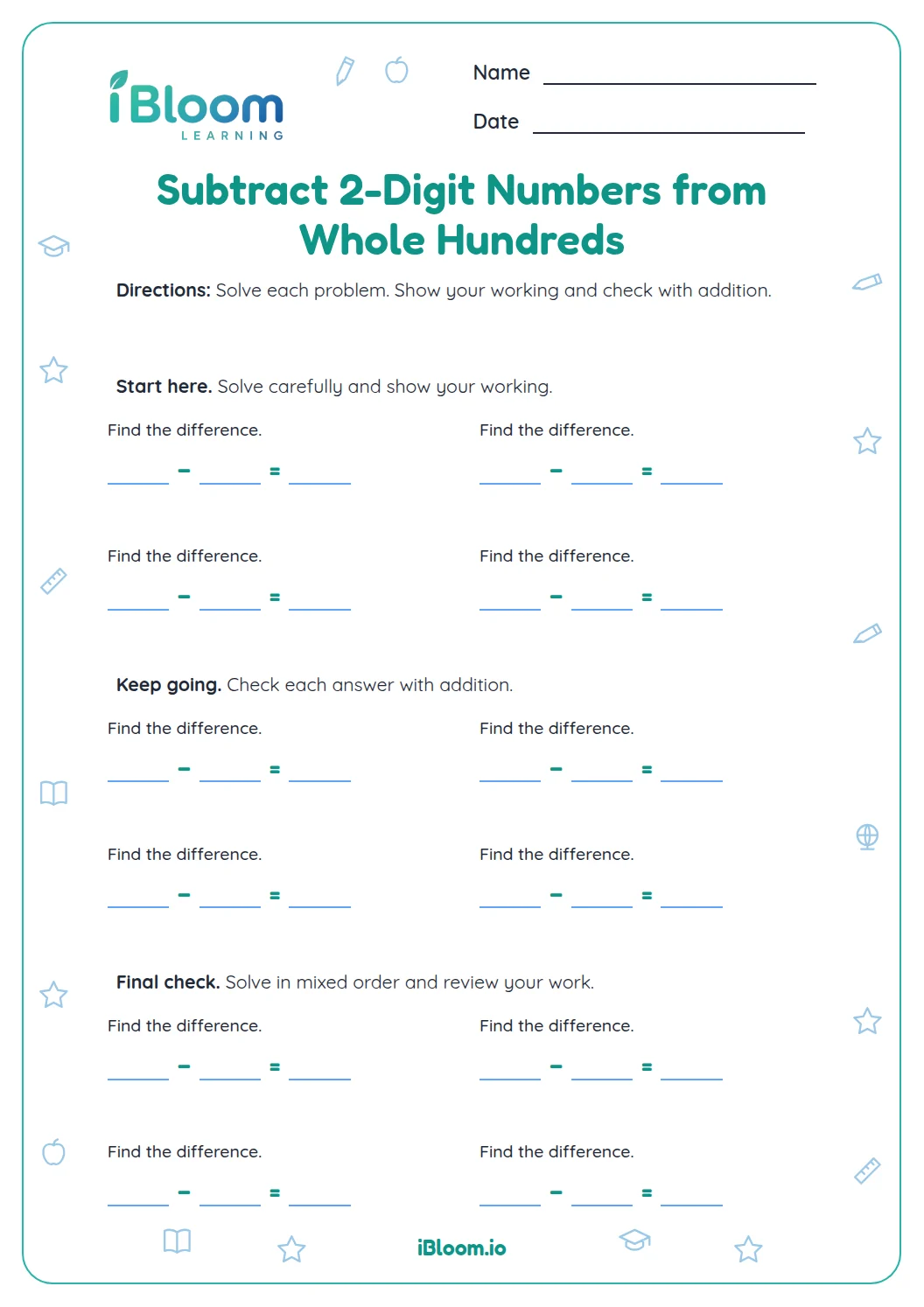
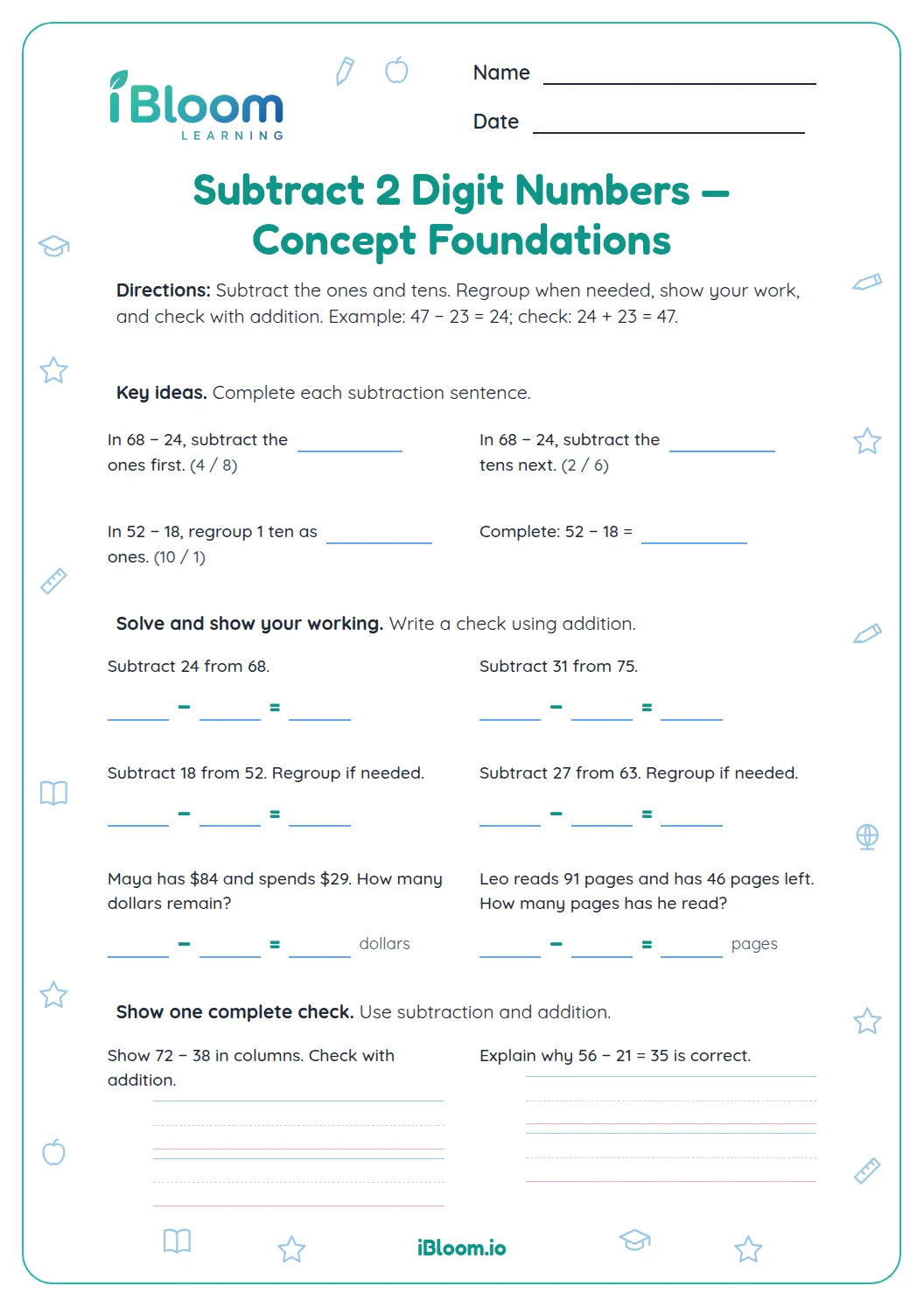
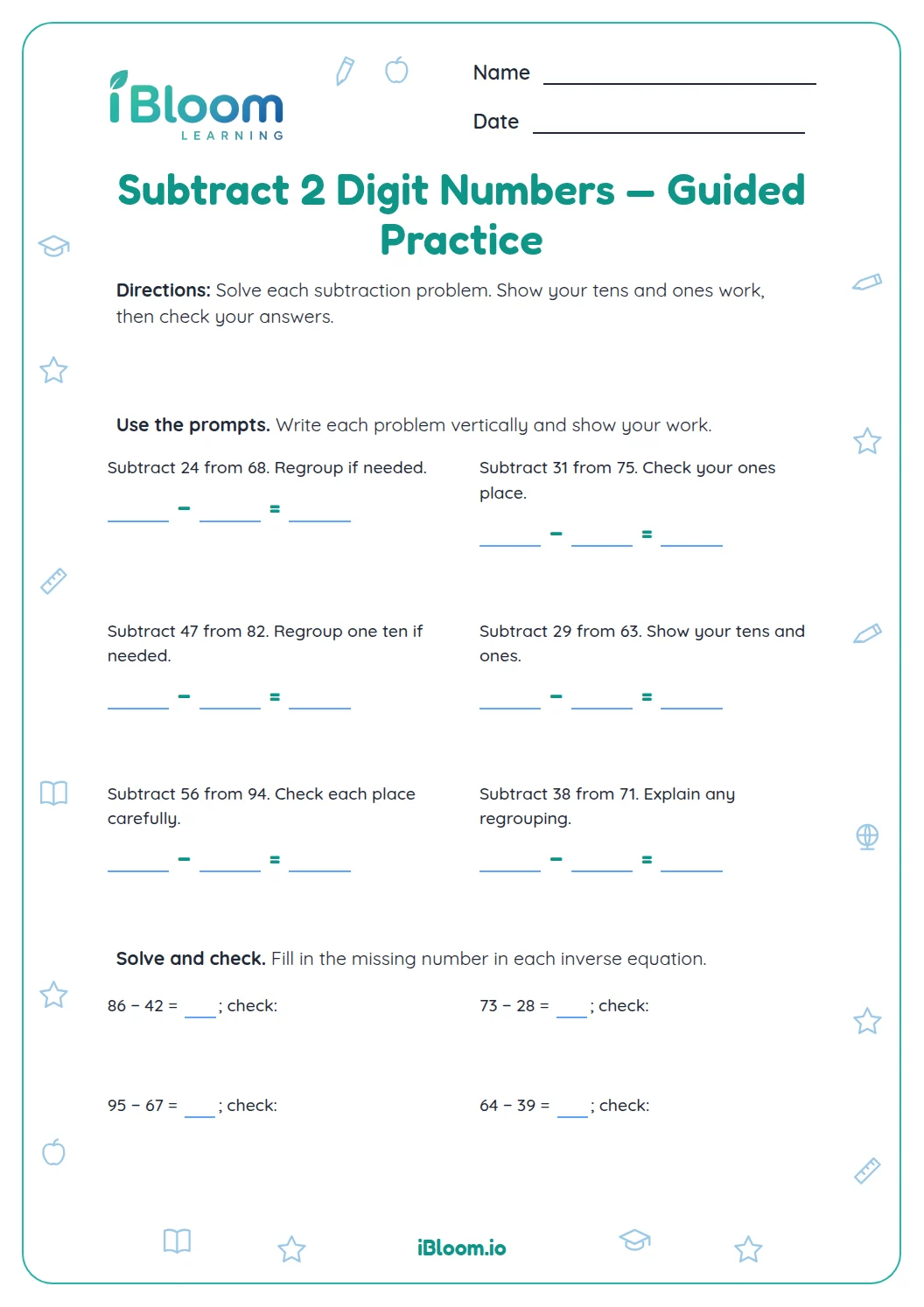
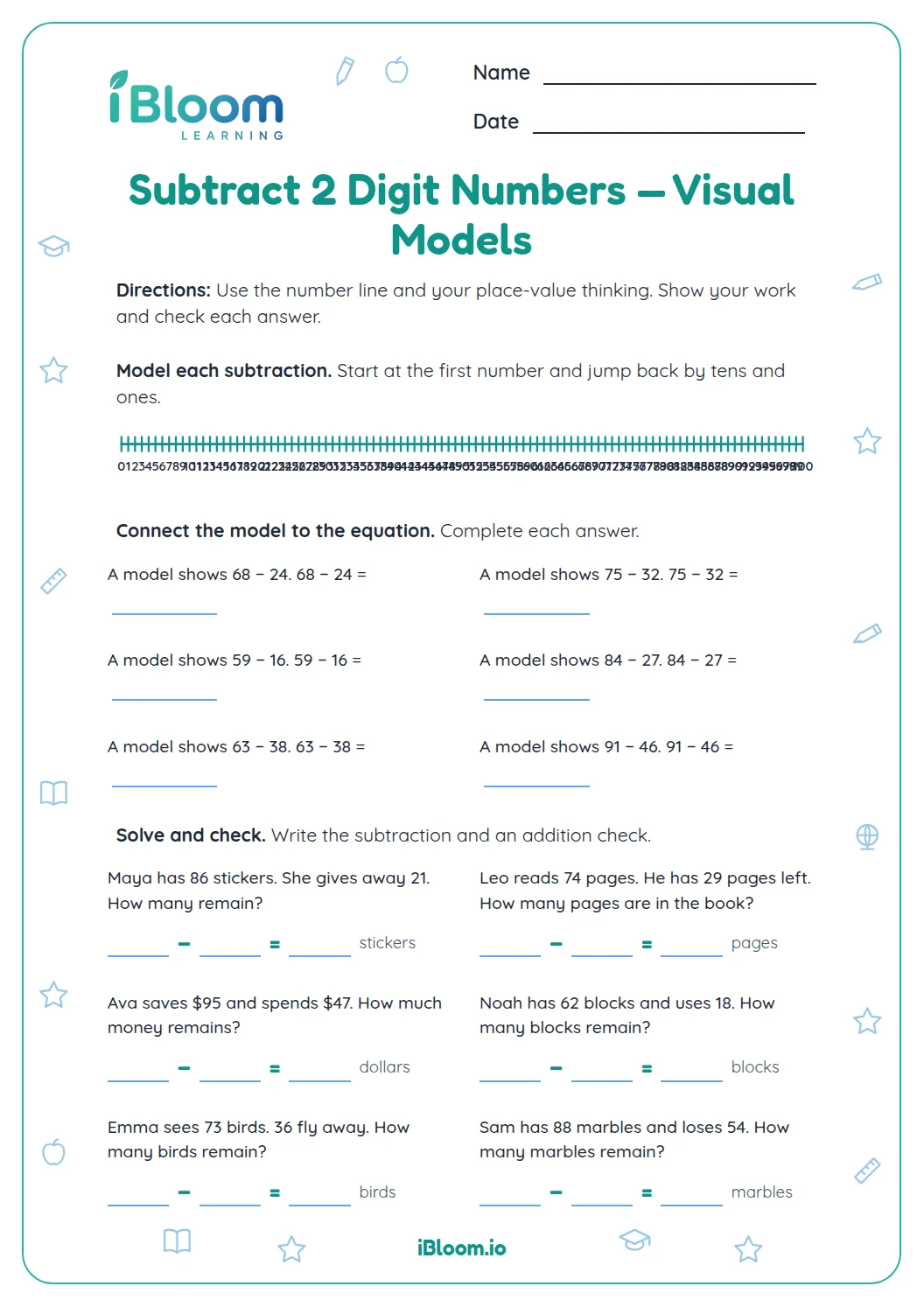
This free Grade 4 worksheet builds reasoning with three-digit subtraction that requires regrouping. Students solve and compare subtraction expressions, inspect a sample error, and use short real-world situations to interpret a difference. It includes 14 questions and a separate answer key. The practice aligns with CCSS 4.NBT.B.4.
Aligned to 4.NBT.B.4
When does subtraction need regrouping?
Regroup when a digit in the top number is smaller than the digit below it. Trade one unit from the next place for ten units in the place to its right.
For example, in 532 − 178, regroup one ten as ten ones before subtracting 8 from 2. Then continue with the tens and hundreds, updating each traded digit.
- 1Regroup: 12 − 8 = 4
- 2Regroup a hundred: 12 tens − 7 tens = 5 tens
- 34 hundreds − 1 hundred = 3 hundreds
- 4Difference: 354; check 354 + 178 = 532
How does the challenge build reasoning?
The worksheet asks students to calculate and consider whether answers make sense. Items use varied three-digit numbers, including zeros that require regrouping across a place.
- Part A: Solve and compare three-digit differences
- Part B: Find and correct a subtraction answer
- Part C: Apply subtraction to short situations
How do you verify a difference?
Add the difference to the amount subtracted. The sum should match the starting number.
How to use this worksheet
- 1Write the numbers in matching place-value columns.
- 2Start in the ones place.
- 3Regroup from the next place if needed.
- 4Subtract each place and update traded digits.
- 5Add the difference to the subtrahend to check.
Common mistakes and quick fixes
The mistake
Subtracting the smaller digit from the larger in every column.
The fix
Regroup first so each top digit is large enough.
The mistake
Forgetting to reduce the tens after trading.
The fix
Record the trade above the column.
The mistake
Leaving a zero unchanged after regrouping through it.
The fix
Turn each passed zero into 9 before subtracting.
Common Core alignment
This worksheet practices the skills listed below.
Use the standard algorithm to subtract multi-digit whole numbers.
On this sheet: Use the standard algorithm to subtract multi-digit whole numbers.
Show the official wordingHide the official wording
Fluently add and subtract multi-digit whole numbers using the standard algorithm.
What to practice next
Make more practice
Further reading
Questions parents and teachers ask
When does a subtraction problem need regrouping?
Regroup when a digit in the top number is smaller than the digit below it. In 532 − 178, trade one ten for ten ones, then continue across the places and subtract. Check the result by adding the difference to 178.
How many questions are on the worksheet?
There are 14 questions in three parts: six subtraction calculations, four reasoning choices, and four application or calculation problems. A separate answer key follows the two worksheet pages and provides the expected results so families can review each method in every item.
How can a student check a difference?
Add the difference to the number being subtracted. For question 1, 354 + 178 equals 532, so the difference checks against the starting number. This is a useful way to catch an arithmetic slip before moving to the next problem.
What does the reasoning section ask students to do?
Students compare two subtraction expressions, evaluate a difference, and identify a correct equation. Each choice uses three-digit subtraction and supports reasoning about the size or accuracy of a result. Read each choice carefully before selecting one. Read every option carefully before selecting an answer from the list.
How can a word problem be turned into subtraction?
Identify the starting amount and the amount removed, then subtract. In the library question, 725 books minus 368 books lent leaves 357 books. Label the answer in books to match the story, and use addition if you want to check it. This connects the equation to the situation. Each part builds toward checking a complete subtraction story.