
About this worksheet
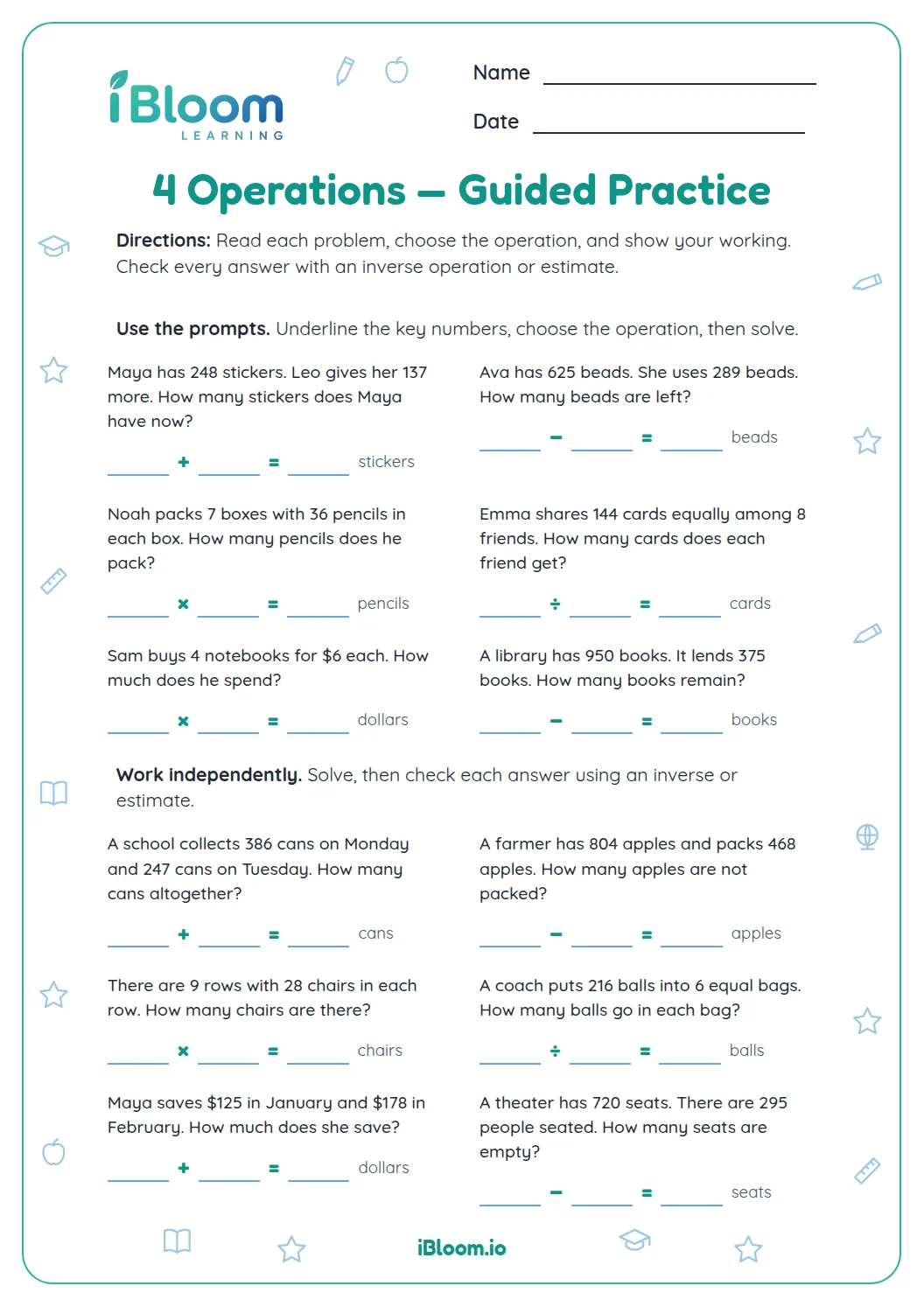
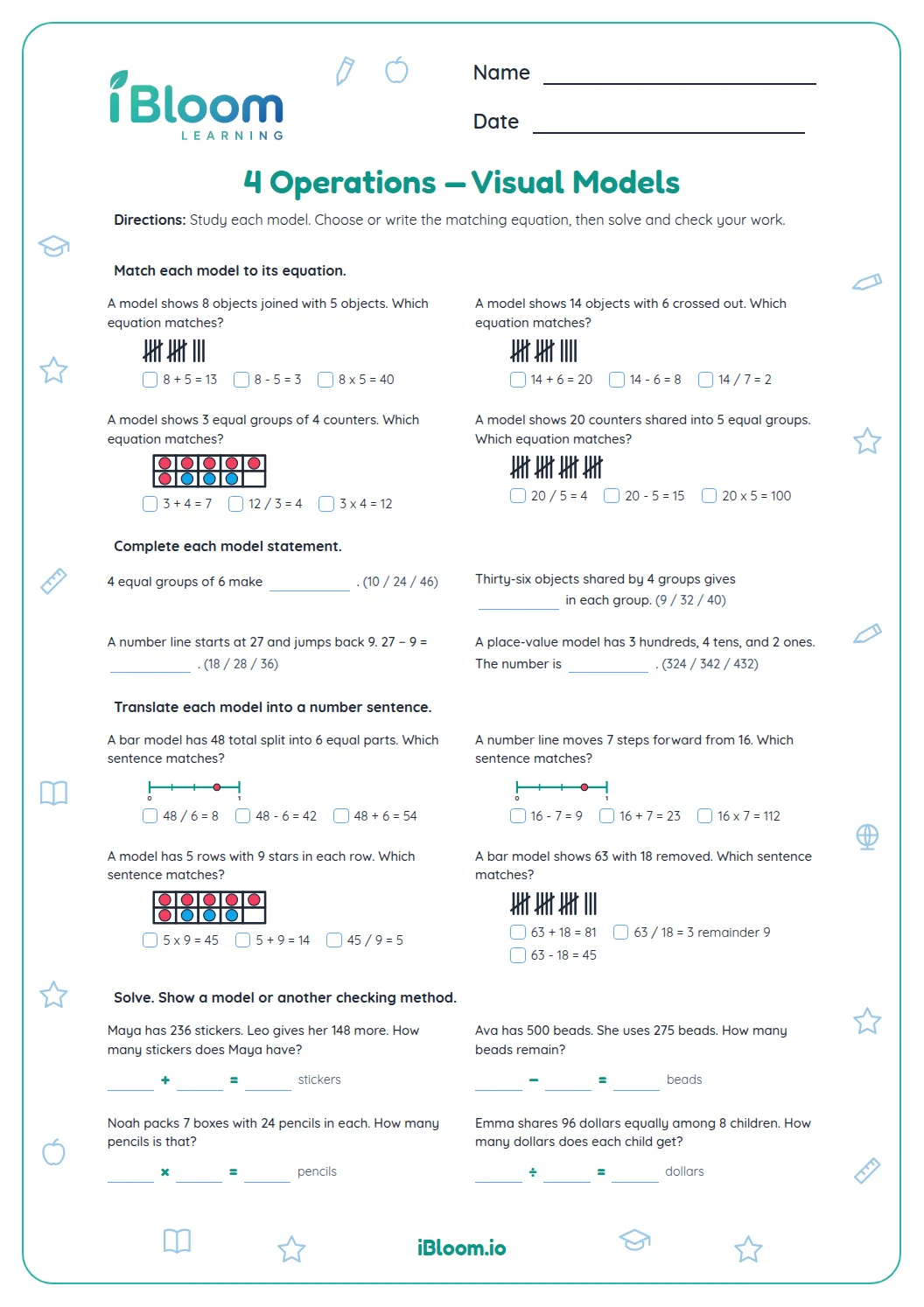
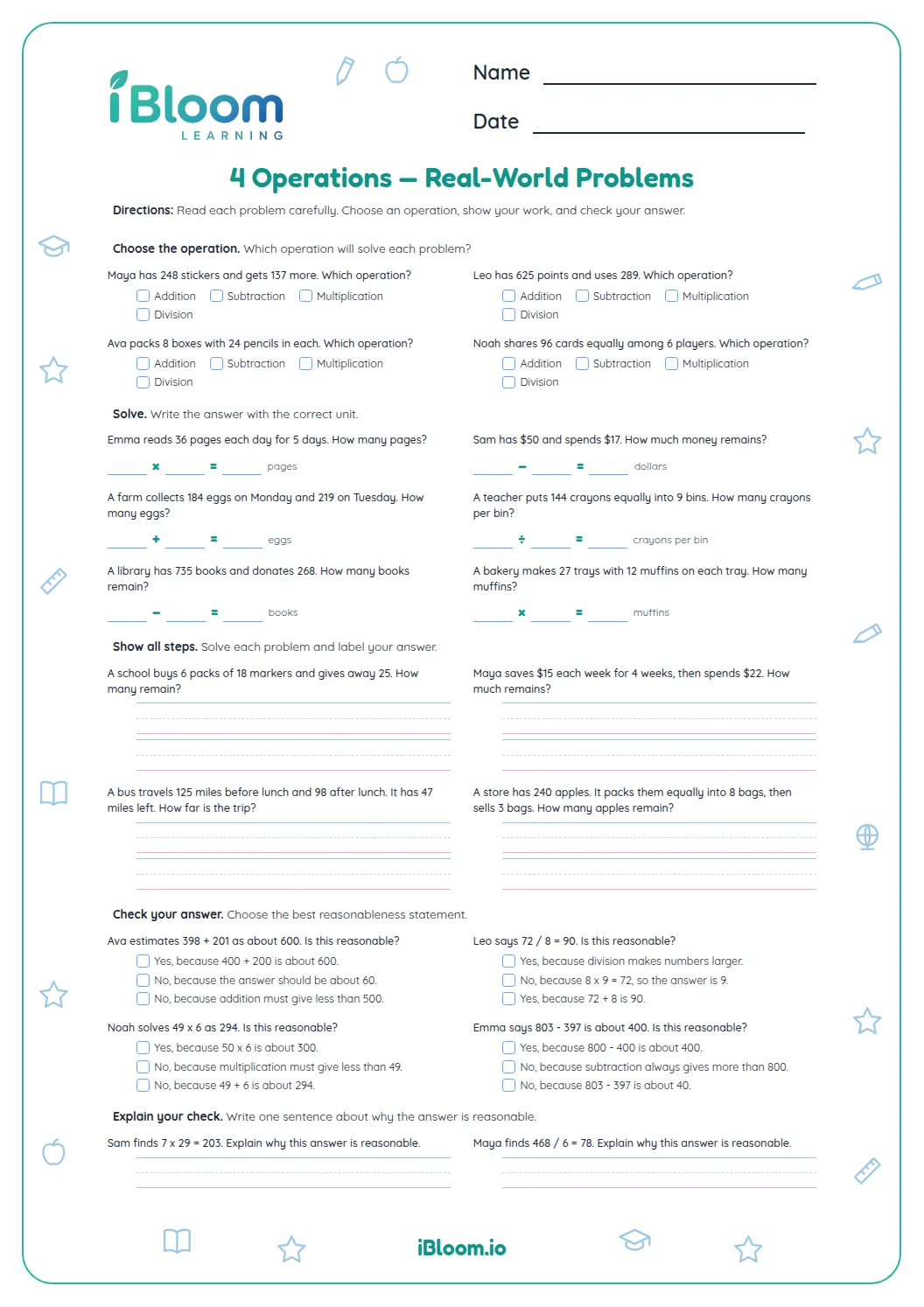
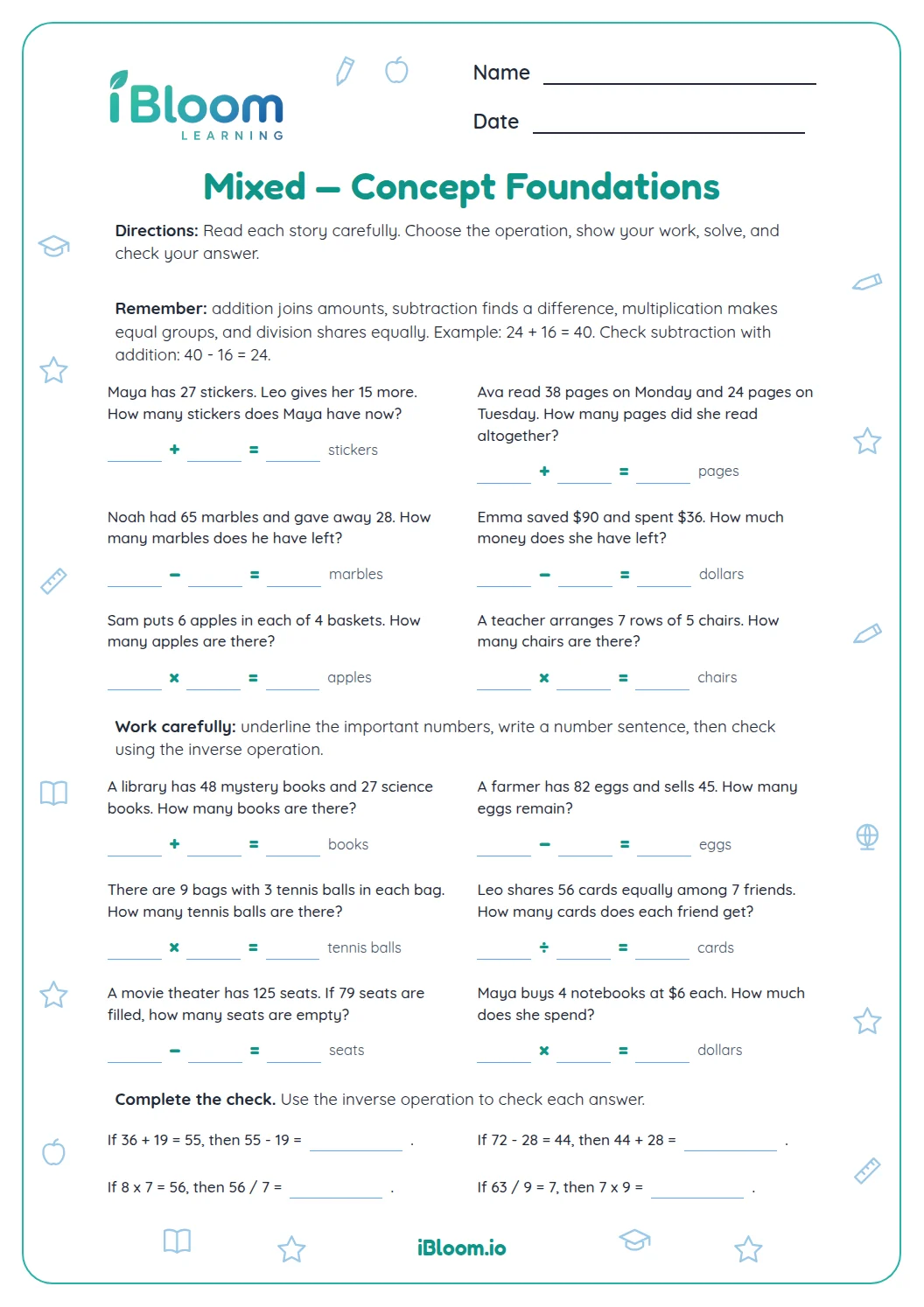
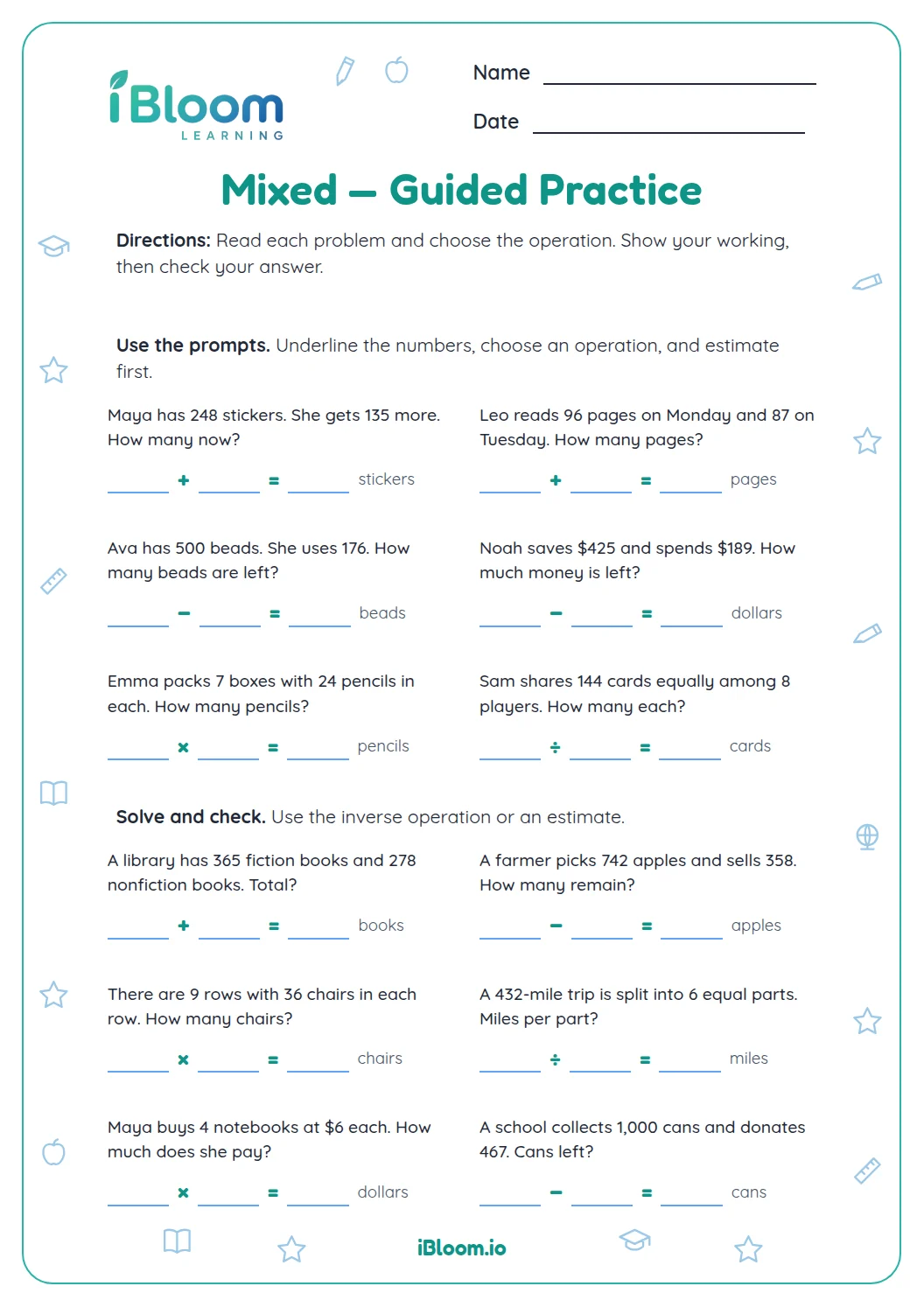
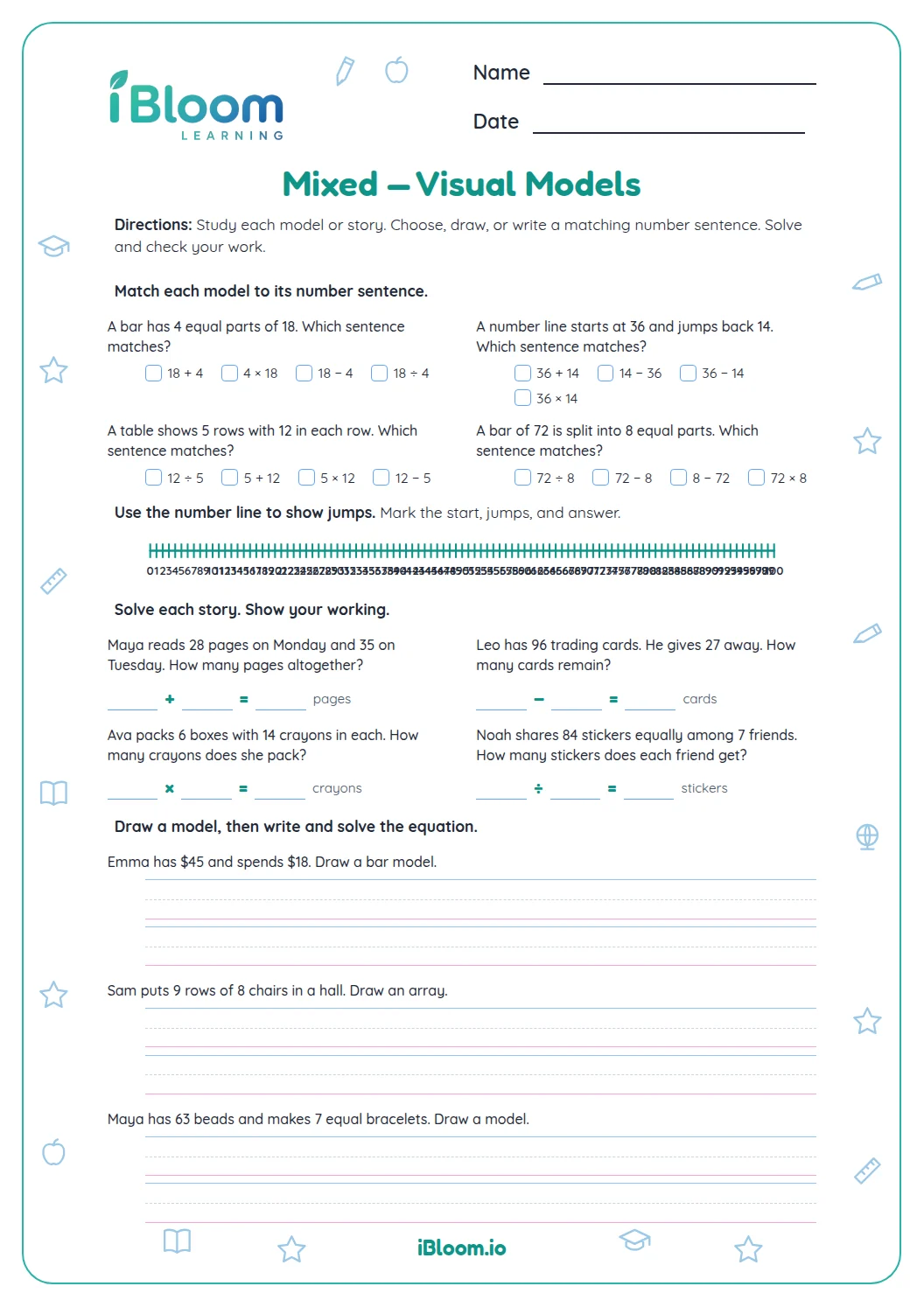
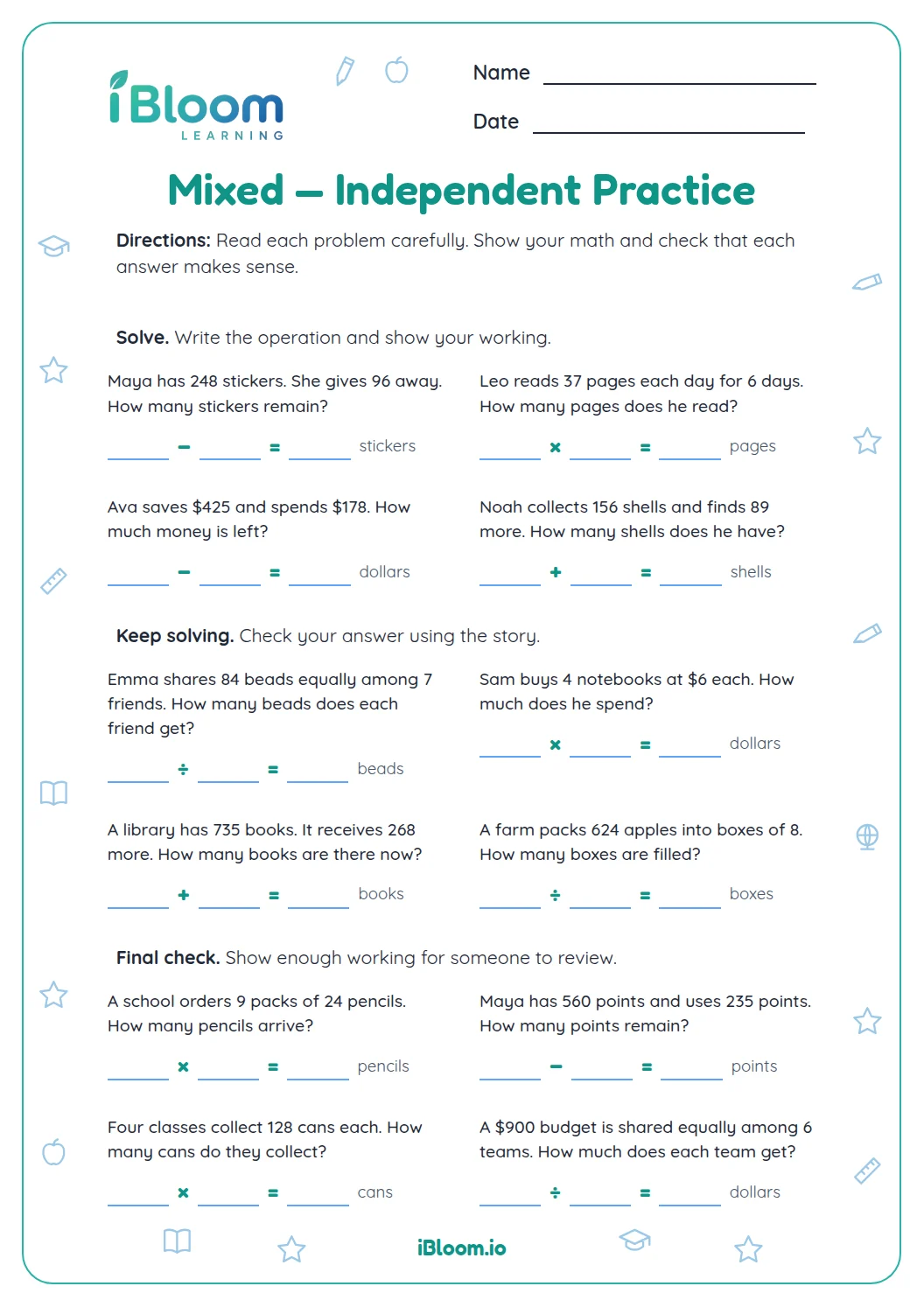
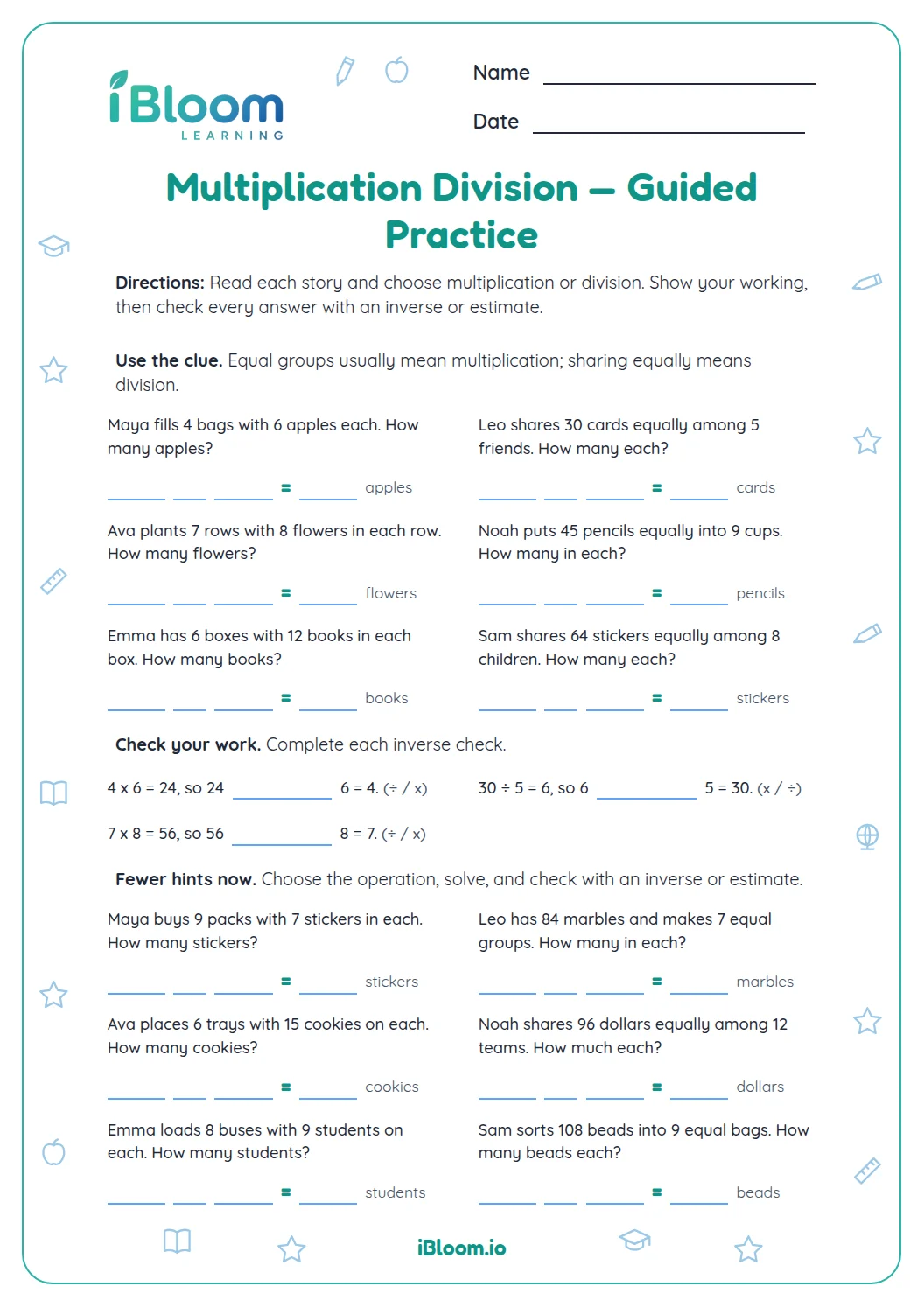
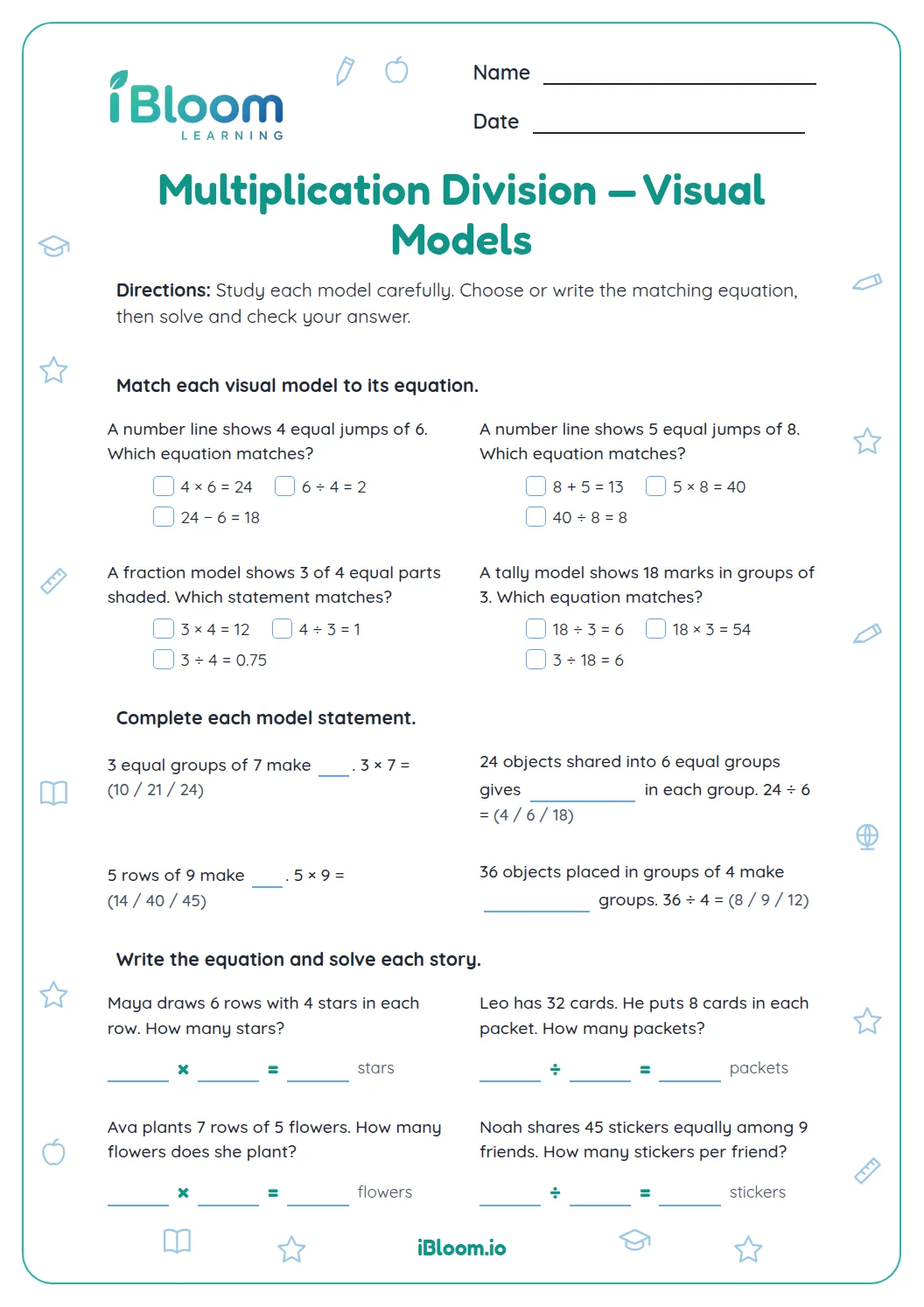
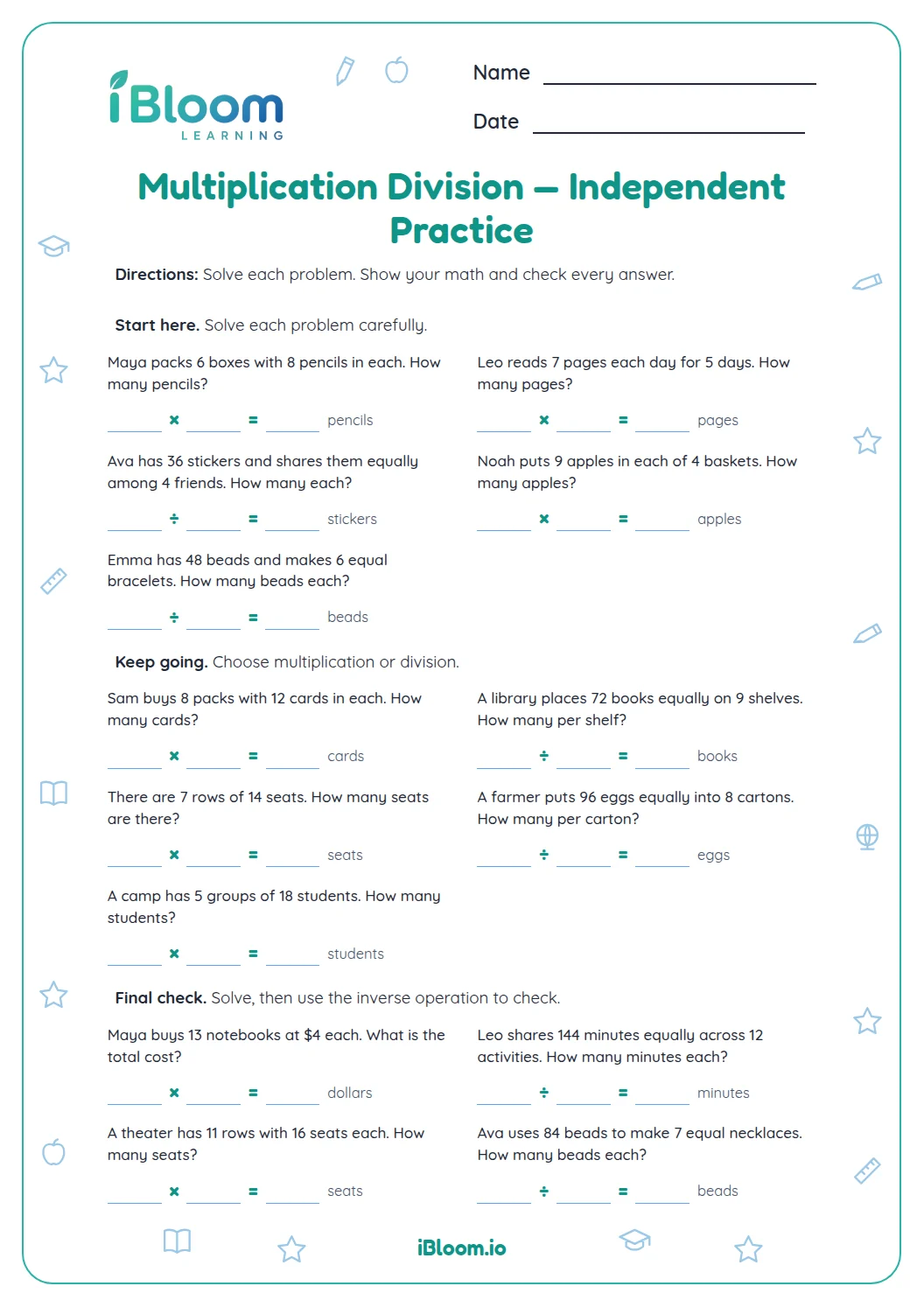
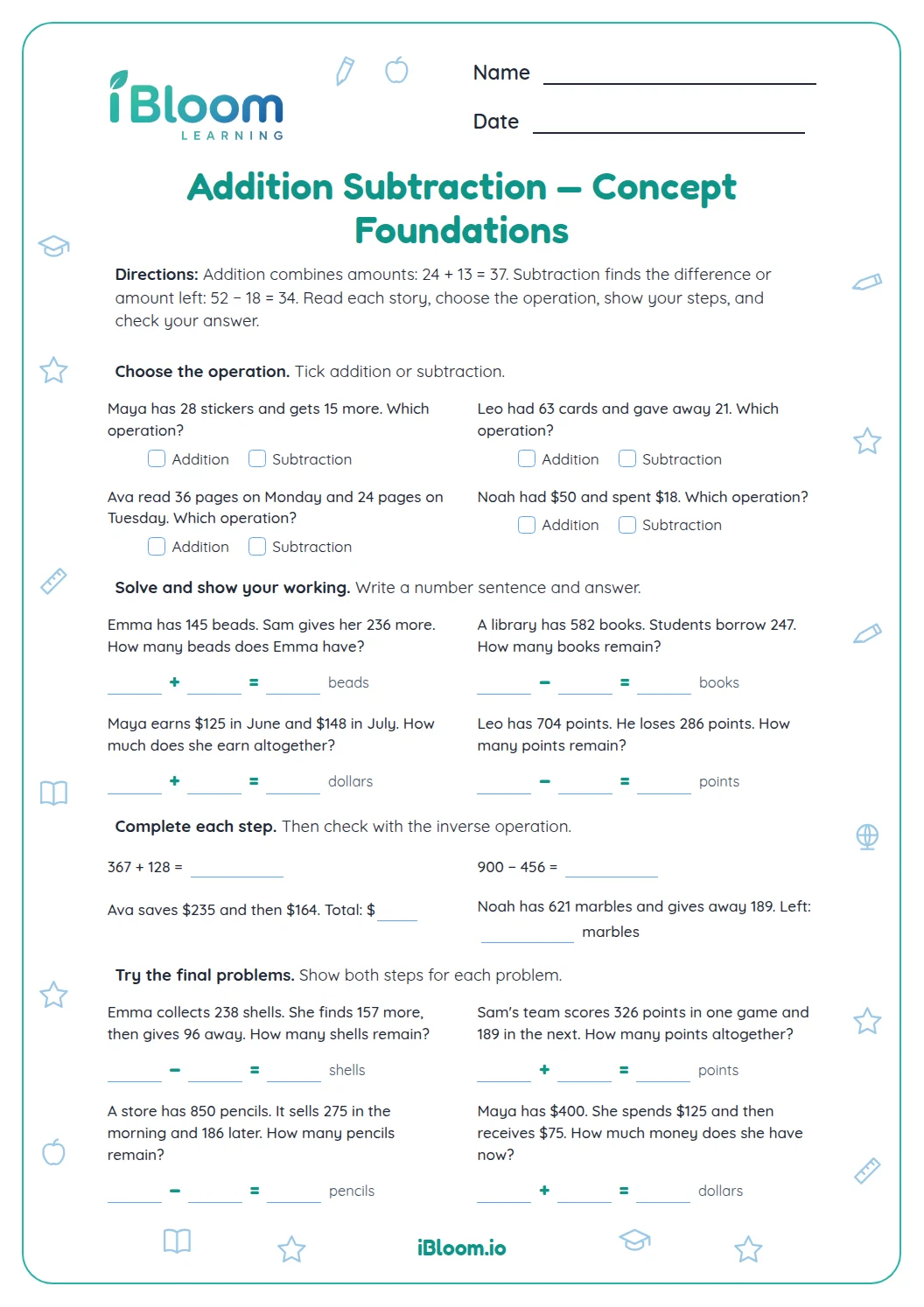
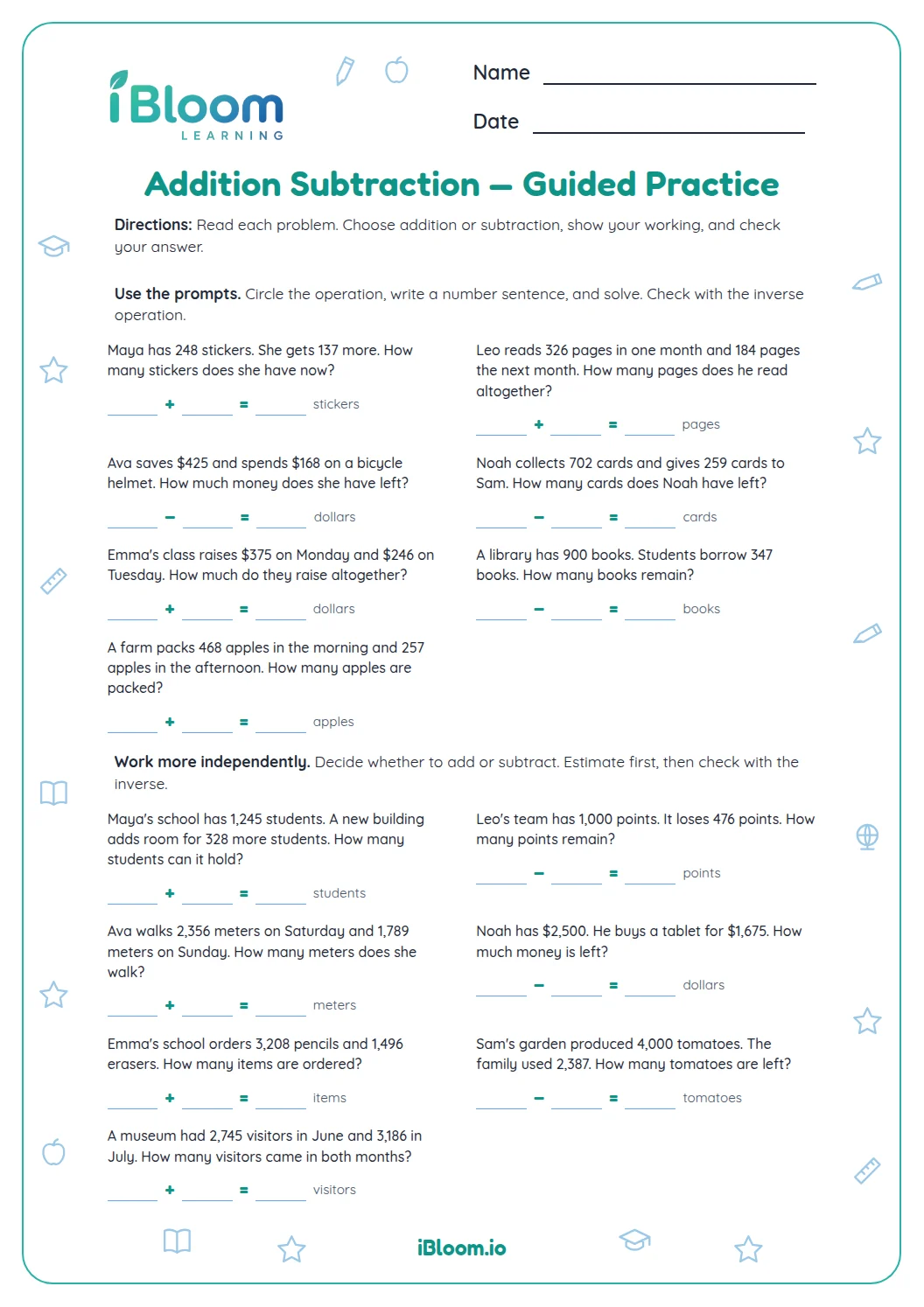
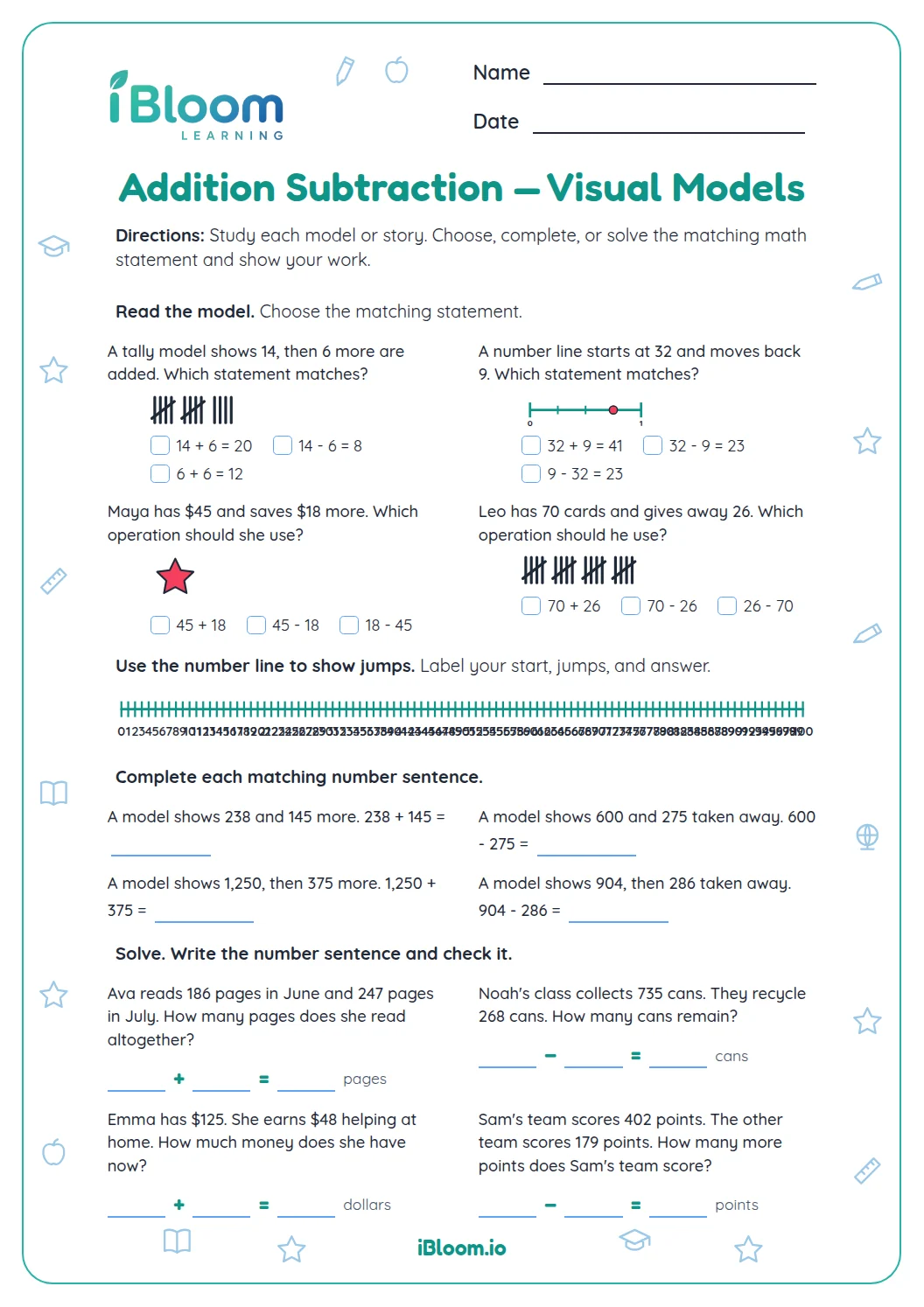
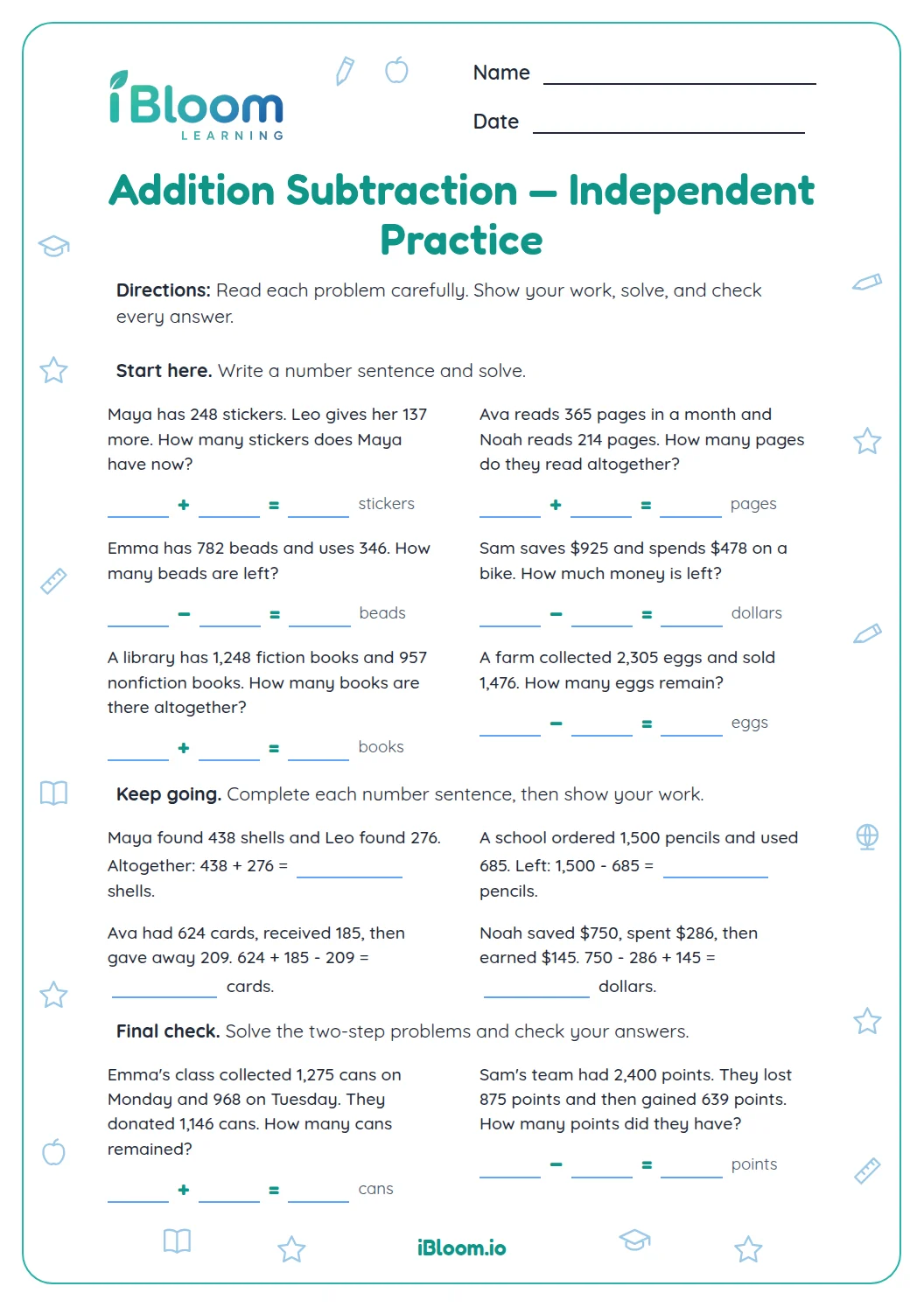
This Grade 4 printable gives students practice choosing among addition, subtraction, multiplication, and division in whole-number situations. Across four parts, students inspect reasoning, solve word problems, find missing values, and explain or solve multistep situations. The separate key includes results and sample explanations. It practices CCSS 4.OA.A.3.
Aligned to 4.OA.A.3
What skill does this worksheet practice?
This Grade 4 printable gives students practice choosing among addition, subtraction, multiplication, and division in whole-number situations. Across four parts, students inspect reasoning, solve word problems, find missing values, and explain or solve multistep situations. The separate key includes results and sample explanations. It practices CCSS 4.OA.A.3.
How can students work through the questions?
Students can name what the question asks, choose the operation or operations that match, and check the result using an inverse operation or estimate.
- 1Seven packs have 24 badges each.
- 27 × 24 = 168
- 3There are 168 badges.
How do students choose an operation?
Identify the quantity being found and how the known amounts relate. Equal groups can suggest multiplication or division; a change in total can call for addition or subtraction. For a multistep story, solve one relationship at a time.
How can students check the result?
Use the inverse operation or substitute the result into the story. For example, 7 × 24 = 168, so seven packs of 24 badges contain 168 badges.
- 17 × 24 = 168
- 2Seven packs contain 168 badges.
Common mistakes and quick fixes
The mistake
Choose an operation from one keyword alone.
The fix
Use the quantities and what the story asks you to find.
The mistake
Lose track of the sign or unit.
The fix
Carry it through the equation and check it against the story.
The mistake
Stop after the first step in a multistep item.
The fix
Reread the final question and use every required operation.
Common Core alignment
Solve multistep whole-number stories with the four operations.
On this sheet: Choose an operation, solve multi-step situations, and check calculations.
Show the official wordingHide the official wording
Solve multistep word problems posed with whole numbers and having whole-number answers using the four operations, including problems in which remainders must be interpreted.
What to practice next
Make more practice
Further reading
Questions parents and teachers ask
What operations does this worksheet use?
The questions use addition, subtraction, multiplication, and division with whole numbers. Students also decide when a situation needs more than one operation, as in the final problem about sharing bottles and then buying more for each team. This set includes contexts such as badges, shelves, teams, and bottles.
How many questions and pages are included?
There are 16 questions arranged in four parts. The printable renders as three worksheet pages and three answer-key pages, with the key giving answers and sample reasoning for written responses. Families can work through one part at a time. The key also gives models for the explanation items.
How does the missing-number part work?
Students read each short situation and use the blank to record the needed total or quotient. For example, 12 rows with 16 chairs each lead to 192 chairs; the context tells students what the number represents. The answer line should include the requested unit when one is named.
Do students need to show their work?
The working-space questions and written responses are designed for equations or explanations. Students can write the operation, compute, and label the answer with the story’s unit, such as badges, books, or cones. Each response should answer the question asked. Students can compare their equations with the sample reasoning.
What does CCSS 4.OA.A.3 connect to here?
This standard addresses multistep whole-number word problems using the four operations. The final questions ask students to combine operations in contexts, while earlier items build operation choice and checking. Students can show how each calculation fits the situation. Its final stories require students to combine steps.