
About this worksheet
What will children practice with this printable?
Aligned to 4.MD.A.2
What skill does this page practice?
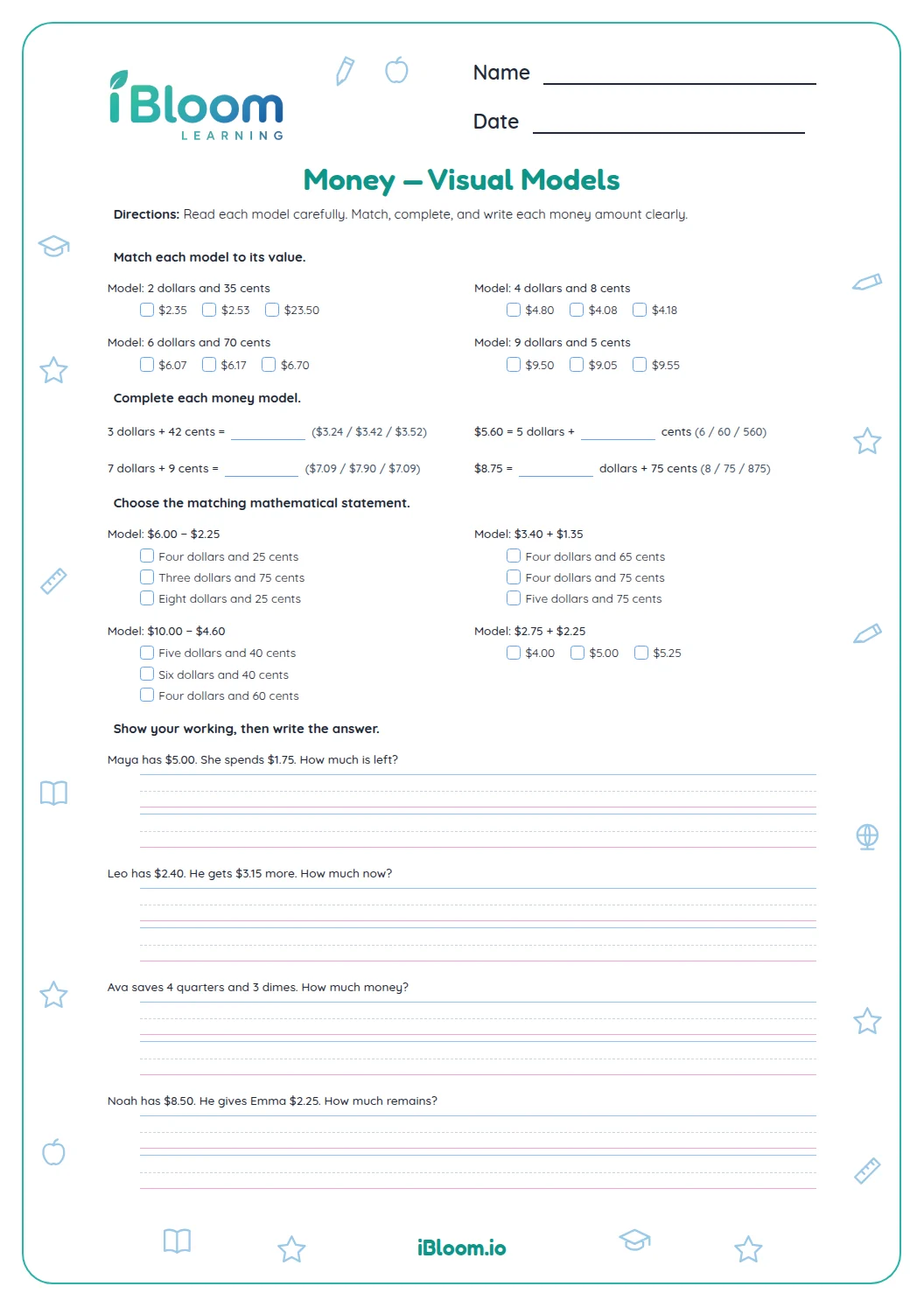
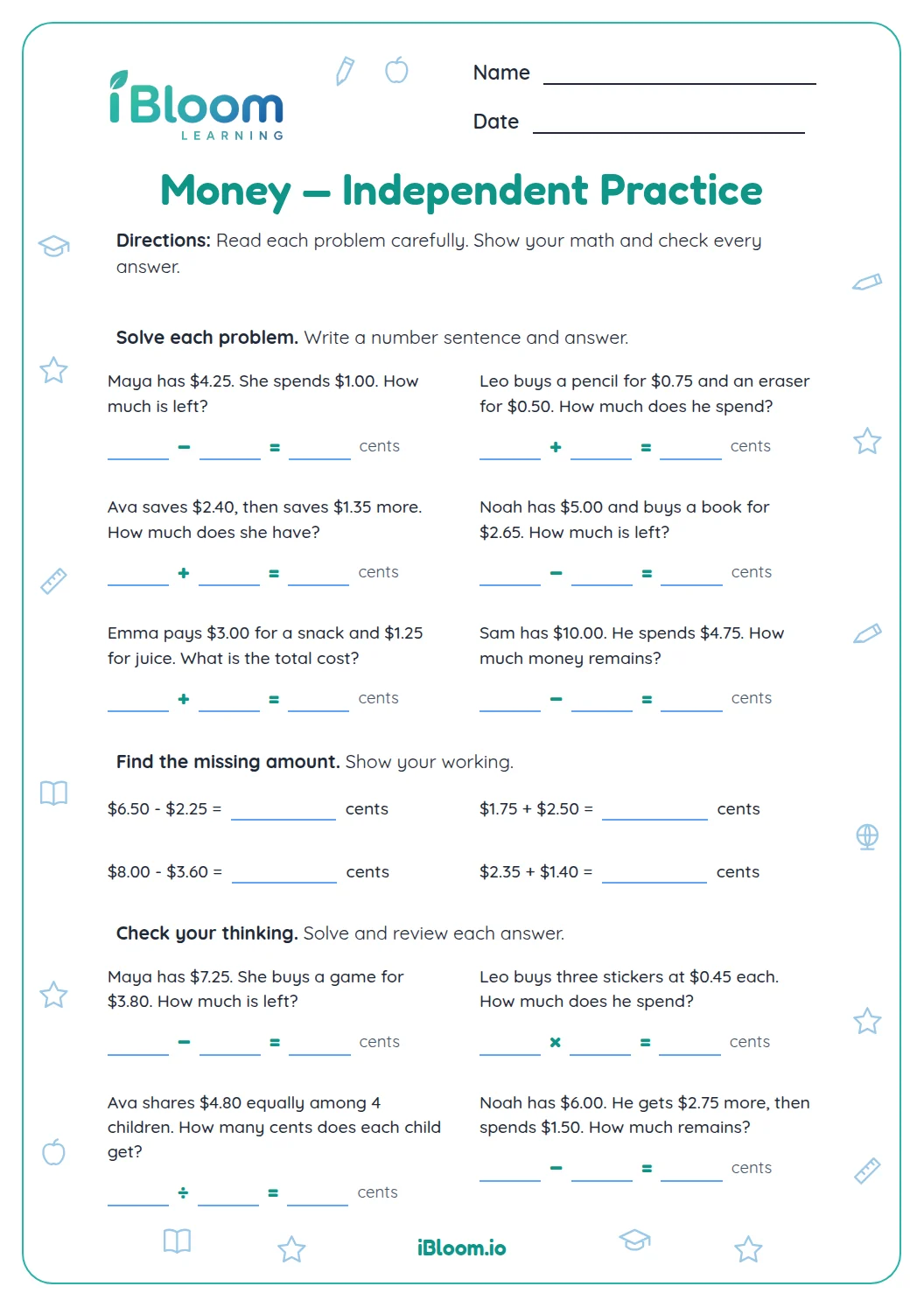
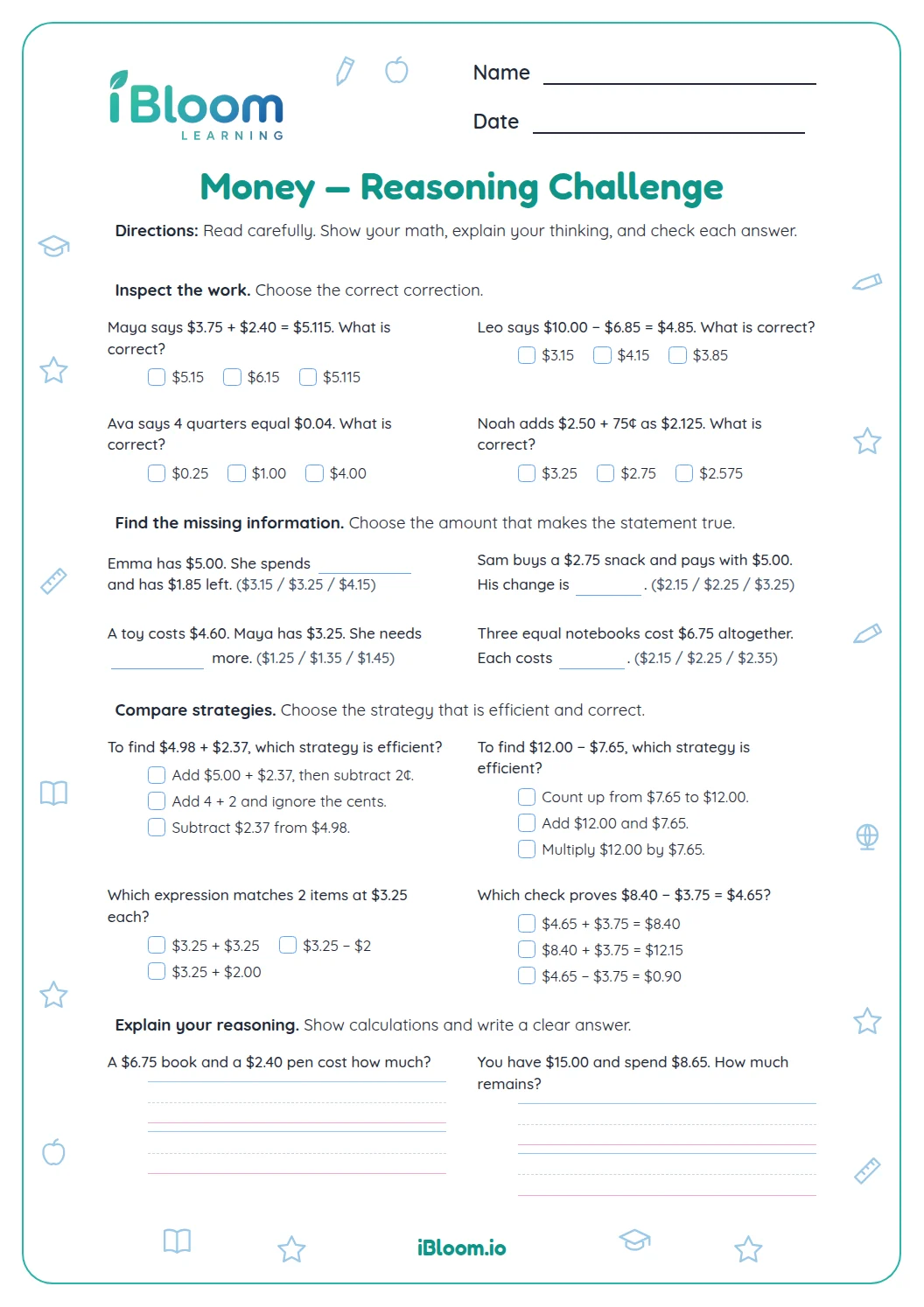
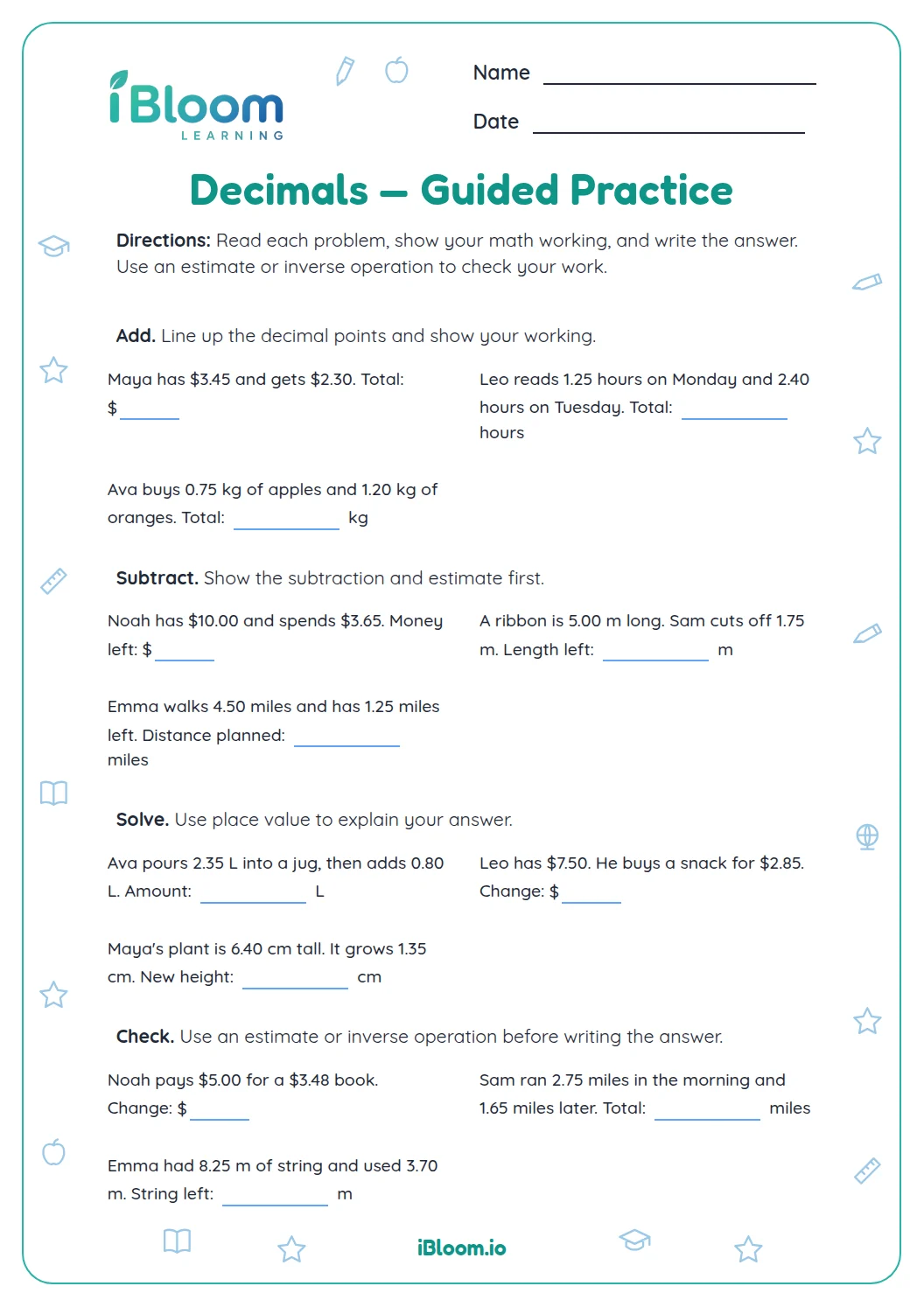
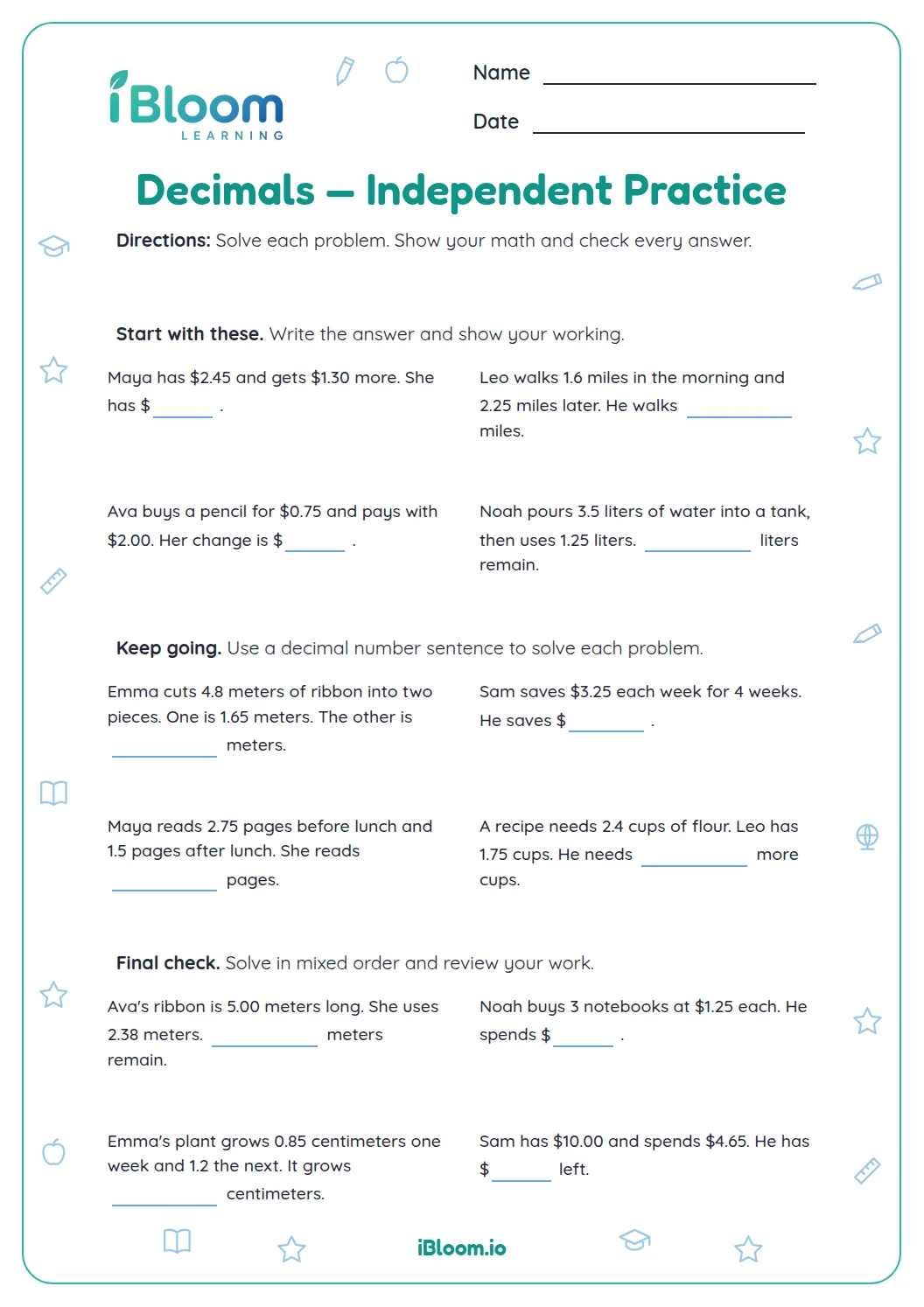
Solve money stories by adding, subtracting, or multiplying dollar amounts. Keep dollars and cents aligned, then check that the result answers the story.
Try the worked example with a pencil, then use the same check on the practice items.
- 1A notebook costs $3.45 and a folder costs $1.28.
- 2$3.45 + $1.28 = $4.73
- 3Add cents: 45¢ + 28¢ = 73¢. Add dollars: $3 + $1 = $4.
How is the practice organized?
Part A covers totals and change. Part B applies multiplication to equal-price purchases, so the repeated cost becomes a single equation.
How can families check the work?
Use the key after completing a part. Ask the learner to point to the clue, equation, or spelling decision that supports one answer.
How to use this worksheet
- 1Read the story and identify what it asks.
- 2Choose addition, subtraction, or equal groups.
- 3Write the numbers with decimal points aligned.
- 4Solve and include a dollar sign and two cent digits.
- 5Check that the amount fits the situation.
Common mistakes and quick fixes
The mistake
Adding cents without regrouping when needed.
The fix
Combine cents first; 100 cents makes another dollar.
The mistake
Subtracting the smaller amount from the larger without attending to the story.
The fix
For change, subtract the cost from the amount paid.
The mistake
Multiplying only the cents or only the dollars.
The fix
Multiply the full decimal amount by the number of items.
Common Core alignment
This worksheet practices the following Common Core skill.
Use addition, subtraction and multiplication to solve money stories with dollars and cents.
On this sheet: The questions directly ask learners to apply this skill.
Show the official wordingHide the official wording
Use the four operations to solve word problems involving distances, intervals of time, liquid volumes, masses of objects, and money, including problems involving simple fractions or decimals, and problems that require expressing measurements given in a larger unit in terms of a smaller unit. Represent measurement quantities using diagrams such as number line diagrams that feature a measurement scale.
What to practice next
Further reading
Questions parents and teachers ask
How should a child set up a money equation?
First decide what the question asks: a total, an amount left, or the cost of equal-price items. Copy the amounts with decimal points aligned, then use addition, subtraction, or multiplication. Finish with a dollar sign and two digits for cents. Then estimate the total to see whether the exact amount is reasonable.
How do you find change?
Subtract the purchase price from the amount paid. For example, $10.00 − $6.75 = $3.25, so the change is $3.25. On this sheet, read the payment and cost carefully before choosing which amount comes first. Check the subtraction by adding the change back to the purchase price.
When does a money story use multiplication?
Use multiplication when several items have the same price. For four tickets at $2.35 each, calculate 4 × $2.35 = $9.40. The worksheet includes equal-price purchases so children can distinguish repeated costs from adding different prices. Children can compare the repeated-cost equation with one addition of equal amounts.
How many questions and pages are included?
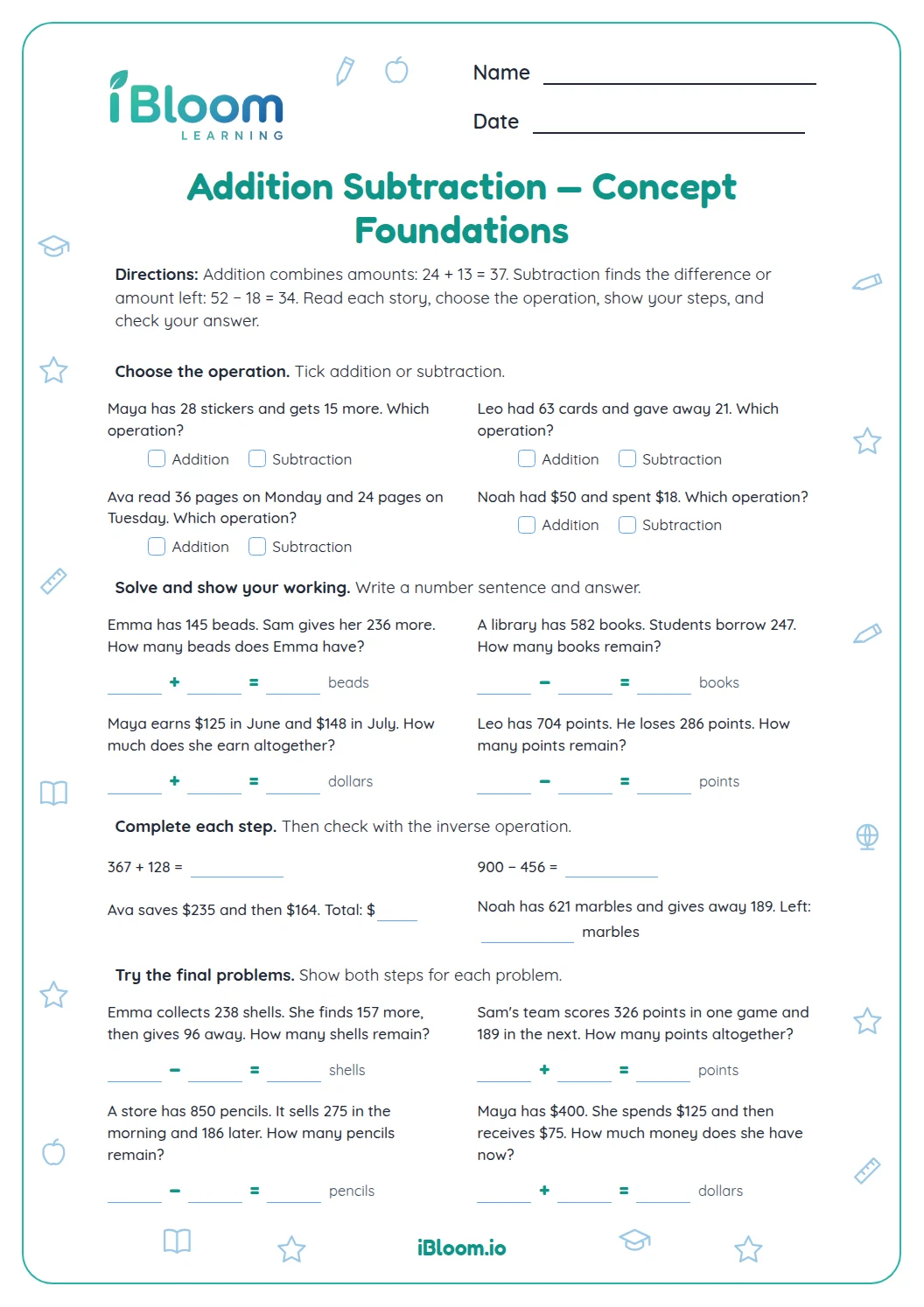
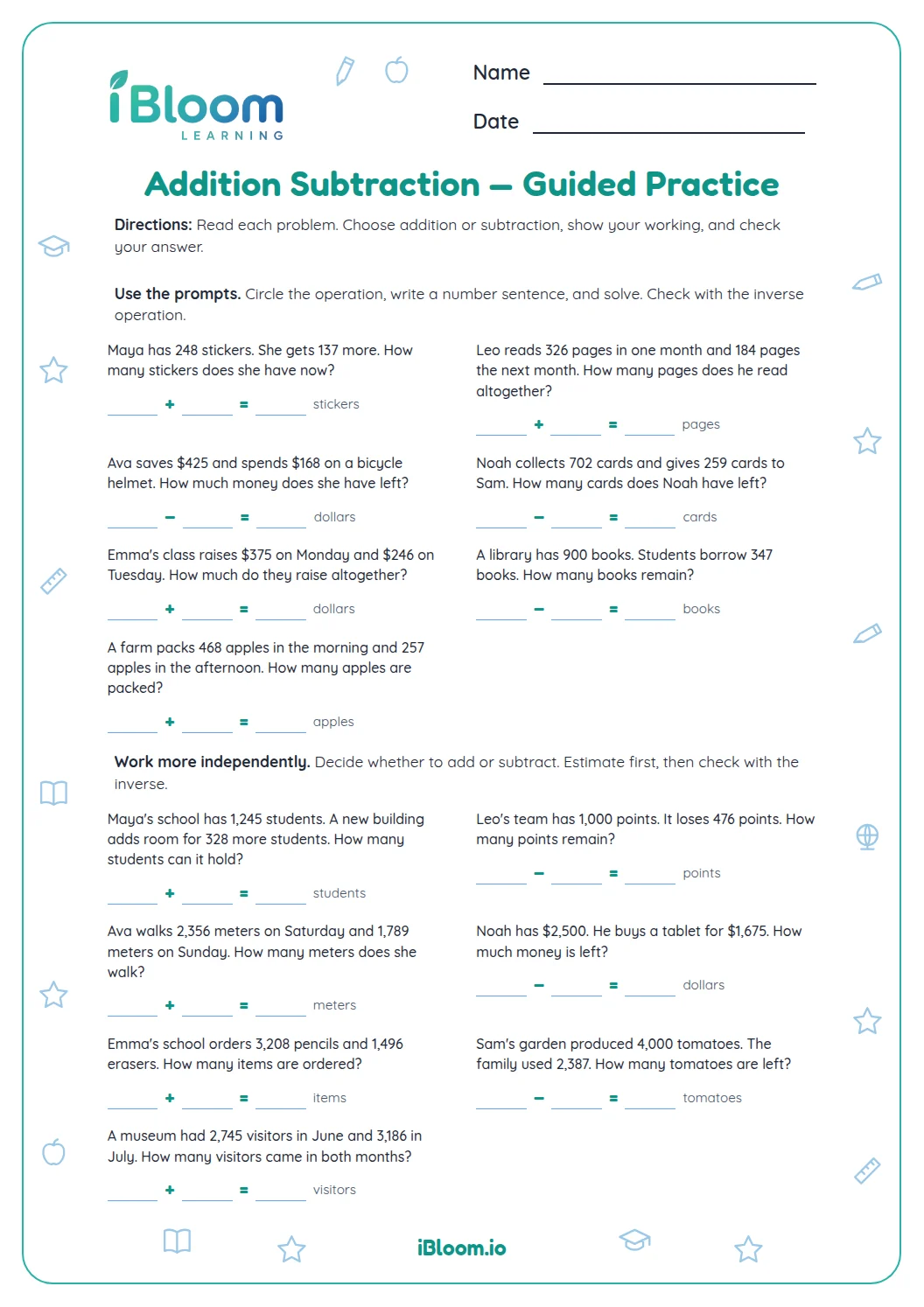
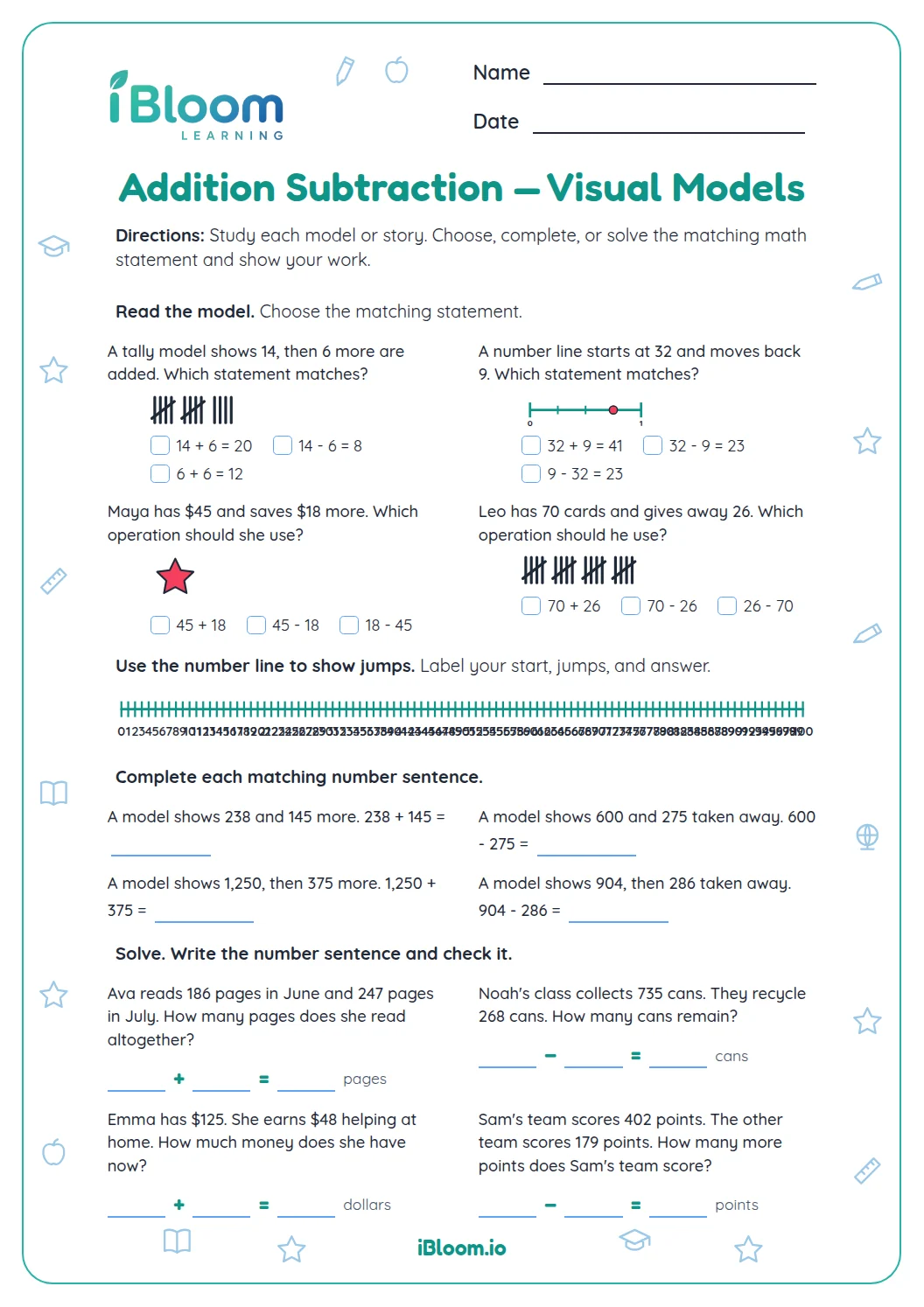
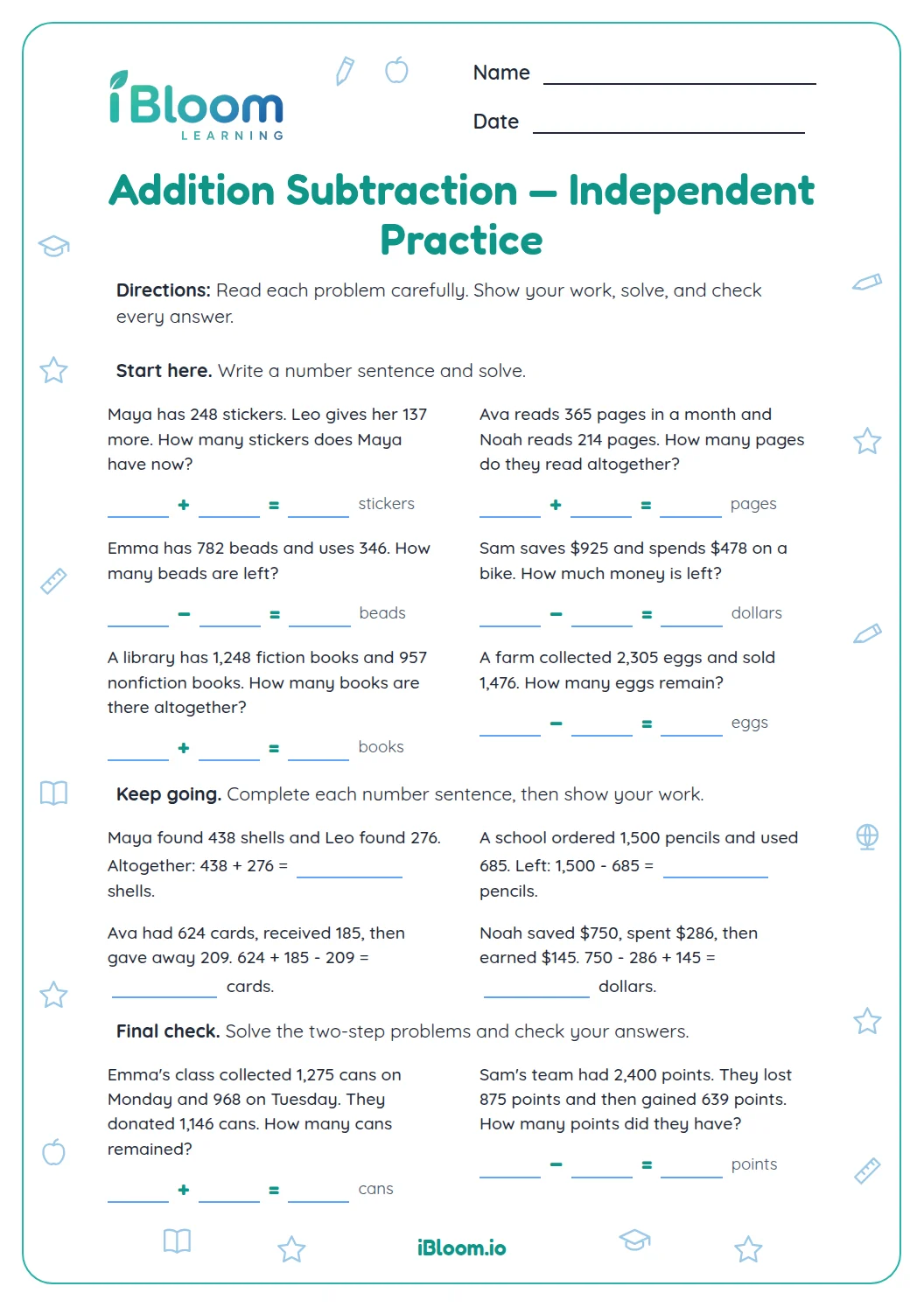
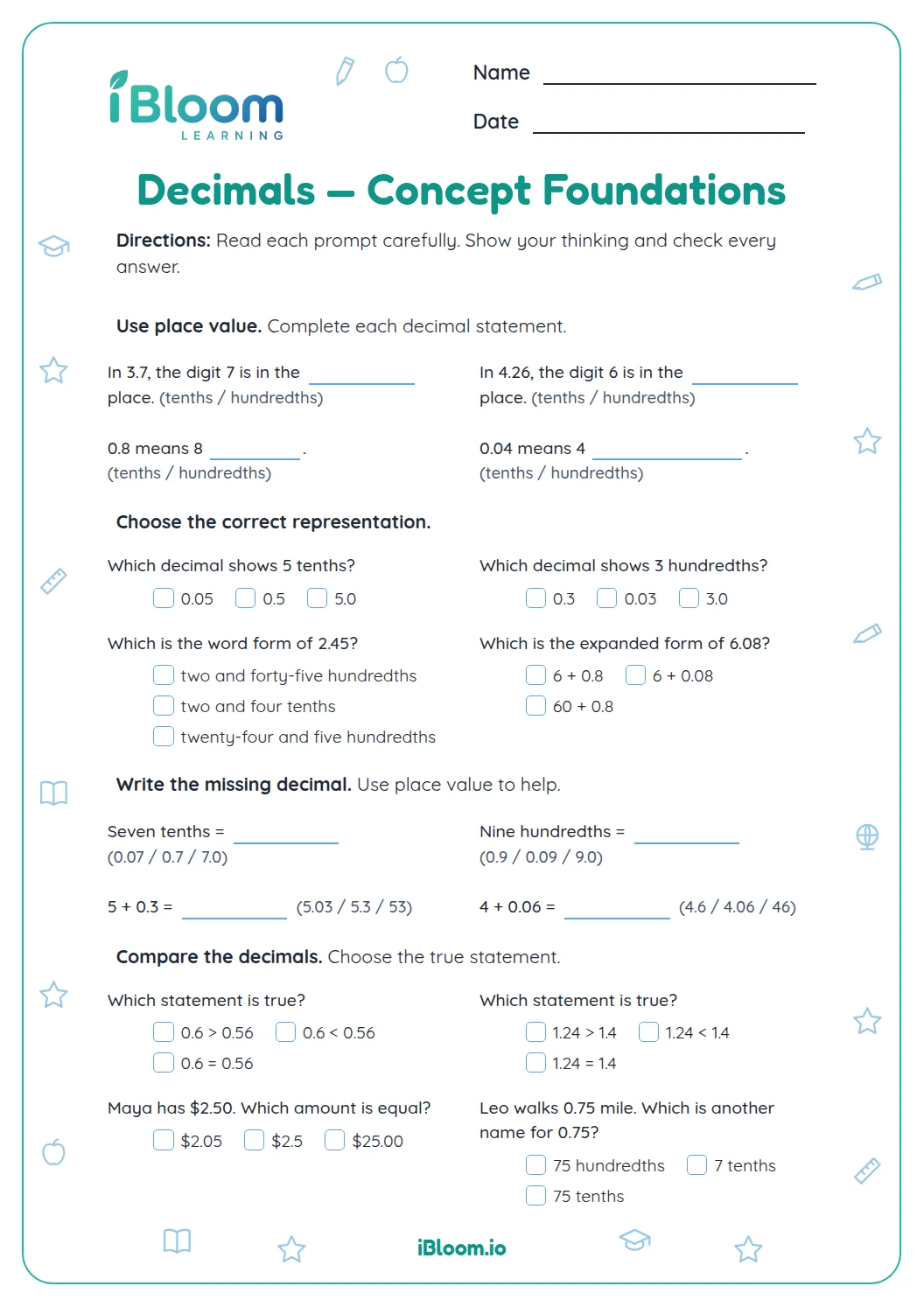
The worksheet has 16 word problems across four printable pages, followed by a four-page answer key. The stories include totals, change, savings, and repeated equal costs; answers use dollars and cents. This page count includes the separate printable key, which follows the four practice pages.
What is the answer key for?
Use the key to check the completed equations and amounts after the learner has tried each problem. If an answer differs, reread the story and check the operation, decimal alignment, and whether the result answers the question. The key also makes it easy to revisit one calculation at a time.