



About this worksheet
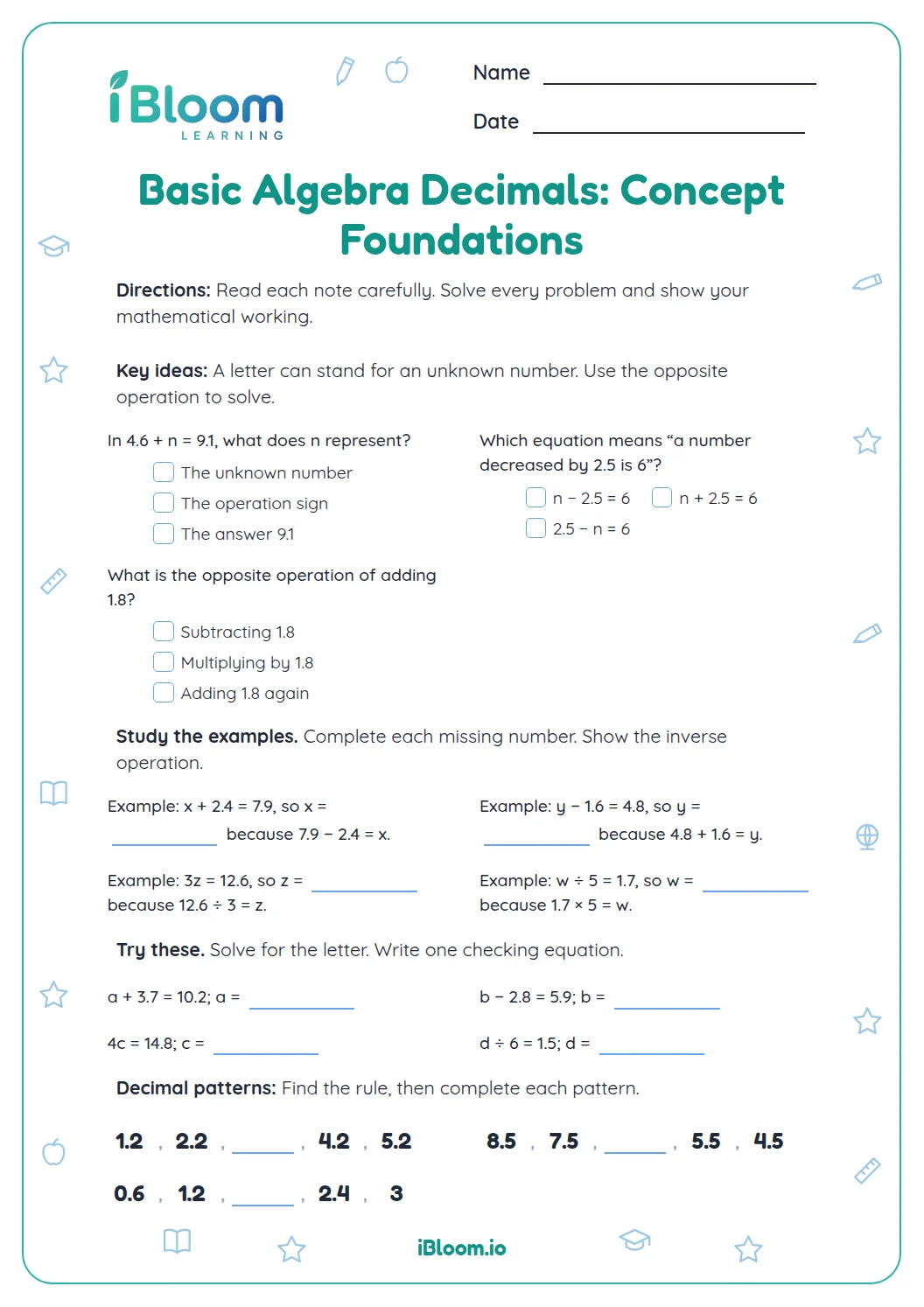
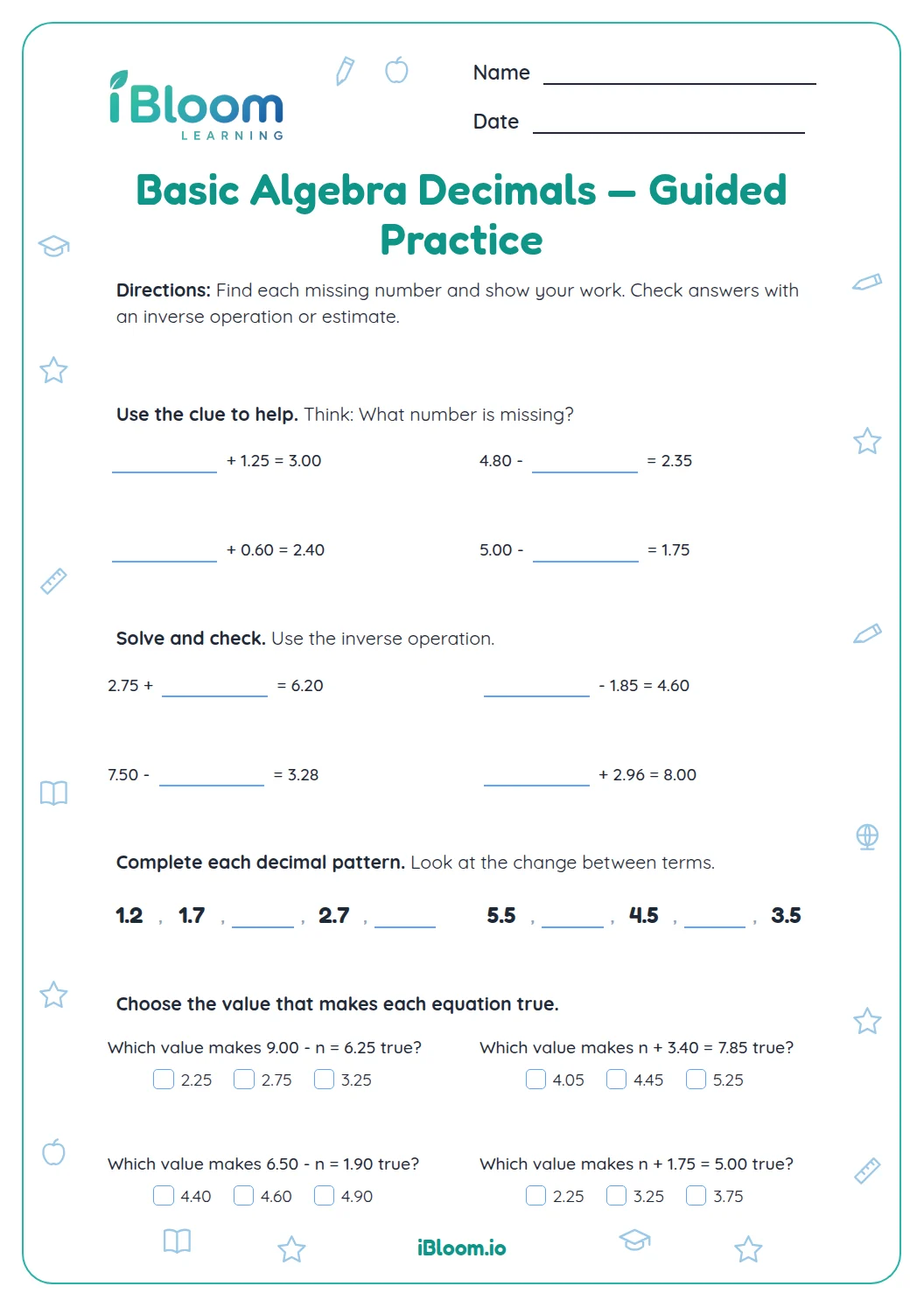
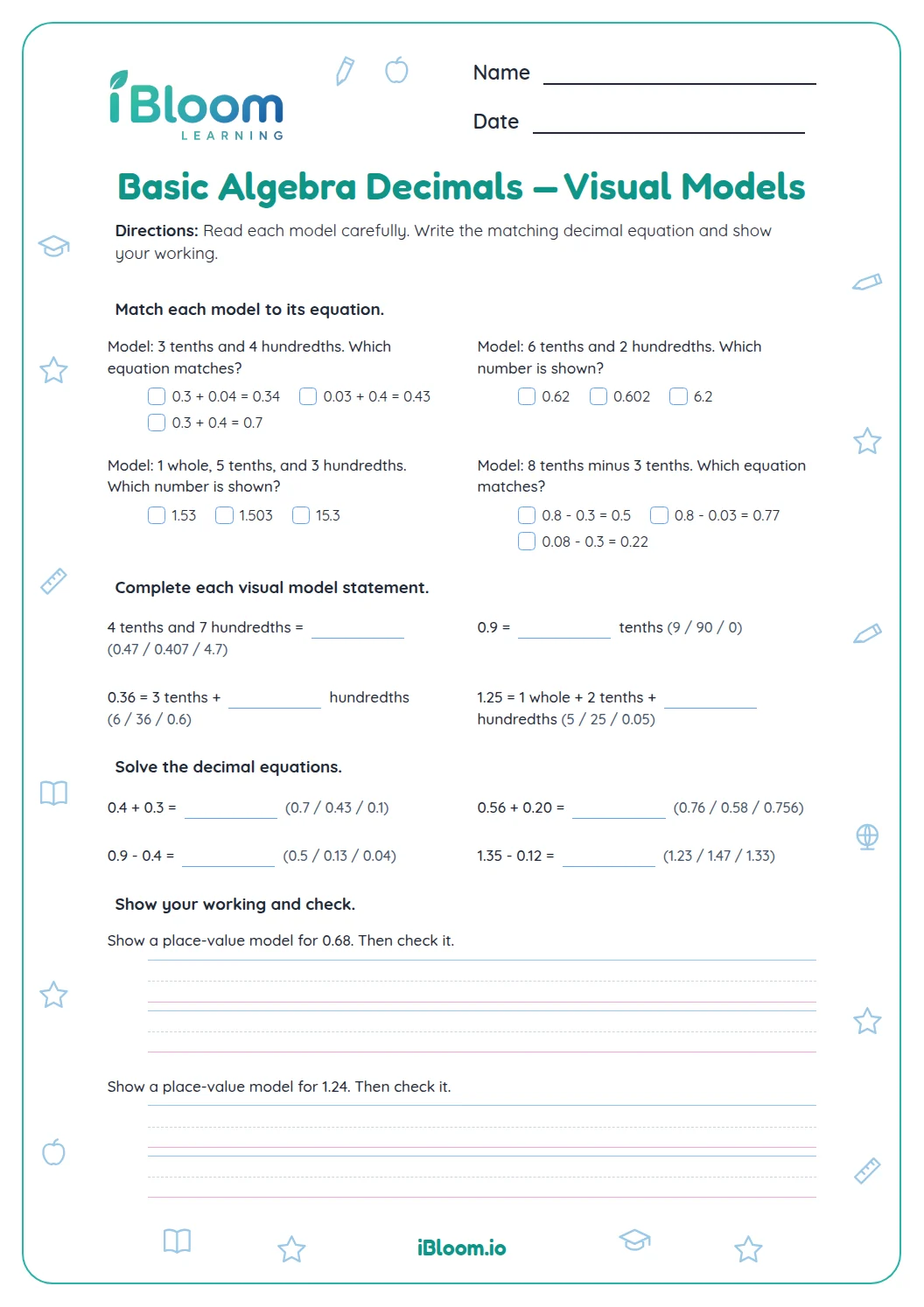
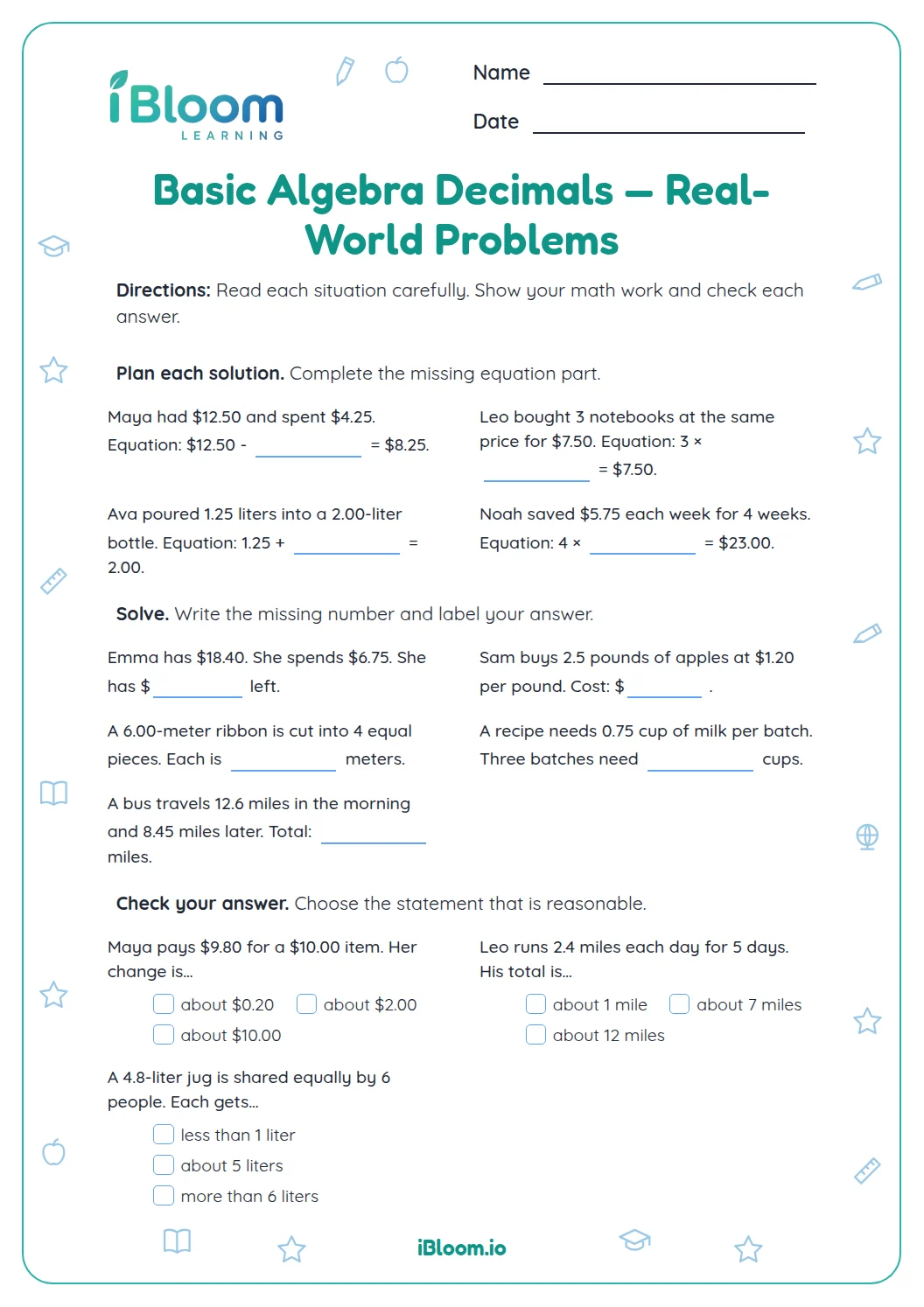
This Grade 5 reasoning challenge has 14 problems about unknown values in equations with decimals. Students use inverse operations, substitute solutions to check equations, extend a decimal pattern, and solve a money problem. Values include tenths and hundredths, and the parts move from direct equations to applying decimal reasoning.
Aligned to 5.NBT.B.7
How do inverse operations help solve an equation?
An inverse operation undoes another operation. For ___ + 2.4 = 7.1, subtract 2.4 from 7.1 to find 4.7. Substitution checks the result: 4.7 + 2.4 = 7.1.
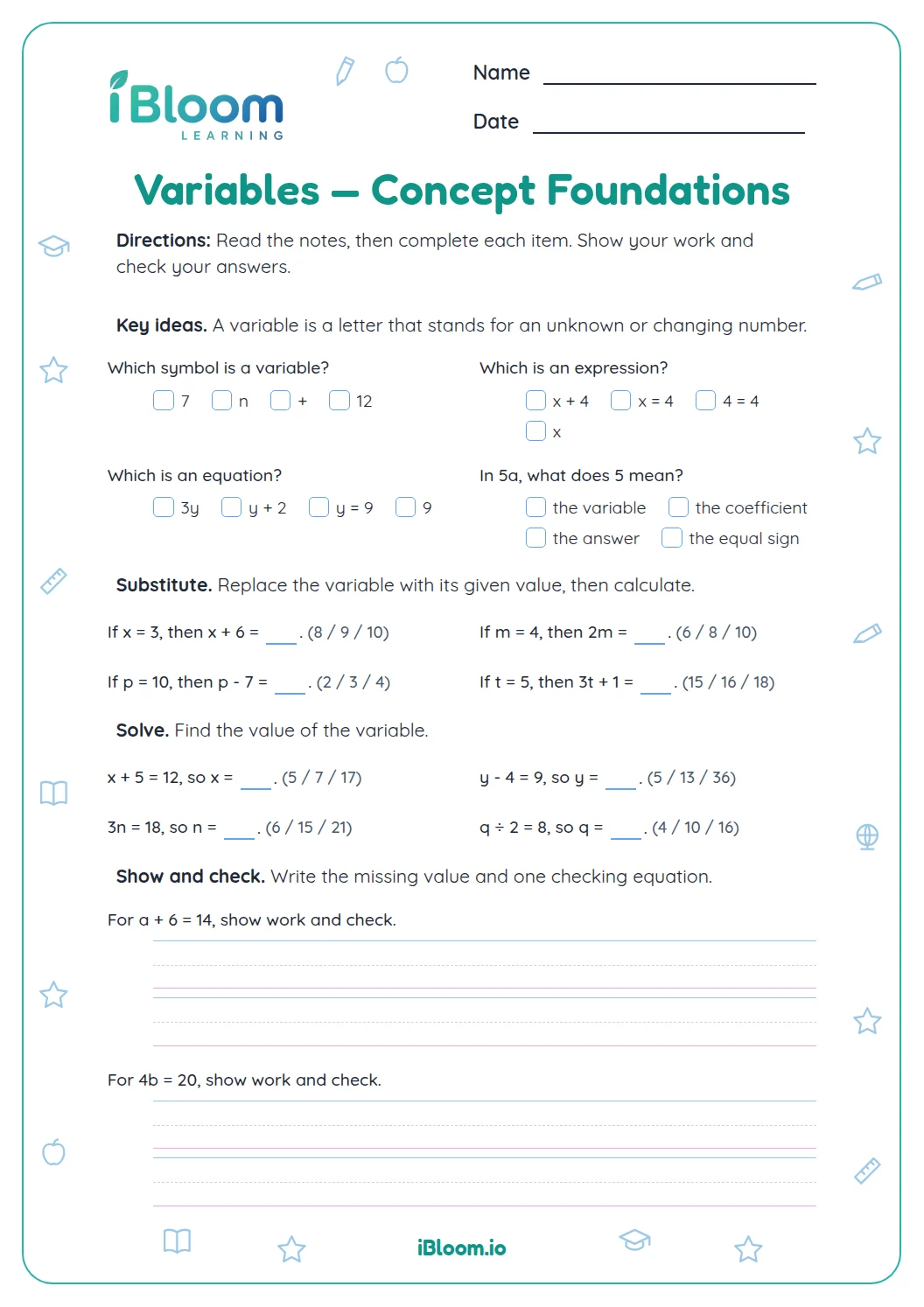
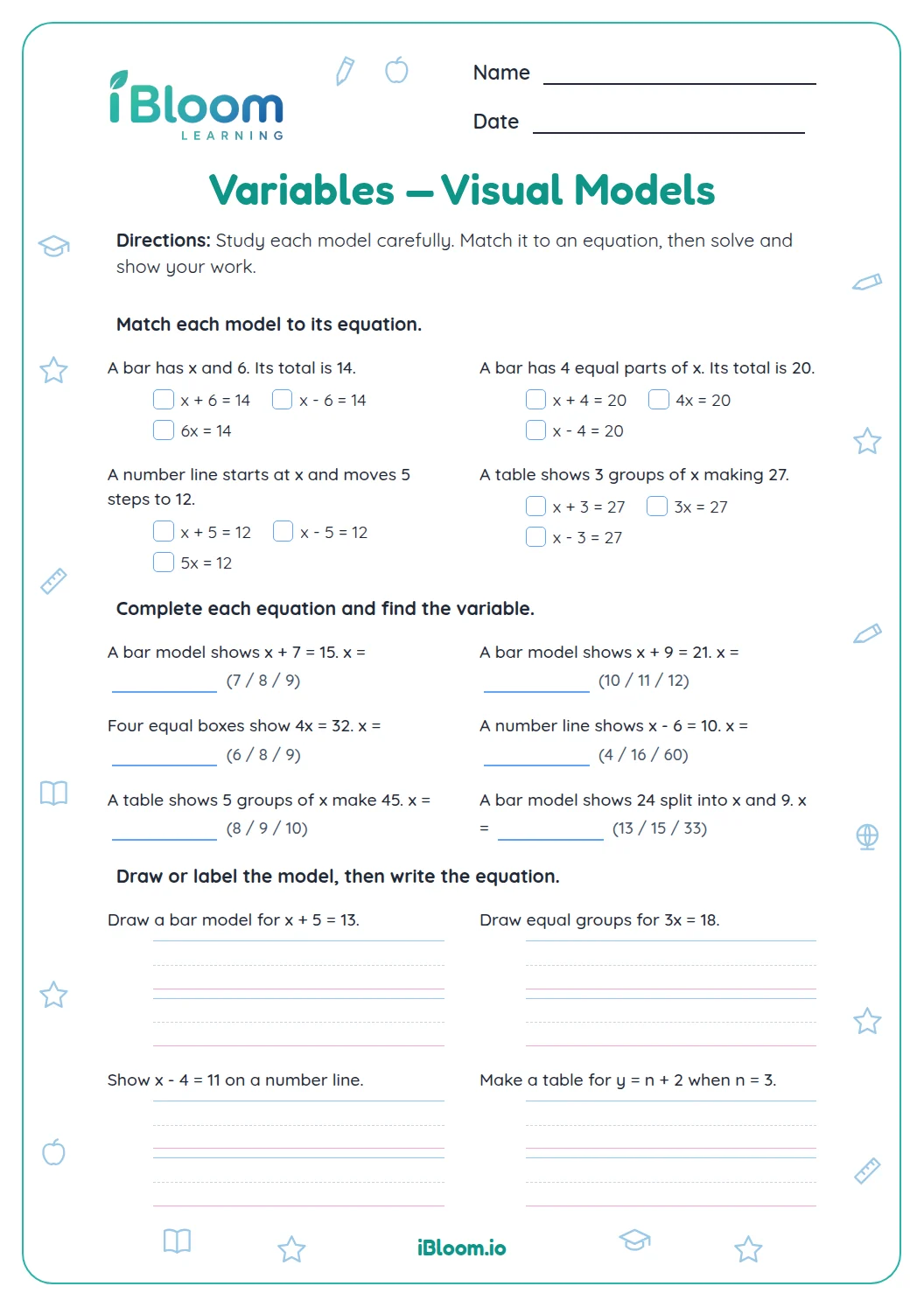
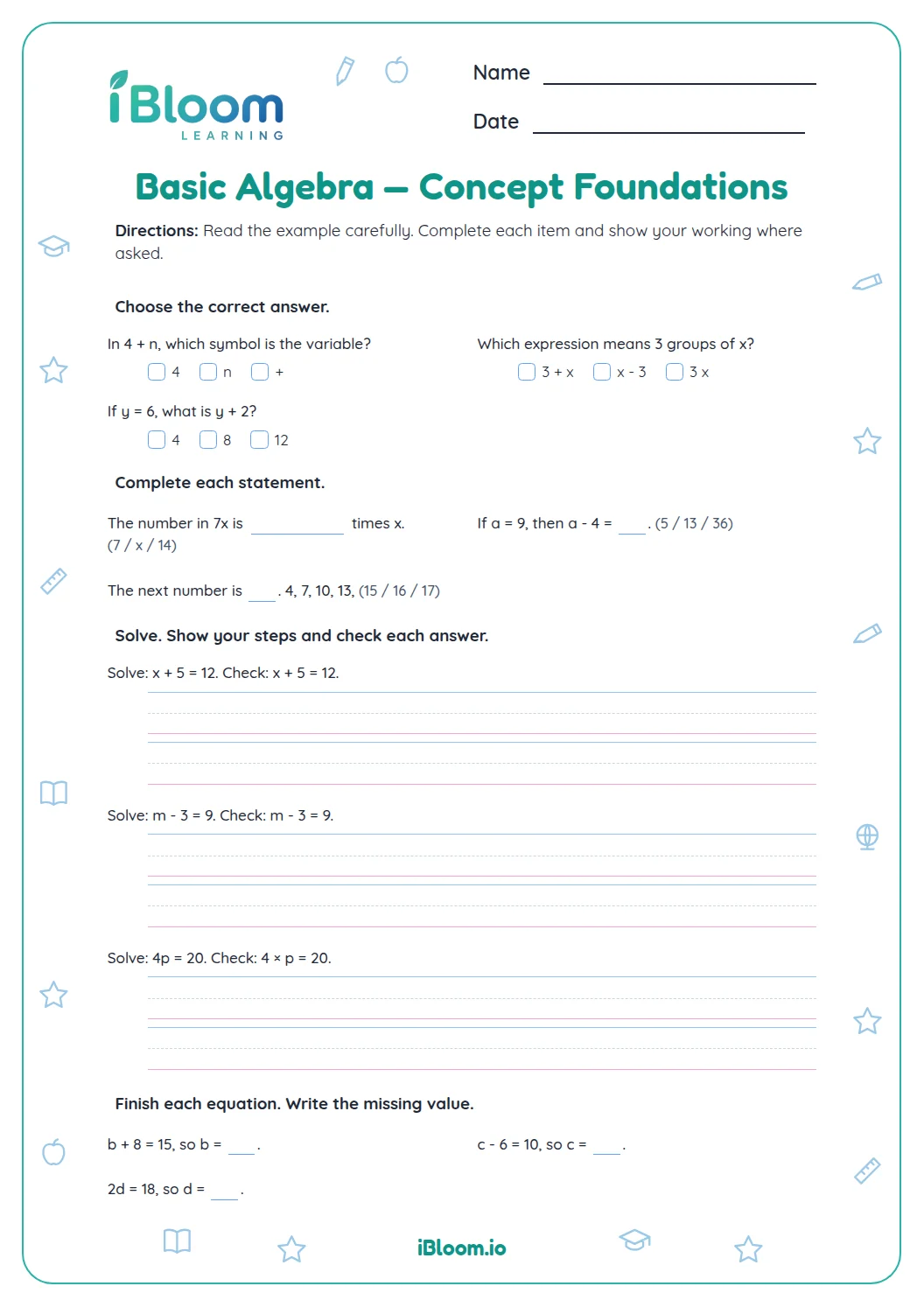
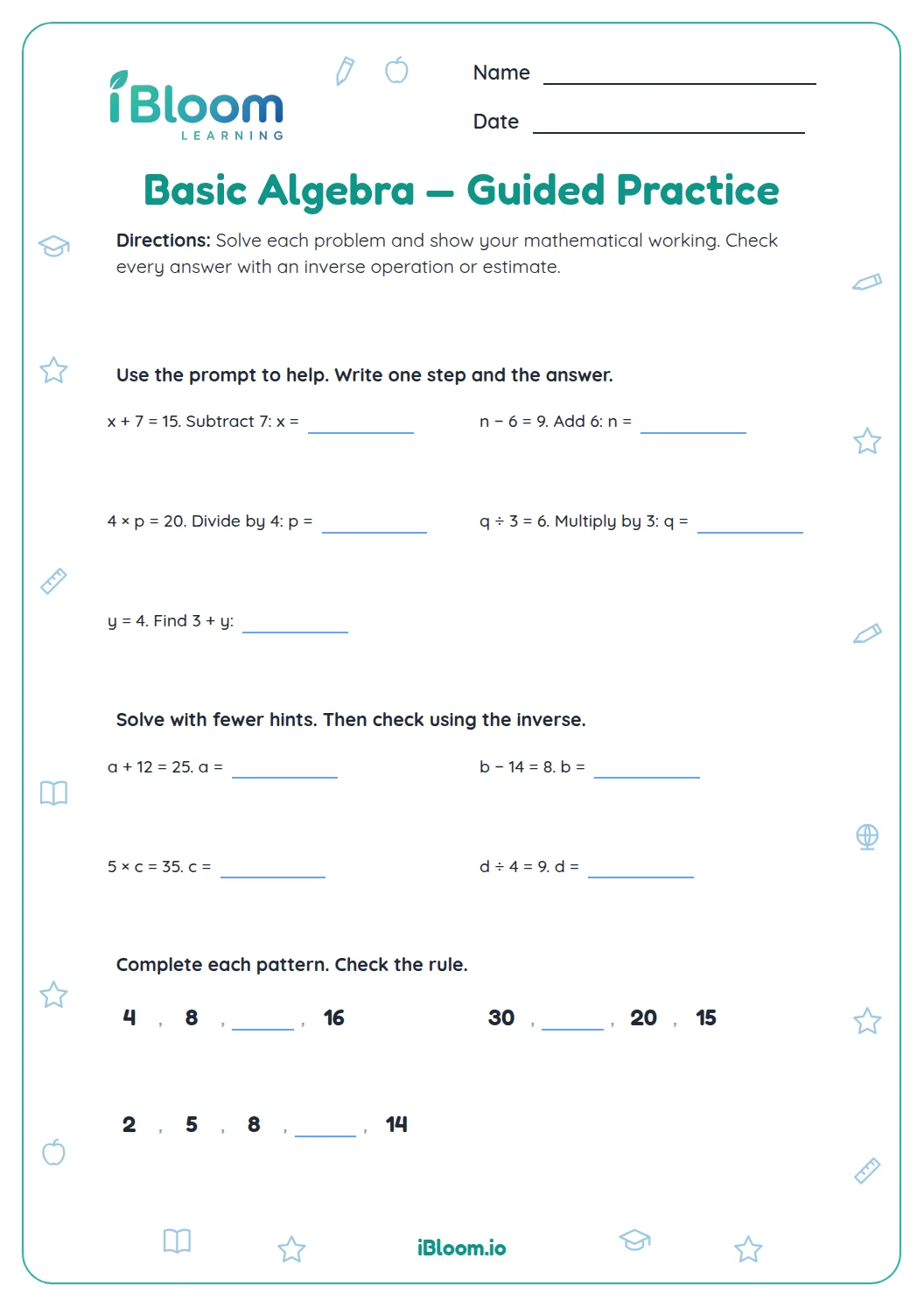
The worksheet starts with one-step equations, then asks students to evaluate an expression, extend a decimal pattern, and solve a money question.
- Part A: solve one-step equations
- Part B: solve and verify values
- Part C: apply decimal reasoning
How to use this worksheet
- 1Identify the operation next to the unknown.
- 2Use its inverse to isolate the unknown.
- 3Keep decimal place values lined up when adding or subtracting.
- 4Substitute the answer to check the original equation.
Common mistakes and quick fixes
The mistake
Subtracting in the wrong order in ___ − 1.75 = 3.2.
The fix
Add 1.75 to 3.2 to undo the subtraction.
The mistake
Moving a decimal point when multiplying or dividing by a whole number.
The fix
Use the inverse operation and check by substitution.
The mistake
Stopping after finding a value without checking it.
The fix
Put the value back into the original equation and compare both sides.
Common Core alignment
This worksheet practices the grade-level skill named below.
Operate with decimals to hundredths.
On this sheet: The questions give students practice applying this standard.
Show the official wordingHide the official wording
Add, subtract, multiply, and divide decimals to hundredths, using concrete models or drawings and strategies based on place value, properties of operations, and/or the relationship between addition and subtraction; relate the strategy to a written method and explain the reasoning used.
What to practice next
Make more practice
Further reading
Questions parents and teachers ask
How many problems are included?
The worksheet contains 14 problems in three parts. Students solve decimal equations, check solutions, extend a number pattern, and answer a money question. A separate answer key is included for checking completed work. Read each prompt carefully, write one response in every blank, and use the included key after attempting the problem independently.
What does an inverse operation do?
An inverse operation undoes the operation applied to the unknown. Subtract an amount added to the unknown, or divide a product by its known factor. Then substitute the value back into the original equation to confirm it works. Read each prompt carefully, write one response in every blank, and use the included key after attempting the problem independently.
Do students need to show work?
The prompts ask students to solve and check. Encourage them to write the inverse operation or substitution on scratch paper, especially for hundredths. The answer key gives the expected values for checking. Read each prompt carefully, write one response in every blank, and use the included key after attempting the problem independently.
Which decimal skills appear?
The problems include addition, subtraction, multiplication, and division with decimal values, along with a decimal pattern and a money application. Students use whole-number factors in the multiplication equations and keep track of place value. Read each prompt carefully, write one response in every blank, and use the included key after attempting the problem independently.
How can I help if an answer is incorrect?
Ask the learner to name the operation affecting the unknown and choose its inverse. After solving, substitute the proposed value into the original equation. If the two sides differ, revisit the arithmetic or decimal placement. Read each prompt carefully, write one response in every blank, and use the included key after attempting the problem independently.