




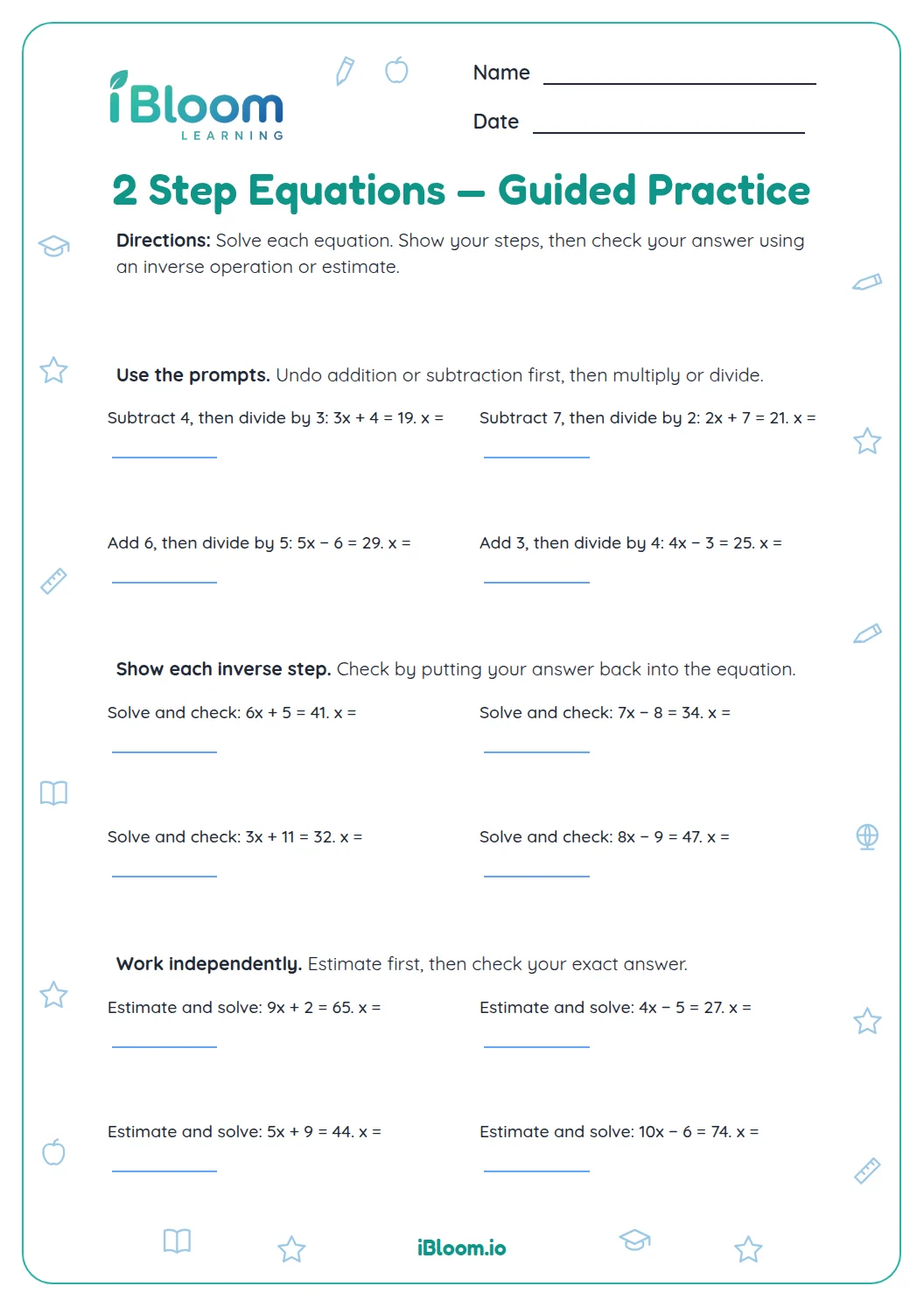

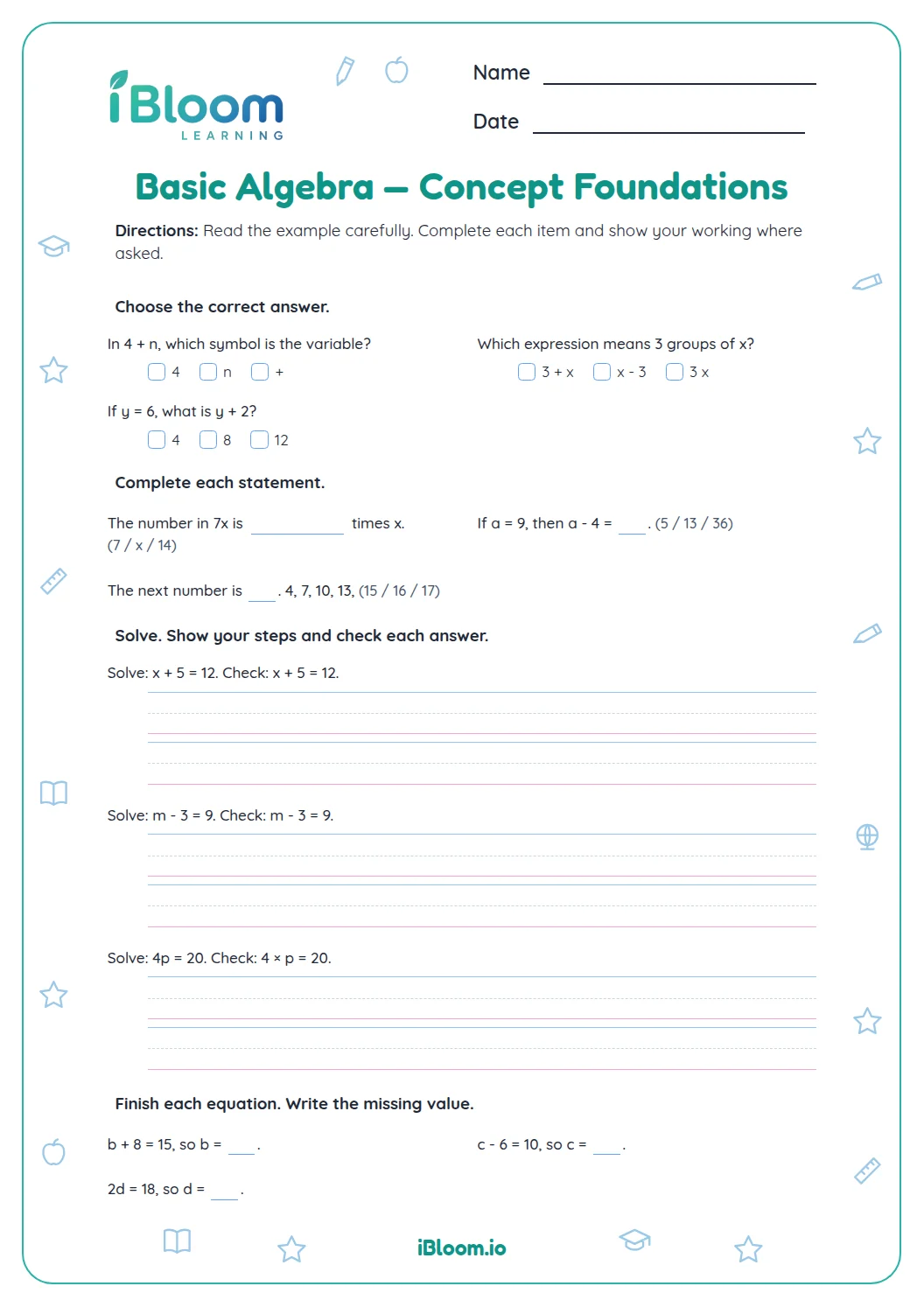
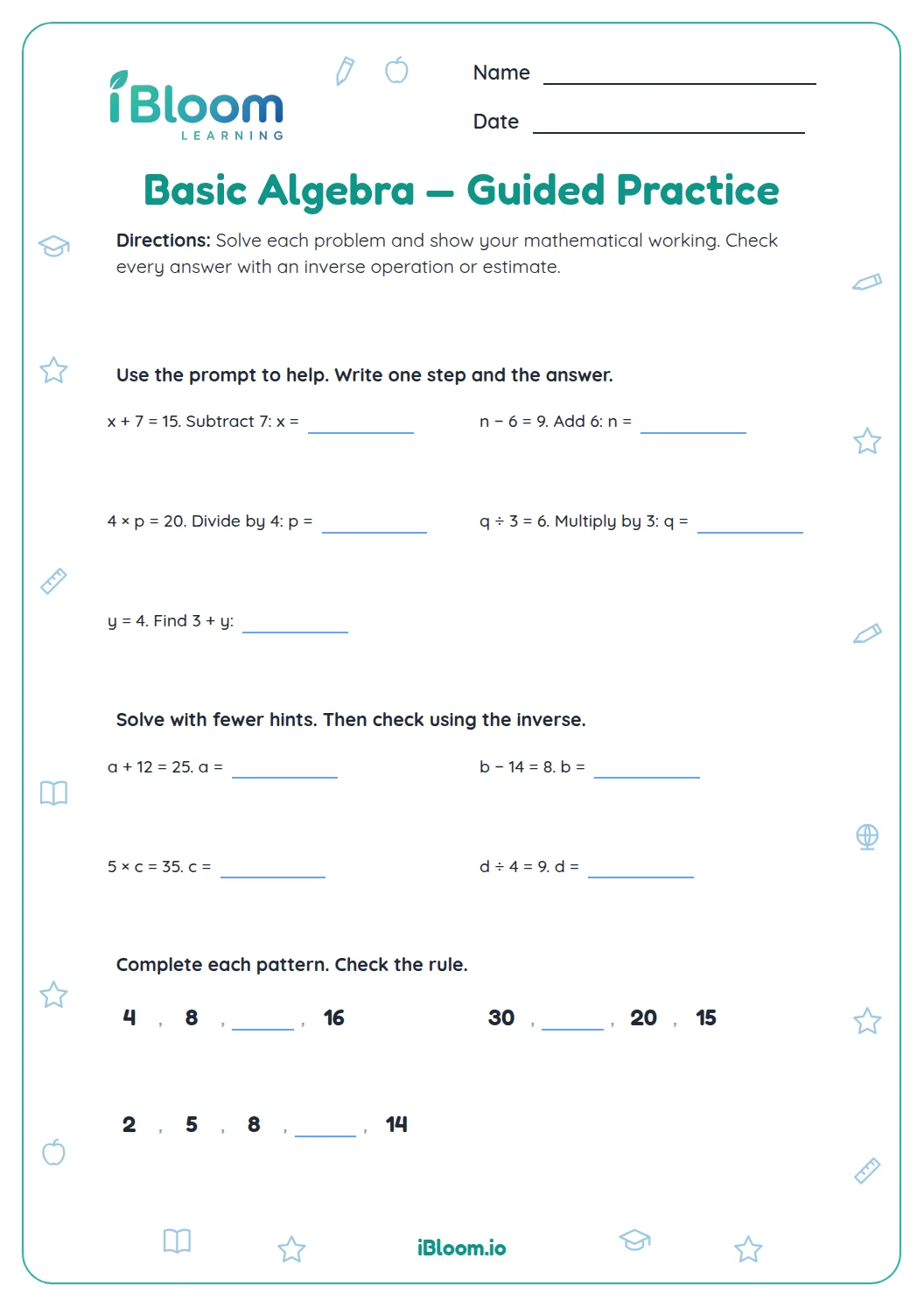
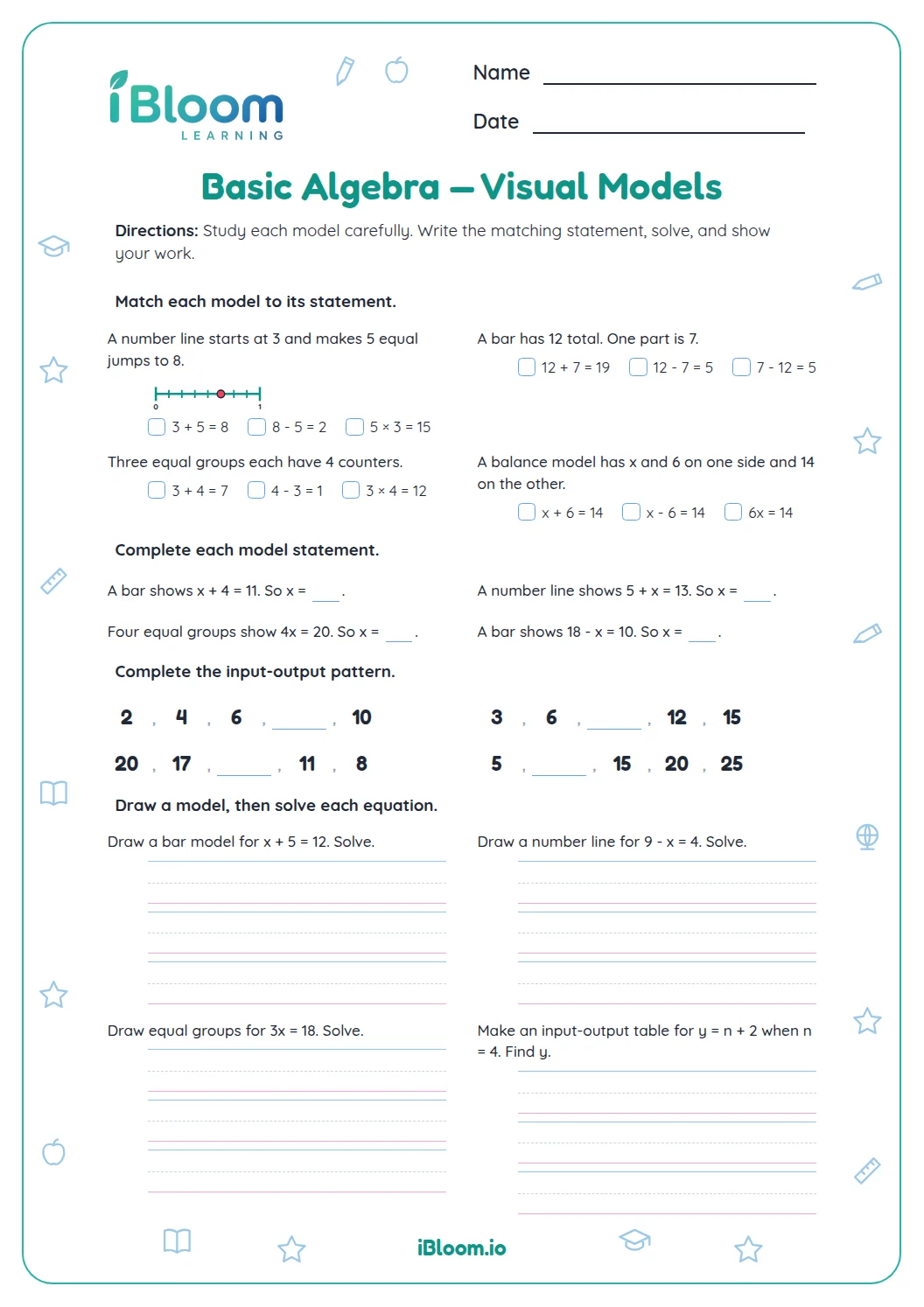
About this worksheet
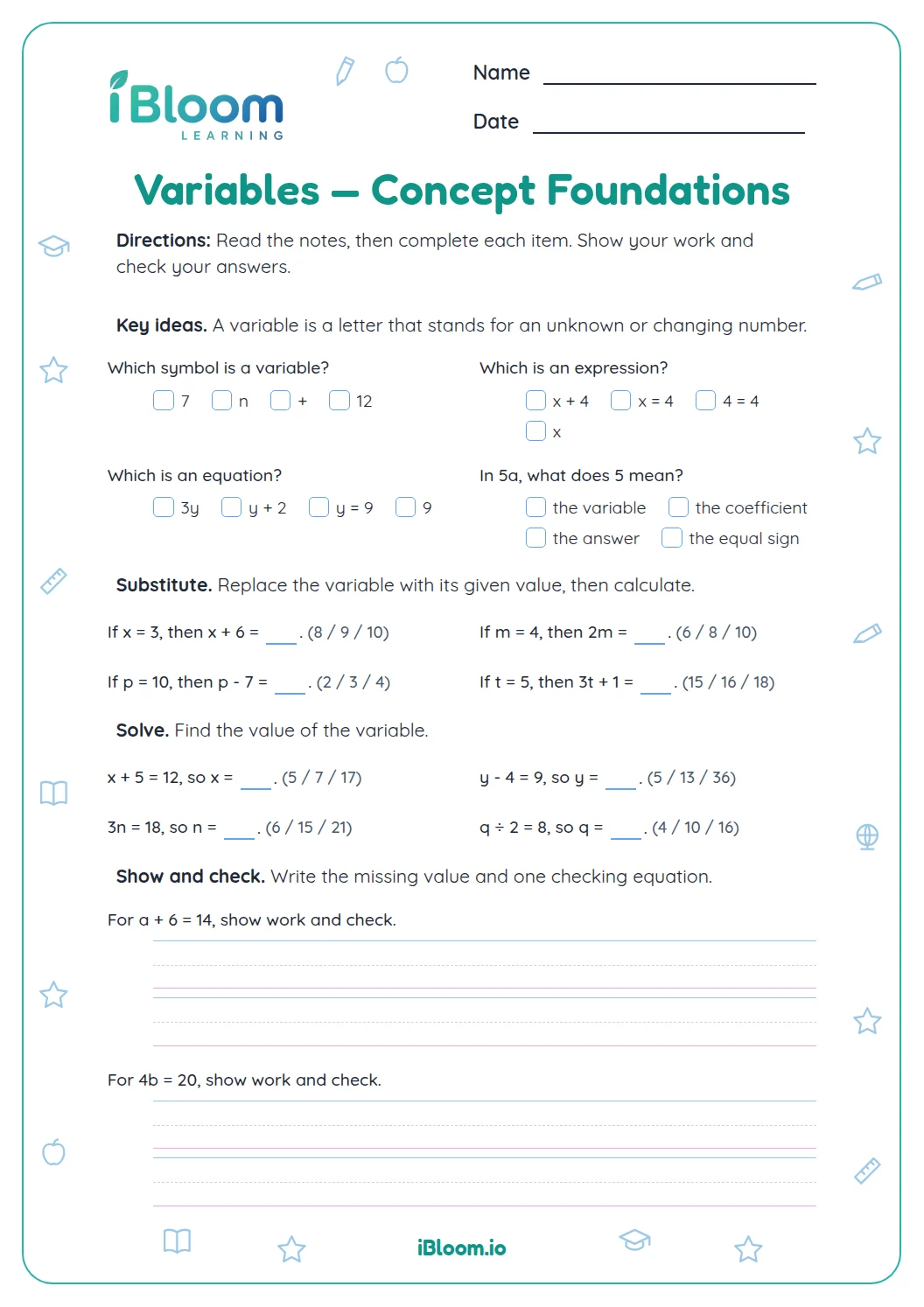
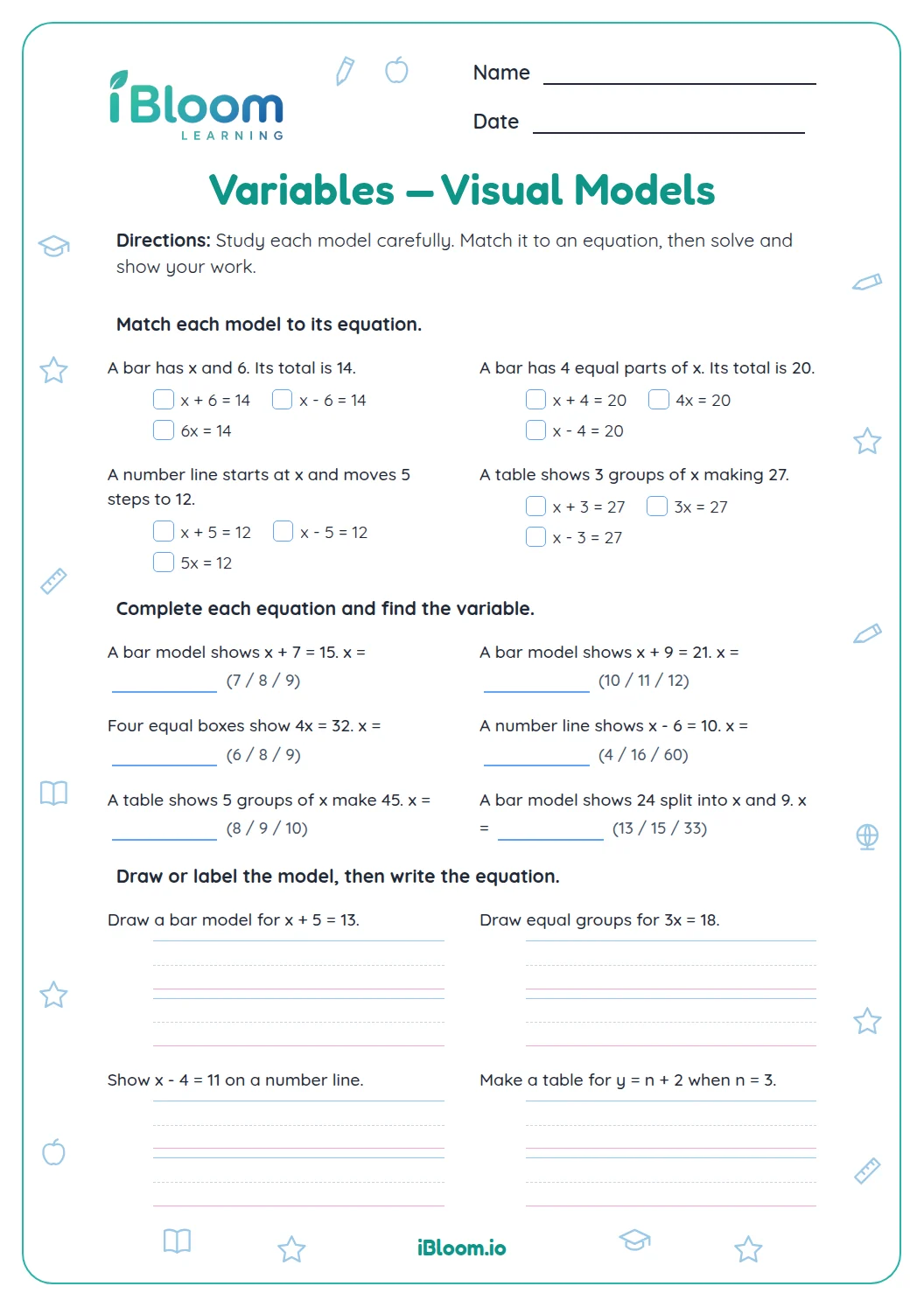
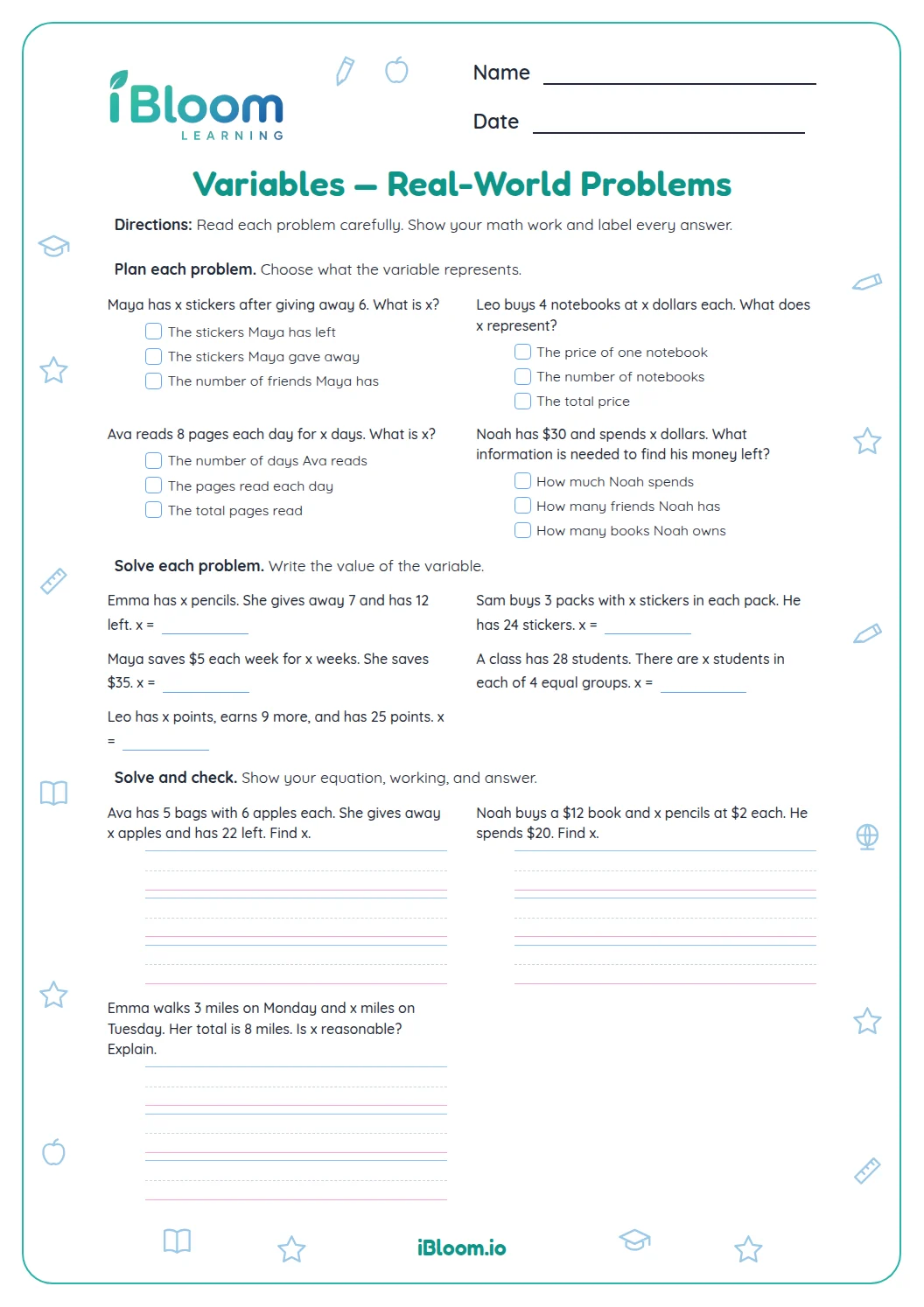
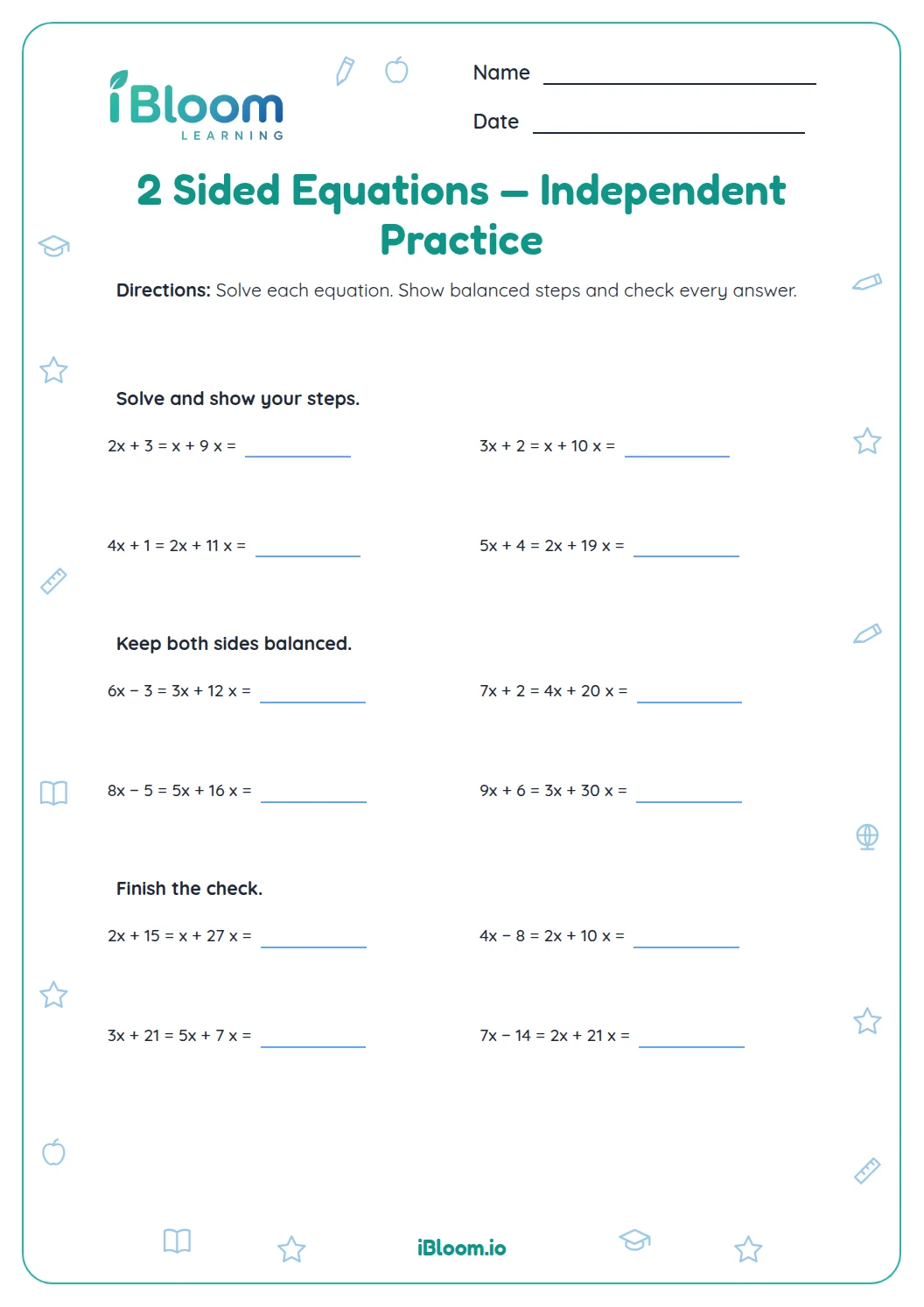
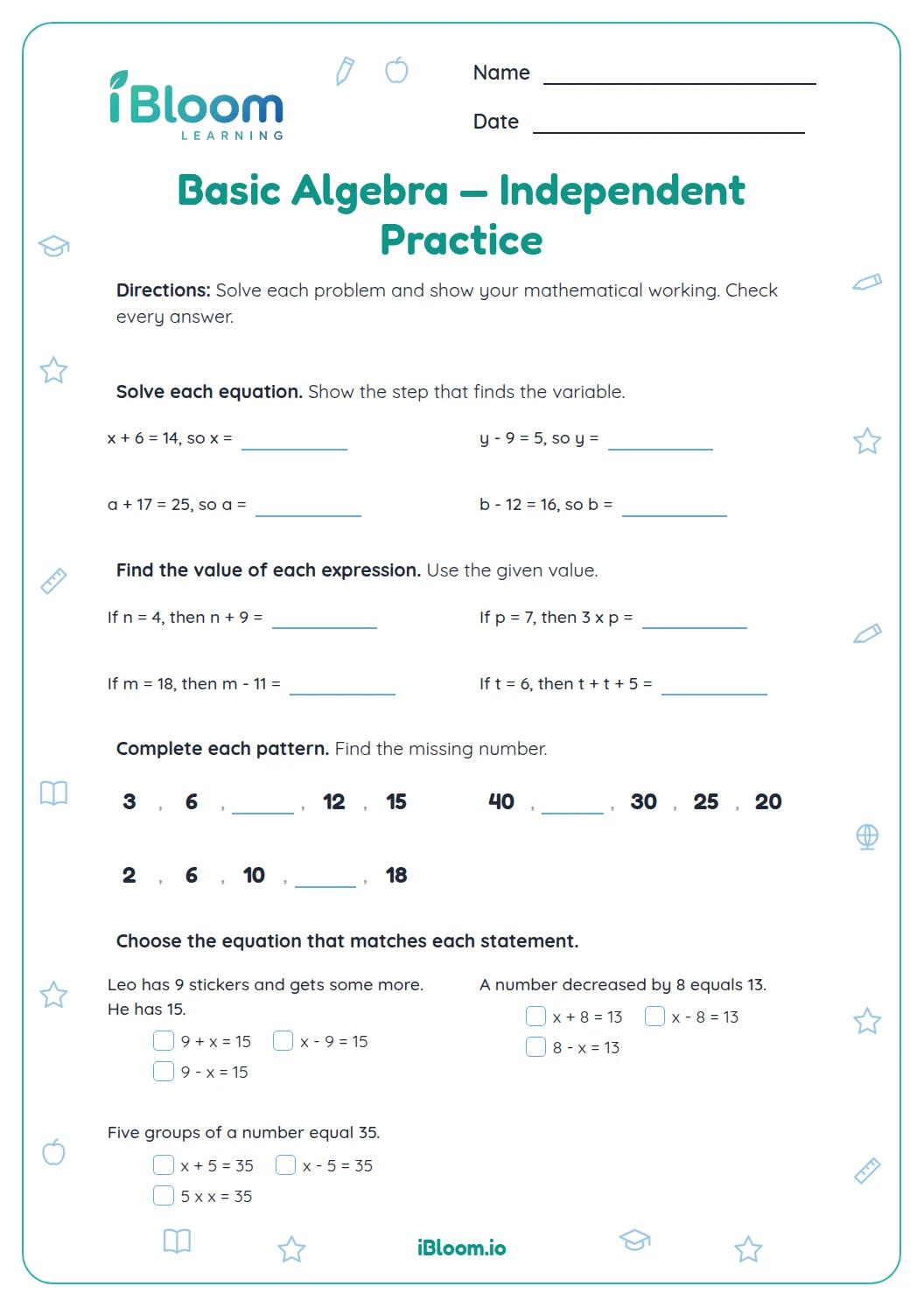
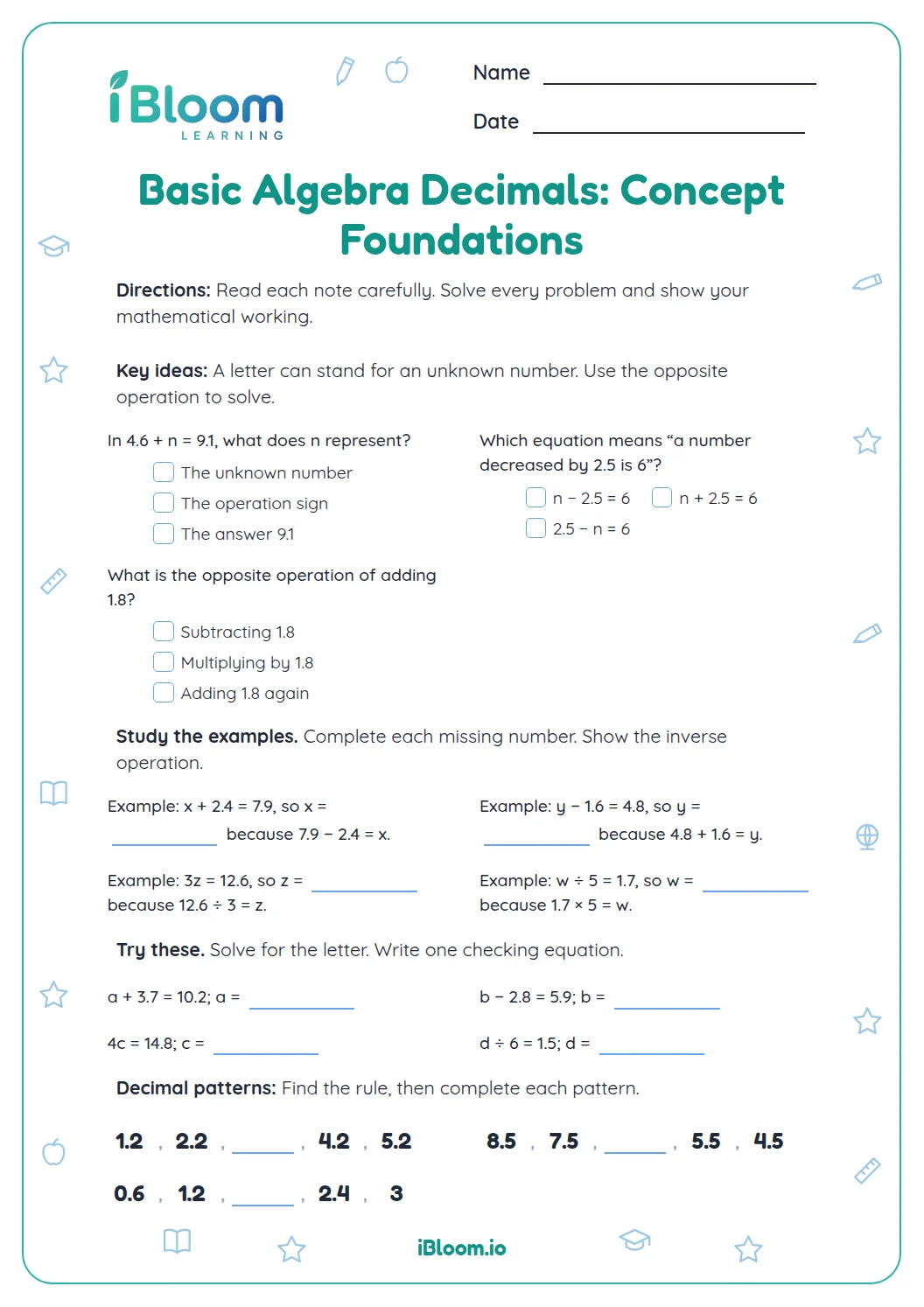
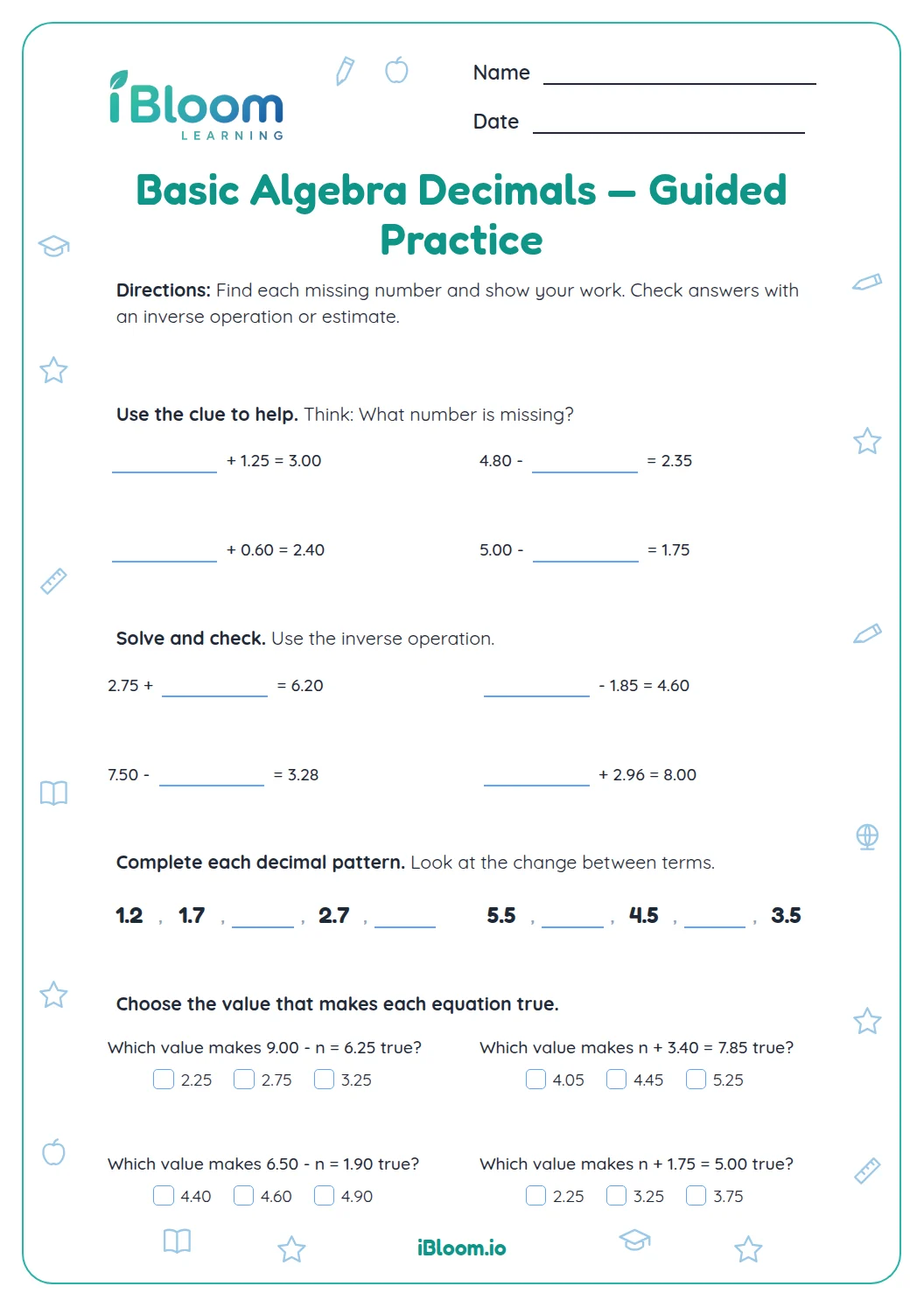
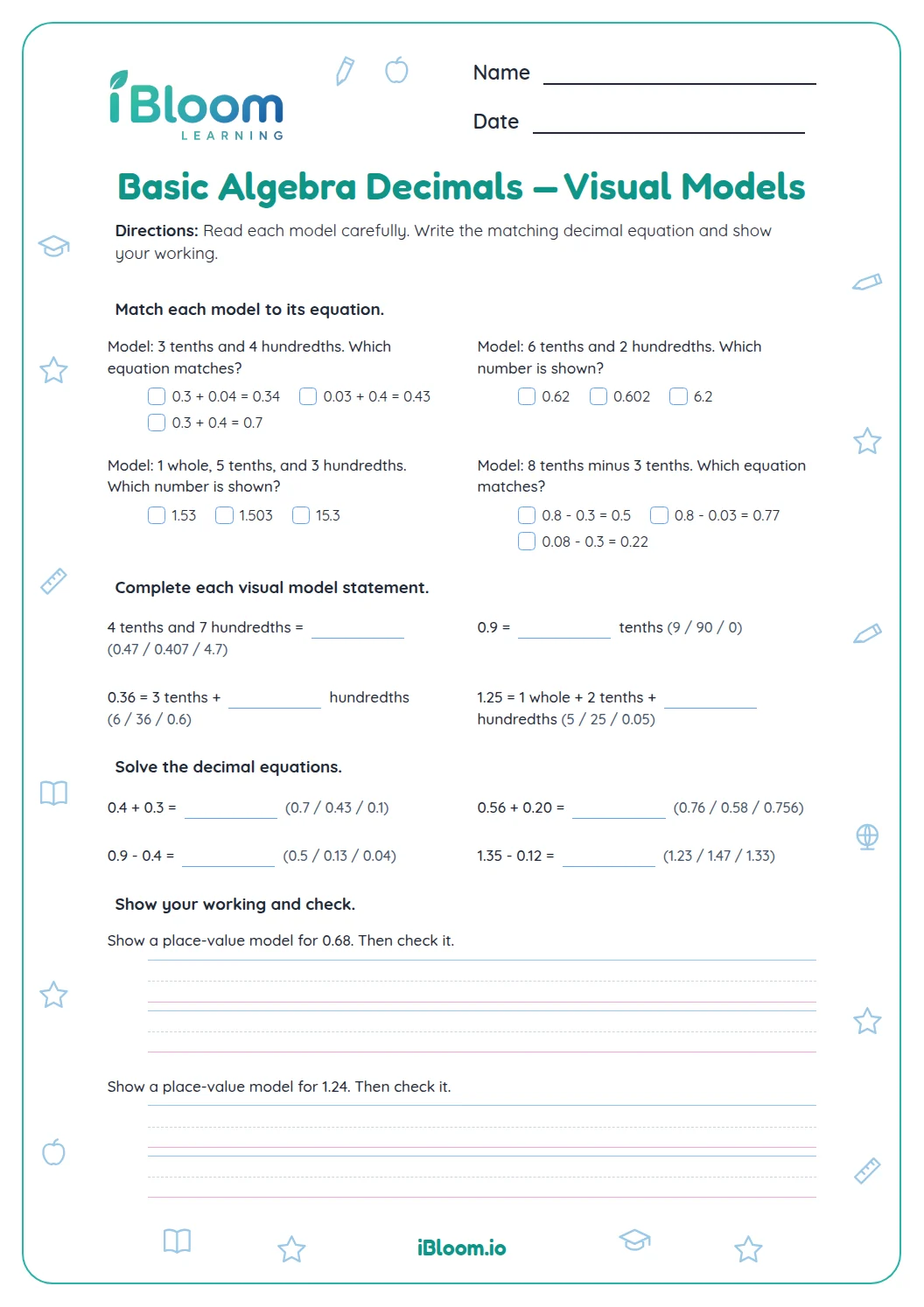
This Grade 5 challenge asks students to read variables and translate verbal situations into expressions. The questions connect phrases such as “9 less than x” with subtraction, then build expressions for groups, costs and combined amounts. The work aligns with CCSS 6.EE.A.2.a, writing expressions that record operations with numbers and letters standing for numbers.
Aligned to 6.EE.A.2.a
How can you read a variable expression?
Read the letter as a number with a name. Multiplication describes equal groups, and addition can describe an extra amount.
- 14 × b → 4 groups of b books
How do words become an expression?
Identify the unknown first. Then choose the operation words suggest: “more than” adds, “less than” subtracts, and “each” often signals equal groups.
How can you check a situation expression?
Substitute a small value for the variable and compare the result with the story. This is a way to catch a reversed operation or a missing group.
How to use this worksheet
- 1Circle the letter and decide what it represents.
- 2Mark operation words such as each, more, less and total.
- 3Write the operation in the same order as the situation requires.
- 4Read your expression aloud in words.
- 5Check with a small sample value if useful.
Common mistakes and quick fixes
The mistake
Writing 9 − x for “9 less than x.”
The fix
Start with x, then take away 9: x − 9.
The mistake
Using addition for equal groups.
The fix
Use multiplication when the same amount appears in each group.
The mistake
Forgetting an extra amount after the groups.
The fix
Write the group expression first, then add the extra quantity.
Common Core alignment
Write expressions that record operations with numbers and letters standing for numbers.
On this sheet: Each item interprets or writes an expression containing a variable.
Show the official wordingHide the official wording
Write expressions that record operations with numbers and with letters standing for numbers.
What to practice next
Make more practice
Further reading
Questions parents and teachers ask
What does 4 × b mean?
It means 4 groups of b. For example, if each box holds b books, then 4 × b represents the books in 4 boxes. Invite the learner to explain the clue and point to the words that support the answer.
How is “9 less than x” written?
Write x − 9. “Less than” reverses the order in the phrase, so the amount being reduced comes first. Invite the learner to explain the clue and point to the words that support the answer. Invite the learner to explain the clue and point to the words that support the answer.
What is Part B practice?
Part B turns short verbal descriptions into expressions and asks for one interpretation. It includes multiplication for equal groups and addition for an extra amount. Invite the learner to explain the clue and point to the words that support the answer.
Does the worksheet ask students to find a value for every variable?
The focus is the meaning and structure of expressions. Students write or interpret an expression from a situation, so they do not need a specific value for each variable. Invite the learner to explain the clue and point to the words that support the answer.
How can I check an expression?
Name what the letter represents, then read the whole expression aloud. For 5 × j + 8, say “five groups of j, plus eight more,” and compare that meaning with the story. Invite the learner to explain the clue and point to the words that support the answer.