


About this worksheet
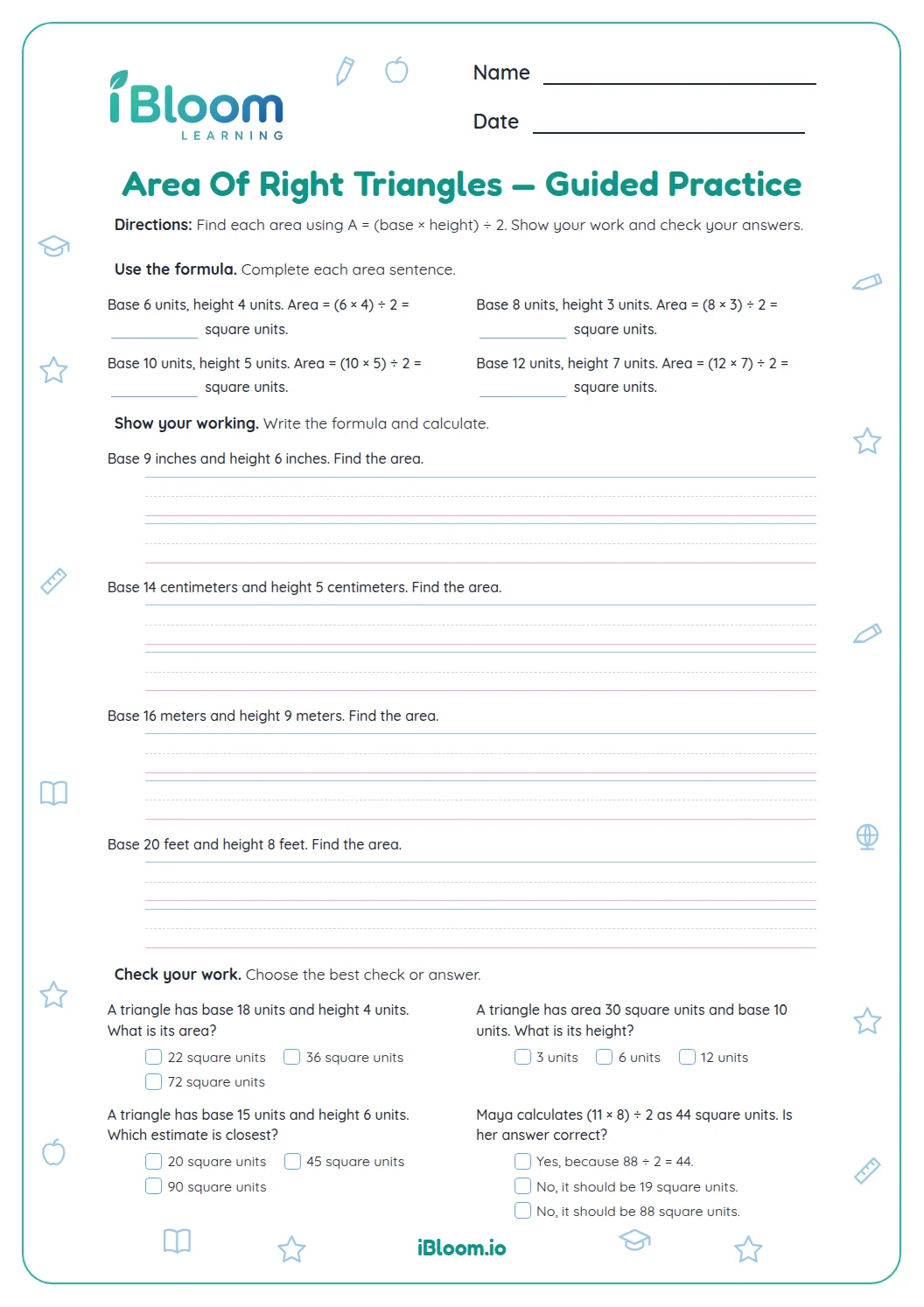
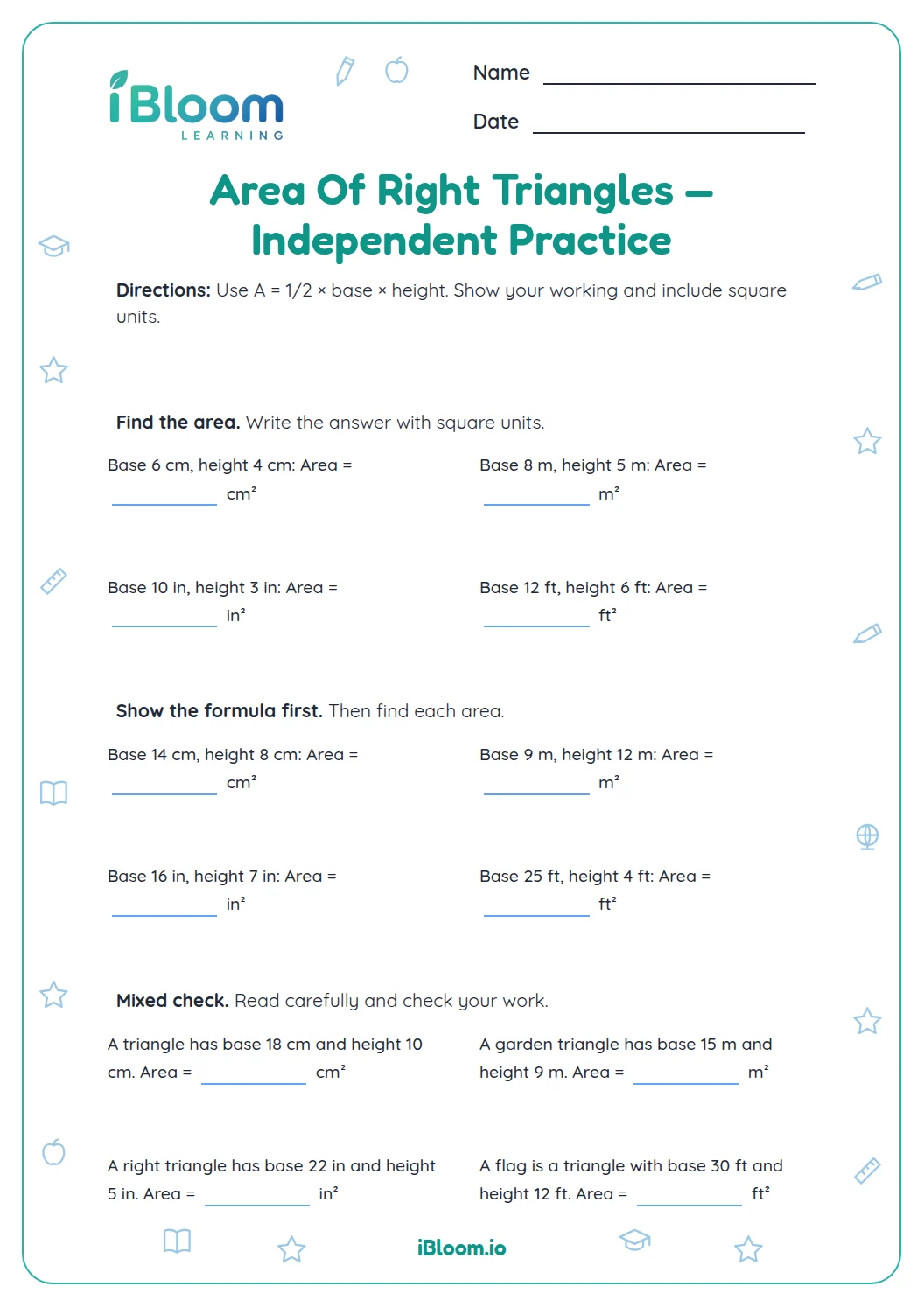
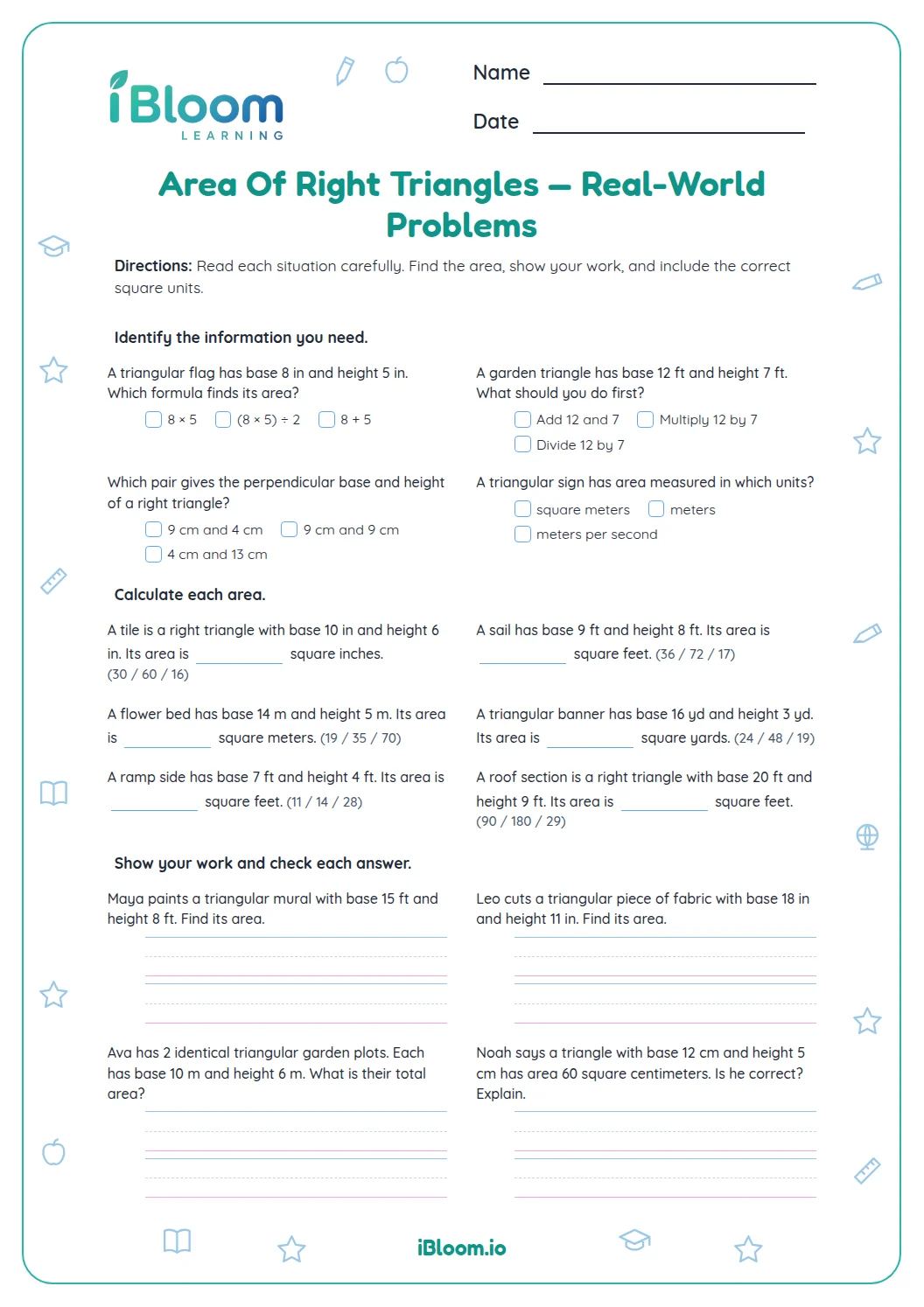
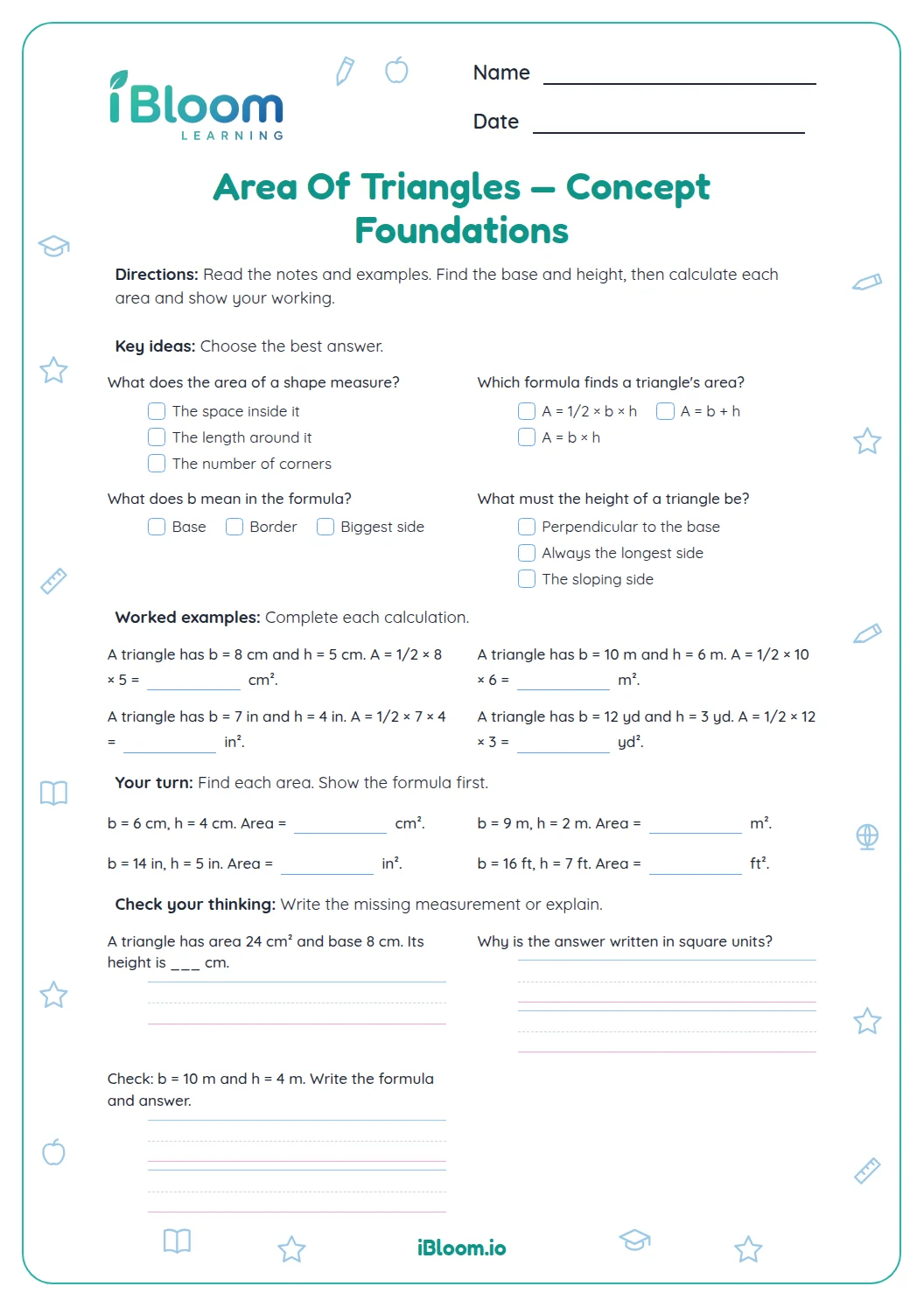
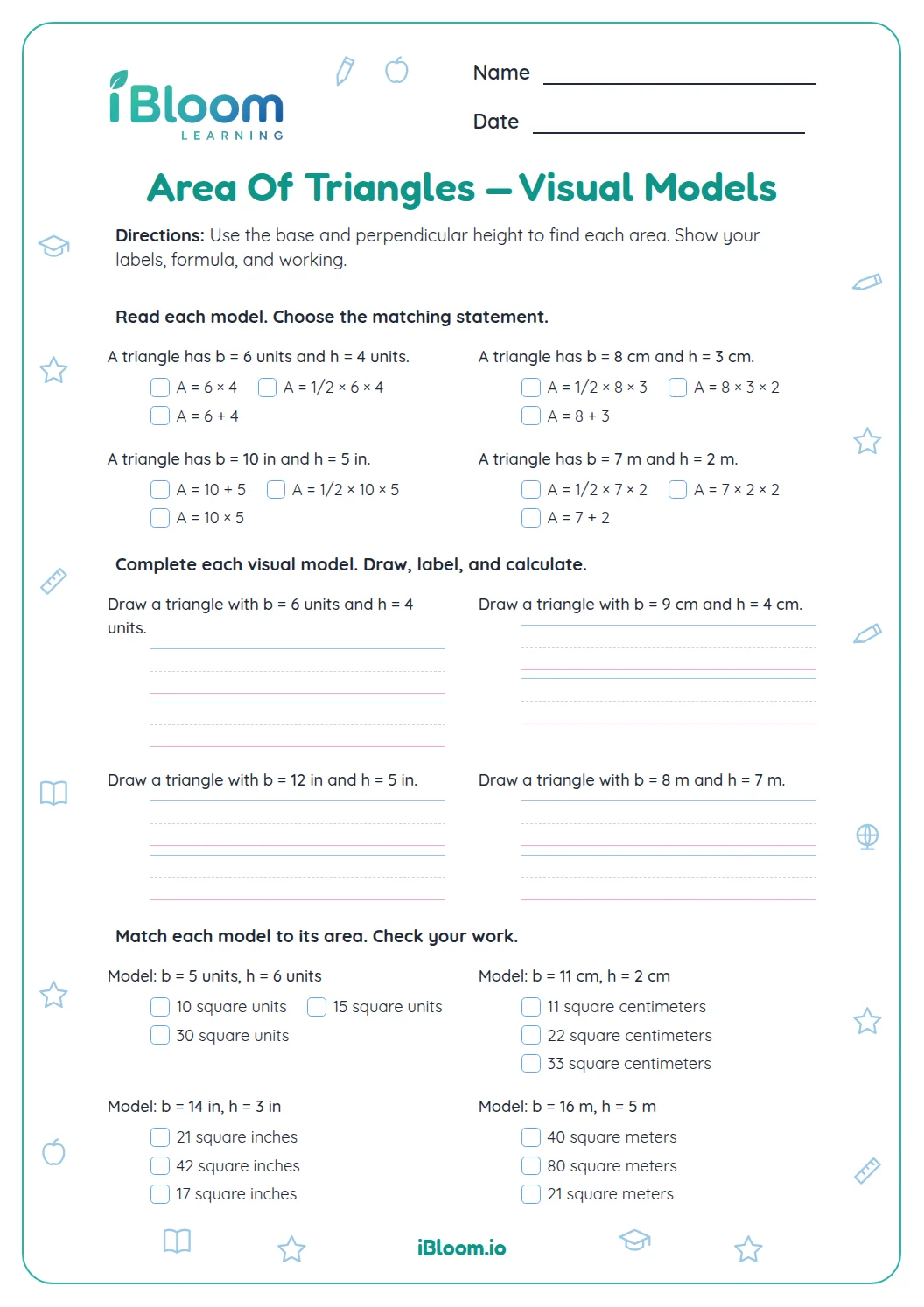
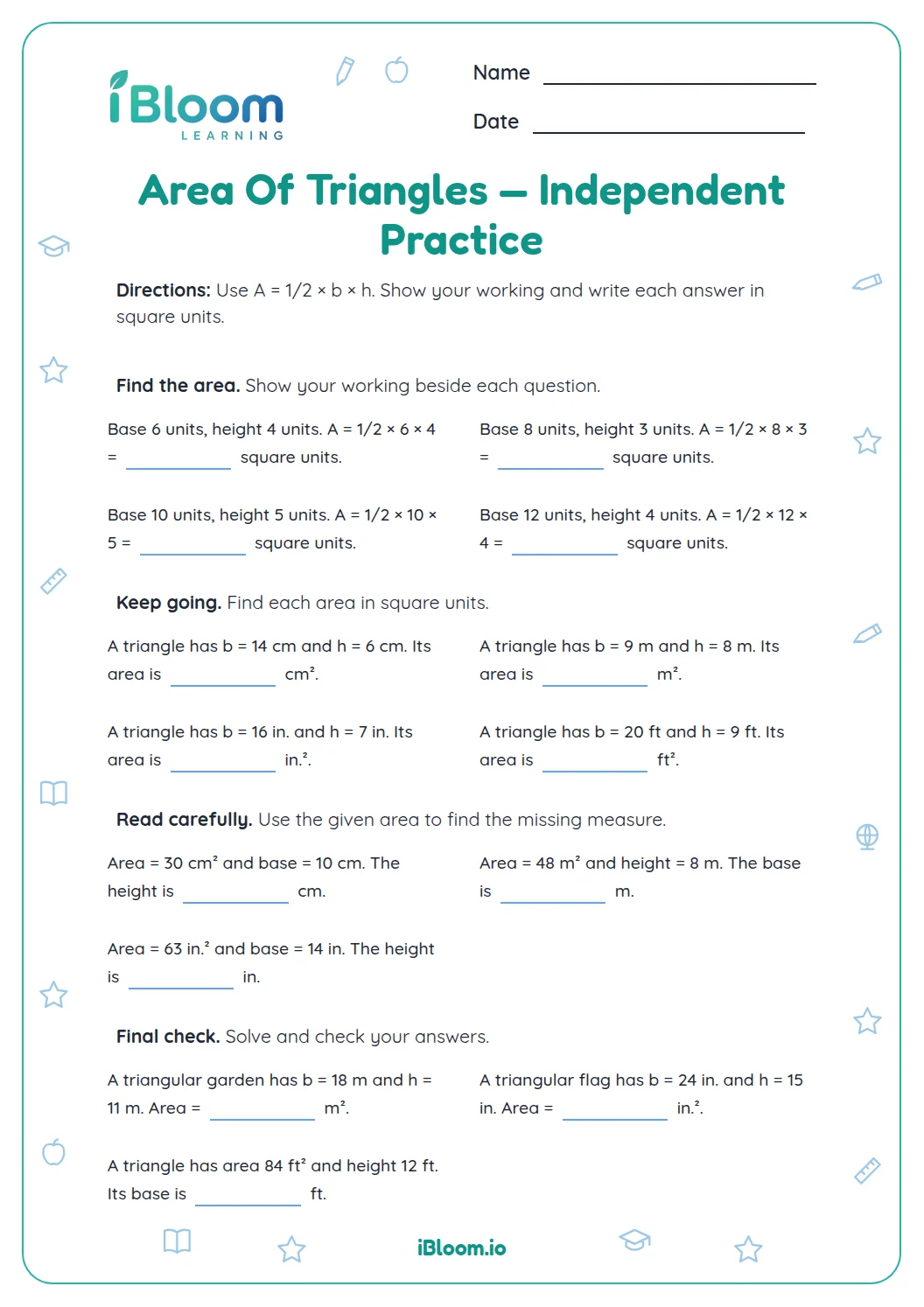
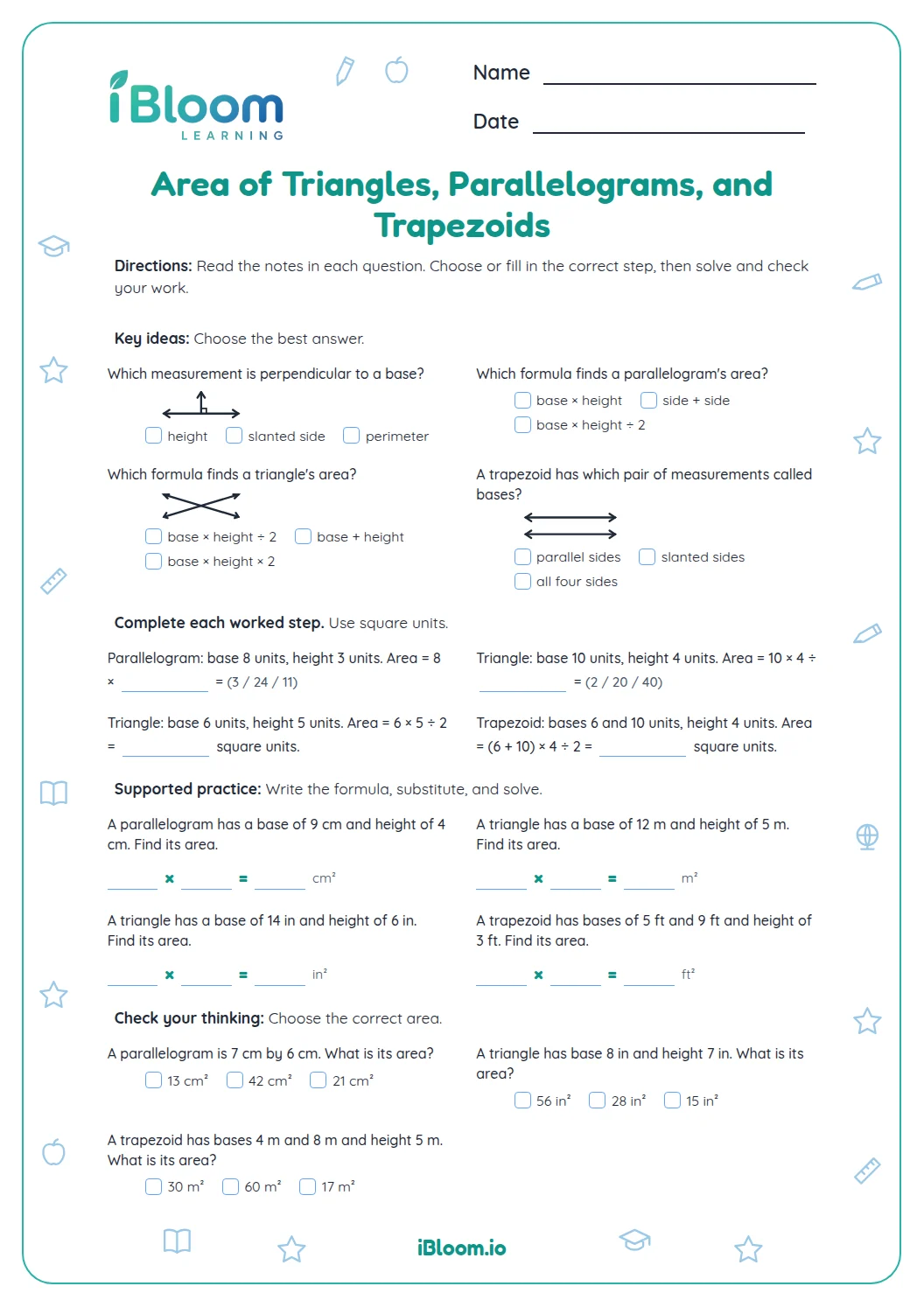
This printable introduces right triangle area through the idea that two matching right triangles can make a rectangle. Students use base and height, multiply those measures, and divide by two. Questions build from a visual model to computation and short explanations, with units included in the answer key. The page focuses on the area reasoning promised by the worksheet title.
Why is a right triangle half a rectangle?
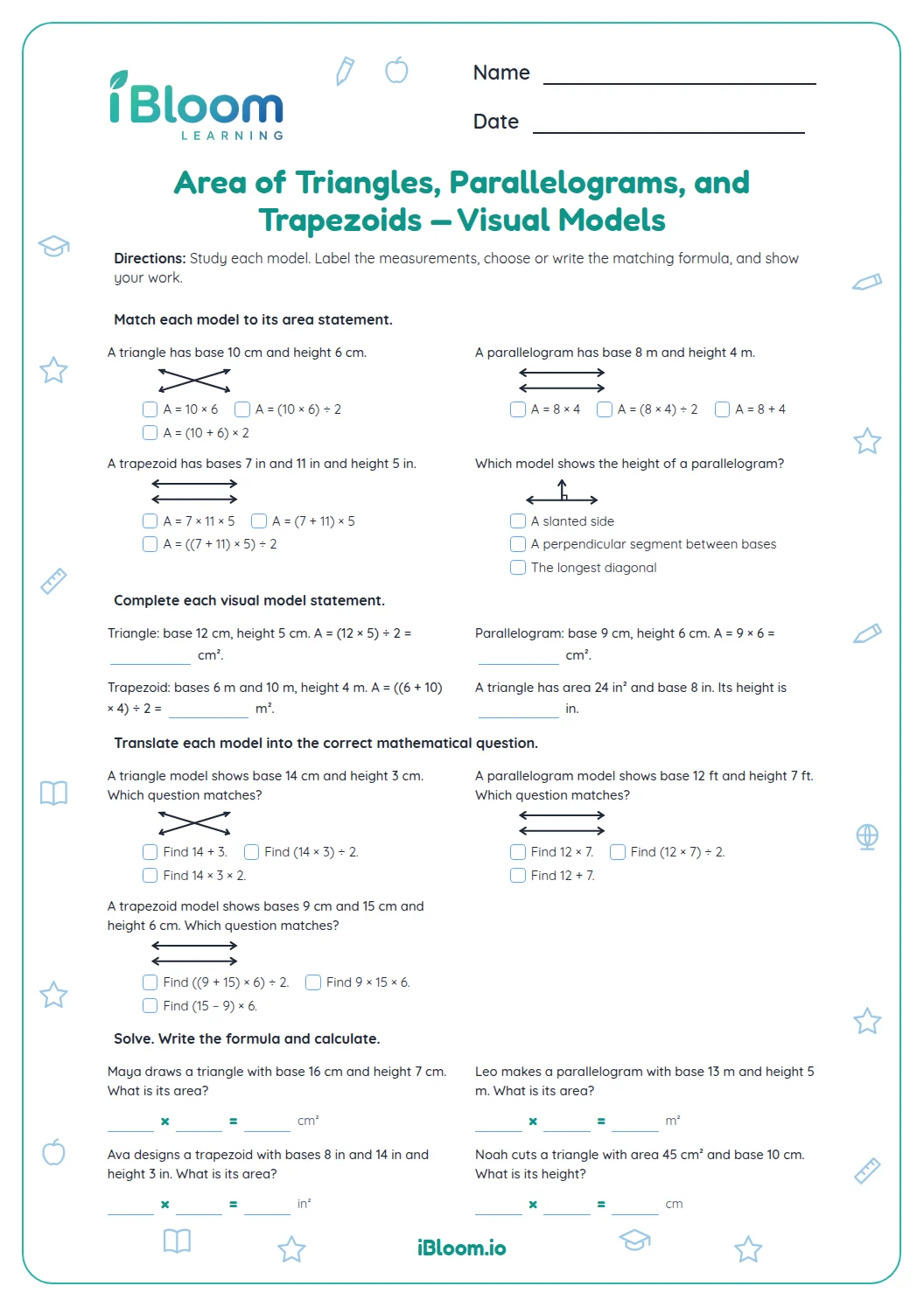
Place two matching right triangles together and they form a rectangle. The rectangle’s side lengths match the triangle’s base and height, so its area is base times height. One triangle covers half of that rectangle.
- 1Base 8 cm, height 5 cm
- 2Rectangle area: 8 × 5 = 40 cm²
- 3Triangle area: 40 ÷ 2 = 20 cm²
How do you calculate the area?
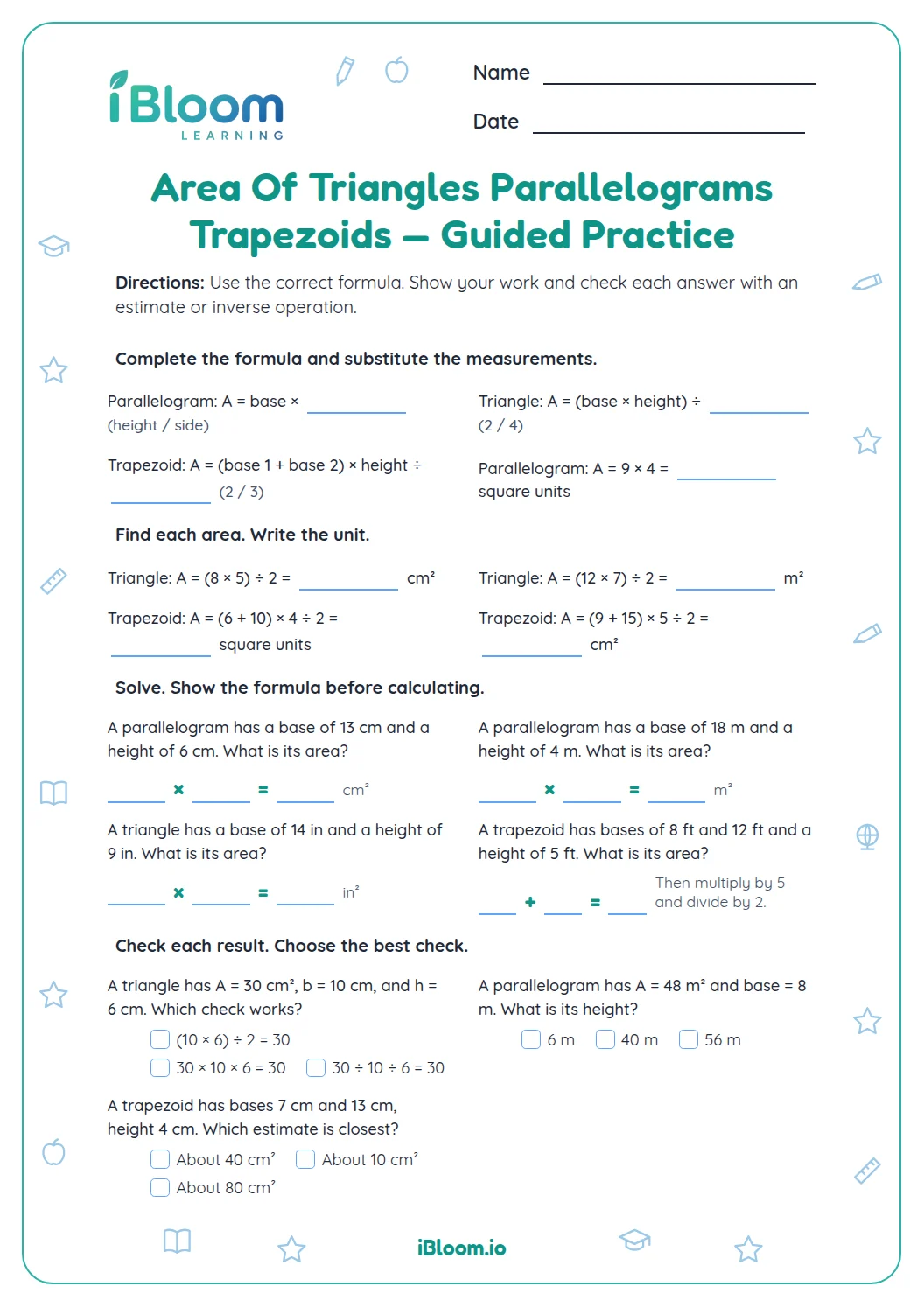
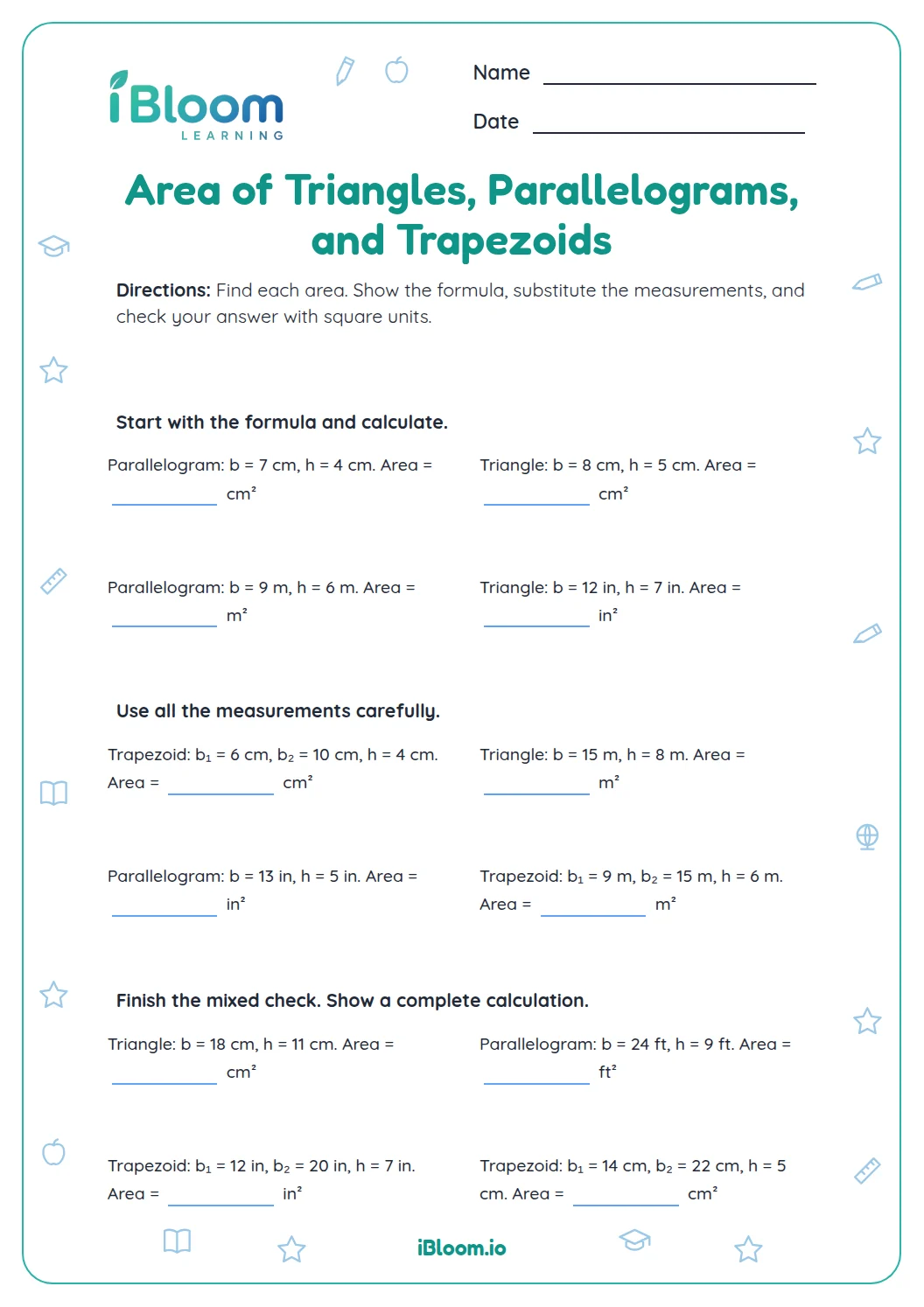
Multiply the base by the perpendicular height, then divide by two. Keep the unit squared because area counts square units. A base of 10 meters and height of 4 meters gives (10 × 4) ÷ 2 = 20 square meters.
How can students check a triangle area?
Double the triangle area. The result should match the area of a rectangle with the same base and height. This reverse check helps catch forgetting to divide by two.
How to use this worksheet
- 1Find the base and the perpendicular height.
- 2Multiply those two measurements.
- 3Divide the product by two.
- 4Write the answer in square units.
- 5Double the answer to check it against the matching rectangle.
Common mistakes and fixes
The mistake
Stopping after multiplying base by height.
The fix
Remember that the triangle is half the rectangle; divide by two.
The mistake
Adding base and height.
The fix
Area counts square units, so multiply the two side measures.
The mistake
Writing cm instead of cm².
The fix
Use square units because the answer measures covered area.
What to practice next
Make more practice
Questions parents and teachers ask
What is the formula for a right triangle’s area?
Multiply the base by the perpendicular height, then divide by two: A = (base × height) ÷ 2. The worksheet uses rectangle area to explain why a right triangle with the same base and height has half that area. For example, a 6-by-4 rectangle has area 24 square units, so each matching triangle has area 12.
Why divide by two?
Two matching right triangles can fit together to make a rectangle. The rectangle’s area is base times height, so one of the triangles covers half of that area. Sample responses explain the halving step as well as the numerical result.
What does the answer key include?
The key lists the computed areas and gives sample explanations for reasoning questions. Check that each area uses square units, such as cm² or square inches. The worksheet includes a rectangle grid, direct calculations, reverse reasoning, and explanations.
Which measurements should students use?
Use a base and its perpendicular height. In a right triangle, the two sides that meet at the right angle can serve as the base and height. The rectangle check works because the two matching triangles have the same base and height.
How can students check an answer?
Double the triangle’s area. It should equal the area of a rectangle with the same base and height. If it does not, check the multiplication, division by two, and square units. Students can multiply the triangle area by two to compare it with the rectangle.